Volume-6 Issue-2
International Journal of Intellectual Advancements
and Research in Engineering Computations
Implementing stress management techniques among middle level
managers in construction industries
R.Praveen
(1)PG Scholar, Department of Civil Engineering
Kongu Engineering College,
Perundurai, Erode, India.
[email protected]
N.Nandhini
(2)Assistant Professor, Department of Civil Engineering
Kongu Engineering College,
Perundurai, Erode, India.
[email protected]
Abstract— A Site Engineer is exceptionally vital for a Construction venture. The duties of a Site Engineer are wide as he should give adequate guidance and supervision when they are any specialized issue, legitimate administration and furthermore readiness of day by day advances reports of Construction works. The site engineers must possess certain basic roles and responsibilities for the execution and completion of the project. Within this contexts, the site engineers in the construction project are highly stressful due to conflict of boundary condition, Inadequate room for innovation and bureaucracy purpose, Communication problem among project team members, Poor crisis management mechanisms, Shift works and Over workloads are involved during implementing the plan in Construction sites. The main Objectives of my project is to identify the major Stressors influencing the stress through Questionnaire survey conducted among Site Engineers at various construction sites and to analyzing those factors using Statistical Tools. Finally to implement some Stress Management Techniques to manage these stress and also recommended some personal characteristics to improve their leadership level in construction projects.
Key Words- Middle-Level Managers, Stress, Stressors, Stress Management Techniques, Construction Industry.
I.INTRODUCTION
The construction industry has been long recognized as stressful sectors. Around 70% of building professionals suffered from stress, nervousness, or sadness as a direct result of functioning in the erection industry. The role the construction site engineer plays is elemental to the success of their organization. Site engineers carry out one of the toughest and hardest jobs in the construction process. Site engineers are generally considered key persons in the success of a construction project. The role of site engineer includes not
only scheduling, organizing, and supervising the project team and the progress of work in construction projects. Site management is well thought-out by a high work overload, long working hours, and many inconsistent parties to deal with including the management, the subcontractors, the subordinates, the client, etc. Every single judgment is prepared by site engineers has a through an impact on time, expenditure, quality, and final success of a construction project, it is unavoidable that site engineers are subject to the great contract of stress in their job. This characteristic of the work makes it extremely prone to stress. Hence, stress is painstaking to have a negative crash on the soul. However, stress is not harmful. ―Without stress, there would be no life. ―The stimulus of stress is essential for every successful experience, as it is always accompanied by motivation. Stress can have severe implications for both the individual’s healthiness and performance. In terms of health, the relationship between stress and different serious illnesses has been scientifically established. The author asserted that managers suffer extreme physiological symptoms from stress at work, which compel them to premature retirement from work before they have had the opportunity to complete their potential organizational life. In terms of performance, decision making, decision making under stress becomes faulty. Based on the nature of construction site engineer and the literature on stress, this study aims to investigate the impact of different types of stress occur on-site management in construction industry.
II.STRESSMANAGEMENT
or budge, plummeting physical hazards, humanizing occupation ladders, modifying the utilize of guidance and expertise, job turning round and improvement and empowerment.
III.OBJECTIVES
To study the problems faced by site engineer in the construction industry.
To identify the stressors influencing stress.
To implement some stress management techniques among site engineers.
Recommend some personal characteristics to improve their leadership skills on-site management in construction industry.
IV. LITERATURE REVIEW
1)Kamardeen et al examined the synchronous impact of six individual qualities of development expert, for example, sex, age, occupation, wage, conjugal status, identity characteristics on business-related mental sickness. At long last they leading the specific program to lessen the work worry in the development industry.
2)Haydam et al concentrated on the experience of worry in the Civil Engineering segments of the development business and furthermore concentrating on contractual worker's site operator and foreman working in the NMBM and the particular stressors that influence them the commonness of side effects of strain, stress and gloom.
3)Defrank et al actualize some pressure administration methods among Construction Industry in the UK. To diminish general pressure while dealing with the site in the development industry.
4)Lamar et al recognized three pressure in particular employment push, enthusiastic pressure, the physical pressure in light of the fact that the site administrator and specialists are working extended periods and more convoluted because of the absence of assets. Diminish these worries to actualize some pressure administration program and to fulfill their necessities. 5)Gut et al concentrated on South Africa individuals (high contrast) had part of work environment worry in the development industry. By utilizing study, badgering and segregation were found to connect with the high apparent level of work worry, to diminish these components to execute as a feature of more extensive pressure administration programs among site administration people.
6)Edwards et al concentrated on word related pressure influences the wellbeing of development experts. Absolutely 7 sorts of wellsprings of stress is confined by experienced experts in South Africa are working to tight due dates, work extend periods of time, insufficient time to adjust with family, kept occupied and possessed, enhance their abilities, buckle down.
7)Styfire et al speak to the Site supervisors confront some basic circumstance in the development industry. So they examination these variables and actualize some emergency administration, inescapable site chief while thinking about exhausted to lessen the pressure.
8)Dwindle et al examine some universal review of pressure and psychological well-being overview in Australia they distinguished some subscales are work pressure, situational
stress, individual or self pressure and they measure the anxiety by utilizing pressure scale. Execute some pressure administration program to decrease the anxiety.
9) Frases et al actualize some individual qualities to enhance their administration abilities in development destinations. They can enhance their aptitudes while applying the attributes specifically state of development industry and furthermore deal with their pressure.
10) Djebarni et al Studied semi-organized meetings with 71 site directors and examine all the more particularly worried about the effect of three sorts of stressors, specifically manager stretch, work pressure and condition work pressure. In at last some incorporated preparing programs that have been produced to provide food for a full range of pressure related issues.
V. METHODOLOGY
The methodology is carried out accordingly to the objectives of the study. The study includes the literature review and interviews with various site engineers at the construction site. The factors that influence the stressors and its stress were identified from literature review and interviews. Based on these factors questionnaire is prepared and the survey is conducted through Google forms and distributed manually among site engineers. To find the top factors (stressors) that to influence the stress on middle-level managers from various construction sites. And to implement some stress management techniques among site engineers to manage the stress while implementing the plan at construction sites. In this study, questionnaires and personal interview were used as a tool for collecting data for quantitative analysis and qualitative analysis. The cause for using a questionnaire is that the option of responses can be acquired in a structural manner, according to questionnaires are the most common method used to identify the practice of companies. Although designing a questionnaire appears to be relatively simple, it is a complex process. The inquiries must be detailed and chosen precisely and the point of the task should constantly be borne.
VI. STRESSORS INFLUENCING STRESS (FACTORS)
Stressors have the physical, synthetic and mental reaction within the body. Body stressors create involuntary stressors on skin, skeleton, tendons, ligaments, brute force, and mental strain that cause tissue deformity and in surprising basis tissue disappointment. Substance stressor likewise creates biomechanical reactions related to digestion and tissues repair. Physical stressors may create torment and weaken work execution. Ceaseless torment and debilitation requiring medicinal consideration may come about because of outrageous physical stressors. The accompanying stressors are recognized amid the site visit at different Construction sites. 1) WORK STRESS
Communication problems among workers Working long hours
Conflict boundary condition Staffing Problem
2) WORKPLACE STRESS
3) EMOTIONAL STRESS Failure of work
Communication problem among project team members
4) PHYSIOLOGICAL STRESS Physical Hazards Unpredictable condition
5) MANAGERIAL STRESS
Poor crisis management mechanism
Urgency decision without adequate information 6) ROLE BASED STRESS
Fragmentation of work
Very low income when compare to other job 7) OCCUPATIONAL STRESS
Hostility work environment Night shift
Authority’s imbalance 8) JOB STRESS
Over workload
Poor group relationship 9) Environmental Job stress
Any unpredictable failure Job complexity
VII. QUESTIONNAIRE SURVEY
The questionnaire was prepared and distributed among site engineers of different construction sites in order to grasp their views regarding the factors (stressors) influencing the stress among middle level managers at construction sites. The views of respondents are collected through five point scale rating system. The following table shows the details of the questionnaire survey conducted among various construction site engineers.
Table.1 Response Rate
DESCRIPTION SURVEY
COLLECTED Questionnaire
Distributed 189
Response Collected 152
Male Respondents 133
Female Respondents 19
Respondent Rate 83%
VIII. RESULTS
In this survey totally 189 questionnaires were distributed to the targeted respondent in order to identify the factors (stressors) influencing stress among site engineers in construction sites. In those 152 responses has been received. The responses rate of this survey was 83%. The response rate will be explained in the below table and chart by using SPSS software and implement some stress management techniques to manage these stress while managing the site.
1. RELIABILITY ANALYSIS
Prior to data analysis, the reliability of data was assessed using Cronbach’s Alpha method. The Cronbach’s Alpha is the most common measure used to test the reliability, which gives us a measure of internal consistency. Our results showed Cronbach’s alpha as 0.826, which indicates a high level of internal consistency for our scale as recommended by Nunnaly (1978). The Cronbach’s alpha obtained for the data collected through questionnaire survey is given in the following table
Table.2 Reliability Analysis Cronbach’s alpha No. of items
0.826 30
2. DESCRIPTIVE STATICTICS
Table.3 Demographic Profile of respondent
sl.no
demographic profile of respondent
category
no. of responde
nt
%
1 Gender Male 133 87.5
Female 19 12.5
2 Experience
0-1 year 55 36.2
1-3 year 67 44.1
3-5 year 18 11.8
5 & above 12 7.9
3 Qualification Engineering 138 90.8
Diploma 14 9.2
4 Designation Site engineer 152 100
5 Age
19-21 year 13 8.6
22-25 year 116 76.3
25 & above year 23 15.1
6 Salary
5000-10000 45 29.6
10000-15000 59 38.8
Above 15000 48 31.6
rupees 5000 to 10000 and the response rate of this site engineer’s was 29.6% and 59 site engineer’s are belonging under the category of rupees 10000 to 15000 and the response rate of this site engineer’s was 38.3% also 48 site engineer’s are belonging under the category of rupees 15000 and above and the response rate of this site engineer’s was 31.6%.
3. PRINCIPAL COMPONENTS ANALYSIS
The main aim of this analysis is to reduce any larger set of variables into a smaller set of principle components. The KMO measure of sampling adequacy is implemented in our study, which gave an acceptable result of 0.710.Thereby all independent variables used for questionnaire survey are correlated and the variable that closely represent the construct are included, leaving others and a new measurement scale was framed by shortening the existing scale to major 11 variables as given in the table
Table.3 Principle Component Analysis
The narrated eleven dimensions of construction site
engineer’s stressors explained to the extent of 65.605 percent. The most important perceived stress among the construction site engineers is communication problem’ since its respective Eigen value is 5.112, which consists of 5 variables. Since the second and third factors are staffing problem, Inadequate room their respective Eigen value is 1.993 and 1.873 percent respectively. The variance explained by these factors is 6.644 and 6.244 percent respectively. The next important factor is shift work and over workload which consists of 4 and 2 variables respectively. These two stress factors explained to
the extent of 5.406 and 5.156 percent respectively. The Tenth and Eleventh stress is Unpredictable failure and Job complexity which consists of three and two variables respectively. Since the respective Eigen value are 1.096 and 1.023 respectively.
4. MEAN SCORE ANALYSIS
Table.4 Mean Score Analysis
The descriptive statistical analysis is performed to obtain the mean score for 11 identified major variables. The frequency analysis method was carried out for descriptive statistical analysis. The results shows that the low incomes when compared to other job, fragmentation of work have highest mean scores of 3.83 and 3.75 in stressors influencing the stress of middle level managers in construction industry. It is then followed by poor crisis management mechanism (3.70), communication problem (3.63), over workload (3.48), shift works (3.46), unpredictable failure (3.45), inadequate room (3.43), job complexity (3.42), staffing problem (3.36).
5. ONE-WAY ANOVA Table.5 One-way Anova
Further the research is carried out with one-way analysis of variance (ANOVA) to determine whether there is any significant difference between the means of variables provided
Stressors Mean
score
Standard deviation
Co efficient of variance Communication
problem 3.69 0.951 0.904
Staffing problem 3.36 1.019 1.039
Inadequate room 3.43 1.160 1.346
Shift work 3.46 1.073 1.151
Over workload 3.48 1.023 1.046
Climatic condition 3.38 1.015 1.031 Poor crisis
management mechanism
3.70 1.004 1.007
Work fragmentation 3.75 1.152 1.328
Low income 3.83 1.132 1.282
Unpredictable
failure 3.45 0.955 0.912
Job complexity 3.42 1.026 1.053
Stressors
No. of varia
bles
Eigen values
Percenta ge
variance
Cumulative Percentage
variance
Communicati
on 5 5.112 17.038 17.038
Staffing
problem 4 1.993 6.644 23.682
Inadequate
room 5 1.873 6.244 29.926
Shift work 4 1.622 5.406 35.332
Over
workload 2 1.557 5.156 40.488
Climatic
condition 2 1.476 4.887 45.375
Poor crisis management mechanism
2 1.396 4.587 49.962
Work
fragmentation 3 1.254 4.320 54.282
Low income 3 1.116 4.099 58.373
Unpredictable
failure 3 1.096 3.848 62.220
Job
complexity 2 1.023 3.385 65.605
KMO Measures of sampling Adequacy:0.710
Bartlett’s test of sphericity: Chi- Square value:910.455
Stressors F value significance
Communication problem 1.098 0.360
Staffing problem 0.587 0.673
Inadequate room 2.788 0.029
Shift work 1.875 0.118
Over workload 0.612 0.655
Climatic condition 0.973 0.424
Poor crisis management
mechanism 0.625 0.645
Work fragmentation 3.201 0.015
Low income 0.716 0.582
Unpredictable failure 0.456 0.768
by the respondents namely site engineers, project members, and site managers. The one-way analysis is carried out for the identified 11 major factors and the results are summarized as follows. From the above result it is evident that inadequate room for innovation and bureaucracy purpose and fragmentation of work having significance level .029 and .015 which are below .05 are therefore said to have statistically significant difference in their means among the 11 major variables. Therefore the result shows that the perception of site engineers, project members and site managers significantly varies for innovation and bureaucracy purpose and fragmentation of work.
6. DISCUSSIONS
The above results were done by using SPSS statistical tool. The result shows that the major 11 factors are identified by using extraction of factors in principle component analysis. In that we conclude the above 11 major factors (stressors) to influencing the stress of site engineers while managing the site. To manage or reduce these stress while implementing some stress management techniques among site engineers in construction industry. Around 15 to 20 construction site the following stress management techniques will be implemented to manage the stress.
IX. STRESS MANAGEMENT TECHNIQUES
Around 20 construction industry the stress management techniques will be implemented among construction site engineers. To manage these stress some stress management techniques will be adopted among site engineers. The following stress management techniques were found with the help of both literature studies and Psychologist.
Stress education training Keep fit programmes
Relaxation training and counselling
Stress management programmes or workshops Training or coaching programmes
Biofeedback Meditation Time management Stress audit
Participation in planning and decision making
After implementation the survey will be done in after 15 days of stress management techniques implement. And to compare these results of both before and after implementation of techniques. The following results shows that the after implementing stress management techniques the stress level have been decreased.
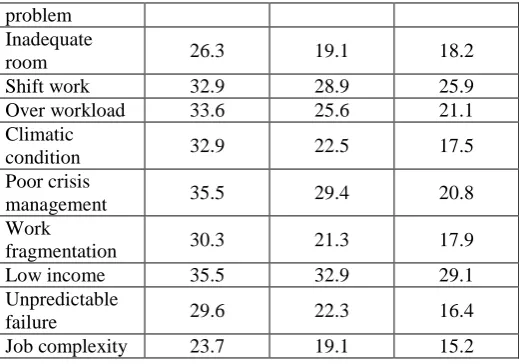
Table.6 Stress Management Techniques After Implementation
Stressors 0–15 days 16–30 days 31–45 days Communication
problem 37.6 31.1 21.3
Staffing 30.9 24.8 19.8
problem Inadequate
room 26.3 19.1 18.2
Shift work 32.9 28.9 25.9
Over workload 33.6 25.6 21.1
Climatic
condition 32.9 22.5 17.5
Poor crisis
management 35.5 29.4 20.8
Work
fragmentation 30.3 21.3 17.9
Low income 35.5 32.9 29.1
Unpredictable
failure 29.6 22.3 16.4
Job complexity 23.7 19.1 15.2
After implementing the stress management techniques the 15 days of results shows that the stress level of communication problem was 37.6% but it can be reduced to after 45 days while adopting this techniques while execute the plan the stress level of 45 days was 21.3%. In poor crisis management mechanism the 15 days of results shows that the stress level was 35.5% but it can be reduced to adopted these techniques in to 45 days the stress level was 20.8%. In work fragmentation the 15 days of results from implementing the stress management techniques the stress level was 30.3% but it can be reduced 45 days the stress level was 17.9%.
X. CONCLUSION
REFERENCE
[1] K. Alexander and E. Styhre, ―The Overworked Site Manager: Gendered Ideologies in the Construction Industry‖, Journal of Construction Management and Economics, Vol. 129, No. 3, pp. 943-955, May 2011. [2] R. Campbell and F. Fraser, ―The influence of
personal characteristics on effectiveness of construction site managers‖, Journal of construction management and economics, Vol. 18, No. 1, pp. 29-36, Oct 2010.
[3] Y.T. Fiona lamari and R. Seokho chi, ―Work place stress and Impact Analysis for Strategic Stress management in Construction project‖, International council for research and innovation in building and construction, Vol. 16, No. 5, pp. 290-316, August 2014.
[4] M. Imriyas Kamardeen and S. Riza Yosia Sunindijo, ―Personal Characteristics Moderate Work stress in Construction Professionals‖, Journal of Construction Engineering and Management, Vol. 143, No. 10, pp. 123-130, June 2017.
[5] A. Mei Yung leung , D. Yee Shan Chan and J. Paul Olomolaiye, ―Impact of Stress on the Performance of Construction Project Managers‖, Journal of Construction Management and Economics, Vol. 134, No. 8, pp. 644-652, July 2008.
[6] F.H. Mustapha and S. Naoum, ―Factors Influencing the Effectiveness of Construction Site Manager‖, International journal of project management, Vol. 16, No. 1, pp. 1-8, November 2002.
[7] E.D. Peter love and J. David Edwards, ―Work Stress, Support, and Mental Health in Construction‖, Journal of Construction Engineering Management, Vol. 136, No. 6, pp. 650-658, October 2010.
[8] E. Paul bowen, A. Peter Edwards and D. Helen Lingard, ―Workplace Stress Experienced by Construction Professionals in South Africa‖, Journal of Construction Engineering Management, Vol. 139, No. 4, pp. 393-403, September 2013.
[9] T. per Erik Josephson and S. Alexander Styhre, ―Coaching the Site Manager: Effect on Learning and Management Practice‖, Journal of Construction Engineering Management, Vol. 25 No. 4, pp. 1295-1304, February 2007.
[10] P.J Paul Bowen, S. Peter Edwards and S. Helen Lingard, ―Work Place Stress among Construction Professionals in South Africa‖, Journal of Engineering construction and architectural, Vol. 20, No. 6, pp. 620-635, May 2013.
[11] W. Ramdane and L. Djebarni, ―The Impact of Stress in Site Management Effectiveness‖, Construction Management Economics, Vol. 14, pp. 281-293, October 2007.
[12] Richard S. Defrank and Cary L Cooper, ―Worksite Stress Management Interventions: Their Effectiveness and Conceptualisation‖, Work and Stress, Vol. 9, pp. 4-10, July 2001.
[13] T. Teresa Keil, D. Beard worth and Michael J Bresnen, ―Effective Construction Site Management: A Review‖, Journal of Construction Engineering Management, Vol. 110 pp. 420-436, July 2010. [14] T. Teresa Keil, Alan E Bryman and Michael J
Bresnen, ―Leader Orientation of Construction Site Managers‖, Journal of Construction Engineering Management, Vol. 112, No. 7, pp. 370-386, August 2010.
[15] Valerie Sutherland and Marlyn J Davidson, ―Using Stress Audit: The Construction Site Manager Experience in the UK‖, Work and Stress, Vol.7, No. 3, pp. 273-286, May 2009.
[16] Valerie J Sutherland and Marilyn J Davidson, ―Stress among Construction Site Managers- A Preliminary Study‖, Stress Medicine, Vol. 5, pp. 221-235, July 2008.
[17] Valerie J Sutherland and Marilyn J Davidson, ―Stress and Construction Site Managers: Issues for Europe Employee Relations‖, Vol. 14 No. 2, pp. 25-38, July 2010.