Pharmacophore
ISSN-2229-5402
Journal home page: http://www.pharmacophorejournal.com
Corresponding Author:Saeed Yazdani, hysical Education & Sport Science Department, Kish International Campus, University of Tehran, Kish Island, Iran.
EVALUATION OF THE EFFECT OF A SELECTED TRAINING
COURSE ON VISUAL PERCEPTION AND BEHAVIORAL
DISORDERS IN HIGH PERFORMANCE CHILDREN WITH AUTISM
SPECTRUM DISORDER
Saeed Yazdani
1*, Mahmood Sheikh
2, Rasoul Hemayat talab
2, Davood Homanian
31. Physical Education & Sport Science Department, Kish International Campus, University
of Tehran, Kish Island, Iran.
2. Associate Professor Department of Physical Education & Sport Sciences, Tehran
University, Tehran, Iran.
3. Assistant Professor Department of Physical Education & Sport Sciences, Tehran
University, Tehran, Iran.
A R T I C L E I N F O A B S T R A C T
Received:
01th Aug 2017
Received in revised form: 04h Sep 2017
Accepted:
06th Sep 2017
Available online: 14th Nov 2017
Keywords: Selected exercises, Visual perception, Behavioral disorder, Autism, Performance.
The purpose of this study was to evaluate the effect of a selected training course on visual perception and behavioral disorders in children with high performance and patients with autism spectrum disorder. The present study was carried out using a semi-experimental method. The statistical population of this study was autism clients in Shiraz Clinical Rehabilitation Center with age range of 9 to 12 years who had no physical and visual problems and were not severely treated and had the opportunity to attend sporting sessions. The subjects were randomly divided into two groups (12 subjects for the selected exercises and 12 subjects for the control group) and after the last training session (1 week), the mentioned tests were retested. In order to analyze the dataT test analysis of mean was used using SPSS software version 16 at a significant level of 0.05. The results of this study showed that a selected training period affects children's behavioral disorders (strain behavior, social interaction, and communication of children) with autism spectrum disorder.
Copyright © 2013 - All Rights Reserved - Pharmacophore
To Cite This Article: Saeed Yazdani, Mahmood Sheikh, Rasoul Hemayat talab, Davood Homanian (2017), “Evaluation of the
effect of a selected training course on visual perception and behavioral disorders in high performance children with autism spectrum disorder”, Pharmacophore, 8(6), 77-86.
Introduction
plays a major role in shaping the child's basic skills such as motor growth, writing, reading, mathematics (Gholamali, 2002) and is one of the most important senses for the development of the child's physical and mental norm (Graziano et al., 2007), which is one of the disadvantages of Self-sufficiency (Rajabi et al, 2015).
One of the groups that has problems with their growth process is children with autism disorder (Rajabi et al, 2015). Autism spectrum disorders with delayed or abnormal functioning occur at least in one of the areas of social interaction, the language used in social imaginative or symbolic communication. Qualitative damage in communication skills is characterized by a delayed or complete lack of language development, the use of a stereotyped and repetitive language or a particular language. Repetitive, stereotypical behaviors and permanent mental employment with parts of objects are characteristics of these children (Dalvand, 2012; Dalvand et al., 2014). The person with autism communicates in an unusual way; an approach that is often unknown to his peers and is an impediment to meaningful interaction. In addition to the impairment of the establishment, reception and processing of external sensory stimuli also disrupts his learning process (Danzhe Ghanavati et al, 2013).
In an overview of 200 children with autism, researchers found that 95% of them had difficulty in sensory adjustment, and these children need extra sensory stimuli, and some of them search for their senses and the others escape from them (Bagatell et al, 2010).
Greenspan and Wieder speculate that reducing sensory processing may be a factor in social isolation and in not confirming homework (Schilling & Schwartz, 2004). Viola & Nading argue that children with low sensitivity (similar to hyperactivity) need sensory stimulation to complete tasks that require focus and attention (Horgen, 2009). Although no definitive treatments for autism have been introduced so far, there are a variety of interventions that can be useful to control behavioral symptoms and, in most cases, compensate for social disabilities through various protections. Therefore, some of these interventions focus on discounting and controlling symptoms, and others are training social and behavioral skills. In the meantime, visual training is one of the activities that, in the same style and safety, can improve the performance of the visual and skill system. The results show that visual training can improve the function of the visual system by affecting the visual processing of information (Varzande Khanzaei, 2017). Considering that vision plays a very important role in daily activity, there is little doubt that perceptual ability-vision affects the level of motion skills.
Autistic people give too much response to vision feedback; Otissians have also an eye dysfunction. The effect of visual perceptual defects is very high on everyday life, which is unusual in autistic people (Gallahue & Ozmun, 2011). Therefore, they require significant resources from medical interventions to provide such a common problem (Morris et al., 2015). However, until now, a unique method has not been introduced in the treatment or at least to improve symptoms of the diagnosis of this disorder. The various therapeutic interventions have been done by psychologists, psychiatrists, nutritionists, and therapists' behaviors (Milne & Griffiths, 2007).
Neuro-neuronal neurons in the precursor cortex are related to a large number of social cognitive practices, including an understanding of the action of imitating a thrill sensation to this system, which are mirror neurons other than visual motor neurons. Researchers have argued that the malignancy of the neuronal system leads to social harm, especially the autism spectrum (Ahdian, 2017). And this cognitive impairment can cause motion impairment in the range of autism and cause movement problems that result in lack of social participation (Pan et al, 2011) and, on the other hand, the acquisition of a proper motor skill to the ability of ASD to develop language (Bedford et al., 2016) in playing and interacting with others (Clearfield, 2011) in Mental imagery (Maras et al, 2014) and Understanding (Wilson et al, 2010). Therefore, they require significant resources from medical interventions to provide such a common problem. However, until now, a unique approach to treating or at least improving the symptoms of the diagnosis of this disorder has not yet been introduced, however, various therapeutic interventions have been done by psychologists, psychiatrists, nutritionists, and therapists' behavior (Gibbs et al, 2012).
Over the past thirty years, a new mode of intervention based on motion activity has been studied in the process of improving diagnostic symptoms and problems associated with autism spectrum disorder (Staples et al, 2011).
Research showed that participation in motor and physical activity, wide results on normal children (Bar-Or & Rawland., 2004), children with developmental disorder (Connolly, 2005) to children with autism spectrum (Pitetti et al., 2007) has brought about tremendous advances in growth, social and educational aspects.
Researchers have reported the effects of various motion-physical activity-based interventions on improving diagnostic symptoms as well as the problems of children with autism spectrum dysfunction (staples et al., 2011). In all studies, using case studies and limited number of participants, evidence based on the reduction of repetitive behaviors (O,Connor et al, 2000), increasing social interactions (García-Villamisar & Dattilo, 2010), increasing the expressive communication (Gabriels et al., 2008), as well as making positive changes in academic skills (Rogers et al, 2010), Physical Fitness (Fragala-Pinkham et al, 2008), Skills in Water (Oriel et al, 2011), Skills Sensory (Wuang et al, 2010), self-harm behaviors (Elliott et al, 1994), Attention icmitation skills (Hameury et al. 2010), and stress reduction and quality of life (García-Villamisar & Dattilo, 2010), In these people using walking exercises (Pitetti et al., 2007), running (Nicholson et al., 2011), swimming (Yilmaz et al., 2010, Yilmaz et al., 2004; Yilmaz et al., 2005), water therapy (Bumin et al., 2003) And recreational activities and activities in the water (Pan et al, 2010) have been observed.
the effects of motion activity-based interventions on reducing the social interactions of children with autistic children (Webster-Stratton et al., 2004; Bass et al, 2009). The positive effects of swimming activities (Pan et al, 2010), horse riding (Bass et al., 2009), and a combination of swimming, bowling, marching, play and ball activities along with a leisure program (García-Villamisar & Dattilo, 2010) in reducing Disorders of social interactions have been reported by autistic people.
The impact of motion activity-based interventions on reducing communication disorders in people with autism spectrum disorders is also negligible (Hameury et al., 2010). Only in a few studies, the positive effects of motion activity and muscle contraction in reducing communication abnormalities have been reported for patients with autism disorder. Also, there was no research about the effect of motion activity on perceived vision in people with autism spectrum.
A careful study of the research reveals several in-depth research gaps in this regard. All studies have examined the effects of motion-based interventions on cardiac behaviors. On the other hand, the length of the experimental period is very low in almost all researches.
However, in a number of studies that the impact of motion activity-based interventions and communicative skills and social interaction skills has been studied, a long-term ten to 48 week (Gabriels et al, 2008) trial period has been used. But these studies are very small and due to the limited number of participants, there is a lot of research gaps in the number of participants with a specific age range (García-Villamisar & Dattilo, 2010), as well as the application of motion activity-based interventions along with other therapeutic interventions and, therefore, lack of confidence in the net effect of motion activity. In all studies, the duration of each session is small and the maximum time is set to fifteen minutes. The researcher is currently testing a semi-experimental design with a sufficient number of participants, along with a long-term control group, to test the effect of these exercises on symptom improvement, behavioral disorder, and the improvement of autism perceptual parameters of the plant.
Methodology
The present study was carried out using a semi-experimental method. The statistical population of this study was autism clients who were selected from the Rehabilitation Center of Shiraz, aged 9 to 12 years old, who had no physical and visual problems and were not severely treated and allowed to attend sporting sessions.
Research tool
Gilliam Autism Rating Scale (GARS-2)
This questionnaire is a standardized tool designed for assessing autism and other severe behavioral disorders. Gars-2 has provided standardized information that can help us to diagnose autism. Gars-2's items are based on definitions of autism adapted from the American Psychological Association and the American Autistic Society. The reliability of the alpha coefficient is 0.84 for stereotyped behaviors, 0.86 for communication, 0.88 for social interaction, and 0.94 for autism. In Iranian society, according to Ahmadi et al. (2013), the Cronbach's alpha coefficient in stereotyped behavior was 0.44, communication ratio of 0.92, social interactions 0.73 and developmental differences of 0.80 respectively. Cronbach's alpha coefficient of GARS test was 0.89.
Revised version of the TVPS-R1 Visual Perception Test
This edition was prepared by Gardner in 1982, revised in 1996 in the United States and used as TVPS-R. The test consists of two notebooks, one of which has 3, and the other 4 subtests, and each subtest consists of 4 picture questions, and in each case, a child is shown which child should choose the correct option by observing it. The duration of the test is 9 to 25 minutes (depending on the age of the subject) and for children between 4 and 12 years and also 11 months. This test consists of 7 subtests for visual diagnosis, visual memory, spatial vision communication, visual acuity stability, visual acuity memory, visual field and visual acuity and is not related to gender, education, race, culture, and language (Gardner 1996). The number of correct answers of individuals in each sub-test is calculated and considered as the crude score of the sub-test. The designer of the test, perceives the age of each subtest after determining the raw grade and according to the age of the individuals and using the standard table provided. The mean of seven perceptual ages is considered as the age of perceived vision. According to the raw grade, the age of the child, the test tables, and the scaled score is calculated and according to the scaled scores, the perceived vision of the student is determined. Gardner has reported the reliability of this tool in the 4 to 13 year group between 74% and 85% (Morrison et al, 2002). This test was normalized in Iran in groups 4 to 6, 7 to 8, 9 to 11, and 12 to 14 years old, and it was determined that all of its sub-tests are valid and reliable (Khayatzadeh, 2003; Dehghan, 2004; Moradi, 1997).
The process of conducting research
A person with autism spectrum has been selected for at least 2 years since it was diagnosed. To match the subjects, all boys aged 9 to 12 years were selected. Also, these people do not attend any sporting course. After selecting the sample and filling out the consent form, before the pretest, Raven TVPS-R, and Gars-2 tests (pre-test) were taken. Subjects were then practiced to a 3-month course and 3 sessions a week for the experimental group, which included a program of 45 minutes that was practiced by 4 instructors working with autistic children at the Rehabilitation Center. Selected exercises include:
2. Knocking the ball into the wall and getting with the hand, a constant head and repeating it by keeping the head intact, improving the ease of matching, eye convergence and coordination of the eyes and hands of the children.
3. Throwing a colored ball towards the person and striking with a baseball to the ball will improve the sharpness, track the fixation and coordination of the eyes and hands of the children.
4. Moving the ring to the left and right and throwing the ball by the person inside the ring improves the matching skills, the convergence of the children.
5. Getting the ball thrown to the person without moving the head that this exercise improves the perceptual skills of children. 6. A person is placed on a trumbleline, and according to the jump, he throws the ball into the rings at a different distance
(forward and backward, up and down), improving the perception of depth, the ease of matching, the acuity of the children. 7. 5 people are moving in a circle with irregular colors, varying in terms of height and color. The person, given the fact that he
looks at a middle point, passes the ball in his hand to someone who does not have a ball. This exercise improves children's environmental awareness.
8. Exercising the pull of rope, an 8-meter rope is connected in two ways to the wall at a distance of 4 meters from the participant so that the participant can grasp both hands. The purpose of this exercise is to insert a color wheel in each of the ropes. This exercise will improve the perceptions of children's depths so that they are equally spaced apart.
Before exercising, the children warm up and after the exercise, cool down and the exercises are done randomly. 1 to 7 days (according to previous research) after the last training session, Gars-2 and TVPS tests were given. In this research, descriptive and inferential statistics will be used to analyze the data. Descriptive statistics will be used for preparing tables, plotting charts, and computing statistical indicators such as Mean, SD, and SEM. Before the test and statistical analysis with the Kolmogorov test, the distribution of dependent variables is examined. Then T test are used to test the hypotheses in both the experimental and control groups. Data were analyzed by SPSS software version 16 and a significant level of 0.05 was considered.
Results
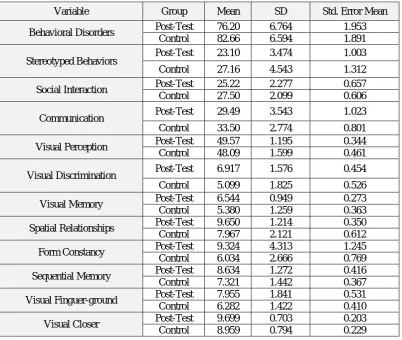
Table 1. Post-test results of behavioral disorders in two groups of subjects and control.
Variable
Group
Mean
SD
Std. Error Mean
Behavioral Disorders
Post-Test
76.20
6.764
1.953
Control
82.66
6.594
1.891
Stereotyped Behaviors
Post-Test
23.10
3.474
1.003
Control
27.16
4.543
1.312
Social Interaction
Post-Test
25.22
2.277
0.657
Control
27.50
2.099
0.606
Communication
Post-Test
29.49
3.543
1.023
Control
33.50
2.774
0.801
Visual Perception
Post-Test
49.57
1.195
0.344
Control
48.09
1.599
0.461
Visual Discrimination
Post-Test
6.917
1.576
0.454
Control
5.099
1.825
0.526
Visual Memory
Post-Test
6.544
0.949
0.273
Control
5.380
1.259
0.363
Spatial Relationships
Post-Test
9.650
1.214
0.350
Control
7.967
2.121
0.612
Form Constancy
Post-Test
9.324
4.313
1.245
Control
6.034
2.666
0.769
Sequential Memory
Post-Test
8.634
1.272
0.416
Control
7.321
1.442
0.367
Visual Finguer-ground
Post-Test
7.955
1.841
0.531
Control
6.282
1.422
0.410
Visual Closer
Post-Test
9.699
0.703
0.203
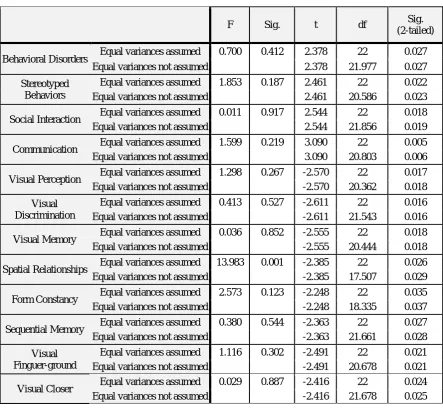
Table 2. Selected exercise outcomes on behavioral disorders in children with autism spectrum disorder.
F
Sig.
t
df
Sig.
(2-tailed)
Behavioral Disorders
Equal variances assumed
0.700
0.412
2.378
22
0.027
Equal variances not assumed
2.378
21.977
0.027
Stereotyped
Behaviors
Equal variances assumed
1.853
0.187
2.461
22
0.022
Equal variances not assumed
2.461
20.586
0.023
Social Interaction
Equal variances assumed
0.011
0.917
2.544
22
0.018
Equal variances not assumed
2.544
21.856
0.019
Communication
Equal variances assumed
1.599
0.219
3.090
22
0.005
Equal variances not assumed
3.090
20.803
0.006
Visual Perception
Equal variances assumed
1.298
0.267
-2.570
22
0.017
Equal variances not assumed
-2.570
20.362
0.018
Visual
Discrimination
Equal variances assumed
0.413
0.527
-2.611
22
0.016
Equal variances not assumed
-2.611
21.543
0.016
Visual Memory
Equal variances assumed
0.036
0.852
-2.555
22
0.018
Equal variances not assumed
-2.555
20.444
0.018
Spatial Relationships
Equal variances assumed
13.983
0.001
-2.385
22
0.026
Equal variances not assumed
-2.385
17.507
0.029
Form Constancy
Equal variances assumed
2.573
0.123
-2.248
22
0.035
Equal variances not assumed
-2.248
18.335
0.037
Sequential Memory
Equal variances assumed
0.380
0.544
-2.363
22
0.027
Equal variances not assumed
-2.363
21.661
0.028
Visual
Finguer-ground
Equal variances assumed
1.116
0.302
-2.491
22
0.021
Equal variances not assumed
-2.491
20.678
0.021
Visual Closer
Equal variances assumed
0.029
0.887
-2.416
22
0.024
Equal variances not assumed
-2.416
21.678
0.025
The results of the above table show that a selected training course affects children's behavioral abnormalities (parental behavior, social interactions, communication of children) with autism spectrum disorder. These exercises also affect the perception of children's vision (vision recognition, visual acuity, spatial vision communication, visual acuity, visual acuity memory, visual field, visual acuity) with autism spectrum disorder.
Fig. 1- Comparison between the subjects Fig. 2- Comparison of the behavioral patterns between the subjects
A selected training course will affect the behavioral disorders of children with autism spectrum dysfunction. GROUP
post test control
M
e
an B
ehav
ior
al
D
is
or
de
rs
84
82
80
78
76
74
76 83
GROUP
post test control
M
e
an
S
ter
e
ot
y
ped behav
ior
s
28
27
26
25
24
23
22
Fig. 3- Comparison of social interactions between subjects. Fig. 4- Comparison of communication between subjects
A selected training period will affect the social interactions & selected exercise period will affect the communication of children with autism spectrum disorder.
Fig. 5- Compare visual acuity between subjects. Fig. 6- Comparison of visual acuity between subjects
A selected training course on visual perception affects children with autism spectrum disorder.
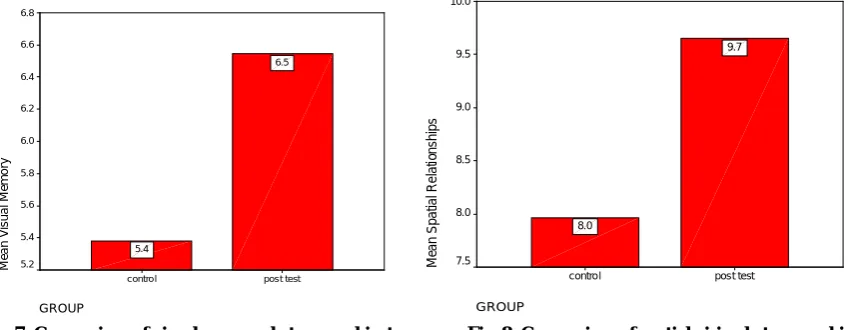
Fig. 7- Comparison of visual memory between subjects. Fig. 8- Comparison of spatial vision between subjects
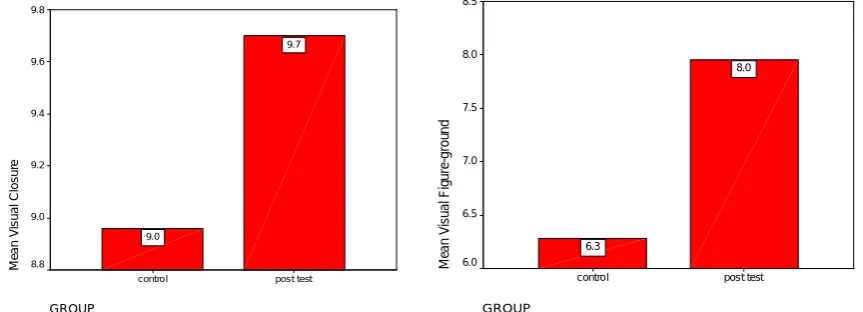
Fig. 9- Comparison of visual acuity stability between subjects. Fig. 10 - Comparison of visual acuity memory between subjects
A selected training period affects the visual acuity stability & of the memory of the vision sequence children with autism spectrum disorder.
Fig. 11- Compare the shape of the visual field between the subjects. Fig. 12- Comparison of visual presentation between subjects
A selected exercise period affects the shape of the visual field & visual presentation of children with autism spectrum disorder.
Discussion
Although motion activity is not part of the diagnostic criteria of children with autism spectrum disorders, the severity of motion damage in these children is so extensive that some researchers have studied motion deficiency as part of diagnostic criteria. The initial development of motor skills has the next cognitive development. The results of this study are in line with the results of Jafari et al. (2015), Cheldavi et al. (2014), about the effect of a selected training course on children's vision perception. Jafari et al. (2015) found that interference with perceptual-motion games is effective on the visual-spatial processing of children with coordination impairment. Therefore, diagnosis in children with developmental coordination impairment and appropriate interventions such as perceptual-motor games can be used to treat and develop children. By examining the effect of balancing exercises on controlling the status of children in the autism spectrum of children, Cheldavi et al. (2014) found that the balance program improves the control of the status of children with autism. Also, the effect of a selected training course on autistic children's behavioral disorder is consistent with the results of Lahmi (2011), Taziki et al. (2015), Pourjafar Abadi (2015). Also, there was a significant difference between the mean of pre-test and post-test on the behaviors of the experimental group. Overall, the results showed that Spark's adaptive motion program had a significant effect on the reduction of the pattern behaviors. Taziki et al. (2015) found that horse-riding therapy improved the social skills of children with autism. exercise, physical, and organized activities were used as a useful intervention for the treatment of autism and the development and improvement of motor skills and social interactions. The results of the study showed that a selected training course affects children's behavioral abnormalities (strain behavior, social interactions, communication of children) with autism spectrum disorder. These exercises also affect the perception of children's vision (vision recognition, visual acuity, spatial vision communication, visual acuity, visual acuity memory, visual field, visual acuity) with autism spectrum disorder. Therefore, it can be concluded that by designing targeted exercises, behavioral disorder in children with
high performance autism spectrum disorder has a positive effect on the process of improving and reducing the problems of perceived vision and, on the other hand, improving the behavioral disorders of these children.
References
1. Ahadian M. Effectiveness of simultaneous presentation of musical themes and facial expressions in improving the recognition of facial expressions in children with autism spectrum disorder [MSD thesis]. Tabriz University, Faculty of Psychology and Educational Sciences; 2017.
2. Ahmadi Kahjoogh M, Hoseini SA, Rassafiani M, Mohammadian F. Developmental coordination disorder: diagnosis, evaluations, and treatments. J Res Rehabil Sci. 2013; 9(3): 561-9.
3. Bagatell N, Mirigliani G, Patterson C, Reyes Y, Test L. The effectiveness of therapy ball chairs on classroom participation in children with Autism Spectrum Disorders. American Journal of Occupational Therapy. 2010; 64(6): 895-903.
4. Barbosa E, Cunha C, Santos A, Gonçalves MM, Salgado J. Narrative change in Gloria Films: Comparing various processes of therapeutic innovation. Psychotherapy Research. 2017; 27(1): 89-101.
5. Bar-Or O, Rowland T. Pediatric Exercise Medicine, From Physiologic Principles to Health Care Application; 2004.
6. Bass MM, Duchowny CA, Llabre MM. The effect of therapeutic horseback riding on social functioning in children with autism. J Autism Dev Disord. 2009; 39(9):1261-7.
7. Bedford R, Pickles A, Lord C. Early gross motor skills predict the subsequent development of language in children with autism spectrum disorder. Autism Res. 2016; 9(9): 993–1001.
8. Bumin G, Uyanik M, Yilmaz I, Kayihan H, Topçu M. Hydrotherapy for Rett syndrome. J Rehabil Med. 2003; 35(1): 44–45.
9. Cheldavi H, Shakerian S, Boshehri SNS, Zarghami M. The effects of balance training intervention on postural control of children with autism spectrum disorder: Role of sensory information. Research in Autism Spectrum Disorders. 2014; 8(1): 8-14.
10. Clearfield MW. Learning to walk changes infants’ social interactions. Infant Behavior and Development. 2011; 34:15–25
11. Connolly BH, Montgomery PC. Therapeutic exercise in developmental disabilities (3rd ed). Thorofare, NJ: Slack; 2005.
12. Dalvand H, Rassafiani M, Bagheri H. Family Centered Approach: A literature the review. Modern Rehabilitation. 2014; 8(1): 1-9.
13. Dalvand H, Dehghan L, Hadian MR, Feizy A, Hosseini SA. Relationship between gross motor and intellectual function in children with cerebral palsy: a cross-sectional study. Archives of physical medicine and rehabilitation. 2012; 93(3): 480-484
14. Danzhe Ghanavati E, Zarbakhsh M, Haghgoo H. Effects of Vestibular and Tactile Stimulation on Behavioral Disorders due to Sensory Processing Deficiency in 3-13 Years Old Iranian Autistic Children. Iranian Rehabilitation Journal. 2013; 11: 52-57.
15. Elliott RO, Dobbin AR, Rose GD, Soper HV. Vigorous, aerobic exercise versus general motor training activities: Effects on maladaptive and stereotypic behaviors of adults with both autism and mental retardation. Journal of autism and developmental disorders. 1994; 24(5): 565-576.
16. Fernald PS. Carl Rogers: Body-centered counsellor. Journal of Counselling & Development. 2000; 78: 172–179. 17. Fragala-Pinkham M, Haley SM, O’Neil ME. Group aquatic aerobic exercise for children with disabilities.
Developmental Medicine & Child Neurology. 2008; 50: 822–827.
18. Gallahue DL, Ozmun JC. Understanding motor development: Infants, Children, adolescents, adults. 7th ed. McGraw-Hill Education; 2011.
19. García-Villamisar DA, Dattilo J. Effects of a leisure programme on quality of life and stress of individuals with ASD. J Intellect Disabil Res. 2010; 54(7):611-9.
20. Gibbs V, Aldridge F, Chandler F, Witzlsperger E, Smith K. Brief report: An exploratory study comparing diagnostic outcomes for autism spectrum disorders under DSM-IV-TR with the proposed DSM-5 revision. Journal of Autism and Developmental Disorders. 2010; 42: 1750-1756,
21. Graziano PA, Reavis RD, Keane SP, Calkins SD. The role of emotion regulation and children’s early academic success. Journal of School Psychology. 2007; 45(1): 3-19.
22. Gabriels RL, Agnewa JA, Miller LJ, Gralla J, Pan Z, Goldson E, Ledbetter JC, Dinkins JP, Hooks E. Is there a relationship between restricted, repetitive, stereotyped behaviors and interests and abnormal sensory response in children with autism spectrum disorders? Research in Autism Spectrum Disorders. 2008; 2: 660–670.
24. Horgen KM. Utilization of an exercise ball in the classroom: Its effect on off-task behavior of a student with ADHD. 2009; 1-38.
25. Jafari FS, Abedi A, Farmarzi S, Shirzadi P, Jafari, MS. Effectiveness of Perceptual-Motor games on Visual – Spatial Processing in Children with Developmental Coordination Disorder. Exceptional Education. 2015; 3(131): 5-12.
26. Kosari S, Keyhani F, Hemayattalab R, Arabameri E. Effect of a Selected Physical Activity Program on the Development of Motor Skills in Attention Deficit /Hyperactivity Disorder (ADHD) and Autism (HFA) Children. Journal of development and motor learning. 2012; 4(2): 45-60.
27. Lahmi R. The effect of Spark's motion program on basic motor skills and the behavioral patterns of children aged 7 to 13 years with high performance autism [MSD thesis]. Program on Motor Behavior, Shahid Beheshti University, p: 110-89.
28. Mackie RT, McCulloch DL, Saunders KJ, Day RE, Philips S, Dutton GN. Relation between neurological status, refractive error, and visual acuity in children: a clinical study. Developmental Medicine & Child Neurology. 1998; 40: 31–7.
29. Maras KL, Wimmer MC, Robinson EJ, Bowler DM. Mental imagery scanning in autism spectrum disorder. Research in Autism Spectrum Disorders. 2014; 8(10): 1416-1423.
30. Milne E, Griffiths HJ. Visual Perception and Visual Dysfunction in Autism Spectrum Disorder: A Literature Review. Br. Irish Orthopt. J, 2007; 15-20.
31. Morris SL, Foster CJ, Parsons R, Falkmer M, Falkmer T, Rosalie SM. Differences in the use of vision and proprioception for postural control in autism spectrum disorder. Neuroscience. 2015; 307: 273-280.
32. Morrison RS, Sainato DM, Benchaaban D, Endo S. Increasing play skills of children with autism using activity schedules and correspondence training. Journal of early intervention. 2002; 25(1): 58-72.
33. Nicholson H, Kehle TJ, Bray MA, Heest JV. The effects of antecedent physical activity on the academic engagement of children with autism spectrum disorder. Psychology in the Schools. 2011; 48(2): 198-213.
34. O'Connor J, French R, Henderson H. Use of physical activity to improve behavior of children with autism: Two for one benefits. Palaestra. 2000; 16(3): 22-29.
35. Oriel KN, George CL, Peckus R, Semon A. The effects of aerobic exercise on academic engagement in young children with autism spectrum disorder. Pediatr Phys Ther. 2011; 23(2): 187-93
36. Pan CY, Tsai CL, Hsieh KW. Physical activity correlates for children with autism spectrum disorders in middle school physical education. Res Q Exerc Sport. 201; 82(3): 491-8.
37. Pitetti KH, Rendoff AD, Grover T, Beets MW. The efficacy of a 9-month treadmill walking program on the exercise capacity and weight reduction for adolescents with severe autism. J Autism Dev Disord. 2007; 37: 997– 1006 .
38. Pourjafar Abadi K. The Effect of Selected Perceptual-Motion Program Period on the High Performance of Autism Children's Motor Abilities and Interactions [MSD thesis]. Shahid Bahonar University of Kerman; 2017.
39. Rogers L, Hemmeter ML, Wolery M. Using a constant time delay procedure to teach foundational swimming skills to children with autism. Topics in Early Childhood Special Education. 2010; 30(2): 102-111.
40. Rajabi F, Namazizadeh M, Badami R. The Effect of Basic Gymnastics Exercises on Movement Skills of children with autism disorder. Motor Behavior. 2015; 7(20): 73-88.
41. Schenk Rootlieb A, Nieuwenhuizen O, Graaf Y, Wittebol Post D, Willemse J. The prevalence of cerebral visual disturbance in children with cerebral palsy. Developmental Medicine & Child Neurology. 1992; 34(6): 473-480 . 42. Schilling DL, Schwartz IS. Alternative Seating for Young Children with Autism Spectrum Disorder: Effects on
Classroom Behavior. Journal of Autism and Developmental Disorders. 2004; 34(4): 423.
43. Shojaei M. Motor development fourth edition. Tehran: Imam Hossein University Press. 2008; p: 166.
44. Staples KL, Reid G, Pushkarenko K, Crawford S. Physically Active Living for Individuals with ASD. International Handbook of Autism and Pervasive Developmental Disorders. 2011; p: 397-412.
45. Taziki T, Afrooz G, Ghasemzide S. Effectiveness of Helping Early Literacy with Practice Strategies on Reading Skills of Dyslexic Children. Exceptional Education. 2015; 1(129): 33-38.
46. Varzande Khanzaei M. The effect of motion-based vision training on visual acuity potential, perceptual perception and reaction time in MS patients[MSD thesis]. Ferdowsi University of Mashhad; 2017.
47. Webster-Stratton C, Reid M J, Hammond, M. Treating children with early-onset conduct problems: Intervention outcomes for parent, child, and teacher training. Journal of Clincial Child and Adolescent Psychology. 2004; 33, 105–124
48. Wilson CE, Brock J, Palermo R. Attention to social stimuli and facial identity recognition skills in autism spectrum disorder. J Intellect Disabil Res. 2010; 54(12): 1104-15.
50. Yilmaz I, Yanarda M, Birkan B, Bumin G. Effects of swimming training on physical fitness and water orientation in autism. Pediatr Int. 2004; 46(5): 624–626 .
51. Yilmaz İ, Birkan B, Konukman F, Erkan M. Using a constant time delay procedure to teach aquatic play skills to children with autism. Educ Train Dev Disabil. 2005; 40(2): 171–182.