Ranked Set Sampling for Weibull Distribution
Fatma Gül Akgül
Department of Computer Engineering, Artvin Çoruh University, Turkey [email protected]
Birdal Şenoğlu
Department of Statistics, Ankara University, Turkey [email protected]
Abstract
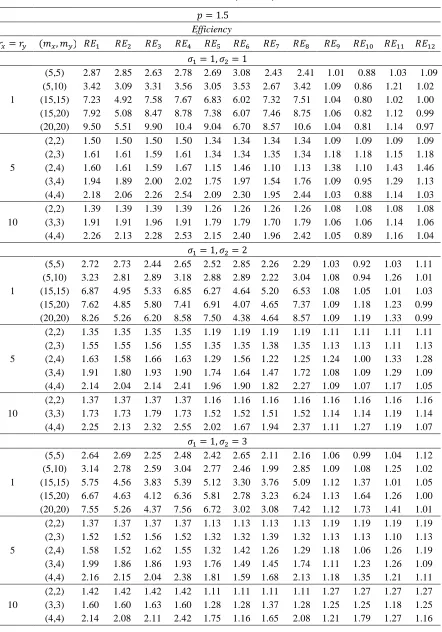
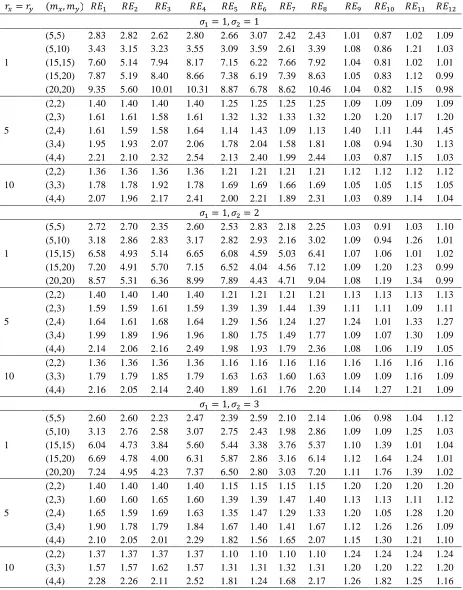
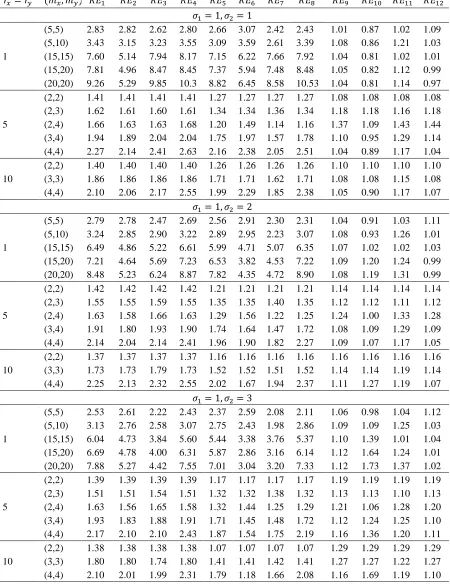
In statistical literature, estimation of 𝑅 = 𝑃(𝑋 < 𝑌) is a commonly-investigated problem, and consequently, there have been considerable number of studies dealing with its estimation of it under simple random sampling (SRS). However, in recent years, the ranked set sampling (RSS) method have been widely-used in the estimation of 𝑅. In this study, we consider the estimation of 𝑅 when the distribution of the both stress and strength are Weibull under the modification of RSS, which are extreme ranked set sampling (ERSS), median ranked set sampling (MRSS) and percentile ranked set sampling (PRSS). We obtain the estimators of 𝑅 using the maximum likelihood (ML) and the modified maximum likelihood (MML) methodologies under these modifications. Then the performances of proposed estimators are compared with the corresponding ML and MML estimators of 𝑅 using SRS via a Monte-Carlo simulation study.
Keywords: Stress-strength model, Extreme ranked set sampling, Median ranked set sampling, Percentile ranked set sampling, Efficiency.
1. Introduction
In the context of reliability, making statistical inferences concerning 𝑅 = 𝑃(𝑋 < 𝑌) has received considerable attention in the literature. In this sense, 𝑌 represents the strength of a system which is subject to stress 𝑋. It is clear that, the system fails when stress exceeds strength. Therefore, the stress-strength model 𝑅 = 𝑃(𝑋 < 𝑌) is a measure of system reliability. In general, the problem of the estimation of 𝑅 is studied under SRS data. For example, Church and Harris (1970), Tong (1977), Constantine et al. (1986) and Kundu and Gupta (2006) all discuss this problem when 𝑋 and 𝑌 are two independent normal, exponential, gamma and Weibull random variables; for more detailed information, see also Kotz et al. (2003). Nevertheless, in recent years, several authors have considered the estimation of 𝑅 based ranked set sampling (RSS) using both parametric and non-parametric methods. For example, Sengupta and Mukhuti (2008a, b), Mutlak et al. (2010), Dong et al. (2013) and Akgül and Şenoğlu (2017) tackled this problem using parametric methods. Mahdizadeh and Zamanzade (2016a,b, 2017), Dastbaravarde and Zamanzadeh (2017) discussed this problem using non-parametric methods.
While sampling units are constituted in the RSS method, due to not doing certain measurements, the possibility of doing error in ranking increases. In order to overcome this problem, various modifications of RSS have been suggested; see Samawi et al. (2017), such as extreme ranked set sampling, ERSS (Samavi et al., 1996), median ranked set sampling, MRSS (Muttlak, 1997), double ranked set sampling, DRSS (Saleh and Al-Kadiri, 2000), percentile ranked set sampling, PRSS (Muttlak, 2003), L ranked set sampling, LRSS (Al-Nasser, 2007) and neoteric ranked set sampling, NRSS (Zamanzade and Al-Omari, 2016). Besides these studies, several authors have considered the estimation of the parameters of well-known distributions using RSS or modifications of it. For example, the estimation of unknown parameters of exponential, extreme-value, logistic, Weibull and Pareto distributions was studied by Lam et al. (1994), Bhoj (1997), Abu-Dayyeh et al. (2004), Helu et al. (2010) and Abu-Abu-Dayyeh et al. (2013). Also, Shaibu and Muttlak (2002, 2004) were based on RSS and its modifications.
In this paper, we estimate system reliability 𝑅 under the ERSS, MRSS and PRSS methods where stress 𝑋~𝑊𝑒𝑖𝑏𝑢𝑙𝑙(𝑝, 𝜎1) and the strength 𝑌~𝑊𝑒𝑖𝑏𝑢𝑙𝑙(𝑝, 𝜎2) are both independent.
The reason for using these particular modifications is for illustration and brevity. Other modifications may also be conducted in a similar manner.
The probability density function (pdf) and the cumulative density function (cdf) of two parameter Weibull distribution with scale parameter 𝜎 and shape parameter 𝑝 are given as shown below
𝑓(𝑥, 𝑝, 𝜎) =𝑝 𝜎𝑥
𝑝−1𝑒−𝑥𝑝𝜎
, 𝑥 > 0, 𝑝 > 0, 𝜎 > 0, (1) and
𝐹(𝑥, 𝑝, 𝜎) = 1 − 𝑒−𝑥𝑝𝜎 , 𝑥 > 0, 𝑝 > 0, 𝜎 > 0, (2)
respectively. Using these pdf and cdf, it is easy to obtain that the system reliability 𝑅 is derived as follows
𝑅 = 𝑃(𝑋 < 𝑌) = ∫ 𝐹𝑋(𝑡)𝑓𝑦(𝑡)𝑑𝑡 ∞
0
= ∫ (1 − 𝑒−
𝑡𝑝 𝜎1) 𝑝
𝜎2𝑡
𝑝−1𝑒−𝜎2𝑡𝑝 ∞
0
𝑑𝑡
= 𝜎2
𝜎1+ 𝜎2. (3)
Similar to Akgül and Şenoğlu (2014) and Akgül (2015), we obtain the ML estimators of 𝑅
using two different approaches. First, the likelihood equations are solved using numerical methods. Second, we solve the likelihood equations by using the methodology called as modified maximum likelihood (MML), as proposed by Tiku (1967, 1968). This is based on the idea of linearization of non-linear terms in likelihood equations by using the Taylor series expansion around the expected values of the standardized order statistics. We then compare the performances of the proposed estimators with the corresponding estimators of
(MSE) criterion is used in comparisons to determine the most efficient estimator and sampling method.
The rest of the paper is organized as follows: In Section 2, we give brief descriptions regarding modifications of RSS. We obtain the ML estimators of 𝑅 based on ERSS, MRSS and PRSS in Section 3. In Section 4, we derive the MML estimators of 𝑅 based on the modifications of RSS. Section 5 is devoted to the Monte-Carlo simulation study. Comments and conclusions are given in the final section.
2. Descriptions of the modifications
In this section, we give brief descriptions of the ERSS, MRSS and PRSS methods. Definitions of notations frequently used in this section and in the rest of the paper are given as shown follows
𝑚: set sizes,
𝑟: number of cycles,
𝑛: sample sizes.
2.1 ERSS Method
ERSS, first proposed by Samawi et al. (1996), is more efficient than SRS when underlying distribution is symmetric. In addition, the usage of ERSS is more practical than the usage of RSS, because we are only interested in selecting the smallest and largest observations and measuring them.
We now present the procedure of ERSS as shown below
Step 1. Select 𝑚 random sets via SRS, each of size 𝑚, called as a cycle.
Step 2. Rank the units with respect to variable of interest by virtual comparisons, expert opinion or axillary variables.
Step 3. If set size 𝑚 is odd,
i. First, the smallest ranked unit is selected from the first (𝑚 − 1)/2 sets.
ii. Then, the median ranked unit is selected from the next set.
iii. Finally, the largest ranked unit is selected from the second (𝑚 − 1)/2 sets.
If set size 𝑚 is even,
i. The smallest ranked unit is selected from the first 𝑚/2 sets.
ii. Then, the largest ranked unit is selected from the second 𝑚/2 sets.
Step 4. Repeat Steps 1-3 𝑟 times, until the sample size 𝑛 = 𝑚𝑟 is obtained.
2.2 MRSS Method
The MRSS method was proposed by Muttlak (1997) to reduce the ranking error which is encountered in the RSS method. It also increases the efficiency of the estimator for both perfect and imperfect ranking.
Step 3. If set size 𝑚 is odd,
i. The median ranked unit is selected from each ordered set.
If set size 𝑚 is even,
i. The (𝑚/2)𝑡ℎ smallest ranked unit is selected from the first 𝑚/2 sets.
ii. Then, (𝑚 2⁄ + 1)𝑡ℎ smallest ranked unit is selected from the second 𝑚/2
sets.
2.3 PRSS Method
The PRSS method was proposed by Muttlak (2003) to estimate the population mean. This method has practical usage according to RSS, since we only select and measure the 𝑝𝑡ℎ
and 𝑞𝑡ℎ percentile of the sample. Here, 0 < 𝑝 < 1 and 𝑞 = 1 − 𝑝. Therefore, the PRSS method reduces the ranking error compared to the RSS method.
The procedure for the PRSS method is summarized as follows:
From the same reasons given in subsection 2.2, we will define the Step 3.
Step 3. If set size 𝑚 is odd,
i. First, the (𝑝(𝑚 + 1))𝑡ℎ the smallest ranked unit is selected from the first
(𝑚 − 1)/2 sets
ii. Then, the median ranked unit is selected from the following set.
iii. Finally, the (𝑞(𝑚 + 1))𝑡ℎ the smallest ranked unit is selected from the second (𝑚 − 1)/2 sets.
If set size 𝑚 is even,
i. The (𝑝(𝑚 + 1))𝑡ℎ smallest ranked unit is selected from the first (𝑚/2) sets.
ii. The (𝑞(𝑚 + 1))𝑡ℎ the smallest ranked unit is selected from the second
(𝑚/2) sets.
Here, it should be noted that (𝑝(𝑚 + 1)) and (𝑞(𝑚 + 1)) represent the nearest integer value of 𝑝(𝑚 + 1) and 𝑞(𝑚 + 1), respectively.
3. ML Estimators of 𝑹
In this section, we obtain the ML estimators of 𝑅 based on the modifications of RSS namely ERSS, MRSS and PRSS. As earlier stated, the stress 𝑋~𝑊𝑒𝑖𝑏𝑢𝑙𝑙(𝑝, 𝜎1) and the strength
𝑌~𝑊𝑒𝑖𝑏𝑢𝑙𝑙(𝑝, 𝜎2) are both independent. We also give a number of useful notations to be used throughout the paper as shown below:
𝑚𝑥 and 𝑚𝑦: the set sizes corresponding to 𝑋 and 𝑌, respectively.
𝑟𝑥 and 𝑟𝑦: the number of cycles corresponding to 𝑋 and 𝑌, respectively.
First of all, we obtain the likelihood equations for estimating the scale parameters 𝜎1 and 𝜎2 and as well as the shape parameter 𝑝 for the modifications of RSS separately.
Likelihood equations for ERSS:
Case 1: Odd set sizes. Let
𝑋(1)𝑖𝑐, 𝑖 = 1, … ,𝑚𝑥−1
2 ∪ 𝑋(𝑚𝑥+12 )𝑖𝑐, 𝑖 = 𝑚𝑥+1
2 𝑋(𝑚𝑥)𝑖𝑐, 𝑖 = 𝑚𝑥+1
2 + 1, … 𝑚𝑥;𝑐 = 1, … , 𝑟𝑥
and
𝑌(1)𝑗𝑙, 𝑗 = 1, … ,𝑚𝑦−1
2 ∪ 𝑌(𝑚𝑦+12 )𝑗𝑙, 𝑗 = 𝑚𝑦+1
2 ∪ 𝑌(𝑚𝑦)𝑗𝑙, 𝑗 = 𝑚𝑦+1
2 + 1, … 𝑚𝑦;𝑙 = 1, … , 𝑟𝑦
be ERSS samples. Here, let 𝑋(1)𝑖𝑐, 𝑋(𝑚𝑥+1 2 )𝑖𝑐
and 𝑋(𝑚𝑥)𝑖𝑐 be the smallest, median and largest order statistics from the 𝑖th set of size 𝑚𝑥 of the 𝑐th cycle, respectively. Similarly,
let 𝑌(1)𝑗𝑙, 𝑌
(𝑚𝑦+12 )𝑗𝑙 and 𝑌(𝑚𝑦)𝑗𝑙 be the smallest, median and largest order statistics from the
𝑗th set of size 𝑚𝑦 of the 𝑙th cycle, respectively.
Then, the likelihood function of the ERSS is shown below
𝐿 = ∏ ∏ 𝑓1:𝑚𝑥(𝑥(1)𝑖𝑐)
𝑚𝑥−1 2
𝑖=1 𝑟𝑥
𝑐=1
∏ 𝑓𝑚𝑥+1 2 :𝑚𝑥
(𝑥(𝑚𝑥+1 2 )
𝑚𝑥+1 2 𝑐
) 𝑟𝑥
𝑐=1
∏ ∏ 𝑓𝑚𝑥:𝑚𝑥(𝑥(𝑚𝑥)𝑖𝑐) 𝑚𝑥
𝑖=𝑚𝑥+12 +1 𝑟𝑥
𝑐=1
. ∏ ∏ 𝑓1:𝑚𝑦(𝑦(1)𝑗𝑙) 𝑚𝑦−1
2
𝑗=1 𝑟𝑦
𝑙=1
∏ 𝑓𝑚𝑦+1 2 :𝑚𝑦
(𝑦
(𝑚𝑦+12 )𝑚𝑦+12 𝑙) 𝑟𝑦
𝑙=1
∏ ∏ 𝑓𝑚𝑦:𝑚𝑦(𝑦(𝑚𝑦)𝑗𝑙) 𝑚𝑦
𝑗=𝑚𝑦+1 2 +1 𝑟𝑦
𝑙=1
(4)
where
𝑓1:𝑚𝑥(𝑥(1)) = 𝑚𝑥𝑓(𝑥(1))[1 − 𝐹(𝑥(1))] 𝑚𝑥−1
, (5) 𝑓𝑚𝑥:𝑚𝑥(𝑥(𝑚𝑥)) = 𝑚𝑥𝑓(𝑥(𝑚𝑥))[𝐹(𝑥(𝑚𝑥))]
𝑚𝑥−1
, (6)
𝑓𝑚𝑥+1 2 :𝑚𝑥
(𝑥(𝑚𝑥+1 2 )
) = 𝑚𝑥!
((𝑚𝑥−1
2 ) !)
2𝑓 (𝑥(𝑚𝑥+1
2 )
) [𝐹 (𝑥(𝑚𝑥+1 2 )
)]
𝑚𝑥−1 2
[1 − 𝐹 (𝑥(𝑚𝑥+1 2 )
)]
𝑚𝑥−1 2
, (7)
see equations (1) and (2) for 𝑓(𝑥) and 𝐹(𝑥). Similarly, 𝑓1:𝑚𝑦(𝑦(1)), 𝑓𝑚𝑦:𝑚𝑦(𝑦(𝑚𝑦)) and
𝑓𝑚𝑦+1 2 :𝑚𝑦
(𝑦
(𝑚𝑦+12 )) are defined as in (5), (6) and (7), respectively.
𝜕 ln 𝐿 𝜕𝑝 =
𝑛 + 𝑚
𝑝 + ∑ ∑ ln 𝑥(1)𝑖𝑐 𝑚′ 𝑖=1 𝑟𝑥 𝑐=1 −𝑚𝑥 𝜎1
∑ ∑ 𝑥(1)𝑖𝑐𝑝 ln 𝑥(1)𝑖𝑐 𝑚′
𝑖=1 𝑟𝑥
𝑐=1
+ ∑ ∑ ln 𝑥(𝑚𝑥)𝑖𝑐 𝑚𝑥
𝑖=𝑚′+2 𝑟𝑥 𝑐=1 − 1 𝜎1 ∑ ∑ 𝑥(𝑚 𝑥)𝑖𝑐 𝑝
ln 𝑥(𝑚𝑥)𝑖𝑐 𝑚𝑥
𝑖=𝑚′+2 𝑟𝑥
𝑐=1
+𝑚𝑥− 1 𝜎1
∑ ∑ 𝑥(𝑚𝑥)𝑖𝑐 𝑝
ln 𝑥(𝑚𝑥)𝑖𝑐
𝑒𝑥(𝑚𝑥)𝑖𝑐 𝑝 𝜎1 ⁄ − 1 𝑚𝑥
𝑖=𝑚′+2 𝑟𝑥
𝑐=1
+ ∑ ∑ ln 𝑦(1)𝑗𝑙 𝑚′′ 𝑗=1 𝑟𝑦 𝑙=1 −𝑚𝑦 𝜎2
∑ ∑ 𝑦(1)𝑗𝑙𝑝 ln 𝑦(1)𝑗𝑙 𝑚′′
𝑗=1 𝑟𝑦
𝑙=1
+ ∑ ∑ ln 𝑦(𝑚𝑦)𝑗𝑙 𝑚𝑦
𝑗=𝑚′′+2 𝑟𝑦
𝑙=1
− 1
𝜎2∑ ∑ 𝑦(𝑚𝑦)𝑗𝑙 𝑝
ln 𝑦(𝑚𝑦)𝑗𝑙 𝑚𝑦
𝑗=𝑚′′+2 𝑟𝑦
𝑙=1
+𝑚𝑦− 1
𝜎2 ∑ ∑
𝑦(𝑚
𝑦)𝑗𝑙 𝑝
ln 𝑦(𝑚𝑦)𝑗𝑙
𝑒𝑦(𝑚𝑦)𝑗𝑙 𝑝 𝜎2 ⁄ − 1 𝑚𝑦
𝑗=𝑚′′+2 𝑟𝑦
𝑙=1
+ ∑ ln 𝑥(𝑚′+1)𝑚′+1𝑐 𝑟𝑥
𝑐=1
−𝑚 ′+ 1
𝜎1 ∑ 𝑥(𝑚′+1)𝑚′+1𝑐 𝑝
ln 𝑥(𝑚′+1)𝑚′+1𝑐 𝑟𝑥
𝑐=1
+𝑚 ′
𝜎1 ∑
𝑥(𝑚′+1)𝑚′+1𝑐 𝑝
ln 𝑥(𝑚′+1)𝑚′+1𝑐
𝑒𝑥(𝑚′+1)𝑚′+1𝑐 𝑝 𝜎1 ⁄ − 1 𝑟𝑥 𝑐=1
+ ∑ ln 𝑦(𝑚′′+1)𝑚′′+1𝑙 𝑟𝑦
𝑙=1
−𝑚 ′′+ 1
𝜎2
∑ 𝑦(𝑚′′+1)𝑚′′+1𝑙 𝑝
ln 𝑦(𝑚′′+1)𝑚′′+1𝑙 𝑟𝑦
𝑙=1
+𝑚 ′′
𝜎2 ∑
𝑦(𝑚𝑝 ′′+1)𝑚′′+1𝑙ln 𝑦(𝑚′′+1)𝑚′′+1𝑙
𝑒𝑦(𝑚′′+1)𝑚′′+1𝑙 𝑝 𝜎2 ⁄ − 1 𝑟𝑦 𝑙=1
= 0, (8)
𝜕 ln 𝐿 𝜕𝜎1
= − 𝑛 𝜎1
+𝑚𝑥
𝜎12 ∑ ∑ 𝑥(1)𝑖𝑐 𝑝 𝑚′ 𝑖=1 𝑟𝑥 𝑐=1 + 1
𝜎12∑ ∑ 𝑥(𝑚𝑥)𝑖𝑐 𝑝 𝑚𝑥
𝑖=𝑚′+2 𝑟𝑥
𝑐=1
−𝑚𝑥− 1
𝜎12 ∑ ∑
𝑥(𝑚 𝑥)𝑖𝑐 𝑝 𝑒𝑥(𝑚𝑥)𝑖𝑐 𝑝 𝜎1 ⁄ − 1 𝑚𝑥
𝑖=𝑚′+2 𝑟𝑥
𝑐=1
+𝑚 ′+ 1
𝜎12 ∑ 𝑥(𝑚′+1)𝑚′+1𝑐 𝑝
𝑟𝑥
𝑐=1
−𝑚 ′
𝜎12∑
𝑥(𝑚𝑝 ′+1)𝑚′+1𝑐
𝑒𝑥(𝑚′+1)𝑚′+1𝑐 𝑝 𝜎1 ⁄ − 1 𝑟𝑥 𝑐=1
= 0, (9)
𝜕 ln 𝐿 𝜕𝜎2 = −
𝑚 𝜎2+
𝑚𝑦
𝜎22 ∑ ∑ 𝑦(1)𝑗𝑙 𝑝 𝑚′′ 𝑗=1 𝑟𝑦 𝑙=1 + 1
𝜎22∑ ∑ 𝑦(𝑚𝑦)𝑗𝑙 𝑝 𝑚𝑦
𝑗=𝑚′′+2 𝑟𝑦
𝑙=1
−𝑚𝑦− 1
𝜎22 ∑ ∑
𝑦(𝑚 𝑦)𝑗𝑙 𝑝 𝑒𝑦(𝑚𝑦)𝑗𝑙 𝑝 𝜎2 ⁄ − 1 𝑚𝑦
𝑗=𝑚′′+2 𝑟𝑦
𝑙=1
+𝑚 ′′+ 1
𝜎22 ∑ 𝑦(𝑚′′+1)𝑚′′+1𝑙 𝑝
𝑟𝑦
𝑙=1
−𝑚 ′′
𝜎22 ∑
𝑦(𝑚′′+1)𝑚′′+1𝑙 𝑝
𝑒𝑦(𝑚′′+1)𝑚′′+1𝑙 𝑝 𝜎2 ⁄ − 1 𝑟𝑦 𝑙=1
= 0, (10)
where 𝑚′= 𝑚𝑥−1 2 , 𝑚
Case 2. Even set sizes.
Let
𝑋(1)𝑖𝑐, 𝑖 = 1, … ,𝑚2𝑥∪ 𝑋(𝑚𝑥)𝑖𝑐, 𝑖 = 𝑚𝑥
2 + 1, … 𝑚𝑥; 𝑐 = 1, … , 𝑟𝑥
and
𝑌(1)𝑗𝑙, 𝑗 = 1, … ,𝑚𝑦
2 ∪ 𝑌(𝑚𝑦)𝑗𝑙, 𝑗 = 𝑚𝑦
2 + 1, … 𝑚𝑦; 𝑙 = 1, … , 𝑟𝑦
be ERSS samples. Here, 𝑋(1)𝑖𝑐, 𝑋(𝑚𝑥)𝑖𝑐, 𝑌(1)𝑗𝑙 and 𝑌(𝑚𝑦)𝑗𝑙 are defined as in Case 1. Then the likelihood function based on ERSS is given by
𝐿 = ∏ ∏ 𝑓1:𝑚𝑥(𝑥(1)𝑖𝑐)
𝑚𝑥 2
𝑖=1 𝑟𝑥
𝑐=1
∏ ∏ 𝑓𝑚𝑥:𝑚𝑥(𝑥(𝑚𝑥)𝑖𝑐) 𝑚𝑥
𝑖=𝑚𝑥 2 +1 𝑟𝑥
𝑐=1
. ∏ ∏ 𝑓1:𝑚𝑦(𝑦(1)𝑗𝑙)
𝑚𝑦 2
𝑗=1 𝑟𝑦
𝑙=1
∏ ∏ 𝑓𝑚𝑦:𝑚𝑦(𝑦(𝑚𝑦)𝑗𝑙) 𝑚𝑦
𝑗=𝑚𝑦2 +1 𝑟𝑦
𝑙=1
. (11)
See Case 1 for the definitions of 𝑓1:𝑚𝑥(𝑥(1)𝑖𝑐), 𝑓𝑚𝑥:𝑚𝑥(𝑥(𝑚𝑥)𝑖𝑐), 𝑓1:𝑚𝑦(𝑦(1)𝑗𝑙) and
𝑓𝑚𝑦:𝑚𝑦(𝑦(𝑚𝑦)𝑗𝑙).
REMARK:It should be noted that we do not give the likelihood equations here and in the rest of the paper to avoid repetition. Therefore, we only give the likelihood functions for the sampling procedure ERSS, MRSS and PRSS when the set sizes are odd and even. The only exception is Section 4 (i.e., ERSS procedure, Case 1). The solutions of the likelihood equations are given at the end of this section for the modifications of RSS, since the likelihood equations for ERSS, MRSS and PRSS are more or the less the same in each case. The main objective for doing this is for the sake of brevity. Likelihood equations for each modification and case are available upon request from the first author of this paper.
Likelihood functions for MRSS:
Case 1. Odd set sizes.
Let
𝑋(𝑚𝑥+1 2 )𝑖𝑐
, 𝑖 = 1, … , 𝑚𝑥, 𝑐 = 1, … , 𝑟𝑥 and 𝑌(𝑚𝑦+1 2 )𝑗𝑙
, 𝑗 = 1, … , 𝑚𝑦, 𝑙 = 1, … , 𝑟𝑦
be the MRSS samples. Then the likelihood function is shown below
𝐿 = ∏ ∏ 𝑓𝑚𝑥+1 2 :𝑚𝑥
(𝑥(𝑚𝑥+1 2 )𝑖𝑐
) 𝑚𝑥
𝑖=1 𝑟𝑥
𝑐=1
∏ ∏ 𝑓𝑚𝑦+1 2 :𝑚𝑦
(𝑦(𝑚𝑦+1 2 )𝑗𝑙
) 𝑚𝑦
𝑗=1
. 𝑟𝑦
𝑙=1
(12)
For the pdf of the (𝑚𝑥+1
Case 2. Even set sizes.
Let
𝑋(𝑚𝑥 2 )𝑖𝑐
, 𝑖 = 1, … ,𝑚𝑥
2 ∪ 𝑋(𝑚𝑥2 +1)𝑖𝑐, 𝑖 = 𝑚𝑥
2 + 1, … 𝑚𝑥; 𝑐 = 1, … , 𝑟𝑥
and
𝑌(𝑚𝑦 2 )𝑗𝑙
, 𝑗 = 1, … ,𝑚𝑦
2 ∪ 𝑌(𝑚𝑦 2 +1)𝑗𝑙
, 𝑗 =𝑚𝑦
2 + 1, … 𝑚𝑦; 𝑙 = 1, … , 𝑟𝑦,
be the MRSS samples. Then the likelihood function is given by
𝐿 = ∏ ∏ 𝑓𝑚𝑥
2 :𝑚𝑥(𝑥(𝑚𝑥2 )𝑖𝑐
) 𝑚𝑥 2 𝑖=1 𝑟𝑥 𝑐=1 ∏ ∏ 𝑓𝑚𝑥
2 +1:𝑚𝑥(𝑥(𝑚𝑥2 +1)𝑖𝑐
) 𝑚𝑥
𝑖=𝑚𝑥2 +1 𝑟𝑥
𝑐=1
. ∏ ∏ 𝑓𝑚𝑦 2 :𝑚𝑦
(𝑦(𝑚𝑦 2 )𝑗𝑙 ) 𝑚𝑦 2 𝑗=1 𝑟𝑦 𝑙=1 ∏ ∏ 𝑓𝑚𝑦
2 +1:𝑚𝑦
(𝑦(𝑚𝑦 2 +1)𝑗𝑙
) 𝑚𝑦
𝑗=𝑚𝑦2 +1
. 𝑟𝑦 𝑙=1 (13) where 𝑓𝑚𝑥
2 :𝑚𝑥(𝑥(𝑚𝑥2 )
) = 𝑚𝑥! (𝑚𝑥−1)!(𝑚𝑥2 −1)!
𝑓 (𝑥(𝑚𝑥 2 ) ) [𝐹 (𝑥(𝑚𝑥 2 ) )] 𝑚𝑥 2 −1
[1 − 𝐹 (𝑥(𝑚𝑥 2 ) )] 𝑚𝑥 2 (14) and 𝑓𝑚𝑥 2 +1:𝑚𝑥
(𝑥(𝑚𝑥 2+1)
) = 𝑚𝑥!
(𝑚𝑥−1)!(𝑚𝑥2)!
𝑓 (𝑥(𝑚𝑥 2+1) ) [𝐹 (𝑥(𝑚𝑥 2+1) )] 𝑚𝑥 2
[1 − 𝐹 (𝑥(𝑚𝑥 2+1)
)]
𝑚𝑥 2−1
(15)
are the pdfs of the (𝑚𝑥
2 ) 𝑡ℎ and the ( 𝑚𝑥
2 + 1) 𝑡ℎ order statistics, respectively. 𝑓𝑚𝑦
2 :𝑚𝑦
(𝑦(𝑚𝑦 2 )
) and 𝑓𝑚𝑦 2 +1:𝑚𝑦
(𝑦(𝑚𝑦 2 +1)
) are defined similarly as shown in (14) and (15),
respectively.
Likelihood functions for PRSS:
Case 1. Odd set sizes.
Let
𝑋(𝑎𝑥)𝑖𝑐, 𝑖 = 1, … ,𝑚𝑥−1
2 ∪ 𝑋(𝑚𝑥+12 )𝑖𝑐, 𝑖 = 𝑚𝑥+1
2 ∪ 𝑋(𝑏𝑥)𝑖𝑐, 𝑖 = 𝑚𝑥+1
2 + 1, … 𝑚𝑥; 𝑐 = 1, … , 𝑟𝑥
and
𝑌(𝑎𝑦)𝑗𝑙, 𝑗 = 1, … ,𝑚𝑦−1
2 ∪ 𝑌(𝑚𝑦+12 )𝑗𝑙, 𝑗 = 𝑚𝑦+1
2 ∪ 𝑌(𝑏𝑦)𝑗𝑙, 𝑗 = 𝑚𝑦+1
2 + 1, … 𝑚𝑦; 𝑙 = 1, … , 𝑟𝑦,
be PRSS samples. The likelihood function is
𝐿 = ∏ ∏ 𝑓𝑎𝑥:𝑚𝑥(𝑥(𝑎𝑥)𝑖𝑐) 𝑚𝑥−1 2 𝑖=1 𝑟𝑥 𝑐=1
∏ 𝑓𝑚𝑥+1
2 :𝑚𝑥
(𝑥(𝑚𝑥+1 2 ) 𝑚𝑥+1 2 𝑐 ) 𝑟𝑥 𝑐=1 ∏ ∏ 𝑓𝑏𝑥:𝑚𝑥(𝑥(𝑏𝑥)𝑖𝑐) 𝑚𝑥 𝑖=𝑚𝑥+1 2 +1 𝑟𝑥 𝑐=1 . ∏ ∏ 𝑓𝑎𝑦:𝑚𝑦(𝑦(𝑎𝑦)𝑗𝑙) 𝑚𝑦−1 2 𝑗=1 𝑟𝑦 𝑙=1
∏ 𝑓𝑚𝑦+1
2 :𝑚𝑦
where 0 < 𝑝 < 1, 𝑞 = 1 − 𝑝 and 𝑎𝑥 = (𝑝(𝑚𝑥+ 1)), 𝑏𝑥 = (𝑞(𝑚𝑥+ 1)); 𝑎𝑦 = (𝑝(𝑚𝑦+ 1)) and 𝑏𝑦 = (𝑞(𝑚𝑦+ 1)). 𝑎𝑥, 𝑏𝑥, 𝑎𝑦 and 𝑏𝑦 represent the nearest integer value. Here,
𝑓𝑎𝑥:𝑚𝑥(𝑥(𝑎𝑥)) =
𝑚𝑥!
(𝑚𝑥−1)!(𝑎𝑥−1)!𝑓(𝑥(𝑎𝑥))[𝐹(𝑥(𝑎𝑥))] 𝑎𝑥−1
[1 − 𝐹(𝑥(𝑎𝑥))] 𝑚𝑥−𝑎𝑥
, (17)
𝑓𝑏𝑥:𝑚𝑥(𝑥(𝑏𝑥)) = (𝑚 𝑚𝑥!
𝑥−1)!(𝑏𝑥−1)!𝑓(𝑥(𝑏𝑥))[𝐹(𝑥(𝑏𝑥))] 𝑏𝑥−1
[1 − 𝐹(𝑥(𝑏𝑥))] 𝑚𝑥−𝑏𝑥
, (18)
are the pdfs of the (𝑎𝑥)𝑡ℎ and the (𝑏𝑥)𝑡ℎ order statistics. Similarly, 𝑓𝑎𝑦:𝑚𝑦(𝑦(𝑎𝑦)) and
𝑓𝑏𝑦:𝑚𝑦(𝑦(𝑏𝑦)) are defined as in (17) and (18), respectively.
Case 2. Even set sizes.
Let
𝑋(𝑎𝑥)𝑖𝑐, 𝑖 = 1, … ,𝑚𝑥
2 ∪ 𝑋(𝑏𝑥)𝑖𝑐, 𝑖 = 𝑚𝑥
2 + 1, … 𝑚𝑥; 𝑐 = 1, … , 𝑟𝑥
and
𝑌(𝑎𝑦)𝑗𝑙, 𝑗 = 1, … ,𝑚𝑦
2 ∪ 𝑌(𝑏𝑦)𝑗𝑙, 𝑗 = 𝑚𝑦
2 + 1, … 𝑚𝑦; 𝑙 = 1, … , 𝑟𝑦,
be PRSS samples. Then the likelihood function is shown below
𝐿 = ∏ ∏ 𝑓𝑎𝑥:𝑚𝑥(𝑥(𝑎𝑥)𝑖𝑐)
𝑚𝑥 2
𝑖=1 𝑟𝑥
𝑐=1
∏ ∏ 𝑓𝑏𝑥:𝑚𝑥(𝑥(𝑏𝑥)𝑖𝑐) 𝑚𝑥
𝑖=𝑚𝑥 2 +1 𝑟𝑥
𝑐=1
. ∏ ∏ 𝑓𝑎𝑦:𝑚𝑦(𝑦(𝑎𝑦)𝑗𝑙)
𝑚𝑦 2
𝑗=1 𝑟𝑦
𝑙=1
∏ ∏ 𝑓𝑏𝑦:𝑚𝑦(𝑦(𝑏𝑦)𝑗𝑙) 𝑚𝑦
𝑗=𝑚𝑦2 +1 𝑟𝑦
𝑙=1
. (19)
ML estimation based on ERSS, MRSS and PRSS:
The solutions of the likelihood equations given for each modification and for each case are the ML estimators of the unknown parameters 𝑝, 𝜎1 and 𝜎2. However, these equations do
not have explicit solutions because of the non-linear functions, ℎ1(𝑥) = ln 𝑥, ℎ2(𝑥) = 𝑥𝑝
and ℎ3(𝑥) = 𝑥𝑝
𝑒𝑥𝑝 𝜎1⁄ −1; ℎ1(𝑦) = ln 𝑦, ℎ2(𝑦) = 𝑦𝑝 and ℎ3(𝑦) = 𝑦𝑝
𝑒𝑦𝑝 𝜎2⁄ −1. Therefore, we
resort to iterative methods.
The ML estimators of the unknown parameters 𝑝, 𝜎1 and 𝜎2 are represented by 𝑝̂, 𝜎̂1 and
𝜎̂2. By incorporating these estimators into (3), we obtain the ML estimators of 𝑅 based on ERSS, MRSS and PRSS as shown below
𝑅̂𝑀𝐿,𝐸𝑅𝑆𝑆= 𝜎̂2𝑀𝐿,𝐸𝑅𝑆𝑆
𝜎̂1𝑀𝐿,𝐸𝑅𝑆𝑆+𝜎̂2𝑀𝐿,𝐸𝑅𝑆𝑆, (20)
𝑅̂𝑀𝐿,𝑀𝑅𝑆𝑆 = 𝜎̂2𝑀𝐿,𝑀𝑅𝑆𝑆
𝜎̂1𝑀𝐿,𝑀𝑅𝑆𝑆+𝜎̂2𝑀𝐿,𝑀𝑅𝑆𝑆, (21)
𝑅̂𝑀𝐿,𝑃𝑅𝑆𝑆 = 𝜎̂2𝑀𝐿,𝑃𝑅𝑆𝑆
𝜎̂1𝑀𝐿,𝑃𝑅𝑆𝑆+𝜎̂2𝑀𝐿,𝑃𝑅𝑆𝑆, (22)
4. MML Estimators of 𝑹
In the previous section, we obtain the ML estimators of 𝑅 based on the modifications of RSS using iterative methods. In this section, explicit estimators of 𝑅 are obtained using the MML methodology for each corresponding modification. The cases of odd end even set sizes are considered separately as before.
MML methodology is applied to distributions belonging to the location-scale family. Therefore, we take the logarithm of the Weibull random variable and obtain the Extreme Value (EV) random variable which belongs to the location-scale family. In other words, if the random variable 𝑋 has Weibull distribution, then 𝑈 = ln 𝑋 has EV distribution with the following pdf and cdf
𝑓𝑈(𝑢, 𝜇, 𝜂) =𝜂1𝑒(
𝑢−𝜇 𝜂 −𝑒
𝑢−𝜇 𝜂 )
, −∞ < 𝑢 < ∞ (23) and
𝐹𝑈(𝑢, 𝜇, 𝜂) = 1 − 𝑒−𝑒( 𝑢−𝜇
𝜂 )
, −∞ < 𝑢 < ∞ (24) where 𝜇 ∈ 𝑅 is the location parameter and 𝜂 ∈ 𝑅+ is the scale parameter.
The parameters of the EV distribution can be expressed in terms of the parameters of the Weibull distribution as shown below
𝜇 =1
𝑝ln 𝜎 and 𝜂 = 1
𝑝. (25)
It is clear from these equalities that after obtaining the estimators of the location and the scale parameters of the EV distribution, the scale and the shape parameters of the Weibull distribution are obtained using the following inverse transformations
𝜎 = 𝑒𝜇𝑝 and 𝑝 =1
𝜂, (26)
respectively.
In the context of the stress-strength model, if both the random variables 𝑋 and 𝑌 are Weibull, then their logarithms 𝑈 = ln 𝑋 and 𝑉 = ln 𝑌 have EV distribution which is denoted by 𝑈~𝐸𝑉(𝜇1, 𝜂) and 𝑉~𝐸𝑉(𝜇2, 𝜂), respectively.
MML Estimators of the EV parameters based on ERSS:
In this section, we derive the MML estimator of 𝜇1, 𝜇2 and 𝜂 under ERSS when the set
sizes are both odd and even.
Case 1. Odd set sizes.
Let
𝑈(1)𝑖𝑐, 𝑖 = 1, … ,𝑚𝑥−1
2 ∪ 𝑈(𝑚𝑥+12 )𝑖𝑐, 𝑖 = 𝑚𝑥+1
2 ∪ 𝑈(𝑚𝑥)𝑖𝑐, 𝑖 = 𝑚𝑥+1
2 + 1, … 𝑚𝑥; 𝑐 = 1, … , 𝑟𝑥
and
𝑉(1)𝑗𝑙, 𝑗 = 1, … ,𝑚𝑦−1
2 ∪ 𝑉(𝑚𝑦+1 2 )𝑗𝑙
, 𝑗 =𝑚𝑦+1
2 ∪ 𝑉(𝑚𝑦)𝑗𝑙, 𝑗 = 𝑚𝑦+1
2 + 1, … 𝑚𝑦; 𝑙 = 1, … , 𝑟𝑦
to eliminate the effect of imperfect ranking. It is known that total sums are invariant to ordering, i.e., ∑𝑛𝑖=1𝑎𝑖 = ∑𝑛𝑖=1𝑎(𝑖). Similar statements can also be made for the MRSS and ERSS. We therefore do not mention it later in the paper for brevity.
The likelihood function can be written as follows
𝐿 = 1
𝜂𝑛+𝑚∏ ∏ 𝑓1:𝑚𝑥(𝑧(1)𝑖𝑐) 𝑚𝑥−1
2
𝑖=1 𝑟𝑥
𝑐=1
∏ 𝑓𝑚𝑥+1
2 :𝑚𝑥
(𝑧(𝑚𝑥+1 2 ) 𝑚𝑥+1 2 𝑐 ) 𝑟𝑥 𝑐=1 ∏ ∏ 𝑓𝑚𝑥:𝑚𝑥(𝑧(𝑚𝑥)𝑖𝑐) 𝑚𝑥 𝑖=𝑚𝑥+1 2 +1 𝑟𝑥 𝑐=1
. ∏ ∏ 𝑓1:𝑚𝑦(𝑤(1)𝑗𝑙)
𝑚𝑦−1 2
𝑗=1 𝑟𝑦
𝑙=1
∏ 𝑓𝑚𝑦+1
2 :𝑚𝑦
(𝑤
(𝑚𝑦+12 )𝑚𝑦+12 𝑙) 𝑟𝑦 𝑙=1 ∏ ∏ 𝑓𝑚𝑦:𝑚𝑦(𝑤(𝑚𝑦)𝑗𝑙) 𝑚𝑦 𝑗=𝑚𝑦+1 2 +1 𝑟𝑦 𝑙=1 (27) Here,
𝑧(1)𝑖𝑐 = ((𝑢(1)𝑖𝑐− 𝜇1) 𝜂⁄ ), 𝑖 = 1, … ,𝑚𝑥−1
2 , 𝑐 = 1, … , 𝑟𝑥, 𝑧(𝑚𝑥+1
2 ) 𝑚𝑥+1
2 𝑐
= ((𝑢(𝑚𝑥+1 2 )
𝑚𝑥+1 2 𝑐
− 𝜇1) 𝜂⁄ ), 𝑐 = 1, … , 𝑟𝑥 and
𝑧(𝑚𝑥)𝑖𝑐 = ((𝑢(𝑚𝑥)𝑖𝑐− 𝜇1) 𝜂⁄ ), 𝑖 =𝑚𝑥+1
2 + 1, … , 𝑚𝑥, 𝑐 = 1, … , 𝑟𝑥 (28)
are the standardized the smallest ordered statistic, median and the largest ordered statistic, respectively. Moreover, 𝑤(1)𝑗𝑙, 𝑤
(𝑚𝑦+12 )𝑚𝑦+12 𝑙 and 𝑤(𝑚𝑦) are defined similarly as in (28).
Then, the likelihood equations are obtained as follows
𝜕 ln 𝐿 𝜕𝜇1
= −1
𝜂∑ ∑ 𝑔1(𝑧(1)𝑖𝑐) 𝑚′
𝑖=1 𝑟𝑥
𝑐=1
+𝑚𝑥− 1
𝜂 ∑ ∑ 𝑔2(𝑧(1)𝑖𝑐) 𝑚′
𝑖=1 𝑟𝑥
𝑐=1
−1
𝜂∑ ∑ 𝑔1(𝑧(𝑚𝑥)𝑖𝑐) 𝑚𝑥
𝑖=𝑚′+2 𝑟𝑥
𝑐=1
−𝑚𝑥− 1
𝜂 ∑ ∑ 𝑔3(𝑧(𝑚𝑥)𝑖𝑐) 𝑚𝑥
𝑖=𝑚′+2 𝑟𝑥
𝑐=1
−1
𝜂∑ 𝑔1(𝑧(𝑚′+1)𝑚′+1𝑐) 𝑟𝑥
𝑐=1
+𝑚 ′
𝜂 ∑ 𝑔2(𝑧(𝑚′+1)𝑚′+1𝑐) 𝑟𝑥
𝑐=1
−𝑚 ′
𝜂 ∑ 𝑔3(𝑧(𝑚′+1)𝑚′+1𝑐) 𝑟𝑥
𝑐=1
= 0, (29)
𝜕 ln 𝐿 𝜕𝜇2
= −1
𝜂∑ ∑ 𝑔1(𝑤(1)𝑗𝑙) 𝑚′′
𝑗=1 𝑟𝑦
𝑙=1
+𝑚𝑦− 1
𝜂 ∑ ∑ 𝑔2(𝑤(1)𝑗𝑙) 𝑚′′
𝑗=1 𝑟𝑦
𝑙=1
−1
𝜂∑ ∑ 𝑔1(𝑤(𝑚𝑦)𝑗𝑙)
𝑚𝑦
𝑗=𝑚′′+2
𝑟𝑦
𝑙=1
−𝑚𝑦− 1
𝜂 ∑ ∑ 𝑔3(𝑤(𝑚𝑦)𝑗𝑙) 𝑚𝑦
𝑗=𝑚′′+2 𝑟𝑦
𝑙=1
−1
𝜂∑ 𝑔1(𝑤(𝑚′′+1)𝑚′′+1𝑙) 𝑟𝑦
𝑙=1
+𝑚 ′′
𝜂 ∑ 𝑔2(𝑤(𝑚′′+1)𝑚′′+1𝑙) 𝑟𝑦
𝑐=1
−𝑚 ′′
𝜂 ∑ 𝑔3(𝑤(𝑚′′+1)𝑚′′+1𝑙) 𝑟𝑦
𝑐=1
= 0, (30)
𝜕 ln 𝐿 𝜕𝜂 = −
𝑛 + 𝑚
𝜂 −
1
𝜂∑ ∑ 𝑔1(𝑧(1)𝑖𝑐) 𝑚′
𝑖=1 𝑟𝑥
𝑐=1
z(1)ic+𝑚𝑥− 1
𝜂 ∑ ∑ 𝑔2(𝑧(1)𝑖𝑐) 𝑚′
𝑖=1 𝑟𝑥
𝑐=1
𝑧(1)𝑖𝑐
− 1
𝜂∑ ∑ 𝑔1(𝑧(𝑚𝑥)𝑖𝑐) 𝑚𝑥
𝑟𝑥
𝑧(𝑚𝑥)𝑖𝑐−𝑚𝑥− 1
𝜂 ∑ ∑ 𝑔3(𝑧(𝑚𝑥)𝑖𝑐)𝑧(𝑚𝑥)𝑖𝑐 𝑚𝑥
−1
𝜂∑ ∑ 𝑔1(𝑤(1)𝑗𝑙) 𝑚′′
𝑗=1 𝑟𝑦
𝑙=1
𝑤(1)𝑗𝑙+𝑚𝑦− 1
𝜂 ∑ ∑ 𝑔2(𝑤(1)𝑗𝑙)𝑤(1)𝑗𝑙 𝑚′′
𝑗=1 𝑟𝑦
𝑙=1
−1
𝜂∑ ∑ 𝑔1(𝑤(𝑚𝑦)𝑗𝑙) 𝑤(𝑚𝑦)𝑗𝑙 𝑚𝑦
𝑗=𝑚′′+2 𝑟𝑦
𝑙=1
−𝑚𝑦− 1
𝜂 ∑ ∑ 𝑔3(𝑤(𝑚𝑦)𝑗𝑙) 𝑤(𝑚𝑦)𝑗𝑙 𝑚𝑦
𝑗=𝑚′′+2 𝑟𝑦
𝑙=1
−1
𝜂∑ 𝑔1(𝑧(𝑚′+1)𝑚′+1𝑐) 𝑟𝑥
𝑐=1
𝑧(𝑚′+1)𝑚′+1𝑐+
𝑚′
𝜂 ∑ 𝑔2(𝑧(𝑚′+1)𝑚′+1𝑐) 𝑟𝑥
𝑐=1
𝑧(𝑚′+1)𝑚′+1𝑐
−𝑚
′
𝜂 ∑ 𝑔3(𝑧(𝑚′+1)𝑚′+1𝑐) 𝑟𝑥
𝑐=1
𝑧(𝑚′+1)𝑚′+1𝑐−
1
𝜂∑ 𝑔1(𝑤(𝑚′′+1)𝑚′′+1𝑙) 𝑤(𝑚′′+1)𝑚′′+1𝑙 𝑟𝑦
𝑙=1
+𝑚 ′′
𝜂 ∑ 𝑔2(𝑤(𝑚′′+1)𝑚′′+1𝑙) 𝑤(𝑚′′+1)𝑚′′+1𝑙 𝑟𝑦
𝑙=1
−𝑚 ′′
𝜂 ∑ 𝑔3(𝑤(𝑚′′+1)𝑚′′+1𝑙) 𝑟𝑦
𝑙=1
𝑤(𝑚′′+1)𝑚′′+1𝑙 = 0. (31)
where 𝑚′= 𝑚𝑥−1 2 and 𝑚
′′ =𝑚𝑦−1 2 .
These equations do not admit explicit solutions because of the non-linear functions:
𝑔1(𝑧(𝑘)𝑖𝑐) =
𝑓′(𝑧(𝑘)𝑖𝑐)
𝑓(𝑧(𝑘)𝑖𝑐), 𝑔2(𝑧(𝑘)𝑖𝑐) =
𝑓(𝑧(𝑘)𝑖𝑐)
1−𝐹(𝑧(𝑘)𝑖𝑐), 𝑔3(𝑧(𝑘)𝑖𝑐) =
𝑓(𝑧(𝑘)𝑖𝑐)
𝐹(𝑧(𝑘)𝑖𝑐), 𝑘 = 1, 𝑚𝑥+1
2 , 𝑚𝑥;
𝑔1(𝑤(𝑘)𝑗𝑙) = 𝑓
′(𝑤 (𝑘)𝑗𝑙)
𝑓(𝑤(𝑘)𝑗𝑙), 𝑔2(𝑤(𝑘)𝑗𝑙) =
𝑓(𝑤(𝑘)𝑗𝑙)
1−𝐹(𝑤(𝑘)𝑗𝑙), 𝑔3(𝑤(𝑘)𝑗𝑙) =
𝑓(𝑤(𝑘)𝑗𝑙)
𝐹(𝑤(𝑘)𝑗𝑙),𝑘 = 1, 𝑚𝑦+1
2 , 𝑚𝑦.
(32) To obtain the MML estimators, we linearize these non-linear functions as below
𝑔1(𝑧(𝑘)𝑖𝑐) ≅ 𝛼1𝑘𝑢 − 𝛽1𝑘𝑢 𝑧(𝑘)𝑖𝑐, 𝑔2(𝑧(𝑘)𝑖𝑐) ≅ 𝛼2𝑘𝑢 + 𝛽2𝑘𝑢 𝑧(𝑘)𝑖𝑐,
𝑔3(𝑧(𝑘)𝑖𝑐) ≅ 𝛼3𝑘𝑢 − 𝛽3𝑘𝑢 𝑧(𝑘)𝑖𝑐, 𝑘 = 1,𝑚𝑥+1
2 , 𝑚𝑥;
𝑔1(𝑤(𝑘)𝑗𝑙) ≅ 𝛼1𝑘𝑣 − 𝛽1𝑘𝑣 𝑤(𝑘)𝑗𝑙, 𝑔2(𝑤(𝑘)𝑗𝑙) ≅ 𝛼2𝑘𝑣 + 𝛽2𝑘𝑣 𝑤(𝑘)𝑗𝑙,
𝑔3(𝑤(𝑘)𝑗𝑙) ≅ 𝛼3𝑘𝑣 − 𝛽3𝑘𝑣 𝑤(𝑘)𝑗𝑙, 𝑘 = 1, 𝑚𝑦+1
2 , 𝑚𝑦, (33)
by using the first two terms of the Taylor series expansion around the expected values of the 𝑘𝑡ℎ standardized ordered statistics, i.e., 𝑡𝑘𝑢 = 𝐸(𝑧(𝑘)𝑖𝑐), 𝑘 = 1,𝑚𝑥+1
2 , 𝑚𝑥 and 𝑡𝑘 𝑣 =
𝐸(𝑤(𝑘)𝑗𝑙), 𝑘 = 1,𝑚𝑦+1
2 , 𝑚𝑦. Here, 𝛼1𝑘𝑢 = 1 − 𝑒𝑡𝑘𝑢 + 𝑡
𝑘𝑢𝑒𝑡𝑘 𝑢
, 𝛽1𝑘𝑢 = 𝑒𝑡𝑘𝑢,
𝛼2𝑘𝑢 = 𝑒𝑡𝑘𝑢 − 𝑡 𝑘𝑢𝑒𝑡𝑘
𝑢
, 𝛽2𝑘𝑢 = 𝑒𝑡𝑘𝑢,
𝛼3𝑘𝑢 =𝑓(𝑡𝑘𝑢) 𝐹(𝑡𝑘𝑢)
+ 𝛽3𝑘𝑢 𝑡𝑘𝑢, 𝛽3𝑘𝑢 = (𝑒𝑡𝑘
𝑢
−1)𝑓(𝑡𝑘𝑢)𝐹(𝑡𝑘𝑢)+𝑓(𝑡𝑘𝑢) 2
𝐹(𝑡𝑘𝑢)2 ,
𝑡𝑘𝑢 = ln (− ln (1 − 𝑘
𝑚𝑥+1)), 𝑘 = 1, 𝑚𝑥+1
(𝛼1𝑘𝑣 , 𝛽1𝑘𝑣 ), (𝛼2𝑘𝑣 , 𝛽2𝑘𝑣 ) and (𝛼3𝑘𝑣 , 𝛽3𝑘𝑣 ) are exactly the same as in (34) except that 𝑡𝑘𝑢 are replaced by 𝑡𝑘𝑣. 𝑡𝑘𝑢 and 𝑡𝑘𝑣 are obtained from the following equations
∫𝑡𝑘𝑢 𝑓(𝑧)𝑑𝑧
−∞ =
𝑘
𝑚𝑥+1, 𝑘 = 1, 𝑚𝑥+1
2 , 𝑚𝑥 and
∫𝑡𝑘𝑣 𝑓(𝑤)𝑑𝑤
−∞ =
𝑘
𝑚𝑦+1, 𝑘 = 1, 𝑚𝑦+1
2 , 𝑚𝑦, (35)
respectively.
By incorporating equations (33) in equations (29)-(31), modified likelihood equations are obtained. The solutions of these equations are the following MML estimators
𝜇̂1𝑀𝑀𝐿,𝐸𝑅𝑆𝑆 = 𝐾1− Δ1
𝑚1𝜂̂𝑀𝑀𝐿,𝐸𝑅𝑆𝑆, 𝜇̂2𝑀𝑀𝐿,𝐸𝑅𝑆𝑆 = 𝐾2− Δ2
𝑚2𝜂̂𝑀𝑀𝐿,𝐸𝑅𝑆𝑆
𝜂̂𝑀𝑀𝐿,𝐸𝑅𝑆𝑆 =−𝐵+√𝐵2+4𝐴𝐶
2(𝑛+𝑚) , (36)
where
𝛿1𝑢 = 𝛽11𝑢 + (𝑚𝑥− 1)𝛽21𝑢 , 𝛿2𝑢 = 𝛽1𝑚𝑢 𝑥+ (𝑚𝑥− 1)𝛽3𝑚𝑢 𝑥,
𝛿3𝑢 = (𝑚𝑥−1
2 ) 𝛽1𝑚𝑥+12
𝑢 + (𝑚𝑥−1
2 ) 𝛽2𝑚𝑥+12
𝑢 + 𝛽
3𝑚𝑥+12 𝑢
, 𝑚1 = 𝑟𝑥[𝑚𝑥−1 2 (𝛿1
𝑢+ 𝛿
2𝑢) + 𝛿3𝑢],
𝐾1 =
𝛿1𝑢∑ ∑ 𝑢(1)𝑖𝑐 𝑚𝑥−1
2 𝑖=1 𝑟𝑥
𝑐=1 +𝛿2𝑢∑ ∑𝑚𝑥 𝑢(𝑚𝑥)𝑖𝑐
𝑖=𝑚𝑥+1 2 +1 𝑟𝑥
𝑐=1 +𝛿3𝑢∑ 𝑢(𝑚𝑥+1
2 )𝑚𝑥+12 𝑐 𝑟𝑥
𝑐=1
𝑚1 ,
Δ1𝑢 = 𝛼11𝑢 − (𝑚𝑥− 1)𝛼21𝑢 , Δ2𝑢 = 𝛼1𝑚𝑢 𝑥+ (𝑚𝑥− 1)𝛼3𝑚𝑢 𝑥,
Δ3𝑢 = (𝑚𝑥−1
2 ) 𝛼1𝑚𝑥+12
𝑢 − (𝑚𝑥−1
2 ) 𝛼2𝑚𝑥+12
𝑢 + 𝛼
3𝑚𝑥+12 𝑢
, Δ1 = 𝑟𝑥[𝑚𝑥−1 2 (Δ1
𝑢+ Δ 2 𝑢) + Δ
3 𝑢],
𝛿1𝑣 = 𝛽11𝑣 + (𝑚𝑦− 1)𝛽21𝑣 , 𝛿2𝑣 = 𝛽1𝑚𝑣 𝑦 + (𝑚𝑦− 1)𝛽3𝑚𝑣 𝑦,
𝛿3𝑣 = (𝑚𝑦−1
2 ) 𝛽1𝑚𝑦+12
𝑣 + (𝑚𝑦−1
2 ) 𝛽2𝑚𝑦+12
𝑣 + 𝛽
3𝑚𝑦+12 𝑣
, 𝑚2 = 𝑟𝑦[𝑚𝑦−1 2 (𝛿1
𝑣+ 𝛿
2𝑣) + 𝛿3𝑣],
𝐾2 =
𝛿1𝑣∑ ∑ 𝑣(1)𝑗𝑙 𝑚𝑦−1
2 𝑗=1 𝑟𝑦
𝑙=1 +𝛿2𝑣∑ ∑𝑚𝑦 𝑣(𝑚𝑦)𝑗𝑙
𝑗=𝑚𝑦+12 +1 𝑟𝑦
𝑙=1 +𝛿3𝑣∑ 𝑣
(𝑚𝑦+12 )𝑚𝑦+12 𝑙 𝑟𝑦
𝑙=1
𝑚2 ,
Δ1𝑣 = 𝛼
11𝑣 − (𝑚𝑦− 1)𝛼21𝑣 , Δ2𝑣 = 𝛼1𝑚𝑦
𝑣 + (𝑚
𝑦− 1)𝛼3𝑚𝑦 𝑣 ,
Δ3𝑣 = (𝑚𝑦−1
2 ) 𝛼1𝑚𝑦+12
𝑣 − (𝑚𝑦−1
2 ) 𝛼2𝑚𝑦+12
𝑣 + 𝛼
3𝑚𝑦+12 𝑣
, Δ2= 𝑟𝑦[ 𝑚𝑦−1
2 (Δ1 𝑣+ Δ 2 𝑣) + Δ 3 𝑣], 𝐴 = 𝑛 + 𝑚,
𝐵 = Δ1𝑢∑ ∑ (𝑢(1)𝑖𝑐− 𝐾1)
𝑚𝑥−1 2
𝑖=1 𝑟𝑥
𝑐=1
+ Δ2𝑢∑ ∑ (𝑢(𝑚𝑥)𝑖𝑐− 𝐾1)
𝑚𝑥
𝑖=𝑚𝑥+1
2 +1
𝑟𝑥
𝑐=1
+ Δ3𝑢∑ (𝑢(𝑚𝑥+1 2 )
𝑚𝑥+1 2 𝑐
− 𝐾1) 𝑟𝑥
𝑐=1
+Δ1𝑣∑ ∑ (𝑣(1)𝑗𝑙− 𝐾2)
𝑚𝑦−1 2
𝑗=1 𝑟𝑦
𝑙=1
+ Δ2𝑣∑ ∑ (𝑣(𝑚𝑦)𝑗𝑙− 𝐾2) 𝑚𝑦
𝑗=𝑚𝑦+12 +1 𝑟𝑦
𝑙=1
+ Δ3𝑣∑ (𝑣(𝑚𝑦+1
2 ) 𝑚𝑦+1
2 𝑙
− 𝐾2) 𝑟𝑦
𝑙=1
,
𝐶 = δ1𝑢∑ ∑ (𝑢(1)𝑖𝑐− 𝐾1) 2 𝑚𝑥−1 2 𝑖=1 𝑟𝑥 𝑐=1
+ δ2𝑢∑ ∑ (𝑢(𝑚𝑥)𝑖𝑐− 𝐾1)
2 𝑚𝑥
𝑖=𝑚𝑥+12 +1 𝑟𝑥
+δ3𝑢∑ (𝑢(𝑚𝑥+1 2 )
𝑚𝑥+1 2 𝑐
− 𝐾1) 2 𝑟𝑥
𝑐=1
+ δ1𝑣∑ ∑ (𝑣
(1)𝑗𝑙− 𝐾2) 2
𝑚𝑦−1 2
𝑗=1 𝑟𝑦
𝑙=1
+δ2𝑣∑ ∑ (𝑣(𝑚𝑦)𝑗𝑙− 𝐾2)
2 𝑚𝑦
𝑗=𝑚𝑦+1
2 +1
𝑟𝑦
𝑙=1
+ δ3𝑣∑ (𝑣
(𝑚𝑦+12 )𝑙− 𝐾2) 2 𝑟𝑦
𝑙=1
. (37)
Case 2. Even set sizes.
Let
𝑈(1)𝑖𝑐, 𝑖 = 1, … ,𝑚𝑥
2 ∪ 𝑈(𝑚𝑥)𝑖𝑐, 𝑖 = 𝑚𝑥
2 + 1, … 𝑚𝑥; 𝑐 = 1, … , 𝑟𝑥
and
𝑉(1)𝑗𝑙, 𝑗 = 1, … ,𝑚𝑦
2 ∪ 𝑉(𝑚𝑦)𝑗𝑙, 𝑗 = 𝑚𝑦
2 + 1, … 𝑚𝑦; 𝑙 = 1, … , 𝑟𝑦
be ERSS samples. Then, the likelihood function can be written as follows
𝐿 = 1
𝜂𝑛+𝑚∏ ∏ 𝑓1:𝑚𝑥(𝑧(1)𝑖𝑐) 𝑚𝑥
2
𝑖=1 𝑟𝑥
𝑐=1
∏ ∏ 𝑓𝑚𝑥:𝑚𝑥(𝑧(𝑚𝑥)𝑖𝑐) 𝑚𝑥
𝑖=𝑚𝑥 2 +1 𝑟𝑥
𝑐=1
∏ ∏ 𝑓1:𝑚𝑦(𝑤(1)𝑗𝑙)
𝑚𝑦 2
𝑗=1 𝑟𝑦
𝑙=1
∏ ∏ 𝑓𝑚𝑦:𝑚𝑦(𝑤(𝑚𝑦)𝑗𝑙) 𝑚𝑦
𝑗=𝑚𝑦2 +1 𝑟𝑦
𝑙=1
. (38)
where 𝑧(1)𝑖𝑐and 𝑧(𝑚𝑥)𝑖𝑐are the standardized smallest and the largest ordered statistics. Furthermore, 𝑤(1)𝑗𝑙 and 𝑤(𝑚𝑦)𝑗𝑙 are defined similarly.
Following the same steps as in Case 1, we obtain the MML estimators of 𝜇1, 𝜇2 and 𝜂 as in equation (36). We did not reproduce the details for the sake of brevity. We, therefore, just give the equalities given below. Here,
𝛿1𝑢 = 𝛽11𝑢 + (𝑚𝑥− 1)𝛽21𝑢 , 𝛿2𝑢 = 𝛽1𝑚𝑢 𝑥+ (𝑚𝑥− 1)𝛽3𝑚𝑢 𝑥,
𝑚1 =𝑟𝑥𝑚𝑥 2 (𝛿1
𝑢 + 𝛿
2𝑢) , 𝐾1 =
𝛿1𝑢∑ ∑ 𝑢(1)𝑖𝑐 𝑚𝑥
2 𝑖=1 𝑟𝑥
𝑐=1 +𝛿2𝑢∑ ∑𝑚𝑥 𝑢(𝑚𝑥)𝑖𝑐 𝑖=𝑚𝑥2 +1 𝑟𝑥
𝑐=1
𝑚1 ,
Δ1𝑢 = 𝛼11𝑢 − (𝑚𝑥− 1)𝛼21𝑢 , Δ2𝑢 = 𝛼1𝑚𝑢 𝑥+ (𝑚𝑥− 1)𝛼3𝑚𝑢 𝑥, Δ1 = 𝑟𝑥𝑚𝑥 2 (Δ1
𝑢+ Δ 2 𝑢),
𝛿1𝑣 = 𝛽11𝑣 + (𝑚𝑦− 1)𝛽21𝑣 , 𝛿2𝑣 = 𝛽1𝑚𝑣 𝑦 + (𝑚𝑦− 1)𝛽3𝑚𝑣 𝑦,
𝑚2 = 𝑟𝑦𝑚𝑦 2 (𝛿1
𝑣+ 𝛿
2𝑣), 𝐾2 =
𝛿1𝑣∑ ∑ 𝑣(1)𝑗𝑙 𝑚𝑦
2 𝑗=1 𝑟𝑦
𝑙=1 +𝛿2𝑣∑ ∑𝑚𝑦 𝑣(𝑚𝑦)𝑗𝑙 𝑗=𝑚𝑦2 +1 𝑟𝑦
𝑙=1
𝑚2 ,
Δ1𝑣 = 𝛼11𝑣 − (𝑚𝑦− 1)𝛼21𝑣 , Δ2𝑣 = 𝛼1𝑚𝑣 𝑦 + (𝑚𝑦− 1)𝛼3𝑚𝑣 𝑦, Δ2 = 𝑟𝑦𝑚𝑦 2 (Δ1
𝑣+ Δ 2 𝑣),
𝐵 = Δ1𝑢∑ ∑ (𝑢
(1)𝑖𝑐− 𝐾1) 𝑚𝑥
2 𝑖=1 𝑟𝑥
𝑐=1 + Δ2𝑢∑ ∑ (𝑢(𝑚𝑥)𝑖𝑐− 𝐾1)
𝑚𝑥 𝑖=𝑚𝑥
2 +1 𝑟𝑥
𝑐=1
+Δ1𝑣∑ ∑ (𝑣(1)𝑗𝑙
𝑚𝑦 2
𝑗=1 − 𝐾2)
𝑟𝑦
𝑙=1 + Δ2
𝑣∑ ∑ (𝑣
(𝑚𝑦)𝑗𝑙 𝑚𝑦
𝑗=𝑚𝑦2 +1 − 𝐾2) 𝑟𝑦
𝑙=1 ,
𝐶 = 𝛿1𝑢∑ ∑ (𝑢(1)𝑖𝑐− 𝐾1)2 𝑚𝑥
2 𝑖=1 𝑟𝑥
𝑐=1 + δ2𝑢∑ ∑ (𝑢(𝑚𝑥)𝑖𝑐− 𝐾1)
2 𝑚𝑥
𝑖=𝑚𝑥 2 +1 𝑟𝑥
𝑐=1
+δ1𝑣∑ ∑ (𝑣(1)𝑗𝑙 − 𝐾2)2 𝑚𝑦
2 𝑗=1 𝑟𝑦
𝑙=1 + δ2
𝑣∑ ∑ (𝑣
(𝑚𝑦)𝑗𝑙− 𝐾2) 2 𝑚𝑦
𝑗=𝑚𝑦2 +1 𝑟𝑦
𝑙=1 . (39)
Note: It is easy to see that the MML estimators have closed forms and are easy to compute. Moreover, the MML estimators are highly efficient even for small sample sizes. For the asymptotic properties of the MML estimators, see Vaughan and Tiku (2000) and Tiku and Akkaya (2004).
MML Estimators of the EV parameters based on MRSS:
We now obtain the MML estimators of 𝜇1, 𝜇2 and 𝜂 based on MRSS paying attention to the odd and even set sizes. For the sake of simplicity, we only give the MML estimators of the unknown parameters without giving the details of the derivations. Since the procedure used here is more or less the same as the procedure given in ERSS.
Case 1. Odd set sizes.
Let
𝑈(𝑚𝑥+1 2 )𝑖𝑐
, 𝑖 = 1, … , 𝑚𝑥, 𝑐 = 1, … , 𝑟𝑥 and 𝑉(𝑚𝑦+1 2 )𝑗𝑙
, 𝑗 = 1, … , 𝑚𝑦, 𝑙 = 1, … , 𝑟𝑦
be MRSS samples. Then the likelihood function based on MRSS is given by
𝐿 = 1
𝜂𝑛+𝑚∏ ∏ 𝑓𝑚𝑥+12 :𝑚𝑥(𝑧(𝑚𝑥+12 )𝑖𝑐) 𝑚𝑥
𝑖=1 𝑟𝑥
𝑐=1
∏ ∏ 𝑓𝑚𝑦+1 2 :𝑚𝑦
(𝑤
(𝑚𝑦+12 )𝑗𝑙) 𝑚𝑦
𝑗=1
. 𝑟𝑦
𝑙=1
(40)
By taking the derivatives of the log-likelihood functions with respect to the unknown
parameters and equating them to zero we obtain the likelihood equations as 𝜕 ln 𝐿
𝜕 ln 𝜇1 = 0, 𝜕 ln 𝐿
𝜕 ln 𝜇2= 0 and 𝜕 ln 𝐿
𝜕 ln 𝜂 = 0. By linearizing non-linear functions in the likelihood equations
and incorporating them into the likelihood equations, we obtain modified likelihood
equations as 𝜕 ln 𝐿
∗
𝜕 ln 𝜇1 = 0, 𝜕 ln 𝐿∗
𝜕 ln 𝜇2 = 0 and 𝜕 ln 𝐿∗
𝜕 ln 𝜂 = 0. The solutions of these modified
likelihood equations are the following MML estimators
𝜇̂1𝑀𝑀𝐿,𝑀𝑅𝑆𝑆 = 𝐾1− Δ1
𝑚1𝜂̂𝑀𝑀𝐿,𝑀𝑅𝑆𝑆, 𝜇̂2𝑀𝑀𝐿,𝑀𝑅𝑆𝑆 = 𝐾2− Δ2
𝑚2𝜂̂𝑀𝑀𝐿,𝑀𝑅𝑆𝑆
𝜂̂𝑀𝑀𝐿,𝑀𝑅𝑆𝑆 =−𝐵+√𝐵2+4𝐴𝐶
2(𝑛+𝑚) , (41)
where,
𝛿1𝑢 = 𝛽1𝑚𝑥+1 2
𝑢 + (𝑚𝑥−1
2 ) 𝛽2𝑚𝑥+1 2
𝑢 + (𝑚𝑥−1
𝑚1 = 𝑟𝑥𝑚𝑥𝛿1𝑢, 𝐾1 =
𝛿1𝑢∑ ∑ 𝑢(𝑚𝑥+1 2 )𝑖𝑐 𝑚𝑥
𝑖=1 𝑟𝑥 𝑐=1
𝑚1 ,
Δ1𝑢 = 𝛼 1𝑚𝑥+12
𝑢 + (𝑚𝑥−1
2 ) 𝛼2𝑚𝑥+12
𝑢 − (𝑚𝑥−1
2 ) 𝛼3𝑚𝑥+12 𝑢
, Δ1 = 𝑟𝑥𝑚𝑥Δ1𝑢,
𝛿1𝑣 = 𝛽 1𝑚𝑦+12
𝑣
+ (𝑚𝑦−1
2 ) 𝛽2𝑚𝑦+12 𝑣
+ (𝑚𝑦−1
2 ) 𝛽3𝑚𝑦+12 𝑣
,
𝑚2 = 𝑟𝑦𝑚𝑦𝛿1𝑣, 𝐾2 =
𝛿1𝑣∑ ∑ 𝑣 (𝑚𝑦+1 2 )𝑗𝑙 𝑚𝑦 𝑗=1 𝑟𝑦 𝑙=1
𝑚2 ,
Δ1𝑣 = 𝛼 1𝑚𝑦+12
𝑣 + (𝑚𝑦−1
2 ) 𝛼2𝑚𝑦+12
𝑣 − (𝑚𝑦−1
2 ) 𝛼3𝑚𝑦+12 𝑣
, Δ1 = 𝑟𝑦𝑚𝑦Δ1𝑣,
𝐴 = 𝑛 + 𝑚,
𝐵 =Δ1𝑢∑ ∑ (𝑢
(𝑚𝑥+12 )𝑖𝑐− 𝐾1) 𝑚𝑥
𝑖=1 𝑟𝑥
𝑐=1 + Δ1𝑣∑ ∑ (𝑣(𝑚𝑦+1
2 )𝑗𝑙
− 𝐾2) 𝑚𝑦
𝑗=1 𝑟𝑦
𝑙=1 ,
𝐶 =δ1𝑢∑ ∑ (𝑢(𝑚𝑥+1 2 )𝑖𝑐
− 𝐾1) 𝑚𝑥
𝑖=1 𝑟𝑥 𝑐=1
2
+ δ1𝑣∑ ∑ (𝑣
(𝑚𝑦+12 )𝑗𝑙− 𝐾2) 2 𝑚𝑦
𝑗=1 𝑟𝑦
𝑙=1 . (42)
Case 2. Even set sizes.
Let
𝑈(𝑚𝑥 2 )𝑖𝑐
, 𝑖 = 1, … ,𝑚𝑥
2 ∪ 𝑈(𝑚𝑥2 +1)𝑖𝑐, 𝑖 = 𝑚𝑥
2 + 1, … , 𝑚𝑥; 𝑐 = 1, … , 𝑟𝑥
and
𝑉(𝑚𝑦 2 )𝑗𝑙
, 𝑗 = 1, … ,𝑚𝑦
2 ∪ 𝑉(𝑚𝑦2 +1)𝑗𝑙, 𝑗 = 𝑚𝑦
2 + 1, … , 𝑚𝑦; 𝑙 = 1, … , 𝑟𝑦
be MRSS samples. Then, the likelihood function is shown below
𝐿 = 1
𝜂𝑛+𝑚∏ ∏ 𝑓𝑚𝑥2 :𝑚𝑥(𝑧(𝑚𝑥2 )𝑖𝑐) 𝑚𝑥 2 𝑖=1 𝑟𝑥 𝑐=1 ∏ ∏ 𝑓𝑚𝑥
2 +1:𝑚𝑥
(𝑧(𝑚𝑥 2 +1)𝑖𝑐
) 𝑚𝑥
𝑖=𝑚𝑥2 +1 𝑟𝑥
𝑐=1
. ∏ ∏ 𝑓𝑚𝑦 2 :𝑚𝑦
(𝑤(𝑚𝑦 2 )𝑗𝑙 ) 𝑚𝑦 2 𝑗=1 𝑟𝑦 𝑙=1 ∏ ∏ 𝑓𝑚𝑦
2 +1:𝑚𝑦
(𝑤(𝑚𝑦 2 +1)𝑗𝑙
) 𝑚𝑦
𝑗=𝑚𝑦2 +1
. 𝑟𝑦
𝑙=1
(43)
Following the same MML estimation procedure shown in Case 1, we obtain the MML estimators of the parameters 𝜇1, 𝜇2 and 𝜂 as in (41), where
𝛿1𝑢 = 𝛽1𝑚𝑥 2
𝑢 + (𝑚𝑥
2 − 1) 𝛽2𝑚𝑥2 𝑢 + (𝑚𝑥
2 ) 𝛽3𝑚𝑥2 𝑢
,
𝛿2𝑢 = 𝛽1𝑚𝑥 2 +1 𝑢 + (𝑚𝑥
2 ) 𝛽2𝑚𝑥2 +1 𝑢 + (𝑚𝑥
2 − 1) 𝛽3𝑚𝑥2 +1 𝑢
,
𝑚1 = 𝑟𝑥𝑚𝑥 2 (𝛿1
𝑢+ 𝛿
2𝑢), 𝐾1 =
𝛿1𝑢∑ ∑ 𝑢(𝑚𝑥 2 )𝑖𝑐 𝑚𝑥
2 𝑖=1 𝑟𝑥
𝑐=1 +𝛿2𝑢∑ ∑ 𝑢(𝑚𝑥
2 +1)𝑖𝑐 𝑚𝑥 𝑖=𝑚𝑥 2 +1 𝑟𝑥 𝑐=1
𝑚1 ,
Δ1𝑢 = 𝛼1𝑚𝑥 2
𝑢 + (𝑚𝑥
2 − 1) 𝛼2𝑚𝑥 2
𝑢 − (𝑚𝑥 2 ) 𝛼3𝑚𝑥
2 𝑢 ,
Δ2𝑢 = 𝛼1𝑚𝑥 2 +1 𝑢 + (𝑚𝑥
2 ) 𝛼2𝑚𝑥2 +1 𝑢 − (𝑚𝑥
2 − 1) 𝛼3𝑚𝑥2 +1 𝑢
, Δ1 = 𝑟𝑥𝑚𝑥 2 (Δ1
𝛿1𝑣 = 𝛽 1𝑚𝑦
2
𝑣 + (𝑚𝑦
2 − 1) 𝛽2𝑚𝑦 2
𝑣 + (𝑚𝑦 2 ) 𝛽3𝑚𝑦
2 𝑣
,
𝛿2𝑣 = 𝛽 1𝑚𝑦2 +1
𝑣 + (𝑚𝑦
2 ) 𝛽2𝑚𝑦2 +1 𝑣 + (𝑚𝑦
2 − 1) 𝛽3𝑚𝑦2 +1 𝑣
,
𝑚2 = 𝑟𝑦𝑚𝑦 2 (𝛿1
𝑣+ 𝛿
2𝑣), 𝐾2 =
𝛿1𝑣∑ ∑ 𝑣 (𝑚𝑦2 )𝑗𝑙 𝑚𝑦
2 𝑗=1 𝑟𝑦
𝑙=1 +𝛿2𝑣∑ ∑ 𝑣
(𝑚𝑦2 +1)𝑗𝑙 𝑚𝑦
𝑗=𝑚𝑦 2 +1 𝑟𝑦
𝑙=1
𝑚2 ,
Δ1𝑣 = 𝛼 1𝑚𝑦2 𝑣 + (𝑚𝑦
2 − 1) 𝛼2𝑚𝑦2 𝑣 − (𝑚𝑦
2 ) 𝛼3𝑚𝑦2 𝑣 ,
Δ2𝑣 = 𝛼 1𝑚𝑦
2 +1 𝑣 + (𝑚𝑦
2 ) 𝛼2𝑚𝑦 2 +1 𝑣 − (𝑚𝑦
2 − 1) 𝛼3𝑚𝑦 2 +1 𝑣
, Δ2 = 𝑟𝑦𝑚𝑦 2 (Δ1
𝑣 + Δ 2 𝑣),
𝐴 = 𝑛 + 𝑚,
𝐵 =Δ1𝑢∑ ∑ (𝑢(𝑚𝑥
2)𝑖𝑐− 𝐾1) 𝑚𝑥⁄2
𝑖=1 𝑟𝑥
𝑐=1 + Δ2𝑢∑ ∑ (𝑢(𝑚𝑥
2+1)𝑖𝑐− 𝐾1) 𝑚𝑥
𝑖=𝑚𝑥⁄2+1 𝑟𝑥
𝑐=1
+Δ1𝑣∑ ∑ (𝑣(𝑚𝑦 2 )𝑗𝑙
− 𝐾2) 𝑚𝑦⁄2
𝑗=1 𝑟𝑦
𝑙=1 + Δ2
𝑣∑ ∑ (𝑣
(𝑚𝑦 2 +1)𝑗𝑙
− 𝐾2) 𝑚𝑦
𝑗=𝑚𝑦⁄ +12 𝑟𝑦
𝑙=1 ,
𝐶 =δ1𝑢∑ ∑ (𝑢(𝑚𝑥2)𝑖𝑐− 𝐾1) 2 𝑚𝑥⁄2
𝑖=1 𝑟𝑥
𝑐=1 + δ2𝑢∑ ∑ (𝑢(𝑚𝑥2+1)𝑖𝑐− 𝐾1) 2 𝑚𝑥
𝑖=𝑚𝑥⁄2+1 𝑟𝑥
𝑐=1
+𝛿1𝑣∑ ∑ (𝑣(𝑚𝑦 2 )𝑗𝑙
− 𝐾2) 2 𝑚𝑦⁄2
𝑗=1 𝑟𝑦
𝑙=1 + δ2
𝑣∑ ∑ (𝑣
(𝑚𝑦 2 +1)𝑗𝑙
− 𝐾2) 2 𝑚𝑦
𝑗=𝑚𝑦⁄ +12 𝑟𝑦
𝑙=1 . (44)
MML estimator of the EV parameters based on PRSS:
Similar to the previous sections, we obtain the MML estimator of the unknown parameters of the EV distributions based on PRSS as shown below.
Case 1. Odd set sizes.
Let
𝑈(𝑎𝑥)𝑖𝑐, 𝑖 = 1, … ,𝑚𝑥−1
2 ∪ 𝑈(𝑚𝑥+12 )𝑖𝑐, 𝑖 = 𝑚𝑥+1
2 ∪ 𝑈(𝑏𝑥)𝑖𝑐, 𝑖 = 𝑚𝑥+1
2 + 1, … 𝑚𝑥; 𝑐 = 1, … , 𝑟𝑥
and
𝑉(𝑎𝑦)𝑗𝑙, 𝑗 = 1, … ,𝑚𝑦−1
2 ∪ 𝑉(𝑚𝑦+1 2 )𝑗𝑙
, 𝑗 =𝑚𝑦+1
2 ∪ 𝑉(𝑏𝑦)𝑗𝑙, 𝑗 = 𝑚𝑦+1
2 + 1, … 𝑚𝑦; 𝑙 = 1, … , 𝑟𝑦
be PRSS samples. Here, 𝑎𝑥 and 𝑏𝑥; 𝑎𝑦 and 𝑏𝑦 are define as in Section 3. The likelihood function based on PRSS is given below
𝐿 = 1
𝜂𝑛+𝑚∏ ∏ 𝑓𝑎𝑥:𝑚𝑥(𝑧(𝑎𝑥)𝑖𝑐) 𝑚𝑥−1 2 𝑖=1 𝑟𝑥 𝑐=1
∏ 𝑓𝑚𝑥+1 2 :𝑚𝑥
(𝑧(𝑚𝑥+1 2 ) 𝑚𝑥+1 2 𝑐 ) 𝑟𝑥 𝑐=1 ∏ ∏ 𝑓𝑏𝑥:𝑚𝑥(𝑧(𝑏𝑥)𝑖𝑐) 𝑚𝑥
𝑖=𝑚𝑥+12 +1 𝑟𝑥 𝑐=1 . ∏ ∏ 𝑓𝑎𝑦:𝑚𝑦(𝑤(𝑎𝑦)𝑗𝑙) 𝑚𝑦−1 2 𝑗=1 𝑟𝑦 𝑙=1
∏ 𝑓𝑚𝑦+1 2 :𝑚𝑦
(𝑤
(𝑚𝑦+12 )𝑚𝑦+12 𝑙) 𝑟𝑦 𝑙=1 ∏ ∏ 𝑓𝑏𝑦:𝑚𝑦(𝑤(𝑏𝑦)𝑗𝑙) 𝑚𝑦 𝑗=𝑚𝑦+1 2 +1 𝑟𝑦 𝑙=1
. (45)
As mentioned earlier, we did not give the details of the MML estimation procedure since the procedure is approximately the same as for ERSS and MRSS.
The MML estimators of 𝜇1, 𝜇2 and 𝜂 based on PRSS are denoted by 𝜇̂1𝑀𝑀𝐿,𝑃𝑅𝑆𝑆, 𝜇̂2𝑀𝑀𝐿,𝑃𝑅𝑆𝑆
𝜇̂1𝑀𝑀𝐿,𝑃𝑅𝑆𝑆 = 𝐾1− Δ1
𝑚1𝜂̂𝑀𝑀𝐿,𝑃𝑅𝑆𝑆, 𝜇̂2𝑀𝑀𝐿,𝑃𝑅𝑆𝑆 = 𝐾2 − Δ2
𝑚2𝜂̂𝑀𝑀𝐿,𝑃𝑅𝑆𝑆
𝜂̂𝑀𝑀𝐿,𝑃𝑅𝑆𝑆 =
−𝐵+√𝐵2+4𝐴𝐶
2(𝑛+𝑚) , (46)
where,
𝛿1𝑢 = 𝛽 1𝑎𝑥
𝑢 + (𝑎
𝑥− 1)𝛽2𝑎𝑥 𝑢 + (𝑚
𝑥− 𝑎𝑥)𝛽3𝑎𝑥 𝑢 ,
𝛿2𝑢 = 𝛽1𝑏𝑢𝑥+ (𝑏𝑥− 1)𝛽2𝑏𝑢𝑥+ (𝑚𝑥− 𝑏𝑥)𝛽3𝑏𝑢𝑥,
𝛿3𝑢 = 𝛽 1𝑚𝑥+12
𝑢 + (𝑚𝑥−1
2 ) 𝛽2𝑚𝑥+12
𝑢 + (𝑚𝑥−1
2 ) 𝛽3𝑚𝑥+12 𝑢
, 𝑚1 = 𝑟𝑥[𝑚𝑥−1 2 (𝛿1
𝑢+ 𝛿
2𝑢) + 𝛿3𝑢],
𝐾1 =
𝛿1𝑢∑ ∑ 𝑢(𝑎𝑥)𝑖𝑐 𝑚𝑥−1
2 𝑖=1 𝑟𝑥
𝑐=1 +𝛿2𝑢∑ ∑𝑚𝑥𝑖=𝑚𝑥+1 𝑢(𝑏𝑥)𝑖𝑐 2 +1 𝑟𝑥
𝑐=1 +𝛿3𝑢∑ 𝑢(𝑚𝑥+1
2 )𝑚𝑥+12 𝑐 𝑟𝑥
𝑐=1
𝑚1 ,
Δ1𝑢 = Δ1𝑎𝑢 𝑥+ (𝑎𝑥− 1)Δ𝑢2𝑎𝑥− (𝑚𝑥− 𝑎𝑥)Δ3𝑎𝑢 𝑥,
Δ2𝑢 = Δ 1𝑏𝑥 𝑢 + (𝑏
𝑥− 1)Δ2𝑏𝑥 𝑢 − (𝑚
𝑥− 𝑏𝑥)Δ3𝑏𝑥 𝑢 ,
Δ3𝑢 = (𝑚𝑥−1
2 ) 𝛼1𝑚𝑥+12
𝑢 − (𝑚𝑥−1
2 ) 𝛼2𝑚𝑥+12
𝑢 + 𝛼
3𝑚𝑥+12 𝑢
, Δ1 = 𝑟𝑥[𝑚𝑥−1 2 (Δ1
𝑢+ Δ 2 𝑢) + Δ
3 𝑢],
𝛿1𝑣 = 𝛽1𝑎𝑣 𝑦 + (𝑎𝑦− 1)𝛽2𝑎𝑦 𝑣 + (𝑚
𝑦− 𝑎𝑦)𝛽3𝑎𝑦 𝑣 ,
𝛿2𝑣 = 𝛽1𝑏𝑣𝑦 + (𝑏𝑦− 1)𝛽2𝑏𝑣 𝑦+ (𝑚𝑦− 𝑏𝑦)𝛽3𝑏𝑣 𝑦,
𝛿3𝑣 = (𝑚𝑦−1
2 ) 𝛽1𝑚𝑦+12
𝑣 + (𝑚𝑦−1
2 ) 𝛽2𝑚𝑦+12
𝑣 + 𝛽
3𝑚𝑦+12 𝑣 , 𝑚
2 = 𝑟𝑦[ 𝑚𝑦−1
2 (𝛿1 𝑣+ 𝛿
2𝑣) + 𝛿3𝑣],
𝐾2 =
𝛿1𝑣∑ ∑ 𝑣(𝑎𝑦)𝑗𝑙 𝑚𝑦−1
2 𝑗=1 𝑟𝑦
𝑙=1 +𝛿2𝑣∑ ∑𝑚𝑦 𝑣(𝑏𝑦)𝑗𝑙
𝑗=𝑚𝑦+1 2 +1 𝑟𝑦
𝑙=1 +𝛿3𝑣∑ 𝑣
(𝑚𝑦+12 )𝑚𝑦+12 𝑙 𝑟𝑦
𝑙=1
𝑚2 ,
Δ1𝑣 = Δ1𝑎𝑣 𝑦 + (𝑎𝑦− 1)Δ2𝑎𝑦 𝑣 + (𝑚
𝑦− 𝑎𝑦)Δ3𝑎𝑦 𝑣 ,
Δ𝑣2 = Δ1𝑏𝑣 𝑦+ (𝑏𝑦− 1)Δ𝑣2𝑏𝑦+ (𝑚𝑦 − 𝑏𝑦)Δ3𝑏𝑣 𝑦,
Δ3𝑣 = (𝑚𝑦−1
2 ) 𝛼1𝑚𝑦+12
𝑣 − (𝑚𝑦−1
2 ) 𝛼2𝑚𝑦+12
𝑣 + 𝛼
3𝑚𝑦+12 𝑣 , Δ
2= 𝑟𝑦[ 𝑚𝑦−1
2 (Δ1 𝑣+ Δ 2 𝑣) + Δ 3 𝑣], 𝐴 = 𝑛 + 𝑚,
𝐵 =Δ1𝑢∑ ∑ (𝑢(𝑎𝑥)𝑖𝑐− 𝐾1) 𝑚𝑥−1
2 𝑖=1 𝑟𝑥
𝑐=1 + Δ2𝑢∑ ∑ (𝑢(𝑏𝑥)𝑖𝑐− 𝐾1)
𝑚𝑥 𝑖=𝑚𝑥+12 +1 𝑟𝑥
𝑐=1
+Δ3𝑢∑ (𝑢
(𝑚𝑥+12 )𝑚𝑥+12 𝑐− 𝐾1) 𝑟𝑥
𝑐=1 + Δ1𝑣∑ ∑ (𝑣(𝑎𝑦)𝑗𝑙 − 𝐾2)
𝑚𝑦−1 2 𝑗=1 𝑟𝑦 𝑙=1
+Δ2𝑣∑ ∑ (𝑣
(𝑏𝑦)𝑗𝑙− 𝐾2) 𝑚𝑦
𝑗=𝑚𝑦+12 +1 𝑟𝑦
𝑙=1 + Δ3𝑣∑ (𝑣(𝑚𝑦+1
2 ) 𝑚𝑦+1
2 𝑙
− 𝐾2) 𝑟𝑦
𝐶 =δ1𝑢∑ ∑ (𝑢(𝑎𝑥)𝑖𝑐− 𝐾1) 2 𝑚𝑥−1
2 𝑖=1 𝑟𝑥
𝑐=1 + δ2𝑢∑ ∑ (𝑢(𝑏𝑥)𝑖𝑐− 𝐾1)
2 𝑚𝑥
𝑖=𝑚𝑥+12 +1 𝑟𝑥
𝑐=1
+δ3𝑢∑ (𝑢(𝑚𝑥+1 2 )
𝑚𝑥+1 2 𝑐
− 𝐾1) 2 𝑟𝑥
𝑐=1 + δ1𝑣∑ ∑ (𝑣(𝑎𝑦)𝑗𝑙 − 𝐾2)
2 𝑚𝑦−1
2 𝑗=1 𝑟𝑦 𝑙=1
+δ2𝑣∑ ∑𝑚𝑦 (𝑣(𝑏𝑦)𝑗𝑙 − 𝐾2)2 𝑗=𝑚𝑦+12 +1
𝑟𝑦
𝑙=1 + δ3𝑣∑ (𝑣(𝑚𝑦+1
2 ) 𝑚𝑦+1
2 𝑙
− 𝐾2) 2 𝑟𝑦
𝑙=1 . (47)
Case 2.
Let
𝑈(𝑎𝑥)𝑖𝑐, 𝑖 = 1, … ,𝑚𝑥
2 ∪ 𝑈(𝑏𝑥)𝑖𝑐, 𝑖 = 𝑚𝑥
2 + 1, … 𝑚𝑥; 𝑐 = 1, … , 𝑟𝑥
and
𝑉(𝑎𝑦)𝑗𝑙, 𝑗 = 1, … ,𝑚𝑦
2 ∪ 𝑉(𝑏𝑦)𝑗𝑙, 𝑗 = 𝑚𝑦
2 + 1, … 𝑚𝑦; 𝑙 = 1, … , 𝑟𝑦
be PRSS samples. The likelihood function based on PRSS is given below
𝐿 = 1
𝜂𝑛+𝑚∏ ∏ 𝑓𝑎𝑥:𝑚𝑥(𝑧(𝑎𝑥)𝑖𝑐) 𝑚𝑥
2
𝑖=1 𝑟𝑥
𝑐=1
∏ ∏ 𝑓𝑏𝑥:𝑚𝑥(𝑧(𝑏𝑥)𝑖𝑐) 𝑚𝑥
𝑖=𝑚𝑥 2 +1 𝑟𝑥
𝑐=1
. ∏ ∏ 𝑓𝑎𝑦:𝑚𝑦(𝑤(𝑎𝑦)𝑗𝑙)
𝑚𝑦 2
𝑗=1 𝑟𝑦
𝑙=1
∏ ∏ 𝑓𝑏𝑦:𝑚𝑦(𝑤(𝑏𝑦)𝑗𝑙) 𝑚𝑦
𝑗=𝑚𝑦2 +1 𝑟𝑦
𝑙=1
. (48)
By applying the MML procedure for the estimators of the unknown parameters, we obtain the MML estimators of 𝜇1, 𝜇2 and 𝜂 similar to (46), where
𝛿1𝑢 = 𝛽1𝑎𝑢𝑥+ (𝑎𝑥− 1)𝛽2𝑎𝑢 𝑥+ (𝑚𝑥− 𝑎𝑥)𝛽3𝑎𝑢𝑥,
𝛿2𝑢 = 𝛽1𝑏𝑢𝑥+ (𝑏𝑥− 1)𝛽2𝑏𝑥 𝑢 + (𝑚
𝑥− 𝑏𝑥)𝛽3𝑏𝑥 𝑢 ,
𝑚1 = 𝑟𝑥𝑚𝑥 2 (𝛿1
𝑢+ 𝛿
2𝑢), 𝐾1 =
𝛿1𝑢∑ ∑ 𝑢(𝑎𝑥)𝑖𝑐 𝑚𝑥
2 𝑖=1 𝑟𝑥
𝑐=1 +𝛿2𝑢∑ ∑𝑚𝑥 𝑢(𝑏𝑥)𝑖𝑐 𝑖=𝑚𝑥
2 +1 𝑟𝑥
𝑐=1
𝑚1 ,
Δ1𝑢 = Δ1𝑎𝑢 𝑥+ (𝑎𝑥− 1)Δ𝑢2𝑎𝑥− (𝑚𝑥− 𝑎𝑥)Δ3𝑎𝑢 𝑥,
Δ𝑢2 = Δ1𝑏𝑢 𝑥+ (𝑏𝑥− 1)Δ𝑢2𝑏𝑥− (𝑚𝑥− 𝑏𝑥)Δ3𝑏𝑢 𝑥, Δ 1 = 𝑟𝑥
𝑚𝑥 2 (Δ1
𝑢+ Δ 2 𝑢),
𝛿1𝑣 = 𝛽1𝑎𝑣 𝑦 + (𝑎𝑦− 1)𝛽2𝑎𝑣 𝑦+ (𝑚𝑦− 𝑎𝑦)𝛽3𝑎𝑣 𝑦,
𝛿2𝑣 = 𝛽1𝑏𝑣𝑦 + (𝑏𝑦− 1)𝛽2𝑏𝑦 𝑣 + (𝑚
𝑦− 𝑏𝑦)𝛽3𝑏𝑦 𝑣 ,
𝑚2 = 𝑟𝑦 𝑚𝑦
2 (𝛿1 𝑣+ 𝛿
2𝑣), 𝐾2 =
𝛿1𝑣∑ ∑ 𝑣(𝑎𝑦)𝑗𝑙 𝑚𝑦
2 𝑗=1 𝑟𝑦
𝑙=1 +𝛿2𝑣∑ ∑𝑚𝑦 𝑣(𝑏𝑦)𝑗𝑙 𝑗=𝑚𝑦2 +1 𝑟𝑦
𝑙=1
𝑚2 ,
Δ1𝑣 = Δ1𝑎𝑣 𝑦 + (𝑎𝑦− 1)Δ2𝑎𝑦 𝑣 + (𝑚