Page 192 Abstract
This paper evaluates yacht design master programs in Izmir University of Economics (IUE) and Politecnico di Milano (POLIMI) in terms of where each institution is in the partnership with the industry. Therefore, vision and educational structure of both programs are summarized and projects as the cases are exhibited to understand in which ways each contributes to the development of yacht industry. A table of university - industry links typology prepared by The Innovation Policy Platform is used as a tool for evaluation and both programs are considered as two institutions in collaboration not only to the industry, but also to each other as an example of a collaborative development vision.
Key words: university - industry partnership, university - industry collaboration, collaborative development, yacht design, yacht industry
1. INTRODUCTION
Page 193
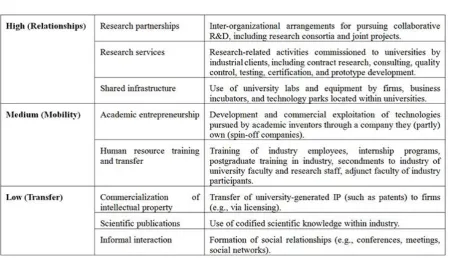
Table 1: A typology of university-industry links, from higher to lower intensity
Source: Adapted from Perkmann and Walsh 2007, Tables 2 and 3 by TIPP The Innovation Policy Platform, Promoting University-Industry Collaboration in Developing Countries, 2013.
In this clear categorization, the intensity of the link between university and industry is considered in three groups as Low, Medium and High. Each has sub-groups and is explained simply to understand where any institution stands (TIPP, 2013). So, using the table as a tool, this paper evaluates yacht design master programs in IUE and POLIMI in terms of where each institution is in the partnership with the industry. Therefore onwards, vision and educational structure of both programs are summarized and projects as the cases are exhibited to understand in which ways each contributes to the development of yacht industry. Moreover, collaborating not only to the industry, but also to each other is given as an example of a collaborative development vision.
2. YACHT DESIGN MASTER PROGRAM IN IZMIR UNIVERSITY OF ECONOMICS
2.1 Approach and Vision of the Program
Page 194
three terms, half of them is design and the other half is engineering based courses. Students take five compulsory and six elective courses, Yacht Design Studio I and Resistance, Propulsion and Performance in the 1st term, Yacht Design Studio II and Ergonomics and Safety in the 2nd, Term Project in the 3rd Term as compulsory courses, Design Perspectives, Principles of Naval Architecture, Computer Aided Design of Yachts, Imaginative and Futuristic Yacht Design Studies, Yacht Construction Methods and Materials, Interior Materials, Components and Applications for Yachts, Creativity and Utilitarian Systems Design and finally History of Yacht Design are the elective courses. Every course has a practice like a study model produced in the laboratory or a test of a digital model is made by using a software. Yet the design problem of Yacht Studio is more related to the industry's needs, it is defined as a solution to a boatyard's or an institution's problem. So, students visit the boatyard or the institution first and after they are given a brief, they start working in the studio. The refit project of Kordon Passenger Ship seems to be an appropriate example of industry - university relations which the details are given below.
2.2.2 Laboratories
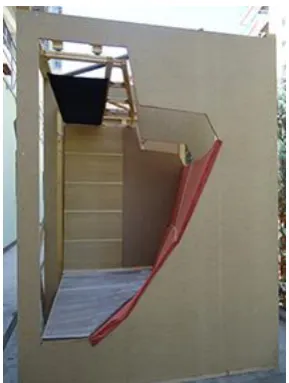
Model Making Laboratory of the university has two parts, hand tools are in the first and power machines like table saw, planar and drills are in the second part which is useful more for the wooden construction and furniture making. After the two weeks training period on how to use the machines and safety regulations by a technician, students start to work in the laboratory under his guidance. They built a part of master cabin on the lower deck at the bow of a 26 meters long motor boat in 1.1 scale in Interior Materials, Components and Applications for Yachts course in 2015-2016 academic year spring term. It was a refit project's study model and provided a feedback to the boatyard to change the cabin height and also colour and texture of the materials on the floor and partition wall (Fig. 1). Students do work in the laboratory for the study models of their studio project as well. This helps them to understand the structural elements of a boat and to develop the experience of working with wood which is an essential material for the interior space construction in custom tailored boat production.
Fig. 1: A partial model of the master cabin of a 26 meters long motor boat.
Page 195
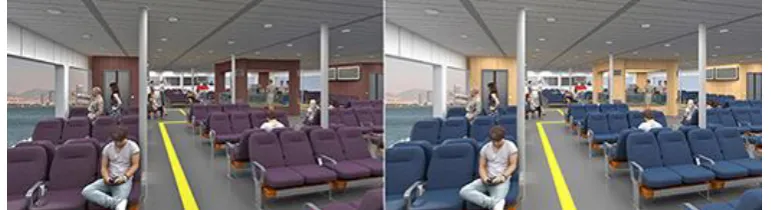
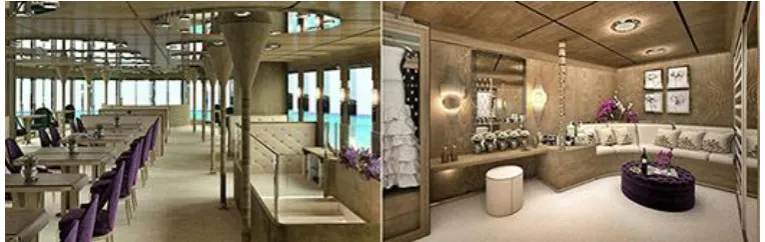
Computer Laboratory is widely used by the students who take Computer Aided Design of Yachts and Yacht Design Studio II courses. Both courses are in timing and content correlation, once the preliminary design has been completed in the studio and since the students have a 3d model of the boat in Rhinoceros software, it is roughly tested in Maxsurf software in computer course and the results then the revisions are discussed by both course instructors in the studio. Students go on working in the computer laboratory to develop the styling and interior design using mainly 3ds Max and Adobe Photoshop software. Design problem may vary depending on the project demanded by the industry. Interior design of the passenger deck of a ferry was the Ceksan shipyard's need and was the studio project of 2014-2015 academic year fall term. Within the scope of studio work, material, colour and texture options, furniture, equipment and lighting fixture choices and other details were discussed with the company authorities on the perspective views prepared by the students (Fig. 2). The project was including the disabled accessibility solutions as well, so, the diagrams have been drawn to show each solution at every step of accessing to the passenger deck from the port. This was beneficial for the students to work on a real case and for the shipyard to develop their experience in accessibility.
Fig. 2: Two colour options of the passenger deck interior for Ceksan shipyard's ferry project.
Source: IUE-YD, Ekotam Projects Archive, 2014.
2.2.3 Activities
Page 196
Fig. 3: A boatyard visit of 2015-2016 Spring in Bodrum
Source: IUE-YD, Bachelor Courses Archive, 2016.
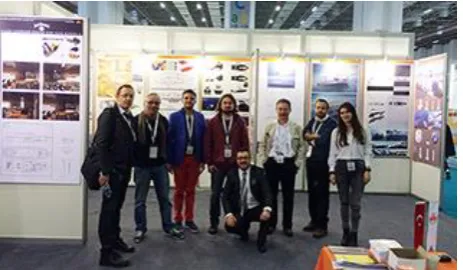
Fair participations are essential to exhibit the student projects not for the public only but for the producers, material sellers, marinas, institutions and operators also. Since they are suitable platforms to establish new contacts, besides the participation, national and international boat show visits are organized. Thus, every year at least one fair is visited or participated like Izmir Boat Show and CNR Avrasya Boat Show as national and Dusseldorf Boat Show as international. A 12 meters long remote controlled catamaran project had been put on the agenda in Izmir Boat Show of 2015 (Fig. 4).
Fig. 4: Student projects fair stand in Izmir Boat Show of April 2015.
Source: IUE-YD, Master Courses Archive, 2015.
Page 197
2.3 Kordon Passenger Ship Refit Project as a Case of University - Industry Collaboration
Kordon Passenger Ship Refit Project was a renewal of an almost 50 meters long boat designed in 1986 and launched onto the sea towards the end of 80's. She was operated first by Istanbul municipality for the public transportation on Bosphorus for many years, then Izmir municipality has taken her for the same purpose. After some years in operation on Izmir bay, the semi-public institution Izdeniz responsible of marine operations decided to update the engines and mechanical parts since the expense of operation was too high and decided to change the function of the boat with new activities like dinners, cocktails, openings and wedding ceremonies. Indeed, there is a demand in this way by the public and municipality as well. So the contract has been signed by Izdeniz and IUE to prepare a design proposal on November 2014.
As usual the beginning was to visit the boat with the students and taking the photos and measurements of existing situation since the drawings of 1986 are hand drawn and copies are not useful enough (Fig. 5). A brief on technical information and space requirements have also been given by the experts and administrators of institution. Then a proposal with many options of layout was prepared and the ambiance of interior was presented on perspective views in a series of meetings with Izdeniz. Students were involved in this process of work actively either with drawing and modelling the boat or with participating the meetings and discussed the new details and joints with the captain and his team and naval architects.
Fig. 5: Kordon passenger ship, a 50 meters long boat designed in 1986.
Source: IUE-YD, Ekotam Projects Archive, 2014.
Page 198
Fig. 6: Perspective views of the upper deck, right one to the bar, left one to the back of it.
Source: IUE-YD, Ekotam Projects Archive, 2015.
Fig. 7: Perspective views, left to the aft on the upper deck, right from the bride room on the lower deck.
Source: IUE-YD, Ekotam Projects Archive, 2015.
Page 199
Fig. 8: Main and upper deck plans of the boat.
Source: IUE-YD, Ekotam Projects Archive, 2015.
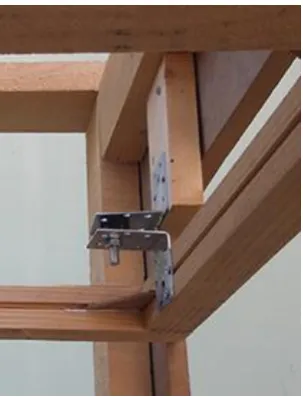
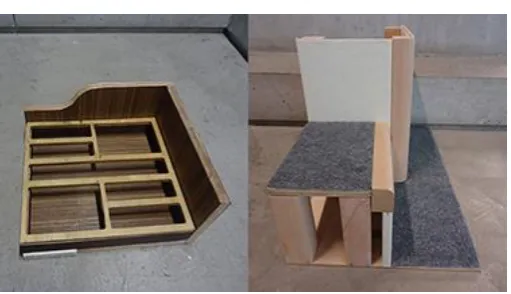
According to the envisaged workflow, at the beginning of construction, all furniture, doors and windows, floor and ceiling coatings and frames are removed. Then cutting and welding is done for the changed parts: removals and additions. And then sanding, pasting and insulating besides the pipelines and trays for the electricity and mechanical systems are applied. When it comes to the fine works: interior cladding and partitions, a solid wood framing is constructed on which marine plywood sheets are stapled as a base and onto the base, one more plywood sheet which is wood veneered is mounted as it is done in all luxury yachts. And as it is known, the frames are connected to the structure of the boat by using special shock absorber fixtures. This system with the fixtures is also used for the ceiling structure but cannot be used for the flooring since it is a load bearing surface. Therefore, the vibration can be absorbed on the walls and the ceiling but not on the floor. Sure there are very thick marine plywood sheets, which a rubber layer in, to be used as a base on the floor but it should be mentioned that it does not absorb the vibration as much as the fixture can. So, briefly, the same joint detail has been adapted to the floor in different size and shape (Fig. 9, 10).
Fig. 9: Study model of the joint detail.
Page 200
Fig. 10: Two study models, left is a kitchen accessories holder, right is the step next to a cabinet.
Source: IUE-YD, Bachelor Courses Archive, 2016.
3. YACHT DESIGN MASTER PROGRAM IN POLITECNICO DI MILANO
3.1 Approach and Vision of the Program
It can be stated that the need to educate the people to work in yacht sector is based on the rapid and exponential growth in recent years. The growth has been encouraged by the provisions to develop the market with simplified procedures for port construction and reduced tax burden on recreational boats over 10 meters. For these reasons, the sector requires today a strong professional vocation with regard both to the skills necessary to the design of recreational boats, components and accessories and to the management of different stages of production process. And in line with this, the specializing master of POLIMI provides the tools for managing the design and construction of sailing and motor boats from project brief to definition of general plans, hydrostatic and hydrodynamic calculations, fitting-out of interiors, deck and board equipment, boat systems, production in the yards and the control of executive stages. So the master program takes this complexity into account and intersperses into classroom experience within nine learning modules that outline different disciplinary fields and offers design exercises and visits to shipyards and companies which are active in the industry as well as to applied research institutes.
3.2 Educational Structure
3.2.1 Learning Modules and Internship
Page 201
3.2.2 Laboratories
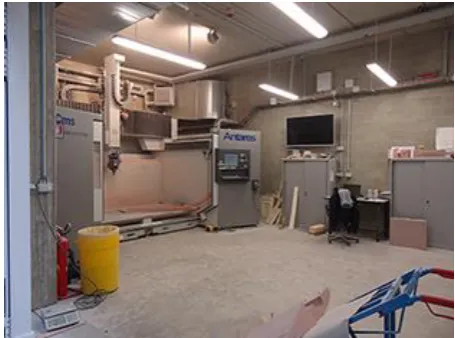
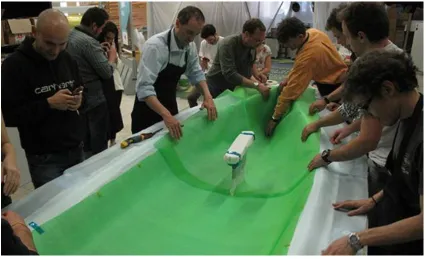
Lecco Innovation Hub is the nautical research and training centre of Milan Polytechnic where the research activities support the strategic development of companies operating in the nautical sector. The Laboratory is thus a flexible physical and intellectual infrastructure that can provide basic and applied research, training and the use of facilities by third parties. The hub consists of two basic entities as the experimental laboratory which is designed rapidly to embrace evolution and integration in the nautical field and the laboratory boat fitted with instruments for acquiring data on the behavioural variables of the boat and its components. It provides a technological support to companies in order to respond to the current demands of innovation and sustainability. So it carries out experimental activities in the fields of industrialization and optimization of production processes, occupational safety, development of monitoring and diagnostic systems, development of computational models to support boat design and optimization of propulsion systems with low environmental impact. It performs an applied research on biocomposites and materials from renewable resources. The Laboratory cares all the phases of research from the mechanical characterization according to legislation, to the validation, up to the industrialization of product and process with sustainable techniques and materials (Smart, 2013). It also performs life cycle analysis of nautical products and components, studying their optimization of use and offering innovative tools and techniques of construction, assembly work and monitoring (Fig. 11, 12).
Fig. 11: Laboratories around the courtyard in Lecco Innovation Hub.
Source: Emre Ergul, Personal Archive, 2015.
Fig. 12: Five axis CNC machine in Prototyping Laboratory.
Page 202
usability and safety of boats, nautical equipment and components. In the design phase, these studies are the basis for the development of solutions that increase accessibility and improve safety and affordance. With the laboratory of Physical Computing, sensor solutions and intelligent devices are integrated (Smart, 2013). In short, the structure is designed for the exchange of know-how between university and companies. This means that the hub is a centre of higher education for the professionals of boat industry, with the transfer of skills on innovative production techniques, while preserving and enhancing the crafts tradition (Fig. 13).
Fig. 13: Moulding work of a real-size sailing boat with the students.
Source: Poli.Design, http://www.polidesign.net/en/myd/photogallery, last accessed: 27.04.2017.
3.2.3 Activities
Page 203
Fig. 14: A boatyard visit with the master students.
Source: Poli.Design, http://www.polidesign.net/en/myd/photogallery, last accessed: 27.04.2017.
Many seminars have been organized or participated in, from now to backwards such as Italian Yacht Design Conference on June 16 in POLIMI in 2016 (Fig. 15), Nautica italiana investe sui nuovi talenti: MYD Graduation Day of April 13 in Fiera Milano-Rho in 2016, Criteri progettuali e strumenti per l'ottimizzazione dell'assetto e della stabilità del diporto on October 22 in POLIMI, Campus Bovisa in 2015, MYD e POLIMI Sailing Team conquistano il Trofeo PAOLO PADOVA of September 17-20 in Rimini, Club Nautico in 2015, Seatec of February 4-6 in Carrara in 2015, The Foiling Week of July 8-10 in Fraglia Vela Malcesine, TFW Forum in 2014, Navi Pirata: scopri i segreti della vita di bordo of April 12 in POLIMI, Campus Bovisa - Lab. Allestimenti Paolo Padova in 2014, Costruire una barca?... un gioco da ragazzi! of April 6-7 in POLIMI, Campus Bovisa - Lab. Allestimenti Paolo Padova in 2013, Sistemi Innovativi di propulsione e transmissione per applicazioni nella nautica da diporto of June 3 in POLIMI, Campus Bovisa - Aula F.lli Castiglioni in 2013, Open Lesson - Yacht Design / Trend e nuovi segnali of June 30 in POLIMI, Campus La Masa - Galleria del Vento in 2013 and 10 Anni di idee per la Nautica of September 30 in POLIMI, Campus Bovisa - Aula F.lli Castiglioni in 2011. The list goes back to 2003 and thus, many others could have been listed here but the sum of all indicates that the master program is in close contact with the boat community as well.
Fig. 15: Italian Yacht Design Conference in Campus Bovisa in 2016.
Page 204
a systematic research both on biofouling growth and on potential risks of antifouling painting. Starting from wrapping systems developed for the terrestrial transport industries and urban furniture, the research is focus on passive systems of hull protection with different kind of films, ease and safe to apply, remove and replace at the end of the product life cycle. AW aims to be an alternative and sustainable solution for biofouling prevention that fulfil the market demand.
Marine biofouling is a costly, complex, and environmentally harmful phenomenon caused by the adhesion and accumulation of marine organisms on a surface immersed in water. This unwanted colonization has serious impacts in particular for the marine transport sector and the naval industry (Schultz, 2007). Slime films can lead to significant increases in resistance and powering, and heavy calcareous fouling results in powering penalties up to 86% at cruising speed, increasing significantly the fuel consumption and, in turn, greenhouse gas emissions (Schultz et all., 2011). The International Maritime Organization estimated that, without corrective actions and introduction of new technologies, air emissions due to increased bunker fuel consumption by the world’s shipping fleet could increase by between 38% and 72% by 2020 (IMO, 2008). It’s estimated that antifouling coatings provide the shipping industry with annual fuel savings of $60 billion and reduced emissions of 384 million and 3.6 million tonnes, respectively, for carbon dioxide and sulphur dioxide per year.
The entire research activity is developed in 30 months and is organized in four steps: a. preliminary research and test of self-adhesive films developed for different use and compared with antifouling products on the market to define the state of the art, strategies and scenarios, b. definition of the chemical, physical and surface films properties, laboratories and in situ tests, c. product and processes engineering and d. final test on a statistically significant sample of boats. Products already adopted in other application areas, such as anti-graffiti films used in railway transport and protection films developed for landscape architecture and urban furniture are first considered. The study evaluate the adhesive and antifouling properties of the different wrap materials and their capability to resist in the new ecosystem through laboratory and in situ tests. The self-adhesive film products already available on the market has been carried out in collaboration with private sector companies working in this field. Film A is a repositionable self-adhesive flocked PVC, film B is a transparent PVC self-adhesive, film C is a transparent polyurethane self-adhesive, film D is a transparent PVC self-adhesive, film E is a transparent PVC self-adhesive resistant to UV rays and abrasions and finally the antifouling paint (AP) is a hydrophilic self-polishing paint with carbon additive (Fig. 16, 17, 18).
Fig. 16: Location of the boat: Porto di Santa Cecilia in Dervio.
Page 205
Fig. 17: Reference diagram to place the product samples on panels.
Source: Ratti, A., Bionda, A., Antifoul - Wrapping Final Report, Lecco Innovation Hub, 2016.
Fig. 18: Film application to the hull surface of the boat in the laboratory.
Source: Ratti, A., Bionda, A., Antifoul - Wrapping Final Report, Lecco Innovation Hub, 2016.
Page 206
Fig. 19: Reference diagram to place the product samples on boat hull.
Source: Ratti, A., Bionda, A., Antifoul - Wrapping Final Report, Lecco Innovation Hub, 2016.
Results are divided as defined by the test protocol: a. apply on double-curved surface, b. adhesive power of the films in water, c. quantify and qualify the biofouling growth on samples and d. possibility to clean the samples. The tests provided an experimental confirmation on different parameters which are considered relevant in the biofouling prevention research. Results led the team to explore the following areas of investigation. Film surface design: characterization of the film coating with different surface texture. It is considered appropriate to run a comparative effectiveness study to evaluate the antifouling effect of different surface textures taking into account the academic research on micro and nano-topography (Ratti, Bionda, 2016). Frictional resistance of rugged surfaces: verification of the potential increase of the resistance induced by different texture sliding into water. The test will be carried out by naval basin experimental method on flat sheet samples and hull model samples. Integration of antibacterial compounds: integration in the film chemical formulation, of antibacterial compounds with different active ingredients as well as deducing from the literature and from the other areas of application (Fig. 20).
Fig. 20: After the application of films, the boat is lifted down to Como Lake.
Page 207 4. CONCLUDING REMARKS
With their vision related to the needs of industry, courses and modules supported or given by partner company experts, laboratories for the modelling, analysing and testing and finally with the activities to create a long lasting connection with the industry, yacht design master programs in IUE and POLIMI are contributing to the development of industry. By using the university - industry links typology table as a tool, IUE can be evaluated as it is in the Transfer level. Informal interactions with the boatyards and institutions, close relation to the chambers in organizing conferences and patent applications indicate this category. However, formal interactions like the on-demand and contract based projects, student groups in Embryonix Unit and start-up firms in Science Park give a picture of the program which evolves from low intensity to the medium. POLIMI on the other hand, seems to be in the Mobility level and is in the process of evolving to high intensity. Since, most of the program students are employed by the industry after the graduation, internships are conducted by the partner companies and consultancy is provided for the yacht industry by university professors, POLIMI specializing master in yacht design can be placed in this category. Student projects supported within the Polifactory body and Lecco laboratories in use of firms are the clues of long-term research partnerships to be established in the near future. Moreover, both master programs are closely collaborating by the way of student and visiting professor exchanges, applying to research funds together and sharing research activity supported by the yacht industry in Turkey and Italy as a part of their collaborative development vision.
REFERENCES
AISBL Science Business Innovation Board 2012, Making Industry-University Partnerships Work -
Lessons From Successful Collaborations,
<http://sciencebusiness.net/OurReports/ReportDetail.aspx?ReportId=33> last accessed: 27.04.2017.
Ergul, E., 2015, Kordon Passenger Ship Refit Project Final Report, Izmir University of Economics, Izmir.
IMO International Maritime Organization, International Convention on the Control of Harmful Anti-fouling Systems on Ships, Adoption: October 2001, Entry into force: September 2008.
Ratti, A., Bionda, A. 2016, Antifoul - Wrapping Final Report, Lecco Innovation Hub, Milano.
Schultz, M. P. 2007, Effects of coating roughness and biofouling on ship resistance and powering, Biofouling 23, pp. 331-341.
Schultz, M. P., Bendick, J. A., Holm, E. R. & Hertel, W. M. 2011, Economic impact of biofouling on a naval surface ship, Biofouling 27, pp. 87–98.
Smart Sustainable Marine Research and Technology Laboratory 2013, Brochure, Politecnico di Milano, Milano.
TIPP The Innovation Policy Platform 2013, Promoting University-Industry Collaboration in
Developing Countries,