R E V I E W
Managing Disease-Modifying Therapies and
Breakthrough Activity in Multiple Sclerosis
Patients During the COVID-19 Pandemic: Toward
an Optimized Approach
This article was published in the following Dove Press journal: Therapeutics and Clinical Risk Management
Sherif M Hamdy1
Maged Abdel-Naseer 1 Hatem S Shehata 1
Amr Hassan 1
Alaa Elmazny 1 Nevin M Shalaby1 Noha T Abokrysha1 Nirmeen A Kishk1
Mona AF Nada 1
Sandra M Ahmed1
Mohamed I Hegazy 1
Doaa Mekkawy1
Husam S Mourad 1
Ahmed Abdelalim 1 Thomas Berger 2
1Neurology Department, Faculty of Medicine, Cairo University, Cairo, Egypt; 2Neurology Department, Medical University of Vienna, Vienna, Austria
Abstract:The emergence of the novel coronavirus disease 2019 (COVID-19) pandemic has
become a major public health challenge of global concern since December 2019, when the virus was recognized in Wuhan, the capital city of Hubei province in China and epicenter of the COVID-19 epidemic. Given the novelty of COVID-19 and the lack of specific anti-virus therapies, the current management is essentially supportive. There is an absence of consensus on guidelines or treatment strategies for complex disorders such as multiple sclerosis (MS), in which the risk of infections is higher than in the general population. This is due to the overall impairment of the immune system typical of autoimmune diseases, in addition to accumulation of disabilities, and the iatrogenic effect generated by corticosteroids and the recommended disease-modifying therapies (DMTs). DMTs have different modes of action, but all modulate and interfere with the patient’s immune response, thereby raising concerns about adverse effects, such as an increased susceptibility to infections. In this review, we analyze the evidence for use of DMTs during the current critical period and ratify an algorithmic approach for management to optimize care between keeping DMTs, with their infection hazards, or coming off them, with the risk of disease activation. We also provide an algorithmic approach to the management of breakthrough activity during the COVID-19 pandemic.
Keywords:COVID-19, multiple sclerosis, disease-modifying therapies
Introduction
The novel coronavirus disease 2019 (COVID-19) pandemic is a world-shattering infection that affects all geographical areas. The current situation is changing rapidly, with increasing numbers of cases arising across more than 200 countries
and territories around the world.1The number of confirmed coronavirus patients has
grown substantially, with higher day-to-day increases and evidence of sustained transmission in six continents.2
The novel coronavirus is a member of the beta group of coronaviruses, which was named by the International Committee on Taxonomy of Viruses (ICTV) as severe acute
respiratory syndrome–coronavirus-2 (SARS-CoV-2) and the disease as COVID-19.3
Accumulating evidence suggests that a subgroup of patients with severe COVID-19
may have alveolitis cytokine storm syndrome.4 Secondary hemophagocytic
lymphohistiocytosis (sHLH) is an underrecognized, hyperinflammatory syndrome
Correspondence: Amr Hassan Kasr Al Ainy Faculty of Medicine, Cairo University, P.O.11553, Cairo, Egypt Tel +201006060809
Email [email protected]
Therapeutics and Clinical Risk Management
Dove
press
open access to scientific and medical research
Open Access Full Text Article
Therapeutics and Clinical Risk Management downloaded from https://www.dovepress.com/ by 118.70.13.36 on 28-Aug-2020
characterized by a fulminant and fatal hypercytokinemia with multiorgan failure, which is most commonly triggered by viral infections5and characterized by an increase in pro-inflammatory mediators.6
There is a great complexity of host immune defenses against viral infections. Activation of cytotoxic and other T lymphocytes (cell-mediated immunity) occurs as early as 3–4 days,7then decreases rapidly within 5–10 days of elimination of the virus. In contrast, humoral immunity appears later (after 7 days) and persists for much longer (often for years).8
The knowledge that COVID-19 can cause critical ill-ness and death is a particular concern among patients with chronic illnesses, including multiple sclerosis (MS).9
COVID-19 Infection Risk
Strati
fi
cation in Patients with
Multiple Sclerosis
A3B2 tlsb -0.02w?>Patients with multiple sclerosis (pwMS) seem to be at higher risk of infection compared with the general population,10and constitute a susceptible population for contracting COVID-19 and frequently devel-oping respiratory insufficiency as a result of their reduced muscle strength, bulbar dysfunction and ineffective
secre-tion clearance;11however, not all patients carry the same
risk. Nevertheless, COVID-19 risk can be increased by
comorbidities, older age and degree of disability.
Moreover, many disease-modifying therapies (DMTs) with various modes of action modulate or interfere with the patient’s immune response, raising uncertainties about
the increased risk of infection.12 According to their risk
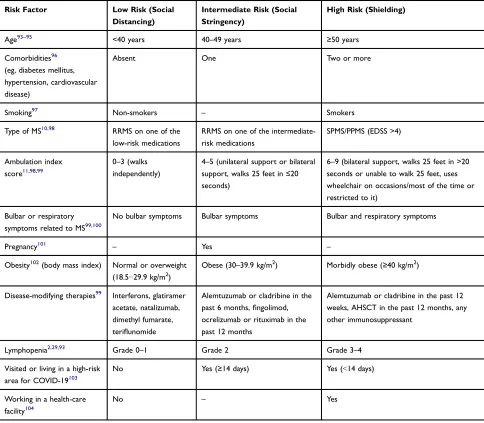
category, patients should be advised about the appropriate mitigation measures, by practicing social distancing for patients with low risk, social stringency for patients with intermediate risk or shielding for patients with high risk (Table 1).
During the current COVID-19 pandemic, pwMS as well as MS specialists are faced with many challenges: (1) concerns about the use of DMTs in MS patients; (2)
delay or deferral in DMT dispensing due to logistic diffi
-culties; (3) shortage of available hospital beds; (4)
patients’ worries about using
immunosuppressive/immu-nomodulatory treatments; (5) absence of blanket recom-mendations or consensus regarding maintenance therapy and relapse management; and (6) the need for coordinated efforts to raise awareness among patients and medical
society about general and specific infection control
measures according to World Health Organization
(WHO) recommendations.
The present review discusses the general prophylactic measures for pwMS to mitigate the risk of infection, initiation/maintenance of DMTs and acute relapse manage-ment, and tries to design strategies for MS management during the current COVID-19 pandemic.
General Infection Risk Mitigation
Measures
PwMS should adopt the recommended general and national public health measures, including frequent handwashing/ sanitation, social distancing and adequate nutrition.13 For patients who have interactive audio/video telecommunica-tions facilities, telehealth services, e-visits and virtual check-ins are implemented. In the absence of such means, especially in rural settings, phone calls/WhatsApp texting with the MS team should be available for regular follow-up and for answering patients’queries. Public awareness should be raised through social media campaigns to provide essen-tial information and knowledge about COVID-19, and to
reinforce key messages to shape patients’ behavior to
pre-vent/minimize the spread of infection.
Initiation/Maintenance of DMTs
The initiation and maintenance of DMTs in pwMS can be very challenging, especially during this critical period. A few DMTs exert immunomodulatory effects with almost no increase in the risk of systemic infections. Other agents used in MS management have immunosuppressive effects with considerable effects on lymphocyte count, trafficking, proliferation, differentiation and function, leading to an
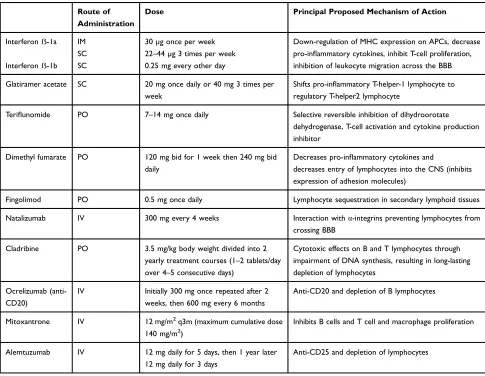
increased risk of infections.14 Table 2 summarizes the
modes of action, doses and routes of administration of currently approved DMTs.
Interferon-Beta (INF-
β
)
The therapeutic efficacy of INF-βin MS is not only related to its immunoregulatory characteristics, but also to its in vivo anti-viral properties, evident by their significant inhibition on the viral replication of human herpesvirus 6 (HHV-6), which was studied as an example of a latent neurotropic virus.15
Leukopenia/neutropenia and, to a lesser extent,
lym-phopenia are among the very rare hematological
abnormalities associated with INF-β use; thus, they are
usually clinically insignificant.16 INF-βinitiation can be
Hamdy et al Dovepress
Therapeutics and Clinical Risk Management downloaded from https://www.dovepress.com/ by 118.70.13.36 on 28-Aug-2020
associated with influenza-like symptoms, including fever, bone aches, headaches and dyspnea, which
usually fade away by 3 months.17 However, such
symp-toms may be confused with COVID-19 sympsymp-toms, and thus strict risk mitigation including prolonged dose titra-tion and the use of paracetamol is recommended. The
use of non-steroidal anti-inflammatory drugs (NSAIDs)
is currently controversial as there have been some reports stating that NSAIDs may exacerbate symptoms
in COVID-19 patients.18
Recommendations
INF-βcan be initiated or maintained safely. Dose titration and the use of paracetamol in starters is recommended. Those who
redevelop influenza-like symptoms should be checked for
COVID-19 and stop INF-βuntil a clear diagnosis is
estab-lished. Those who are still experiencing injection-related symptoms should report if the symptoms are exaggerated or different from usual.
Glatiramer Acetate
Glatiramer acetate (GA) is an MS immunomodulating drug which is not associated with an increased systemic risk of infection.19,20Furthermore, GA tends to be beneficial in the Theiler’s murine encephalomyelitis virus model by inducing anti-inflammatory immune responses. It neither increases viral loads nor decreases anti-viral immunity.
Table 1Stratification of COVID-19 Risk in Multiple Sclerosis Patients
Risk Factor Low Risk (Social Distancing)
Intermediate Risk (Social Stringency)
High Risk (Shielding)
Age93–95 <40 years 40–49 years ≥50 years
Comorbidities96 (eg, diabetes mellitus, hypertension, cardiovascular disease)
Absent One Two or more
Smoking97 Non-smokers – Smokers
Type of MS10,98 RRMS on one of the
low-risk medications
RRMS on one of the intermediate-risk medications
SPMS/PPMS (EDSS >4)
Ambulation index score11,98,99
0–3 (walks independently)
4–5 (unilateral support or bilateral support, walks 25 feet in≤20 seconds)
6–9 (bilateral support, walks 25 feet in >20 seconds or unable to walk 25 feet, uses wheelchair on occasions/most of the time or restricted to it)
Bulbar or respiratory symptoms related to MS99,100
No bulbar symptoms Bulbar symptoms Bulbar and respiratory symptoms
Pregnancy101 – Yes –
Obesity102(body mass index) Normal or overweight
(18.5−29.9 kg/m2)
Obese (30–39.9 kg/m2) Morbidly obese (≥40 kg/m2)
Disease-modifying therapies99 Interferons, glatiramer acetate, natalizumab, dimethyl fumarate, teriflunomide
Alemtuzumab or cladribine in the past 6 months,fingolimod, ocrelizumab or rituximab in the past 12 months
Alemtuzumab or cladribine in the past 12 weeks, AHSCT in the past 12 months, any other immunosuppressant
Lymphopenia2,29,93 Grade 0–1 Grade 2 Grade 3–4
Visited or living in a high-risk area for COVID-19103
No Yes (≥14 days) Yes (˂14 days)
Working in a health-care facility104
No – Yes
Abbreviations:AHSCT, autologous hematopoietic stem cell transplantation; COVID-19, coronavirus disease 2019; EDSS, Expanded Disability Status Scale; MS, multiple sclerosis; PPMS, primary progressive multiple sclerosis; RRMS, relapsing–remitting multiple sclerosis; SPMS, secondary progressive multiple sclerosis.
Therapeutics and Clinical Risk Management downloaded from https://www.dovepress.com/ by 118.70.13.36 on 28-Aug-2020
Recommendations
GA can be initiated or maintained safely during the COVID-19 pandemic.
Teri
fl
unomide
Teriflunomide selectively and reversibly targets activated T and B lymphocytes inducing a cytostatic effect, thus limiting their contribution to the inflammatory processes of MS pathogenesis without either compromising the adaptive immunity or increasing the incidence of serious infections in long-term follow-up.21–23 Accordingly, teriflunomide is not considered an immunosuppres-sant; however, it may lead to a mild lymphopenia23(grade 1 and 2), which usually occurs early in the treatment course and persists for an extended period. Therefore, suspension of terifl u-nomide treatment with an accelerated elimination procedure should be considered if a patient develops a serious infection.24 Mild leukopenia/neutropenia has also been reported.25
It is worth mentioning that teriflunomide and its parent com-pound, leflunomide, have demonstrated both in vitro and in vivo activity against several viruses, including the BK virus, cytome-galovirus, Epstein–Barr virus, herpes simplex virus, Theiler’s virus and John Cunningham virus (JCV).26,27Teriflunomide is slowly eliminated from plasma; it takes 8 months to 2 years to reach a plasma concentration less than 0.02 mg/L. Accelerated elimination of teriflunomide should be considered after disconti-nuation in cases where a serious infection develops. For acceler-ated elimination, the use of cholestyramine 8 g administered three times daily or 50 g of activated powdered charcoal every 12 hours for 11 days is recommended.24
Recommendations
Teriflunomide can be started and maintained during the
COVID-19 pandemic in the absence of concurrent infec-tion. Routine laboratory tests should be performed accord-ing to the product information. Accelerated elimination
Table 2Summary of Disease-Modifying Therapies Approved for Use in Multiple Sclerosis16,51,105
Route of Administration
Dose Principal Proposed Mechanism of Action
Interferonẞ-1a
Interferonẞ-1b IM SC SC
30 µg once per week 22–44 µg 3 times per week 0.25 mg every other day
Down-regulation of MHC expression on APCs, decrease pro-inflammatory cytokines, inhibit T-cell proliferation, inhibition of leukocyte migration across the BBB
Glatiramer acetate SC 20 mg once daily or 40 mg 3 times per week
Shifts pro-inflammatory T-helper-1 lymphocyte to regulatory T-helper2 lymphocyte
Teriflunomide PO 7–14 mg once daily Selective reversible inhibition of dihydroorotate
dehydrogenase, T-cell activation and cytokine production
inhibitor
Dimethyl fumarate PO 120 mg bid for 1 week then 240 mg bid
daily
Decreases pro-inflammatory cytokines and
decreases entry of lymphocytes into the CNS (inhibits expression of adhesion molecules)
Fingolimod PO 0.5 mg once daily Lymphocyte sequestration in secondary lymphoid tissues
Natalizumab IV 300 mg every 4 weeks Interaction withα-integrins preventing lymphocytes from
crossing BBB
Cladribine PO 3.5 mg/kg body weight divided into 2
yearly treatment courses (1–2 tablets/day
over 4–5 consecutive days)
Cytotoxic effects on B and T lymphocytes through impairment of DNA synthesis, resulting in long-lasting
depletion of lymphocytes
Ocrelizumab (anti-CD20)
IV Initially 300 mg once repeated after 2
weeks, then 600 mg every 6 months
Anti-CD20 and depletion of B lymphocytes
Mitoxantrone IV 12 mg/m2q3m (maximum cumulative dose
140 mg/m2)
Inhibits B cells and T cell and macrophage proliferation
Alemtuzumab IV 12 mg daily for 5 days, then 1 year later
12 mg daily for 3 days
Anti-CD25 and depletion of lymphocytes
Abbreviations:APC, antigen-presenting cell; BBB, blood–brain barrier; bid, twice a day; CNS, central nervous system; DNA, deoxyribonucleic acid; IM, intramuscular; IV, intravenous; µg, microgram; mg, milligram; MHC, major histocompatibility complex; PO, per oral; SC, subcutaneous.
Hamdy et al Dovepress
Therapeutics and Clinical Risk Management downloaded from https://www.dovepress.com/ by 118.70.13.36 on 28-Aug-2020
should be considered if the patient has COVID-19 and teriflunomide is to be discontinued.
Dimethyl Fumarate (DMF)
The mechanisms of action of DMF include induction of apoptosis of activated T cells, shift of CD4+T cells toward a Th2 profile, and reduction of dendritic cell (DC) matura-tion. DMF has been shown to selectively reduce memory T cells in MS and decrease the overall B-cell population, in particular mature B cells.28Accordingly, it can potentially induce lymphopenia, which is reported as a worrisome sign
in the COVID-19 pandemic.29 The frequency of grade 1
lymphopenia was reported to occur in approximately 16.5% of DMF-treated patients and grade 3 (200 to <500 cells/μL) in 2.4–7%.30–32Lymphopenia is mainly encountered during the early treatment course, yet it can be severe and may
persist even after DMF withdrawal.32 PwMS with
a lymphocyte count above 800 cells/mm3 can deal with
viral infections reasonably well, provided they are relatively young and have no other comorbidities. Notwithstanding, there is no current evidence of an increased risk of
COVID-19 infection with DMF.33
Recommendations
DMF can be initiated and maintained during the COVID-19 pandemic provided there is no significant lymphopenia (grade
≥3). The usual monitoring guidelines for DMF include
com-plete blood count (CBC) with differential leukocytic and lymphocytic counts before treatment initiation and every 3 months during thefirst year of treatment, followed by every 6 months thereafter, or as clinically indicated, and it should be discontinued in cases of persistent grade 3 lymphopenia for 6
or more months.34 In MS patients with confirmed active
COVID-19, interruption of DMF should be considered.33,35
Fingolimod
Fingolimod has been associated with increased risk of
infec-tions compared with placebo or IFN-βand GA in
rando-mized clinical trials and post-marketing surveillance.36–40 Given its effects on lymphocyte trafficking,fingolimod could theoretically increase the risk of infections; yet, defi -nite correlation between reduction of circulating lymphocyte count and the frequency of serious or opportunistic infec-tions was critiqued by some reports, which emphasized that
infection was not significantly increased even in patients
whose lymphocyte counts had decreased to <200 cells/ mm3.41 If the total leukocyte count is <4000 and >2500
cells/mm3 and/or the lymphocyte count is <600 and >200 cells/mm3, the dose can be reduced to every other day.42
According to some pathologicalfindings of pulmonary
edema and hyaline membrane formation in COVID-19, the use of immune modulators, together with ventilator sup-port, should be considered for patients with severe symp-toms to prevent the development of acute respiratory distress syndrome (ARDS). Currently, there is an ongoing
trial that aims to determine the efficacy offingolimod in
the management of COVID-19.43
Recommendations
Delaying initiation offingolimod may be considered
dur-ing the coronavirus pandemic.32 For those who are on
stable treatment with regular follow-ups, it is recom-mended to advise patients to closely monitor themselves for any symptoms or signs of infection. In case of any
infection, CBC should be performed to exclude significant
leukopenia or lymphopenia. If grade 3–4 lymphopenia
occurs at any time during the current specific
circum-stances, other treatment options should be considered.
Sudden fingolimod cessation is not recommended owing
to the rebound effect that occurs approximately 2–4
months after treatment discontinuation, unless the patient
is confirmed to have COVID-19.44,45In MS patients with
confirmed active COVID-19, interruption of fingolimod
may be considered.
Natalizumab (NTZ)
NTZ selectively compromises immune surveillance only in the central nervous system by playing a major role in active lymphocyte trafficking across the blood–brain bar-rier, through binding to theα4-subunit of α4β1- andα4β7
-integrins expressed on the surface of human leukocytes
and vascular cell adhesion molecule-1.46 It is one of the
treatment options for patients with aggressive MS or sub-optimal response tofirst line therapies.47
Despite the increased risk for progressive multifocal leukoencephalopathy, an opportunistic life-threatening brain infection caused by JCV, the risk of acquiring sys-temic infections with NTZ is considered relatively low
compared to other high-efficacy medications.48
NTZ discontinuation may trigger a rebound effect,
fre-quently occurring within 3–6 months of discontinuation;
therefore, careful evaluation of risk–benefit should be con-sidered prior to NTZ cessation.49
Therapeutics and Clinical Risk Management downloaded from https://www.dovepress.com/ by 118.70.13.36 on 28-Aug-2020
Recommendations
NTZ is currently viewed among the safest high-efficacy
therapies to use during the COVID-19 pandemic and could be started and maintained in patients with no current or potential infection, especially in those with aggressive
MS.33For patients with active COVID-19 infection,
delay-ing the next infusion should be considered.
Cladribine
Cladribine causes selective and transient reductions of
CD19+ B cells and T cells, followed by reconstitution of
adaptive immune function. The hazard of viral infections is significantly higher in the 3–6 months after cladribine intake as the lymphopenia nadir is 9 weeks with up to 12 weeks to recover.50
In the integrated analysis of cladribine safety, median absolute lymphocytic count (ALC) reached a nadir of 1.00 × 10⁹cells/L at 2 months after the start of treatment during year 1. At the end of year 1 (48 weeks), median ALC had increased
to 1.21 × 10⁹cells/L. During year 2, median ALC reached
a nadir of 0.81 × 10⁹cells/L at 55 weeks (week 7 in year 2). Median ALC returned to the normal range by 84 weeks (week 36 in year 2). Median ALC returned to the normal range in 75% of patients by 144 weeks. Grade 3 lymphopenia was experienced by 25% of patients and grade 4 lymphopenia by <1% of patients treated with cladribine tablets.51
Recommendations
Delaying initiation of cladribine should be considered dur-ing the coronavirus pandemic. For those who have already
started treatment, delaying the second cycle52 for 3–6
months or until the risk of coronavirus infection has passed may be considered. For patients with active COVID-19 infection, delaying the second cycle of cladribine should be considered.33
Anti-CD20 Therapies
The first therapeutic anti-CD20 monoclonal antibody
(mAb), rituximab (used off-label in MS), is a murine–
human chimera to which many patients develop antibodies and/or experience infusion-related reactions. Ocrelizumab is a second generation recombinant humanized mAb, which selectively binds to CD20-expressing B cells and triggers antibody-dependent cellular cytolysis and complement-mediated lysis. Lymphoid stem cells and plasma cells do not express CD20 and therefore are not directly targeted.53
B-cell counts are reduced within 2 weeks and remain depleted throughout ongoing treatment. The duration of
B-cell depletion was initially estimated to be 6–9 months
with rituximab treatment alone53,54 and it is now obvious from Swedish experience that rituximab remains effective
at controlling disease activity beyond 6 months.54
Anti-CD20 therapies leave the T-cell compartment of the immune system relatively intact and there have been no severe viral infections in the clinical trial programs. The main viral infection noted with anti-CD20 therapies is herpes zoster or shingles, and even then, these case tend to be mild or moderate.55
Recommendations
Delaying initiation of ocrelizumab and rituximab may be considered during the COVID-19 pandemic. In patients who are stable on treatment, one should consider delaying the next infusion.
Other Immunosuppressant Drugs
Some other immunosuppressant drugs are used off-label for managing pwMS, especially in low-income countries. A large
MS Egyptian cohort, in 2017,56showed that about 23.6% of
pwMS were receiving those drugs, including cyclophospha-mide (CPM), methotrexate (MTX), azathioprine (AZA) and mitoxantrone, as induction/maintenance therapies.56–59
Both CPM and MTX are cytotoxic drugs causing damage to immune cell DNA, thus possessing a potent immunosuppressant effect. AZA acts through inhibition of
DNA, RNA and protein synthesis.60–62 The main safety
concerns of those drugs are lymphopenia, potential risk of infections and hepatotoxicity.63,64
Mitoxantrone interacts with the enzyme topoisome-rase-2 and causes single- and double-strand breaks by
intercalating the DNA through hydrogen bonding.64,65As
has been well established for decades, mitoxantrone is a potent immunosuppressive agent targeting proliferating immune cells. It inhibits proliferation of macrophages,
B lymphocytes and T lymphocytes.66
AZA has a delayed onset of action, with the nadir lymphocyte count being reached at 135 days. Overall, lymphopenia tends to spontaneously resolve with no change in AZA dosing. Lymphopenia is a direct effect of AZA treatment, but lymphopenia-related complications have not been commonly reported. The usual monitoring strategies include weekly monitoring of CBC and liver
enzymes for the first 4 weeks of therapy, or until the
maintenance dose is achieved, and then every 3 months.67
Hamdy et al Dovepress
Therapeutics and Clinical Risk Management downloaded from https://www.dovepress.com/ by 118.70.13.36 on 28-Aug-2020
Recommendations
Clinicians should consider delaying initiation of CPM, MTX and mitoxantrone during the COVID-19 pandemic. Interruption of CPM, MTX and mitoxantrone may be considered. AZA can be started with weekly monitoring
of CBC and transaminases for thefirst 4 weeks of therapy.
Alemtuzumab (AMZ)
AMZ is a humanized anti-CD52 mAb.68,69It induces lysis
and apoptosis of cells highly expressing CD52, namely
T and B lymphocytes,70 via antibody-dependent cellular
cytotoxicity (ADCC) and complement-dependent cytotoxi-city, leading to a marked global lymphocyte depletion.71,72 AMZ-treated patients exhibit a nearly complete depletion
of circulating CD4+ lymphocytes within a few hours of
administration, with a nadir between days 3 and 7.73,74The repopulation of T lymphocytes starts by month 3 and the return to the lower limit of the normal values occurs by
month 6–12; however, this could be delayed for up to 24
months. B cells start to repopulate from 6 weeks onward, return to baseline by 3 months and exceed baseline levels from 6 months.75–78
Overall, in key clinical trials, infections were more common in AMZ-treated patients compared to those trea-ted with INFβ-1a.73,74,79,80 The accumulations of herpes infections during the CARE-MS studies led to the
imple-mentation of prophylactic acyclovir treatment (0–4 weeks
after AMZ infusion).81 The treating physician should be
vigilant to possible opportunistic infections, particularly in
the first few months after AMZ infusion.82
AMZ administration is associated with acute induction
of some pro-inflammatory cytokines, such as tumor
necro-sis factor-alpha (TNF-α), interleukin-6 (IL-6) and
inter-feron-gamma (INF-γ), which peaks 2–6 hours after
infusions and causes the“cytokine-release syndrome”.83 Thus, in the COVID-19 pandemic AMZ carries a significant risk of catching the infection, besides the theo-retical potential of aggravating the inflammatory phase of the disease caused by the cytokine storm.
Recommendations
Clinicians should consider delaying initiation of AMZ dur-ing the COVID-19 pandemic. In patients with highly active
relapsing–remitting multiple sclerosis (RRMS), the use of
an alternative treatment is to be considered, eg, NTZ (or DMF if serum anti-JCV antibodies are positive). If thefirst or second cycle has already been administered, the patient
should adhere to strict social stringency or shielding, or even self-isolation for 3 months or until a CBC demon-strates lymphocytic recovery. If another treatment cycle is due, it could be postponed.
Recommendations for the initiation and maintenance of
DMTs in MS patients are summarized inFigure 1.
Management of Relapse
Patients who present with new or worsening of neurologi-cal symptoms and have symptoms suggestive of COVID-19 (fever, dry cough, sore throat, headache or bone pains, loss of smell and/or taste) are to be sent for nasopharyn-geal and oropharynnasopharyn-geal swab or wash and PCR testing. If
the diagnosis of COVID-19 is confirmed, health
authori-ties should be notified according to national requirements. If tests are repeatedly negative, other causes of fever should be searched for and treated accordingly.
If there are no symptoms or signs of any infection, a diagnosis of a true relapse can be made, and standard treat-ment should be applied. Caution is warranted that pseudo-relapse might be followed by a bonafide MS relapse.84
A telephone questionnaire can be used to assess the Expanded Disability Status Scale (EDSS) score in cases where patients are unable to attend at their health facility
owing to quarantine or curfew.85
Relapses that do not or only minimally affect activities of daily living and affect only sensory functional domains are considered mild and do not require steroid treatment under the current pandemic circumstances. Any other
relapse, considered moderate or severe,86 should receive
appropriate treatment.
It is advisable to limit the use of steroids during the COVID-19 pandemic. Pulsed high-dose/continuous oral steroids are immunosuppressive and may, at least theore-tically, increase the risk of a COVID-19 viral infection or severity of related symptoms. If steroids are to be given anyway, patients are encouraged to receive standard
high-dose corticosteroids intravenously at home87 with strict
self-isolation. Following high-dose corticosteroids, oral tapering is not necessary unless considerable residual symptoms are still encountered. Early clinical trials used steroid tapering after high-dose intravenous corticosteroids to combat potential acute adrenal insufficiency or to main-tain the therapeutic effect; however, subsequent studies have shown that this tapering is not necessary after a brief steroid course that does not significantly suppress the hypothalamic–pituitary–adrenal axis,88nor does taper-ing contribute to recovery.89
Therapeutics and Clinical Risk Management downloaded from https://www.dovepress.com/ by 118.70.13.36 on 28-Aug-2020
Intravenous immunoglobulin (IVIG) exhibits
anti-inflammatory effects via inhibition of
complement-mediated tissue damage and modulation of the cytokine
network. It suppresses the production of pro-inflammatory
cytokines while increasing the production of
anti-inflammatory mediators.90Also, it has ian
mmunomodula-tory influence on different cells of the innate and adaptive
immune compartments.91
Figure 1Algorithm of initiation and maintenance of DMTs in RRMS patients during COVID-19 pandemic.106
Abbreviations:COVID-19, coronavirus disease 2019; DMF, dimethyl fumarate; DMT, disease-modifying therapy; INF, interferon; JCV, John Cunningham virus; RRMS, relapsing–remitting multiple sclerosis.
Figure 2Algorithm of relapse management in RRMS patients during COVID-19 pandemic.
Abbreviations:COVID-19, coronavirus disease 2019; IVIG, intravenous immunoglobulins; IVMP, intravenous methylprednisolone; RRMS, relapsing–remitting multiple sclerosis.
Hamdy et al Dovepress
Therapeutics and Clinical Risk Management downloaded from https://www.dovepress.com/ by 118.70.13.36 on 28-Aug-2020
IVIG therapy has a minimal impact on immune
function.92 Therefore, IVIG can currently be considered
as a good alternative if steroids are contraindicated, poorly tolerated or ineffective, or if hospitalization is impossible. Plasma exchange may not be a suitable option in the treatment algorithm because of its invasive nature and the need for prolonged hospital stay.
Recommendations for the management of relapse
dur-ing COVID-19 are summarized inFigure 2.
Summary of Recommendations
● Before initiating a DMT that may lower immunity,
PwMS should remain in quarantine for at least 14 days to exclude potential COVID-19 infection.
● pwMS would not normally need to stop taking their
DMT as a result of the threat of the virus.
● Patients on a “treatment-escalation/modification”
pathway are not under immediate pressure to change, unless there are other factors (disease activity, JCV positivity, etc).
● Patients on immune reconstitution DMTs can rely on
their long-term effect with delaying re-dosing. ● It seems wiser to select a treatment that does not reduce
specific immune cells (lymphocytes) (eg, interferons, glatiramer acetate or natalizumab). Medications that reduce lymphocytes over longer intervals (eg, alemtu-zumab, cladribine, ocrelizumab and rituximab) or those which may reduce the ability of the immune system to
respond to infection (eg,fingolimod, dimethyl
fuma-rate, teriflunomide and siponimod) should carefully be considered with regard to the risks and benefits during the COVID-19 pandemic.
● pwMS who are currently on alemtuzumab, cladribine,
ocrelizumab, rituximab, fingolimod, dimethyl
fuma-rate, teriflunomide or siponimod and are living in
a community with a COVID-19 outbreak should isolate as much as possible to reduce their risk of infection.
● For patients with active COVID-19 infection, it is
mandatory to stop all DMTs. The timing of resuming
treatment is not well defined but may depend on
serial COVID-19-negative PCR tests within 3–4
weeks of resolution of symptoms.
Although these recommendations can offer guidance toward optimized practice, management of patients with multiple sclerosis during the COVID-19 pandemic is still very challenging given the uncertainty of the current situa-tion and the lack of evidence.
Disclosure
Thomas Berger has participated in the last 2 years in meetings sponsored by and received honoraria (lectures, advisory boards, consultations) from pharmaceutical
com-panies marketing treatments for multiple sclerosis:
Almirall, Biogen, Bionorica, Celgene, MedDay, Merck,
Novartis, Roche, Sanofi Aventis/Genzyme, TG
Therapeutics and TEVA.His institution has receivedfi
nan-cial support in the last 2 years by unrestricted research
grants (Biogen, Novartis, SanofiAventis/Genzyme, Roche,
TEVA) and for participation in clinical trials in multiple sclerosis sponsored by Alexion, Biogen, Merck, Novartis,
Roche, Sanofi Aventis/Genzyme, TEVA. The authors
report no other conflicts of interest in this work.
References
1. Worldometer. COVID-19 Coronavirus pandemic. Available from: https://www.worldometers.info/coronavirus. Accessed April 3, 2020. 2. Zhou F, Yu T, Du R, et al. Clinical course and risk factors for mortality of adult inpatients with COVID-19 in Wuhan, China: a retrospective cohort study.Lancet.2020;395(10229):1054–1062. doi:10.1016/S0140-6736(20)30566-3
3. Lai CC, Shih TP, Ko WC, Tang HJ, Hsueh PR. Severe acute respira-tory syndrome coronavirus 2 (SARS-CoV-2) and coronavirus disease-2019 (COVID-19): the epidemic and the challenges. Int J Antimicrob Agents. 2020;55(3):105924. doi:10.1016/j. ijantimicag.2020.105924
4. Mehta D, Miller C, Arnold DL, et al. Effect of dimethyl fumarate on lymphocytes in RRMS: implications for clinical practice.Neurology. 2019;92(15):e1724–e1738. doi:10.1212/WNL.0000000000007262 5. Ramos-Casals M, Brito-Zerón P, López-Guillermo A,
Khamashta MA, Bosch X. Adult haemophagocytic syndrome. Lancet. 2014;383(9927):1503–1516. doi:10.1016/S0140-6736(13) 61048-X
6. Huang C, Wang Y, Li X, et al. Clinical features of patients infected with 2019 novel coronavirus in Wuhan, China.Lancet. 2020;395(10223):497–506. doi:10.1016/S0140-6736(20)30183-5 7. Chaplin DD. Overview of the immune response.J Allergy Clin Immunol.2010;125(Suppl 2):S3–23. doi:10.1016/j.jaci.2009.12.980 8. Carroll MC. Complement and humoral immunity. Vaccine.
2008;26(Suppl 8):I28–33. doi:10.1016/j.vaccine.2008.11.022 9. Centers for Disease Control and Prevention. Implementation of
mitigation strategies for communities with local COVID-19 transmission. Available from: https://www.cdc.gov/coronavirus/ 2019-ncov/downloads/community-mitigation-strategy.pdf. Accessed March 12, 2020.
10. Montgomery S, Hillert J, Bahmanyar S. Hospital admission due to infections in multiple sclerosis patients.Eur J Neurol.2013;20 (8):1153–1160. doi:10.1111/ene.12130
11. Tzelepis GE, McCool FD. Respiratory dysfunction in multiple sclerosis. Respir Med. 2015;109(6):671–679. doi:10.1016/j. rmed.2015.01.018
12. Piehl F. A changing treatment landscape for multiple sclerosis: challenges and opportunities. J Intern Med. 2014;275 (4):364–381. doi:10.1111/joim.12204
13. Ferguson N, Laydon D, Nedjati Gilani G, et al. Report 9: impact of non-pharmaceutical interventions (NPIs) to reduce COVID19 mortality and healthcare demand.2020.
Therapeutics and Clinical Risk Management downloaded from https://www.dovepress.com/ by 118.70.13.36 on 28-Aug-2020
14. De Angelis F, John NA, Brownlee WJ. Disease-modifying thera-pies for multiple sclerosis.BMJ.2018;363:k4674. doi:10.1136/ bmj.k4674
15. Hong J, Tejada-Simon MV, Rivera VM, Zang YC, Zhang JZ. Anti-viral properties of interferon beta treatment in patients with multiple sclerosis.Mult Scler. 2002;8(3):237–242. doi:10.1191/ 1352458502ms794oa
16. Torkildsen Ø, Myhr KM, Bø L. Disease-modifying treatments for multiple sclerosis - a review of approved medications. Eur J Neurol.2016;23(Suppl 1):18–27. doi:10.1111/ene.12883 17. IFNB Multiple Sclerosis Study Group. Interferon beta-1b is
effec-tive in relapsing-remitting multiple sclerosis. I. Clinical results of a multicenter, randomized, double-blind, placebo-controlled trial. The IFNB multiple sclerosis study group.Neurology. 1993;43 (4):655–661. doi:10.1212/WNL.43.4.655
18. Russell B, Moss C, Rigg A, Van Hemelrijck M. COVID-19 and treatment with NSAIDs and corticosteroids: should we be limit-ing their use in the clinical settlimit-ing? Ecancermedicalscience. 2020;14:1023. doi:10.3332/ecancer.2020.1023
19. Winkelmann A, Loebermann M, Reisinger EC, Zettl UK. Multiple sclerosis treatment and infectious issues: update 2013. Clin Exp Immunol.2014;175(3):425–438. doi:10.1111/cei.12226 20. Johnson KP. Risks vs benefits of glatiramer acetate: a changing
perspective as new therapies emerge for multiple sclerosis. Ther Clin Risk Manag. 2010;6:153–172. doi:10.2147/TCRM. S6743
21. Gold R, Wolinsky J. Pathophysiology of multiple sclerosis and the place of teriflunomide. Acta Neurol Scand. 2011;124 (2):75–84. doi:10.1111/j.1600-0404.2010.01444.x
22. Bar-Or A, Pachner A, Menguy-Vacheron F, Kaplan J, Wiendl H. Teriflunomide and its mechanism of action in multiple sclerosis. Drugs.2014;74(6):659–674. doi:10.1007/s40265-014-0212-x 23. Comi G, Miller AE, Benamor M, Truffinet P, Poole EM,
Freedman MS. Characterizing lymphocyte counts and infection rates with long-term teriflunomide treatment: pooled analysis of clinical trials.Mult Scler J.2019;1352458519851981.
24. SanofiG. AUBAGIO 14 mgfilm-coated tablets. Available from: https://www.medicines.org.uk/emc/product/5244/smpc. Accessed October 31, 2019.
25. Oh J, O’Connor PW. An update of teriflunomide for treatment of multiple sclerosis. Ther Clin Risk Manag. 2013;9:177–190. doi:10.2147/TCRM.S30947
26. Zivadinov R, Ramanathan M, Hagemeier J, et al. Teriflunomide’s effect on humoral response to Epstein-Barr virus and development of cortical gray matter pathology in multiple sclerosis. Mult Scler Relat Disord. 2019;36:101388. doi:10.1016/j.msard.2019.101388
27. Able RA, Turner TJ, Chavin J, Mandel M Teriflunomide may modulate viral replication via its impact on host pyrimidine metabolism. Paper presented at: MULTIPLE SCLEROSIS JOURNAL;2018.
28. Peng H, Guerau-de-Arellano M, Mehta VB, et al. Dimethyl fumarate inhibits dendritic cell maturation via nuclear factor kappaB (NF-kappaB) and extracellular signal-regulated kinase 1 and 2 (ERK1/2) and mitogen stress-activated kinase 1 (MSK1) signaling.J Biol Chem.2012;287(33):28017–28026. doi:10.1074/ jbc.M112.383380
29. Tan L, Wang Q, Zhang D, et al. Lymphopenia predicts disease severity of COVID-19: a descriptive and predictive study.Signal Transduct Target Ther.2020;5(1):1–3. doi:10.1038/s41392-019-0089-y
30. Mirabella M, Prosperini L, Lucchini M, et al. Safety and efficacy of dimethyl fumarate in multiple sclerosis: an Italian, multicenter, real-world study.CNS Drugs.2018;32(10):963–970. doi:10.1007/ s40263-018-0543-3
31. Sejbaek T, Nybo M, Petersen T, Illes Z. Real-life persistence and tolerability with dimethyl fumarate. Mult Scler Relat Disord. 2018;24:42–46. doi:10.1016/j.msard.2018.05.007
32. Fox RJ, Chan A, Gold R, et al. Characterizing absolute lympho-cyte count profiles in dimethyl fumarate–treated patients with MS: patient management considerations. Neurol Clin Pract. 2016;6(3):220–229. doi:10.1212/CPJ.0000000000000238 33. Alasdair Coles and the MS Advisory Group, in consultation with
Dr Ming Lim on behalf of paediatric MS group, Prof Gavin Giovannoni on behalf of MS Academy and Phillip Anderson for the MS Society ABN guidance on the use of disease-modifying therapies in multiple sclerosis in response to the threat of a Coronavirus epidemic. Available from: https://cdn.ymaws. com/www.theabn.org/resource/collection/6750BAE6-4CBC-4DDB-A684-116E03BFE634/ABN_Guidance_on_DMTs_for_ MS_and_COVID19.pdf. Accessed March 11, 2020.
34. European Medicines Agency. Updated recommendations to mini-mise the risk of the rare brain infection PML with Tecfidera. Available from: https://www.ema.europa.eu/en/news/updated- recommendations-minimise-risk-rare-brain-infection-pml-tecfidera. Accessed October 23, 2015.
35. The coronavirus and MS–global advice. Available from:https:// www.msif.org/news/2020/02/10/the-coronavirus-and-ms-what-you-need-to-know/. Accessed April 6, 2020.
36. Soelberg Sorensen P. Safety concerns and risk management of multiple sclerosis therapies. Acta Neurol Scand. 2017;136 (3):168–186. doi:10.1111/ane.12712
37. Winkelmann A, Loebermann M, Reisinger EC, Hartung H-P, Zettl UK. Disease-modifying therapies and infectious risks in multiple sclerosis.Nat Rev Neurol.2016;12(4):217. doi:10.1038/ nrneurol.2016.21
38. Grebenciucova E, Pruitt A. Infections in patients receiving multi-ple sclerosis disease-modifying therapies.Curr Neurol Neurosci Rep.2017;17(11):88. doi:10.1007/s11910-017-0800-8
39. Cohen JA, Barkhof F, Comi G, et al. Oral fingolimod or intra-muscular interferon for relapsing multiple sclerosis. N Engl J Med.2010;362(5):402–415. doi:10.1056/NEJMoa0907839 40. Gasperini C, Ruggieri S, Mancinelli CR, Pozzilli C. Advances in
the treatment of relapsing-remitting multiple sclerosis - critical appraisal offingolimod.Ther Clin Risk Manag.2013;9:73–85. doi:10.2147/TCRM.S17426
41. Francis G, Kappos L, O’Connor P, et al. Temporal profile of lymphocyte counts and relationship with infections withfi ngoli-mod therapy. Mult Scler. 2014;20(4):471–480. doi:10.1177/ 1352458513500551
42. Longbrake EE, Kantor D, Pawate S, et al. Effectiveness of alter-native dosefingolimod for multiple sclerosis.Neurol Clin Pract. 2018;8(2):102–107. doi:10.1212/CPJ.0000000000000434 43. Wang N. Fingolimod in COVID-19. Available from:https://clinical
trials.gov/ct2/show/NCT04280588. Accessed February 21, 2020. 44. Havla JB, Pellkofer HL, Meinl I, Gerdes LA, Hohlfeld R,
Kümpfel T. Rebound of disease activity after withdrawal of
fingolimod (FTY720) treatment. Arch Neurol. 2012;69 (2):262–264. doi:10.1001/archneurol.2011.1057
45. Ghezzi A, Rocca M, Baroncini D, et al. Disease reactivation after
fingolimod discontinuation in two multiple sclerosis patients. J Neurol.2013;260(1):327–329. doi:10.1007/s00415-012-6744-7 46. Engelhardt B, Kappos L. Natalizumab: targeting alpha4-integrins in multiple sclerosis. Neurodegener Dis. 2008;5(1):16–22. doi:10.1159/000109933
47. Rae-Grant A, Day GS, Marrie RA, et al. Practice guideline recommendations summary: disease-modifying therapies for adults with multiple sclerosis: report of the guideline develop-ment, dissemination, and implementation subcommittee of the American Academy of Neurology. Neurology. 2018;90 (17):777–788. doi:10.1212/WNL.0000000000005347
Hamdy et al Dovepress
Therapeutics and Clinical Risk Management downloaded from https://www.dovepress.com/ by 118.70.13.36 on 28-Aug-2020
48. Luna G, Alping P, Burman J, et al. Infection risks among patients with multiple sclerosis treated with fingolimod, natalizumab, rituximab, and injectable therapies. JAMA Neurol. 2019;77 (2):184–191.
49. González-Suarez I, Rodríguez de Antonio L, Orviz A, Rodríguez de Antonio L, Orviz A, et al. Catastrophic outcome of patients with a rebound after Natalizumab treatment discontinuation. Brain Behav.2017;7(4):e00671–e00671. doi:10.1002/brb3.671 50. Giovannoni G. Cladribine to treat relapsing forms of multiple
sclerosis. Neurotherapeutics. 2017;14(4):874–887. doi:10.1007/ s13311-017-0573-4
51. Cook S, Leist T, Comi G, et al. Safety of cladribine tablets in the treatment of patients with multiple sclerosis: an integrated analysis. Mult Scler Relat Disord. 2019;29:157–167. doi:10.1016/j.msard.2018.11.021
52. Brownlee W, Bourdette D, Broadley S, Killestein J, Ciccarelli O. Treating multiple sclerosis and neuromyelitis optica spectrum disorder during the COVID-19 pandemic. Neurology. 2020;94 (22):949–952. doi:10.1212/WNL.0000000000009507
53. Kimby E. Tolerability and safety of rituximab (MabThera). Cancer Treat Rev.2005;31(6):456–473. doi:10.1016/j.ctrv.2005. 05.007
54. Juto A, Fink K, Al Nimer F, Piehl F. Interrupting rituximab treatment in relapsing-remitting multiple sclerosis; no evidence of rebound disease activity. Mult Scler Relat Disord. 2020;37:101468. doi:10.1016/j.msard.2019.101468
55. Gelfand JM, Cree BAC, Hauser SL. Ocrelizumab and other CD20 (+) B-cell-depleting therapies in multiple sclerosis. Neurotherapeutics. 2017;14(4):835–841. doi:10.1007/s13311-017-0557-4
56. Hamdy SM, Abdel-Naseer M, Shalaby NM, et al. Characteristics and predictors of progression in an Egyptian multiple sclerosis cohort: a multicenter registry study. Neuropsychiatr Dis Treat. 2017;13:1895–1903. doi:10.2147/NDT.S140869
57. Burt RK, Balabanov R, Burman J, et al. Effect of nonmyeloabla-tive hematopoietic stem cell transplantation vs continued disease-modifying therapy on disease progression in patients with relapsing-remitting multiple sclerosis: a randomized clinical trial.JAMA.2019;321(2):165–174. doi:10.1001/jama.2018.18743 58. Gray O, McDonnell GV, Forbes RB. Methotrexate for multiple
sclerosis.Cochrane Database Syst Rev.2004;(2):Cd003208. 59. Markovic–Plese S, Bielekova B, Kadom N, et al. Longitudinal
MRI study: the effects of azathioprine in MS patients refractory to interferonβ-1b.Neurology.2003;60(11):1849–1851. doi:10.1212/ 01.WNL.0000071218.34009.AF
60. Alberts DS, Einspahr JG, Struck R, et al. Comparative in vitro cytotoxicity of cyclophosphamide, its major active metabolites and the new oxazaphosphorine ASTA Z 7557 (INN mafosfamide). Invest New Drugs. 1984;2(2):141–148. doi:10. 1007/BF00232343
61. Lennard L. TPMT in the treatment of Crohn’s disease with azathioprine.Gut.2002;51(2):143–146. doi:10.1136/gut.51.2.143 62. Pfizer Canada. Product monograph Prmethotrexate injection USP. Available from: https://www.pfizer.ca/sites/default/files/201908/ Methotrexate_Injection_PM_E_224776_08July2019.pdf. Accessed July 8 2019.
63. Orlicka K, Barnes E, Culver EL. Prevention of infection caused by immunosuppressive drugs in gastroenterology. Ther Adv Chronic Dis. 2013;4(4):167–185. doi:10.1177/2040622313485 275
64. Smith IE. Mitoxantrone (novantrone): a review of experimental and early clinical studies.Cancer Treat Rev.1983;10(2):103–115. doi:10.1016/0305-7372(83)90008-7
65. Durr FE, Wallace RE, Citarella RV. Molecular and biochemical pharmacology of mitoxantrone.Cancer Treat Rev.1983;10:3–11. doi:10.1016/0305-7372(83)90016-6
66. Fidler JM, DeJoy SQ, Gibbons JJ. Selective immunomodulation by the antineoplastic agent mitoxantrone. I. Suppression of B lymphocyte function.J Immunol.1986;137(2):727–732. 67. Anstey AV, Wakelin S, Reynolds N. Guidelines for prescribing
azathioprine in dermatology. Br J Dermatol. 2004;151 (6):1123–1132. doi:10.1111/j.1365-2133.2004.06323.x
68. Hale G, Waldermann H.From Laboratory to Clinic: The Story of CAMPATH-1. Clifton. NJ: Humana Press;2000.
69. Hartung H-P, Aktas O, Boyko AN. Alemtuzumab: a new therapy for active relapsing–remitting multiple sclerosis. Mult Scler J. 2015;21(1):22–34. doi:10.1177/1352458514549398
70. Hu Y, Turner MJ, Shields J, et al. Investigation of the mechanism of action of alemtuzumab in a human CD52 transgenic mouse model. Immunology. 2009;128(2):260–270. doi:10.1111/j.1365-2567.2009.03115.x
71. Brett S, Baxter G, Cooper H, Johnston J, Tite J, Rapson N. Repopulation of blood lymphocyte sub-populations in rheumatoid arthritis patients treated with the depleting humanized monoclonal antibody, CAMPATH-1H. Immunology. 1996;88(1):13–19. doi:10.1046/j.1365-2567.1996.d01-650.x
72. Buggins AG, Mufti GJ, Salisbury J, et al. Peripheral blood but not tissue dendritic cells express CD52 and are depleted by treatment with alemtuzumab.Blood.2002;100(5):1715–1720.
73. Coles AJ, Compston D, Selmaj KW, et al. Alemtuzumab vs. interferon beta-1a in early multiple sclerosis. N Engl J Med. 2008;359(17):1786–1801.
74. Cohen JA, Coles AJ, Arnold DL, et al. Alemtuzumab versus interferon beta 1a as first-line treatment for patients with relapsing-remitting multiple sclerosis: a randomised controlled Phase 3 trial. Lancet.2012;380(9856):1819–1828. doi:10.1016/ S0140-6736(12)61769-3
75. Coles AJ Alemtuzumab treatment of multiple sclerosis. Paper presented at: Seminars in neurology;2013.
76. Cox AL, Thompson SA, Jones JL, et al. Lymphocyte homeostasis following therapeutic lymphocyte depletion in multiple sclerosis. Eur J Immunol. 2005;35(11):3332–3342. doi:10.1002/eji.2005 35075
77. Zhang X, Tao Y, Chopra M, et al. Differential reconstitution of T cell subsets following immunodepleting treatment with alemtu-zumab (anti-CD52 monoclonal antibody) in patients with relap-sing–remitting multiple sclerosis. J Immunol. 2013;191 (12):5867–5874. doi:10.4049/jimmunol.1301926
78. Heidt S, Hester J, Shankar S, Friend PJ, Wood K. B cell repopu-lation after alemtuzumab induction—transient increase in transi-tional B cells and long-term dominance of naïve B cells. Am J Transplant. 2012;12(7):1784–1792. doi:10.1111/j.1600-6143.2012.04012.x
79. Coles A, Fox E, Vladic A, et al. Alemtuzumab more effective than interferonβ-1a at 5-year follow-up of CAMMS223 clinical trial.Neurology.2012;78(14):1069–1078. doi:10.1212/WNL.0b0 13e31824e8ee7
80. Coles AJ, Twyman CL, Arnold DL, et al. Alemtuzumab for patients with relapsing multiple sclerosis after disease-modifying therapy: a randomised controlled phase 3 trial.Lancet.2012;380 (9856):1829–1839. doi:10.1016/S0140-6736(12)61768-1 81. Wray S, Arnold D, Cohen J, Coles A, Fox E, Hartung H Herpes
infection risk reduced with acyclovir prophylaxis after alemtuzumab. Paper presented at: Consortium of Multiple Sclerosis Centers Annual Meeting;2013; Orlando, FL, USA. 82. Brownlee WJ, Chataway J. Opportunistic infections after
alemtu-zumab: new cases of norcardial infection and cytomegalovirus syndrome. Mult Scler J. 2017;23(6):876–877. doi:10.1177/ 1352458517693440
83. Gallo P, Centonze D, Marrosu MG. Alemtuzumab for multiple sclerosis: the new concept of immunomodulation. Mult Scler Demyelinat Dis.2017;2(1):7. doi:10.1186/s40893-017-0024-4
Therapeutics and Clinical Risk Management downloaded from https://www.dovepress.com/ by 118.70.13.36 on 28-Aug-2020
84. Berkovich R. Treatment of acute relapses in multiple sclerosis. Transl Neuroimmunol Mult Scler.2016;307–326.
85. Lechner-Scott J, Kappos L, Hofman M, et al. Can the expanded disability status scale be assessed by telephone?Mult Scler J. 2003;9(2):154–159. doi:10.1191/1352458503ms884oa
86. Freedman MS, Selchen D, Arnold DL, et al. Treatment optimization in MS: Canadian MS working group updated recommendations. Can J Neurol Sci. 2013;40(3):307–323. doi:10.1017/S03 17167100014244
87. Chataway J, Porter B, Riazi A, et al. Home versus outpatient administration of intravenous steroids for multiple-sclerosis relapses: a randomised controlled trial. Lancet Neurol. 2006;5 (7):565–571. doi:10.1016/S1474-4422(06)70450-1
88. LevićZ, MicićD, NikolićJ, et al. Short-term high dose steroid therapy does not affect the hypothalamic-pituitary-adrenal axis in relapsing multiple sclerosis patients. Clinical assessment by the insulin tolerance test. J Endocrinol Invest. 1996;19(1):30–34. doi:10.1007/BF03347855
89. Perumal J, Caon C, Hreha S, et al. Oral prednisone taper follow-ing intravenous steroids fails to improve disability or recovery from relapses in multiple sclerosis. Eur J Neurol. 2008;15 (7):677–680. doi:10.1111/j.1468-1331.2008.02146.x
90. Gilardin L, Bayry J, Kaveri SV. Intravenous immunoglobulin as clinical immune-modulating therapy. CMAJ. 2015;187 (4):257–264. doi:10.1503/cmaj.130375
91. Elovaara I, Kuusisto H, Wu X, Rinta S, Dastidar P, Reipert B. Intravenous immunoglobulins are a therapeutic option in the treatment of multiple sclerosis relapse. Clin Neuropharmacol. 2011;34(2):84–89. doi:10.1097/WNF.0b013e31820a17f3 92. Cao W, Liu X, Bai T, et al.High-dose intravenous
immunoglobu-lin as a therapeutic option for deteriorating patients with Coronavirus disease 2019. Paper presented at: Open Forum Infectious Diseases;2020.
93. Zhao X, Zhang B, Li P, et al. Incidence, clinical characteristics and prognostic factor of patients with COVID-19: a systematic review and meta-analysis.medRxiv.2020.
94. Shi Y, Yu X, Zhao H, Wang H, Zhao R, Sheng J. Host suscept-ibility to severe COVID-19 and establishment of a host risk score:
findings of 487 cases outside Wuhan.Crit Care.2020;24(1):108. doi:10.1186/s13054-020-2833-7
95. Verity R, Okell LC, Dorigatti I, et al. Estimates of the severity of coronavirus disease 2019: a model-based analysis.Lancet Infect Dis.2020;20(6):669–677. doi:10.1016/S1473-3099(20)30243-7 96. Guan W-J, Liang W-H, Zhao Y, et al. Comorbidity and its impact
on 1590 patients with Covid-19 in China: a nationwide analysis. Eur Respir J.2020;55(5):2000547. doi:10.1183/13993003.00547-2020
97. Vardavas CI, Nikitara K. COVID-19 and smoking: a systematic review of the evidence.Tob Induc Dis.2020;18. doi:10.18332/tid/ 119324
98. Nelson RE, Xie Y, DuVall SL, et al. Multiple sclerosis and risk of infection-related hospitalization and death in US veterans. Int J MS Care. 2015;17(5):221–230. doi:10.7224/1537-2073. 2014-035
99. MS and corona care and support. Available from: https://www. mssociety.org.uk/care-and-support/ms-and-coronavirus-care-and-support. Accessed April 3, 2020.
100. Green JR, Yunusova Y, Kuruvilla MS, et al. Bulbar and speech motor assessment in ALS: challenges and future directions. Amyotroph Lateral Scler Frontotemporal Degener.2013;14(7– -8):494–500. doi:10.3109/21678421.2013.817585
101. Luo Y, Yin K. Management of pregnant women infected with COVID-19.Lancet Infect Dis.2020;20(5):513–514. doi:10.1016/ S1473-3099(20)30191-2
102. Dietz W, Santos-Burgoa C. Obesity and its Implications for COVID-19 mortality. Obesity. 2020;28(6):1005. doi:10.1002/ oby.22818
103. Case definition of COVID-19 infection. Available from:https:// www.health.govt.nz/our-work/diseases-and-conditions/covid-19-novel-coronavirus/covid-19-novel-coronavirus-information-speci
fic-audiences/covid-19-novel-coronavirus-resources-health-profes sionals/case-definition-covid-19-infection. Accessed April 3, 2020. 104. Adams JG, Walls RM. Supporting the health care workforce
during the COVID-19 global epidemic. JAMA. 2020;323 (15):1439. doi:10.1001/jama.2020.3972
105. Syed YY. Ocrelizumab: a review in multiple sclerosis. CNS Drugs.2018;32(9):883–890. doi:10.1007/s40263-018-0568-7 106. Yamout B, Sahraian M, Bohlega S, et al. Consensus
recommen-dations for the diagnosis and treatment of multiple sclerosis: 2019 revisions to the MENACTRIMS guidelines. Mult Scler Relat Disord.2020;37:101459. doi:10.1016/j.msard.2019.101459
Therapeutics and Clinical Risk Management
Dove
press
Publish your work in this journal
Therapeutics and Clinical Risk Management is an international, peer-reviewed journal of clinical therapeutics and risk management, focusing on concise rapid reporting of clinical studies in all therapeutic areas, outcomes, safety, and programs for the effective, safe, and sustained use of medicines. This journal is indexed on PubMed Central, CAS,
EMBase, Scopus and the Elsevier Bibliographic databases. The manuscript management system is completely online and includes a very quick and fair peer-review system, which is all easy to use. Visit http://www.dovepress.com/testimonials.php to read real quotes from published authors.
Submit your manuscript here:https://www.dovepress.com/therapeutics-and-clinical-risk-management-journal
Hamdy et al Dovepress
Therapeutics and Clinical Risk Management downloaded from https://www.dovepress.com/ by 118.70.13.36 on 28-Aug-2020