Volume 2007, Article ID 68512,7pages doi:10.1155/2007/68512
Research Article
Modified Spatial Channel Model for MIMO Wireless Systems
Lorenzo Mucchi,1Claudia Staderini,1Juha Ylitalo,2and Pekka Ky ¨osti3
1CNIT, University of Florence, via santa marta 3, 50139 Florence, Italy
2Centre for Wireless Communications, University of Oulu, 90014 Oulu, Finland
3Elektrobit, 90570 Oulu, Finland
Received 13 June 2007; Revised 19 September 2007; Accepted 11 November 2007
Recommended by G. K. Karagiannidis
The third generation partnership Project’s (3GPP) spatial channel model (SCM) is a stochastic channel model for MIMO systems. Due to fixed subpath power levels and angular directions, the SCM model does not show the degree of variation which is encoun-tered in real channels. In this paper, we propose a modified SCM model which has random subpath powers and directions and still produces Laplace shape angular power spectrum. Simulation results on outage MIMO capacity with basic and modified SCM models show that the modified SCM model gives constantly smaller capacity values. Accordingly, it seems that the basic SCM gives too small correlation between MIMO antennas. Moreover, the variance in capacity values is larger using the proposed SCM model. Simulation results were supported by the outage capacity results from a measurement campaign conducted in the city centre of Oulu, Finland.
Copyright © 2007 Lorenzo Mucchi et al. This is an open access article distributed under the Creative Commons Attribution License, which permits unrestricted use, distribution, and reproduction in any medium, provided the original work is properly cited.
1. INTRODUCTION
Future wireless communication aims at higher data rates. Since the radio spectrum is limited, the requirement of high spectrum efficiency can be fulfilled by exploiting the spatial dimension of the radio channel [1]. In sufficiently rich multi-path environments, the channel capacity can be significantly increased by using multiple antennas at both the transmitter and the receiver sides of the link. Multiple-input multiple-output (MIMO) technique brings a relevant increase not only in capacity but also in coverage, reliability, and spec-tral efficiency. In MIMO case, the overall transmit channel is described as a matrix instead of a vector, and the spatial correlation properties of the channel matrix define the num-ber of available parallel channels for data transmission [2,3]. Depending on the channel gains of the parallel channels, the MIMO channel can have much higher channel capacity compared to a single-input single-output (SISO) channel in the same frequency range and with the same total transmit power.
The performance of such a system is largely determined by the MIMO channel characteristics, so it is critical to create channel models that accurately reflect realistic behavior.
In this paper, the spatial channel model proposed by the Third Generation Partnership Project (3GPP) [4,5] is
inves-tigated and compared to a modified SCM model, which was derived in this study. Comparison is based on simulated and measured outage capacity. This study was motivated by the fact that the basic SCM model has fixed signal path directions and powers within a resolvable delay tap which is expected to over-simplify the MIMO channel model and thus affect the simulation results. Since it is important that a MIMO chan-nel model is a realistic representation of real radio chanchan-nels we compared the simulated results also to results obtained from measured MIMO radio channels. Measurements cam-paign was carried out in an urban environment.
The rest of the paper is organized as follow: the system model is described inSection 2, spatial channel modeling is presented inSection 3, simulation and measurement results are given in Sections4and5, respectively, and finally, con-clusions are summarized inSection 6.
2. SYSTEM MODEL
Consider a spatial multiplexing MIMO system with NT
transmit antennas andNRreceive antennas. At each time
in-stantn, the system model can be expressed as
Table1: Table of measurements settings.
Propsound property Setting
Center frequency 253 GHz
Transmit power +23 dBm
Chip rate 100 Mchips/s
Code length 511 chips
Number of TX antenna elements 11
Number of RX antenna elements 32
Number of channels 352
Mobile speed 20 km/h
Tx
Figure1: Angular spread model for a nominal path.
whereH(n) is theNR×NT Rayleigh flat fading channel
ma-wherehi,jdefines the channel gain from transmit antennai
and receive antenna j; symbols
x(n)=x1(n),. . .,xNT(n)
T
(3)
([∗]T stands for transpose), taken from a modulation
con-stellationA = [a1,. . .,aN], are transmitted from each
an-tenna;η(n) isNR×1 zero mean complex circularly symmetric
Gaussian noise.
Defining with NT the number of the elements at the
transmit array and withNR the number of the elements at
the receive array, the instantaneous capacity (in bps/Hz) un-der a transmit power constraint and assumption that there is perfect channel state information (CSI) at RX, while there is no channel state information at the TX, is given by
C=log
noise ratio at the receiver,His the channel matrix, andHHis
the Hermitian (conjugate transpose) ofH.
Laplacian PAS
Even number of sub-paths
−θ4 −θ3 −θ2−θ1θ1 θ2 θ3 θ4
Figure2: Subpaths distribution with equal power.
Figure3: Transmitting antenna array.
In practice, the cumulative distribution function (CDF) of outage capacity is often used [6]; it is defined as the thresh-old below which the system capacity will be with a given out-age probabilityPout:
Pout
Cth
=PrC≤Cth , (5)
whereCthis the threshold capacity andCis the capacity.
It is evident that the smaller is the spatial correlation be-tween antennas the larger is the MIMO capacity. The spatial correlation is dictated by the angular spread of the propa-gation paths at the transmitter and the receiver. Root mean square (RMS) angular spread (AS) is given by
φRMS=
imuth spectrum (PAS) andφMis the mean azimuth given by [7]
The power azimuth spectra at TX and RX are related to the spatial correlation matrices of the MIMO radio channel at the TX and RX, respectively. Accordingly, the PAS can be cal-culated using the Fourier beamforming [8]:
PA(φ)=a(φ)HRa(φ), (8)
Figure4: Receiving antenna array.
normalized steering vector of either the TX array or the RX array and is expressed as
a(φ)=1,e−j2πdsin(φ)/λ,e−j4πdsin(φ)/λ,. . .,e−jπ(L−1)dsin(φ)/λ T,
(9)
whereλis the wavelength,d=λ/2 andTdenotes the trans-pose. Equation (9) is valid only for uniform linear array. The spatial correlation matrix at the RX side is given by
RRX=
i1,i2 is the complex correlation coefficient at the RX
between antennasi1andi2given by
ρi1,i2= E
It is worth to note that the PAS can be calculated by us-ing (8) which involves a relation between PAS and the spatial correlation matrixR, while in the 3GPP SCM model the PAS is given and not calculated. Moreover, the procedure of esti-mating RMS AS, PAS, andR, shown above for RX side (AoA), is analogous for TX side (and AoD).
3. SPATIAL CHANNEL MODELLING
The 3GPP SCM model is serving as the basis for evalua-tion of MIMO performance of candidate MIMO concepts for UMTS [4]. In the following we first introduce the 3GPP SCM model and then propose a modification of it.
3.1. 3GPP SCM
The 3GPP spatial channel model has been defined for CDMA systems with 5 MHz bandwidth and 2 GHz center frequency. The procedure for obtaining the channel coefficients matrix is described in [4]. Each of theNreceived paths hasM sub-paths (cluster). In 3GPP SCM model, each resolvable path
0
AoD azimuth angle (deg) Modified SCM
SCM
Figure 5: Laplacian PAS with 5 degrees RMS AS with basic and
modified SCM. SCM basic 10 dB
SCM basic 20 dB SCM basic 30 dB
SCM modified 10 dB SCM modified 20 dB SCM modified 30 dB
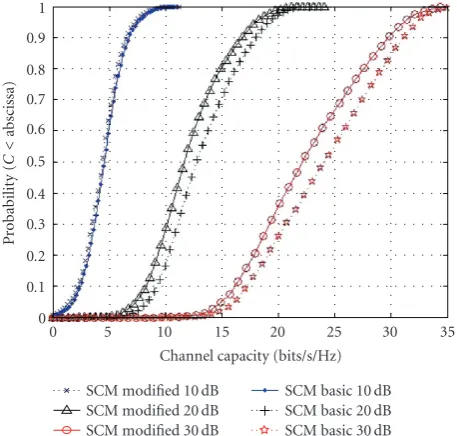
Figure6: Simulated outage capacity; RMS=8 degrees
0 SCM modified 10 dB
SCM modified 20 dB SCM modified 30 dB
SCM basic 10 dB SCM basic 20 dB SCM basic 30 dB
Figure7: Simulated outage capacity; RMS=15 degrees
account this effect, the 3GPP associates 20 subpaths to each path (Figure 1) to model the AS through their AoA and AoD at the mobile station and the base station, respectively. The subpaths are symmetrically placed about the nominal path direction. It is important to emphasize that the 20 angular values of the subpaths offsets are fixed (see [4]) and that all the subpaths have identical powers equal toP/20, wherePis the power associated to the main path. The resulting power azimuth spectrum (PAS) follows the shape of Laplacian dis-tribution (Figure 2) with a certain variance, which varies ac-cording to the chosen environment: urban macrocell, urban microcell, suburban macrocell. It is expected that due to fixed subpath directions and powers, the model does not bring all the variability which is present in real radio channels. More-over, equally strong subpaths may require large angular sep-aration in order to obtain eligible AS. This reduces the corre-lation between MIMO antennas and thus over-estimates the MIMO capacity.
3.2. Modified SCM model
As discussed above, the 3GPP SCM may not reproduce the dynamic nature of a real MIMO channel due to its static modeling of the subpaths. In order to achieve a better match with the measured channels from the capacity point of view, a slightly different modeling of the spatial properties is pro-posed in this paper. We propose to choose the 20 azimuth angle values of the subpaths at the BS randomly from a uni-form angular distribution in the interval (−15, +15) degrees around the received path delay position and to assign the rel-ative power values from a Laplace function:
P(φ)=√1
where σ is the standard deviation of the Laplacian distri-bution and φ are the azimuth values chosen according to
0 SCM modified 10 dB
SCM modified 20 dB SCM modified 30 dB
SCM basic 10 dB SCM basic 20 dB SCM basic 30 dB
Figure8: Simulated outage capacity; RMS=24 degrees
0 SCM modified 10 dB
SCM modified 20 dB SCM modified 30 dB
SCM basic 10 dB SCM basic 20 dB SCM basic 30 dB
Figure9: Simulated outage capacity; RMS=40 degrees.
the uniform distribution. The resultant PAS distribution is Laplacian. At the MS, the 20 azimuth values of the subpaths were randomly chosen from uniform distribution, and the relative power values were assigned according to a uniform distribution. As a result, the PAS distribution is uniform.
Configuration A (a)
Configuration B (b)
Configuration C (c)
Configuration D (d)
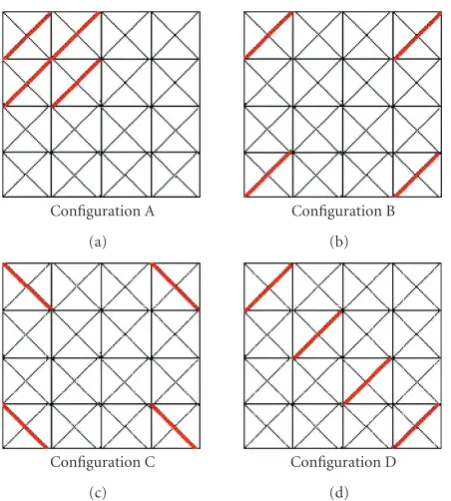
Figure10: Chosen combinations of RX antenna elements. Four antenna elements can be chosen out of 16 dual-polarized (±45 degrees)
antenna elements.
4. SIMULATION RESULTS
Simulations of outage capacity were run using both the 3GPP SCM model and the modified SCM for a 4×4 MIMO case. In each case of comparison, the RMS angular spreads of the ba-sic and modified SCM models were set to be equal. Thus, at least two channel parameters are the same, namely, the angu-lar spread and the delay spread properties (flat fading case). At the BS, four different RMS AS values were considered: 8, 15, 24, and 40, while at the MS, the RMS AS was set to 35. An urban macrocell environment was supposed with the mo-bile station having a speed equal to 20 km/h and the antenna spacing equal to 0.5λfor both the BS and the MS.
One simulation run includes 10 000 links, which cor-responds to 10 000 independent MIMO channel samples (drops in 3GPP terminology). The results for SNR values of 10 dB, 20 dB, and 30 dB, and for RMS AS value varied be-tween 8 and 40 degrees are drawn in Figures6–9. The com-parison between the 3GPP SCM and the modified SCM case shows that the modified SCM gives systematically smaller outage capacity values. The difference is becoming more sig-nificant as the angular spread is increasing. This obviously demonstrates the fact that the 3GPP SCM model has a static nature to bring relatively small spatial correlation values be-tween MIMO antennas. Furthermore, it does not cover the extreme channel states in which the propagation paths (sub-paths) are heavily concentrated in the nominal path direc-tion.
5. MEASUREMENTS RESULTS
The measurement campaign was held in the city of Oulu, Finland, in July 2005. Propsound radio channel sounder (the
block diagram and all the details can be found in [10]) has been used in the field measurements. The sounder has been designed so that it suits very well to realistic radio channel measurements both in time and spatial domains. This sounder is based on time division multiplexed (TDM) switching of transmit and receive antennas. Thus, sequential radio channel measurements between all possible transmit (TX) and receive (RX) antenna pairs is achieved.
The setup consists of a BS RX antenna equipped with a 16-element dual polarized planar array (Figure 3) and an MS TX antenna with an L-shaped 11-element array composed of two uniform linear arrays (ULA) of vertically polarized monopoles (Figure 4).
The results shown in this paper are related to the urban macrocell case: the base station RX antenna height was 32 m and it was few meters above the average rooftop level. The mobile station was car-mounted and moved at street level with a speed of 20 km/h, and the mobile TX antenna height was 2 m.
The sounding signal consists of chip sequences of typ-ical spread spectrum signals, maximum length sequences (M-sequences); measurements were carried out with a code length of 511, a chip rate of 100 Mchip/s, and a carrier frequency of 2.53 GHz (Table 1). The transmit power was 26 dBm.
Since the measured MIMO channel matrices include the path loss, a proper normalization is required; the normaliza-tion factor is given by
F=
1 NTNR
NT
i=1
NR
j=1
hi,j2
−1
0
Figure11: CDF curves of MIMO capacity (measured data) with
different antenna configurations as inFigure 10.
whereNTis the number of transmitting antennas,NRis the
number of receiving antennas, andhi,jis the element of the
channel matrixHdefining the channel impulse response be-tween antennasiandj.
5.1. Data postprocessing
The reasonable threshold for the multipath noise floor must be defined to avoid the effects of noise on the results. If the threshold was set too low, it would result in too large outage capacity values. The noise threshold is calculated as
T=m+ 21
wherePextends typically from the 1st delay position to the 50th delay position of the signal impulse response andmis the mean value of|hP|. Evaluating the measured impulse
re-sponse, we saw that the first 50 delay positions of the impulse response do not usually have the signal, and therefore it rep-resents well the spurious noise interval after the correlation. The number of the effective delay positions is then the num-ber of the delay positions above the noise threshold.
In order to obtain a 5 MHz bandwidth to study the nar-row band case, 20 delay positions were combined to 1 be-cause the aimed bandwidth was equivalent to 1/20 of the original one.
The size of the measured channel matrices is 32×11×
nt×nc, wherent is the number of delay positions andncis
the number of channel samples (cycles). In order to calculate the capacity for a 4×4 system, several combinations of 4 el-ements at the receiver array (Figure 10) were chosen to have more statistic, while at the transmitter, a combination of 4 elements was fixed (antenna shape can be seen inFigure 3; the chosen active elements are then 1, 4, 8, and 11, from the
0
Empirical CDF versus CDF simulation of 3GPP SCM and modified SCM
Figure 12: CDF curves of MIMO capacity: measured data (full
lines) versus 3GPP SCM (dash-dotted line) and modified SCM (dashed line).
left). It was noted that the RMS angular spread in the mea-surement data was approximately 24 degrees.
The CDF curves of the capacity calculated for each com-bination are shown in Figure 11. They were calculated for signal to noise ratio (SNR) of 30 dB.
A critical point to focus on is the capacity value guar-anteed for 90% of the channel realization. Its level of confi-dence is reasonable since it reflects the MIMO channel ma-trix conditions in which the degree of antenna correlation is relatively large. Thus, it corresponds to cases in which the AS happens to be fairly small and in which the MIMO channel does not offer best capacity. As we can notice fromFigure 11, such a value (0.1 on the vertical axis) yields a channel capac-ity strictly minor of 20 bps/Hz for each of the calculated cases (configurations A–D of the antennas).
the modified SCM model gives also less than 20 bps/Hz. The outage capacity results from the channel models and the measured data were comparable also due to the fact that the average power of the MIMO channel matrices is normalized to be the same in both cases. Since the noise is fixed, the aver-age SNR could be set to be equal for both the simulated and the measured cases.
6. CONCLUSION
In this paper, the spatial channel model proposed by the Third Generation Partnership Project (3GPP) has been stud-ied by numerical simulations. It was found out that the 3GPP SCM model tends to over-estimate the MIMO outage chan-nel capacity. This is due to the static nature of the 3GPP SCM in which each signal path is modeled by 20 subpaths hav-ing fixed azimuth directions and fixed power levels. Thus, the model is characterized by relatively small spatial corre-lation between MIMO antennas, which does not have strong variability. A modified SCM model is proposed which brings more variability to the MIMO channel states, which is also the usual case in real radio channels. The modified model produces also systematically smaller capacity values than the 3GPP SCM model. The difference between the two models increases as the angular spread of the radio channel is in-creasing. The simulated results were also compared to out-age capacity results from a measurement campaign. It was found out that the simulated capacity results using the mod-ified SCM model had a surprising good match with the ca-pacity calculated from the empirical data.
ACKNOWLEDGMENT
This work was conducted within the European Network of Excellence for Wireless Communications (NEWCOM).
REFERENCES
[1] G. J. Foschini and M. J. Gans, “On limits of wireless commu-nications in a fading environment when using multiple an-tennas,”Wireless Personal Communications, vol. 6, no. 3, pp. 311–335, 1998.
[2] B. Vucetic and J. Yuan,Space-Time Coding, John Wiley & Sons, Chichester, UK, 2003.
[3] M. Steinbauer, D. Hampicke, G. Sommerkorn, et al., “Array measurement of the double-directional mobile radio chan-nel,” inProceedings of the IEEE Vehicular Technology Conference
(VTC ’00), vol. 3, pp. 1656–1662, Tokyo, Japan, May 2000.
[4] 3GPP, “SpatialChannel Model for Multiple Input Multiple Output MIMO simulations,” Technical Specification Group Radio Access Network TR 25.996 v6.1.0, 3GPP, September 2003.
[5] J. Salo, G. Del Galdo, J. Salmi, et al., “MATLAB implemen-tation of the 3GPP spatial channel model,” Tech. Rep. TR 25.996, 3GPP, January 2005,http://www.elektrobit.com/index .php?209.
[6] F. M. Reza,An Introduction to Information Theory, Courier Dover Publications, Mc-Graw Hill, New York, NY, USA, 1994. [7] J. Ylitalo and M. Juntti, “MIMO communications with appli-cations to (B)3G and 4G systems-tutorial,” University of Oulu, Dept. Electrical and Inform. Engeneering, CWC, 2004.
[8] J. Ylitalo, “On spectral efficiency in spatially clustered MIMO radio channels,” inProceedings of the IEEE Vehicular
Technol-ogy Conference (VTC ’06), vol. 6, pp. 2906–2910, Melbourne,
Australia, May 2006.
[9] D. Gesbert, T. Ekman, and N. Christophersen, “Capac-ity limits of dense palm-sized MIMO arrays,” in Pro-ceedings of the IEEE Global Telecommunications Conference
(GLOBECOM ’02), vol. 2, pp. 1187–1191, Taipei, Taiwan,
November 2002.