University of South Carolina
Scholar Commons
Theses and Dissertations
2016
Examining The Relationship Among
Patient-Centered Communication, Patient Engagement,
And Patient’s Perception Of Quality Of Care In
The General U.S. Adult Population
Jumee Wang
University of South Carolina
Follow this and additional works at:https://scholarcommons.sc.edu/etd
Part of theHealth Policy Commons, and theHealth Services Administration Commons
This Open Access Dissertation is brought to you by Scholar Commons. It has been accepted for inclusion in Theses and Dissertations by an authorized administrator of Scholar Commons. For more information, please [email protected].
Recommended Citation
EXAMINING THE RELATIONSHIP AMONG PATIENT-CENTERED
COMMUNICATION, PATIENT ENGAGEMENT, AND PATIENT’S
PERCEPTION OF QUALITY OF CARE IN THE GENERAL U.S. ADULT
POPULATION
by
Jumee Wang
Bachelor of Arts
Busan National University, 1993
Master of Public Health Emory University, 2011
Submitted in Partial Fulfillment of the Requirements
For the Degree of Doctor of Philosophy in
Health Services Policy and Management
The Norman J. Arnold School of Public Health
University of South Carolina
2016
Accepted by:
Rajendra Singh, Major Professor
Janice C. Probst, Committee Member
Elizabeth A. Regan, Committee Member
Kevin J. Bennett, Committee Member
ACKNOWLEDGEMENTS
I would like to express my deep gratitude to several individuals who inspired and
supported me during my doctoral studies.
I am thankful to my committee chair, Dr. Rajendra Singh, for his support,
encouragement, and guidance throughout the dissertation process. I would also like to
express my appreciation to my committee members, Drs. Janice C. Probst, Elizabeth A.
Regan, and Kevin J. Bennett for always being available to share their expertise. I am
inspired by their passion to improve healthcare delivery. Their valuable comments and
suggestions during different stages of the dissertation helped greatly to improve this
document. I feel fortunate to have had such a supporting dissertation committee.
Finally, I am thankful to my wonderful family. I would like to especially thank
my mother, Sunja Lee, who encouraged and supported me during my studies in the
United States. I also express gratitude to my children, Yejin and Chanheum Park, for
their understanding, patience, and support during my study abroad. Yejin and Chanheum
thank you from the bottom of my heart; I love you so much.
ABSTRACT
Introduction: Patient-centered care is a major focus of healthcare organizations, policy
makers, and researchers. Patient-centered communication by the provider and patient
engagement are important components of patient-centered care. Despite increasing
attention to these topics, we do not fully understand how patient-centered communication
and patient engagement relate to perceived quality of care as reported by patients. This
study takes some initial steps in exploring these relationships. The study also identifies
patient-related factors such as sociodemographic, health-related, and health system
factors that are associated with patient-centered communication, patient engagement, and
perceived quality of care.
Method: This study used survey data from the 2013 Health Information National Trends
Survey (HINTS), conducted from September to December 2013. The study population
included non-institutionalized adults over 18 years of age who responded to all questions
related to patient-centered communication, patient engagement, and perceived quality of
care. A structured equation modeling analysis and a multivariate linear regression
analysis were performed to analyze the weighted data.
Results: This study found that patient-centered communication was positively associated
with perceived quality of care (β = 0.06, p < .01). Further, patient-centered
communication was directly associated with perceived quality of care (β = 0.71, p <
.001). Further, indirect relationship was found between patient-centered communication
and perceived quality of care, with patient engagement mediating the relationship (β =
0.01, p= 0.012). In addition, compared to those aged 18-34 years old, individuals over 65
years were more likely to report having better patient-centered communication (β = 1.56,
p < .001), better patient engagement (β = 1.46, p < .000), and better perceived quality of
care (β = 1.46, p = .002). Compared to Non-Hispanic white respondents, Asian
respondents reported having worse patient-centered communication (β = - 2.30, p <
.001), worse patient engagement (β = - 1.09, p < .05), and worse quality of care (β = -
0.45, p < .001). Further, those who had a regular provider reported better patient-centered
communication (β =0.93, p < .01) and better perceived quality of care (β = 0.22, p < .001)
compared to their counterparts.
Conclusions: Patient engagement played an important role in the relationship between
centered communication and perceived quality of care. Moreover, the
patient-related factors such as age, race/ethnicity, and having a regular provider were significant
factors in patient-centered communication, patient engagement, and perceived quality of
care. These findings can provide guidance to healthcare organizations on designing
TABLE OF CONTENTS
ACKNOWLEDGEMENTS ... iii
ABSTRACT ... iv
LIST OF TABLES ... viii
LIST OF FIGURES ... x
CHAPTER 1: INTRODUCTION ... 1
Patient’s Perception of Quality of Care ... 2
Patient-Centered Communication ... 3
Patient Engagement ... 5
Research Objectives ... 6
Research Method ... 7
Summary of Results ... 8
CHAPTER 2: LITERATURE REVIEW ... 11
Patient’s Perception of Quality of Care ... 11
Patient-Centered Communication ... 17
Patient Engagement ... 23
Research Gaps ... 29
Research Questions ... 31
Conceptual Framework ... 31
Data Source ... 33
Selection Strategy for Study Population ... 35
Dependent Variable ... 37
Independent Variables ... 38
Covariates ... 42
Data Analysis ... 44
CHAPTER 4: RESULTS ... 49
Descriptive Analysis ... 49
Bivariate Analysis ... 55
Structural Equation Modeling ... 61
Multivariate Linear Regression Analysis... 72
CHAPTER 5: DISCUSSION ... 79
Contribution to Research and Practice ... 82
Study Limitations ... 84
Directions for Future Research ... 86
LIST OF TABLES
Table 3.1. Comparing subsamples, 2013 HINTS ... 37
Table 3.2. Summary of Dependent Variable ... 38
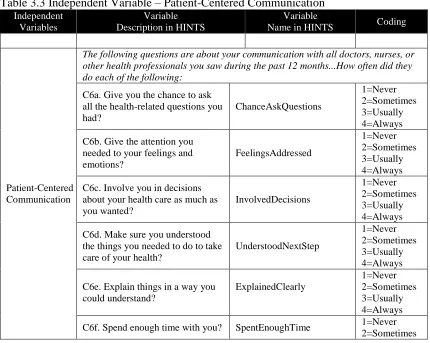
Table 3.3 Independent Variable – Patient-Centered Communication ... 39
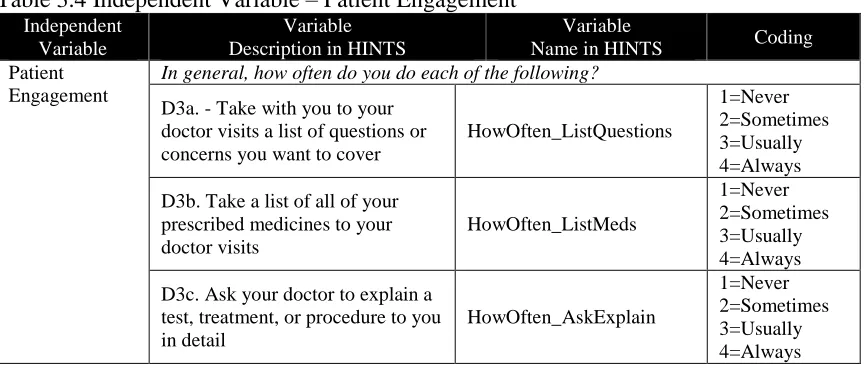
Table 3.4 Independent Variable – Patient Engagement ... 41
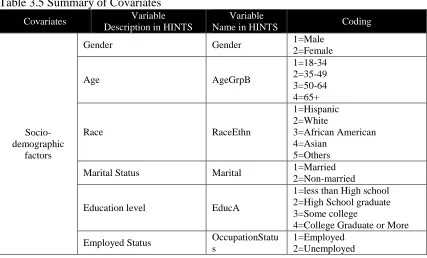
Table 3.5 Summary of Covariates ... 43
Table 4.1 Characteristics of the Study Population, 2013 HINTS (N=1,432) ... 50
Table 4.2 Responses to Patient-Centered Communication (N=1,432) ... 51
Table 4.3 Mean Scores for Patient-Centered Communication (N=1,432)... 52
Table 4.4 Responses to Patient Engagement (N=1,432)... 53
Table 4.5 Mean Scores for Patient Engagement (N=1,432) ... 53
Table 4.6 Responses to Perceived Quality of Care (N=1,432) ... 54
Table 4.7 Mean Scores for Perceived Quality of Care (N=1,432)... 54
Table 4.8 Mean Patient-Centered Communication by Patient-related Factors (N=1,432) 55 Table 4.9 Mean Patient Engagement Patient-related Factors (N=1,432) ... 58
Table 4.10 Mean Perceived Quality of Care by Patient-related Factors, (N=1,432) ... 60
Table 4.12 Goodness of Fit Results for Confirmatory Factor Analysis for
Patient-Centered Communication ... 63
Table 4.13 Standardized Path Coefficients for Patient-Centered Communication... 63
Table 4.14 Goodness of Fit Results for Confirmatory Factor Analysis for Patient Engagement ... 66
Table 4.15. Standardized Path Coefficients for Patient Engagement ... 66
Table 4.16 Goodness of Fit Results for Full Structural Equation Model ... 68
Table 4.17 Standardized Path Coefficients for Full Structural Equation Model ... 70
Table 4.18 Summary of Standardized Indirect and Total Effects ... 72
Table 4.19 Factors associated with Patient-Centered Communication (N=1,432) ... 73
Table 4.20 Factors associated with Patient Engagement (N=1,432) ... 75
LIST OF FIGURES
Figure 2.1 Patient-Centered Communication Functions (McCormack et al., 2011) ... 21
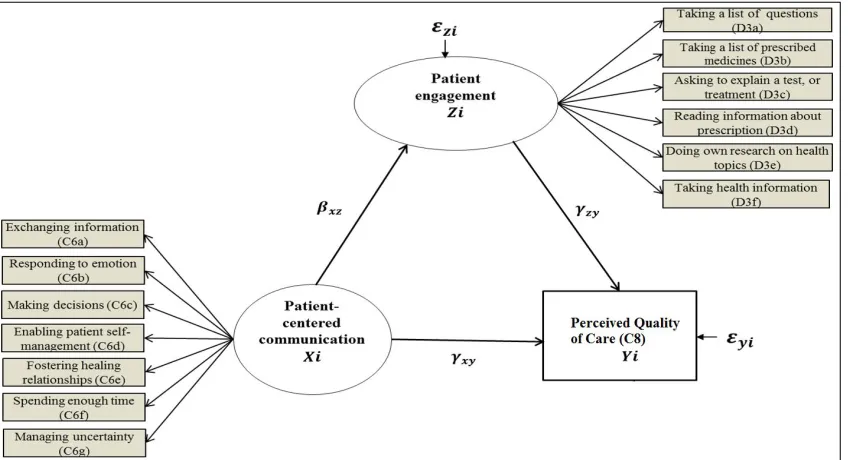
Figure 2.2 Conceptual Framework ... 32
Figure 3.1 Selection Strategy for Study Population... 36
Figure 3.2 Structural Equation Modeling ... 47
Figure 4.1 Confirmatory Factor Analysis for Patient-Centered Communication ... 65
Figure 4.2 Confirmatory Factor Analysis for Patient Engagement ... 68
CHAPTER 1: INTRODUCTION
This chapter provides an introduction to patient-centered communication, patient
engagement, and patient’s perception of quality of care in healthcare delivery in the
United States. It identifies the research objectives of this dissertation, summarizes the
research method, and provides a brief summary of results.
In its 2001 report, Crossing the Quality Chasm: A New Health System for the 21st
Century, the Committee on Quality of Health Care in America, Institute of Medicine,
provided a strategic direction for redesigning the healthcare delivery system in the United
States (IOM, 2001). In an effort to improve the quality of care, the IOM Report
emphasized the need for fundamental reform to ensure that all Americans can receive
healthcare that is safe, effective, patient-centered, timely, efficient, and equitable. Since
the release of this groundbreaking report, there has been increased focus on
patient-centered care, i.e., providing care that is respectful of and responsive to individual patient
preferences, needs, and values and ensuring that patient values guide all clinical decisions
(IOM, 2001). As a result, patients’ perspectives in evaluating the quality of their care
have received increasing attention by health care researchers and policy makers (Abrams,
Nuzum, Mika, & Lawlor, 2011; R. M. Epstein & Street, 2011; Porter, 2010; Robinson,
The Patient Protection and Affordable Care Act (aka Affordable Care Act) of
2010 sought to increase access to high quality and affordable health care for all
Americans. The law required the U.S. Department of Health and Human Services (HHS)
in 2011 to establish the National Quality Strategy for Improvement in Health Care
(NQS). The NQS included patient engagement and effective patient-provider
communication as major priorities to improve quality of care in the U.S. (2011).
Patient-centered communication and patient engagement are fundamental tools to enhance
patient-centered care (Jennings, Heiner, Loan, Hemman, & Swanson, 2005; Robinson et
al., 2008; Wanzer, Booth-Butterfield, & Gruber, 2004; Wensing, Jung, Mainz, Olesen, &
Grol, 1998). Patient-centered care can lead to improved communication, encourage
patient engagement, and result in improved quality of care (Beck, Daughtridge, & Sloane,
2002; Robinson et al., 2008). Under the Affordable Care Act, these shared aims and
priorities of the NQS play an important role in improving the nation’s health.
Patient’s Perception of Quality of Care
Patient’s perception of quality of care is a reflection of how the patient defines
quality (Sofaer & Firminger, 2005). In fact, patients’ perspectives have become
increasingly important indicators to measure quality of care under a patient-centered
health care environment. Attree (2001) described elements of ‘good’ quality of care from
a patient’s perspective in terms of nature of care provided (for example, how well the
provider focused on the patient) and nature of provider-patient relationship (for example,
whether the provider spent enough time with the patient). These attributes of patient’s
perception of quality of care play a critical role in guiding and monitoring quality
Roseman, Shaller, & Edgman-Levitan, 2010; Friedberg, SteelFisher, Karp, & Schneider,
2011; Goldstein, Cleary, Langwell, Zaslavsky, & Heller, 2001). In addition, patient’s
perception of quality of care is an important indicator of quality of care in public
reporting and the current pay-for-performance reimbursement regime (Browne et al.,
2010; Kolstad & Chernew, 2009; Price et al., 2014). Several studies have also shown that
the perceived quality of care by patients plays an important role in determining the choice
of providers and plans (Kolstad & Chernew, 2009; Price et al., 2014; Spranca et al.,
2000), preventive services (Mohammed et al., 2016), and patient adherence to treatment
advice (Bartlett, 2002; Brown, 2001; Gordon, Smith, & Dhillon, 2007).
An understanding of factors influencing patient’s perception of quality of care—
such as patient-centered communication and patient engagement—is important because
patients are the primary stakeholders in health care. We examine these factors in the
current study.
Patient-Centered Communication
An important component of patient-centered care is communication between the
provider and the patient that is respectful of and responsive to the patient’s needs, beliefs,
values, and preferences (Barry & Edgman-Levitan 2012; Wynia & Matiasek, 2006).
Following other studies, we refer to such communication as patient-centered
communication (R. M. Epstein et al., 2005; R. M. Epstein & Street Jr, 2007).
The US National Cancer Institute’s Strategic Plan for Leading the Nation in 2006
called for assessing the delivery of patient-centered communication as an important step
towards improving cancer care. Several studies have demonstrated that patient-centered
hypertension and in building trust between patient and provider (Bredart, Bouleuc, &
Dolbeault, 2005). Moreover, improved patient-centered communication contributed to
lower diagnostic testing costs (R. M. Epstein et al., 2005). Effective patient-centered
communication can enhance patient empowerment and adherence to treatment (Baile &
Aaron, 2005; R. M. Epstein & Street Jr, 2007; Flach et al., 2004). In general, more
effective communication between physicians and patients contributes to a better
provider-patient relationship, which affects provider-patient’s perception of quality of care and health
outcomes (Rimal, 2001). Understanding patients’ perception of provider communication
may serve to develop system-level interventions aimed at eliminating communication
disparities and improving patients' health outcomes (Calo, Ortiz, Colon, Krasny, &
Tortolero-Luna, 2014). However, while the results of patient-centered communication
have been documented, the precise mechanisms that lead to these results are not fully
understood. There is, therefore, a need to improve our understanding of how
patient-centered communication relates to patient engagement and patient’s perception of quality
of care.
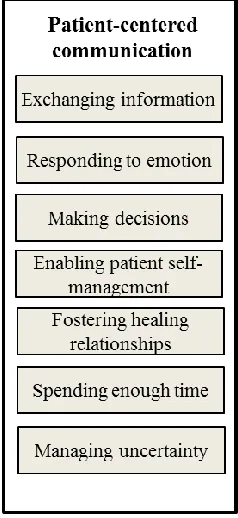
Epstein and Street (2007) presented six core functions of the patient-centered
communication: exchanging information, recognizing and responding to emotions,
making decisions, enabling patient self-management, fostering healing relationships, and
managing uncertainty. Drawing on Epstein and Street’s (2007) framework, McCormack
and colleagues (2011) proposed a comprehensive patient-centered communication
framework. They included a crosscutting function that includes communication
interaction quality in a team care model. This cross-cutting function considers spending
privacy, and communicating about the roles and responsibilities. This dissertation uses
McCormack’s conceptual model (2011) to examine patient-centered communication.
Patient Engagement
Over the past decade, patient engagement has been widely accepted in health care
as an important factor in improving patient’s care experiences and enhancing the quality
of care. Notably, since the urgent call to improve the health care system by the IOM’s
Committee in 2001 and the establishment of the National Quality Strategy by the U.S.
Department of Health and Human Services in 2011, the focus on engaging patients and
motivating them to play a more active role in their health care has substantially increased.
Patient engagement refers to “the actions individuals must take to obtain the greatest
benefit from the health care services available to them” (Holmes Rovner et al., 2010, p.
2). This definition focuses on individuals’ behaviors related to health outcomes rather
than on actions of professionals, policies, or institutions, and has been widely used by
researchers and policy makers in designing initiatives to promote meaningful, active, and
constructive involvements between patients and other stakeholders (Deverka et al., 2012;
Devine et al., 2013; Guise et al., 2013; Haywood et al., 2014; Holroyd-Leduc, Lorenzetti,
Straus, Sykes, & Quan, 2011).
The Center for Advancing Health (Holmes Rovner et al., 2010) developed the
Engagement Behavior Framework regarding patients’ behaviors during interactions with
health care providers. The goals of this framework were to achieve individuals’ desired
benefits in their care and how to help health behavior research focus on any gaps or
priorities for effective engagement behaviors. The framework outlines individuals’
advance a list of questions for health care providers before office visits; taking a list of all
medications for discussion about their benefits and side effects; reporting on their
medical history and health status accurately; and making sure that providers explain
clearly any expectations and express any concerns about their care experiences.
Studies have shown that patient engagement is associated with high level of
satisfaction with quality of care (Mead & Bower, 2000) and improved patient health and
economic outcomes (Laurance et al., 2014). Based on a cross-national study, Osborn and
Squires (2012) found that patients who were engaged in their own care reported higher
quality and fewer errors. In another study, R. M. Epstein and Street Jr (2007) found that
patient activation influences patient-provider communication. However, patient
activation—which represents the patient’s capacity to engage in care-related activities
(Carman et al., 2013)—is a narrower concept than patient engagement, which includes
interventions to increase activation and promote positive patient behavior (James, 2013).
Thus, current literature has examined patient engagement and its impact to some extent.
However, very little is known about the mechanisms through which patient engagement
relates to patient-provider communication (R. M. Epstein & Street Jr, 2007; Street, 2013)
and to patient’s perception of quality of care. Therefore, there is a need to further
investigate the relationships between patient engagement, patient-centered
communication, and patient’s perception of quality of care.
Research Objectives
Many studies have identified that to improve patients’ perception of quality of
care, effective patient-provider communication is crucial, regardless of health status
Kleeberg et al., 2005; Mallinger, Griggs, & Shields, 2005). Further, there is a need for
more studies on patient engagement and patient preferences associated with improved
quality of care so that health care providers can design effective strategies to improve
patients’ care experiences and overall quality of care (Barello, Graffigna, Vegni, &
Bosio, 2014; Laurance et al., 2014). However, few studies have examined how
patient-centered communication is associated with patient engagement and patients’ perception
of quality of care (R. M. Epstein & Street Jr, 2007).
Therefore, the primary objective of this study was to examine the relationship
among patient-centered communication, patient engagement, and perceived quality of
care, as reported by patients drawn from the U.S. adult population. The secondary
objective was to identify patient-related factors—such as socio-demographic,
health-related, and health system factors—associated with patient-centered communication,
patient engagement, and patients’ perception of quality of care. Accordingly, our two
research objectives were as follows:
1 – To examine the relationship among patient-centered communication, patient
engagement, and patient’s perception of quality of care
2 – To identify patient-related factors associated with patient-centered
communication, patient engagement, and patient’s perception of quality of care
Research Method
To examine the research questions, we draw on the 2013 Health Information
National Trends Survey (HINTS) provided by the National Cancer Institute. The HINTS
dataset is a secondary, cross-sectional survey of the nationally representative postal
analyze the data, we used STATA 14 (StataCorp LP, College Station, TX, USA).
Specifically, descriptive statistics, including frequencies, percentages, and patient ratings
of patient-centered communication, patient engagement, and patients’ perception of
quality of care were estimated for each covariate using appropriate weights. Bivariate
analysis assessed the relationships among patient-related characteristics, patient-centered
communication, patient engagement, and patients’ perception of quality of care. The sum
of global rating of each patient-centered communication, patients’ perception of quality
of care and patient engagement was calculated for each covariate. Multivariate analyses
were conducted as follows:
Structural equation modeling (SEM) was performed to determine the relationship
among patient-centered communication, patient engagement, and patient’s
perception of quality of care.
Multivariate linear regressions were performed to identify the patient-related
factors associated with patient-centered communication, patient engagement, and
patient’s perception of quality of care.
The Institutional Review Board of the University of South Carolina approved this
research.
Summary of Results
The research findings suggest that patient-centered communication contributed to
a positive and direct relationship with patients’ perception of quality of care and patient
engagement. Therefore, patient-provider communication behaviors, such as making
decisions, enabling patient self-management, fostering health relationships, and spending
as well as patients’ perception of quality of care. Additionally, patient engagement played
a mediator role in fostering a positive relationship between patient-centered
communication and patients’ perception of quality of care. Together, the research
findings highlight the importance of patient-centered communication in improving
patients’ perception of quality of care through active patient engagement.
This study also identified the patient-related factors such as sociodemographic,
health-related and health system factor associated with patient-centered communication,
patient engagement, and patients’ perception of quality of care. The results suggest that
patient-related factors such as age, race/ethnicity, and having a regular provider were
significantly associated with patient-centered communication, patient engagement, and
patients’ perception of quality of care. Specifically, among sociodemographic factors,
respondents over 65 years old reported better patient-centered communication, patient
engagement, and quality of care compared to respondents 18-34 years old. On the other
hand, the Asian respondents reported poor patient-centered communication, patient
engagement, and patients’ perception of quality of care as compared to Non-Hispanic
white respondents. This suggests a distinct racial disparity in patient-centered
communication, patient engagement, and patients’ perception of quality of care. Among
health-related factors, patients who rated themselves Very Good or Excellent in terms of
health status were significantly associated with improved patient centered communication
and patients’ perception of quality of care. Among the considered health system factors,
having a regular provider was significantly associated with improved patient-centered
communication and patients’ perception of quality of care. The study also found that
were significantly associated with higher level of patient engagement. Overall, these
findings emphasize the importance of various patient-related factors in improving health
CHAPTER 2: LITERATURE REVIEW
This chapter summarizes the empirical literature and theoretical frameworks
related to this study. Specifically, it discusses the literatures related to patient-centered
communication, patient engagement, and patients’ perception of quality of care. Next, it
presents the research gaps and the related research questions. The chapter concludes by
proposing a conceptual model that illustrates the relationship among patient-centered
communication, patient engagement and perceived quality of care, and includes
patient-related factors that are associated with these three areas of interest.
Patient’s Perception of Quality of Care
Driven by the IOM Report and the increasing challenge of improving health care
delivery, incorporating patients’ perspectives has become increasingly important (R. M.
Epstein & Street, 2011; Porter, 2010; Robinson et al., 2008). As a result, health care
researchers, administrators, providers, and policy makers have begun to focus on
patients’ perspectives in evaluating the quality of care (Abrams et al., 2011). Improving
patients’ perception of quality of care is one of the important ways to achieve
patient-centered care. In fact, as Sofaer and Firminger (2005) have noted, how patients perceive
the quality of care they receive is a reflection of how they define quality.
Several studies have reported that patients’ perception of quality of care is
affected by the nature and quality of their experiences with health care providers
1998). Attree (2001) described elements of good quality of care from a patient’s
perspective in terms of the nature of care provided and the provider-patient relationship.
Patients rated care as ‘good’ quality when the provider focused on the patient, engaged
the patient in care, provided individualized care, and was willing to address the patient’s
needs. Moreover, regarding the provider-patient relationship, patients rated ‘good’ quality
of care when the provider considered the patient as a person, developed rapport, made
efforts towards open communication, was available and accessible for advice and
information, and spent enough time with the patient. According to Attree (2001), the
most important characteristic of perceived good quality of care by the patient is open and
engaging communication with patients, which involves listening and giving patients
opportunity to talk and express their concerns.
Conceptual Models Relating to Patient’s Perception of Quality of Care
The conceptual model proposed by (Donabedian, 1966, 1988) is one of the
earliest models that discussed quality of care. This model consists of structures,
processes, and outcomes as components that influence the quality of care. In this model,
structure refers to the attributes of the practice setting in which care occurs, and includes
characteristics related to human resources (such as number and qualifications of
providers), material resources (such as facilities and equipment), and organizational
structure (such as medical staff organization, and reimbursement models). In his
influential book, Donabedian (1980) emphasized that the structure is embedded in—and
therefore influenced by—the external environment (which includes patients, societal
values, politics, expectations, state of scientific discovery, and knowledge about patient
relationship between care activities and the results of the care activities. Finally,
outcomes refer to changes in the patient’s health status as well as the degree of patient’s
satisfaction with care. In this way, Donabedian emphasized patient satisfaction with care
as an important component of quality of care.
Some studies have supported the importance of patients’ perception of quality of
care and patient satisfaction is a frequently used measure of quality of care (Crow et al.,
2002; Sixma, Kerssens, Campen, & Peters, 1998). Sofaer and Firminger (2005)
suggested, many studies have used patient satisfaction and patient’s perception of quality
of care interchangeably, which has led to conceptual confusion. In fact, satisfaction can
be considered an example of a perception, but it is by no means the only example (Sofaer
& Firminger, 2005). Researchers have considered patient satisfaction as “an outcome,
either to assess the value of a new intervention or to identify patient characteristics that
appear to influence quality assessment” (Sofaer & Firminger, 2005, p. 517). Although
patient satisfaction is not the only patient assessment of care, it has been predominantly
used by healthcare researchers (Sofaer & Firminger, 2005). The patient satisfaction
construct has also been utilized by health plans, hospitals, and other providers to assess
the satisfaction of their members or patients with their services. Satisfaction is a relative
concept that can be defined as fulfilling expectations, needs, or desires (Sitzia & Wood,
1997), but not necessarily implying superior service (only adequate or acceptable service
may satisfy some patients) (Crow et al., 2002). Many researchers have questioned the
value of patient satisfaction concept, citing problems with standardization, reliability, and
Sofaer and Firminger (2005) evaluated patients’ perception of quality of care in
terms of patient experiences with care delivery during a single or multiple episodes of
care. They noted that patients’ perception of quality care is determined by the interaction
of the patients’ expectations and their experiences. Further, as patients apply their
standards regarding quality, their perceptions of the quality of care becomes solidified
(Sofaer & Firminger, 2005). In a significant departure from existing literature, Sofaer and
Firminger (2005) considered being satisfied as only one way of characterizing patient’s
perception of quality and therefore did not include patient satisfaction in their
conceptualization. Instead, they examined patient’s perceptions of quality of care in terms
of patient-centered care, access, communication and information, courtesy and emotional
support, technical quality, efficiency of care/organization, and structure and facilities.
Factors Affecting Patient’s Perception of Quality of Care
The existing literature has identified a number of patient-related factors that are
associated with patient’s perception of quality of care, including age, sex, race/ethnicity,
health status, and health system factors. For example, older patients are more likely to
report higher quality of care compared to younger patients (Danielsen, Garratt, Bjertnæs,
& Pettersen, 2007; Vukmir, 2006). Studies have also identified gender as a predictor of
patients’ perception of quality of care, although there are some mixed findings. For
example, some studies found that women reported better quality of care than men (Holter
et al., 2014; Hsieh & Kagle, 1991), while other studies found that women reported
significantly poorer quality of care than men (Danielsen et al., 2007). Still, another study
showed that there is no gender difference regarding patients’ perception of quality of care
Other studies have shown that racial/ethnic minorities are more likely to report
poorer quality of care. For example, African Americans and Asian/Pacific Islanders
reported a poorer quality of care compared to the White population (Borders, Lensing, &
Xu, 2011; Henderson, Caplan, & Daniel, 2004; Tsai, Whealin, & Pietrzak, 2014). Other
studies have shown that education is also associated with patients’ perception of quality
of care. For example, patients with lower levels of education are more likely to report a
higher level of quality of care compared to counterparts (Danielsen et al., 2007;
Jenkinson, Coulter, Bruster, Richards, & Chandola, 2002). One study, however, found
that there is no relationship between education levels and patients’ perception of quality
of care (Vukmir, 2006).
Considering the relationship between health status and perceived quality of care,
Weingart et al. (2011) found that individuals who are in poor health reported negative
perceptions of the quality of care. Other studies have reported that health system factors,
such as having a usual source of care and insurance, are significantly associated with
patient’s rating of quality of care (Finney Rutten et al., 2015; Palmer et al., 2014).
Measuring Patient’s Perception of Quality of Care
Researchers have utilized various tools to measure patient’s perception of quality
of care. For example, Cleary (1991) used a national hospital care survey to examine
patients’ perception of hospital quality of care. The survey, among the earliest to focus on
patient-centered care, evaluates patient education, communication with providers, respect
for patients’ needs and preferences, provision of emotional and physical comfort, family
involvement, and discharge preparation. This tool emphasized that patient’s perspective
Perspective (QPP) questionnaire—which is based on a qualitative assessment of patients’
expectations and experiences with their care delivery—has been extensively used to
examine patients’ perception of quality of care (Bodil Wilde Larsson & Larsson, 2002;
Muntlin, Gunningberg, & Carlsson, 2006). The QPP questionnaire has two dimensions:
patients’ perception of the care received and the subjective importance of the care
received (Bodil Wilde Larsson & Larsson, 2002; G. Larsson, Larsson, & Munck, 1998).
Similarly, the Picker Institute Questionnaire survey was developed to measure
in-patients’ perception of quality of care concerning patient-centered care. The survey had
the following dimensions: access to care, emotional support, involvement of family and
friends, continuity and transition, physical comfort, and coordination of care (Henderson
et al., 2004; Jenkinson et al., 2002).
Over the last several years, the Consumer Assessment of Healthcare Providers
and Systems (CAHPS)1 survey, developed by the Agency for Healthcare Research and
Quality (AHRQ) in the U.S. Department of Health and Human Services, has become the
most widely used standardized survey to assesses patients’ perception of quality of care
in various health care settings across the nation (Darby, Hays, & Kletke, 2005; Giordano,
Elliott, Goldstein, Lehrman, & Spencer, 2009; Goldstein et al., 2001). There are several
CAHPS surveys, for example, focusing on health plans, ambulatory settings, and
inpatient hospital stays. This survey was developed based on literature reviews and
reflected on feedback from patients and other key stakeholders in health care to ensure
validity and reliability of the data. The results of the CAHPS survey have been used to
1 For more information about CAHPS, see
guide and monitor quality improvement for patients’ care experiences. For example,
patients can review and compare health care providers and health plans, and hospitals can
integrate the survey results into programs that gain reimbursement or improve quality of
care for patients. The most recent CAHPS (2015) Survey covers major areas:
communication with health care providers, access to care and information, customer
services, coordination of care, and patients’ feedback about the importance and
perception of quality of care (CMS, 2015).
Patient-Centered Communication
In recent years, patient-centered communication has gained increasing attention as
a key element of patient-centered care (R. M. Epstein & Street Jr, 2007; Krupat et al.,
2000). Patient-centered communication by providers concerns with focusing on patients’
perspectives and putting them into context, identifying and considering patients’ values,
needs, preferences, and beliefs, and promoting patients’ participation in their own care
(Wynia & Matiasek, 2006). It plays an important role in decision-making and information
collection during a medical encounter (Arora, 2003a; Bredart et al., 2005; Jahng, Martin,
Golin, & DiMatteo, 2005; Wynia & Matiasek, 2006). Effective patient-centered
communication can create a strong relationship between the patient and provider, and
motivate patient involvement in decision-making. It can also enhance patient
empowerment and improved adherence, which can eventually lead to improved quality of
care (R. M. Epstein & Street Jr, 2007).
Over many decades, a number of researchers have examined the association
between physicians’ communication behaviors and patient health outcomes. Many
positive patient behaviors (Ashton et al., 2003; Beach, Keruly, & Moore, 2006; Griffin et
al., 2004). Research has also shown that effective patient-provider communication can
lead to improved patient adherence to treatment, resulting in decreases in asthma-related
morbidity and mortality (Brown, 2001). Arora (2003a) examined patients’ perception of
uncertainty and personal control in cancer care, and found that patients’ perception under
these circumstances have a negative influence on health outcomes if the communication
with their provider was unsatisfactory. Other studies have found that patient-provider
communication is associated with cancer screening behaviors (Ling, 2006; Cairns &
Viswanath, 2006; Underhill & Kiviniemi, 2012b).
Several studies have shown that patient-centered communication is a critical
feature associated with patient preferences and satisfaction with the care delivered
(Duberstein, Meldrum, Fiscella, Shields, & Epstein, 2007; Kleeberg et al., 2005;
Mallinger et al., 2005; Rutten, Augustson, & Wanke, 2006). Patients who rated their
patient–provider communication as high in primary care settings showed higher levels of
quality of care and overall satisfaction with their healthcare (Duberstein et al., 2007;
Rutten et al., 2006). Effective patient-provider communication and interactions have been
associated with achieving patient satisfaction with care and a high quality of life,
regardless of health status (Arora, 2003a; Bredart et al., 2005; Kleeberg et al., 2005;
Mallinger et al., 2005).
Effective communication between the doctor and the patient has been shown to
reduce malpractice claims as well as patient dissatisfaction (Levinson, Roter, Mullooly,
Dull, & Frankel, 1997). Moreover, effective patient-provider communication can result in
Brady, 2013; Janz et al., 2004; Mallinger et al., 2005; Mazor et al., 2013; Ong, Visser,
Lammes, & De Haes, 2000). For example, Baile and Aaron (2005) found that cancer
patients with effective and empathetic communication had an improved patient quality of
life and satisfaction with care. Other researchers have demonstrated that patients whose
doctors implement supportive communication activities tend to have greater satisfaction
in regards to the quality of care, better management of optimal cancer-related symptom
management, and improved health status (Arora, 2003b; Roter & Hall, 2006). Several
studies have shown that to accomplish effective patient-provider communication, the
patient must perceive that the health care provider is performing a number of complex
communication activities, such as listening or explaining information in a way that is
helpful and culturally appropriate (Sharkey, Ory, & Browne, 2005; Street Jr, Gordon,
Ward, Krupat, & Kravitz, 2005; Thorne, 2006).
Conceptual Models Relating to Patient-Centered Communication
Several studies have developed conceptual models related to patient-centered
communication. The conceptual framework suggested by Epstein and Street (2007) has
been widely accepted in health communication literature. Although the six core functions
in this framework were focused on cancer care, they are also relevant for any
patient-provider interaction.
1. Exchanging information – Attending to information needs of the patient by
providing opportunity to ask health-related questions, such as cause, diagnosis,
treatment, prognosis, and psychosocial aspects of the illness
2. Responding to emotions – Recognizing and responding to patient’s feelings and
3. Making decisions – Involving patients in making health and care-related decisions
based on their needs, values and preferences
4. Enabling patient self-management – Helping patients to enhance their ability to
solve health-related problems and to take actions to improve their health
5. Fostering healing relationship – Developing patient-provider relationship that is
based on mutual understanding, trust, and rapport
6. Managing uncertainty – Helping patients deal with uncertainty about the illness,
treatment, and recovery
These functions are interrelated rather than discrete. In a slight modification of the
Epstein and Street (2007) framework, de Haes and Bensing (2009) introduced a similar
model of patient-centered communication, which included (1) fostering relationships, (2)
gathering information, (3) information provision, (4) decision making, (5) enabling
disease and treatment-related behavior, and (6) responding to emotions.
More recently, McCormack and colleagues (2011) proposed a patient-centered
communication framework, as shown in Figure 2.1. They expanded Epstein and Street’s
(2007) framework to include a crosscutting function that relates to communication
interaction quality in a team care model. The crosscutting function considers spending
enough time with the provider during a medical encounter as well as having enough
privacy, and communicating about the roles and responsibilities. These functions are
interdependent and result in communication methods that have a major impact on health
outcomes. This model can be readily applied to different healthcare settings to assess the
healthcare systems (McCormack et al., 2011). In this dissertation, we have used
McCormack et al.’s (2011) framework to examine patient-centered communication.
Figure 2.1 Patient-Centered Communication Functions (McCormack et al., 2011)
Factors Affecting Patient-Centered Communication
Several researchers have examined the relationship between patient-related
factors and patient-centered communication. For example, studies have shown that age,
education, income level and race are associated with patient-provider communication
(Ashton et al., 2003; Ok, Marks, & Allegrante, 2008; Siminoff, Graham, & Gordon,
2006). Other studies found that having health insurance and access to care are important
predictors of patient-provider communication (Osborn & Squires, 2012; Rutten et al.,
2006). Further, Hispanic as well as older patients were more likely to report better
perception of communication with their health care providers (DeVoe, Wallace, & Fryer
(2006) found that socio-demographic factors are not associated with patients’ perception
of communication with health care providers.
Measuring Patient-Centered Communication
There are various methods—such as patient survey, provider report, direct
observation, and medical records—to measure provider communication during a medical
encounter (Calo et al., 2014). A patient survey is the most commonly used method as it
focuses on patients’ perception of quality of care and values (Robinson et al., 2008).
Patient surveys enable us to explore the effectiveness of communication and the nature of
the interrelationship between patients and providers. They can help to define patients’
experiences with their health care providers and with the interpersonal characteristics of
their health care system (R. M. Epstein et al., 2005).
According to Epstein (2005, 2007), patient-centered communication measures
should clarify what is important to patients. The Health Information National Trends
Survey (HINTS) is one of the most commonly used tools to examine the patients’
perception of patient-provider communication on a national level (Nelson et al., 2004;
Rutten et al., 2012). Since 2003, this survey has been used to reflect the public’s
perceptions, trends and needs in health-related communication. Initially, HINTS included
five provider communication behaviors (listening carefully, explaining things in a way
the patient can understand, showing respect for what the patient has to say, spending
enough time with the patient, and involving the patient in decisions related to his or her
care). The 2013 HINTS survey examines seven provider communication behaviors, based
on specific questions to the patients related to their medical encounter:
7. paying attention to patient’s feelings and emotions,
8. involving the patient in decisions about health care,
9. making sure the patient understood the things needed to do to take care of his or
her health,
10.explaining things in a way the patient could understand,
11.spending enough time with the patient, and
12.helping the patient deal with feelings of uncertainty about his or her health or
health care.
These survey items are similar to McCormack et al.’s (2011) framework, which
we utilize in this dissertation.
A standardized, national survey—the CAHPS Hospital Survey—is widely used to
assess patient’s perspective during an inpatient stay at a hospital facility. The survey also
includes items related to patient-centered communication, such as communication with
doctors, communication with nurses, communication about medicines, responsiveness of
hospital staff, pain management, discharge information, cleanliness of the hospital
environment, quietness of the hospital environment, and transition of care (HCAHPS
Fact Sheet, 2015). This survey plays an important role in collecting patients’ feedback
and in informing quality improvement efforts (Mavis et al., 2015).
Patient Engagement
Patient engagement is defined as “actions individuals must take to obtain the
greatest benefit from the health care services available to them” (Holmes Rovner et al.,
2010, p. 2). This definition focuses on individual behaviors concerning their health care,
level, Coulter (2011, p. 10) defined patient engagement in terms of the ongoing
relationship between patients and health care providers as they work together to “promote
and support active patient and public involvement in health and healthcare and to
strengthen their influence on healthcare decisions, at both the individual and collective
levels.” Similarly, other researchers have defined patient engagement as meaningful,
active, and constructive involvement of patients and other stakeholders involved in
healthcare delivery (Deverka et al., 2012; Devine et al., 2013; Guise et al., 2013;
Haywood et al., 2014; Holmes Rovner et al., 2010).
The concept of patient engagement is often used interchangeably, albeit
erroneously, with patient activation (Carman et al., 2013). Patient activation is a narrower
concept, and it refers to a patient’s knowledge, skills, ability, and willingness to manage
his or her own health and care (James, 2013). As such, patient activation represents the
patient’s capacity to engage in care-related activities (Carman et al., 2013). In contrast,
patient engagement is a broader concept that combines patient activation with
interventions designed to increase activation and promote positive patient behavior, such
as obtaining preventive care or engaging in a physical activity (James, 2013).
Coulter (2011) characterized patient engagement based on how much information
exchange occurs between patient and provider, how much role the patient has in care
decisions and in health organization decisions. This line of thinking suggests that patient
engagement occurs on a continuum. At the lower end of the continuum, patients remain
involved but have limited power or decision-making authority (with most of the decisions
being made by the providers and healthcare organizations). In such a scenario, the
At the higher end of the continuum, patient engagement is characterized by shared power
and decision-making responsibility, with patients becoming active partners in
determining healthcare goals and making decisions. Information flows to and from the
patient throughout the process of engagement.
In 2013, the World Innovation Summit for Health in Doha, Qatar, focused on
understanding and advancing a global discussion about engaging patients and their
families in their healthcare. The resulting Report of the Patient and Family Engagement
Working Group (Edgman-Levitan, Brady, & Howitt, 2013) highlighted several
previously unexamined aspects of patient engagement. In particular, the Report noted that
patient engagement is multi-dimensional – it can be at a personal level (for example,
shared decision-making between a patient and a provider) or it can be at a public level
(for example, a health literacy campaign). Further, patient engagement can be targeted at
improving provider performance (for example, when the patient and his or her family
collaborate with the provider to redesign healthcare services) or it can be targeted at
informing patient behavior (for example, through self-management programs for chronic
disease). Finally, patient engagement can begin with simple information-sharing, move
on to a dialogue, and evolve into a partnership between the patient and provider.
Encouraged by the increasing attention, several international researchers have now taken
up further examination of this “blockbuster [solution] of the century” (Dentzer, 2013).
The Affordable Care Act recognizes that engaging patients in their own care is a
cornerstone of a successful health care system as it can have a transformative effect on
care relationships (Hibbard & Greene, 2013; Laurance et al., 2014). Although patient
of patient engagement is still emerging (Haywood et al., 2014). More recently, evidence
suggests that patient engagement can be a pathway toward achieving better quality of
care, greater cost efficiency, and improved population health (Coulter, Parsons, &
Askham, 2008; Johnson et al., 2008; Smith, Saunders, Stuckhardt, & McGinnis, 2013). In
commenting on a recent special issue on patient engagement in Health Affairs, Dentzer
(2013) noted that wherever engagement takes place, evidence shows that patients who are
actively involved in their health and health care achieve better health outcomes, and have
lower health costs, than those who are not actively engaged. This is also supported by
several studies which indicate that patient engagement is associated with high level of
satisfaction with quality of care (Mead & Bower, 2000), improved patient-provider
communication, and improved patient health and economic outcomes (Laurance et al.,
2014). Based on eleven country surveys, Osborn and Squires (2012) found that patients
who were engaged in their own care reported higher quality and fewer errors. Coulter and
Ellins (2007) systematically reviewed patient engagement strategies in existing literature
and evaluated their effectiveness, and found that patient engagement helped to improve
health literacy, clinical decision-making, self-care, and patient safety. In a more recent
literature review, Coulter (2012) found that patient engagement helped to improve health
literacy, shared decision-making, and quality.
Conceptual Models Relating to Patient Engagement
Based on literature reviews and interviews with various levels of stakeholders
including consumers and advocacy groups in health care, the Center for Advancing
Health (Holmes Rovner et al., 2010) developed the Engagement Behavior Framework
this framework indicate how to achieve individuals’ desired benefits in their care and
how to help health behavior research focus on any gaps or priorities for effective
engagement behaviors. The framework outlines patients’ behaviors related to their
interaction with health care providers, and includes: preparing in advance a list of
questions for health care providers before office visits; taking a list of all medications for
discussion about their any benefits and side effects; reporting on their medical history and
health status accurately; and making sure that providers explain clearly any expectations
and express any concerns about their care experiences.
Carman and colleagues (2013) have proposed a multidimensional conceptual
framework of patient engagement, in which engagement activities range along a
continuum—from consultation to partnership and shared leadership. Further, engagement
occurs at different levels—individual health behavior or direct care interactions,
organizational design and governance, and in policymaking. Finally, multiple factors
affect the willingness and ability of patients to engage. These factors include
patient-related factors such as patient beliefs about their role, health literacy, and education;
organization-related factors, such as policies, practices, and culture; and society-related
factors, such as social norms, regulations, and policy (Carman et al., 2013).
Factors Affecting Patient Engagement
Numerous factors associated with patient engagement include individual,
illness-related, health care setting. For example, individual factors such as age, gender,
education, race/ethnicity, health status, patient’s knowledge, attitudes, self-efficacy,
health literacy, and health status have an impact on patient engagement (Arora &
individuals with lower income and the elderly may struggle with their engagement due to
low health literacy or limited health resources available. Health insurance and access to
care factors are significantly associated with patient engagment levels (Osborn & Squires,
2012; Scholle, Torda, Peikes, Han, & Genevro, 2010). For example, Scholle et al. (2010)
found that uninsured and poorer patients had lower levels of patient engagement
compared to patients with health insurance and high-income level.
Measuring Patient Engagement
Measuring patient’s engagement in their care is critical to understanding patient
behaviors and how these behaviors can improve the quality of care and health outcomes
in general (Laurance et al., 2014; Mavis et al., 2015). The study by Lorig (1996)
developed questions related to patient engagement in a medical encounter in chronic
disease care. These survey questions examined patients’ behaviors regarding preparing a
list of questions for the doctor, asking questions about anything patients do not know and
understand, and discussing any issues related to health. This survey focused on specific
chronic disease patients rather than general populations-based surveys. The survey did
not assess shared decision-making, a key dimension of patient engagement (Carman et
al., 2013), thereby limiting its utility.
The Consumer Assessment of Healthcare Providers and Systems (CAHPS) survey
is an important tool to assess patients’ feedback and quality of care. While the current
survey is valuable for understanding patient’s perception of provider communication
behaviors, it is limited in its assessment patient engagement behaviors related to their
engagement behaviors, it may be developed further by including such items (Mavis et al.,
2015).
Some studies have utilized the Patient Activation Measure (PAM) to assess
patient’s capacity to manage their health and healthcare (Hibbard & Greene, 2013;
Hibbard & Mahoney, 2010). PAM has been shown to be positively associated with
improved self-management behaviors. For example, individuals identified as highly
activated according to the measure are more likely to obtain preventive care, such as
health screenings and immunizations, and to exhibit other behaviors known to be
beneficial to health (Hibbard & Cunningham, 2008). However, the value of this tool in
measuring interventions that may signify patient engagement remains questionable
(Hibbard, Mahoney, Stock, & Tusler, 2007)
Research Gaps
It is becoming increasingly important to understand the influence of
patient-centered communication and patient engagement on the patients’ perceived quality of
care (Bergeson & Dean, 2006). In general, patient-centered communication, patient
engagement, and perceived quality of care have been studied extensively, but few studies
have examined the relationship among them simultaneously. As a result, the relationship
among them is not well understood.
Studies have shown that effective patient-centered communication can improve
the relationship between patient and provider, motivate patient engagement, and
eventually enhance perceived quality of care (R. M. Epstein & Street Jr, 2007; Street,
2013). Previous studies have also examined the relationship between patient-centered
2003a; Bredart et al., 2005; Duberstein et al., 2007; Kleeberg et al., 2005; Mallinger et
al., 2005; Rutten et al., 2006). Further, studies have shown that better patient-provider
communication is associated with patient’s active engagement in their care (DiMatteo et
al., 1993; Merkel, 1984). Other studies have concluded that patient engagement is
associated with better perception of quality of care (Coulter, 2012; Duberstein et al.,
2007; Mead & Bower, 2000; Osborn & Squires, 2012). In fact, in recent years,
researchers have called for more studies on how patient-provider communication affects
patient engagement and patients’ perception of quality of care (R. M. Epstein & Street Jr,
2007; Street, 2013).
Although the role of health system factors—such as access to care, frequency of
visit to the clinic, health insurance status, and having a regular provider—is fundamental
to healthcare delivery, their relationship with patient-provider communication and patient
engagement has not been fully examined. For example, some studies have shown that
health insurance and access to care are significantly associated with higher patient
engagement level (Osborn & Squires, 2012; Scholle et al., 2010), patient-provider
communication (Rutten et al., 2006), and patients’ rating of quality of care (McCormack
et al. 2011; Finney, 2015). Some researchers have called for examining the relationship
between health system factors, patient-centered communication and patient engagement
(R. M. Epstein et al., 2005, 2007; Osborn & Squires, 2012). Palmer et al. (2014)
examined the association of a sociodemographic factor (racial and ethnic disparities) with
patient-provider communication, perceived quality of care and patients’ activation among
long-term cancer patients. In this way, they sought to link patient-centered
conceptual model. However, their framework only considered racial/ethnic factors and
did not examine health system factors. Further, they considered patient activation—which
is a narrower concept representing the patient’s capacity to engage in care-related
activities (Carman et al., 2013)—rather than patient engagement, which combines patient
activation with interventions designed to increase activation and promote positive patient
behavior (James, 2013).
Research Questions
To address these research gaps, this dissertation examined the relationship among
patient-centered communication, patient engagement and perceived quality of care
among US adult population. In addition, we identified patient-related factors—such as
socio-demographic, health-related, and health system factors—associated with
patient-centered communication, patient engagement, and patients’ perception of quality of care.
Accordingly, this dissertation examined two research questions:
RQ1 - What is the relationship among patient-centered communication, patient
engagement, and patient’s perception of quality of care?
RQ2 - What patient-related factors are associated with patient-centered
communication, patient engagement, and patient’s perception of quality of care?
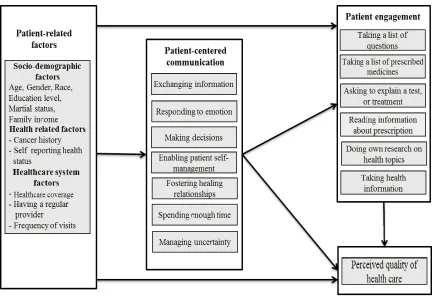
Conceptual Framework
Based on these research questions, we developed a conceptual framework that
draws on existing research, including patient-centered communication framework
(Epstein & Street, 2007; McCormack et al., 2011), patient engagement behavior
framework (The Center for Advancing Health, 2010), and Palmer et al.’ (2014)
we examined the relationship between patient-centered communication, patient
engagement, and perceived quality of care. In addition, we identified patient-related
factors associated with these three areas of interest.
CHAPTER 3: METHODOLOGY
This chapter provides detailed information on the data source and the study
population. Next, it describes the dependent and independent variables as well as the
covariates considered in the study. Finally, it presents data analysis and the analytical
models related to the research questions.
Data Source
This study utilized the 2013 Health Information National Trends Survey2
(hereafter referred to as 2013 HINTS) developed by the Health Communication and
Informatics Research Branch in National Cancer Institute (Lau et al., 2012). For the first
time since 2003 when the HINTS questionnaire and interview protocol were created, the
2013 HINTS included new items related to patient engagement behaviors. This makes
use of 2013 HINTS particularly useful to answer our research questions. The 2013
HINTS data was collected from September through December 2013, and became publicly
available on June 2014. The 2013 HINTS dataset was collected in two stages. In the first
stage, addresses from the United States Postal Service file of residential addresses were
randomly selected. In the second stage, one adult from each selected household was
selected using the next birthday method. The total sample for 2013 HINTS dataset was
3,185 respondents and the overall response rate was 35.2 percent (Health Information
National Trends Survey, 2014). To maximize response rate and representativeness of the
sample, the survey included multiple non-response follow-ups.
The HINTS dataset is based on a biennial, cross-sectional survey of a nationally
representative sample of U.S. non-institutionalized adults. The HINTS questionnaire and
interview protocol used constructs from established health communication theory and
behavior change models (Nelson et al., 2004). Survey weights were created to permit
analysts to generalize the results to the national population. To create these weights, an
adjustment had to made first to reflect the selection probabilities. To compensate for
non-response and coverage error, the selection weights were calibrated using the data from the
American Community Survey. HINTS non-response correlated with being male, young, a
minority, having less education, and being Hispanic and the calibration used age, gender,
education, race/ethnicity, and Census region to adjust for this pattern. An analysis
conducted on earlier rounds of HINTS in previous years found that non-response also
correlated negatively with access to health care and health status. For example, those with
less access to health care services and with fewer health problems were less likely to
respond to the survey. To compensate for these patterns, insurance status and cancer
status were used as additional calibration adjustments in the HINTS dataset. The data for
these adjustments come from the National Health Interview Survey.
The HINTS dataset has been used by researchers to monitor changes in the
public’s perception of knowledge and behaviors associated with health and cancer-related
information. Several studies have used this dataset to examine health communication,
including patient-provider communication (Cairns & Viswanath, 2006; Finney Rutten et
al., 2008; Rutten et al., 2006; Spooner, Salemi, Salihu, & Zoorob, 2015; Underhill &
Kiviniemi, 2012; Ye & Shim 2010). In a recent study, Spooner et al. (2015) used
2011-2013 HINTS data to examine disparities and trends of perceived patient-provider
communication, as well as the association between patient-provider communication and
sociodemographic and health-related factors.
To our knowledge, no published study has utilized the HINTS dataset to examine
patient engagement, and its relationship with patient-provider communication and
perceived quality of care.
Selection Strategy for Study Population
In the 2013 HINTS, the questions related to patient-centered communication
(which includes the communication that doctors, nurses, or other health professionals
have with a patient during a medical encounter) were administered only to respondents
who had been to a health care provider in the past 12 months. It must be noted that the
HINTS data defines providers as doctors, nurses, or other health care professionals (and
does not include psychiatrists and other mental health professionals).
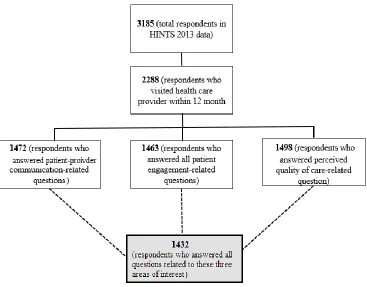
Out of the total sample of 3,185 respondents this study, we extracted 2,288
respondents (71.9 % of the total sample) who had visited their health care provider in the
past 12 months. We further excluded respondents with missing data (i.e., patients who
did not answer all questions relevant to the study). Of the 2,288 respondents, 1,472
answered all patient-provider communication related questions; 1,463 respondents
answered all patient engagement related questions; and 1,498 answered perceived quality
of care related questions. Overall, 1,432 respondents (45.0 % of the total sample)
communication, patient engagement, and perceived quality of care). Figure 3.1 shows our
selection strategy for the study population.
Figure 2.1 Selection Strategy for Study Population
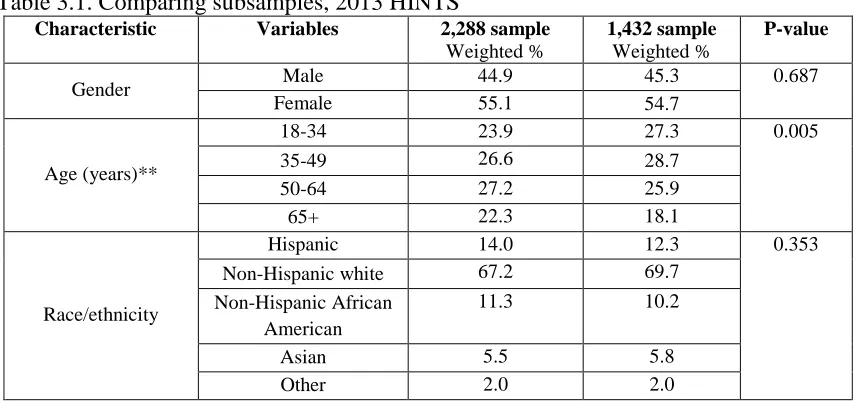
To examine sample representativeness of the subsamples used, we compared two
subsamples: the 2,288 respondents (who visited a health care provider within 12 months)
and the final study sample of 1,432 respondents (who responded to questions related to
patient-centered communication, patient engagement, and perceived quality of care).
Table 1 shows the distribution of gender, age, and race for the initial 2,288 respondents
and the study sample of 1,432 respondents and the statistical significance of differences