Abstract— FPGA-based reconfigurable computers have widely recognised performance advantages over microprocessor-based systems. One of the greatest impediments to their widespread deployment has been the difficulty inherent in their programming. The authors have looked at the viability of implementing the basic functions of the Vector, Signal, and Image-Processing Library (VSIPL) standard API using reconfigurable computers as the principal compute element. Ideally, such an implementation would offer significant abstraction from the complexities of FPGA design and would allow for high design productivity. Several factors make this impractical in the short term as a path to high-performance reconfigurable computing. In order to maintain standards compliance to VSIPL, performance must be sacrificed. Problems include: the high function-call overheads of FPGA functions; the complexities and overheads of data transfer between the differing memory structures of FPGA and CPU-based systems; the lack of suitable building-block IP to reduce the implementation and verification workload is also an obstacle. The focus of the work has shifted to providing a low-level library of floating-point math functions, analogous to ANSI C’s math.h library. This library can both act as a building block for future implementations of APIs like VSIPL and as a enabler to high-level languages that target FPGAs.
Index Terms— Field-programmable gate arrays, Floating-point arithmetic, Reconfigurable architectures
I. INTRODUCTION
PGA-BASED reconfigurable computers have widely
recognised performance advantages over
microprocessor-based systems. Best recognised are their capabilities with regard to bit-level manipulations and integer arithmetic. High memory bandwidths and close coupling to input and output allow FPGA-based systems to offer 10-1000 times speed-up in certain application domains over traditional Von Neumann or Harvard stored-program architectures. The capabilities of FPGAs for implementing floating-point algorithms are now being recognised [1,2]. Algorithms implemented on FPGAs can achieve tens of
F
Manuscript received September 25th, 2006. This work was sponsored by
Nallatech Ltd. and was carried out in conjunction with the Institute of Communications and Signal Processing at the University of Strathclyde. Additional funding was provided by the UK Engineering and Physical Science Research Council in conjunction with the Institute for System-Level Integration.
Robin Bruce is with the Institute for System-Level Integration, Alba Centre, Alba Campus, Livingston, EH54 7EG, UK, (phone: +44(0)117-377-7144; fax: +44(0)117-904-0099; e-mail: [email protected]).
Dr Malachy Devlin is with Nallatech Ltd., Boolean House, 1 Napier Park, Glasgow, UK, G68 0BH (e-mail: [email protected]).
Professor Stephen Marshall is with the University of Strathclyde, 204 George Street, Glasgow, UK G1 1XW (e-mail: [email protected]).
billions of Floating-Point Operations per Second (GFLOPS) when their constituent operations can be pipelined or otherwise parallelised. Increasing chip densities mean that there is now the potential to implement ever more complex algorithms on a single chip. Among the greatest impediments to the widespread deployment of reconfigurable computers have been the difficulties inherent in their programming. This has traditionally been performed using standard hardware description languages (HDLs) to create synchronous electronic designs that carry out the desired functionality. Implementing high-performance computing algorithms on reconfigurable computing requires implementers to posses a wide and unlikely skill set. The traditional languages for hardware design, VHDL and Verilog, do not offer the productivity and abstraction necessary to be effective tools for reconfigurable computing. In order to fully capitalise on the potential computational benefits of FPGAs, ways must be found to make them accessible to the high-performance computing communities.
Implementing an application programming interface (API) that interfaced hardware-implemented functions to a true software environment would give application implementers an opportunity to leverage FPGAs whilst enjoying perfect abstraction. This project looked at the viability of implementing the Vector, Signal and Image Processing Library (VSIPL) API using Nallatech tools and hardware as the basis for a reconfigurable-computing platform. This paper follows on from previously published related work [3].
The work of the OpenFPGA group is relevant to much of the work in this project. The OpenFPGA effort is an emerging effort to foster and accelerate the adoption and incorporation of reconfigurable computing based computing solutions in high-performance computing and enterprise application environments. [18]
II.BACKGROUND
A. VSIPL, The Vector Signal and Image Processing Library
Lessons Learned Implementing the VSIPL
API on Reconfigurable Computers
VSIPL has been defined by a consortium of industry, government and academic representatives [4,5,6]. It has become a widely adopted standard in the world of high-performance embedded computing. VSIPL is a C-based API. The scope of the full API is extensive, offering a vast array of signal processing and linear algebra functionality for many data types. VSIPL implementations are generally a reduced subset or profile of the full API. The purpose of VSIPL is to provide developers with a standard, portable application development environment. Successive VSIPL implementations can have radically different underlying hardware and memory management systems and still allow applications to be ported between them with minimal modification of the code.
VSIPL was developed principally at the behest of the US Navy, which desired that developers use a standard development environment. This is to foster increased potential for code re-use, to make it an easier task for developers moving between projects and organizations and to make possible changing or upgrading of the underlying hardware with minimal need to port code and to re-verify implementations.
B. Compilation of High-Level Languages to Hardware and DIME-C
Much effort is currently being expended to develop high-level language (HLL) compilers to implement algorithms in hardware. These languages are high-level with respect to the hardware description languages (HDLs) such as VHDL and Verilog. A development environment using HLLs can rapidly speed up the design process and reduce the verification effort when implementing algorithms. Many commercial products exist that offer such development environments to simplify algorithmic implementation on FPGAs. Reference [7] is an introductory survey of the tools currently available.
Nallatech have been developing such a tool, DIME-C. DIME-C is a compiler that turns high-level code into a combination of VHDL and pre-synthesized logical netlists. The C that can be compiled is a subset of ANSI C. This means that while not everything that can be compiled using a standard C compiler can be compiled by DIME-C, all source code that can be compiled in DIME-C can also be compiled using a standard C compiler. This allows for rapid functional verification of algorithm code before it is compiled to FPGA hardware.
Code is written as standard sequential C. The compiler aims to extract obvious parallelism within loop bodies as well as to pipeline loops wherever possible. In nested loops, only the innermost loop can be pipelined. The designer aims to minimize the nesting of loops as much as possible to have the bulk of operations being performed in the innermost loop. One must also ensure that inner loops do not break any of the rules for pipelining. The code must be non-recursive, and memory elements must not be accessed more times per cycle than can be accommodated by that particular memory structure. Variables stored in registers in the fabric can be
accessed at will, whereas locally declared arrays stored in dual-ported blockRAM are limited to two accesses per cycle. SRAM and blockRAM-stored input/output arrays are limited to one access per clock cycle. Beyond these considerations the user does not need any knowledge of hardware design in order to produce VHDL code of pipelined architectures that implement algorithms.
DIME-C supports bit-level, integer and floating-point arithmetic. DIME-C now supports the inclusion of support libraries that allow users to implement functions previously created either in DIME-C or via a more traditional design process directly using HDLs.
Another key feature of DIME-C is the fact that the compiler seeks to exploit the essentially serial nature of the programs to resource share between sections of the code that do not execute concurrently. This can allow for complex algorithms to be implemented that demand many floating-point operations, provided that no concurrently executing code aims to use more resources than are available on the device.
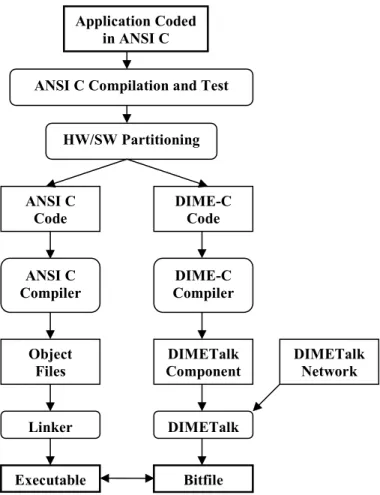
Figure 1 below shows the programming process using Nallatech tools and hardware. DIMETalk is used here as a type of linker to link the DIME-C code to the necessary memory structure and the specific hardware platform.
Figure 1 – Programming process for reconfigurable computing using Nallatech tools and hardware
C. Reconfigurable Computing Platform
Application Coded in ANSI C
ANSI C Compilation and Test
HW/SW Partitioning
ANSI C
Code DIME-C Code
ANSI C Compiler
DIME-C Compiler
Object
Files ComponentDIMETalk DIMETalk Network
Linker DIMETalk
Development work in this project has taken place using conventional microprocessor-based host systems in tandem with FPGA systems. The host systemshave been PCs running either Linux or Windows as the operating system. These host systems have been interfaced to a variety of FPGA systems, built out of Nallatech hardware. The main thread of control in development has resided within the host system. Figure 2 below shows a simplified diagram of a reconfigurable computing system. The host system can be expected to have a memory hierarchy beginning with several layers of Static RAM (SRAM) cache memory, passing through a larger Dynamic RAM (DRAM) memory and ending in a slow high-density storage medium such as a hard disk. FPGA systems can typically be expected to have some or all of the elements that are present in the host systems memory hierarchy such as SRAM and DRAM, though it unusual for the FPGA system to arrange these memory elements into a hierarchy.
Figure 2 – Simplified Structure of a Typical Reconfigurable Computing Platform
Figure 3 below shows how in a practice a processing kernel
implemented on an FPGA system is controlled from the host system.
Figure 3 – Execution of an FPGA-Implemented Processing Kernel
III. IMPLEMENTINGTHE VSIPL API
A. Model and Motivation for FPGA-Based VSIPL Implementation
Figure 4 below shows the ideal interaction between RC-platform developers and users of an API that leverages an RC platform. The model here is one of perfect abstraction, where all interaction between the application developers and the implementers of the API takes place via the definition of the API itself. Where the API is a standard, as it is in the case of VSIPL, there is no need for direct interaction between these principal actors. The implementers of the API use their knowledge of FPGA design to implement all the necessary functions of the API, and then package the necessary calls into the software implementation of the API.
Figure 4 – Abstraction Model for an FPGA-Implemented API
The application developer would then simply implement standard VSIPL code directly on the platform, either by porting it from a previous platform or by re-creating a new application. The application implementer need not have any clear understanding of how the FPGA system works in order to leverage it as a computational resource. Figure 5 below shows an example of how such an implementation might work in practice. In this application, three functions are to be implemented in a VSIPL application. The functions calls are indistinguishable from standard C function calls. In the event of a function call for which there is a corresponding processing kernel that can be implemented on the FPGA fabric, this design is loaded onto the FPGA fabric.
Figure 5 – Example of Execution of FPGA-Implemented VSIPL API Functions
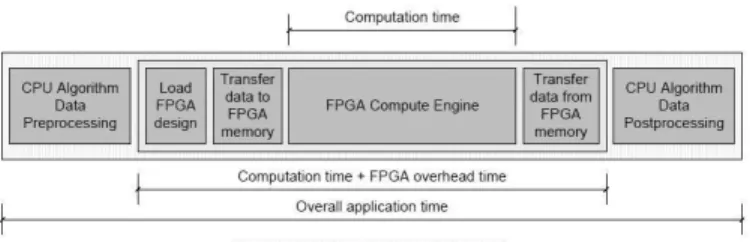
Figure 6 below details this process in greater detail. The
processing kernel that implements a particular function is stored in the form of a bitstream for the particular FPGA(s) available on the RC platform. It is loaded onto the FPGA and the input data to the function is transferred from the host systems hierarchical memory structure to the memory
Host System Host-to-FPGA Interface
FPGA System FPGA-to-Host Interface Microprocessor(s)
FPGA(s)
DRAM SRAM
SRAM Cache(s)
DRAM Main Memory
Hard Disk
Initialize FPGA System
Transfer Input Data
Start HW, Wait for ‘Done’
Receive Input Data
Compute, Signal ‘Done’
Send Output Data Receive Output Data
Host System FPGA System
Application Developer(s) Skills: High-Level Software Design Application-Domain Knowledge
Algorithm Development
API Implementers(s) Skills: Low-Level Software
FPGA Design Computer Arithmetic
structure of the RC system. The processing kernel is then activated and after the algorithm has finished its execution the resultant output data will be situated within the memory structure of the RC system. This data is then transferred back to the hierarchical memory system of the host system before the second function is called. The process repeats itself with data moving back and forth between the two memory structures between each function call and with dynamic reconfiguration occurring for the FPGA resources to implement the processing kernels.
Figure 6 – Decomposition of an FPGA-Implemented Function’s Execution
The weaknesses in this model can therefore be seen. The need to ferry data to and fro between the two systems is one element of the inefficiency of this approach. By its very nature the typical memory structure of an RC platform has no universal address space and therefore concepts of dynamic memory allocation are alien. The organization of the memory resources is determined by the structure of the processing kernel. In order to allow the output of one function to be used as the input of a following function without any intervening data movement would require some kind of additional runtime memory management system. Furthermore the FPGA designer would be limited in how they structure their algorithm’s accesses to the local memory structure in order to accommodate the fact that location of the input data can vary.
A second limitation of this approach is that it does little to shield an application implementer from the high function call overhead of FPGA-implemented functions. The time to transfer, load and bring out of reset a processing kernel is typically in the hundreds of milliseconds for current RC platforms. This function call overheard is linked directly to physical properties of current FPGAs, so it is difficult to see how this impediment will be overcome in the short term. One could envisage FPGAs that were more amenable to context-switching, with multiple configuration planes connected to some kind of configuration cache. Even so, the approach taken in implementing reconfigurable computing platforms must take into account the high function call overhead.
Another problem encountered in implementing the VSIPL API on reconfigurable computers is the sheer scale of the API. Because of the vast number of functions present in the VSIPL API, implementing it using traditional FPGA design methods is a challenging proposition due to the more time-consuming nature of traditional HDL design, combined with the need to think from the lowest-level of matters right up to the highest system-level considerations. When approaching an implementation of VSIPL on traditional microprocessor-based systems, developers have tended to build their VSIPL implementation on top of other optimized libraries that
already exist for their target system. We can think of such a VSIPL implementation as being composed of four pillars, LAPACK, BLAS, FFTW and the standard C math library. Because FPGA equivalents to these libraries are not generally available for RC platforms, implementing VSIPL on an RC platform is made an even greater challenge.
It seems that one must recognize that any FPGA implementation of the VSIPL library will involve, in the majority of function calls, dynamic reconfiguration. The input data to the FPGA-implemented VSIPL function resides originally in the memory hierarchy of the host computer and it is there that the output data is returned. The total time taken for an FPGA function is determined by more than the runtime of the kernel itself. Equation 1 below details tFPGAthe
time taken for an FPGA function call:
(1)
Where tload is the time taken to transfer a bitstream to the
FPGA system, configure the FPGA and to fully bring the system out of reset. tdata_in is the time taken to transfer the
input data from its origins in the host system’s memory hierarchy to the necessary locations in the FPGA system’s memory structure. tkernel is the time taken to carry out the
actual computation that makes up the function. tdata_out is the
time taken to return the output from the function to the host system’s memory hierarchy. In practical implementations of VSIPL functions such as FFTs, matrix multiplications, convolutions and elementary functions it was seen that the context switch and data transfer times dominated in the vast majority of realistic function calls. Higher host-FPGA interconnect bandwidths and lower latencies can be expected of future RC platforms, but the context switch time is expected to continue to pose a problem for this kind of approach to abstracting high-performance computing design complexity.
IV. IMPLEMENTINGA LOW –LEVEL MATH LIBRARY FOR USE IN HIGH-LEVEL TOOLS
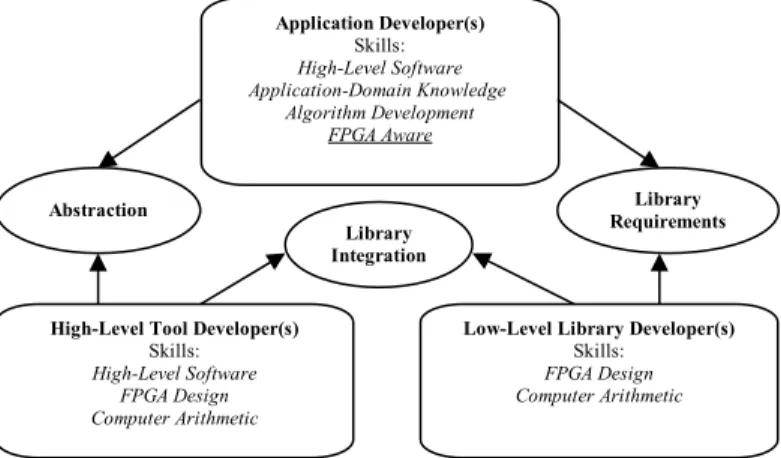
with the developers of low-level library cores. The low-level library cores are implemented as function calls via the low-level language tool and are, wherever possible, designed for maximum effectiveness within pipelined loops which is where FPGAs have the most traction over microprocessors. This model is shown below in figure 7.
Figure 7 – Pragmatic Abstraction Model for High-Performance Reconfigurable Computing
The advantage to this approach is that it can provide application developers with high-performance solutions while still operating at a relatively high-level of abstraction. The low-level library developers can continually augment their library provisions to serve the needs of the application developers. They should work together to define library requirements that would provide the best mix of high-performance and wide-ranging potential for application. The interaction between the application developers and the high-level language tool developers should be geared to raising the bar of abstraction while making minimum concessions in terms of performance. The high-level tool developers should be continually looking to interact with the low-level library developers to look at the best way to integrate libraries into the high-level system, and to allow for their porting between RC platforms. The advantage to this approach is that it should allow for the development of a low-level infrastructure that can evolve with the development of RC systems without having to start again from scratch with each new FPGA or RC platform. Unlike the implementation of functions that are designed for interaction with a host system, low-level library components can be designed such that they do not depend on platform-specific elements such as external memories or host-FPGA interfaces. What is therefore advocated is that in order to make the future implementation of APIs such as VSIPL possible is the development of low-level libraries analogous to BLAS, LAPACK, FFTW and math.h should be developed for reconfigurable computers in such a manner that they can be integrated into and ported between high-level language tools and in a way that they do not depend on platform-specific elements of the reconfigurable systems for which they are developed. This will allow for the development of a high-performance infrastructure upon which future generations of reconfigurable computing will be able to depend to steadily increase the bar of abstraction.
In an embodiment of this sentiment the project’s focus has shifted to providing the math.h library for use within the DIME-C library. Long term the intention is to develop this library in a manner that fits in with standards that are to be developed by the CORELIB working group of the fledgling openFPGA standards body.
Ten functions of the math library have been implemented thus far, all treating IEEE754 format single-precision numbers. These are shown in table 1 below.
Function Description
expf Natural exponential
logf Natural logarithm
sinf Sine
cosf Cosine
tanf Tangent
fabsf Returns magnitude of input
frexpf Splits input into fractional and exponent output ldexpf Creates output from fractional and exponent
inputs
modff Splits input into integer and fractional outputs powf Returns input x raised to the power of input y,
i.e. xy
sqrtf Square Root
rand Generates a random number in
range [0,32767]
Table 1: Currently Implemented Functions in the Math Library
In addition to these functions several different pseudo-random number generators (PRNGs) have been implemented, all with varying characteristics. Some mimic the linear congruential PRNG present in the C stdlib library to allow for the hardware compilation of C algorithms, though the Mersenne Twister has been investigated for its superior random-number generating properties.
V.CONCLUSIONS
The long-term goal of the Reconfigurable Computing community should indeed be to provide developers with high-abstraction interfaces to RC platforms. APIs that conform to standards such as VSIPL are of great interest and rightfully so, as they allow for the porting of code between platforms. Additionally they ease the transition between traditional systems and FPGA-based systems. However, the underlying infrastructure needs further development before this approach is viable in terms of achieving high performance in a realistic setting. Systems must be capable of fast context switching and this requires improvements to the FPGAs themselves to be effective. Repositories of low-level functional cores need to exist that can be leveraged to create an API such as VSIPL. Libraries equivalent to LAPACK, BLAS, FFTW and math.h need to be implemented in a manner that makes sense on RC platforms. They should
Application Developer(s) Skills: High-Level Software Application-Domain Knowledge
Algorithm Development FPGA Aware
High-Level Tool Developer(s) Skills: High-Level Software
FPGA Design Computer Arithmetic
Abstraction RequirementsLibrary
Library Integration
Low-Level Library Developer(s) Skills:
be implemented in such a way as to facilitate their porting to new RC systems and FPGAs.
Low-level libraries tightly integrated into high-level language tools can allow non-experts in FPGA design to implement high-performance algorithms on reconfigurable computing platforms. Interactions between tool developers, library developers and application developers will serve to improve the tools and libraries while offering users ever higher performance and greater abstraction. These profitable interactions serve to develop the infrastructure and the aim should be for real-life successes with this approach to Reconfigurable Computing to feed into a virtuous cycle of success feeding into further development of libraries, tools, hardware systems and even of the FPGAs themselves.
This project will continue to focus on developing the math library, improving it and extending it. In addition to this opportunities will be sought to apply the library in the development of challenging algorithms and applications on RC platforms.
REFERENCES
[1] Underwood K, Hemmert K, Closing the gap: CPU and FPGA trends in sustainable floating-point BLAS performance, Field-Programmable Custom Computing Machines, 2004. FCCM 2004. 12th Annual IEEE Symposium on (2004), pp. 219-228.
[2] K. D. Underwood. FPGAs vs. CPUs: Trends in peak floating-point performance. In Proceedings of the ACM International Symposium on Field Programmable Gate Arrays, Monterrey, CA, February 2004. [3] Devlin M, Bruce R, Marshall S. Implementation of Floating-Point VSIPL
Functions on FPGA-Based Reconfigurable Computers Using High-Level Languages. Military and Aerospace Programmable Logic Devices International Conference, Washington DC, September 2005
[4] Lebak, J. and Kepner, J. and Hoffmann, H. and Rutledge, E. The High Performance Embedded Computing Software Initiative: C++ and Parallelism Extensions to the Vector, Signal, and Image Processing Library Standard. Users Group Conference, 2004. Proceedings [5] Janka R, Judd R, Lebak J, Richards M, Campbell D, VSIPL: an
object-based open standard API for vector, signal, and image processing, Acoustics, Speech, and Signal Processing, 2001. Proceedings. (ICASSP '01). 2001 IEEE International Conference on, Vol. 2 (2001), pp. 949-952 vol.2.
[6] Vector Signal Image Processing Library, VSIPL website, www.vsipl.org
[7] Brian Holland, Mauricio Vacas, Vikas Aggarwal, Ryan DeVille, Ian Troxel, and Alan D. George. Survey of C-based Application Mapping Tools for Reconfigurable Computing. Military and Aerospace Programmable Logic Devices International Conference, Washington DC, September 2005
[8] Smith MC, Vetter JS, Liang X. Accelerating Scientific Applications with the SRC-6 Reconfigurable Computer: Methodologies and Analysis. Parallel and Distributed Processing Symposium, 2005. Proceedings. 19th IEEE International (2005), pp. 157b-157b.
[9] Maya Gokhale, Reconfigurable Computing: Accelerating Computation with Field-Programmable Gate Arrays
[10] Detrey J, de Dinechin F, Parameterized floating-point logarithm and exponential functions for FPGAs
[11] Detrey J, de Dinechin F, A Parameterizable Floating-Point Logarithm Operator for FPGAs
[12] Detrey J, de Dinechin F, A parameterized floating-point exponential function for FPGAs
[13] Andraka R, A Survey of CORDIC Algorithms for FPGA Based Computers
[14] Belanovic P, Leeser M, A library of parameterized floating-point modules and their use, Field-Programmable Logic and Applications. Reconfigurable Computing Is Going Mainstream. 12th InterLecture Notes in Computer Science, Vol. 2438 (2002), pp. 657-666.
[15] Smith MC, Peterson GD, Programming high-performance reconfigurable computers, Reconfigurable Technology: FPGAs and Reconfigurable Processors for Computing and Communications III, Vol. 4525, No. 1. (2001), pp. 60-68.
[16] Beauchamp MJ, Hauck S, Underwood KD, Hemmert SK, Embedded Floating-Point Units in FPGAs
[17] Kindratenko V, High-Performance Reconfigurable Computing Application Programming in C