Skills Task Force
Research Paper 17
Science Skills Issues
R Pearson N Jagger
J Aston
The Institute for Employment Studies Mantell Building
Falmer Brighton
BN19RF 01273 686 751
http://www.employment-studies.co.uk
Skills Task Force Research Group
Foreword
The Secretary of State for Education and Employment established the Skills Task Force to assist him in developing a National Skills Agenda. The Task Force has been asked to provide advice on the nature, extent and pattern of skill needs and shortages (together with associated recruitment difficulties), how these are likely to change in the future and what can be done to ease such problems. The Task Force is due to present its final report in Spring 2000.
The Task Force has taken several initiatives to provide evidence which can inform its deliberations on these issues. This has included commissioning a substantial programme of new research, holding consultation events, inviting presentations to the Task Force and setting up an academic group
comprising leading academics and researchers in the field of labour market studies. Members of this group were commissioned to produce papers which review and evaluate the existing literature in a number of skills-related areas. The papers were peer-reviewed by the whole group before being considered by members of the Task Force, and others, at appropriate events.
This paper is one of the series which have been commissioned. The Task Force welcomes the paper as a useful contribution to the evidence which it has been possible to consider and is pleased to publish it as part of its overall commitment to making evidence widely available.
However, it should be noted that the views expressed and any
Contents
Contents
1. The Provision and Use of Science Skills 1.1 Introduction
1.1.1 Context
1.1.2 The objectives of the paper
1.1.3 The supply and use of science skills 1.1.4 How many scientists?
1.1.5 This report
1.2 The supply-side—schools
1.2.1 Key trends in secondary education 1.3 The supply-side—graduates
1.3.1 Applications for first degrees
1.3.2 The number of students graduating 1.3.3 The early employment experiences
science graduates.
1.4 Employment and recruitment difficulties 1.5 International mobility and the ‘brain drain’ 1.6 Conclusions and policy issues
1.6.1 The changing nature of science 1.6.2 Science skills—key trends
1.6.3 Are there shortages of science skills? 1.6.4 Policy conclusions
References
1. The Provision and Use of Science Skills
1.1 Introduction
1.1.1 Context
The Skills Task Force has a remit to assess the skill needs of the economy. As an aid to understanding key trends and issues it has commissioned some 20 research papers on particular skills issues. This review paper focuses on
‘The issues surrounding the provision and use of science skills in the UK economy’.
Science skills, which embrace disciplines as diverse as biology, chemistry, maths and physics (see Annex 1), and their sub disciplines which may range from microbial physiology to nuclear physics, are used in a wide range of business sectors
including the chemical and pharmaceutical industries, the food, energy and water sectors; research in higher education, the public and private sectors; business services; as well as in teaching in secondary schools and higher education. In addition small but significant numbers of physicists and mathematicians are employed and use their skills in financial services.
Despite the concerns over funding and the infrastructure in the universities, the UK still has a strong science base and many internationally successful companies although other countries and companies are catching up and in some areas overtaking the UK (EC, 1997). Traditionally the UK has been seen as being highly successful both in terms of producing top grade graduates across a range of
scientific disciplines and in terms of scientific research and innovation. However, it is a long-standing criticism that the UK has been less successful in translating these research developments into successful businesses. It is not clear whether this is true, and if so whether it is because there are not enough of the right sorts of
graduates, especially those who can innovate and communicate their ideas, a failure of business managers to capitalise on these ideas, or indeed the ‘problem’ reflects wider societal and business factors. There has also been a continuing debate about the supposed lack of opportunities for scientists in the UK and whether or not there has been a ‘brain drain’ of scientific high flyers to other countries, particularly the US.
1.1.2 The objectives of the paper
To help understand the underlying position in relation to science skills this paper seeks to provide a picture of the provision and use of science skills in the UK
economy. It also makes brief comparisons of the provision of science skills in the US and the EU although differences between national education systems and data collection activities mean that there is a paucity of comparable data (Pearson, Jagger etal. 2000). The paper draws on a review of existing evidence and contact with sectoral, professional and other bodies.
Science is not a homogenous discipline or occupation, it is made up of many
skills eg between physics and biology, and indeed within disciplines eg between organic and inorganic chemistry.
Science skills for the purposes of this review are initially defined in terms of discipline or subject, the particular focus is on the biological, physical and
mathematical sciences. As the subject groupings of biological sciences; physical sciences; and mathematical sciences are themselves broad-based, particular attention is given to the core disciplines of biology, chemistry, physics and maths (see Annex 1).
Within this grouping the focus is then on those employed in graduate level scientific occupations.
Disciplines and occupations relating directly to computing, biotechnology and engineering are not included here as they have been addressed in complementary papers for the Task force on Information & Communication Technology (ANO1, 1999); on the New Technology Industries which were defined to include
bio-technology, opto-electronics and new materials (ANO2, 1999); and on Engineering Skills (Mason, 1999a).
1.1.3 The supply and use of science skills
Knowledge of science is largely cumulative and as such the majority of scientists have core subject knowledge which is drawn from first degree, and often
postgraduate study, there being only limited scope for learning the basic skills and knowledge in the workplace such is the case for many IT and financial roles. As such a key element of any assessment of whether ‘enough’ science skills are being used appropriately in the workplace, has to first take account first of the supply of such skills. Here problems can include not enough qualifying in terms of absolute numbers or their skills and competencies, this may be a function of demography, basic education, subject and career choice, and/or educational provision. Another problem may be that those that do qualify do not choose to use their skills in scientific activities in the UK, which may be due to poor information about the
available opportunities; the jobs or careers being unattractive; or other jobs, careers and experiences more attractive in terms of work activity, job content, career
prospects, earnings, location etc. This is in part an employer competitiveness, or demand side problem.
Other aspects of demand side problems may be that employers are recruiting scientists but not using their skills effectively, or they not seeking to recruit scientists who may be able to give them competitive advantage. Given the pace of change another constraining factor may be that the employers and or the scientists
themselves are not updating their skills in the light of new needs. Finally, there may be too many scientists of certain types seeking too few jobs at prevailing conditions leading to unemployment or underemployment, an oversupply problem.
has to draw on somewhat of a patchwork of data sources, especially when seeking to address employer demand and employment issues. The first part of the paper focuses on the supply ‘pipeline’ in terms of disciplines, and in the second part, attention is given, where possible, to the analogous occupations such as biologist, chemist, mathematician and physicist but these terms are not used in a consistent way by employers and national data sets provide little such occupational data.
1.1.4 How many scientists?
To give a sense of scale at the outset, almost 450,000 people (1.5 per cent of the economically active population) have science degrees (using a broad definition of science which includes some disciplines which fall outside the scope of this paper
eg materials science). Over 80 per cent are employed in professional or associate professional occupations although it is not known whether they use their science skills in their work (Table 1). It is also not known how many unqualified scientists, or with technician or HND level qualifications are engaged in degree level scientific activities.
Looked at another way, there are nearly 145,000 people (0.5 per cent of the economically active population) employed as scientists, some of whom are in occupations outside the scope of this paper, while others may not be qualified at degree level. (Table 2).
Table 1 Science and maths degrees in the economically active population, UK, 1999
Degree subject N (000’s) %
Biological sciences 174 0.6
Physical sciences 157 0.5
Mathematical sciences 115 0.4
Other degree 3,594 12.4
No degree 24,950 86.1
Total economically active population 28,991 100.0
Source: LFS (1999) March-May
Table 2 Employment in science occupations, UK, 1999
Occupation (SOC *) N (000’s) %
200 Chemists 33 0.1
201 Biological scientists & biochemists 68 0.2
202 Physicists, geologists & meteorologists 20 0.1 209 Other natural scientists not elsewhere 22 0.1
All other occupations 27,042 93.3
Not applicable/Did not answer 1,803 6.2
Total economically active population 28,991 100.0
This suggests that there are over 300,000 people who are qualified in science and who are not working as scientists as defined above, but who may be working in science related managerial, service or other roles where they use their science skills
eg in sales or regulatory affairs in the pharmaceutical industry, or in roles where they may not make use of their scientific skills at all.
1.1.5 This report
The following sections now focus on the available evidence about:
The numbers studying and qualifying with GCSEs and A levels in sciences in secondary education.
Numbers going on to study science subjects at HE, and number of graduate qualifying in the sciences.
The early employment experiences science graduates. Employment of scientists in the labour market.
International mobility and the ‘brain drain’.
The extent that there are shortages, quantitative and or qualitative, of scientists as perceived by employers.
The paper then draws out the broad conclusions and policy issues relating to the supply and use of science skills in the UK.
1.2 The supply-side—schools
The cumulative nature of science, unlike other technology based disciplines such as IT, means that potential scientists need to be qualified in science and this in turn normally requires that science subjects are studied prior to university. This section therefore looks at the ‘pipeline’, starting with the numbers taking science
qualifications in the schools. The next section then focuses on graduate numbers.
1.2.1 Key trends in secondary education
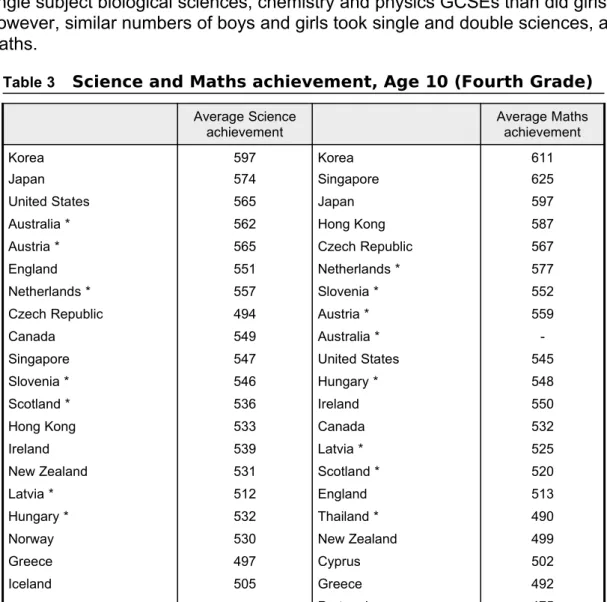
An international comparison of young people’s ability in science shows that the scientific knowledge of 10 year olds in England was ranked sixth in a set of standardised international comparisons with Scotland ranking 12th, the leading countries were Korea, Japan and the United States. In maths then Scotland and England ranked rather worse, 15th and 16th respectively with Korea, Singapore and Japan the leading countries.
There was a clear gender divide with approximately 50 per cent more boys taking single subject biological sciences, chemistry and physics GCSEs than did girls. However, similar numbers of boys and girls took single and double sciences, and maths.
Of more significance is the number choosing and qualifying in science with A level, the main entry requirement for entry to science degree courses. Here the number of passes in chemistry over the last six years grew slightly, while those in biological sciences grew by 21 per cent. However those in maths fell by three per cent and those in physics by 20 per cent, the fall being particularly marked in the early 1990s. The numbers passing physics, 30,600 in 1998, was also significantly smaller than for the other science subjects eg 38,700 in chemistry and 52,200 in biological sciences and 64,300 in maths; 88,000 passed in English.
These figures compare with an overall growth in A level passes of eight per cent and increases of 75 per cent in business studies.
Table 3 Science and Maths achievement, Age 10 (Fourth Grade)
Average Science
achievement Average Mathsachievement
Korea 597 Korea 611
Japan 574 Singapore 625
United States 565 Japan 597
Australia * 562 Hong Kong 587
Austria * 565 Czech Republic 567
England 551 Netherlands * 577
Netherlands * 557 Slovenia * 552
Czech Republic 494 Austria * 559
Canada 549 Australia *
-Singapore 547 United States 545
Slovenia * 546 Hungary * 548
Scotland * 536 Ireland 550
Hong Kong 533 Canada 532
Ireland 539 Latvia * 525
New Zealand 531 Scotland * 520
Latvia * 512 England 513
Hungary * 532 Thailand * 490
Norway 530 New Zealand 499
Greece 497 Cyprus 502
Iceland 505 Greece 492
Portugal 475
Norway 502
Iceland 474
Iran 429
* Did not fully satisfy one or more guidelines
At A level an even clearer gender pattern emerges than for GCSEs with girls
accounting for a high 60 per cent in the biological sciences and a low 22 per cent in physics and 36 per cent in Maths. By way of contrast girls account for 70 per cent of passes in English and 46 per cent in Business Studies. (Figure 2). In all these
subjects including physics, girls achieved a higher percentage of passes at grade A-C.
Figure 1 ‘A’ level entries in England, 1992-1998
0 10,000 20,000 30,000 40,000 50,000 60,000 70,000
1992 1993 1994* 1995 1996 1997 1998
Biological Sciences Chemistry Physics Other Science Mathematics
* Data collection methods changed in 1994, hence data is indicative rather than directly comparable
Source: DfEE, DfE, DES (1990-1999) Statistics of Education, various tables
Figure 2 Women as % of ‘A’ level entrants, by subject, 1998
0 10 20 30 40 50 60 70
Bio Sciences Chemistry Physics Mathematics All subjects
1.3 The supply-side—graduates
1.3.1 Applications for first degrees
As noted above, the choice of subjects studied in schools are influenced by a complex mixture of cultural, educational, economic factors and these choices feed through into students choice of course in higher education. Here the prime
determinant of choice of choice and institution is subject choice, and this is being increasingly influenced by the perceptions of the employment prospects related to different subjects as result of the growing costs of study (Connor, Pearson etal.
1999). Of course not all university applicants come direct from schools, an
increasing number enter as mature students, often vocational qualifications, while others move on to degree level study on completion of their HND courses.
The relative popularity of different subjects can be gauged by the overall number of applications with 3-4,000 applying for full time, first degree places in chemistry, in maths, and in physics, and 5,400 applying for biology, while 9,000 for English and 27,000 applied for business studies in 1998.
Since 1994 when the data were unified to cover the whole of higher education, the number of applications for first degree places in biology and physics have fluctuated, while those to chemistry have declined. Those for maths have, however, grown by over 10 per cent. This has been a period when overall applications grew by six per cent. The overall number of applications did, however, fall between 1997 and 1998 due to a decline in the number mature applicants who are less likely to apply to study on science courses. Reflecting the gender pattern at A level, women who now make up the majority of applicants for first degree courses, are also the majority of applicants for biology (55 per cent) while they are the minority for the other science subjects, accounting for only a low 19 per cent of those applying for physics.
A measure of competition for places and the academic quality of applicants can be gleaned from the average A level points required for entry (although A level results are not a good predictor of degree results other than in maths). These show that those two thirds of those accepted to physics (69 per cent) and maths (65 per cent) courses had at least 21 points at A level, while under half did so in the case of biology and chemistry. The average for all subjects was 43 per cent with only 34 per cent of those entering business management having 21 or more points. Physicists, mathematicians and chemists were also more likely than the average to have 26 or more A level points while biologists were less likely to have these high scores. These figures show that while application levels for science subjects may not be high or growing significantly, the average entry standard as measured by A level scores is relatively high.
basic science. As such there is concern that the first year on many degree courses if effectively focused on remedial teaching.
The low demand for places on some physics courses has led to some rationalisation with a number of undergraduate courses being merged or withdrawn.
1.3.2 The number of students graduating
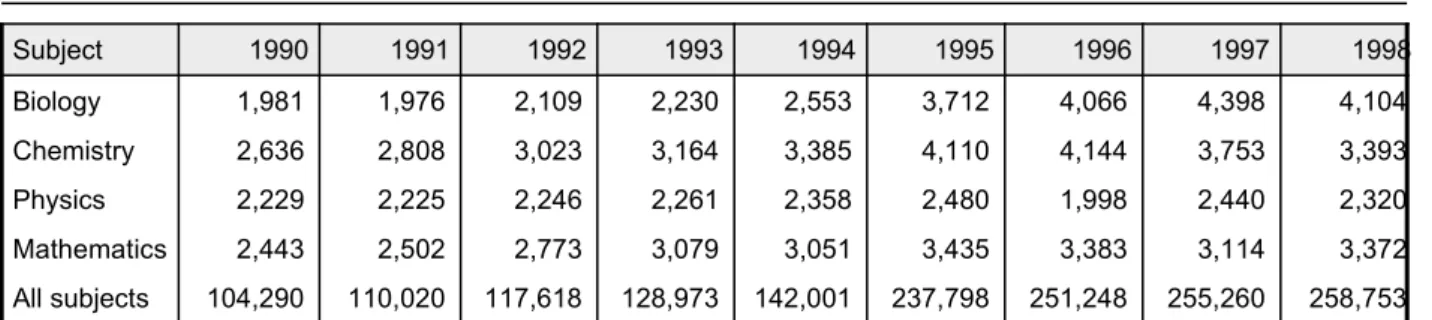
The last decade has seen a dramatic expansion in higher education with the numbers graduating more than doubling. This expansion has not, however, been reflected in the case of all science subjects. Since 1990 the numbers graduating in chemistry were up by 27 per cent, maths grew by over a third, and those in biology more than doubled, while those in physics have fluctuated slightly and have shown virtually no overall growth since 1990. The gender divide remains with eg women under represented in physics and over represented in biology (Table 4).
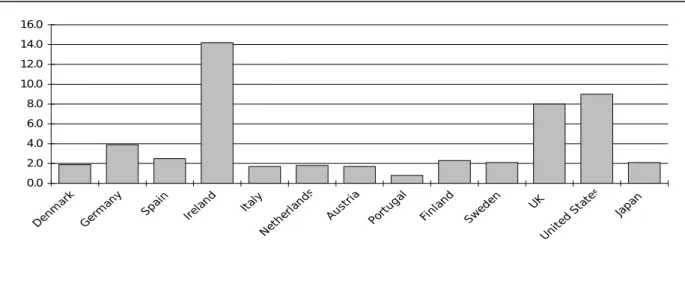
These figures are high by international standards when account is taken of relative population size, with the UK producing more graduates in the natural sciences than most of our European competitors (Figure 3), although some of these countries produce more engineers and technologists than the UK. (EC, 1997).
The number graduating at first degree level need supplementing by those qualifying at postgraduate level. In biology they add 21 per cent to the numbers, in chemistry (42 per cent), physics (39 per cent) and Maths (15 per cent). These postgraduate qualifications embrace study for one year Masters and Diploma courses through to three year Doctoral programmes many of which now include a significant taught component. While the Research Councils are the largest funders of postgraduate study, a significant number of students finance their own studies or are funded by industry, foundations or, in the case of Doctorates, by working as research
assistants.
Table 4 First degree output, 1990—1998
Subject 1990 1991 1992 1993 1994 1995 1996 1997 1998
Biology 1,981 1,976 2,109 2,230 2,553 3,712 4,066 4,398 4,104
Chemistry 2,636 2,808 3,023 3,164 3,385 4,110 4,144 3,753 3,393
Physics 2,229 2,225 2,246 2,261 2,358 2,480 1,998 2,440 2,320
Mathematics 2,443 2,502 2,773 3,079 3,051 3,435 3,383 3,114 3,372 All subjects 104,290 110,020 117,618 128,973 142,001 237,798 251,248 255,260 258,753
N.B. Data prior to for years 1990-1993 has been aggregated from USR and AGCAS sources. the latter, which covered the old polytechnics, excludes part-time and sandwich graduates.
1.3.3 The early employment experiences science graduates.
Figure 4 First destinations of first degree graduates, 1998
0% 20% 40% 60% 80% 100%
Biology Chemistry Physics Mathematics All subjects
Employed Undertaking Study or Training Other
Source: HESA (1999b) Green Book Table 2f
Figure 3 Graduation rate * - natural sciences
0.0 2.0 4.0 6.0 8.0 10.0 12.0 14.0 16.0
The limited information on the employment of scientists (see Section 1.4 below) can be supplemented looking at the data relating to the transition into employment after graduation. Here high employment rates suggest a strong demand for those with science skills, although not necessarily in scientific occupations, while low
employment and high unemployment rates suggest limited job opportunities for science graduates. The available data, however, relates to the period six months after graduation and is much criticised as many graduates are now taking two or more years to move into ‘stable’ employment (Connor, 1997, Purcell, 1999). In 1998 maths graduates were the most likely of the science graduates to move straight into employment followed by the biologists, while the physicists and chemists are the most likely to stay on for further study. In each case rather fewer move straight into employment than is the average for all subjects (Figure 4). While the majority of those with science degrees move into professional and related occupations, only half of the biologists entered such jobs. Unfortunately the new classification system is unable to provide more detail as to the type of work they enter and whether the occupations or sectors entered relate to science or not. These proportions change with the economic cycle, with the proportions going into employment falling in the recessionary periods of the early 1990s, although the relative rankings eg whereby the mathematicians have been the most likely to move into employment, have changed little during the 1990s.
Research following graduates after they have graduated has shown that while those with maths and computing degrees saw themselves as having positive career outcomes, those with degrees in the natural sciences were more likely to have had difficulties finding employment. Those in the natural sciences were also less likely than those in maths and computing, or engineering, to assess their degree course as having provided them with the academic, personal development and business and enterprise skills needed for their current jobs. A further differentiator was that those in the natural sciences were also less likely than those in maths and
computing, or engineering, to be in job where a degree was required, and they were in turn earning a lower average salary (Purcell, 1999).
1.4 Employment and recruitment difficulties
As noted above, almost 450,000 people (1.5 per cent of the economically active population) have science degrees (using a broad definition of science), and over 80 per cent of them are employed in professional or associate professional occupations although it is not known whether they use their science skills in their work, nor how many unqualified scientists are engaged in degree level scientific activities (Table 1). Looked at another way, there are up to 145,000 people (0.5 per cent of the
economically active population) employed as scientists, some of whom may be in occupations outside the scope of this paper, while others may not be qualified at degree level (Table 2). This suggests that there are perhaps 300,000 or more people who are qualified in science and who are either working in science related managerial, service or other roles where they use their science skills eg in sales or regulatory affairs in the pharmaceutical industry, or in roles where they may not make use of their scientific skills at all. Reflecting the patterns in the supply, women account for nearly 60 per cent of those with biology qualifications but are only a
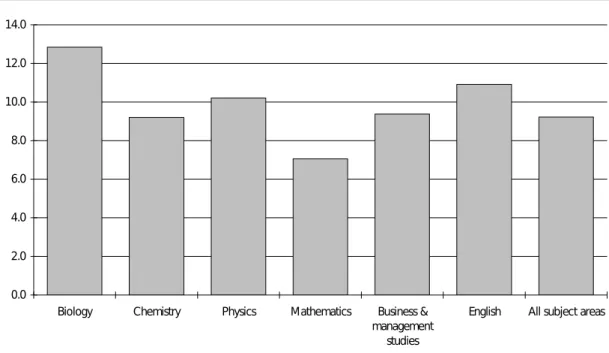
Figure 5 Unemployment six months after graduation, 1998 (per cent)
0.0 2.0 4.0 6.0 8.0 10.0 12.0 14.0
Biology Chemistry Physics Mathematics Business & management
studies
English All subject areas
N.B. ILO definition of unemployment is used – unemployment as a proportion of economically active population. Hence the base excludes those in further study or training
minority with chemistry (21 per cent) or maths (24 per cent) and physics (14 per cent) qualifications.
More detailed, consistent data on the numbers employed in different scientific occupations are not available, although data form one off studies, which rarely use compatible definitions is presented below. It should be remembered again that where figures are quoted for chemists, or physicists, say, these occupations
themselves are rarely homogenous and my comprise many sub occupations where skills are rarely transferable and the numbers employed nationally may be
numbered in the hundreds or low thousands such as geneticists or microbial physiologists. There is also a dearth of reliable earnings data at a relevant occupational level.
The changes in the world of work as they relate to the highly qualified have been well documented and highlight the growing need for those entering graduate type occupations to have a wide range of ‘soft’ or inter personal skills (Pearson, 1999, Mason, 1999b). There are, however, no comprehensive data about science occupations and recourse has to be made to ‘one off’ studies of occupations or sectors and membership profiles of professional bodies, to gain insights into what is happening to those in science based occupations.
A review of recruitment difficulties relating to science and technology across Europe
In the United States a similar picture emerged for much of the 1990s with relatively limited skill shortages in the sciences. There has, however, been strong concern as to the declining student interest in the sciences, the growing dependence on foreign nationals to fill many postgraduate and postdoctoral positions in the universities, and paradoxically the declining employment prospects in academia and pay levels for those who do qualify at postgraduate level in biological sciences and in maths. (see
eg NSF, 1998). The continuance of the economic boom in the US means that science is likely to be experiencing more problems, along with most other
occupations and sectors. There is, however, concern that complaints about skill shortages there are being overstated (Kuh, 1999). This was also the case in the
1980s.
As noted above there is no comprehensive source of data on the employment of scientists in the UK. We therefore have to look at the available evidence relating to specific groups of scientists in the UK. The most recent evidence on recruitment difficulties at graduate level in the UK shows some growth in concern about difficulties attracting staff for scientific R&D work, but this only affected just over three per cent of recruiters across all sectors in 1999, up from 1.4 per cent in 1997 (Jagger etal, 1999) while another study across engineering and science highlighted qualitative rather than quantitative problems as discussed below (Mason, 1999b). While the overall number of vacancies for graduates in general has been growing in recent year, this has in part been a recovery from the downturn in the early 1990s, with total number vacancies among the major recruiters in 1999 only just exceeding
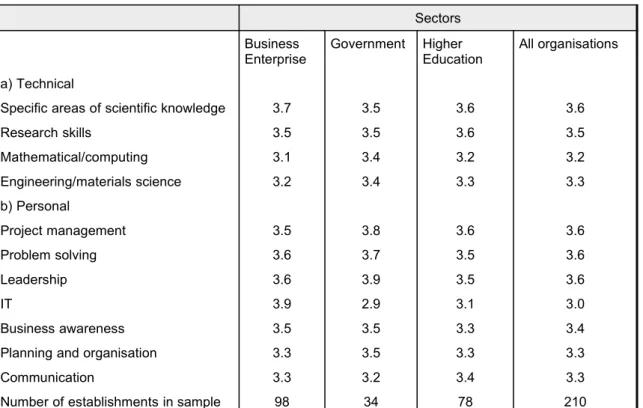
Table 6 Difficulties in recruiting people with the specific skills or competencies — R&D establishments in Europe, 1998
Sectors Business Enterprise Government Higher Education All organisations a) Technical
Specific areas of scientific knowledge 3.7 3.5 3.6 3.6
Research skills 3.5 3.5 3.6 3.5
Mathematical/computing 3.1 3.4 3.2 3.2
Engineering/materials science 3.2 3.4 3.3 3.3
b) Personal
Project management 3.5 3.8 3.6 3.6
Problem solving 3.6 3.7 3.5 3.6
Leadership 3.6 3.9 3.5 3.6
IT 3.9 2.9 3.1 3.0
Business awareness 3.5 3.5 3.3 3.4
Planning and organisation 3.3 3.5 3.3 3.3
Communication 3.3 3.2 3.4 3.3
Number of establishments in sample 98 34 78 210
Note: Average scores given by employers on scale 1 to 5, where 5 is difficult and 1 easy
that in 1989 (Pearson, 1999). The number of vacancies in the chemical, food energy and related sectors showed little change between 1998 and 1999 (Jagger, Aston, 1999).
In the mid 1990s the main demand for newly qualified PhD Scientists, two thirds of whom were biologists and chemists, came from higher education which took one in three of those qualifying, followed by industry where a relatively small number of companies, about 100, mainly in the oil and chemical industries and R&D services, were the regular recruiters of, and dominated the recruitment of such people. In many other cases newly qualified PhD Scientists were entering jobs where their Doctoral training was not explicitly sought. There was seen to be no numerical shortfall of such recruits although recruiters were concerned about issues of quality, particularly in relation to the need for improved inter-personal skills, business
awareness and a lack of breadth of view of their scientific discipline. There was also concern that the growing proportion of formal training was squeezing out creativity and originality (Connor et al. 1994a).
An analysis of the membership of the Royal Pharmaceutical Society showed that over 80 per cent of their 16,000 pharmacist members to be employed in community or hospital pharmacy with only four per cent employed in industry. Evidence relating to the employment of biologists does not appear to be available.
A workshop of the Royal Society of Chemistry in 1995 highlighted the perceived need to boost the inadequate number studying chemistry and the need for
university provision to relate better to future needs and for there to be closer industry -academic partnerships. (RSC, 1995) More recently the need for chemistry
graduates to have better communication and inter personal skills, along side their technical skills, has also been highlighted in a report which said that a minority of organisations had significant difficulties recruiting the chemistry graduates they needed although one in four some difficulties meeting their targets (Table 7). These employers did, however, expressed the low quality of many of those who applied but were not appointed, suggesting a limited pool of ‘good’ chemists (Mason, 1998).
Table 7 Ease in meeting recruitment targets or needs for chemistry graduates, 1995-98
Total Chemicals/
pharmaceuticals Chemistry-basedservices
Very easy 30 28 33
Quite easy 45 46 43
Quite difficult 21 22 17
Very difficult 4 3 7
Total 100 100 100
N = 92 65 27
Source: Mason, 1998
university, a point reiterated elsewhere (Pearson, Jagger, 2000). From the graduate point of view this was perceived to be less of a problem and the majority (78 per cent) felt that the chemistry content of the degree was adequate for their current job. Rather more were critical of the teaching they had received, respondents particularly highlighting concerns as the lack of ‘relevance to the real world’, of attention to inter personal skills, and to practical skills. In conclusion it highlighted the need for a wider range of chemistry courses to reflect the diverse roles for chemists in
employment and the need to re-equip laboratories so that graduates had relevant, up to date skills (Mason, 1998).
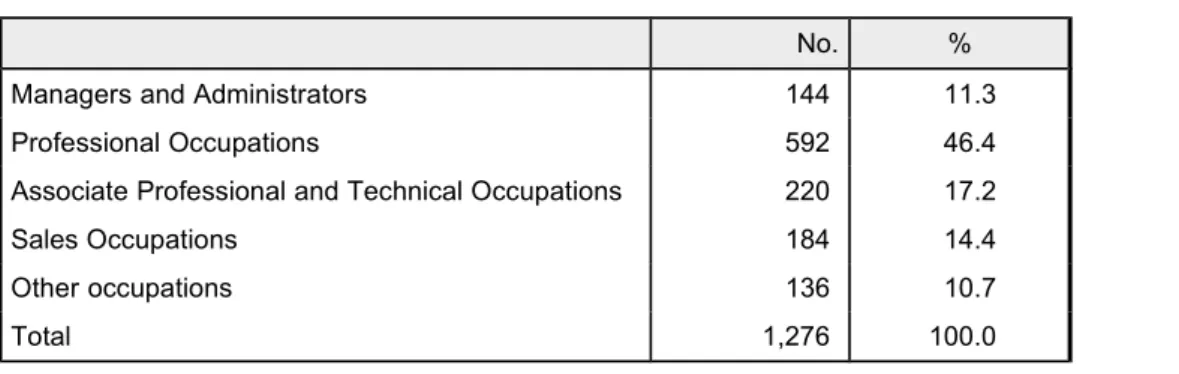
The pharmaceutical industry employed 10,000 (12 per cent) of all R&D scientists and engineers in the UK. Of the graduates moving into the pharmaceutical industry in 1997, nearly half went in to professional occupations and a further 11 per cent into managerial and 14 per cent into sales roles. Significant proportions also went into technician and other roles (Table 8).
Table 8 Occupations of graduates entering the pharmaceutical industry, 1996/97
No. %
Managers and Administrators 144 11.3
Professional Occupations 592 46.4
Associate Professional and Technical Occupations 220 17.2
Sales Occupations 184 14.4
Other occupations 136 10.7
Total 1,276 100.0
Employers reported that recruits with doctorates were harder to find than first degree graduates while technicians were the least problematic. The functional areas
causing the most difficulty included patenting, regulatory affairs, pre clinical development, pre registration trials and quality assurance. Recruitment into
production and sales and marketing were somewhat easier. On balance the smaller firms had more recruitment problems than the larger firms who employed over 200 staff. The main barriers to training in the sector was the cost in terms of both the fees and staff time, while there was also a concern as to the lack of sufficiently specific courses (Jagger, 1999b). One in four employers in a separate study had appointed graduates in posts formerly filled by non graduates, in many but not all of these cases it was believed to be because a higher level of skills had been needed. In that study pharmaceutical companies cited chemistry as being the discipline in which recruitment difficulties had occurred (Mason, 1999b).
A study of those with doctorates in ‘big science’ (physics, space and astronomy) showed that after qualification they were most likely to be employed in the major universities. While those with doctorates perceived themselves to have good IT and data analysis skills, they felt they lacked the broader range of skills associated with other doctoral scientists such as project management, commercial appreciation and an ability to link with other disciplines. From the employer perspective these PhDs were often not sought as such but were considered alongside first degree graduates with several years experience. While deep technical skills were needed for some posts, a growing proportion needed good inter personal skills as noted above for other graduates (Connor etal. 1994b).
Among the 12,700 members of the Institute of Physics (membership is voluntary so this data is not representative of all physicists), one quarter were employed in
industrial R&D, and another one in four in research in HE and the public sector, with small numbers in production industries. Research relating to the careers of those who started as post doctoral researchers (PDR) in physics in the period 1988-93 showed that while higher education was the main source of their employment, one third were in the private sector, mainly in hi tech, leading edge sectors such as semi-conductors, precision instruments and computer machinery. A minority had moved into the business and financial sector, mainly working in IT related areas. While virtually all, 92 per cent, regarded their PDR experience as having a positive
influence on their career, those in the private sector would, with hindsight, not have taken up such a position as their PDR had not enhanced the project management, problem solving, initiative and more general inter personal skills they needed for their jobs (DTZ Pieda, 1999).
Finally the teaching profession is also an occupation that has been experiencing recruitment difficulties, particularly for maths and physics teachers, although these problems are concentrated in certain locations such as London and some inner cities and even here vacancy levels are numerically small (DfEE, 1999). There is, however, also concern that many students are being taught physics and sometimes maths by those not qualified in these subjects, this is often called the hidden
Looking ahead econometric models provide an overview of broad trends and suggest that the number of scientists and engineers will grow by about 12 per cent in the decade to 2006; this is a slowing of the historic growth rate of 11 per cent between 1991 and 1996, and 25 per cent growth in the decade to 1991. At the same time they expect the number of science and engineering associate professionals to grow by 10 per cent over the decade to 2006. The supply side projections suggest a trend for more of the growing supply of graduates to move into these associate professional level jobs, a trend already apparent in the 1990s (BSL, 1998). Other projections also expect an oversupply of natural scientists in the period to 2002 (Pearson, Jagger etal., 2000).
The evidence from the employer based studies quoted above suggest that there are few major numerical shortages of scientists although there are concerns about more qualitative issues. The skills profiles most in demand, and most difficult to recruit are likely to have a strong emphasise on the personal and non technical attributes along with good basic scientific skills. On the latter the key need is seen to be a strong scientific grounding with employers expecting the job specific technical skills, which are ever changing, to be develop once in employment. Here there is some concern in eg chemistry at the lack of experience in working with up to date laboratory equipment. On the personal side employers are seeking recruits with better skills in areas such team working, business awareness, project management, and
communications although what is meant by such descriptors can vary greatly between employers.
Many employers are now starting to define more rigorously exactly what they are looking for in terms of those who show the potential to develop, and the necessary underlying personal and behavioural characteristics or values. Articulating, defining and assessing such skills and values is fraught with difficulties given the lack of a common terminology, with terms such as behavioural, generic, transferable, soft, non-occupational, organisational all being used interchangeably and where the labels themselves can hide more than they reveal with eg business awareness or an entrepreneurial outlook being capable of a multitude of definitions. Such problems are generic, and do not just relate to science. (Pearson, 1999). The extent to which an individual needs such a skill, also varies according to the role, organisation and context within which they are employed.
1.5 International mobility and the ‘brain drain’
Scientists, particularly those involved in research, are one of the few groups where there is a clear international labour market with key scientists being known globally through their publications, the conference network and collaborative work. The nature and cost of science is such that more of the core research is transcending traditional boundaries as collaboration spans corporate, sectoral and national borders. As such there is now often a discontinuity between the funders, providers, and the commercial beneficiaries of scientific research eg a US firm might benefit from the expertise of a UK scientist working in an international, publicly funded consortium based in Switzerland. In the same way inward investment into R &D in the UK capitalises on and draws off the UK skills base but the production and
The relative strength of the UK science skills base is evidenced by the regular flow of inward and new investment such as the Welcome Trust’s recent proposed investment to create up to 1,000 new science and technology based jobs in the Cambridge area.
The brain drain is a much talked about topic in relation to science skills, especially at times of economic growth and apparent skill shortages such as the late 1980s, and again more recently. The ‘loss of key scientists’ is often quoted in debates about the funding of higher education and use used to emphasise the need to boost
investment in facilities and or salaries to retain the best scientists in the UK. There are often examples of individuals who have gone overseas but also many assertions as to a likely future outflow, most recently these have appeared again in the press again in relation to medical researchers. There has, however, been no serious evidence supporting the notion of a brain drain from the UK or its impact on the UK skills base in the 1990s, while the research that was carried out in the 1980s
showed that the then alleged problem was greatly overstated and that there was not a significant brain drain out of the UK.
About 1,000 new science graduates went overseas after graduation in 1998, about 2.5 per cent of those with first degrees, and between six and ten per cent according to subject, at postgraduate level. These proportions have changed little in recent years although the proportions are lower than in the early 1990s when job prospects were less good in the UK. Their actual reasons for leaving and destinations are not however known (FDS, 1999). More detail is known about the flows into the United States and in the mid 1990s under 300 UK scientists, both newly qualified and experienced, entered the United States to work each year; of these about two thirds were expected to stay in the US (Mahroum, 1999).
Rather less attention is paid to those coming to work in the UK, or UK nationals returning to the UK, where the UK is a beneficiary of international inflows. For example a number of companies recruit newly qualified scientists from continental Europe or beyond, as well as from the pool of foreign nationals who have been studying in the UK, or who are on exchange programmes such as ERASMUS, whose attraction for students is enhanced by their opportunity to refine their English language skills; the UK is seen as the most desirable destination in Europe with 35 per cent of European students choosing, while most of the rest, 63 per cent chose North America as their first choice (Inversum, 1998). There also direct applications by non UK scientists especially from Europe, and the ‘old commonwealth’ countries. In the mid 1990s it was estimated that some six per cent of professional staff in UK R&D establishments were non nationals the majority of whom were working in the sciences. This number was expected to increase as employers sought to raise their level of scientific expertise and strengthen their international culture. (Court, G, etal.
1995). It has been estimated that there were about 4,000 foreign academics employed in UK universities in the mid 1990s who had qualifications in the bio-sciences or chemistry, the main centres of the their employment being Oxbridge and London (Mahroum, 1999). In the United states which has a long tradition of
1.6 Conclusions and policy issues
1.6.1 The changing nature of science
The role of science in a knowledge based economy is of increasing importance and the implications are being addressed by government and the corporate sector alike. Despite the concerns over funding and the infrastructure in the universities, the UK still has a strong science base and many internationally successful companies, although other countries and companies are catching up and in some areas
overtaking the UK (EC, 1997). There are currently about 450,000 qualified at degree level in the sciences and up to 150,000 who work in science occupations.
As the pace of change accelerates, assessing future skill needs and developing appropriate policy responses becomes ever more problematic. This difficulty is being further compounded by growing emphasis being placed on the need for both further specialisation and for a multidisciplinary approach in science; the
globalisation of scientific research; the growing pattern of collaboration between organisations, between higher education and the private sector, and across national boundaries; and the consequent need for scientists to have both good scientific skills and good personal skills such as team working, communication skills and business awareness so they can work across traditional boundaries.
In assessing science skills issues it is important to remember that science as defined here, embraces a wide range of discrete and overlapping disciplines and occupations, it is not a homogenous group of disciplines or occupations eg the differences between a biologist and a physicist are such that there is virtually no scope for their substitution in a science related role and that such lack of substitution can also apply in very narrow scientific areas where small numbers are suitably qualified and employed, such as microbial physiology in relation to other areas of biology. There is also great overlap with the skills covered in the complementary papers on new technologies, especially biotechnology, IT and some aspects of engineering; as such it is dangerous to over-generalise findings in terms of ‘science as a whole’. Finally, while there are good data about the supply of those becoming qualified in the sciences, there is little comprehensive information about their
deployment and use. A number of conclusions can be highlighted from the available evidence.
1.6.2 Science skills—key trends
The quality of those entering science degrees, as measured by A level scores, remains high although many universities complain that the current A level syllabus is not an adequate preparation for a science degree course and that the emphasis on three A levels means that students do not have a rounded education.
While the overall numbers graduating in all disciplines have doubled over the last decade, the number graduating in physics has barely changed; while the other science subjects have shown some growth but they do not match the overall growth.
There is a clear gender bias with women are a majority of those qualifying at all stages in biology they are a minority of those taking physics and maths. Students are increasingly assessing employability factors when choosing
courses in higher education and this should prove beneficial for recruitment to some science courses.
The transition from university into employment is taking longer for all
graduates. Those from maths courses do best, biologists and physicists have above average levels of initial unemployment and those from the natural sciences have the hardest transition into working life, are the least likely to use their scientific skills and have the lowest salaries.
There is not a significant brain drain of science skills
Forecasts suggest that the numbers qualifying in science will continue to exceed the numerical growth in demand
The changing nature of work, with organisations in all sectors is needing scientific staff to work in teams and across functional, departmental, corporate and or national boundaries as they seek to meet the growing competitive pressures in new organisational structures. As such recruiters are placing greater emphasis on recruiting people with the right ‘soft’ skills along with good basic science skills and knowledge. They recognise that they will have to work with their staff to ensure that their scientific skills remain up to date in the light of developments in science.
1.6.3 Are there shortages of science skills?
There is no substantive body of evidence which suggests that there is a widespread problem in terms of an inadequate, numerical supply of science skills as sought by employers. There are problems for certain employers, especially in parts of higher education, who do not offer competitive packages which in the case of the sciences includes the use of up to date equipment, in some areas of teaching, and in the case some very specialist skills, but little concern as to the overall quantitative position. Internationally there is little evidence that the US or other countries in Europe have significant shortages of scientists either.
team working and communication. Similar concerns are also raised about other, non science, graduate recruits.
There is, however, evidence that some science graduates, especially biologists, have difficulty moving into jobs and careers where they can use their scientific skills and that they have longer term problems of under employment and lower relative earnings, with many moving into technician level roles, or areas unrelated to science. This is not a recent trend and is expected to increase in future years and which has been highlighted in the past (Pearson, 1995). Such problems are also to be found in other European countries and to some extent the United States.
There is no clear evidence which addresses the question as to whether there is a lack of scientists who have the entrepreneurial skills to develop new businesses from scientific discoveries, although the biotechnology sector, which draws heavily on the science base, is a successful, entrepreneurial based growth sector. More broad based reviews, which are beyond the remit of this paper, suggest that more general social and business factors are of critical importance, as is evidenced in the US.
Likewise this paper is unable to assess the hypothesis that employers are in a ‘low skill equilibrium’ and that if they had higher value added business strategies then the demand for scientists would be higher and the availability of suitably qualified
scientists might be an issue.
1.6.4 Policy conclusions
This review suggests that the issue of skill shortages in the sciences are not endemic. There are, however, a number of policy issues arising.
Careers advice in schools should emphasis the breadth of skills likely to be required in the future.
The current attention being given to encourage girls to fully participate in maths, physics and chemistry should be maintained as this will strengthen the supply pipeline in these subjects. Initiatives to strengthen teaching will be critically important.
The universities need to have, or have access to, state of the art laboratory
equipment if their graduates in subjects such as chemistry are to be fully effective in the workplace.
The professional bodies, NTOs and the new Learning and Skills Council need to co-ordinate their research and monitoring of skills issues which should not only cover the broad pattern of skills needed, but also address the needs of smaller, more specialist ‘niche’ occupations.
The issue of the entrepreneurial success or otherwise of UK scientists is under-researched and may be worthy of further attention. Such attention should address more than just skills issues and include those relating to the wider business
References
ANO1, Information & Communication Technology, Skills Task Force, 1999
ANO2, New Technology Industries, Skills Task Force, 1999
Business Strategies Limited (BSL) Occupations in the Future, Tomorrow’s Graduates, 1998
Connor etal.The Training Benefits of Big Science, Institute for Employment Studies (IES), 1994b
Connor, H etal.Science PhDs and the Labour Market, Institute for Employment Studies (IES), 1994a
Connor, Pearson etal.Making the Right Choice, CVCP, 1999
Connor, What do Graduates Do Next, Institute for Employment Studies (IES), 1997
Court, G, Jagger, N, Recruitment of Non National Scientists and Engineers in Europe. Industry and Higher Education, June, 1995
DfEE, Evidence to the Teachers Review Body, DfEE, 1999
DTZ Pieda, Career Paths of Post Doctoral Research Staff, Institute of Physics, 1999
European Commission, The Second Science and Technology Indicators Report, European commission, DGXII, 1997
FDS, First Destination Statistics, HESA, Annual
House of Lords, Academic Research Careers and Graduate Scientists, 1995, HMSO
Inversum, Student Attitudes across Europe, Inversum, 1998
Jagger, Aston , Graduate Salaries and Vacancies, Association of Graduate recruiters, (AGR), 1999a, and annual
Jagger, N, Aston, J, Skills for a Competitive Future, ABPI, 1999b, forthcoming
Kuh, discussion at OECD Science and Technology Seminar, 1999
Mason, Change and Diversity, the Challenges facing Chemistry Higher Education, RSC/CIHE, 1998
Mason, Engineering Skills, Skills Task Force, 1999a
Mason, The Labour Market for Engineering, Science and IT Graduates, DfEE, 1999b, forthcoming
Mauhoum, Europe and the Challenges of the Brain Drain, 1998, IPTS
Mauhoum, Highly Skilled Globe Trotters, OECD, 1999
Pearson, ‘Why the Glut Should Stop Here’, New Scientist, 24 June 1995
Pearson, Jagger etal., The Adequacy of Education Systems Relative to Science and Technology Employment Needs, European Commission, DG XII, 2000, forthcoming
Pearson, etal.The Graduate Review 1998/99, Institute for Employment Studies (IES), 1999
Purcell, Working out, Graduates Early Experiences of the Labour Market, CSU,1999
Annex - University Science Subject Groupings
Biological sciences including; Biology
Botany
Zoology
Genetics
Microbiology
Molecular biology
Biochemistry
Other biological sciences.
Chemistry
Physics including Astronomy
More Information
More copies of this report are available free of charge (quoting the appropriate SKT
reference) from:
DfEE Publications
Sherwood Park Annesley Nottingham NG15 0DJ
Tel 0845 60 222 60
Fax 0845 60 333 60
This report and the others in the series are also available on the world wide web at:
www.dfee.gov.uk/skillsforce
Reports SKT 17 to 24 are the latest to be published. Reports SKT6 to 16 were released in September 1999. A complete list of all the reports follows.
SKT 6 Anticipating Future Skill Needs: Can it be Done? Does it Need to be Done?
SKT 7 The Dynamics of Decision Making in the Sphere of Skills’ Formation
SKT 8 Management Skills
SKT 9 Intermediate Level Skills - How are they changing?
SKT10 Jungle Trekking: Vocational Courses and Qualifications for Young People
SKT11 The Leisure Sector
SKT12 Engineering Skills Formation in Britain: Cyclical and Structural Issues SKT13 The Market Value of Generic Skills
SKT14 Employment Prospects and Skill Needs in the Banking, Finance and Insurance Sector SKT15 New Technology Industries
SKT16 Funding Systems and their Impact on Skills SKT17 Skills Requirements in the Creative Industries SKT18 Skills Issues in Small and Medium Sized Enterprises SKT19 Spatial Skill Variations: their extent and implications
SKT20 Employers’ Attitude to Training
SKT21 Skills Issues in Other Business Services - Professional Services SKT22 Science Skills Issues
SKT23 Empirical Evidence of Management Skills in the UK
SKT24 Monitoring and measuring occupational change: the development of SOC2000
If you would like more information on the work of the Skills Task Force, or to comment on their proposals, please write to:
Nick Parry
Skills Task Force Secretariat Room W1120
Moorfoot Sheffield S1 4PQ
Tel 0114 259 4385
Fax 0114 259 3005 or