Volume 2006, Article ID 46747, Pages1–10 DOI 10.1155/ASP/2006/46747
Distributed Coding of Highly Correlated Image Sequences with
Motion-Compensated Temporal Wavelets
Markus Flierl1and Pierre Vandergheynst2
1Max Planck Center for Visual Computing and Communication, Stanford University, Stanford, CA 94305, USA 2Signal Processing Institute, Swiss Federal Institute of Technology Lausanne, 1015 Lausanne, Switzerland
Received 21 March 2005; Revised 27 September 2005; Accepted 4 October 2005
This paper discusses robust coding of visual content for a distributed multimedia system. The system encodes independently two correlated video signals and reconstructs them jointly at a central decoder. The video signals are captured from a dynamic scene, where each signal is robustly coded by a motion-compensated Haar wavelet. The efficiency of the decoder is improved by a disparity analysis of the first image pair of the sequences, followed by disparity compensation of the remaining images of one sequence. We investigate how this scene analysis at the decoder can improve the coding efficiency. At the decoder, one video signal is used as side information to decode efficiently the second video signal. Additional bitrate savings can be obtained with disparity compensation at the decoder. Further, we address the theoretical problem of distributed coding of video signals in the presence of correlated video side information. We utilize a motion-compensated spatiotemporal transform to decorrelate each video signal. For certain assumptions, the optimal motion-compensated spatiotemporal transform for video coding with video side information at high rates is derived. It is shown that the motion-compensated Haar wavelet belongs to this class of transforms. Given the correlation of the video side information, the theoretical bitrate reduction for the distributed coding scheme is investigated. Interestingly, the efficiency of multiview side information is dependent on the level of temporal decorrelation: for a given correlation SNR of the side information, bitrate savings due to side information are decreasing with improved temporal decorrelation.
Copyright © 2006 Hindawi Publishing Corporation. All rights reserved.
1. INTRODUCTION
Robust coding of visual content is not just a necessity for multimedia systems with heterogeneous networks and di-verse user capabilities. It is also the key for video systems that utilize distributed compression. Let us consider the problem of distributed coding of multiview image sequences. In such a scenario, a dynamic scene is captured by several spatially distributed video cameras and reconstructed at a single cen-tral decoder. Ideally, each encoder associated with a cam-era opcam-erates independently and transmits robustly its con-tent to the central decoder. But as each encoder has a priori no specific information about its potential contribution to the reconstruction of the dynamic scene at the central de-coder, a highly flexible representation of the visual content is required. In this work, we use a motion-compensated lifted wavelet transform to generate highly scalable bitstreams that can be processed in a coordinated fashion by the central de-coder. Moreover, the central decoder receives images of the
scene from different viewpoints and is able to perform an
analysis of the scene. This analysis helps the central receiver to decode more reliably the incoming robust bitstreams. That is, the decoder is able of content-aware decoding which
improves the coding efficiency of the distributed multimedia
system that we discuss in the following.
Our distributed system captures a dynamic scene with spatially distributed video cameras and reconstructs it at a single central decoder. Scene information that is acquired by
more than one camera can be coded efficiently if the
cor-relation among camera signals is exploited. In one possi-ble compression scenario, encoders of the sensor signals are connected and compress the camera signals jointly. In an al-ternative compression scenario, each encoder operates inde-pendently but relies on a joint decoding unit that receives all coded camera signals. This is also known as distributed source coding. A special case of this scenario is source
cod-ing with side information. Wyner and Ziv [1] showed that
for certain cases, the encoder does not need the side infor-mation to which the decoder has access to achieve the rate distortion bound. Practical coding schemes for our applica-tion may utilize a combinaapplica-tion of both scenarios and may permit a limited communication between the encoders. But both scenarios have in common that they achieve the same rate distortion bound for certain cases.
Each camera of our system [2] is associated with an
transform [3–5]. With that, we are able to exploit the tem-poral correlation of each image sequence. In addition, such a wavelet transform provides a scalable representation that permits the desired robust coding of video signals. Inter-view correlation between the camera signals cannot be ex-ploited as signals from neighboring cameras are not directly available at each encoder. This constraint will be handled by distributed source coding principles. Therefore, the subband
coefficients of the wavelet transform are represented by
syn-dromes that are suitable for distributed source coding. A con-structive practical framework for the problem of compress-ing correlated distributed sources uscompress-ing syndromes is pre-sented in [6–8]. To increase the robustness of the syndrome representation, we additionally use nested lattice codes [9]. Syndrome-based distributed source coding is a principle, and
several techniques can be employed. For example, [8]
inves-tigates memoryless and trellis-based coset construction. For binary sources, turbo codes [10] or low-density parity-check
(LDPC) codes [11] increase coding efficiency. Improvements
are also possible for nonbinary sources [12–14].
A transform-based approach to distributed source cod-ing for multimedia systems seems promiscod-ing. The work in [15–18] discusses a framework for the distributed compres-sion of vector sources: first, a suitable distributed Karhunen-Loeve transform is applied and, second, each component is handled by standard distributed compression techniques. That is, each encoder applies a suitable local transform to its input and encodes the resulting components separately in a Wyner-Ziv fashion, that is, treating the compressed descrip-tion of all other encoders as side informadescrip-tion available to the decoder. Similar to that framework, Wyner-Ziv quantization and transform coding of noisy sources at high rates is also in-vestigated in [19,20]. An application to this framework is the
transform-based Wyner-Ziv codec for video frames [21]. In
the present article, we capture the efficiency of video coding with video side information based on a high rate approxi-mation. For motion-compensated spatiotemporal transform coding of video with video side information, we derive the optimal transform at high rates, the conditional Karhunen-Loeve transform [22,23]. For our video signal model, we can show that the motion-compensated Haar wavelet is an opti-mal transform at high rates.
The coding of multiple views of a dynamic scene is just one part of the problem. The other part addresses which viewpoint will be captured by a camera. Therefore, the un-derlying problem of our application is sampling and cod-ing of the plenoptic function. The plenoptic function was
introduced by Adelson and Bergen [24]. It corresponds to
the function representing the intensity and chromaticity of the light observed from every position and direction in the 3D space, at every time. The structure of the plenoptic func-tion determines the correlafunc-tion in the visual informafunc-tion re-trieved from the cameras. This correlation can be estimated using geometrical information such as the position of the cameras and some bounds on the location of the objects [25,26].
In the present work, two cameras observe the dynamic
scene from different viewpoints. Knowing the relative camera
position, we are able to compensate the disparity of the ref-erence viewpoint given the current viewpoint. With that, we increase the correlation of the intensity values between the disparity-compensated reference viewpoint and the current viewpoint which lowers the transmission bitrate for a given distortion. Obviously, the higher the correlation between the disparity-compensated reference viewpoint and the view-point to be encoded, the lower is the transmission bitrate for a given distortion. As the relative camera positions are not known a priori at the decoder, the first image pair of the two viewpoints is analyzed, and disparity values are estimated. Using these disparity estimates, the decoder can exploit more
efficiently the robust representation of the Wyner-Ziv video
encoder.
As the present article discusses distributed source cod-ing of highly correlated image sequences, we mention related works of applied research on distributed image coding. For
example, [27] enhances analog image transmission systems
using digital side information, [28] discusses Wyner-Ziv
cod-ing of inter-pictures in video sequences, and [29]
investi-gates distributed compression of light field images. In [30], an uplink-friendly multimedia coding paradigm (PRISM) is proposed. The paradigm is based on distributed source coding principles and renders multimedia systems more ro-bust to transmission losses. Also taking advantage of this
paradigm, [31] proposes Wyner-Ziv coding of motion
pic-tures.
The article is organized as follows:Section 2outlines our distributed coding scheme for two viewpoints of a dynamic scene. We discuss the utilized motion-compensated
tempo-ral transform, the cosetencoding of transform coefficients
with nested lattice codes, decoding with side information, and enhancing the side information by disparity compen-sation.Section 3studies the efficiency of video coding with video side information. Based on a model for transform coded video signals, we address the rate distortion problem with video side information and determine the conditional Karhunen-Loeve transform to obtain performance bounds.
The theoretical study finds a tradeoffbetween the level of
temporal decorrelation and the efficiency of decoding with
side information.Section 4provides experimental rate
dis-tortion results for decoding of video signals with side infor-mation. Moreover, it discusses the relation between the level
of temporal decorrelation and the efficiency of decoding with
side information.
2. DISTRIBUTED CODING SCHEME
Encoder 2 Decoder 2
Disparity compensation
Decoder 1 Encoder 1
wk(x,y) R1 wk(x,y)
sk(x,y) R2 sk(x,y)
Figure1: Distributed coding scheme for two viewpoints of a dy-namic scene with disparity compensation. The first viewpoint signal is coded at bitrateR1, the second viewpoint signal at the Wyner-Ziv bitrateR2.
−d2k,2k+1
d2k,2k+1
s2k+1 hk
s2k lk
+
+ √
2
1/√2 1/2
−
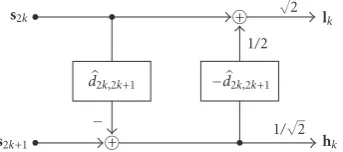
Figure2: Haar wavelet with motion-compensated lifting steps.
Figure 1depicts the distributed coding scheme for two
viewpoints of a dynamic scene. The dynamic scene is rep-resented by the image sequencessk[x,y] andwk[x,y]. The
coding scheme comprises ofEncoder 1 and Encoder 2 that
operate independently as well as ofDecoder2 that is
depen-dent onDecoder1. The side information forDecoder 2 can
be improved by considering the spatial camera positions and by performing disparity compensation. As the video signals are not stationary,Decoder2 is decoding with feedback.
2.1. Motion-compensated temporal transform
Each encoder in Figure 1 exploits the correlation between
successive pictures by employing a motion-compensated
temporal transform for groups ofKpictures (GOP). We
per-form a dyadic decomposition with a motion-compensated
Haar wavelet as depicted inFigure 2. The temporal transform
providesKoutput pictures that are decomposed by a spatial
8×8 DCT. The motion information that is required for the
motion-compensated wavelet transform is estimated in each decomposition level depending on the results of the lower level. The correlation of motion information between two image sequences is not exploited yet, that is, coded motion
vectors are not part of the side information.Figure 2shows
the Haar wavelet with motion-compensated lifting steps. The even frames of the video sequences2kare used to predict the
odd framess2k+1 with the estimated motion vectord2k,2k+1.
The prediction step is followed by an update step which uses the negative motion vector as an approximation. We use a
block size of 16×16 and half-pel accurate motion,
compen-sation with bilinear interpolation in the prediction step, and
o0 o2 o4 o6
z
Figure3: Coset coding of transform coefficients, whereEncoder2 transmits at a rateRTXof 1 bit per transform coefficient.
select the motion vectors such that they minimize a La-grangian cost function based on the squared error in the
high-band hk [5]. Additional scaling factors in low- and
high-band are necessary to normalize the transform.
Encoder 1 inFigure 1encodes the side information for
Decoder 2 and does not employ distributed source coding principles yet. A scalar quantizer is used to represent the DCT coefficients of all temporal bands. The quantized coefficients
are simply run-level encoded. On the other hand,Encoder2
is designed for distributed source coding and uses nested
lat-tice codes to represent the DCT coefficients of all temporal
bands.
2.2. Nested lattice codes for transform coefficients
The 8×8 DCT coefficients ofEncoder2 are represented by a
1-dimensional nested lattice code [9]. Further, we construct cosets in a memoryless fashion [8].
Figure 3explains the coset-coding principle. Assume that
Encoder2 transmits at a rateRTXof 1 bit per transform
co-efficient, and utilizes two cosetsC1,0 = {o0,o2,o4,o6} and
C1,1 = {o1,o3,o5,o7}for encoding. Now, the transform
co-efficiento4will be encoded and the encoder sends one bit to
signal cosetC1,0. With the help of the side information
coef-ficientz, the decoder is able to decodeo4correctly. IfEncoder
2 does not send any bit, the decoder will decodeo3and we
observe a decoding error.
Consider the 64 transform coefficientsciof the 8×8 DCT
atEncoder2. The correlation between theith transform co-efficientciatEncoder2 and theith transform coefficient of
the side information zi depends strongly on the coefficient
index i. In general, the correlation between corresponding
DC coefficients (i = 0) is very high, whereas the
correla-tion between corresponding high-frequency coefficients
de-creases rapidly. To encounter the problem of varying corre-lation, we adapt the transmission rateRTXto each transform
coefficient. For weakly correlated coefficients, a higher trans-mission rate has to be chosen.
Adapting the transmission rate to the actual correlation is accomplished with nested lattice codes [9]. The idea of nested lattices is, roughly, to generate diluted versions of the origi-nal coset code. As we use uniform scalar quantization, we consider the 1-dimensional lattice.Figure 4depicts the fine
codeC0 in the Euclidean space with minimum distanceQ.
C1,C2, andC3are nested codes with theνth cosetCμ,νofCμ
relative toC0. The nested codes are coarser and the union of
their cosets gives the fine codeC0, that is,
νC1,ν=C0.
The binary representation of the quantized transform
co-efficients determines its coset representation in the nested
then theμleast significant bits of the binary representation determine the νth coset Cμ,ν. For highly correlated coeffi
-cients, the number of required cosets and, hence, the
trans-mission rate are small. To achieve efficient entropy coding
of the binary representation of all 64 transform coefficients, we define bitplanes. Each bitplane is run-length encoded and
transmitted toDecoder2 upon request.
2.3. Decoding with side information
AtEncoder2, the quantized transform coefficients are repre-sented with 10 bitplanes, where 9 are used for encoding the absolute value, and one is used for the sign.Encoder2 is able to provide the full bitplanes, independent of any side
infor-mation at theDecoder 2.Encoder 2 is also able to receive a
bitplane mask to weight the current bitplane. The masked
bitplane is run-length encoded and transmitted toDecoder
2.
Given the side information at Decoder 2, masked
bit-planes are requested fromEncoder2. For that,Decoder2 sets the bitplane mask to indicate the bits that are required from
Encoder2. Dependent on the received bitplane mask,Encoder
2 transmits the weighted bitplane utilizing run-length encod-ing.Decoder2 attempts to decode the already received bit-planes with the given side information. In case of decoding
error,Decoder2 generates a new bitplane mask and requests
a further weighted bitplane.
Decoder2 has the following options for each mask bit: if a bit in the bitplane is not needed, the mask value is 0. The mask value is 1 if the bit is required for error-free de-coding. If the information at the decoder is not sufficient for this decision, the mask is set to 2 and the encoded transform coefficient that is used as side information is transmitted to
Encoder2. With this side informationzifor theith transform
coefficientci,Encoder2 is able to determine its best
transmis-sion rateμ=RTX[i] and cosetCμ,ν. This information is
incor-porated into the current bitplane and transmitted toDecoder
2: bits that are not needed for error-free decoding are marked with 0. Further, 1 indicates that the bit is needed and its value is 0, and 2 indicates that the bit is needed with value 1.
Decoder2 aims to estimate theith transform coefficient
ci based on the current transmission rateμ = RTX[i], the
partially received cosetCμ,ν, and the side informationzi:
ci=argmin ci∈Cμ,ν
ci−zi
2
givenμ=RTX[i]. (1)
With increasing number of received bitplanes, that is, in-creasing transmission rateRTX[i], this estimate gets more
ac-curate and stays definitely constant for rates beyond the crit-ical transmission rate R∗TX[i]. Therefore, a simple decoding
algorithm is as follows: an additional bit is required if the
es-timated coefficient changes its value when the transmission
rate increases by 1. An unchanged value for an estimated co-efficient is just a necessary condition for having achieved the critical transmission rate. This condition is not sufficient for error-free decoding and, in this case,Encoder2 has to deter-mine the critical transmission rate to resolve any ambiguity.
0 Q 2Q 3Q 4Q 5Q 6Q 7Q
C0 C0 C0 C0 C0 C0 C0 C0
C1,0 C1,1 C1,0 C1,1 C1,0 C1,1 C1,0 C1,1
C2,0 C2,1 C2,2 C2,3 C2,0 C2,1 C2,2 C2,3
C3,0 C3,1 C3,2 C3,3 C3,4 C3,5 C3,6 C3,7
Figure4: Nested lattices. The 1-dimensional fine codeC0is embed-ded into the Euclidean space with minimum distanceQ.C1,C2, and
C3are nested codes with theνth cosetCμ,νofCμrelative toC0.
Note that Decoder 2 receives the coded information in
bitplane units, starting with the plane of least significant bits.
With each new bitplane,Decoder2 utilizes a coarser lattice
where the number of cosets as well as the minimum Eu-clidean distance increases exponentially.
Depending on the quality of the side information,
De-coder 2 gives feedback to Encoder 2 about the status of its decoding attempts. If the correlation of the side information
is high,Decoder2 will decode successfully without sending
much feedback information. On the other hand, weakly
cor-related side information will cause decoding errors at
De-coder2 and more feedback information is sent toEncoder2 untilDecoder2 is successful. That is, inefficient side informa-tion is compensated by the feedback.
2.4. Disparity-compensated side information
To improve the efficiency ofDecoder2, the side information
fromDecoder1 is disparately compensated in the image do-main. If the camera positions are unknown, the coding sys-tem estimates the disparity information from sample frames. During this calibration process, the side information for De-coder2 is less correlated, andEncoder2 has to transmit at a higher bitrate. Our system utilizes block-based estimates of the disparity values which are constant for all correspond-ing image pairs in the stereoscopic sequence. We estimate the disparity from the first pair of images in the sequences. The right image is subdivided horizontally into 4 segments and vertically into 6 segments. For each of the 24 blocks in the right image, we estimate half-pel accurate disparity vectors. Intensity values for half-pel positions are obtained by bilinear interpolation. The estimated disparity vectors are applied in the image domain and improve the side information in the transform domain. For our experiments, the camera posi-tions are unaltered in time. Therefore, the disparity informa-tion is estimated from the first frames of the image sequences and is reused for disparity compensation of the remaining images.
3. EFFICIENCY OF VIDEO CODING WITH SIDE INFORMATION
v
Δ1 +
. . .
. . .
ΔK−1 +
nK−1
sK−1
n1
s1
n0
s0 +
Figure5: Signal model for a group ofKpictures.
performance bounds and compare to coding without video side information.
3.1. Model for transform-coded video signals
We build upon a model for motion-compensated subband coding of video that is outlined in [5,32]. Let the video pic-turessk= {sk[x,y], (x,y)∈Π}be scalar random fields over
a two-dimensional orthogonal gridΠ with horizontal and
vertical spacing of 1.
As depicted inFigure 5, we assume that the picturessk
are shifted versions of the model picturevand degraded by
independent additive white Gaussian noisenk[5].Δkis the
displacement error in thekth picture, statistically
indepen-dent from the model picturevand the noise nk but
corre-lated to other displacement errors. We assume a 2D normal distribution with variance σ2
Δ and zero mean where thex
-andy-components are statistically independent. As outlined
in [5], it is assumed that the true displacements are known at the encoder. Consequently, the true motion can be set to zero without loss of generality. Therefore, only the displacement error but not the true motion is considered in the model.
From [5], we adopt the matrix of the power spectral den-sities of the picturesskand normalize it with respect to the
power spectral density of the model picturev. We write it also with the identity matrixIand the matrix11Twith all entries
equal to 1. Note thatωdenotes the 2D frequency:
Φss(ω)
Φvv(ω)=
⎛ ⎜ ⎜ ⎜ ⎜ ⎝
1 +α(ω) P(ω) · · · P(ω)
P(ω) 1 +α(ω) · · · P(ω) ..
. ... . .. ...
P(ω) P(ω) · · · 1 +α(ω) ⎞ ⎟ ⎟ ⎟ ⎟ ⎠
=1 +α(ω)−P(ω)I+P(ω)11T,
(2)
andα=α(ω) is the normalized power spectral density of the
Encoder 2
Decoder R∗
s0 . . .
sK−1
w0 . . .
wK−1
s0 . . .
sK−1
w0 . . .
wK−1
Figure6: Coding ofKpicturesskat rateR∗with side information
ofKpictureswkat the decoder.
noiseΦnknk(ω) with respect to the model picturev:
α(ω)=Φnknk(ω) Φvv(ω)
fork=0, 1,. . .,K−1. (3)
It captures the error of the optimal displacement estimator and will be statistically independent of the model picture.
P=P(ω) is the characteristic function of the continuous 2D Gaussian displacement error. For details, please see (3)–(6) in [5],
P(ω)=Ee−jωTΔ
k=e−(1/2)ωTωσΔ2. (4)
3.2. Rate distortion with video side information
Now, we consider the video coding scheme in Figure 1at
high rates such that the reconstructed side information ap-proaches the original side informationwk →wk. With that,
we have a Wyner-Ziv scheme (Figure 6), and the rate
distor-tion funcdistor-tionR∗ofEncoder2 is bounded by the conditional
rate distortion function [1].
In the following, we assume very accurate optimal dispar-ity compensation and consider only dispardispar-ity compensation errors. We model the side information as a noisy version of the video signal to be encoded, that is,wk=sk+uk, and
as-sume that the noiseukis also Gaussian with varianceσu2and
independent ofsk. Further, the side information noiseukis
assumed to be temporally uncorrelated. This is realistic as the video side information is captured by a second camera which provides temporally successive images that are corrupted by statistically independent camera noise. In this case, the ma-trix of the power spectral densities of the side information pictures is simplyΦww(ω)=Φss(ω) +Φuu(ω) with the
ma-trix of the normalized power spectral densities of the side in-formation noise:
Φuu(ω)
Φvv(ω) =
⎛ ⎜ ⎜ ⎜ ⎜ ⎝
γ(ω) 0 · · · 0 0 γ(ω) · · · 0
..
. ... . .. ...
0 0 · · · γ(ω) ⎞ ⎟ ⎟ ⎟ ⎟
γ=γ(ω) is the normalized power spectral density of the side information noiseΦukuk(ω) with respect to the model picture
v:
γ(ω)=Φukuk(ω) Φvv(ω)
fork=0, 1,. . .,K−1. (6)
With these assumptions, the rate distortion functionR∗ of
Encoder2 is equal to the conditional rate distortion function
[1]. Now, it is sufficient to use the conditional
Karhunen-Loeve transform to code video signals with side information and achieve the conditional rate distortion function.
3.3. Conditional Karhunen-Loeve transform
In the case of motion-compensated transform coding of video with side information, the conditional Karhunen-Loeve transform is required to obtain the performance bounds. We determine the well-known conditional power spectral density matrixΦs|w(ω) of the video signalskgiven
the video side informationwk:
Φs|w(ω)=Φss(ω)−ΦHws(ω)Φ−ww1(ω)Φws(ω). (7)
With the model inSection 3.1, the assumptions inSection
3.2, and the mathematical tools presented in [33], we obtain for the normalized conditional spectral density matrix
Φs|w(ω)
Φvv(ω) =
A(ω)
A(ω) +γ(ω)γ(ω)I+
P(ω)
A(ω) +γ(ω)
· γ(ω)
A(ω) +KP(ω) +γ(ω)γ(ω)11
T,
(8)
whereA(ω) = 1 +α(ω)−P(ω). For our signal model, the conditional Karhunen-Loeve transform is as follows: the first eigenvector just adds all components and scales with 1/√K. For the remaining eigenvectors, any orthonormal basis can be used that is orthogonal to the first eigenvector. The Haar wavelet that we use for our coding scheme meets these
re-quirements. Finally, K eigendensities are needed to
deter-mine the performance bounds:
Λ∗
0(ω)
Φvv(ω)=
A(ω)+KP(ω)γ(ω)/A(ω) +KP(ω) +γ(ω)
A(ω) +γ(ω) γ(ω),
Λ∗
k(ω)
Φvv(ω)=
A(ω)
A(ω) +γ(ω)γ(ω), k=1, 2,. . .,K−1.
(9)
0 5 10 15 20 25 30 35 40
−4 −3.5 −3 −2.5 −2 −1.5 −1 −0.5 0
Correlation SNR (dB)
Rat
e
di
ff
er
enc
e
(bit/sample)
K= ∞ K=32
K=8 K=2
Figure7: Rate difference between motion-compensated transform
coding with side information and without side information versus correlation SNR for groups ofKpictures. The displacement inac-curacyβis−1 (half-pel accuracy) and the residual noise is−30 dB.
3.4. Coding gain due to side information
With the conditional eigendensities, we are able to determine the coding gain due to side information. We normalize the conditional eigendensitiesΛ∗k(ω) with respect to the eigen-densitiesΛk(ω) that we obtain for coding without side
infor-mation asΛ∗k(ω)→Λk(ω) forγ(ω)→ ∞:
Λ∗
0(ω)
Λ0(ω) =
γ(ω)
A(ω) +γ(ω)
·A(ω) +KP(ω)γ(ω)/
A(ω) +KP(ω) +γ(ω)
A(ω) +KP(ω) ,
Λ∗
k(ω)
Λk(ω) =
γ(ω)
A(ω) +γ(ω), k=1, 2,. . .,K−1. (10)
The rate difference is used to measure the improved com-pression efficiency for each picturekin the presence of side information:
ΔR∗k =
1 4π2
π
−π
1 2log2
Λ∗ k(ω)
Λk(ω)
dω. (11)
−4 −3 −2 −1 0 1 2 −1.4
−1.2 −1 −0.8 −0.6 −0.4 −0.2 0
Displacement inaccuracyβ
Rat
e
di
ff
er
enc
e
(bit/sample)
K= ∞ K=32
K=8 K=2
Figure8: Rate difference between motion-compensated transform
coding with side information and without side information versus displacement inaccuracyβfor groups ofK pictures. The residual noise is−30 dB and the correlation-SNR is 20 dB.
Figure 7depicts the overall rate difference for a
resid-ual noise level RNL = 10 log10(σ2
n) of −30 dB over the
c-SNR=10 log10([σ2
v+σn2]/σu2) for a displacement inaccuracy β=log2(√12σΔ)= −1. Note that the variance of the model picture vis normalized toσ2
v = 1. We observe for a given
correlation SNR of the side information that larger bitrate
savings are achievable if the GOP sizeKis smaller. The
ex-perimental results in Figures10and12will verify this obser-vation. Finally, for highly correlated video signals, the gain due to side information increases by 1 bit/sample if the c-SNR increases by 6 dB.
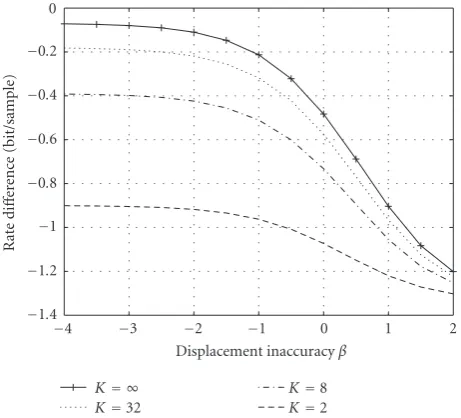
Figure 8depicts the overall rate difference for a
resid-ual noise level RNL = 10 log10(σ2
n) of −30 dB over the
dis-placement inaccuracy β = log2(√12σΔ) for a c-SNR =
10 log10([σ2
v +σn2]/σu2) of 20 dB. Again, the variance of the
model picturevis normalized toσ2
v =1. We observe that for
K =32, half-pel accurate motion compensation (β= −1),
and a c-SNR of 20 dB, the rate difference is limited to−0.3 bit/sample. Also, the bitrate savings due to side informa-tion increase for less accurate moinforma-tion compensainforma-tion. That
is, there is a tradeoffbetween the gain due to accurate
mo-tion compensamo-tion and side informamo-tion. Practically speak-ing, less accurate motion compensation reduces the coding
efficiency of the encoder, and with that, its computational
complexity, but improved side information may compensate for similar overall efficiency.
4. EXPERIMENTAL RESULTS
For the experiments, we select the stereoscopic MPEG-4
se-quencesFunfair andTunnel in QCIF resolution. We divide
each view with 224 frames at 30 fps into groups of K =
32 pictures. The GOPs of the left view are encoded with
0 2 4 6 8 10 12 14 16 18 20 22
×102 R2(kbit/s)
26 27 28 29 30 31 32 33 34 35 36 37 38 39 40
PSNR
Y2
(dB)
Decoder 2 without side information Decoder 2 with side information
Decoder 2 with disparity-compensated side information
Figure 9: Luminance PSNR versus total bitrate atDecoder2 for the sequenceFunfair2 (right view). Compared are decoding with disparity-compensated side information, decoding with coefficient side information only, and decoding without side information. For all cases, groups ofK=32 pictures are used.
Encoder1 at high quality by setting the quantization
param-eterQP=2, whereQ=2QP. This coded version of the left
view is used for disparity compensation. The compensated
frames provide the side information forDecoder2 to decode
the right view.
Figures9and11show the luminance PSNR over the total
bitrate of the distributed codecEncoder2 for the sequences
Funfair 2 andTunnel 2, respectively. The sequences are the right views of the stereoscopic sequences. The rate distortion points are obtained by varying the quantization parameter
for the nested lattice inEncoder 2. When compared to
de-coding without side information, dede-coding with coefficient
side information reduces the bitrate ofFunfair2 by up to 5%
and that ofTunnel2 by up to 8%. Decoding with
disparity-compensated side information reduces the bitrate ofFunfair
2 by up to 8%. The block-based disparity compensation has limited accuracy and is not beneficial forTunnel2. But utiliz-ing more accurate geometrical information about the scene
will improve the side information forDecoder2 and, hence,
will further reduce the bitrate ofEncoder2.
Figures 10 and12 show the bitrate difference between
decoding with side information and decoding without side
information over the luminance PSNR atDecoder 2 for the
sequencesFunfair2 (right view) andTunnel2 (right view),
respectively. The bitrate savings due to side information are
depicted for weak temporal filtering withK=8 pictures per
GOP and strong temporal filtering with K = 32 pictures
per GOP. Note that both the coded signal (right view) and the side information (left view) are encoded with the same
GOP lengthK. It is observed that strong temporal filtering
26 28 30 32 34 36 38 40 −200
−180 −160 −140 −120 −100 −80 −60 −40 −20
PSNRY2(dB)
Rat
e
di
ff
er
enc
e
(kbit/s)
K=32 K=8
Figure10: Bitrate difference versus luminance PSNR atDecoder2 for the sequenceFunfair2 (right view). The rate difference is the bitrate for decoding with side information minus the bitrate for de-coding without side information and reflects the bitrate savings due to decoding with side information. Smaller bitrate savings are ob-served for strong temporal decorrelation (K=32) when compared to the bitrate savings for weak temporal decorrelation (K=8).
0 1 2 3 4 5 6 7 8 9 10
×102 R2(kbit/s)
30 31 32 33 34 35 36 37 38 39 40 41 42
PSNR
Y2
(dB)
Decoder 2 without side information Decoder 2 with side information
Decoder 2 with disparity-compensated side information
Figure11: Luminance PSNR versus total bitrate atDecoder2 for the sequenceTunnel2 (right view). Compared are decoding with disparity-compensated side information, decoding with coefficient side information only, and decoding without side information. For all cases, groups ofK=32 pictures are used.
compared to the bitrate savings due to side information for weaker temporal filtering. Obviously, there is a tradeoff
be-tween the level of temporal decorrelation and the efficiency
30 32 34 36 38 40 42
−120 −100 −80 −60 −40 −20 0
PSNRY2(dB)
Rat
e
di
ff
er
enc
e
(kbit/s)
K=32 K=8
Figure12: Bitrate difference versus luminance PSNR atDecoder2 for the sequenceTunnel2 (right view). The rate difference is the bitrate for decoding with side information minus the bitrate for de-coding without side information and reflects the bitrate savings due to decoding with side information. Smaller bitrate savings are ob-served for strong temporal decorrelation (K=32) when compared to the bitrate savings for weak temporal decorrelation (K=8).
of multiview side information. This tradeoffis also found in the theoretical investigation on the efficiency of video coding with side information.
5. CONCLUSIONS
This paper discusses robust coding of visual content for a distributed multimedia system. The distributed system com-presses two correlated video signals. The coding scheme is based on motion-compensated temporal wavelets and trans-form coding of temporal subbands. The scalar transtrans-form
co-efficients are represented by a nested lattice code. For this
representation, we define bitplanes and encode these with run-length coding. As the correlation of the transform coef-ficients is not stationary, we decode with feedback and adapt the coarseness of the code to the actual correlation. Also, we investigate how scene analysis at the decoder can improve the
coding efficiency of the distributed system. We estimate the
disparity between the two views and perform disparity com-pensation. With disparity-compensated side information, we observe up to 8% bitrate savings over decoding without side information.
the theoretical bitrate reduction for the distributed coding
scheme. We observe a tradeoffin coding efficiency between
the level of temporal decorrelation and the efficiency of
mul-tiview side information. A similar tradeoffis found between
the level of accurate motion compensation and the efficiency
of multiview side information.
ACKNOWLEDGMENT
This work has been supported, in part, by the Max Planck Center for Visual Computing and Communication.
REFERENCES
[1] A. D. Wyner and J. Ziv, “The rate-distortion function for source coding with side information at the decoder,” IEEE Transactions on Information Theory, vol. 22, no. 1, pp. 1–10, 1976.
[2] M. Flierl and P. Vandergheynst, “Distributed coding of dy-namic scenes with motion-compensated wavelets,” in Proceed-ings of IEEE 6th Workshop on Multimedia Signal Processing (MMSP ’04), pp. 315–318, Siena, Italy, September 2004. [3] B. Pesquet-Popescu and V. Bottreau, “Three-dimensional
lift-ing schemes for motion compensated video compression,” inProceedings of IEEE International Conference on Acoustics, Speech, and Signal Processing (ICASSP ’01), vol. 3, pp. 1793– 1796, Salt Lake City, Utah, USA, May 2001.
[4] A. Secker and D. Taubman, “Lifting-based invertible motion adaptive transform (LIMAT) framework for highly scalable video compression,”IEEE Transactions on Image Processing, vol. 12, no. 12, pp. 1530–1542, 2003.
[5] M. Flierl and B. Girod, “Video coding with motion-compensated lifted wavelet transforms,”Signal Processing: Im-age Communication, vol. 19, no. 7, pp. 561–575, 2004. [6] S. S. Pradhan and K. Ramchandran, “Distributed source
cod-ing uscod-ing syndromes (DISCUS): design and construction,” in Proceedings of Data Compression Conference (DCC ’99), pp. 158–167, Snowbird, Utah, USA, March 1999.
[7] S. S. Pradhan, J. Kusuma, and K. Ramchandran, “Distributed compression in a dense microsensor network,”IEEE Signal Processing Magazine, vol. 19, no. 2, pp. 51–60, 2002.
[8] S. S. Pradhan and K. Ramchandran, “Distributed source cod-ing uscod-ing syndromes (DISCUS): design and construction,” IEEE Transactions on Information Theory, vol. 49, no. 3, pp. 626–643, 2003.
[9] R. Zamir, S. Shamai, and U. Erez, “Nested linear/lattice codes for structured multiterminal binning,”IEEE Transactions on Information Theory, vol. 48, no. 6, pp. 1250–1276, 2002. [10] J. Garcia-Frias, “Compression of correlated binary sources
us-ing turbo codes,”IEEE Communications Letters, vol. 5, no. 10, pp. 417–419, 2001.
[11] A. D. Liveris, Z. Xiong, and C. N. Georghiades, “Compression of binary sources with side information at the decoder using LDPC codes,”IEEE Communications Letters, vol. 6, no. 10, pp. 440–442, 2002.
[12] A. Aaron and B. Girod, “Compression with side information using turbo codes,” inProceedings of Data Compression Con-ference (DCC ’02), pp. 252–261, Snowbird, Utah, USA, April 2002.
[13] Y. Zhao and J. Garcia-Frias, “Data compression of correlated non-binary sources using punctured turbo codes,” in Proceed-ings of Data Compression Conference (DCC ’02), pp. 242–251, Snowbird, Utah, USA, April 2002.
[14] Z. Xiong, A. D. Liveris, and S. Cheng, “Distributed source coding for sensor networks,”IEEE Signal Processing Magazine, vol. 21, no. 5, pp. 80–94, 2004.
[15] M. Gastpar, P. L. Dragotti, and M. Vetterli, “The distributed Karhunen-Lo`eve transform,” in Proceedings of IEEE Work-shop on Multimedia Signal Processing (MMSP ’02), pp. 57–60, St.Thomas, Virgin Islands, USA, December 2002.
[16] M. Gastpar, P. L. Dragotti, and M. Vetterli, “The distributed, partial, and conditional Karhunen-Lo`eve transforms,” in Pro-ceedings of Data Compression Conference (DCC ’03), pp. 283– 292, Snowbird, Utah, USA, March 2003.
[17] M. Gastpar, P. L. Dragotti, and M. Vetterli, “On compression using the distributed Karhunen-Lo`eve transform,” in Proceed-ings of IEEE International Conference on Acoustics, Speech, and Signal Processing (ICASSP ’04), vol. 3, pp. 901–904, Montreal, Quebec, Canada, May 2004.
[18] M. Gastpar, P. L. Dragotti, and M. Vetterli, “The distributed Karhunen-Lo`eve transform,” submitted toIEEE Transactions on Information Theory.
[19] D. Rebollo-Monedero, A. Aaron, and B. Girod, “Transforms for high-rate distributed source coding,” inProceedings of the 37th Asilomar Conference on Signals, Systems and Computers (ACSSC ’03), vol. 1, pp. 850–854, Pacific Grove, Calif, USA, November 2003.
[20] D. Rebollo-Monedero, S. D. Rane, and B. Girod, “Wyner-Ziv quantization and transform coding of noisy sources at high rates,” inProceedings of the 38th Asilomar Conference on Sig-nals, Systems and Computers (ACSSC ’04), vol. 2, pp. 2084– 2088, Pacific Grove, Calif, USA, November 2004.
[21] A. Aaron, S. D. Rane, E. Setton, and B. Girod, “Transform-domain Wyner-Ziv codec for video,” inVisual Communica-tions and Image Processing (VCIP ’04), vol. 5308 ofProceedings of the SPIE, pp. 520–528, San Jose, Calif, USA, January 2004. [22] M. Flierl, “Distributed coding of dynamic scenes,”
Tech. Rep. EPFL-ITS-2004.015, Swiss Federal Institute of Technology, Lausanne, Switzerland, January 2004,
http://lts1pc19.epfl.ch/repository/Flierl2004 780.pdf. [23] M. Flierl and P. Vandergheynst, “Video coding with
motion-compensated temporal transforms and side information,” in Proceedings of IEEE International Conference on Acoustics, Speech, and Signal Processing (ICASSP ’05), vol. 5, pp. 921–924, Philadelphia, Pa, USA, March 2005, invited paper.
[24] E. H. Adelson and J. R. Bergen, “The plenoptic function and the elements of early vision,” inComputational Models of Vi-sual Processing, M. Landy and J. A. Movshon, Eds., pp. 3–20, MIT Press, Cambridge, Mass, USA, 1991.
[25] N. Gehrig and P. L. Dragotti, “Distributed compression in camera sensor networks,” inProceedings of IEEE 6th Work-shop on Multimedia Signal Processing (MMSP ’04), pp. 311– 314, Siena, Italy, September 2004.
[26] N. Gehrig and P. L. Dragotti, “Distributed compression of the plenoptic function,” inProceedings of IEEE International Con-ference on Image Processing (ICIP ’04), vol. 1, pp. 529–532, Sin-gapor, October 2004.
Data Compression Conference (DCC ’01), pp. 63–72, Snowbird, Utah, USA, March 2001.
[28] B. Girod, A. Aaron, S. D. Rane, and D. Rebollo-Monedero, “Distributed video coding,”Proceedings of the IEEE, vol. 93, no. 1, pp. 71–83, 2005, invited paper.
[29] X. Zhu, A. Aaron, and B. Girod, “Distributed compression for large camera arrays,” inProceedings of IEEE Workshop on Sta-tistical Signal Processing (SSP ’03), pp. 30–33, St. Louis, Mo, USA, September 2003.
[30] R. Puri and K. Ramchandran, “PRISM: an uplink-friendly multimedia coding paradigm,” inProceedings of IEEE Inter-national Conference on Acoustics, Speech, and Signal Processing (ICASSP ’03), vol. 4, pp. 856–859, Hong Kong, China, April 2003.
[31] A. Aaron, R. Zhang, and B. Girod, “Wyner-Ziv coding of mo-tion video,” inProceedings of the 36th Asilomar Conference on Signals, Systems and Computers (ACSSC ’02), vol. 1, pp. 240– 244, Pacific Grove, Calif, USA, November 2002.
[32] M. Flierl and B. Girod, “Video coding with motion compen-sation for groups of pictures,” inProceedings of IEEE Interna-tional Conference on Image Processing (ICIP ’02), vol. 1, pp. 69– 72, Rochester, NY, USA, September 2002.
[33] M. Flierl and B. Girod, Video Coding with Superimposed Motion-Compensated Signals: Applications to H.264 and Be-yond, Kluwer Academic, Boston, Mass, USA, 2004.
[34] T. Berger, Rate Distortion Theory: A Mathematical Basis for Data Compression, Prentice-Hall, Englewood Cliffs, NJ, USA, 1971.
Markus Flierlis with the Max Planck Center for Visual Computing and Communication at Stanford University, California. He is head-ing the Max Planck Research Group on Visual Sensor Networks. His research interests include visual data compression, informa-tion processing, sensor networks, multiview imaging, and moinforma-tion in image sequences. He received his Dipl.-Ing. degree in electrical engineering as well as his Doctoral degree from Friedrich Alexan-der University, Erlangen, Germany, in 1997 and 2003, respectively. From 1999 to 2001, he was a scholar with the Graduate Research Center at Friedrich Alexander University. From 2000 to 2002, he joined the Information Systems Laboratory at Stanford University as a Visiting Researcher. From 2003 to 2005, he was a Postdoctoral Researcher with the Signal Processing Institute at the Swiss Federal Institute of Technology Lausanne, Switzerland. During his doctoral research, he contributed to the ITU-T Video Coding Experts Group standardization efforts on H.264. He is also a coauthor of an inter-nationally published monograph.