ABSTRACT
BOWEN, KIMBERLY CLARK. The Relation of Teachers’ Reflective Judgment and Conceptions of Teaching and Learning (Under the direction of Ruie J. Pritchard.)
The purpose of this study was to investigate the reflective judgment of high school English language arts (ELA) teachers, including how epistemology relates to demographics and conceptions of teaching and learning. As one of the most comprehensive and commonly accepted models of epistemic development, the Reflective Judgment Model provides a theoretical framework for understanding how personal epistemology influences the ways in which individuals approach ill-structured problems from late adolescence through adulthood. For the sample of 149 teachers, the mean score was 5.25, suggesting teachers most
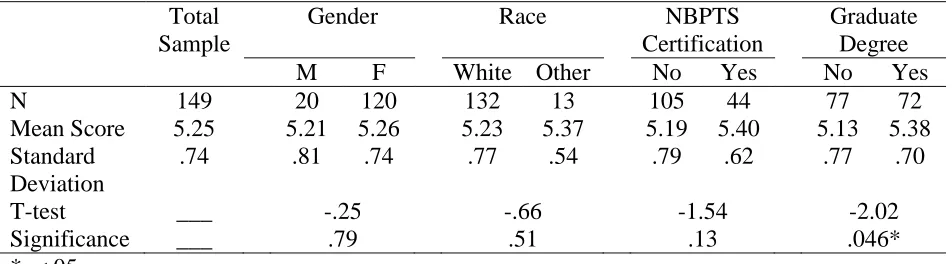
commonly access quasi-reflective levels of reflective judgment. Consistent with previous studies, graduate education was the only significant variable related to reflective judgment; age, gender, race, years of teaching experience, and National Board Certification were not significantly related to reflective judgment. A subset of 42 teachers completed the Teacher Beliefs Q-Sort and constructed metaphors about teaching and learning. Results suggest that, overall, ELA teachers do not value teacher-centered environments or teacher-centered instruction, but they do hold negative views of student motivation. Pearson Product Moment Correlations revealed inverse relationships between age and valuing teacher-centered
environments, that is, younger teachers were more likely to value teacher-centered
The Relation of Teachers’ Reflective Judgment and Conceptions of Teaching and Learning.
by
Kimberly Clark Bowen
A dissertation submitted to the Graduate Faculty of North Carolina State University
in partial fulfillment of the requirements for the Degree of
Doctor of Philosophy
Curriculum and Instruction
Raleigh, North Carolina 2009
APPROVED BY:
_______________________________ ______________________________
Ruie J. Pritchard Ronald Honeycutt
Chair of Advisory Committee
________________________________ ______________________________
DEDICATION
To the Bowen boys – your love and support have been invaluable as I/we have worked toward this degree for seven years.
Michael and Alex, thanks for enduring countless peanut butter sandwiches and cereal for dinner while mom took classes or researched and wrote. Thanks also for your patience with errands at NC State that dragged on and on as I found just one more thing I had to do. Michael, thank you especially for helping your brother with homework and reading when I couldn’t and for being a responsible role model for us all (I am still impressed that you finished your Social Studies project before the deadline, while I’m writing this in the wee hours of the morning – keep it up, kid!) Alex, thank you for being excited about how many pages I wrote, for telling me you knew I could do it, and for understanding when I told you “maybe tomorrow” perhaps a few too many times. To you both, I hope someday to see you fulfill your own professional goals.
BIOGRAPHY
Kimberly Christine Clark Bowen was born in at Newport Naval Hospital in Rhode Island and raised on both coasts – in California, Maryland and Virginia. Her love for reading and for learning stayed with her through eight different schools across her 13 years of
elementary and secondary education.
Kim graduated from Wake Forest University with a BA in English and a minor in politics. There, she met her future husband, Mike, on the second day of class (ask Mike about that one!) She suppressed her urges to teach and instead worked as a legislative
correspondent for a U.S. Congressman in Washington DC. During a homecoming weekend, she became reacquainted with Mike who was completing Officer Basic Training at Fort Belvoir, just outside of DC. Soon, they were engaged and she was on her way back to North Carolina with her fiancé to work on their Masters’ Degrees at Wake Forest.
After the MAEd program, Kim taught high school English in Wake County, advising the school newspaper and exploring educational technology. She earned her National Board Certification (ELA/AYA) in 1999 and was having her best school year yet when she was offered a position as a curriculum and instruction educational consultant for the NC Department of Public Instruction. Along the way, she had two wonderful boys and started graduate school (again). After years of juggling work, school and family, she was able to leave DPI and focus on her doctoral degree.
ACKNOWLEDGMENTS
Thank you to Ruie Pritchard for encouraging a young teacher to begin to feel like a writer all those years ago, and for still encouraging that (not so young) teacher to pursue new goals. Many years later, I appreciate the Writing Project community even more as I realize the impact it has had on my career and my life. Thank you also to Ruie for being my advisor, and friend, through this process.
To Alan Reiman for introducing me to the concept of personal epistemology and helping me understand its complexities, as well as for challenging me to do my best.
To the faculty at NC State who have taught me much but also encouraged me to explore my own ideas and to create projects that benefited my own students and colleagues
To Joe Milner at Wake Forest University who helped me begin my teaching career with a strong foundation in inquiry and who first introduced me to the importance of joining the professional conversation beyond the school
To Shayne Goodrum and Sherri Merritt, who after completing their own degrees, were ever patient with my questions and anxieties
To Penny Maguire, who gave feedback, edited, and proofread not only this document but also countless others, who helped me stay focused, and who listened to me no matter what time it was
TABLE OF CONTENTS
LIST OF TABLES ... x
LIST OF FIGURES ... xii
CHAPTER ONE: INTRODUCTION ... 1
The Problem ... 1
Purpose of the study ... 7
Research questions ... 7
Significance of the study ... 8
Limitations of the study ... 10
Definition of Terms ... 10
CHAPTER TWO: REVIEW OF LITERATURE ... 12
Reflective Judgment ... 12
Personal Epistemology... 12
Reflective Judgment Model ... 14
Reflective Judgment and English Language Arts ... 18
Research on the Reflective Judgment Model ... 20
Personal Epistemology and Teaching ... 23
Conceptions of Teaching and Learning ... 29
Conclusion ... 37
CHAPTER THREE: METHODS ... 39
Research Questions ... 39
Sample ... 42
ELA Survey ... 45
Responding to Current Issues Questionnaire ... 45
Teacher Belief Q-sort (TBQ) ... 48
Analysis ... 54
Responding to Current Issues Questionnaire (RCI)... 54
Teacher Belief Q-sort (TBQ) ... 54
Summary ... 57
CHAPTER FOUR: RESULTS ... 59
Reflective Judgment (Question 1) ... 59
How does English teacher reflective judgment level relate to demographic factors? .... 59
How does English teacher reflective judgment level correspond with reflective judgment levels of the general public based on educational level? ... 61
Conceptions of Teaching and Learning (Question 2) ... 62
How and to what extent do English teacher beliefs relate to demographics? ... 64
Reflective Judgment and Conceptions of Teaching and Learning (Question 3) ... 68
How does English teacher reflective judgment relate to conceptions of teaching and learning? ... 68
Summary ... 71
CHAPTER FIVE:: DISCUSSION ... 73
Limitations of Analytic Results ... 73
What levels of reflective judgment do high school English language arts teachers access? (Question 1) ... 75
What conceptions of teaching and learning do high school English teachers evidence? (Question 2) ... 80
How does English teacher reflective judgment relate to conceptions of teaching and learning? (Question 3) ... 84
Implications for policy and additional research ... 87
Conclusion ... 90
WORKS CITED... 91
LIST OF TABLES
TABLE 2.1: SUMMARY OF REFLECTIVE JUDGMENT STAGES ... 16
TABLE 3.1: SUMMARY OF DEMOGRAPHIC DATA FOR QUESTION 1 (N = 149) ... 42
TABLE 3.2: SUMMARY OF DEMOGRAPHIC DATA FOR QUESTIONS 2 AND 3 (N = 42) ... 43
TABLE 3.3: SUMMARY OF TEACHER QUALITY DATA ... 44
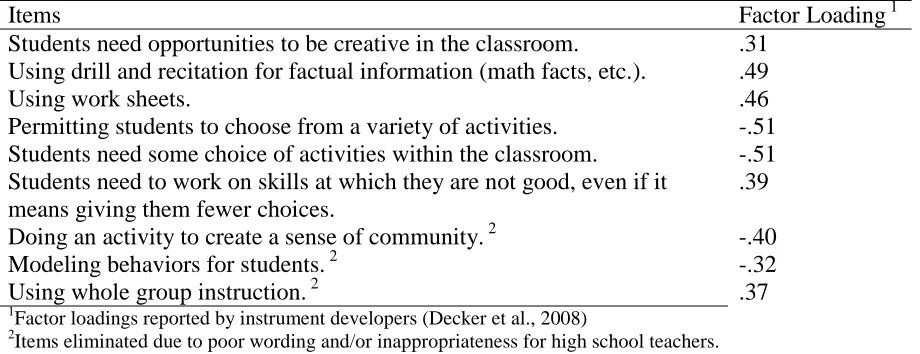
TABLE 3.4: TEACHER-CENTERED ENVIRONMENT SCALE ... 55
TABLE 3.5: TEACHER-DIRECTED INSTRUCTION SCALE ... 56
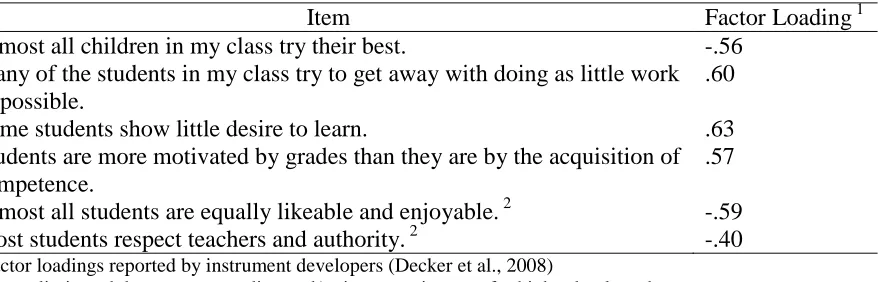
TABLE 3.6: NEGATIVE VIEW OF STUDENT MOTIVATION SCALE ... 57
TABLE 4.1: MEAN RCI SCORES FOR HSELA TEACHERS BY YEARS OF TEACHING EXPERIENCE ... 59
TABLE 4.2: MEAN RCI SCORES AND T-TESTS FOR HSELA TEACHERS BY SUBGROUPS ... 60
TABLE 4.3: MEAN RJ STAGE AND T-TESTS FOR GENERAL PUBLIC AND HSELA TEACHERS BY HIGHEST EDUCATIONAL LEVEL ... 61
TABLE 4.4: MEAN SCALE SCORES FOR EACH TBQ FACTOR (N=42) ... 62
TABLE 4.5: CORRELATIONS AMONG FACTOR SCALE SCORES AND AGE AND YEARS TEACHING EXPERIENCE ... 64
LIST OF FIGURES
CHAPTER ONE: INTRODUCTION The Problem
Accepting the David H. Russell Award for Distinguished Research in the Teaching of English from the National Council of Teachers of English, Arthur Applebee reflected on more than 30 years of teaching and researching in the field. He concludes, “I think we have reached a point in research in the teaching of English where we have a fairly widespread consensus about the nature of effective teaching and learning, within a fairly well elaborated socio-cognitive or socio-cultural frame” (Applebee, 1999, p. 363). At the same time, he pointed to challenges that still exist in researching teacher practice and examining how to raise student achievement, to provide evidence that the theories behind the consensus do indeed have merit. “We have learned a great deal about how classrooms work, but we have done very little research about how to make them work better—better in the sense that students will emerge from our classrooms as more literate, more thoughtful, more accomplished human beings” (Applebee, 1999, p. 363).
Student-centered classrooms and instruction are uncommon, even while leaders proclaim their importance. Researchers highlight student-centered classroom practices not only because they are effective, but also because they are so atypical in practice (Hillocks, 1999; Langer et. al., 2000; Langer, 2002; Sperling & DiPardo, 2008).
The contrast between the researchers’ perspective and the teachers’ practice has been highlighted in the current school atmosphere of accountability and emphasis on data analysis to improve achievement for all students. Urging administrators to address the “knowing-doing gap,” Reeves (2006) states “One inescapable conclusion from school reform research, however, is that .….Leaders and teachers give intellectual assent to the research and then return to schools and classrooms and …nothing happens” (emphasis in the original, p. 90). Reeves’ emphasis on results (or lack there-of) highlights frustrations of many researchers, policy-makers, and administrators who strive to present staff development on research-based practices to teachers only to see little change occur.
Addressing the knowing-doing gap as “the most pressing issue confronting educators,” DuFour and DuFour (2007) advocate a future in which educators collaborate, inquire into their own practices, and examine evidence of impact which, in turn, influences change in practice as appropriate:
are mutually accountable, and continue to repeat this process in a perpetual cycle of improvement (p. 27).
Moreover, the DuFours recommend that teachers on these teams have autonomy to choose the problems to address and select the practices to implement. In light of this vision, if teachers do not choose research-based problems to address, the knowing-doing gap could become an even greater threat to the use of effective strategies, and ultimately, a threat to educational reform at the classroom level.
The 15 schools described in It’s Being Done (Chenoweth, 2007) exhibit many of the characteristics described by Dufour and Dufour (2007). The Education Trust sponsored the qualitative study of 15 schools which have impressive numbers of students achieving proficiency despite high levels of poverty and minority populations. Consistently through these schools, Chenoweth found teachers working collaboratively, using data to refine teacher practice. In the final words of the study, Chenoweth quotes a high school English teacher’s challenge to his fellow educators: “We know what works in education. The
research is prolific…. Amazingly, then, the question today is not about what works, but about why we do not implement what we know works in all schools for all kids’” (p. 227). The exemplary teachers in this study and others understand the complexity of the situation, analyze data from several sources, select a plan of action, and evaluate the outcomes.
student learning, integration with whole school improvement efforts, and active, reflective practice over time (Darling-Hammond & Richardson, 2009; Pritchard, R. J. & Marshall, J.C., 2002).
However, another level of the knowing-doing gap has received little attention –what do teachers know – and what does it mean to know it. Chenoweth and others share stories of collaborative teachers who make evidence-based decisions, but their cases are highlighted precisely because what they are doing is unique. Perhaps their “knowing” is as unique as their “doing.”
The field of personal epistemology, the study of individuals’ beliefs about the nature of knowledge, includes such concepts as what it is, how it is created, how it is justified, and how it might change. In a review of epistemic developmental theories, Hofer (2002)
identified a common developmental progression in current epistemological models: individuals move “from a dualistic, objectivist view of knowledge to a more subjective, relativistic stance and ultimately to a contextual, constructivist perspective of knowing” (p. 7). Consistent across the models is the importance of educational level on personal
epistemology, with contextual constructivist views of knowledge emerging with graduate school education and becoming more pronounced with advanced graduate education.
Model has its roots in Dewey’s initial definition of reflection as occurring when an individual is perplexed by problems which cannot be solved with current understanding or logic.
According to Dewey, confronting these problems requires the individual to seek additional information and consider multiple perspectives. Reflective judgment occurs when that perplexity leads to “careful consideration of one’s beliefs in light of supporting evidence” (King & Kitchener, 2004). Dewey (1910) also notes that
Reflective thinking is always more or less troublesome because it involves
overcoming the inertia that inclines one to accept suggestions at their face value; it involves willingness to endure a condition of mental unrest and disturbance.
Reflective thinking, in short, means judgment suspended during further inquiry; and suspense is likely to be somewhat painful. (p. xxx)
The progression of three levels in the RJ Model describes how different individuals respond when facing that difficult process, responses which range from being unaware of the
uncertainty to embracing it and being comfortable with the ambiguity. Matching Hofer’s progression (2004) with RJ Model terms, individuals may exhibit behaviors that are pre-reflective (dualistic, objectivist), quasi-pre-reflective (subjective, relativistic), or pre-reflective (contextual, constructivist). The RJ Model and its levels will be explored in more depth in Chapter Two.
the “solutions” to these problems are plans of action that take into account evidence from multiple perspectives, while acknowledging the potential need for reevaluation as more evidence becomes available. English teachers face a plethora of ill-structured problems, such as determining coherent curriculum content, developing student-centered classroom
environments, and encouraging construction of knowledge based on evaluation of evidence (Applebee, 1996; Applebee, Burroughs, & Stevens, 2000; Gamoran and Carbonaro, 2002; Hillocks, 1999; Langer, 2002; Chenoweth, 2007).
From an instructional model standpoint, if English teachers believe that knowledge is transmitted from authority, then their understanding of their roles will include transmitting that knowledge themselves, implementing more traditional or didactic models of instruction which privilege teacher-directed instruction and classroom environment. On the other hand, if English teachers believe that knowledge is constructed by interaction with others and with texts, then their understanding of their roles will include creating opportunities for students to participate with each other and interact with texts, reflecting constructivist models of
instruction and student-centered classroom environments and learning.
Additionally, RJ Model provides insight into teacher use of data – both for research into effective instruction and for evidence of student performance. Pre-reflective teachers may not be open to the findings of research and continue their practice without scrutiny. Quasi-reflective teachers may take all perspectives as equal weight and attempt many different approaches without committing to any one of them. Reflective teachers may
samples studied in personal epistemology research, all indications are that teachers at higher levels of epistemic cognition are rare.
Purpose of the study
The purpose of this study is to investigate the reflective judgment of high school English language arts teachers, including how that epistemology relates to demographics and conceptions of teaching and learning. This descriptive study utilizes both quantitative and qualitative data, including scores on the Reasoning about Current Issues Questionnaire and on the Teacher Belief Q-Sort, metaphor construction, and focus group discussion.
Additionally, constructed responses by teachers to open-ended questions are included to provide insights into issues raised by the data.
Research questions
This study investigates the personal epistemology and conceptions of teaching and learning of high school English language arts (ELA) teachers in a large southeastern state. The overarching research question is How and to what extent do ELA teachers’ beliefs about the nature of knowledge relate to their conceptions of teaching and learning? The specific research questions are:
Question 1: What levels of reflective judgment do high school English language arts teachers access?
Question 2: What conceptions of teaching and learning do high school English language arts teachers evidence?
Significance of the study
While epistemic development is generally considered an implicit goal of education, little attention has been paid to teacher personal epistemology, let alone to the connections between teacher epistemology and their conceptions of teaching and learning. Most of the research has been focused on understanding college students’ ways of knowing and their growth during undergraduate education with some studies extending into graduate and post-graduate experiences (Hofer & Pintrich, 1997; Hofer, 2001; King & Kitchener, 2002; King & Kitchener, 2004).
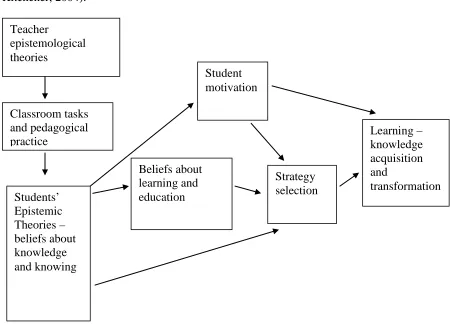
In the above diagram (Figure 1.1) of the relationship between personal epistemology and learning, Hofer places teacher epistemology as a primary influence on student
epistemology and ultimately on student learning. Yet, she introduces this model with only the statement that “beliefs of teachers may also influence this process” (Hofer, 2001, p. 372). Later, Hofer refers to teacher beliefs as an “understudied factor” (Hofer, 2001, p. 373). A few studies suggest that epistemology may influence teacher behaviors and beliefs, with
recommendations for continued inquiry into the topic (Anson, 1989; Bendixen & Rule, 2004; Chan, 2004; Hashweh, 1996; Hillocks, 1999; Hofer, 2001; Hofer & Pintrich, 1997; Parejes, 1992; Smith & Pape, 1991), with Hillocks (1999) stating “I suspect that great differences in teaching may amount to differences in ways of thinking about the nature of knowledge, in epistemology.”
The Reflective Judgment (RJ) Model is one of the most comprehensive epistemic developmental models (Hofer, 2002) with over 30 years of research confirming the model’s progression (Duell & Schommer-Aikins, 2001; King & Kitchener 2002; King & Kitchener 2004; Wood, Kitchener, and Jensen, 2002). While the research studies have included subjects of various ages from adolescence through late adulthood, most of the research has focused on the impact of higher education in general or the impact of specific programs on student epistemology. No study has examined the reflective judgment of practicing teachers. If the personal epistemology of the teaching population reflects the distribution of the general population, few teachers base their decisions on data and consideration of multiple
Knowing the current state of teacher reflective judgment can inform administrative and policy decisions. Investigating possible demographic and experience correlations to reflective judgment levels helps teacher educators understand how to foster higher levels of reflective judgment. Furthermore, exploring correlations between reflective judgment and teacher conceptions of teaching and learning may suggest possible avenues for future research.
Limitations of the study
The convenience sample of high school ELA educators does not reflect the
demographic makeup of the teaching population in the state, nor can results from this study be generalized for teachers elsewhere. Two of the administrations occurred during
professional development events; subjects who attended are likely leaders in their schools and/or districts or teachers who voluntarily choose to participate in learning events. While we would like to think these behaviors are representative of our population, many teachers do not choose to attend professional conferences or workshops.
Furthermore, the second and third phases of the study included a relatively small sample size. Of the 149 teachers in the initial phase who completed the Reasoning about Current Issues Questionnaire, 42 participated in the follow-up studies. This small sample size means that results cannot be generalized for teachers across the initial study or elsewhere. Definition of Terms
Belief – idea held to be true; a conviction
Ill-structured Problem – a problem about which qualified experts would reasonably disagree; differentiated from critical thinking problems which often are “well-structured” with a single right or a best answer
Personal Epistemology – beliefs individuals hold about the nature of knowledge, also called ways of knowing, epistemic cognition, epistemological beliefs (Hofer, 2002). Reflective Judgment Model – conceptual framework describing the development of
reasoning from adolescence to adulthood; differentiated from general discussions of reflection and reflective practice
Teacher/Student Centered Environment – descriptions of classroom environments based on the elements of management and discipline
CHAPTER TWO: REVIEW OF LITERATURE
This chapter reviews the literature relevant to this study that explores the reflective judgment of high school English teachers. The review begins with literature on theory and research in the field of personal epistemology, with an emphasis on the Reflective Judgment Model. The review continues with literature on the field of teacher beliefs and conceptions of teaching and learning. An in-depth examination of a study (Hillocks, 1999) that addressed the relation between personal epistemology, teacher practice, and beliefs about students, brings together the different strands of the current study. Finally, the chapter concludes with discussion of trends across the literature in each field.
Reflective Judgment
Personal Epistemology
with individuals progressing generally over time and educational experiences but at times retreating or revisiting earlier stages when confronted with new situations (Moore, 2002).
While Perry’s research has come under criticism due to a limited focus on affluent white males, much research in personal epistemology has extended Perry’s work. (Bendixen & Rule, 2004; Hofer & Pintrich, 1997; Hofer, 2001; Hofer 2004; Moore, 2002). In a review of personal epistemology measurements, Duell and Schommer-Aikins (2001) emphasize two general categories of personal epistemology theories: uni-dimensional and
multi-dimensional. Although guided by an understanding of the complex and multi-faceted nature of personal epistemology, uni-dimensional theories (like Perry’s scheme) focus on an aggregrate of the different aspects, viewing the development of personal epistemology in a holistic fashion. Multi-dimensional theories emphasize that different aspects of personal epistemology (such as aesthetic and scientific beliefs) may develop at different rates and at different times. The multi-dimensional theories and research focus on understanding both holistic development and its disaggregated components (Duell &Schommer-Aikins, 2001).
the knowing-doing gap, teachers operate with this view of knowledge; frustrations appear because teachers actions (what they are “doing”) appear to contradict this knowledge. Reflective Judgment Model
One of the most comprehensive personal epistemology developmental models according to Hofer’s extensive review (2001), the RJ Model developed by Patricia King and Karen Kitchener in the 1980s, classifies levels of thinking about ill-structured problems, problems to which there are no clear answers and about which experts disagree. King and Kitchener view cognition and metacognition as the earliest levels of knowing and place the RJ Model within a third level of knowing, epistemic cognition. Within the RJ Model, seven soft stages span three levels – pre-reflective, quasi-reflective, and reflective thinking. Most RJ Model research, including longitudinal studies, has been focused on older adolescent and adult views of knowing and progression through the levels of the model.
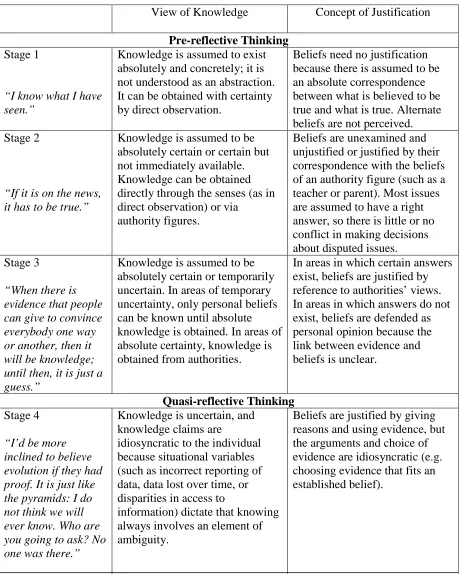
Pre-reflective thinking (stages 1-3) is marked by reliance on authority to transmit knowledge, which exists absolutely. Uncertainty is present only when personal beliefs are relied upon temporarily until the knowledge is obtained. Persons at pre-reflective levels justify their knowledge by statements such as “I know what I have seen.” and “When we find the evidence, we’ll know for sure. Until then, everybody’s just guessing.” (King &
Kitchener, 2004, pp.6-7).
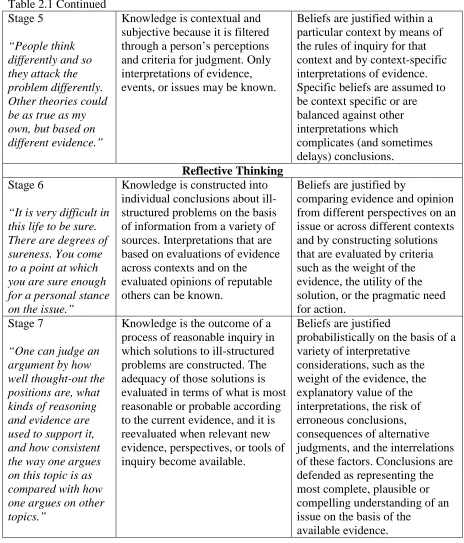
quasi-reflective levels justify their knowledge by statements such as “Who are you going to ask about the pyramids? There’s no way of knowing what really happened.” and “People think differently…Other theories could be as true as my own.” (King & Kitchener, 2004, pp. 6-7).
Reflective thinking (stages 6-7) relies on knowledge constructed through evaluating a variety of sources of evidence. Personal observations and inquiry may also inform
judgments. If more evidence is found, judgments will be reevaluated and courses of action reshaped. Persons at reflective levels justify their knowledge by statements such as “It’s very difficult in this life to be sure….You come to a point at which you are sure enough for a personal stance on this issue.” and “One can judge an argument by how well-thought out the positions are, what kinds of reasoning and evidence are used to support it, and how consistent the way one argues on this topic is as compared with other topics.” (King & Kitchener, 2004, pp. 7-9).
Table 2.1: Summary of Reflective Judgment Stages
View of Knowledge Concept of Justification
Pre-reflective Thinking Stage 1
“I know what I have seen.”
Knowledge is assumed to exist absolutely and concretely; it is not understood as an abstraction. It can be obtained with certainty by direct observation.
Beliefs need no justification because there is assumed to be an absolute correspondence between what is believed to be true and what is true. Alternate beliefs are not perceived. Stage 2
“If it is on the news, it has to be true.”
Knowledge is assumed to be absolutely certain or certain but not immediately available. Knowledge can be obtained directly through the senses (as in direct observation) or via
authority figures.
Beliefs are unexamined and unjustified or justified by their correspondence with the beliefs of an authority figure (such as a teacher or parent). Most issues are assumed to have a right answer, so there is little or no conflict in making decisions about disputed issues. Stage 3
“When there is evidence that people can give to convince everybody one way or another, then it will be knowledge; until then, it is just a guess.”
Knowledge is assumed to be absolutely certain or temporarily uncertain. In areas of temporary uncertainty, only personal beliefs can be known until absolute knowledge is obtained. In areas of absolute certainty, knowledge is obtained from authorities.
In areas in which certain answers exist, beliefs are justified by reference to authorities’ views. In areas in which answers do not exist, beliefs are defended as personal opinion because the link between evidence and beliefs is unclear.
Quasi-reflective Thinking Stage 4
“I’d be more inclined to believe evolution if they had proof. It is just like the pyramids: I do not think we will ever know. Who are you going to ask? No one was there.”
Knowledge is uncertain, and knowledge claims are
idiosyncratic to the individual because situational variables (such as incorrect reporting of data, data lost over time, or disparities in access to
information) dictate that knowing always involves an element of ambiguity.
Table 2.1 Continued Stage 5
“People think differently and so they attack the problem differently. Other theories could be as true as my own, but based on different evidence.”
Knowledge is contextual and subjective because it is filtered through a person’s perceptions and criteria for judgment. Only interpretations of evidence, events, or issues may be known.
Beliefs are justified within a particular context by means of the rules of inquiry for that context and by context-specific interpretations of evidence. Specific beliefs are assumed to be context specific or are balanced against other interpretations which
complicates (and sometimes delays) conclusions.
Reflective Thinking Stage 6
“It is very difficult in this life to be sure. There are degrees of sureness. You come to a point at which you are sure enough for a personal stance on the issue.”
Knowledge is constructed into individual conclusions about ill-structured problems on the basis of information from a variety of sources. Interpretations that are based on evaluations of evidence across contexts and on the evaluated opinions of reputable others can be known.
Beliefs are justified by
comparing evidence and opinion from different perspectives on an issue or across different contexts and by constructing solutions that are evaluated by criteria such as the weight of the evidence, the utility of the solution, or the pragmatic need for action.
Stage 7
“One can judge an argument by how well thought-out the positions are, what kinds of reasoning and evidence are used to support it, and how consistent the way one argues on this topic is as compared with how one argues on other topics.”
Knowledge is the outcome of a process of reasonable inquiry in which solutions to ill-structured problems are constructed. The adequacy of those solutions is evaluated in terms of what is most reasonable or probable according to the current evidence, and it is reevaluated when relevant new evidence, perspectives, or tools of inquiry become available.
Beliefs are justified
probabilistically on the basis of a variety of interpretative
considerations, such as the weight of the evidence, the explanatory value of the interpretations, the risk of erroneous conclusions, consequences of alternative judgments, and the interrelations of these factors. Conclusions are defended as representing the most complete, plausible or compelling understanding of an issue on the basis of the
available evidence.
Reflective Judgment and English Language Arts
Current theory and research in the field of English language arts emphasizes developing students who would be operating at higher levels of reflective judgment. Applebee (1996) develops English language arts curriculum theory around the idea of conversation, of “authentic questions that encourage students to go beyond previous learning to explore new territory…. changing the nature of questions that are asked involves more than changing the form of the questions, however. It involves reconstruing the underlying conventions governing discourse” (p. 107 - 108). Students will respond to the questions based on the expectations of the teacher – parroting the teacher/expert’s words for one teacher and developing thoughtful answers for another. Openness to diverse answers in the ELA classroom does not equate to lack of standards for content learning. Applebee (1996) stresses that “although authentic questions may not have right answers, they do have more or less effective ways in which alternative answers can be proposed and defended.” (p. 115) Teachers become the encouragers, supporters, modelers, and evaluators of those responses.
In his own classroom, Gaughan (2001) focuses on social justice and thematic
teaching grounded in inquiry. His book, Reinventing English: Teaching in the Contact Zone “is about creating opportunities for students to become thoughtful, committed citizens. It is about encouraging them to air their views honestly and forthrightly …. They need to explore the assumptions that underlie their opinions and consider how those opinions relate to their peers, their community, and their country” (p. 11). In each unit, Gaughan suggests that students read and write various genres as they explore the contexts that shape their opinions on controversial issues. Students learn how to participate in discussions with those who might disagree, again emphasizing that the teacher is not waiting for that “right answer.”
In a study of effective secondary English language arts classes, Langer (2002) states “All of the teachers in the higher performing schools take a generative approach to student learning. They go beyond students’ acquisition of skills or knowledge to engage students in creative and critical uses of their knowledge and skills” (12). That engagement encourages students to generate – or create – knowledge new to them.
are taken seriously and are investigated as rigorously as the circumstances permit” (p. 65). As Applebee (1996) reminds us, the climate of cognitive collaboration must be created and nurtured by the teacher.
Thus in some classes, ‘Why did Hamlet hesitate?’ is a prompt for recitation of a previously presented interpretation. In others, the same question may be an authentic invitation to explore possibilities, debate interpretations, and arrive at a new point of view… Which expectation will prevail is determined by the purposes that have been established for classroom discourse. (p. 108)
This investigation of ideas, debating of interpretations, and arriving at new points of view are all characteristic of reflective levels thinking.
Research on the Reflective Judgment Model
educational experience, with all but one graduating from high school and college and several completing advanced graduate degrees, reflective judgment scores changed as expected. Six other longitudinal studies confirmed the developmental progression of the model, with significant increases over time evident in studies of at least one year’s length (King and Kitchener, 2004).
In a 1994 meta-analysis of cross-sectional studies using the Reflective Judgment Interview, an assessment tool developed by King and Kitchener (2004), King, Kitchener and Wood (2000) found consistency in the reflective judgment scores of subjects at similar levels of education. Consistent with the longitudinal research, these studies indicate that high school students and entering college freshmen evidence pre-reflective thinking (stages 1-3).
Students generally progress from pre-reflective to early quasi-reflective (stage 4) while in college and then move to later quasi-reflective (stage 5) in later years of graduate school. Few people reach the reflective stage (stages 6-7); most of those who do are enrolled in or have completed doctoral programs. This distribution parallels other models (Baxter-Magolda, 2002; Kuhn & Wienstock, 2002; Moore, 2002).
conclude that “students typically operate at one developmental level when they act
spontaneously (without contextual support) and at a higher developmental level when they experienced contextual support and practice” (Kitchener & Fischer, 1990, p. 58). While functional levels grow slowly and steadily, optimal developmental levels appear to progress in spurts of growth followed by plateaus. In other words, students perform better and better with support (functional) until they are able to perform independently (optimal); they continue to grow functionally while the optimal stage is stagnant until the next level of independent development is reached (Kitchener & Fischer, 1990).
Given the rarity of persons at the reflective stage, and the ages suggested for students to reach the quasi-reflective stage as measured by the RJI, these findings offer promise that students, even pre-college or high school students, may be able to reach higher levels of reflective judgment with support than previously reported. Kitchener and Fischer note that “significant changes in classroom emphasis from well-structured to ill-structured problems, as well as direct emphasis on the nature of the knowing process itself” might encourage students to “build much more sophisticated reflective thinking skills” (1990, p. 60). They warn that age-related ceilings observed in the initial study may indicate a limit to the speed at which students reach functional levels of each stage. However, they also suggest that
While other models of personal epistemology exist, the RJ Model and its related assessments remain the most respected and widely-used in the field. Despite differences in conceptual issues and terminology, most research using the different models has been consistent. Leaders in the field are considering new integrated approaches in hopes of encouraging others, including education policy makers, to consider the implications of findings from personal epistemology research for teaching and learning (Bendixen & Rule, 2004; Hofer, 2004; Hofer, 2001; Kuhn & Weinstock, 2002).
Personal Epistemology and Teaching
One of the first attempts to connect teacher epistemology with instruction focused on use of the Conceptual Systems Framework (CSF), a theoretical framework for understanding a person’s capacity for cognitive complexity as a developmental concept. The Hunt
Conceptual Systems Test (CST) measures Cognitive Level (CL) which “describes development in terms of increasing complexity in processing information and increasing personal responsibility. Persons low in CL are less capable of generating their own concepts, considering alternatives, and directing their own learning” (Hunt, 1971, p. 18). Those at higher levels would be more creative and flexible in response to challenges.
In research addressing teacher conceptual levels related to implementing a variety of instructional models, significant differences were found between teachers who demonstrated higher levels of conceptual complexity across two studies involving CST assessment and observation of recorded lessons by education students (Hunt, 1971; Hunt & Joyce, 1967). Teachers at the lowest levels of CL have limited interest in learning or adapting to
their own teachers, in their compliance with school authorities and prescribed curriculum, and their expectations for students to conform to their own rules. Their classrooms and activities are highly structured.
Teachers at intermediate CL levels demonstrate an awareness of difference between fact and theory, with some attention to strategy differentiation based on content and student need. Most innovation appears imitative rather than adaptive, suggesting that the teacher has a desire to implement new approaches but has a limited understanding of underlying
principles and difficulty applying appropriate strategies in unique situations. These teachers, who represent the majority of our teaching population (Miller, 1981), prefer moderate structure in their classrooms and in their own learning.
Teachers at the highest CL levels exhibit much more interest in understanding educational innovations, theory, and reform. They differentiate instruction to meet the needs and interests of students and to facilitate understanding of various types of content (Hunt, 1976). These teachers employ a “reflective” teaching pattern which encourages students to question, hypothesize, evaluate evidence in the face of ill-structured problems, and
demonstrate a high tolerance for ambiguity and a preference for less structured activities for themselves and their students (Hunt, 1971; Hunt & Joyce, 1967). This highest level is similar to the reflective stage in King and Kitchener’s Reflective Judgment Model (King
Miller further explores the connections between CL and education in a 1981 meta-analysis of 60 research studies that employed the CST. The studies in Miller’s meta-analysis confirmed the general description of a high CL person as being less prejudicial, more empathetic, more self-directed, more autonomous, and more flexible (Miller, 1981, p. 64). Evidence supports the assumptions that differences in teacher CL level yield differences in approach, with higher CL level teachers using more constructivist approaches and lower CL teachers demonstrating more dictatorial behaviors (Miller, 1981, p. 70). Moreover, the flexibility and empathy of the higher CL teachers carries over into their teaching, where they employ instructional approaches that reflect their ability to adapt to student needs and
consider multiple perspectives.
In analyzing the studies themselves, Miller addresses several concerns about teacher CL and practice. He questions teachers’ capacity for delivering different treatments for the purposes of the studies, noting that there is “reason to doubt [the] supposition” that even experienced teachers can adopt different teaching styles. Low CL teachers may be unable to implement less structured models while high CL teachers may be more susceptible to “student pull” and thus less likely to maintain the implementation of an instructional approach in the face of student response (Miller, 1981, p. 68).
(1981, as reported in Sprinthall et al, 1996) found that not only did higher CL teachers employ more innovations a year after inservice, but also that lower CL teachers resisted the use of innovations.
Extending the McKibbon and Joyce study, Hopkins (1990, as reported in Sprinthall et al, 1996) provided sustained professional development to 30 teachers from six primary schools for a year. Five months later, the researchers gathered data via interviews,
questionnaires, and observations as well as information about school climate. Consistent with earlier studies, Hopkins found that higher CL teachers used innovative educational ideas up to four times more frequently than lower CL teachers. School climate was also found to be significant, with open democratic environments of high CL teachers (?) encouraging innovative instruction.
Using an assessment of reflective disposition adapted from LaBoskey (1994, cited in Giovanelli, 2003), Giovanelli (2003) examined correlations between reflective disposition and effective teaching. Fifty-five preservice elementary teachers responded to five open-ended questions related to beliefs about teaching and learning. Based on these dispositions scores and evaluations of field instructors, Giovanelli concluded that reflective disposition had a significant influence on effective teaching.
study (2 from each level). Sixteen “moderately experienced” teachers of writing at the college level responded to each of the essays, knowing the context of the course.
Although he expected teachers at least unconsciously to adapt their comments to the students based on the content of the essays, Anson found instead that each teacher’s response was consistent in approach across the different essays. Based on their responses, he
categorized the teachers according to Perry’s scheme.
Dualistic responders focused on correction of errors and structural aspects (length, paragraph organization) of the papers. “The tone of the responses implied that there were standards for correct and incorrect ways to complete the assignment, and that the teacher’s job was to act as a judge by applying these standards to the student’s writing. Few
alternatives for revision were suggested and very little was said about the student’s rhetorical decisions or composing processes. On the whole, the student’s intentions or meaning were ignored”(p. 344). Approximately 75% of the teachers fell into this category.
Relativistic responders essentially ignored grammatical errors and made no
suggestions for revision. They addressed the students casually, “as if this is the only kind of response that can have any validity in a world where judgment is always in the eye of the beholder” (p. 349). These responses privileged the students’ work but appeared to have little to no connection to the actual assignment.
in their responses and tentative in their wording, making the writer’s responsibility for composition choices clear.
Anson acknowledges that this informal study is not generalizable and should be seen as just a suggestion for future research. He also cautions that teachers’ response style may not reflect their own epistemological beliefs, especially in other contexts, but may reflect the ways in which they believe they are supposed to respond to student writing.
In a study of elementary and secondary student teachers, Smith and Pape (1991) found a relationship between Reflective Judgment and practice. The student teachers were given the Reflective Judgment Interview, which was scored by the authors to determine student Reflective Judgment levels. No relationship was found between Reflective Judgment and grades in the reading course, overall grade point average, or journal responses. However, based on field notes taken by trained university supervisors, differences were found in the classroom practices of the student teachers.
Student teachers accessing lower levels of Reflective Judgment (Levels 1-3) “exhibited instructional patterns characterized by dependence on authorities, such as a teacher guide or the cooperating teacher’s directives” (Smith & Pape, 1991, p. 4). They used tests from published materials, focused on recall of facts or recitation of information learned in class. “Most often these students lectured or told pupils what to learn, displaying little flexibility with regard to teaching method” (Smith & Pape, 1991, p. 4). They were also more likely to place responsibility for student learning on external factors, such as student laziness or parental involvement. Overall, their classrooms were described as teacher-centered
higher levels of Reflective Judgment demonstrated more initiative to develop their own materials and tests as well as incorporate alternative resources. They used a variety of teaching methods and established student-centered classrooms.
While the report of this 1991 study is incomplete (with no sample size given and limited information on data analysis provided), the findings do appear to be consistent with other research and theory. The article raises suggestions for future research under more controlled conditions.
Conceptions of Teaching and Learning
Teachers’ epistemology or beliefs about knowledge are interconnected with their conceptions of teaching and learning (Chan & Elliott, 2004; Ertmer, 2005; Hillocks, 1999; Hofer & Pintrich, 1997; Pajares, 1992; Song, Hannafin, & Hill, 2007). If teachers believe that knowledge (or meaning) is transmitted from authority, then their understanding of their roles as authorities in will include transmitting their knowledge to students, perhaps implementing more traditional or didactic models of instruction which privilege teacher-directed instruction and classroom environment. On the other hand, if teachers believe that knowledge is gained by transactions between individuals and texts—be these electronic or face-to-face, or print or vocal-- then their understanding of their roles will include creating opportunities for students to interact with others to interpret texts, reflecting constructivist models of instruction and student-centered classroom environments and learning.
While not evidence of practice, beliefs and conceptions continue to be studied, especially as indicators of change and means of understanding teacher behavior (Ertmer, 2005; Fang, 1996; Kane, Sandretto, & Heath, 2002; Parajes, 1992; Prawat, 1992; Rimm-Kaufman, Storm, Sawyer, Pianta, & LaParo, 2006).
Much of the research on teacher beliefs is inconclusive. Reviewing teacher belief research, Fang (1996) concluded that research exists to support the connection between belief and practice, as well as the disconnect between the two. Ultimately, methodology and the complexity of classroom instruction could account for much of the inconsistency in the research (Fang, 1996). Moreover, several studies have found that teacher beliefs are inconsistent or idiosyncratic. Teachers express support for apparently contradictory beliefs and use an eclectic mix of approaches in the classroom (Chan & Elliott, 2004; Eley, 2006; Fang, 1996; Hillocks, 1999; Parajes, 1992; Snider & Roehl, 2007).
For example, in a study of 385 Hong Kong teacher education students, Chan and Elliott (2004) concluded that attempting to use a dichotomy classification of traditional and constructivist conceptions was ineffective and inappropriate, given the reality of
intermingling approaches in classroom practice. He theorized that much of the contradiction could be the result of accumulated experience with primarily traditional classroom
experiences and increasing awareness of constructivist principles promoted in education courses (2004).
In a meta-analysis of 119 studies related to learner-centered teacher-student
approaches. Affective outcomes, such as student participation, motivation, self-esteem, and social interaction are also positively correlated with learner-centered education. However, teacher self-perception of student-centeredness was far less predictive of student success than student or observer perception. In other words, studies in which students or observers rate teachers as student-centered indicate a higher correlation between this approach and student outcomes than do studies in which teachers rate themselves. These findings are consistent with other studies in which teachers are unable to articulate their own teaching approaches (Eley, 2006; Fang, 1996; Hillocks, 1999; Parajes, 1992; Snider & Roehl, 2007).
Exploring the connections between beliefs and strategies in a study of 35 Palestinian science teachers, Hashweh (1996) used the teachers’ responses to a previously administered survey to categorize teachers as predominantly constructivist or empiricist without making the categories mutually exclusive. For this study, constructivism emphasized the role of the learner, the subjectivity of observations, and the importance of conceptual change process in science education. Empiricism emphasizes the role of external reinforcement, factual
knowledge, and the importance of the scientific method and the accumulation of scientific knowledge as aims of science education. Teachers who expressed predominantly
constructivist views of knowledge and learning revealed a richer repertoire of teaching strategies and a greater likelihood of recognizing students’ alternative conceptions.
In a study of 30 university professors of various disciplines, Eley (2006) examined teacher reports of planning recent teaching incidents. Analysis of the data indicated teacher articulation of such elements as (a) sensitivity to prior knowledge (83%), (b) prompting student engagement (73%), and (c) awareness of student thinking during lesson (73%). However, only 5 of the 30 teachers (17%) included explicit use of conceptions of teaching in planning upcoming lessons. Those who did specifically mention conceptions as part of the planning process were no more or less likely to be student-focused (Eley, 2006). Several weeks later, a subset (25) of the original sample completed the Approaches to Teaching Inventory, a survey designed by Eley to classify teaching approaches into one of two categories: conceptual change/student-focused or information transfer/teacher-focused. No relationship was found between the teacher planning and the ATI results. Teachers reported higher frequencies of student-focused rather than teacher focused intentions; however, they reported lower frequencies of usage of both approaches. Eley (2006) suggests that in practice, teachers are focused on their immediate contexts with conceptions of teaching and learning having no functional role. He further theorizes that conceptions of teaching and learning might be the results of reflection; as teachers formally or informally review their teaching experience, they begin to formulate ideas about what works, ideas that may develop through continued reflection and collegial conversations.
Teachers indicated support for both constructivist (students constructing knowledge based on their own experience and prior beliefs) and non-constructivist or explicit (students learning through presentation of systematic and sequential series of skills) approaches. Teachers also indicated strong support for classroom practices for which there is little research support such as adapting instruction to learning styles, and using an eclectic approach. Teachers appeared to have no strong opinions for the remaining two practices included on the survey (mixed-ability grouping and emphasizing self-esteem), also selected by the authors because of the practice’s popularity despite little empirical data on efficacy. The authors conclude that “Many teachers have neither philosophical moorings nor empirical evidence to guide their practice. They are guided by pragmatic considerations related to student characteristics, availability of curriculum materials, experiential factors, and what is popular” (Snider & Roehl, 2007, p. 881).
Given this eclecticism, studies focusing on specific beliefs, such as teacher-centeredness versus student-teacher-centeredness, rather than overarching approaches, such as traditional/objectivist versus constructivist, appear to yield more meaningful results. Rimm-Kaufman and colleagues (2006) identified three dimensions as primary constructs reflective of teacher’s instructional approach: discipline and behavior management, teaching practices, and beliefs about children. Thirty teachers from schools implementing the Responsive Classroom (RC) approach, 32 teachers from comparison schools without the RC approach, 61 pre-service elementary teachers and 74 pre-service middle or high school teachers
more emphasis on teacher-direction of behavior than secondary pre-service teachers, results that are consistent with the philosophy of the RC approach. Pre-service teachers at all levels placed more emphasis on spontaneity, process and student collaboration than in-service teachers. Pre-service teachers had more negatives of student motivation and likeability than in-service teachers, with the middle and high school pre-service teachers having the most negative views. The authors conclude that understanding pre-service teacher priorities can inform teacher education and induction programs (Rimm-Kaufman et al., 2006).
In contrast to research focusing on specific aspects of beliefs, researchers have found metaphor analysis a useful approach to understanding conceptions of teaching and learning (Leavya, McSorleya, & Bote, 2007; Martinez, Sauleda, & Huber, 2001; Pajares, 1992; Saban, Kocbeker,& Saban, 2007; Shaw, Barry, & Mahlios, 2008). “As blueprints of thinking, metaphors of learning will guide and facilitate teachers’ understanding of what it means to learn, but these same tools of thinking may also limit the thoughts, attitudes and actions of prospective educators” (Martinez et al. , 2001, p. 966). As analogies, metaphors can reveal beliefs in concrete ways but also help shape other beliefs and actions by serving as a lens for interpreting experiences.
(57%) reflected behaviorist/empiricist approaches, emphasizing learning as passive
accumulation of knowledge. The final category, socio-historically based notions of situated learning, appeared the least frequently, with only 17% of the metaphors reflecting this perspective, which emphasizes learning as social interaction in authentic activities. Although they all taught in a district focused on a constructivist approach, only 38% of the metaphors reflected a cognitivist/constructivist perspective, which emphasizes active participation in schema construction.
In a similar study, Saban, Kocbeker, and Saban (2007) analyzed metaphors created by 1,142 Turkish prospective teachers from Classroom Teaching (elementary education),
English education, and Instructional Technology education programs. Students were given 45 minutes in class to complete the prompt “A teacher is like … because….” The majority (57%) of the metaphors reflected conceptions of teacher-centered learning, with the teacher as knowledge provider, molder, curer, authoritative figure, or entertainer. The remaining metaphors reflected conceptions of learning in which the student plays a larger, more active role: facilitator, change agent, counselor, nurturer, or cooperative leader. The researchers conclude that teacher educators can use metaphor analysis as a tool to help prospective teachers examine their own values and beliefs (Saban, Kocbeker, & Saban, 2007).
One of the first linguists to consider metaphors as evidence of thinking and perspective rather than simply linguistic constructions, Lakoff (2004) explains that
irrelevant, or just another point of view. Lakoff’s theories suggest metaphors may be closely connected to reflective judgment, as individuals decide which facts to accept and which to reject.
Pulling It All Together
In Ways of Thinking, Ways of Teaching, Hillocks (1999) studied the relationships between writing instruction, beliefs about students, and epistemology. The primary subjects were 19 community college English instructors of writing who had participated in intensive professional development about current research and practice in writing. Hillocks analyzed over 120 hours of observations collected over two years, finding that teachers continued to use ineffective practices (p. 39). Seventy-three percent of instructional time was teacher-directed, delivery of information or explanations from the teacher to the students. Researchers coded teaching episodes according to type (substantive/content-related, mechanical-syntactic, formal-rhetorical, and combination mechanical & formal) and mode (declarative, explanation of procedures, and procedural) of knowledge. While explanation of procedures is a subset of declarative knowledge, the categories were separated for the
purposes of the study (Hillocks, 1999). Based on interviews, Hillocks and his colleagues classified the instructors according to attitudes towards students, resulting in 13 optimistic and six non-optimistic teachers. Optimistic teachers spent less time on declarative knowledge and explanation of procedures (66%) than non-optimistic teachers (90%), leaving almost twice the amount of time (33% vs. 17%) for students to participate in the procedures
Non-optimistic teachers appear to simplify the course, focusing on mechanics and formulaic writing.
Based on the observations and interviews, Hillocks hypothesized that epistemology is “at the heart of the differences between these teachers” (93). Characterizing constructivism as student-centered and process-oriented, Hillocks found little evidence of this type of teaching, at most finding teachers who used an eclectic approach sometimes incorporating constructivist approaches. "For most teachers in the sample, teaching is an act of telling, as though they are able to transfuse their ideas directly into the minds of students. And when the ideas do not hold, it is simply that students have not applied themselves to the task of
learning what was put forward for them to learn" (93). He uses a clearly constructivist high school English teacher to exemplify his descriptions of constructivism. Hillocks concludes by recommending more authentic learning experiences for teachers, such as inquiry and research working groups, and calling for more research into teacher thinking and beliefs. Conclusion
Investigating conceptions of teaching and learning may supply an awareness of the depth of the divide and a starting point for bridging it. While conceptions are not necessarily evidence of practice, they indicate awareness and acceptance of research-based strategies on at least some level. Beliefs about teacher and student roles in the learning process undergird many of the decisions teachers make each day.
Little research exits about the convergence of these fields, and the current study seeks to be an initial attempt and understanding that relation. The upcoming chapter outlines the
CHAPTER THREE: METHODS
Chapter three outlines and explains the methodology used in this study.
Demographics and means of administration are reported for the samples of high school English teachers. The instruments used to assess reflective judgment and teacher conceptions of teaching and learning are described in detail. Finally, analysis procedures are outlined for each of the research questions and sub-questions.
This research study explores High School English language arts (ELA) teachers’ beliefs and understanding about knowledge, teaching, and learning. The overarching research question is How and to what extent do ELA teachers’ beliefs about the nature of knowledge relate to their conceptions of teaching and learning? Embedded within this study are
questions about relationships between teacher demographic attributes and experience factors and their beliefs. This study uses both qualitative and quantitative measures with a
concurrent triangulation strategy (Creswell, 2003) adding depth to the exploration of relatedness and increasing validity since limitations in one set of data may be off-set by the other data.
Research Questions
Question 1: What levels of reflective judgment do high school English language arts teachers access? Sub-questions include
1a. How does English teacher reflective judgment level relate to demographic factors?
1b. How does English teacher reflective judgment level correspond with reflective judgment levels of the general public based on educational level?
Question 2: What conceptions of teaching and learning do high school English language arts teachers evidence? Sub-questions include
2a. How and to what extent do English teacher conceptions reflect emphasis on teacher-centered environments, teacher-directed instruction and negative views of student motivation?
2b. How and to what extent do English teacher beliefs relate to demographics? Question 3: How does English teacher reflective judgment relate to conceptions of teaching and learning? Sub-questions include
3a. How and to what extent does English teacher reflective judgment level correspond to conceptions about teacher-centered classroom environments? 3b. How and to what extent does English teacher reflective judgment level correspond to beliefs about teacher-directed instruction?
Sample
This study focuses on a sample of the population of high school English language arts (ELA) teachers in a large southeastern state. Extant data were used for the initial phase of the study and a subset of that sample was used for the final phase of the study. The data from a convenience sample of 208 high school ELA educators were originally collected by a state agency to provide information about ELA teachers’ epistemology which could inform professional development offerings and standards revision. Due to changes in agency leadership and priorities, that initiative was abandoned. For purposes of this study, the sample was narrowed to ELA teachers. Eliminating school-level and district-level administrators and curriculum specialists from the pool, the sample size became 153. However, four of those subjects completed the survey twice, with different results; their original surveys were accepted.
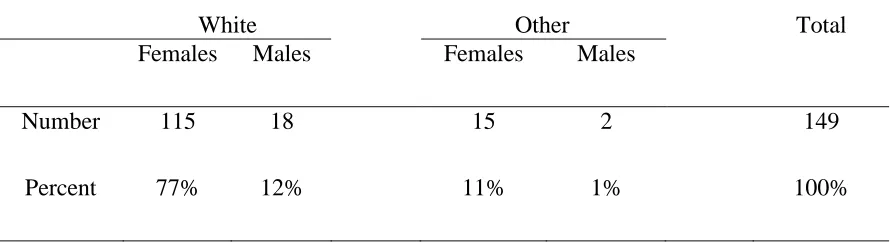
Table 3.1: Summary of demographic data for Question 1 (n = 149)
White Other Total
Females Males Females Males
Number 115 18 15 2 149
Percent 77% 12% 11% 1% 100%
Of 149 teachers in the sample, 115 (77%) were white females, with one also
Islanders (3%) took the survey, all female. Because the number of Asian/Pacific Islander teachers was relatively low, they were grouped with Black teachers and race was treated as a dichotomous variable. This sample was used for the first research question which described the reflective judgment of the teachers and examined relatedness with demographic features and results from previous studies of the general public.
The mean age of the subjects was 42.6 years, with ages ranging from 21 to 66 years old. Inclusion of name and school district was optional. The 109 subjects who identified their school districts came from 54 different districts, two charter schools and one juvenile justice center school. The districts represent a large range of size and include rural, suburban, and urban schools.
For the final phase of the study addressing teacher conceptions (Question 2) and the relatedness of those conceptions to reflective judgment (Question 3), all subjects from the initial sample who included their names and districts, and whose contact information could be found, were emailed invitations to participate in the follow-up study. Of the 79 teachers contacted, 42 (53.2 %) completed the follow-up study.
Table 3.2: Summary of demographic data for Questions 2 and 3 (n = 42)
White Other Total
Female s
Males Females Males
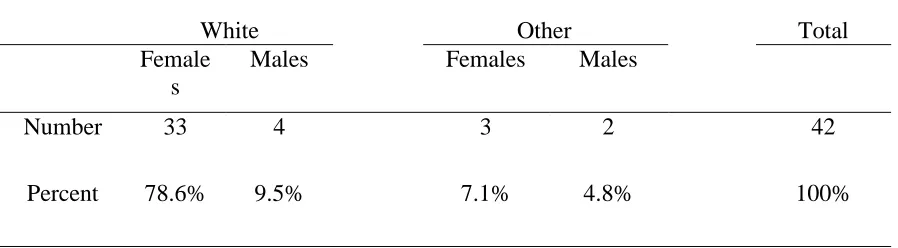
Number 33 4 3 2 42
As shown in Table 3.2, 33 participants (79%) were white women and 4 (10%) were white men. Three participants (7.1%) were women of color?? and two (4.8%) were men. The mean age of the subjects was 43.4, with ages ranging from 23 to 65 years old.
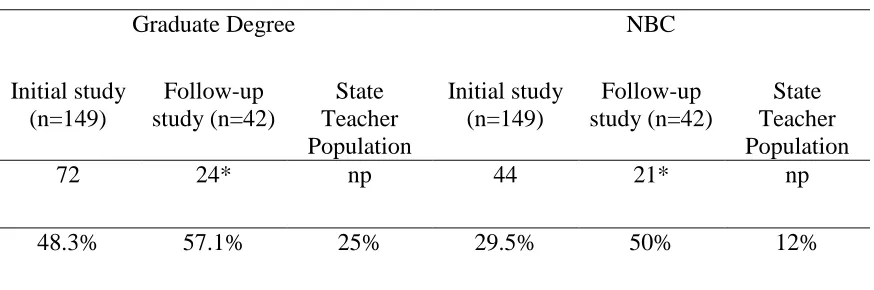
Two measures of teacher quality recognized by the state with merit pay were also recorded for each subject. Teachers receive a ten percent salary stipend for holding masters degrees, with slight additional increments for advanced graduate degrees. For National Board Certification (NBC), teachers receive a 12% salary stipend. Table 3.3 displays the number of teachers with graduate degrees and/or NBC for participants in each phase of the study and for the general teaching population of the state.
Table 3.3: Summary of teacher quality data
Graduate Degree NBC
Initial study (n=149) Follow-up study (n=42) State Teacher Population Initial study (n=149) Follow-up study (n=42) State Teacher Population
72 24* np 44 21* np
48.3% 57.1% 25% 29.5% 50% 12%
*numbers include 2 subjects who earned graduate degrees and 4 subjects who earned NBC between 2006 and 2008.
graduate degrees and four subjects earned NBC. By comparison, based on the most recently released sate school data, in 2006-2007, 25% of the state’s high school teachers had graduate degrees and 12% had NBC. The percentage of teachers in the study holding advanced
degrees or NBC was approximately double the state percentage. That fact, combined with the recruitment of study participants at statewide professional development experiences suggests that the teachers in the study are generally considered to be among the most highly qualified and accomplished professionals, which may impact their responses on the RCI and the TBQ. Instruments
ELA Survey
The instrument used in the initial study examining teacher reflective judgment, the ELA survey consists of three sections. First, a section on demographic information includes typical items of race, gender, etc. as well as items addressing teaching experience – number of years, degrees and certifications earned (including National Board for Professional Teaching Standards), undergraduate and graduate majors, and courses taught in the previous two years. The second section addresses professional development experiences. The final section is the Responding to Current Issues questionnaire (RCI), discussed indepth below. Responding to Current Issues Questionnaire