ABSTRACT
SALAM, ABDUS. The Synthesis, Characterization, and Application of Polysaccharides-based Additives to Increase the Dry Strength of Paper. (Under the direction of Prof. Lucian A. Lucia and Prof. Hasan Jameel).
Paper recycling is a very visible and highly important conceptual framework in any effort to address environmental concerns, reduce expanding landfills, and reduce the need for virgin fiber manufacture with the concomitant expenditure of energy and resources. The major problem with recycling paper is the loss of its strength properties due to reduced inter-fiber bonding of reclaimed fibers relative to virgin wood pulp fibers is generally attributed to the drying phase of the first papermaking cycle. Petroleum-based dry strength agents are widely used for improved recycle paper strength properties. The widespread use of petroleum-based dry strength agent in the paper making industry has raised environmental concerns and prompted efforts towards developing alternatives.
of modified polysaccharides (especially soy protein flour) and improve its incorporation into a recycle pulp matrix to increase inter-fiber bonding.
To confirm the improvement properties of modified polysaccharide additive-treated pulp sheet, the inter-fiber bonding strength, amount and type of bond formation between additive and pulp fibers, mechanical strength, and antimicrobial activity were tested. The inter-fiber bonding strength increased 2.5-3 times, mechanical strength (tensile, bursting, and STFI index) increased 38-52%, the ester bonds formed were found to be 1.82-1.90 mmol/100g after curing at 110 °C, and a significantly enhanced antimicrobial activity was observed for both modified polysaccharide and modified polysaccharide additive-treated pulp sheet compared to the control sample (untreated pulp sheet). The composition and structure of additive-treated pulp sheet was also analyzed by TGA, DMA, FT-IR and SEM.
The Synthesis, Characterization, and Application of Polysaccharides-Based Additives to Increase the Dry Strength of Paper
by Abdus Salam
A dissertation submitted to the Graduate Faculty of North Carolina State University
in partial fulfillment of the requirements for the degree of
Doctor of Philosophy
Forest Biomaterials Raleigh, North Carolina
2015
APPROVED BY:
Lucian Lucia
Co-Chair of Advisory Committee
Hasan Jameel
Co-Chair of Advisory Committee
Orlando J. Rojas
Member of Advisory Committee David Tilotta Member of Advisory Committee
Saad Khan
DEDICATION
BIOGRAPHY
Abdus Salam was born in Dinajpur, Bangladesh. He is a graduated in Applied Chemistry and Chemical Technology in 2000 at University of Rajshahi, Bangladesh. After graduation, in August of 2000 he started to work in Progoti Composite Mill Ltd. as a Scientist. His major job responsibility was bleaching, dyeing, printing, and formulation of coating agent and pigment. In April 2004 he joined at University of Nebraska-Lincoln as research associate. During his job period he had carried out couple research project on textile coating agent and biomass composite. He jointed at North Carolina State University in 2009 as a post-doctoral research associate. His main research focus was on surface modification, chemical crosslinking, radical polymerization and complexation reactions with forest based biomaterials product.
In August 2011 he joined the PhD program in Forest Biomaterials at NC State University,
ACKNOWLEDGMENTS
I am extremely pleased to express my heartfelt gratitude, profound regards and indebtedness to my Advisors Dr. Lucian Lucia and Dr. Hasan Jameel for initiating the problems, rendering active guidance, generous help with the experimental work, and their keen interest throughout the period of the study. I am indebted and much grateful to all of faculty member and staffs of the Department of Forest Biomaterials, North Carolina State University, for their valuable suggestions constructive criticism and benevolent inspiration in carrying out the research work.
It is a great pleasure for me to express my gratefulness to Dr. Saad Khan for providing me with valuable suggestions during this research work.
I would like to thank United Soybean Board for their financial support of this research work.
TABLE OF CONTENTS
LIST OF TABLES……… xi
LIST OF FIGURES……….. xii
Chapter 1 Introduction, Literature Review, Research Objectives of the Dissertation……… 1
1. Introduction ……… 2
1.1. Introduction to polysaccharides ……… 4
1.2. Substitution of polysaccharide ……….. 6
1.3. Modification of polysaccharides……… 6
1.4. Literature review ………... 8
1.5. Research objectives ………... 13
1.6. Reference ………... 14
Chapter 2 Selection of Modifying Agent, Optimizing of Modification Conditions, Optimized Additive Dosage Percentage and pH……… 19
2.1. Introduction ………... 20
2.2. Experimental………... 21
2.2.1.. Selection of modifying agent………. 21
2.2.2. Optimized synthesis conditions ………. 21
2.2.3. Optimized additive dosage and pH ……… 22
2.3. Results and discussion……… 22
2.4. Conclusion……….. 26
2.5. Reference……… 27
Chapter 3 Complex Soy Bean Flour-Based Additives to Increase the Dry Strength of Recycled Paper Furnish………. 29
3.1. The Synthesis, characterization, and application of soy-based macromolecules: A new generation of materials for paper dry strength enhancement……….. 30
3.1.1. Introduction ……… 31
3.1.2. Experimental procedure ………. 36
3.1.2.2. Methods……… 36
3.1.2.3. Characterizations of modified soy flour………... 38
3.1.2.4. Preparation and characterization of pulp hand sheet……… 40
3.1.2.5. Physical properties test………. 40
3.1.2.6. Inter-fiber bonding strength test ……….. 41
3.1.2.7. Quantified of the amount and types of chemical bonds………... 41
3.1.3. Results and discussion ………. 42
3.1.3.1. Synthesis and characterization of the soy flour-DTPA-chitosan agent…... 42
3.1.3.2. Application of soy flour-DTAP-chitosan agent to reclaimed and virgin pulp furnishes for mechanical property improvements……… 45
3.1.3.3. Bond formation with reclaimed OCC and virgin pulps………... 50
3.1.4. Interactions with water……… 56
3.1.5. Reference………. 58
3.2. A preliminary assay of the potential of soy protein isolate and its hydrolysates to provide inter-fiber bonding enhancements in lignocellulosic furnishes………. 61
3.2.1. Introduction ……… 62
3.2.2. Experimental ……….. 63
3.2.2.1. Materials………... 63
3.2.2.2. Methods……… 64
3.2.2.2.1. Extraction of the soy protein isolate……….. 64
3.2.2.2.2 Hydrolysis of soy protein isolate ………... 64
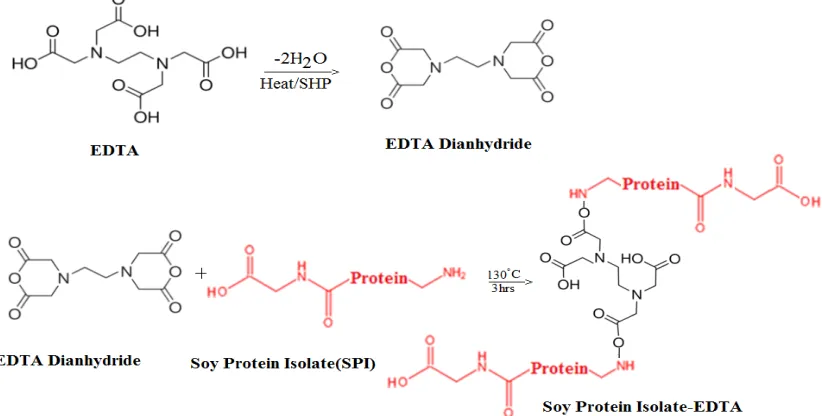
3.2.2.3. Chemical modification of soy protein isolate……….. 65
3.2.2.4. Preparation of pulp hand sheet ……… 67
3.2.2.5. Testing method………. 67
3.2.3. Results and discussion……….. 70
3. 2.3.1. Characterization of soy protein isolate derivatives………. 70
3.2.4. Conclusion……….. 79
3.2.5. Reference……… 81
Chapter 4 Corn Starch-Based Dry Strength Additives to Increase the Dry Strength of Recycled Paper Furnish………. 83 4.1. Synthesis, characterization, and application of modified corn starch/chitosan- complexed additive for high strength of recycled paper ……….. 84
4.1.1. Introduction ……….... 85
4.1.2. Experimental methods ……… 87
4.1.2.1. Materials ……….. 87
4.1.2.2. Chemical modifications of the corn starch ……….. 88
4.1.2.3. Polyelectrolyte complexation ……….. 89
4.1.2.4. Preparation of OCC pulp hand sheet ……….. 90
4.1.2.5. Testing method ……… 90
4.1.2.6. Physical properties test of additive-treated OCC pulp hand sheet ……….. 92
4.1.2.7. Inter-fiber bonding test of additive with OCC recycle pulp………. 92
4.1.2.8. Characterization ………... 92
4.1.3. Results and discussion ……… 93
4.1.3.1. Characterization of modified corn starch ………. 93
4.1.3.2. Applications of modified corn starch/chitosan additive ……….. 98
4.1.3.3. Bond formation between modified corn starch additive with OCC recycle pulp………... 101
4.1.3.4. Dynamic contact angle analysis of additive-treated OCC pulp sheet ……. 103
4.1.4. Conclusions ……… 105
4.1.5. Reference ……….. 105
Chapter 5 Nano-Based Carbohydrate Additive to Increase the Dry Strength of Recycled Paper Furnish……….. 108
5.1. Synthesis, characterization, and evaluation of chitosan-complexed starch nanoparticles on the physical properties of recycled paper furnish………...
5.1.1. Introduction ……… 110
5.1.2. Experimental methods ……… 113
5.1.2.1. Materials ……….. 113
5.1.2.2. Extraction of starch nanoparticles (SNs) ………. 113
5.1.2.3. Chemical modifications of the starch nanoparticle (SN) ……… 114
5.1.2.4. Polyelectrolyte complex………... 115
5.1.2.5. Preparation of OCC pulp hand sheet ………... 115
5.1.2.6. Coating of OCC pulp sheet……….. 116
5.1.2.7. Testing method ……….... 116
5.1.2.8. Characterization ……….. 119
5.1.3. Results and discussion ……… 120
5.1.3.1. Characterization of starch nanoparticles ……….. 120
5.1.3.2. Starch nanoparticle derivatives applications ………... 125
5.1.3.2.1. Effect of starch nanoparticle derivatives on OCC pulp paper strength properties………... 125
5.1.3.3. Bond formation with OCC recycle pulp ………. 129
5.1.3.4. Effect of starch nanoparticle derivatives coating on OCC pulp sheet…….. 132
5.1.4. Conclusions ……… 133
5.1.5. Reference ……… 134
5.2. A novel cellulose nanocrystals-based approach to improve the mechanical properties of recycled paper ………... 137
5.2.1. Introduction ……… 138
5.2.2. Experimental sections ……… 140
5.2.2.1. Materials ………. 140
5.2.2.2. Preparation of cellulose nanocrystals (CNs) ………... 141
5.2.2.3. Chemical modifications of CNs ……….. 141
5.2.2.4. Preparation of OCC paper stock ………. 143
5.2.3. Results and discussion ……… 147
5.2.3.1. Characterization of cellulose nanocrystals (CNs) ………... 147
5.2.3.2. Cellulose nanocrystals derivatives application for OCC strength improvement……… 151
5.2.3.3. Bond formation with OCC recycle pulp……….. 155
5.2.3.4. Dynamic contact angle ………... 158
5.2.4. Reference………... 159
5.3. Fluorine-based surface decorated cellulose nanocrystals as potential hydrophobic and oleophobic materials ………. 163
5.3.1. Introduction ……… 164
5.3.2. Experimental ……….. 165
5.3.2.1. Materials………... 165
5.3.2.2. Preparation of cellulose nanocrystals (CNs)……… 166
5.3.2.3. Preparation of polyfluorinated cellulose nanocrystals (PCNs)……… 166
5.3.2.4. Characterization………... 167
5.3.2.4.1. Determination of degree of substitution……… 167
5.3.2.4.2. X-ray photoelectron spectroscopy (XPS)……….. 168
5.3.2.4.3. ATR analysis ……… 168
5.2.4.4. NMR analysis……….. 168
5.3.2.4.5. Thermal gravimetric analysis (TGA)……… 169
5.3.2.4.6. Differential scanning calorimetry (DSC)……….. 169
5.3.2.4.7. Dynamic contact angles……… 169
5.3.2.4.8. X-ray diffraction……… 169
5.3.2.4.9. Elemental analysis………. 170
5.3.2.4.10. Oil resistance test……… 170
5.3.3. Results and discussion ……… 170
5.3.4. Conclusion ……….. 178
5.3.5. Reference………. 180 Chapter 6 Antimicrobial Activity of Modified Polysaccharide additive Material… 184
macromolecular-cellulosic composites………. 185
6.1.1. Introduction ……… 186
6.1.2. Experimental ……….. 188
6.1.2.1. Materials………... 188
6.1.2.2. Chemical modification of soy flour………. 188
6.1.2.3. Antimicrobial activity test of modified soy protein flour and cornstarch………. 189 6.1.3. Results and discussion………. 190
6.1.4. Conclusions………. 193
6.1.5. Reference………. 194
Chapter 7……… 196
7.1. Overall Conclusions ……….. 197
References ……….. 200
Appendices ………. 208
Appendix A……….. 209
LIST OF TABLES
Table 2.1. Effect of modifying agent on mechanical properties into recycle OCC
pulp hand sheet……… 23
Table 3.1.1. Thermal analysis of soy flour and derivatives……… 45 Table 3.1.2. Mechanical properties of reclaimed OCC pulp hand sheets with
different dry strength reagents………. 50 Table 3.1.3. Quantity of ester bonds formed in the soy flour-DTPA/chitosan
additive-treated pulp hand sheet……….. 54 Table 5.1.1. Thermal analysis of starch nanoparticles and derivatives……… 123 Table 5.1.2. Results of starch nanoparticle derivative-based coating on OCC pulp
Samples……… 133
Table 5.2.1. Thermal analysis of CNs and CNs derivatives……… 149 Table 5.3.1. Dynamic contact angle of polyfluorinated cellulose nanocrystals,
polyfluorinated cellulose (pulp) and filter paper. (Cellulose)………….. 170 Table A.1. A potentials mechanical properties obtained in polysaccharide-based
dry strength additive-treated recycled OCC pulp hand sheet
LIST OF FIGURES
Figure 1.1. Alteration of the breaking length of the paper sheet drying at the
temperature of 80, 100, 120 °C during eightfold recycling…………. 3 Figure 1.2. Chemical structure of amylose and amylopectin……….. 5 Figure 1.3. Chemical structure of cellulose nanocrystals……….... 5 Figure 1.4. Esterification reaction between citric acid and starch……… 7 Figure 1.5. Possible crosslinking reaction mechanism of citric acid with
cellulose……… 11
Figure 2.1. Effect of DTPA concentration vs tensile index of additive-treated
pulp sheet……….. 24
Figure 2.2. Effect of time vs tensile index of additive-treated pulp sheet………… 24 Figure 2.3. Effect of temperature vs tensile index of additive-treated pulp sheet.. 24 Figure 2.4. Effect of pH vs tensile index of additive-treated pulp sheet………….. 24 Figure 2.5. Effect of chitosan percentage vs tensile index of additive-treated pulp
sheet………. 25
Figure 2.6. Effect of additive dosage percentage vs. tensile index of
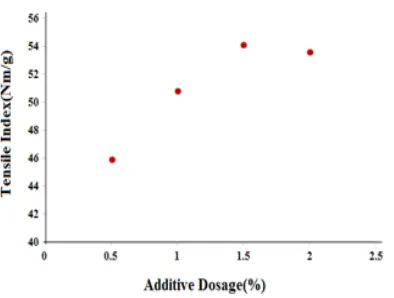
additive-treated pulp sheet……….. 26
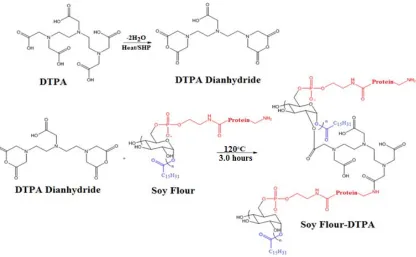
Figure 2.7. Effect of pH vs. tensile index of additive-treated pulp sheet………... 26 Figure 3.1.1. A suggested esterification route for soy flour and DTPA……….. 37 Figure 3.1.2. A suggested complexation reaction of the soy flour-DTPA reagent
with chitosan………. 38
Figure 3.1.3. FT-IR spectra of soy flour, soy flour–DTPA, and soy flour–DTPA-
chitosan………. 44 Figure 3.1.4. Tensile indices of the controls and respective modified soy
flour-DTPA/chitosan additive-treated pulp hand sheets……….... 48 Figure 3.1.5. The bursting indices of the controls and respective modified soy
flour-DTPA/chitosan additive-treated pulp hand sheets……….. 49 Figure 3.1.6. STFI indices of the controls and respective modified soy
flour-DTPA/chitosan additive-treated pulp hand sheets………... 49 Figure 3.1.7. Inter-fiber bonding strength for 25, 90, and 110° C cured controls and
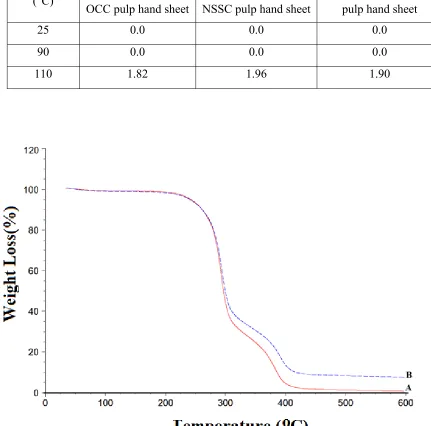
soy flour-DTPA/chitosan additive-treated pulp hand sheets………… 53 Figure 3.1.8. Thermo-gravimetric analyses of OCC pulp sheet and soy
flour-DTPA-chitosan additive-treated OCC pulp hand sheet………... 54 Figure 3.1.9. SEM image of OCC pulp sheet and soy flour-DTPA-chitosan
additive-treated OOC pulp hand sheet………. 55 Figure 3.1.10. DMA of soy flour -DTPA-chitosan treated-OCC pulp hand shee and
OCC pulp hand sheet……… 55
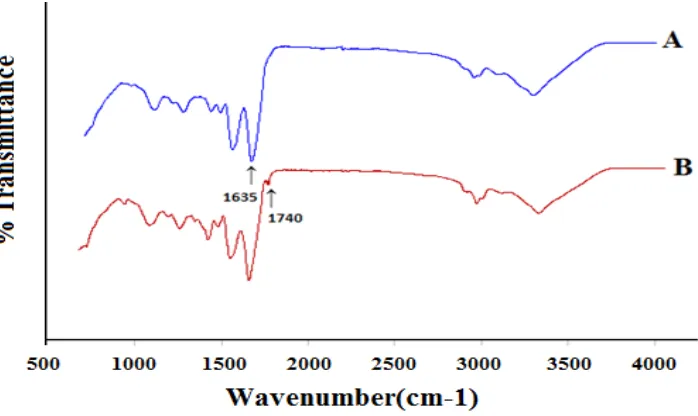
Figure 3.2.3. Shown are ATR spectra of soy protein isolate and soy protein isolate
EDTA………... 71
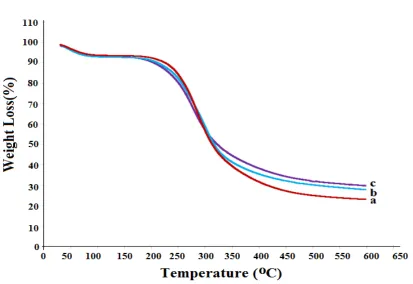
Figure 3.2.4. Thermo-gravimetric analyses of soy protein isolate (a), soy protein
isolate-EDTA, and soy protein isolate-EDTA-chitosan………... 72 Figure 3.2.5. Tensile strength of soy protein isolate derivative-treated OCC recycle
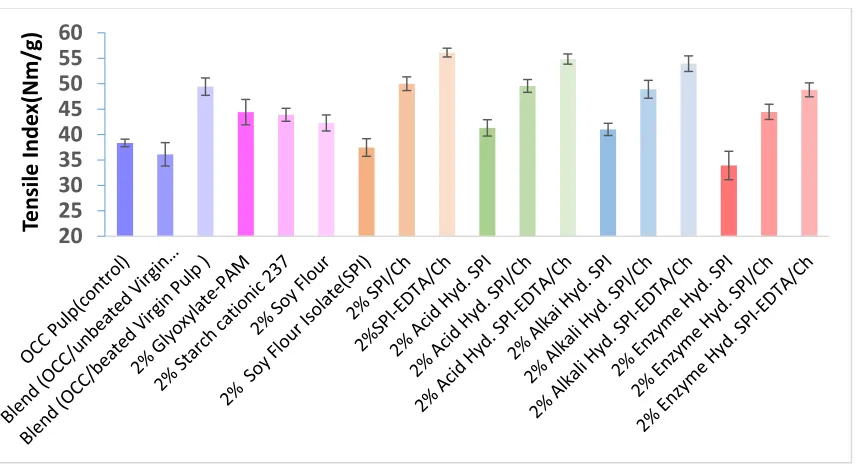
pulp hand sheets………... 74 Figure 3.2.6. Bursting strength of soy protein isolate derivative-treated OCC
recycle pulp hand sheets………... 75 Figure 3.2.7. Tear strength of soy protein isolate derivative-treated OCC recycle
pulp hand sheets……… 76
Figure 3.2.8. Thermo-gravimetric analyses of OCC pulp sheet and soy protein
isolate-EDTA-chitosan additive-treated OCC pulp sheets…………... 78 Figure 3.2.9. DMA of SF-EDTA-chitosan treated-OCC pulp hand sheet and OCC
pulp hand sheet………. 79
Figure 4.1.1. Esterification reaction of corn starch with DTPA………... 89 Figure 4.1.2. Polyelectrolyte complexation of corn starch-DTPA with chitosan…… 89 Figure 4.1.3. FT-IR spectra of corn starch and corn starch–DTPA/chitosan……... 95 Figure 4.1.4. TGA of corn starch, corn DTPA and corn
starch-DTPA/chitosan………. 96
Figure 4.1.5. DSC of corn starch, corn DTPA and corn
starch-DTPA/chitosan………. 97
Figure 4.1.6. Effect of corn starch derivatives on the tensile strength of OCC
recycle pulp samples……….... 98 Figure 4.1.7. Effect of corn starch derivatives on the burst strength of OCC recycle
pulp samples………... 100 Figure 4.1.8. Effect of corn starch derivatives on the STFI index of OCC recycle
pulp samples………. 100
Figure 4.1.9. Effect of corn starch derivatives on the tear index of OCC recycle
pulp………... 101
Figure 4.1.10. Thermo-gravimetric analysis of OCC pulp sheet and corn starch
DTPA-chitosan treated OCC pulp sheet………... 102 Figure 4.1.11. SEM photomicrograph of OCC recycle pulp sample and corn starch-
DTPA/chitosan derivative-treated OCC pulp samples………. 103 Figure 4.1.12. Contact angle of OCC pulp hand sheet and Soy
flour-DTPA/chitosan-treated OCC pulp hand sheet……… 104 Figure 5.1.1. Esterification reaction of starch nanoparticles with DTPA………….... 114 Figure 5.1.2. Polyelectrolyte complexation of starch nanoparticle-DTPA with
chitosan……….. 115
Figure 5.1.3. SEM photomicrographs of coagulated starch nanoparticles…………. 121 Figure 5.1.4. ATR spectra of starch nanoparticle, starch
Figure 5.1.5. Effect of starch nanoparticle derivatives on the tensile strength of
OCC recycle pulp samples………. 125 Figure 5.1.6. Effect of starch nanoparticle derivatives on the burst strength of OCC
recycle pulp sample………... 128 Figure 5.1.7. Effect of starch nanoparticle derivatives on the tear strength of OCC
recycle pulp samples……… 128
Figure 5.1.8. ATR spectra of control pulp sheet and starch
nanoparticle-DTPA-chitosan-pulp sheet………... 130 Figure 5.1.9. Thermo-gravimetric analysis of OCC pulp sheet and starch
particle-DTPA-chitosan treated OCC pulp sheet………... 130 Figure 5.1.10. SEM photomicrograph of OCC recycle pulp sample and 2% SNX/C
derivative-treated OCC pulp samples……….. 131 Figure 5.2.1. Photographic images of water-washed cellulose nanocrystals,
alcohol-washed cellulose nanocrystals, and alcohol-washed cellulose nanocrystals dispersed in water………... 141 Figure 5.2.2. Esterification reaction of CNs with DTPA……….... 142 Figure 5.2.3. Polyelectrolyte complexation of cellulose nanocrystals-DTPA with
chitosan………... 143
Figure 5.2.4. SEM photomicrographs of flocculated (aggregated) CNs…………... 148 Figure 5.2.5. FT-IR spectra of CNs and CNs-DTPA/chitosan……… 151 Figure 5.2.6. Tensile strength of CNs derivative-treated OCC recycle pulp hand
sheets……….... 153
Figure 5.2.7. Bursting strength of CNS derivative-treated OCC recycle pulp hand
sheets……… 154
Figure 5.2.8. Tear strength of cellulose nanocrystals derivative-treated OCC
recycle pulp hand sheets………... 154 Figure 5.2.9. ATR spectra of pulp sheet and cellulose
nanocrystals-DTPA/chitosan-pulp sheet……… 156 Figure 5.2.10. Thermo-gravimetric analysis of OCC pulp sheet and cellulose
nanocrystals-DTPA/chitosan treated OCC pulp sheet……….. 156 Figure 5.2.11. SEM image of OCC recycle pulp hand sheet and 2% CNs/Ch
derivative treated OCC pulp hand sheet………... 157 Figure 5.2.12. Contact angle of OCC pulp sheet and CNs-DTPA/chitosan-treated
OCC pulp sheet………... 159
Figure 5.3.1. A representation of the surface decoration of cellulose nanocrystals
by fluorinated residues………... 167 Figure 5.3.2. Dynamic contact angle of polyfluorinated cellulose nanocrystals and
polyfluorinated cellulose (pulp)……… 172 Figure 5.3.3. ATR spectra of cellulose nanocrystals and polyfluorinated cellulose
nanocrystals……… 174
Figure 5.3.6. DSC of CNs and polyfluorinated CNs……….. 177 Figure 5.3.7. X-ray Diffraction of CNs and polyfluorinated CNs……….. 178 Figure 6.1.1. A suggested esterification route for soy flour and DTPA, after which
it can undergo further complexation with chitosan……….. 189 Figure 6.1.2. A simplistic and wholly unrehearsed depiction of the olfactory
sensory experience resulting from exposure to unmodified soy flour
and modified soy flour……….. 192 Figure 6.1.3. Antimicrobial activity of unmodified and modified polysaccharide
CHAPTER 1
1. Introduction
Paper recycling has been practiced for many years. Often it is possible to substitute recovered fibers in place of virgin fibers used for the production of paper or paperboard. The major problem with recycling paper is the loss of its strength properties due to the change in basic fiber characteristics such as length, flexibility, swelling, bonding, and contamination [1]. The reduced inter-fiber bonding of reclaimed fibers relative to virgin wood pulp fibers is generally attributed to the drying phase of the first papermaking cycle [2]. Drying is a de facto
Figure 1.1: Alteration of the breaking length of the paper sheet drying at the temperature of 80, 100, 120 °C during eightfold recycling.
1.1. Introduction to polysaccharides
Origin of Soy flour
Soy flour is made by roasting and grinding soybeans. Soy flour is commercially available and contains approximately 33.7 % carbohydrate, 34.5% soy protein, 21.9% fatty acid and other components such as moisture, vitamin, mineral and biologically active or metabolic proteins such as enzyme [5]. The metabolic protein in soy flour is vital issue to decompose of soy protein. However, soybean is also an excellent source of soy protein that is highly digestible (92-100%). It has proteins (40%), lipids (20%), carbohydrates (35%), minerals (5%) and very small quantity of other nutrients [6]. Soy protein is a long chain polymer consisting of 18 different polar and nonpolar amino acids. Polar amino acids include cysteine, arginine, lysine, histidine and many others.
Origin of corn starch
Figure 1.2: Chemical structure of amylose and amylopectin
Origin of cellulose nanocrystals
Cellulose is arguably the most important biopolymer on the planet because not only is it the most abundant biomaterial available, it is renewable, biodegradable, biocompatible, non-hypoallergenic, readily derivative, extremely strong, and eco-friendly. No other natural or synthetic polymer comes close to matching its highly functional mechanical and chemical properties. It is a carbohydrate polymer made up of repeating β-D-glucopyranose units that is characterized by three hydroxyl groups per anhydroglucose unit that is able to impart a
high degree of functionality to the biomacromolecule (8).
1.2. Substitution of polysaccharide
Polysaccharides are polymeric carbohydrate molecules composed of long chains of monosaccharide units bound together by anhydroglucose linkages. Each glucose unit has three hydroxyl groups which may be substituted. The average number of substitutions per glucose unit in polysaccharide is call the degree of substitution. The hydroxyl groups in glucose unit may be substituted by anhydride, acetyl, or cationic groups via esterification or etherification reactions and produce anionic or cationic polysaccharides. The ionization of polysaccharide molecule to change the properties of polysaccharides [9] for example cationic starch, anionic starch etc.
1.3. Modification of polysaccharides
Modification is a common approach to improve the performance of polysaccharide for various applications. Corn starch, soy protein flour and cellulose nanocrystals have been modified with modifying agents, such as monocholoro sodium acetate, succinic anhydride, citric acid, melic anhydride, butanetetracarboxylic acid, epichlorohydrin, alkyl ketene dimer, 1,2,3,4-diepoxybutane, and alkyl succinic anhydride to improve the mechanical properties and water stability of polysaccharide products[10]. The esterification reaction occurs between the hydroxyl group of polysaccharide and the anhydride group of the modifying agent.
polysaccharide [12, 13]. Esterification or cross linking is a function of the acidic, alkali, aqueous and non-aqueous media and it may also be controlled by varying modifying agent concentration, polysaccharide percentage, pH, times and temperatures [11].
Figure 1.4: Esterification reaction between citric acid and starch.
bacterial digestion of the soy flour and corn starch, and recycled pulp sheets.
1.4. Literature review
Previous studies: For the last few decades several efforts have been made for improving the mechanical properties of recycle paper furnish at home and abroad. This section deals with past research work on the problem of recycle paper furnish, efforts to overcome the problem through modification of recycle paper furnishes, effect of dry strength additive and sizing agent on the recycle paper furnish, and bacterial resistance of recycle paper furnish.
RISI [14] has reported that global paper and paper board consumption has been growing quite steadily. While in 1950, about 50 million tons of paper was produced worldwide, global paper and board production was close to 400 million tons in 2010. Approximately over 210 million tons of waste paper was collected and re-used in 2010, an almost 30% increase from 1992. These values show that recovered paper is currently the most important raw material in the production of paper, paperboard, and corrugated paper.
Anon [15] has reported that the utilization rate of waste fiber (OCC) for recycled containerboard in 1963 was 21.1% in the US, whereas in 2001 it was 67% with a concomitant recovery rate of approximately 70%. Recently, the American Forest & Paper Association (AF&PA) released a 2011 recovery rate for Old Corrugated Containerboard (OCC) which has reached a new high of 91.2%.
recovered paper. The prime objective is to utilize the fibers contained in the recovered paper. Following the increase in paper industry needs, recovered paper collection has been extended to private households and the use of commingled instead of source-separated collection systems has become more popular. With these, there is a yield of recovered paper of considerable lower quality and greater amount of impurities.
Nazhad et al. [1] investigated that the major problem of OCC recycling paper is the loss of its strength properties because of reduced inter-fiber bonding resulting from the drying phase of the first papermaking cycle.
James et al. [17] reported that when hornification occurred inside the internal molecules of the fiber, it resulted in fibers that were stiffer and not as conformable as virgin fibers that ultimately deprived the sheet of an optimal opportunity to bond.
Diniz et al. [4] indicated that when wood pulp fibers are dried, the internal fiber volume compressed. Because of structural changes in wood pulp fibers, it lead to the removal of a significant amount of water, closed fiber pores, increased stiffness, and reduced surface area. In addition, when fibers were re-suspended in water, the original water swollen state was not regained.
Newman et al. [18] proposed that when adjacent cellulose crystalline regions were dried in contact, they coalesced.
tensile index when increasing number of refining revolutions. Besides, refining produced a higher amount of fines which tends to slow down the dewatering of the wet web of paper. However, refining also decreases the length of fiber which lead to a decreased tear strength and folding endurance [18].
James et al [17] investigated that the inter-fiber bonding depends on polysaccharide molecules and the surface functional groups such as hydroxyl, carbonyl, and carboxyl. A few researchers tried to increase inter-fiber bonding through the beating or refining of pulp fiber [21], blending with virgin fibers [22], chemical derivatization of pulp fibers [23], etc. But strength improvement is still very low relative to that of virgin pulp sheet [24].
Biermann et al. [25] reported that modifications of wood pulp fibers is a very active research area, and several methods have been developed over the last few years. Various investigators indicated that modification changed many physical properties of fibers such as absorbency, strength, stiffness and water resistance [26].
Figure 1.5: Possible crosslinking reaction mechanism of citric acid with cellulose.
Abbas [28] reported that native starch is widely used in food applications every day. It is also used in the textile industry for sizing and finishing of cloth, pharmaceutical, medical and cosmetic industries. But native starch is not widely used in the paper making industry as dry strength agent due to wide variation of viscosity and it is nearly nonionic, and thus unable to adsorb on fiber effectively. Therefore, the native starches have limited use in the paper industry.
Ayoub et al. [29] investigated that native starches normally required modification such as mechanical, chemical, or enzymatic to enhance essential properties. The modifications of starch changed pasting temperatures, reduced viscosity, improved resistance to processing conditions, and added desirable functional groups.
temperature.
Jensen et al. [30] investigated that cationic starch is widely used in recycle fiber to retain fines, fillers, and internal sizing agents at the wet end of the paper machine for increased paper strength.
Heydari et al. [20] found that a dry strength agent such as polyacrylamide enhances the bonding area in recycle pulp fibers. The inter fiber bonding between fibers increased due to intermolecular hydrogen bonding provided by the dry strength agents functionalities
(carbonyl oxygens) compared to the hydrogen bonding between fiber hydroxyl groups. However, the polyacrylamide can promote the fiber-fiber interactions by ionic or covalent interactions from amine groups [23].
Grigoriev et al. [31] reported that G-PAM was increased dry strength properties of pulp sheets bcause G-PAM is a reactive polymer and its reactive functional groups can covalently bind with cellulose upon dehydration.
arginine, lysine, and histidine among others.
Li et al. [35] found that soybean proteins are used in paper coating and sizing operations. Twenty different proteins increase the wet strength of paper. The proteins and polypeptides, which have a reinforcing function, have a high content of five important amino acids. The first two are polar amino acids with a hydroxyl group on each, and the other three are common basic amino acids with active amine groups [36].
Xu et al. [37] carried out research on chemically modification of soy protein flour with succinic anhydride and later with the polyamidoamine-epichlorohydrin used to cross-link the soy adhesives for improving bond strength. The author also mentioned that the FT-IR results of modified soy protein flour contained acetylated or succinylated spectral signatures.
Jin et al. [38] investigated that soy protein flour can be used as a dry strength additive in recycled OCC pulp furnishes. But the strength improvement of OCC pulp sheet was very low compared to virgin pulp. However, soy protein flour is susceptible to bacteria digestion.
1.5. Research objectives
The overall objectives of this study were to synthesize, characterize, and study the fundamental function of a new class of polysaccharide-based dry strength additives to improve the mechanical properties of low strength recycle paper furnish (OCC).
Therefore, the hypothesis was tested as follows:
● Developing a polysaccharide dry strength additive capable of forming hydrogen bonds, ionic bonds and chemically crosslinkages with recycled OCC pulp fiber.
● Measurement of the resultant properties:
— Inter-fiber bonding strength, fiber length, mechanical strength
● The fundamental reasons for improvements observed were obtained by quantification of the amounts and types of bonds formed.
1.6. References
1. Nazhad, M. M.; Sodtivarakul, S. (2004). OCC pulp fractionation-A comparative study of fractionated and unfractionated stock, Tappi, j. 3(1), 35-50.
2. Minor, L. J.; Atalla, H. R. (1992). Strength loss in recycled fibers and methods of restoration. Materials Research Society. Symp. Proc. Vol. 266.
3. Hubbe, A. M.; Venditti, A. R.; Rojas J. O. (2007). What happen to cellulose fibers during paper making and recycling? A review. Bioresources, 2, 739-788.
4. Diniz, J. M. B. F; Gill, M.H.; Castro, J. A. A. M. (2004) Hornification-its origin and interpretation in wood pulps. J. Wood Sci. Technol. 37, 489-494.
5. Kellor, L. R. (1974). Defatted soy flour and grits. J. Am. Oil Chemist’s Soc. 51, 77-79.
6. Liu, K. (2004). Soybeans as Functional Foods and Ingredients. AOCS Publishing, USA.
absorbance properties. Biomacromol., 11, 1453–1459.
8. Peng, B. L.; Dhar, N.; Liu, H. L.; Tam, K. C. (2001). Chemistry and applications of nano crystalline cellulose and its derivatives: a nanotechnology perspective Can. J. Chem. Eng. 1, 9999, 1– 18.
9. Xu, Y.; Miladinov, V.; Hanna, M. A. (2004). Synthesis and characterization of starch acetates with high substitution1. Cereal Chemistry, 81(6): 735-740.
10.Jain, V.; Xiao, H.; Ni, Y. (2007). Grafting of poly (methyl acrylate) onto sulfite pulp fibers and its effect on water absorbance. Journal of Applied Polymer Science, 105(6): 3195-3203.
11.Wing, R. E. (1996). Starch Citrate: Preparation and Ion Exchange Properties. Starch-Starke , 48, 275– 279.
12.Hirsch, J. B.; Kokini, J. L. (2002). Understanding the mechanism of cross-linking agents (POCl3, STMP and EPI) through swelling behaviour and pasting properties of cross-linked waxy maize starches. Cereal Chemistry, 79 (1) , 102–107.
13.Reddy, N.; Yang, Y. (2009). Citric acid cross-linking of starch films. Food Chemistry 118:3, 702–711.
14.Risi (2011). Outlook for Global Recovered Paper Market presented by Zhao Hannah at the TAPPI 2011 Conference.
15.Anon (1996).Corrugated recover rate passes 70 percent. Mill Trade J. Recycl. Mark.34,3.
17.James, l. M.; Atalla, H. R. (1992). Strength loss in recycled fibers and methods of restoration. Materials Research Society. Symp. Proc. Vol. 266.
18.Newman, R. H.; Hemmingson, J. A. (1997). Cellulose cocrystallization in hornification of kraft pulp. Proc. ISWPC, Paper 01, 1-4.
19.Gullichsen, J.; Paulapuro, H. (1999). Papermaking science and technology, Book 7. Published incooperation with the finnish paper Engineers Association and Tappi. 20.Heydari, S.; Ghasemian, A.; Afra, E. (2013). Effects of refining and cationic
polyacrylamide on strength properties of paper made from old corrugated container (OCC). World Sci. J. Special Issue, ISSN 2307-3071.
21. Howard, R. C.; Bichard, W. (1992).The basic effect of recycling on pulp Properties pulp and paper. J. 18(4), pp 151-159.
22.Wistara, N.; Raymond A. Y. (1999). Properties and treatments of pulps from recycled paper. Part I. Physical and chemical properties of pulps. Kluwer academic Publishers. Printed in the Netherlands. Cellulose 6: 291–324.
23.Gruber, E.; Weigert, J. (1998). Chemical modification of cellulose pulps to reduce their tendency for hornification. Papier, 52, 20-26.
24.Mohammad, N.; Nima, S.; Ahmad, S.; Mohammad, J. S. (2011). Studying the effect of chemical additives on strength properties of recycled paper. J. Basic. Appl. Sci. Res.,
1, 2314-2318.
25.Biermann, C. J. (1996). Handbook of pulping and papermaking. San Diego, Academic Press
use as reinforcing elements in composite materials. Composite Interface, 12, 41-75. 27.Demitri, C.; Sole, D. R.; Scalera, F.; Sannino, A.; Vasapollo, G.; Maffezzoli, A.;
Ambrosio, L.; Nicolais, L. (2008). Novel superabsorbent cellulose-based hydrogels crosslinked with citric acid. J. Appl. Polym. Sci., 110, 2453–246.
28.Abbas, K. A. (2010). Modified starches and their usages in selected food products. Journal of Agricultural Science, 2, 1916-9760.
29.Ayoub, A. S.; Rizvi, S. S. H. (2009). An overview on the technology of cross-linking of starch for nonfood applications. Journal of Plastic Film and Sheeting, 25(1): 25-45. 30.Jensen, B. M.; Winters, J. C. (1986). Hubbe cationic starch. Cationic potato starches
proven effective as wet-end additives. Pulp Pap. 60(4): 83.
31.Grigoriev, V.; Mäkinen, M.; Zulian, R. (2012). Squeezing more profits out of your sheet using novel and conventional strength technologies. Kemira (Technical Paper), Presented at Tissue world 2013, Barcelona, Spain.
32.Riaz, M. N. (1999). Soybeans as functional foods. Cereal foods world, 44(2): 88-92. 33.Liu, K. (2004). Soybeans as Functional Foods and Ingredients. AOCS Publishing,
USA.
34.Kellor, L. R. (1974). Defatted soy flour and grits. J. Am. Oil Chemist Soc. 51, 77-79. 35.Li, X.; Pelton, R. (2005). Enhancing wet cellulose adhesion with proteins. Industrial
& Engineering Chemistry Research, 44, 7398-7404.
36.Fahmy, Y. (2010). Plant proteins as binders in cellulosic paper composites.
International Journal of Biological Macromolecules, 47, 82-85.
343-344, pp 875-881.
CHAPTER 2
This chapter presents the selection of modifying agent and optimizing modification
2.1. Introduction
Chemical modification of polysaccharides has been widely studied for the production of anionic, cationic and amphoteric materials for paper, textiles, and food applications. Esterification is one of the chemical modification possible for the polysaccharides using acetic anhydride, octenyl succinic anhydride, citric acid, sodium monocholoro acetate, fatty acid, epichlorohydrin, pentafluorobenzyl choloride, or fatty acid chlorides [1-5]. Etherification is also a common reaction of polysaccharides especially for starch with vinyl monomers in the production of hydrophobic starch for textiles [6].Amphoteric starch has negative and positive charged functional groups prepared through chemical reaction with 3-chloro-2-hydroxypropyltrimethylammonium chloride and sodium tripolyphosphate [7]. Cationic starch was prepared by reacting starch with 3-Chloro-2-hydroxy propyl amine [8].
2.2. Experimental
2.2.1. Selection of Modification Agent
5 g of different kind of modifying agent namely succinic acid, carboxymethy-adipic acid, butanetetracarboxylic acid, ethylendiaminetetraacetic acid and diethylenetriaminepenta acetic acid was dissolved in 20 mL deionize water in a 50mL Petri dish separately. 1 g of SHP was then added at each modifying agent solution Petri Dish. Soy flour (5g) was combined with each modifying agent solution in the Petri Dish and manually mixed vigorously with a glass rod. The mixture was placed in an air oven at 130°C for 4 hours. Reaction products were washed with DI water and filtered several times to remove unreacted materials. The product obtained was modified soy flour that was air dried at 50°C in an air oven overnight. Thereupon, the modified soy flour was complexed with chitosan using a known procedure [9]. Briefly, 1g of chitosan was dissolved in 50mL of 1.5 % acetic acid solution. Modified soy flour (1g) was also dissolved with 50 mL water and then added to a 50 mL chitosan solution in a 250 mL round bottom flask. The reaction mixture was stirred using a magnetic stirrer at 80°C for 90 minutes [10]. Approximately 2% modified soy protein flour additive by mass of OCC pulp-based slurry was thoroughly mixed before generating a two-dimensional hand sheet for physical testing.
2.2.2. Optimization of Synthesis Conditions
hypophosphite based on the weight of diethylenetriaminepenta acetic acid, at pH 8-12, 100– 140 °C for 1–5 hours in the soy flour –liquor ratio of 1:10. At the end of the desired reaction period, the DTPA-soy protein flour product was thoroughly washed with distilled water and dried in air oven [11]. Thereupon, the DTPA-soy flour was complexed with chitosan [12]. The blend ratio (chitosan/modified soy flour) was prepared at varying chitosan percentage 10-50% to determinate the optimum chitosan ratio with soy flour-DTPA. Approximately 2% DTPA-soy flour/chitosan by mass of OCC pulp-based slurry was thoroughly mixed before generating a two-dimensional hand sheet for physical testing.
2.2.3. Optimization of Additive Dosage and pH
The hand sheet was prepared at varying DTPA-soy flour/chitosan additive concentration e.g. 0.5, 1, 1.5 and 2% based on the weight of OD OCC pulp at pH 7. The additive-treated OCC pulp sheet was tested tensile strength to find out optimum additive dosage. Similarly, additive-treated OCC pulp sheet was prepared with 3, 4, 5, 6, 7 and 8 pH separately, and the optimum pH was selected based on highest tensile strength of additive-treated OCC pulp sheet.
2.3. Results and discussion
Table 2.1: Effect of modifying agent on mechanical properties into recycle OCC pulp hand sheet.
Modifying agent Additive Pulp
Furnish
Tensile Index (Nm/g)
Succinic acid(SA) Soy Flour-SA/Chitosan OCC 43.00 Carboxymethyl-adipic
acid(CMA)
Soy Flour-CMA/Chitosan OCC 45.08
Butanetetracarboxylic acid (BTCA)
Soy Flour-BTCA/Chitosan OCC 46.72
Ethylendiaminetetraacetic acid (EDTA)
Soy Flour-EDTA/Chitosan OCC 50.10
Diethylenetriaminepenta acetic acid (DTPA)
Soy Flour-DTPA/Chitosan OCC 52.58
No modifying agent No additive OCC 38.15
Figure 2.5: Effect of chitosan percentage vs. tensile index of additive-treated pulp sheet
Figure 2.6: Effect of additive dosage percentage vs. tensile index of additive-treated pulp sheet.
Figure 2.7: Effect of pH vs. tensile index of additive-treated pulp sheet
2.4. Conclusion
2.5. References
1. Bhosale, R.; Singha, R. (2006). Process optimization for the synthesis of octenyl succinyl derivativeof waxy corn and amaranth starches. Carbohydr. Polym., 66 , 521–527.
2. Tukomane, T.; Varavinit, S. (2008). Influence of octenyl succinate rice starch on rheological properties of gelatinized rice starch before and after retrogradation. Starch/Stärke, 60, 298–304.
3. H. Chi, H.; Xu, K.; Xue, D.; Song, C.; Zhang, W.; Wang, P. (2007). Synthesis of dodecenyl succinic anhydride (DDSA) corn starch. Food Res. Int., 40, 232–238. 4. Aburto, J.; Alric, I.; Borredon, E. (1999). Preparation of long-chain esters of starch
using fatty acid chlorides in the absence of an organic solvent. Starch/Stärke, 51, 132–135.
5. Fang, J.M.; Fowler, P.A.; Tomkinson, J.; Hill, C.A.S. (2002).The preparation and characterisation of a series of chemically modified potato starches. Carbohydr. Polym., 47, pp. 245–252.
6. Bayazeed, A.; Farag, S.; Shaarawy, S.; A. Hebeish, A. (1998). Chemical
modification of starch via etherification with methyl methacrylate. Starch–Stärke, 50, 80-93.
7. Youquan, Z.; Zhangfa, T.; Bengshan, Z. (2003). Preparation of phosphate amphoteric starch in simultaneous process and its application. Chem. J. Internet, 5: 34-40.
8. Khalil, M.; Farag, S.; Hashem, A.(1993). Preparation and characterization of some cationic starches. Starch-Starke, 45, 226-231.
Starch-Starke, 48, 275– 279.
10.Salam, A.; Pawlak, J. J; Venditti, A. R.; El-tahlaw, K. (2010). Synthesis and characterization of starch citrate-chitosan foam with superior water and saline absorbance properties. Biomacromol., 11, 1453–1459.
11.Salam, A.; Pawlak, J. J; Venditti, A. R.; El-tahlaw, K. (2011). Incorporation of carboxyl group into hemicelluloses for improved absorbency. Cellulose, Cellulose, 18:1033-1041.
CHAPTER 3
Complex Soy Bean Flour-Based Additives to Increase the Dry Strength of Recycled Paper.
This chapter focuses on the hydrolysis of soy protein isolates from acid, alkali, and enzymatic treatments, modification of hydrolyzed soy protein isolate and soy flour with modifying agents in the presence of a catalyst and further complexed with chitosan, and finally the characterization of modified hydrolyzed soy protein isolates and modified soy flour additives. In addition, it also focuses on the characterization of the modified hydrolyzed soy protein isolate and modified soy flour additives-treated recycled paper furnish (OCC) by examining the inter-fiber bonding strength, quality and quantity of bond formation (hydrogen, ester, ionic), and mechanical properties.
Two article and one book chapter has been published from this chapter.
1. Abdus Salam, Hasan Jameel, Lucian A. Lucia.The Synthesis, Characterization, and Application of Soy-Based Macromolecules: A New Generation of Materials for Paper Dry Strength Enhancement. ACS Sustainable Chem. Eng. 2015, 3, 524–532. 2. Abdus Salam, Lucian A. Lucia, Hasan Jameel. A preliminary assay of the potential
of soy protein isolate and its hydrolysates to provide interfiber bonding
enhancements in lignocellulosic furnishes. Reactive and Functional Polymers, 2014, 85, 228-234.
The Synthesis, Characterization, and Application of Soy-Based Macromolecules: A New Generation of Materials for Paper Dry Strength Enhancement
Abdus Salam, Lucian A Lucia,* Hasan Jameel
Graphical Abstract
Abstract
increase inter-fiber bonding. The reclaimed paper materials incorporating the DTPA cross-linked (modified) soy flour agent demonstrated unprecedented tensile strength indices. The synthetic conditions including surface modifier concentration, time, temperature, pH, and material-to-liquor ratio, were optimized. A 1.5% soy flour-DTPA-chitosan agent by mass of pulp-based slurry was thoroughly mixed before generating two-dimensional hand sheets whose tensile indices increased 52.6, 53, and 57.8% for recovered (OCC, Old Corrugated Containerboard) pulp sheet, NSSC (virgin) pulp sheet, and a kraft (virgin) pulp sheet, respectively, versus the controls. The inter-fiber bonding strength of soy flour-DTPA-chitosan agent-treated pulp sheets (OCC, NSSC and kraft) increased 2.5-3.0 times, a landmark finding relative to past work. The modified soy flour-agent treated pulp sheets also provided significantly increased gloss and water repellency with concurrent diminished roughness compared to the control sample.
Keywords: Soy flour, crosslinking/synthesis, dry strength agents, recovered fibers, kraft pulp,
inter-fiber bonding, mechanical properties
3.1.1. Introduction
critically depends on the chemical nature of the polysaccharide molecules with particular emphasis on functional groups such as hydroxyl, carbonyl, and carboxyl. Not surprisingly, it also depends upon the extent of surface contact among fibers.4
Therefore, a number of research efforts have attempted to improve the strength of reclaimed paper by addressing either one or both of the latter aspects given that reclaimed fibers are mechanically inferior to their virgin equivalents. Past research has demonstrated that high intensity (PFI) refining increases tensile and bursting strength of reclaimed paper, but at the expense of the production of a high level of fines (typically, sub-mm sized particles from the S2 layer of wood fibers) that tend to slow down dewatering of the wet web of paper. A loss of fiber length and coarseness can lead to compromises in tear strength and folding endurance. 6-7 Earlier research efforts have identified several chemical treatments that contributed to significant improvements in the inter-fiber bonding strength of a recycled pulp sheet.8 Within those studies, a few have demonstrated that chemical modification of pulp fibers may obviate strength losses.9-10
and grinding it into flour. Defatted soy flour is commercially available and contains approximately 32% carbohydrates, 51% soy protein, 3% fat, and a host of other components that include water, vitamins, and minerals.12
however, have not been able to increase the strength properties of reclaimed pulp furnish to levels comparable to virgin pulp. The key to dry strength enhancements is a complex function of successful homogeneous blending of a reagent with hornified fibers, providing surfaces for interfacial bonding, and appropriate economics. DTPA (diethylenetriaminepentaacetic acid) is a reagent that could provide successful crosslinking because it contains five carboxyl groups and two amine groups. At higher temperatures, these carboxyl groups may condense to form an anhydride and may esterify with the amine or hydroxyl group of soy flour. These available functionalities may form hydrogen, ionic or covalent bonding networks within the reclaimed pulp fibers and thus improve inter-fiber bonding strength.
3.1.2. Experimental procedure
3.1.2.1. Materials
Soy flour was provided by Archer Daniel Midland (ADM, Decatur, IL). Corn starch, was supplied by Cargill Incorporated, Minneapolis, MN. Reclaimed OCC, NSSC (virgin) and kraft (virgin) pulp were supplied by Georgia Pacific Innovation Research Institute, Norcross, GA. Crosslinking agents, i.e., diethylenetriaminepentaacetic acid (DTPA) and chitosan, were purchased from Sigma-Aldrich. Chemicals of reagent grade utilized were sodium hypophosphate, (SHP) CAS registry number 123333-67-5, sodium hydroxide, CAS registry number 1310-73-2; denatured alcohol and acetic acid were purchased from Fisher Scientific, Fair Lawn, NJ. Deionized water was used for all experiments that required water.
3.1.2.2. Methods
Chemical Modification of Soy Flour
g) was also dissolved into 50 mL water and then added to the existing 50 mL chitosan solution previously placed within a 250 mL round bottom flask. The reaction mixture was stirred using a magnetic stirrer at 80 °C for 90 minutes.19 The proposed reaction schemes for the reactions with DTPA are shown in Figures 3.1.1 and 3.1.2.
Figure 3.1.2. A suggested complexation reaction of the soy flour-DTPA reagent with chitosan.
3.1.2.3. Characterization of Modified Soy Flour
Determination of Carboxylic Acid Content:
A fixed amount of soy flour-DTPA was dissolved into 20 mL of 0.1 N NaOH and hydrolyzed for one hour. The excess NaOH was determined by titration with 0.1 N HCl and phenolphthalein as the indicator20 in which the carboxyl content in milli-equivalents of acidity per 100 grams was calculated by the following equation:
100
where
N = Normality of HCl
V1 = Volume of HCl with sample
W = Weight of Sample
FT-IR Analyses
IR spectra of all modified soy flour samples were recorded on a Perkin Elmer FT-IR spectrophotometer.17
Thermal Gravimetric Analyses (TGA)
The TGA used in this study was a TGA Q500. A nitrogen atmosphere was used. The temperature range and heating rate were 30-600 °C and 5 °C/min, respectively, followed by isothermal heating at 600 °C.21
Differential Scanning Calorimetry (DSC)
A differential scanning calorimeter DSC Q100 with a Hermetic pan (T 090127) was used to determine the thermal behavior of all samples. Samples were subjected to a 2 °C/min temperature ramp from 30–200 °C followed by isothermal heating at 200 °C for 15 minutes.22
Measurement of Storage Moduli:
Dynamic mechanical analysis was performed using a DMA Model 2980 in the film tension mode. The specimen dimensions were 30 mm in length, 10 mm in width, and 0.3 mm in thickness. Samples were heated from 30 to 250 °C using a temperature ramp of 2 °C/min
Contact Angles
Dynamic contact angle measurements were performed with a Phoenix 300 Contact Angle Analyzer (Seo Co., Ltd., Korea). Deionized water was used as the probe fluid.20
3.1.2.4 Preparation and Characterizations of OCC Pulp Hand Sheets
The sheet was prepared according to TAPPI Standard Method T 205 using a 900 ml pulp slurry (2.7 g OCC having a freeness of 400 CSF) in a sheet molder in the presence or absence of a modified soy flour additive. The pulp slurry was diluted with 10 L of water to produce a uniform sheet. The sheet was dried in a condition room and subsequently cured at 25-110 °C for 1 hour.19 In addition, the additive dosage percentage and pH were optimized based on the tensile strength of the additive-treated OCC pulp sheet.
Scanning Electron Microscopy (SEM)
Morphological characterization of modified soy flour additive-treated OCC pulp hand sheets was performed using images acquired using a scanning electron microscope (SEM), Hitachi S-3200N.18
3.1.2.6. Inter Fiber Bonding Strength of Additive-Treated Reclaimed OCC Pulp Sheets
The inter-fiber bonding strength of additive-treated OCC pulp hand sheets was obtained using a standard T 569pm-00 (provisional method-2000@ 2000 TAPPI) testing protocol.
3.1.2.7. Quantification of the Amounts and Types of Chemical Bonds
The total unbound carboxylic acid contents of additive-treated OCC pulp sheet were determined by the methylene blue adsorption method.24 Approximately 1 g of pulp was suspended in 25 mL flask of aqueous methylene blue chloride with the addition of 25 mL of borate buffer solution and filtered through sintered-glass. Approximately 10 mL of the filtrate was transferred to a 100mL calibrated flask to which 10mL of 0.1 N HCl was added. The flask was filled to 100 mL with DI water and the methylene blue in the solution was determined photometrically using a calibration curve. The free dye concentration was determined from experimental results (X, see below). A Perkin Elmer UV/VIS spectrophotometer was employed to determine the dye concentration in solution. The carboxyl group content of the sample was obtained according to:
Calculations
The total esterification degree (bonds formed) was found using the following relationship:
Total ester bonds formed A B of additive treated OCC pulp sheet
Where A is the total carboxyl content (unbound and bonded) of additive-treated OCC pulp sheet (mmol/g) and B is the total unbound carboxyl content of additive treated OCC pulp sheet (mmol/g).
3.1.3. Results and Discussion.
3.1.3.1. Synthesis& Characterization of the Soy Flour-DTPA-Chitosan Agent
soy flour was much better than the control as demonstrated by a comparison of the tensile strength indices.
Figure 3.1.3. FT-IR spectra of soy flour (A), soy flour–DTPA (B), and soy flour–DTPA-chitosan (C). The prominent 1748 cm-1 band derives from the ester carbonyl stretch.
derivatives are shown in Table 3.1.1. DTPA displays a very sharp endothermic peak at 217.5 °C, whereas for the soy flour an endothermic peak was observed at 188.6 °C. The endothermic peak increased for the reaction products as illustrated in Table 3.1.1. The increase in the magnitude of the endothermic peak may originated from changes in chemical composition characterized by increased hydrogen bonding and plasticization as well as an increase in the robust molecular organization obtained from the esterification reaction.22
Table 3.1.1. Thermal analysis of soy flour and derivatives. Sample TGA maximum (DTG)
degradation temp. (°C)
Residual char at 600°C (%)
DSC Endothermic Peak (°C)
DTPA 280.26 25.10 217.53
Soy Flour 310.20 23.40 188.57
Soy Flour-DTPA 300.32 27.15 199.20
Soy Flour-DTPA-Chitosan
293.75 29.03 200.54
Chitosan 290.0 26.0 268.35
3.1.3.2. Application of Soy Flour-DTAP-Chitosan Agent to Reclaimed and Virgin Pulp Furnishes for Mechanical Property Improvements
irreversibly damaged by usage that can affect final paper strength properties. Figures 3.1.4 shows the tensile indices of OCC (reclaimed), NSSC (virgin), and kraft(virgin) pulp hand sheets before and after the addition the soy flour-DTPA-chitosan additive. It can be observed that the tensile index of soy flour-DTPA-chitosan additive-treated OCC, NSSC, and kraft pulp sheets increased by about 52.6, 53.0, and 57.8% respectively, relative to the control. Similarly, the bursting index and STFI (compression) index of soy flour-DTPA-chitosan additive-treated OCC, NSSC, and kraft pulp increased 39.2, 43.5 and 42.5% respectively, and 39.9, 38.1, and 48.6%, respectively (Fig. 3.1.5 and 3.1.6). The increased strength properties are likely to have resulted from higher inter-fiber bonding between fibers and the soy flour-DTPA-chitosan additive. Soy flourDTPAchitosan contains a very large quantity of free OH, COOH and -NH2 functional groups. These groups are intimately involved in hydrogen and ionic bonding with pulp fibers who themselves possess a sizable quantity of -OH groups (both cellulosics and lignin), which significantly contributes to the relative bonded area between fibers and the additive. In addition, when the additive-treated pulp sheet is dried at T > 105 °C, the -COOH groups of soy flour-DTPA-chitosan additive may form anhydrides that can proceed to react with the hydroxyl groups of pulp fibers to generate esters.17 The combination of hydrogen bonding and esterification can account for the increased bonding phenomena between fiber and additive during sheet formation manifested as increased mechanical properties, e.g., tensile strength.
values for the OCC (control and additive-treated OCC pulp sheets), NSSC (control and additive-treated NSSC pulp sheets), and kraft (control and additive-treated kraft pulp sheets) samples were 15.23, -23.56 and -30.08, respectively. P values were 0.0000012, 0.000000063, and 0.0000000016, respectively. Because these p values were significantly lower than the α value 0.05 (p <0.05), there was a basis to posit significant differences between the test performances results (tensile indices) between the control and soy flour-DTPA-chitosan additive-treated pulp sheet samples.
A comparative study of the mechanical properties of OCC pulp hand sheet results using the soy flour-DTPA-chitosan dry strength additive and several commercial dry strength additives is shown in Table 3.1.2. In comparison to the commercial dry strength additive results, the soy flour-DTPA-chitosan additive results convincingly demonstrate significant improved performance in tensile, bursting, and STFI (compression) index. This latter finding indicates that the chemistry introduced into the soy flour-DTPA-chitosan enhances bonding between pulp fibers. Thus, it appears that soy flour-DTPA-chitosan can potentially provide a viable alternative as a dry strength agent; moreover, soy flour and chitosan are renewable materials, extremely cheap, readily abundant, and environmentally compatible materials and offset the use of the more relatively expensive starch reagent as a dry strength agent (millions of tons/year) so that starch may be used for human consumption.
electrostatics: at pH 4, the amine groups of the additive are nearly all protonated (their pKa is about 1 unit higher), while at pH 8, the carboxylic groups (pka 4.75) are also nearly all deprotonated; the charged species are therefore much more likely to interact favorably with the diversity of groups and charges on pulp fibers via coulombic interactions.
Figure 3.1.5. The bursting indices of the controls and respective modified soy flour-DTPA/chitosan additive-treated pulp hand sheets (The margin of error was calculated at the 95% confidence).
Table 3.1.2.Mechanical properties of reclaimed OCC pulp hand sheets with different dry strength reagents (at the 1.5 % addition level, dried at room temperature, and cured at 105 °C).
Dry Strength Additive Tensile Index (Nm/g)
Bursting Index (KN/g)
STFI Index (lbf/(g/m2)
No additive 47.9 2.8 0.091
Soy Flour-DTPA-Chitosan 73.1 3.9 0.128
Soy Flour-Chitosan 52.8 3.4 0.109
Soy Protein Flour-DTPA-Chitosan 71.25 4.0 0.130
Soy Protein Flour-Chitosan 57.00 3.3 0.110
Soy Protein Flour 49.28 2.7 0.093
Acid Hydrolyzed Soy Protein Flour 48.5 2.8 0.091
Soy Flour (commercial) 50.29 2.9 0.096
Native Starch (commercial) 51.73 3.0 0.098
Cationic Starch (commercial) 55.1 3.1 0.102
Cationic Polyacrylamide (commercial)
56.0 3.2 0.107
Anionic Polyacrylamide (commercial)
50.7 2.9 0.092
3.1.3.3. Bond Formation with Reclaimed OCC and Virgin Pulps
nature of the system, and ensuring chemistry dictate that a condensations (anhydride) reaction is occurring; at 110 °C temperature, two carboxylic acid groups condense to form an anhydride. Anhydrides can subsequently lead to other chemical reactions (esterification, amides) that can additionally improve inter-fiber bonding strength. However, curing temperatures between 25 °C and 90 °C are not sufficient to thermodynamically favor ester bonds because it has been reported that at temperatures below 100 °C, carboxylic acid groups do not yield anhydrides likely because of equilibrium effects (Le Chatelier’s Principle) from excess moisture.17
It may be observed from Figure 3.1.7 that the inter-fiber bonding strength of all cured (25-110 °C) soy flour-DTPA-chitosan additive-treated OCC, NSSC, and kraft pulp hand sheets increased about 2.5-3 × relative to their respective controls. The significantly increased inter-fiber bonding strength which ultimately increases the relative bonded area between inter-fibers can be attributed to electrostatic interactions and hydrogen bonding with the paper fibers during the paper making process.19 The combined interactive effects also contributed to an increase in macroscopic tensile strength.
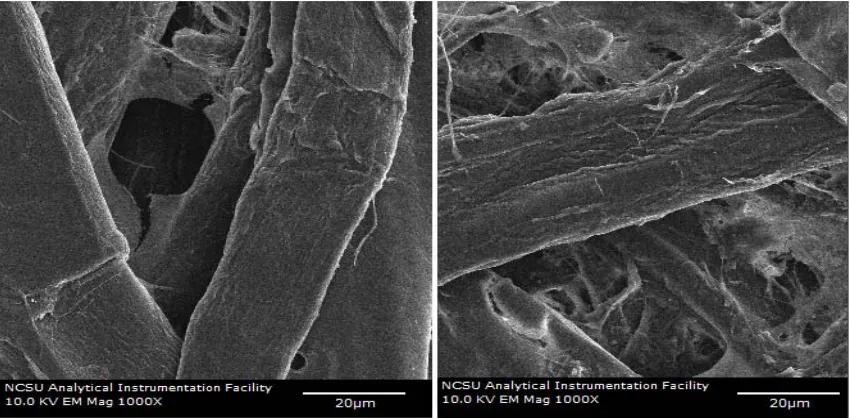
linkages between reclaimed OCC pulp fibers and dry strength reagent was obtained by ATR. A peak was observed at 1734 cm-1 at 110 °C-cured soy flour-DTPA-chitosan additive-treated pulp hand sheets NOT present at the lower temperatures. The peak observed is not large in magnitude because a low quantity of carboxylic acid groups are present in OCC pulp because the applied level of additive (1%) was low. In addition, a high residual char value was observed in the soy flour-DTPA-chitosan-treated OCC pulp sheet compared to the control (OCC pulp sheet) after heating at 600 °C (Fig. 3.1.8) which originates from strong and intransigent soy flour-DTPA-chitosan crosslinking (covalent linkages) to the OCC pulp fibers. The SEM (scanning electron microscopy) photomicrographs of OCC hand sheets and soy flour-DTPA-chitosan-treated OCC recycle pulp hand sheet are shown in Figure 3.1.9. The OCC control has a continuous smooth pore structure that contains plate-like solid pore walls, whereas the soy flour-DTPA-chitosan-treated OCC pulp hand sheet sample reveals a rougher surface with smaller irregular fragments on the fiber surfaces. It may be that these are aggregations of modified soy flour-DTPA-chitosan additive and fines/fibrils increasing the bonded area among the OCC pulp fibers to provide more compact fiber assemblies.
relative to the control OCC pulp sheet. This latter result reflected increased bonding likely from crosslinking between fibers and the additive.18 However, the loss modulus for the OCC pulp hand sheet from 30 to 245 °C decreased about 34%, and for soy flour-DTPA-chitosan additive-treated OCC pulp sheet decreased about 21%. These results indicate that the soy flour-DTPA-chitosan additive was cross-linked with the OCC pulp fibers.
Table 3.1.3. Quantity of ester bonds formed in the soy flour-DTPA/chitosan additive-treated pulp hand sheet.
Curing Temperature
(°C)
Ester bonds formed(mmole/100 g) in the additive-treated pulp sheet Additive-treated
OCC pulp hand sheet
Additive-treated NSSC pulp hand sheet
Additive-treated kraft pulp hand sheet
25 0.0 0.0 0.0
90 0.0 0.0 0.0
110 1.82 1.96 1.90
Figure 3.1.9. SEM image of OCC pulp sheet (left) and soy flour-DTPA-chitosan additive-treated OOC pulp hand sheet (right).
flour-3.1.4. Interactions with Water
Figure 3.1.11. Contact angle of OCC pulp hand sheet (●) and Soy flour-DTPA/chitosan-treated OCC pulp hand sheet (Ο).
ACKNOWLEDGMENTS
We cheerfully acknowledge partial financial support from the United Soybean Board (Smith, Bucklin & Associates, LLC) that allowed significant portions of this work to be completed. We also wish to gratefully acknowledge Qilu University of Technology for the sabbatical afforded to L.A.L. Finally, we would especially like to acknowledge Georgia-Pacific, LLC, for the genuine interest and support that they have shown for this work over the past three years.
3.1.5. References and Footnotes
1. Hubbe, M.A.; Venditti, R.A.; Rojas, O.J. What Happen to Cellulose Fibers During Paper Making and Recycling? A Review BioResources 2007, 2, 739-788.
2. Anon. Corrugated recover rate passes 70 percent. Mill Trade J. Recycl. Mark 1996, 34, 3. Nazhad, M. M.; Sodtivarakul, S. OCC Pulp Fractionation-A Comparative Study of
Fractionated and Unfractionated Stock Tappi 2004, 3, 35-50.
4. Minor, L. J.; Atalla, H. R. Strength Loss in Recycled Fibers and Methods of Restoration
Mat. Res. Soc. Symp. Proc. 1992, 266.
5. Diniz, J.M.B.F; Gill, M.H.; Castro, J.A.A.M. Hornification-Its Origin and Interpretation in Wood Pulps Wood Sci. Technol. 2004, 37, 489-494.
6. Heydari, S.; Ghasemian, A.; Afra, E. Effects of Refining and Cationic Polyacrylamide on Strength Properties of Paper Made from Old Corrugated Container (OCC) World Sci. J. (Special Issue) 2013, 2307-3071.
7. Hubbe, M.A.; Heitmann, J.A. Review of Factors Affecting the Release of Water from Cellulosic Fibers During Paper Manufacture BioResources 2007, 2, 500-533.
8. Wistara, N., Raymond, A. Properties and Treatments of Pulps from Recycled Paper. Part I. Physical and Chemical Properties of Pulps Cellul. 1999, 6, 291-324.
9. Gruber, E.; Weigert, J. Chemical Modification of Cellulose Pulps to Reduce Their Tendency for Hornification Papier 1998, 52, 20-26.
10. Laivins, V.J.; Scallan, M.A. The Influence of Drying and Beating on the Swelling of Fines Pulp Paper Sci. 1996, 22, 178.