EARLY CHILDHOOD DEVELOPMENT CENTRES IN NG’ENDA ZONE, KIAMBU COUNTY, KENYA
NDOI JANE WANJIKU E55/22739/2011
DEPARTMENT OF EARLY CHILDHOOD STUDIES
A RESEARCH THESIS SUBMITTED TO THE SCHOOL OF EDUCATION IN PARTIAL FULFILMENT OF THE REQUIREMENTS FOR THE DEGREE OF
MASTER OF EDUCATION IN EARLY CHILDHOOD EDUCATION, KENYATTA UNIVERSITY
DECLARATION
I declare that this thesis is my original work and has not been presented for a degree in any other university for consideration. This research thesis has been complemented by referenced sources duly acknowledged. Where text, data, graphic, pictures or tables have been borrowed from other sources, including the internet, these are specifically accredited and references cited in accordance with anti-plagiarism regulations
Signature: _________________________________ Date: ____________________ Ndoi Jane Wanjiku
E55/22739/2011
This thesis has been submitted for evaluation with our approval as university supervisors.
Signature_________________________________ Date: _______________________ Dr. Nyakwara Begi
Department of Early Childhood Studies,
Signature: _______________________________ Date: ______________________ Dr. John Teria Ng’asike
DEDICATION
ACKNOWLEDGEMENTS
First and foremost I would like to express my gratitude to the almighty God for giving me strength and grace to write this thesis. Secondly, I am indebted to my supervisors Dr. Nyakwara Begi and Dr. John Teria Ng’asike for their kind advice and guidance throughout the progress of my study. My appreciation also goes to all my lecturers in the Department of Early Childhood Studies; particularly Dr. Esther Waithaka and Dr. Juliet Mugo for their professional guidance during my study time.
Special appreciation also goes to all the respondents (ECD managers and teachers) from both public and private ECD centres in Ng’enda Zone, Kiambu County for providing me with the information which led to completion of this thesis. I also wish to acknowledge all those who tirelessly assisted me in typesetting and editing of this work. Finally, I thank all people who assisted me directly or indirectly towards the successful completion of this work. May God Bless You All.
TABLE OF CONTENTS
Declaration ... ii
Dedication ... iii
Acknowledgements ... iv
Table of Contents ... v
List of Tables ... viii
List of Figures ... ix
Abbreviations and Acronyms ... x
Abstract ... xi
CHAPTER ONE: INTRODUCTION AND CONTEXT OF THE STUDY ... 1
1.0 Introduction ... 1
1.1 Background to the Study ... 1
1.2 Statement of the Problem ... 6
1.3 Purpose of the Study ... 7
1.4 Objectives of the Study ... 7
1.5 Research Questions ... 7
1.6 Significance of the Study ... 8
1.7 Limitations and Delimitations of the Study ... 8
1.7.1 Limitations of the Study ... 9
1.7.2 Delimitations of the Study ... 9
1.8 Assumptions of the Study ... 9
1.9 Theoretical Framework ... 10
1.10 Conceptual Framework ... 11
1.11 Operation Definition of Terms... 13
CHAPTER TWO: L ITERATURE REVIEW ... 14
2.0 Introduction ... 14
2.1 Outdoor Play Environment in ECD Centres ... 22
2.2 Type of ECD Programme and Quality of Outdoor Play Environment ... 25
Centres ... 33
2.5 Summary of Literature Review ... 34
CHAPTER THREE: RESEARCH DESIGN AND METHODOLOGY ... 34
3.0 Introduction ... 34
3.1 Research Design... 34
3.2 Study Variables ... 35
3.2.1 Dependent Variable ... 35
3.2.2 Independent Variables ... 35
3.3 Location of the Study ... 35
3.4 Study Population ... 36
3.5 Sampling Techniques and Sample Size ... 36
3.5.1 Sampling Techniques ... 37
3.5.2 Sample size ... 37
3.6 Research Instruments ... 38
3.6.1 Interview Schedule... 38
3.6.2 Questionnaire for Teachers ... 39
3.6.3 Observation Checklist ... 39
3.7 Pilot Study ... 39
3.7.1 Validity ... 40
3.7.2 Reliability ... 40
3.8 Data Collection Procedures... 41
3.9 Data Analysis Procedures ... 41
3.10 Logistical and Ethical Considerations ... 42
3.10.1 Care and Protection of Research Participants ... 42
3.10.2 Protection of Research Participants Confidentiality ... 42
3.10.3 Informed Consent Process ... 43
CHAPTER FOUR: DATA ANALYSIS, PRESENTATION AND DISCUSSION
4.0 Introduction ... 44
4.1 General and Demographic Information ... 44
4.2 Quality of outdoor play environment in ECD centres ... 46
4.2.1 Availability of Outdoor Play Materials in ECD Centres ... 47
4.2.2 Adequacy of Outdoor Play Materials in ECD Centres ... 50
4.2.3 Safety of Outdoor Play Facilities Available in ECD centres ... 53
4.3 Strategies used to Improve Quality of Outdoor Play Environment ... 60
CHAPTER FIVE: SUMMARY, CONCLUSION AND RECOMMENDATIONS OF THE STUDY ... 64
5.0 Introduction ... 64
5.1 Summary of the Study ... 64
5.2 Conclusion ... 66
5.3 Recommendations of the Study ... 66
5.4 Areas for Further Research ... 67
References ... 68
APPENDICES ... 75
Appendix I: Consent Form... 78
Appendix II: Questionnaire for ECD Teachers ... 83
Appendix III: Interview Schedule for Headteachers ... 84
Appendix IV: Observation Checklist ... 85
Appendix V: Letter from the Institution ... 86
Appendix VI: Research Permit ... 87
LIST OF TABLES
Table 3.1: Sampling Frame ... 37 Table 4.1: Teacher’s demographic characteristics ... 45 Table 4.2: Number of Children in ECD Classes in Both Public and Private Centres .. 46 Table 4.3: Outdoor Play Activities Children Engaged in Across Type of the
ECD Centre ... 47 Table 4.4: Availability of Play Materials and Equipments in Public and Private
ECD Centres ... 49 Table 4.5: Adequacy of Play Materials in Both Public and Private ECD Centres ... 51 Table 4.6: General rating of Adequacy of Play Materials in both Public and
Private ECD Centres ... 52 Table 4.7: Person’s Responsible for Supervision of Children During Outdoor
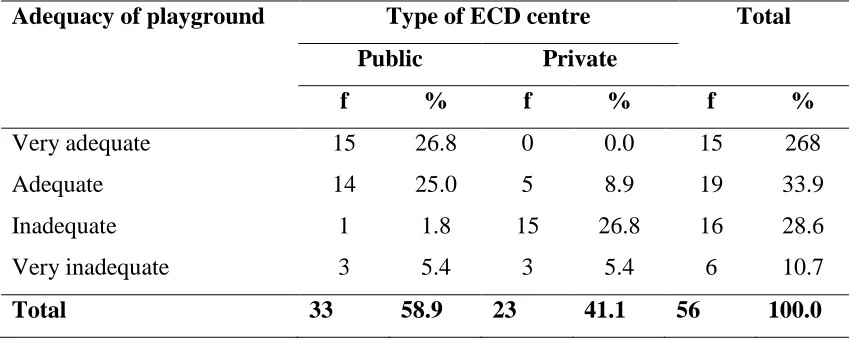
Activities ... 53 Table 4.8: Arrangement of the Play Facilities in the Play Space ... 54 Table 4.9: Playground Safety Rules and Regulations ... 56 Table 4.10: Adequacy of Playground in Relation to the Number of Children in
LIST OF FIGURES
Figure 1: Factors influencing the quality of outdoor play environment in
ABBREVIATIONS AND ACRONYMS
ACRWC - African states the African Charter on the Right and Welfare of the Children
AIDS - Acquired Immune Deficiency Syndrome CESA - Comprehensive Education Sector Analysis CRC - Convention on the Rights of the Child CWS - Church World Service
DEO - District Education Officer
ECD SSGK - Early Childhood Development Service Standard Guidelines for Kenya
ECD - Early Childhood Development Centres HIV - Human Immuno-Deficiency Virus
ICSS - International Conference on School Safety MDGs - Millennium Development Goals
MOE - Ministry of Education
QASOs - Quality Assurance and Standards Officers SANA - Sustainable Aid in Africa International SES - Socio-Economic Status
SPSS - Statistical Package for Social Sciences SSHE - School Sanitation and Hygiene Education
UNESCO - United Nations Educational, Scientific and Cultural Organization W HO - World Health Organization
ABSTRACT
CHAPTER ONE
INTRODUCTION AND CONTEXT OF THE STUDY
1.0 Introduction
This chapter highlights the background to the study, statement of the problem, purpose of the study, objectives of the study, research questions, significance of the study, delimitations and limitations of the study, theoretical framework, conceptual framework and operational definition of terms.
1.1 Background to the Study
Good quality Early Childhood Development and Education contributes to the quality of education system as a whole. Children have a right to an environment which facilitates their physical development, cognitive, emotional and social skills. The outdoor play activities have been a crucial part of children’s lives. Therefore, there is need to give children allowance to play freely for enjoyment and relaxation outside the routine curriculum areas. Through such activities children gain a lot of experiences during their early years (Hughes 2009, Morita, 2004: cited in Waithaka, 2009).
figurative thinking and capacity of working together with others. Children learn through play and playgrounds are among the most important natural environments that enhance participation in both the structured and unstructured outdoor activities. Children therefore use the playground as a learning environment with corresponding behavioral consequences that enable them to digest both pleasant and unpleasant experiences. They do this by freely using their senses of taste, smell, touch, sight and hearing. Consequently, they start to take control of their feelings related to the experiences (Sheridan, 2001; Wolfgan, 2004 in Olgan and Kahriman-Ozturk, 2011). School playgrounds are the designated outdoor areas located in the school where children play or participate in sports and games with or without stationary and manipulative equipment (Johnson, Christie & Wardle, 2005). Moore (1996) views the playground as conceptually a pedagogical space centered on outdoor play.
pre-schoolers are at play. Among these indicators, one of them is enhancing the rights of children involvement in play. These include; provision of adequate, appropriately segregated and fenced play spaces with organized security, availability of play equipments and materials which are well maintained and are in good condition and enough surfacing that is fall-absorbent. Good supervision of the children while engaging in play and well organized outdoor activities are other indicators of safe playground.
Playground safety for young children is an individual and legal rights matter whose objective is to strengthen preschoolers’ engagement in outdoor learning activities. According to Convention on the Rights of the Child (CRC, 1989), safe playground are very crucial element in a child- friendly learning environment. This concept is also supported by other policy frameworks such as the World Conference on Education for All (WCEFA, 1990), the World Education Forum (WEF, 2000), the Millennium Development Goals (MDGs, 2000), International Conference on School Safety (ICSS, 2007) and for African states the African Charter on the Right and Welfare of the Children (ACRWC, 1999). These frameworks require the government to make sure that preschoolers play in a pleasant/ child friendly environments. The policy also highlights that the playground should be child centered, comprehensive, gender equitable and effective in enhancing excellence in acquisition of physical (or motor) and psychosocial skills.
global frameworks into the Children’s Act No. 8 of 2001 as a legal instrument to safeguard and promote the rights and welfare of children in Kenya. Article 23:2(a) and (b) of the Children’s Act, for instance, emphasizes the critical importance of safe and secure environments to enhance participation in learning activities that include outdoor play.
To operationalise the Children’s Act, the MOE in collaboration with the United Nation’s International Children’s Education Fund (UNICEF) and through the Kenya Education Sector Support Programme (KESSP 2005-2010) developed the Early Childhood Development Service Standards Guidelines for Kenya (ECD SSGK, 2006). The guidelines recommend outdoor play spaces that are big enough compared to the number children enrolled in the pre-school, including those with special needs (the vulnerable and disadvantaged), to play and run around safely. The play spaces should contain adequate age- and developmentally appropriate equipment and materials (also adapted for children with special needs), safe play area surfaces and servicing and maintenance of play materials once in a term.
minutes every day and are supplemented by the unstructured ones during recess. The policy also recommends that children’s individual progress in the activities should be based on the Development and Readiness Progress Assessment tool to measure cognitive, physical, emotional, social and moral development (ECD SSGK, 2006).
quality outdoor play environment in early childhood development centres in Ng’enda zone, Kiambu County, Kenya.
1.2 Statement of the Problem
Quality of outdoor play environment forms an integral component of children’s participation in outdoor activities. In Kenya, there is a very scanty literature in relation to quality of outdoor play environment. As such, much of the information has to be retrieved form studies done in developed countries like America and Britain where ECD education is highly valued. Most of the Early Childhood Development centers in Kenya are characterized by poor physical conditions. For instance, a study conducted by Kerich (2015) revealed that most of the ECD centres did not give preschoolers chance for cognitive growth. Furthermore, the study established that many of these centres had inadequate equipment in relation to the number of children in the sampled centres.
centres in this zone seemed not to value quality outdoor play environment. It is against such a background that the study set to investigate the determinants of quality play environment in ECD centers in Ng’enda zone of Gatundu South Sub-County.
1.3 Purpose of the Study
The purpose of the study was to establish quality outdoor play environment in Ng’enda Zone, Gatundu South Sub-County. The study was also to find out the determinants of the quality outdoor play environment in the zone.
1.4 Objectives of the Study The objectives of the study were:
i. To establish the quality of outdoor play environment in ECD Centres in Ng’enda Zone, Kiambu County.
ii. To find out the influence of the type of ECD centre on the quality of outdoor play environment in ECDE centres in Ng’enda Zone.
iii. To determine the influence of location of ECD centre on quality of outdoor play environment in Ng’enda Zone.
iv. To establish the safety of outdoor play facilities available in ECDE centres. v. To find out the strategies used to improve quality of outdoor play environment in
ECD centres.
1.5 Research Questions
ii. Does the type of ECD centre influence the quality of outdoor play environment in Ng’enda Zone?
iii. Does location of ECD centre influence the quality of outdoor play environment in the Sub- County?
iv. How safe are the play facilities available in ECDE centres?
v. What strategies could be put in place to improve quality of outdoor play environment in ECD centres?
1.6 Significance of the Study
The study may be useful to policy makers and ECD managers in the following ways: The study could point out to policy makers the major challenges faced by ECD providers in the implementation of quality outdoor play environment and come up with strategies of improving it. The study may give suggestions to ECD providers and teachers in a bid to ensure that child-friendly outdoor play environment and equipments are provided in ECD centers. The study findings may also be of significant to early childhood teachers, ECD managers and policy makers of early childhood programmes in that the results may help them to develop skills on school-based safety programmes that assist in promoting, protecting and improving the safety status of pre-school children while in the playgrounds. This may give the children opportunities to access creative play environments, where they can develop physically, socially, and mentally. The study may also contribute to the existing body of research on outdoor play and development in early childhood.
1.7 Limitations and Delimitations of the Study
1.7.1 Limitations of the Study
The study was limited to the fact that most of the study participants wondered how the study would help them and hence felt like it was a bother to fill in the questionnaire. To overcome this, a lot of explanation had to be done for them to understand the main purpose of the study. Furthermore, the researcher ensured the participants that the information they submitted would be held confidentially and would be used for academic purpose only. Another limitation the researcher encountered was that there was scanty literature on previous studies on the key determinants of quality outdoor play environment in early childhood development centres.
1.7.2 Delimitations of the Study
The study was carried out in early childhood development centres in Ng’enda Zone. The study focused on quality outdoor play environment in early childhood development centres, with emphasis on outdoor play resources, including playing fields, play equipment, safety of the play grounds and the quality of resources available for children in ECD centres.
1.8 Assumptions of the Study
1.9 Theoretical Framework
The study was based on Piaget’s Developmental Theory of Play. According to Piaget (1983) play has a major role in child’s growth. Piaget viewed the role of children’s communication and interactions while engaging in play as a social-cognitive growth. According to Piaget, children interactions while playing assist them to know that other players have varying views from their own. Play, for Piaget, give children room to develop social competence through social interactions. Piaget perceived that there are two complementary processes which lead to adaptation. These are assimilation and accommodation.
not only develop themselves, but also learn from other children. This is important while strengthening their social being.
In application to the study the theory puts attention to the importance of quality outdoor play environment during formative years. This theory explains the role that outdoor play environment has towards the development of the repertoires of children’s behavior with regard to cognitive, emotional, physical and social aspects. The theory describes quality outdoor as a means through which a child is exposed to experience that facilitates formation of mental structures. These structures enable the child’s mind to assimilate real life experience which could be difficult to accommodate. Involvement in a variety of quality outdoor environment games is crucial for optimal formation of mental structures. From this theory, the engagement of children in outdoor play environment is considered to be a key aspect in a child’s development.
1.10 Conceptual Framework
Figure 1: Factors influencing the quality of outdoor play environment in ECD Centres
The independent variables of the study were type of ECD centres and location of ECD centre. It is expected that ECD centres with adequate outdoor play resources, outdoor play space and safe outdoor play resources comply with ECD service standard guidelines which is the intervening variable of the study. As a result those ECD centres were anticipated to offer quality outdoor play environment which is the dependent variable of the study. The quality of outdoor play environment offered to children, either high or low, will have an effect in facilitating the development of skills physically, cognitively, and socially.
Independent variables Intervening variable Dependent variable Type of ECD centre
Private
Public
Compliance with the ECD Service standard
guidelines
Quality of outdoor play environment in ECD centres (Adequate: Play fields, Play resources, Space for outdoor play, and Safe play) resources Physical intellectual and emotional development of ECD children Outcome
Location of ECD centre
Rural
1.11 Operational Definition of Terms
Adequacy of outdoor play environment – Open-air play area intended for ECD children and designed in such a way that they comply with the outdoor play area manual. Child friendly play equipment – Refers to outdoor play tools or apparatus that give pleasure and are safe for use by ECD children.
Early Childhood Development (ECD) – Refers to an educational programme that concerns the development of children between birth and 8 years.
Location- Refers to a particular setting where ECD centre is found, that is urban or rural. Outdoor play – Activities or games done in open air by children within the confines of ECD centres; through which they find stimulation, well-being, happiness, and help them grow physically, intellectually and emotionally.
Play equipment - Structures, including components and constructional elements on which, children can play outdoors or indoors, either individually or in groups, according to their own rules or own reasons for playing e.g small balls, bean bags, rocking horses, board tubs, see-saws, tyres.
Play fields – Safe open air grounds where children enjoy recreational activities
Provision of play equipment – Making apparatus or tools required for outdoor play available either by purchasing or seeking donation from well wishers
Quality outdoor play environment - Safe, secure and appropriate open play area that provide optimal conditions for physically active play for children.
School Environment – Involves all that is within the school – facilities, child-teacher ratios, teachers, parents etc.
CHAPTER TWO LITERATURE REVIEW
2.0 Introduction
This chapter comprises a review of literature related to the study on the quality of learning environment in early childhood centres. The literature reviewed captures the following themes: Outdoor play environment in ECD centre, type of ECD centre and quality of outdoor play environment, location of ECD centre and quality of outdoor play environment and strategies used to improve quality of outdoor play environment in ECD centres. The chapter thereafter presents a summary of the literature reviewed.
2.1 Outdoor Play Environment in ECD Centres
associated with greater achievement. From the studies by Sylva (2004) and Gardinal-Pizato, Marturano and Fontaine (2012), it comes out clearly that early childhood education aids in improving the academic performance of children. These studies do not however establish the quality of outdoor play environment in the ECD centres, thus deriving a gap to be addressed in the current study.
Due to various changes in the society such as women empowerment, changes in family structures and most of the people engaging in income generating activities, most of the parents opt to take their children in child care centres. These centres act as social context in which early development takes place. In these centres children learn how to communicate and interact with others, familiarize with the school climate and also get involved in early learning of speech development (Shonkoff and Phillips, 2000). Since most of the time children spend their time with the caregivers, it is therefore very clear that the experience they enquire in ECD centers and while engaging with other children during outdoor play environment is very crucial. With this regard, ECD teachers must therefore ensure that preschoolers get access to outdoor play environments that support and provide quality experiences. Thus quality childcare should include ensuring that all children engage in play everyday especially during morning and evening hours ((Frost, 1992).
asserts that to ensure that parents lay a very good foundation of their children development process today and in the future, parents should not only focus on the quality of the physical facilities in the ECD centres but also the most crucial learning materials available within the pre-schools environment. This is because selection of the preschool had either a positive or negative impact on the growth of the preschooler. As noted by Towell (1997) compliance to regulations based on health and safety guidelines, enhances the school environment for the pre-school children.
The outdoor play environment can be defined as a place where children explore natural environment and have an opportunity of interacting with other children. This simply means that outdoor play environment is not a place where preschoolers learn academic lesson. For children to engage in outdoor play activities, it’s the duty of the teacher to ensure that they capture the interests of all children by ensuring that they are friendly while in the classroom and also ensure that all children are given room to participate in all activities while in the play field (Lee, 2006, Edgington, 1998). As a consequence, this can positively influences preschooler to learn more and also like being engaged in play. It was therefore important to establish whether there are any determinants of quality outdoor platy environment and also develop strategies that could aid in improving the quality of the play environment in ECD centres in Ng’enda zone.
collected through interview schedules. The study respondents were interviewed for 60-90 minutes. The study findings revealed that teachers should act as role models while engaging in outdoor play activities with the children. They should therefore demonstrate what they want the children to do instead of giving out directions. This provides an indication that teachers’ supervisory role in play is of great importance in enhancing quality indoor and outdoor play.
Children and teachers’ perception toward play is very crucial in any outdoor play environment. The teachers must be social, approachable and friendly to the preschoolers. They are also expected to portray an emotional feeling towards the child in case of any risks. This as a result will give children courage to play without fear because they know they are fully supported by their teachers in case of anything (Skinner, 2007). Similarly, research work by Murtaza (2011) reveals that given the chance and the conducive outdoor play setting, preschoolers will not differ in their growth and development despite of the background they come from. Thus, it’s good to ensure that all the children have chance of participating in play and learning activities in a better manner.
cognitive growth of the youngsters. The study sought to find out the status of outdoor play environment in relation to space, equipment and planning for the children’s cognitive development. The study used a sample of 20 ECD centres whereby data was collected using questionnaires, interview schedule and an observation checklist from the study respondents. The results of the analysis revealed that most of the ECD centres sampled did not give children a chance of acquiring knowledge through their own thinking (cognitive development). This finding was verified by the results which showed that almost all ECD centres sampled had only equipment and materials for physical play not cognitive development. This provides an indication that in ECD centres where the play environments don’t provide materials for the development of the children, a holistic growth in a child may also not be well enhanced.
Some researchers have however seen an inadequacy of the play materials in some ECD centres. For example, in one study, Kerich (2015) carried out a study with an aim of assessing availability of outdoor play materials in ECD centres located within the town. This was a descriptive study that used purposive sampling to select 20 urban ECD centres to participate in the study. Data collected from the field was quantitative in nature and was analyzed using descriptive statistics. The findings of the analysis revealed that most of sampled ECD centres settings enhanced children’s physical development to a very small extent. The study further established that most of the materials available promoted gross development which entails children’s body movement. These include materials used for climbing, sliding, jumping and swinging. However, it also emerged that the materials available in ECD centres were not enough compared to the number of children. More so, the study established that most of the ECD centres did not give children room of acquiring their own knowledge through their own thoughts (cognitive development). This provides an implication that though play environments may be available in ECD centres, whether or not they are equipped with adequate and necessary play materials is also a key determinant on whether the play activities are of quality. In the current study, the research sought to find out whether there is quality outdoor play in ECD centres in Ng’enda zone.
rocking horses, boats and board tubs); sand box materials (funnel, strainers and empty plastic containers) wheel toys (tricycles, child size vehicles as well as wagons) and water play materials (KIE Syllabus, 2008; KIE, 1999). Play equipment and materials for pre-school children should be designed to stimulate them and also encourage the development of psychomotor skills. They should also be provided for children with special needs so that they participate in outdoor activities as a way of encouraging integration and inclusion of all children in the playground (Inan, 2009).
Layout of the equipment is crucial to enhancing children’s safety in the outdoor play environment. Structural integrity of the equipment for out door play environment should be a concern so that the equipment is not hazardous or flimsy that it can break while children are on it. Well laid outdoor play equipment provide easy navigation that builds confidence without sacrificing safety of the children (Braidekamp, 1992). Different equipments should be used in different zones. For instance, equipments used for physical development such as swings and slides should be located towards the outer side of the playground. Large muscles activities (those involving static balancing, gross body coordination and flexibility) should also be separated from the fine muscle activities (those requiring finger speed, arm steadiness, arm and hand precision and finger and hand dexterity). This also enables them to maintain their play areas, create positive emotional development and to explore new ideas through equipment they can handle (Braidekamp, 1992).
about the school, social interactions within the school compound, safe and well maintained building and play ground are some of the aspects of school’s physical environment. These environmental components can enhance children engagement to school which as a result leads to better academic outcome (McKenzie and Richmond, 1998).
The interaction between the children and the teachers (psychosocial environment) consists of attitude, thoughts and the values of the two parties. Physical and mental protection, positive social interactions, acknowledgement of the individual needs, victory of the individual and support for learning process all these are referred to as psychosocial environment. However, there are various factors which influences psychosocial environment within the school. One of these factors is high enrollment of children in ECD centres which act as one of the indicators showing that the physical facilities may be in poor conditions. Other factors includes, status of children’s family in terms of economy; social, cultural, and religious influences; as well as legal, political, and social institutions (Stevenson, 2001).
Clarke, 2005). This study will therefore seek to establish the quality of outdoor play environment in ECD centres in Ng’enda zone.
2.2 Type of ECD Centre and Quality of Outdoor Play Environment
School environment is essential in enabling pre-school children to handle and persevere all the demanding activities with ease, it also enable learners to work as a team, learn from the mistakes and also learn how to follow instructions. Children acquire this knowledge by participating in outdoor play activities which assists them in cognitive development whereby they learn to pay attention, remembering rules, and improving their desires to achieve bigger objectives (Tomlinson and Hyson, 2012).
Alderman et al., (2001) note that high cost ECD programs provide best results. Qualified teachers are involved in guiding the children in matters pertaining to outdoor play and teachers are given a chance to go for training as a way of enhancing their skills on children’s growth. Rivkin (2002) asserts that the type of environment provided in high cost ECD centres facilitate and guides play. It also offers exploration, promotes the holistic nature of children’s learning and encourages preschoolers to have freedom, be responsible and also engage in the learning atmosphere with the households and in the society.
A study done by Oketch et al., (2008) on school mobility in slum areas in Nairobi revealed that 55.6 percent of the parents transferred their siblings from public to private schools due to the influence of factors such as good classroom buildings and other physical facilities in the private schools and varieties of playing materials. A similar case was also seen in a research conducted by Adebayo (2009) which revealed that majority of the parents in Nigeria choose to take their children to private schools because of the quality of services provided in private schools. Is this therefore, an indication that there is a disparity between the quality of play materials in public and private ECD centres? This is something that the current study sought to establish in Ng’enda zone?
student-teacher ratio therefore a personalized sense of touch of the child with the teacher. There however exists no study done to investigate the quality of the outdoor play environment in these centres. As such, the current study saw the need to fill this knowledge gap.
A study conducted by Wambui (2014) on Parents' Satisfaction with Quality of Services Offered in Early Childhood Development Programmes in Mang'u division; Kiambu County, Kenya. This study revealed that there was a significant difference in parental satisfaction with the quality of ECD services between public and private ECD centres. This meant that the type of ECD centres had a significant influence on parents' satisfaction with quality of services offered in the ECD program. The findings showed that parents at private ECD centres were more satisfied with the centres than those of public ECD schools.
In another study, Tarimo (2013) set out to investigate the use of play materials by the teachers as a teaching method in Tanzania in Mwanga district. This was a descriptive study that used purposive sampling to select 30 pre-primary schools as the study sample with one of the objectives being to find out the influence on the type of school on the use of play as a teaching strategy. The statistics used were both inferential and descriptive statistics. Inferential statistics included use of Chi-square whereby the research sought to determine how the school type influence play as a teaching strategies employed by the teachers. From the study findings, the null hypothesis was accepted that type of school does not have any significant influence on play as a teaching strategies employed pre-school teachers. This meant that the type of pre-school did not significantly influence use of play as a teaching strategy. Though this study focused on whether the type of school influenced the use of play as a teaching strategy, the current study investigated whether the type of school had any influence on the quality of outdoor play environment in ECD centres in Ng’enda Zone.
2.3 Location of ECD Centre and Quality of Outdoor Play Environment
brought out in cities are not given free time to engage with other children for play activities. This is because majority of the parents considered unregulated play as an activity of the past.
According to Tranter and Doyle (1996); Valentine and McKendrick, (1997), modern parents limit their children freedom of exploring the environment around them. The parents tend to be too protective of what would happen to their children due to insecurity especially in urban areas. Parents provide regulated play environment to their children which they are able to monitor or give responsibility to the caregivers in their absence (Hasluck and Malone, 1999; McKendrick, Bradford and Fielder, 2000). Regulated play environment may be crucial as it “guard” children from being exposed to risks,. However, this denies children their free choice activities and social interaction with other children and as a result would cause negative impact towards play in future (Tranter and Pawson, 2001).
In 1999, Barbour conducted a study to two groups of children with different opportunities of engaging in play. This researcher established that in schools where children had chance of engaging in play activities, most of these children also interacted freely with others. In addition, play also promoted gross motor activity among children and also gives them room of discovering on their own. However, where children did not have the opportunity to engage in play activities, most of them had low physical competence (Barbour, 1999). To eliminate this difference between the two groups, Bablour (1999) recommended that the children who are not capable of playing due to their disability, should be provided by different play equipment and materials that can support them. Furthermore, teachers should encourage cooperative rather than competitive play among the two groups of children. This study by Bablour (1999) however does not show a clear indication regarding the location of the schools studied. This raises a concern as to whether the findings generated could be bias to one category of the ECD schools. The current study therefore sought to find out clearer differences on the ECDE playgrounds in ECD schools in rural and urban centre in Ng’enda Zone, Kiambu County.
urban ECD centres that are key determinants of quality outdoor play environments in ECD centres in Ng’enda zone.
2.4 Strategies Used to Improve Quality of Outdoor Play Environment in ECD Centres
The benefits of playground safety are promoted when the teacher play their role in supervision of children when they are engaging in outdoor play activities. This also is enhanced when the teacher ensures that all the playing material are in good condition and are appropriately placed. According to Hudson et al., (2002), safe outdoor playgrounds have sight angles that allow visual access to all parts of the play area and structures from at least two directions at any point of observation. The sight angles make it easier for the supervisor or teacher to see all the children at play in the different zones and hence respond to emergencies using the routes implied by the sight lines. A positive emotional environment is created, where children and the teacher are always in contact during the activities. This also enhances children’s discipline under the watchful eye of the teacher that surveys all corners and zones in the outdoor play area.
(1:1) for ECD special needs children with autism, combination of deafness and blindness, cerebral palsy and multiple disabilities; one teacher to fifteen (1:15) for the visually impaired and the physically handicapped pre-schoolers; one teacher to ten (1:10) for mild mental disability pre-schoolers and one teacher to twelve (1:12) for the deaf children. The ratio of the number or children to one teacher increases in rural areas. In most communities, Early Childhood Care and Development Educational (ECCDE) centers lack the financial capacity to employ sufficient number of teachers, that is, they are unable to establish and maintain a reasonable teacher per pupil ratio.
According to the Comprehensive Education Sector Analysis (CESA) team as cited in (UNICEF, 2003) the teacher per pupil ratios exhibited considerable regional disparity. Areas that recorded satisfactory ratios included Nairobi 1:34, Eldoret Municipality 1:32 and, Baringo 1:34. Some other areas were badly hit for example Turkana 1:504, Marsabit 1:330, Mt. Elgon 1:316, Bomer 1:294, Nyandarua1:227. This therefore shows that in most, rural areas, the teachers are responsible for the care of too many children than the normal expectations; this therefore becomes burdensome as the teacher cannot offer 1individualized attention to each child during play activities that require teacher guidance. The situation is also similar in the current study area whereby, in the public ECD centres which happen to be located in the village, the student-teacher ratio is very high compared to their fellows in the private ECD centres, mostly located in the village centres, which in turn affects the quality of outdoor play.
psychologically and physically suitable context in which children feel secure, develop a sense of their worth, and that of others, and have the freedom and autonomy to explore. An assistant teacher is therefore recommended for pre-school children in order for them to develop feelings of security and enhance children’s participation in outdoor play activities.
play. Are these the same strategies adopted in ECD centres in Ng’enda zone, Kiambu County? This is something the current study sought to find out.
In another study, Teria (2004) found out how pre-school teacher bridged children's learning of mathematics concepts through play activities. According to Teria, mathematics was a critical subject whose performance would be enhanced by using play materials as a means of teaching and learning. The study used an expost facto descriptive survey research design and 32 randomly selected pre-school teachers. The study recommended that the managers of pre-schools should provide adequate space in indoor and outdoor, and appropriate learning resources for preschool children. This is an indicator that with such strategies being employed the learning of mathematics among pre-school children would be more enhanced. In the current study however, the researcher was not interested in the use of play in subject teaching. She sought to establish further strategies that would be adopted to improve the quality of outdoor play environment in ECD centres.
ways of providing pre-schools with play materials and equipments and that parents should also be encouraged to support the pre-schools in the provision of play materials. Through the adoption of this strategy, play in ECD centres would well be used for teaching and learning. In the current study however, the research will not investigate on the use of play in teaching and learning but will rather find out the key determinants of quality outdoor play environment in ECD centeres in Ng’enda zone, Gatundu Sub-County,
2.5 Summary of Literature Review
CHAPTER THREE
RESEARCH DESIGN AND METHODOLOGY
3.0 Introduction
This chapter gives a description of the research methodology. It captures the design of the study, study variables, location of the study, the study population, sampling techniques and sample size, research instruments and their administration, piloting, data collection procedures, data analysis methods and the logistical and ethical considerations used in the study.
3.1 Research Design
3.2 Study Variables
The study variables in this research are described in the following sub-sections.
3.2.1 Dependent Variable
The dependent variable was quality of outdoor play environment. It was measured by determining the safety of outdoor resources and outdoor space. Availability of play fields was also used to determine the quality of outdoor play environment and was measured by the existence of play fields and the availability of play equipment/materials. Safety of playground and materials was measured by the quality of play materials and plays ground
and the frequency of their maintenance.
3.2.2 Independent Variables The independent variables were:
i. Type of ECD Centre - The variable was measured by determining whether the ECD centre was low cost or high cost. The type of ECD programme provided had an influence on the quality of outdoor play environment.
ii. Location of ECD Centre - This variable was measured by indicating whether the type of ECD centre was in rural or urban setting.
iii. Strategies used to improve the quality of outdoor play environment in ECD Centres.
3.3 Location of the Study
whereby majority of men and women engage in various business activities. The area is also known for agricultural farming with major crops grown being coffee, maize and beans. Animal husbandry and poultry farming are also common farming activities within the region. This study location was chosen since through the researchers’ observation, there were many mushrooming ECD centres in the region, majority of which did not meet the quality standard guidelines for early childhood development centres. This raised the need to find out the key determinants of quality outdoor play environment in these centres. In Ng’nda Zone, there are 31 ECD centers in Ng’enda Zone, among them 16 public attached, 4 public detached and 11 private centers. All these were targeted for the purpose of this study.
3.4 Study Population
The study targeted all 31 headteachers and 112 teachers in all the 31 Early Childhood Development Centers in Ng’enda zone of Gatundu South Sub-County. The ECD centers operating in Ng’enda Zone were categorized into public and private centers. The total population of children served in these centers during the time for data collection was 27,721, among them 12, 336 girls and 15,385 boys (District Education Office, Gatundu, 2014).
3.5 Sampling Techniques and Sample Size
3.5.1 Sampling Techniques
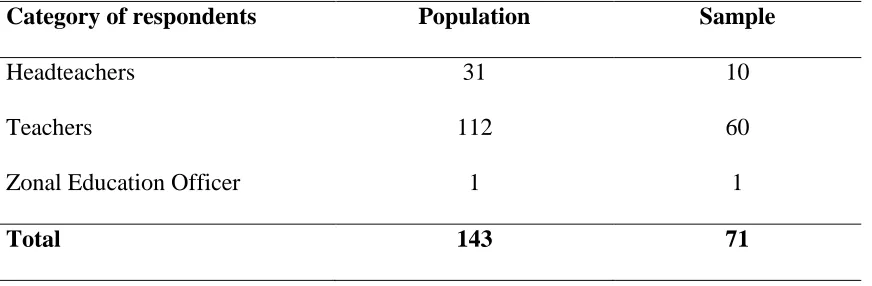
Stratified random sampling was used to select 10 ECD centres according to the type of centre. This sampling technique was considered since there being different categories of ECD centres in the study area, it would enable the researcher to categorize the centres into stratas of either public or private centres. This therefore gave each ECD centre an equal chance of being selected, thereby minimizing sampling error. The study purposively selected all the headteachers in the 10 sampled ECD centres to take part in the study. Out of the targeted 112 ECD teachers, the researcher randomly selected 60 ECD teachers. Statistics from Gatundu District Education Office (2014) showed that majority of the ECD teachers were females with just a few males. For this reason the researcher sampled all male teachers from the 10 schools to participate in the study. The Zonal education officer was also purposively selected to participate in this study. This gave a total sample of 71 respondents.
Table 3.1: Sampling Frame
Category of respondents Population Sample
Headteachers 31 10
Teachers 112 60
Zonal Education Officer 1 1
Total 143 71
3.5.2 Sample Size
For this study, 10 (32%) ECDE centres were utilized. The 10 pre-schools represented 32% of the targeted 31 pre-schools, which is in line with Gay (1992) recommendation of 10.0% minimum sample size.
3.6 Research Instruments
The main instruments used for data collection in this study were questionnaires administered to the ECD teachers, an interview schedule administered to the ECD headteachers/managers and to the Zonal education officer and an observation checklist.
3.6.1 Interview Schedule
An interview is essentially the oral in-person administration of a questionnaire to each member of a sample. According to Gay (1992), the interview is most appropriate for asking questions which cannot effectively be structured into a multiple-choice format. Furthermore, an interview allows the researcher to ask for clarifications and gain more insightful responses than would be possible using questionnaires.
3.6.2 Questionnaire for Teachers (see appendix II)
The questionnaire for teachers comprised of three sections. Section A collected teachers’ demographic data including gender of teachers, work experience, academic and professional qualifications of the ECD teachers. Section B gathered data on the quality of outdoor play environment in ECD centres. The researcher considered a questionnaire for data collection as it gives the respondents freedom to express their views or opinion and to make suggestions (Gay, 1992).
3.6.3 Observation Checklist (see appendix IV)
The researcher constructed an observation checklist that was used in documenting aspects on quality of outdoor play environment. These included; adequacy of play spaces, proper maintenance and safety of playgrounds, availability of fixed playground equipments and proper servicing and maintenance of play equipments. The items on the observation checklist were measured on a Yes/No scale where Yes scored (1) and No scored (0). Similarly, play materials that were available scored (1) while those not available scored (0).
3.7 Pilot Study
Piloting enabled the researcher to pre-test the research instruments and also to modify and remove ambiguous items from the questionnaires.
3.7.1 Validity of the study
Validity is defined as the accuracy and meaningfulness of inferences, which are based on the research results (Mugenda and Mugenda, 1999). In this study, face validity and content validity of the instruments was considered. Face validity in this study was done through piloting. The researcher considered face validity since it helped her ensure the clarity of the questions in the data collection instruments. Those items that were found unclear or ambiguous were reviewed and improved in order to make them more understanding to the study respondents. According to Borg and Gall (1989), content validity of an instrument is improved through expert judgment. As such the researcher prepared the instruments in close consultation with her supervisors to ensure that the items in the questionnaire covered all the study objectives and variables of the study.
3.7.2 Reliability of the study
respondents differed in the responses that they gave during the first and second rounds of the questionnaires administered. A correlation coefficient of 0.7 or higher was accepted as recommended by Mugenda and Mugenda (2003).
3.8 Data Collection Procedures
The researcher booked an appointment with the sampled pre-schools through the ECD managers. The researcher then visited pre-schools on the agreed date and administered questionnaires to teachers and conducted face to face interviews with the ECD managers. The filled- in questionnaires were then collected on the same day. As the teachers filled in the questionnaires, the researcher documented various aspects of quality outdoor play environment in the observation checklist. The researcher also booked an appointment with the Zonal district education officer when she conducted the face to face interview on quality outdoor play environment in ECD centres. The researcher took a period of two weeks to collect data in all the 10 sampled ECD centres.
3.9 Data Analysis Procedures
the quantitative data. Bell (1993) maintains that when making the results known to a variety of readers, simple descriptive statistics such as percentages have a considerable advantage over more complex statistics. Similarly, Borg and Gall (1989) agree that the most widely used and understood standard proportion is the percentage.
3.10 Logistical and Ethical Considerations
The researcher sought authority of conducting the study by obtaining a letter of introduction from Graduate School, Kenyatta University (see appendix V). Thereafter, the researcher sought authority from the District Education Officer Gatundu and National Council for Science Technology and Innovation (NACOSTI) (See appendix VI). The following ethical considerations were made:
3.10.1 Care and Protection of Research Participants
In order to ensure the protection of the research participants, the researcher ensured that the following issues were made clear to them: that the researcher is was student at Kenyatta University taking a Masters of Education in Early Childhood Development Studies; the respondents were informed that no penalties were to be meted for refusal to participate in the study; all the respondents were informed that they were free to participate or reject participation and that the research participants would be provided with free airtime worth Ksh.100 by the researcher as a sign of appreciation.
3.10.2 Protection of Research Participant Confidentiality
were also given a code which protected their identity. The information given by respondents was treated confidentially and was used only for academic purposes.
3.10.3 Informed Consent Process
Prior to conducting the interviews or filling-in the questionnaires, the participants were required to sign a consent form indicating that: Their participation was purely voluntary; they had the right to decline to answer any question or end the interview at any time and that they had the right to ask questions related to the study at any time.
3.10.4 Community Consideration
CHAPTER FOUR
DATA ANALYSIS, PRESENTATION AND DISCUSSION
4.0 Introduction
This chapter presents data analysis and interpretations of the study findings. The main objective of the study was to establish the quality of outdoor play environment in Ng’enda Zone, Gatundu South Sub- County. The study also determined the key factors influencing the quality of outdoor play environment in Early Childhood Centres, with a view of recommending measures for improving the quality of outdoor play environment in ECD centres in the Zone.
Data used in the study was obtained through the use of a questionnaire, interview schedule and observation checklist. The questionnaire was designed to collect data from 60 ECD teachers; interview schedule was used to collect data from 10 ECD managers and the Zonal education officer while observation checklist was used by the researcher to document aspects on quality of outdoor play environment in the 10 sampled ECD centres in Ng’enda zone. Among the 60 ECD teachers, 56 completely filled and returned their questionnaires giving a questionnaire return rate of 93.3%. In addition to this, all the ECD managers and the Zonal education officer participated in the study, yielding a total of 67 respondents.
4.1 General and Demographic Information
understanding of the study respondents and hence provide a good foundation for detailed discussions of results based on the specific objectives of the study.
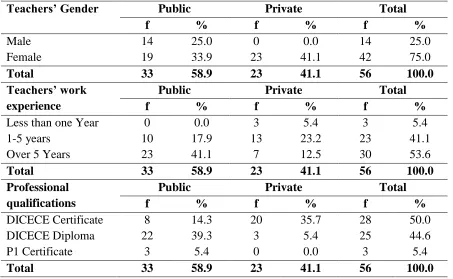
Table 4.1: Teacher’s demographic characteristics
Teachers’ Gender Public Private Total
f % f % f %
Male 14 25.0 0 0.0 14 25.0
Female 19 33.9 23 41.1 42 75.0
Total 33 58.9 23 41.1 56 100.0
Teachers’ work experience
Public Private Total
f % f % f %
Less than one Year 0 0.0 3 5.4 3 5.4
1-5 years 10 17.9 13 23.2 23 41.1
Over 5 Years 23 41.1 7 12.5 30 53.6
Total 33 58.9 23 41.1 56 100.0
Professional qualifications
Public Private Total
f % f % f %
DICECE Certificate 8 14.3 20 35.7 28 50.0
DICECE Diploma 22 39.3 3 5.4 25 44.6
P1 Certificate 3 5.4 0 0.0 3 5.4
Total 33 58.9 23 41.1 56 100.0
As shown in Table 4.1, out of the 33 (58.9%) teachers in public ECD centres, 14 (25.0%) were males while 19 (33.9%) were females. The table also illustrates that all the 23 (41.1%) teachers from the private ECD centres were females. This shows that most of the teachers in the sampled ECD centres were females, meaning there was a gender imbalance among staff in ECDE centres. This confirms statistics from Educational Statistical Booklet (2003) that most of the ECD teachers were females.
centres had taught for 1 to 5 years. This implies that teachers in public ECD centres had a long time experience compared to those in private ECD centres.
Information presented in the table further shows that most of the teachers in public ECD centres had attained DICECE diploma while those in private ECD centres had certificate qualifications. This implies that all the pre-school teachers who took part in the study had the capability to give reliable responses to this study since they were professionally qualified for the job. This was in line with the Early Childhood Development Service Standard Guidelines for Kenya (2006) which indicates that among other qualifications, an ECD teacher should possess at least a certificate in ECD offered by the government or from other institutions authorized by the government.
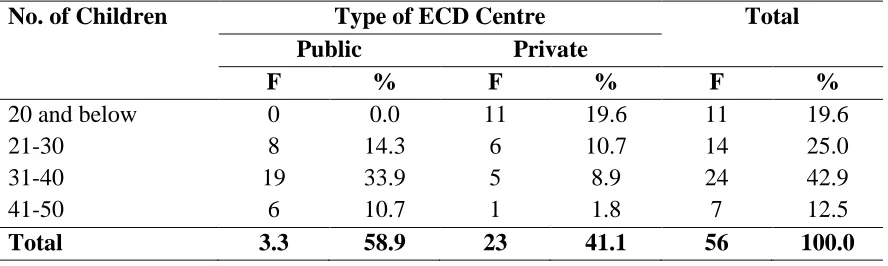
4.2 Type of ECD Centre and Quality of Outdoor Play Environment in ECD Centres The outdoor environment provides optimal conditions for physically active play among children in the ECD centres. To determine whether ECD centres in Ng’enda Zone had safe, secure and appropriate open play area, the researcher first determined the number of children in ECD centres in both public and private centres. Table 4.2 illustrates the number of children in ECD classes in both public and private centres.
Table 4.2: Number of Children in ECD Classes in Both Public and Private Centres
No. of Children Type of ECD Centre Total
Public Private
F % F % F %
20 and below 0 0.0 11 19.6 11 19.6
21-30 8 14.3 6 10.7 14 25.0
31-40 19 33.9 5 8.9 24 42.9
41-50 6 10.7 1 1.8 7 12.5
Table 4.2 indicates that 44.6% of the teachers in public ECD centres stated that they had between 31 and 50 children in their classes while 30.3% of teachers from private ECD centres reported that they had 30 children and below in their classes. This illustrates that teachers in public ECD centres had large classes compared to those in private centres. The results imply that public ECD centres were not adhering to Early Service Standard Guideline which states that an ECD classroom should accommodate a maximum of 25 children (Republic of Kenya, 2006).
The research further asked the respondents to rate the availability of outdoor play materials and their adequacy in relation to the number of children enrolled in the sampled ECD centres. The results of this analysis are presented below.
4.2.1 Availability of Outdoor Play Materials in ECD Centres
To assess the availability of outdoor play materials in ECDE centres, the study first sought to establish outdoor activities children were involved in both public and private ECD centres. Table 4.3 presents the results.
Table 4.3: Outdoor Play Activities Children Engaged in Across Type of the ECD Centre
Outdoor Activities Type of ECD Centre Total
Public Private
F % F % F %
Unstructured (unplanned) activities 24 42.9 4 7.1 28 50.0 Structured (planned) activities 5 8.9 7 30.4 12 21.4 Both structured and unstructured 4 7.1 12 21.4 16 28.6
As shown in Table 4.3, 42.9% of the teachers in public ECD centres stated that children in their centres engaged in unstructured activities, 8.9% of them stated structured activities, while 7.1% cited that they engaged in both structured and unstructured activities. On the other hand, majority of the teachers in private ECD centres stated that children were involved in structured activities (30.4%) and both structured and unstructured activities (21.4%). This shows that teachers in private ECD centres were more organized in outdoor activities compared to their counterparts in public centres. The results therefore implies that children in public ECD centres had freedom to engage in activities of their choice compared to those in private ECD centres.
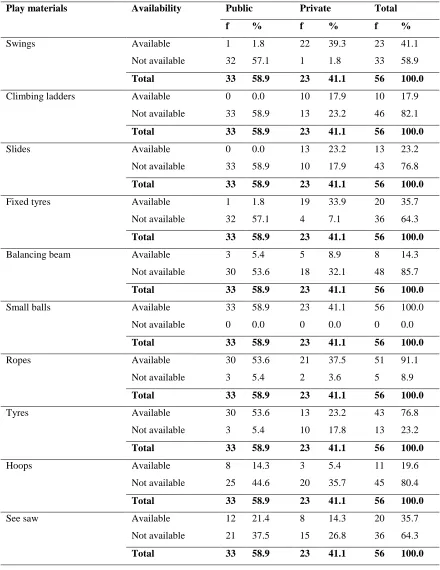
Table 4.4: Availability of Play Materials and Equipments in Public and Private ECD
Centres
Play materials Availability Public Private Total
f % f % f %
Swings Available 1 1.8 22 39.3 23 41.1
Not available 32 57.1 1 1.8 33 58.9
Total 33 58.9 23 41.1 56 100.0
Climbing ladders Available 0 0.0 10 17.9 10 17.9
Not available 33 58.9 13 23.2 46 82.1
Total 33 58.9 23 41.1 56 100.0
Slides Available 0 0.0 13 23.2 13 23.2
Not available 33 58.9 10 17.9 43 76.8
Total 33 58.9 23 41.1 56 100.0
Fixed tyres Available 1 1.8 19 33.9 20 35.7
Not available 32 57.1 4 7.1 36 64.3
Total 33 58.9 23 41.1 56 100.0
Balancing beam Available 3 5.4 5 8.9 8 14.3
Not available 30 53.6 18 32.1 48 85.7
Total 33 58.9 23 41.1 56 100.0
Small balls Available 33 58.9 23 41.1 56 100.0
Not available 0 0.0 0 0.0 0 0.0
Total 33 58.9 23 41.1 56 100.0
Ropes Available 30 53.6 21 37.5 51 91.1
Not available 3 5.4 2 3.6 5 8.9
Total 33 58.9 23 41.1 56 100.0
Tyres Available 30 53.6 13 23.2 43 76.8
Not available 3 5.4 10 17.8 13 23.2
Total 33 58.9 23 41.1 56 100.0
Hoops Available 8 14.3 3 5.4 11 19.6
Not available 25 44.6 20 35.7 45 80.4
Total 33 58.9 23 41.1 56 100.0
See saw Available 12 21.4 8 14.3 20 35.7
Not available 21 37.5 15 26.8 36 64.3
As shown in Table 4.4, over 50.0% of the teachers in public ECD centres reported that swings, climbing ladders, slides, fixed tyres and balancing frames were not available in their centres. The most common play materials in these centres were small balls and tyres. On the other hand, over 30.0% of the teachers in private ECD centres stated that swings, fixed tyres, small balls, and ropes were available in their centres. Balancing frames, hoops and see saw were not available in most centres. This was reported by at least 20.0% of the teachers in private centres who took part in the study. Among the headteachers interviewed, most of them and especially in private ECD centres reported that swings, climbing ladders, slides and fixed tyres were available in their centres while those from public centres reported that the most common playing materials available in their schools were tyres and small balls.
These findings were in line with the results by Shresthna, Eastman and Hayden (2009) who established that only a few government supported centres were equipped with such amenities as swings, see-saw and slides. This was a clear indication that most ECD centers did not have enough outdoor play materials and equipments. To back this finding, the study sampled a picture of the condition in one of the public ECD centre during an outdoor activity by the children.
4.2.2 Adequacy of Outdoor Play Materials in ECD Centres
Table 4.5: Adequacy of Play Materials in Both Public and Private ECD Centres Play materials Type of ECD Very adequate
Adequate Inadequate Very inadequate
No response
f % f % f % f % f %
Swings Public 0 0.0 6 10.7 8 14.3 3 5.4 16 28.6 Private 4 7.1 7 12.5 9 16.1 2 3.6 1 1.8 Climbing
ladders
Public 0 0.0 1 1.8 4 7.1 12 21.4 16 28.6 Private 3 5.4 4 7.1 5 8.9 5 8.9 6 10.7 Slides Public 0 0.0 3 5.4 3 5.4 11 19.6 16 28.6 Private 8 14.3 6 10.7 2 3.6 3 5.4 4 7.1 Fixed
tyres
Public 0 0.0 6 10.7 5 8.9 7 12.5 15 26.8 Private 6 10.7 8 14.3 4 7.1 1 1.8 4 7.1 Balancing
beams
Public 1 1.8 8 14.3 2 3.6 10 17.9 12 21.4 Private 4 7.1 2 3.6 4 7.1 8 14.3 5 8.9 Small
balls
Public 9 16.1 20 35.7 0 0.0 0 0.0 4 7.1 Private 10 17.9 7 12.5 4 7.1 0 0.0 2 3.6 Ropes Public 8 14.3 24 42.9 0 0.0 0 0.0 1 1.8 Private 11 19.6 9 16.1 3 5.4 0 0.0 0 0.0 Tyres Public 6 10.7 17 30.4 3 5.4 2 3.6 5 8.9 Private 11 19.6 5 8.9 4 7.1 1 1.8 2 3.6 Hoops Public 7 12.5 5 8.9 0 0.0 10 17.9 11 19.6
This shows that outdoor facilities available in most ECD centres were not adequate to cater for all children. This was in line with results obtained by Tarimo (2013) in his study on use of play as a teaching strategy in pre-primary schools in Mwanga District, Tanzania. The study findings had revealed that most of the play materials in pre-primary schools were inadequate. This information was supported by the zonal education officer in the interview schedule who also indicated that the play materials in most ECD centres within Ng’enda Zone were inadequate.
Table 4.6: General rating of Adequacy of Play Materials in both Public and Private ECD Centres
Adequacy of Play Materials
Type of ECD Centre Total
Public Private
F % F % F %
Very adequate 0 0.0 4 7.1 4 7.1
Adequate 3 5.4 7 12.5 10 17.9
Inadequate 20 35.7 12 21.4 32 57.1
Very inadequate 10 17.9 0 0.0 10 17.9
Total 33 58.9 23 41.1 56 100.0