ISSN 2286-4822 www.euacademic.org
Impact Factor: 0.485 (GIF) DRJI Value: 5.9 (B+)
Future Planning: The Implications of Low Fertility
and Rapidly Ageing Population on Educational
Planning in Barbados
COLLETTE M. APPLEWHAITE MA - Institute of Education
University of London United Kingdom
Abstract:
This paper highlights the problem of population ageing and decline in Barbados within the context of educational planning. The Barbados Human Resource and Development Strategy 2011-2016 Developing National, Institutional and Human Capacity for Sustainable Growth will be evaluated as a response to this problem. Strategic Pillars 2 and 3 of the Barbados Human Resource Development Strategy 2011-2016, which encompass the development of a National Qualifications Framework and a Demand-Driven Educational System are the primary focus of the assessment as a response to the identified concern.
This strategy places emphasis on promoting lifelong learning, expansion of the provision and quality of technical and vocational education and training, and improvement of participation in adult and continuing education amongst its other priorities.
The planning model of Strategic Planning with Anticipatory Framework is used to evaluate the projects through the three stages of Strategic Planning as asserted by Chang (2008):
I. Sector Analysis II. Policy Design III. Action Planning
Key words: educational planning, population ageing, Barbados, technical and vocational education, strategic planning, future planning
The Relevance of Ageing to Educational Planning
Country: The Case of Barbados, 2004). Further, Barbados is presently the highest ranked country in the Latin America and Caribbean region (LAC) with respect to the United Nations Development Programme Human Development Index (UNDP, HDI).
Educational planning is driven by planning for the future. Educational planners are not content with knowing the current situation; they are interested in getting an accurate picture of the problems to be encountered in the future. Specifically, they must know how the population will change in future years. As a result, population changes have a direct impact on educational planning.
Additionally, when demographic changes such as population ageing create a condition where the majority of the active working population are older persons, as a result of the effect of low fertility rates and the growth of the ageing population of baby boomers post-war born between 1947 and 1966, it behoves educational planners to make greater investments in human capital. This can be achieved by improving the education and employment prospects of the current generation of young people who will thus become the future generation of the older working persons.
Flexible employment, lifelong learning and retraining opportunities should be promoted to facilitate not only the future elderly but also the integration in the labour market of current generations of older persons (UNFPA and HelpAge International 2012).
The problem: Barbados in Context
Low birth rate and ageing population projection:
The elderly population is classified by the PAHO Survey on Heath, Wellbeing and Ageing in Latin America and the Caribbean, 2000 as those persons who are between the ages of 60 and older (Pan American Health Organisation, University of the West Indies 2005). This is further delineated into the young-old (60 to 75 years) and the oldest-old (75 years and older).
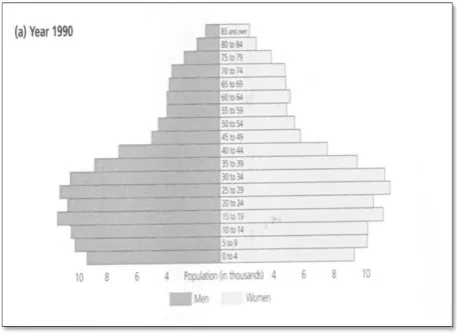
In 2000, a significant number of young-old people in Barbados were recorded and there was a substantial increase in those just below this threshold, (see figure 1). This indicated a future trend of increased pensioners in as few as ten years and fewer potential workers to support the pension scheme due to a decreased number of younger persons in the workforce caused by declining replacement fertility rates. As a result, this has bolstered the creation of new social security policy by government in 2003 of an increase in the retirement age. The retirement age will be increased further in future years to counteract the dramatic effects of the falling population due to ageing population and falling birth rates (National Insurance Office, Barbados 2005).
ageing trend due to increased higher rates of the oldest old which can be accredited to excellent health care.
Barbados is classified as being at an advanced stage of demographic transition with an increase in the proportion of older persons and a decrease in the proportion of younger persons in the population as reported by Schkolnik et al. 2008 (Quashie 2012). While by 2050 roughly 26% of the Caribbean population will be 60 years and over, Barbados is expected to have the largest proportion of aged persons in the Caribbean (Quashie 2012).
This is further substantiated through the use of more recent population data on birth and mortality rates in the island which project that, by as early as 2025, 31% of the Barbadian population will be comprised of the elderly, (see figure 2), as currently only 18% of the population are aged 0-14 years (Commonwealth Consortium for Education 2012)
Figure 1 – Population structure by age and sex in Barbados, 1990 (Pan American Health Organisation, University of the West Indies, 2005)
Figure 2 - Population projections by age and sex in Barbados, 2025 (Pan American Health Organisation, University of the West Indies, 2005)
The above graphs show the drastic demographic changes in the population. It clearly delineates that in 1990 the Barbadian population was comprised of mainly younger persons. However, due to below replacement level fertility rates in the population, the projected pyramid has a top heavy perspective which unmistakeably illustrates a population with more aged persons than young persons.
Implications for Educational Planning
In these circumstances investment in education becomes even more essential to the future of the country. Barbadians will need to earn more and work longer in order to be more independent in old age and not become a burden to society partially made up of a lower porportion of younger workers.
promoted by Germany and the Republic of Korea and endorsed by the small island developing states of The Bahamas and Trinidad and Tobago whose situation mirrors that Barbados. Correspondingly, the One Bermuda Alliance in the island of Bermuda has embraced lifelong learning as a solution to this population trend, noting that there is greater longevity in the number of seniors with a decline in the number of workers shouldering the cost of supporting them (Bell 2012). Congruently, governments worldwide are introducing lifelong learning policies to help older workers keep up with the increasing demands of the economy as well as to train young people to embrace knowledge and be retrainable at any stage in their career in order to be ready for the effects of globalisation and ageing which is a lifelong process. This approach is reiterated by the International Institute of Educational Planning who suggest implementation of technical and vocational skills development based on individual country context. Moreover, achievement of Goal Three of the Education for All (EFA) goals* which places emphasis on education for young people and adults in the context of lifelong learning adds impetus to the implementation of lifelong learning through Technical and Vocational Skills Development (TVSD) (King & Palmer 2010; UNESCO 1995-2012).
The intervention by the government
In 2010, the Government of Barbados through the Ministry of Education and Human Resource Development in collaboration with the Ministry of Labour created the Human Resource Development Strategy 2011-2016. This Strategy which acknowledges the emphasis that the Government places on the development of human and social capital through the
investment in education and related services, seeks to increase the number of secondary school leavers with appropriate knowledge, skills and competencies to successfully enter the job market or an entrepreneurial economic enterprise.
Through this Strategy the government places emphasis on, promoting lifelong learning, development of a seamless educational system, bridging the gap between academic and technical skills, multiple entry and exit points, provision of second chance education and opportunities for youth, expansion of the provision and quality of technical and vocational education and training, and improvement of participation in adult and continuing education.
The Human Resource Development Strategy highlights several challenges which have led to its development – the major ones being the effect of globalisation and the changes in the labour market. It is noted that the exposure of the economy to globalisation has resulted in changes to work place practices with new entrants to the labour market having to change jobs more frequently than in the past and having to upgrade their skills or even retrain in order to sustain employment. The changes in the labour market are such that unemployment rates are rising and school leavers will have less opportunity to gain employment and will have to be innovative and rely on skills in order to create their own job opportunities. The changes in the job market have resulted in fewer job openings for the younger cohort of the population on the demographic changes of population ageing as a factor which affects this variation.
enabling environment for human resource development; an improved internationally recognised national qualifications framework, a demand-driven education and training programme, a rationalised knowledge management system, and
enhanced research to improve innovation, and
entrepreneurship capacity. These main outputs are the five pillars of strategic intervention on which the HRD Strategy stands. The two pillars which will be examined as a response to the problem identified will be pillars two and three, Development of a National Qualifications Framework and Developing a Demand-Driven Educational System.
Theoretical framework for analysis
Strategic Planning with Anticipatory Framework:
Educational administrators must be able to anticipate the future; that is, be able to visualise how choices made today will influence tomorrow’s educational practice. The essence of planning is to make present decisions based on knowledge of their future impact. (Cunningham 1982).
The Barbados Human Resource Development Strategy will be evaluated with the above adage in mind in order to evaluate its merits and weaknesses as a sound educational plan for the future of the country.
What is Strategic Planning?
Strategic planning is the effect of making decisions in the present which will positively affect the future. When utilising futures research alongside strategic planning, planners seek to understand the possible changes in the society and make plans to counteract any negative consequences. As a result, the planning process is increased in its effectiveness. (Morrison, Renfro, & Boucher 1984).
underpinning the work of educational planners”. This will enable ‘the planner’ to make relevant projections to inform future educational planning (Caillods 2003).
Strategic Planning with futures outlook:
Morrison, Renfro, & Boucher (1984) promoted the above framework and hence have reported that “When augmented by futures research, contemporary strategic planning differs from traditional long-range planning in that it adds a special emphasis on discerning and understanding potential changes in the external environment, competitive conditions, threats, and opportunities... It is an approach that gets key administrators "thinking innovatively and acting strategically, with a future in mind" (Keller 1983). Modern strategic planning recognizes that organizations are shaped by outside forces at least as much as by internal ones. In particular, it represents an effort to make this year's decisions more intelligent by looking toward the probable future in coupling the decisions to an overall institutional strategy.” (Keller 1983, 182).” As echoed by Chang (2008), planning is done based on the outcome which you want to achieve and not the input which you have.
Human Resource Development Strategy Analysis
Introduction
Of utmost importance is that a plan is the final result of a process. This process is strategized through the inputs,
processes, outputs and outcomes of the educational system.
Throughout this process:
1. the relevance of the proposed input for addressing
future needs is evaluated
2. the outputs are strategized through the creation of a
framework for implementation
3. the processes are the analysis of the relationship
implementation strategies which will work in order to achieve the desired outcomes
Throughout the process the necessary financial expenditure
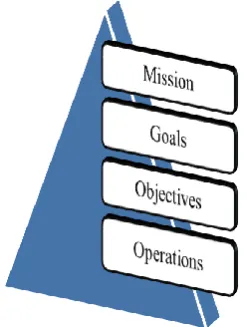
is considered and relevant budgets created to realise the plans. In short, strategic planning is concerned with accomplishing a final mission. In order to complete this mission, goals, objectives and operations must be identified.
Figure 3 – Strategic Planning Pyramid (created by Applewhaite, 2013, adapted from Oketch, October 11, 2012)
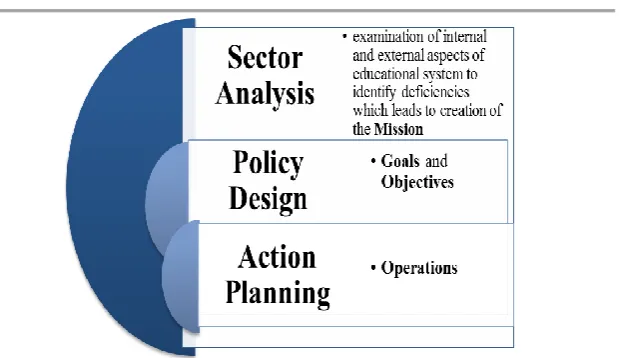
Figure 4 – Relationship between Strategic Planning and Strategic Pyramid Components
Analysis
I. Sector Analysis
Boshoff, (1989) advocated a situation audit to include a SWOT† analysis which was to consider the strengths and weakness of the educational system – the internal environment, and the opportunities and threats present in the society as a whole which represents the external environment. This would allow the planning team to consider alternative futures in order to conceive the mission which would create the necessary change.
Similarly, Chang (2008) advocated a critical analysis of internal and external aspects of the education system. This would permit a review of how the system functions to meet people’s needs and economic demand as well as an examination of various driving forces behind the education system – the economic condition, socio-demographic situations and developments. This would lead to the identification of critical issues, challenges and construction of remedial actions and policy provisions.
Within the Barbados Human Resource Development
Strategy 2011-2016 the document suggests that a sector analysis did take place and included the above elements.
Internal environment
The document outlines the evaluation of the internal environment in the commitment that the Government of Barbados has made by placing great emphasis on the development of human and social capital through a significant financial investment in education in the past which has led to great social and economic growth for the country. This is outlined below as per the Strategy document:
(Excerpted from Human Resource Development Strategy 2011-2016,
(2010), p. 8)
The Government continues to invest heavily in this area in order to continue to improve the lives of the people of Barbados and its continued social and economic development: “The Government is committed to increasing the number of secondary school leavers with the appropriate knowledge, skills, and competencies to successfully enter the job market or to embark on an economic enterprise” (Excerpted from Human Resource Development Strategy 2011-2016, (2010), 7).
External environment
in specialised skill areas. It is clear that these elements have been identified from a well-constructed SWOT analysis and have hence motivated the formulation of the Strategy as presented below:
“There is a focus on preparing a labour force that can meet the changing demands of an open economy increasingly impacted by dynamic external forces. Further, the government is cognisant of the growing need for specialised skills in emerging areas such as offshore financial and business development, tourism management, and agro-processing” (Excerpted from Human Resource Development Strategy 2011-2016, (2010), 7).
(Excerpted from Human Resource Development Strategy 2011-2016,
(2010), p. 9).
Identification of critical issues and challenges
The Strategy highlights a number of challenges and needs which are facing Barbados as the catalyst for the change promoted in the document:
-Impact of Globalisation
-Structural Changes within the employment sector -Employment
-Growth of the Small Business Sector
-Education and Training for the Civil Service (Ministry of Education and Human Resource Development 2010)
“The wage economy is not generating sufficient new jobs in which case a proportion of entrants will seek self-employment for which vocational (and life skills) will be needed to prepare them for adulthood and working life” (Excerpted from Human Resource Development Strategy 2011-2016, (2010), 13)
As a result of the above external environment, along with the challenges presented, the following response, specifically with regards to the issue of the deficiency in lifelong learning has been made transparent. These components can be seen to have coloured the formulation and construction of remedial actions and policy provisions through the Barbados Human Resource Strategy.
II. Policy Design
In strategic planning, the policy design is created from an exploration of the SWOT analysis. The Strategy document outlines the goals and objectives of the ultimate mission.
“The Barbados Human Resource Development Strategy is premised on a seamless, high quality, demand driven, enabling environment aimed at empowering citizens to actively contribute to sustainable growth and development in a dynamic and globally competitive economy. The strategy recognises the need to provide a solid basic education and to promote lifelong learning as the foundation for every individual’s personal and professional development. It adopts a holistic approach to human resource development which facilitates strategic linkages among stakeholders” (Excerpted from Human Resource Development Strategy 2011-2016, (2010), 70).
As a result the following objectives were highlighted to be the driving forces to the policy:
a) Increasing the number of secondary school leavers with the appropriate knowledge, skills and competencies to successfully enter the job market or embark on an economic enterprise.
b) Emphasis on promoting lifelong learning;
c) Development of a seamless educational system which will bridge the gap between academic and technical skills allowing for multiple entry and exit points
d) Provision of second chance education and opportunities for youth through the expansion of the provision and quality of technical and vocational education and training
e) Improvement of participation in adult and continuing education.
f) Development of a competency-based system of certification and the establishment of an internationally recognised national certification and qualifications framework. (Ministry of Education and Human Resource Development, 2010, 7).
intervention:
1. Effective enabling environment for human resource development
2. Improved internationally recognised national qualifications framework
3. Demand-driven educational system
4. Rationalised knowledge management system
5. Enhanced research, innovation, entrepreneurship, and development capacity (Ministry of Education and Human Resource Development, 2010, 70-71)
Pillars 2 and 3 speak directly to the problem of an ageing and declining population. This will be remedied through the creation of lifelong learning policies to help older workers keep up with the increasing demands of the economy- ‘demand-driven educational system’ - as well as to train young people – ‘improved internationally-recognised national qualifications framework’- to embrace knowledge and be retrainable at any stage in their career in order to be ready for the effects of globalisation and ageing which is a lifelong process.
Strategic Pillars 2 and 3 (Excerpted from Human Resource
Development Strategy 2011-2016, (2010), p. 70)
(Ministry of Education and Human Resource Development, 2010, p. 8). It is noted that “A clearly formulated policy can play an important “operational” role as a reference for action. It can help guide decisions and future actions in educational development…” (Chang 2008, 5).
III.Action Planning
Action planning, as previously affirmed, encompasses the operations sector of strategic planning. This is the point where the plan moves from vision to reality. The relationship between the inputs and outputs, or the goals and objectives are processed and solidified to produce implementation strategies to achieve the desired outcome. Essentially, action planning details how the future will be shaped through the plans articulated in the policy design. Throughout the action plan, the financial expenditure is applied to the specific resources, both human and material which are needed in order to contrive the plans for the achievement of the mission.
This view is supported by Chang (2008) who notes that, “Action planning is the preparation for implementation. An action plan aims to translate into operational terms the policy directions that education authorities intend to implement in a given time horizon. It is a tool for “clarifying” to some extent the goals and strategies in relation to the education policy” (Strategic Planning in Education: Some Concepts and Methods 2008, 6).
The Human Resource Development Strategy 2011-2016, in preparing for the execution of the policy has created logical frameworks for each of the strategic pillars. For the purpose of this analysis, the logical frameworks associated with pillars 2 and 3 which highlight the implementation strategies for the National Qualifications Framework and the Demand-Driven Education and Training System will be evaluated.
log frame, which was utilised by the Government of Barbados is a recognised tool for action planning. Chang (2008) continued to note that while there are various methodologies and techniques of action planning the Logical Framework approach is one method being used most often in the educational sector by different countries and agencies.
Of great significance as submitted through Save the Children (2003), the Logical Framework is clarified through the following description:
“It is a way of testing the logic of a plan of action by analysing it in terms of means and ends. This helps to:
clarify how the planned activities will help to achieve the objectives
be explicit about the implications of carrying out the planned activities in terms of resources, assumptions and risks” (Gosling with Edwards 2003, 222).
Explanatory Logical Framework (created by Applewhaite 2013 adapted from Gosling with Edwards 2003 and Yates October 25, 2012)
In brief, a log frame should:
1. Highlights the goal and purpose of a plan and shows how, through specific activities the detailed outputs will be realised.
2. Presents the resources necessary to execute the plan along with the finances needed to procure them.
3. Illustrates the assumptions and risks so as to recognise factors that would affect the project or need to be managed to limit their detrimental impact to the success of the mission.
(Excerpted from Human Resource Development Strategy 2011-2016, (2010), pp. 128-130)
The analysis of the National Qualifications Framework and Demand-Driven Education and Training System log frame alongside the explanatory logical framework revealed the following:
- Goal
- Purpose
Despite the formulation of the goal there is no evidence of a
Purpose of the project coming out of the Strategic Objective.
- Outputs
What are revealed as the Performance Indicators which would be considered as the Indicators of Achievement actually describe
Outputs of the project.
- Activities
The Activities which are noted do not specify any Inputs in order to achieve the ends. Further, they identify more outputs to the project without detailing at any time exactly how they would be accomplished.
- Indicators of Achievement
As previously mentioned The Performance Indicators detail a lot of Outputs, however, in some circumstances quantifiable results are noted especially in the Demand-Driven Education and Training System Framework in which the success of one of the projects will be measured by the percentage of persons enrolled in the programme annually. However, there is no indication of any quantifiable measurable enrolment in the National Qualifications Framework.
- Means of Verification
These do not lead to project monitoring and evaluation.
- Assumptions
circumstance it is not evidenced by the log frame that this was done.
- Costs
While the log frames outline how much money will be spent it does not highlight any specific resources to be procured in order to realise the plans.
Throughout the log frame there is no indication of how the plans will be carried out in order to achieve the mission. The log frame also does not address how things will be implemented; it only outlines that things will be done. There are no specific activities which explain the execution.
When analysed alongside the explanatory logical framework, the framework produced by the Government of Barbados is found to be an inadequate implementation tool.
There is no mention of training of staff or new programmes to be created in schools. The log frame also fails to address capacity building particularly through procurement of additional academic or administrative staff. The documentation of the bolstering of the infrastructure in order to accommodate new technical and vocational training in schools or the building of new facilities is lacking. Moreover, there is no mention of plans to facilitate the recruitment of candidates to follow the new vocational training programmes and continual professional development programmes on which the project is based.
Conclusion and Recommendations
However, examination of the log frames created reveals a lacklustre approach to the implementation of these plans.
Notably, the government could have done a few things much better. The budget outlined in the implementation strategies should be presented in a more specific manner in which the resources necessary to carry out the plans are identified. Although financial considerations are mentioned their allocated spending areas are vague. This may offer opportunities for corruption to occur which is in fact contrary to the transparency for which Barbados is well-known.
The goals and outputs should be clearly stated as well as the activities necessary to achieve them. More detailed explanations of exactly what will be done needs to be identified. Further, the assumptions and risks need to be addressed by the creation of activities which will mitigate these insufficiencies in the system.
BIBLIOGRAPHY:
Becker, G. S. 1993. Human Capital A Theoretical and Empirical Analysis with Special References to Education
(3rd ed.). Chicago: University of Chicago Press.
Bell, J. 2012, November 24. “OBA promises to improve education for young people.” Retrieved November 26,
2012, from The Royal Gazette Online:
www.royalgazette.com/article/20121124/NEWS01/71123 9888
Boshoff, H. 1989. “Testing Plans against Alternative Futures.”
Long Range Planning 22(5): 69-75.
Caillods, F. 2003. “Preface.” In Demographic Aspects of Educational Planning, edited by T.-N. Châu, Paris: UNESCO: International Institute of Educational Planning.
Planning: Symposium to Honour the Work of Francoise Caillods, 12. Paris: International Institute for Educational Planning.
Commonwealth Consortium for Education. 2012. Educational Co-operation: Jewel in the Commonwealth Crown, edited by P. Williams & J. Urwick. London: Commonwealth Foundation.
Cunningham, W. G. 1982. Systematic Planning for Educational Change. Palo Alto: Mayfield Publishing Company.
Downes, A. 2001. An Analysis of Economic and Social Development in Barbados: A Model for Small Island Developing States. Santiago: United Nations Economic Commission for Latin America and the Caribbean. Downes, A. 2004. Economic Growth in a Small Developing
Country: The Case of Barbados. Washington: Inter-American Development Bank.
Gosling, L., & Edwards, M. 2003. Tooklits: A practical guide to planning, mentoring, evaluation and impact assessment
(2nd ed.). London: Save the Children.
Gurría, A. 2007. “Foreword.” In Human Capital How what you know shapes your life, edited by B. Keeley, 3-4. Paris:
Organisation for Economic Co-operation and
Development.
Jones, R. 2010. “Foreward.” In Barbados Human Resource Development Strategy 2011-2016 Developing National, Institutional and Human Capacity for Sustainable Growth, edited by Ministry of Education and Human Resource Development, 155. Bridgetown: Government of Barbados.
Keller, G. 1983. Academic Strategy: The Management Revolution in American Higher Education. Baltimore: John Hopkins University Press.
Ministry Of Education and Human Resource Development. 2010. Barbados Human Resource Strategy 2011-2016 Developing National, Institutional and Human Capacity for Sustainable Growth. Bridgetown: Government of Barbados.
Morrison, J. L., Renfro, W. L., & Boucher, W. I. 1984. Futures Research and the Strategic Planning Process: Implications for Higher Education. Washington: ASHE Association for Higher Education.
National Insurance Office, Barbados. 2005, September 21.
Planning for Retirement. Retrieved November 5, 2012,
from National Insurance Scheme Barbados:
www.nis.gov.bb
Pan American Health Organisation, University of the West Indies. 2005. “Demographic and Socioeconomic Characteristics of the Elderly in Barbados.” In Health Welfare and Aging in Bridgetown, Barbados SABE 2000, PAHO, & UWI 13-19. Washington: Pan American Health Organisation Publishing.
Quashie, N. T. 2012. “Residential Proximity of Nearest Child and Older Adults' Receipts of Informal Support Transfers in Barbados.” Population Association of America 2012 Annual Meeting Program, 29. San Francisco: University of Princeton.
UNESCO. 1995-2012. Education for All Goals. Retrieved November 30, 2012, from United Nations Educational,
Scientific and Cultural Organisation:
www.unesco.org/new/en/education/themes/leading-the-international-agenda/education-for-all/efa-goals/
UNFPA, & HelpAge International. 2012. Ageing in the Twenty-First Century: A Celebration and a Challenge. New York: UNFPA and HelpAge International.