26 © 2020 AESS Publications. All Rights Reserved.
HOW KNOWLEDGE MANAGEMENT PLAYS AN EFFECTIVE
ROLE IN ORGANIZATIONS TO MAKE HRM MORE EFFICIENT
BY USING SYSTEM DYNAMICS?
Saneela Naseem1 Sayyed Sadaqat Hussain Shah2+
1,2Department of Commerce and Finance, Faculty of Arts and Social Sciences, Government College University Lahore, Punjab, Pakistan.
(+ Corresponding author)
Article History Received: 4 November 2019 Revised: 10 December 2019 Accepted: 30 December 2019 Published: 27 January 2020
Keywords Knowledge management Human resource management Organization performance Competitive advantage Organization effectiveness.
ABSTRACT
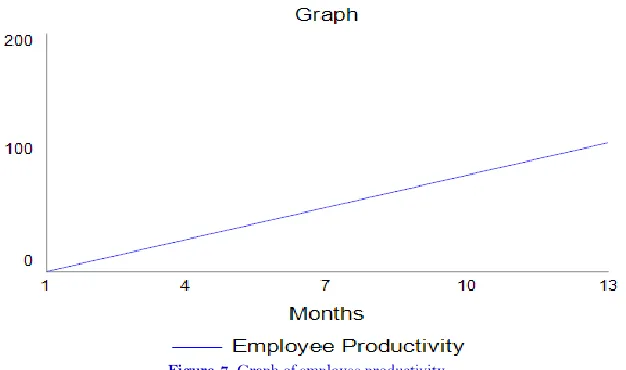
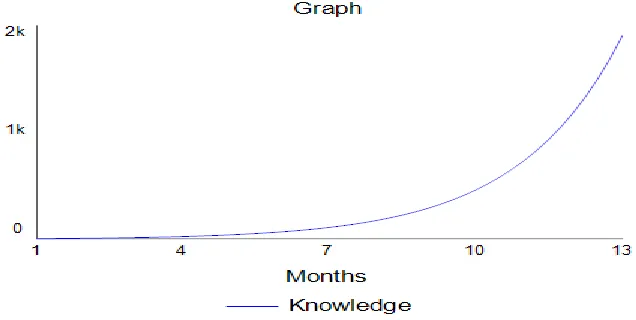
Knowledge management has emerged as an important tool for measuring organization performance leading to organizational sustainability and profitability. The intent of this paper is to discover the significant impact of the knowledge management system on organizational effectiveness enhance by system dynamics. For this purpose, the study uses the primary data; collected through structured interviews of the human resource personnel of Lahore University of Management Sciences. Overall results exhibit non-linear exponential relation which means one unit change in knowledge management double the change in organizational effectiveness. Additionally, a positive linear trend of employee productivity unveils the fact that diverse behavior only curtails organization efficiency for an initial time interval, the knowledge creation-stage, and hence after organization efficiency increases with an increase in knowledge. This study helps to facilitate the policymaker in a better understanding of knowledge-based solutions on diverse employee behavior and organizational inefficiency. These solutions will emerge into new innovative ideas to cater to the business environment pressures, particularly in competitive advantage.
Contribution/ Originality: This study uses a system dynamic model, firstly to explore the role of diverse behavioral patterns on knowledge creation and secondly the impact of knowledge management on organizational efficiency. The study concluded that diverse behavior only curtails organization efficiency for an initial time interval i.e. first quarter –the knowledge creation-stage, and hence after organization efficiency increases with an increase in knowledge.
1. INTRODUCTION
1.1. BackgroundKnowledge is recognized as a significant weapon for sustainable competitive advantage to compete with the challenging world to manage organizational knowledge. Prior to many ISSN(e): 2225-4226
ISSN(p): 2309-8295
DOI: 10.18488/journal.1006.2020.101.26.38 Vol. 10, No. 1, 26-38.
27 © 2020 AESS Publications. All Rights Reserved.
researchers tell about mainly two knowledge management (KM) factors such as developments and performance. Treating the knowledge component is an explicit concern for business activities that reflect in policy, strategy, and practice at each level of organization. The intellectual root of KM comes from a different concern of intellectual logical thinking, from real concern in the organization to get expert results and another perspective of corporate leaders and mentors. It is come to know that other perspective which comes from driving forces in a period of knowledge and increase its effectiveness in the 20th century. Knowledge is a well-defined capability to sustain the
corresponding utilization of resources to achieve organizational goals (Lapiņa, Maurāne, & Stariņeca, 2014; Soliman., 2000).
The organizational knowledge is how people know about processes, products, customers, failures, and accomplishments (Bollinger & Smith, 2001; Ishak., Eze, & Ling, 2010; Lapiņa et al., 2014). Currently, competition between organizations has become intense every day that the rate of innovation is increasing. According to Massa. and Testa (2009); Wilcox and Zeithaml (2003) value creation and competitive advantage is capture by developed core competences (knowledge, skills, and abilities) for worldwide ambition. Organizations should attain a dynamic means to manage wisely to become more proactive (Farzin, Kahreh, Hesan, & Khalouei, 2014). Organizational learning (OL) is the process of creating, retaining, and transferring knowledge within an organization. An organization improves over time as it gains experience. Organizational performance (OP) comprises the actual output or results of an organization as measured against its intended outputs.
System dynamics as a method has been successfully applied in a large variety of business and field of socio-economic to understand the different problems and gain insight into various policy interferences. System dynamics is a powerful tool that could bring a successful solution to a variety of problems.
In the emerging era, KM is a deep-rooted discipline in the business and academic field. Organizations develop and implement KM initiatives to improve organization effectiveness and efficiencies of different organizations globally. This increases the productivity and quality of products and services for their customers. However technological advancement is a major outcome from Knowledge management which creates knowledge creation for the companies to gain competitive advantage (Donate & De Pablo, 2015).
1.2. Research Problem
To overcome the challenging situations at work, this study examines a system dynamics model to understand the structural complexity of the system and its behavior. It explores the relationship between organizational performance and KM systems to cope with stimulating circumstances.
1.3. Research Gap
KMS conceptualizes to preserve knowledge through acquisition/creation, generation, storage and transference but there is no proper mechanism in practice to manage knowledge practices. The core essence of the research gap revolves around the concept of knowledge portability which is not addressed so far. For instance, an employee leaves an organization and reserves a valuable amount of knowledge which is not transferred to the subsequent employees. It creates ambiguous scenarios such as knowledge that is not captured at the right time and a new employee may not develop that level of knowledge in a given time period. This reduces work efficiency and productivity of employees thus affecting the overall organizational productivity.
1.4. System Dynamic
28 © 2020 AESS Publications. All Rights Reserved.
knowledge management for better decision making. Therefore, system dynamics help in providing an outcome for better implementation of policy and to get a competitive advantage for a longer time.
2. METHODOLOGY
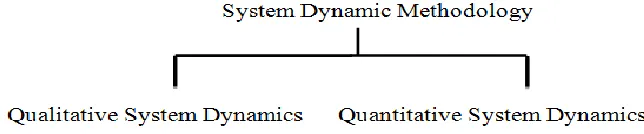
2.1. System DynamicsSystem dynamics is a method to understand the complex behavior of social, technological, political, and dynamic systems. It is helpful in making decisions and to know the different behaviors of the organizations. It studies nonlinear behavior of the complex system by using causal loop diagrams, stock and flow, and computer simulation. It consists of two phases so it is called a mixed method in system dynamic methodology as they are qualitative and quantitative as shown in
Figure 1. These two phases can be used in order to identify the problem or to find out the causes of concerns. The quantitative phase is based upon the development and analysis of the simulation model by transferring the conceptual model into the block. The qualitative phase includes system input-output analysis, conceptual modeling, and diagram formulation.
Figure-1. Quantitative and qualitative modeling in system dynamics.
2.2. Causal Loop Diagram
A causal loop diagram (CLD) is a causal diagram that helps to visualize how different variables are interrelated in a system. The diagram comprises of a set of edges and nodes. Edges are the links that represent a connection or a relation between two variables and nodes represent the variables.
A positive link indicates a positive relationship and a link marked as negative indicates a negative relationship. Likewise, if the node in which link starts increases, the other node also increases. A positive causal link means two nodes change in the same direction; if the node in which link starts decreases the other node also decreases. The negative link communicates that the two nodes change in opposite directions; if the node in which the link starts decreasing, on the other hand, other node starts increasing and so on.
2.3. Stock and Flow Map
Stock and flow works on the Principle of Accumulation. The variable of the stock is measured at a specific time and represents a quantity existing in that time which was collected in the past. The variable of flow measured over an interval of time so, flow is measured per unit of time. This system states the dynamic behavior occurs in a system when the flows can accumulate in stock causing them to increase or decrease. It arises when there is something that flows through the pipe and accumulates in stock. The stocks have the number of inflows and outflows in the system. In system, dynamics modeling both informational and non-informational entities can move through flows and accumulate in stock.
2.4. Simulation
System dynamics is a commonly used form of computer simulation to deal with many-faceted problems. It is the discipline to design a model of an actual or theoretical physical system and executing the model on a digital computer and analyzing the execution output. Simulation represents the principles of learning by doing, to learn about the system first we build a model and then operate the model.
2.5. Interviews
29 © 2020 AESS Publications. All Rights Reserved.
experience. Interviews are taken to find out the gap between the research work and the people who are doing these tasks professional from so many years and getting experience day by day is passing, in interviews we ask different questions to HR Managers and subordinates who have knowledge regarding HR issues and tell them about our research and get their point of views on the base of discussions that whether the variables which selected by us are liable for this research. This study came to know that on the basis of their experience which variables are important to cater to the research or this has to work on it. Their experience will give us the knowledge to add more things or modify the existing one in a better way to perform the task efficiently.
3. LITERATURE REVIEW
The system dynamic method involves defining problems dynamically in terms of flow diagrams and determining the behavioral view of the important dynamics of the system, focus on the internal characteristic of a system that generates or intensify the perceived problem. It is interrelated with loops of information, feedback, and circular causality. It also takes part in identifying independent stocks in their system and their inflows and outflow rates. A behavioral model is formulated which is capable of replicating the dynamic problem of concern.
It is generally a computer simulation model that exhibits nonlinear equations. However, as a diagram capturing stock and flows and causal feedback structures of the system, it is rarely left computed in a quantified approach. It also helps in deriving considerations and valid policy insights from the resultant model. Thus implementing changes resulting from model-based insights.
In this composite business climate, firms need to become advanced in their capabilities due to the challenging world. According to many recent studies, it has been found that KM and OL play a very imperative role in organizational innovativeness. There are comprehensive series of studies on process linked concerns like development, conception, storage, sharing and formation of knowledge.
KM is defined as “any practice of, acquiring, capturing, creating, sharing and using knowledge to increase the OP (Zaim., Bayyurt, Tarim, Zaim, & Guc, 2013). This process involves four sets, that are creation or generation, storage or recovery, transfer or sharing and application (Alavi. & Leidner, 2001).
Human resource departments’ responsibility to get the right person in the right place and at the right time to get high employee performance and to increase efficiency and effectiveness of the workplace. The critical business awareness of the organization is eradicating because of employee turnover rate due to which knowledge has become portable. A capable human resource gives reasonable implication to comprehend the dynamics of staffing and training. Therefore, the dynamics of market forces are a major contest to keep principal staff to stay competitive which is done by many organizations nowadays. Employee competency is an extent of improvement for society as a whole but it is time taking effort. For this purpose, human resource planning g (HRP) is more operational to develop self-efficacy and productivity, as a result, lessen the staff turnover.
System dynamic has several “back of the envelope” administration applications. There are powerful tools to impart system thinking spontaneous effects on the person being trained. Analyze and compare assumptions and materialize models about the technique things work collectively. It gains qualitative insight into an embedded working system or impulsive and timely decision making. Also, make a distinction in models of the dysfunctional system in routine practices.
The system dynamics model is shaped by different steps. These procedural steps identified by
Sterman (1992) are as follows: problem articulation (frontier selection), key variables must be recognized & articulating of dynamic hypothesis. This step takes account of endogenous emphasis, hypothesis generation and plotting with a causal loop or stock-flow. The relationship between cause and effect must be assessed. Testing the exemplary structured model. Sensitivity analysis and additional models are executed to validate the model. Policy scheming and valuation.
30 © 2020 AESS Publications. All Rights Reserved.
economic and social transitional pressure on policymakers and challenge managers to focus on the intricacy of the system in which we are enduring various problems that are a reflection of our own past actions. This is not a stagnant study somewhat than it has been becoming a radical study to increase and create new perspectives of the non-programmed problem which we had never been faced in the past.
SD is used for modeling behavior and to deal with different levels of complexity of systems over a large span of time. It deals with internal feedback loops and time postponements that disturb the conduct of the whole system. The basis of this approach is to recognize the diverse structure of different systems. Much globular, interconnecting and occasionally time-delayed collaboration among its mechanisms is to be expected just as of assistance, its behavior as the individual components to get ingenious learning. The active use of feedback loops and stocks and flows makes using this system dynamics renowned from other methodologies proficiently. To one side of this, these elements also display exactly how simple systems labeling perplexing nonlinearity. It is also helpful in computer simulation modeling techniques for understanding, edging and describing a composite system as well as its linked problems.
System dynamics is a computer-aided method for policy exploration and design. It relates to dynamic problems arising in complex social, executive, economic, or environmental systems literally any dynamic systems categorized by interdependence, shared interaction, information response, and rounded causality.
Knowledge Creation (KC) organizational knowledge creation comprises new emerging content within the organization. It is developed and created through cognitive and social processes as well as a collaborative process too. Knowledge creation associated with new organizational knowledge development in the company, through the accumulation of experience knowledge integration help to progress new knowledge (Paarup, 2006). The relationship between learning, customer significance, and innovation. These three things create new knowledge for the customer which make our organization more competitive than other organizations. To gain market competitive advantage newly acquire external knowledge helps us a lot to create innovations. The knowledge management, innovation and value creation for the customer play an important role in Leal-Rodriguez (2019).
Knowledge storage (KS) is concerned with the memory of an organization that involves electronic databases, written documents, and organizational procedures and codified human knowledge. There are two memories; individual memory and organizational memory. Individual memory is developed based on a person’s experiences and actions while organizational memory is based on organization structures, work procedures, organization culture, organization production process and information documentations (Marouf, 2005).
Knowledge Sharing refers to the packaging process which is collecting, articulating, transferring and receiving knowledge (Paarup, 2006). Knowledge sharing gives opportunities to get competitive advantages from investment in knowledge creation. Conversely, Paarup (2006)
based on the study of Hu and Xue (2010) claimed that knowledge sharing is restricted by three reasons; a lack of absorptive ability of the receiver, casual uncertainty concerning knowledge itself and a difficult relationship between the sender and receiver. For the innovation process knowledge sharing behavior is very important to reflect innovative work behavior employees need to interact with each other to obtain their knowledge. The employees who share their knowledge in an organization tend to involved in innovative work behavior because of compatibility with organizations with organizational values to create strong interpersonal relationships and social links. Therefore employees can access and utilize resources rooted in the organization to produce innovative ideas by knowledge sharing (Wahyudi, Udin, Yuniawan, & Rahardja, 2019).
31 © 2020 AESS Publications. All Rights Reserved.
4. RESULTS & DISCUSSIONS
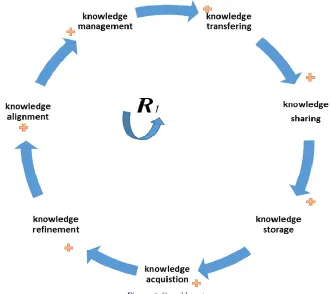
4.1. Causal Loop Diagram/ Feedback LoopThe causal loop diagram tells us about the relationship between different variables on each other. As shown in Figure 2that when there will be an increase in knowledge management there will be an increase in mutual knowledge sharing, therefore, there is a positive relationship between them. Each variable; knowledge acquisition, knowledge refinement, knowledge alignment, knowledge management, knowledge transferring and knowledge storage all have a positive relationship with each other increase in one variable there is an increase in other variables and so on. This loop is reinforcing loop because an increase in one variable there is an increase in another variable so it is reinforced/ positive feedback loop.
Figure-2. Causal loop 1.
32 © 2020 AESS Publications. All Rights Reserved.
Figure-3. Causal Loop 2.
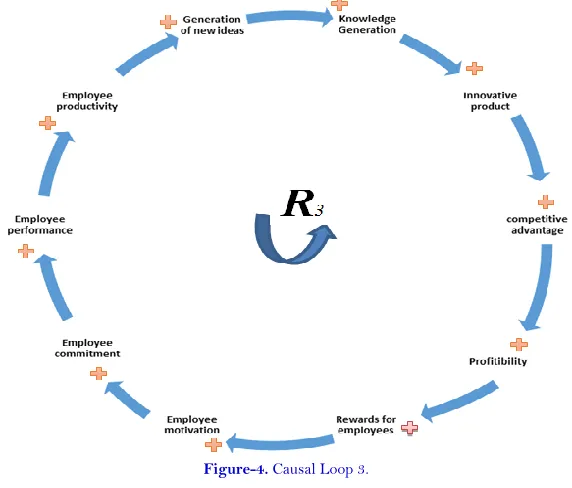
In an organization there is knowledge innovation then there will be innovative products and we gain a competitive advantage over competitors. In Figure 4 each has a positive relationship with each other as an increase in one variable there is an increase in other variables and so on. The knowledge generation, innovative product, competitive advantage, profitability of organization will increase, so rewards and incentives for employees increase, increase in employee motivation, increase in employee commitment, increase in employee performance, there will be increase in employee productivity, increase in the generation of new ideas which at end increases knowledge innovation. These all variable has positive feedback so, it is also reinforced loop.
Figure-4. Causal Loop 3.
33 © 2020 AESS Publications. All Rights Reserved.
4.2. Integrated Feedback Loop
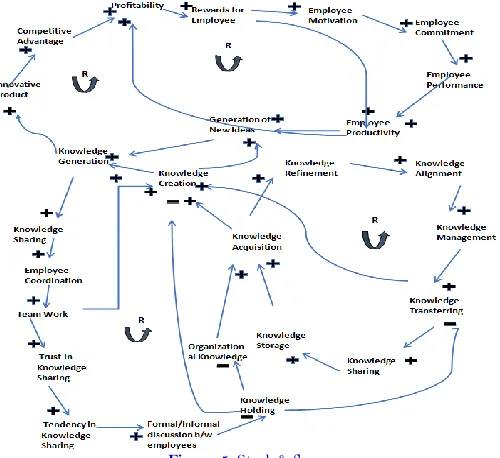
It represents the nature of interaction with the help of positive and negative signs. The plus (+) signs indicate that the variable with source head will increase with an increase in a variable at arrow tail. The negative sign indicates that the variable at arrowhead will decrease with the increase in a variable at arrow tail which shows an inverse relation between them. It is an integrated feedback loop which has positive and negative relationship with different variables. Some variables which have a negative relationship; increase in knowledge holding there is a decrease in knowledge creation, increase in knowledge holding there is a decrease in knowledge transferring, increase in knowledge holding there is decrease in organizational knowledge, increase in formal and informal discussions between employees decrease in knowledge holding. There are three main loops which are 2 reinforce loops and 1 balancing loop denoted as R, B and R.In integrated feedback loop some small loops are also observed like increase in employee productivity there is an increase in profitability; as profitability increases rewards for employees also increases due to which employee productivity increase.
4.3. Stock and Flow Diagram
The feedback loop in system dynamics leads to the formation of the development of the stock and flow diagram. The dynamic behavior of the system is supposed to arise due to the principle of Accumulation in system dynamics. This system states the dynamic behavior occurs in a system when the flows can accumulate in stock causing them to increase or decrease. It arises when there is something that flows through the pipe and accumulates in stock. The stocks have a number of inflows and outflows in the system. According to literature conducted on Knowledge Management is defined as “any practice of, acquiring, capturing, creating, sharing and using knowledge to increase the organization`s performance (Hafeez & Abdelmeguid, 2003). This process involves four sets, that are creation or generation, storage or recovery, transfer or sharing and application (Alavi. & Leidner, 2001). As shown in the stock and flow diagram Figure 5explains that stock 1 employee productivity and stock 2 are knowledge. There are two controller employee motivation and employee coordination. The connectors use to increase employee productivity are teamwork, rewards, and employee motivation; as teamwork increases employees become more productive, due to an increase in profitability there are increases in number. of rewards for the employee which increase the motivation level of employee and they become more productive. In stock 2 knowledge; if there is more employee coordination there is an increase in knowledge sharing and knowledge creation.
34 © 2020 AESS Publications. All Rights Reserved.
Figure-6. Simulation of knowledge capability and employee performance.
4.4. Simulation
4.4.1. Employee Productivity
Figure-7. Graph of employee productivity.
35 © 2020 AESS Publications. All Rights Reserved.
4.4.2. Organizational Knowledge
Figure-8. Graph on organizational knowledge.
Simulation is run on the base of the stock and flow diagram in Figure 8 it identifies organizational knowledge over the year. Results from the simulation show non-linear because there is the different pattern of behavior as it has varied over time. Initially, there is no increase till the third month in knowledge after 3 months there is an increase in knowledge and this curve is non-linear to know that to increase organizational knowledge is not an instant process it takes some time to increase the level of knowledge in the organization.
4.5. Interview Analysis
The organization which has been selected for the interview is Lahore University of Management Sciences (LUMS). The type of interview is recorded interview based on the CLD Diagram. Ask different questions on the base of CLD and to know about what their experience says about that research and what are the main things that have to add in this research and how research is different from what this interviewee experienced in their professional career. LUMS conducts different pieces of training on knowledge management which are based on in-house and out-house training. They conduct training on key performance indicators (KPI) in which they are developing different groups of employees and giving them the task to complete in the given time period. This develops coordination, collaboration, and teamwork between the employees and ultimately leads to increase employee productivity and employee performance.
HRM practices need to incorporate the formation of knowledge repository as the main objective of its strategic operations which can support the employees to grow and expand their capabilities. LUMS develops repositories which are guidelines for the employee to follow for maintaining organizational performance. These Repositories vary from department to department in the HR department if any employee leaves the organization the new employee comes to the place of another employee they use this documentation to get or achieve that level hence this retains knowledge in the organization. They call them standard operating procedures SOP which provides follow-up to employees to better understand the term and condition.
5. CONCLUSION
36 © 2020 AESS Publications. All Rights Reserved.
Therefore, there must be a mechanism to preserve the knowledge and decrease the turnover rate of employees.
As the organizations come across an era of rapid technological advancements and intensifying world competitions. This shows us the notation of organizational knowledge and how its an important resource to empowering organizations to compete with a competitive advantage. The concept of knowledge management is exploring to find out the main repositories of the knowledge within the organizations and how human recourse functions can coordinate and access the flow of real know-how for the innovation.
In past studies, there is unnoticed phenomena to address the knowledge gap created by an employee who leaves an organization and takes his knowledge to be implemented in a new organization without transferring it to its source organization. Hence, the knowledge gained over time is considered to be obsolete as it is not transferred through an appropriate channel. Knowledge plays a vital role to enhance the individual’s capability to deal with complex problems. It also improves the individual capacity to grasp the new ideas and dimensions to problem-solving and become an effective employee.
This study observed that the system dynamics methodology presents some key findings of the research problem. Employee productivity is constant due to its related variables input parameters such as rewards and employee motivation. On the other hand, knowledge is dynamic in nature as there could be some scenarios that may not lead to knowledge creation but only uses the available knowledge. However, if any scenario is specific and new in its occurrence then it will add up or create the knowledge as per the problem statement. In this way, knowledge depends upon the occurrence and nature of problems/ scenarios.
In short, it is important to incorporate a set of activities to collect knowledge-based upon specific issues that are explicit in nature. To gather explicit knowledge, there must some training protocols which permit not only to attend training but to record knowledge for future purposes. Under the HRM practices, it should be ensured to develop a set of actions or procedures to contribute to the knowledge repository of the organization.
6. MANAGERIAL IMPLICATIONS
Managers’ focus on Knowledge management has recently taken a more prominent role in the management of organizations as working knowledge and intellectual capital are recognized as critical to organizational success. The networks and social interactions utilized by workers to create and share new knowledge, and the multiple organizational and managerial factors associated with effective knowledge management systems. Based on the role of organizational culture, structure, leadership, and reward systems. The managers should focus on how to retain knowledge in the organization. The generating new knowledge, accessing valuable knowledge from outside sources, using accessible knowledge in decision making, embedding knowledge in processes, products and/or services, representing knowledge in documents, databases, and software, facilitating knowledge growth through culture and incentives, transferring existing knowledge into other parts of the organization and measuring the value of knowledge assets and/or impact of knowledge management. As a result of this, there are increases in employee performance, satisfaction, motivation, and productivity to achieve highly efficient organization goals.
7. LIMITATIONS & FUTURE DIRECTIONS
37 © 2020 AESS Publications. All Rights Reserved.
The emergence of IT-enabled knowledge management capability core competencies for the organization to enhance organizational capabilities, innovation, individual performance an competitive advantage (Gold, Malhotra, & Segars, 2001; Joshi, Chi, Datta, & Han, 2010; Ko & Dennis, 2011; Tseng & Lee, 2014).
Funding: This study received no specific financial support.
Competing Interests: The authors declare that they have no competing interests.
Acknowledgement: Both authors contributed equally to the conception and design of the study.
REFERENCES
Alavi, M., & Leidner, D. E. (2001). Knowledge management and knowledge management systems: Conceptual foundations and research issues. MIS Quarterly, 25(1), 107-136. Available at: https://doi.org/10.2307/3250961.
Bollinger, A. S., & Smith, R. D. (2001). Managing organizational knowledge as a strategic asset. Journal of Knowledge Management, 5(1), 8-18. Available at: https://doi.org/10.1108/13673270110384365. Donate, M. J., & De Pablo, J. D. S. (2015). The role of knowledge-oriented leadership in knowledge
management practices and innovation. Journal of Business Research, 68(2), 360-370. Available at: https://doi.org/10.1016/j.jbusres.2014.06.022.
Farzin, M. R., Kahreh, M. S., Hesan, M., & Khalouei, A. (2014). A survey of critical success factors for strategic knowledge management implementation: Applications for service sector. Procedia-Social and Behavioral Sciences, 109(8), 595-599. Available at: https://doi.org/10.1016/j.sbspro.2013.12.512. Gold, A. H., Malhotra, A., & Segars, A. H. (2001). Knowledge management: An organizational capabilities
perspective. Journal of Management Information Systems, 18(1), 185-214. Available at: https://doi.org/10.1080/07421222.2001.11045669.
Hafeez, K., & Abdelmeguid, H. (2003). Dynamics of human resource and knowledge management. Journal of the Operational Research Society, 54(2), 153-164.
Hu, Y., & Xue, L. (2010). The knowledge transfer factors under different perspectives. Paper presented at the Paper Presented at the International Conference on E-business Technology and Strategy.
Ishak, N. B., Eze, U. C., & Ling, L. S. (2010). Integrating knowledge management and human resource management for sustainable performance. Journal of Organizational Knowledge Management, 1-13. Available at: https://doi.org/10.5171/2010.322246.
Joshi, K. D., Chi, L., Datta, A., & Han, S. (2010). Changing the competitive landscape: Continuous innovation through IT-enabled knowledge capabilities. Information Systems Research, 21(3), 472-495. Available at: https://doi.org/10.1287/isre.1100.0298.
Ko, D.-G., & Dennis, A. R. (2011). Profiting from knowledge management: The impact of time and experience. Information Systems Research, 22(1), 134-152. Available at: https://doi.org/10.1287/isre.1090.0247. Lapiņa, I., Maurāne, G., & Stariņeca, O. (2014). Human resource management models: Aspects of knowledge
management and corporate social responsibility. Procedia-Social and Behavioral Sciences, 110, 577-586. Available at: https://doi.org/10.1016/j.sbspro.2013.12.902.
Leal-Rodriguez, A. L. J. K. M. R. (2019). Generating customer value through the boosting of relationships and organisational innovativeness. Practice, 1-12. Available at: 10.1080/14778238.2019.1673675. Marouf, L. (2005). Organizational context for knowledge sharing: A model for empirical investigation.
Singapore Journal of Library & Information Management, 34, 60-74.
Massa, S., & Testa, S. (2009). A knowledge management approach to organizational competitive advantage: Evidence from the food sector. European Management Journal, 27(2), 129-141. Available at: https://doi.org/10.1016/j.emj.2008.06.005.
Paarup, N. A. (2006). Understanding dynamic capabilities through knowledge management. Journal of Knowledge Management, 10(4), 59-71. Available at: https://doi.org/10.1108/13673270610679363. Salojärvi, H., Sainio, L.-M., & Tarkiainen, A. (2010). Organizational factors enhancing customer knowledge
utilization in the management of key account relationships. Industrial Marketing Management, 39(8), 1395-1402. Available at: https://doi.org/10.1016/j.indmarman.2010.04.005.
Soliman, F. (2000). Application of knowledge management for hazard analysis in the Australian dairy industry. Journal of Knowledge Management, 4(4), 287-294. Available at: https://doi.org/10.1108/13673270010379830.
38 © 2020 AESS Publications. All Rights Reserved.
Tseng, S. M., & Lee, P. S. (2014). The effect of knowledge management capability and dynamic capability on organizational performance. Journal of Enterprise Information Management, 27(2), 158-179. Available at: https://doi.org/10.1108/jeim-05-2012-0025.
Wahyudi, S., Udin, U., Yuniawan, A., & Rahardja, E. (2019). Person-Organization Fit, Knowledge Sharing Behaviour, and Innovative Work Behaviour: A Self-determination Perspective. International Journal of Innovation, Creativity and Change, 4(4), 145-161.
Wilcox, K. A., & Zeithaml, C. P. (2003). Measuring organizational knowledge: A conceptual and methodological framework. Strategic Management Journal, 24(8), 763-772. Available at: https://doi.org/10.1002/smj.333.
Zaim, H., Tatoglu, E., & Zaim, S. (2007). Performance of knowledge management practices: A causal analysis. Journal of Knowledge Management, 11(6), 54-67. Available at: https://doi.org/10.1108/13673270710832163.
Zaim, S., Bayyurt, N., Tarim, M., Zaim, H., & Guc, Y. (2013). System dynamics modeling of a knowledge management process: A case study in Turkish Airlines. Procedia-Social and Behavioral Sciences, 99, 545-552. Available at: https://doi.org/10.1016/j.sbspro.2013.10.524.