High Quality Dependency Selection from Automatic Parses
Gongye Jin, Daisuke Kawahara, Sadao Kurohashi
Graduate School of Informatics, Kyoto University Yoshida-Honmachi, Sakyo-ku, Kyoto, 606-8501, Japan
[email protected] {dk,kuro}@i.kyoto-u.ac.jp
Abstract
Many NLP tasks such as question answer-ing and knowledge acquisition are tightly dependent on dependency parsing. Depen-dency parsing accuracy is always decisive for the performance of subsequent tasks. Therefore, reducing dependency parsing errors or selecting high quality dependen-cies is a primary issue. In this paper, we present a supervised approach for au-tomatically selecting high quality depen-dencies from automatic parses. Experi-mental results on three different languages show that our approach can effectively se-lect high quality dependencies from the re-sult analyzed by a dependency parser.
1 Introduction
Knowledge acquisition from a large corpus has been actively studied recently. Knowledge is often acquired from the fundamental analysis. In partic-ular, dependency parsing has been used for some tasks like case frame compilation (Kawahara and Kurohashi, 2006), relation extraction (Saeger et al., 2011) and paraphrase acquisition (Hashimoto et al., 2011). For these tasks, the accuracy of de-pendency parsing is vital. Although the accuracy of state-of-the-art dependency parsers for some languages like English or Japanese is over 90%, it is still not high enough to acquire accurate knowl-edge, not to mention those difficult-to-analyze lan-guages like Chinese and Arabic.
Instead of using all the automatic parses, it is possible to use only high quality dependencies for knowledge acquisition. In this paper, we present a supervised approach for selecting high quality dependencies from automatic dependency parses. This method considers linguistic features that are related to the difficulty of dependency parsing. The experimental results on English, Chinese and
Japanese show that our proposed method can se-lect dependencies of higher quality than baseline methods for all the languages.
2 Related Word
There have been a few approaches devoted to au-tomatic selection of high quality parses or depen-dencies. According to selection algorithms, they can be categorized into supervised and unsuper-vised.
Supervised methods mainly focus on the con-struction of a machine learning classifier to pre-dict the reliability of parses or dependencies based on various kinds of features both on syntactic and semantic level. Yates et al. (2006) created WOODWARD which is a Web-based semantic fil-tering system. Kawahara and Uchimoto (2008) built a binary classifier that classifies each parse of a sentence as reliable or not. Among super-vised methods, ensemble approaches were also proposed. Reichart and Rappoport (2007) de-tected parse quality by a Sample Ensemble Parse Assessment (SEPA) algorithm. Another similar approach proposed by Sagae and Tsujii (2007) also selected high quality parses by computing the level of agreement on different parser out-puts. Iwatate (2012) applied a tournament model on Japanese dependency parsing and then selected reliable dependencies by using SVM output. The work most related to ours is the work of Yu et al. (2008). They proposed a framework that selects high quality parses in the first stage, and then se-lected high quality dependencies from the filtered parses. In comparison, we consider that even some low quality sentences possibly contain high qual-ity dependencies. Also, we take into account other aspects that can affect high quality dependency classification and create a new set of linguistic fea-tures for classification.
Also, unsupervised algorithms for detecting re-liable dependency parses were proposed. Reichart
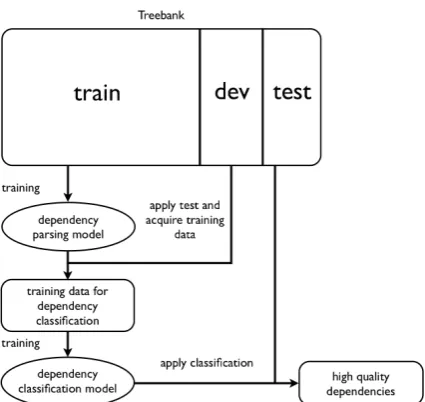
Figure 1: Overview of high quality dependency selection
and Rappoport (2009) proposed an unsupervised method for high quality parse selection, which was based on the idea that syntactic structures that are frequently created by a parser are more likely to be correct. Dell’Orletta et al. (2011) proposed ULISSE (Unsupervised LInguiSticallydriven Se-lection of dEpendency parses), which uses an un-supervised method in a un-supervised parsing sce-nario. Although unsupervised methods may solve the domain adaption issue and do not use any annotated data, the accuracy of selected parses, which is under 95%, still needs to be improved for knowledge acquisition tasks.
3 High Quality Dependency Selection
In this section, we present a framework of highly reliable dependency selection from auto-matic parses. Figure 1 shows the overview of our approach. We use a part of a treebank to train a parser and another part to train a binary classifier which judges a dependency to be reliable or not.
3.1 Training Data for Dependency Classification
We collect training data from the same corpus which is also used in dependency parsing in the first stage. First, the training section is used to train a dependency parser and the development section is used to apply dependency parsing us-ing the model trained by trainus-ing section. From the parses of the development section, we ac-quire training data for dependency classification
by labeling each dependency according to the gold standard data. All the correct dependencies are de-fined as reliable and vice versa.
3.2 Features for Dependency Classification
Most basic features consider that word pairs are much less likely to have a dependency relation when there are punctuation between them. On the other hand, based on the fact that dependencies with longer distance always show worse parsing performance (McDonald and Nivre, 2007), dis-tance is another important factor that reflects the difficulty of judging whether two words have a de-pendency relation. Yu et al. (2008) used the fea-tures mentioned above and PoS feafea-tures except the word features and did not use the context features, which are described later.
In addition to these basic features, we consider context features that are thought to affect the pars-ing performance. Table 2 lists these context fea-tures. In some more complex cases, it is also nec-essary to observe larger span of context. In order to learn such linguistic characteristics automati-cally, besides POS tags the head and modifier in a dependency, we also use their preceding and fol-lowing one and two words along with their POS tags.
Another important fact is that verbal phrases in the dependency tree structure of a parse are nor-mally the root node of the whole dependency tree or the parent node of a subtree. When a word pair that contains a verbal phrase between them, the two words are always on different sides of a par-ent node. Thus, these kinds of word pairs will always have no dependency link between them. This leads to the fact that argument pairs that have a verb between them rarely have a depen-dency relation. Observing whether there are ver-bal phrases between a head-modifier pairs can help judge whether the dependency between them is re-liable.
grandparent node which we call a modifier’s uncle nodes are also considered as other features. Simi-larly, we use leftmost and rightmost uncle nodes.
4 Experiments
4.1 Experimental Settings
We first experiment on English, Chinese and Japanese. For English, we employ MSTparser1 as a base dependency parser and use sections 02 to 21 from Wall Street Journal (WSJ) corpus in Penn Treebank (PTB) to train a dependency pars-ing model. Then, we use section 22 from WSJ to apply the dependency parsing model to acquire the training data for dependency classification. MX-POST2 tagger is used for English automatic POS tagging. For Chinese, we use CNP (Chen et al., 2009) parser to train a dependency parser using section 1 to 270, 400 to 931 and 1001 to 1151 from Penn Chinese Treebank (CTB). Sections 301 to 325 are used to apply dependency parsing to ac-quire training data for dependency classification. We use MMA (Kruengkrai et al., 2009) to ap-ply both segmentation and POS tagging. Differ-ent from the previous two languages which take
words as the basic unit, experiments on Japanese are based on the unit of the phrase segments bun-setsu. We first use JUMAN3 for Japanese mor-phological analysis. Then KNP4 is utilized for Japanese dependency parsing. Section 950112, 950113 and 9509ED from Kyoto Corpus are used to apply dependency parsing and acquire training data for dependency selection.
We employ SVM-Light5 with polynomial ker-nel (degree 3) to solve the binary classification. In order to compare with previous work by Yu et al. (2008), we use the basic feature set as a baseline. For English, section 23 from WSJ is used as a test set. Section 271 to 300 from CTB, and section 950114 to 950117 and 9510ED to 9512ED from Kyoto Corpus are used to test the classification ap-proach in Chinese and Japanese, respectively. are used to test the classification approach in Chinese and Japanese respectively.
1http://sourceforge.net/projects/
mstparser/
2
http://www.inf.ed.ac.uk/resources/ nlp/local_doc/MXPOST.html
3
http://nlp.ist.i.kyoto-u.ac.jp/EN/ index.php?JUMAN
4
http://nlp.ist.i.kyoto-u.ac.jp/EN/ index.php?KNP
5http://svmlight.joachims.org
According to the output of the SVM, we only select dependencies that have the score higher than a threshold. Precision is calculated as the ratio of correct dependencies in retrieved ones. Recall is the ratio of correct dependencies in total. In Chinese and Japanese, we treat incorrect segmen-tations as incorrect dependencies. Note that the maximum recall value equals the precision of base dependency parser without dependency selection.
4.2 Experimental Results
4.2.1 Effectiveness of Dependency Selection
Figure 2 shows the precision-recall curves of the classification using SVM for three languages. In these graphs, ‘basic’ means the method us-ing the basic features, ‘context’ stands for the mothod with context information, and ‘con-text+tree’ means the method with additional tree-based features.
One of the biggest problems that most data-driven parsers are facing is the domain adaption problem. When they are applied to a text of a different domain, their accuracy decreases signifi-cantly. We applied the dependency parsing model trained on WSJ to the Brown corpus, and obtained an unlabeled attachment score of 0.832, which is significantly lower than the in-domain score by 8.1%. We applied the same dependency selection model trained on WSJ to the Brown corpus. Fig-ure 4 shows the precision-recall curves of depen-dency selection on the Brown corpus. From the results, we can see that when the recall is 40% for example, high quality dependencies with a preci-sion of over 95% can be acquired. This shows that our method works well on data from different do-mains. This fact creates a good way to acquire knowledge from a large raw corpus in different do-mains (e.g., the Web).
4.2.2 Statistics of Selected Dependencies
Figure 2: Precision-recall curves of dependency classification for English (left), Japanese (middle) and Chinese (right)
Figure 3: Statistics of POS tags of dependencies in different languages: dependencies without selection (left), dependencies when recall is 50% (middle), dependencies when recall is 20% (right)
the dependencies selected under different thresh-olds (i.e., recall is 20% and recall is 50% respec-tively). We found that dependencies with nouns are dominant in all the types for all the languages. Secondly, dependencies related to verbs which are very informative patterns account for a large pro-portion.
5 Conclusion and Future Work
In this paper, we proposed a classification ap-proach for high quality dependency selection. We created new sets of features to select highly re-liable dependencies from each parse through a parser. The experiments showed that our method worked for in-domain parses and also out-of-domain parses. We can extract high quality depen-dencies from a large corpus such as the Web and subsequently assist knowledge acquisition tasks,
Figure 4: Precision-recall curves of dependency selection on Brown corpus
[image:4.595.319.516.522.638.2]References
Wenliang Chen, Jun’ichi Kazama, Kiyotaka Uchimota,
and Kentaro Torisawa. 2009. Improving
depen-dency parsing with subtrees from auto-parsed data. InProceedings of EMNLP 2009, pages 570–579.
Felice Dell’Orletta, Giulia Venturi, and Simonetta Montemagni. 2011. Ulisse: an unsupervised algo-rithm for detecting reliable dependency parses. In
Proceeding of CoNLL 2011, pages 115–124.
Chikara Hashimoto, Kentaro Torisawa, Stijn De Saeger, Jun’ichi Kazama, and Sadao Kurohashi. 2011. Extracting paraphrases from definition
sen-tences on the web. In Proceedings of ACL 2011,
pages 1087–1097.
Masakazu Iwatate. 2012. Development of Pairwise
Comparison-based Japanese Dependency Parsers and Application to Corpus Annotation. Ph.D. the-sis, NAIST, Japan.
Daisuke Kawahara and Sadao Kurohashi. 2006. A fully-lexicalized probabilistic model for japanese
syntactic and case structure analysis. In
Proceed-ings of HLT-NAACL 2006, pages 176–183.
Daisuke Kawahara and Sadao Kurohashi. 2010. Ac-quiring reliable predicate-argument structures from raw corpora for case frame compilation. In Proceed-ings of LREC 2010, pages 1389–1393.
Daisuke Kawahara and Kiyokata Uchimoto. 2008.
Learning reliability of parses for domain adaptation. InProceedings of IJCNLP 2008, pages 709–714.
Canasai Kruengkrai, Kiyotaka Uchimoto, Jun’ichi Kazama, Yiou Wang, Kentaro Torisawa, and Hitoshi Isahara. 2009. An error-driven word-character hy-brid model for joint chinese word segmentation and
pos tagging. InProceedings of ACL-IJCNLP 2009,
pages 513–521.
Ryan McDonald and Joakim Nivre. 2007. Character-izing the errors of data-driven dependency parsing
models. In Proceedings of EMNLP-CoNLL 2007,
pages 122–131.
Roi Reichart and Ari Rappoport. 2007. An ensemble method for selection of high quality parses. In Pro-ceedings of ACL 2007, pages 408–415.
Roi Reichart and Ari Rappoport. 2009. Automatic se-lection of high quality parses created by a fully
un-supervised parser. InProceedings of CoNLL 2009,
pages 156–164.
Stijn De Saeger, Kentaro Torisawa, Masaaki Tsuchida, Jun’ichi Kazama, Chikara Hashimoto, Ichiro Ya-mada, Jong Hoon Oh, Istv´an Varga, and Yulan Yan. 2011. Relation acquisition using word classes and
partial patterns. In Proceedings of EMNLP 2011,
pages 825–835.
Kenji Sagae and Jun’ichi Tsujii. 2007. Dependency parsing and domain adaptation with lr models and
parser ensemble. InProceedings of EMNLP-CoNLL
2007, pages 408–415.
Alexander Yates, Stefan Schoenmackers, and Oren
Et-zioni. 2006. Detecting parser errors using
web-based semantic filters. In Proceedings of EMNLP
2006, pages 27–34.
Kun Yu, Daisuke Kawahara, and Sadao Kurohashi. 2008. Cascaded classification for high quality
head-modifier pair selection. In Proceedings of NLP