A Support System for Revising Titles
to Stimulate the Lay Reader’s Interest in Technical Achievements
Yasuko Senda†‡, Yasusi Sinohara†, and Manabu Okumura§†System Engineering Research Laboratory,
Central Research Institute of Electric Power Industry, Tokyo Japan ‡Department of Computational Intelligence and Systems Science,
Tokyo Institute of Technology, Tokyo Japan
§Precision and Intelligence Laboratory, Tokyo Institute of Technology, Tokyo Japan
Abstract
When we write a report or an explanation on a newly-developed technology for readers including laypersons, it is very important to compose a title that can stimulate their in-terest in the technology. However, it is dif-ficult for inexperienced authors to come up with an appealing title.
In this research, we developed a support sys-tem for revising titles. We call it “title revi-sion wizard”. The wizard provides a guid-ance on revising draft title to compose a title meeting three key points, and support tools for coming up with and elaborating on com-prehensible or appealing phrases.
In order to test the effect of our title revision wizard, we conducted a questionnaire sur-vey on the effect of the titles with or with-out using the wizard on the interest of lay readers. The survey showed that the wiz-ard is effective and helpful for the authors who cannot compose appealing titles for lay readers by themselves.
1 Introduction
When we read a document, we usually read its title first, and then we read the body text only if the title catches our interest. Therefore, when we write a report or an explanation on a newly-developed technology intended for readers in-cluding laypersons, it is very important to com-pose a title that will stimulate their interest in the technology. However, technical specialists are not necessarily good at composing appeal-ing titles, because it isn’t clear what sort of titles will stimulate the interest of lay readers in the technology.
In the field of NLP and linguistics, there are few researches which help the specialists com-pose appealing titles for lay readers. Several researches have been reported on title genera-tion (Jin and Hauptmann, 2000) (Berger and Mittal, 2000) and readability of texts (Minel et al., 1997) (Hartley and Sydes, 1997) (Inui et al., 2003). However, the researches on title
gener-ation focus on generating a very compact sum-mary of the document rather than composing an appealing title. The previous researches on readability mainly see it as comprehensibility rather than interestingness.
In this regard, our previous study (Senda and Sinohara, 2002) clarified what sort of content and wording in titles are effective in stimulat-ing lay readers’ interest in the technology by an analysis of a parallel corpus of Japanese techni-cal paper titles and Japanese newspapers head-lines. The study categorized the effective con-tent and wording of the titles into the following three key points.
Key Point 1 (for Wording) Instead of tech-nical terms, use synonymous plain terms even where the plain term is not synony-mous with the technical term in a precise sense.
Key Point 2 (for Content) Describe what the technology is for, rather than what the technology does.
Key Point 3 (for Content) Describe the ad-vantages of the technology, rather than the method of realizing the technology.
Our next goal is to enable inexperienced au-thors to compose a title according to these key points. To this end, we developed a support system for revising titles. We call it “title revi-sion wizard”. The wizard provides a guidance on revising draft title to compose a title meet-ing the key points, and a few support tools for coming up with and elaborating on appealing phrases. In this paper, we report on the title revision wizard, and a questionnaire survey on the effect of titles composed with and without using the wizard on the interest of lay readers.
2 Method for Revising Titles Intended for Lay Readers
5VGR+PRWVUQOGRJTCUGUKPVQVJGVKVNGVGORNCVG VJG 2JTCUGU 7UGF KP 5WRRQTV6QQNU2TQXKFGF KPVJG9K\CTF
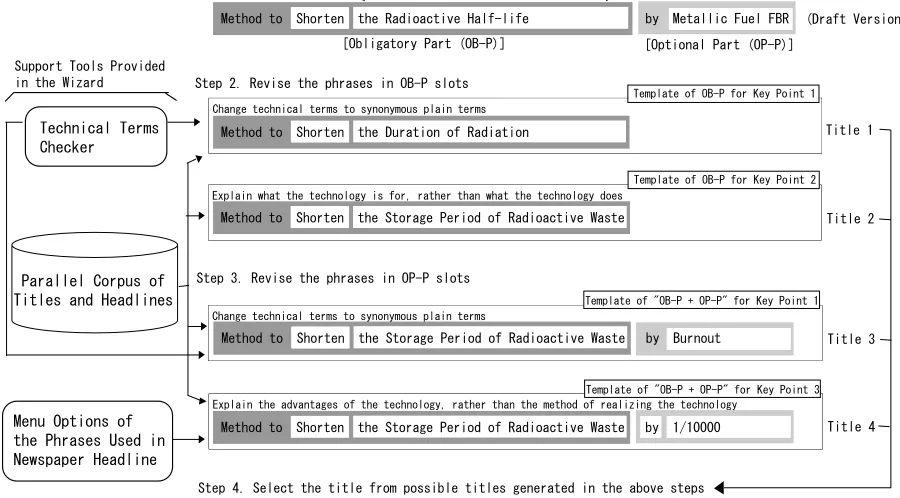
Figure 1: Steps in the Procedure for Revising draft title Using the Wizard
up with appealing titles for lay readers even when they know the three key points.
In our title revision wizard, therefore, the au-thors first input draft title into the title tem-plate, and then compose candidates of title by revising the phrases of the draft title according to the wizard’s guidance with the help of the support tools provided.
The steps in the wizard’s procedure are il-lustrated in Figure 1 1 . In the following, we explain the steps with reference to Figure 1.
2.1 Inputting Some Phrases into the Title Template
In step 1, the user inputs draft title into the title template displayed in the wizard window. The title template consists of an “OBligatory Part” (OB-P) and an “OPtional Part” (OP-P). The OB-P phrase describes what the technology does, and OP-P phrase describes the method used to implement the technology or the advan-tages of the technology.
2.2 Revising the Obligatory Phrases
In step 2, the wizard presents only OB-P to the user, and hides OP-P. The user revises only the OB-P phrase according to the two key points.
First, the user changes technical terms to the synonymous plain terms according to key point
1The sample titles presented in Figure 1 are
trans-lated into English from original Japanese titles.
1. In the template 2-1 in step 2, the technical term “the Radioactive Half-life” is changed to the plainer term “the Duration of Radiation” from this viewpoint.
Secondly, the user changes the phrase in the OB-P slots to describe the purpose of the tech-nology rather than what the techtech-nology does, according to key point 2. In the template 2-2 in step 2, the phrase “Shorten the Radioactive Half-life” is changed to the phrase “Shorten the Storage Period of Radioactive Waste” from this view point.
These revised OB-P phrases without optional phrase are recorded as candidates of “simple” title for future selection in step 4. At the end of step 2, for future revision in step 3, the user selects one title that he/she deems the better one from these candidates of title.
2.3 Revising the Optional Phrases
In step 3, the wizard presents new title combin-ing OB-P phrase (selected at the end of step 2) and the OP-P phrase (inputted in step 1) as a draft title. The user revises only the OP-P draft phrase according to the two key points.
slot to describe the advantages of the technology rather than the method of realizing the technol-ogy according to key point 3. In the template 3-2 in step 3, the OP-P phrase is changed to the phrase “by 1/10000” from this viewpoint.
The title combining the title selected in step 2 and each phrase revised at step 3 are recorded as candidates of title for future selection in step 4. Before next step, the user can return to step 2 to select another OB-P phrase and revise OP-P phrase attached to the OB-OP-P phrase in step 3 again if he/she likes.
2.4 Select the Title from Title Candidates
In step 4, the user selects one title from the candidates of title composed in the above steps.
2.5 An Example of the Wizard Window
Figure 2 is a screenshot of the Wizard. This screenshot shows the window in step 2 described in section 2.2. The Japanese text in upper pane of the window is the explanation of key point 1. The template for the OB-P Phrase for key point 1 is displayed at the bottom of the win-dow. The buttons in the center of the pane are for accessing the support tools for coming up with and elaborating the input phrase. Detail of the support tools will be given in the next section.
Title revision wizard is implemented in PHP (Hypertext Preprocessor). Users can access the wizard using a web browser such as Internet Ex-plorer.
3 Support Tools provided in the Wizard
In this section, we explain the three support tools provided in the title revision wizard.
3.1 Database of Paper Titles and Newspapers Headlines for Related Technologies
It is difficult for inexperienced authors to come up with a phrase meeting the three key points. We therefore prepared a parallel corpus of titles and headlines for related technologies in order to provide clues for coming up with an appropri-ate phrase. The database consists of about 420 titles and 440 headlines. They were categorized into 150 groups on technology that has been de-veloped in a research institute, and covers sci-ence and technology in general. The database is (b) in Figure 1.
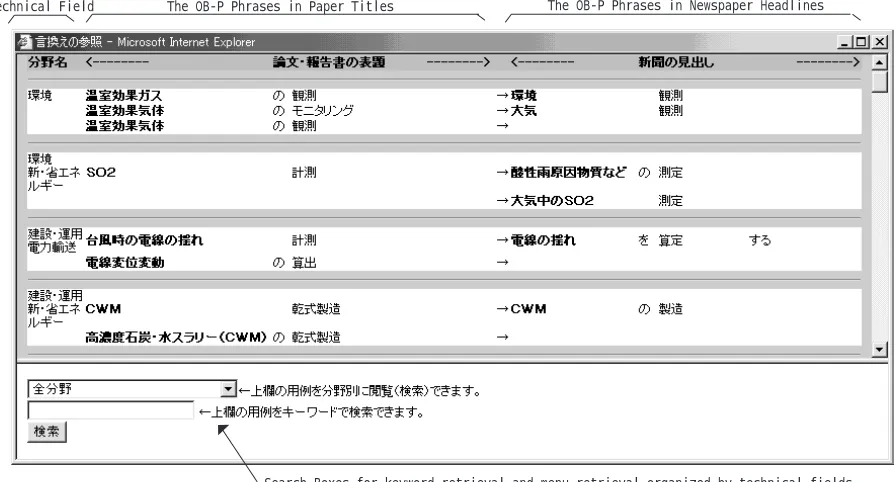
Figure 3 shows an example of the database window. The upper pane in the window shows the phrases in titles and the headlines describ-ing related technologies. The lower part of the window presents search boxes for menu-based retrieval and keyword-based retrieval. The pull-down menu options are organized by technical fields. Users can search the clues for revising the title of the draft version from these search boxes as well as by scrolling through the window.
The role of this parallel corpus is basi-cally the same as the one of “Example-Based Translation Aid (EBTA)” (Sato, 1992) (Furu-gori and Takeda, 1993) (Kumano and Tanaka, 1998). EBTA researches have shown that par-allel translation examples (pairs of source text and its translation equivalent) are very helpful for translators to translate the similar text be-cause parallel translation examples give them useful clues for translation. From the viewpoint that paper titles and newspapers headlines for related technologies are also regarded as paral-lel translation examples (pairs of text for spe-cialists and its translation equivalent for lay readers) describing newly-developed technolo-gies, the our database is expected to be helpful for the user of the wizard.
3.2 Technical Terms Checker
The author should use comprehensible term for lay readers in order to compose the titles meet-ing the key point 1. In order to avoid incompre-hensible terms, it is important to identify diffi-culty level of a term that authors want to use in his/her title. We, therefore, prepared “techni-cal term checker” estimating the difficulty level of a term.
5WRRQTV6QQNUHQTKPRWVVKPI
6KVNG6GORNCVG
Figure 2: Screenshot of Title Revision Wizard
Figure 3: Parallel Corpus of Titles and Headlines for Related Technology
3.3 Menu Options of the Phrases Used in Newspapers Headlines
In order to meet key point 3, the authors have to consider how to represent the advantages of the technologies from various viewpoints, and come up with the phrase that can concisely represent the advantages. However, it is considered that those who have a detailed knowledge of a techni-cal field are unaccustomed to represent the
ad-vantages of the technologies in a title because previous research showed that most of technical paper titles in Japanese does not included such a phrase (Senda and Sinohara, 2002).
technology. For example, in our menu options, the following phrases are listed by the following group: high density, high concentration, high accuracy, . . . , low price, low cost, low pollution, . . . , long-lived, long distance, . . . , short time, short duration, . . . , ; etc2 .
Figure 4 shows the menu options installed at the title template for key point 3. This menu options can help the users come up with or elab-orate on the phrases by offering various expres-sions and viewpoints.
4 Effect of Title Revision Wizard
In order to test the effect of the title revision wizard, we conducted an experiment which had 17 technical researchers revise their titles with and without using our wizard. We then con-ducted a questionnaire survey on the effect of the titles on the interest of lay readers.
4.1 Outline of the Experiment
We conducted the experiment according to the following procedures.
Experiment 1 (Ex 1)
1. We showed each subject his technical pa-per title (published after 2000) on his own developed technology. We asked him to imagine himself writing an explanation of the same technology for lay readers. 2. We asked each subject to compose three
candidates of title for the explanation by his own effort (that is, without our wiz-ard) within the 20-minute time limit.
Experiment 2 (Ex 2)
1. After Ex 1, we input original technical paper title into first title template of our title revision wizard (for draft title), and presented each subject with the wizard. 2. We asked each subject to compose
candi-dates of titles for the same document us-ing the wizard and select thee titles from the candidates within the 20-minute time limit.
The research fields of subjects were physics, electrical engineering, material science and me-teorology. There was no intermission between Ex 1 and 2.
2These sample phrases are translated into English
from original Japanese phrases.
4.2 Outline of the Questionnaire Survey
In the questionnaire, each respondent was shown seven titles per one technology that each subject developed. They consisted of an origi-nal technical paper title, three titles composed at Ex 1, and three titles composed at Ex 2. Each respondent was asked to select three-most inter-esting titles from these 7 titles per one technol-ogy.
Respondents to the questionnaire were 108 persons and general monitors of an Internet re-search firm. We asked them to answer our ques-tionnaire on a Web page which was prepared for this survey.
This means, of course, that the results of the questionnaire only contain responses from peo-ple who have some skill at using the Internet, rather than the public at large, because all re-spondents were able to use E-mail and access the web page. However, at least, the result helps to write document on a Web page which explains new technology for lay readers.
Moreover, the result is also an exercise in reaching the general lay readers over the Inter-net, and the use of the Internet is expected to be increasingly important in reaching the gen-eral public.
4.3 Analysis of Experiment and Questionnaire Survey
Figure 5 shows the (average) share of the vote which the respondents select three-most inter-esting titles from each author’s seven titles (by method of composing). Figure 5 indicates that:
• The average share of the vote of the titles revised using the wizard are distributed within the highest range.
• The average share of the vote of the titles revised without using the wizard are dis-tributed within the second highest range,
• The share of the vote of original techni-cal paper titles are distributed within the third highest range,
Figure 4: Pull-down Menu Options Organizing the Phrases Used in Newspaper Head-line
㪫㫀㫋㫃㪼㫊㩷㪩㪼㫍㫀㫊㪼㪻㩷㫎㫀㫋㪿㫆㫌㫋㩷㪬㫊㫀㫅㪾㩷㪮㫀㫑㪸㫉㪻
㪪㪿㪸㫉㪼㩷㫆㪽㩷㫋㪿㪼㩷㪭㫆㫋㪼㩷㫆㪽㩷㫋㪿㪼㩷㪫㫀㫋㫃㪼㩿㫊㪀㩷㫎㪿㫀㪺㪿㩷㪜㪸㪺㪿㩷㪘㫌㫋㪿㫆㫉㩷㪚㫆㫄㫇㫆㫊㪼㪻㩷
㪥㫌㫄㪹㪼㫉㩷㫆㪽㩷㪘㫌㫋㪿㫆㫉㫊
㪉㪇㩼 㪊㪇㩼 㪋㪇㩼 㪌㪇㩼 㪍㪇㩼 㪎㪇㩼
㪫㫀㫋㫃㪼㫊㩷㪩㪼㫍㫀㫊㪼㪻㩷㪬㫊㫀㫅㪾㩷㪮㫀㫑㪸㫉㪻 㪦㫉㫀㪾㫀㫅㪸㫃㩷㪫㪼㪺㪿㫅㫀㪺㪸㫃㩷㪧㪸㫇㪼㫉㩷㪫㫀㫋㫃㪼㫊
㪇 㪈 㪉 㪊 㪋 㪌 㪍 㪎 㪏 㪐
㪈㪇㩼 䌾㪈㪇㩼
㩿㪘㫍㪼㫉㪸㪾㪼㩷㪪㪿㪸㫉㪼㩷㫆㪽㩷㫋㪿㪼㩷㪭㫆㫋㪼㪀 㩷㩿㪪㪿㪸㫉㪼㩷㫆㪽㩷㫋㪿㪼㩷㪭㫆㫋㪼㪀
Figure 5: Histogram of Share of the Vote which the Respondents Select Three-most Interesting Titles from Each Au-thor’s 7 Titles (by Method of Composing)
byt-test. As the result, We also confirmed that
there is a significant difference between these titles (the significant level is 5%).
These results show that the titles composed using the wizard could stimulate the lay readers’ interest the most among each subject’s seven titles. In other words, the authors can stably compose the more appealing titles for lay read-ers with using the wizard than without using the wizard.
If an author could compose effective titles by himself, he might not take an advantage from the wizard. We, therefore, focused only on seven subjects who could not compose the ti-tles stimulating a majority of the respondents’ interest without the wizard, and analyze the
ef-㪈 㪉 㪊 㪋 㪌 㪍 㪎
㪇㩼 㪈㪇㩼 㪉㪇㩼 㪊㪇㩼 㪋㪇㩼 㪌㪇㩼 㪍㪇㩼 㪎㪇㩼 㪏㪇㩼
㫎㫀㫋㪿㫆㫌㫋㩷㪬㫊㫀㫅㪾㩷㫋㪿㪼㩷㪮㫀㫑㪸㫉㪻 㪬㫊㫀㫅㪾㩷㫋㪿㪼㩷㪮㫀㫑㪸㫉㪻
㪘㫍㪼㫉㪸㪾㪼㩷㪪㪿㪸㫉㪼㩷㫆㪽㩷㫋㪿㪼㩷㪭㫆㫋㪼㩷
㪪㫌㪹㫁㪼㪺㫋㩷㪥㫌㫄㪹㪼㫉
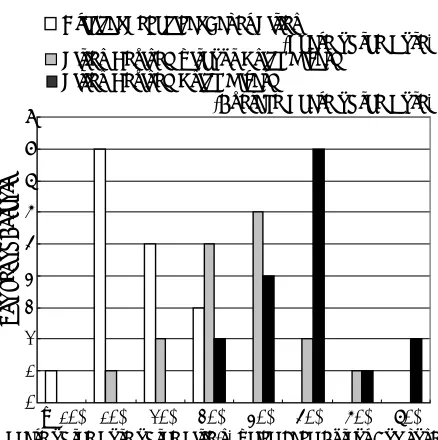
Figure 6: Average Share of the Vote of the Titles Composed with and without Using Wizard
fect of their titles on the respondents’ interest in more detail.
We, then, compared the average share of the vote for the titles which each of the seven au-thor revised with and without using the wizard. figure 6 shows that all the subjects can stably compose the more appealing titles with using the wizard than without using the wizard. We checked if there is a significant difference be-tween the share of the vote of the titles revised with and without using the wizard byt-test. As the result, We also confirmed that there is a nificant difference between these titles (the sig-nificant level is 1%).
5 Conclusion and Future Work
We emphasized that, in order to stimulate the lay reader’s interest in newly-developed technol-ogy, it is very important to compose an appeal-ing title, however it is difficult for inexperienced authors to come up with an appealing title.
In this research, we developed a title revi-sion wizard that provides a guidance on revising draft title and a few support tools for coming up with and elaborating on appealing phrases. Moreover, we verified the effect of the title re-vision wizard. As a result, the titles composed using the wizard can stimulate the lay reader’s interest more than the titles composed without using the wizard. In particular, our title revi-sion wizard can help the users who cannot com-pose effective titles by their own effort.
In future work, we will analyze the difference of the expression of the titles composed with and without using the wizard, and investigate what sort expression is effective to lay readers.
Acknowledgements
The authors would like to express our grati-tude to Ms. Tomoko Tsuchiya, Ms. Motoko Kosugi, and Ms. Tomoko Mitamura of Central Research Institute of Electric Power Industry for their valuable advices for our questionnaire survey, and Mr. Masahito Tanaka of Denryoku Computing Center, Ltd. for his valuable sup-ports to implement our title revision wizard. In addition, the authors would like to express our gratitude to anonymous reviewers for their sug-gestions to improve our paper.
References
Adam L. Berger and Vibhu O. Mittal. 2000. Ocelot: A system for summarizing web pages.
In Proc. of the 23rd Annual International
ACM-SIGIR Conference on Research and Development in Information Retrieval, pages 144–151, Athens, Greece.
Teiji Furugori and Akiko Takeda. 1993. An example-based system of writing english sen-tences for japanese english users. Literary and Linguistics Computing, 8(2):85–90. James Hartley and Matthew Sydes. 1997. Are
structured abstracts easier to read than tradi-tional ones? Journal of Research in Reading, 20(2):122–136.
Davis H. Homes and Richard L. Solomon. 1951. Visual duration threshold as a function of word-probability. Journal of Experimental Psychology, 41:401–410.
Kentaro Inui, Atsushi Fujita, Tetsuro
Taka-hashi, Ryu Iida, and Tomoyo Iwakura.
2003. Text simplification for reading assis-tance: A project note. In Proc. of The Sec-ond International Workshop on Paraphras-ing: Paraphrase Acquisition and Applications (IWP2003), pages 9–16, Sapporo, Japan. Rong Jin and Alex G. Hauptmann. 2000.
Ti-tle generation for spoken broadcast news us-ing a trainus-ing corpus. InProc. of the 6th In-ternational Conference on Spoken Language Processing (ICSLP), pages 680–683, Beijing, China.
Tadashi Kumano and Hideki Tanaka. 1998.
Translation examples browser: Japanese to english translation aid for news articles. In Proc. of NLP+IA 98/TAL+AI 98, pages 96– 102, Moncton, Canada.
Jean-Luc Minel, Sylvaine Nugier, and Gerald Piat. 1997. How to appreciate the quality of automatic text summarization? examples of fan and mluce potocols and their results on seraphin. intelligent scalable text summa-rization. In Proc. of 35th Annual Meeting of the ACL Workshop Intelligent Scalable Text Summarization, pages 25–30, Madrid, Spain. Satoshi Sato. 1992. Ctm: An example-based translation aid system. InProc. of COLING 1992, pages 23–28, Nantes, France.
Yasuko Senda and Yasusi Sinohara. 2002.