Changing the Rules of the Game
The SEDA Program at Tiwi College 2015
THE VICTORIA INSTITUTE
Emeritus Professor Stephen Crump
Professor Roger Slee
vu.edu.au
Emeritus Professor Stephen Crump
Professor Roger Slee
SEPTEMBER 2015
THE SEDA PROGRAM TIWI COLLEGE 2015
Creative Commons licence
This publication is licensed under a Creative Commons Attribution 3.0 Australia Licence.
Creative Commons Attribution 3.0 Australia Licence is a standard form license agreement that allows you to copy, distribute, and transmit this publication provided that you attribute the work. The reference for attribution is below.
A summary of the licence terms is available from http://creativecommons.org/licenses/by/3.0/au/deed.en. The full licence terms are available from http://creativecommons.org/licenses/ by/3.0/au/legalcode.
Please cite this report as follows:
Crump, S.J. and Slee, R. (2015) Changing The Rules of the Game: The SEDA Program at Tiwi College. Melbourne: The Victoria Institute for Education, Diversity and Lifelong Learning.
Address
Victoria University City Queen Campus 300 Queen Street VIC, 3000Australia
Phone: +61 3 9919 5934
Acknowledgements
The authors acknowledge Aboriginal and Torres Strait Islander peoples as the First Peoples of Australia and pay our respects to their elders, past, present and future.
The participating staff and students at Tiwi College welcomed our distance and face-to-face contacts over many months with warmth, grace and generosity of spirit.
The Victorian head office and Northern Territory SEDA staff provided the platform for the operational and strategic undertaking of the research as well as helpful feedback to our enquiries and drafts.
Dr Kylie Twyford, University of Newcastle, acted as a critical friend who, once again, gave wise and welcome editorial advice, furthering our collegiality and friendship.
Karen Rosauer provided valuable research assistance through preparation of a complex ethics application, graphic representation of empirical data and acting as critical friend.
Associate Professor Kitty te Riele contributed insightful editorial advice and helpful proofreading. Professional staff in the Victoria Institute assisted cheerfully with our internal administration, making the paperwork and fieldwork happen.
Digital images used in this report were taken by the author, downloaded from the Tiwi College public web pages or as otherwise credited wherever possible and known, with the access date. Digital images taken by the author were done with permission, respecting participant privacy, taken discreetly with a phone camera to avoid encroaching on or disturbing student activities in or outside class.
The cover artwork
Terra Aequilibrium
is used with permission.
Something special is happening this year.
SEDA at the Tiwi College is potentially a real game
changer in how we engage and produce real outcomes
for our young men.
Acting CEO, Tiwi Land Council
Secretary to the Tiwi Education Board
Author biographies
Emeritus Professor Stephen Crump taught in secondary schools before moving into higher education where he lectured in educational leadership and policy studies, becoming the inaugural Head of the School of Professional Studies at the University of Sydney. He was then appointed Pro Vice-Chancellor External Relations and Professor of Education at the University of Newcastle, Australia. Stephen has been awarded over $2 million in research grants, including Chief Investigator for an ARC Linkage study of remote communities switching from radio to interactive distance satellite lessons in New South Wales and the Northern Territory.
The Victoria Institute
About
Well placed within Victoria University, The Victoria Institute has social justice as a key focus. Our researchers work collaboratively with a range of government departments, policy makers, philanthropic organisations and community groups. The Victoria Institute operates with the explicit intention of improving educational experiences and outcomes for all.
Our targeted research program aims to build better learning and greater participation and success for students from diverse and disadvantaged backgrounds as well as those who are disengaged or excluded.
The Victoria Institute is connected with the College of Education and works in association with The Mitchell Institute and the Centre for International Research on Education Systems.
ix
Preface
In talking to people about Sport Education Development Australia (SEDA) towards the start of doing the fieldwork for this report, it was put to me that SEDA people tend to have an almost “religious fervour” about their work that one needs to be wary of.
Seemed like good advice. This is an independent, dry-eyed, evidence-based evaluation of the progress and outcomes, or not, of the SEDA program at Tiwi College in the Northern Territory (NT) based on extensive research experience over 20 years and underpinned by a proven theoretical platform. It was commissioned and funded jointly by SEDA and Tiwi College because they wanted a disinterested and outsider’s critique of ‘what’s working and what’s not’ and suggestions for the future.
The process of ‘making the strange familiar’ in a human context, rather than a laboratory, requires an even stricter onus on the researcher to be clear-headed, scientific and ethical about how the task is done, analysed and reported. Yet, starting with the longer-running Darwin SEDA program, it seems headstrong to persist in what has been called ‘the wild goose chase of objectivity’ when:
• You hear about a young man who didn’t hand in one piece of Year 11 work last year at his mainstream school, but this year will not only get a NT Year 12 qualification but also a vocational qualification that will almost definitely get him a job
• You stand a metre away from a young woman who was “Trouble” (with a capital T) at her previous school, but has just arrived by taxi – somehow paid for herself - at the Cricket NT sports complex because her bus didn’t come (I’ve had that happen to me in Darwin) and she didn’t want to miss her class, even though she had the perfect excuse to just go home
• You learn some SEDA students are studying additional VET courses (e.g., fashion, graphic design) on their own initiative to broaden their credentials
• You are freely offered accounts of parents close to tears at their end-of-term meeting with teachers, simply grateful for turning the life of their child around where no-one else could
• You gather anecdotes of education officials and employers who state they can spot a SEDA student by the confident way they walk and maturity of their conversation; despite all sorts of barriers to achieving in school, now displaying these characteristics as if they’d had them for years, and
• You discover the majority of SEDA graduates go on to tertiary education or employment all around Australia.
This Report confirms what the people on the ground at Tiwi College, like the SEDA staff in Darwin, know from daily experience. The Report confirms their awareness that they are changing the rules of the game, many of which hinder and limit education and training outcomes for Indigenous youth.
The Report confirms this individual awareness through multiple and triangulated sources of evidence that held true through various analyses and across disparate informants, at no stage succumbing to ‘confirmation bias’ or ‘confidence bias’ where one only investigates things most likely to confirm the story one wants to tell.
x
the same conclusions as the Acting CEO of the Tiwi Land Council and Secretary to the Tiwi College Board that “something special” is happening with the SEDA Tiwi College Senior Boys class in 2015 - it is.
While the Report has extensive positive findings, it does not romanticise the Tiwi College context and outcomes. Rather, the Report describes pragmatic and hard-won strategies that might assist sustaining and expanding this “something special” on the Tiwi Islands for 2016 and beyond without glossing over the tensions, many not of their own making, that impact on these young men’s lives, their communities and Tiwi College staff.
Leaving Darwin after both fieldwork trips I was subjected to racist rants from both taxi drivers who took me to the airport; in May about it being a waste of time to try to educate Indigenous Australians and in August about ‘Asians’ buying up “our” houses. On both occasions I was appalled to think both taxi drivers assumed I would share and be sympathetic to their views – simply because of the colour of my skin?
This Report portrays hard-won strategies that might assist sustaining and expanding
this “something special” on the Tiwi Islands into 2016 and beyond.
These incidents acted as warning bells about how one can change the rules of the game as is happening with SEDA at Tiwi College, but not everyone will play by the new rules. To help counter factors that trigger and allow prejudice to flare up, this report might also act as a guide for adapting Tiwi College strategies elsewhere in Australia, through SEDA or similar agencies, to assist other young men, women and their communities close the gap evident between the educational, training and employment opportunities and outcomes for Indigenous and non-Indigenous students through changing the rules of the game.
xii
Figures ...xiv
Abbreviations ...xv
Executive summary ... xvii
1. Introduction ...1
SEDA ...1
Tiwi Education Board ...2
We’re Tiwi, we’re different ...3
2. Education and Indigenous students ...5
Learning by doing ...5
Education and better outcomes ...6
Indigenous youth strategies ...6
Summary ...7
3. Evaluating SEDA at Tiwi College ...9
Evaluation aims and objectives ...9
Approach and methodology ...10
A note on research and ethics ...12
Summary ...13
4. The Tiwi Islands context ...15
Location, geography and context ...16
Religion and spiritual worlds ...17
Australian Rules Football ...18
Yarn 1: The Tiwi College cap ...22
5. Tiwi College ...23
Vision and ethos ...23
Structure and funding ...24
Residential ...24
Curriculum, assessment and reporting ...25
xiii
6. The Tiwi College SEDA program, 2015 ...33
SEDA in the Northern Territory ...33
SEDA on the Tiwi Islands ...34
SEDA and Tiwi College, 2014/15 ...35
Trust, Respect, Empathy and Mercy ...44
Yarning ...46
Summary ...47
Yarn 3: “No shame in talking it out” ...49
7. Where education matters ...51
“Hands on learning” survey ...51
Survey responses by question ...53
Summary ...57
Yarn 4: “Getting amongst it” ...58
8. Reflections ...59
New rules for a different game ...59
Changing the rules for others ...63
Success factors ...64
Bibliography ...67
xiv
FIGURE 5I TIWI COLLEGE INCOME BY FUNDING SOURCE...24
FIGURE 5II TIWI COLLEGE STAFF COMPOSITION, ANNUAL REPORT 2014...28
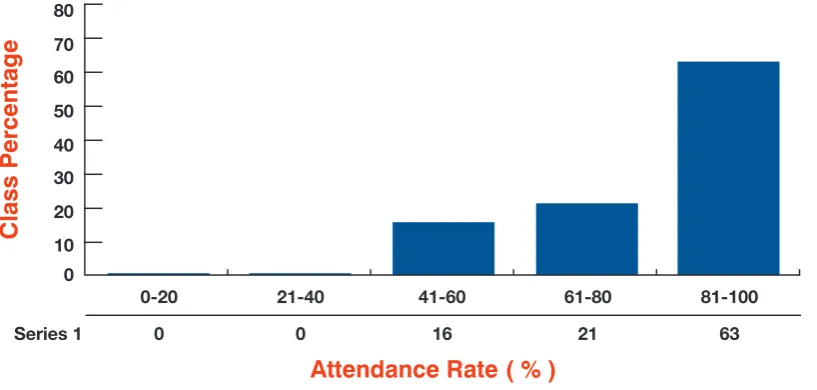
FIGURE 5III TIWI COLLEGE AVERAGE ATTENDANCE RATES BY CLASS GROUPINGS, WEEKS 6-10, TERM 2, 2015...28
FIGURE 5IV TIWI COLLEGE STUDENT RETENTION, ANNUAL REPORT 2014...29
FIGURE 5V TIWI COLLEGE FUTURE PLANNING, ANNUAL REPORT 2014...30
FIGURE 6I TIWI COLLEGE SEDA CLASS ATTENDANCE, WEEKS 6-10, TERM 2, 2015...41
FIGURE 7I SEDA TIWI COLLEGE - HOW INCLUDED DID YOU FEEL?...53
FIGURE 7II SEDA TIWI COLLEGE - HOW MUCH DID YOU FEEL LISTENED TO TODAY?...54
FIGURE 7III SEDA TIWI COLLEGE - HOW MUCH DID YOU USE YOUR SKILLS TODAY?...54
FIGURE 7IV SEDA TIWI COLLEGE - HOW EFFECTIVE DID YOUR CLASS FEEL TODAY?...55
FIGURE 7V SEDA TIWI COLLEGE - HOW USEFUL DID YOU FEEL TODAY?...55
FIGURE 7VI SEDA TIWI COLLEGE - HOW MUCH OF WHAT YOU DID TODAY FELT LIKE IT MATTERED OR WAS PART OF SOMETHING IMPORTANT?...56
FIGURE 7VII SEDA TIWI COLLEGE - HOW MUCH DID YOU ENJOY SCHOOL TODAY?...56
FIGURE 7VIII SEDA TIWI COLLEGE - HOW ARE THINGS IN YOUR LIFE GENERALLY?...56
xv
ACARA:
Australian Curriculum Assessment and Reporting Authority
AFL:
Australian Football League
AIEF:
Australian Indigenous Education Foundation
CMM:
Connections, Capacities and Meanings (Framework)
COGSO:
Council of Government School Organisations
FGH:
Family Group Home
HOL:
Hands On Learning
IAS:
Indigenous Advancement Strategy
NAPLAN:
National Assessment Program, Literacy and Numeracy
NSW:
New South Wales
NT:
Northern Territory
SEDA:
Sports Education Development Australia
TC:
Tiwi College
TLC:
Tiwi Land Council
TEB:
Tiwi Education Board
VI:
Victoria Institute
VET:
Vocational Education and Training
Changing The Rules September 2015
xvii
Executive Summary
The Tiwi Islands have a history unique amongst Indigenous Australian Aboriginal and Torres Strait peoples. The geographic isolation of the islands, just north of Darwin bordering the Timor Sea and Beagle Gulf, had its disadvantages, as did its strategic position for shipping attracting unwanted attention going back to the 17th Century.
But these factors were also advantages the Tiwi used to change the rules of the game for ‘first contact’ and subsequent points in time. The Tiwi demonstrated an aptitude to trade on equal terms with seafaring nations nearby, or passing by during the age of European exploration by sea, whilst retaining strong territorial and cultural positions that have held true through to the present day.
Visitors to the Tiwi Islands over the last 500 years or so were made to feel welcome, but the Tiwi also expected them to behave in a mutually respectful way and reciprocate the friendship openly offered.
Geographic location and socio-cultural resilience thus shaped the Tiwi as exemplars of ‘walking in two worlds’ well before they had to accommodate and ameliorate the contemporary challenges they face so graciously and optimistically.
METHODOLOGY
The evaluation of the SEDA program at Tiwi College aimed to articulate how the Tiwi College hosts, SEDA personnel and other stakeholders experienced the changes brought about since 2014 for teaching the Senior Men’s class in a new way.
Guiding questions for the evaluation were:
• Are young Indigenous students in the Tiwi College SEDA program engaged with, and achieving within, the SEDA program objectives?
• What skills and attributes does the SEDA program develop that prepare students for higher-level qualifications for work and lifelong learning?
• How do the SEDA student outcomes at Tiwi College reflect possibilities for other cohorts in Tiwi College and other Indigenous contexts adopting and adapting identified success factors?
The evaluation was designed to collect a broad spectrum of data that could be triangulated for verification. Evidence was collected through quantitative data including using the Hands On Learning survey (adapted to context), student school attendance rates, and classroom achievement towards VET Certificate II and higher. Whilst using the HOL survey was useful for getting an indication of the SEDA students’ participation in class over a full week, quantitative data needs to be contextualised and placed into a longer-term narrative. Thus qualitative data was compiled from SEDA and TC organisational policies, SEDA and TC curriculum documents, TC teacher and student “yarning”, and participatory observation over two fieldwork site visits.
The methodology was approved by the Victoria University Human Ethics Committee including valued input from the Indigenous unit Moondani Balluk (HRE 15 - 037).
Changing The Rules September 2015
xviii
KEY FINDINGS
The findings of this evaluation of the SEDA program at Tiwi College constitute a positive testament to the hard yards the staff and students have done to change the rules of the game when it comes to student attendance, active participation, qualifications earned, plus breadth and depth of potential career and life options opening up at Tiwi College. This can be summed up in a testimonial given to the evaluation more than once: “Something special is happening here this year”.
The objective in 2013 was to introduce something the Tiwi Education Board owns and
Tiwi College runs within the vision, ethos and structures of the school. Working with
SEDA, that objective has been achieved in 2015.
Despite the good luck to have such a good story to tell, this report consciously resists romanticising the context and outcomes. The Report acknowledges the tensions between what the students of the Senior Men’s class achieve through SEDA and other aspects of their school and community lives, tensions they increasingly handle with maturity and astute, confident insights.
The future for these students looks much brighter compared to how it could have been before SEDA and Tiwi College changed the game plan, starting in 2014. But there is no certainty of success just because something is done differently. This report provides an account of what was changed at Tiwi College, what success looks like, and what factors could change the game in other rural and remote locations.
Strength-based Teaching and Learning
The intent of the curriculum developed at Tiwi College is that learning for students should be an authentic experience, matching the students’ learning needs, context, extensive informal knowledge and community expectations and aspirations. This approach gels with the SEDA focus on ‘hands on’ learning, and both are looking forward to position each student for employment.
The key to SEDA’s success is that learning is real and authentic; that is, it has consequences, it is learnt then acted on, often as a public and/or workplace action that empowers each student and lets them feel success, pride and respect. The curriculum builds from the Certificate II in Sports and Recreation, a VET qualification that requires students to demonstrate satisfactory competence in 11 Units, supported by literacy and numeracy activities.
Students are not achieving such positive outcomes in isolation but in response to broad school strategies around an affirmative and Tiwi-ised school community ethos. They are also doing it through the successful efforts made by the SEDA Program Facilitator to build classroom relationships and adjust the curriculum to drive practical outcomes for each and every student.
Attendance and Participation
Tiwi College has achieved attendance rates consistently above the target of 80%; also well above the NT average for remote secondary school students. Tiwi College students are ‘voting with their feet’ by regularly attending every week. This is as good an indication as any of a thoughtful, systematic and culturally appropriate classroom management and school values system that has students wanting to be at Tiwi College. The College works on the basis of establishing and exercising Trust, Empathy, Respect and Mercy across staff, students, family groups, and visitors.
xix
illustrated by the sports clinics the Senior Men’s class runs (very successfully) for primary school students. This is the platform for both getting students to want to attend school and, more importantly, participate and achieve. SEDA class attendance rates at the end of Term 2, 2015 show ten students attending more than 70% compared to only seven in 2014. In addition, the rates show that five of those ten students attended for more than 90% of schools days, with two students over 95%, one at 100%.From a purely empirical perspective, the participation rates for Tiwi College must appear as an exemplar to funding and umbrella organisations, with the rates sitting well above national averages for rural and remote locations. Considering the unique and contextualised factors impinging on what the school actively undertakes and achieves, the raw numbers look even more impressive.
Inclusion, Skilled and Useful
The Tiwi College HOL survey data indicates strong positive scores across all eight items. Over the five days, 61 complete single sheet responses were able to be tallied from 11-15 students each day, the numbers varying due to competing school commitments.
The spread and variation in responses on nearly every single survey sheet clearly suggests that the Tiwi college SEDA Senior Men’s class undertook the survey task seriously and meaningfully. This alone is a measure of the maturity and positive outcomes of the class this year, the individual and group respect for their teacher, the value they place on being at Tiwi College, and their willingness to contribute to this evaluation to assist planning for the future.
The survey data confirms how these students are developing skills, finding meaning in class by being involved in real tasks valued by themselves, their school and communities, and are feeling better connected to lifelong education and training. These findings are confirmed by the SEDA teacher’s classroom strategies, accounts given by the students and descriptions provided through observation, interview and documentation. For the days the survey was completed:
• 97% felt they used or improved skills
• 95% felt they enjoyedclass
• 95% felt things in life generally were great, OK or going well
• 94% felt that the day was useful
• 87% felt the class was effective
• 77% felt included in classwork mostly or nearly all the time
• 75% felt listened to all or most of the time
• 72% felt what they learnt that day mattered.
These results match the attendance rates now consistently above 80%. A strong hypothesis would be to draw a relationship between high attendance and high satisfaction.
Success Factors
There are some interesting parallels and differences between Darwin and Tiwi College that highlight variables and factors to inform further development of the programs in both existing NT locations, as well as any future SEDA programs in locations likely to have classes with a significant Indigenous student make-up.
The success factors identified in this evaluation reflect more universal findings. Though cumulative data is not
Changing The Rules September 2015
xx
generalisable without qualification, the factors sum up a suite of actions that shaped the success of the two different patterns of SEDA programs in the NT that could form the basis for future programs in new locations. These factors can be grouped under the following four headings for planning purposes:
• Curriculum, Student Interest and Sports focus
• Leadership, Teacher Skill Set
• Resources and Funding
• Parent Interaction, Community and/or Employer Engagement, Philanthropic and/or Industry Partners
While these factors provide a useful audit and action tool, each new SEDA operation will look significantly different, though composed of the same elements. Each new SEDA program will change the rules in their own way for doing education and training with young people in SEDA-inspired schools, communities and homes.
SUMMARY
The evaluation of the SEDA Tiwi College program was asked to determine how the program was progressing and, if progressing well, outline what it is that works for these students, and whether what works for Tiwi College could be applied to new locations with predominant Indigenous student cohorts.
This report provides clear evidence that things are working well for the Tiwi SEDA program, with significant improvements in class numbers, attendance rates and strong evidence for high levels of inclusion, skilling and student achievement that is positioning them well for future employment.
These results are remarkable given the SEDA program is only in its second year, the class teacher is new, some students joined the class well into this year, and many students previously felt alienated from school and lacked some basic skills. Other factors include English being the students’ second (or 3rd or 4th) language and the extent of schoolwork foregone throughout the year for important cultural obligations and commitments. While the SEDA program is sport-based, student outcomes extend well beyond the Cert II-IV VET qualifications each student earns into substantial and broad opportunities for employment and to other key determinants of a fulfilling and prosperous future.
1
In October 2012, SEDA was approached by Tiwi College http://www.tiwicollege.com/ to explore how SEDA might work with them to run a within-school program. Tiwi College had worked earlier in multiple partnerships with, for example, the Clontarf Football Academy, Australian Football League (AFL) NT and Essendon Football Club.This time it was looking for a longer-term ongoing solution with a better institutional fit. SEDA seemed to answer both of these expectations. Links between the two organisations, while slight before 2014, were long-standing with SEDA’s founder, Rob Flower, visiting Tiwi much earlier.
A key focus for teaching and learning at this new site was to be a VET qualification built around AFL, given the prominence of sport on the Tiwi Islands, and a Building and Trades qualification given the opportunities it would offer for local employment. SEDA had only operated this way once before, with McKillop College in Victoria, but was keen to partner with a remote and Indigenous school by invitation.
The program started with senior male students in 2014, continued into 2015 with a SEDA skilled teacher taking over the class, with even stronger expectations for 2016.
SEDA
SEDA is a provider of senior secondary and vocational qualifications for young people who respond constructively to applied learning focused on each student’s interests, primarily around sport and, more recently, creative arts and construction.
SEDA was established in 2006 in Victoria http://sedagroup.com.au/. There are currently over 2000 young people completing their senior secondary / vocational qualifications with SEDA. SEDA provides students with the opportunity to identify their future pathway through a range of learning experiences. Students work closely with SEDA staff to identify areas of interest and develop specific career plans through further study or transitioning directly into employment.
SEDA is a provider of senior secondary and vocational qualifications for young people
who respond to applied learning focused on each student’s interests.
The personal learning environment based on high expectations enables students to work closely with the teacher and other students who share common interests and goals. The trick at SEDA is arranging teaching and learning around helping young people realise they have the capacity to do well in education and training, and in life generally, not just through sport.
The SEDA curriculum focuses on a combination of both theoretical and practical learning activities, providing students with the opportunity to develop key life skills including initiative, independence, teamwork, organisation and public speaking. SEDA places a strong emphasis on industry placements and has a broad and extensive range of industry, government and community partnerships in all areas of operation.
1 INTRODUCTION
1
Changing The Rules September 2015
2
SEDA classes are focused on three elements: 1. Engage (through skills and passion)
2. Educate (for senior secondary qualifications and life skills)
3. Empower (with skills and confidence to pursue pathway)
It’s the “doing” of the SEDA class that gives these young people a sense of self-worth. The actual career taken up may differ to the qualification gained through SEDA, but the important thing is they have experienced success and use that feeling to apply their learning and engage with their peers, employers and communities.
As reported on the SEDA webpage, SEDA has facilitated exceptional outcomes for young people who may not have otherwise completed their schooling nor transitioned successfully to work or further study, with 52% going on to tertiary education, and the rest into employment or activities like a gap year. For detailed research on SEDA see the Te Riele et al., (2014) Report and eight case studies: http://www.vu.edu.au/contact-us/kitty-te-riele.
TIWI EDUCATION BOARD
3
The Tiwi Land Council (TLC) was established in 1978 after the 1976 Aboriginal Land Rights Act was enacted. That event triggered the Tiwi people being given statutory control of Bathurst and Melville Islands. The TLC has up to 40 members entrusted with managing Tiwi lands, coast and sea.The TLC received no Commonwealth funding but raised a small amount that now represents assets of more than $200 million in forestry, mining, tourist lodges and Tiwi College itself. Until September 2014, the TLC was led by the inaugural Chair, Cyril Kalippa OAM and the CEO, John Hicks, both of whom worked hard to bring to life the vision of the founders, including Cyril as well as Walter Kerinauia and Jimmy Tipungwuti.
This vision was to break away from dependence on welfare by ensuring Tiwi children got a good education that in turn would help them to use the land to generate wealth and further develop the next generation of leaders. Cyril’s view was that education and hard work are the most fulfilling things you can do with life. He argued from the start that the Tiwi should have their own school. 25 years ago he had in mind the old timber mill at Pickataramoor as the best site due to its connection to history and culture as well as isolation from communities to give students a place to think about life from two different, not always competing, perspectives.
The Tiwi Land Council advocates for and facilities support for school operations and activities, cultural exchanges and strategies that lead to real career options for students. The current Acting CEO of TLC is also Secretary to the Tiwi Education Board. He is thus able to provide seamless two-way communication built on a lifelong association with Tiwi communities and organisations.
WE’RE TIWI, WE’RE DIFFERENT
Through the resilience of Tiwi culture, not only are the Tiwi people facing and addressing the many of the challenges in contemporary Australian society, but also that Tiwi College is a microcosm of these achievements, now enhanced through the agency of the Senior Young Men’s SEDA program. That is why Chapter 4 spends some time on the history of the Tiwi Islands interaction with various expressions of Christianity, and the passionate adoption of AFL as the preferred sport.
Equally, the accounts in Chapters 6 and 7 about what is being achieved in the SEDA class can only be understood as possible within this broader context, including glimpses into the powerful mindset that lies at the heart of Tiwi culture; that We’re Tiwi, we’re different. Unless this is acknowledged, accepted, endorsed, and cherished, then little happens, nor should it.
Changing The Rules September 2015
4
As one senior informant explains:
One of the frustrations of the Tiwi Education Board was that we kept getting people who had been in other places, be it the desert or elsewhere, and they’d come in a say ‘This is how we did it here’, ‘This is how we did it in North Queensland, so we should be doing it like that here’. So we got very frustrated because we kept saying (but) “We’re Tiwi, we’re different!”.
This Report reviews the literature on education and Indigenous students (Chapter 2), as well as outlining the goals of the evaluation, methodology and fieldwork trips (Chapter 3), before a providing a helicopter view of Tiwi College organisation, facilities and curriculum (Chapter 5), finishing with some Reflections (Chapter 8) on what is and what might come next.
Tiwi College is a weekly boarding facility that caters for holistic learning. Life skills
and being ‘work ready’ are valued as highly as academic outcomes.
This report also includes a number of “Yarns” to illustrate various aspects, events, influences and encounters that occurred during the time of the evaluation - selected from many others - to help fill out the depiction of SEDA at Tiwi College in a way both the authors and the actors value and enjoy; the writing / painting and telling / sharing of a good story.
5
This chapter will briefly review a core selection of research literature and policy documents relevant to shaping the evaluation strategies and used for the analysis of the Tiwi College SEDA student experiences.The focus is on the “learning by doing” philosophy of education of both the Tiwi College and SEDA, achieving better education and training outcomes and how this fits into, and informs, broader Indigenous youth strategies in Australia. The review is far from exhaustive, intended to highlight contemporary thinking and dilemmas relevant to the Tiwi College context as a springboard for further reading.
LEARNING BY DOING
Education and training are, if nothing else, actions; actions encompassing activities, experiences, excitement, doubts, growth, realisations, collaborations and self-reflection. Throughout history, in both Western and Indigenous cultures, the passing on of knowledge has been a central element of social renewal and inter-generational survival, because knowledge is power.
The problem of practice has troubled philosophers for millennia, with no immediate indication of being resolved, but there is recognition that knowledge grows out of experience, every day experience generating common sense knowledge that is the foundation of more theoretical, abstract and spiritual thinking (Dewey, 1938/1963; Garrison, 1997).
Learning, Performing, Knowing - these are the outward signs of successful connections made between the social and interactive processes generating the purposeful learning that is the hallmark of the SEDA program at Tiwi College and of Tiwi culture for thousands of years.
Up against a ‘white curriculum’ (Peters, 2015) and all the distractions, paraphernalia and ephemera of life in the 21st century, Tiwi young people are navigating reciprocal relationships between identifying with Country as young Australians getting a work place credential or winning tertiary entrance (see, Driese, 2014, Hewitson, 2007).
Tiwi youth are thus proving the duality of their circumstances is not only resolvable, but offers to themselves and others exciting interpretations of what a better life can be in a world some see as “gone wrong” (See, Smith, 2009, and McKnight, 2015).
Through learning by doing, in an appropriate cultural context, in a classroom rich in cultural variation, SEDA has found a perfect partner for changing young people’s lives through engagement with education and training. Tiwi College, through the agency of SEDA, is responding to Dewey’s (1893, p. 660) appeal for society to,
(…) cease conceiving of education as mere preparation for later life and make it the full meaning of the present life.
Dewey’s call to action is the premise for ‘pragmatic curriculum development’ (Crump, 1995; Crump 2001) and consequent expressions of policy in practice. While SEDA and Tiwi College are only at the beginning of this transformation, they have history and philosophy of education on their side.
2 EDUCATION AND INDIGENOUS STUDENTS
2
EDUCATION AND
Changing The Rules September 2015
6
EDUCATION AND BETTER OUTCOMES
As te Riele, Davies and Baker (2015, p. ix) point out, flexible learning through relevant curriculum offers a way to expand career choice and life options as they are
(...) pivotal for enhancing young people’s access to post-school pathways. (…) For most learners, the most highly desired pathways are on to some form of employment and viable financial independence, alongside further study.
In a separate research project, te Riele, Plows and Bottrell (2015) establish how those young people who do not finish Year 12 are amongst the ones who find it hardest of all to get a job. SEDA and Tiwi College start with this fact as the basis for everything they do.
It has also been shown how the benefits of flexible learning programs and training pathways not only benefit individual students, but also broader society in terms of better social cohesion, reduced costs for long-term unemployment, reducing recurring ill-health, anti-social behaviour and disproportionate levels of incarceration. These factors are of particular concern for contributing to increased poor mental health, criminal convictions and youth suicide for Indigenous youth (Amnesty, 2015).
Throughout history, in both Western and Indigenous cultures, the passing on of
knowledge has been a central element of social renewal and inter-generational
survival, because knowledge is power.
White and Rosauer (2015) argue that half a million Australian school children are missing out on significant amounts of schooling due to chronic diseases and general ill-heath, with very little policy action on this problem. Manning et al., (2015) have likewise shown that Indigenous well-being is a specific subset of this problem, with its own difficulties and barriers to change.
The SEDA program at Tiwi College, and the Tiwi College residential strategy, address this issue directly as it was an issue that underpinned the rationale for starting the program in 2014.
INDIGENOUS YOUTH STRATEGIES
It is not the place here to rehearse the arguments of the “Closing The Gap” reports, nor to undertake a detailed account of how various strategies do or might help Indigenous students reach their potential (Wilkinson, 2009), or alternatively whether the gap is becoming a gulf (Gordon and Harrison, 2015). But this a rich area for further reading and analysis.
As part of more practical policy responses, a major and high quality Australian Government project on “What Works” for improving outcomes for Indigenous students produced a thorough and accessible set of teaching guidebooks for successful practice, especially around literacy and numeracy, reducing suspensions and setting up the whole school for success.
In addition, the Wilson Report (2013) for the Northern Territory government, A share in the future, derived its title from an address by Galarrwuy Yunupingu when accepting his nomination as Australian of the Year in 1978, when he said,
We are at last being recognised as the indigenous people of this country who must share in its future.
7
Young people who do not finish Year 12 are amongst the ones who find it hardest to
get a job. SEDA and Tiwi College start with this as the basis for everything they do.
The review recommended a dramatic shift in how secondary education, and particularly senior secondary education, is provided through the NT’s urban schools in Darwin, Palmerston, Alice Springs, Katherine, Nhulunbuy and Tennant Creek, adding that a corollary of this approach will be the provision of residential accommodation for remote students.
The NT Council of Government School Organisations (COSGO) published a Memo on 01 June 2015 in support of the NT government Indigenous Education Strategy, outlining the seven key government projects for Stage One of the new policy, running from 2015-17. COGSO supported the policy “where the educational outcomes for Indigenous students are well behind those of other Indigenous students in Australia”.
There was also qualified support for the NT government’s “Families as First Teachers Program” which COGSO says it is “seeking detail on this,” accessed 03 June 2015, http://www.ntcogso.org.au/
With this in mind, it is worth noting that there is strong evidence that household’s financial resources are important for children’s educational outcomes, and this relationship is one of cause and effect (Maguire, 2015). Maguire argues that protecting households from low income is unlikely to provide a complete solution to less well-off children’s worse outcomes, but ought to be a central part of efforts to promote children’s educational opportunities and life chances.
As the Evaluation that follows reveals, the Tiwi Land Council and the Tiwi Education Board, working with Tiwi College and SEDA, understand these points well as they provide opportunities for learning by doing to reach each student’s potential.
SUMMARY
This chapter has outlined examples of the research literature and contemporary policy documents that spoke to the issues and context of the Tiwi College and SEDA innovations, and thus helped shape the data gathering strategies and units of analysis for assembling the evidence upon which to base the findings of this evaluation. The brief review of the literature has established that there is a firm theoretical foundation to the practice-based learning models of both organisations and strong evidence from Australia and internationally that changing lives through education and training can only be achieved when you change community and national socio-economic factors as well as individual actions, outcomes and dreams.
Changing The Rules September 2015
9
The Victoria Institute of Education, Diversity and Lifelong Learning (VI) was established in 2011 at Victoria University, Australia. VI researchers explore alternative ways of offering students from diverse, disadvantaged and under-represented communities opportunities to learn, using a variety of trans-disciplinary techniques to understand and contextualise the education environment and consider how local issues impact a student’s learning outcomes.Research at The Victoria Institute is undertaken collaboratively to develop innovative
solutions to complex problems.
Research at VI is undertaken collaboratively to develop innovative solutions to complex problems. VI works with other researchers, teachers, communities and policy makers to improve sustainable educational experiences and outcomes and to produce comprehensive and reliable data to drive change across Australia and internationally. Victoria Institute welcomed the chance to undertake this evaluation.
EVALUATION AIMS AND OBJECTIVES
The evaluation aimed to articulate how the different stakeholders experience the SEDA Tiwi College program through engagement with the Tiwi College hosts and community stakeholders. The research approach agreed on by all partners built on site visits by other VI staff in 2014 that allowed this evaluation to quickly establish research parameters, participant trust and agreement regarding research protocols.
The evaluation had at least one Tiwi Island school and/or community person to assist bridge and broker relationships, participant engagement, the fieldworker’s cultural and language appropriate behaviour, interpretation of cultural and language data meaning, and reporting back to Tiwi College.
Guiding questions were:
• Are young Indigenous students in the Tiwi College SEDA program engaged with, and achieving within, the SEDA program objectives?
• What skills and attributes does the SEDA program develop that prepare students for higher-level qualifications for work and lifelong learning?
• How do the SEDA student outcomes at Tiwi College reflect possibilities for other cohorts in Tiwi College and other Indigenous contexts adopting and adapting the identified success factors?
3 EVALUATING SEDA AT TIWI COLLEGE
3
EVALUATING
Changing The Rules September 2015
10
Tiwi College Main Building
APPROACH AND METHODOLOGY
As noted above, the evaluation was designed to collect a broad spectrum of data that could be triangulated for verification and reliability given the number of participants. Evidence was collected through:
• Quantitative data
“Hands On Learning” survey (adapted to context); TC SEDA student attendance, and assessment and achievement data where available
• Qualitative data
SEDA / TC policies, curriculum documents, teacher journal, “yarning” interviews and participatory observation.
Building on preparatory reading about Tiwi culture and the school environment (via Annual Reports and the Newsletter), the first visit started with a brief cultural immersion session given by the Tiwi College Principal so that the outside researcher could start to engage with staff and students, participating in or observing shared activities and seeking opportunities for yarning.
The second visit was to the Darwin SEDA program, joining a class being held at the Cricket NT ovals to gain a more comprehensive view of SEDA programs in the Northern Territory.
This was followed by an extended period of additional data collection and initial feedback, especially about the Yarns, with the assistance of Tiwi College and SEDA personnel and academic critical friends that led to the production of the first full draft of the Report, with limited distribution as a confidential “Consultation Draft”. The third and final visit provided an opportunity to share draft findings with the Tiwi College community and seek verification (or not) of, and reflection on, the likely conclusions before finalising the Report as well as attend the Thursday night communal dinner and social staff / student basketball games.
Throughout the evaluation there were formal and informal reviews of strategy, data sources, informants and comparative contexts with SEDA program and head office, and Tiwi College personnel. This led, for example, to including Tiwi College and SEDA adults in the interview / yarning strategy, as well as changing the response scale in the Hands On Survey from a 1-5 numerical scale to one based on five emoticon faces shifting from very happy to very sad. Both changes to the evaluation proposal were notified to the Victoria University Research Office for approval as fieldwork amendments (Ethics approval # HRE 15-037).
Fieldwork and Consultation
11
1. Students in the 2015 SEDA Cert II Sport and Recreation / traineeshipprogram. N = 18 (May 2015), 19 (August 2015)
2. Tiwi College and Tiwi Education Board leaders, teaching staff and/ or house parents (key people in students’ lives). N = 4
3. SEDA Darwin program comparison, with different parent contact. N = 3 Staff, 20 students, by informal observation only.
The Tiwi College and Melville Island research site visit involved:
• Welcome and cultural immersion on arrival at the Tiwi College airport
• Briefing from the Principal in the meeting space of his office, main building
• Tour of Hospitality precinct and staff accommodation
• Trip by car to Milikapiti to observe and talk with Senior Men’s Class leading their sports clinic for primary students on school / community oval.
• Tour by bus of Milikapiti community and Snake Bay beach
• Stop off and information about Taracumbiewaterfall and vicinity
• De-briefing by Principal on return to Tiwi College
• Yarn with Principal
• Group yarning with Senior Men’s class and SEDA teacher; other SEDA personnel visitors joined as observers
• Observe SEDA students’ skill display at “Kick The Board” (AFL style basketball) and trampoline, as end-of-day activity
• Informal yarning with Assistant Principal during the above
• Full bus tour of campus facilities, sites and features lead by the Principal, including: Family Group Homes and 2nd staff accommodation site, Library, Sports Oval, HaydenWay Garden classroom and VET precinct, as well as the Tiwi Land Council precinct
• In addition, the author subsequently visited the Darwin SEDA Program NT Cricket class, yarned informally with three SEDA staff and the NT SEDA State Manager and spoke informally with a number of students.
3 EVALUATING SEDA AT TIWI COLLEGE Taracumbie waterfall, Melville Island, 2015 Tiwi College Thursday night staff / student
Changing The Rules September 2015
12
A NOTE ON RESEARCH AND ETHICS
Given involvement of human subjects and the type of data gathering strategies agreed to by both commissioning institutions, this research applied for and was granted ethics approved by the Victoria University Ethics Committee in April 2015 (HRE15-037), including a statement (Supplement B) about researching with Aboriginal and Torres Strait Islanders.
When researching a named and public context where there is a small population, it is not possible for a researcher to guarantee or even realistically and ethically promise anonymity and confidentiality, despite making the best efforts possible to respect the privacy and dignity of each participant.
This rings true for both staff and students at Tiwi College, arising as well as from the personal familiarity of the Tiwi Islands’ communities as a whole. In this Report, use of the public name and location of Tiwi College is fundamental to explaining the data, findings and recommendations.
This dilemma was acknowledged in the ethics application process. Whilst this project did not fall under a category like “physically intrusive”, it was recognised by the authors as being intrusive to the extent that a person’s identity might be revealed and this raised a risk of possibly being held to account for what the research makes public through this Report.
For example, a participant might be identified by insiders who recognise a particular turn of phrase, exposing a potential social risk.
This is of particular concern for the doing as well as the reporting of research in this context, as Tiwi culture entails the notion of “shame” (discussed in the body of the Report) which can be triggered by inappropriate, insensitive, or too assertive questioning resulting in the recipient simply walking away to avoid shame and conflict, or, in some scenarios, resulting in immediate anger and antagonism.
We take the opportunity here to state that neither occurred in undertaking this project, thanks to the welcoming and courteous nature of the SEDA students and staff.
Anonymity reaches an impasse when there is only 1 person doing, and responsible for, each type of activity in a particular research site, such as a named small remote school, hospital, police station national park office or the like.
Even creating a pseudonym for the institution and/or location in these contexts, and a code for each participant, rarely survives scrutiny of where and who was involved, especially by those close to the particular field of work or locality.
The solution offered in the pages that follow is to state the position of the adult participant or informant where it would be a nonsense to de-identify him or her and where not knowing the role would make the data analysis meaningless.
13
SUMMARY
This chapter has outlined the data gathering strategies and units of analysis for assembling the evidence upon which to base the findings of this evaluation. The proposed methodology was approved by the Victoria University Human Ethics Committee, with valued input from the Indigenous unit Moondani Balluk, culminating in uneventful fieldwork faithfully putting into effect the intentions of the researchers and funding partners (Tiwi College and SEDA).
The evaluation articulates how different stakeholders experienced the SEDA Tiwi
College program as a guide to future planning and partner strategies.
The next chapter (Chapter 4) paints broad-sweeping word pictures of Tiwi history, culture and sport, before an overview of Tiwi College (Chapter 5) and then detail on the SEDA class (Chapter 6).
Flying in to Tiwi College private airstrip, 2015
Changing The Rules September 2015
15
Ever since being cut off by rising sea levels about 7,000 years ago, there has been very limited contact between Tiwi Islanders and mainland (“off island”) Indigenous Australians, even though on a clear day one can see the green-brown haze of the ‘terra australis’ coast. Tiwi called the distant coastline Tibambinumi, the home of the dead, a place where the spirits rested.Yet the Tiwi Islands offered, as it still does, a self-contained and well-resourced existence, so much so that “Tiwi” can be translated as “we, the people”, or “we, one people”, or “we, people” in a unique language with no word for “others”, a language that stimulated a rich and complex ceremonial life recognised now most widely in the highly symbolic and decorative pukamani pole and carved wood spears.
In 2015, the Tiwi Islands are entering a phase of prosperity with strengthened governance, robust control over finances and a distinct and appealing cultural identity. Tess Atie, of the Tiwi Land Council, spoke plainly and confidently of this new phase (Scott, 2015, p.10):
The Tiwi are ready to take off. This mob is doing really well – they give hope to other communities.
Travel writers drench their stories in superlatives when describing the Tiwi Islands.
Everything is intensified on the Tiwi Islands, from the rich green of eucalypt and pine thickets carpeting the land to the bolts of fabrics lined up in shades of magenta and lime at the screen-printing studio in Wurrimyanga. Then there is the droplet of orange concentrate that is the sun sinking earthward at day’s end”. Catherine Marshall, “Adrift in Time” The Australian, Travel, 23-24 May 2015, p. 8.
Moored for two nights in the lagoon-like Aspley Strait, dividing Bathurst and Melville Islands (…) on either side of starlit darkness come symphonies of colour, conducted by the sinking or rising sun. At dusk, the fiery orb departs from a lilac sky, throwing up defiant searchlights as the horizon swallows it whole. At dawn, it orchestrates a soft, golden glow that sweeps across the ocean, saturating the entire panorama.
(Daniel Scott, A Journey Back in Dreamtime, The Age, Traveller, 04 April 2015, pp. 10-11). http://saildarwin.com.au/tiwi-islands-grand-final-and-art-sale/
4 THE TIWI ISLANDS CONTEXT
4
Changing The Rules September 2015
16
LOCATION, GEOGRAPHY AND CONTEXT
The Tiwi, 3,000 strong, live on a pair of islands (Bathurst and Melville) 80 kilometres by sea north of Darwin. Population growth is 2.5% per annum.
The islands cover 8,320 square kilometers with natural and plantation forests of eucalypt, paper-bark, pine and acacia, edged by coastal wetlands and pristine beaches along a shoreline stretching 1,016 kms, separated by the narrow Aspley channel. Since 2008, the Tiwi control their water and ocean resources.
There is an abundance of marine life that provides a sustainable and healthy food source as well as supporting fishing tourism. There are some 56 species of birds, 27 species of reptiles and 19 species of mammals. The various forestry, tourism and marine activities employ over 900 people.
Most of the population lives in Wurrumiyanga (known as Nguiu until 2010) on Bathurst Island, and Pirlangimpi (also known as Garden Point) and Milikapiti (also known as Snake Bay) on Melville Island. There are other smaller settlements, including Wurankuwu (Ranku) Community on western Bathurst Island. There are eight “nations’ on Tiwi, based on paternal heritage.
The skin group, or “yiminga” of a Tiwi is matrilineal and determines the marriage line. The word “yiminga” means skin-group, totem, life, spirit, breath and pulse. There are four skin groups: “wantarringuwi” (sun), “Miyartiwi” (pandanus), “Marntimapila” (stone), and “Takaringuwi” (mullet) and each has many sub groups. The skin-group determines whom Tiwi may or may not marry. For example, a person in the Wantarringuwi group can marry someone from the Miyartiwi or Takaringuwi groups, but never someone from the Marntimapila group, or from their own group http://www.tiwilandcouncil.com/about/area.htm.
In the 7,000 years the Tiwi have been sole custodians of the islands, there has been limited and spasmodic contact to the south with mainland Indigenous people, and to the north with other islander trading nations.
17
Other historical encounters include a number of unsuccessful colonisation attempts through outposts such as Fort Dundas set up by the British in 1824, defeated by heat and disease but also Tiwi resistance to uncompromising guests.The first known historical record of contact between Tiwi and western explorers was with the Dutch under the command of Commander Maarten van Delft who took three ships, the Nieuw Holland, the Waijer, and the Vosschenbosch, into the Shark Bay area of Melville Island and landed on 30 April 1705, naming Cape Van Diemen on the north west point of Bathurst Island on their way home. “New Holland” likewise has many coastal features on almost every edge of the continent bearing the names of Dutch seafaring explorers, cities, noblemen and other descriptors of Dutch life such a ‘groote’ (large), Duyfken (Dove), and Rott (rat). http://www. slideshare.net/jboyerswitala/god-gold-glory-the-age-of-exploration
There were other visits by explorers and navigators in the seventeenth, eighteenth and nineteenth centuries, including by Dutchman Pieter Pieterszoon, Frenchman Nicholas Baudin and Briton Philip Parker Kinghttp:// en.wikipedia.org/wiki/Tiwi_Islandsaccessed 29 May 2015.See also,http://www.tiwilandcouncil.com/documents/about/ Dutchtiwistory.pdf.
The Tiwi Islands were not seen of value to exploit for the three “Gs”: Gold, God and Glory – as they were seen from offshore to be wasteland - and thus did not suffer to the same extent the history of frontier battles, dispossession and loss of language compared to most mainland Indigenous Australians. The Tiwi Islands were named an Aboriginal Reserve in 1912 and are now privately owned. The Tiwi value their legal right to grant or refuse permission to people wishing to enter their land and the permit system reflects the ‘permission principle’ of Tiwi culture and assists with land management and Tiwi privacy http://www.tiwilandcouncil.com/ permits/index.htm.
RELIGION AND SPIRITUAL WORLDS
The Tiwi Creation story recalls how Mudangkala, the old blind woman, arose from the ground carrying three babies in her arms. As she arose in the darkness and crawled across a featureless landscape, seawater followed and filled in the imprints of her body. Pools of watered gathered together and eventually became a channel, as the old woman continued her journey and once again moulded the earth.
Before she left, she covered the islands she had created with plants and filled the seas with living things, ready for her children to live there, for generation after generation.
“Tiwi youths decorated as Emu chicks mimic the fledglings frustrated attempts to fly”,
4 THE TIWI ISLANDS CONTEXT
Changing The Rules September 2015
18
In 1911 a second Creation story came to the Tiwi Islands when the Catholic church missionary Francis Xavier Gsell arrived in 1911 and established a trusting relationship with many Tiwi people at the Bathurst Island Mission (at Wurrimyanga, formerly Nguiu, as still named on some maps) and subsequently at St Therese’s (a white weather-board colonial structure with hints of Tiwi architecture built in the 1930s). The depth of connection is seen in the example of one Sister retiring in 2015, after living for 62 years on the Islands, asking for a traditional burial on Tiwi.
While the Catholic church has been seen to be dominant in Tiwi life, alongside sporadic periods of evangelical activity by other denominations, Tiwi resilience again triumphed by skillfully adopting and appropriating Christian symbols and song into Tiwi culture, adding beauty and colour in ways that had not yet been found in other mission outposts. As Molly Munkara (Scott, 2015, p.11) explained,
Though we became Christians, we never lost our traditional belief and they sit together just fine.
The place of Christianity in Indigenous communities in Australia has been undertaken as a two-way learning process not only on the Tiwi Islands. At Hermannsburg, south-west of Alice Springs, hymns (as one example) took on a mixture of German and Indigenous elements, creating a unique expression of the Christian message, with the Hermannsburg community taking its music to their namesake in Germany in 2015, before joining other Indigenous Australian church choirs to sing in a number of other international locations and events. For the Anglican Church, the Diocese of the NT (formed in 1968) recognises the richness and diversity of Indigenous culture, with significant parishes in Arnhem Land, encouraging learning from both cultures. One example is the Literature Foundation that promotes and shares Indigenous traditions, as in the Bark Art From Western Arnhem Land published by the church in 2010.
AUSTRALIAN RULES FOOTBALL
Almost a religion itself, and certainly played and followed with religious-like fervour, Australian Rules Football established itself in the Tiwi Islands 75 years ago, having a broad appeal to both Tiwi men and women. AFL originates in part from a game called marn-grook, that Tom Wills (a founding father of AFL) played as a child with Indigenous young people around Moyston in Victoria in the 1850s, involving kicking a possum skin around an open space.
It is generally accepted that missionaries John Pye and Andy Howley introduced AFL to the Tiwi Islands in 1941. Like other imports, AFL was also co-opted into the Tiwi way, with an exciting run of play and opportunity to display physical prowess.
Regular games were played on Sunday afternoons and in those days a 50-pound sack of flour was awarded to the winners.From the 1950s the local mission school taught a muscular brand of tuition that promoted the learning of footy skills, and there has been a Tiwi Islands Football League competition since 1969.
Wurrumiyanga Catholic church in 2005
http://en.wikipedia.org/wiki/Tiwi_ Islands accessed 29 May 2014
19
The Tiwi Australian Football League has 900 participants out of a community of about 2600, the highest
football participation rate in Australia (35%). Many of the male players also play for the St Mary’s Football Club in Darwin, which was formed to allow Tiwi soldiers in the 1950s to play in the Northern Territory Football League.
http://www.australia.com/en/places/nt/tiwi-islands.html Accessed 25 June 2015
Veteran NT sports broadcaster, Charlie King tells it this way:
It’s just gone full on since then. They play high-risk footy. It’s attack at all costs. They don’t put in a lot of effort in shutting down players and taggers and those sorts of things. They take it from one end of the ground to the other end of the ground without actually handing it over. The skill level is extraordinary. At ground level when the ball hits the ground they just run at it at a great rate of knots. It’s footy as it was a long time ago.
http://www.abc.net.au/news/2015-03-15/tiwi-islands-football-grand-final-thousands-flock-to-game/6319366
Communities feel great pride when players from their local teams are drafted and recruited into Melbourne clubs, now including students from the NT SEDA program. Maurice Rioli and Michael Long are two of the early generation Tiwi players recognised as breaking through race and other background barriers to change things for future Indigenous AFL footballers including South Adelaide ‘great’ David Kantilla, the first Indigenous player in South Australia to play over 100 games (113) and chosen, in 2005, for the Indigenous Australian Team of the Century.
Brian Clancy, Acting CEO of the Tiwi Land Council, told a newspaper reporter how local leaders encourage senior players to become role models for the communities.
We want those footballers not just to be good footballers but to be good blokes. We want them to have jobs, look after their families - football is the ideal tool, if you use it right.
Clancy went on to explain how the Tiwi Bombers offered the best players a new level to aspire to. The reporter concluded, “The sight of strapping local lads on television, displaying their sporting prowess in front of adoring crowds is one few remote communities can boast,” http://www.theaustralian.com.au/sport/afl/for-tiwis-lifes-goals-come-from-sherrin/story-fnca0u4y-1226303345766 Accessed 25 May 2015.
Changing The Rules September 2015
20
Tiwi Islands AFL Grand Final, 2015
AFL helps bridge the differences between Western and Tiwi culture by providing a common topic for conversation. On grand final day, the whole community comes together at the main football ground on Bathurst Island. This day is one of the few opportunities for a tourist to visit Tiwi Island without a permit. The Grand Final is held in the middle of March each year, attended by thousands, including art and craft exhibits and sales and broader festival events.
The national TV and radio broadcaster, SBS, ran a story in 2014 about a Tiwi woman in her seventies, bent with age, swathed head to toe in blue, hollering so loud the reporter claimed to temporarily lose hearing in his left ear,
Bring it home, boys, BRRRRRING IT HOOOOOOOME!
Barracking for the Tuyu Buffaloes, her screams were rewarded minutes later when her team won the 2014 Tiwi Grand Final. http://www.sbs.com.au/news/article/2014/03/16/tiwi-islands-where-afl-way-life.
AFL is the most visible and accessible example of how, whilst a strong and independent community, Tiwi are deeply connected to national values and interests.
http://saildarwin.com.au/tiwi-islands-grand-final-and-art-sale/
Australia-wide, many AFL clubs, like the North Melbourne Kangaroos, take pride in supporting and promoting Indigenous players. More than 20 Indigenous players have taken the field with North Melbourne, including forward Lindsay Thomas and mid-fielder Daniel Wells.
21
were the work of Gurindi artist Sarrita King, a NT resident. AFL is also a key ingredient in reaching out to young men to help reduce depression, domestic violence and suicide, a theme pushed hard at this time each year.See Yarn 3: No Shame In Talking it Out.
In 2010, Tiwi AFL player Malcolm Lynch (North Melbourne, Western Bulldogs and Flying Boomerangs) was the first Indigenous person to step on to Antarctica and displayed the Koori flag with Narelle Long (Indigenous track and field sportswoman).
They travelled to Antarctica as part of the Cool School program, featuring in a documentary about exceptional young people from all around the world who are concerned about the environment and want to make sure that in 2041, Antarctica is still free from mining and other activities that would destroy its wilderness, beauty and natural value http://www.nitv.org.au/fx-program.cfm?pid=E9FE307C-B20A-C53C-9E1226D058BC8FD0.
AFL bridges the differences between Western and Tiwi culture by providing a common topic for conversation and an AFL game on and off islands is the most visible example of how, whilst strong and independent, the Tiwi are deeply connected to national values and interests.
Malcolm is a fitting example of the ability of Tiwi people to retain strong culture and links to country, at the same time engaging broadly across Australian society, and globally, taking “the Tiwi way” environmental message, and a Sherrin…….. .
Malcolm Lynch and Narelle Long fly the Koori flag
in Antarctica: sourced from NITV URL above Malcolm Lynch, first Indigenous Australian in Antarctica: 2010 http://www.coolschoolantarctica.com.au/category/malcolm