Master thesis
Jellie Horsthuis
Committee:
Royal Philips
Frank Snellens
external supervisor
University of Twente
Tanya Bondarouk
1
stsupervisor
Huub Ruël
2
ndsupervisor
OCTOBER 10, 2014
UNIVERSITY OF TWENTE
1
Management summary
Purpose of the study
It was explored whether HR professionals and line-managers shared similar expectations,
assumptions and knowledge regarding HRM and whether their shared perceptions were related to employees’ trust in HRM. The study was conducted within the context of a company to understand the present-day phenomena of strategically employing HRM to facilitate the devolution of tasks to the line management.
Royal Philips: the case
A business site of Royal Philips was selected as the case company for this study. In 2011, the company had taken up the program ‘Accelerate!’ to build a global HR organization for which a transformation of the HR business model was required. Part of this reorganization was the implementation of a global HR portal: the e-HRM system that formed the subject of this study. Management believed that online HR tools would facilitate the devolution of tasks to line management, by empowering them to work with simplified HR processes. In the end, HR
professionals expected that their role would become more specialised, enabling them to provide strategic HR advice to the company.
Results
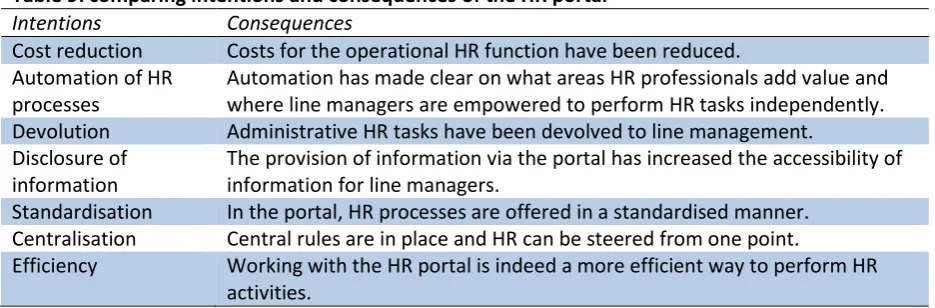
The intentions of Philips’ management were achieved for the specific business site: consequences for line management and HR showed to be in line with the intentions set at the beginning of the
implementation phase of the HR portal. It can thus be concluded that there was an effective implementation of the e-HRM system, after three years of effort. Findings showed room for further improvement regarding the devolution of tasks and the optimization of usage with respect to the HR portal: some line managers still viewed the extra tasks that had been devolved to them as an
administrative burden that was very time consuming. The possibilities of the HR portal were also not fully used, especially the tools for training and development were hardly addressed by line managers.
Advice to Philips’ HR professionals
HR professionals indicated that they were not yet able to solely focus on a strategic role, for they still needed to respond often to line management needing assistance. Further empowerment of line management in working with the HR portal can be achieved. Based on the points of improvements that were derived from the study, we offer Royal Philips the following advice:
Organise workshops, meetings and discussions with line managers to make sure they identify themselves with the group ‘line management’. It is an opportunity for them to share their perceptions and experiences regarding the HR portal. In doing so, line managers that find working with the HR portal a time consuming task can be convinced by others that are positive about working with the portal.
Promote tools in the HR portal important for employees’ training and development, such as e-Miles, e-Learning and Recognition. They are hardly used by line managers and employees, but are important for the quality of the personnel.
Provide a clear and easy structure in the portal to prevent line managers and employees from spending excessive time in exploring HR based tools: clicking on a link in the first screen should lead quickly to the next page (as in Wikipedia).
Increase the speed of the HR portal to prevent frustration in usage.
Provide information via the portal in both English and Dutch.2
Ensure that the HR-related tasks are part of the function description of all line managers toemphasise that HR responsibilities should be seen as an essential part of the job.
3
Table of Contents
Management summary ... 1
Table of Contents ... 3
Introduction ... 5
1. Trust and trust in HRM ... 7
1.1 What is trust? ... 7
1.2 Direct relationships between trust and organisational outcomes ... 8
1.3 Indirect relationships linking trust to organisational outcomes ... 9
1.4 Trust in the HRM system ... 11
2. Frames ... 12
2.1 Frames and shared frames ... 12
2.2 Congruence in frames ... 13
2.3 Frames in HRM ... 13
2.4 Frames of HR professionals and line managers ... 14
3. Frames and trust: a conceptual model ... 16
4. Methodology ... 17
4.1 Choice 1: explorative research design ... 17
4.2 Choice 2: mixed methods research ... 17
4.3 Choice 3: case study ... 18
4.4 Operationalization of the constructs ... 18
4.5 Semi-structured interviews: data collection and analysis ... 20
4.6 Questionnaire: data collection and analysis ... 21
4.7 Research techniques: document analysis ... 22
4.8 Trustworthiness of the study ... 22
5. Findings ... 24
5.1 Philips and its HR operating model ... 24
5.2 The business site ... 24
5.3 Defining the HRM system ... 25
5.4 Frames of the e-HRM system ... 25
4
5.4.2 HRM-as-composed ... 28
5.4.3 HRM-in-use: daily use ... 30
5.4.4 HRM-in-use: consequences ... 34
5.4.5 HRM integration ... 37
5.5 Congruence in HRM frames: reflection ... 38
5.6 Trust in HRM ... 40
6. Discussion ... 41
7. Conclusion ... 44
References ... 45
Appendices ... 51
Appendix I – Trust and organisational outcomes (direct relationships) ... 51
Appendix II – Trust and organisational outcomes (indirect relationships) ... 53
Appendix III – Interview protocol ... 55
Appendix IV – List of codes... 57
Appendix V – Translation and back translation ... 58
Appendix VI – Questionnaire for measuring trust ... 60
5
Introduction
Within the last two decades, strategically employing HRM to increase firm performance has become a hot topic for companies (Gabčanová, 2012). The devolution of HR responsibilities to the line adds a new link – line managers – to the top-down delivery of HR practices and policies (Bos-Nehles, 2010). Companies are thus challenged to ensure both HR professionals and line managers contribute to HRM in a way that will lead to the accomplishment of strategic intentions. Despite growing knowledge on how this devolution is perceived by HR professionals and line management (Bos-Nehles, 2010; (Bos-Nehles, Van Riemsdijk, Kok & Looise, 2006; Papalexandris & Panayotopoulou, 2004; Guest & King, 2004), no clear evidence is available to suggest that HRM becomes better after involving the line management.Drawing on the HRM stream that explores the achievement of strategic intentions by looking at organisational outcomes (Marler & Fisher, 2013) might help in discovering whether devolution helps in achieving the intended performance.
Since 2004 (Bowen & Ostroff), the research in exploring the link between HRM and firm performance took off in a new direction. This approach is the latest view in explaining how HRM leads to firm performance and states that, whether employees will show behaviours needed for the intended organisational outcomes, depends on how they make sense of the organisational reality and requests towards those behaviours (Bowen & Ostroff, 2004; Sanders et al., 2012). In this study, the strategic intentions of management, as the desired outcomes for the organisation, are studied within the process approach. This means finding out whether intentions are achieved, through an understanding of the way employees make sense of these intentions and their behaviours correspondingly.
Other research fields share the fundamentals of the process approach. For example, in IT and change management, it is an important condition that employees give meaning to an IT or change program in an identical way or by having similar so-called 'frameworks of reference', to realize a successful implementation (Orlikowski & Gash, 1994).
Combining the research streams mentioned above, the suggestion is that when an employee receives information about HR, IT or change, organisational outcomes may be dependent on how he or she will perceive this information. This insight led to the decision to explore the path of HRM and firm performance by concentrating on the concept of frames of reference (hereafter: frames) (Orlowski & Gash, 1994). Frames are known to be successfully measured in IT research (Orlikowski & Gash, 1994) and here the assumption is that the effect of HRM on firm performance depends on the way employees make sense of what management intends to achieve with HRM (Bowen & Ostroff, 2004; Sanders et al., 2012; Bondarouk, Looise & Lempsink, 2009). A few authors have explored the concept of frames of references to explain HRM sense making, also referred to as HRM frames (Bondarouk & Ruël, 2009a; Bondarouk, Looise & Lempsink, 2009; Sonnenberg, Zijderveld & Brinks, 2014). This study builds on these previous findings in HRM frames, but distinguishes itself by looking at a possible link between HRM and performance.
6 have chosen to use the concept of trust here (Mayer & Davis, 1995). Similar to frames, trust is a concept based on one’s perceptions of the trustworthiness of another. This enables us to explore whether perceptions of HR professionals and line managers of HRM also affect their perceptions towards trust in HRM. Trust is also shown to reduce the amount of control and coordination that is needed from HR professionals when responsibilities have been devolved to the line management (Govindarajan, 1986) and to positively affect the performance of a company (Singh & Srivastava, 2013; Rafieian, Soleimani & Sabounchi, 2014; Robinson, 1996).
The findings, assumptions and choices mentioned above resulted into the final research purpose of this study: to explore the link between congruent HRM frames of HR professionals and
line-managers and employees’ trust in HRM.
7
1. Trust and trust in HRM
1.1 What is trust?
A lot of effort has been exerted to define trust in the context of an organisation (Dietz & Den Hartog, 2006). Owing to this, researchers nowadays have agreed on the meaning of trust. A commonly accepted and well-cited definition describes trust as ‘the willingness of a party to be vulnerable to the actions of another party’ (Mayer et al., 1995, p. 712). This definition points to the importance of having insights in how organisational members perceive others in social interactions in the
establishment of organisational trust (Tzafrir et al., 2004). Even though Mayer et al. (1995)
acknowledge the importance of perceptions in developing trust, their definition does not include the aspect of perceptions. Therefore, another well-cited definition of trust from Rousseau et al. (1998) is borrowed here describing trust as ‘a psychological state comprising the intention to accept
vulnerability based upon positive expectations of the intentions or behaviour of another’ (p. 395).
The definition of Rousseau et al. (1998) recognizes trust as ‘a psychological state’ and thus involves the importance of the perceptions that one person holds about the trustworthiness of another or an organisation. Second, similar to Mayer et al. (1995), the definition states that trust might be developed between two persons or between a person and an organisation, when one party has ‘the intention to accept vulnerability’. Being vulnerable means that when two people share information they depend on the actions of each other in fulfilling certain expectations (Tzafrir et al., 2004). Third, Rousseau et al. (1998) argue that trust can be found at multiple levels within an organisation: it is not only important to understand trust at an individual or interpersonal level but also to recognise the way levels of trust can be either increased or damaged by the organisational level, for example through certain structures and regulations.
Trust is constituted in interpersonal relationships in which two parties are involved: a person that trusts (a trustor) and another person or a system to be trusted (a trustee) (Mayer et al., 1995; Gould-Williams, 2003). Both parties have their own characteristics important for determining whether trust will be developed in the relationship. A trustor is characterised by a certain level of trust propensity or ‘generalised trust’ (Dietz & Den Hartog, 2006; Mayer et al., 1995). This propensity reflects an individual’s general will or decision to trust another person and thereby accept
vulnerability. This general will to trust another is shaped by values and norms and personal development (Dietz & Den Hartog, 2006; Mayer et al., 1995). Subsequently, a trustor will decide whether a person or system can be trusted based on his or her perceptions of trustworthiness of the trustee, also described as the belief in or expectation of the other party (Dietz & Den Hartog, 2006; Mayer et al., 1995; McEvily et al., 2003).
An individuals’ perception of trustworthiness is found to be based on four independent characteristics: the perceived competence of the trustee to perform a certain task, the perceived benevolence or goodwill he or she has regarding the trustor, the perceived amount of integrity and the perceived predictability of the other party in his or her behaviour (Mayer et al., 1995; Dietz & Den Hartog, 2006). If a trustor perceives the trustee to have high levels on all four factors, the trustworthiness of the trustee is considered quite high (Mayer et al., 1995; Dietz & Den Hartog, 2006).
8 There are different levels of trust that determine the quality of trust on a continuum
(Dietz & Den Hartog, 2006; Rousseau, 1998; Lewicki et al., 2003). In the first stage of a trust relationship, knowledge based trust can be found in which the trustor is certain about his or her perceptions about the other party. In the later stages of the relationship, trust becomes more based on the relation or identification with a person or organisation (Dietz & Den Hartog, 2006; Lewicki et al., 2003). Mayer et al. (1995) argue that that higher levels of trust lead to more risk-taking behaviour in relationships. According to them, this risky behaviour of employees in relationship with others will lead to a better performance. For this reason, it is important not only to establish trust, but also to ensure that these levels of trust are as high as possible.
1.2 Direct relationships between trust and organisational outcomes
Research into trust shows that an organisation should create a work environment that promotes trust in order to ensure that employees perform well and deliver the best results possible (Tzafrir et al., 2004). McEvily (2003) in her article emphasises that employee outcomes will lead to beneficial organisational outcomes. Building on the conceptual research of Dirks and Ferrin (2001) she argues that trust and trust-related workplace behaviours directly affect organisational outcomes.
Empirical evidence shows that trust enhances organisational communication (Zand, 1972; Roberts & O’Reilly, 1974; Singh & Srivastava, 2013). Zand (1972) compared two groups of U.S. middle managers with high and low levels of trust and finds that members in a high-trust group show more openness in their communication. Roberts and O’Reilly (1974) exposed 171 graduate and
undergraduate students of the University of California to three experimental conditions. Their results reveal that trust enhances the amount of information that students share with their superior. Not only influences trust the amount of information that is shared, high levels of trust also increase the frequency with which employees communicate with each other. This is found in the study of Singh and Srivastava (2013) who investigated the communication among 303 managers working at different organisational levels in manufacturing and service organisations in India.
Another beneficial organisational outcome that derives from high levels of trust is organisational citizenship behaviour (Konovsky & Pugh, 1994; McAllister, 1995; Robinson, 1996; Pillai, Schriesheim & Williams, 1999; Dolan, Tzafrir & Baruch, 2005; Altuntas & Baykal, 2010; Liu, Huang, Huang & Chen, 2013; Rafieian, Soleimani & Sabounchi, 2014). This behaviour is studied by looking at three different types of trust: trust in supervisor, trust in co-workers and trust in the organisation. Konovsky and Pugh (1994) analysed cross-sectional data from 475 U.S. hospital
employees and their direct supervisors and find that trust positively affects organisational citizenship behaviour when employees perceive they are treated in a just and fair manner. Pillai et al. (1999) also studied trust by investigating the relationship of a supervisor and an employee and related organisational outcomes. Using a multi-sample survey of 192 employees of a U.S. service agency and 155 U.S. MBA students they find that employees’ levels of trust in a supervisor influences
organisational citizenship behaviour. McAllister (1995) studied organisational citizenship behaviour by looking at the role of trust in co-workers. He set up a cross-sectional study in which 194 managers and professionals from various industries in California participated. The results of this study indicate that employees’ trust in their colleagues has a positive effect on organisational citizenship behaviour.
Robinson (1996) investigated organisational trust in his longitudinal study of 125 newly hired managers of U.S. graduate business school. His study shows that not only previous researched types of trust, being trust in supervisors and co-workers, stimulate the citizenship behaviour of employees but also the trust that employees have in an organisation. Later studies followed Robinson (1996) in their focus on the role that organisational trust plays in influencing organisational citizenship behaviour. Dolan, Tzafrir and Baruch (2005) find in a study using 230 respondents of the Israeli labour force that organisational trust is the mediator in the relationship between procedural justice and organisational citizenship behaviour. Aluntas and Baykal (2010) investigated whether
9 studies also indicate organisational trust to have a positive effect on organisational citizenship
behaviour (Liu et al, 2013; Rafieian, Soleimani & Sabounchi, 2014). One of these studies was
conducted among 378 employees of domestic hotels located in Taiwan (Liu et al., 2013), whereas the other study used data of 114 physical education teachers working in the west of Iran (Rafieian, Soleimani & Sabounchi, 2014).
Researchers studying processes of negotiation show that high levels of trust are beneficial for they reduce the level of conflict in such processes (Porter & Lilly, 1996; De Dreu et al., 1998; Butler, 1999). To illustrate this, Porter and Lilly (1996) analysed cross-sectional data from 464 individuals that together constituted 80 student teams working on the introduction of a new product and find that high levels of trust within these teams reduce conflicts. Furthermore, De Dreu et al. (1998) set up a 2x2 experiment in which 90 students of the University of Groningen had to perform a
negotiation task. Their results also prove that high levels of trust between negotiators has a negative effect on the level of conflict. An addition to these findings comes from Butler (1999) who
investigated 324 managers in the U.S. that were following a course on organisational behaviour. In an experimental setting, these managers were assigned the task to engage in a negotiation exercise. Results of this study show that not a climate of positive trust leads to a reduced level of conflict during negotiations, but also ensures that negotiations are less complex (Butler, 1999).
A lot of research on trust confirms that employees with high levels of trust perform better (Robinson, 1996; Colquitt, Scott & LePine, 2007; Davis & Landa, 1999; Mayer & Gavin, 2005). Colquitt et al. (2007) show with their meta-analysis of 132 independent samples that trust is moderately related to task performance. In addition, Davis and Landa (1999) conducted a cross-sectional study among 50 thousand Canadian employees with which they find that employees’ trust in their managers has a positive effect on employees’ productivity and a negative effect on the amount of stress employees perceive in their job. Additionally, a cross-sectional study among 250 employees and their supervisors in a non-union manufacturing firm in the U.S. points out that trust in
supervisors has a positive effect on the ability of an employee to focus his or her attention on value producing activities (Mayer & Gavin, 2005).
High levels of trust are also associated with a better group or business unit performance (Klimoski & Karol, 1976; Davis, Schoorman, Mayer & Tan, 2000; Dirks, 2000; Gould-Williams, 2003). In line with this statement, Klimoski and Karol (1976) prove that trust in partners has a positive effect on the group performance in their experiment using 29 four-person groups of female
undergraduates at Ohio University. Davis et al. (2000) in their longitudinal study surveyed employees of a chain of nine restaurants and find that an employees’ trust in a general manager has a positive effect on the business unit performance. Furthermore, twelve U.S. men’s college basketball teams were engaged in a cross-sectional research of Dirks (2000) who shows that trust in a team leader is positively related to the performance of these teams. Finally, Gould-Williams (2003) distributed a postal survey among 191 public-sector employees working in Wales. Results show that high levels of trust in the organisation lead to a better performance on organisational level. Nowadays, an
increased efficiency in groups is very important because companies often have to deal with a workforce that is more diverse in terms of employees’ backgrounds (Mayer et al., 1995).
The studies discussed in this section clearly show that trust is a key determinant for the organisational performance of a firm. A summary of the findings provided in this section can be found in Appendix I.
1.3 Indirect relationships linking trust to organisational outcomes
So far, trust is described in its direct relationship towards a number of organisational outcomes. However, trust is also found to influence outcomes of an organisation indirectly by creating employee perceptions and attitudes that lead to specific employee behaviours that strengthen positive organisational outcomes (Dirks and Ferrin, 2001; McEvily, 2003). In the next paragraphs these relationships are further explained.
10 trust (Pillai et al., 1999; Albrecht & Travaglione, 2003; Yilmaz, 2008; Farndale, Hope-Hailey & Kelliher, 2011; Akpinar & Taş, 2013; Liu & Wang, 2013; Singh & Srivastava, 2013) which negatively influences the intention to turnover (Albrecht & Travaglione, 2003; Gould-Williams, 2003; Singh & Srivastava, 2013). Pillai et al. (1999) using a multi-sample survey to investigate the role of leader behaviour on trust and organisational outcomes, find trust to mediate the relationship between leader behaviour and commitment. Empirical evidence from Albrecht and Travaglione (2003) points out that trust in senior management has a positive effect on the emotional commitment of employees towards their organisation. In their study, a questionnaire among 750 participants was used in order to measure antecedents and outcomes of trust in two public-sector organisations. A study among 120 teachers in public primary schools in the city of Kütahya (Turkey) finds high levels of organisational trust to have a positive influence on the perceived commitment of the teachers that were involved in the research (Yilmaz, 2008).Farndale et al. (2011) investigated employee commitment in a cross-sectional, multi-level study using 524 questionnaire responses from employees of four large
organisations in the U.K. Their findings indicate that trust strengthens commitment as well. Another research on organisational commitment studied 531 employees working for a University Hospital in Turkey (Akpinar & Taş, 2013) of which the outcomes show that organisational trust significantly increases the affective commitment of employees. Finally, Liu and Wang (2013) conducted a study in Southern China in which 958 employees from five different hospitals participated. Their findings also find a significant influence of organisational trust on organisational commitment.
Trust influences the intention to turnover (Mishra & Morrissey, 1990; Costigan, Ilter & Berman, 1998; Alfes et al., 2012; Farooq & Farooq, 2014). Mishra and Morrissey (1990) measured perceptions of employee and employer relationships using a survey among 143 companies in Michigan area (U.S.). They find that trust in an organisation has a negative effect on intent of the employee to turnover. Costigan et al. (1998) conducted a cross-sectional study with a sample of 35 employees to test trust between focal employees in relationship with their colleagues, supervisors and top-managers. After analysing the data they find that trust has a negative effect on the
employees’ desire to leave the company. Alfes et al. (2012) also performed a cross-sectional study to measure outcomes of trust. They used data from 613 employees and their line managers working in a service sector organisation in the U.K.. Results prove trust to be a moderator in the relationship between perceived HRM practices and turnover intentions, where high levels of trust are found to lower the intention to quit. A study among 597 employees of private sector companies was conducted in South Asia by Farooq and Farooq (2014) showing that organisational trust has a negative effect on the turnover intentions of these employees.
High levels of trust are found to positively influence employees’ satisfaction with their job (Driscoll, 1978; Rich, 1997; Chathoth, Mak, Jauhari & Manaktola, 2007; Tanner, 2007). In an early study of Driscoll (1987) data was collected on job satisfaction using a survey measurement among academics of a faculty of liberal arts in New York. Results show a positive and significant relationship between trust in organisational decision making and job satisfaction. Later on, Rich (1997)
investigated 183 relationships between sales employees and their direct managers from 10 different U.S. companies by using a survey on job satisfaction. The results show that the level of trust
employees have in their supervisors is found to influence their job satisfaction. A more recent study among 77 employees of four hotels in Asia provides evidence for the positive relationship between organisational trust and job satisfaction (Chathoth, Mak, Jauhari & Manaktola, 2007). Tanner (2007) finds the same relationship based on evidence coming from a study among 120 employees of a U.S. hospital.
11 both studies provide empirical evidence, more research is needed to strengthen the relationship between trust and the way employees behave towards change and uncertainty.
Frome the above it is concluded that trust affects employee behaviours that are necessary for the performance of an organisation (see Appendix II for a summary). The next section will discuss a framework for establishing trust in HRM.
1.4 Trust in the HRM system
Within the framework of trust, the trustor here is defined as an employee whereas the reference of trust (trustee) is the HRM system as an entity. An HRM system consists out of HR policies that are aligned with the organisations’ HR philosophy stating how the company will employ its human resources (Lepak et al., 2006). Often, HRM systems are employed on the continuum to either increase firm performance or to control employee behaviour. At a lower level, the HR policies are incorporated in HR practices in order to create the envisioned employee outcomes. Overviews of different types of HRM systems are available in the literature (Lepak et al., 2006).
Trust in a system reflects the extent to which employees have developed a level of trust in a system as an entity, despite the fact that it is not a human being with whom a relationship can be built (Gould-Williams, 2003). It is argued that investigating the perceptions of employees towards HRM can be achieved best by looking at their perception of the HRM system, because it provides the ability to capture the synergy created by the individual practices that the system incorporates. Taking into account HR practices individually would thus yield a conflicting perception of HRM, leading to a less complete understanding of how employees interpret HRM and how they behave accordingly (Alfes et al., 2012). In this study, an employee is therefore considered to have a certain willingness to trust an HRM system that, together with certain perceptions of the competence, integrity,
benevolence and predictability of the system, determines the employees’ belief or trustworthiness towards the system (Mayer et al., 1995; Dietz & Den Hartog, 2006).
According to the process stream of HRM, an HRM system communicates messages, either intended or unintended, to employees (Bowen & Ostroff, 2004). Sanders et al. (2012) in their research find that, if HR messages deriving from the HRM system communicate the same message every time (consistency), are interpreted by employees in the same way (consensus) and provide unambiguous information (distinctiveness), then employees will interpret these messages in the way it was intended by management. In such a case, the HRM system is considered to be strong, leading to a shared understanding among employees on what behaviours are expected and rewarded and providing management the ability to create the intended behaviours needed to enhance
organisational outcomes.
A shared understanding of organisational activities, also referred to as organisational climate, leads to desired employee behaviours (Bowen & Ostroff, 2004). In our case the intended behaviours can be described as employees’ actions of trust resulting from high levels of trustworthiness of the HRM system that directly and indirectly lead to organisational outcomes. Evidence from the sales and marketing field shows that organisational climate increases trust (Mulki et al., 2006; Strutton et al., 1993). To illustrate, Mulki et al. (2006) distributed a survey in a U.S. pharmaceutical company in which 333 salespeople were involved. Their results show that an ethical climate has a positive effect on the salespeople’s’ trust in their supervisor. Strutton et al. (1993) find six dimensions of a
psychological climate to significantly relate to trust of salespeople in their managers. Their study used 223 dyads of employees and managers of sale organisations in the Southern U.S. who participated in a survey to measure psychological climate and trust.
Even though these studies on shared understandings provide some insight in how HRM might influence employees’ trust in the HRM system, these findings come from the marketing area and prevent a simple transfer of the findings to the field of HRM (Mulki et al., 2006; Strutton et al., 1993). The next section further elaborates on the development of these mutual understandings and
12
2. Frames
2.1 Frames and shared frames
Shared understandings derive from individual understandings. How an individual comes to an understanding of the world can be explained by how he or she frames certain information and events. Frames of individuals consist out of assumptions, expectations and knowledge developed in a process of sense making towards information and events and determine how an individual
understands organisational reality and what actions he or she will take accordingly (Orlikowski & Gash, 1994; Gioia & Chitipeddi, 1991).The process of sense making is accompanied by the process of sense giving (Gioia & Chitipeddi, 1991). After an individual has developed an understanding of a certain situation, he or she gives sense to others by communicating this understanding, thereby influencing how these others will make sense of the situation and behave accordingly (Gioia & Chitipeddi, 1991; Orlikowski & Gash, 1994). In an organisation, actions are thus shaped and being shaped by the interaction of different actors.
Frames are important because they explain why employees show certain behaviours. In order to create the intended behaviours envisioned by management, it is important to note that frames can either increase or hamper an individuals' understanding of organisational reality (Gioia & Chitipeddi, 1991). When frames enhance the understanding of a situation, they enable an individual to structure experiences, to interpret ambiguous situations, to be more confident in complex and changing situations and to act based on their understanding. In caseframes hamper the
understanding of organisational reality, an individual will use the information to reinforce his or her existing assumptions or interpret the information in such a way that it matches with established cognitions leaving no room for a change in understanding organisational reality.
In the context of an organisation, individual interpretations are affected over time by socialisation processes, interactions and negotiations that create opportunities for the development and exchange of similar points of view held by a particular group or department (Orlikowski & Gash, 1994). These similar perceptions lead to shared frames, meaning that individuals hold similar
assumptions, expectations and knowledge towards information and events. Hey et al. (2007) in their study investigated the process through which individual frames lead to shared frames. By following the framing process of a project group working on a new product innovation, they find that group members first develop an initial understanding of what is expected and share their individual frames. After that, conflicts deriving from differences in individual frames arise and are eventually overcome by the group, leading to the development of a shared frame. Findings show that once a shared frame is established, the cooperation in a group becomes more effective, for group members are able to focus on the task they are assigned instead of spending time on differences in individual
understandings (Hey et al., 2007).
Empirical evidence on the role of shared frames has especially been found in studies on the implementation of IT and change programs. Gioia and Chitipeddi (1991) in their ethnographic study in a public university find a positive effect between successful sense giving and sense making activities of top management and employees on the effectiveness of managing change. These findings show that frames of employees determine whether management is able to create the required changes in behaviour. A case study of Orlikowski and Gash (1994) in a large professional services firm evaluated how a new groupware technology was understood and used by different organisational groups. Their findings show that the way people frame a new technology is important for its successful implementation. Another study of Doherty et al. (2006) in a U.K. national health service setting investigated the implementation of an information system by interviewing key stakeholders in which they find that shared frames increase the similarity of interpretations among the stakeholders.
13
2.2 Congruence in frames
Even though shared frames lead to similar interpretations and behaviours within a group or department, differences between organisational groups can still exist. The extent to which the expectations, assumptions and knowledge between groups are aligned is described in literature as the congruence in frames. These differences in expectations, assumptions and knowledge are found to have negative consequences for the performance of an organisation, emphasising the importance of congruent frames between organisational groups (Lin & Cornford, 2000; Orlikowski & Gash, 1994; Hodgkinson & Johnson, 1994; Barrett, 199; Kaplan, 2008; Bondarouk, 2006; Gibson, Cooper & Conger, 2009; Guest & Conway, 2011; Gallivan, 2001; Park, 2008).
Lin and Cornford (2000) conducted a case study involving a bank trying to replace an old email system and their qualitative data reveals that incongruent expectations, assumptions and knowledge about aspects of a technology hampers the successful implementation of a technology. In line with these findings, Orlikowski and Gash (1994), in their study on a new groupware technology, find that congruent frames increase the effectiveness of the implementation of a technology, whereas incongruent frames lead to more conflicting situations involving different expectations, behaviours and resistance. Hodgkinson and Johnson (1994) investigated a U.K. grocery industry through interviewing twenty three managers from two organisations. They confirm the findings stated above in showing that incongruent frames are accompanied with a great variety in expectations and interpretations.
Barrett (1999) finds that incongruence in assumptions between different groups negatively affects employees’ adoption of change. In this longitudinal case study, 500 owned and managed brokerage businesses of the insurance market in London were involved. Kaplan (2008) in his ethnographic study of a manufacturer of communication technology finds that incongruent frames will slow down processes of decision making. Another study of Gibson, Cooper and Conger (2009) among five companies in the pharmaceutical and medical industry, points out that if frames are not congruent, the processes and performance of teams decrease. Similar findings are found by
Bondarouk (2006) in a case study on action-oriented group learning in implementing technology. The data from 87 interviews in three different companies shows that congruent frames lead to a better firm performance compared to incongruent frames. Guest and Conway (2011) in their study used a sample of 237 dyads of line managers and HR managers and find that when these two groups agree on the effectiveness of HR practices, the communication will be improved. Furthermore, Gallivan (2001) finds incongruence in frames between managers and employees to negatively affect
communication between the groups. They conducted a case study in which four firms were involved that were implementing a server development. Park (2008) in a research involving 67 groups that were assigned an assembly task, finds that congruent frames lead to an improved group member satisfaction.
As the above findings show, congruence in frames between the departments of an
organisation lead to a better performance of the organisation as a whole. However, the evidence for this statement is hardly studied within the field of HRM. This study will therefore contribute to a further understanding of congruence in frames in terms of an organisations’ HRM.
2.3 Frames in HRM
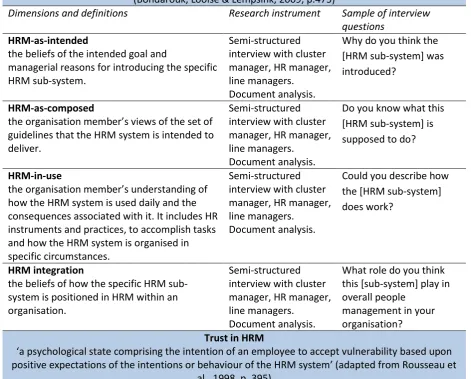
As the previous section has shown, congruent frames are crucial for creating effective employee behaviours and their related performance outcomes. In this section, the congruence in frames is further discussed to become aware of its importance for the effective functioning of the HRM system and the organisational actors related to its processes. As a starting point, a definition of HRM frames that is available in the literature and borrowed here describes the concept as ‘a subset of cognitive frames that people use to understand HRM in organisations’ (Bondarouk, Looise & Lempsink, 2009, p.475).
14 Looise & Lempsink, 2009; Sonnenberg, Zijderveld and Brinks, 2014). Congruent HRM frames are found to increase the process of sense making in a seven-month qualitative case study of a construction company (Bondarouk, Looise & Lempsink, 2009). Another study of Sonnenberg, Zijderveld and Brinks (2014) finds that incongruent frames weaken the relationship between talent management, as an HR practice, and the fulfilment of psychological contract obligations. This quantitative research involving 2660 participants of 21 organisation within Europe thus shows that different interpretations of an HR practice, in this case talent management, lead to conflicting situations regarding an employees’ obligations in an organisation.
Different organisational actors thus make sense of HRM through their cognitive frames (Bondarouk, Looise & Lempsink, 2009). The frames that are important to consider in terms of congruence in this study have been described by Woodrow and Guest (2013) who find in their case study of 2006 and 2007, using 491 and 404 participants of a National Health Service hospital in London respectively, that an effective implementation of an HR practice depends on three factors:
the content of the HR policies and practices, the perceptions of these policies and practices of the employees and of the HR professionals and line managers, being responsible for the quality of the implementation of HRM. In line with these findings, Bondarouk and Ruël (2009a) also turn to the frames of HR professionals, line managers and employees in analysing the way HRM is understood. As HR managers and line managers are responsible for the quality of the HRM system and their implementation, their actions together with the content of the HRM system will influence the employees’ perception of the HRM system and thereby its effectiveness (Delmotte et al., 2012). Thus, the HRM frames of HR professionals, line managers and employees determine the success of the sense making process of the HRM system and its effect on employee behaviours (Woodrow & Guest, 2013; Bondarouk & Ruël, 2009a).
Seen above in integration, it is considered essential here that the frames of HR professionals and line managers are congruent in order to achieve shared employee perceptions of HRM that lead to the intended behaviours. For that reason, the following part examines the role of the HR
professional and the line manager in the implementation of HR policies and practices.
2.4 Frames of HR professionals and line managers
The perceptions of HR professionals and line managers concerning their understanding of HRM are often found to differ because of mayor changes in the HR function (Delmotte et al., 2012; Nehles et al., 2006; Kraut et al., 2005). Pressures of competitiveness cause HR professionals to take up the role of a strategic partner, in which they consult on how the HRM strategy can be incorporated into the overall strategy of a firm, leaving less time for executing operational HR tasks. The implementation of the HR practices is therefore devolved to line managers in many companies, providing them the power to make decisions regarding HRM on a business unit level (Bos-Nehles, 2010; Caldwell, 2003; Hall and Torrington, 1998). The devolvement of HR responsibilities to line-managers has promising organisational benefits such as decreased employees’ costs, faster decision making, committed employees and more effective control (Bos-Nehles, 2010).
Research shows that the devolvement of HR and the new partnership between HR
15 of line managers in advising them on how to perform their new tasks, even though they experience difficultiesin their attempt to train the line in operational HR activities (Papalexandris &
Panayotopoulou, 2004). HR professionals may not be willing to share their knowledge and skills with line managers in some occasions, because they feel the need to protect the legitimacy of their occupation, fearing that the importance of their role will be reduced or become redundant because of electronic HR systems and outsourcing activities (Caldwell, 2003).
These obstacles in the partnership of HR professionals and line managers make it hard to coordinate the HRM activities from the top, via the line, to the employees. Line managers’ lack of competence can seriously damage the quality of the implementation of HRM, because they ultimately influence the perceptions and behaviours of employees (Kraut et al, 2005; Nehles et al, 2006; Den Hartog & Verburg, 2002). To illustrate, in their empirical study using an employee opinion survey in which 3601 food service employees engaged, Den Hartog and Verburg (2002) found that employees’ perceptions about the way managers evaluate their performance affected their intention to deliver a high-quality service. From the study of Nehles et al. (2006) it becomes clear that the competences of line managers regarding HR directly affect their effectiveness in HRM
implementation. Woodrow and Guest (2013) find in their two-year case study on the bullying policies of a hospital in London that when line managers perceive they are provided with better policies and procedures by HR professionals, their effectiveness in implementing HRM will increase. This works because line managers in such a case will apply HR practices in the way it was intended strategically, instead of applying HRM based on their own interpretations.In examining the frames of HR
16
3. Frames and trust: a conceptual model
The discussion above forms the basis for exploring the relationship between HRM and its influence on employees’ trustworthiness in the HRM system. Literature on trust provides the necessary evidence to assume that high levels of trust lead to a better organisational performance. To give rise to high levels of trust, shared HRM frames play a noticeable role in facilitating intended employee behaviours, as shared HRM frames condition an effective HRM system in which the strategic intentions of HR professionals are interpreted by the employees in the way it was intended by management. As the parties important for an effective HRM are found to perceive HRM in different ways, it is interesting to examine the level of congruence in their HRM frames.
It is assumed that a high level of congruence in HRM frames between HR professionals and line managers will reflect a more effective implementation of HRM. This study explores whether the congruence in HRM frames affects employees’ perceptions of trustworthiness of the HRM system as an effective HRM outcome. From the figure, it follows that two variables are the object of
measurement in this study, being congruent HRM frames as the independent variable, and the trustworthiness of the HRM system as the dependent variable. Here, a positive relationship between the two concepts is proposed.
17
4. Methodology
4.1 Choice 1: explorative research design
To meet the research goal, an explorative research design was conducted (Dooley, 2009; Baarda et al., 2009). Both, HRM frames and trust in HRM, were approached in this study as subjective concepts that ask for measurement methods that explain the way individuals perceive or understand certain phenomena. We chose the qualitative design to emphasise and disclose perceptions and
interpretations of these individuals and of groups and organisations (Dooley, 2009; Baarda et al., 2009). Compared to a quantitative approach, the chosen design allowed for answers stating how and why the presence of a concept occurred and for what conditions. Taking this into account, the explorative design was used for its possibility to gain in-depth information on how congruent HRM frames were developed, which factors were important for their presence, and how they were associated with different levels of trust. These questions were considered important in a first attempt to reflect on a possible relationship between HRM frames and trust. Another reason for the explorative design was based on the assumption that the context, in this case an organisational setting, would play a noticeable part in explaining both HRM frames and trustworthiness and their possible relationship as well. An explorative study enabled the investigation of certain phenomena in their context, grounding the choice for this design even more (Dooley, 2009; Baarda et al., 2009).
The conceptual model (Figure 1) was used as a starting point for the exploratory purpose of the study and formed the basis for unfolding a more definite model. It should be noted that the theoretical base that underlies this conceptual model was still very limited in supporting the link between shared understandings and levels of trust in the field of HRM. Only a few studies precede our research into HRM frames, of which, to our knowledge, none explored a possible association with trust. Testing the relationship was not possible at this stage of investigation and therefore the choice was made to unfold the conceptual model presented in this study. By unfolding, it was not the intention to merely describe the congruence in HRM frames and the levels of trust, but to actively explore whether levels of trust were related to congruence in HRM frames.
4.2 Choice 2: mixed methods research
Within the explorative research design, our purpose was to measure the congruence in HRM frames in such a way that it would yield in-depth information and rich descriptions, whereas our interest in trustwas limited to a general level by addressing this concept as an outcome of HRM frames. The focus on both concepts clearly differed, resulting in the choice to make use of the dominant-less dominant design (Tashakkori & Teddlie, 1998), in which HRM frames were measured as the dominant concept while the less-dominant concept of trust was addressed by borrowing a quantitative measurement method from outside the qualitative framework. The choice for this design enabled an emphasis on the concept of HRM frames of which the importance was further stressed by measuring its effect on trust.
18 perceptions of employees on the other hand, as separate stakeholders within the organisation (Sale, Lohfeld & Brazil, 2002).
4.3 Choice 3: case study
We conducted a single case study because it suited the explorative purpose of the study and enabled the use of multiple methods (Yin, 2003). The case study was also useful here to study HRM frames and trust as contemporary phenomena in their social context and to bring about a deeper
understanding of HRM frames (Yin, 2003; Bonoma, 1985; Dyer & Wilkins, 1991). We recognised important critique on single case studies in that its findings are often hard to generalise (Eisenhardt, 1989), but believed that adding more case studies would have resulted in a superficial investigation of HRM frames which was not desirable at this stage of the research (Dyer & Wilkins, 1991). Our goal was to conduct an in-depth study on a single case in order to extensively define HRM frames as a concept, as an exploration of the ‘how’ and ‘why’. Results of the study were meant to serve as a fundament for future studies using our observations in order to generalise HRM frames to what is common for organisations (Dyer & Wilkins, 1991; Gerring, 2004).
We selected Royal Philips as our case company, based on criteria deriving from our theoretical framework. The selected case needed to have a developed HR department with an established HRM system in place in order to measure the trustworthiness of the HRM system. Another criterion was that responsibilities in HR had been partly devolved from HR managers to line managers, for we expected the congruence in frames between HR- and line managers to play a vital part in the effectiveness of HR activities and outcomes of trust, and thus assumed it would reveal a lot of relevant information (Flyvbjerg, 2006).
During the case study, we acknowledged the influence that our role as a researcher had on the gathered information. To ensure a minimum influence on the data collected, we worked on our credibility in that we talked in terms and ways of the case company and also made certain by using probing techniques, that the research was not guided by our own ideas and perspectives (Baarda et al., 2009; Emans, 2004).
4.4 Operationalization of the constructs
To measure the frames of the HRM system, we used the description of Lepak et al. (2006) which describes different levels of a system, enabling us to narrow our investigation of frames down to more specific domains. Their description of the HRM system explains that an HRM system consist out of different sub-systems that fulfill specific HR purposes (Lepak et al., 2006). Every HRM system or subsystem can be addressed on three different levels within a company from general to more specific: the HR philosophy that states how the company will employ its people, followed by HR policies that provide the strategy and intentions based on this philosophy, and, at the lowest level, HR practices as the implementation of the policies. When investigating a subsystem of HRM it is also important to understand how this system contributes to the overall HRM system, in order to
evaluate its effectiveness from a more holistic point of view (Lepak et al., 2006). Based on the three levels of Lepak et al. (2006) and taking into account the fit of the sub-system studied within the overall HRM system, four domains were developed in order to explore how the HRM systemwas perceived by HR professionals and line mangers:
(1) HRM-as-intended – the beliefs of the intended goal and managerial reasons for introducing the specific HRM sub-system; (HR philosophy)
(2) HRM-as-composed –the organisation member’s views of the set of guidelines that the HRM system is intended to deliver; (HR policy)
(3) HRM-in-use – the organisation member’s understanding of how the HRM system is used daily and the consequences associated with it. It includes HR instruments and practices, to accomplish tasks and how the HRM system is organised in specific circumstances; (HR practices)
21 used non probabilistic and purposive sampling; participants were selected based on their role within the organisation of being either an HR professional or a line manager (Dooley, 2009). Important was to define the sample size of both groups needed to identify all aspects of HRM frames. Because there was only one HR professional working at the case company, we decided to also include the cluster manager responsible for multiple business sites in our sample to collect as much as information as possible from this group. We based the size of the line manager group on a general rule borrowed from the research from Guest et al. (2006) in which they found that after analysing 12 semi-structured interviews, the adding of new data no longer leads to new aspects of a phenomenon. Based on their study, we thought it would be best to interview at least 12 line managers. To gain enough in-depth information on HRM frames, the length of the interview was set to one hour per respondent. By doing so, enough room was created to dive deeply into the four domains of the HRM system while respecting the personal time and schedule of the participant.
Our approach resulted in a total amount of 17 interviews: one with the HR cluster manager, one with the local HR professional and 15 interviews with line managers. Interviews were conducted during 13 hours spread out over the period of one month. After that, all interviews were entirely transcribed in 33 hours.
To interpret the transcripts, we used the definitions of HRM frame domains derived from the literature in order to cluster the transcript according to these dimensions (Kvale, 1996). This way of interview analysis is often referred to as meaning categorization, which allowed us to code the interviews by looking at expressions of knowledge, assumptions and expectations of participants, constituting their frames towards the HRM system (see Appendix IV for a list of the codes). By categorizing the transcripts of the interviews, it was possible to investigate the congruence or incongruence in HRM frames among HR professionals and line managers (Kvale, 1996). Facilitating the meaning categorization, we taped and transcribed the interviews in order to enable a digital coding of the interviews using the software program Atlas/ti. During the analysis, the quality of our analysis was guaranteed by constantly looking at interview data that contradicted the congruence in HRM frames. Furthermore, data from all interviews was used for the analysis, also when the case did not supported congruence in HRM frames (Gibbert & Ruigrok, 2010).
4.6 Questionnaire: data collection and analysis
To measure the perceptions of trust, a cross-sectional survey was conducted, as we expected that it would result in relevant data reflecting levels of trust over a longer period (Gould-Williams, 2003). We included all employees in our population that used the HRM system and worked for the
departments that were supported by the line managers we interviewed. Following these criteria, we ended up with a population of 124 employees and decided to engage them all in our sample.
In this study, we combined two existing questionnaires, together measuring the five
dimensions of trust (Dietz & Den Hartog, 2006; Mayer & Davis, 1995).We used the scale of Searle et al. (2011) to measure competence, benevolence and integrity, and measured predictability using the corresponding items of Cummings and Bromiley (1996). Both scales were selected for their high consistency and reliability. In order to control for the degree employees were driven by their
personality to place trust in an HRM system, we added the trust propensity scale of Mayer and Davis (1999) to the questionnaire. Questions revealing background information were also included in order to rule out possible differences in trust based on gender, time spent in the company, function, and knowledge and use of the HR portal.
For the spoken language in the case company was Dutch, we asked native speakers to translate the items of both measurement scales into Dutch and to translate them back into English. Eight researchers were involved in the translation process, in which they reached a consensus on a Dutch version of the questionnaire (see Appendix V). The translation of both scales was sent to two HR professionals of the case company in order to check whether employees would understand the items. Feedback showed that employees would not understand item number 10 :’This HRM system
22 reliability of the existing scale was shown to be high in previous research (Searle et al., 2011; α =0.83). We also discovered in conversations with management that some of the items of the trust scale were formulated as if the HRM system would be able to take actions and show human
emotions. We changed these items in such a way that the system was interpreted by employees as a passive thing without emotions. After these changes, an agreement with HR professionals was achieved.
All efforts resulted in a short, 20-item questionnaire, assumed to enhance the engagement of the participants (see Appendix VI). Participants were provided a short introduction in which the confidentiality and anonymity of their responses was guaranteed. After that, they were asked to fill-in the questions related to their background fill-information fill-in part one. The second part requested participants to fill-in the items on both trust propensity and trust related to the HRM system on a 5-point Likert scale, ranging from 'strongly agree' to 'strongly disagree' (DeVellis, 2003). Questionnaires were distributed by the line managers in order to ensure all employees were asked and encouraged to engage in the survey.
In total, 76 completely filled-in questionnaires were received, giving a response rate of 61%. The response provided a good reflection of the gender distribution at the business site, with 72 men (95%) and 4 woman (5%) engaging in the survey. The group was working at Royal Philips for 21 years on average (between 3 – 42 years) and occupied their current functions about 14 years (between 1 to 40 years). All employees had a contract for an undefined time period, of which 95% worked full time and 5% part time. The non-response for the questionnaire was a matter of sensitivity: some employees doubted the true anonymity of the questionnaire because they had to fill-in their function. Generally, employees believed the research would not result in any differences for them: Royal Philips had chosen for a specific HRM system and nothing could change that decision.
To analyse the level of trust for the group of employees, we computed the Cronbach's coefficient Alpha for our measurement scales. The trust propensity scale showed the respectable alpha of 0.70 and alpha for the general trust scale was found to be very good: 0.89 (DeVellis, 2003).
4.7 Research techniques: document analysis
To ensure a critical interpretation of the information provided in the interviews, we used organisational documents that allowed us to interpret interviews within the context of the HRM system more accurately. We used available documents describing general information about the case company and more specifically, about the HRM system and the companies’ ideas about
employing HRM. An overview of the documents used and analysed can be found in Appendix VII. The documentation was used to see whether our interpretations of the interviews were confirmed or contradicted by organisational information. Together with the interviews, the documentations enabled a more holistic method and interpretation of the data on HRM frames as it allowed us to explain differences within business units (Yin, 2003).
4.8 Trustworthiness of the study
The quality of the collected data was guaranteed by using probing techniques in our interviews. In doing so, we prevented the use of directive questions and ensured that the conversation only followed the direction given by the interviewee (Emans, 2004). After the interview, we conducted a member check in which every interviewee was asked to check the transcript for accuracy of our interpretation to establish a correct understanding of the conversation (Gibbert & Ruigrok, 2010). Interviewees were provided one week to read and comment on the transcript. The remarks received were used to improve the transcripts, resulting into the final transcriptions. Full transcripts are not included here for confidential reasons, but are available on request.
23 Figure 2 Three different researchers were engaged in the coding process.
24
5. Findings
5.1 Philips and its HR operating model
The case company of this study is Royal Philips (hereafter: Philips) that was founded in 1891 in Eindhoven, the Netherlands (Philips, 2014a). It is a multinational company with business sites all over the world, employing 116,881 employees by the end of 2013 (Philips, 2013). Through history, the company has always been focusing on research and innovation in the Lighting, Healthcare and Consumer Lifestyle industries (Philips, 2014a). The company beliefs it is essential to innovate based on clear needs from people living in this world. Therefore, Philips has embraced the mission to
‘improve the lives of people with useful innovations’, in order to make the world and the lives of
people healthier and more sustainable (Philips, 2014b).
In 2011 the company launched Accelerate!: a transformation program aimed at becoming more flexible, customer focused and entrepreneurial (Philips, 2013; Philips, 2014a). The goal of the program was to introduce new products adjusted to local needs in an efficient way to overcome competition. One of the five pillars that constitutes Accelerate! is ‘the implementation of a simpler,
standardised operating model for the company’ (Philips, 2014a). This part of the program caused an
important change in the HR operating model.
Directly after the introduction of Accelerate!, Philips introduced a new HR operating model with the ultimate goal to 'build a World Class HR Organisation to support the business'. Management of Philips felt the need to simplify HR, increase its efficiency and empower employees, managers and HR teams as soon as possible (Philips, 2012). In order to achieve its goal, the company devolved its common and standardised HR tasks to line managers and to Philips People Services (PPS), a
centralised HR contact centre. In doing so, HR would be empowered to focus more on the alignment of HR with the business' strategy (Philips, 2012).
To simplify the responsibilities for line management, an e-HRM system was implemented in the form of an HR portal. The portal was supposed to provide a standardised, one-stop shop service for line managers in executing HR tasks for their employees (Philips, 2012). Actions related to administration, assessment conversations, appraisals, declarations and personal development were all included in the HR portal. Within the new operating model, the contact centre PPS was set up to assist and increase the ease of use for line managers and employees in coping with their HR tasks via the portal (Philips, 2012). The centre should consist out of HR specialists that would be able to answer questions related to the portal and use their expertise to fulfil an important part in, for example, the hiring process. To make sure line managers and employees were supported in using the portal for their operational HR activities, the HR manager(s) at every business site were assigned the task to implement the People Strategy in which the role of HR portal and PPS played an essential part (Philips, 2014c; Philips, 2012).
5.2 The business site
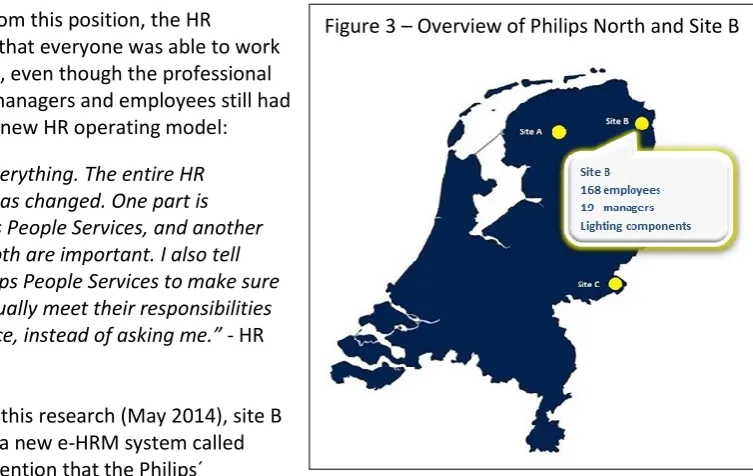
This case study focused one of the business sites of Philips situated in the Netherlands (hereafter: site B). The business site is part of a consortium of Philips business sites in the North of the Netherlands and produces semi-finished quartz and special glass products for lighting applications (Figure 3). Half of the produced glass tubes and bars are used by Philips itself, while the other half is sold to other companies. At site B there is a 24/7 production and the work is therefore divided into five shifts. The site is rather small with 168 employees and 19 managers contracted via Philips. Site B makes use of the in-house employment agency of the company, which attracts yearly 40 up to 75 contingent workers.
25 the employees. From this position, the HR
manager ensured that everyone was able to work with the HR portal, even though the professional noticed that line managers and employees still had to get used to the new HR operating model:
“At first, HR did everything. The entire HR operating model has changed. One part is devolved to Philips People Services, and another part to the line. Both are important. I also tell people to call Philips People Services to make sure line managers actually meet their responsibilities
by using this service, instead of asking me.” - HR
professional
At the moment of this research (May 2014), site B was preparing for a new e-HRM system called 'Workday'. The intention that the Philips´
management had with Workday was to integrate the 15 different applications of the current HR portal, into one single global HR portal. Workday would be implemented from May 1, 2014 in phases, to run a smooth transfer from the existing systems into Workday.
5.3 Defining the HRM system
From this case description, we decided to focus on the HR portal. In line with the context of our research question, the system is clearly linked to the strategic intentions of management and the process of devolution in the company. To define the e-HRM system of Philips, we borrowed the definition of Ruël, Bondarouk and Looise (2004) and agreed to a final version in conversations with HR professionals of Philips and a group of three researchers. These efforts resulted in the following definition:
‘The HR portal, which is available for all employees of Philips through the intranet, and all information and functionalities this portal contains’.
In our definition, we respect the combination of both technological and HRM aspects that constitute the e-HRM system (Bondarouk & Ruël, 2009b; Strohmeier, 2009; Marler & Fisher, 2013). It also emphasises the engagement of all stakeholders, needed for a full understanding of the congruence or incongruence in frames (Bondarouk & Ruël, 2009b).
5.4 Frames of the e-HRM system
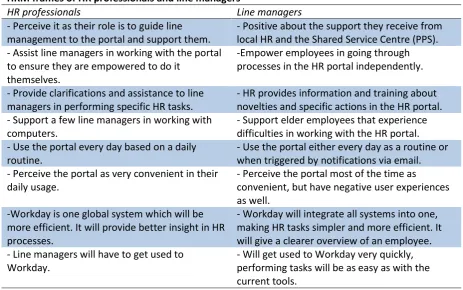
Based on the theory (Lepak et al., 2006), four frames were distinguished: intended, HRM-as-composed, HRM-in-use and HRM integration. During our analysis of HRM-in-use, we found another frame: consequences. HR professionals and line managers clearly experienced the consequences of the HR portal in their daily use. HRM-in-use was therefore divided into two frames: daily use and consequences. In this section, the findings for each frame are described.
5.4.1 HRM-as-intended
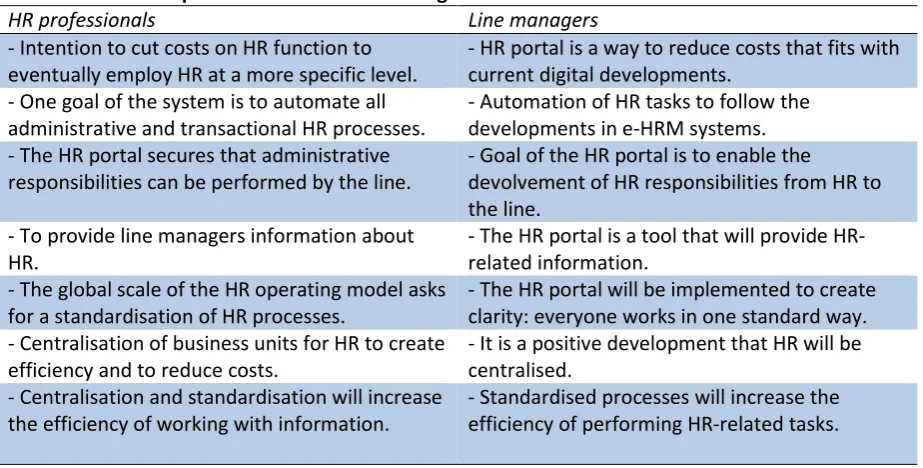
Within this frame we distinguished eight subtopics that together reflect the knowledge, assumptions and expectations of HR professionals and line managers in respect to the goals and managerial reasons for introducing the HR portal: cost reduction, automation, devolution, disclosure of information, standardisation, centralisation, efficiency and convenience. Subtopics were found similar for HR professionals and line management, with the exception of ‘convenience’ that was only mentioned by line management as an intention for implementing the HR portal.
26 Cost reduction
According to the HR professionals, the most important goal for the implementation of the HR portal was to cut costs on the HR function, while remaining a similar performance. The ultimate goal was to employ HR at a higher, more specific level. This means less operational HR, and more specific HR functions (e.g. salary and payroll specialist). At the time of our case study, HR professionals noticed that the implementation of the HR portal had reduced the operational HR function from a quarter to a third – or even a half.
The large majority of line managers thought that cost reduction was the main driver for management to implement the HR portal. They understood that it was an essential step for the company in order to remain competitive in the market. They perceived the HR portal to facilitate the execution of the same HR work, with less HR people. One line manager even expected that the HR portal would enable HR to specialize on different areas (such as recruitment). Most of the line managers were not surprised by the implementation of the HR portal and saw it as a way to reduce costs that fitted the digital developments in the world.
Automation of HR processes
One of the goals Philips’ HR professionals wanted to achieve by introducing the HR portal was to digitalize HRM. In order to do that, changes in HR processes were needed to enable the automation of all administrative and transactional HR activities. A majority of line managers thought it was a logical choice of the company to implement the HR portal because they understood that they could not leave behind with respect to the developments in e-HRM systems.
Devolution
The HR professionals made clear that another goal of the HR portal was to facilitate the devolvement of administrative responsibilities to the line. They held line managers responsible for their own employees. An advantage of the portal would be that line managers could easily perform HR tasks, because they know what is at stake within their team. The professionals perceived no added value of being involved in these processes.
Half of the line managers reported that the goal of the HR portal was to enable the shift of HR responsibilities from HR to the line. They accepted that they would have more administrative HR responsibilities - they were not necessarily negative about it - and believed they would be able to perform most of these HR activities themselves.
Disclosure of information
Accompanied with the devolution of HR tasks to the line, the HR professionals intended to use the HR portal to provide information to line managers and employees in order to make sure they were able to retrieve the required data from the system. HR professionals perceived it as their task to guide the line managers and employees towards this information. This intention was recognized by line managers, who viewed the HR portal as a tool that would provide them a lot of information about their employees, their personal choices and the terms of employment.
Standardisation
HR professionals wanted to create a standardised way for the execution of HR tasks and processes on a global level. They incorporated the processes in the HR portal in such a way that it forced line managers and employees to perform tasks in only one pre-determined manner:
28
5.4.2 HRM-as-composed
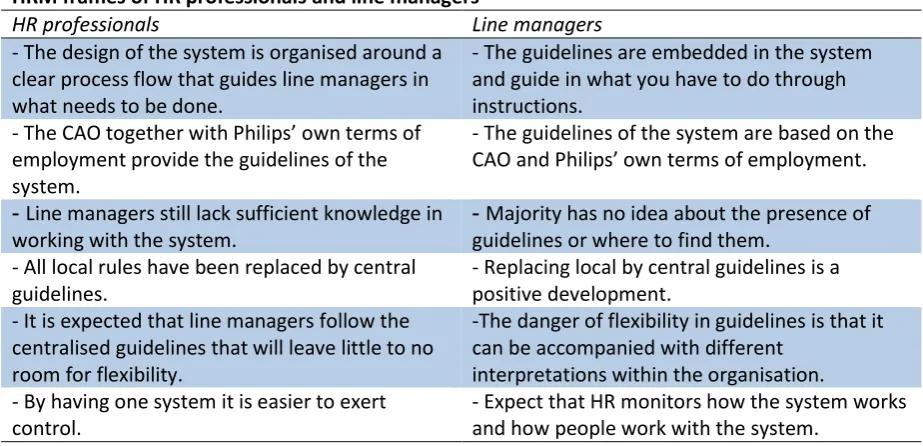
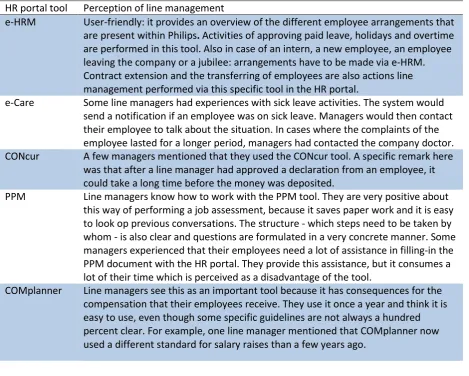
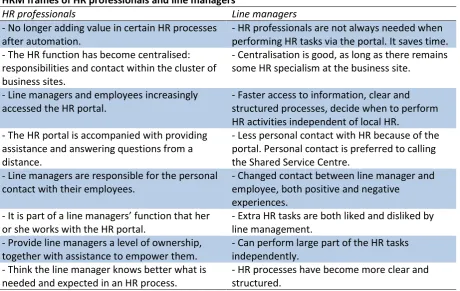
Five similar subtopics were distinguished for both HR professionals and line management in analysing the findings for HRM-as-composed: guidelines embedded in the portal, knowledge, centralisation, flexibility and control. The topics constitute the views of HR professionals and line management on the set of guidelines the HR portal was intended to deliver.
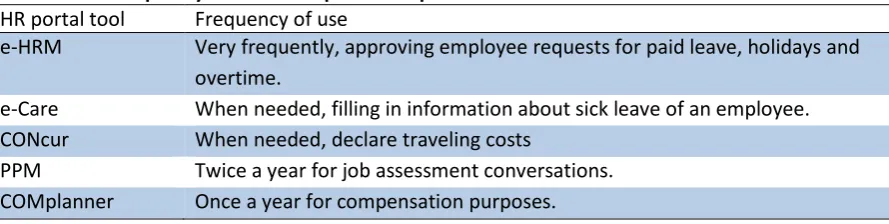
Guidelines are embedded in the portal.
HR professionals revealed that the HR portal was organised in such a way that it was clear who should be doing what in which process. Privacy issues and authorisation issues were also captured in the system: what people can see and do, based on their role in the company. Most importantly, there was a clear process flow that would guide line managers in checking the right boxes and filling in the correct information. Therefore, it was not needed for line managers to fully understand the guidelines behind the system to understand what needs to be done. The same reasoning could also be found in intervi