Available online: https://edupediapublications.org/journals/index.php/IJR/ P a g e | 1354
Design and Analysis of Leaf Spring Using FEA by Using
Different Materials
By
Hamid Hussein Ali Kareem Idan Fadheel Ahmed Mohamed Aliywy
Hamid [email protected] [email protected] A [email protected]
1-ABSTRACT
The aim of this research is to calculate the deformations and stresses and strain values and the values of safety factor for the leaf spring used in the military jeep design, where the focus was on the analysis provided by the computer using finite element where the analysis for the spring which absorbs vibrations during vehicle movement, which also works as a structure to support the vertical load hanging by the same vehicle and its cargo .under operating conditions behave platelets complex behavior due to loads meted out as was the analysis and prediction of displacement values of stresses and strain . These plates that we are going to analyze a specially designed military jeep car, where bears and reduce the vibrations resulting from military operations. The main objective of this research is to reduce stress and increase strength through a change in the type of metals used. To create this research we used
Cad-tool pro-e / creo-2) and the analysis we used cae tool (Ansys workbench) . On the whole, in most cases the plates used are of steel type in this search looking for another metal type gives the same as what gives steel or better where the use of two types of minerals, namely (monel-400 and en9) and comparing this with the steel to see results. Where were resistant minerals that are best instead of
steel in terms of reducing stress and increase resistance.
2-INTRODUCTION
A spring is defined as an elastic body, whose function is to distort when loaded and to recovers its original shape when the load is removed.
Available online: https://edupediapublications.org/journals/index.php/IJR/ P a g e | 1355 leaf spring is based upon the theory of a beam of uniform strength. The lengthy blade has eyes on its ends. this blade is called main or central leaf, the remaining blades are called graduated leaves. All the blades are restricted together by means of steel straps. The spring is mounted on the arbor of the vehicle. The entire vehicle remainder on the leaf spring. The front end of the spring is joint to the frame with a simple pin joint, while the rear end of the spring is connected with a fetter. Shackle is the malleable link which join between leaf spring rear eye and frame. When the vehicle comes across a overthrow on the road surface, the wheel moves up, leading to aberration of the spring. This changes the length between the spring eyes. If both the ends are fixed, the spring will not be able to accommodate this change of length. So, to accommodate this variation in length restriction is provided as one end, which gives a flexible connection. [1&2]
Leaf springs are mainly used in suspension systems to absorb shock loads in automobiles like light motor vehicles, heavy duty
trucks and in rail systems. . It carries sidelong loads, brake torque, lead torque in addition to impact absorbing [3]. The advantage
of leaf spring over helical spring is that the ends of the spring may be guided along a definite path as it deflects to act as a
structural member in addition to energy absorbing device [4]. According to the studies made a material with maximum strength
and minimum modulus of elasticity in the longitudinal direction is the most suitable material for a leaf spring [5].
3-MATERIALS AND METHODS
In this project we designed one single leaf spring by using cad tool ( creo-2) and then
analyzing by using cae tool (Ansys workbench) and here we have steel is a existing material
and to get more accurate results here we also analyzing our object with 3 different materials
and those materials are (en9, monel-400,) and applying 3 boundary conditions (85000N,
9500N, 125000N loads)and calculating its maximum deformation and stress and strain energy
and safety factor values for all materials from all these results here can conclude which
Available online: https://edupediapublications.org/journals/index.php/IJR/ P a g e | 1356
4. CREO DESIGN PROCESS
To create single leaf spring here we have to create its direction by using sketcher then we
should use extrude option to complete object. And the design steps shown in below figure
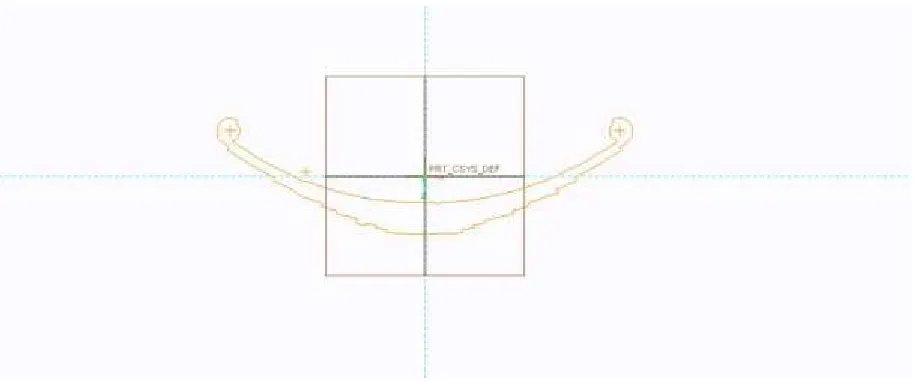
Fig 4.1 leaf spring outer sketcher
The above sketcher shows the complete sketcher of the leaf spring model and the shape has
been created by using curves and line only. After completing the sketchers if you want to edit
the dimension just double click on it and then you can modify your dimension. After
Available online: https://edupediapublications.org/journals/index.php/IJR/ P a g e | 1357 Fig 4.2 leaf spring sketcher with all dimensions
and this sketcher should be close. After perfecting of total sketch just click on ok
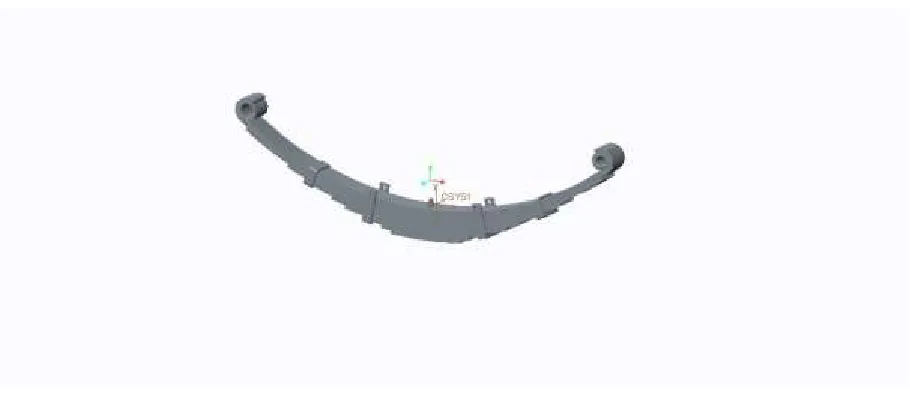
Fig 4.3 leaf spring complete 3d developed model
The above figure shows that 3d model of leaf spring and after completion it just click ok.
Available online: https://edupediapublications.org/journals/index.php/IJR/ P a g e | 1358
5. FINITE ELEMENT ANALYSIS OF LEAF SPRING
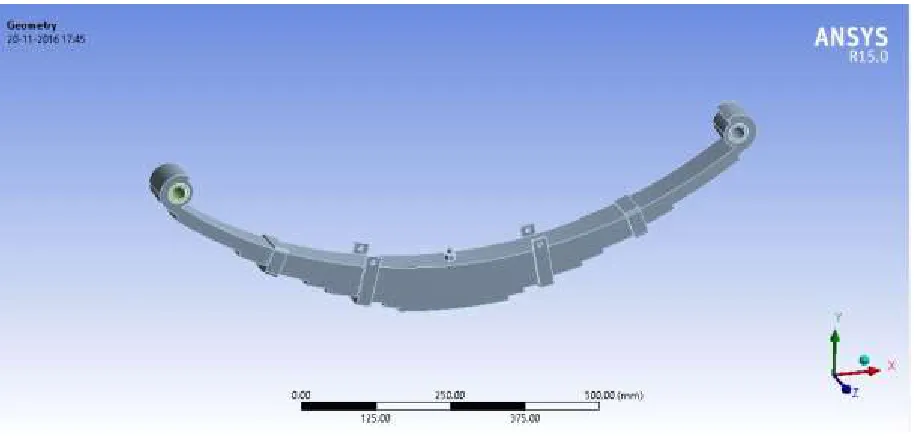
Finite element analysis of leaf spring was used for observing the structural results on the object and calculating like deformation and stress and strain values for different materials. To do this here you have to import your object from design software and apply real time boundary conditions.
Here we analyzing our model with (3) different loading conditions (85000N, 95000N, 125000N) and with 3 materials (Steel, En9, Monel-400) in this steel only existing material and reaming all are changing materials.
Fig 5.1 imported model from creo-2
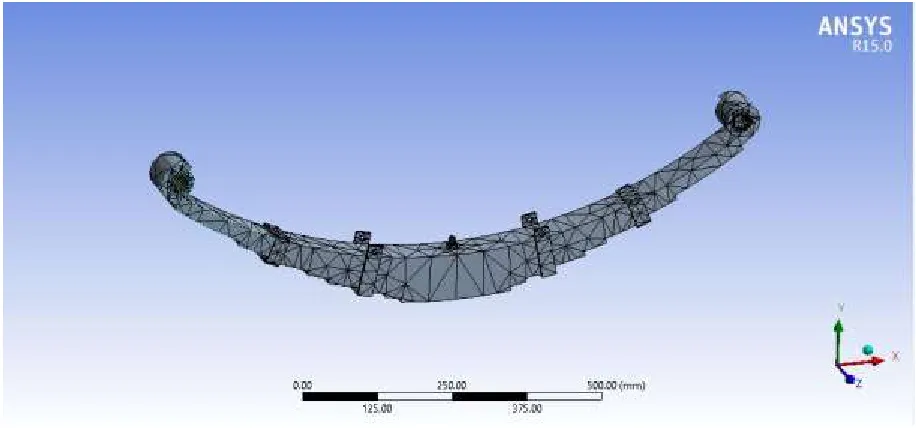
5.2 Meshing
The meshing is so significant for the analysis of any tectonic object or body. Meshing is the
process of description of a body into minimal segment for accuracy of the results the web or
Available online: https://edupediapublications.org/journals/index.php/IJR/ P a g e | 1359 Fig 5.2 meshing
Material Properties
steel En9 Monel 400 Young’s modules(pa) 200e9 210E^9 125E^9
Poison ratio 0.3 0.33 0.32
Density(kg/m^3) 7850 7850 7800
Yield strength (Mpa) 200 350 450
Table 1 (material properties)
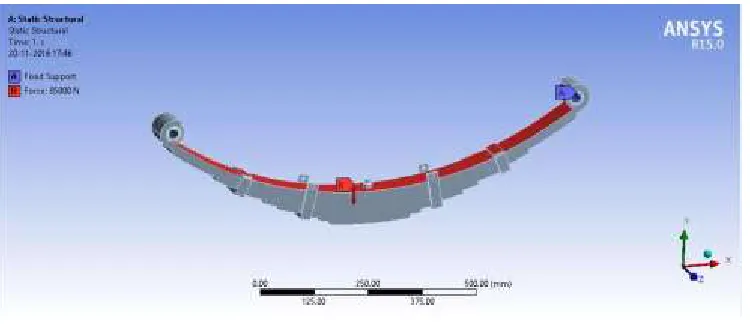
Available online: https://edupediapublications.org/journals/index.php/IJR/ P a g e | 1360 Fig 5.3 boundary condition on leaf spring
The above figure shows that boundary conditions of a leaf spring and here applied 85000N on
the object and fixing two ends.
5.4 Results for boundary condition (85000N)
Steel (existing material)
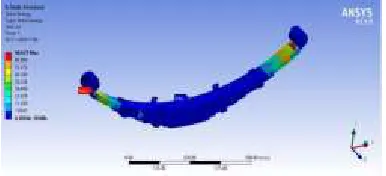
Fig 5.4.1 Steel deformation for 85000N Fig 5.4.2 steel stress for 85000N
Available online: https://edupediapublications.org/journals/index.php/IJR/ P a g e | 1361
Results for (en-9 material)
Fig 5.4.5 En- 9 deformation for 85000N Fig 5.4.6 en-9 stress for 85000N
Fig 5.4.7En-9 strain energy for 85000N Fig 5.4.8En-9 safety factor for 85000N
RESULTS FOR MONEL 400
Fig 5.4.9Monel 400 deformation for 85000N Fig 5.4.10Monel 400 stress for 85000N
Available online: https://edupediapublications.org/journals/index.php/IJR/ P a g e | 1362
Fig 5.4.11Monel 400 strain energy for 85000N Fig 5.4.12Monel 400 safety factor for 85000N
And here increasing its loading from 85000N to 9500N and 125000N and calculating the same
results for all materials.
Tables
Deformation(mm) Stress(Mpa) Strain energy(mJ) Safety factor Steel 0.18062 164.12 57.71 1.5232 En-9 0.17188 164.16 54.936 2.1625 Monel-400 0.28945 163.98 92.419 2.4394
Available online: https://edupediapublications.org/journals/index.php/IJR/ P a g e | 1363
5.5 Results for 95000N
Steel
Fig 5.5.1 Steel deformation for 95000N Fig 5.5.2 Steel stress for 95000N
Fig 5.5.3 Steel strain energy for 95000N Fig 5.5.4 Steel safety factor for 95000N
En9
Fig 5.5.5 en-9 deformation for 95000N Fig 5.5.6 en-9 stress for 95000N
Available online: https://edupediapublications.org/journals/index.php/IJR/ P a g e | 1364
Monel-400
Fig 5.5.9 monel-400 deformation for 95000N Fig 5.5.10 monel-400 stress for 95000N
Fig 5.5.11 monel-400 strain energy for 95000N Fig 5.5.12 monel-400 safety factor for 95000N Tables:
Deformation(mm) Stress(Mpa) Strain energy(mJ) Safety factor Steel 0.20187 183.43 72.088 1.3629 En-9 0.1921 183.47 68.622 1.9349 Monel-400 0.32351 183.27 115.44 2.1826
Available online: https://edupediapublications.org/journals/index.php/IJR/ P a g e | 1365
5.6Results for 125000N
Steel
Fig 5.6.1 Steel deformation for 125000N Fig 5.6.2 Steel stress for 125000N
Available online: https://edupediapublications.org/journals/index.php/IJR/ P a g e | 1366 Fig 5.6.3 Steel strain energy for 125000N Fig 5.6.4 Steel safety factor for 125000N
En-9
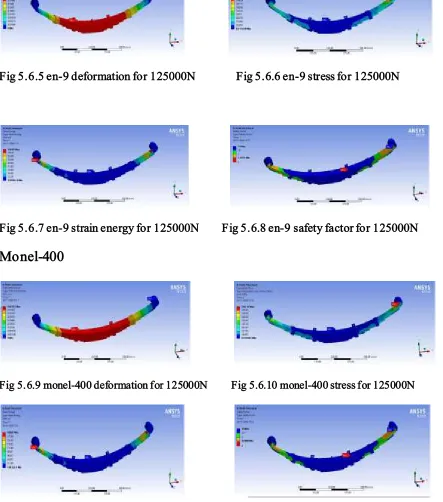
Fig 5.6.5 en-9 deformation for 125000N Fig 5.6.6 en-9 stress for 125000N
Fig 5.6.7 en-9 strain energy for 125000N Fig 5.6.8 en-9 safety factor for 125000N
Monel-400
Fig 5.6.9 monel-400 deformation for 125000N Fig 5.6.10 monel-400 stress for 125000N
Available online: https://edupediapublications.org/journals/index.php/IJR/ P a g e | 1367
Fig 5.6.11 monel-400 strain energy for 125000N Fig 5.6.9 monel-400 safety factor for 125000N
Tables:
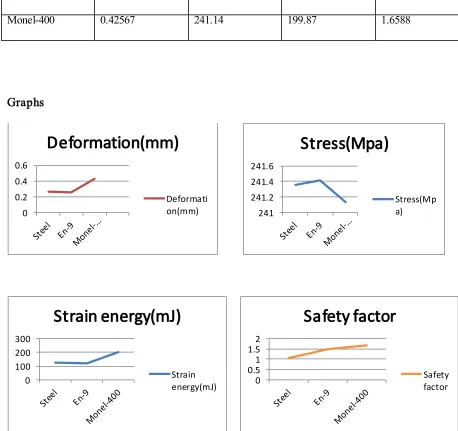
Deformation(mm) Stress(Mpa) Strain energy(mJ) Safety factor Steel 0.26562 241.36 124.81 1.0358 En-9 0.25277 241.41 118.81 1.4705 Monel-400 0.42567 241.14 199.87 1.6588
Available online: https://edupediapublications.org/journals/index.php/IJR/ P a g e | 1368 CONCLUSION
1
- designed using fiber spring (cad tool (creo-2) and analyzed by ((ANSYS workbench with loads of different conditions and compared with the spring steel fibers, where the difference was clear to
decrease stress and increase resistance.
2
- increase the safety factor and portability high stress compared with steel
3- up resistance loads (125000N) any breakage resistance high compared with steel springs 4
-plasticity coefficient is good, making it a useful and valid in the industry
References
1. Rajendran I, Vijayarangan S, Design and Analysis of a Composite Leaf Spring, Journal of
Institute of Engineers, India ,vol.-8,2-2002
2.Shishay Amare Gebremeskel, Design, Simulation, and Prototyping of Single Composite
Leaf Spring for Light Weight Vehicle, Global Journals Inc. (USA) 2249-4596, Volume 12
Issue 7, 21-30, 2012
3. M.Venkateshan , D.Helmen Devraj, “design and analysis of leaf spring in light vehicles”,
IJMER 2249-6645 Vol.2, Issue.1,pp.213-218, Jan-Feb
2012.
4. R.S.Khurmi and J.K.Gupta Machine Design chapter 23.
5. U. S. Ramakant & K. Sowjanya, “Design and analysis of automotive multi leaf springs
using composite material”, IJMPERD 2249-6890 Vol. 3,
Available online: https://edupediapublications.org/journals/index.php/IJR/ P a g e | 1369 6.U. S. Ramakant & K. Sowjanya, “Design and analysis of automotive multi leaf springs using