Scholarship@Western
Scholarship@Western
Electronic Thesis and Dissertation Repository
3-26-2014 12:00 AM
The Romantic Posthuman and Posthumanities
The Romantic Posthuman and Posthumanities
Elizabeth Effinger
The University of Western Ontario
Supervisor
Dr. Tilottama Rajan
The University of Western Ontario Graduate Program in English
A thesis submitted in partial fulfillment of the requirements for the degree in Doctor of Philosophy
© Elizabeth Effinger 2014
Follow this and additional works at: https://ir.lib.uwo.ca/etd
Part of the Literature in English, British Isles Commons Recommended Citation
Recommended Citation
Effinger, Elizabeth, "The Romantic Posthuman and Posthumanities" (2014). Electronic Thesis and Dissertation Repository. 1940.
https://ir.lib.uwo.ca/etd/1940
This Dissertation/Thesis is brought to you for free and open access by Scholarship@Western. It has been accepted for inclusion in Electronic Thesis and Dissertation Repository by an authorized administrator of
(Thesis format: Monograph)
by
Elizabeth Effinger
Graduate Program in English
A thesis submitted in partial fulfillment of the requirements for the degree of
Doctor of Philosophy
The School of Graduate and Postdoctoral Studies The University of Western Ontario
London, Ontario, Canada
ii
Abstract
This dissertation focuses on the way Romantic-period philosophers, artists and writers were
critically engaged with various Romantic-period disciplines, those branches of learning that
were complexly enmeshed with the inhuman and putting increasing pressure on the concept
of “the human.” Over the course of five chapters, this study pursues the problematic of “the human” across the borders of philosophy, where Immanuel Kant entertains extraterrestrials
while organizing the new discipline of pragmatic anthropology; the early and late illuminated
work of poet-engraver William Blake, which enables us to think the inhumanities within the
human; the closet drama and poetry of Percy Bysshe Shelley, which think the inhumanity of
life; and the fiction of Mary Shelley, as a thought experiment about the end of man and
posthuman survival of man’s cultural achievements. “The Romantic Posthuman and
Posthumanities” analyzes the human at its borders with the inhuman in Romantic literature. It
examines the erosion of these borders through the way key disciplines (aesthetics, literature)
were thematized in literary texts by Blake and the Shelleys. This thesis makes the case that a
theoretical thinking about the end of man, of a humanism associated with man and his
disciplinary formations, and a reflection on what comes after this end, all have their inception
in Romantic thought.
Here, Romanticism is a sign of history for man’s fragilization, for a privileged
conception of man and of a certain understanding of life, a counter-discourse to
Enlightenment humanism. What emerges – and this is the real importance of this endeavour
– is a more comprehensive portrait of the ways in which the human and a decidedly
humanistic understanding of life in the long Romantic period were widely and complexly
enmeshed with – to follow Blake – an “innumerable company” of inhumans, including ether,
rocks, plants, infusoria, and animals. This study reflects on our contemporary lives within
what is increasingly being called the “posthumanities,” and hopes that as we move towards
this new humanities we will acknowledge and better understand our debt to Romantic
thought, our model for a hybridized interdisciplinary thought wherein art and science, human
iii
Keywords
Romanticism, Posthumanities, Inhuman, Disciplines, Immanuel Kant, Percy Bysshe Shelley,
William Blake, Mary Shelley, Humanism, Posthumanism, British Romantic Literature,
iv
Acknowledgments
Chapter 3 appeared in somewhat different form in Blake, Gender, and Culture. I thank the
editors Helen Bruder and Tristanne Connolly for their careful reading and support at an early
stage in the project. A portion of chapter 5 appeared in European Romantic Review 25.1
(2014): 19-34. Thanks to the editors Ranita Chatterjee and Diane Hoeveler for comments and
suggestions. I am also grateful to the Social Sciences and Humanities Research Council of
Canada for a doctoral fellowship that supported the writing of this dissertation.
I would like to express my gratitude to my wonderful committee: Angela Borchert,
Steven Bruhm, Claire Colebrook, Joel Faflak, and Jan Plug. My deepest thanks goes to
Tilottama Rajan, a most generous and indefatigable supervisor whose support has been
unwaivering. Many colleagues and friends have helped me think through this project.
Jonathan Boulter, Helen Bruder, Chris Bundock, Tristanne Connolly, Chris Keep, and
Matthew Rowlinson have each discussed with me various parts. I am especially grateful to
Michelle Coupal for all the laughter, and so much more; Mark Lussier for the sage advice on
v
Table of Contents
Abstract ... ii
Acknowledgments... iv
Table of Contents ... v
List of Figures ... viii
Conventions, standards, and abbreviations ... ix
Introduction ... 1
Chapter 1 ... 28
1 From Man to “Differently Organized Creatures”: Kant’s Anthropology as Counterscience ... 28
1.1 Introduction ... 28
1.2 Kant’s Anthropology and the Question of the Human ... 33
1.3 What is Anthropology? ... 39
1.4 The Tendency of Kant’s Anthropology ... 43
1.5 What is the Human? ... 51
1.6 Kant and Epigenesis ... 54
1.7 Kant and Palingenesis ... 59
1.8 Palingenetic Consequences for the Anthropos ... 65
1.9 The Dark Side of Life: Pain ... 73
1.10“Different species (race)” ... 79
1.11Conclusion ... 85
Chapter 2 ... 91
2 Percy Shelley and the “dark scheme of things” ... 91
2.1 Introduction ... 91
vi
2.4 Sound in Prometheus Unbound ... 111
2.5 An Unharmonious Key Change ... 119
2.6 The Inhuman in The Triumph of Life ... 125
2.7 The Dawning of the Inhuman ... 127
2.8 The Triumph of the Inhuman: Darkening the Enlightenment ... 140
Chapter 3 ... 148
3 Speculative Life: The Unborn in Blake’s The Book of Thel ... 148
3.1 Introduction ... 148
3.2 The Mole and the Motto ... 158
3.3 Moles and the Unborn in Science and Psychoanalysis ... 161
3.4 Bracha Ettinger’s Matrixial Borderspace... 165
3.5 The Ending: Decision or Deferral? The Book of Thel and self-fragilization ... 169
3.6 Conclusion ... 173
3.7 Interchapter: “The Little Girl Lost” and “The Little Girl Found” ... 175
Chapter 4 ... 181
4 “Intolerable to Organs of Flesh”: Blake’s Jerusalem ... 181
4.1 Introduction ... 181
4.2 The Human: “every thing is Human” (J 38:49) ... 185
4.3 Jerusalem’s Architecture: Golgonooza ... 199
4.4 Beautiful Thinking and Architecture ... 202
4.5 Golgonooza: a “terrible eternal labour!” (12:25) ... 207
4.6 Golgonooza: A Slippery Topology ... 211
4.7 Golgonooza as Allegory for the Tower of Babel and University in Ruins ... 212
4.8 The Disciplines in Jerusalem ... 215
vii
... 235
5.1 Introduction ... 235
5.2 Institutions in Ruins ... 236
5.3 The Art of Disappearance ... 237
5.4 Disappearing Disciplines ... 239
5.5 Music and Sounds of (De)creation ... 244
5.6 The Increasing Disenchantment of Music ... 248
5.7 Strange Resonances: The Sound of the Inhuman ... 252
5.8 The Return of the Disciplines ... 262
5.9 De-formations ... 263
5.10The Sound of The End ... 265
6 Conclusion: “from the model to the matrix” ... 277
viii
List of Figures
Figure 1. Lamsweerde, Jan Baptist van. Historia Naturalis Molarum Uteri (1687). EEBO.
Image 84... 163
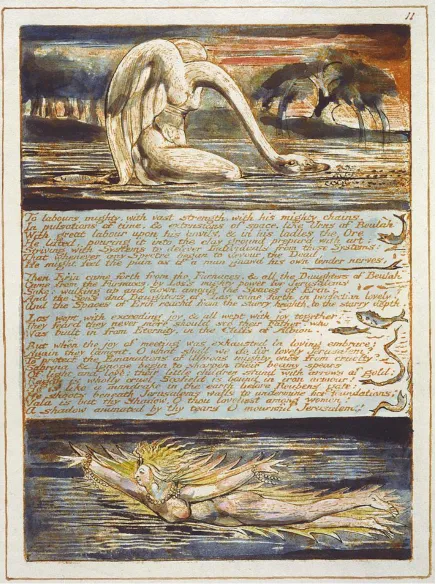
Figure 2. Jerusalem, The Emanation of the Giant Albion, copy E, object 11 (Erdman 11).
William Blake Archive Online. ... 193
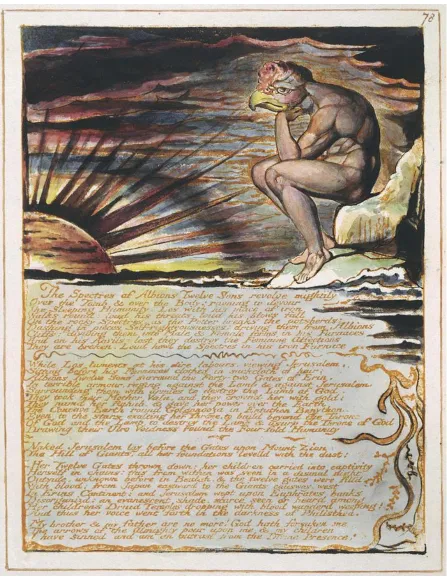
Figure 3. Jerusalem, The Emanation of the Giant Albion, copy E, object 78 (Erdman 78).
William Blake Archive Online. ... 194
ix
Conventions, standards, and abbreviations
All references to Kant’s work cite the page number of an available English translation.
Wherever possible, these references (preceding the backslash) are followed by the volume
and page number of the Prussian Akademie edition: Immanuel Kants Schriften: Ausgabe der
königlich preussichen Akademie der Wissenschaften (Berlin: Walter de Gruyter, 1902 –).
Where I call attention to a particular translation, I place the German from the Akademie
edition in parentheses, immediately following the English translation. Any of my own
translations will be indicated in a footnote, along with the citation from the Akademie
edition. Similarly, any of my translations of Bonnet (chapter 1) are flagged in a footnote.
Thanks to Dr. Ann Gagné for her assistance in translating these passages.
All quotations will be cited in the text by line number (for the poetry) or page number
(for the prose). Most references to Blake’s illuminated work, visual art, and writing are taken
from the William Blake Archive. References made to David V. Erdman’s The Complete
Poetry and Prose of William Blake. Berkeley: U of California P, 1988, will be hereafter
Introduction
…Sure a poet is a sage,
A humanist, physician to all men.
That I am none I feel, as vultures feel
They are no birds when eagles are abroad.
What am I then? Thou spakest of my tribe:
What tribe? – Keats, The Fall of Hyperion, A Dream (I. 189-194)
From the “pensive” rodent in Anna Laetitia Barbauld’s “The Mouse’s Petition” (1773),
William Wordsworth’s Leech Gatherer and Cumberland Beggar, the “slimy sea” of
Samuel Taylor Coleridge’s Ancient Mariner and its “thousand thousand slimy things […]
with legs,” Mary Shelley’s learned Creature, to John Keats’ serpent Lamia, or Isabella’s
pot of basil that sprouts “thick, and green, and beautiful” from a severed head, and
posthumanist vulture-poet from The Fall of Hyperion (which marks the epigraph to this
study), Romantic literature teems with extraordinary inhuman figures. This study
examines how Romantic philosophers, mixed-media artists, and writers – Immanuel Kant
(1724-1804), William Blake (1757-1827), Percy Bysshe Shelley (1792-1822) and Mary
Shelley (1797-1851) – participate in what Andrew Slade, in reference to Samuel Beckett,
calls “the anamnesis of the human and inhuman” (54). What emerges throughout the long
Romantic period is an increasing “assault on the category of the human” as writers
recognize that “the human was never fully what Enlightenment philosophy claimed it to
be” (54). Enlightenment philosophy, which sought to self-liberate man from superstition
and the supernatural under the driving force of Reason, established man as both the
Enlightenment as the final cause. It is the end and the aim of Enlightenment, and also its
organizing principle” (54). This anamnesis or painful working-through of the human and
inhuman registers itself in changes within the disciplines themselves.
Unsurprisingly, the concepts of the “human” and the “humanities” have long been
entwined. As R.S. Crane observes in The Idea of the Humanities (1967), the modern
expression of “the humanities” was first introduced in ancient Rome through Cicero and
Quintilian’s rhetoric before becoming attached to the notion of “humanitas” through the
“good arts” outlined by the grammarian Aulus Gellius. In his commonplace book Attic
Nights, Gellius writes:
Those who have spoken Latin and have used the language correctly do not give
the word humanitas the meaning which it is commonly thought to have, namely,
what the Greeks called philanthropia, signifying a kind of friendly spirit and
good-feeling towards all men without distinction; but they gave to humanitas
about the force of the Greek paideia; that is, what we call eruditionem
institutionemque in bonas artes, or ‘education and training in the good arts.’
Those who earnestly desire and seek after these are most highly humanized
(maximi humanissimi). For the pursuit of that kind of knowledge, and the training
given by it, have been granted to man alone of all the animals, and for that reason
it is termed humanitas, or ‘humanity.’ (qtd. in Crane 23)
The “goodness” of these arts comes from the implication that “the men who pursue them
and are trained in them are most humanized” (23). Gellius’ etymology of the “humanitas”
makes explicit the collusion between the humanities as a pursuit and knowledge practice
from the animal present in Gellius’ humanitas is carried, as Elizabeth Grosz observes,
throughout “the humanities as they developed from the nineteenth century onward”
(Becoming Undone 12). The humanities have from their very beginning “cast man on the
other side of the animals” (12). This Roman humanitas not only becomes the basis for the
organization of the medieval trivium and quadrivium, but it also unfolds into the grounds
for the various modern defences and apologies of the humanities in the writing of Sidney,
Herder, Schiller, and Arnold.1 Even Kant, in his anthropology lectures, concurs that “The
humanities [Humaniora] are the arts and sciences which adorn a beautiful spirit from
time to time, and are chiefly being well-read in the orators and poets” (Lectures on
Anthropology 265/Ak25:760). Kant’s “beautiful spirit” clearly bears the traces of the
humanitas, as Kant explains: “Through the humanities I understand 1) eloquence, the art
of enlivening ideas of the understanding through sensibility. 2) The art of poetry, the art
of giving the play of sensibility unity through the understanding” (265/Ak25:760). Thus,
as Crane says, “Throughout this long period the various statements of the humanities we
have encountered have normally involved the assertion of some human, or ‘more human,’
end” (158). In short, the humanities have a long history of being bound to definitions of
the human. What would happen, then, to the humanities if its central signifier, “the
human,” were decentred, dissolved, or even replaced by the inhuman? What would a
humanities look like if it became unbound from the human? Enter: the posthumanities.
This study focuses on explorations and representations of the human and inhuman
and their relationship in Romantic thought. My original claim is that in the span of the
1 The trivium, the lower division, housed the branches of grammar, rhetoric, and logic; the quadrivium, the
long Romantic period (c.1780-1830) the “human” as a concept becomes formally
organized, re-organized and disorganized. These changes are also reflected in the
disciplines themselves. Here, “disciplines” are understood in the general sense of
“branches of learning (disciplinae).”2 I argue that Romantic poetry and prose were also
sites of critical intervention – of critique – into questions of disciplinary organization,
such that we see in the poetry of Percy Shelley a critique of history and historiography, in
the illuminated work of William Blake a dialogue on the arts and sciences, and in the
fiction of Mary Shelley a sustained though overwhelmingly ignored commentary on the
limits of the disciplines – art, literature, history, and music – in end times. What the
following chapters will make clear is how Romantic writers were keenly invested not
only in the question of the human, but also in the general economy of the disciplines,
including questions over their sustainability.
One major claim of my project is that the Romantic period is an important
cornerstone for contemporary discussions of what some are calling “the posthumanities,”
a reimagined humanities driven by critical posthumanism, that is, a knowledge practice
that no longer places man at the centre of discourse, and instead focuses on the matrices
in which the human is complexly enmeshed with the inhuman. For Cary Wolfe, Editor of
the acclaimed Posthumanities Series (Minnesota UP) – an important conduit for
posthumanist work – “traditional humanism is no longer adequate to understand the
human’s entangled, complex relations with animals, the environment, and technology”
2
(“Posthumanities”). But Romanticism continues to be an unacknowledged legislator of
posthumanist thinking, perhaps due to a conservative understanding of the Romantic
period. The endurance of an oversimplified, quasi-caricature of Romanticism as a period
reified through a series of dualisms (Man/Nature, Imagination/Reason,
Transcendental/Empirical) contributes to posthumanism’s seeming inhospitality to
Romantic thought.
Arguably it is Romanticism’s overdetermined conflation with the ego, human
consciousness, or a certain cerebral, egotistical subject that has contributed to the uneasy
relationship between Romanticism and posthumanism. Hence Romanticism becomes the
whipping boy for posthumanist theories that look to go beyond the individual, human
subject, which all too easily becomes a metonym for the Romantic subject. But while this
may be true of a certain Romanticism – one that relies heavily upon a
Wordsworthian-inflected reading, caught up in what Jerome McGann has called the “Romantic
ideology”3 – it flattens out the differences and counter-positions of numerous other
Romantic writers, such as Blake and the Shelleys, those authors that form the bases of my
chapters. As Timothy Morton suggests, “Romanticism doesn’t have to be about big
beautiful souls meditating on big mountains” (“Here Comes Everything” 173). After all,
many of posthumanism’s most beloved concepts and mechanisms are coterminous with
Romantic processes. For example, the ways in which the Romantics were embedded or
enmeshed within nature, an intimate economy of interior and exterior (rather than simply
the privileging of the interior, which is how Romanticism has typically been read)
3 For Jerome McGann the “scholarship and criticism of Romanticism and its works are dominated by a
resembles posthumanism’s interest in feedback loops (Hayles) and second-order systems
theory (Luhmann).
Thus the aim of this study is twofold: 1) to participate in the recent recuperation
or formation of a counter-Romanticism (following the work of Ron Broglio, Jacques
Khalip, and Denise Gigante), one that is attuned to the intimate enmeshment of interior
and exterior forms and forces, and 2) to provide current and future discussions of
posthumanism and the posthumanities with a genealogy or prehistory that it has largely
overlooked. My chapters on Kant, Blake, and the Shelleys are aimed at exposing a
Romantic thought that is engaged in the task of thinking the same important questions
that now define the posthumanities. This project also recognizes itself as the germ of a
larger project of assembling a Romantic literature attuned to the radical re-organization of
man.
One way to reorient the (after)life of Romanticism is to think of it less in terms of
our traditional literary periods – a way of thinking that is already fraught with
indeterminacies as to when Romanticism actually occurs – and, instead, to think of
Romanticism as a problematic, in the Foucauldian sense of the term.4 Such an approach
has already been employed by Rob Mitchell and Ron Broglio in their Introduction to
Romanticism and the New Deleuze. Peter Zima similarly concurs that “[c]onsidering the
4 In seeing Romanticism as a problematic, I am following Rob Mitchell and Ron Broglio, who discuss
Romanticism as a problematic in their introduction to Romanticism and the New Deleuze. Peter Zima likewise suggests that “The unity of a problematic thus appears as being made up of a number of related problems situated at the centre of social debates during a certain period of time. The romantic period was dominated by the problems of industrialisation (in the first half of the 19th century), the validity of traditional values, national identity, the opposition between nature and civilisation and the problem of the subject, of the subject’s unfulfilled desires. In the literary realm, each author offered different political, metaphysical, aesthetic and stylistic solutions. Any attempt to unify these solutions in order to construct an ideological, philosophical or aesthetic system is doomed to failure. The common denominator of all
heterogeneity of romanticism, it seems more appropriate to define or rather construct it as
a problematic: as a historical constellation of complementary problems and questions
which each politician, philosopher and artist attempts to solve in a different way” (14).
Expanding on Zima’s definition, my particular use of the term “problematic” is the name
for the way a number of problems pertaining to the inhuman congeal around the sign of
the human. Romanticism’s problematic is a constellation of problems concerning the
inhuman that unsettle the ontology and epistemology of the human subject. What
emerges in this period is a crisis-point: a profound unsettling of the human subject
through the uncanny proximity of the inhuman, a problematic that gets taken up across a
range of disciplines and by a variety of thinkers.
As a problematic, Romanticism is understood as the name for a series of formal
and conceptual problems that share certain “family resemblances” – to borrow
Wittgenstein’s term. And, because a problematic remains unbound to the historical
moment it murmurs beneath, it is capable of re-emerging elsewhere in history (or in a
history of thought). Thus, Romanticism as a problematic over the organization of man
and his proximity to the inhuman returns in contemporary theories and figures of critical
and popular posthumanism, which are also engaged in rethinking that which falls under
the sign of the human.5
Historically, the Romantic period (c.1780-1830) marks an important moment in
the problematic of the human/inhuman, due in large part to the rapid rate of scientific
discoveries that increasingly revealed to man the extent to which he had always been
5 Popular posthumanism names the variety of thought that aligns the posthuman with the cyborg and
amongst an “innumerable company” – to use Blake’s words – of inhuman forms and
forces (A Vision of theLast Judgment, E566).6 In the 1780s, scientific discoveries in the
area of physiological chemistry proliferated with the isolation of carbon, oxygen, and
hydrogen by Berthollet and Lavoisier. Advances in natural history were made by
Pennant’s History of Quadrupeds (1781). Space was being explored by Herschel’s
discovery of Uranus (1781), the publication of Laplace’s Laws of the Planetary System
(1788) and the Montgolfier brothers’ balloon ride (1783). At the same time that space and
even outerspace were being explored, the deeper spaces, structures and contents of the
Earth itself were also being unearthed. Bergman’s Outline of Mineralogy (1783) was
published only a few years before M. H. Klaproth discovered uranium (1786), and the
processes and movements of these inhuman forms and forces within the Earth would
become measurable with Salsano’s invention of the seismograph (1785). Mont Blanc
became more than a picturesque mountain as a site from which Horace de Saussure
would record weather observations (1787), a year before Hutton published his seminal
New Theory of the Earth (1788). The discovery of electromagnetism by Oersted in 1819
would lead to Faraday’s demonstration of the electromagnetic rotation (1821). From
Galvani’s experiments in animal electricity, and the first steam-driven engines of
6 Timothy Morton also sees the Romantic period as “a decisive moment in the Anthropocene, when a layer
England’s cotton factories and mills, to Edward Jenner’s smallpox vaccine (1796), the
inhuman emerges as a site of intense potentiality, as a kind of ghost in the machine, and
enters into increasingly intimate contact with the human to form what we might call, to
use a phrase by Merleau-Ponty, a “strange kinship” (Nature 214) – a kinship based on
new modes of human-animal intermingling, a relation which unsettles both figures, man
and animal.7
New publications sprang up, including the Botanical Magazine (1787),
Nicholson’s Journal of Natural Philosophy, Chemistry and the Arts (1797), and the
medical journal The Lancet (1823). New disciplines were established during the
Romantic period, including anthropology (Platner, Kant, Herder), comparative anatomy
(Cuvier, 1799), non-Euclidean geometry (Lobachevsky, 1826), comparative embryology
(Von Baer, 1828), organic chemistry (Wohler, 1828). The period also saw the rise of
“countersciences,” like homeopathy (Hahnemann, 1810), and, as I argue in chapter 1,
Kant’s unique strain of anthropology. “Counterscience” is Foucault’s word introduced in
The Order of Things for a science that “would appear to traverse, animate, and disturb the
whole constituted field of the human sciences” (381), a current that “flow[s] in the
opposite direction […] back to their epistemological basis, and that they ceaselessly
‘unmake’ that very man who is creating and re-creating his positivity in the human
sciences” (379), a “relation that is strange, undefined, […] and more fundamental than
any relation of adjacency” (367).
7 Blake’s “innumerable company” and Merleau-Ponty’s “strange kinship” are key phrases for how I frame
The establishment of the Linnean Society of London in 1788, the Royal
Institution of Great Britain in 1800, and the Geological Society of London in 1807
contributed to the dissemination of scientific and geologic knowledge. The City
Philosophical Society, founded in 1808 by John Tatum, “a mechanic, a manufacturer of
silver table spoons and forks, and quite unlettered; yet in the possession of a naturally
powerful and vigorous mind,” held meetings in Dorset Street on the subjects of “natural
and experimental philosophy” (Pettigrew 10). The Society’s first lecture, given by a then
sixteen-year-old Thomas Pettigrew, was on the subject of insanity, with subsequent
topics including anatomy, physiology and natural history (10).8
This period also saw the development of what in the early nineteenth century
came to be called Mechanics’ Institutes. First established in Edinburgh in the 1820s, the
force behind the institutes was George Birkbeck, who as early as 1800 held free lectures
on art and science for the public (working men), the content of which was often technical
in nature – in the way that happens in colleges now. Birkbeck eventually established the
London Mechanics’ Institute in 1824 (what would later become Birkbeck College). Thus,
during the Romantic period the city of London became an important site of disciplinary
change and resistance; it is here that a counter-institutional constellation formed amongst
the Mechanics’ Institute and similar societies (including the Dissenting societies) –
counter-institutions to the highly restricted universities of Oxford and Cambridge.9 These
8 In the “Autobiographical Sketch” that Thomas Joseph Pettigrew offers in his Medical Portrait Gallery,
there is a brief description of the City Philosophical Society, and its influence as an early model for what would become the Philosophical Society of London (10). It is telling that the society’s inaugural lecture was on the subject of insanity; this further dramatizes the extent to which we may think of this as a counter-institution, founded here in a gesture of disorder (rather than order).
9
counter-organizations not only disseminated knowledge to a wider, less educated public;
their membership was open to the formally unlearned as well: the City Society was
founded by the unlearned John Tatum, while the largely self-trained Faraday also gave
lectures at the Society. Furthermore, as I will show in chapter 4, these
counter-institutions played an important role in Blake’s imagination, and formed the radical
model of new disciplinary organizations that underpinned his vision of what he first calls
in The Four Zoas a “sweet science,” and more fully develops in Jerusalem.
Yet at the same time as scientific knowledge was being increasingly disseminated,
and thus acquiring a larger public, that knowledge was also closing itself off in various
ways across Europe. In England, the Apothecaries Act of 1815 restricted medical practice
to formally-trained doctors, legislation which inaugurated a national regulation of
medicine. In addition to legislative boundaries, the ethical limits to certain discursive
practices were also being defined, reflected in the founding of the Society for the
Prevention of Cruelty to Animals in 1824, which was largely a response to the cruelty of
vivisection and other animal experiments done in the name of scientific progress, and
which ushered in the beginning of the animal rights discourse, followed two years later
by the founding of the Royal Zoological Society.
In Germany, an astonishing number of universities were in the process of closing
their doors. As Theodore Ziolkowski in German Romanticism and Its Institutions
observes:
Public support became so weak that, during the Napoleonic era, twenty-two, or
over half, of the universities in Germany did in fact disappear in what has been
that they simply disappeared (Rinteln, Dillingen, Helmstedt); others were
suspended by Napoleon (Cologne, Mainz, Trier); still others were eventually
incorporated with existing institutions (Altdorf with Erlangen, Wittenberg with
Halle, Frankfurt an der Oder with Breslau). (228)
Thus, within the short span of the Romantic period, there was a vast acceleration and
proliferation of new institutions and organizations and the sudden dissolution of others.
As Ziolkowski notes, “The ideal university, which had existed in the imagination of the
Jena Romantics and been realized for a few fleeting months in the pristine universitas
literaria of Berlin, now became a memory that lived on only in the memoirs, the poems,
the novels of those who had briefly experienced it” (308). Indeed, this melancholic
memory of Romantic institutions figures in Mary Shelley’s The Last Man and forms the
basis of chapter 5.
Within this history of the long Romantic period, three constellations of the
problematic of man emerge: the formal organization of man, and his subsequent
reorganization or disorganization. The key questions for us here include: How do the
different disciplines organize, reorganize or even disorganize man? How are disciplinary
changes written on the human body? Does thinking about man’s organization produce the
desire for the re-organ-ization of man, the failure of which produces the nihilistic
disorganization of man? Are the changes in discursive formations of the disciplines
themselves symptoms of the working-through of the human? The human is organized
across a variety of disciplines and fields. In the late-eighteenth century, the birth of
anthropology (with Kant and Herder) as a formal discipline marks the moment whereby
fitting that Foucault, who goes on to think the disciplines in The Order of Things, first
began his career with a doctoral thesis (1961) on Kant’s Anthropology, which functions
as a precursor to The Order of Things. Underpinning the poetry and illuminated work of
William Blake, is the visionary re-organ-ization of the human – a mode of critique aimed
at the rigid, despotic organizations of man, a critique that is staged through the dislocated
movements and postures of various figures, a dismantling or a literal re-organ-ization of
the human body. In the novels of Mary Shelley, it is the failure of attempts to organize
and re-organize the human that produce a scene of the human’s dissolution, or
disorganization. Here, Shelley’s Frankenstein and The Last Man offer a critique of
Romantic disciplinarity itself, and can be read as dark conjectures on the legacy or
(after)life of Romanticism itself.
This project is divided into five chapters that loosely fall into three sections, one
concentrating on the organization of man and his disciplines, one on the re-organization
of man and those disciplines, and one on the dis-organization of man and those
disciplines, each as it is represented in Romantic thought. Each of these movements or
forms of organization (organization, reorganization, and disorganization) is inflected by
changes to the disciplines themselves. For each of the Romantic writers and thinkers I
examine, there is in their work the collusion between the inhuman and formal problems
over the structure and (un)sustainability of the disciplines as they were developing during
the long Romantic period. While studies of the long Romantic period have frequently
grounds of race and gender.10 Furthermore, what does not exist to my knowledge is a
single-study examination that addresses the changes in disciplines as represented in the
literature of the period. By focusing on how Romantic literature tarries with the
disciplines, I aim to offer a cluster of Romantic writers as keenly invested in formal
questions of disciplinarity. Following from that, I suggest that Romantic literature itself
occupies a unique space in which to “unwork” the parameters of these structures, or in
Derrida’s phrase the “laws” of these “genres.”11
The inhuman (via the supernatural) is also a defining feature of the Gothic,
evident in such studies as Fred Botting’s Limits of Horror, Scott Brewster’s Inhuman
Reflections, Judith Halberstam’s Skin Shows, and Terry Castle’s The Female
Thermometer, to name but a few. Nevertheless, this study sidesteps Gothic texts and their
“machinery,” Horace Walpole’s term for the “inventions” or devices in Gothic fiction
such as ghosts and goblins, sighing portraits and bleeding statues (6). As enthralling and
as widespread as these inhumans are in Gothic literature of the Romantic period, I set
them aside for the sake of exploring the inhuman outside of a discourse whose “principal
engine” (4), as Walpole puts it in his Preface to the first edition of The Castle of Otranto
(1764), is terror. Instead, I am interested in a particular figuration of the inhuman,
whereby the inhuman appears as a spur to thought, as a kind of intellectual goad. Hence, I
turn to the less conventional sites of the inhuman, in texts that seem to be explicitly
tarrying with what it means to be human. Furthermore, apart from brief discussions in
10
See, for example, Felicity Nussbaum’s The Limits of the Human: Fictions of Anomaly, Race, and Gender in the Long Eighteenth Century.
11 I refer here to Derrida’s essay “The Law of Genre.” Here he singles out Romanticism as a “mixing” of
chapter 1 regarding Kant’s tenuous relationship with physiological anthropology, and a
more substantial consideration in chapter 3 regarding the role of parturitive science in
Blake’s The Book of Thel, this project does not treat in detail the rising scientific
disciplines that foregrounded the importance of the inhuman, such as physiology (which
treats inhuman “forces” shared by human and inhuman bodies alike) and geology, terrain
recently mapped by Richard Sha and Noah Heringman, respectively. Nor does this
project examine the intersection between the disciplines, what we can call Romantic
interdisciplinarity, and how the literature of the period addresses this hybridization (both
thematically and formally). These important projects await further study but are beyond
my scope here.
Instead, I am generally focused on the Romantics’ “idea of the humanities,” to
borrow R.S. Crane’s phrase. Here, my target is man and his disciplines, the various forms
and permutations they take in the period, and how aesthetics – in Alexander
Baumgarten’s sense of “beautiful thinking” – undergirds these discussions. I begin with
Kant, for whom all of philosophy is organized around one question: “what is the
human?” This question whispers throughout Kant’s anthropological work, which, I argue,
operates as a “general anthropology” in Bataille’s sense of general economy that includes
the elements a system might otherwise expel. One particularly disruptive element of
Kant’s anthropology, one that greatly troubles the anthropological project from within, is
the appearance of the inhuman, or what David Clark calls “aliens.” Kant, of course, isn’t
the first thinker to creatively speculate on what comes after man; indeed, French
naturalist Jean-Baptiste Robinet (1735-1820) in De la nature (1761-8) and Swiss
philosophique (1770) offer conjectural remarks on where the great Chain of Being might
extend.12 However, where discourses of improvement in the Enlightenment posit an end
of history in the anthropos (in man and in civil society), Kant is more Romantic in not
closing things off in that way, and is different from his precursors by touching upon the
darker side of what may lie beyond man. I say that Kant only touches upon this to
emphasize the fleeting encounter he has with such thoughts, which while never sustained
for too long or explored in great depth nevertheless find themselves appearing amidst
anthropological considerations. Put otherwise: whenever Kant presses his anthropological
thoughts about man, about humanity, a figure of the inhuman appears. In confronting the
question of “what is man” Kant turns away since, as Clark puts it, in “the mirror of
Kant’s anthropological imaginary […] aliens are always closer than they appear” (204).
Thus, without going as far as some critics who find a mad, bad, Byronic Kant (cf. Lewis
Feuer), I follow those (cf. Tilottama Rajan, David Clark) for whom Kant is a
proto-Romantic thinker.
A word now on my terminology: my use of the capacious term “inhuman”
designates those entities that come before and after man, but also disfigured humans, and
animals. Helping to frame my reading of the Romantics’ attentiveness to the inhuman is
Jean-François Lyotard’s concept of the inhuman, first introduced in his 1991 book of the
same title. In The Inhuman, Lyotard, who is perhaps Kant’s best reader and critical for
making Kant a “sign of history,” asks: “what if human beings, in humanism’s sense,
12 Charles Bonnet (1720-1793), a Genevan natural philosopher, infamously conducted early experiments on
were in the process of, constrained into, becoming inhuman […] what if what is ‘proper’
to humankind were to be inhabited by the inhuman?” (2).The term “inhuman” is
dicephalic in Lyotard’s usage, and these two different modes of the inhuman together
produce “the conflict of inhumanities” (5) – a nod, no doubt, to Kant’s “conflict of the
faculties.” The first sense of the term is wholly negative, as in the “inhumanity of the
system which is currently being consolidated under the name of development (among
others)” (2). The second sense of “inhuman” – and the one that is of interest in my
reading of Kant and Percy Shelley – is “the infinitely secret one of which the soul is
hostage […] of a mind haunted by a familiar and unknown guest which is agitating it,
sending it delirious but also making it think – if one claims to exclude it, if one doesn’t
give it an outlet, one aggravates it” (2). Kant’s inhuman, the name for those entities other
than man, spans the gamut from the microscopic (the germ) to the macroscopic (the
extraterrestrial), and operates in this second sense of Lyotard’s definition. Kant’s
inhuman is an imaginative trigger, something that scratches at thought but that is
ultimately a kind of painful pleasure, a generative suffering (or what Jean-Luc Nancy,
following Hegel, might call the suffering or restlessness of the negative). Indeed, the
“conflict of the inhumanities” spawns what Lyotard sees as the only “politics” left:
resistance to the first inhuman by means of the second inhuman (7).
Lyotard frames this scratching, haunting, or murmuring of an uncanny guest (“a
familiar and unknown” – unheimlich) within the mind through the mode of a
thought-experiment about the end of humanity. He considers how philosophy will be possible
after solar annihilation, an imminent event that will occur in “4.5 billion years” (8), a
today” (9). Lyotard’s solar catastrophe extends a line of thought from Kant’s new world
after destruction – where the “globe (having once been dissolved into chaos, but now
being organized and regenerating) were to bring forth, by revolutions of the earth,
differently organized creatures, which, in turn, gave place to others after their
destruction” (Opus 66-7/Ak21:214-5) – and Foucault’s prediction of the end of man in
The Order of Things, who will disappear “like a face drawn in sand at the edge of the
sea” (387). Solar death is the absolute limit; it “implies an irreparably exclusive
disjunction between death and thought: if there’s death, then there’s no thought. Negation
without remainder. No self to make sense of it. Pure event. Disaster” (Lyotard Inhuman
11). Lyotard sees the problem of the technological sciences as that of “how to make
thought without a body possible. A thought that continues to exist after the death of the
human body” (13-4). Lyotard takes up this issue of solar death as a limit-case, a means
through which to demonstrate the way in which a thought or problematic gnaws at
thinking. This imminent event, this “negation without remainder” that will spare no
Lionel Verney, the surviving narrator of the apocalyptic plague in Mary Shelley’s novel
The Last Man, scratches at our mind, forcing us also to think the impermanence of
thought and the utter fragility of man’s accomplishments, thoughts that cling to the backs
of man’s pursuits of immortality.
Part of this inhuman dimension of thought – what Foucault calls the “unthought”
– is that it functions as both an obstacle and a condition for thought. It is through this
dark labour that change occurs; it becomes the means by which we can resist
systematized thought (resistance to the first sense of the inhuman). Lyotard’s question of
thought itself, most notably that inhuman dimension, that agent in thought that causes
pain and suffering, much like the figure of Demogorgon in Percy Shelley’s Prometheus
Unbound, and the germ of pain that accompanies the seed of reason within man. Indeed,
pain becomes a defining feature of Kant’s framing of the human in his anthropology, just
as it is for humanity in Prometheus Unbound, a topic I will later treat in greater detail.
Like Deleuze’s observation that “Creation takes place in choked passages” (Negotiations
133), the inhuman – the anguish “of a mind haunted by a familiar and unknown guest
which is agitating it, sending it delirious but also making it think” (Lyotard Inhuman 2) –
foregrounds the pain and suffering of thinking. Lyotard’s description is worth quoting at
length:
The pain of thinking isn’t a symptom coming from outside to inscribe itself on the
mind instead of in its true place. It is thought itself resolving to be irresolute,
deciding to be patient, wanting not to want, wanting, precisely, not to produce a
meaning in place of what must be signified […] the mode according to which
what doesn’t yet exist, a word, a phrase, a colour, will emerge. So that the
suffering of thinking is a suffering of time, of what happens […] If this suffering
is the mark of true thought, it’s because we think in the already-thought, in the
inscribed. And because it’s difficult to leave something hanging in abeyance or
take it up again in a different way so what hasn’t been thought yet can emerge and
what should be inscribed will be […] The unthought hurts because we’re
comfortable in what’s already thought. And thinking, which is accepting this
discomfort, is also, to put it bluntly, an attempt to have done with it […] As there
machines uncomfortable, the uninscribed that remains to be inscribed would have
to make their memory suffer. (Lyotard 19-20)
Pursuing this unsettling figure of the inhuman, the unthought, leads me in chapter 1
throughout vast stretches of Kant’s anthropological writings, right to the posthumously
published Opus Postumum – a text that Kant intended to be a physics that would ground
his metaphysics, but that slips into speculative discussions on the open-endedness of
humanity and the coming of “differently organized creatures, which, in turn, [give] place
to others after their destruction” (Opus 66-7/21:214-5). The consequences of the
inclusion of the inhuman in Kant’s anthropological writings – a large range of texts to be
outlined in chapter 1 – affect the very shape of the discipline Kant is organizing. Hence,
Kant’s anthropology undersells itself; “pragmatic anthropology,” as he calls it, is a
limiting definition of the discipline, an attempt to discipline what in actuality operates
like a counter-science or what I want to call a “general anthropology,” terms to be
defined in chapter 1.
Growing out of the anthropological discourse of Kant, chapter 2 surveys the
figure of the inhuman in the drama and poetry of Percy Shelley. Here, the figure of the
inhuman via the character of Demogorgon in Prometheus Unbound operates like
Lyotard’s definition of the inhuman, as a spur to thought. The inhuman, depicted here as
something shadowy and not quite understood, is nonetheless represented as a liberatory
force, the condition of possibility for affecting change or revolution. Yet in The Triumph
of Life the inhuman takes on a different affect, figured by the character Rousseau who is
initially mistaken for an old root, and who represents the ossification of thought, what in
Percy’s idealistic description of poetry in The Defence as both the root and stamen,
Rousseau in being mistaken for a root represents the shrivelling of man’s specialness,
capable of becoming part of the landscape like Albion’s sons who are condensed “into
solid rocks with cruelty and abhorrence” (Jerusalem 19:26). Ultimately, what The
Triumph of Life presents us with is a negative anthropology – a dark hyperextension from
Kant’s general anthropology.
Chapters 3 and 4 analyze the manifold representations of the human-inhuman
relationship in the illuminated poetry of William Blake. Perhaps more than any other
author here examined, Blake has the deepest engagement with Kant’s question, Was ist
der Mensch? Thisengagement, uniquely taken up in both image and text, bookends
Blake’s oeuvre; we find it in his earliest published illuminated work, The Book of Thel,
which is the focus of chapter 3, as well as in Jerusalem, his magnum opus and focus of
chapter 4. These frequently overlooked texts operate as important sites where Blake is
rethinking not only what it means to be human but also human institutions and their
disciplinary extensions.13 My deconstructive reading moves against the traditional
aesthetic grounds on which Blake has overwhelmingly been read.
First, I read the figure of Thel and her inhuman companions through the lens of
eighteenth-century parturitve science. Not only is Blake here questioning the origins of
man; he is also more speculatively exploring the potentiality of a kind of pre-human, or
intrauterine life. He is exploring something like Emmanuel Levinas’ notion of an
13 There are only a handful of monographs on Jerusalem: Joseph Hartley Wicksteed’s William Blake’s
existence before existents.14 Taking the mole as my starting-point, chapter 3 reads Thel
alongside contemporary artist and psychoanalyst Bracha Ettinger’s theory of a matrixial
borderspace, the shared space created by co-emerging subjectivities, where self and other
– or human and inhuman – develop in “a continual readjustment of distances, a continual
negotiation of separateness and distance” (“Woman-Other-Thing” 12).15 The aim of this
chapter is twofold: first, to demonstrate how Thel is a model of this expanded
subjectivity, and second, to show how within the space of the poem it offers an account
of the intrauterine experience, that mysterious existence gestured at and immediately
foreclosed in Freud’s account of the uncanny.16
In its capacity as a space of multiplicity
(of one to become more-than-one), the figure of the matrix enables us to understand the
processes of pre-subjective and intersubjective formation between Thel, the Lily, Cloud,
Clod of Clay, Worm and the Vales of Har as encounters, as co-creating shared spaces.
They suggest how Blake’s feminine – at least in the curious case of Thel – can appeal to
contemporary post-Lacanian models of subjectivity. Concentrating on the shared space
within Thel invites us to reconsider Thel’s “own grave plot” and how her
coming-into-being occurs not through a severing with the m/Other – the castrating paradigm of
traditional psychoanalysis – but through mutually occupied thresholds, the shared points
14
In Existence and Existents, Levinas separates an anonymous existence, the il y a, which we cease to know upon becoming some-one who exists: “Existence is not synonymous with the relationship with a world; it is antecedent to the world” (21). The existent is the subject of being, “that which exists” (17).
15 This phrase ‘in, of, and from the feminine’ was first used by M. Catherine de Zegher in Inside the
Visible. It persists predominately in the work of art historian and theorist, Griselda Pollock. See her essay “Moments and Temporalities of the Avant-Garde ‘in, of, and from the feminine’.”
16 This tantalizing and yet immediately foreclosed experience (that of being in the womb) is listed by Freud
of contact between “several co-affecting partial-subjectivities that are never entirely fused
or totally lost” (Pollock “Femininity” 3).17
Finally, the chapter considers the value of Ettinger’s model of subjectivity as
encounter in light of recent recuperations of Thel as a figure for ecocriticism (cf.
Hutchings and Morton), and suggests that this subjectivity – much like The Book of Thel
itself – offers a much more complex set of relations than the existing vocabulary of
ecocritque permits. Read through attunements, transferences and transformations, the
spectral figure of the mole that haunts the margins of Thel functions as the hinge on
which the poem operates, enabling us to read it both as a poem about the unborn (here,
‘mole’ in the parturitive sense), and also as a poem about natural history – both of which,
through this pivotal invocation of the mole, expose the potentiality of the (dis)order of
things.
A brief interchapter exploring Blake’s Lyca poems tunnels between chapters 3
and 4. In the Lyca poems, originally published in Songs of Innocence (1789), the same
year as The Book of Thel (1789), an uncannily similar scenario presents itself: a solitary
young girl encounters a series of inhuman animals/actors. In the first poem, “The Little
Girl Lost,” the young girl Lyca wanders away from her parents and (willingly or not)
joins the company of wild animals, which includes lions, tigers, leopards, and wolves. In
the second poem, “The Little Girl Found,” Lyca’s parents desperately search for her, only
to be met by the wild animals, in a transformative, perhaps consoling, encounter, after
which they appear to have come to terms with their loss. What is lost in the traditional
readings of the poems is the intimate linkage between the inhuman and human, an
important detail best addressed in Peter Heymans’ recent attention to the “sublime
traffic” in Blake’s poetry between the self and other, which highlights “the fragility and
mutability of the human subject” (13), this traffic being a Deleuzian “two-way movement
that affects the animal and the human alike, and that provokes both humanizations and
animalizations” (13). Like Percy Shelley’s repeated return to overlapping narratives of
history in Prometheus Unbound, Blake’s Lyca poems are a working-through of an earlier,
unsolved problematic in Thel over the human/inhuman relationship.
Chapter 4 pursues Blake’s most radical re-organization of the human and
extended discussion of art and science in Jerusalem, an expansive text that was the
product of an intellectual labour nearly two decades in the making (1804-20). Infamously
described by Vincent de Luca as a “wall of words” (218), an apt characterization of its
dense visual-textual layout, Jerusalem is a text that suffocates us with its fullness. This
affect of “suffocating fullness,” my description, inspired from Levinas’ description of
existence, is the name for our experience with this text so swarming with life. Jerusalem
is of interest for the ways in which it most fully represents Blake’s critique of “the
human” and the “humanities.” Through an analysis of Blake’s commentary on “the
human,” as well as the figures of the animal-headed “humans” (the androgynous
eagle-headed figure and the swan-woman), we see that Jerusalem is a Romantic text complexly
engaged in a critique of the human as well as a critique of what Giorgio Agamben calls
the “anthropological machine.” There is substantial potentiality here within these
animal-headed figures insofar as they remain largely ignored in critical scholarship, despite being
While the first half of this chapter examines Blake’s ubiquitous “human,” and
considers the posthuman potentiality within Jerusalem, taking as its startingpoint the
under-examined animal-human figures, the second half of this chapter follows up on the
deconstructive architecture of Golgonooza and the implications of such an architecture
for both man and his disciplines (or the ontological and epistemological stakes in this
architecture). Blake’s Jerusalem, in all of its suffocating fullness, makes us, more than
any other text apart from Thel, think about just how much we are in what Blake
elsewhere calls “an innumerable company” (AVision of the Last Judgment, E566). We
find that Blake’s “human” is not a subject with discrete boundaries; it is a categorical
determination that sluices outside and under any understanding we may have of a single,
solitary thing called “the human.” The term becomes, in light of Blake’s proposition that
“everything is an attempt / to be human,” simultaneously hyperextended and evacuated,
making Blake’s human appear radically different from the humanist subject at the center
of all knowledge. “Human” becomes a mucous membrane that slides over everything in
the world. While this act may be initially found as merely foregrounding the human
subject – making the human not only at the center of the cosmos but narcissistically
making the inhuman human – this event also serves to evacuate the ontological
boundaries and privilege of “the human.” Similarly, the discursive supports – the various
disciplines, mechanisms or apparatuses – undergirding the traditional category of “the
human” are rendered suspect. Now, beyond the humanistic Blake of M.H. Abrams and
John Beer – a humanism that colludes with “beautiful thinking” (tending towards unity,
truth, there are only inhumanities, humans are made exclusively of inhumanities, but very
different ones, of very different natures and speeds” (A Thousand Plateaus 190).
Sidestepping what is arguably Romanticism’s most recognizable inhuman, the
Creature in Mary Shelley’s Frankenstein, chapter 5 dedicates itself to a lengthy analysis
of Shelley’s The Last Man, an incredibly relevant novel to the posthumanities. I consider
how the novel’s disciplines, specifically literature and music, are emphatically drained
out of the text – along with the majority of its humans – only to reach a variable tipping
point and come limping back. Here, the driving question of Shelley’s disciplinary thought
is, like Lyotard’s question in The Inhuman (“Can thought can go on without a body?”) –
Can the humanities go on without the human? Shelley’s novel through its representations
of literature and music actively ‘unworks’ the disciplines and their function along with its
anthropos in the ‘order of things.’ The arts that reappear towards the end of The Last
Man mark Shelley’s speculative thought towards what it might mean for literature and
music to survive beyond the human and what forms they might take. As I will argue, this
novel operates as an unworking of the idealism of aesthetics (as the art of thinking
beautifully), a critique of the sustainability of both man and his cultural achievements.
Here, through the disciplines of literature and music, the novel registers a movement
towards subtraction, a paring down of the disciplines towards what I will call their point
or germ of minimal existence. This subtractive gesture is not, however, nihilistic;
disciplinary decreation becomes the condition of possibility for renewal. The limping
back in mangled form of literature and music renders the novel a site of both dis-ease and
of potential for dismantling institutions and disciplines. Shelley’s Last Man is a
germ of poetry, literature, music – an ineradicable germ that might survive on into
perpetuity.
The conclusion considers what shadows “The Romantic Posthuman and
Posthumanities” might cast forward into our futures. This deconstructive “history of
ideas” on the ways in which man and his disciplines are organized, reorganized and
disorganized offers some closing remarks on what it might mean for the posthumanities
Chapter 1
1
From Man to “Differently Organized Creatures”: Kant’s
Anthropology as Counterscience
This winter I am giving, for the second time, a lecture course on Anthropologie, a subject
that I now intend to make into a proper academic discipline. But my plan is quite unique.
– Kant to Marcus Herz, 1773 (Correspondence 141/Ak10:145)
1.1
Introduction
Traditionally, Kant scholarship has overwhelmingly focused on the critical philosophy.
Within the past decade studies on Kant’s other work – notably his late work – have led to
a gradual shift in focus towards the limits or margins of his thought, including his
precritical writings, those texts that John Zammito describes as the ones where Kant’s
“compass wobbled wildly from the telos of the critical philosophy we have ever since
enshrined” (Kant, Herder, and the Birth of Anthropology 5). Indeed, following the
attentive readings by Peter Fenves, David Clark, John Zammito, and Alix Cohen, new
strands have emerged in Kant, including a “late Kant,” and what Karl Vorländer calls an
“altogether different Kant”(158). It is this strand which I seek to take up, in order to
disrupt this tidy parcelling out of either an early or a late, speculative Kant. In what
follows, I argue – against the grain of these recent Kant studies – that Kant, raising the
question of what man is and answering it in a certain way that places strict limits around
man in the first two Critiques, then also foresees a certain Foucauldian end of man in the
ways: First, I disagree that Kant, having been interested in anthropology early in his
career, regrettably puts it behind him, only to return to it in his very late work so as to
secure its subordinate place in relation to the Critiques. Instead, I insist that Kant
maintains his anthropological interests throughout his work, beginning with the earliest
Universal Natural Historyand Theory of the Heavens [Allgemeine Naturgeschichte und
Theorie des Himmels] (1755). As this essay’s subtitle reveals, Essay on the Constitution
and Mechanical Origin of the Entire Universe, Treated in Accordance with Newtonian
Principles, Kant’s aim is to “discover the systematic factor which ties together the great
members of the created realm in the whole extent of infinity” (81/Ak1:221).However,
Kant dips into discussions of “the inhabitants of the various planets” (82/Ak1:349) as part
of his discussion on thinking about the correlation between planetary location and the
density of bodies and how this affects thought:
The stuff, out of which the inhabitants of different planets as well as the animals
and plants on them, are built, should in general be lighter and of finer kind, and
the elasticity of the fibers together with the principal disposition of their build
should be all the more perfect, the farther they stand from the sun. (189/Ak1:358;
Kant’s emphasis)
While the Universal Natural History intends to take up “general laws of motion”
(92/Ak1:246), it ventures into discussions of human nature and other topics that fall
under anthropology. The version of the history of the universe that this text ultimately
offers is closer to what Derrida calls mondialisation, that process of understanding the
history of the monde [a world] that is open to what Victor Li calls “the event that cannot
developed by Derrida and Nancy, is unlike “globalization,” which imposes a liberal
humanist narrative predicated on the symbolic figure of a globe with its spherical
harmony and completeness.
Anthropological interests, in the above sense, murmur beneath the critical
philosophy and extend as far as the posthumously published Opus Postumum – a text that
Kant intended to be a physics that would ground his metaphysics, but that slips into
speculative discussions on the open-endedness of humanity and the coming of
“differently organized creatures, which, in turn, [give] place to others after their
destruction” (Opus 66-7/Ak21:214-5). I offer that the diverse domains and texts in Kant’s
anthropological corpus include: those concerned with speculative science, as found in the
Opus Postumum; cosmological and human history, such as in Universal Natural History
and Theory of the Heavens,Conjectural Beginning of Human History [Mutmaßlicher
Anfang der Menschengeschichte], Idea for a Universal History with a Cosmopolitan Aim
[Idee zu einer allgemeinen Geschichte in weltbürgerlicher Absicht] and Conflict of the
Faculties [Streit der Fakultäten]; anthropology as the study of society, as in
Anthropology from a Pragmatic Point of View [Anthropologie in pragmatischer Hinsicht]
and his anthropology lectures [Vorlesungen über Anthropologie]; and Kant’s essays on
race, biology, and theories of nature, including Determination of the Concept of a Human
Race [Bestimmung des Begriffs einer Menschenrace], Of the Different Races of Human
Beings [Von den verschiedenen Racen der Menschen] and his lectures on geography
[Physische Geographie] and pedagogy [Pädagogik]. Kant’s anthropological interests are
not limited to his lecture course or to the text that grew out of them, The Anthropology
1798 did introduce the distinction between pragmatic anthropology, defined as that which
is concerned with what man ought to make of himself, and physiological anthropology,
which is concerned with what nature makes of man (Lectures on Anthropology 48/Ak
25:470).18 I argue, however, that Kant’s anthropology is not what it claims to be; it is not
the purported pragmatic discipline but is closer, in places, to a physiological
anthropology, evident in its curious inclusion of highly speculative topics such as aliens,
or the ages best suited for writing poetry or studying science (to name but two examples).
I want to suggest that “pragmatic anthropology,” as Kant coins his preferred brand, is a
limiting definition of the discipline, an attempt to discipline what in actuality operates
like a counterscience or what I want to call a “general anthropology,” terms which I will
now unfold.
To see how the diverse domains across these texts fall under Kant’s anthropology
requires a revised notion of anthropology itself, as a general anthropology – in Georges
Bataille’s sense of the term “general,” wherein a “general economy” includes what is
typically expelled from a system or discourse, as is done in a “restricted economy.”19
Recognizing how some of Kant’s work actually is physiological anthropology helps us
get beyond the limiting pragmatic definition of anthropology. This framing of Kant’s
anthropology as a general economy brings me to my second point of disagreement with
John Zammitp – and what is perhaps my most original contribution – namely, over what
anthropology is to Kant. For Zammito, Kant’s emergent anthropology is only a
18 The first instance of “pragmatic anthropology” appears in the Lecture of the Winter Semester 1775-1776
based on the transcriptions Friedländer, in Kant’s Lectures on Anthropology, ed. Wood and Louden.
“discipline” in the sense of a discursive formation, or a “focus of questioning” like the
“research programme” of Imre Lakatos or the “paradigm” of Thomas Kuhn (4). Against
Zammito, I suggest that anthropology in Kant’s usage, as a subject he lectured on at the
University of Königsberg for over two decades, is a discipline in Foucault’s definition in
The Archaeology of Knowledge as that which “constitut[es] bodies of knowledge and
organiz[es] them for institutional transmission” (178-9). Furthermore, I argue that for
Kant anthropology is not a human science, as Zammito and Cohen suggest, but operates
more closely to a “counterscience,” Foucault’s term for a science that “would appear to
traverse, animate, and disturb the whole constituted field of the human sciences” (The
Order of Things 381), a current that “flow[s] in the opposite direction […] back to their
epistemological basis, and that […] ceaselessly ‘unmake[s]’ that very man who is
creating and re-creating his positivity in the human sciences” (379). A counterscience
relates to the human sciences in a “relation that is strange, undefined, [...] and more
fundamental than any relation of adjacency” (367). To disrupt the metaphor that Alix
Cohen uses to describe Kant’s anthropology, that is of a “map-making venture” that
shows “how we can reach [our] destination” (106-7), anthropology read as a
counterscience is a venture of creating folds and infolds so as to disrupt the ability to
“find” man.20
20 Anthropology operates like a counterscience in Foucault’s Introduction to Kant’s Anthropology, even