Available online: https://edupediapublications.org/journals/index.php/IJR/ P a g e | 324
A Study on Acid Resistance Behavior of Self-Compacting Concrete by Partial Replacement
of Cement by Fly Ash
C.Manikanta Reddy1, J.Samuel Abraham2, 1
(Project guide, Assistant Professor, Anurag Engineering College) 2
(Structural Engineering, Anurag Engineering College)
ABSTRACT
The production of Portland cement, a main component of making concrete, contributes significant amount of greenhouse gas, because the production of one ton of Portland cement also releases about one ton of carbon dioxide gas into the atmosphere. Therefore, the introduction of a novel binder called ‘geopolymer’ by Davidovits promises a good prospect for application in the concrete industry as an alternative binder to Portland cement.
In terms of reducing global warming, the geopolymer technology could reduce the C02 emission to the atmosphere caused by cement and aggregates industries by 80%.Fly ash-based geopolymer concrete is manufactured using fly ash as its source material and does not use Portland cement at all. Beside fly ash, alkaline solution is also utilized to make geopolymer paste which binds the aggregates to form geopolymer concrete. The geopolymer concrete has proven to be having excellent mechanical characteristics and better durability characteristics like permeability, resistance against sulphate and acids.
The corrosion of reinforcement is the single most common source of damage and it is usually clear that inadequate concrete, inadequate cover to the reinforcement or the presence of impurities (and sometimes all three) is the prime cause. In the present work, Open Circuit Potential(OCP) method was used to determine the corrosion activity in the reinforced beams.The effect of corrosion on the tensile behavior of reinforcement under different rates of corrosion was compared. The test results reveals that the Geopolymer concrete performs superior to OPC concrete.
INTRODUCTION
Acid attack generally occurs where the calcium hydroxide is attacked vigorously, although all the Portland cement compounds are susceptible to degradation. Acidic solutions both mineral (such
as sulphuric, hydrochloric, nitric, and phosphoric acids) and organic (such as lactic, acetic, formic, tannic, and other acids produced in decomposing silage) are about the most aggressive agents to concrete. Depending on the type of acid, the attack can be mainly an acid attack, or a combination of acid followed by a salt attack. It cannot cause deterioration in the interior of the specimen without the cement paste on the outer portion being completely destroyed. The rate of penetration is thus inversely proportional to the quantity of acid neutralizing material, such as the calcium hydroxide, C-S-H gel, and limestone aggregates. In practice, the degree of attack increases as acidity increases; attack occurs at values of pH below about 6.5, a pH of less than 4.5 leading to severe attack. The rate of attack also depends on the ability of hydrogen ions to be diffused through the cement gel (C-S-H) after calcium hydroxide (Ca (OH)2) has been dissolved and leached out.
Available online: https://edupediapublications.org/journals/index.php/IJR/ P a g e | 325 approaches have been used to accelerate the
pozzolanic reaction of fly ash in concrete. One of the approaches studied is the incorporation of very small size pozzolanic materials. In particular, micro silica has been used to improve the early age strength properties of concrete containing fly ash.
Ultra-fine fly ash (UFFA) is a recently developed material. It is produced by a proprietary separation system with a mean particle diameter of 1–5 microns and contains 20% more amorphous silica than typical class F fly ash (particle diameter of 1–300 microns). Therefore, not only have the benefits of using UFFA in concrete been studied, but also the effectiveness of UFFA in improving the strength of fly ash concrete at early age has been evaluated. The use of UFFA in concrete also contributes to the sustainability. This is because; compared to cement production, the UFFA production does not require any high energy-intensive process. It has been recognized that, in general, ordinary Portland cement (OPC) concrete has minimal (almost no) resistance to acid attacks. While some weaker acids can be tolerated if exposed occasionally, OPC is known to be unable to hold up against any solution with a pH of 3 or lower. Sulphuric acid (H2SO4) is one of the most deleterious acids to act on concrete due to the combination of acid and sulphate attack. The deterioration of concrete sewer pipes due to sulphuric acid attack is a global problem all around the world. Moreover, industrial waste often contains a large amount of sulphuric acid. Therefore, concrete structures in industrial areas are exposed to of sulphuric acid attack. Sulphuric acid reacts with calcium hydroxide (CH), hydration product of cement in concrete and produce gypsum. The creation of gypsum in concrete causes volume increase. The gypsum also reacts with calcium aluminate hydrate (C3A) to produce ettringite. The volume of ettringite is almost seven times more than the initial compounds. Ettringite causes inner pressure in concrete leading to the formation of cracks. Ultimately, the corroded concrete loses its mechanical strength that contributes to more cracking, spalling and finally leads to completely destruction. Nitric acid (HNO3) is another powerful corrosive acid that is immensely aggressive in nature. Nitric acid occurs in
chemical plants producing explosives, artificial manure and similar products. Although nitric acid is not as strong as sulphuric acid, its effect on concrete at brief exposure is more destructive. The nitric acid reacts with CH of concrete and produces a highly soluble calcium nitrate salt. This salt weakens the cement paste structure and reduces the strength of concrete. Different strategies have been used to enhance the resistance of concrete in acidic environment. One of the strategies, found to be very effective, is the use of various supplementary cementitousmaterials such as fly ash, slag, microsilica and calcite laterites. Although extensive research has been carried out on the use of UFFA in concrete either individually or in combination with fly ash, very few studies evaluated its effectiveness on the durability properties of fly ash concrete. This paper reports the results of an investigation on the behaviour of a concrete in sulphuric acid and nitric acid environment where cement was replaced with fly ash and UFFA.
In some cases, such as the burning of solid waste to create electricity the fly ash may contain higher levels of contaminants than the bottom ash and mixing the fly and bottom ash together brings the proportional levels of contaminants within the range to qualify as nonhazardous waste in a given state, whereas, unmixed, the fly ash would be within the range to qualify as hazardous waste.
Available online: https://edupediapublications.org/journals/index.php/IJR/ P a g e | 326 BACKGROUND
SELF-COMPACTING CONCRETE (SCC) When large quantity of heavy reinforcement is to be placed in a reinforced concrete (RC) member, it is difficult to ensure that the formwork gets completely filled with concrete that is, fully compacted without voids or honeycombs. Compaction by manual or by mechanical vibrators is very difficult in this situation. The typical method of compaction, vibration, generates delays and additional cost in the projects. Underwater concreting always required fresh concrete, which could be placed without the need to compaction; in such circumstances vibration had been simply impossible.
HISTORY OF SCC
The introduction of the “modern” self-compacting concrete (SCC) is associated with the drive towards better quality of concrete pursued in Japan in late 1980’s, where the lack of uniform and complete compaction had been identified as the primary factor responsible for poor performance of concrete structures. There were no practical means by which full compaction of concrete on a site was ever to be fully guaranteed, instead, the focus therefore turned onto the elimination of the need to compact, by vibration or any other means. This led to the development of the first practicable SCC by researchers (Okamura, Ozawa et al.) at the University of Tokyo and the large Japanese contractors (e.g. Kajima, Maeda, Taisei etc.) quickly took up the idea. The contractors used their large in-house R&D facilities to develop their own SCC technologies. Each company developed their own mix designs, trained their own staff to act as technicians for testing on sites, and tailor made their SCC mixes for large projects they tendered
for. Importantly, each of the large contractors also developed their own testing devices and test methods.
MATERIALS
The Materials used in SCC are the same as in conventional concrete except that an excess of fine material and chemical admixtures are used. Also, a viscosity-modifying agent (VMA) will be required because slight variations in the amount of water or in the proportions of aggregate and sand will make the SCC unstable, that is, water or slurry may separate from the remaining material. The powdered materials are fly ash, silica fume, lime stone powder, glass filler and quartzite filler. The use of pozzolanic materials helps the SCC to flow better. The pozzolanic reaction in SCC, as well as in Conventional Slump Concrete (CSC), provides more durable concrete to permeability and chemical attacks.
To achieve a high workability and avoid obstruction by closely spaced reinforcing, SCC is designed with limits on the nominal maximum size (NMS) of the aggregate, the amount of aggregate and aggregate grading. However, when the workability is high, the potential for segregation and loss of entrained air voids increases. These problems can be alleviated by designing a concrete with a high fine-to-coarse-aggregate ratio, a low water–cementitious material ratio (w/cm), good aggregate grading, and a high-range water-reducing admixture (HRWRA).
Following are bases which are commonly used as superplasticizers.
Modified Lignosulfonates(MLS).
Sulfonated Melamine Formaldehyde (SMF)
Sulfonated Naphthalene Formaldehyde(SNF)
Acrylic Polymer based(AP) Coplymer of Carboxilic Acrylic Acid with Acrylic Ester(CAE)
Cross Linked Acrylic Ploymer(CLAP) Polycarboxylatethers(PCE)
Multicarboxylatethers(MCE) Polyacrylates
Combination of above
Available online: https://edupediapublications.org/journals/index.php/IJR/ P a g e | 327 reduction capacities. The advantage of this
water reduction can be taken either to increase the strength as in high strength concrete or to obtain a better flowability as in case of self compacting concrete. PRODUCTION OF SCC
Based on the original conception of Okamura and Ozawa, in general three types of SCC can be distinguished:
a) Powder types self compacting concrete: This is proportion to give the required self compatibility by reducing by reducing the water-powder (material < 0.1mm) ratio and provide adequate segregation resistance. Superplasticizers and air entraining admixtures give the required deformability.
b) Viscosity agent type self compacting concrete: This type is proportioned to provide self compaction by the use of a viscosity modifying admixture to provide segregation resistance. Superplasticizers and air entrainment admixtures are used for obtaining the desired deformability. c) combination type self compacting
concrete: This type is proportioned so as to obtain self compatibility mainly by reducing the water powder ratio, as in the powder type, and a viscosity modifying admixture is added to reduce the quality of fluctuation of the fresh concrete due to the variation of the surface moisture content of the aggregates and their gradations during the production .This facilitates the production control of the concrete. Test Methods for Self Compatibility Conventional workability tests, devised for normal ranges of concrete mixtures are not adequate for self-compacting concrete, because they are not sensitive enough to detect the tendency to segregation. For example, a slump test may show collapse, (a slump of say 280 mm) and yet in one case the mixture may be stable and in other cases either the aggregate may settle down or the slurry may tend to “run”.
Therefore test equipment was fabricated for judging the following characteristics. Self-compatibility:
1. The U-tube test gives an indication of the resistance of the mixture to flow round obstructions in a U-type mould, Fig 2. This test also detects the tendency of the coarse aggregate particles to stay back or settle down, when the mixture flows through closely-spaced reinforcements. 2. Deformability: The slump flow test
as specified by the Japan Society of Civil Engineers (JSCE) judges the ability of concrete to deform under its own weight against the friction of the base, Fig 3. This test, however, cannot evaluate whether the concrete will pass through the space between the reinforcement bars. This test is useful also as a routine control test, to detect the tendency for slurry to separate from the mixture.
3. Viscosity: Viscosity of the mortar phase is obtained by a V-funnel apparatus, Filling ability test: It is also used to determine the ability of the concrete to deform readily through closely spaced obstacles. Many different methods have been developed to characterise the properties of SCC. No single method has been found till date which characterises all the relevant workability aspects and hence, each mixed has been tested by more than one test method for the different workability parameters. PROPERTIES OF SCC
Hardened properties of SCC
Available online: https://edupediapublications.org/journals/index.php/IJR/ P a g e | 328 strengths of SCC and conven-tional
concrete differ. After 28 days the reached compressive strength of SCC and normal vibrated concrete of similar composition does not differ significantly in the majority of the published test results. Isolated cases, however, showed that at the same water cement ratios slightly higher compressive strengths were reached for SCC. At the current time there is insufficient research to result in generalized conclusions with this fact. The comparison of hardening processes shows that the strength development of SCC and conventional concrete is similar, Fig. [6]. Some of the published test results show that an increase of the cement content and a reduction of filler con-tent at the same time increases the initial concrete strength and the ultimate concrete strength. For young SCC aged up to 7 days the relative compressive strength spreads to a greater extend as given in the CEB-FIB Model Code 90, whereas higher values as well as lower ones are reached. Especially if limestone powder is used higher compressive strengths are noticeable at the beginning of the hardening process.
TECHNICAL ADVANTAGES OF
SELF-COMPACTING CONCRETE
Simple inclusion even in complicated formwork and tight reinforcement
Higher installation performance since no compaction work is necessary which leads to reduced construction times, especially at large construction sites
Reduced noise pollution since vibrators are not necessary Higher and more homogenous
concrete quality across the entire concrete cross-section, especially around the reinforcement
Improved concrete surfaces (visible concrete quality)
Typically higher early strength of the concrete so that formwork removal can be performed more quickly.
Self-Compacting Concrete
Self-consolidating concrete is a highly flowable concrete that spreads into the form without the need of mechanical vibration. Self-compacting concrete is a non-segregating concrete that is placed by means of its own weight. The importance of self-compacting concrete is that is maintains all concrete’s durability and characteristics, meeting expected performance requirements.
In certain instances the addition of super plasticizers and viscosity modifier are added to the mix, reducing bleeding and segregation. Concrete that segregates loses strength and results in honeycombed areas next to the formwork. A well designed SCC mix does not segregate, has high deformability and excellent stability characteristics.
EXPERIMENTAL PROGRAMME
MATERIAL DESCRIPTION AND MIX PROPORTION
In the present experimental investigation fly-ash has been used as a partial replacement of cement as an additional ingredient in concrete mixes. The effect of adding different percentages of fly-as has additional material to concrete mixes on their compressive strength and effect of sulphuric acid on compressive strength were studied. The details of experimental investigations are as follows.. MATERIALS
The ingredients of concrete can be classified in to two groups namely active and in active group, the active group consists of cement and water, where as in active comprises of fine and coarse aggregate
Cement
Available online: https://edupediapublications.org/journals/index.php/IJR/ P a g e | 329 seldom used solely, but is used to bind sand and
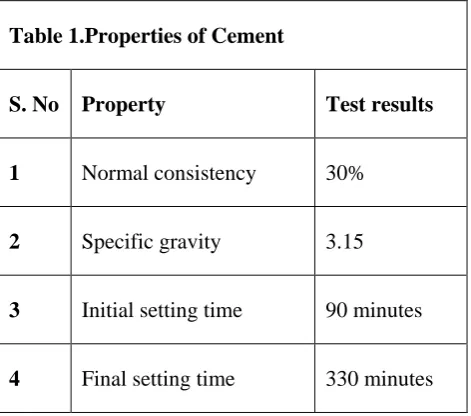
gravel (aggregate) together. Cement is used with fine aggregate to produce mortar for masonry, or with sand and gravel aggregates to produce concrete. Cement is the most usually used cementing ingredient in present day concrete comprises phase that consist of compounds of calcium silicon, aluminum, iron and oxygen. In this project we hiredCommercially available 53grade ordinary Portland cement manufactured by Ultra Tech Cement with Specific Gravity of 3.2 and Fineness Modulus of 225m2/kg used in all concrete mixes.
Table 1.Properties of Cement
S. No Property Test results
1 Normal consistency 30%
2 Specific gravity 3.15
3 Initial setting time 90 minutes
4 Final setting time 330 minutes
Aggregates
‘Aggregate’ is a term for any particulate material. It includes gravel, crushed stone, sand, slag, and recycled concrete and Geosynthetics aggregates. Aggregate may be natural, manufactured or recycled. Aggregates make up some 60 -80% of the concrete mix. They provide compressive strength and bulk to concrete. Aggregates in any particular mix of concrete are selected for their durability, strength, workability and ability to receive finishes. For a good concrete mix, aggregates need to be clean, hard, strong particles free of absorbed chemicals or coatings of clay and other fine materials that could cause the deterioration of concrete.
Coarse Aggregate
Aggregates are primarily naturally occurring, inert granular materials such as sand, gravel, or crushed stone. But, technology is broadening to include the make use of recycled
materials and man-made products. In this investigation used 12mm size aggregates are used for Self-Compacting Concrete.
Table 3.Properties of Coarse Aggregate
S.NO PROPERTY VALUES
1 Specific Gravity 2.58
2 Water Absorption 0.30%
Fine Aggregate
Fine Aggregate can be natural or manufactured sand, but it have to be of uniform grading. The particle fineness than 150um sieve are considered as fines. To achieve a balance between deformability or fluidity and stability, the total content of fineness has to be high, usually about 520 to 560kg/m3. According to IS 383:1970 the fine aggregate is being classify in to four similar zones that is I, II, zone-III, and zone-IV. In this investigation Zone-IV fine aggregate as used in Self Compact Concrete. Table 2.Properties of Artificial Fine Aggregate
S. No Property Test results
1 Fineness Modulus 2.7
2 Specific gravity 2.6
3 Bulk density 1600 kg/m3
4 Grading zone II
Fly ash:
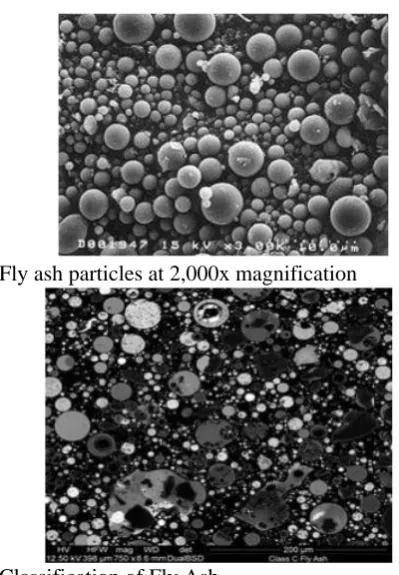
Available online: https://edupediapublications.org/journals/index.php/IJR/ P a g e | 330 Fly ash particles at 2,000x magnification
Classification of Fly Ash
Table 4.Physical Properties of Fly Ash
Colour White grey Specific
gravity 2.12 Bulk Density 0.994 gm/cc
Table 5.Chemical Properties of Fly Ash
Constituents Values
SiO2 59.00%
Al2O 21.00%
Fe2O3 3.70%
CaO 6.90%
MgO 1.40%
SO3 1.00%
K2O 0.90%
LOI 4.62%
According to IS 3812-1981, there are two grades of Fly Ash
I. Grade I fly ash, which are derived from bituminous coal having
fractions SiO2+Al2O3+Fe2O3 greater than 70 %.
II. Grade II Fly ash, which are derived from lignite coal having fractions SiO2+Al2O3+Fe2O3 greater than 50 %.
ASTM C618 specified two categories of fly ash, Class C and Class F depending on the type of coal and the resultant chemical analysis.
Class C fly ash, normally produced from the combustion of lignite or sub bituminous coals, contains CaO higher than 10 percent and possesses cementitious properties in addition to pozzolanic properties. Class F fly ash, normally produced from the combustion of bituminous or an anthracite coal contains CaO below 10 percent and possesses pozzolanic properties.
Classification, based on the boiler operations is classified with two distinct identities: Low temperature (LT) fly ash, Generated out of combustion temperature below 900o C : High temperature(HT) fly ash, Generated out of combustion temperature below 1000o C. This threshold temperature demarcates the development of metakaolinite phases in the case of LT and the same constituents form as reactive glassy phases in the case of HT fly ash. LT fly ash hence preferred for precast building materials such as bricks/blocks. However the higher ignition loss, of the order of 4-8 percent makes the fly ash less desirable for cement and concrete applications. In contrast, the initial pozzolanic reaction is slow in HT fly ash, which is accelerated with age. This property together with a relatively low ignition loss makes HT fly ash more suitable for use in cement and concrete industries.
CHARACTERISTICS Size and Shape
Fly ash is typically finer than portland cement and lime. Fly ash consists of silt-sized particles which are generally spherical, typically ranging in size between 10 and 100 micron (Figure 1-2). These small glass spheres improve the fluidity and workability of fresh concrete. Fineness is one of the important properties contributing to the pozzolanic reactivity of fly ash.
Chemistry
Available online: https://edupediapublications.org/journals/index.php/IJR/ P a g e | 331 potassium, sodium, titanium, and sulfur are also
present to a lesser degree. When used as a mineral admixture in concrete, fly ash is classified as either Class C or Class F ash based on its chemical composition. American Association of State Highway Transportation Officials (AASHTO) M 295 [American Society for Testing and Materials (ASTM) Specification C 618] defines the chemical composition of Class C and Class F fly ash.
Class C ashes are generally derived from sub-bituminous coals and consist primarily of calcium alumino-sulfate glass, as well as quartz, tricalcium aluminate, and free lime (CaO). Class C ash is also referred to as high calcium fly ash because it typically contains more than 20 percent CaO.
Class F ashes are typically derived from bituminous and anthracite coals and consist primarily of an alumino-silicate glass, with quartz, mullite, and magnetite also present. Class F, or low calcium fly ash has less than 10 percent CaO.
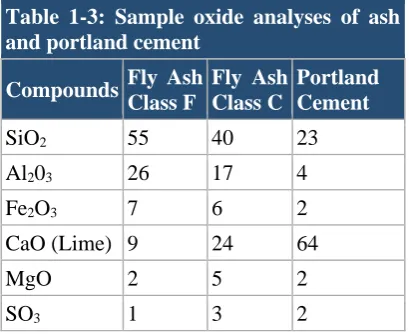
Table 1-3: Sample oxide analyses of ash and portland cement
Compounds Fly Ash Class F
Fly Ash Class C
Portland Cement
SiO2 55 40 23
Al203 26 17 4
Fe2O3 7 6 2
CaO (Lime) 9 24 64
MgO 2 5 2
SO3 1 3 2
Color
Fly ash can be tan to dark gray, depending on its chemical and mineral constituents. Tan and light colors are typically associated with high lime content. A brownish color is typically associated with the iron content. A dark gray to black color is typically attributed to elevated unburned carbon content. Fly ash color is usually very consistent for each power plant and coal source. Quality of Fly Ash
Quality requirements for fly ash vary depending on the intended use. Fly ash quality is affected by fuel characteristics (coal), co-firing of fuels
(bituminous and sub-bituminous coals), and various aspects of the combustion and flue gas cleaning/collection processes. The four most relevant characteristics of fly ash for use in concrete are loss on ignition (LOI), fineness, chemical composition and uniformity.
LOI is a measurement of unburned carbon (coal) remaining in the ash and is a critical characteristic of fly ash, especially for concrete applications. High carbon levels, the type of carbon (i.e., activated), the interaction of soluble ions in fly ash, and the variability of carbon content can result in significant air-entrainment problems in fresh concrete and can adversely affect the durability of concrete. AASHTO and ASTM specify limits for LOI. However, some state transportation departments will specify a lower level for LOI. Carbon can also be removed from fly ash.
Some fly ash uses are not affected by the LOI. Filler in asphalt, flowable fill, and structural fills can accept fly ash with elevated carbon contents. Fineness of fly ash is most closely related to the operating condition of the coal crushers and the grindability of the coal itself. For fly ash use in concrete applications, fineness is defined as the percent by weight of the material retained on the 0.044 mm (No. 325) sieve. A coarser gradation can result in a less reactive ash and could contain higher carbon contents. Limits on fineness are addressed by ASTM and state transportation department specifications. Fly ash can be processed by screening or air classification to improve its fineness and reactivity.
Some non-concrete applications, such as structural fills are not affected by fly ash fineness. However, other applications such as asphalt filler, are greatly dependent on the fly ash fineness and its particle size distribution.
Available online: https://edupediapublications.org/journals/index.php/IJR/ P a g e | 332 Some stations selectively burn specific coals or
modify their additives formulation to avoid degrading the ash quality or to impart a desired fly ash chemistry and characteristics.
Uniformity of fly ash characteristics from shipment to shipment is imperative in order to supply a consistent product. Fly ash chemistry and characteristics are typically known in advance so concrete mixes are designed and tested for performance.
Table 1-4: Guidance documents used for fly ash quality assurance.
ACI 229R Controlled Low Strength Material (CLSM)
ASTM C 311
Sampling and Testing Fly Ash or Natural Pozzolans for Use as a Mineral Admixture in Portland Cement Concrete
AASHTO M 295 ASTM C 618
Fly Ash and Raw or Calcined Natural Pozzolan for Use as a Mineral Admixture in Portland Cement Concrete
ASTM C 593
Fly Ash and Other Pozzolans for Use With Lime
ASTM D 5239
Standard Practice for Characterizing Fly Ash for Use in Soil Stabilization
ASTM E 1861
Guide for the Use of Coal Combustion By-Products in Structural Fills
Quality Assurance and Quality Control criteria vary for each use of fly ash from state to state and source to source. Some states require certified samples from the silo on a specified basis for testing and approval before use. Others maintain lists of approved sources and accept project suppliers' certifications of fly ash quality. The degree of quality control requirements depends on the intended use, the particular fly ash, and its variability. Testing requirements are typically established by the individual specifying agencies. Physical Characteristic of Fly Ash
Fly ash is a fine grained material consisting mostly of spherical, glassy particles. Some ashes also containing irregular or angular particles. Fly ash is the pulverized fuel ash extracted from the fuel gases by any suitable process like cyclone separation or electrostatic precipitation.
Super Plasticizer Admixture
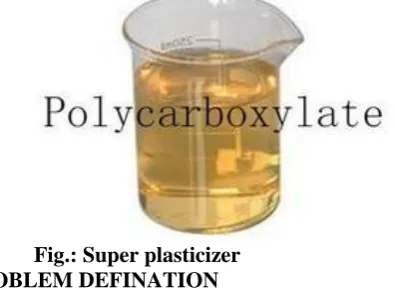
Super plasticizers, moreover known as high range water reducers, are chemical admixtures used where well-dispersed particle suspension is necessary. These polymers be used as dispersants to avoid particle segregation (gravel, coarse and fine sands), and to improve the flow characteristics (rheological) of suspensions such as in concrete applications. Their addition to concrete or mortar allow the decrease of the water to cement ratio, not affect the workability of the mixture, and enable the manufacture of self-compacting concrete and high performance concrete. This effect drastically improves the performance of the hardening fresh paste. The strength of concrete increase when the water to cement ratio decreases. Though, their working mechanisms require a filled understanding, revealing within confident cases cement-super plasticizer incompatibilities.
Fig.: Super plasticizer PROBLEM DEFINATION
Available online: https://edupediapublications.org/journals/index.php/IJR/ P a g e | 333 materials is not the matter but to obtain the
concrete which governs all the properties of concrete mixes in fresh as well as hardened concrete. To produce good quality concrete the following steps are involved in concrete preparation.
1.Batching of materials. 2. Mixing
3. Compaction. 4. Finishing.
5. Curing and Demoulding. 6. Cube testing.
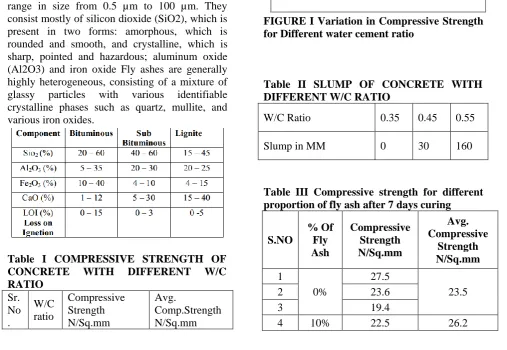
We casted three cubes for each w/c ratio and cured these for four days. And from this we get that M25 concrete delivers higher compressive strength with 0.35 w/c ratio. It shows in table I we also study of variation in slump for different w/c ratio
CHEMICAL COMPOSITION
Fly ash material solidifies while suspended in the exhaust gases and is collected by electrostatic precipitators or filter bags. Since the particles solidify while suspended in the exhaust gases, fly ash particles are generally spherical in shape and range in size from 0.5 µm to 100 µm. They consist mostly of silicon dioxide (SiO2), which is present in two forms: amorphous, which is rounded and smooth, and crystalline, which is sharp, pointed and hazardous; aluminum oxide (Al2O3) and iron oxide Fly ashes are generally highly heterogeneous, consisting of a mixture of glassy particles with various identifiable crystalline phases such as quartz, mullite, and various iron oxides.
Table I COMPRESSIVE STRENGTH OF
CONCRETE WITH DIFFERENT W/C
RATIO Sr. No .
W/C ratio
Compressive Strength N/Sq.mm
Avg.
Comp.Strength N/Sq.mm
1
0.35
21.3
22.4
2 23.7
3 22.2
4
0.45
20.6
20.83
5 20.8
6 21.1
7
0.55
8.97
11.08
8 12.28
9 12
FIGURE I Variation in Compressive Strength for Different water cement ratio
Table II SLUMP OF CONCRETE WITH DIFFERENT W/C RATIO
W/C Ratio 0.35 0.45 0.55
Slump in MM 0 30 160
Table III Compressive strength for different proportion of fly ash after 7 days curing
S.NO
% Of Fly Ash
Compressive Strength N/Sq.mm
Avg. Compressive
Strength N/Sq.mm
1
0%
27.5
23.5
2 23.6
3 19.4
Available online: https://edupediapublications.org/journals/index.php/IJR/ P a g e | 334
5 28.62
6 27.5
7
20%
27.2
25.3
8 22.8
9 25.9
10
30%
23.08
20.91
11 20.12
12 19.54
FIGURE III Compressive Strength for Different Proportion of Fly Ash after 7 Days Curing
Table IV Compressive strength for different proportion of fly ash after 14 days curing
S.N. % Of Fly Ash
Compressive Strength N/Sq.mm
Avg. Compressive
Strength N/Sq.mm
1
0%
35.1
33.81
2 32.14
3 34.2
4
10%
38.4
38.14
5 39.52
6 36.5
7
20%
37.24
8 31.45
9 35.48
10
30%
26.5
11 28.7
12 27.29
FIGURE II Compressive Strength for Different Proportion of Fly Ash after 14 Days Curing
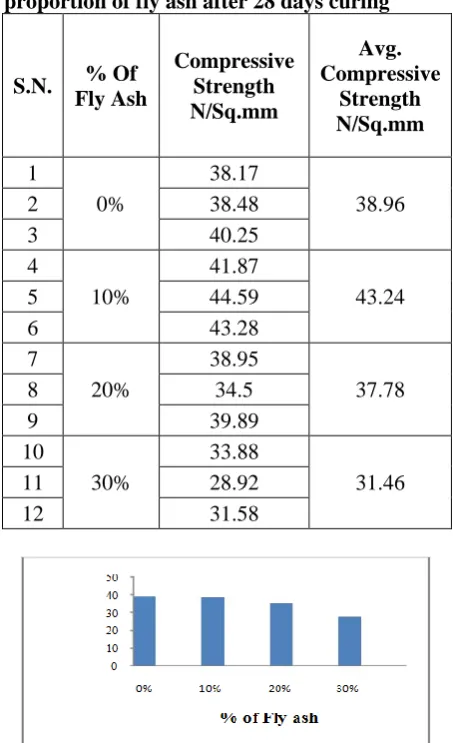
Table V Compressive strength for different proportion of fly ash after 28 days curing
S.N. % Of Fly Ash
Compressive Strength N/Sq.mm
Avg. Compressive
Strength N/Sq.mm
1
0%
38.17
38.96
2 38.48
3 40.25
4
10%
41.87
43.24
5 44.59
6 43.28
7
20%
38.95
37.78
8 34.5
9 39.89
10
30%
33.88
31.46
11 28.92
12 31.58
FIGURE IV Compressive Strength for Different Proportion of Fly Ash after 28 Days Curing
Available online: https://edupediapublications.org/journals/index.php/IJR/ P a g e | 335 fly ash with weight of cement compressive
strength is increases and then if we further increases percentage of fly ash, compressive strength decreases.
The following tests are conducted for the calculations of compressive strength.
1. Acid Resistance Attack Test 2. Sulphate Attack Test 3. Alkaline Attack Test
4. Rapid Chloride Permeability Test
EXPERIMENTAL RESULTS
COMPRESSIVE STRENGTH RESULTS The Compressive strength results for various replacement levels of fly ash by Cement such as 0%, 5%, 10% & 15% are tabulated below in table. Compressive strength of the cubes when they are tested under the following parameters are given below
Acid Resistance Test Sulphate Attack Test Alkalinity Test
Rcpt (Rapid Chloride Permeability Test). TEST RESULTS IN NORMAL CURING
As we observed the compressive strength of 28 days strength for SCC at acid attack for (30days normal curing30days acid curing) i.e. Total 60 days as 10%FA, we can observe that among all the mixes increase in compressive strength was seen in cement concrete mix i.e., A1 in normal curing compared to all the remaining mixes. TEST RESULTS IN ACID ATTACK at 60days curing
Table: COMPRESSION TEST RESULT @ ACID ATTACK.
In fly ash and GGBS, increment was done in 10% Fly ash.
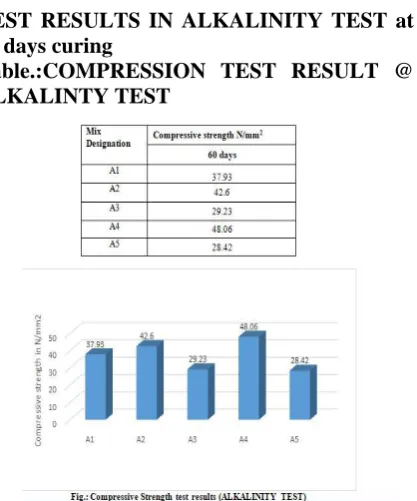
TEST RESULTS IN ALKALINITY TEST at 60 days curing
Table.:COMPRESSION TEST RESULT @ ALKALINTY TEST
Available online: https://edupediapublications.org/journals/index.php/IJR/ P a g e | 336 then more compressive strength is seen in 10%
flyash compare to all mixes.
TEST RESULTS IN SULPHATE
ATTACK at 90 days curing
Table:COMPRESSION TEST RESULT @ SULPHATEATTACK.
As we observed the compressive strength is 60 days strength in SCC at alkalinity for (30days normal curing + 30days chemical curing) i.e. Total 60 days from the graph we can notice in that with the alkalinity attack the compressive strength the cube with 10% Fly ash.
TEST RESULTS IN ALKALINITY
ATTACK at 90 days curing
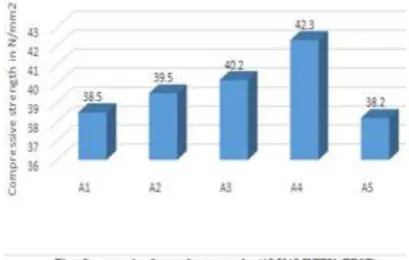
Table .: COMPRESSION TEST RESULT @ ALKALINITY TEST.
As we observed the compressive strength is 28 days strength in SCC at sulphateattackfor (30days normal curing + 60days sulphate curing) i.e. Total 90 days from the fig: 6.5 we can notice in the sulphate attack the compressive strength the cube with 0% to 15% increase
As we observed the compressive strength is 90days strength in SCC at alkalinity for (30days normal curing + 60days chemical curing) i.e. Total 90 days from the graph we can notice in that with the alkalinity attack the compressive strength the cube with 10% Fly ash.
Table.RCPT VALUES @28 DAYS & 60 DAYS
Available online: https://edupediapublications.org/journals/index.php/IJR/ P a g e | 337 10% to the concrete for 60 days of curing. The
chloride permeability of concrete with 10%FLY ASH + 10% GGBS is less while compared with the all proportions for 90 days.
SCOPE FOR FURTHER STUDY ON SCC The following experimental studies can be conducted in future with respect to self-compacting concrete
The addition of more percentage of fly ash i.e. more than 30% , shows the effect on resistance to acid on self-compacting concrete.
Different strengths such as flexural strength, tensile strength etc. can be known with the effect of acid on SCC. The effect on strength, creep and
shrinkage of self-compacting concrete due to different mix proportion with replacement of mineral admixture at different proportions can be calculated. Different mineral admixture such as
GGBS, Rice Husk etc. can be used for the experiment with higher grade and can be tested different strengths.
CONCLUSION
The following conclusions are drawn from the test results and analysis presented in this paper:
Percentage decrease in weights of the specimens without and with immersion in HCL and H2So4 solutions of 5 % concentration at 28 days was found to be 5.834, 6.132 and 5.481 % & 4.247, 3.498, 4.984 % on average of each 10, 20, and 30 % of fly ash respectively. From these results it has been identified
that the intensity of attack by H2S04 is comparatively more than the attack of HCL on the specimens.
The percentage decrease in compressive strength of the specimens without and with immersion in HCL and H2S04 solution of 5 % concentration after 28 days was found to be 3.09, 1.54 and 4.60 % and 8.16, 4.08, 5.47% average of each 10, 20, and 30 % respectively.
For 30% fly ash replacement the fresh properties observed were good as compared to 10%, 20% fly ash replacement. Hence if we increase the fly
ash replacement we can have better workable concrete.
The acid resistance of SCC with fly ash was higher when compared with concrete mixes without fly ash at the age of 14, 28, 60 days.
Compressive strength loss decrease with the increase in fly ash in concrete. The compressive strength of cubes are
less in H2So4 curing when compared with HCL and normal curing. With the increase in flyash content the resistance to acid increases and, the strengths of cubes slowly increases with time, but final strength obtains are same as normal mix.
When the specimen is immersed in acid solutions for 14, 28, 60 days respectively the average reduction in weight increases, and the weight is decreased when fly ash content is increased in the concrete. Compressive strength loss decreases with the increase in fly ash in concrete.
REFERENCES
1. OuchiM, HibinoM, Ozawa K, and Okamura H. a rational mix design method for motor in self-compacting concrete. Proceeding of sixth South EastAsia pacific conference of structural engineering and construction. Taipei, Taiwan, 1998, pp.1307-1312.
2. G. Kaur, S.P. Singh and S. K. Kaushik. Reviewing some properties of concrete containing mineral admixtures. The Indian concrete journal July 2012. 3. H. Said, H.A. Mesbah, H. khelafi, S.
Kamali Bernard and M. Mouli. Influence of natural pozzolan on the behaviour of self-compacting concrete under sulphuric acid and hydrochloric acid attacks, comparative study.
4. Mohammad Kamran, Mudit Mishra, behaviour of self-compacting concrete using PPC and OPC with different proportion of fly ash. International journal of research in engineering and technology. P ISSN: 2321-7308
self-Available online: https://edupediapublications.org/journals/index.php/IJR/ P a g e | 338 compacting concrete with fly ash. Jordan
journal of civil engineering, vol 7, no.3, 2013
6. EFNARC.2005. European guidelines for self-compacting concrete, specification, production and use.
7. M. Nehdi, M. pardhanb, and S. Koshowskic. “Durability of self-compacting concrete incorporating high volume replacement composite cement”, cement and concrete research, 34(2004), pp. 2103-2112.
8. Madhusudhana Reddy, H. Sudarsana Rao, M.P George .Effect of Hydrochloric Acid (HCl) on Blended Cement (Fly Ash based) and silica fume blended cement and their concretes, International Journal of Science and Technology Volume 1 No. 9, September, 2012
9. By P. Murthi and V. Siva Kumar. Study on the Acid Resistance of Ternary Blended Concrete, ASIAN Journal of Civil Engineering (Building and Housing) VOL. 9, NO. 5 (2008).
10. Dhiyaneshwaran. S, Ramanathan. P, Baskar.I, Venkatasubramani.R., “Study On Durability Characteristics Of Self-Consolidating Concrete With Fly Ash”, Vol. 7, pp. 342-353,2013.
11. S.SeshaPhani ,Dr.Seshadri Sekhar T ,
Dr.Srinivasa Rao ,Dr.Sravana .,
“Evaluation of Relationship Between Mechanical Properties of High Strength Self Consolidating Concrete”, Vol .2 ,pp. 67 – 71, 2013.
12. Prajapati Krishnapal , R.K. Yadav,
Chandak Rajeev., “Rheological
Characteristics Of Self Consolidating Concrete Containing Flyash” , Vol .5 , ,pp. 137 – 146, 2013.
13. Prashant Bhuva, Anant Patel, Elizabeth George, Darshana Bhatt ., “Development Of Self Consolidating Concrete Using Different Range Of Cement Content” , National Conference on Recent Trends in Engineering & Technology, 2011 ,
14. Tarun R. Naik, Yoon-moon Chun,
Rakesh Kumar, and Bruce W. Ramme ., “Development of High-Strength Self-Consolidating Concrete” ,pp. 508 – 536,2004
15. Prajapati Krishnapal, Yadav R.K,
Chandak Rajeev ., “Strength