MGORI FOREST RESERVE, SINGIDA, TANZANIA
MWIRU FRANCIS GILBERT (B.Ed.Sc.)
A THESIS SUBMITTED IN PARTIAL FULFILLMENT OF THE REQUIREMENTS FOR THE AWARD OF THE DEGREE OF MASTER OF SCIENCE (ANIMAL ECOLOGY) IN
THE SCHOOL OF PURE AND APPLIED SCIENCES OF KENYATTA UNIVERSITY
DEDICATION
ACKNOWLEDGEMENTS
TABLE OF CONTENTS
DECLARATION...ii
DEDICATION...iii
ACKNOWLEDGEMENTS...iv
LIST OF TABLES...vii
LIST OF FIGURES ... ....viii
ABBREVIATIONS AND ACRONYMS ... ..x
ABSTRACT...xi
1.CHAPTER ONE: INTRODUCTION...1
1.1 Background information...1
1.2 Problem statement...2
1.3 Justification of the study...3
1.4 Research questions...3
1.5 Hypotheses...3
1.6 Objectives of the Study...4
1.6.1 General Objective...4
1.6.2 Specific Objectives...4
2. CHAPTER TWO: LITERATURE REVIEW...5
2.1 The distribution of Olive baboons...5
2.2 Habitats of Olive baboons...5
2.3 Diet of Olive baboons...7
2.4 Breeding habits of Olive baboons...8
2.5 The human- Olive baboon conflicts...10
3. CHAPTER THREE: MATERIALS AND METHODS...12
3.1 Study area...12
3.1.1 Locations...12
3.1.2 Climatic conditions...12
3.1.3 Geology and soils...17
3.1.4 Vegetation of the area...17
3.1.5 Socio-economic activities...18
3.2 Study population and study design...19
3.2.1 Study population...19
3.2.2 Study design...19
3.3 Data collection...20
3.3.1 Crops preferred by Olive baboons...20
3.3.2 Relationship between the distance of the farm and the level of crop damage...21
3.3.3 Local peoples' perception of the nature, extent and intensity of crop damage...22
3.4 Research instruments' validation and reliability...22
3.5 Data analysis...22
4. CHAPTER FOUR: RESULTS...22
4.1 Crops preferred by Olive baboons...24
4.2 Crops preferred by Olive baboons in the wet and dry seasons...25
4.2.2 Animals that raid crops in Mgori...28
4.3 Relationship between distance of a farm from forest edge and level of crop damage...29
4.4 Spatial and temporal distribution of crop raiding...32
4.4.1 Locations of crop raiding during the wet and dry seasons...32
4.4.2 Testing whether troop size varied between seasons and among villages...34
4.4.3 Mitigation methods used by farmers to reduce crop raiding...35
4.5 Local peoples' perception of the nature, extent and intensity of the crop damage...37
4.5.1 The difference between actual and perceived levels of crop damage...39
5. CHAPTER FIVE: DISCUSSION, CONCLUSIONS AND RECOMMENDATIONS...40
5.1 Discussion...40
5.1.1 Crops preferred by Olive baboons...40
5.1.2 Relationship between the distance of the farm and level of crop damage...43
5.1.3 The crops preferred by Olive baboons in wet and dry seasons...45
5.1.4 Local peoples' perception of the nature, extent and intensity of the crop damage... 46
5.1.4.1 The methods used to mitigate crop raiding by Olive baboons and their effectiveness...51
5.2 Conclusions...54
5.3 Recommendations...55
5.3.1 Recommendations for this Study...55
5.3.2 Recommendations for further research...56
REFERENCES...57
APPENDICES...63
APPENDIX I: QUESTIONNAIRES AND STRUCTURED INTERVIEW………63
APPENDIX II: DATA COLLECTION CHECK LIST………69
APPENDIX III: PLATES FOR CROPS RAIDED AND MITIGATION METHODS…….70
LIST OF TABLES
Table 3.1a Average rainfall (mm) at Singida Meteorological Station from 2007-2016…...14 Table 3.1b Total rainfall (mm) at Singida Meteorological Station from 2007-2016…………....14 Table 3.2 Average Temperature (0C) at Singida Meteorological Station from 2007-
2016...15 Table 4.1 ANOVA results on the effects on seasons in the distance covered by Olive
LIST OF FIGURES
Figure 2.1 Distribution of Olive baboons in Africa (Mali, extending to Ethiopia and
Tanzania)……….…..6
Figure 3.1 The study site: Map of Tanzania showing the location of Singida and the enlarged map of Singida showing Mgori Forest Reserve and the surrounding villages……...13
Figure 3.2 Total rainfall (mm) at Singida Meteorological Station from 2014-2016…………....15
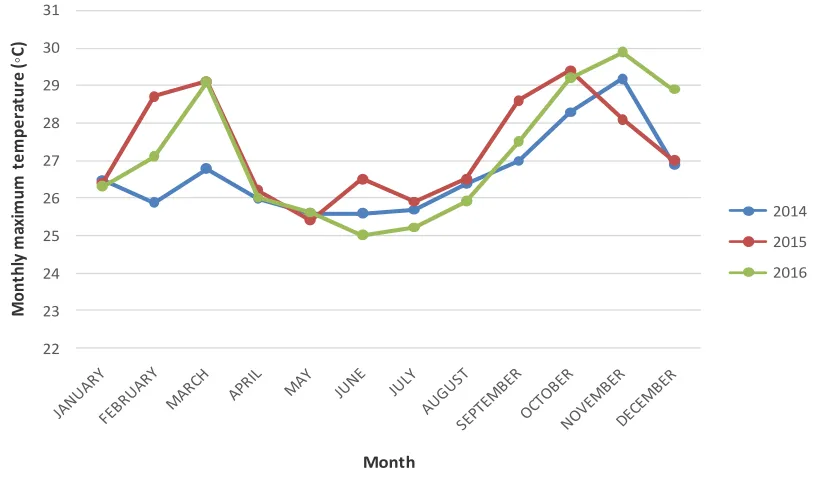
Figure 3.3 Average Temperature (oC) at Singida Meteorological Station from 2014- 2016……….…16
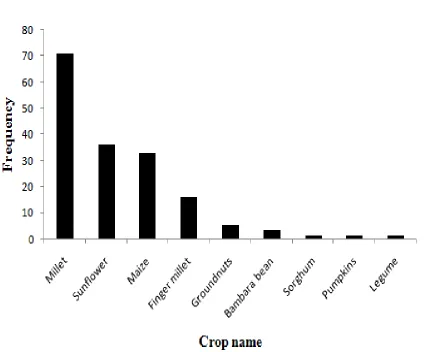
Figure 4.1 Crops raided by Olive baboons……….……..24
Figure 4.2 Crops raided by Olive baboons in wet and dry seasons……….….25
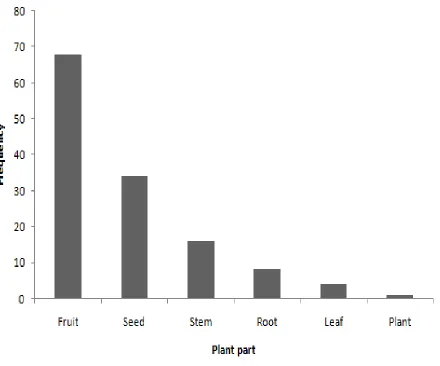
Figure 4.3 Parts of the crop plants damaged by Olive baboons………...26
Figure 4.4 Parts of the plant consumed by Olive baboons………..…..27
Figure 4.5 The total loss in revenue (US dollars) due to crop damage for all farmers………….28
Figure 4.6 Crop raiding animals recorded in the field………..…29
Figure 4.7a Relationship between distance from the forest edge and level of crop damage during the wet season………...30
Figure 4.7b Relationship between distance from the forest edge and level of crop damage During the dry season……….…..31
Mgori area, Singida………..…....35
Figure 4.10 Farmers’ opinion on the crops damaged by Olive baboons………...……37
Figure 4.11 Wild animals involved in crop raiding in Mgori………..…..38
ABBREVIATIONS AND ACRONYMS
ANOVA: Analysis of variance df: Degree of freedom
DS: Dry Season
Eds: Editors
F: F statistic for ratios of variance GIS: Geographic Information System GPS: Global Positioning System MFR: Mgori Forest Reserve MS: Microsoft/Mean score NBS: National Bureau of Statistics
P: Probability
PET: Potential Evapo -Transpiration PI: Preference Indices
Pp: pages.
RS: Rain Season
SS: Sum of squares
TANAPA: Tanzania National Parks TSHS: Tanzanian shillings
UK: United Kingdom
ABSTRACT
CHAPTER ONE
INTRODUCTION
1.1 Background information
In Africa before 1800 AD and during the colonial era (Late 1800 - 1963), primates used to roam freely in open spaces, which are now occupied by human settlements and farms (Omondi, 1994; Muoria, 2001; Saj et al., 2001; Boobyer, 2013). This has resulted in a spatial overlap between primates and humans. The primates in question are primarily members of the genera Macaca, Papio and Cercopithecus (Hill, 2005). For instance, the clearing of forests in Central and West Africa for agriculture land allowed the baboons to extend their foraging range into regions from which they traditionally were excluded (Higham et al., 2009). Baboons have not been documented to have a negative impact on their environment (Muoria, 2001). Some primate species are taking advantage of the fact that they are living in close proximity to human settlements and help themselves to free and easily obtain food from the farms (Saj et al., 2001; Barrett, 2005). Farms located within 300 metres of a forest were the most vulnerable to crop-raiding (Saj et al., 2001). Baboons are often reported to be the worst crop-raiders in Africa. However, there is little information on the actual ecology of their crop-raiding (Warren, 2009),
especially around Mgori Forest Reserve, Singida, Tanzania.
impassable mountain ranges or anthropogenic barriers as a result of human habitation (Thuiller
et al., 2006). Olive baboons are mostly threatened by continuous deforestation and the destruction of their natural habitat (Parker, 1983). The rapid increase in human population coupled with degradation of existing arable land has led to encroachment on forests for agricultural purposes (Muoria, 2001). In Mgori forest, excessive pit-sawing over the last decade has played a key role in the reduction of many tree species. Only 43% of the original forest was still categorized as such (Wily, 1995). Another danger on baboon population is the baboon human conflict that has resulted in their habitats being destroyed and many of them being killed because they raid crops.
This study aimed at reaffirming that baboons were the most destructive crop raiders with scientifically based data and to suggest methods to alleviate the conflicts between the farmers and the animals at the edge of Mgori Forest Reserve in Singida Rural District, Tanzania.
1.2 Problem statement
substantially. Philemon (2012) reported that over 1000 people have invaded the Reserve to establish permanent settlements and large-scale farms. Wanton tree felling has become the order of the day (Philemon, 2012). Serious conflicts between Olive baboons and humans are occurring at the edge of the reserve and local people have asked the government to assist in dealing with the problem. In order to address this problem, the nature and level of the human-baboon conflict has to be clarified and that was the aim of this study.
1.3 Justification of the study
Human Olive baboon conflict in Mgori Forest Reserve has been on increase. The situation is becoming worse because farmers are encroaching to the forest. In order for the government to implement an effective mitigation strategies, findings on the level of Human – Olive baboon conflicts and its cause is of paramount importance. No scientifically reliable studies, focusing on the extent of the human–Olive baboon conflict, its frequency and the impact on the surrounding farm areas, have ever been conducted in Mgori. There is a need to document the size and the impact of the problem and provide this information to the authorities, so that they can institute appropriate strategies to alleviate the conflicts.
1.4 Research questions
i. Which crops are preferred by Olive baboons?
ii. What is the relationship between the distance of the farm from the forest edge and the level of crop damage?
iii. How much does seasonal change influence the level of crop damage?
1.5 Hypotheses
i. All crops are equally preferred by Olive baboons.
ii. There is no relationship between the distance of the farm from the forest edge and level of crop damage.
iii. There is a difference in the level of crops damaged by Olive baboon in wet and dry seasons.
iv. The community has no clear idea of the nature, extent and intensity of crop damage by Olive baboons.
1.6 Objectives of the Study 1.6.1 General Objective
To determine the frequency and severity of conflicts between humans living in the vicinity of Mgori Forest Reserve and Olive baboons.
1.6.2 Specific Objectives
i. To determine whether all crops were equally preferred by Olive baboons.
ii. To investigate the relationship between the level of crop damage and the distance of the farm from forest edge.
iii. To compare level of crop damage in the wet and dry seasons.
CHAPTER TWO
LITERATURE REVIEW
2.1 The distribution of Olive baboons
Olive baboons (Papio Anubis L) are among the most widely distributed primates in the world (Grobler et al., 2006) inhabiting savannahs, woodlands, forests and cultivated environments. According to Groves (2001) they adapt easily to a variety of environments, occurring throughout the 25 equatorial African countries, extending from Mali eastward to Ethiopia and Tanzania (Figure 2.1). The areas they chose to occupy were primarily non-random and carefully chosen (Makin et al., 2012). They are both terrestrial and arboreal animals (Barnes, 2009).
2.2 Habitats of Olive baboons
Baboons (genus Papio) are large-bodied, semi-terrestrial primates that occupy a diversity of habitats (Okecha and Newton-Fisher, 2006). Habitat selection is predominantly dependant on the amount of food available and the absence of predators (Chapman, 1987). They use terrestrial habitats, and forage across a 3-dimensional landscape (Makin et al., 2012). Within their territories they return to known feeding and sleeping sites daily providing an opportunity for scientists to observe the behaviour of the animals (Jasinska et al., 2013). Troops sleep in trees, on cliffs and on the roof tops of buildings (Hoffman and O’Riain, 2012). Baboons are well studied
Figure 2.1 Distribution of Olive Baboons in Africa (Mali, extending to Ethiopia and Tanzania)
they can help themselves to food. They are also found along the coastline on difficult to reach exposed cliffs (Hoffman and O’Riain, 2012).
As the baboons often live in marginal habitats, they are vulnerable if environmental conditions change rapidly (Lubbe, 2013). They prefer warm, tropical areas where they can get food all year round (McDaniel, 2004). Baboons do not exploit forest interiors (Cardini et al., 2013). However, they do leave their territorial boundaries during extended periods of drought in search of water (McDougall et al., 2010).
The population dynamics of Olive baboons is also determined by the relationship they have with the humans in their habitat (Baillie et al., 2004). Sometimes they are called savanna monkeys as they often forage in the grasslands (Lavigne, 2009). Olive baboons love cultivated crops as they are easily obtainable (Boulton et al., 1996). They are social animals and can adapt to a wide range of ambient temperature and arid environments, because the species has developed a specialized thermoregulatory system to control its body temperature (McFarland et al., 2014).
2.3 Diet of Olive baboons
Nigeria it was reported that Baboons, including weaned infants, ate all crops, but only adult
males ate bananas (Warren, 2009).
In their natural undisturbed habitat baboons’ diet comprises fruit, stems, tubers, leaves, seeds, insects, mushrooms and bark, gums and soil (Johnson et al., 2012). Crop-raiding occurs mainly at times when few or no fruit is available in the forest (Naughton-Treves et al., 1998). Olive baboons love corn and sweet potatoes (Saj et al., 2001). This type of diet is as a result of the disappearance of many bush foliage species they used to consume (Struhsaker, 1973). Baboons also feed on various invertebrates, rodents, chicken on some of the farms adjacent to the forest and around the staff quarters at Gede Forest Station (Muoria, 2001).
Kate (2012) observed that Olive baboons feed on roots, fruits and seeds, but only in rare cases, when they fail to get fruit or a maize cob, they destroy the plant stem and the leaves, or uproot crops such as legumes. Warren (2009) found that crops eaten in the farms vary from ripe maize to scraps of sweet potato in harvested fields. Baboons even take root and tuber crops ignored by
other primates. They are not fussy eaters (Naughton-Treves, 1998).
No studies have been made in Mgori Forest Reserve showing the food items mostly preferred by baboons. One of the objectives of this study was to document the crops grown by farmers around the reserve and which ones are preferred by baboons.
2.4 Breeding habits of Olive baboons
behavioural and reproductive flexibility, which enables them to inhabit a wide variety of habitats (Higham et al., 2009). Their gestation period is 6 months and a single baby is born which clings to its mother’s stomach, later moving to her back while she continues her daily activities
(Barnes, 2009).
According to Higham et al. (2009) the way they live and their group size is dependent on the climatic conditions of their habitat. Climatic conditions influence the availability of plants and resources, hence indirectly determining the condition and fertility of the female (Higham et al.,
2009). Abundance of rainfall was found to be positively correlated with the likelihood of conception in the baboon population of the Drakensberg, suggesting that food availability mediates this link with female ovulation, although seasonal changes in temperature may also be important (Lycett et al., 1999). In the Amboseli National Park in Kenya, periods of drought reduced the likelihood of female pregnancy and increased fetal loss (Beehner et al., 2006). Food scarcity was linked to increases in infant and juvenile mortality (Altmann et al., 1985). However, accurate data on the reproductive cycles of baboons is limited because of the difficulties of recording these events reliably in free-ranging individuals (Andelman et al., 1985). Female baboons sexually mature earlier than males (Turner et al., 1997). Adequate nutrition is a prerequisite for successful reproduction (Rothman et al., 2012). Grooming is commonly used as a courtship strategy (Hill, 1965).
rapid maturation and reproduction in comparison to other Cercopithecidae species (Rowell and Richards, 1979; Bolter and Zihlman, 2003).
2.5 The human- Olive baboon conflicts
Human-wildlife conflicts often arise because of crop-raiding (Wallace and Hill, 2012). At Kibale in Uganda, baboons damaged the greatest area of crops (Naughton-Treves, 1998). Three factors influence the intensity of baboon crop-raiding: the distance of the farms from the forests, the types of crops grown and types of measures taken by the locals to prevent raiding (Saj et al., 2001). For farmers baboons are a problem because of the destruction they cause at every stage of the growth of the crop, and the time and energy required to prevent these events (Warren, 2008). There are indirect costs of baboon crop raiding such as increased labor demands to protect crops and, occasionally, to replant crop stands which had been badly damaged by the baboons (Hill, 2000). Olive baboons are considered agricultural pests and can cause extensive damage to commercial and subsistence crops (Hill, 2000).
the other hand, free-roaming Olive baboons play an important ecological role by creating a balanced environment from which we all benefit (Boobyer, 2013). In addition the farmers' perceptions of the damage may exceed the actual damage they cause (Siex and Struhsaker, 1999). Therefore, there is need to quantify the actual loss of crops caused by the baboons and this study hoped to do so at Mgori Forest Reserve and the surrounding farms. The information would be useful when designing mitigation strategies.
In order to reduce crop damage by baboons, farmers apply a variety of deterrent methods,
including guarding, fencing with fish nets, poisoning, olfactory, visual and auditory scaring
devices (Warren, 2009). All these methods are used to scare Olive baboons off farmland. Other
CHAPTER THREE
MATERIALS AND METHODS
3.1 Study area 3.1.1 Locations
This study was conducted in three of the five villages neighbouring the Mgori Forest Reserve, Singida Rural District, Tanzania (Figure 3.1). Mgori is located between latitude 4° 45' and 4° 58' south and longitude 35° 5' and 35° 22' east. It is 1496 metres above sea level and it lies about 50 kilometres north east of the town of Singida. Mgori forest was declared a reserve in the 1980s to be cared for according to the Participatory Forest Management Scheme. The total area is 44,000 hectares (Wily and Mbaya, 2001). Human population around the forest reserve is estimated to be 14,461 people (NBS, 2012).
3.1.2 Climatic conditions
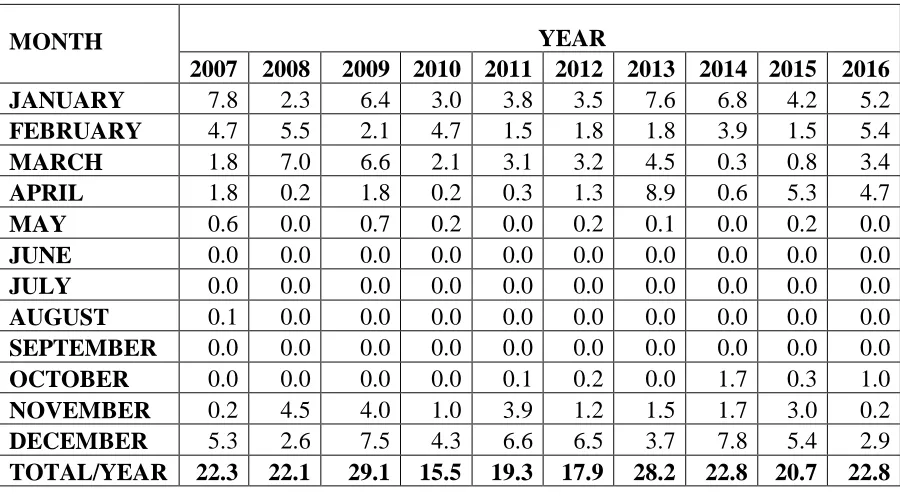
Table 3.1a Mean monthly rainfall (mm) at Singida Meteorological Station from 2007-2016
MONTH
YEAR
2007 2008 2009 2010 2011 2012 2013 2014 2015 2016
JANUARY 7.8 2.3 6.4 3.0 3.8 3.5 7.6 6.8 4.2 5.2
FEBRUARY 4.7 5.5 2.1 4.7 1.5 1.8 1.8 3.9 1.5 5.4
MARCH 1.8 7.0 6.6 2.1 3.1 3.2 4.5 0.3 0.8 3.4
APRIL 1.8 0.2 1.8 0.2 0.3 1.3 8.9 0.6 5.3 4.7
MAY 0.6 0.0 0.7 0.2 0.0 0.2 0.1 0.0 0.2 0.0
JUNE 0.0 0.0 0.0 0.0 0.0 0.0 0.0 0.0 0.0 0.0
JULY 0.0 0.0 0.0 0.0 0.0 0.0 0.0 0.0 0.0 0.0
AUGUST 0.1 0.0 0.0 0.0 0.0 0.0 0.0 0.0 0.0 0.0
SEPTEMBER 0.0 0.0 0.0 0.0 0.0 0.0 0.0 0.0 0.0 0.0
OCTOBER 0.0 0.0 0.0 0.0 0.1 0.2 0.0 1.7 0.3 1.0
NOVEMBER 0.2 4.5 4.0 1.0 3.9 1.2 1.5 1.7 3.0 0.2
DECEMBER 5.3 2.6 7.5 4.3 6.6 6.5 3.7 7.8 5.4 2.9
TOTAL/YEAR 22.3 22.1 29.1 15.5 19.3 17.9 28.2 22.8 20.7 22.8
Table 3.1b Total monthly rainfall (mm) at Singida Meteorological Station from 2007-2016
MONTH
YEAR
2007 2008 2009 2010 2011 2012 2013 2014 2015 2016 JANUARY 242.0 69.9 199.4 93.8 117.6 107.1 235.9 210.6 130.0 162.0 FEBRUARY 131.0 159.7 59.4 130.7 41.2 52.6 51.1 109.1 43.0 156.8 MARCH 56.0 215.8 203.6 64.0 97.5 97.6 140.2 93.9 24.7 104.7 APRIL 53.1 6.1 55.2 5.8 7.8 38.3 266.7 17.7 158.8 141.0
MAY 18.9 0.0 19.9 3.7 0.2 4.8 3.0 1.0 6.0 0.0
JUNE 16.7 0.0 0.0 0.0 0.2 0.0 0.0 0.0 0.0 0.0
JULY 0.0 0.0 0.0 0.0 0.0 0.0 0.0 0.0 0.8 0.0
AUGUST 2.0 0.0 0.0 0.0 0.0 0.0 0.0 0.0 0.0 0.0
SEPTEMBER 0.0 0.0 0.0 0.0 0.8 0.0 0.0 0.4 0.0 0.0
OCTOBER 1.1 0.0 0.0 0.0 1.4 6.3 0.0 52.9 9.0 29.6
Figure 3.2 Total monthly rainfall (mm) at Singida Meteorological Station from 2014-2016 Table 3.2 Average Temperature (oC) at Singida Meteorological Station from 2007-
2016
MONTH
YEAR
2007 2008 2009 2010 2011
DECEMBER 26.7 17.4 27.5 17.3 27.5 17.5 27.8 17.4 26.2 17.3 MONTH
YEAR
2012 2013 2014 2015 2016
Max Min Max Min Max Min Max Min Max Min JANUARY 27.4 16.9 27.6 17.4 26.5 16.9 26.4 16.8 26.3 17.4 FEBRUARY 28.2 16.9 28.0 17.1 25.9 16.6 28.7 17.3 27.1 17.3 MARCH 27.4 16.9 27.5 17.6 26.8 17.0 29.1 17.6 29.1 18.2 APRIL 26.2 16.6 25.9 16.7 26.0 16.8 26.2 17.0 26.0 17.3 MAY 26.2 15.7 25.4 15.4 25.6 15.4 25.4 16.0 25.6 15.0 JUNE 24.2 14.5 25.1 13.3 25.6 14.5 26.5 18.4 25.0 13.8 JULY 26.1 13.6 25.7 13.2 25.7 13.7 25.9 17.3 25.2 13.9 AUGUST 27.0 14.2 25.9 13.8 26.4 14.7 26.5 14.2 25.9 14.4 SEPTEMBER 28.6 15.1 28.6 15.5 27.0 15.1 28.6 15.4 27.5 16.1 OCTOBER 30.0 17.1 29.2 16.3 28.3 16.8 29.4 17.5 29.2 17.9 NOVEMBER 29.2 17.2 29.7 17.8 29.2 17.4 28.1 17.8 29.9 17.7 DECEMBER 27.6 17.5 27.0 17.5 26.9 17.1 27.0 17.2 28.9 17.4
22 23 24 25 26 27 28 29 30 31 M o n th ly m ax im u m t e m p e ra tu re (◦ C) Month 2014 2015 2016
Temperature differences between day and night are high especially during the dry season. Winds follow a monsoonal pattern being north-easterly between November and March and south-easterly for the rest of the year. These are mostly dry winds that contribute to the desertification of the area. September is usually the month with the most sunshine. The humidity index P/PET ranges from 0.5 to 0.65, where P is the mean annual precipitation and PET the potential evapo-transpiration rate (the sum of evaporation and plant evapo-transpiration). The forest is located in the Great Rift Valley (Wily, 1995) which extends from Malawi through Tanzania and to the Dead Sea in Israel.
3.1.3 Geology and soils
The whole of the Singida region has the same geological characteristics; granite batholiths modified by basalt flows from previous volcanic activities. The top soil in the valleys and low laying areas is fertile, being clay loam soil. Its depth is adequate for plant growth.
3.1.4 Vegetation of the area
Apart from small agricultural areas the land is still covered with natural grasses and shrubs. The area is characterized by Miombo woodlands. Brachystegia, Isornabia, Pterocarpus angolensis
Brachystegia species are usually dominant canopy trees. However, Julbernardia species dominate in areas that are poor in nutrients. Isoberlina are common on the western parts of Singida. The other tree species associated with these dominant woodland species are Burkea,
Ficus, Monotes, Pterocarpus and Xeroderis. The Miombo has an understory tree layer dominated by several species of Combretum, Terminalia and in the lower regions Acacia. This natural vegetation serves as the natural habitat of baboon for hiding against enemies, sleeping at night, feeding during the day and resting after feeding.
3.1.5 Socio-economic activities
Agriculture is the dominant economic activity of the inhabitants neighbouring the Mgori Community Forest Reserve. The villages are very close to the forest occupying at least 15% of the declared buffer zone. The area is cultivated producing mainly finger millet, maize, potatoes, sunflowers, pumpkins and beans (Wily, 1995).
3.2 Study population and study design
3.2.1 Study population
Farmers cultivating farms within 2 kilometres from the forest edge were included in this study. Four thousand households around the Mgori Forest Reserve (NBS, 2012) formed the target population.
Sample size was determined by the formula used by Fisher et al., (1998):
Where:
N = Sample size
Z = 1.96 at 95% confidence interval
p = Proportionate target population with the same characteristics 0.5 = p
q = 1 – p = 1 – 0.5 = 0.5
d = degree of accuracy (0.05) known as statistical significance.
D = Design effect =1 where p = 0.5
Thus,
=384
According to Fisher et al. (1998), the minimum number of respondents needed for this study was 384 but a sample of 450 respondents was used.
3.2.2 Study design
and the dry season at distances of ≤ 2 kilometres from the forest edge to the respective farms (Saj
et al., 2001). Three transects of about 2 kilometres each were marked and designated A, B and C. A cross-sectional survey was used to study the human-Olive baboon conflict.
3.3 Data collection
The movement of each troop from the forest to the farm was monitored. Their movement was recorded as GPS coordinates using a hand held GPS receiver. First the animals were habituated to the presence of the observers (Isbell et al., 1999). Data were collected along the line and belt transects (A, B and C) in the three villages every 50 metres up to 2 kilometres away from the forest edge. Baboon troops at the sampling points were counted. Each troop was monitored everyday from 6:00 am to 6:00 pm during the dry and the wet season along the three transects A, B and C.
3.3.1 Crops preferred by Olive baboons
The researcher organized and held meetings and discussions with five (5) leaders in each village and administered the questionnaires and interviews to the farmers so as to get their understanding of the problem of crop raiding by animals in their farms. The leaders of a village were invited in a meeting that was held in the village office where the researcher presented the topic with guided questions and the leaders were to respond freely. Among other things the farmers and leaders named the animals that raid crops in Mgori.
Naughton-Treves (2008), the visibility of the crop from a distance is also a predictor of how much damage will occur to the farm.
The researcher estimated crop loss in terms of the number of stems damaged per acre; then into number of bags that were to be harvested in that damaged plot and then the price of one bag of that crop in Tanzanian shillings (TSHS). This was done as follows: the number of stems per acre was counted (1 acre = X stems) and the number of damaged stems was counted at the same time as Y damaged stems. To know the size of the farm that was damaged (Z acres) the computation was done as follows:
Then Z acres obtained was converted into the number of bags (100kg@) that could be harvested in that plot times the price of 1 bag of that crop in Tanzanian Shillings. That is, . The crop loss in Tanzanian shillings was then converted in US dollars.
3.3.2 Relationship between the distance of the farm and level of crop damage.
Farmers situated along each transect, were recruited into the study and trained on how to collect data on crop raids daily for 12 hours. They were provided with data sheets and trained on how to record the data. For each crop raiding incidence, the farmer recorded the animal species involved and the time of raiding (Appendix III and IV).
(Mwangi, 2013). This was done both during the rainy and dry seasons. More information was obtained from the farmers by conducting interviews and administering questionnaires (Appendix I).
3.3.3 Local peoples’ perception of the nature, extent and intensity of the crop damage Researchers recorded the farmers’ behaviour towards baboons and mitigation strategies against
crop raiding by direct observation. More information was obtained during the focus group discussion.
3.4 Research instruments’ validation and reliability
According to Mwangi (2013) and Mugenda and Mugenda (1999), the researcher conducted a pilot study on a different site with 30 respondents who were not part of the current study. The pilot group was taught how to take GPS readings and how to use a compass and a tape measure. This survey endorsed the suitability of the research instruments (Kothari, 2004). Experts at Kenyatta University in the School of Pure and Applied Sciences in the Department of Zoological Sciences also confirmed the appropriateness of the proposed instruments and research methods.
3.5 Data analysis
CHAPTER FOUR
RESULTS
4.1 Crops preferred by Olive baboons
A total of one hundred and thirty four (134) incidences of crop raiding were recorded during the study period. Crops raided include maize (Zea mays L), millet (Pennisetum glaucum L),
Sorghum, sunflower (Helianthus annuus L), finger millet (Eleucine coracana L), Groundnuts (Arachis hypogaea L), Bambara bean (Vigna subterranean L), pumpkins (Cucurbita) and legume (Fabaceae). Figure 4.1 shows that most of the raids were on millet, sunflower, maize and finger millet.
4.2 Crops preferred by Olive baboon in the wet and dry seasons
Figure 4.2 show nine (9) different crops that were cultivated at Mgori. These are maize, sunflower, millet, finger millet, groundnuts, Bambara bean, sorghum, pumpkins and legume. Four (4) crops (millet, sunflower, maize and finger millet) were more preferred by Olive baboons in both wet and dry season to groundnuts, Bambara bean, sorghum, pumpkins and legume. Baobab plant was also preferred by Olive baboon during the dry season. Crop raiding was more intense in the wet season compared to dry season (Wilcoxon signed – rank: W-value = 2, critical value of W- value =3, N=8). The probability of getting a W-value of 2 is less than 0.05. Therefore, the result is significant at p<0.05 meaning that raiding was more in the wet than in the dry season though the same crops were raided in the two seasons.
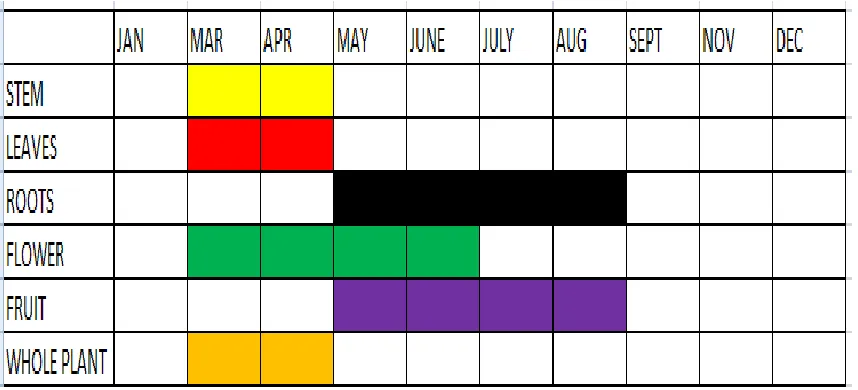
Examination of the parts of the plants preferred showed that the raiding animals damaged either the whole plant or a part of the plant. These parts included fruit, seed, stem, root or leaf (Figure 4.3) with seeds being the most preferred. Raiding was more on fruits compared to the whole plant which was the least raided. The baboon preferred different parts at different times of the year.The whole plant was consumed especially in March and the plant parts like fruit, root, stem, leaf and seed were raided in April, May and beginnind of June. From May to August the Olive baboons raided mainly seeds and roots as left overs in the farms (Figure 4.4).
Figure 4.4 Parts of the plant consumed by Olive baboons at different times of the year
4.2.1 Economic loss due to crop raiding by Olive baboons
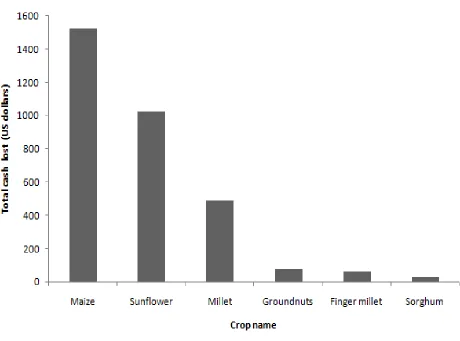
Figure 4.5 Total loss in revenue(US dollars) due to crop damage for all farmers
4.2.2 Animals that raid crops in Mgori
Figure 4.6 Crop raiding animals recorded in the field
4.4 Spatial and temporal distribution of crop raiding
4.4.1 Locations of crop raiding during the wet and dry seasons
GPS coordinates of the spots where raiding occurred were plotted on the map of the study area using Arc View software. The results are shown in figure 4.8. An analysis of variance (ANOVA) was done to compare mean distances from forest edge between seasons and among villages and results are shown in table 4.1. On average, baboons travelled longer distances into farmland in Unyampanda (7550 m) than in Pohama (960 m) and Mughunga (741.7 m).
Table 4.1 ANOVA results on the effects of seasons in the distance covered by Olive Baboons
ANOVA Source of
Variation SS df MS F P-value
F critical Seasons 3597344 1 3597344 64.3 5.96E09
4.171 Villages 3.59E+08 2 1.8E+08 3212.0 1.02E35 3.316 Interaction 80022.22 2 40011.11 0.7 0.49718 3.316 Within 1678000 30 55933.33
4.4.2 Testing whether troop size varied between seasons and among villages
The results of analysis of variance show that troop size did not vary significantly with season or with village (Table 4.2). Likewise, crop raiding did not vary significantly with either season or time of the day (Table 4.3).
Table 4.2 ANOVA results on effects of season and village on troop size ANOVA
To investigate,
Table 4.3 ANOVA results on effects of season and time of a day when baboons visited farms
ANOVA Source
of
Variation SS
df MS F P-value
Seasons 280.2 1 280.2 15.422 0.05915 Villages 434.33 2 217.17 11.954 0.0772
Error 36.33 2 18.17
Total 750.83 5
Source of
Variation SS df MS F P-value
Seasons 988.17 1 988.17 10.384 0.08431 Time 144.33 2 72.17 0.758 0.5687
Error 190.33 2 95.17
4.4.3 Mitigation methods used by farmers to reduce crop raiding
When farmers were asked to name the methods they used to mitigate crop raiding they gave a list of eleven (11) methods (Figure 4.9). Of the 347 respondents: about 89% said they guarded their farms, 78% used dogs, 62% chased the animals away, and 52% used scarecrows. Other methods included killing (20%), shooting bow and arrow (13%), hand clubs (10%), traps (8%), can bombs (3%) and poisoning (3%).
The researcher also observed himself the methods farmers were using to mitigate crop raiding. Results are shown in table 4.4.
Table 4.4 Mitigation methods recorded from the field during dry and wet seasons
Method Frequency
Wet season Dry season
Guarding 66 0
Chasing 56 0
Dogs 31 1
Killing 15 1
Scare crow 12 0
Bow and arrow 9 1
Hand club 7 1
Traps 4 0
Poisoning 2 0
Can bombs 2 0
4.5 Local peoples’ perception of the nature, extent and intensity of the crop damage
Farmers were asked to name five crops that are damaged by olive baboons. The results are shown in figure 4.10.
Farmers were further asked to name the five animals that raid crops. Results are shown in figure 4.11.
4.5.1 The difference between actual and perceived levels of crop damage.
There was a difference of damage in acres between the results of the interviews regarding the perceived level of crop damage and the actual estimated levels of damage as shown by Wilcoxon signed - rank test that W-value is 3. The Critical value of W for N=6 at p≤0.05 is 0. Therefore, the result is not significant at p≤0.05 (Figure 4.12). Therefore, the perceived data was larger than the actual estimated value of the crop damage at Mgori.
CHAPTER FIVE
DISCUSSION, CONCLUSIONS AND RECOMMENDATIONS
5.1 Discussion
5.1.1 Crops preferred by Olive baboons
At least eleven types of crops were grown in the area around the Mgori Forest Reserve. Farms around Mgori Forest Reserve produced predominantly sunflowers, millet, finger millet, sorghum and maize crops. These crops were cultivated in large quantities at the edge of the forest reserve because of the fertile soil and big need of the farmers of these crops. Other crops cultivated in that area in relatively small quantities were groundnuts, pumpkins, beans, Bambara beans, cassava and sweet potatoes because they were only contributing to the major crops to satisfy the needs of the farmers and their families. All these crops were raided by wildlife including baboons to supplement their own diet. The larger the fields, the greater the damage as the plants were more conspicuous.
thus easier to obtain. Also the baboons could quickly run away and hide in the forest when detected and chased away. Maize, millet, sunflowers and finger millet were all planted close to the forest edge and were therefore vulnerable to crop raiding.
Crop raiding translated into loss of crop yield and ultimately loss of revenue. For instance, sunflower seeds were mainly sold commercially while the rest of the yield could be consumed by the family and only sold, if abundant, to meet other family needs like health, school fees and various taxes. Hence, If commercial crops are damaged the family may not be able to meet its basic needs, such as paying for doctors, hospital visits or school fees. Most farmers were subsistence farmers and could not afford to buy food if their crops had been raided by baboons. The situation is aggravated by the fact that the Government of Tanzania does not compensate farmers for damaged crops.
Similar results have been observed elsewhere. Barirega et al. (2010) reported that in Western Uganda the households adjacent to the park had a lower dietary diversity index than the households far away from it. The diet in Kichwamba was 8% less diverse than in other counties. In Nyakiyumbu the figure was 20%. This implied that in affected areas the food security was reduced by an overall annual average of 14%. In these areas livestock was also threatened by wild animals.
per household was USD 799. Saj et al. (2001) said that in Uganda crop losses due to baboon activities ranged from USD 30 to USD 80 per month and the seasonal losses ranged from USD 80 to USD 400. Therefore, about half of the income was destroyed through losses by animals. One alternative to overcome the loss and suffering caused by crop raiding would be to get alternative sources of income. An alternative revenue stream for the locals which has been suggested is bee-keeping which does not interfere with the wildlife. This was done in the zone of the forest where people were allowed to put their beehives, collect dry firewood, harvesting fruits and mushrooms without causing any harm to the biodiversity of the forest. However, these activities have not replaced cultivation.
However, for the farmers to appreciate the forest and the services and resources it provides, there is a need for the locals to be educated so that they understand the mutual dependency between humans and animals. Majority of households in the villages around Mgori Forest Reserve still depend on subsistence farming for survival. They do not understand the whole concept of conservation. They need to understand that as the human beings are able to go to the forest to look for their needs like timber, mushrooms, fruits, flowers and firewood the wild animals too need to get out of the forest to search for their needs like food, sunshine, air and water. As they move to the farms they cause damage to the crops unwarily.
Barirega et al. (2010) agreed with this finding. He said that crop raiding on these three study sites was an existing problem and baboons were the major culprits. Barirega et al. (2010) in Western Uganda found that crop raiding reduced the amount of food available for the people in a household. It also reduced the money available to buy food. In addition, crop raiding limited the range of crops people grown and consequently reduced the dietary diversity of the inhabitants. Kagoro-Rugundo (2004) in Uganda said that crop loss had negative monetary consequences for the farmer. The extent of monetary loss depended on the feeding habits of the animal species and the type of crop.
5.1.2 Relationship between the distance of the farm and level of crop damage.
into the farms the higher the chances of encountering the farmers who would not only chase them away but also harm them. During the period this study was conducted, two baboons were killed and hung on trees near the farms to discourage other baboons from visiting the farms. Since baboons are fast learners, they would keep to a distance that would reduce their direct encounter with humans. Baboons were large animals they could not hide easily and were in danger of being noticed and repelled.
Results obtained in this study are similar to those obtained by Naughton-Treves (1997) who found that park edges formed a permanent ‘frontier’ where wildlife habitat met agriculture or other intensive human land uses. The human-wildlife conflict at the edge of Mgori forest reserve served as a vivid example of one of the greatest dilemmas in contemporary conservation, namely balancing global environmental conservation goals with local residents’ concerns.
al., 1998), where they were prohibited from hunting and consequently wild animals damage their crops.
The distance between the farm and the forest edge was the most important indicator of the expected level of destruction of the crops on the farms around Mgori forest reserve. When there was only a short distance between the farm and the forest edge, crop raiding by Olive baboons occurred frequently. As this distance was increased, the frequency and the magnitude of crop raiding events decreased. Farms more than 500 metres away from the forest edge, did not suffer from any raiding at all. Farms close to the forest experienced more baboon attacks than those further away. This probably because baboons could not walk long distances in order to get food since they could satisfy their appetite with what they found in the forest.
During the dry seasons there was no relationship between distance and level of damage. This can be attributed to the fact that at this time the crops are already harvested and so probably they would benefit more by foraging in the forest than in the farms.
5.1.3 The crops preferred by Olive baboons in the wet and dry seasons
Results obtained in this study agree with those observed elsewhere. Warren (2008) in West Africa found that in 2002 maize raiding at Gamgam in Nigeria occurred just prior to harvesting period in February/March. Baboons were picking bananas and scavenging on harvested maize and sweet potatoes fields. There was a significant increase in raids during these two months compared to the rest of the year. Naughton-Treves (1996) in Western Uganda reported that 38% of farmers claimed that maize was the crop most prone to damage. In fact, this crop suffered damage twice as much than what people expected. Sowing is normally done prior to or during the wet season. Naughton-Treves (1998) in Western Uganda suggested that the maize planting routine of the farmers had changed the feeding habits of the baboons foraging on different crops at varying stages of maturity. This explained the broad habitat tolerance of baboons.
5.1.4 Local peoples’ perception of the nature, extent and intensity of the crop raiding
the methods used by farmers to try and prevent raiding. Some of the methods resulted in the death of the baboons.
Baboons raided fields which were poorly protected. The more frequent the baboons raided the farms the greater was the loss of crops. This caused great distress to the farmer as he depended on the crops to take care of his family. To protect their crops from damage, farmers employed various methods among them guarding. The task of guarding the farms needed close and effective cooperation between the local community and the government. Various protective strategies were employed to assist this task.
Baboons are part of this ecosystem and their natural food is to be found in the forest and they must play an important ecological role not apparent to the farmers. Most of the time they fed on wild fruits, seeds, mushrooms, flowers, leaves and the stems of various plants. However, the forested areas were shrinking in size hence could not provide enough food for them anymore. Baboons were very mobile animals and could travel long distances in troops of animals. They could even reach the farms that were far away from the forest edge. As the baboons travelled from the forest reserve edge to the farms, they realized that it was much easier to obtain their food from the farms than foraging in the forest alone. The farmers would not understand this complex relationship and their attitude to the baboons is negative.
majority of households in the villages around Mgori forest reserve still depend on subsistence farming for survival. They do not understand conservation. They need to understand that as the human beings are able to go to the forest to satisfy for their needs like timber, mushrooms, fruits, flowers and firewood, animals are also able to get out of the forest to search for their needs like food, sunshine, air and water. As they move to the farms they cause damage to the crops unwarily. To maintain the forest they needed people who were to be employed as forest guards, educators and trainers.
It is essential that farmers were involved in the process of solving conflicts. When wildlife destroyed crops or damaged property, the pressure from the farmers to rectify the problem on wildlife authorities could be great. Farmers generally felt that wildlife managers were responsible for crop losses and expected some form of compensation. If farmers were not involved in the process of solving the conflict between humans and animals they felt powerless. They showed their anger by sabotaging the government or foreign-funded development projects and they killed the baboons. The farmers themselves were to take responsibility for their own crop protection and not leave it to the government.
Barirega et al. (2010) believed that people did not understand the value of conservation because of their low level of education. This calls for appropriate conservation education of the farmers. Naughton-Treves (1998) found that indirect costs were also associated with the farmers’ investment in guarding their fields, such as the need for additional labour. The use of children would cause the next generation to be uneducated again. Children stayed away from school in order to guard fields, which added to the problem of producing uneducated adults.
Muoria (2001) in his study at Arabuko – Sokoke Forest in the coastal region of Kenya found that, forests are a good source of timber and a variety of non – timber products. He further found that forests are a reservoir of Bio – resources for agriculture, pharmaceutical and other industrial applications. Muoria also added that forests play roles in nutrient recycling, regulation of climate, maintenance of soil fertility and they protect water catchment areas. This calls for farmers to protect the natural resources for they complement their life. Treating these resources in a disorderly manner will lead to serious imbalances of nature and cause a serious shortage of these resources to man and hence deteriorate his life.
The attitude of farmers in Mgori towards baboon is not specific to this community. According to Goldman and Hartter (2009) in the northern part of Uganda, responses were somewhat different. Only 31% of farmers reported crop raiding and yet 21% did not resent having a game reserve in the neighbourhood. Very few people felt they benefited from them (l0%), and only 38% felt that parks are important. One third of respondents believed that parks benefited the communities, and 43% of them believed that parks diminished their livelihood. This perception might differ from one place to another depending on the climate and geographical position of the area where study is being conducted and that time.
Barirega et al. (2010) in Western Uganda found that people there had a similar attitude, perhaps because most people living adjacent to a park were uneducated. Gillingham and Lee (2003) in Tanzania interviewed 198 households and found that 95.5% of them reported that crop raiding diminished their agricultural output and 34.8% of respondents ranked this as the primary constraint to their agricultural productivity.
commercially. Some farmers (30%) thought that guarding their farms might reduce crop raiding. Linkie (2006) in Sumatra however found, that only a minority of farmers employed some form of crop protection (30%), 24% of them had a dog and the other 6% a gun.
Naughton - Treves (1996) in Uganda stated that more than half of the respondents (56%) identified wildlife protection as the central purpose of the park. Yet the popular belief (40%) in Kibale was that the park only profited the government. 35% of farmers thought that forests might improve the amount of rainfall, 25% thought it provided revenue from foreign tourists. 84% of respondents thought that the park benefited them, but only to collect firewood (44%) and building materials (28%), which were both illegal activities in that area. 12% mentioned various other benefits to the communities.
5.1.4.1 The methods used to mitigate crop raiding by Olive baboons and their effectiveness. Crops on farms needed to be protected from the time they were planted until they were harvested. The farmer guarded the farm throughout the season and could only relax when the crop had been harvested and stored at home in an appropriate container and in a proper place. This activity was repeated every year. This means that, time that could have been used for other important activities was spent guarding farms.
Some farmers killed the wild animals, others used poison, some made loud noises, some used masks and some used traps to catch the animals. Some of the methods were more effective than others. The protection method depended on the location of the farm and the capability of the farmer. However, no one method was 100% effective on its own and so farmers used a combination of methods.
The findings of this study matched those of Naughton-Treves (1998) in Uganda. 60% of the farmers preferred guarding to eliminate crop loss, 50% suggested to create a buffer zone at the forest edge, 15% wanted to place snares, traps, or poisoned bait in their fields (15%) and 4% wanted to abandon cultivation of their farms altogether. Kagoro-Rugundo (2004) in Uganda found that guarding reduced the crop loss by 25–35%.
In West Africa, Warren (2008) found that guarding reduced the crop raiding by 54% in the wet season (N = 13) and by 44% in the dry season (N = 32). The most effective way of dealing with baboons was to shout at them (47% of farmers used this method). This method was sometimes combined with using a sling shot (24% of farmers did that). Some farmers also hurled stones at them (19%). However the baboons were never hit by any of the weapons used. About 38% of farmers just chased the animals away. Kagoro-Rugundo (2004) in Uganda found that using children was inappropriate because they missed school hours chasing baboons.
actions. Crop raiding by baboons, caused over USD 1,500,000 in agricultural damage per year and extensive trapping for export to be used in the biomedical trade was considered the only effective way to control the population size and reduce the damage to the farms.
Saj et al. (2001) in Uganda found that, in Entebbe, the most common preventive measures were attempts to scare and chase Olive baboons away by various means. Saj et al. (2001) reported that in Uganda farmers grew different less vulnerable crops. Farms owners did not vary their preventive methods according to the distance from the forest. Farms 100 metres away from the forest edge which were not affected by crop raiding at the present moment but had been in the past used the same methods to chase the baboons as other farmers whose farms were raided by baboons at the present moment.
Naughton-Treves (1998) in Uganda found that crop damage was less frequent in villages where farmers set more traps, snares or poisoned baits in their fields. Wallace and Hill (2012) in Western Uganda found that baboons were quite adaptable. They might change the timing of their raids, the type of crop they raided and at which developmental state they destroyed it, thus becoming more problematic as time goes on.
reserve was being established. This suggests that money should be directed toward needs-based crop raiding mitigation interventions.
5.2 Conclusions
a) At least eleven types of crops were grown in the area around the Mgori forest reserve. Baboons preferred maize, millet, sunflowers and finger millet. This resulted in loss food security and revenue more so because these are the major crops grown both for subsistence and as cash crops.
b) The farms close to the forest edge suffered more damage than those far from the forest. Beyond 500 metres damage was negligible. Therefore the distance between the farm and the forest edge was the most important indicator of the expected level of destruction of the crops on the farms around Mgori forest reserve. However, during the dry season Olive baboons walked long distances in the farms looking for crops to eat though this movement was not related with the distance from the forest edge. Despite the great loss of crops close to the forest edge, farmers continue encroaching on the forest thus increasing the chances of crop raiding. There were no other direct benefits or revenue coming from the forest to the community especially from efforts from the government. c) Baboons frequented the farms during the rainy season because at this season there were
food crops in the farms. So most of the damage was in the wet season. Little loss was recorded in the dry season probably because all the crops had been harvested and stored in the store houses.
farms needed close and effective cooperation between the local community and the government with the latter providing information that would see the exercise to be guided by facts. Farmers’ perception of damage caused by baboons may not necessarily agree with the actual damage thus mitigation methods may not necessarily be based on the actual threat caused.
e) Local people had a negative attitude towards the baboons due to the damage they caused. They did not understand the role of the baboons as part of the Mgori ecosystem and the real value of conservation because of their low level of education and the complexity of the issue.
5.3 Recommendations
5.3.1 Recommendations from the Study
a) No crop vulnerable to baboon raiding should be planted within 500 metres from the forest edge. Farmers should be advised to only plant crops near the forest edge, which are not favoured by the baboons namely, tobacco (Nicotiana tabacum L), peppers (Capsicum) and euphorbia species.
b) Farmers should be educated so that they can understand the mutual dependency between humans, animals and the forest. Hopefully this would reduce farmers encroaching on the forest.
d) The government through the relevant ministries should ensure that farmers benefit from the revenue generated from the Mgori Forest Reserve and also compensate farmers for crop loss so as to encourage the farmers to change their attitude towards the wildlife and tolerate them in their farms.
e) It is good to form a conflict resolution committee that comprise of representatives from the communities, the local and central government, wildlife authorities, local NGO’s and
some other relevant partners and form a partnership between all stakeholders to address the human baboon conflicts in the local area.
5.3.2 Recommendations for further research:
i) Long term monitoring of various troops of Olive baboons in terms of their variation in size and home range and how this will add to the conflicts with locals in the adjacent community.
REFERENCES
Altmann, J., Hausfater, G. and Altmann, S.A. (1985). Demography of Amboseli Baboons, 1963–1983. American Journal of Primatology 8:113–125.
Andelman, J. S., Else, G. J., Hearn, P. J. and Hodges, K. J. (1985).The Non-invasive
Monitoring of Reproductive Events in Wild Vervet Monkeys (Cercopithecus aethiops) Using Urinary Pregnediol-3α-glucuronide and its Correlation With Behavioural Observations. Journal of Zoology 205:467-477.
Baillie, J. E. M., Hilton-Taylor, C. and Stuart, S. N. (2004). The IUCN Red List of Threatened Species. IUCN, Gland.
Barirega, A., Buyinza, M., Kansiime, F. and Basuta-Isabirye, G. (2010). The Effects of Crop Raiding on Household Food Security in the Albertine Rift: A Case Study of Queen Elizabeth National Park, Western Uganda, Human Dimensions of Wildlife. An International Journal 15:1, 45-54, DOI: 10.1080/10871200903115070
Barnes, J. (2009). Mount Kenya Ecology and Environment Booklet for Schools and Education Centers. African Fund for Endangered Wildlife, Kenya.
Barrett, S. A. (2005). Foraging Ecology of Vervet Monkey (Chlorocebus aethiops) in Mixed and Sour Lowveld Bushveld of the Blydeberg Conservancy, Northern Province, South Africa. Unpublished MSc Thesis, University of South Africa. Pretoria.
Beehner, J.C., Onderdonk, D.A., Alberts, S.C. and Altmann, J. (2006). The Ecology of Conception and Pregnancy Loss in Wild Baboons. Behavioural Ecology 17:741–750. Bolter, D. and Zihlman, A. (2003). Morphometric Analysis of Growth and Development in
Wild-collected Vervet Monkeys(Cercopithecus aethiops), With Implications for Growth Patterns Across Old World Monkeys, Apes, and Humans Journal of Zoology 260:99-110. Boobyer, D. (2013). Second Chance at Being Wild: One Person Making a Difference for
Africa’s Primates. Nikela Publishers. Pretoria.
Boulton, M. A., Horrocks, A. J. and Baulu, J. (1996). The Barbados Vervet Monkey
(Cercopithecus aethiops sabaeus): Changes in Population Size and Crop Damage.
International Journal of Primatology 17:1980-1994
Cardini, A., Dunn, J., O’Higgins, P. and Elton, S. (2013). Clines in Africa: Does Size Vary in the Same Way Among Wide Spread Sub-Saharan Monkeys? Journal of Biogeography
20:2,370-381. DOI:10.1111/;1365-2699.2012.02783.x
Chapman, A. C. (1987). Selection of Secondary Growth Areas by Vervet Monkeys (Cercopithecus aethiops). American Journal of Primatology 12:217-221.
Foord, H. S., van Aarde, J. R. and Ferreira, M. S. (1994). Seed Dispersal by Vervet Monkeys in Rehabilitating Coastal Dune Forests at Richards Bay, Suid-Afrikaanse. Tydskrif van Natuurnavorsing 24: 56-59
Gillingham, S. and Lee, C. P.(2003). People and Protected Areas: a Study of Local
Perceptions of Wildlife Crop-Damage conflict in an Area Bordering the Selous Game Reserve, Tanzania.Oryx 37:316- 325.
Goldman, C. A. and Hartter, J. (2009). Life on the Edge: Balancing Biodiversity, I
Conservation, and Sustaining Rural Livelihoods around Kibale National Park, Uganda.
Summer 2009 FOCUS on Geography 52:27-47.
Grobler, P., Jacquier, M., deNys, H., Blair, M., Whitten, P. L. and Turner, T. R. (2006). "Primate Sanctuaries,Taxonomy and Survival: a Case Study from South Africa" Ecological and Environmental Anthropology. University of Georgia.
Groves, C. (2001). Primate Taxonomy. Washington DC: Smithsonian Institute Press. Higham, J. P., Warren, Y., Adanu, J., Umaru, B. N., Maclarnon, A. N., Sommer,
V. and Ross, C. (2009). Living on the Edge: Life-History of Olive Baboons at Gashaka-Gumti National Park, Nigeria. American Journal of Primatology 71:1–12.
Hill, C. M. (1965). Primates: Comparative Anatomy and Taxonomy. Volume VI. University Press, Edinburgh.
Hill, C. M. (2000). Conflict of Interest Between People and Baboons: Crop Raiding in Uganda.
International Journal of Primatology 21: 2, 2000.
Hill, C. M. (2005). People, Crops, and Primates, a Conflict of Interest. In J. D. Patterson
and J. Wallis (Eds.). Commensalism and Conflict: The Human-Primate Interface (pp. 40-59). Norman: American Society of Primatologists.
Hoffman, T. S. and O'Riain, M. J. (2012). Monkey Management: Using Spatial Ecology to Understand the Extent and Severity of Human–Baboon Conflict in the Cape Peninsula, South Africa. Ecology and Society 17:13. Retrieved from http://dx.doi.org. on 12/02/2015.
Isbell, L. A., Pruetz, J. D., Lewis, M. and Young, T. P. (1999). Rank Differences in Ecological Behaviour: A Case Study of Patas Monkeys (Erythrocebus patas) and Vervets (Cercopithecus aethiops). International Journal of Primatology 20: 2, 1999.
Johnson, C. A., Swedell, L. and Rothman, J. M.(2012). Feeding Ecology of Olive Baboons (Papio anubis) in Kibale National Park, Uganda: Preliminary Results on Diet and Food Selection. African Journal of Ecology 50: 367–370.
Kagoro- Rugundo, G. (2004). Crop Raiding Around Lake Mburo National Park, Uganda.
African Journal of Ecology 42:32-41. DOI: 10.1111/j.0141-6707.2004.00444.x Kate, K. (2012). Possible Strategies/Practices in Reducing Wild Animal (Primate) Crop
Raids in Unprotected Areas in Hoima District. A Report to the PCLG-Uganda.
Kothari, C. R. (2004). Research Methodology: Methods and Techniques (2nd Revised Edition). New Age Techno Press. New Delhi, India.
Lavigne, S. (2009). Monkeying Around Spacial Differences in Riverine Habitat Utilization by Vervets, Sykes, and Baboons. SIT Tanzania.
Lee, C. P. and Priston, C. E.(2005). Human Attitudes to Primates: Perceptions of Pests,
Conflict and Consequences for Primate Conservation: Department of Biological Anthropology, University of Cambridge, UK.
Linkie, M., Dinata, Y., Nofrianto, A. and Leader- Williams, N. (2006). Patterns and
Perceptions of Wildlife Crop Raiding in and Around Kerinci Seblat National Park, Sumatra. Animal Conservation 10 : 127–135.
Lubbe, A. (2013). Thermoregulatory Plasticity in Free-Ranging Vervet Monkeys
(Chlorocebus pygerythrus). Unpublished MSc Thesis: University of the Witwatersrand, Johannesburg.
Luhajo, P. (2002). Tanzania: Destroying Cheap Forests to Buy Expensive Water in, News From Africa: retrieved from http://www.newsfromafrica.org/newsfromafrica. on 05/12/2014.
Lycett, J.E., Weingrill, T. and Henzi, S.P. (1999). Birth Patterns in the Drakensberg
Mountain Baboons (Papio cynocephalus ursinus). South Africa Journal of Science
95:354–357.
Makin, F. D., Payne, P. F. H., Kerley, H. I. G. and Shrader, M. A. (2012). Foraging in a 3D World: How Does Predation Risk Affect Space Use of Vervet Monkeys? Journal of Mammalogy 93 : 422-428.
McDaniel, M. (2004). Animals: Monkeys. Benchmark Books. Marsha Cavendish, New York.