© 2018, IJCSMC All Rights Reserved
92
Available Online atwww.ijcsmc.com
International Journal of Computer Science and Mobile Computing
A Monthly Journal of Computer Science and Information Technology
ISSN 2320–088X
IMPACT FACTOR: 6.017
IJCSMC, Vol. 7, Issue. 3, March 2018, pg.92 – 100
An Image Data Mining with its Effective Local
Binary Patterns (LBP) Detection and Extraction
with Hierarchical Indexing- A Review Paper
Kshama Karule
1, Virendra Nikam
21
Master of Engineering Student, CSE Dept, Dr. Sau. K.G.I.E.T., Darapur, India
2
Assistant Professor, CSE Dept, .Dr. Sau. K.G.I.E.T., Darapur, India
1
[email protected], 2 [email protected]
Abstract—Image recognition has been one of the most interesting and important research fields in the past two decades. The
reasons come from the need of automatic recognitions and surveillance systems, the interest in visual system on Image
recognition, and the design of -computer inter image, etc. These researches involve knowledge and researchers from
disciplines such as neuroscience, psychology, computer vision, pattern recognition, image processing, and machine learning,
etc. A bunch of papers have been published to overcome difference factors (such as illumination, expression, scale, pose, etc)
and achieve better recognition rate, while there is still no robust technique against uncontrolled practical cases which may
involve kinds of factors simultaneously. Most of the current Image recognition systems presume that Images are readily
available for processing. However, in reality, we do not get images with just Images. We need a system, which will detect the
Image in image, so that this detected Image can be given as input to Image recognition systems. The goal of a Image
detection algorithm is to identify the location and scale of all the Images in image. The task of Image detection is so trivi al
for the brain, yet it still remains a challenging and difficult problem to enable a computer to do Image detection. This is
because the image changes with respect to internal factors like facial expression, beard and mustache, glasses etc and it is
also affected by external factors like scale, lightning conditions, contrast between Image and background and orientation of
the Image.
© 2018, IJCSMC All Rights Reserved
93
I. INTRODUCTIONImage recognition is the process of automatically determining whether two Images are the same person. A
number of factors make this a challenging problem for computers. Images in images and video can be captured at
various resolutions, quality, and lighting conditions. Different cameras have different imaging properties. Moreover, people’s facial expressions as well as their pose with respect to the camera can vary widely, and facial
characteristics can change dramatically as people age over time.
Digital images and video are becoming more and more important in the multimedia information era. The
Image is one of the most important objects in an image or video. Detecting the location of Images and then
extracting the facial feature in an image is an important ability with wide range of applications, such as Image
recognition, surveillance systems, computer interfacing, video-conferencing etc.
In this work, it is implemented a Image recognition method by Genetic algorithm. Genetic algorithms are a
stochastic search algorithm, which uses probability to guide the search. It can find the near global optimal solution
in a large solution space quickly. It has been used extensively in many application areas, such as image processing,
pattern recognition, Image detection, feature selection, and machine learning. Its power comes from its ability to
combine good pieces from different solutions and assemble them into a single super solution.
Our aim, which we believe we have reached, was to develop a method of Image recognition that is fast,
robust, reasonably simple and accurate with a relatively simple and easy to understand algorithms and techniques.
Given an image, the goal of Image detection algorithm is to detect the Image and extract the features from given
image and to recognize the detected Image with given database of Image images which is trained by Artificial
Neural Network using Genetic Algorithm.
II. LITERATUREREVIEW
There are various approaches proposed by various researchers for image based Image recognition. In this
chapter a brief description of these approaches and a comparison between them are given.
A-Support Vector Machine
1) Evolutionary Pursuit Approach
In 2000, Evolutionary Pursuit (EP), a novel adaptive representation method, and showed its feasibility for the Image
recognition problem. EP seeks to learn an optimal basis for the dual purpose of data compression and pattern classification. Image projections suitable for compact and efficient Image encoding in terms of both present and
future recognition ability. The prediction risk, included as a penalty, is a measure of generalization ability and is
© 2018, IJCSMC All Rights Reserved
94
problems with some prediction risk.2) Eigen Image-based Recognition Approach
In 2001, Kwok-Wai Wong, Kin-Man Lam proposed a more reliable Image detection approach based on the genetic
algorithm and Eigen Image technique. Firstly, possible eye candidates are obtained by detecting the valley points.
Based on a pair of eye candidates, possible Image regions are generated by genetic algorithm. Each of the possible
Image candidates is normalized by approximating the shirring angle due to head movement. The lighting effect is
reduced by transforming their histograms into the histogram of reference Image image. The fitness value of Image
candidate is calculated by projecting it onto the eigen Images. Selected Image candidates are then further verified by
measuring their symmetries and determining the existence of different facial features. But limitation is that the
threshold value for single-Image detection is greater than that for multiple-Images detection. Detection rate for
multiple Images is poor. Also there is other research on eigenspace-based Image recognition.
3) Hausdor Distance Approach
In 2001, a Image detection system that works with edge features of grayscale images and the modified Hausdorff Distance. After detection of facial region, Image position parameters are refined in a second phase.
System performance has been examined on two large test sets by comparing eye positions estimated by the system
against manually set ones with a relative error measure that is independent of both the dimension of input images
and the scale of Images. The good localization results show that system is robust against diferent background
conditions and changing illumination. But there are restrictions of detection of only frontal views and single Images,
on automatic model creation and transformation parameter optimization.
4) Radial Basis Function Approach
In 2002, Meng, Shiqian Wu, and Juwei Lu proposed a technique Radial Basis Function of Neural Network.
a general design approach using an RBF neural classifier for Image recognition to cope with small training sets of
high-dimensional problem is presented. Firstly, Image features are first extracted by the PCA, then the resulting features are further projected into the Fisher’s optimal subspace in which ratio of the between-class scatter and
within-class scatter is maximized. Training data information is used in the choice of structure and parameters of
RBF neural networks before learning takes place, is presented. Finally, hybrid learning algorithm is proposed to
train the RBF neural networks. Simulation results show that the system achieves excellent performance both in
terms of error rates of classification and learning efficiency. This experiments show that if the variance of noise is
small, there is no effect on generalization, whereas large variance of noise will deteriorate the performance.
5) Independent Component Analysis Approach
In 2003, Chengjun Liu and Harry Wechsler introduced an Independent Gabor Features (IGF) method for Image
recognition. The IGF method derives first a Gabor feature vector based upon a set of down sampled Gabor wavelet
representations of Image images by incorporating different orientation and scale local features. Independent
component analysis operates then on the Gabor feature vector, whose dimensionality has been reduced by PCA, and
© 2018, IJCSMC All Rights Reserved
95
application of the PRM method for classification. On one hand, Gabor transformed Image images exhibit strong
characteristics of spatial locality, scale and orientation selectivity, similar to those displayed by Gabor wavelets. It
produces salient local features in neighborhood of the eyes, nose and mouth that are most suitable for Image
recognition. On the other hand, ICA would further detect redundant features. The IGF method facilitates automatic
implementation because it does not involve non-trivial manual annotation of shape points.
6) 2D Gabor wavelets Approach
In 2006, Linlin Shen and Li Bai introduced a review on Gabor wavelets for Image recognition. 2D Gabor
wavelets introduced that how to use them for local feature extraction. In Image recognition, Image image could be
represented by the Gabor jets extracted at some pre-defined feature points. Analytical methods utilize the Gabor jets
extracted from pre-defined feature points on the Image images for recognition. Different approaches to locate
feature points for Gabor jets extraction, classified into two categories: For elastic graph based analytic methods, a
graph is first placed at an initial location and deformed using jets to optimize its similarity with a model graph. Non
-graph based methods locate feature points manually or by color or edge etc. after that recognition can then be
performed using Gabor jets extracted from those feature points. But more research work is required in the following
areas: 1) How to choose the optimal Gabor wavelet basis. While most of the works are following the framework of
five scales/eight orientations, a large number of works also proposed their own design strategies. However, most of
the strategies are presented without justification and it remains unclear which one is the best. 2) With no
assumptions on locations and parameters of Gabor wavelet basis, an optimization algorithm able to select both the
Gabor wavelet basis and jet locations for Image representation is required. 3) The graph structures available for
representation of Images are relatively limited, new structure and graph matching algorithms are encouraged. 4) The
attention on Gabor wavelet networks is actually quite limited.
7) Pseudo Zernike Moments Approach
In 2010, Rongbing, Changming and XiangRong proposed a technique Boosting Fisher-weighted PZM for Image
Recognition.This approach utilizes a Fisher-weighted function to emphasize the different facial parts. To reduce
CPU computation time of FWPZM, Adaboost is used to select the optimal feature set which contains optimal
FWPZM orders and corresponding repetitions. FERET Image database which contains Image images at different
orientations, scale, facial expression, different illuminations are selected to evaluate the proposed approach. But
problem about pseudo-Zernike moments approach i.e. it often suffer heavy computational load.
8) ANT Colony Optimization Approach
In 2010, S.Venkatesan and Dr.S.Srinivasa Rao Madane proposed a novel Image recognition system to
detect Images in images and video, recognizes Images from galleries of known people using genetic and Ant colony
optimization algorithm. This system is caped with three steps. Initially pre-processing methods are applied on the
input image. Consequently Image features are extracted from the processed image by ANT Colony Optimization
(ACO) and finally recognition is done by Genetic Algorithm. The ACO system contains two rules: 1) Local
pheromone update rule, which applied whilst constructing solutions. 2) Global pheromone updating rule, which
© 2018, IJCSMC All Rights Reserved
96
evaporation decreases all trail values over time, in order to avoid unlimited accumulation of trails over somecomponent. Daemon actions can be used to implement centralized actions which cannot be performed by single ants
i.e. a restriction. At each step, each ant computes a set of feasible expansions to its current state, and moves to one of
these in probability.
9) 3D Image Recognition Approach
In 2011, Gang Hua, Ming-HsuanYang, et al., introduced 3D Image recognition which has been regarded as
a natural solution to pose variation. There are two methods, first one is using facial symmetry to handle pose
variations in real-world 3d Image recognition and second is unconstrained pose invariant Image recognition using 3d
generic elastic models. While historically 3D Image recognition has been criticized for lack of real world 3D
sensory cameras, this issue may be resolved in the future with inexpensive 3D sensors. The main technological
limitation of 3D Image recognition methods is the acquisition of 3D image, which usually requires a range camera.
Alternatively, multiple images from different angles from a common camera (e.g. webcam) may be used to create
the 3D model with significant post-processing.
10) Fuzzy Integration Using Genetic Algorithms
In 2012, Patricia Melin, Victor Herrera, et al., describes the application of modular neural network
architectures for person recognition using the iris image as a biometric measure. Simulation results with the
modular neural network approach, its optimization using genetic algorithms, and the integration with different
methods, such as: type-1 fuzzy integration and optimized fuzzy integration using genetic algorithms. Since initially
the results with fuzzy integration were not satisfactory, after that they were decided to apply an evolutionary
approach to optimize the membership functions of this response integrator of the modular neural network. Also this
approach is implemented for only iris image recognition not Image recognition.
11) Principal components Analysis Approach
In 2013, Navneet and Vikas demonstrate the Image detection system of colored Image images which is
invariant to background and acceptable illumination conditions. A threshold level is set to reject the non- Image
images and the unknown Image images which are not present in the input database of Image images. The features
of Image images are extracted by creating the feature vectors of maximum varied Image points and computing
covariance column matrix using PCA. The global features extraction is completed using PCA based eigen Image
computation and detection part is completed using multi-layered feed forward ANN with back propagation process.
But it requires full frontal display of Images. When lightening variations are large then it is difficult to count the
image distance due to introduced biases in distance calculations.
12) Hidden Markov Model Approach
Ara V. Nefian and Monson H. Hayes described Hidden Markov Model (HMM) based framework for Image
recognition and Image detection. The observation vectors used to characterize states of the HMM are obtained using
the coefficient of the Karhunen-Loeve Transform (KLT). HMM are a set of statistical models used to characterize
© 2018, IJCSMC All Rights Reserved
97
number of states, a state transition probability matrix and an initial state probability distribution and 2) a set ofprobability density functions associated with each state. The HMM Image modeling capabilities for Image
recognition were tested using a set of Image images (with no background) not used in training phase. In some cases,
the recognition performance of this method was 84% to 86% .
13) Discreet Cosine Transfer (DCT) Approach
Aamer, Ying, et al., presented on skin-based color features extracted from two dimensional Discreet Cosine
Transfer (DCT) and neural networks, which can be used to detect Images by using skin color from DCT coefficient
of Cb and Cr feature vectors. This system contains the skin color which is the main feature of Images for detection,
and then the skin Image candidate is examined by using the neural networks, which learn from the feature of Images
to classify whether the original image includes a Image or not. The processing is based on normalization and DCT.
Finally the classification based on neural networks approach. The experiment results on upright frontal color Image
images from the internet show an excellent detection rate. The detection of Images in compressed images to be use
for Image image retrieval based on skin color was not improved.
In this work, we have implemented the neural network which is train by genetic algorithm. Due to which
Images are easily recognize accurately. Genetic algorithm GA is used to reduce the size of network by varying the
architecture and it is used as a search algorithm to achieve 100% recognition accuracy rate.
III.DESCRIPTIONOFTHEPROPOSEDWORK
A- Motivation
Although possess well-developed Image processing expertise, Image processing is nevertheless subject to a variety
of biases. Perhaps the best known of these biases is the Cross-Race Effect--the tendency to have more accurate
recognition for same-race than cross-race Images. The current work reviews the evidence for and provides a critical
review of theories of the Cross-Race Effect, including perceptual expertise and social cognitive accounts of the bias.
The authors conclude that recent hybrid models of the Cross-Race Effect, which combine elements of both
perceptual expertise and social cognitive frameworks, provide an opportunity for theoretical synthesis and
advancement not afforded by independent expertise or social cognitive models. Finally, the authors suggest future
research directions intended to further develop a comprehensive and integrative understanding of biases in Image
recognition.
B- Problem Defination
Image detection and recognition has attracted much attention, it is an active area of research spanning several
disciplines such as computer vision and automatic access control system. To detect the Image before trying to
recognize it saves a lot of work, as only a restricted region of the image is analyzed, opposite to many algorithms
which work considering the whole image. In fact, detecting Images and extracting the facial features in an image is
a challenging process. It is very difficult to locate the positions of Images in an image accurately. There are several
variables that alert the detection performance, including wearing of glasses, deferent skin coloring, gender, facial
© 2018, IJCSMC All Rights Reserved
98
C- Objective
General Objective: The main goal of this thesis work is to model systems which could perform Detection of Image
and recognition (classification) task for Images.
Specific objectives: Specific objectives of this thesis are:
1) To study existing techniques for Image recognition.
2) To propose a technique for Image detection and recognition using LBP.
3) To implement the proposed technique and develop systems which classify Image images.
4) To apply multiple techniques for image preprocessing.
To test and give best recognition rate.
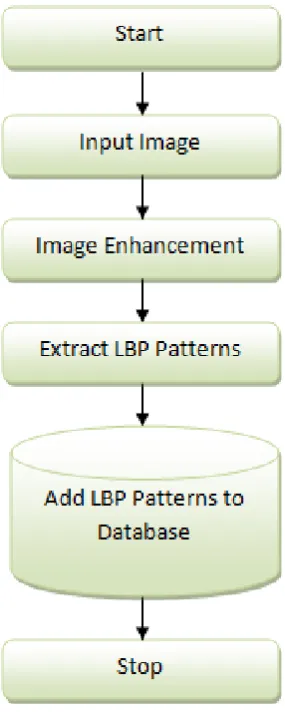
D- Description of the Proposed Work
© 2018, IJCSMC All Rights Reserved
99
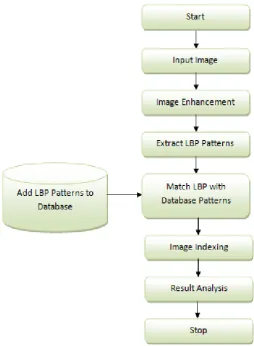
Fig 2 Data Flow Diagram(Image Recognization)Fig 3 Architecture Diagram E- Algorithm Step
1. Input Image
2. Enhance an Image
© 2018, IJCSMC All Rights Reserved
100
4. Extract LBP Patterns from Input Image.
5. Store Patterns to database( Applicable to only training database phase)
6. Retrieve LBP Patterns from database and match with Test input image patterns.
7. Arrange Output Images with hierarchical way.
8. Display Output
9. Stop.
IV.CONCLUSIONS
Image recognition is a complex and mutable subject. In addition to algorithms, there are more things to think about. The study of Image recognition reveals many conclusions, issues and thoughts. This project aims to explain and sort them; hopefully to be useful is future research
ACKNOWLEDGEMENT
Thank you all for supporting me in physical action or in moral way during my tenure of writing up this paper. My deep thanks to my dear husband for supporting me. This incumbent came up with its actual shape with incredible guidance and logistic support from Prof. Virendra Nikam. It is my pleasure to thank all of them.
REFERENCES
[1] K. Sandeep and A.N. Rajagopalan ― Image Detection in Cluttered Color Images Using Skin Color and Edge Information‖, ICVGIP Proceeding, 2002.
[2] Huang Chen-rong, Tang Jia-li, Liu Yi-jun, ―A New Image Detection Method with GA-BP Neural Network‖,
978-1-4244-6252-0/11/$26.00 ©2011 IEEE.
[3] S.Arun, G.Harish, K.Salomon, et al., ―Neural Networks And Genetic Algorithm Based Intelligent Robot For Image Recognition And Obstacle Avoidance‖, International Conference on Current Trends in Engineering
and Technology, ICCTET’13.
[4] Amin Niknam, Pourya Hoseini, et al, ―A Novel Evolutionary Algorithm For Block-Based Neural Network Training‖, 978-1-4673-6206-1/13/$31.00 ©2013 IEEE.
[5] N. Belghini, A. Zarghili et al, ―P. Color Facial Authentication System Based on Neural Network‖,
978-1-4673-0115-2/11/$26.00 ©2011 IEEE.
[6] Kwok-Wai Wong, Kin-Man Lam, Wan-Chi Siu, ―An efficient algorithm for Image detection and facial feature extraction under different conditions‖, Pattern Recognition 34 (2001) 1993}2004.
[7] Javier, Pablo Navarrete, ―Eigenspace-Based Image Recognition: A Comparative Study of Different Approaches‖, IEEE Transactions on Systems, Man, And Cybernetics—Part C: Applications And Reviews,
Vol. 35, No. 3, August 2005.
[8] Oliver Jesorsky, Klaus, ―Robust Image Detection Using the Hausdorff Distance‖, In Proc. Third
International Conference on Audio- and Video-based Biometric Person Authentication, Springer, pp. 90–95, 6–8 June 2001.
[9] Meng Joo, Shiqian Wu, ―Image Recognition with Radial Basis Function (RBF) Neural Networks‖ IEEE
Transactions on Neural Networks, Vol. 13, No. 3, May 2002.
[10] Chengjun Liu and Harry Wechsler, ―Independent Component Analysis of Gabor Features for Image Recognition‖, IEEE Trans. Neural Networks, vol. 14, no. 4, pp. 919-928, 2003.
[11] Linlin Shen, Li Bai, ―A review on Gabor wavelets for Image recognition‖, Pattern Anal Applic, 9:273–292,
Springer-Verlag London Limited 2006.
[12] Rongbing HUANG, Changming, ―Boosting Fisher-weighted PZM for Image Recognition‖, Journal of
Computational Information Systems, 3439-3447, 2010.
[13] Javed, karim faez, ―Neural Network Based Fcae Recognition with Moment Invariants‖, 0-7803-6725, IEEE,
2001.
[14] Ara Nefian, Monson Hayes, ―Image Detection and Recognition using Hidden Markov Models‖ Signal and