Cost and Time Effective Prediction of Soil
Characteristics using ANN Model
Sharmila.S 1, Lekha.G 2 , Kaushik.S3
Assistant Professor, Department of Civil Engineering, Kongu Engineering College, Perundurai, India1 U.G. Student, Department of Civil Engineering, Kongu Engineering College, Perundurai, India2,3
ABSTRACT: The Bearing capacity of soil is an important factor in designing the foundations of a building. It is directly related to the foundation dimensions and consequently its performance. The calculations for obtaining the bearing capacity of soil needs many varying parameters, such as soil type, depth of foundation, unit weight of soil, which makes these calculations a variable parameter dependent. So in the present study the Artificial Neural Network (ANN) with feed forward – back propagation network with supervised learning technique is used to estimate the ultimate bearing capacity of the soil in few parts of Erode town. Also other soil characteristics such as specific gravity, cohesion, angle of internal friction, type of soil are estimated. The results revealed that, using ANN gave a very high correlation factor associated with the results obtained from Terzaghi’s equation within the least time and in a cost effective manner. Thus the advantage of using the Artificial Neural Network comes mainly from saving calculation time of the parameters and the ultimate bearing capacity, and once the network was ready, the same network can be used as many times as desired with no further need for teaching or modifying, besides, the calculation needed when using the Neural Network are simple compared to the calculations needed to obtain the results in the original equation.
KEYWORDS:Bearing Capacity,depth of foundation, unit weight of soil, Artificial Neural Network(ANN)
I. INTRODUCTION
Soil bearing capacity is the maximum pressure which the soil can carry safely without shear failure. Predicting the soil bearing capacity is an important parameter before the construction of a building. In geotechnical engineering, bearing capacity is the capacity of soil to support the loads applied to the ground. The bearing capacity of soil is the maximum average contact pressure between the foundation and the soil which should not produce shear failure in the soil. Ultimate bearing capacity is the theoretical maximum pressure which can be supported without failure; allowable bearing capacity is the ultimate bearing capacity divided by a factor of safety. Sometimes, on soft soil sites, large settlements may occur under loaded foundations without actual shear failure occurring; in such cases, the allowable bearing capacity is based on the maximum allowable settlement. There are three modes of failure that limit bearing capacity: general shear failure, local shear failure, and punching shear failure. Artificial Neural Networks (ANN) are processing devices (algorithms or actual hardware) that can be used for predicting the bearing capacity of soil. Neural networks are typically organized in layers. Patterns are presented to the network via the 'input layer', which communicates to one or more 'hidden layers' where the actual processing is done via a system of weighted 'connections'. The hidden layers then link to an 'output layer’ using ANN model the soil bearing capacity is found in an easy manner.
II. ARTIFICIALNEURALNETWORK
ISSN(Online) : 2319-8753 ISSN (Print) : 2347-6710
I
nternational
J
ournal of
I
nnovative
R
esearch in
S
cience,
E
ngineering and
T
echnology
(An ISO 3297: 2007 Certified Organization)
Vol. 5, Issue 3, March 2016
That’s why, of late, their usage is spreading over a wide range of area. ANNs are among the newest signal-processing technologies and the field is highly interdisciplinary. ANN is an adaptive, most often nonlinear system that learn to perform a function from data. Adaptive means that the system parameters are changed during operation , normally called the training phase. After the training phase the ANN parameters are fixed and the system is deployed to solve the problem at hand. The ANN is built with a systematic step-by-step procedure to optimize a performance criterion or to follow some implicit internal constraint, which is com only referred to as the learning rule. The input/output training data are fundamental in neural network technology, because they convey the necessary information to discover the optimal operating point. The nonlinear nature of the Neural Network processing element provides the system with lots of flexibility practically any desired output. There is a style in neural computation that is worth describing.
Basic Structure
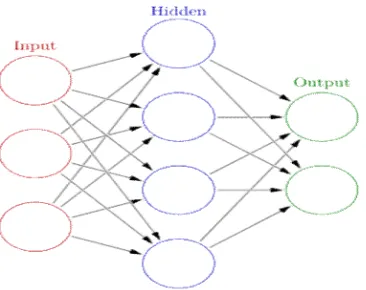
An ANN is commonly divided into three or more layers: an input layer, a hidden layer(s), and an output layer. The input contains the input nodes (neurons),i.e. the input variables for the network. The output layer contains the desired output of the system and the hidden layer usually contains a series of nodes associated with transfer functions. Each layer of the ANNs is linked by weights that have to be determined through a learning algorithm. A simple three layer neural network is shown in Figure 1.1
Figure 1. A Three Layer Neural Network
Optimization
Training or learning can be defined as the process of optimizing the connection weights between the nodes in the hidden layers. In other words, training (learning) is defined as self–adjustment of the network weights as a response to changes in the information environment.
The primary goal of training is to minimize an error function by searching for a set of connection strengths (weights) that cause the ANN's to produce outputs that are equal or close to targets.
In brief, training consists of three running steps: 1. Calculating outputs from input data.
2. Comparing the measured and calculated outputs.
3. Adjusting the weights for each node to decrease the difference between the measured and calculated values.
III. EXPERIMENTAL WORKS
Sample Collection and Analysis
Figure 2. Sample collection
Sieve Analysis
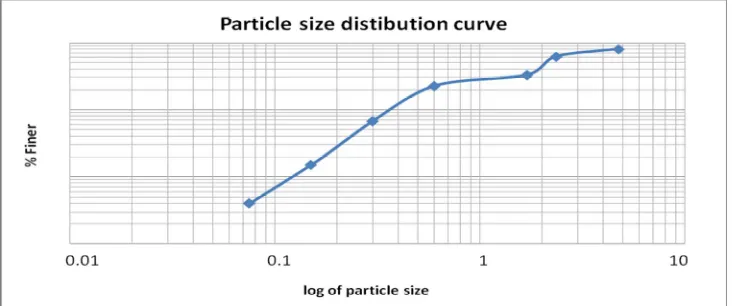
The grain size analysis is widely used in classification of soils. The data obtained from grain size distribution curves is used in the design of filters for earth dams and to determine suitability of soil for road construction, air field etc. Information obtained from grain size analysis can be used to predict soil water movement although permeability tests are more generally used. The grain size analysis is an attempt to determine the relative proportions of different grain sizes which make up a given soil mass. The sieves for soil tests: 4.75 mm to 75 microns. Fig 3 shows the plot between particle size and percentage finer.
Fig 3. Graph showing the plot between % finer and log of particle size
Direct shear test
ISSN(Online) : 2319-8753 ISSN (Print) : 2347-6710
I
nternational
J
ournal of
I
nnovative
R
esearch in
S
cience,
E
ngineering and
T
echnology
(An ISO 3297: 2007 Certified Organization)
Vol. 5, Issue 3, March 2016
Fig.4 Diagrammatic Representation of Direct Shear Test
0 0.2 0.4 0.6 0.8
S
h
ea
r
S
tr
es
s
(K
g
/c
m
²)
Normal stress (Kg/cm²)
0. 5 9 0.
4 8
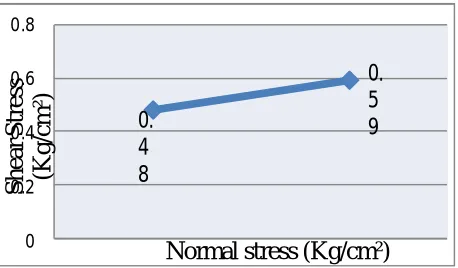
Fig 5 Graph Showing the Plot Between Shear Stress & Normal Stress
Selection of Input variables
The number of input nodes corresponds to the number of variables in the input vector used to forecast future values have been selected. However, currently there is no suggested systematic way to determine this number. The selection of this parameter should be included in the model construction process. Ideally, it is desirable to have a small number of essential variables which can unveil the unique features embedded in the data. Too few are too many inputs can affect either the learning or prediction capability of the network. The number of input is probably the most critical decision variable for any problem since it contains the important information about the complex (linear and/or non-linear) structure in the data.
IV.RESULTSANDDISCUSSION
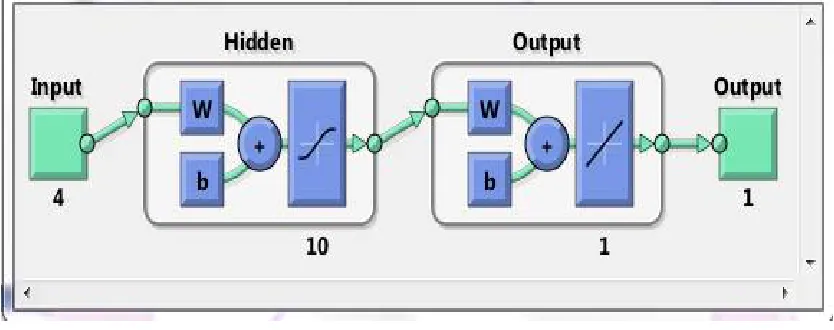
Fig 6. Training Process in ANN for Tested Soil Samples
Table 1 Observed and Predicted Bearing Capacity Values at Various Locations
V. CONCLUSION
The calculation of bearing capacity of shallow foundation is a many parameter dependant process, and it has many pre calculations till we can implement the Terzaghi’s equation, these calculations include the bearing capacity factors Nq, Nᵧ, and Nc. Another alternative is to use the charts which could lead to some approximations. Using an Artificial Neural Network can facilitate these calculations to a great extent. The Neural Network can remember the parameters that were used as an input (B, D, ɤ, c, and Φ) and the calculated values of the ultimate
bearing capacity qu. This operation has to be done only once, then the network can be used to predict the bearing
SAMPLE LAYERS
SPECIFIC GRAVITY
C φ B
(m)
D
(m)
ɤ
(kN/m³)
q u
(kN/m²)
OUTPUT
(kN/m²)
RATIO
(OBS/PRED)
I-a1 2.38 0.3 36˚14΄ 1 0.5 18 1170.501 1170.50 1.0
I-a2 2.58 0.36 27˚46΄ 1 0.5 18 1439.76 1439.75 1.0
II-a1 2.72 0 30˚32΄ 1 0.5 18 520.658 520.656 1.0
II-a2 2.54 0.2 31˚31΄ 1 0.5 18 887.316 887.315 1.0
III-a1 2.67 0.2 34˚36΄ 1 0.5 18 892.358 892.356 0.999
III-a2 2.59 0.15 32˚4΄ 1 0.5 18 676.52 676.521 0.999
IV-a1 2.53 0.1 33˚24΄ 1 0.5 18 759.183 759.182 0.999
IV-a2 2.47 0.5 31˚35΄ 1 0.5 18 590.274 590.273 0.999
V-a1 2.55 0 35˚46΄ 1 0.5 18 1053.55 1053.56 0.999
ISSN(Online) : 2319-8753 ISSN (Print) : 2347-6710
I
nternational
J
ournal of
I
nnovative
R
esearch in
S
cience,
E
ngineering and
T
echnology
(An ISO 3297: 2007 Certified Organization)
Vol. 5, Issue 3, March 2016
capacity for any input values. The advantage of using the Artificial Neural Network comes mainly from saving calculation time of the parameters and the ultimate bearing capacity, and once the network was ready, the same network can be used as many times as desired with no further need for teaching or modifying. Besides, the calculation needed when using the Neural Network are simple compared to the calculations needed to obtain the results in the original equation. Thus by using Artificial Neural Network (ANN), the soil bearing capacity can be easily calculated with least possible time and cost.
REFERENCES
[1] Ch. Sudha Rani, Phani Kumar Vaddi, N.V.Vamsi Krishna Togati (2013),”Artificial Neural Networks (ANNs) for Prediction of Engineering Properties of Soils” International Journal of Innovative Technology and Exploring Engineering (IJITEE) ISSN: 2278-3075,Volume-3, Issue-1.
[2] IS 8403 : 1981 Indian Standard Code Of Practice For Determination Of Bearing Capacity Of Shallow Foundations ( First Revision) Seventh Reprint August 2004
[3] Mohamed A. Shahin, Mark B. Jaksa and Holger R. Maier (2001), “Artificial Neural Network Applications In Geotechnical Engineering”. [4] Ramli Nazir, Ehsan Momeni, Kadir Marsono, Harnedi Maizir (2014),”An Artificial Neural Network Approach for Prediction of Bearing
Capacity of Spread Foundations in Sand” Journal Teknologi (Sciences & Engineering) eISSN 2180–3722 72:3 pp 9–14.
[5] Shahin, M. A. (2004), “Data division for developing Neural Networks applied to Geotechnical Engineering”,Journal of computing in Civil Engineering, pp 105 – 114.
[6] V Venayagamoorthy and D Allopi (2007),”Use of Neural Networks in The Prediction of Bearing Capacity of Pavement Structures” Proceedings of the 26th Southern African Transport Conference ISBN Number: 1-920-01702-X Pretoria, South Africa.