Forced Convection Grain Drying By Solar
Evacuated Tubes Solved Using Comsol
Multiphysics
Dr. Owino, George Omollo1, Mr Booker Osodo.2
Lecturer, Department of Industrial and Energy Engineering, Egerton University Kenya1
Lecturer, Department of Industrial and Energy Engineering, Egerton University Kenya2
ABSTRACT:The removal or reduction of moisture from a grain most often having moisture content of around 20% during harvesting reduced to a target moisture content of below 6% helps in preserving the grain after post-harvest. There exist several methods from direct sun drying to mechanically injecting heat and air to induce forced convection, this research therefore looks at forced convection drying as we can control the rate of drying and the resultant moisture, Corn kernels is widely consumed in Africa and the subject in this study [6].
Solar evacuated produce heated air at 60℃ that is passed through a layer of grain, through heat and mass transfer the grain dry’s as it loses moisture. This paper will in the initials finding concentrate in determining the optimal grain layer thickness, flow velocity and air mass flow rate for 100kg of wet grain. [2]
KEYWORDS:Comsol Multiphysics analysis, Heat and mass transfer, Post-harvest processing, grain drying, deep bed pressure loss. CFD
I. INTRODUCTION
Post-harvest processing of food in especially developing countries where agriculture is a major source of income is of great importance as it aims to reduce post-harvest losses due to pest infestation and rotting. Wet grain are most likely to rot and therefore the primary objective is to reduce the grain moisture content to below 6% that cannot sustain germination or rotting. [1]
Air mass flow and pressure loss in porous or packed bed media is described by Ergun equation. The equation tells us the pressure drop along the length of the packed bed given some fluid velocity, it also tells us that the pressure drop depends on the packing size, length of bed, fluid viscosity and fluid density. [4]
=150 (1− ) +1.75(1− ) … … … . .1
We will assume all the grains are of the same diameter 5mm and the fluid density is constant
System Setup
The superficial velocity, Void fraction and Effective particle diameter are calculated as in the equations below
= = … … … . … … … … . . … … 2
A is the area calculated based on the dimensions in the figure 1 above
= … … … . … 3
ε (voidvoulme) = − … … … . . … . … … . .4
(Figure 3 Solid works model of the Dryer Arrangement)
II. CONTROL PARAMETERS AND SETUP
Table 1 Input Parameters
Input parameters
Velocity 0.1m/s
Porosity 0.5
Grain layer height 100mm
Void space height between layers 100mm
Physics Darcy law with gravity consideration / Eurguneqn
Walls Non slip condition considered
Exit Suction Fan
Darcy equation was selected in Comsol Multiphysics and the two domain materials set as air domain having porosity of one and solid porous domain to represent the grain, with a porosity of 0.5. Ten grain layers with height of 100mm each with total grain mass of 20kg
It is important to consider gravitational pull effects as the grain container is vertical with the flow blowing upwards hence affecting Darcy velocity.
In addition to simulation fluid flow through porous media, heat transfer in fluids is also considered. This study considers steady state analysis and therefore assumes constant inlet heat of 60℃ from the evacuated solar tubes. Since the experiment is symmetrical about the centre plane 2D simulation is considered with sections of the evacuated tube and the cone above the housing omitted to save on computer simulation memory.
(Figure 4a Symmetrical plane of the Experimental layout) (Figure 4b Simplified simulation model of the housing)
III. SIMULATION RESULTS
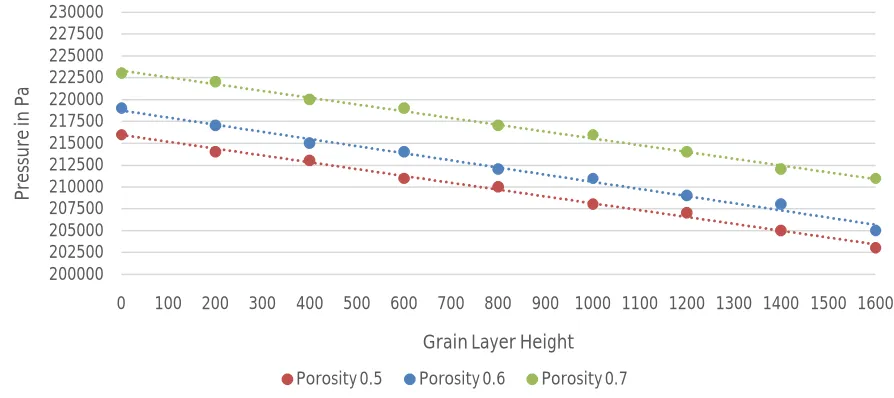
Figure 5a below gives the results of pressure changes with increasing porosity, porosity of 0.5, 0.6 and 0.7 are considered here to emulate grains diameters of different sizes
(Figure 5a Pressure Drop along the grain layer) (Figure 5b Porosity and Darcy Velocity)
Figure 5b shows two curves pressure reducing curve with increasing grain layer from 0 to 2000mm and the ascending curve shows the Darcy velocity increasing towards the top with the suction fan. The 2 curves intersect at a height of 600mm(3 layers) having Darcy velocity of 0.9 m/s. this is the optimal design point for the flow input parameters, it is therefore necessary to increase the flow velocity or the fan suction pressure for us to get an optimal point for all the 10 layers
(Figure 6Pressure Drop curves along the grain layer with changing porosity)
Figure 6 gives the pressure at the entry, for porosity values of 0.5, 0.6 and 0.7 respectively the exit pressures giving the pressure drop for all the 3 cases to be 0.13, 0.14 and 0.13 as summarized in table 2 below.
200000 202500 205000 207500 210000 212500 215000 217500 220000 222500 225000 227500 230000
0 100 200 300 400 500 600 700 800 900 1000 1100 1200 1300 1400 1500 1600
P
re
ss
u
re
in
P
a
Grain Layer Height
Pressure with Changing Porosity, and Grain Layer
Table 2 Pressure Drop
Porosity % Inlet Pressure Pascal Outlet Pressure Pascal ∆ Pressure loss 0.5 2.15 × 10 2.02 × 10 0.13 0.6 2.19 × 10 2.05 × 10 0.14 0.7 2.23 × 10 2.10 × 10 0.13
Table 2. Summarizes the inlet and derived pressures with the grain holding container and gives the pressure drop for all the three cases considered at porosity 0.5, 0.6 and 0.7 respectively
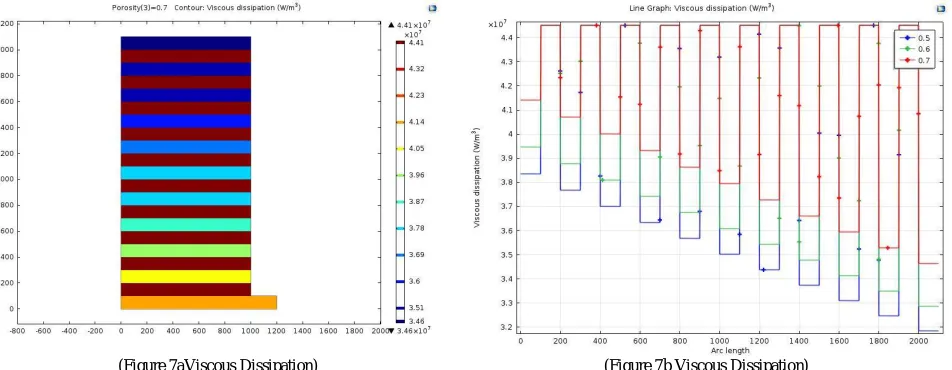
(Figure 7aViscous Dissipation) (Figure 7b Viscous Dissipation)
Drying requires both relative air flow already established above and heat. It is necessary therefore to determine how heat dissipates through the grain layers as can be seen in fig 7a. The greatest indication to this is by looking at the viscous dissipation in / the heat values are indicated in figure 7b for each layer this value to calculate the amount of heat required and therefore possible to order the required solar evacuated vacuum tube
IV. CONCLUSION
The analysis looked at fluid flow through porous grain bed with porosities of 0.5, 0.6 and 0.7 respectively, flow penetration was positively observed through the grain layers with total pressure drop of 0.13 and 0.14 for different porosity settings.
The results also established the optimal Darcy velocity through the layers, with the velocity and the area known it is possibly to calculate the air mass flow helpful to choose an appropriate suction fan for the intended volume to be dried. Viscous dissipation results also give the amount of heat required to penetrate the grains and remove the moisture content
V. ACKNOLEDGEMENT
REFERENCES
[1] Angledette A (1962). Rice Drying Principles and Techniques. Informal Working Bulletin No. 23, FAO, Rome. 73 pp [2] Chancellor W J (1965). An Experiment on Sun Drying of Paddy. Malaysian Agricultural Journal, 45, 65-75
[3] Hukill W V (1947). Basic Principles of Drying Corn and Grain Sorghum. Journal of Agricultural Engineering, 28, 335-340.
[4] Soemangat, Esmay M M L and Chancellor W J (1973). Rice Drying with Waste Engine Heat. Paper 72-332, American Society of Agricultural Engineering, St Joseph
[5] Soponronnarit S. Wataburi W and Therdyothin A (1986). A Drying-storage Hut; The Technical Aspects. Renewable Energy Review Journal, 8(1), 49-60.
[6] Fontana C, Bakker-Arkema FW and Westelaken C M (1982). Counter-current Flow Versus Cross-flow Drying of Long Grain Rice, Paper 82-3569, American Society of Agricultural Engineering, St Joseph
[7] Radajewski W. Jolly P and Abawi G Y. (1988). Grain Drying in a Continuous Flow Drier Supplemented with a Microwave Heating System. Journal of Agricultural Engineering Research, 41, 211-225.
[8] Study on the Heat Transfer Process of Grain Drying Heat Exchange Bed. Asian Journal of Information Technology, 13: 689-691.
[9] Ajay,C.,K.S.SunilandD.Deepak,2009.DesignofSolarDryerwithTurboventilatorandfireplace.ProceedingofInternationalSolarFoodProcessingConfe rence
[10] Bena,B.andR.J.Fuller, 2002.Natural convectionsolardyerwithbiomassback-upheater.Sol.Energy,72:75-83.
[11] Erastus,K.,2011.Situationanalysis:ImprovingfoodsafetyinthemaizevaluechaininKenya.ReportPreparedforFAO,CollegeofAgricultureandVeterin ary ScienceUniversity of Nairobi.
[12] Forson, F . K .,
M.A.A.Nazha,F.O.AkuffoandH.Rajakaruna,2007.Designofmixed-modenaturalconvectionsolarcropdryers:Applicationofprinciplesandrulesofthumb.Renew.Energ.J., 32:1-14.
[13] Jindal,V.K.andS.Gunasekaran,1982.Estimatingairflowanddryingrateduetonaturalconvectioninsolar ricedryers. Renew. Energy. Rev., 4(2): 1-9. [14] Sodha,M.S.,N.K.Bansal,A.Kumar,P.K.Bansaland M.A.Malik,1987.SolarCropDrying.CPRPress,Boca Raton, Florida, USA.