RIDER, CYNTHIA. Development and Application of an Integrated Addition and Interaction Model of Mixture Toxicity (under the direction of Gerald A. LeBlanc)
The focus of this work was to elucidate general principles of chemical interactions among mixture constituents using mathematical modeling approaches. Mixtures of diverse acting chemicals displaying both toxicokinetic and toxicodynamic interactions were assessed. Endpoints measured in these assessments ranged from acute toxicity to molecular adaptive responses in Daphnia magna.
An Integrated Addition and Interaction (IAI) model of mixture toxicity was constructed and validated using a ternary mixture of organophosphates (malathion and parathion) and the P450 inhibitor piperonyl butoxide. Individual chemical concentration-response parameters and binary interaction data were used in the model. Modeled data was compared to
experimentally derived data from Daphnia magna acute toxicity assays. The IAI model provided a good fit to the data. Results indicated that toxicokinetic interactions could be quantified and incorporated into mixture toxicity models.
toxicodynamic interactions and incorporating them into a modeling framework.
In the next phase of the program, we identified and characterized a molecular endpoint for use in mixture modeling. In chapter three, we explored endocrine-mediated stress signaling in daphnids towards this end. We determined that juvenoid hormones induce hemoglobin production at both the mRNA and protein levels. Comparison of hemoglobin induction to a classic model of sex determination in daphnids indicated that both processes are controlled by the methyl farnesoate-mediated stress-signaling pathway. Hemoglobin expression in daphnids provided a promising molecular endpoint for use in mixture toxicity assessments.
Based on findings in chapter three, we focused more specifically on hemoglobin 2 (hb2) as a tool to further elucidate the methyl farnesoate signaling pathway in daphnids. We identified the cis-acting juvenoid response element (JRE) that is likely responsible for activating the hb2 gene in response to juvenoids. This sequence resembled known monomeric nuclear receptor response elements. The JRE was used to capture a specific protein that may prove to be the juvenoid receptor. We identified hb 2 as a highly inducible molecular endpoint which responds to multiple signaling pathways. These characteristics make hb2 an ideal endpoint for mixture toxicity analyses.
experimentally assessed to determine whether atrazine induced the hb2 gene via the juvenoid signaling pathway. Results indicated that atrazine was not inducing hb2 through this
endocrine pathway. We demonstrate that an adaptive molecular response can be accurately modeled using standard additive approaches.
by
CYNTHIA V. RIDER
A dissertation submitted to the Graduate Faculty of North Carolina State University
in partial fulfillment of the requirements for the degree of
Doctor of Philosophy
TOXICOLOGY
Raleigh 2005
APPROVED BY:
________________________________ ________________________________ ________________________________ ________________________________
Cynthia Rider was born on July 4th, 1976 in New Port News, Virginia. Her nomadic parents moved the family from Virginia to Slidell, LA by way of Providence, RI, Houston, TX and Kwajalein in the Marshall Islands. Cynthia was approximately eight years old when she decided that she wanted to be an environmental scientist, although she was not exactly sure what that entailed until much later. She received her B.S. degree at Tulane University, New Orleans, LA in Environmental Studies with a coordinate major in Ecology, Evolution, and Organismal Biology in 1994. Through the wonderful work study program at Tulane University, Cynthia had the opportunity to hold a number of interesting jobs. She was a library assistant in the Latin American library, a second grade teacher’s assistant in a New Orleans public school, and a lab assistant in Dr. John McLachlan’s Environmental
I would like to thank my advisor, Dr. Gerald A. LeBlanc, for his guidance during the course of this work. His tireless commitment to improving my use of the “active voice” is much appreciated.
I would also like to thank the members of my committee: Dr. Ronald Baynes, Dr. Greg Cope, and Dr. Margie Oleksiak, for always having open doors and providing invaluable advice.
This work could not have been accomplished without the help of my colleagues: Rebecca Heltsley, Andrew Hotchkiss, Hong Lee, Allen Olmstead, Bethany Reeves, Robin Sternberg, Helen Wang, and Quirong Wang. Thank you to the most pleasant group of people anyone could hope to work with.
LIST OF TABLES……….viii
LIST OF FIGURES………...x
INTRODUCTION……….1
References………13
CHAPTER 1 – AN INTEGRATED ADDITION AND INTERACTION MODEL FOR ASSESSING TOXICITY OF CHEMICAL MIXTURES………...20
Abstract………21
Introduction………..23
Materials and Methods……….25
Results………..31
Discussion………33
Acknowledgement………...38
References………39
Figure Legends……….48
CHAPTER 2 – ASSESSMENT OF CHEMICAL INTERACTIONS IN MIXTURES USING MODELING AND MECHANISTIC APPROACHES...56
Abstract………57
Introduction………..58
Materials and Methods……….60
Acknowledgement………...76
References………78
Figure Legends……….86
CHAPTER 3 – STRESS SIGNALING: CO-REGULATION OF HEMOGLOBIN AND MALE SEX DETERMINATION THROUGH A TERPINOID SIGNALING PATHWAY IN A CRUSTACEAN………...95
Abstract………96
Introduction………..98
Materials and Methods………...100
Results………107
Discussion………..109
Acknowledgement……….114
Figure Legends………...115
References………..117
CHAPTER 4 – A CANDIDATE JUVENOID HORMONE RECEPTOR CIS-ELEMENT IN THE Daphnia magna HB2 HEMOGLOBIN GENE PROMOTER………..131
Abstract………..132
Introduction………133
Materials and Methods………...135
Acknowledgement……….151
References………..151
Figure Legends………...163
CHAPTER 5 – ATRAZINE STIMULATES STRESS-RESPONSIVE HEMOGLOBIN INDUCTION IN Daphnia magna: IS IT HORMONAL OR HYPOXIC?...174
Abstract………..175
Introduction………177
Materials and Methods………...178
Results………183
Discussion………..185
Acknowledgement……….189
References………..190
Chapter 1
Table 1. Concentration-response parameters of individual
chemicals used in mixture toxicity modeling………..44 Table 2. Concentration-response toxicity evaluation of five
ratios of malathion:parathion predicted to be equitoxic
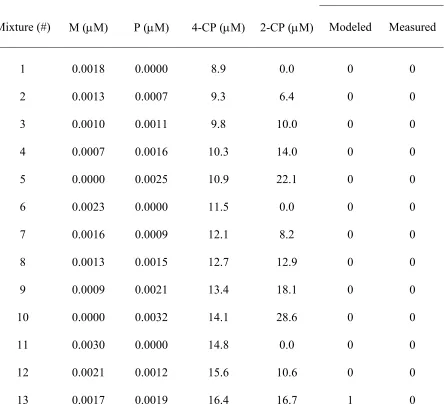
based upon concentration addition modeling………..45 Table 3. Formulations of the 30 ternary mixtures of malathion,
parathion, and piperonyl butoxide used to model and
measure mixture toxicity……….46
Chapter 2
Table 1. Individual chemical concentration-response
parameters used in mixture toxicity modeling……….82 Table 2. Concentration-response parameters for 5 ratios
of 4-chlorophenol to 2-chlorophenol………...83 Table 3. Concentrations of malathion, parathion, 4-chlorophenol,
and 2-chlorophenol used in assessing and modeling
mixture toxicity………84
Chapter 3
Chapter 4
Table 1. Sequences and amplification conditions used to evaluate induction of hb1, hb2, hb3, and actin mRNA by RT-PCR
following exposure of daphnids to pyriproxyfen………...160 Table 2. Oligonucleotide probes used in electrophoretic mobility
shift assays……….161
Chapter 5
Table 1. Primers used in real-time PCR amplification of the three
hemoglobins and β-actin………196 Table 2. Concentration response parameters of atrazine and pyriproxyfen used in
mixture ………..197
Chapter 1
Figure 1. Concentration-response profiles of the individual chemicals used in
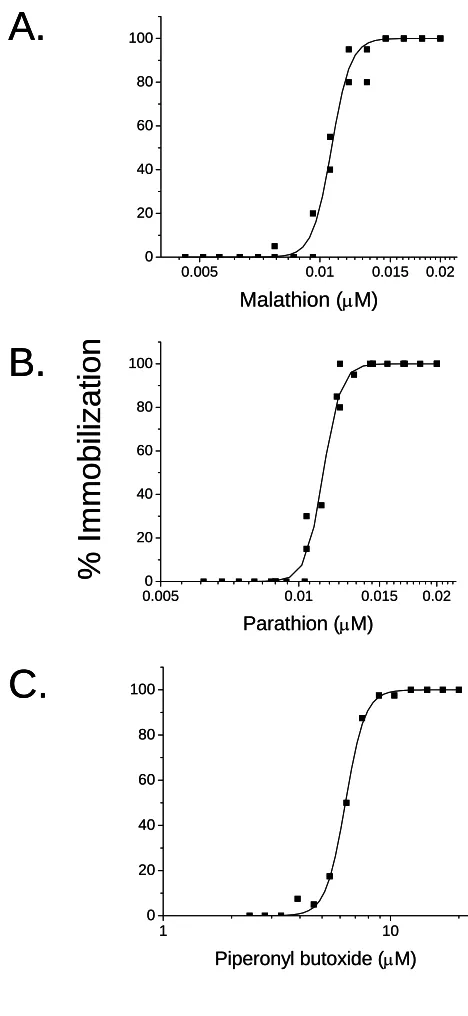
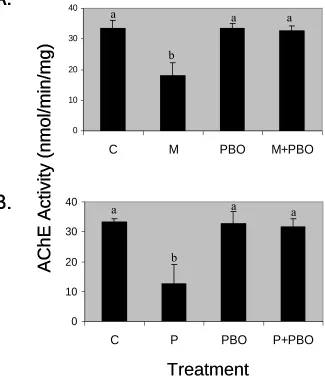
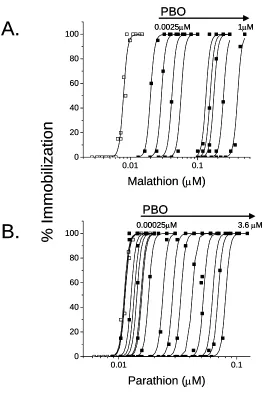
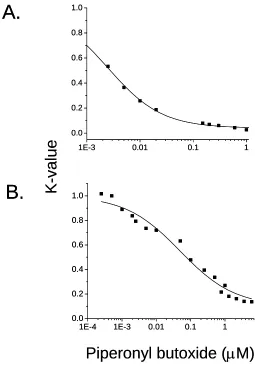
the mixtures toxicity assessment: malathion, parathion, and piperonyl butoxide…...50 Figure 2. Acetylcholinesterase activity in daphnids following exposure to mixture constituents………..…………51 Figure 3. Impact of piperonyl butoxide on organophosphate concentration-response curves………..……….52 Figure 4. The relationship between piperonyl butoxide concentrations and
modifying effects on malathion and parathion as defined by K-functions…………..53 Figure 5. Comparison of observed data to results generated from concentration
addition, response addition, integrated addition, and integrated addition and
interaction models………54 Figure 6. Schematic representation of the integrated addition and interaction
model………55
Chapter 2
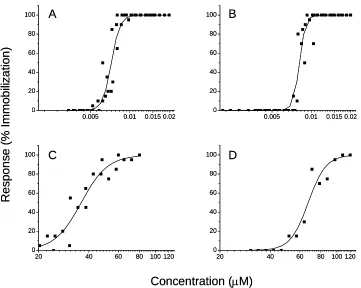
Figure 1. Concentration-response relationships of individual chemicals:
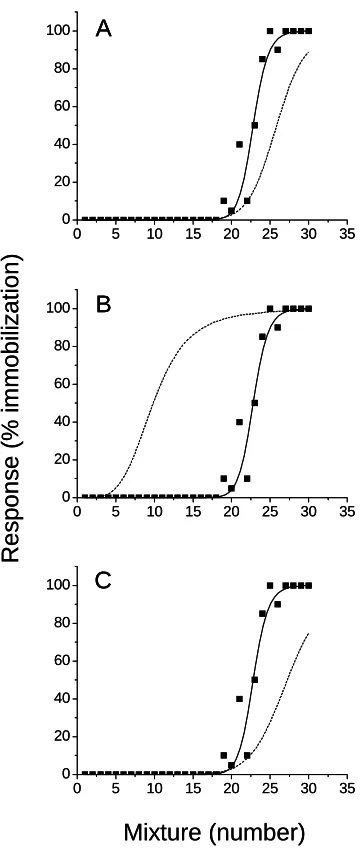
malathion, parathion, 4-chlorophenol, and 2-chlorophenol……….88 Figure 2. Comparison of observed results to data generated from simple mixture toxicity models: integrated addition, concentration addition, and response
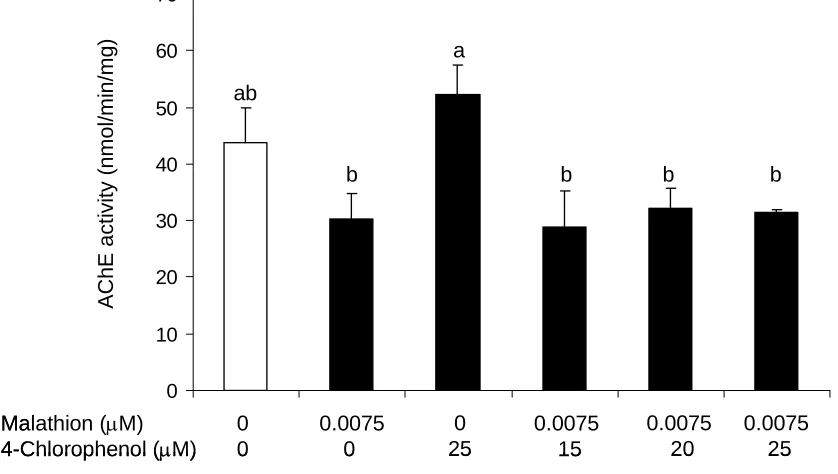
presence of the actuating chemical………..90 Figure 4. Acetylcholinesterase activity in daphnids following exposure to
malathion alone and with various concentrations of 4-chlorophenol………..91 Figure 5. Cellular energy allocation of daphnids exposed to malathion and
4-chlorophenol……….92 Figure 6. Relationship between concentration of actuating chemical and degree of interaction………93 Figure 7. Comparison of observed data to predicted values from an Integrated
Addition and Interaction model incorporating a toxicodynamic interaction with organophosphates modifying the toxicity of chlorophenols………94
Chapter 3
Figure 1. Colorimetric scoring of hemoglobin content of daphnids………..125 Figure 2. Hemoglobin levels in juvenile daphnids (D. magna) following
treatment with methyl farnesoate and analogs………...126 Figure 3. Relationship between the concentrations of methyl farnesoate and
analogs that elevated hemoglobin and concentrations that caused increased incidence of male broods of offspring in D. magna………...127 Figure 4. Induction of hemoglobin in daphnids (Daphnia magna) exposed to
Chapter 4
Figure 1. Chemical structure and relative potency of natural juvenile hormones and other juvenoids………167 Figure 2. Daphnid hemoglobin mRNA levels in response to pyriproxyfen
exposure……...168 Figure 3. Juvenoid response element (JRE) in the hb2 promoter of D.magna..……169 Figure 4. Requirement of -247 bases for binding of pyriproxyfen-induced
complex………..170 Figure 5. Hemoglobin protein and hb2 mRNA levels following exposure to
pyriproxyfen and cycloheximide individually or in combination………..171 Figure 6. Hemoglobin 2 mRNA levels during pyriproxyfen exposure……….172 Figure 7. Separation of proteins precipitated from nuclear extracts by the a
wildtype and mutant JRE sequence………...173
Chapter 5
Figure 1. Hemoglobin induction from atrazine exposure………..200 Figure 2. Dissolved oxygen levels in control and atrazine solutions………201 Figure 3. Relationship between atrazine and pyriproxyfen exposure
concentration and Dhb2 mRNA induction………202 Figure 4. Observed dhb2 mRNA induction from exposure to mixtures of
INTRODUCTION
Mixtures of chemicals from anthropogenic sources are ubiquitous. In a national survey
of water quality, USGS scientists detected mixtures of two or more chemicals in 75% of streams
sampled (Kolpin et al, 2002) and in 47% of groundwater samples (Squillace et al, 2002).
Accordingly, regulatory agencies (e.g. ATSDR, NIOSH, and US EPA) have been working
towards development of methods for assessing mixture toxicity (Monosson, 2005; US EPA,
1986; US EPA, 2000; ATSDR, 2004). The infinite number of potential mixture formulations
precludes direct assessment of mixture toxicity as the sole method for hazard characterization.
Modeling approaches offer a practical complement. Mathematical models incorporate data from
individual chemical exposures to predict mixture toxicity. These models are flexible and can be
used to rapidly generate large amounts of data to test hypotheses regarding mixture toxicity.
However, the incorporation of chemical interactions into mathematical models to account for
deviation from standard additivity has been problematic (Hertzberg and MacDonnell, 2002;
Borgert, 2004). Developing reliable methods for assessing toxicity of mixtures containing
chemicals that display interactions would significantly enhance our ability to predict hazard
associated with mixtures.
Mathematical Model Background
Mathematical models of mixture toxicity have the potential to be extremely useful tools
in ecological risk assessment. Rigorous validation contributes to the reliability and accuracy of
these models. Careful consideration should be given to the test organisms and experimental
forefront of test system selection. Researchers have used a number of species to assess
mathematical models of mixture toxicity including fish (Könemann, 1981; Hermens and
Leeuwangh, 1982), microcrustaceans (Hermens et al, 1984; Olmstead and LeBlanc, 2005), algae
(Walter, 2002; Faust, 2003), and bacteria (Backhaus, 2000; Altenburger, 2000). These species
display a wide range of organizational complexity, as well as compatibility to high-throughput
testing. The microcrustacean, Daphnia magna, lies in the middle of the spectrum of model
organisms. It is a complex organism containing organs and discrete systems, yet it is small,
exhibits high fecundity, and is easily cultured in the lab. Additionally, daphnids are a key
component of aquatic ecosystems. Most importantly, there is a wealth of data available on the
toxicity of individual chemicals to daphnids, which could be applied to mixture toxicity
modeling. Taken together, these factors make daphnids an ideal test organism with which to
build and validate mathematical models of mixture toxicity.
Concentration addition and response addition are the dominant concepts underlying
mathematical mixture toxicity models (Greco, 1992). Concentration addition applies to mixtures
of chemicals with the same or similar mechanisms of action, while response addition pertains to
chemicals with different mechanisms of action. Concentration addition, originally described by
Loewe and Muischnek (1926), contends that concentrations of chemicals with the same
mechanism of action can be added once their different potencies are accounted for.
Concentration addition is similar to the toxic equivalency factor approach often associated with
dioxin congeners (Safe 1990). The concept of concentration addition is represented by
1
1
=
∑
=
n
i i
i
ECx C
where Ci is the concentration of the individual chemical i and ECxi is the concentration of the
chemical that produces an effect equal to that of the entire mixture. The concentration addition
model has been used to accurately predict the toxicity of mixtures of like-acting chemicals
(Könemann, 1981; Altenburger, 2000; Faust, 2001).
Bliss (1939) developed the model of response addition, also known as independent joint
action. According to this concept, individual chemicals act at different target sites that lead to
the same measured response. In effect, individual chemicals elicit a certain response level
independent of other chemicals in the mixture. Although biochemically rational, there has been
debate surrounding the likelihood that parallel processes could be completely independent given
the complex and interconnected nature of whole organisms (Hermens and Leeuwangh, 1982).
The concept of response addition is based on probability theory and is expressed as:
∏
=
− −
= n
i i
mix R
R
1
) 1 (
1
Where Ri represents the response elicited by individual chemical i and Rmix corresponds to the
mixture response. Many researchers have found that the toxicity of dissimilarly acting chemical
mixtures is better characterized using response addition than using concentration addition
(Backhaus 2000; Walter, 2002; Faust, 2003).
Selection of a universal model for mixture toxicity has been an important scientific goal.
Berenbaum (1985) advocated the application of concentration addition to all mixtures. Drescher
and Bodecker (1995) found that when individual chemicals display typical
conservative estimates of mixture toxicity than response addition. Consequently, the US EPA
(2000) recommends using concentration addition as the basis for determining the toxicity of
non-interacting chemical mixtures. This simple and conservative approach provides a reasonable
starting point for the regulatory purpose of hazard characterization. The greater scientific goal,
however, is to develop more accurate modeling approaches that are based on solid mechanistic
ground. Towards this end, several researchers have combined concepts of concentration and
response addition into a comprehensive model that explicitly considers the mechanisms of
toxicity for individual mixture constituents (Teuschler et al., 2004; Altenburger et al., 2005;
Olmstead and LeBlanc, 2005).
The Integration of Additivity Models
Combining concentration and response addition represents a paradigm shift in
mathematical mixture modeling. Previously, concentration addition and response addition were
regarded as the two available alternatives for calculating non-interacting mixture toxicity. In the
1992 Saariselkä Agreement, a group of six prominent mixture scientists reached a consensus that
both concentration and response addition were logical and reasonable reference models for
determining the toxicity of non-interacting mixtures (Greco, 1992). The Integrated Addition
model represents advancement because it does not require the researcher to choose the “more
correct” model, but instead provides a mechanistically-directed application of both addition
models.
The model of Integrated Addition proposed by Olmstead and LeBlanc (2005) and a
in their data fitting methods. Altenburger et al. (2005) used several different models to fit
individual chemical toxicity data, whereas Olmstead and LeBlanc (2005) used a logistic fit
exclusively. Therefore, the following general description applies to both models. The first step
in this mixture toxicity modeling approach is to clearly characterize individual chemical
concentration-response relationships. Mixture constituents which have the same mechanism of
action are grouped into cassettes. A concentration addition model is then used to calculate the
toxicity of the chemicals within each mechanism-based cassette. Finally, the overall mixture
toxicity is calculated by combining the toxicities of the cassettes using response addition. The
Integrated Addition model has been used to accurately predict the toxicity of a wide range of
non-interacting mixtures containing constituents with diverse mechanisms of action
(Altenburger, 2004; Altenburger, 2005; Olmstead and LeBlanc, 2005). This approach provides a
solid foundation for characterizing chemical interactions in mixtures. In effect, the presence,
intensity, and direction (synergistic or antagonistic) of an interaction can be determined in
relation to this baseline.
Chemical Interactions
Toxicology has traditionally focused on single chemical exposures; therefore, interaction
data is relatively sparse. In an exhaustive assessment of available interaction data, Borgert et al
(2001) provided criteria for determining the suitability of interaction studies for use in mixture
toxicity risk assessments. The criteria for acceptable data included: selection of environmentally
relevant concentrations, clear definition of “no interaction” (i.e. additivity), and the use of
statistical methods for determining whether mixtures deviate from additivity. In a review of
that researchers should abandon attempts to identify individual cases of “synergy” or
“antagonism” and instead work towards elucidation of basic tenants of mixture toxicity based on
mechanistic principles. Durkin and colleagues (1995), for example, attempted to develop
methods for identifying classes of chemicals that display consistent interactions. Haddad et al.
(2000) explored whether data from binary exposures could be incorporated into models of more
complex mixtures. They found that interactions quantified in binary exposures were maintained
in higher order mixtures.
Chemical interactions can be classified mechanistically as toxicokinetic or toxicodynamic
(Andersen and Dennison, 2004). Toxicokinetic interactions occur when one chemical changes
the concentration of a second chemical at its site of toxicity. For example, one chemical can
induce an enzyme that metabolizes a second chemical, thereby decreasing the active
concentration of the second chemical. Toxicodynamic interactions occur when a chemical
interferes with the response elicited by another chemical. Toxicokinetic interactions are thought
to be more prevalent than toxicodynamic interactions. Examples of interactions occurring in
mixtures include enhanced hepatotoxicity of carbon tetrachloride with kepone pre-exposure
(Klingensmith and Mehendale, 1982) and endocrine-related interactions between hormone
receptor antagonists and hormone synthesis inhibitors (Mu and LeBlanc, 2004). We know that
chemical interactions occur in mixtures, the issue is how to account for these interactions in
mathematical models of mixture toxicity.
Bliss (1939) and Finney (1945) initially discussed the incorporation of modifying factors
clearly convey the nature of these modifying factors or methods for obtaining them. The current
EPA recommended method for incorporating interactions into mixture analysis is based on a
weight of evidence approach described by Mumtaz and Durkin (1995) and expanded upon by
Hertzberg (1999). Available interaction data is used to estimate the magnitude of the interaction.
This term (measured or a default value of five) is dependent upon the concentration of the
interacting chemical and is used to modify the effective concentration of the target chemical
under the presumption of a toxicokinetic interaction. This approach is useful for predicting
chemical combinations that could be hazardous, but it does not provide a precise quantification
of the mixture toxicity. A quantitative approach that incorporates interactions into mixture
toxicity models was described by Mu and LeBlanc (2004). This approach used experimentally
derived coefficients of interaction, called K-functions, to modify the concentrations of the target
chemicals, again, under the presumption of a toxicokinetic interaction. Mu and LeBlanc (2004)
were able to accurately model the toxicity of an interacting binary mixture of endocrine active
chemicals using this approach.
Endocrine Toxicity
Mixtures of endocrine disrupting chemicals in the environment warrant special attention
(Squillace et al, 2002). Endocrine systems perceive and respond to very subtle changes in
endogenous hormone activity (Colborn and Thayer, 2000). Therefore, it is conceivable that
relatively low concentrations of endocrine-active compounds could disrupt normal endocrine
function. The use of sub-toxic endpoints that are responsive to endocrine-active chemicals in
mixtures analysis is one way to ensure that potentially harmful chemical combinations are
that hemoglobin accumulation in daphnids is hormonally regulated. Accordingly, daphnid
hemoglobin expression could serve as a molecular indicator of endocrine disruption in
invertebrates.
Hemoglobin
The accumulation and increased oxygen affinity of hemoglobin in daphnids exposed to
low oxygen conditions are well-studied phenomena (Fox and Phear, 1953; Kobayashi et al.,
1988; Zeis et al., 2003). Accumulation of hemoglobin in daphnids leads to a visible color
change from pale to red. Daphnids that are able to accumulate hemoglobin in low oxygen
conditions demonstrate increased performance as compared to their uninducible counterparts
(Pirow et al., 2001). Increased levels of hemoglobin in daphnids correspond to higher respiration
and filtration rates, which in turn allow daphnids to continue functioning normally in low oxygen
conditions (Fox et al., 1951; Koh et al., 1997). Hemoglobin accumulation also has implications
for population survival. In a model of the population-level effects elicited by physical (increased
temperature and low dissolved oxygen) and chemical stressors in Daphnia magna, Koh et al.
(1997) incorporated hemoglobin as an adaptive response.
In addition to observations of the physiological effects of hemoglobin accumulation in
daphnids, much is also known about its molecular properties. Hemoglobin exists in daphnids as
an extracellular respiratory protein synthesized in the fat cells and epipodites, or leg appendages
(Goldmann et al., 1999). Daphnid hemoglobin is a two-domain protein composed of multiple
subunits that combine to form different species of hemoglobin depending on oxygen conditions
genes in Daphnia magna are fully sequenced (Tokishita et al., 1997; Kimura et al., 1999). The
extensive knowledge of hemoglobin structure and function combined with its dramatic
inducibility and link to population survival under low oxygen conditions, make hemoglobin an
ideal molecular endpoint for use in mixture analyses.
Research Outline
The hypothesis was tested in this work that mixtures of diverse acting chemicals
displaying various interactions could be accurately modeled using an Integrated Addition and
Interaction approach. The model was evaluated using a range of chemicals and measured
endpoints. Experiments were designed to elucidate principles of chemical interactions in
mixtures.
In chapter one, we used a ternary mixture of two organophosphates (malathion and
parathion) and the P450 inhibitor piperonyl butoxide to construct and validate an Integrated
Addition and Interaction model of mixture toxicity. First, we characterized individual chemical
concentration response relationships. We then assessed the antagonistic effect of piperonyl
butoxide on the toxicity of each of the organophosphates in binary combinations. We confirmed
that the organophosphates inhibited acetylcholinesterase activity in daphnids and showed that
piperonyl butoxide abrogated this effect. The interactions were quantified and applied to the
model as K-functions that modified the concentrations of each of the organophosphates in the
mixture. Finally, we validated the model by comparing actual data generated from a series of
thirty formulations of the ternary mixture to modeled data. We found that the Integrated
fledgling practice of quantitatively incorporating interactions into mathematical models of
mixture toxicity.
In chapter two, we used the Integrated Addition and Interaction model to elucidate the
mechanism of an unforeseen synergistic interaction between organophosphates and
chlorophenols. We demonstrated with experimental data that application of inappropriate
additivity models (i.e. concentration addition or response addition) evoked false conclusions
regarding the type and magnitude of the observed interaction. Mechanistic studies suggested
that the interaction was toxicodynamic in nature. K-functions were generated describing the
effect of organophosphates on chlorophenol toxicity. These K-functions were applied to the
Integrated Addition and Interaction model to describe a toxicodynamic interaction. Model
predictions were compared to data generated from thirty formulations of the quaternary mixture.
The Integrated Addition and Interaction model incorporating a toxicodynamic interaction
between cassettes provided a better fit to the data than models of simple additivity.
The next goal of the program was to determine the ability of the Integrated Addition and
Interaction model to evaluate additive effects at the molecular level. In chapter three, we
explored endocrine-mediated stress signaling in daphnids in an effort to identify appropriate
molecular endpoints for use in mixtures modeling. We determined that juvenoid hormones
induce hemoglobin production at both the mRNA and protein levels. Further, we found that
different juvenoids exhibited corresponding potencies with regards to hemoglobin induction and
stimulation of male offspring production. A series of daphnid clones that either had, or did not
following exposure to the juvenoid hormone methyl farnesoate. We concluded that hemoglobin
is induced by the same methyl farnesoate-mediated stress-signaling pathway that controls sex
determination in daphnids.
In chapter four, we used hemoglobin 2 (hb2) as a tool to further elucidate the methyl
farnesoate signaling pathway in daphnids. We identified the cis-acting juvenoid response
element (JRE) that is likely responsible for activating the hb2 gene in response to juvenoids.
Electrophoretic mobility shift assays (EMSA) and transcription experiments were used to
identify a six base nucleotide sequence (commonly known as a nuclear receptor half-site)
separated by a one nucleotide spacer to an eleven nucleotide A/T sequence that binds the
putative juvenoid nuclear receptor following activation by juvenoid hormones. This JRE
resembles response elements known to bind monomeric nuclear receptors. A nucleotide probe
was used to capture and precipitate a candidate protein that may prove to be the juvenoid
receptor. This research identified a site on the hb2 gene that could be used to model and
experimentally evaluate the combined action of chemicals that may target a common molecular
endpoint.
In chapter five, induction of the hb2 gene was used to model molecular interactions of
chemical mixtures. Prior experiments demonstrated that juvenoid hormones induced the hb2
gene via the JRE. In the present study, we demonstrated that the ubiquitous herbicide atrazine
induced hb2 gene expression, while having no obvious relatedness to juvenoid hormones.
Additive models of joint action, as used in previous chapters, were exploited to evaluate whether
atrazine induced gene expression through the JRE, the magnitude of the induction response of
atrazine, in combination with the juvenoid hormone pyriproxyfen, would conform to a model of
concentration addition. Conversely, if atrazine induced hb2 gene expression by some alternative
signaling pathway, the combined actions of the two chemicals would better conform to a model
of response addition. Results indicated that atrazine was not inducing hb2 via the JRE. These
experiments also demonstrated that molecular interactions among mixture constituents can be
modeled using conventional approaches.
In conclusion, mathematical models of mixture toxicity were used to successfully predict
the toxicity of combinations of chemicals exhibiting a broad range of properties and mechanisms
of action. Additionally, models were used to assess diverse endpoints that spanned the spectrum
from general integrated effects (immobilization in daphnids) to specific molecular effects (hb2
induction). Experimental data were generated to develop and validate models and subsequently,
models were used to generate mechanistic hypotheses. The combination of modeling and
mechanistic studies contributed to our understanding of the combined action of chemicals in
REFERENCES
Altenburger, R., Backhaus, T., Boedeker, W., Faust, M., Scholze, M. and Grimme, L.H. (2000).
Predictability of the toxicity of multiple chemical mixtures to Vibrio fischeri: Mixtures
composed of similarly acting chemicals. Environ. Toxicol. Chem. 19: 2341-2347.
Altenburger, R., Walter, H. and Grote, M. (2004). What contributes to the combined effect of a
complex mixture? Environ. Sci. Technol. 38: 6353-6362.
Altenburger, R., Schmitt, H. and Schuurmann, G. (2005). Algal toxicity of nitrobenzenes:
Combined effect analysis as a pharmacological probe for similar modes of interaction. Environ.
Toxicol. Chem. 24: 324-333.
Andersen, M.E. and Dennison, J.E. (2004). Mechanistic approaches for mixture risk assessments
- present capabilities with simple mixtures and future directions. Environ. Toxicol. Pharmacol.
16: 1-11.
ATSDR. (2004). Guidance Manual for the Assessment of Joint Toxic Action of Chemical
Mixtures. Atlanta, GA: Available: Agency for Toxic Substances and Disease Registry.
http://www.atsdr.cdc.gov/interaction profiles/ipga.html (accessed November 16, 2005).
Backhaus, T., Altenburger, R., Boedeker, W., Faust, M., Scholze, M. and Grimme, L.H. (2000).
Predictability of the toxicity of a multiple mixture of dissimilarly acting chemicals to vibrio
Berenbaum, M.C. (1985). The expected effect of a combination of agents - the general-solution.
J. Theor. Biol. 114: 413-431.
Bliss, C.I. (1939). The toxicity of poisons applied jointly. Ann. Appl. Biol. 26: 585-615.
Borgert, C.J., Price, B., Wells, C.S., and Simon, G.S. Evaluating chemical interaction studies for
mixture risk assessment. Human. Ecol. Risk Assess. 7: 259-306.
Borgert, C.J. (2004). Chemical mixtures: An unsolvable riddle? Human Ecol. Risk Assess. 10:
619-629.
Colborn, T., and Thayer, K. (2000). Aquatic ecosystems: harbingers of endocrine disruption.
Ecol. Appl. 10(4): 949-957.
Drescher, K. and Boedeker, W. (1995). Assessment of the combined effects of substances - the
relationship between concentration addition and independent action. Biometrics 51: 716-730.
Durkin, P., Hertzberg, R., Stiteler, W. and Mumtaz, M. (1995). The identification and testing of
interaction patterns. Toxicol. Lett. 79: 251-264.
Faust, M., Altenburger, R., Backhaus, T., Blanck, H., Boedeker, W., Gramatica, P., Hamer, V.,
multi-component s-triazine mixtures at low-effect concentrations of individual toxicants. Aquat.
Toxicol. 56: 13-32.
Faust, M., Altenburger, R., Backhaus, T., Blanck, H., Boedeker, W., Gramatica, P., Hamer, V.,
Scholze, M., Vighi, M. and Grimme, L.H. (2003). Joint algal toxicity of 16 dissimilarly acting
chemicals is predictable by the concept of independent action. Aquat. Toxicol. 63: 43-63.
Finney, D.F. (1942). The analysis of toxicity tests on mixtures of poisons. Ann. Appl. Biol. 29:
82-94.
Fox, H.M., Gilchrist, B.M., Phear, E.A. (1951). Functions of hemoglobin in Daphnia. Proc. R.
Soc. London B Biol. Sci. 138: 514-528.
Fox, H.M. and Phear, E.A. (1953). Factors influencing haemoglobin in Daphnia. Proc. R. Soc.
London B Biol. Sci. 141-179-189
Goldmann, T., Becher, B., Wiedorn, K.H., Pirow, R., Deutschbein, M.E., Vollmer, E., and Paul,
R.J. (1999). Epipodite and fat cells as sites of hemoglobin synthesis in the branchiopod
crustacean Daphnia magna. Histochem. Cell. Biol. 112: 335-339.
Greco, W., Unkelbach, H.D., Pöch, G., Sühnel, J., Kundi, M. and Bödeker, W. (1992).
Consensus on concepts and terminology for combined-action assessment: The saariselkä
Haddad, S., Charest-Tardif, G., Tardif, R. and Krishnan, K. (2000). Validation of a physiological
modeling framework for simulating the toxicokinetics of chemicals in mixtures. Toxicol. Appl.
Pharmacol. 167: 199-209.
Hermens, J. and Leeuwangh, P. (1982). Joint toxicity of mixtures of 8 and 24 chemicals to the
guppy (Poecilia reticulata). Ecotoxicol. Environ. Saf. 6: 302-310.
Hermens, J., Canton, H., Steyger, N. and Wegman, R. (1984). Joint effects of a mixture of 14
chemicals on mortality and inhibition of reproduction of Daphnia magna. Aquat. Toxicol. 5:
315-322.
Hertzberg, R.C., Rice G., and Teuchler, L.K. (1999). Methods for health risk assessment of
combustion mixtures. In Hazardous Waste Incineration: Evaluating the Human Health and
Environmental Risks (S. Roberts, C. Teaf, J. Bean eds.), pp. 105-148. Lewis Publishers, Boca
Raton.
Hertzberg, R.C. and MacDonell, M.M. (2002). Synergy and other ineffective mixture risk
definitions. Sci. Total Environ. 288: 31-42.
Kimura, S., Tokishita, S., Ohta, T., Kobayashi, M., and Yamagata, H. (1999). Heterogeneity and
differential expression under hypoxia of two-domain hemoglobin chains in the water flea,
Klingensmith, J.S., and Mehendale, H.M. (1982). Potentiation of CCl4 lethality by chlordecone.
Toxicol. Lett. 11: 149-154.
Kobayashi, M., Fujiki, M., and Suzuki, T. (1988). Variation in and oxygen-binding properties of
Daphnia magna hemoglobin. Physiol. Zool. 61: 415-419.
Koh, H.L., Hallam, T.G. and Lee, H.L. (1997). Combined effects of environmental and chemical
stressors on a model daphnia population. Ecol. Modell. 103: 19-32.
Kolpin, D.W., Furlong, E.T., Meyer, M.T., Thurman, E.M., Zaugg, S.D., Barber, L.B. and
Buxton, H.T. (2002). Pharmaceuticals, hormones, and other organic wastewater contaminants in
us streams, 1999-2000: A national reconnaissance. Environ. Sci. Technol. 36: 1202-1211.
Könemann, H. (1981). Fish toxicity tests with mixtures of more than two chemicals - a proposal
for a quantitative approach and experimental results. Toxicology 19: 229-238.
Loewe, S. and Muischnek, H. (1926). Effect of combinations: mathematical basis of problem.
Arch. Exp. Pathol. Pharmakol. 114: 313-326.
Monosson, E. (2005). Chemical mixtures: Considering the evolution of toxicology and chemical
Mu, X., and LeBlanc, G.A. (2004). Synergistic interaction of endocrine-disrupting chemicals:
model development using an ecdysone receptor antagonist and a hormone synthesis inhibitor.
Environ. Toxicol. Chem. 23: 1085-1091.
Mumtaz, M.M., and Durkin, P.R. (1992). A weight-of-evidence approach scheme for assessing
interactions in chemical mixtures. Toxicol. Ind. Health 8: 377-406.
Olmstead, A.W., and LeBlanc, G.A. (2005). Toxicity assessment of environmentally relevant
pollutant mixtures using a heuristic model. Integr. Environ. Assessm. Manag. 1, 114-122.
Pirow, R., Bäumer, C., Paul, R.J. (2001). Benefits of hemoglobin in the cladoceran crustacean
Daphnia magna. J. Exp. Biol. 204: 3425-3441.
Safe, S. (1990). Polychlorinated biphenyls (PCBs), dibenzo-p-dioxins (PCDDs), dibenzofurans
(PCDFs), and related compounds: environmental and mechanistic considerations which support
the development of toxic equivalency factors (TEFs). Crit. Rev. Toxicol. 21: 51-88.
Squillace, P.J., Scott, J.C., Moran, M.J., Nolan, B.T., and Kolpin, D.W. (2002). VOCs,
pesticides, nitrate, and their mixtures in groundwater used for drinking water in the United
Teuschler, L.K., Rice, G.E., Wilkes, C.R., Lipscomb, J.C., and Power, F.W. (2004). A feasibility
study of cumulative risk assessment methods for drinking water disinfection. J. Toxicol. Environ.
Health A 67: 755-777.
Tokishita, S., Shiga, Y., Kimura, S., Ohta, T., Kobayashi, M., Hanazato, T., and Yamagata, H.
(1997). Cloning and analysis of a cDNA encoding a two-domain hemoglobin chain from the
water flea Daphnia magna. Gene 189(1): 73-78.
U.S. EPA. (1986). Guidelines for the Health Risk Assessment of Chemical Mixtures. EPA
630/R-98/002. Washington, D.C.: U.S. Environmental Protection Agency.
U.S. EPA. (2000). Supplementary Guidance for Conducting Health Risk Assessment of
Chemical Mixtures. EPA 630/R-00/002. Washington, D.C.: U.S. Environmental Protection
Agency, Risk Assessment Forum.
Walter, H., Consolaro, F., Gramatica, P., Scholze, M. and Altenburger, R. (2002). Mixture
toxicity of priority pollutants at no observed effect concentrations (noecs). Ecotoxicology 11:
299-310.
Zeis, B., Becher, B., Goldmann, T., Clark, R., Vollmer, E., Bölke, B., Bredebusch, I.,
Lamkemeyer, T., Pinkhaus, O., Pirow, R., and Paul, R.J. (2003). Differential haemoglobin gene
expression in the crustacean Daphnia magna exposed to different oxygen partial pressures. Biol.
An Integrated Addition and Interaction Model for
Assessing Toxicity of Chemical Mixtures
Cynthia V. Rider, Gerald A. LeBlanc
Department of Environmental and Molecular Toxicology
North Carolina State University
Raleigh, NC 27695
This manuscript has been published in Toxicological Sciences and is in the format required of
Abstract
The high propensity for simultaneous exposure to multiple environmental chemicals
necessitates the development and use of models that provide insight into the toxicity of chemical
mixtures. In this study, we developed a mathematical model that combines concepts of
concentration addition, response addition, and toxicokinetic chemical interaction to assess
toxicity of chemical mixtures. A ternary mixture of acetylcholinesterase inhibiting
organophosphates (malathion and parathion) and the P450 inhibitor piperonyl butoxide was used
to model toxicity. Concentration-response curves were generated for individual chemicals as
well as for mixtures of the chemicals using acute toxicity tests with Daphnia magna. The
toxicity of binary combinations of malathion and parathion adhered to the principles of
concentration addition. The contribution of piperonyl butoxide to mixture toxicity was
integrated using a model for response addition. Piperonyl butoxide also modified the toxicity of
the organophosphates by inhibiting their metabolic activation. The antagonistic effects of
piperonyl butoxide towards the organophosphates were quantified as coefficients of interactions
(K-functions) and incorporated into the mixture model. Finally, toxicity of the ternary mixture
was modeled at 30 different mixture formulations using three additive models that assumed no
interaction (concentration addition, response addition, and integrated addition) and using the
integrated addition and interaction (IAI) model. Toxicity of the 30 mixtures was then
experimentally determined and compared to model results. Only the IAI model accurately
predicted the toxicity of the mixtures. The IAI model holds promise as a means for assessing
Key words: synergy, cumulative toxicity, predictive model, toxicodynamic, hazard assessment,
Introduction
Surveys of agricultural and urban streams and groundwater have brought public attention
to widespread chemical mixture contamination (Kolpin, 2002; Battaglin, 2003). The infinite
number of potential chemical combinations (in terms of both constituents and concentrations of
constituents) limits the utility of standard toxicity testing methods for establishing hazard
associated with chemical mixtures. Modeling approaches could augment the standard toxicity
testing paradigm when evaluating hazards associated with exposure to chemical mixtures.
Chemical constituents of a mixture can elicit similar action, dissimilar action, or interaction
(Bliss, 1939; Cassee, 1998). Models of mixture toxicity have focused primarily on quantifying
the “no-interaction” scenarios, while cases of interaction often appear as qualitative observations
(Hertzberg and MacDonell, 2002). Concentration addition (Loewe additivity) and response
addition (Bliss independence) (Greco, 1992) are commonly used to model the toxicity of
non-interacting chemicals within a mixture.
Concentration addition models rely upon the assumption that mixture components
contribute to toxicity through a common mechanism of action. Calculating mixture toxicity
based upon concentration addition requires assessing the relative contribution of each constituent
to the total toxicant pool. The toxicity of this pool is then modeled as a single toxicant.
Concentration addition is the basis of the “toxic equivalency” approach commonly used to assess
toxicity of chemicals of the same class such as dioxins (Safe, 1990). Ample evidence supports
the use of the concentration addition model for assessing mixtures toxicity of like-acting
chemicals (Könemann, 1981; Deneer, et al., 1988; Altenburger et al., 2000). The response
toxicity of mixtures when chemical constituents have different mechanisms of action (Backhaus,
2000; Walter, 2002). In the response addition model, combined effects of the chemicals are
based upon the probability that individual constituents of the mixture will affect the exposed
organisms.
The concentration addition and response addition models are limited in their application
to complex mixtures in that they do not address chemical interactions. Toxicokinetic
interactions can occur between chemicals in which one chemical alters the effective
concentration of another (Andersen and Dennison, 2004). Alternatively, toxicodynamic
interactions can occur between chemicals in which one chemical influences the response of the
organism to another chemical (Andersen and Dennison, 2004). Both toxicokinetic and
toxicodynamic interactions can significantly impact the toxicity of chemical mixtures. The
importance of addressing chemical interactions was highlighted by the US EPA in their
recommendations for evaluating risk associated with chemical mixtures (US EPA, 2000).
Recently, Altenburger, Schmitt, and Schüürmann (2005) and Olmstead and LeBlanc
(2005) demonstrated that concentration addition and response addition models could be
integrated into a comprehensive model for use in evaluating toxicity of non-interacting chemical
mixtures. The intent of the present study was to expand this approach to incorporate interactions
among chemical constituents when they are predicted to occur. Important issues addressed in
this work include: (1) evaluating whether single interaction modifiers can be applied to classes of
chemicals and (2) establishing whether clearly-defined binary interactions persist in higher order
by comparing model results to experimentally-determined toxicity of 30 different derivations of
a ternary mixture.
Materials and Methods Daphnid culture
All toxicological experiments were performed with the daphnid Daphnia magna.
Daphnids were acquired from long-standing cultures in our laboratory that were originally
obtained from the US Environmental Protection Agency, Mid-Continent Ecology Division -
Duluth, MN. Daphnids were maintained in reconstituted deionized water (192 mg/L
CaSO4•H2O, 192 mg/L NaHCO3, 120 mg/L MgSO4, 8.0 mg/L KCl, 1.0 µg/L selenium and 1.0 µg/L vitamin B12). Cultures were maintained in 1 L beakers at a density of ~50 daphnids/L
medium and culture medium was changed three times per week. Adult daphnids were discarded
after three weeks and replaced with neonates. Culture beakers and all experiments were
maintained in incubators with a 16/8 hour light/dark cycle at a constant temperature of 20°C.
Culture daphnids were fed 2.0 mL (1.4×10⁸ cells) of the unicellular green algae Selenastrum
capricornutum and 1.0 mL (4 mg dry weight) of Tetrafin® fish food suspension (Pet
International, Chesterfill, New South Wales, Australia). The Selenastrum was cultured in the
laboratory using Bold’s basal medium.
Acute toxicity assays
Chemicals used in mixture analyses (malathion, parathion, and piperonyl butoxide) were
acquired from ChemServices (West Chester, PA). Absolute ethanol was used as the carrier for
daphnids. Each treatment consisted of two 50 mL beakers containing 40 mL of exposure
medium and 10 neonates. Selanastrum (7 x 10⁶cells) and fish food homogenate (0.2 mg dry
weight) were provided to each beaker as food at the start of each exposure. All beakers,
including controls, contained 0.01% carrier (ethanol). Beakers were labeled on the bottom and
randomly rearranged, so that the exposure concentration in each beaker was not known to the
investigator when assessing response of organisms. At 48 hours, neonates were evaluated for
response. The response endpoint, immobilization, was judged by the inability of the neonate to
occupy the water column during 10 seconds of observation.
Acetylcholinesterase analyses
Acetylcholinesterase activity was measured according to Ellman et al (1961) as modified
for use with microtiter plates (Fisher et al., 2000) with minor additional modifications. Exposure
groups consisted of three 250 mL beakers containing 200 mL solution and 40 neonates (≤24
hours old). Algae (1.4x10⁷ cells) and fish food (0.4 mg dry weight) were added to each beaker
once per day. Solutions were renewed at 24 hours. Following the 48-hour exposure period,
neonates were transferred to 1.5 mL microfuge tubes. Media was removed from tubes; neonates
were rinsed, and homogenized in 35 µL ice cold 0.02 M phosphate buffer, pH 8.0 with 1%
Triton-X-100 using a Teflon pestle. An additional 315 µL phosphate buffer, pH 8.0 without
Triton-X-100 was then added and samples were mixed. Samples were centrifuged at 14,000 g
for 4 minutes at 4°C and supernatant was transferred to a clean pre-cooled microfuge tube.
Approximately 100 µL of the supernatant was stored at -20°C for protein analysis. The following solutions were added to each well in a 96-well plate: 100 µL of 8 mM
Triton-X-100 was used for supernatant blanks), 50 µL of 16 mM acetylthiocholine iodide (A-5751 Sigma).
Absorbance was measured kinetically for 15 minutes at 420 nm using a Fusion™ Universal
Microplate Analyzer (PerkinElmer, Boston, MA). Protein was measured according to Bradford
(1976) using Bio-Rad Protein Assay dye concentrate (Hercules, CA) and a standard curve
generated with bovine serum albumin. The molar extinction coefficient (13,300 M-1·cm-1)
(Masson et al., 2004) was used to calculate the amount of yellow anion, 5-thio-2-nitrobenzoate,
formed over 15 minutes and this rate was normalized to the amount of protein added to the assay
(nmol/min/mg). Analyses of variance and Tukey-Kramer HSD were used to determine if
significant (P≤0.05) differences existed between treatments.
Individual chemical toxicity
Exposure concentrations for each chemical were selected, based upon preliminary
experiments that would span response levels from 0 to 100%. The percentage response was
plotted against exposure concentration on a log scale and fit with a sigmoidal line using Origin™
software (Microcal™ Software Inc., Northampton, MA). The logistic equation representing the
sigmoidal fit to the data is:
ρ
⎟ ⎠ ⎞ ⎜
⎝ ⎛ + =
C EC R
50 1
1
Equation 1
where R is the response (% immobilization), C is the chemical concentration, ρ is the power or
slope of the curve, and EC50 is the exposure concentration eliciting immobilization in 50 % of
Mixture modeling
Concentration addition According to Olmstead and LeBlanc’s (2005) integrated addition model,
like acting chemicals are assigned to a common cassette (i.e., grouping). Toxicity associated
with the cassette is then calculated using a concentration addition approach. Accordingly,
malathion and parathion were assigned to a common cassette, the organophosphate (OP)
cassette. To establish whether the toxicity of the chemicals within the OP cassette conformed to
a concentration addition model, five ratios (Table 2) of the chemicals (malathion:parathion) were
each tested at six different concentrations. Parathion concentrations were expressed in terms of
malathion equivalents. All five ratios were equitoxic based upon characterization of the toxicity
of the individual OPs. The six concentrations of each binary mixture used in the experiments
were selected to define the concentration-response curve for the mixture. The joint toxicity of
these binary mixtures of like-acting chemicals was computed using the following equation
(Olmstead and LeBlanc, 2005):
ρ′
= ⎟⎟⎠ ⎞ ⎜⎜
⎝ ⎛ + =
∑
ni i
i
EC C R
1 50
1 1
1
Equation 2
where R is the response to the mixture, Ci is the concentration of chemical i in the mixture,
EC50i is the concentration of chemical i that causes a 50% response, and ρ´ is the average power
associated withthe chemicals in the cassette. The average power was used because chemicals
within a cassette should have similar slopes, as was the case with malation and parathion.
Concentration-response results from each binary mixture were then used to calculate EC50
significant (P<0.05) differences among the five ratios using SAS 8.2 software (SAS institute,
Cary, NC).
Response Addition The concept of response addition was used by Olmstead and LeBlanc (2005)
to compute the joint toxicity associated with the different chemical cassettes within a mixture.
The response addition model was used because each cassette is assumed to elicit a response
through different mechanisms. The response addition model can be depicted as:
Equation 3
(
∏
= − − = n i i R R 1 1 1)
where R represents the response to the mixture and Riis the response to chemicals in cassette i.
Equations 2 and 3 were integrated to establish the response associated with individual
cassettes within a mixture and to sum the responses associated with the cassettes (Olmstead and
LeBlanc, 2005). The resulting equation is a combination of concentration and response addition
equations:
∏
∑
= ′ = ⎪ ⎪ ⎪ ⎪ ⎭ ⎪⎪ ⎪ ⎪ ⎬ ⎫ ⎪ ⎪ ⎪ ⎪ ⎩ ⎪⎪ ⎪ ⎪ ⎨ ⎧ ⎟⎟ ⎠ ⎞ ⎜⎜ ⎝ ⎛ + − − = N I n i i i EC C R 1 1 50 1 1 1 1 1 ρEquation 4
Chemical interactions
The ability of one chemical in the mixture to modify the effective concentration of
LeBlanc, 2004). Specifically, K-functions, defined the degree to which the concentration of
PBO in the mixture altered the effective concentration (i.e., oxon metabolite) of either
organophosphate in the mixture. K-functions were described by experimentally deriving the
effect of concentrations of PBO on the EC50 values derived for each organophosphate.
K-functions were calculated for each of the PBO concentrations with the following equation:
x PBO OP OP EC EC K + = 50 50
Equation 5
where EC50OP is the concentration of organophosphate that immobilized 50% of the exposed
animals and EC50OP+PBOx is the EC50 of the organophosphate when exposure occurred in the
presence of x concentration of PBO. These K-functions were then plotted against the
concentration of PBO from which they were derived. The logistic equation that defined this
relationship was used to calculate K-functions when modeling mixture toxicity. K-functions
were integrated into this model to describe toxicokinetic interactions between PBO and the
organophosphates:
( )
∏
∑
= ′ = ⎪ ⎪ ⎪ ⎪ ⎭ ⎪⎪ ⎪ ⎪ ⎬ ⎫ ⎪ ⎪ ⎪ ⎪ ⎩ ⎪⎪ ⎪ ⎪ ⎨ ⎧ ⎟⎟ ⎠ ⎞ ⎜⎜ ⎝ ⎛ × + − − = N I n i i i a i a EC C C k R 1 1 , 50 1 1 1 1 1 ρEquation 6
where ka,i represents a function describing the extent to which chemical a (PBO) present in the
mixture at concentration Ca alters the effective concentration of chemical i (malathion or
The response to thirty combinations of the three chemicals was computed using the
concentration addition model (equation 2), the response addition model (equation 3), the
integrated addition model (equation 4) and the IAI model (equation 6). In addition, the actual
toxicity of the 30 mixtures was measured and results compared to the four model results. The 30
mixture formulations were designed so that each of the three chemicals was present in a range of
magnitudes in relation to the other two chemicals within the mixture (i.e., The ratio of the three
chemicals varied among the mixture formulations). Model predictions were compared to
experimental data using coefficients of determination (r2; Zar, 1996). An r2 value of 0.7 or
greater was considered a good fit of the observed data to the model
(http://www.qualityamerica.com/knowledgecente/knowctrCoefficient_of_Determination_R_S.ht
m).
Results Individual chemical toxicity analyses
The IAI model requires toxicity description for the individual chemicals within a mixture.
Concentration-response curves were generated for malathion, parathion and piperonyl butoxide
(Fig. 1) from which EC50 values and corresponding 95% confidence intervals, and power of the
curves (ρ) were derived (Table 1). The logistic equation provided a good fit to the malathion (r2 = 0.987), parathion (r2 = 0.987), and piperonyl butoxide (r2 = 0.998) concentration-response data.
The two organophosphates exhibited similar toxicity characteristics. Piperonyl butoxide was
considerably less toxic as compared to the organophosphates and had a power approximately
Cassette assignment
According to the IAI model, the organophosphates would be assigned to the same
cassette and toxicity associated with the cassette would be assessed using a concentration
addition approach. The validity of using concentration addition to model the toxicity associated
with the organophosphate cassette was determined using several combinations of the two
organophosphates deemed to be equitoxic based upon concentration additivity. Indeed, the
concentration-response assessments of these binary mixtures were statistically indistinguishable
(Table 2). Therefore, the contributions of malathion and parathion to the toxicity of the final
mixtures were modeled as a single organophosphate cassette.
The common mode of action of the organophosphates – the inhibition of
acetylcholinesterase activity – was confirmed experimentally (Fig. 2). In contrast, piperonyl
butoxide did not inhibit acetylcholinesterase activity. Piperonyl butoxide was, therefore,
assigned to its own cassette where the toxicity of this mixture component was integrated into the
toxicity of the mixture using the response addition model.
Chemical interaction
We hypothesized that piperonyl butoxide would interact with the constituents of the
organophosphate cassette in a manner that would modify the toxicity associated with this
cassette. The ability of piperonyl butoxide to abrogate the acetylcholinesterase-inhibiting
potential of each organophosphate was demonstrated directly (Fig. 2). The antagonistic effect of
piperonyl butoxide on the toxicity of the organophosphates was further demonstrated by the
(Fig. 3B). This modifying effect of piperonyl butoxide was quantified as
concentration-dependent K-functions (Fig. 4). These K-functions were used in the final IAI model to modify
the effective concentrations of malathion and parathion as dictated by the concentration of
piperonyl butoxide in the mixture.
Mixtures toxicity assessment
The toxicity of 30 combinations of the ternary mixture (Table 3) was experimentally
determined and compared to predicted toxicity using the concentration addition model (equation
2), the response addition model (equation 3), the integrated addition model (equation 4) and the
IAI model (equation 6). Neither the concentration addition, response addition nor integrated
addition models accurately described the toxicity of the mixtures (r2 <0.10). Rather, all models
grossly overestimated mixture toxicity (Figs. 5A-C). However, the IAI model provided a good
(r2 = 0.712) assessment of the toxicity of the various mixture formulations (Table 3, Fig. 5D).
Toxicity was accurately estimated within a factor of 2 for 83% of the mixture formulations.
Discussion
The results of this study demonstrate that toxicokinetic interactions can be incorporated
into an integrated addition model to assess mixture toxicity. Recent studies have shown that
concentration and response addition models can be used in combination to create a
comprehensive additive model to calculate the toxicity of non-interacting chemical mixtures
(Teuschler et al., 2004; Altenburger et al., 2005; Olmstead and LeBlanc, 2005). Here, we build
upon that modeling framework by incorporating toxicokinetic interactions between mixture
By definition, chemical interactions represent a deviation from simple additivity when
modeling mixture toxicity. To quantify these interactions, the expected additive toxicity of the
mixture must first be determined. Choosing the appropriate model to assess additivity is
essential for accurate interpretation of interaction results. US EPA guidelines for assessing
mixture toxicity suggest a default model of concentration addition (2000). This recommendation
is based on a tendency towards more conservative estimates of mixture toxicity with
concentration addition than with response addition modeling (Drescher and Boedecker, 1995).
However, indiscriminate application of concentration addition lacks a sound mechanistic basis
and therefore increases the uncertainty associated with predicting mixture toxicity. The
integrated addition model described in recent works (Altenburger et al., 2005; and Olmstead and
LeBlanc 2005) provides a mechanism-based alternative to assessing mixture toxicity. Initially,
chemicals with similar mechanisms of action are placed into groups, or cassettes. The toxicity
within each cassette is modeled with concentration addition and overall toxicity of the different
cassettes is then modeled with response addition (Fig. 6). The integrated addition models
presented by Altenburger et al (2005) and Olmstead and LeBlanc (2005) are conceptually
equivalent and differ only slightly in their methods of calculation. The integrated addition model
represents a significant advance in assessing toxicity of non-interacting chemical mixtures. This
model, however, is not equipped to manage interactions among chemicals that impact toxicity of
the mixture.
The possibility of significant synergistic interactions occurring between two or more
Well-defined examples of synergy include enhanced hepatotoxicity of carbon tetrachloride with
pre-exposure to kepone (Klingensmith and Mehendale, 1982) and interactions involving
hormone receptor antagonists and hormone synthesis inhibitors (Mu and LeBlanc, 2004).
Interactions often can be predicted based on mechanisms of action of constituent chemicals. For
example, the P450 inhibitor piperonyl butoxide used in the present study, was hypothesized to
antagonize the toxicity of malathion and parathion by decreasing their metabolic activation.
However, some interactions will not be apparent from constituent mechanisms of action. The
integrated addition model has the potential to identify these unexpected interactions. In effect,
significant deviation of experimental results from model predictions implies interaction. Once
the source of the interaction is identified, either through inference or experimentation,
quantification and incorporation of the interaction into the model follow.
Toxicokinetic interactions can be incorporated into mixture assessments via a qualitative
“weight of evidence” approach or a quantitative approach. The two approaches are conceptually
quite similar in that both modify the effective concentrations of chemicals in an effector
concentration-dependent manner. However, the approaches differ significantly in their
application. The “weight of evidence” approach (Mumtaz and Durkin, 1992; modified by
Hertzberg et al., 1999) is currently recommended in the EPA mixture toxicity guidelines (2000).
Briefly, interaction terms that define the effect of one chemical upon another are generated based
upon the predicted magnitude of interaction (experimentally determined or default value) as a
function of the concentrations of the interacting chemicals. Hazard quotients (exposure level
divided by reference dose or reference concentration) of individual chemicals in the mixture are
the hazard index of the mixture (Hertzberg and MacDonell, 2002). The hazard index is
dimensionless and simply provides a general estimate of the hazard associated with the mixture.
It is useful for identifying potentially hazardous mixtures, but it does not provide an accurate
calculation of mixture toxicity. Alternatively, a strictly quantitative approach was described by
Mu and LeBlanc (2004), which is based on the concept of k-values, or K-functions, first
introduced by Finney (1942). This approach involves quantification of the progressive shift in
the concentration-response curve of a chemical elicited by increasing concentrations of the
effector chemical.
The primary goal of this work was to establish whether modifying functions (i.e.,
K-functions) could be used to augment the integrated addition model to account for chemical
interactions that impact toxicity of mixture constituents. A secondary aim of this work was to
increase our understanding of how mechanism-based classes of chemicals, or cassettes, function
in mixtures. For example, evidence suggests that certain classes of chemicals display consistent
patterns of interaction (Durkin et al., 1995). Such consistency raises the possibility that
K-functions could be generated that describe the effect of one cassette of chemicals upon another
cassette. However, displaying the same type of interaction does not imply that the chemicals
exhibit the same magnitude of interaction. In the present work, piperonyl butoxide demonstrated
substantial antagonism with both malathion and parathion; however, the degree of antagonism
was significantly different between the two organophosphates necessitating the generation of
K-functions specific to each organophosphate. Application of K-K-functions based on
malathion/piperonyl butoxide interactions to the entire organophosphate cassette significantly