ABSTRACT
VALDEZ, RENE XAVIER. Environmental Communication and Perceptions Among Different Age Groups and Expertise Levels. (Under the direction of Dr. Markus Peterson)
This dissertation contains three distinct chapters covering wide-ranging topics related to environmental communication and perceptions. In the first chapter, I examine the role of
communication for predicting climate change behavior among adolescents. Engaging adolescents is critical to encouraging climate change adaptation and mitigation. Adolescents are typically more receptive to climate change messages than adults, but further research is needed to understand what factors are most influential in changing behaviors. To better understand how communication with teachers, friends, and family, climate change knowledge, and climate change concern predict climate change behavior, a survey was administered to a random sample of middle school students in North Carolina. Among respondents, climate change concern and discussing climate change with family and friends predicted climate change behavior. Further, students from urban, high socioeconomic status schools were more likely to engage in climate change behavior than students in urban low socioeconomic status schools or rural schools. These results suggest that education efforts should leverage communication with family and friends in programing designed to encourage climate change behavior. Efforts to promote climate change behavior among low socioeconomic status urban and rural adolescents will require an
understanding of potential barriers to engagement.
disciplinary backgrounds were surveyed. A mixed-method approach to analysis integrated quantitative responses regarding perceived likelihood of risks and benefits with qualitative responses, to clarify and provide context. Overall, survey participants indicated de-extinction was more likely to induce hazards, not benefits. Reasons for this viewpoint included a “moral hazard” argument, suggesting conservation policies could be undermined if society comes to believe that species can simply be revived in the future. Pessimistic views of de-extinction were linked to concerns about unclear development paths for de-extinction. Participants suggested several entities to potentially govern de-extinction, including biotechnology regulators and environmental management agencies. Experts believed the public would likely be skeptical about de-extinction, due to concerns rooted in science fiction. Our results suggest future de-extinction efforts may benefit from collaborative efforts between stakeholder groups to explore which concerns are most prevalent among the engaged public.
In the third chapter, I examine the news media framing of invasive rodent eradications on islands. Invasive rodents are a major threat to global island biodiversity and have been eradicated from hundreds of islands. Eradication efforts can be contentious due to animal welfare concerns and risk to non-target species. The news media plays a critical role by providing information and context for eradications. To better understand how the news media frames eradications, I
Environmental Communication and Perceptions Among Different Age Groups and Expertise Levels.
by
Rene Xavier Valdez
A dissertation submitted to the Graduate Faculty of North Carolina State University
in partial fulfillment of the requirements for the degree of
Doctor of Philosophy
Fisheries, Wildlife, & Conservation Biology
Raleigh, North Carolina 2018
APPROVED BY:
_____________________________ _____________________________
Dr. Markus Nils Peterson Dr. Jason Delborne
Committee Chair
_____________________________ _____________________________
ii BIOGRAPHY
iii
ACKNOWLEDGEMENTS
I thank my dissertation chair, Nils, and my committee, Jason, John, and Jennifer, for their advice and guidance during my time at NC State. I thank them for allowing me to explore so many interesting and divergent topics for my dissertation research. I would like to thank Fred Gould and the Genetic Engineering and Society (GES) faculty for recruiting me to NC State and providing opportunities to explore interdisciplinary research. I extend my thanks to faculty, staff, researchers, and students at the GES Center, Southeast Climate Science Center, Fisheries,
Wildlife, and Conservation Biology Program, and Department of Forestry and Environmental Resources, for helping to craft my journey.
iv
TABLE OF CONTENTS
LIST OF TABLES ... v
LIST OF FIGURES ... vi
CHAPTER 1 ... 1
Abstract ... 2
Introduction ... 2
Methods ... 7
Results ... 11
Discussion ... 12
References Cited ... 19
CHAPTER 2 ... 28
Abstract ... 29
Introduction ... 30
Methods ... 34
Results ... 37
Discussion ... 44
References Cited ... 52
CHAPTER 3 ... 64
Abstract ... 65
Background ... 66
Methods ... 70
Results ... 73
Discussion ... 76
References Cited ... 82
APPENDICES ... 89
Appendix A ... 90
v
LIST OF TABLES
CHAPTER 1
Table 1. Climate change knowledge, concern, communication, and demographic variables predicting climate change behavior among middle school adolescents in North
Carolina, USA (n = 1,371). Adjusted R2 = 0.248………... 27 CHAPTER 2
Table 1. Participant response frequency and percentage regarding potential de-extinction impacts to the environment, human health, and society………..…60 Table 2. Frequencies and percentages of responses regarding potential research needs for
assessing de-extinction hazards, research areas for reducing de-extinction hazard, and potential novel research areas for reducing risk…...61 Table 3. Participant response frequency and percentage of responses regarding characteristics
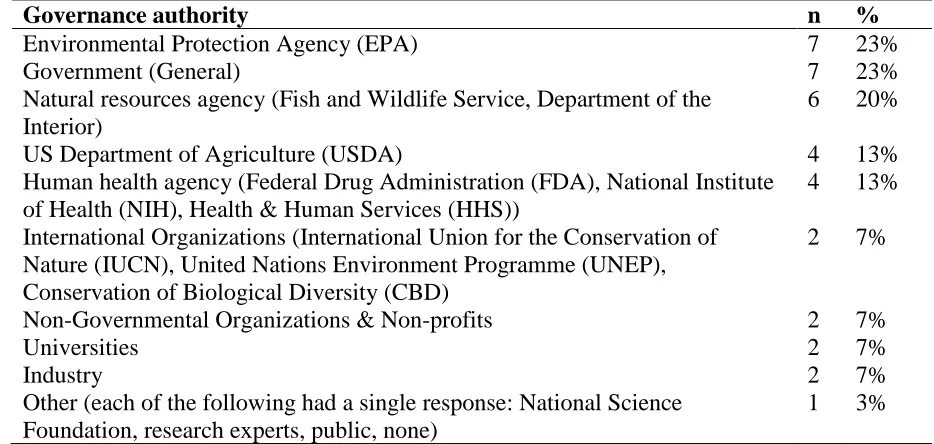
that may most concern the public………..………..62 Table 4. Frequency and percentage of responses regarding who should have the most central
authority for the governance of de-extinction……….…63 CHAPTER 3
Table 1. Conquest and conflict frame attributes and corresponding rodent eradication themes with article frequency and percent of all articles.………..………....……..92 Table 2. Frequency of themes and results of chi-square analysis of conquest and conflict
themes for five countries’ coverage of rodent eradications ………..………..93
vi
LIST OF FIGURES
CHAPTER 1
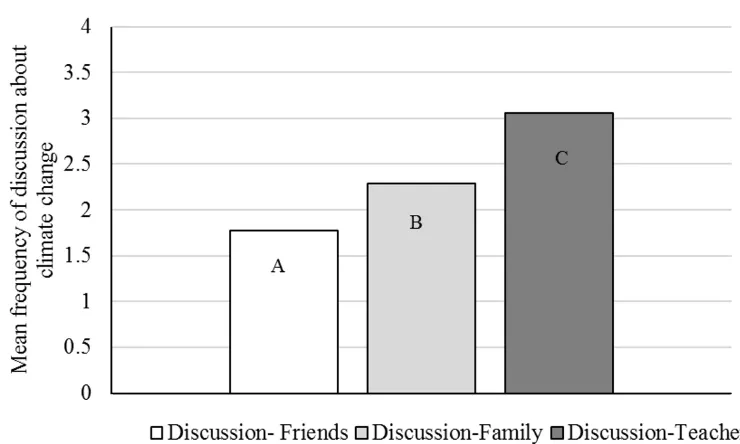
Figure 1. Mean frequency of discussions about climate change with friends, family, and teachers. Means were calculated using 5-point Likert questions for frequency of
discussions about climate change (0 = Never, 1 = Once, 2 = Two or three times, 3 = Four or five times, 4 = More than five times). Different letters reflect significant differences based on a one-way ANOVA with Sidak’s corrections (F (2, 375.21) p = <.001) ………..……...28 Figure 2. Mean and SE of climate change behavior scores by students attending urban-rural
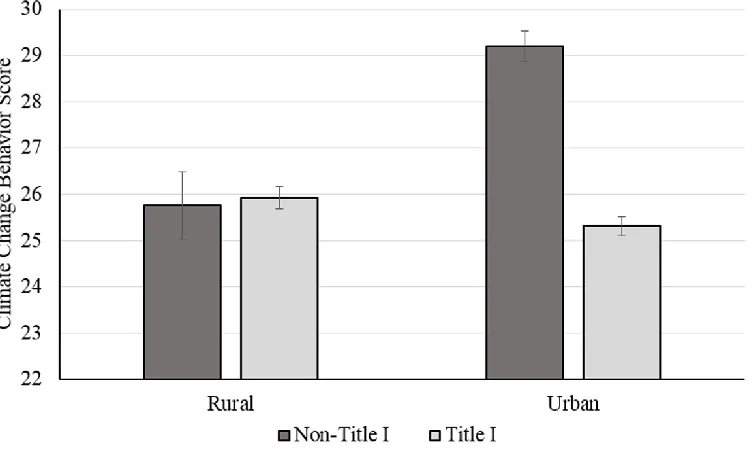
and Title I schools (n = 1,371) ………29 CHAPTER 2
Figure 1. Average responses (Likert scale responses 1-10) and standard error bars of participant responses to potential environmental and human health hazards and benefits from de-extinction. Significant differences indicated by different
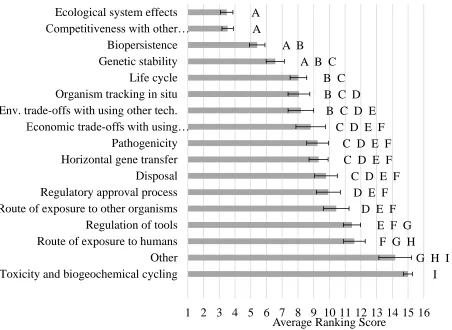
letters………..….64 Figure 2. Average ranking scores (1-16) for research topics to manage de-extinction risks.
1 CHAPTER 1
2 Abstract
Engaging adolescents is critical to encouraging future climate change adaptation and mitigation behaviors. Adolescents are typically more receptive to climate change messages than adults, but educators and communicators need research-based strategies for optimizing
engagement, including information about what factors are most influential in changing
behaviors. To better understand how communication with teachers, friends, and family, climate change knowledge, and climate change concern predict climate change behavior we administered a survey to a random sample of middle school students in North Carolina, USA (n= 1,371). We measured climate change behavior with a multi-item scale asking respondents about energy conservation, alternative transportation, and engagement with environmental issues. We found that climate change concern and discussing climate change with family and friends predicted climate change behavior. We also found that students from urban, high socioeconomic status schools were more likely to engage in climate change behavior than students in urban low
socioeconomic status schools or rural schools. These results suggest that education efforts should leverage communication with family and friends in programing designed to encourage climate change behavior. Further, efforts to promote climate change behavior among low socioeconomic status urban and rural adolescents may be warranted, but would benefit from further
investigation into ideological, physical, and knowledge-based drivers of behavior differences documented in this study.
Introduction
Climate change is expected to have unprecedented global impacts, requiring collective action to mitigate effects and adapt to a changing world. Increased flooding and droughts
3
conserving energy at home, and recycling, are important mitigation behaviors that individuals may adopt (Stern 2000; Chawla & Cushing 2007; Peterson et al. 2013; Chen et al. 2016). Promoting behavior changes that address environmental challenges is a foundational component of environmental education (UNESCO 1978; Hungerford & Volk 1990), but understanding what motivates people to engage in behaviors to address and mitigate climate change is incredibly complex. Knowledge, risk perception, social norms, and belief in personal responsibility towards climate change all influence climate change behavior, but do so in complex and sometimes unexpected ways (Gifford 2011).
Scholars have identified several cultural and psychological barriers to pro-active climate change related behaviors. First, simply presenting knowledge of climate change does not
effectively increase engagement or overcome skepticism (Whitmarsh et al. 2013). Climate change is a complex topic that even the scientifically literate struggle to fully grasp (Sterman 2011), often leading people to rely on heuristics (mental shortcuts) to assess risk. Some of the most dominant heuristics people rely on are political ideology and cultural worldviews (Kahan et al. 2011; Brownlee et al. 2013). In short, people tend to get information from, and trust those that
think like them (Cohen 2003), leading to over-reliance on politicized and scientifically inaccurate news sources (Hamilton 2011) and selective acceptance of new information that reinforces ideologically-supported beliefs (Kahan et al. 2012). Other barriers faced by climate change communicators include the belief that climate change is a distant issue, and that adaptation and mitigation strategies challenge lifestyles (Spence et al. 2012; Hulme 2009).
These barriers create a dilemma for those striving to increase climate change behavior among the general public. Communicators can attempt to employ strategic frames for
4
Whitmarsh et al. 2013). This may include using proximate causes as motivators for behavioral change. For example, governments may ‘nudge’ consumers towards more climate friendly products by highlighting the energy saving aspects of a product or service (Whitmarsh et al. 2013). This approach, however, may be ineffective for critical behaviors that require more effort than green consumerism (Chen et al. 2016), or require greater lifestyle changes, such as using public transport (Whitmarsh et al. 2013). Similarly, Bernauer and McGrath (2016) found that a simple re-framing of climate change was not associated with changes in support for climate-friendly public policies.
Adolescents may represent a vital segment of the population for climate change
communication both because they are the future policy and decision-makers who will live with the major impacts from climate change and because they appear to bring less ideological bias to their assessments of climate change. Climate change forecasts project major impacts, including sea level rise, increased extreme weather events, and food shortages, to become disruptive in the mid-21st century (Pachauri et al. 2014). This means that it is critical to prepare today’s
adolescents to adapt to those impacts and mitigate future impacts as they reach adulthood. Research shows that adolescents differ from adults regarding several aspects of climate change knowledge, perceptions, and behaviors. Generally, climate skepticism is less likely among younger age groups (Feldman et al. 2010), and this skepticism may be overcome with education (Stevenson et al., 2014), even though similar efforts may be more difficult among adults (Kahan et al. 2012). Stevenson et al. (2014) found that for middle-school adolescents, climate change
5
2001), and may not influence climate change risk perceptions among adolescents as heavily as they do in adults. Climate risk perception appears to be a key driver of CC behavior among adolescents (Taber & Taylor 2009; Ojala 2012). Some climate change messages (e.g., fear-based messaging decoupled from potential solutions), however, may cause adolescents to
psychologically distance themselves from the topic (Ojala 2015).
Despite these findings there is less known about how psychological and social variables shape CC behaviors among adolescents than among adults. In previous environmental education research, low socioeconomic status (SES) negatively predicted environmental behavior
(Stevenson et al. 2013), but it is unclear if this relationship translates to CC behaviors. Socioeconomic status typically refers to household level economic and educational position relative to others (Bradley & Corwyn 2002). Similarly, studies comparing environmental behavior by residency (urban-rural, urban-suburban) return conflicted results as residency predicts specific behaviors (e.g. rural residents have higher support for conservation behaviors and urban residents engage in more anti-pollution behaviors) but not general trends in
6
Emerging research suggests that communication type and frequency may be important but underexplored variables related to engaging adolescents in CC behavior. This research suggests that adolescents in families that discuss climate change are more likely to seek
information about the topic (Mead et al. 2012), and that increased frequency of communication with both groups promotes climate change concern (Stevenson et al. 2016). Similarly, a study of adolescents in Belgium suggested parents influence their children’s environmental concerns, and more frequent communication raised those concerns (Meeusen 2014). Furthermore, adolescents are more likely to engage in community actions if their parents give them encouragement or approval (Fletcher et al. 2000) and adolescent behaviors, in the cases of deviant and risky behaviors, are often mediated by parental relationships (Deković et al. 2004). A study of UK adolescents highlighted the importance of informal communication channels, especially
involving peers, in developing attitudes of efficacy and responsibility towards mitigating climate change (Devine‐Wright et al. 2004). Despite these findings, little is known about the role of communication from teachers who serve as important climate change literacy educators for adolescents (Chawla & Cushing 2007). We do know that teachers can improve climate change knowledge among students, especially when students engage in hands-on activities (Taber & Taylor 2009). Teachers are commonly mentioned as significant childhood influences for adults who are concerned about the environment, have positive environmental attitudes, and choose environmental careers (Chawla 1998). General motivation and engagement of adolescents in traditional education settings increases when students perceive high teacher support (Ryan & Patrick 2001).
7
Carolina, USA. This study provides a first assessment of teachers’ role as climate change communicators. We tested the following novel hypotheses: adolescents who more frequently discuss climate change with teachers in classroom settings, adolescents who come from urban backgrounds, and students from schools with higher SES are more likely to engage in CC
behaviors. We include several other important variables in our analyses which allow us to situate communication with teachers within the context of previous research on adolescent CC
behaviors. We include frequency of communication with friends and family, allowing us to assess whether previously identified positive effects on CC behavior persist while considering communication with teachers. Similarly, we control for several variables which have predicted CC behavior in previous research (e.g. climate change knowledge, climate change concern, gender (Ojala 2012; Stevenson et al. 2013; Stevenson et al. 2014) to avoid identifying spurious relationships.
Methods Sampling
For this study, we surveyed 1,371 middle school students in North Carolina. We first compiled a list of all 770 public middle schools in North Carolina from the North Carolina Department of Public Instruction. We then randomly selected 85 of these schools and compiled a list of all science teachers (n = 377) at these schools using each school’s website. We randomly selected 205 of these teachers to recruit, based on published response rates from teachers in the same region, in which an initial contact of 150 teachers was associated with a usable sample of 426 students (Stevenson et al. 2014). Given the number of variables tested, we wanted to
8
was asked to include at least one of their classes in the study. An average of 60 students per teacher participated in this study, ranging from 5 to 123 students per teacher. In January 2014, we sent all participating teachers survey materials and instructions by mail. We requested teachers return surveys within two weeks of receiving them, and sent weekly reminders for one month after the deadline. Six teachers did not return surveys, citing lack of time.
Instrument Development
We built on previous studies predicting adolescent CC behavior by including a variable addressing teachers’ roles as climate communicators. We measured CC behavior with a multi-item scale asking respondents about behaviors linked to lowering carbon emissions- household behavior, information-seeking behavior, and transportation choice, representing three
sub-factors. This scale has been successfully used with adolescents and has previously displayed high reliability (Stevenson & Peterson 2016). To measure climate change knowledge (CC
knowledge), we used items that originally tested adults’ climate change knowledge (Tobler et al. 2012) and have been modified for adolescents (Stevenson et al. 2014). For climate change concern (CC concern), we used a scale that has been previously implemented in climate change literacy studies with both adolescents and adults (Stevenson et al. 2014; Stevenson et al. 2015). We used 5-point Likert scale questions to ask participants how often they discussed climate change (CC discussion) with friends, “How often have you discussed climate change with your friends outside of class (Never, Once, Two or three Times, Four or five times, More than five times)” and with their family, “How often have you discussed climate change with your family”
(Stevenson et al. 2016). A similar 5-point scale question was used to measure CC discussion with teachers, “How often have you discussed climate change at school during class”.
9
communication with friends) allowed us to reduce the likelihood of potentially spurious findings, and to place our findings in the context of other research focusing on knowledge and concern.
Because we modified established scales and generated new items, we conducted quantitative and qualitative pretesting among adolescents to reduce chances of measurement error. The first draft instrument was administered to 27 7th grade students and 33 8th grade students. Students were asked to identify questions that were difficult to understand and make notes for possible improvement. We also completed cognitive interviews (Desimone & Le Floch 2004) with five students to gather additional feedback and suggestions for item wording and clarity, and to assess construct validity. We tested the behavior, knowledge, and concern scales for reliability and validity. We used Cronbach’s alpha to measure the degree to which items within a scale were measuring the same construct. An alpha score above 0.9 is considered excellent, a score above 0.7 is considered acceptable (Gliem & Gliem 2003). The alpha scores for the behavioral scale and the knowledge scale were acceptable (α = 0.78; α = 0.72,
respectfully). The concern scale was above the acceptable level of 0.60 in exploratory analysis (Hair et al. 2010) and similar to other measures of general risk perception (Weber et al. 2002).
Data Analysis
To determine which factors positively predicted CC behavior we constructed a predictive model using multiple linear regression in STATA version 14.1. We examined the overall
goodness of fit for our model with an R-squared value. We observed the p-value of each variable to test our hypotheses, and used standardized beta coefficients to compare the relative
10
11 Results
Our sample included 217 sixth graders, 346 seventh graders, and 812 eighth graders, ages 11–15. The gender ratio was approximately even (51.6% female) and mostly white (63.3%). Most students (65.6%) attended a Title I school, and most (57.8%) attended a rural school. On average, students were moderately informed about climate change, with CC knowledge scored at 14.3 out of 21 (SD = 3.2). Students were also moderately concerned about climate change; the mean CC concern score was 9.6 out of 17 (SD = 3.1). On average, students scored 26.8 out of 50 on the CC behavior scale (SD = 6.6). This average score would reflect a student who sometimes recycles at home (x̄ = 3.20 on a 1-5 scale; SD = 1.5), rarely walks for transportation (x̄ = 2.44 on a 1-5 scale; SD = 1.1), and often turn off lights at home when not in use (x̄ = 4.04 on a 1-5 scale; SD = 1.0). Factor analysis of CC behavior scale confirmed the expected three sub-factors: household behavior, information-seeking behavior, and transportation choice (Stevenson & Peterson 2015). Results for individual survey items for CC knowledge, concern, and behavior, including factor loadings, are available in Supplemental Materials (Tables S1-S3).
Communication about climate change with friends, family and teachers was relatively infrequent. Over half of the students (57.5%) reported that they had never discussed climate change with their friends. Almost forty percent of students (39.9%) reported that they had never discussed climate change with their family and another fifth of the students (20.6%) reported that they had only discussed climate change with their family once. Climate change discussions occurred more frequently with teachers than with friends or family (Figure 1). Only 14.5% of students reported that they had never discussed climate change in class.
12
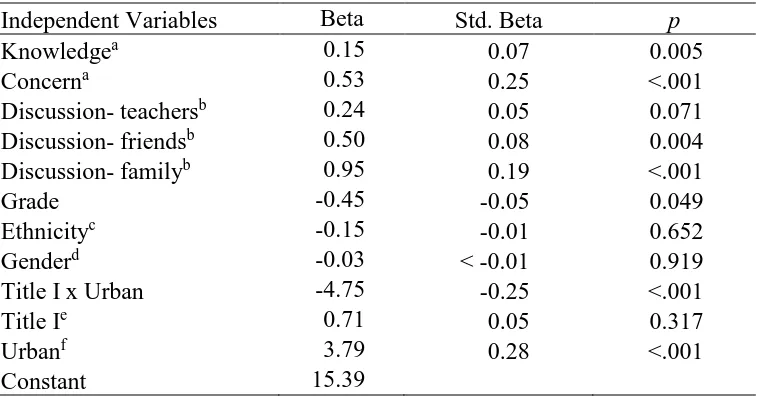
predictor of climate change behavior (Table 1). Discussion with family was a stronger predictor of CC behavior than discussion with friends or teachers (Table 1). The interaction effect for discussion with family and discussion with friends was not significant, and thus not presented in our model. CC knowledge was also a predictor of CC behavior (Table 1). All hypotheses, except for a positive relationship between increased classroom discussion with teachers and CC
behavior, which approached significance (p = .071), were supported by our model. Post-hoc tests for collinearity suggested no collinearity issues among independent variables (Mean variance inflation factor = 2.2, all variance inflation factor values <5.4) (O’brien 2007).
Among the demographic predictors, an interaction between rural-urban and Title I status and grade level were both negatively related to CC behavior (Table 1). Climate change behavior was low in rural schools regardless of Title I status but much higher among students in non-Title I status (wealthier) urban schools than among students at Title I status urban schools (Figure 2). Interactions between Urban-CC knowledge and Urban-CC concern were sequentially added to the model to avoid collinearity but neither were significant, and we excluded them from our final model. The student’s grade inversely predicted CC behavior, students in higher grades were less likely to engage in CC behavior (Table 1). Neither gender nor ethnicity predicted CC behavior after accounting for variance explained by other key predictors (Table 1).
Discussion
13
Thus, teachers may need to leverage frequent engagement with climate change in the classroom (this study) by using pedagogical approaches that encourage peer discussions in the classroom and family discussions outside the classroom. These types of educational interventions may use norms and peer influence from friends and family to impact CC behavior (Ojala 2015; Stevenson et al. 2016). Frequent discussion can increase salience of descriptive norms already established
by family and friends (Mead et al. 2012). Teaching strategies that incorporate group discussions, projects, and informal learning opportunities typically encourage discussion with peers
(Maxwell, 2002), and may help solidify behavioral norms if integrated into climate change education efforts. Similarly, assignments which encourage students to talk with or interview parents may increase information-seeking (Mead et al. 2012) in addition to promoting family conversations about climate change. Future research identifying the context of climate change conversations with teachers (e.g., which courses) may help unravel the mechanisms driving relationships, or lack thereof, between conversations and climate change behavior.
14
has linked informal education to increased self-efficacy (Devine‐Wright et al. 2004) and climate change knowledge (Sellmann & Bogner 2013), and one study found that adolescents were more likely to seek information and commit to changing their behavior after engaging with climate change content on Facebook (Robelia et al. 2011). Initiatives such as the National Network for Ocean and Climate Change Interpretation (NNOCCI 2016), which trains zoo and aquaria interpreters to facilitate conversations around climate change are particularly encouraging, as they may spur discussion among adolescents and their peers and parents. Our results suggest that similar efforts to infuse climate change topics into informal learning opportunities in ways that promote discussion with friends and families may be effective at promoting climate change behaviors among adolescents. Research documenting the ideological basis of such family
discussions may be an important variable in future research given the polarized nature of climate change conversations in many locations (Morrill 2016).
15
the behavior disparity. First, crime and safety concerns may limit walking and bicycling (Cutts et al. 2009) and access to open spaces in low SES urban areas (Slater et al. 2013). Further,
behaviors such as recycling may be limited as low SES urbanites are less likely to have access to recycling facilities (Berger 1997). Urban adolescents may also have less knowledge about which actions may help mitigate climate change, limiting their ability to engage in new or alternative behaviors (Semenza et al. 2008). Future research is needed to explain the degree to which physical constraints and knowledge about CC behaviors drive the interaction in this study, but immediate efforts to remove constraints on climate friendly behavior for low SES urbanites and improve their climate literacy may provide key avenues for engaging low SES urban adolescents in addressing climate change. Engaging rural adolescents may be more difficult if politically conservative ideology underlies their lower climate change behavior scores. Evans et al. (2014) suggest that discussing local climate change adaptation increases willingness to engage in future mitigation efforts, even among skeptics, by presenting them with the local consequences of climate change (Evans et al. 2014). Because climate change poses a direct threat to the
persistence of many rural communities dependent on agriculture (Prokopy et al. 2015), both the local challenges posed by climate change (e.g. drought) and urgency associated with addressing them provide fertile material for efforts to highlight local consequences in climate literacy efforts. Future research may further explore specific ways in which environmental education (EE) programming can address some of the potential barriers we highlight (i.e., structural and ideological barriers). Krasny & Tidball (2012) offer that the most successful EE programs may focus on community resilience and action in ways that empower citizens and encourage
16
ideological barriers to CC behavior, as some research suggests EE with children may help shape environmental attitudes and behaviors of adults from topics ranging from recycling to more contentious topics like biodiversity conservation (Duvall & Zint 2007). Though this approach is understudied in climate change contexts, it may provide a pathway to addressing ideological barriers among both current and future generations.
The important role of climate change concern may be leveraged to shape how educational efforts promote climate change behaviors among adolescents. Concern about climate change shared the strongest impact on CC behavior, along with the interaction effect, aligning with previous research on climate related behavior. Concern is an especially important emotion for motivating climate change behavior (Smith & Leiserowitz 2014) that can promote information-seeking to decrease risk (Beckjord et al. 2008). As opposed to fear based appeals, which can cause people to disengage or dismiss an issue (Smith & Leiserowitz 2014), concern is a less intense emotion that can activate cognitive and analytical processing of risk information,
enabling deliberative and iterative decision-making (Smith & Leiserowitz 2014). Future research might further explore the impact of educational efforts that integrate promoting discussion with family with material intended to foster climate change concern and climate change hope (Ojala 2012; Stevenson & Peterson 2015).
17
importance of place when conceptualizing and reacting to climate change. Our research does have several limitations. First, our observational study could not elucidate causality. Future experimental research could determine if and how different types of climate change
communication influence CC behavior. Second, adolescents and educational systems in North Carolina are not necessarily representative of their counterparts elsewhere in the United States or other regions of the world. Fortunately, our findings largely coincide with those from studies with adolescents from diverse places including Sweden (Ojala 2015), the United Kingdom (Senbel et al. 2014), and among a nationally representative sample of the United States (Mead et al. 2012). Given this widespread consistency in findings from regional research, it seems
18
research exploring the geography of CC behavior, may provide valuable insights. Although our findings are preliminary, they clearly suggest that adolescents in the most resource starved schools (rural and low SES urban) need additional help to fully engage climate change within their curricula.
Supplementary Material
Supplementary materials for this chapter are in Appendix A.
Financial Support
We gratefully acknowledge the financial support of NC Sea Grant (Project ID #6411).
Conflict of Interest
None.
Ethical standards
19 References Cited
107th Congress (2002) No Child Left Behind (NCLB) Act.
Ambrosius, J. D. & Gilderbloom, J. I. (2015) Who's greener? Comparing urban and suburban residents' environmental behaviour and concern. Local Environment 20: 836-849. Beckjord, E. B., Finney Rutten, L. J., Arora, N. K., Moser, R. P. & Hesse, B. W. (2008)
Information processing and negative affect: evidence from the 2003 Health Information National Trends Survey. Health Psychology 27: 249.
Berenguer, J., Corraliza, J. A. & Martín, R. (2005) Rural-urban differences in environmental concern, attitudes, and actions. European Journal of Psychological Assessment 21: 128-138.
Berger, I. E. (1997) The demographics of recycling and the structure of environmental behavior. Environment and Behavior 29: 515-531.
Bernauer, T. & McGrath, L. F. (2016) Simple reframing unlikely to boost public support for climate policy. Nature Climate Change.
Bogner, F. X. & Wilhelm, M. G. (1996) Environmental perspectives of pupils: the development of an attitude and behaviour scale. Environmentalist 16: 95-110.
Bradley, R. H., & Corwyn, R. F. (2002). Socioeconomic status and child development. Annual review of psychology 53: 371-399.
Brownlee, M. T., Powell, R. B. & Hallo, J. C. (2013) A review of the foundational processes that influence beliefs in climate change: opportunities for environmental education research. Environmental Education Research 19: 1-20.
Chawla, L. (1998) Significant life experiences revisited: A review of research on sources of environmental sensitivity. The Journal of Environmental Education 29: 11-21. Chawla, L. & Cushing, D. F. (2007) Education for strategic environmental behavior.
Environmental Education Research 13: 437-452.
Chen, X., De La Rosa, J., Peterson, M. N., Zhong, Y. & Lu, C. (2016) Sympathy for the environment predicts green consumerism but not more important environmental behaviours related to domestic energy use. Environmental Conservation 43: 140-147. Cohen, G. L. (2003) Party over policy: The dominating impact of group influence on political
20
Cutts, B. B., Darby, K. J., Boone, C. G. & Brewis, A. (2009) City structure, obesity, and environmental justice: an integrated analysis of physical and social barriers to walkable streets and park access. Social science & medicine 69: 1314-1322.
Deković, M., Wissink, I. B. & Meijer, A. M. (2004) The role of family and peer relations in adolescent antisocial behaviour: comparison of four ethnic groups. Journal of adolescence 27: 497-514.
Desimone, L. M. & Le Floch, K. C. (2004) Are we asking the right questions? Using cognitive interviews to improve surveys in education research. Educational evaluation and policy analysis 26: 1-22.
Devine-Wright, P., Devine-Wright, H. & Fleming, P. (2004) Situational influences upon children's beliefs about global warming and energy. Environmental Education Research 10: 493-506.
Dunlap, R. E. & McCright, A. M. (2008) A widening gap: Republican and Democratic views on climate change. Environment: Science and Policy for Sustainable Development 50: 26-35.
Duvall, J., & Zint, M. (2007) A review of research on the effectiveness of environmental education in promoting intergenerational learning. The Journal of Environmental Education 38: 14-24.
Evans, L., Milfont, T. L. & Lawrence, J. (2014) Considering local adaptation increases willingness to mitigate. Global Environmental Change 25: 69-75.
Falk, J. H. (2005) Free‐choice environmental learning: framing the discussion. Environmental Education Research 11: 265-280.
Feldman, L., Nisbet, M., Leiserowitz, A. & Maibach, E. (2010) The climate change generation. Survey analysis of the perceptions and beliefs of young Americans. Yale Project on Climate Change Communication, Yale University and George Mason University. Fletcher, A. C., Elder, G. H., Jr & Mekos, D. (2000) Parental influences on adolescent
involvement in community activities. Journal of Research on Adolescence 10: 29-48. Gifford, R. (2011) The dragons of inaction: Psychological barriers that limit climate change
mitigation and adaptation. American Psychologist 66: 290.
Gliem, R. R. & Gliem, J. A. (2003) Calculating, interpreting, and reporting Cronbach’s alpha reliability coefficient for Likert-type scales. Midwest Research-to-Practice Conference in Adult, Continuing, and Community Education, October 8-10, 2003, Columbus, Ohio. Hair, J. F., Black, W. C., Babin, B. J. & Anderson, R. E. (2010) Multivariate data analysis: A
21
Hamilton, L. C. (2011) Education, politics and opinions about climate change evidence for interaction effects. Climatic Change 104: 231-242.
Hamilton, L. C., Hartter, J., Lemcke-Stampone, M., Moore, D. W., & Safford, T. G. (2015). Tracking public beliefs about anthropogenic climate change. PloS one
Heimlich, J. E., & Falk, J. H. (2009) Free-choice learning and the environment. Free-choice learning and the environment 11-21.
Hulme, M. (2009). Why we disagree about climate change: Understanding controversy, inaction and opportunity Cambridge University Press.
Hungerford, H. R. & Volk, T. L. (1990) Changing learner behavior through environmental education. The journal of environmental education 21: 8-21.
Jones, R. E., Fly, J. M., Talley, J. & Cordell, H. K. (2003) Green migration into rural America: The new frontier of environmentalism? Society &Natural Resources 16: 221-238. Kahan, D. M., Jenkins‐Smith, H. & Braman, D. (2011) Cultural cognition of scientific
consensus. Journal of Risk Research 14: 147-174.
Kahan, D. M., Peters, E., Wittlin, M., Slovic, P., Ouellette, L. L., Braman, D. & Mandel, G. (2012) The polarizing impact of science literacy and numeracy on perceived climate change risks. Nature Climate Change 2: 732-735.
Krasny, M. E., & Tidball, K. G. (2009) Applying a resilience systems framework to urban environmental education. Environmental Education Research 15: 465-482.
Maxwell, K. A. (2002) Friends: The role of peer influence across adolescent risk behaviors. Journal of Youth and adolescence 31: 267-277.
McCright, A. M. (2010) The effects of gender on climate change knowledge and concern in the American public. Population and Environment 32: 66-87.
Mead, E., Roser-Renouf, C., Rimal, R. N., Flora, J. A., Maibach, E. W. & Leiserowitz, A. (2012) Information seeking about global climate change among adolescents: The role of risk perceptions, efficacy beliefs, and parental influences. Atlantic journal of communication 20: 31-52.
Meeusen, C. (2014) The intergenerational transmission of environmental concern: The influence of parents and communication patterns within the family. The Journal of Environmental Education 45: 77-90.
22
Min, S., Zhang, X., Zwiers, F. W. & Hegerl, G. C. (2011) Human contribution to more-intense precipitation extremes. Nature 470: 378-381.
Morrill, J. (2016) Election exposes NC urban and rural fault lines. The Charlotte Observer. URL http://www.charlotteobserver.com/news/politics-government/article115779373.html NCES US Department of Education National Center for Education Statistics. 2013. URL
https://nces.ed.gov/
Nerlich, B., Koteyko, N. & Brown, B. (2010) Theory and language of climate change communication. Wiley Interdisciplinary Reviews: Climate Change 1: 97-110. NNOCCI (2016) National Network for Ocean and Climate Change Interpretation. URL
http://climateinterpreter.org/about/projects/NNOCCI
O’brien, R.M. (2007) A caution regarding rules of thumb for variance inflation factors. Quality and Quantity 41: 673-690.
Ojala, M. (2015) Climate change skepticism among adolescents. Journal of Youth Studies 18: 1135-1153.
Ojala, M. (2012) Hope and climate change: the importance of hope for environmental engagement among young people. Environmental Education Research 18: 625-642. Opt, S. K. (2015). Sea-level rise policy as attention intervention. Western Journal of
Communication 79: 73-91.
Pachauri, R. K., Allen, M., Barros, V., Broome, J., Cramer, W., Christ, R., Church, J., Clarke, L., Dahe, Q. & Dasgupta, P. (2014) Climate Change 2014: Synthesis Report. Contribution of Working Groups I, II and III to the Fifth Assessment Report of the Intergovernmental Panel on Climate Change. Intergovernmental Panel on Climate Change, Geneva, Switzerland.
Peterson, M. N., Peterson, T., & Liu, J. (2013). The housing bomb: Why our addiction to houses is destroying the environment and threatening our society: JHU Press.
Prokopy, L. S., Morton, L. W., Arbuckle Jr, J. G., Mase, A. S. & Wilke, A. K. (2015)
Agricultural stakeholder views on climate change: implications for conducting research and outreach. Bulletin of the American Meteorological Society 96: 181-190.
23
Robelia, B. A., Greenhow, C. & Burton, L. (2011) Environmental learning in online social networks: Adopting environmentally responsible behaviors. Environmental Education Research 17: 553-575.
Ryan, A. M. & Patrick, H. (2001) The classroom social environment and changes in adolescents’ motivation and engagement during middle school. American Educational Research Journal 38: 437-460.
Sellmann, D. & Bogner, F. X. (2013) Climate change education: Quantitatively assessing the impact of a botanical garden as an informal learning environment. Environmental Education Research 19: 415-429.
Semenza, J. C., Hall, D. E., Wilson, D. J., Bontempo, B. D., Sailor, D. J. & George, L. A. (2008) Public perception of climate change: voluntary mitigation and barriers to behavior
change. American Journal of Preventive Medicine 35: 479-487.
Senbel, M., Ngo, V. D., & Blair, E. (2014) Social mobilization of climate change: University students conserving energy through multiple pathways for peer engagement. Journal of Environmental Psychology 38: 84-93.
Slater, S., Fitzgibbon, M. & Floyd, M. F. (2013) Urban adolescents’ perceptions of their neighborhood physical activity environments. Leisure Sciences 35: 167-183.
Smith, N. & Leiserowitz, A. (2014) The role of emotion in global warming policy support and opposition. Risk Analysis 34: 937-948.
Sterman, J. D. (2011) Communicating climate change risks in a skeptical world. Climatic Change 108: 811-826.
Stern, P. C. (2000) New environmental theories: toward a coherent theory of environmentally significant behavior. Journal of Social Issues 56: 407-424.
Stevenson, K. T. & Peterson, N. (2015) Motivating Action through Fostering Climate Change Hope and Concern and Avoiding Despair among Adolescents. Sustainability 8: 6. Stevenson, K. T., Peterson, M. N. & Bondell, H. D. (2016) The influence of personal beliefs,
friends, and family in building climate change concern among adolescents. Environmental Education Research: 1-14.
Stevenson, K. T., Lashley, M. A., Chitwood, M. C., Peterson, M. N. & Moorman, C. E. (2015) How emotion trumps logic in climate change risk perception: Exploring the affective heuristic among wildlife science students. Human Dimensions of Wildlife 20: 501-513. Stevenson, K. T., Peterson, M. N., Bondell, H. D., Moore, S. E. & Carrier, S. J. (2014)
24
change knowledge on perceived climate change risk among adolescents. Climatic Change 126: 293-304.
Stevenson, K. T., Peterson, M. N., Bondell, H. D., Mertig, A. G. & Moore, S. E. (2013) Environmental, institutional, and demographic predictors of environmental literacy among middle school children. PloS one 8: e59519.
Taber, F. & Taylor, N. (2009) Climate of Concern--A Search for Effective Strategies for Teaching Children about Global Warming. International Journal of Environmental and Science Education 4: 97-116.
Tobler, C., Visschers, V. H. & Siegrist, M. (2012) Consumers’ knowledge about climate change. Climatic Change 114: 189-209.
Turral, H., Burke, J., & Faures, J. (2011) Climate change, water and food security: FAO. Food and Agriculture Organization of the United Nations, Rome, Italy.
UNESCO (1978) Inter-Governmental Conference on Environmental Education, Tbilisi, USSR, 14-26 October, 1977. Final Report. United Nations Educational, Scientific, and Cultural Organization, Paris, France.
Van Liere, K. D. & Dunlap, R. E. (1980) The social bases of environmental concern: A review of hypotheses, explanations and empirical evidence. Public opinion quarterly 44: 181-197.
Vollebergh, W. A., Iedema, J. & Raaijmakers, Q. A. (2001) Intergenerational transmission and the formation of cultural orientations in adolescence and young adulthood. Journal of Marriage and Family 63: 1185-1198.
Weber, E. U., Blais, A. & Betz, N. E. (2002) A domain‐specific risk‐attitude scale: Measuring risk perceptions and risk behaviors. Journal of Behavioral Decision Making 15: 263-290. Whitmarsh, L., O’Neill, S. & Lorenzoni, I. (2013) Public engagement with climate change: What
do we know and where do we go from here? International Journal of Media & Cultural Politics 9: 7-25.
25
Table 1. Climate change knowledge, concern, communication, and demographic variables predicting climate change behavior among middle school adolescents in North Carolina, USA (n = 1,371). Adjusted R2 = 0.248.
Independent Variables Beta Std. Beta p
Knowledgea 0.15 0.07 0.005
Concerna 0.53 0.25 <.001
Discussion- teachersb 0.24 0.05 0.071
Discussion- friendsb 0.50 0.08 0.004
Discussion- familyb 0.95 0.19 <.001
Grade -0.45 -0.05 0.049
Ethnicityc -0.15 -0.01 0.652
Genderd -0.03 < -0.01 0.919
Title I x Urban -4.75 -0.25 <.001
Title Ie 0.71 0.05 0.317
Urbanf 3.79 0.28 <.001
Constant 15.39
aKnowledge and concern variables were calculated using multi-item scales.
bDiscussion variables were calculated using the results of 5-point scale questions for frequency of discussion
cStudent ethnicity (0 = White, 1 = Non-white) dStudent Gender (0 = Male, 1 = Female)
26
27
28 CHAPTER 2
29 Abstract
Advances in biotechnology may allow for de-extinction. Potential impacts of de-extinct species remain uncertain; they may improve ecosystem function and re-invigorate the conservation movement, or hinder conservation efforts and damage socio-ecological systems. To better anticipate the environmental impacts, ethical dilemmas, and governance needs for de-extinction, we elicited opinions from experts in the natural sciences, social sciences, and the humanities. We applied a mixed-method approach to analysis of survey results, integrating quantitative responses regarding perceived likelihood of risks and benefits with qualitative responses used to clarify and provide context. Overall, study participants indicated de-extinction was more likely to induce hazards, not benefits. Reasons for this viewpoint included a “moral hazard” argument,
suggesting conservation policies could be undermined if society comes to believe that species need less protection because they can be revived in the future. Pessimistic views of de-extinction were linked to concerns about unclear development paths for reviving individuals and
30 Introduction
Advances in biotechnology may allow for the de-extinction of species. De-extinction is the re-creation of extinct species using methods from synthetic biology, cloning, genetic
engineering, reproduction technologies, and stem cell research. Numerous species are currently being considered as candidates for de-extinction, notably the passenger pigeon and woolly mammoth. De-extinction research on passenger pigeons includes genome sequencing (Hung et al. 2014), with plans to integrate DNA from preserved passenger pigeons into the genome of band-tailed pigeons (Novak 2013). Similarly, research on the woolly mammoth includes genome sequencing (Palkopoulou et al. 2015) with plans to gradually add mammoth genes into Asian elephant embryos, creating hybrids with progressively more mammoth traits (Devlin 2017).
Arguments in-favor of de-extinction suggest that de-extinct species will improve
31
components and processes previously removed or damaged by human activities (Thorpe and Stanley 2011). Additionally, restoring animals like woolly mammoths may inspire great awe (Sherkow and Greely 2013) and lead to additional support for conservation.
In contrast, arguments against de-extinction suggest that the process may be
detrimental to conservation efforts and ecological systems, and rife with ethical dilemmas. Re-creation of extinct species may weaken conservation policies by providing a riskier alternative solution to preventing extinction (Pimm 2013). This moral hazard, or alternative solution, enables riskier behavior (Lin 2013), which is compounded by ecological change. Returning a re-created animal to its former ecosystem could be detrimental to the current, often different, ecosystem or to the de-extinct animal. For example, forests have been fragmented and degraded, and farms and urban systems have expanded in the historic passenger pigeon range (Greenberg 2014). If re-introduced, the bird may exhibit tendencies similar to invasive species (Sherkow and Greely 2013). Alternatively, a passenger pigeon may be unable to adapt to contemporary ecosystems. Would the creators of a de-extinct animal then be obligated to care for the de-extinct population in perpetuity?
Ethical questions such as these extend beyond those considered during wildlife re-introductions (McCoy and Berry 2008) and include ownership responsibilities for de-extinct animals (Carlin, Wurman, and Zakim 2013). In most contexts, wildlife are
32
to create them. Potential commercial value could then be derived from exclusive rights to exhibit, or by creating pet markets. Further, by reconstituting genomes and creating hybrids, scientists may be accused of playing god (Sandler 2014). Animal rights and welfare concerns further complicate de-extinction. Animals such as the woolly mammoth are presumably social animals (Shapiro 2015), and rearing them in isolation may be cruel.
33
A more systematic assessment of de-extinction seems necessary to anticipate risk and improve governance. In situations of high complexity and uncertainty, like de-extinction, it is especially important to anticipate risks so that appropriate governance systems are in place before technological deployment (Karinen and Guston 2009). Anticipatory governance suggests building capacities in foresight, engagement, and integration between experts (natural scientists, social scientists, and humanities scholars) and organizations (government agencies, technology developers, publics) may lead to better decisions and increased public good (Barben et al. 2007). In the absence of data on risks and benefits, expert elicitation provides a method for engaging the mental models of experts (Morgan, Henrion, and Small 1992) in order to begin the process of identifying potential risks and responding to them upstream in innovation and governance systems (Stilgoe, Owen, and Macnaghten 2013; Barben et al. 2007).
As a first step in anticipatory governance, this paper presents the first analysis of the potential environmental impacts of de-extinction, ethical dilemmas, and governance needs by eliciting experts’ opinions from multiple disciplines. We surveyed experts in the natural sciences, social sciences, and the humanities, who have been involved in technologies and policies
associated with genetic engineering and synthetic biology. Experts on biotechnology issues are well suited to assess potential de-extinction impacts, dilemmas, and governance needs because of their experiences with biotechnology development and governance. The science of
34
animals, such as the Convention on Biological Diversity and the Cartagena Protocol on Biosafety, but these have not been ratified by all nations with active de-extinction research programs (Vàzquez-Salat et al. 2012; Kuzma 2016). Public opposition to genetically engineered foods is highly political, varies internationally, and is potentially becoming more controversial over time (Frewer et al. 2013). Controversies also brew within the biotechnology field as some products and companies fail to live up to their own hype (Borup et al. 2006). Biotechnology experts working within these contexts have unique experiences and can provide valuable assessments for the nascent field of de-extinction. To better anticipate the environmental
impacts, ethical dilemmas, and governance needs for de-extinction, we applied a mixed-method approach to analyze quantitative responses regarding perceived risks and benefits with
qualitative responses used to clarify and provide context. We compare participants’ perceptions of potential risks and benefits, highlight salient environmental and societal concerns, identify research and risk assessment needs for managing potential risks, and provide recommendations for de-extinction governance. This is the first study to our knowledge formally eliciting expert opinions about the governance of de-extinction. By conducting this study before viable, self-reproducing de-extinct species are developed, we hope to provide guidance to innovation and governance, promote environmental stewardship, and minimize unintended consequences. Methods
Expert Elicitation
35
reviewing speakers who attended the following three conferences: Biobricks Foundation SB6.0: The Sixth International Meeting on Synthetic Biology, SynBioBeta Conference for Synthetic Biology Startup Companies, Georgia Tech Frontier in Systems and Synthetic Biology.
Subsequently, additional potential participants were drawn from the editorial board of the peer-reviewed journal, Bioengineering and Biotechnology. Invitations were sent to 234 experts, and forty-eight individuals agreed to participate. These participants are actively involved in, or are studying the unique socio-political contexts of biotechnology (Kuzma 2016; Frewer et al. 2013; Vàzquez-Salat et al. 2012; Borup et al. 2006) and are thus well suited for anticipating the future impacts, dilemmas, and governance needs of de-extinction.
An online questionnaire was designed to elicit the opinions of experts regarding de-extinction risk and governance, and 35 experts completed the questionnaire. Most (29) identified their disciplines, with 16 social science, humanities, and law experts (hereafter identified as social scientists) and 13 natural science experts. Because de-extinction is novel and developing, participants were provided a short description (available in Supplemental Materials) prior to the beginning of the study. This online questionnaire was self-administered using Qualtrics. This study was ruled exempt by the North Carolina State University Internal Review Board (IRB # 3574).
Questionnaire Development
36
societal outcomes related to de-extinction (Cummings and Kuzma 2017). This scheme was developed to assess biosecurity risks by evaluating potential risks, epidemic potential, ability to contain hazards, and overall consequences (Latxague et al. 2007; Suffert, Latxague, and Sache 2009). Given the novelty and uncertainty regarding de-extinction, we adapted the SRES to survey environmental and human health risk and added assessments of potential public concern and potential benefit. We used 10-point scale questions to assess potential benefits and hazards for human health and the environment. A similar question was used to ask participants how much public concern de-extinction might generate (Cummings and Kuzma 2017). Using a previous review of biotechnology oversight (Kuzma and Tanji 2010), we listed 16 areas of potential risk reduction research, and participants ranked them from highest to lowest priority. Participants were then asked to expand on their perceptions of de-extinction risks, potential areas for research, and public perceptions with open-ended questions. We also asked the participants which agency, group, or specific organization should have the most central authority for governing de-extinction (Questionnaire available in supplemental materials).
Data Analysis
We applied a mixed-method approach to data analysis, integrating quantitative responses regarding perceived likelihood of risks and benefits with qualitative responses to provide
37
(<0.5) moderate (> 0.5) and or strong (> 0.8) (Cohen 1988). To identify salient issues related to risk, research, and governance, we performed a qualitative thematic content analysis of responses to open-ended questions (Shellabarger, Peterson, and Sills 2012). Participants were asked about potential impacts to human health, the environment, and society, research needs for assessing potential hazards, what existing research areas may inform assessment, and what novel research areas may generate information to assess hazards. Major themes were identified and synthesized to clarify and provide meaning to quantitative results. Categorization criteria for qualitative results were developed to maintain consistency throughout analysis (Questions and criteria in supplemental materials). We report frequency of major themes and direct quotes from
participants. When quoted, participants are identified with a unique code. Results
Risks versus Benefits
Participants perceived de-extinction as more likely to harm, not benefit, human health and the environment. They strongly perceived de-extinction as more hazardous than beneficial to the environment (t = 4.70, p < 0.001, Cohen’s d = 1.41) (Figure 1). The experts suggested
numerous potentially negative environmental impacts: de-extinct animals may exhibit characteristics similar to invasive species (e.g., ecological disruptions, outcompeting native wildlife species), broadly impact ecosystems, and increase wildlife disease risks (Table 1). One participant raised these issues when describing the potential for reviving a passenger pigeon, “How [passenger pigeons] would impact modern agricultural settings which have replaced much of the prairie which formed the ‘natural’ habitat of these is a huge unknown. Where are the
predators to keep the flocks under control? What disease might they carry to other occupants of
38
rather than beneficial, to human health (t = 3.378, p = 0.002, Cohen’s d = 0.80) (Figure 1). Almost half of the participants indicated that disease emerging from de-extinct animals may impact human health (Table 1), with concern typically stemming from two causes, “Rebooting of encoded viruses that are harmful to humans” (R30) or “Potential problems of a reintroduced
species acting as a vector for a human disease” (R25). Participant responses indicating low
potential benefits may be partially explained by those who were uncertain about what the actual benefits might be. As one participant indicated, “A key issue here concerns the benefits of these technologies. Other than being interesting, it seems that much of what is driving the effort to
de-extinct is commercial interest. The 'whys' and 'what for' have not been clearly addressed” (R4).
At the time of this survey, de-extinction was being advocated by Revive & Restore, a non-governmental organization (NGO) coordinating de-extinction information and research, and a small group of researchers. These advocates lacked support from governments or other NGOs, likely adding to concerns about motives for de-extinction research.
Although all expert views trended toward skepticism of benefits, social scientists held less favorable views than natural scientists. Compared to natural scientists, social scientists perceived de-extinction to potentially be more environmentally hazardous (t = 1.397, p = .087, Cohen’s d = 0.538) and less beneficial to the environment (t = 1.384, p = .088, Cohen’s d = 0.538). Social scientists also perceived de-extinction to be less beneficial to human health (t = 1.60, p = .06, Cohen’s d = 0.628). Perception of potential hazards to human health were similar between these groups.
39
species compete with other species for food, water, etc. Why did the species become extinct in the
first place?” (R15). Almost a third of the participants indicated that de-extinction may alter
ecosystem interactions but did not explicitly describe these impacts as positive or negative (Table 1). For example, one participant contextualized the potential impacts of de-extinction as system dependent, “Community dynamics will certainly be altered if these forms of hybrids are successfully established in any environment. Whether that is good or bad depends on the system”
(R26).
Research Needs
Participants indicated that both ecosystem and social science research might help assess hazards but were uncertain if any novel research fields could aid risk assessment. Participant ranking of natural science research topics, ‘ecological system effects’, ‘competitiveness with other organisms’, ‘biopersistence’, and ‘genetic stability’ were the highest priority research topics for managing potential de-extinction risk (Figure 2). Research topics related to tradeoffs with other technologies and regulation were viewed as less important for managing de-extinction risk (Figure 2). Compared to natural scientists, social scientists ranked two research topics as higher priorities, ‘horizontal gene transfer’ (t = 2.081, p = .047, Cohen’s d = 0.823) and ‘competitiveness with other organisms’ (t = 1.783, p = .086, Cohen’s d = 0.707). Horizontal gene transfer was not raised in subsequent open-ended responses. Variance for ranking
‘competitiveness with other organisms’ may be explained by a few natural scientists who ranked this as a low priority research topic.
40
reducing risks (Table 2). General ecological research was alluded to in this response, “Broad studies of animal population dynamics and broader ecosystem function are needed for any study
of revived species, prior to and after individuals have been revived” (R28). Occasionally,
participants identified more specific questions and types of ecological research, restoration ecology or invasive species biology, to assess hazards and reduce risk (Table 2). One respondent suggested studies may, “Compare to reintroduction of extant species into formerly-occupied regions. Similarly, how do invasive species affect disease dynamics?” (R9).
To help assess hazards, some participants also suggested social science research comparing different approaches to conservation, such as cost-benefit analysis or decision
analysis, (Table 2). As an example, one participant indicated a need for, “Research to understand tradeoffs in de-extinction vs conservation and restoration of existing ecosystems and their
ecosystem services” (R14). Many suggestions for social science research did not provide a
specific research area and instead provided questions that might drive research agendas.
Participants posed questions such as, “What about the ownership and possible monopolization of the technology?” (R20), and “Which species should be reconstructed (and who should decide on
this)?” (R6). Another question raises the potential for a moral hazard, “Whether the attempt to
revive species will overshadow ongoing conservation efforts?” (R8).
Most participants were uncertain about what novel research programs could reduce de-extinction risk (Table 2). Many did not know what research was needed or indicated that no novel research area could reduce risk (Table 2), exemplified by the following responses, “Not sure” (R8), “None” (R12), “Unknown” (R15). Among participants that did offer a response,
41
areas that may inform hazard assessment and risk reduction, followed by ecology and disease research (Table 2). One respondent suggested a basic science research goal for achieving de-extinction, “Understanding of the function of the genome as the orchestration of all genes and its modifications, which we don’t understand yet” (R24). Another respondent suggested how further
research might improve perceptions of de-extinction, “Perhaps there are ways to predict
susceptibility of a species to human pathogens/diseases from their genomic information… If the
risk of an organism acting as a vector for known disease could be predicted, it might allay
concerns” (R25). Most responses suggested already developed or emerging research areas, but
novel approaches were also mentioned, including suggestions to incorporate big data
methodologies with ecological modelling, “Perhaps this is an interesting case for exploring computational simulation methods in ecosystem analysis” (R4). Further research on molecular
mechanisms as a sub-discipline of systems biology was mentioned as a way to reduce risk, “Genome editing CRISPR/Cas systems coupled with advanced prediction of function from cryptic elements to screen out hazards and or build in controls” (R30).
Technological Optimism: A Threat to Conservation?
Participants also believed that de-extinction may threaten traditional conservation efforts by increasing techno-optimism and reducing fear of extinction. Half of participants indicated de-extinction’s most important societal impact could be threatening and undermining traditional
conservation efforts (Table 1). One participant suggested that de-extinction may result in, “Less focus on habitat conservation. You may be able to synthesize DNA, but not the rainforest” (R18),
42
some participants worried that de-extinction would result in scientific hubris or techno-optimism (Table 1). Some respondents succinctly responded, “Hubris”, “Techno-optimism” (R11), “Moral issues, playing god, hubris” (R6), and one respondent further explained, “This is a HUGE
distraction from saving the habitats of animals that are very endangered today. It tempts
humans to think that our technology is the solution” (R13).
Social Impacts
Participants also suggested de-extinction may negatively impact natural resources and raise ethical concerns. Socio-ecological impacts focused on economic damage to agricultural or water resources (Table 1). Participants also raised ethical concerns, including, “Whether people will agree with the concept of bringing back extinct species, playing god” (R8), animal rights,
“Harm to animals caused by the cloning process” (R13), and public engagement, “Who will decide which species to restore and where to put them?” (R12) (Table 1). Other issues were
raised, such as this “slippery slope” argument, “The need to develop cloning techniques to bring to term any extinct mammal raises questions about whether clones of humans would be next.”
(R13).
Although experts perceived de-extinction’s greatest societal impact to be the challenge it poses to traditional conservation, they believed the public would be more concerned about the uncontrollable nature of the technology as portrayed in science fiction interpretations of
biotechnology in the popular media. The participants indicated public concern regarding the risks of de-extinction might be high (x̄ = 6.8 based on a 1-10 scale, SE = 0.3) and were most likely to
43
biotechnology and moral lessons for re-creating extinct dinosaurs. Science fiction can offer stances to forecast ethical dilemmas (Berne, 2008), but many of the Jurassic Park responses were vague, “Jurassic Park” (R9), “Jurassic Park scenario” (R11), “Jurassic Park syndrome” (R18), making it difficult to determine what lessons or ideas might be most salient when comparing Jurassic Park to potential real-life de-extinction. Concerns about de-extinction stemming from Jurassic Park may include ethics of reviving, hubris, animal rights, ownership questions, regulation, or fear of uncontrollable animals run amok. One participant suggested better understanding of science and technology might alleviate public concerns about de-extinction, explaining, “Education, as in when the obvious parallels are drawn to an infamous movie, wherein the scientists didn't do so well” (R29).
Many participants also indicated that the public may question the value of de-extinction. They noted that the public may see de-extinction as, “Wasteful” (R9), and ask “Is a sentimentally fun project of scientific or societal merit?” (R34). They also suggested that the public may be
concerned about ecosystem impacts, “Impacts on local natural resources management and public property” (R26). Only one participant expressed the concern that the public might link
de-extinction to competition with traditional conservation efforts stating the public may wonder, “Why reintroduce new species when we are not doing enough to protect existing ones” (R16) (Table 3). It may be that participants believe that the public will be able to identify potential direct impacts of de-extinction, ecosystem impacts and management and containment concerns, but may not be able identify the potential indirect impacts to conservation efforts. Few
44
initiatives, for example, “The benefits might be in capturing the public’s imagination and providing a beneficial view concerning applications of the synthetic biology” (R26).
Regulation and Governance
Participants raised questions about adequacy of current oversight systems and split over who should govern de-extinction. One participant raised several governance questions, “Do new regulations, or do regulations in existence, need to be developed/modified for de-extincted
organisms. Role of Cartagena and or Nagoya protocols?” (R29) (Table 1). Almost a quarter of
the participants indicated that an environmental risk assessment agency such as the EPA should be a central governing authority (Table 4). An equal number of respondents indicated that a government agency should be a central authority but did not name a specific agency (Table 4). A fifth of the respondents suggested the US Department of the Interior (DOI) or the FWS (Table 4) as the governing body. Less common responses included federal agencies and departments governing agricultural products and pharmaceuticals (e.g. USDA, FDA), and other organizations with more voluntary authorities for governance including non-governmental organizations, researchers, and universities (Table 4).
Discussion
New biotechnology ventures often generate optimism, yet de-extinction presents a unique case in which the technology faces pronounced pessimism. The sociology of expectations