Conversion of Object Oriented System into Software
Product Line with Delta Modeling Abstract Behavioral
Specification
Ricky Timothy Gultom, Maya Retno Ayu Setyautami, Iis Solichah
Faculty of Computer Science, Universitas Indonesia, Depok, Indonesia.
Received November 2013
ABSTRACT
This article contains a system conversion from object oriented design into Software Product Line (SPL) using delta modeling of Abstract Behavioral Specification (ABS). ABS is a modeling language which targets system with high level of variety and supports SPL development with delta modeling. The case study of this thesis is a digital library system called Library Automation and Digital Archive (LONTAR). Originally, LONTAR only uses SOAP-based web service. With ABS, LONTAR will be converted into SPL and implement another web ser-vice called REST. The motivation of this conversion of LONTAR from object oriented into SPL is because it is easier to develop system with ABS than using regular object oriented. Product definition in ABS is relatively easier than creating a new subclass and do customization to make it works well.
KEYWORDS
System Conversion; Abstract Behavioral Specification; Delta Modeling; Software Product line; Object Oriented
1. Introduction
In software development scenario with high variety level, software modeling language and powerful tools to help the implementation process are among of most important things. Design-oriented languages such as Unified Mo- deling Language (UML) cannot fulfill this need because of their lack in executability. Implementation-oriented languages like Java Modeling Language (JML) are lack- ing on verifiability. This kind of lackness is tried to be solved by formal abstract language such as B-Method [1]. However, the usability is low because it is not easy to use.
The problem is one of the background of development of Abstract Behavioral Specification (ABS). One of the target of ABS is highly reusable software. Software reuse has been a common activity to simplify system design imple- mentation. One of traditional approaches to software reuse is the Object Oriented (OO) System. It introduces the con- cept of abstraction, encapsulation, and polymorphism. The software reuse lies in its inheritance concept, which pro-vides object type generalization. While the OO system is popular, it does not support effective reuse mechanism [2]. It cannot fully accommodate large system with frequent changes or has many variations of products. One of the
reasonsis the reuse mechanism has to maintain the object type consistency from parent classes to their subclasses. There is another mechanism to software reuse known as Software Product Line (SPL), which is more suitable for large system to implement than OO. It introduces the concept of core products and variant products [2].
This paper proposed a strategy to convert an OO system into SPL. We use the ABS delta modeling to form the conversion mechanism. Delta modeling is used by ABS as the main code reuse principal instead of inheritance. Therefore, when we convert OO to SPL, the inheritance in OO will be replaced with delta modeling ABS.
There are many known modeling languages such as Uni-fied Modeling Language (UML), Java Modeling Lan-guage (JML), and Behavior Tree. Each of those lan-guages has certain flaw or weakness. For example, UML cannot be executed directly and cannot be verified. On the other hand, implementation level languages such as JML are lacking on verifiability aspect. Mathematical approaches try to solve the problem but they are too complicated, thus making the usability low.
ABS tries to cover those weaknesses mentioned above. ABS is a software modeling language which located be-tween realistic and abstract language. The definition of realistic language is language in implementation level or language closely similar to how people think to solve problems. Meanwhile, abstract language is formal lan-guage and very mathematical. ABS adds executability for design-oriented modeling language such as UML and verifiability for realistic language and tries to improve usability for abstract language.
According to [3], ABS targets concurrent, distributed, object oriented software. Moreover, software is devel-oped with several components and with a high variable level. To achieve the last one mentioned, ABS imple-ments delta modeling as the main paradigm to develop various systems. Further information about ABS can be accessed in http://www.hats-project.eu/.
2.2. Software Product Lines
Software Product Lines (SPL) is a set of software which have several similar features [4]. Each element of the set however has unique features to comply with market de-mand or special mission. Products in SPL pertain to the same business goal or application domain, they share the same architectures; they are also built from the same components and services [5]. Core assets of SPL are the architectures, components, and services aforementioned. They are called core assets because they are the main resources to create new products in SPL.
Eventually, new products will not be created from scratch again because they can be built simply by reusing
module has a number of classes as the base of other products. The definition of base here is a product to be modified by delta to make a new product.
Delta modules specify changes in core module to im-plement other products. Those changes are in class level such as adding, removing, and modifying class. They can also be in class structure level such as adding and re-moving field or method.
2.3. LONTAR
Library Automation and Digital Archive (LONTAR) is a digital library system in Universitas Indonesia. This sys-tem manages common activities in library such as look-ing data about a collection, borrowlook-ing collection, return-ing collection, etc. LONTAR also provides web service to increase its interoperability for various libraries. The architecture of LONTAR can be seen in Figure 1.
Currently LONTAR only provides SOAP web service because LONTAR uses Apache Axis as shown in circle in Figure 1, which is by default only implements SOAP web service. In its development, there are needs for digital libraries to implement REST or other web service.
This paper tries to explore possibility for using ABS to make LONTAR has another web service such as REST. The plan is to take one specific LONTAR's module which is the web service module and convert it to SPL. With it, hopefully it will become easier to implement another web service. As illustrated, we tried to adjust the module in circle in Figure 1 according to Figure 2.
3. Conversion Step
Figure 1. Architecture of LONTAR.
Figure 2. Replacement for one of LONTAR’s module; De-velopment plan for LONTAR.
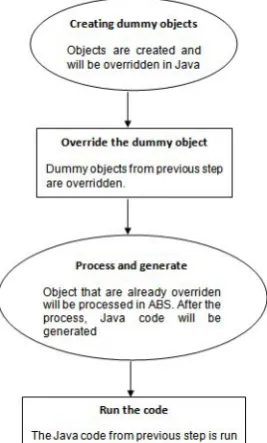
Figure 3. Conversion steps from object oriented system into SPL.
Figure 4.LONTAR’s conversion from object-oriented into SPL.
symbolize existing deltas, while circles show products that can be created by applying those deltas. If no deltas are chosen SOAP product will be made. If CSV delta is chosen then the product will be REST with CSV and so on. Fourth and the last step in Figure 4 is to run the product. Each step will be explained more thoroughly in the next section.
4. Experiments and Observation
4.1. Creating Dummy Object
Object is an instance of a class. Therefore, to create an object, a class must already be made. Dummy object serves as a purpose to allow LONTAR's data in Java to be processed further in ABS. After the class exists, dummy object can be created. It is called dummy object because it will be overridden eventually. The explanation of how it will be overridden is on the next subsection.
4.2. Override
In override phase, the first idea is directly using library of retrieval module to access and call LONTAR's index file. The purpose of this is to get the content of the index file. After received the contents, they are given back to ABS for the next step.
[image:3.595.61.283.92.435.2] [image:3.595.106.240.482.704.2]modified by delta.
There are three deltas that can be chosen. They are DCSV to make a message with CSV format, DXML to create a message with XML format and DJSON for JSON format. All of them need a parameter in the form of list of string. This list is going to be processed so the message can be formed with appropriate format. Another similarity between the three deltas is that they create a list of string that its content is the string after being processed in delta.
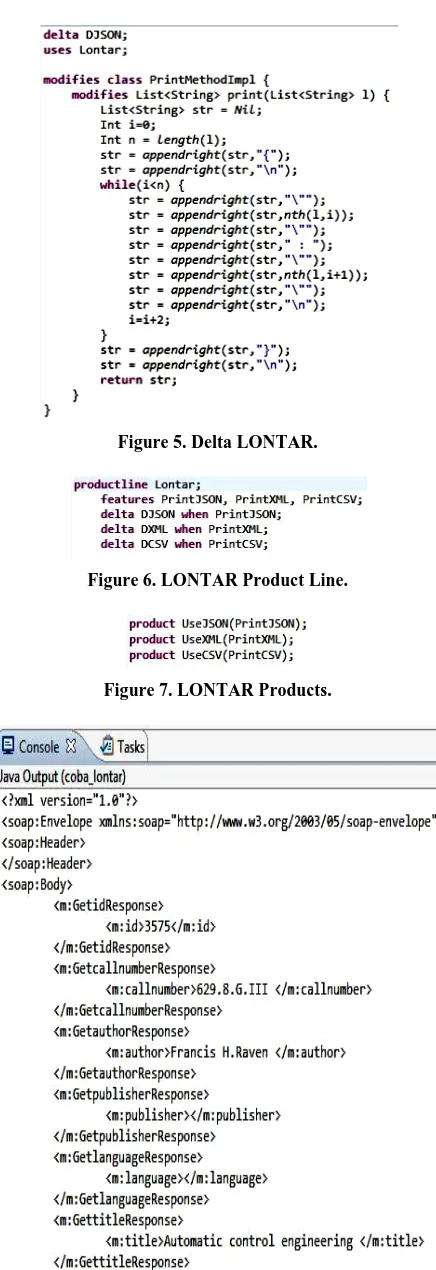
Take one of the delta which is DJSON that can be seen in Figure 5. Delta DJSON takes all the elements of a list of string one by one and craft it to be in JSON format. After the deltas are made, next step is to create a file to control the product line. Figure 6 contains the file to control the product line. It defines all the features such as PrintJSON, PrintXML, and PrintCSV with deltas that are applied for those features. DJSON for PrintJSON, DXML for PrintXML and DSCV for PrintCSV. The last step is to create a file which contains two things. First is the name of products that are going to be made. Second is the name of features each particular products are using. The example can be seen in Figure 7.
There are three products UseJSON, UseXML, and Use CSV. PrintJSON feature is used for product Use JSON, PrintXML is used for product UseXML and feature PrintCSV is used for product UseCSV. As the name suggests, product UseJSON will use feature PrintJSON and apply delta DJSON to core product and eventually print the data in JSON format. Same as the two products before, product UseCSV will use feature PrintCSV and print in CSV format.
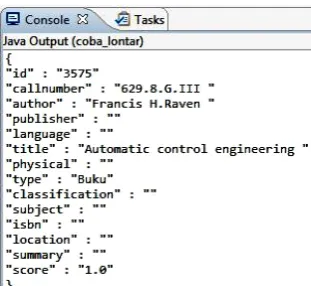
[image:4.595.314.532.83.718.2]Figure 8 shows the core product which none of the deltas is chosen. The message is printed in SOAP format. The format of the message conforms the format descri- bed in printing method in ABS before any deltas are applied. The result of using UseJSON product can be seen in Figure 9. The format of the printed message now becomes JSON format. This is happened due to delta DJSON has modified the printing method in ABS.
Figure 5. Delta LONTAR.
Figure 6. LONTAR Product Line.
Figure 7. LONTAR Products.
Figure 9. UseJSON product.
4.4. Observation
Table 1 consists of general comparison in LONTAR development between using ABS and using Object Oriented Approach.
Without ABS, to add other web service in LONTAR, new classes are needed and the functionalities are similar with classes that already in LONTAR. These new classes are used for implementing REST. New classes can be made as subclasses from the old ones. The difference is the new classes do not use Apache Axis because it only can be used for SOAP. The format of REST message should be defined in the new classes.
Meanwhile, the implementation of code reusability in ABS is not with inheritance but delta modeling. One of the reason to do this is because ABS uses strong encap- sulation while inheritance can weaken encapsulation [7].
ABS uses strong encapsulation to avoid the data encapsulation weakening. In object oriented three kinds
of data encapsulation are known which are public, private and protected. In ABS all data are private. Encap- sulation is even stricter than in object oriented where two objects even in the same class cannot access each other.
Another advantage in delta modeling is its abilities to do plug and play where users do not have to do com- plicated configuration when adding new classes. Users just have to select appropriate delta to apply to the core module. We can see the example in previous section. By just applying DJSON delta, the message is formatted in JSON format.
With SPL and ABS, to develop LONTAR is relatively easier. The development process in ABS becomes easier because developers can be more focused in modification with deltas. However, in object oriented system, custo- mization for the new classes to work well with the old ones without ruining the system is necessary.
5. Concluding Remarks
[image:5.595.310.539.121.215.2]Based on the experiment, OO System can be converted
Table 1. Table General Comparison between ABS and Ob- ject Oriented.
No Object Oriented ABS
1 Create new class Create new product
2 Inheritance Delta Modeling
3 Data Encapsulation can be public,
private or protected Every data is private
4 Class defines object type Class does not
define object type
into SPL using delta modeling of ABS. This approach can be done in four steps, which are creating the dummy objects, override the dummy object, process and generate, and run the Java code from the previous step. On the LONTAR case study there was a problem with the cu- rrent version of ABS plugin in step “process and generate” since LONTAR uses Apache Library while ABS only can process Java Library. Nonetheless, that is only tech- nical issue. Theoritically, ABS has no problem just like OO. To resolve the problem, we have found a temporary workaround. Further development of ABS however is required.
Delta modeling has another opportunity to be used in another aspect of OO which is refactoring, one of tech- nique for restructuring internal structure without chang- ing its external behavior [8]. Refactoring can be used in restructuring code, like Java Code, or restructuring model, like UML Class Diagram. Delta modeling is used to modify code in ABS without changing its core ABS code. Thus, refactoring and delta modeling have similar pur- pose on modifying code or model. However, delta mo- deling can be verified but refactoring naturally cannot. If refactoring can be represented in delta modeling, it will have an opportunity to be verified.
Currently, we are developing translation mechanism from UML Class Diagram to ABS. This mechanism can help to create delta modeling representation of refactor- ing. We will create the complete process as the future work to explore another use of delta modeling in Object Oriented System.