© 2018, IRJET | Impact Factor value: 6.171 | ISO 9001:2008 Certified Journal | Page 1642
REUSE OF NATURAL WASTE MATERIAL (COCONUT WASTE) FOR
MAKING LIGHT WEIGHT BRICKS
Namrata S. Tikhe
1,Sneha V. Dhanawade
2, Sunil A. Dhanawade
3,Sumit R. Gosavi
4,
Prof. Vivek. R. Kasar
51,2,3,4Department of Civil Engineering, Gharda Institute of Technology, Lavel, Maharashtra-India, 5Asst.Prof. V. R. Kasar, Department of Civil Engineering, Gharda Institute of Technology, Lavel,
Maharashtra-India, 415-708
---***---
Abstract
: Brick are widely used construction and building
material around the world. Bricks are prepared from natural waste material (coconut waste). Soil is used as a binding material for natural waste material. The main objective of the present study is to reduce the quantity of soil with natural waste material. The coconut fibers are used to make light weight bricks. The coconut fiber which otherwise is land filled has been utilized to make construction bricks that serves a purpose of solid waste management. Also for environmental protection and sustainable development, extensive research has been conducted on production of bricks from waste material. These waste is used to reduce the quantity of soil as there is a greater storage of soil in many parts of world. The bricks are prepared by coconut fibers with varying composition of soil reduced the quantity of soil (10%-25%) respectively. The prepared bricks are tested in compression strength machine for getting compressive strength of bricks.Keywords: Bricks, Coconut Fiber and Shell, Soil, Environmental friendly, Compressive Strength.
1. INTRODUCTION:
Bricks have been a major construction and building material for a long time. The worldwide annual production of bricks is currently about 1391 billion units and the demand for bricks is expected to be continuously rising. Conventional bricks are produced from soil with high temperature kiln firing. It is also noted that there is a shortage of in many parts of the world. To protect the clay resource soil and the environment, some countries such as China have started to limit the use of bricks made from clay. Coconut is a versatile product and has multiple uses. Almost all the parts of a freshly grown coconut, eatable or otherwise, are used in some or the other manner. India is one of the leading coconut producers in the world, producing 13 billion nuts per annum. Fired bricks are made by using soil –sand mixes with different percentages of rice husk ash. The firing durations at 9000C were respectively 2, 4 and 6 hours. The effects of rice husk content on workable mixing water content, Atterberg limits, linear shrinkage, density, compressive strength and water absorption of the bricks were investigated. The results indicated that the inclusion of rice husk, increased the compressive strength of bricks. The bricks made of soil
–coconut fibers–rice husk, shell mixes could be used for construction purpose.
Objectives
1) Check the feasibility of coconut waste as a partial replacement for soil in the preparation of bricks.
2) To reduce the quantity of Soil for making bricks with natural waste materials
3) To use waste Material (coconut shell & fiber) in construction units.
4) Study the behavior of compressive strength and water absorption
5) Compare the result with conventional brick.
2. EXPERIMENTAL WORK
© 2018, IRJET | Impact Factor value: 6.171 | ISO 9001:2008 Certified Journal | Page 1643 in machine. After that rice husk and water mixed in to soil
and treated coconut waste is mixed with that mixture and requied water is added. The bricks are prepared with varying compositions and left sun drying for 10 to 12 days and further it was burnt at kiln.
3. MATERIALS
3.1 Soil:
[image:2.595.338.527.75.185.2]Laterite soils are red in colour due to little clay and more gravel of red sand-stones.Laterite soils have a high clay content, which mean they have higher Cation Exchange Capacity and water-holding capacity than sandy soils.They are formed under condition of high temperature and heavy rainfall with alternate wet and dry periods.
Fig-1: Soil
3.2 Coconut fiber
Coconut fiber is a natural fiber extracted from the husk of coconut. It is the fibrous material found coconut. Coconut
fiber cells are narrow and hollow, between the hard,
internal shell and outer coat of a with thick walls made of cellulose. Each cell is about 1 mm (0.04 in) long and 10 to 20 μm (0.0004to 0.0008 in) in diameter. Fibers are typically 10 to 30 centimeters (4 to 12 in) long.
Fig-2: Coconut Fibers
3.3 COCONUT SHELL
[image:2.595.53.271.274.392.2]Coconut Shell is the strongest part covered in coconut fruit. Coconut shell is located in between the coconut flesh and coconut husk.
Fig-3: Coconut Shell
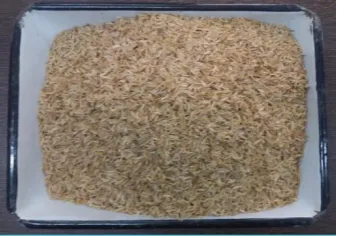
3.4 RICE HUSK
[image:2.595.350.519.300.418.2]Rice husks are the hard protecting coverings of grains of rice. In addition to protecting rice during the growing season, rice husk can be put to use as building material, fertilizer, fuel.
Fig-4 : Rice Husk
3.5 WOOD SAWDUST
Sawdust used is generated from the mechanical processing of raw wood in the sawing process. Sawdust is used in its original form and taken from its disposed area near the timber manufactures in the local region.
Fig-5: Wood Sawdust
4. TEST ON SOIL
4.1. Moisture Content
[image:2.595.321.545.533.645.2] [image:2.595.57.268.535.651.2]© 2018, IRJET | Impact Factor value: 6.171 | ISO 9001:2008 Certified Journal | Page 1644 The three soil samples having moisture content 25%,
50%, 25 % due to presence of water content. The average value of moisture content in soil sample is 34%.
Chart-1: Moisture Content
4.2. Liquid Limit
A liquid limit is the moisture content expressed as a percentage of the weight of over-dried soil, at which soil changes from a plastic to a liquid state. As per conducted experimental test results are 33.33%, 42.85%, 50%, 50% and average result is found that the liquid limit of soil sample is 44%.
Chart-2: Liquid Limit
4.3. Plastic Limit
The plastic limit of soil is the water content of the soil below which it ceases to be plastic. It begins to crumble when rolled into threads of 3mm diameter. From the experimental test result is found that the water content in soil sample is 36.20%.
4.4. Plasticity Index
[image:3.595.40.286.122.283.2]Plasticity Index (Ip) is the difference between liquid limit and plastic limit. According to the calculation the value of plasticity index is 7.8
Table No-1: Geotechnical properties of soil
Sr. No. Name of Tests Results IS Code 1. Moisture
Content 34% IS 2720 (Part VIII), 1983 2. Liquid Limit 44% IS 2720 (Part V) 3. Plastic Limit 36.20% IS 2720 (Part V) 4. Plasticity Index 7.8 IS 2720 (Part V)
5. TEST ON BRICK
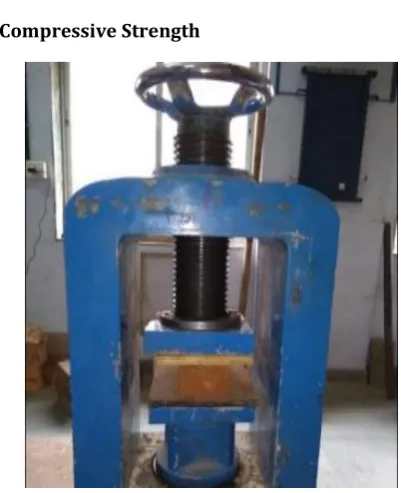
[image:3.595.328.529.238.485.2]5.1. Compressive Strength
Fig-6: Compressive strength machine
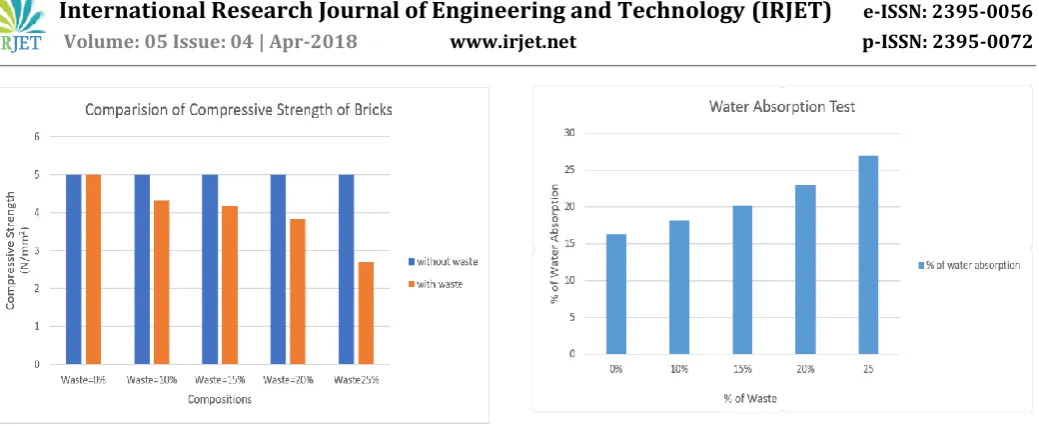
[image:3.595.36.289.418.579.2]The compressive strength of a brick is done by preparing the specimen adding suitable waste of coconut fiber, coconut shell and rice husk in various proportions such as 10%, 15%, 20% and 25%.
Table No-2: Comparative Result of Compressive Strength
Sr
No. Soil (%) Waste (%) comp. strength Avg. value of without waste
(N/mm2)
Avg. value of comp. strength
with waste(N/mm2)
1 100 0 5 5
2 90 10 5 4.33
3 85 15 5 4.17
4 80 20 5 3.83
© 2018, IRJET | Impact Factor value: 6.171 | ISO 9001:2008 Certified Journal | Page 1645 Chart 3: Compressive strength test
5.2. Water Absorption Test
The weigth of a quantity of water absorbed to the weigth of brick expressed as a percentage is the water absorption capacity of brick. The strength of brick depends upon its water absorption capacity. The water absorption of a brick is done by preparing the specimen adding suitable waste of coconut fiber, coconut shell and rice husk in various proportions such as 10%, 15%, 20% and 25%. The results obtain are
Fig-7: Water absorption test
Table No-3: Water absorption results
Sr. No
.
% of wast
e
Avg. Wt. of brick before absorption(k
g)w1
Avg.Wt. of brick after absorptio
n(kg)W2
% of water absorption
1 0 2.18 2.53 16.35
2 10 2.05 2.42 18.17
3 15 1.92 1.31 20.21
4 20 1.82 1.23 22.91
5 25 1.69 2.15 26.96
[image:4.595.42.562.36.249.2]Chart-2: Water absorption test
Table no 4: Result: Light weight Brick
Sr. No.
Wt. of Soil in (%)
Wt. of Waste (%)
Avg. value of wt. of Brick Unburnt Brick
(kg) Brick (kg) Burnt
1. 100 0 2.54 2.18
2. 90 10 2.42 2.05
3. 85 15 2.26 1.92
4. 80 20 2.17 1.82
5. 75 25 2.02 1.69
CONCLUSION:
On the basis of experimental investigation the following observation are made:
1. It is observed that if the percentage of soil reduces then the compressive strength of bricks decreses.
2. It is noted that as a soil content is reduces brick become lighter in weight
3. Maximum strength is achieved after replacing 10% and 15% of soil by coconut waste.
4. At 25% of waste the water absorption of brick is 26.96% and compressive strength of brick is 2.7 N/mm2so it is not suitable for construction purpose.
5. Coconut waste can be easily handled and utilized for making light weight brick
Future scope:
[image:4.595.48.276.407.558.2]© 2018, IRJET | Impact Factor value: 6.171 | ISO 9001:2008 Certified Journal | Page 1646
2. High compressive strength, better workability, light
weight etc. all these qualities of bricks will increase its future scope of construction work.
3. The effective way of utilizing waste material leads to
clean environment.
4. Since the bricks have not been used on large scale for
the construction work. But it has good scope in future, because these bricks is being manufactured from the waste material like rice husk, coconut waste.
REFERENCES:
1. Mohammad Shahid Arshad, Dr. P.Y. Pawade: Project on “Reuse of natural waste material for aking light weight bricks.”published in international journal of Scientific and Technology Research volume 3, Issue 6, [june 2014]
2. Prof. Roshan S. Satpute et-al: Project on “using waste material for making light weight bricks” Published in International conference of recent trends in Engineering Science and Technology [ICRTEST 2017]
3. K.r.Vinodh et-al: Project on “Experimental investigation On bricks by usingvarious waste materials” Published on International journal of latest trends in Engineering and Technology vol.6 Issue 3[January 2016]
4. Maneesh Kumar et-al: Project on “An Experimental study on use of recycle paper mill waste in light weight bricks” published in International journal of Advanced Research in Engineering and Management vol 1 Issue 02 [May 2015]
5. Lianyang Zhang, 2013 - Production of bricks from waste materials – A review. Construction and Building Materials 47, 643–655
6. Brick.http://en.wikipidia.org/wiki/Brick#cite_not e-2.
BIOGRAPHIES
Namrata Sunil Tikhe is born in 1996 in Ratnagiri District, Maharashtra. She received her Diploma of Civil Engineering from the Rajendra mane polytechnic college of diploma Engineering Ambav in 2015. At present she is final year student of bachelor of civil Engineering from Gharda institute of Technology University of Mumbai.
Sneha Vilas Dhanawade is born in 1996 in Ratnagiri District, Maharashtra. At present she is final year student of bachelor of civil Engineering from Gharda institute of Technology University of Mumbai.
Sunil Arun Dhanawade is born in 1992 in Ratnagiri District, Maharashtra. He received her Diploma of Civil Engineering from the Government polytechnic Ratnagiri college of diploma Engineering in 2015. At present he is final year student of bachelor of civil Engineering from Gharda institute of Technology University of Mumbai.
Sumit Rajaram Gosavi is born in 1995 in Ratnagiri District, Maharashtra. At present he is final year student of bachelor of civil Engineering from Gharda institute of Technology University of Mumbai.