S T U D Y P R O T O C O L
Open Access
Eradication strategy for persistent
methicillin-resistant
Staphylococcus aureus
infection in
individuals with cystic fibrosis
—
the PMEP trial:
study protocol for a randomized controlled trial
Mark T Jennings
1*, Michael P Boyle
1, David Weaver
2, Karen A Callahan
1and Elliott C Dasenbrook
2Abstract
Background:The prevalence of methicillin-resistant Staphylococcus aureus (MRSA) respiratory infection in cystic fibrosis (CF) has increased dramatically over the last decade, and is now affecting approximately 25% of patients. Epidemiologic evidence suggests that persistent infection with MRSA results in an increased rate of decline in FEV1 and shortened survival. Currently, there are no conclusive studies demonstrating an effective and safe treatment protocol for persistent MRSA respiratory infection in CF.
Methods/Design:The primary objective of this study is to evaluate the safety and efficacy of a 28-day course of vancomycin for inhalation in combination with oral antibiotics in eliminating MRSA from the respiratory tract of individuals with CF and persistent MRSA infection. This is a two-center, randomized, double-blind, comparator-controlled, parallel-group study with 1:1 assignment to either vancomycin for inhalation (250 mg twice a day) or taste-matched placebo for 28 days in individuals with cystic fibrosis. In addition, both groups
will receive oral rifampin, a second oral antibiotic –trimethoprim/sulfamethoxazole (TMP/SMX) or doxycycline,
protocol determined–mupirocin intranasal cream, and chlorhexidine body washes. Forty patients with persistent
respiratory tract MRSA infection will be enrolled: 20 will be randomized to vancomycin for inhalation and 20 to a taste-matched placebo. The primary outcome will be the presence of MRSA in sputum respiratory tract cultures 1 month after the conclusion of treatment. Secondary outcomes include the efficacy of the intervention on: FEV1% predicted, patient reported outcomes, pulmonary exacerbations, and MRSA colony-forming units found in respiratory tract sample culture.
Discussion:Results of this study will provide guidance to clinicians regarding the safety and effectiveness of a targeted eradication strategy for persistent MRSA infection in CF.
Trial registration:This trial is registered at ClinicalTrials.gov (NCT01594827, received 05/07/2012) and is funded by the Cystic Fibrosis Foundation (Grants: PMEP10K1 and PMEP11K1).
Keywords:Cystic fibrosis, MRSA, Randomized controlled trial, Vancomycin
* Correspondence:[email protected] 1
Johns Hopkins Medical Institutions, 1830 E. Monument Street, 5th floor, Baltimore, Maryland 21205, USA
Full list of author information is available at the end of the article
Background
Cystic fibrosis (CF) is the most common lethal auto-somal recessive disorder in the Caucasian population [1]. With improvements in care, the average age of indi-viduals living with CF continues to increase, with me-dian predicted survival age now nearing 40 years [2]. One consequence of improving survival is the emer-gence of pulmonary infections with new and resistant pathogens. These infections are of importance because they may lead to respiratory failure, which continues to be the leading cause of mortality in individuals with CF. Methicillin-resistant Staphylococcus aureus(MRSA) is a particularly important emerging pathogen in CF. The prevalence of infection with MRSA in the CF community has increased from 4% in 1999 to 26.5% in 2012 [2].
Multiple observational studies utilizing the CF Foun-dation’s National Patient Registry database have demon-strated that infection with MRSA is associated with worse clinical outcomes [3-5]. Dasenbrook et al. demon-strated that persistent respiratory infection with MRSA is associated with a more rapid decline in lung function as measured by forced expiratory volume in one second (FEV1) percent predicted [3,4]. Sanders et al. suggested that MRSA is associated with failure to recover baseline lung function after a pulmonary exacerbation [5]. Finally, the hazard of death was significantly increased in CF pa-tients with MRSA compared to CF papa-tients without MRSA, even after adjustment for severity of illness.
Given the striking increase in both prevalence of MRSA infection in CF and evidence of a detrimental effect of MRSA on CF clinical outcomes, there has been growing interest in treatment protocols designed to treat and/or eradicate respiratory-tract MRSA in CF.
There have been several clinical studies in CF asses-sing MRSA treatment regimens and their effectiveness in eradicating MRSA from the respiratory tract. These studies have been limited by small study populations, lack of control groups, single-center retrospective design, variable follow-up, and failure to distinguish incident vs. persistent MRSA infection [6-9]. A retrospective review of 37 patients at an adult CF center in Manchester, UK, who had at least one positive MRSA culture and were treated with a combination of two oral antibiotics and nebulized vancomycin (200 mg four times a day for 5 days), re-ported that 81% of treated patients achieved MRSA eradication at 6 months [9]. A smaller study of seven adult CF patients with persistent MRSA found that five patients were culture-negative after completing a 6 month treat-ment of oral fusidic acid and rifampin [6]. Two studies that focused on the treatment of incident MRSA infection in CF reported eradication rates of 94% in 17 patients, using a combination of oral and IV antibiotics, and 55% in 15 pa-tients treated with 5 days of oral and nebulized vanco-mycin (4 mg/kg/dose) [7,8].
There have been numerous reports of the clinical use of nebulized vancomycin in both CF and non-CF popu-lations, all of which have demonstrated it to be well-tolerated and efficacious. The doses reported in those aged >12 years of age have included 125 mg twice a day, 250 mg four times a day, and 500 mg twice a day [10]. In the largest study to date, 51 non-CF patients received 125 mg of nebulized vancomycin twice a day for an aver-age of 14.7 days to eradicate respiratory MRSA [11]. Eradication success rate was 84.3%. The authors re-ported that there were no adverse events associated with inhalation of vancomycin in the 51 participants. Add-itionally, a pilot study investigating the safety and toler-ability of nebulized vancomycin in CF patients utilizing a single dose of 250 mg for inhalation in 10 patients found that it was safe and well tolerated [12]. All 10 patients tolerated the entire test dose without significant side ef-fects, hypoxia, or evidence of sputum eosinophilia, and the mean relative change in FEV1 (L) 30 minutes after administration was −3.7% (range: −9.9% to +13.78%), demonstrating no significant bronchoconstrictive effect of vancomycin inhalation. Finally, there is significant clinical experience with the use of nebulized vancomycin in CF, as the CF treatment community frequently uses neb-ulized vancomycin in clinical care. A national compound-ing pharmacy which supplies nebulized vancomycin for clinical care to CF healthcare providers, reports treatment of over 95 CF patients with the dose described in the protocol without any reported treatment related serious adverse events [personal communication].
We are conducting a randomized controlled trial to determine if inhaled vancomycin for 28 days, in combin-ation with an oral antibiotic regimen, can effectively eradicate MRSA from the respiratory tract of CF pa-tients who are known to be persistently infected. We hypothesize that the use of such a strategy can result in MRSA clearance from the respiratory tract one month after completion of the protocol. The goal of this study is to determine if the 28-day combined inhaled vanco-mycin and oral antibiotic regimen is an effective and safe method of clearing persistent MRSA infection in CF.
Methods/Design
with persistent respiratory tract MRSA infection will be enrolled: 20 will be randomized to vancomycin for inhal-ation and 20 to a taste-matched placebo.
All subjects will provide informed consent prior to en-rollment in the study. Each subject will be administered study medication twice a day for 28 days. Subjects will be randomly assigned to the treatment or placebo. Eval-uations will be taken at each of the six study visits. All subjects who receive at least one dose of study medica-tion will be considered evaluable for safety and efficacy analyses. Incidence of adverse events will be monitored beginning at the time of consent. Efficacy assessments will be based on change in culture results, lung function, sputum MRSA density, cystic fibrosis quality of life questionnaire – revised (CFQ-R) scores, and number of exacerbations.
Total duration of subject participation will be 146 ± 9 days.
This study has been approved by the Institutional Review Boards at the Johns Hopkins University School of Medicine (Reference #: NA_00017536) and Case Western Reserve University School of Medicine (Reference #: 026513). Additionally, the U.S. Food and Drug Adminis-tration has granted an Investigational New Drug permit (IND # 114966) for sterile vancomycin 250 mg to be reconstituted in 5 mL sterile water and nebulized after reviewing this study protocol.
Patient population
Subjects with a diagnosis of CF who meet the inclusion and exclusion criteria will be eligible for participation in this study. Inclusion and exclusion criteria are listed in Table 1. Criteria are designed to assure that only stable CF patients with persistent respiratory MRSA infection are studied.
Trial intervention
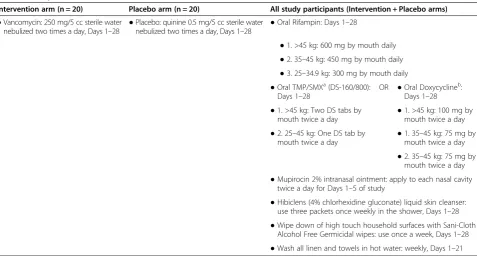
Study participants will be randomized to receive nebu-lized vancomycin or taste-matched placebo. Nebu-lized vancomycin will be administered as 250 mg in 5 cc of sterile water, nebulized twice a day for 28 days. Placebo will consist of volume-matched (5 cc) and taste-matched (quinine 0.1 mg/mL) nebulized sterile water. Patients will use a Pari Sprint nebulizer and Pari Vios compressor as the delivery system, with a Pari Expiratory Filter to minimize environmental contam-ination with nebulized vancomycin. Patients will also be provided with an albuterol HFA MDI and instructed to take two puffs at home 5 to 60 minutes prior to study drug inhalation.
All study participants will receive oral rifampin (>45 kg: 600 mg daily; 35–35 kg: 450 mg daily; 25–34.9 kg: 300 mg daily), and oral trimethoprim/sulfamethoxazole (>45 kg: two DS tablets twice a day; 25–45 kg: one DS tablet twice
a day). If a study participant is sulfa intolerant or their MRSA culture is trimethorpim/sulfamethoxazole (TMP/ SMX) resistant, then they will receive oral doxycycline (>45 kg: 100 mg twice a day; 35–45 kg: 75 mg twice a day; 25–34.9 kg: 50 mg twice a day). Oral antibiotics will be ad-ministered for 28 days, in conjunction with the nebulized study drug.
To address potential nasal colonization with MRSA, study participants will be instructed to use mupirocin 2% intranasal ointment for the first 5 days of the treat-ment period: half of a single use tube applied into each nostril, twice a day. To address potential MRSA colo-nization of the skin, subjects will also be instructed to use Hibiclens 15 cc liquid skin cleanser packets (4% chlorhexidine gluconate) once weekly in the shower for 4 weeks to minimize body colonization. Finally, to address potential home sources of MRSA, participants will wipe down all high-touch home surfaces with Sani-Cloth Alcohol Free Germicidal wipes and wash bed linen and towels in hot water weekly for the first three weeks of the study. See Table 2 for a list of study interventions.
All of the participant’s usual CF medications and treat-ments are allowed except non-study anti-MRSA antibi-otics beginning 2 weeks prior to the screening visit and throughout the study (unless medically indicated). Subjects should remain on a stable medical regimen throughout the entire study period, with the exception that patients on continuous inhaled antibiotics will stop their non-study drug inhaled antibiotic during the 28 day treatment period. If subjects are on an alternating 28-day“on”/”off” cycle of an inhaled antibiotic, study drug dosing will occur during the“off”cycle. There will be no introduction of other new chronic therapies during the study period unless medically required.
Randomization
Up to 40 eligible patients will be enrolled and randomly assigned to vancomycin for inhalation or placebo treat-ment in a 1:1 ratio using a SAS-based, computer-generated randomization scheme. The randomization will be performed in blocks of random sizes and stratified by FEV1% and center. The randomization will also be designed to assure an equal division be-tween placebo and treatment among the first 16 partic-ipants in preparation for the first data and safety monitoring board (DSMB) safety review (after 16 par-ticipants are enrolled). After the initial DSMB safety re-view and approval, eligible subjects aged 12–17 years may be enrolled.
Blinding
Table 1 Study inclusion and exclusion criteria
Inclusion criteria Exclusion criteria
●Male or female≥12 years of age ●An acute upper or lower respiratory infection, pulmonary exacerbation,
or change in routine therapy (including antibiotics) for pulmonary disease within 42 days of the Day 1 visit (2 weeks prior to screening visit)
●Confirmed diagnosis of CF based on the following criteria: ●Individuals on continuous inhaled antibiotics without interruption who are not willing to substitute vancomycin or placebo for their scheduled inhaled antibiotic during days 0–28 of the study
●1. Positive sweat chloride >60 mEq/L (by pilocarpine iontophoresis) and/or
●2. A genotype with two identifiable mutations consistent with CF or abnormal nasal potential difference, and
●3. One or more clinical features consistent with the CF phenotype
●Written informed consent (and assent when applicable) obtained from subject or subject’s legal representative and ability for subject to comply with the requirements of the study
●Use of oral or inhaled anti-MRSA drugs within two weeks of the screening visit
●Two positive MRSA respiratory cultures in the last 2 years at least 6 months apart, plus a positive MRSA respiratory culture at the screening visit and run-in (Day−14) visit
●History of intolerance to inhaled vancomycin or inhaled albuterol
●At least 50% of respiratory cultures from the time of the first MRSA
culture (in the last 2 years) have been positive for MRSA ●
History of intolerance to rifampin or both trimethorpim/ sulfamethoxazole (TMP/SMX) and doxycycline
●FEV1> 30% of predicted normal for age, gender, and height at screening ●Resistance to rifampin or both TMP/SMX and doxycycline at screening
●Females of childbearing potential must agree to practice an acceptable method of birth control (in the opinion of the investigator), including abstinencea. Female patients who utilize hormonal contraceptives as a birth control method must have used the same method for at least 3 months before study dosing
●Resistance to vancomycin at screening
●Abnormal renal function, defined as creatinine clearance <50 mL/min using the Cockcroft-Gault equation for adults or Schwartz equation in children, at screening
●Abnormal liver function, defined as≥3x upper limit of normal, of serum aspartate transaminase or serum alanine transaminase, or known cirrhosis at the time of screening
●Serum hematology or chemistry screening results which in the judgment of the investigator would interfere with completion of the study
●History of or listed for solid organ or hematological transplantation
●History of sputum culture with non-tuberculousMycobacteriain the last 6 months
●History of sputum culture withBurkholderia Cepaciain the last year
●Planned continuous use of soft contact lenses while taking rifampin and no access to glasses
●Current use of oral corticosteroids in doses exceeding the equivalent of 10 mg prednisone a day or 20 mg prednisone every other day
●Taking voriconazole and unable to discontinue its use from run-in visit to Day 29 end-of-treatment visit
●Administration of any investigational drug or device within 28 days of screening or within 6 half-lives of the investigational drug (whichever is longer)
●Patients on inhaled antibiotics must have been on the same regimen for the 4 months prior to screening
●Female patients of childbearing potential who are pregnant or lactating, or plan on becoming pregnant
●Any serious or active medical or psychiatric illness, which in the opinion of the investigator, would interfere with patient treatment, assessment, or adherence to the protocol
following study procedures will be in place to ensure double-blind administration of study treatments:
Access to the randomization code will be strictly controlled. Access to the randomization code will be limited to the randomization programmer, manager of the data management unit as a backup to the randomization programmer, and the drug packaging group.
Packaging and labeling of test and control treatments will be identical.
Measured serum and sputum vancomycin levels will not be available to the investigators until data base lock.
The study blind will be broken on completion of the clinical study and after all adverse events have been evaluated for relationship to study drug, coded, and reviewed by the DSMB.
During the study, the blind may be broken only in emergencies when knowledge of the patient’s treatment group is necessary for further patient management.
Participant follow-up
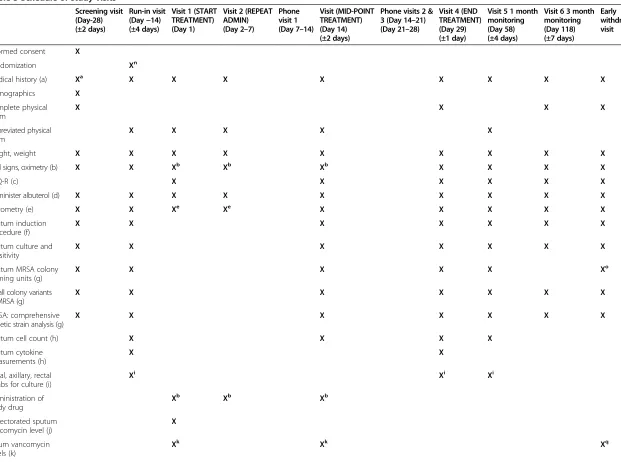
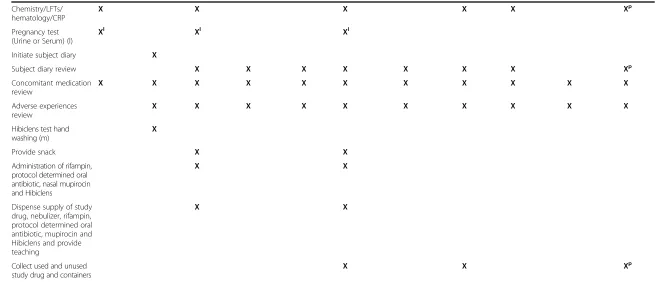
Study participants will be followed for up to 155 days. The duration of subject participation will include: Screening/Run-in: up to 30 days; Treatment: 28 days; Primary Endpoint: Day 58; Follow-up: 3 months after com-pletion of 28-day treatment period. See Table 3 for a
complete list of study visits, events, and study procedures by event.
Outcome measures
The primary outcome of this study is the percentage of patients MRSA free by induced sputum respiratory tract culture 1 month (Visit 5, Day 58) after completion of 4-week eradication protocol in intervention arm vs. control arm.
Secondary efficacy outcomes include: i) percentage of patients MRSA free at visit 4 (Day 29) and Visit 6 (Day 118); ii) change in FEV1 from baseline (Day 1) at visit 4 (Day 29), Visit 5 (Day 58) and visit 6 (Day 118); iii) change in FEV1 from screening (Day −28) at Visit 4 (Day 29), visit 5 (Day 58) and visit 6 (Day 118); iv) time to first pulmonary exacerbation, measured from Day 1; v) total number of exacerbations at visit 5 (Day 58) and visit 6 (Day 118); vi) change in patient reported CFQ-R (respiratory) from baseline (visit 1) to visit 3 (Day 14), visit 4 (Day 29), visit 5 (Day 58), and visit 6 (Day 118); 7) number of patients with newly developed MRSA resistance to vancomycin, TMP/SMX, doxycycline, and/or rifampin at any point during follow-up.
[image:5.595.60.538.98.354.2]Secondary safety outcomes include: i) chemistry panel, aspartate transaminase, alanine transaminase, alkaline phosphatase, and complete blood count with differential, at screening (Day −28), visit 3 (Day 14), visit 4 (Day 29), and visit 5 (Day 58); ii) incidence of adverse events; iii) con-tinuous oxygen saturation throughout first nebulized
Table 2 Study interventions
Intervention arm (n = 20) Placebo arm (n = 20) All study participants (Intervention + Placebo arms)
●Vancomycin: 250 mg/5 cc sterile water nebulized two times a day, Days 1–28 ●
Placebo: quinine 0.5 mg/5 cc sterile water nebulized two times a day, Days 1–28 ●
Oral Rifampin: Days 1–28
●1. >45 kg: 600 mg by mouth daily
●2. 35–45 kg: 450 mg by mouth daily
●3. 25–34.9 kg: 300 mg by mouth daily
●Oral TMP/SMXa(DS-160/800): Days 1–28
OR ●Oral Doxycyclineb: Days 1–28
●1. >45 kg: Two DS tabs by
mouth twice a day ●
1. >45 kg: 100 mg by mouth twice a day
●2. 25–45 kg: One DS tab by mouth twice a day
●1. 35–45 kg: 75 mg by mouth twice a day
●2. 35–45 kg: 75 mg by mouth twice a day
●Mupirocin 2% intranasal ointment: apply to each nasal cavity twice a day for Days 1–5 of study
●Hibiclens (4% chlorhexidine gluconate) liquid skin cleanser: use three packets once weekly in the shower, Days 1–28
●Wipe down of high touch household surfaces with Sani-Cloth Alcohol Free Germicidal wipes: use once a week, Days 1–28
●Wash all linen and towels in hot water: weekly, Days 1–21 a
Participants with MRSA susceptible by MIC testing to TMP/SMX and without history of sulfa allergy will be treated with trimethoprim/sulfamethoxazole.
b
(±2 days) (±4 days) (Day 1) (Day 2–7) (Day 7–14) (Day 14) (±2 days)
(Day 21–28) (Day 29) (±1 day)
(Day 58) (±4 days)
(Day 118) (±7 days)
visit
Informed consent X
Randomization Xn
Medical history (a) Xa X X X X X X X X
Demographics X
Complete physical exam
X X X X
Abbreviated physical exam
X X X X X
Height, weight X X X X X X X X X
Vital signs, oximetry (b) X X Xb Xb Xb X X X X
CFQ-R (c) X X X X X X
Administer albuterol (d) X X X X X X X X X
Spirometry (e) X X Xe Xe X X X X X
Sputum induction procedure (f)
X X X X X X X
Sputum culture and sensitivity
X X X X X X X
Sputum MRSA colony forming units (g)
X X X X X Xo
Small colony variants of MRSA (g)
X X X X X X X
MRSA: comprehensive genetic strain analysis (g)
X X X X X X X
Sputum cell count (h) X X X X
Sputum cytokine measurements (h)
X X
Nasal, axillary, rectal swabs for culture (i)
Xi Xi Xi
Administration of study drug
Xb Xb Xb
Expectorated sputum vancomycin level (j)
X
Serum vancomycin levels (k)
Xk Xk Xq
al.
Trials
2014,
15
:223
Page
6
o
f
9
al.com/cont
[image:6.794.73.694.63.525.2]Pregnancy test (Urine or Serum) (l)
Xl Xl Xl
Initiate subject diary X
Subject diary review X X X X X X X Xp
Concomitant medication review
X X X X X X X X X X X
Adverse experiences review
X X X X X X X X X X
Hibiclens test hand washing (m)
X
Provide snack X X
Administration of rifampin, protocol determined oral antibiotic, nasal mupirocin and Hibiclens
X X
Dispense supply of study drug, nebulizer, rifampin, protocol determined oral antibiotic, mupirocin and Hibiclens and provide teaching
X X
Collect used and unused study drug and containers
X X Xp
a
Spontaneous expectorated sputum collected 5 ± 4 minutes after nebulizing study drug. Gargle with 30 cc of saline for ten seconds x3 prior to collection.
b
Peak drawn 60 ± 10 minutes after end of nebulization on day 1; trough drawn with other blood tests prior to nebulization on day 14.
c
Serum pregnancy test done at screening, urine at other time points.
d
Wash with water and one packet of Hibiclens hand cleanser for 2 minutes. Skin reaction will be observed for 15 minutes after washing.
e
Randomization will be a non-visit task on Day−4 (±3 days) once culture results from run-in visit confirm presence of MRSA.
f
CFU’s will be done if early withdrawal visit occurs between visit 2 and visit 4.
g
If applicable, only if early withdrawal visit occurs between visit 1 and visit 4.
h
If applicable, only if early withdrawal visit occurs before visit 3.
i
History of previous treatment for MRSA, number of MRSA cultures, and length of MRSA positivity at screening visit.
g
Continuous pulse oximetry is performed during nebulization of study drug and for 5 minutes afterward on Days 1, Repeat admin visit and Day 14. Observe for 1 h post-treatment.
k
On days CFQ-R is performed, it is done before any other interventions.
l
Two puffs of Albuterol HFA 10–30 minutes prior to spirometry and 10–60 minutes prior to study drug nebulization on Days 1 and 14.
m
Single spirometry value also obtained immediately after and 15 minutes after study drug nebulization on Day 1 and Repeat Administration Day.
n
Follow TDN Sputum Induction protocol 517.01; throat swab if inadequate sputum produced.
o
Only if culture grows MRSA.
p
Follow TDN Sputum Processing Protocol 508.01.
q
Rectal swabs optional and only age≥18; no rectal swab on day 58.
al.
Trials
2014,
15
:223
Page
7
o
f
9
al.com/cont
[image:7.794.50.711.68.350.2]vancomycin dose; iv) spirometry checked immediately and 15 min (±10 min) after first nebulized vancomycin dose; v) hand washing with chlorhexidine body wash at visit 1 (Day 1) to monitor for skin sensitivity.
Additional secondary outcomes include: i) serum vanco-mycin peak level 60 minutes after completion of first dose of inhaled vancomycin at visit 1; ii) trough serum vancomycin level to be drawn prior to nebulization of vancomycin at visit 3 (Day 14 – 2 weeks into nebulized vancomycin); iii) sputum vancomycin level at visit 3 (Day 14), 30 minutes after nebulizing vancomycin in pa-tients; iv) change in minimum inhibitory concentration (MIC) of vancomycin, rifampin, TMP/SMX, and tetra-cycline for MRSA. Centers for Disease Control and Prevention guidelines classify MRSA as vancomycin-intermediate Staphylococcus aureus if the MIC for vancomycin is 4–8 μg/mL, and classify MRSA as vancomycin-resistantStaphylococcus aureusif the vanco-mycin MIC is≥16μg/mL. We will also monitor for those MIC’s that are initially less than 2μg/mL and convert to 2μg/mL; 5) rectal swabs at run-in visit (Day−14), visit 4 (Day 29), and visit 5 (Day 58) to screen for the develop-ment of vancomycin-resistant enterococcus.
Statistical analysis
The following demographic variables at screening will be summarized by treatment arm: race, gender, age, height, and weight. All eligible patients who are randomized into the study and receive at least one dose of the study drug (the Safety Population) will be included in the safety analysis.
Our hypothesis for our primary outcome states that the treatment arm will result in significantly greater eradication of persistent MRSA from the respiratory tract of CF adolescents and adults compared to the pla-cebo arm on day 58. Our primary analysis will include comparing the proportion of CF patients in the treat-ment arm who have a negative MRSA culture at visit 5 to the proportion of patients in the placebo arm who have a negative MRSA culture at visit 5. Secondary ana-lyses will include the above comparisons, but at visits 4 and 6.χ2or Fishers exact test will be used to determine statistical significance. A secondary analysis will also be performed comparing proportions of MRSA positive cultures among the three cultures obtained at visits 3, 4, and 5 during the study. Generalized estimating equations (GEE), using a logit link, will be used to model this longi-tudinal data. The GEE model will be used to test for main effects of treatment arm, time, and treatment × time interaction. Furthermore, sensitivity analyses will be per-formed to evaluate the robustness of the primary out-come to missing culture data (missing data should be minimal) using i) imputation with last observation car-ried forward and multivariate imputation by chained
equations, ii) treating all missing cultures as negative, and iii) treating all missing cultures as positive. Finally, the statistical analyses, evaluating both primary and sec-ondary outcomes, will be adjusted for the presence of
Pseudomonaspositive sputum cultures, as well as for the concurrent use of azithromycin during the course of the study period.
Our hypothesis for the secondary outcomes states that the treatment arm will improve clinical measures (lung function, quality of life, and exacerbations) compared to placebo. Statistical significance for differences in lung function (FEV1%) at visit 4 will be assessed between the two treatments using a 2-samplet-test. We will use lin-ear mixed models to longitudinally analyze and compare the change in lung function over 155 days in the two arms. CFQ-R respiratory scores will be expressed as mean ± standard deviation and statistical significance assessed between the two arms at visit 4 using a 2-sample
t-test. A Kaplan-Meier plot will be used to graphically display estimates of the survivor function for the propor-tion of patients who do not have an exacerbapropor-tion through day 118. Hazard ratios and 95% confidence intervals due to treatment will be calculated using a Cox proportional hazards regression model. Pre-specified potential vari-ables that may be adjusted for include gender, season of enrollment, and center.
Our third hypothesis is that the treatment will have similar effects with regards to the development of anti-microbial resistance and adverse events compared to placebo. There has been concern in previous methicillin-sensitive Staphylococcus aureus treatment studies of an increased risk of gram-negative pathogen acquisition; therefore, we will monitor for this development [13]. Rates of occurrence of development of microbial resist-ance, gram-negative pathogens will be summarized sep-arately by treatment arm. Between-group comparisons will be made using aχ2test or Fishers exact test.
Adverse event rates will be coded by body system and MedDra classification term. Adverse events will be tabu-lated by treatment group and will include the number of patients for whom the event occurred, the rate of occur-rence, and the severity and relationship to study drug. Fisher’s exact test will be used to compare the various treatment groups with respect to incidence of the more commonly occurring adverse events.
No interim analyses are planned. A safety analysis will be planned after the first 16 adults are enrolled. If the DSMB agrees based on initial safety data, enrollment eligibility will then be expanded to include those aged 12– 17 as well.
Sample size
MRSA at visit 5 (day 58). We are planning a study with 20 experimental and 20 control patients. There are no treatment studies published in CF patients with persist-ent MRSA to guide the assumptions for the primary out-come for the two arms. In fact, the results from this study will be used to power future multi-center trials. Based on our experience, treatment with oral antibiotics in those with persistent MRSA results in an approximate eradication rate of 15–25%. An experimental arm eradi-cation rate of 75% would be considered significant, though some may even consider a lower percentage sig-nificant as well. Based on these assumptions, we have greater than 80% power if the MRSA eradication rate in the experimental arm is at least 65%, assuming a 20% eradication rate in the placebo arm.
Discussion
MRSA pulmonary infection is a clinically significant com-plication for individuals with cystic fibrosis. The dramatic increase in the prevalence of MRSA infection in CF and the new understanding that persistent infection with this resistant pathogen increases the rate of decline of lung function and shortens survival for CF patients has made finding an effective and safe treatment approach an urgent need. Unfortunately, there is currently no clear data as how to best treat persistent MRSA infection in CF. This trial will evaluate the efficacy and safety of a particularly promising treatment protocol utilizing inhaled vancomycin and multiple oral antibiotics to eradicate MRSA from CF patients with known persistent MRSA infection. Results of this trial will provide guidance both for CF clinicians and for future investigative efforts directed at this increasingly important challenge in CF.
Trial status
The first patient was enrolled in October 2012. Recruit-ment is ongoing.
Abbreviations
CF:Cystic fibrosis; CFQ-R: Cystic fibrosis quality of life questionnaire–revised; DSMB: Data and safety monitoring board; FEV1: Forced expiratory volume in one second; FEV1%: Forced expiratory volume in one second percentage of predicted; GEE: Generalized estimating equations; MIC: Minimum inhibitory concentration; MRSA: Methicillin-resistantStaphylococcus aureus; TMP/ SMX: Trimethorpim/sulfamethoxazole (Bactrim).
Competing interests
The authors declare that they have no competing interests.
Authors’contributions
MTJ wrote the manuscript and helped in performance of the study. MPB designed the protocol, helped in performance of the study, and contributed to the manuscript. DW and KAC helped in design of the protocol and contributed to the manuscript. ECD designed the protocol, helped in performance of the study, and contributed to the manuscript. All authors read and approved the final manuscript.
Acknowledgements
This study is funded by the Cystic Fibrosis Foundation.
Author details 1
Johns Hopkins Medical Institutions, 1830 E. Monument Street, 5th floor, Baltimore, Maryland 21205, USA.2Case Western Reserve University School of Medicine, University Hospitals Case Medical Center and Rainbow Babies and Children’s Hospital, 11100 Euclid Avenue, Cleveland, Ohio 44106, USA.
Received: 2 January 2014 Accepted: 6 May 2014 Published: 12 June 2014
References
1. Boyle MP:Adult cystic fibrosis.JAMA2007,298:1787–1793.
2. Cystic Fibrosis Foundation:Cystic Fibrosis Foundation Patient Registry, 2012 Annual Data Report.Bethesda, MD: Cystic Fibrosis Foundation; 2013. 3. Dasenbrook EC, Merlo CA, Diener-West M, Lechtzin N, Boyle MP:Persistent
methicillin-resistantStaphylococcus aureusand rate of FEV1 decline in cystic fibrosis.Am J Respir Crit Care Med2008,178:814–821.
4. Dasenbrook EC, Checkley W, Merlo CA, Konstan MW, Lechtzin N, Boyle MP: Association between respiratory tract methicillin-resistantStaphylococcus aureusand survival in cystic fibrosis.JAMA2010,303:2386–2392. 5. Sanders DB, Bittner RC, Rosenfeld M, Hoffman LR, Redding GJ, Goss CH:
Failure to recover to baseline pulmonary function after cystic fibrosis pulmonary exacerbation.Am J Respir Crit Care Med2010,182:627–632. 6. Garske LA, Kidd TJ, Gan R, Bunting JP, Franks CA, Coulter C, Masel PJ, Bell SC:
Rifampicin and sodium fusidate reduces the frequency of methicillin-resistantStaphylococcus aureus(MRSA) isolation in adults with cystic fibrosis and chronic MRSA infection.J Hosp Infect2004,56:208–214.
7. Macfarlane M, Leavy A, McCaughan J, Fair R, Reid AJ:Successful decolonization of methicillin-resistantStaphylococcus aureusin paediatric patients with cystic fibrosis (CF) using a three-step protocol.J Hosp Infect2007,65:231–236. 8. Solis A, Brown D, Hughes J, Van Saene HK, Heaf DP:Methicillin-resistant
Staphylococcus aureusin children with cystic fibrosis: an eradication protocol.Pediatr Pulmonol2003,36:189–195.
9. Doe SJ, McSorley A, Isalska B, Kearns AM, Bright-Thomas R, Brennan AL, Webb AK, Jones AM:Patient segregation and aggressive antibiotic eradication therapy can control methicillin-resistantStaphylococcus aureusat large cystic fibrosis centres.J Cyst Fibros2010,9:104–109. 10. Generali J, Cada D:Vancomycin: aerosolization.Hosp Pharm2004,
39:638–647.
11. Shirai M, Ide K, Sato M:Effect of inhaled vancomycin hydrochloride on elimination of methicillin-resistant Staphylococcus aureus.Nihon Kyobu Shikkan Gakkai Zasshi1995,33:1233.
12. Jennings M, Bucur C, Boyle MP, Konstan M, Dasenbrook EC:Poster session abstracts: safety and pharmacokinetics of inhaled vancomycin in individuals with cystic fibrosis.Pediatr Pulmonol2012,47:223–446. 13. Smyth AR, Walters S:Prophylactic anti-staphylococcal antibiotics for cystic
fibrosis.Cochrane Database Syst Rev2012,12, CD001912.
doi:10.1186/1745-6215-15-223
Cite this article as:Jenningset al.:Eradication strategy for persistent methicillin-resistantStaphylococcus aureusinfection in individuals with cystic fibrosis—the PMEP trial: study protocol for a randomized controlled trial.Trials201415:223.
Submit your next manuscript to BioMed Central and take full advantage of:
• Convenient online submission
• Thorough peer review
• No space constraints or color figure charges
• Immediate publication on acceptance
• Inclusion in PubMed, CAS, Scopus and Google Scholar
• Research which is freely available for redistribution Submit your manuscript at