1
Framing the Work-Life Relationship – Understanding the
Role of Boundaries, Context and Fit
Kelly Basile
The London School of Economics and Political Science
Thesis submitted to the Department of Management for the Degree of Doctor of Philosophy to the London School of Economics and Political Science
2
Declaration:
I certify that the thesis I have presented for examination for the MPhil/PhD degree of the London School of Economics and Political Science is solely my own work other than where I have clearly indicated that it is the work of others (in which case the extent of any work carried out jointly by me and any other person is clearly identified in it).
The copyright of this thesis rests with the author. Quotation from it is permitted, provided that full acknowledgement is made. This thesis may not be reproduced without my prior written consent.
I warrant that this authorisation does not, to the best of my belief, infringe the rights of any third party.
I declare that my thesis consists of 76,925 words.
Statement of conjoint work:
I confirm that the data analysed for chapters 4, 5, and 6 was collected jointly with Dr. Alexandra Beauregard and Esther Canonico, both of the London School of
Economics and Political Science, as part of a larger research project on
3
Abstract:
This dissertation presents four papers that seek to make theoretical and practical contributions to the literature on work-life boundary management. Specifically, this research explores new relationships between boundary antecedents, moderators and outcomes, tests the impact of different working arrangements, and uses multiple research methods in order to add to our understanding of how we can manage work-life boundaries in such a way that better work-work-life outcomes are recognized. The research makes contributions to three areas of work-life literature. First, this research contributes to literature on work–life boundary management by redefining the role of permeability as an essential mechanism by which boundaries can
influence work-life outcomes. Using survey and daily diary data with homeworkers in the UK, this research suggests that permeability is a moderator that influences the impact of segmenting and integrating employment practices on work-life outcomes. Further, this dissertation also provides evidence to support the idea that the
employment context in an important consideration when considering boundary management. Using qualitative and quantitative research conducted in both highly segmented and highly integrated work environments this research has underscored the importance of considering that boundary strategies are not 'one size fits all’.
4
‘misfit’ between segmentation-preference and segmentation-supply and the resulting impact on work-life outcomes is examined.
Last, this research also makes a contribution to the literature that connects the Job Demands-Resources Model to the work-life interface (Demerouti et al., 2001). Drawing on Boundary and Border Theories (Zerubavel, 1991, Clark, 2000), this research uses data from a daily diary study of homeworkers to examine daily
predictors and outcomes of boundary strength. In addition, the data demonstrate that boundary permeability acts a moderator that regulates the impact of job demands and resources, apart from just segmenting and integrating working practices, on work-life outcomes and well-being. Together, these papers reflect the importance of
examining work/non-work boundaries through the lens of individual and
5
Acknowledgements:
“It is good to have an end to journey toward; but it is the journey that matters, in the
end.” (Ursula LeGuin, The Left Hand of Darkness)
My PhD has been an incredible process of learning and development. I had no idea when I started how much the process of completing my PhD would make a greater contribution to my learning that the final product. I learned not only about the challenges associated with academic research and writing, but I also learned a lot about myself as a person, as well as new ways of collaborating with others to make meaningful contributions.
There are so many people who I wish to thank for their contributions to my development throughout this PhD process. First and foremost, I want to thank my PhD supervisor, Dr. Alexandra Beauregard for her invaluable contributions to my learning and my research. Her endless patience with reading and re-reading chapter drafts, providing creative ideas when data collection proved challenging and her never-ended humour and wit which brightened the most challenging of days during my PhD were what got me through this six-year process and I feel lucky to have benefitted from her guidance and expertise.
I also want to thank several other academics from the LSE and beyond who
6
to explore the literature and find a research topic that suited my interests. I would also like to thank my second supervisor, Ms. Sue Fernie, and Dr. Jonathan Booth for their helpful and constructive reviews of my work. I would like to thank my
examiners, Professor Claire Kelliher and Dr. Jane Sturges for their constructive comments and review of this dissertation. In addition, I would like to thank Esther Canonico, Janine Duvier and Sarah Otner, for their friendship, support and guidance during this process. It is very important to have friends to lean on and share this journey with.
I would also like to thank all of the staff and research participants at my two fieldwork sites for giving freely of their time and opinions to provide the materials and data which was basis of my research. At both organisations, I had the great fortune to work with managers and staff deeply committed to improving the work-life interface in ways that provided both employee and organisational benefits. Their thoughts, ideas and experiences are what allow this dissertation to make a
contribution to work-life literature.
7
Table of Contents:
Chapter 1: Introduction ... 13
1.1Introduction ... 14
1.2 Goals of the Research ... 20
1.3 Structure of this Dissertation ... 23
1.3.1 Occupational context and Person-Environment Fit ... 24
1.3.2 Boundary Strategies and Person-Environment Fit ... 27
1.3.3 The Role of Permeability in the Work-Life Interface ... 30
1.3.4 Boundary Permeability and Job Demands-Resources ... 32
1.4 Overall Research Design ... 35
1.5 Fieldwork Overview and Timings ... 37
1.6 Summary and Conclusion ... 41
Chapter 2: Review of the Literature ... 43
2.1 Introduction ... 44
2.2 Core Work-Life Concepts ... 45
2.2.1 Roles, Domains and Transitions ... 46
2.2.2 Role Identification and Role Salience ... 50
2.3 Relationships between Work and Life ... 53
2.3.1 Conflict Perspective ... 53
2.3.2 Enrichment Perspective ... 56
2.3.3 Spillover and Crossover ... 59
2.3.4 Compensation ... 61
2.4 Theory and Research Specific to Boundary Management ... 62
2.4.1 Boundary and Border Theories ... 62
2.4.2 The Integration-Segmentation Continuum ... 64
2.4.3 Boundary Strength ... 67
2.4.3.1 Flexibility ... 67
2.4.3.2 Permeability ... 70
2.4.4 Organisational Boundary Supply ... 74
2.4.4.1 Organisational Context ... 75
2.4.4.2 Job Demands and Resources ... 77
8
2.4.5 Boundary Work and Boundary Management Strategies ... 81
2.5 Areas of Research Opportunity in the Boundary Management Literature ... 84
2.6 Summary and Conclusion ... 86
Chapter 3: Boundary Management and the Highly Segmented Worker ... 87
3.1 Introduction ... 88
3.2 Highly Segmented Work Environments ... 92
3.2.1 Offshore Work ... 92
3.2.2 Shift / Rotational Work ... 94
3.2.3 Military / Expatriate Work ... 95
3.3 Boundary Preferences, Demands and Resources ... 97
3.3.1 Integration-Segmentation Continuum for Individuals and Workplaces ... 97
3.3.2 Fit between Work Segmentation Preferences and Supply ... 99
3.3.3 The Role of Social and Occupational Supports ... 103
3.4 Method ... 108
3.4.1 Research Design ... 108
3.4.2 Measures ... 112
3.5 Analysis and Findings ... 119
3.6 Discussion ... 131
3.7 Limitations ... 137
3.8 Conclusion ... 138
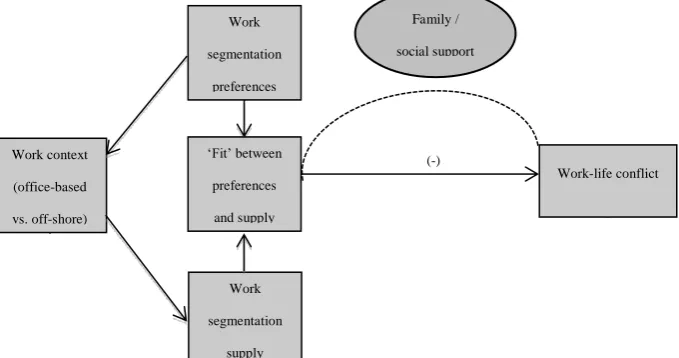
Figure 3.1: Model of Relationships Leading to Work-Life Conflict ... 107
Figure 3.2: Model of Relationships Leading to Work-Life Enrichment ... 108
Figure 3.3: Model of Relationships Leading to Organisational Commitment ... 108
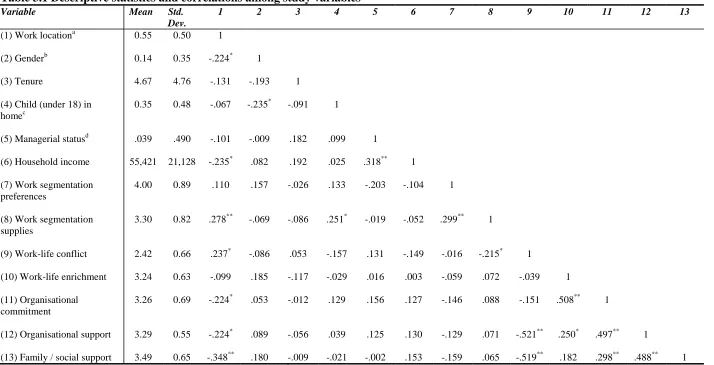
Table 3.1: Descriptive statistics and correlations among study variables ... 121
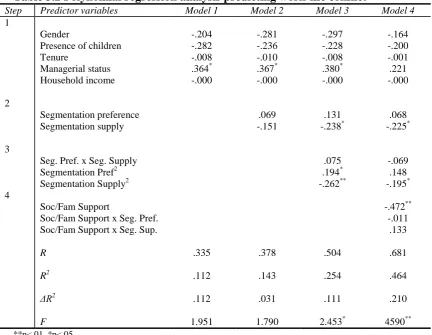
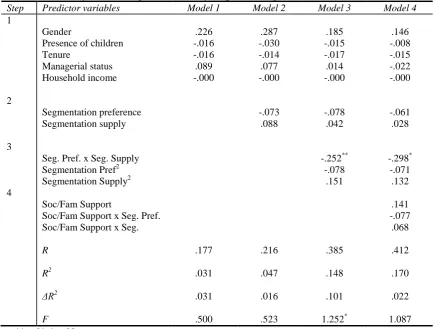
Table 3.2: Polynomial regression analysis predicting work-life conflict ... 125
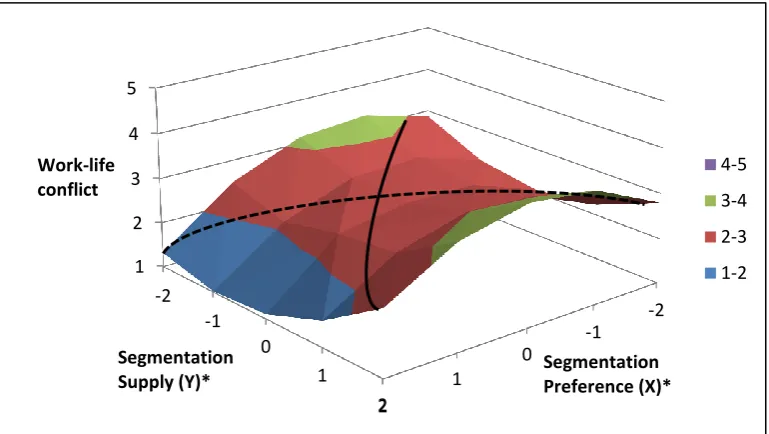
Figure 3.4: Response Surface Analysis: Segmentation Preference, Supply and Work-Life Conflict ... 127
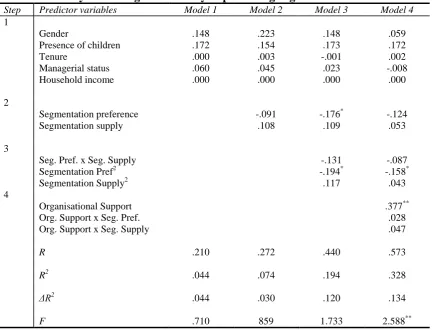
Table 3.3: Polynomial regression analysis predicting work-life enrichment ... 128
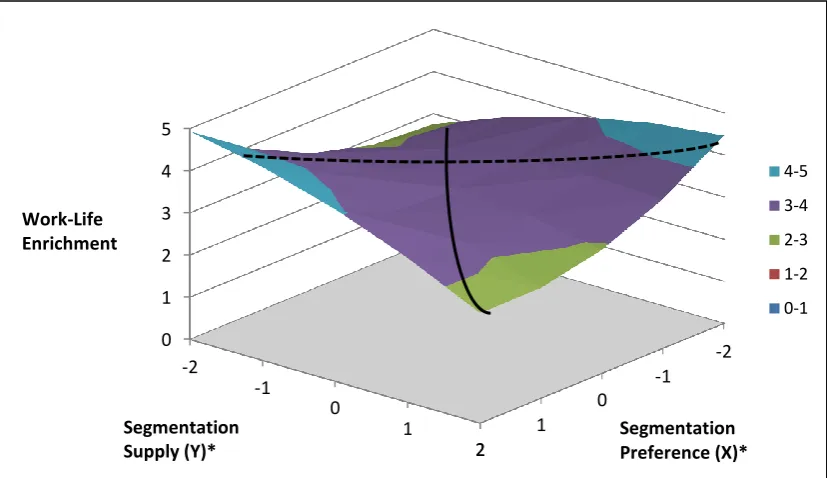
Figure 3.5: Response Surface Analysis: Segmentation Preference, Supply and Work-Life Enrichment ... 129
9
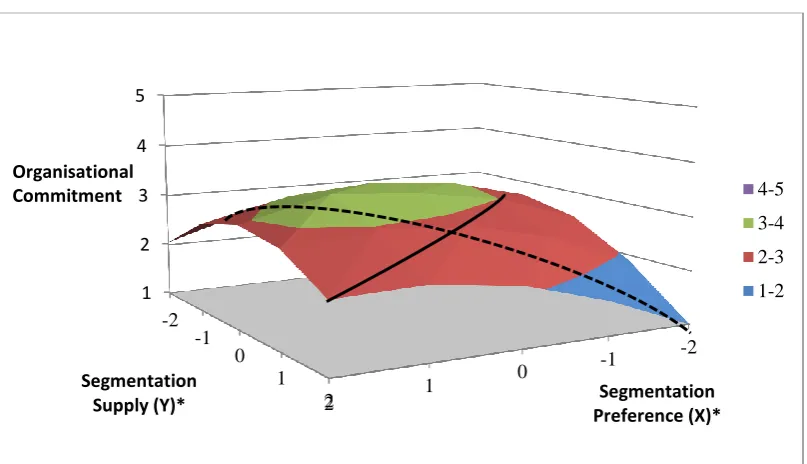
Figure 3.6: Response Surface Analysis: Segmentation Preference, Supply and
Organisational Commitment ... 131
Chapter 4: Mind the Gap: Negotiating Boundaries between Work and Home ... 140
4.1 Introduction ... 141
4.2 Homeworking ... 143
4.2.1 Overview of Homeworking in the UK ... 143
4.2.2 Outcomes of Homeworking ... 144
4.2.3 Defining Homeworking ... 148
4.2 Literature on Boundary Management ... 151
4.2.1 Boundary Work ... 151
4.2.2 Boundary Management Strategy ... 155
4.2.3 Boundary Strategies and Homeworking ... 158
4.3 Method ... 161
4.4 Findings ... 169
4.4.1 What are the boundary strategies and tactics used by individuals who work from their home environment? ... 169
4.4.2 Do homeworker boundary strategies match their preferences for integration or segmentation?... 173
4.4.3 How do boundary management strategies differ among employees at different levels of homeworking? ... 175
4.4.4 What happens when boundary management strategies are unsuccessful and boundary violations occur? ... 181
4.5 Discussion ... 184
4.6 Limitations ... 191
4.7 Conclusion ... 193
Table 4.1 Demographic breakdown of research participants ... 164
Table 4.2: Final Coding Framework ... 168
Chapter 5: Boundary Management and the Highly Integrated Worker ... 195
5.1 Introduction ... 196
5.2 Homeworking, Boundary Flexibility and Permeability ... 197
10
5.4 Person-Environment Fit ... 206
5.5 Method ... 207
5.5.1 Research Design ... 207
5.5.2 Quantitative Measures ... 209
5.6 Analysis and Findings ... 215
5.7 Discussion ... 227
5.8 Limitations ... 230
5.9 Conclusion ... 233
Table 5.1: Descriptive statistics and correlations among study variables ... 217
Table 5.2: Hierarchical regression predicting non-work boundary permeability 219 Figure 5.1: Curvilinear Relationship between Extent of Homeworking and Non-Work Boundary Permeability ... 219
Table 5.3 Hierarchical regression predicting work-life conflict ... 220
Table 5.4 Hierarchical regression analysis work-life conflict ... 221
Table 5.5 Hierarchical regression analysis work-life conflict ... 222
Figure 5.2 Moderating Effects of Boundary Permeability ... 223
Table 5.6 Hierarchical regression analysis predicting work-life conflict ... 224
Chapter 6: Boundary Management over Time ... 235
6.1 Introduction ... 236
6.2 Literature Review ... 238
6.2.1 Antecedents to Non-Work Boundary Permeability among Homeworkers ... 241
6.2.2 Boundary Permeability as a Moderator between Job Demands and Negative Work-Life Outcomes ... 245
6.2.3 Boundary Permeability as a Moderator between Job Resources and Positive Work-Life Outcomes ... 249
6.3 Method ... 254
6.3.1 Research Design ... 254
6.3.2 Measures ... 257
6.3.3 Analyses ... 261
6.4 Findings ... 262
11
6.6 Limitations ... 276
6.7 Conclusion ... 279
Figure 6.1: Model of Antecedents to Non-work Boundary Permeability among Homeworkers ... 245
Figure 6.2: Model of Boundary Permeability as a Moderator between Job Demands and Negative Work-Life Outcomes ... 249
Figure 6.3: Model of Boundary Permeability as a Moderator between Job Resources and Positive Work-Life Outcomes ... 253
Table 6.1 Analysis of Variance (ANOVA) of diary / non-diary sample characteristics ... 257
Table 6.2 Descriptive statistics and correlations among study variables ... 263
Table 6.3 Estimates of Parameter Variance for Null Hypotheses ... 266
Table 6.4 HLM Parameter Estimates for Within-Person Model - Antecedents to Non-Work Boundary Permeability ... 267
Table 6.5 HLM Parameter Estimates for Within-Person Model – Job Demands / Outcomes ... 268
Figure 6.4 Moderating Effects of Boundary Permeability on Work-Life Conflict ... 269
Table 6.6 HLM Parameter Estimates for Within-Person Model – Job Resources / Outcomes ... 270
Figure 6.5 Moderating Effects of Boundary Permeability on Work-to-Life Facilitation ... 271
Chapter 7: Conclusions ... 281
7.1 Introduction ... 282
7.2 Overall Contributions of this Dissertation to the Literature ... 282
7.3 Contributions and Implications from Core Research Questions ... 286
7.3.1 What impact does occupational context have on Person-Environment Fit and the work-life boundary interface? ... 286
7.3.1.1 Contributions to the Literature ... 286
7.3.1.2 Implications for Practice ... 291
12
7.3.2.1 Contributions to the Literature ... 294
7.3.2.2 Implications for Practice ... 297
7.3.3 What is the role of boundary permeability in the work-life interface? .... 299
7.3.3.1 Contributions to the Literature ... 299
7.3.3.2 Implications for Practice ... 301
7.3.4 How does boundary permeability impact the relationship between other job demands and resources, beyond flexible working practices, and positive and negative and work-life outcomes? ... 303
7.3.4.1 Contributions to the Literature ... 303
7.3.4.2 Implications for Practice ... 305
7.4 Limitations ... 307
7.4.1 Selection / Number of Employees ... 307
7.4.2 Types of Employees ... 308
7.4.3 Common Method Bias ... 309
7.4.4 Scale Revision ... 309
7.5 Areas for Future Research ... 310
7.6 Conclusion ... 312
References ... 314
Appendices ... 353
Appendix 1 - Survey Instrument (Chapter 3) ... 353
Appendix 2 – In-Depth Interview Guide (Chapter 4) ... 363
Appendix 3 – Survey Instrument (Chapter 5) ... 370
13
Chapter 1: Introduction
1.1 Introduction
1.2 Goals of the Research
1.3 Structure of this Dissertation
1.3.1 Occupational Context and Person-Environment Fit 1.3.2 Boundary Strategies and Person-Environment Fit
1.3.3 The Role of Boundary Permeability in the Work-Life Interface 1.3.4 Boundary Permeability and Job Demands-Resources
1.4 Overall Research Design
1.5 Fieldwork Overview and Timings
14
1.1 Introduction
"‘Boundary work’ consists of the strategies, principles and practices that we use to
create, maintain and modify cultural categories. It is the never-ending, hands-on,
largely visible process through which classificatory boundaries are negotiated by
individuals. Boundary work is what allows categories and classification systems to
exist, to be meaningful, and to change over time. It is boundary work, therefore, that
allows culture or society to do the same.” (Nippert-Eng, 1996a, p.564)
In the quote above, Nippert-Eng (1996a) identifies a central issue relating to the management of the work-life interface – individual differences in how we establish, maintain and refine our boundaries between home and work. The work-life interface represents a system by which conflict and enrichment caused by bi-directional (work to non-work and non-work to work) interactions between work and non-work
15
either alleviate the conflict that can often be caused by attempting to balance work and non-work demands for many workers (Kreiner, 2006, Kossek, Ruderman, Braddy and Hannum, 2012) or facilitate the enrichment that can be experienced by engaging in multiple roles (Greenhaus and Powell, 2006, Kirchmeyer, 1992, Ruderman et al., 2002, Seiber, 1974). Central to this issue are the differences we find between work environments, non-work environments and among the
preferences for different types of environments of individual workers. Much of the work in this dissertation draws on Person-Environment Fit theory or the idea that the best outcomes are achieved when individuals perceive that there is a sense of fit between their needs and preferences and what is supplied by their environment (Edwards, Caplan and Van Harrison, 1998, Edwards and Rothbard, 1999). As research has suggested, solutions that lead to a healthy work-life interface are not ‘one size fits all’ (Desrochers, Hilton and Larwood, 2005, Kossek, Noe and DeMarr, 1999, Nippert-Eng, 1996a).
In addition to the resources provided by the environment and the preferences of the individual workers, the ability of employees to enact strategies to manage the ‘fit’ or ‘misfit’ that they experience must be considered. While the development of theory on work-life boundaries (Ashforth et al., 2000, Nippert-Eng, 1996a, Zerubavel, 1991) and borders (Clark, 2000) has done a great deal in terms of offering a
16
processes and mechanisms, interventions that seek to help employees manage their multiple roles may become more effective.
These interventions that seek to improve the work-life interface must be flexible enough in nature to accommodate these differences and make use of the mechanisms available to both individuals and organisations. One way to achieve this is to
develop a solution that is two-fold. First, we must find some way for employees and organisations to understand what they each bring to the table. For organisations, this may be the existing culture or the types of work-life benefits they offer with an understanding as to how this culture and these benefits may impact different types of workers. For individuals, this involves recognizing their own preferences for the way their work and non-work roles intersect as well as the demands of each of the roles in which they engage. Once these baseline factors are understood and organisations and employees have a way to ‘self-assess’ their own preferences, resources and demands, the second step is to find strategies to manage the
intersection of these roles that allow for greater congruence between preferences, resources and demands (Chen, Powell and Greenhaus, 2009, Edwards, 2008, Kristof-Brown, Zimmerman and Johnson, 2005). The broad purpose of the research in this dissertation is first, to extend current theory on work-life boundaries in order to better understand how contextual and individual differences impact the work-life interface. Then, this research aims to provide a better understanding of the
17
Contextual differences across work environments play an important role in shaping the boundaries around the work-life interface. For example, in some work
environments, there are very clear physical and / or temporal demarcations or ‘boundaries’ around work and non-work activities. These work contexts are characterised in the literature as having high levels of work-life segmentation, such that work and non-work activities are kept quite separate (Nippert-Eng, 1996a). Shift work is one example of a working pattern that often offers a clear demarcation of work-life boundaries, due to the physical (location) and temporal constraints of the work activity. The Office for National Statistics data from the 2009 Labour Force Survey (LFS) shows that 14% of UK workers are engaged in some kind of shift-based working arrangement (Steel, 2011). Other work environments may lack these traditional boundaries whereby work may take place in the home environment or at times of the day that are typically associated with non-work activities. These work environments are characterised in the literature as having high levels of work-life integration, such that work and non-work activities are often intermingled and there can be a blurring of the distinction between work and non-work activities.
Homeworking is one example of a working arrangement that lacks traditional boundaries, which may lead to the integration of work and non-work activities. Office for National Statistics data from the 2007 LFS found that the percentage of the workforce using a telephone and computer to carry out their work from home increased from 4% in 1997 to 8.9% in 2007 (Ruiz and Walling, 2005). Given the prevalence of both these highly segmented and highly integrated working
18
with managing boundaries within these contexts and by identifying mechanisms and strategies that can be used to improve work life outcomes associated with these employment contexts.
Central to the question as to how environments offering high levels of work-life segmentation or high levels of work-life integration can improve work-life outcomes is the way in which employees manage the boundaries or “mental fences” between their work and non-work roles (Zerubavel, 1991). Boundaries serve to “creat(e) slices of reality – domains that have particular meaning for the individuals creating the boundaries” (Ashforth et al., 2000, p.4). The creation of boundaries between work and non-work domains enables individuals to enact roles in each of those domains that are often bounded by time, effort and specific behaviours (Ashforth et al., 2000). The management of boundaries allows individuals to manage competing pressures from multiple roles or domains. For example, an employee may use a temporal boundary of a firm stopping time for work in order to meet the demands placed on him by his role in a family domain. Similarly, an employee may elect to ignore personal phone calls and email during the workday in order to preserve her boundary around her work domain.
19
flexibility. Boundary permeability will be discussed in greater depth later in this dissertation, but can be briefly defined here as the degree to which activities in one domain are interrupted by the activities of another (Ashforth et al., 2000, Clark, 2000, Hall and Richter, 1988). Boundary flexibility, on the other hand, can be defined as “the extent to which the physical time and location markers, such as working hours and workplace, may be changed” (Hall and Richter, 1988, p.213). In addition, an employee’s actual preference for integration or segmentation as well as the strategies they employ to enact boundaries that match these preferences must be considered. Using boundary management strategies, employees can attempt to enact boundaries that ‘fit’ with their preferences for integration or segmentation of work and non-work roles. In this dissertation, the focus is primarily on how to shape the boundaries surrounding work environments to best support employees’ non-work demands. While beyond the scope of this dissertation, another important area for investigation is how we can shape our non-work environments to best fit our work-related demands.
When looking at the actual processes by which boundaries are created and managed, boundary strength is an important characteristic in determining the role that
20
2010a). For example, definitions of permeability in the literature are inconsistent in terms of whether boundaries can be considered to be permeable if interruptions from an alternate domain are possible, versus whether these interruptions actually occur (Matthews et al., 2010a). In addition, prior research has questioned the relationship between flexibility and permeability. For example, Bulger et al. (2007) question whether flexibility and permeability are in fact co-determinants of boundary strength or whether flexibility is actually a predictor of permeability. The research contained in this dissertation seeks to extend theory on work-life boundaries by clarifying these inconsistencies and redefining the role of boundary permeability in the work-life interface. Further, by applying the Job Demands-Resources Model (Demerouti et al., 2001) to the above examination of boundary permeability, this research intends to contribute to the literature that links Job-Demands and Resources to work-life outcomes by suggesting that this new understanding of permeability can also influence the way other types of role demands and resources impact the work-life interface (Demerouti et al., 2001).
1.2 Goals of the Research
As noted above, the primary goal of this dissertation is to make a contribution to theory on life boundaries and identify how this contribution can improve work-life outcomes when applied to practice. Specifically, this dissertation makes a contribution to three areas of work-life literature. First, this research makes a significant contribution to literature on work-life boundary management by
21
outcomes. In addition, this dissertation will also contribute to the literature which relates Person-Environment Fit theory to research on work-life boundary
management by highlighting the importance of considering the employment context when examining work-life boundaries (Edwards, 1996, Rothbard et al., 2005, Voydanoff, 2005a). This research will demonstrate that employment contexts offering extreme levels of integration or segmentation may make employees more at risk for ‘misfit’ between their preferred means of managing boundaries and
organisational resources to support these preferences, and that this misfit can lead to negative work-life outcomes. Third, this dissertation also attempts to contribute to literature that connects the Job Demands-Resources Model to the work-life interface (Demerouti et al., 2001) by extending the findings relating to the role of boundary permeability to a broader range of work role demands and resources.
22
The second aspect of a theoretical contribution according to Corely and Gioia (2011, p.15) is its “utility”, or the ability to use and apply the advances in theory. Again, utility is further broken down into two dimensions: “scientific utility” is defined as an advance that improves conceptual rigor or the specificity of an idea and / or enhances its potential to be operationalized and tested, while “practical utility” can occur when “theory can be directly applied to the problems practicing managers and other organizational practitioners face” (Corley and Gioia, 2011, pp.17-18). In sum:
“Good theory is practical precisely because it advances knowledge in a scientific
discipline, guides research toward crucial questions, and enlightens the profession of
management. (Van de Ven, 1989, p.486)”
The overall goal of this dissertation is to make a contribution to work-life literature that extends theory on work-life boundaries in a way that is useful and relevant to organisations and their employees. This dissertation was designed as a progressive research exercise in which the multiple studies build on each other in order to make a contribution to the literature on work-life boundary management from multiple perspectives. In each of the paper-based chapters of this thesis, specific hypotheses and research questions are identified and commented upon in the subsequent findings and discussion sections. However, it is important to view this thesis in its entirety and identify the core contributions that this overall programme of research seeks to accomplish.
1.3 Structure of the Dissertation
23
These questions are listed below, and will be reviewed in greater detail in the next four sub-sections (1.3.1-1.3.4) of this introduction:
1.) What impact does occupational context have on Person-Environment Fit and the work-life boundary interface?
2.) How can boundary strategies be implemented in order to establish or re-establish person-environment fit, when there is mismatch between organisational supply of segmenting-integrating practices and worker preference?
3.) What is the role of boundary permeability in the work-life interface?
4.) How does boundary permeability impact the relationship between other job demands and resources, beyond flexible working practices, and positive and negative and work-life outcomes?
24
frameworks, methods and/or independent and dependent constructs relevant to the chapter. Last, the concluding chapter provides a summary of the key findings of this dissertation and presents a discussion of how these findings may be used in practice to help employers and employees across a range of working arrangements develop individual and organisational strategies that foster positive work-life outcomes. This concluding chapter will also discuss how future research might contribute additional knowledge on the topic of work-life boundary management.
1.3.1 Occupational Context and Person-Environment Fit
As will be further discussed in the literature review in Chapter 2, the role of occupational context in the work-life boundary interface has received limited attention in the literature on work-life boundaries (Kossek and Lautsch, 2012). However, prior research has demonstrated that in certain environments, employees may feel that their employing organization’s practices encourage a more integrating or segmenting approach to work-life boundaries. Current theory does not fully account for the structural differences that are provided by some working
25
What impact does occupational context have on Person-Environment Fit and the
work-life boundary interface?
In order to address this question, Chapter 3 examines work-life boundary
relationships in the context of an organisation where the work environment for half the workforce is, by nature, highly segmented. These highly segmented workers are offshore employees working primarily on ocean platforms and vessels providing geotechnical survey support. These employees work rotational schedules, consisting of six weeks offshore followed by a home leave of up to three weeks. The remainder of the workforce works traditional schedules in an office setting in the Netherlands.
The research first attempts to clarify whether, based on the Schneider’s (1987) attraction-selection-attrition framework, workers in extreme environments self-select into these types of roles because they are aligned with their own boundary
preferences. Similar to the way that workers self-select into roles that may meet social, intellectual and other types of preferences, boundary preferences may be a consideration in the selection of jobs in extreme environments. If employees self-select into roles that match their boundary preferences, then there is likely to be a reduced ‘misfit’ between preferences and organisational resources. If, however, employees do not self-select into environment that match their boundary preferences, they may experience negative work-life consequences due to a misalignment
26
between the ‘fit’ of organisational boundary supplies and employee preferences and outcomes including work to non-work conflict, work to non-work enrichment and organisational commitment. Further, moderation analysis is used to consider the role of family, social and employer supports.
The results from this chapter contribute new information to the literature on highly segmented employment patterns as well as the literature on person-environment fit and work-life boundaries. The data suggests that offshore employees have not necessarily self-selected into highly segmented work-life roles, however they do perceive their work environment to be more segmented than those working in the home office. The implications of this are that, for this group of employees, there is a greater risk of misfit between preference and supply. The data also showed that the level of ‘misfit’, not ‘fit’ had a more significant impact on employee perceptions of work-life conflict and organisational commitment such that at higher levels of misfit between segmentation preference and organisational supply of segmentation,
employees perceived higher work-life conflict and reported lower organisational commitment. This suggests that it is the existence of misfit that should be most closely attended. This has important implications for organisational practice
27
1.3.2 Boundary Strategies and Person-Environment Fit
Following on from the research in Chapter 3 which highlights the importance of looking for ‘misfit’ between organisational supply of integrating and segmenting practices and individual preference, particularly in unique organisational contexts, Chapter 4 will explore how work-life boundaries, and the strategies used by individuals to manage them, can assist with establishing or re-establishing fit between worker boundary preferences and their environment. Specifically, this research attempts to answer the core question:
How can boundary strategies be implemented in order to establish or re-establish
person-environment fit, when there is mismatch between organisational supply of
segmenting-integrating practices and worker preference?
28
purpose of this chapter is to identify how individuals at varying levels of
homeworking use boundary management strategies to bring the organisational supply of integrating work-life practices in line with their individual preferences.
First, this chapter explores the types of boundary management strategies employed by homeworkers and how their preferences for integration versus segmentation of work-life roles influence these strategies. Consistent with prior literature on
boundary management strategies, this chapter finds evidence of four different types of boundary management strategies employed by homeworkers, including physical, temporal, behavioural and communicative tactics (Kreiner, 2006). Managing
technology emerged as a key theme relating to boundary management, revealing that technology can create work to non-work interference, but is also frequently used as an aid to boundary management.
Next, this chapter sought to examine differences in boundary management among individuals engaging in varying degrees of homeworking. The findings suggest that boundary strategies supporting high levels of role segmentation were applied among infrequent homeworkers and homeworkers who work from home most of the time. The interviews suggest that employees engaged in extensive homeworking may recreate boundaries in their own homes that are similar to the traditional boundaries that one might find in office-based environments. However, those engaged in moderate levels of homeworking and those who tend to work in a more mobile way (i.e. using home as a base for work although not actually working from home)
29
levels of homeworking may perceive greater flexibility from the organisation and that this perception of flexibility may lead to a more exchange-based relationship with the organisation such that they are more willing to be flexible in return and allow for more work interruptions during non-work time or activities (Blau, 1964, Lambert 2000).
Last, this chapter examines the outcomes associated with a failure of boundaries to support permeability preference. Although the evidence of failed boundaries was limited within this sample, homeworkers described more frequent incidences of non-work factors, primarily children and partners, interfering with non-work than non-work interfering with non-work activities.
30
1.3.3 The Role of Boundary Permeability in the Work-Life Interface
Having looked at the impact of organisational context on Person-Environment Fit and how boundary management strategies can be used to re-align organisational supplies with segmentation-integration preferences, the third core research question that this dissertation seeks to address relates to the role of permeability in work-life boundary theory. As noted earlier in this chapter, the role of boundary permeability has been treated inconsistently in prior work life literature and its role in the work-life interface is unclear (Ashforth et al. 2000, Bulger et al., 2007, Clark 2000, Hall and Richter, 1988, Matthews et al., 2010a). The present research seeks to expand current boundary theory by clarifying the role of boundary permeability in the relationship between organizational supply of integrating / segmenting working practices and work-life outcomes. To do so, the following research question will be addressed:
What is the role of boundary permeability in the work-life interface?
Specifically, this study seeks to make an ‘incremental’ extension to existing theory on work-life boundaries by identifying boundary permeability as the key lever which moderates the relationship between organizational boundary supply and work-life outcomes.
31
examines the relationships between extent of homeworking, work-life conflict, non-work boundary permeability and preferences for a flexible non-work boundary. Using a moderated regression analysis, this chapter finds that the relationship between extent of homeworking and non-work boundary permeability is curvilinear in nature such that permeability is highest at moderate levels of homeworking and is lower at high levels of office-based working and high levels of homeworking. This new
contribution to the literature on boundaries and homeworking suggests that
homeworkers who work extensively in the home environment may have developed strong boundary management strategies, allowing them to create segmentation between their work and non-work activities (Kossek et al., 1999). It also provides empirical support for the qualitative findings in Chapter 4.
32
role of permeability in the relationship between environmental characteristics and work-life outcomes.
Last, this chapter examines the relationships between preferences for flexible non-work boundaries, extent of homenon-working, non-work to non-non-work conflict and non-non-work boundary permeability. Although the findings in this chapter did not support the hypothesised moderating influence of flexibility preference on the relationship between extent of homeworking or permeability and work-life conflict, the relationships between the variables in the regression equation were significant, indicating that the extent of fit between preferences and the environment can influence the likelihood of positive outcomes for homeworkers.
1.3.4 Boundary Permeability and Job Demands-Resources
Last, the research contained in the fourth paper seeks to further extend the contributions made by Chapter 5 on the role of permeability by examining how permeability influences the ways in which other job demands and resources (i.e. workload and job satisfaction) impact work-life and well-being outcomes for the individual. The primary research question addressed in this chapter is:
How does boundary permeability impact the relationship between other job demands
and resources, beyond flexible working practices, and positive and negative and
work-life outcomes?
33
daily diary for a 14-day period, which measured a variety of antecedents and
outcomes associated with the work-life interface. First, a model of the antecedents to work-life boundary strength was tested to better understand the relationship between homeworking, job control, boundary permeability and flexibility preference. The data supported the hypothesized idea that homeworkers perceive higher levels of job control on days when they work from home. Next, the impact of the increased control on boundary strength was examined and the data showed that boundary permeability was lower on days when higher levels of control were perceived. Last, the construct of flexibility preference was examined to determine if it has a
moderating effect on the relationship between level of control and boundary permeability, but the data did not show a significant relationship.
Next, using the framework of the Job Demands-Resources Model (Demerouti, Bakker, Nachreiner and Schaufeli, 2001), the relationship between job demands (in this case, workload), boundary permeability and work-life conflict was examined. While much of the prior literature on work-life boundaries envisages permeability as a boundary characteristic that influences work-life outcomes, this chapter offers a new perspective by investigating whether boundary permeability has a moderating influence on the relationship between job demands and work-life conflict. In conjunction with Chapter 5, this model makes a new contribution to the literature as it is the first time that boundary permeability has been tested as a moderating
34
levels of well-being. Combined with the prior model which identifies antecedents to boundary permeability, this finding has important practical implications for
individuals and organizations, such that employing work-life practices and engaging in working arrangements that allow employees to manage the level of permeability between work and home domains can result in reduced work-life conflict and improved employee well-being.
Similarly, the third model in this chapter examined whether boundary permeability would also moderate the relationship between job resources, in this case job satisfaction, and work-life facilitation (Demerouti et al., 2001). The data also supported this relationship, such that at higher levels of boundary permeability, job satisfaction had a stronger, positive link with work-life facilitation and higher levels of well-being. Prior literature has demonstrated that well-being is associated with many positive outcomes for the organisation including job performance, reduced absenteeism and an increase in discretionary behaviour (Warr, 1999).
In summary, the findings related to these three models make a contribution to academic and practitioner literature by identifying boundary permeability as a mechanism which can control some of the impact of job demands and resources on the work-life interface and well-being. The practical implications are that by
learning to monitor and control boundary permeability, employees and organisations can gain some control over how job demands and resources impact work-life
35
1.4 Overall Research Design
As described in the last section, this dissertation applies a mixed methods approach as a means of addressing the above research questions. A mixed methods approach was selected as the most appropriate research design to address these questions because of the pragmatic nature of the goals of the research (Creswell, 2003). A pragmatic approach to research attempts to combine the pure quantitative research tradition which encompasses a “post-positivist” (Creswell, 2003, p.6) perspective that tends to focus on discrete antecedents and their outcomes, with the pure qualitative tradition, which views research questions from a social constructionist approach that focuses on the inter-relatedness of individuals and their social environment (Feilzer, 2010, Johnson, Onwuegbuzie and Turner 2007, Teddlie and Tashakkori, 2009). “Pragmatism, when regarded as an alternative paradigm, sidesteps the contentious issues of truth and reality, accepts, philosophically, that there are singular and multiple realities that are open to empirical inquiry and orients itself toward solving practical problems in the ‘real world’” (Feilzer, 2010, p.8). A pragmatic perspective allows the mixed methods researcher to adopt “an approach to knowledge (theory and practice) that attempts to consider multiple viewpoints, perspectives, positions and standpoints (always including the standpoints of qualitative and quantitative research” (Johnson et al., p.113).
This research in this dissertation assumes that outcomes associated with work-life boundary management are not static in nature and instead evolve through repeated interactions in work and non-work environments (Bolger et al, 2003, Butler et al, 2005, Doumas, 2003, Tenbrunsel et al., 1995, Williams and Alliger, 1994).
36
addition to individual and institutional antecedents, leading to the necessity of
examining research questions from multiple perspectives (Creswell, 2003). A mixed method approach allows the researcher to “triangulat(e)” the research problems in order to build knowledge that is reliable and applicable across a variety of contexts (Jick, 1979, p.602). “Mixed method designs incorporate techniques from both quantitative and qualitative research traditions yet combine them in unique ways to answer research questions that can not be answered in any other way” (Teddlie and Tashakkori, 2003, p. x).
After a considerable review of the literature to date on mixed methods, Johnson et al. (2007) developed the following definition for the mixed method research paradigm:
“A mixed method study would involve mixing within a single study; a mixed
method program would involve mixing within a program of research and the
mixing might occur across a closely related set of studies (p.123)”
37
approach for this dissertation was necessary in order to fully explore boundary management in a way that accounts for the evolving nature of this process.
1.5 Fieldwork Overview and Timings
The fieldwork contained in this dissertation was conducted in multiple organisations. The use of multiple organisations was intentional as the research questions seek to investigate the impact of boundary strength and methods of boundary management on work-life outcomes at varying levels of organizational supply of integrating / segmenting working practices. This method of selecting organisations based on their supply of integrating and segmenting practices stems from a case study
approach to selecting sample organisations, such that they are reflective of aspects of the theory that the research questions intend to test or develop. “A case study, therefore, can not be defined through its research methods. Rather, it has to be defined in terms of its theoretical orientation. This places emphasis on understanding processes alongside their (organizational and other) contexts” (Cassell and Symon, p.324). For the purposes of this dissertation, in order to fully explore the role of organizational context on the relationship between boundary strength, boundary management strategy and work-life outcomes, the selection of two organisations that offer a differing supply of working practices along the segmentation-integration continuum was necessary (Kreiner, 2006, Nippert-Eng, 1996a).
38
the opportunity to conduct research with a population of employees who were faced with a high level of segmentation between their work and non-work roles.
Rotational, off-shore work presents high levels of segmentation between work and non-work roles due to the reduced frequency of transitions that individuals make between their home and work environments (Collinson, 1998). This phase of fieldwork was conducted in 2009/2010. The initial phases of the research involved meetings with senior management, document review and some exploratory
qualitative interviews with employees in a variety of office-based and off-shore roles. The purpose of this initial work was to gain a better understanding of the organization, their working practices and the relevant work-life issues facing its employees. The online quantitative survey that provided the data analysed in Chapter 3 was conducted in June and July of 2010.
Due to the small size of the operating group and the reluctance of other operating groups to participate in research on work-life concerns, it was decided not to pursue further research studies within this organization in order to avoid any bias associated with repeated surveys among the same group of employees. In addition, due to the nature of the research questions being addressed by this dissertation, additional research with a larger organization with a different set of working practices was necessary.
39
by the organisation’s employees. In direct contrast to the segmented work
environment offered by the first organisation, homeworking has been considered by work-life scholars to supply a more integrated work-life environment (Standen et al., 1999).
Further, the author had access to all employees of this organisation, representing a much larger sample size among which to conduct the research than in the geoscience firm. Therefore, it was possible to conduct three phases of research within this organisation including in-depth interviews, an online survey and a diary study. The first phase of the research was the conduct of 40 in-depth interviews with a purposive (Marshall, 1996) sample of employees representing the range of roles, grade levels and regional distribution of the organisation. This phase of the research allowed the author to investigate the third core research question above relating to the use of boundary strategy at varying levels of work-non-work boundary integration. Details of these interviews can be found in Chapter 4 of this dissertation. This phase of the research was conducted between February and April 2012.
40
The third phase of research with this organisation was a quantitative diary study among homeworkers. Participants for the diary study were recruited from the online survey, whereby respondents who were qualified to participate, based on indicating that they worked 20% or more of their time at home, were invited to register for the diary research. A diary study with homeworkers working at home between 20% and 100% of their working time at home allowed the author to investigate the fourth core research question above relating extending the role of boundary permeability from acting as a moderator between work demands and negative consequences to also acting as a moderator between organizational resources and positive work-life outcomes. In addition, due to the more rigorous nature of a diary method and the ability to isolate within-person differences over time, this phase of the research also sought to provide further support for the third core research question relating to the role of boundary permeability. Details on the diary study and the research findings can be found in Chapter 6. The diary research was conducted in June and July of 2012. All data was collected as part of a larger study on homeworking at the organisation.
Of note, it was decided in collaboration with the organisation to conduct the
qualitative interviews ahead of the quantitative survey. There are many options open to researchers in terms of the way that they might sequence mixed qualitative and quantitative methods for a study. As noted in his paper combining qualitative and quantitative methods, Morgan (1998) identifies that there are two key decisions that must be made upon the implementation of a study using both qualitative and
quantitative methods. First, the researchers must decide which method is the
41
research being conducted by the primary method. The second decision that must be made in terms of mixed methods is the “sequence” in which they will occur
(Morgan, 1998, p.367). This decision leads the researcher to decide whether the non-primary study will serve as a “preliminary input” to the non-primary method or a “follow-up” (p.367).
The research conducted for this dissertation with the second, UK-based organization was faced with these decisions. Collectively with the organisation, the author
decided that the quantitative research was to be the ‘primary’ focus. The quantitative research was critical to the author’s research goal of testing the roles of context and permeability in the work-life boundary interface and, from a practical perspective, was also the primary means to provide the organization with data that supported their homeworking evaluation. The qualitative data was collected as a preliminary input to the quantitative studies and served to provide information on how employees of the organization managed their work-life boundaries, as well as provide an
opportunity to explore potential constructs to be used in the quantitative research.
1.6 Summary and Conclusion
42
research also makes a unique contribution to the literature by identifying boundary permeability as a moderating mechanism through which job demands and job
resources influence work life outcomes. Again, given that individuals can control, to some degree, the levels of boundary permeability using physical, temporal,
43
Chapter 2: Review of the Literature
2.1 Introduction
2.2 Core Work-Life Concepts
2.2.1 Roles, Domains and Transitions 2.2.2 Role Identification and Role Salience
2.3 Relationships between Work and Life 2.3.1 Conflict Perspective
2.3.2 Enrichment Perspective 2.3.3 Spillover and Crossover 2.3.4 Compensation
2.4 Theory and Research Specific to Work-Life Boundaries 2.4.1 Boundary and Border Theories
2.4.2 The Integration-Segmentation Continuum 2.4.3 Boundary Strength
2.4.3.1 Flexibility 2.4.3.2 Permeability
2.4.4 Organisational Boundary Supply 2.4.4.1 Organisational Context 2.4.4.2 Job Demands and Resources 2.4.4.3 Person-Environment Fit
2.4.5 Boundary Work and Boundary Management Strategies
2.5 Areas of Research Opportunity in the Boundary Management Literature
44
2.1 Introduction
This chapter presents a review of the literature on the work-life interface with a particular focus on literature that relates to boundaries, context and individual difference. The purpose of this chapter is to demonstrate what we currently know from the literature on work-life boundaries and what gaps are left to fill by future research. The review contained in this chapter will support the studies detailed in the subsequent chapters, such that this chapter provides a review of the core literature relevant to the focus of the dissertation overall, while shorter reviews of additional literature relevant to each particular study and set of hypotheses will be provided in subsequent chapters. This chapter will begin with a review of the core work-life theory and research that has led to the niche of research relating to work-life
boundaries. This section will demonstrate the importance of considering boundaries between home and work when researching the work-life interface. Next, this chapter will review the theory that has been developed relating to work life
boundaries and discuss how this theory has been used in the research to contribute to our knowledge of issues relating to the work-life interface. This section will
45
One important consideration to address at the outset of this dissertation is the distinction between work-family vs. work-life conflict and enrichment. For the purposes of this research I have chosen to focus on the term ‘life’ to represent the non-work domain, rather than ‘home’ or ‘family’, for several reasons. First, the term family has multiple definitions and in today’s society there are a wide variety of household constructs that this term can represent. Similarly, the term ‘home’ connotes the boundary of activities that only occur in the physical location of the home, while employees’ lives are often much more complex than that. Instead, the term ‘life’ defines a broader range of activities and responsibilities that may impact upon an individual, including family, community interests, religion, social
obligations and other commitments associated with an individual’s non-work time (Greenhaus and Beutell, 1985, Staines and O’Connor, 1980). However, when reporting on the work of other authors, this dissertation will refer to the actual terms used in their research.
2.2 Core Work-Life Concepts
46
2.2.1 Roles, Domains and Transitions
The basis for most theory examining the work-life interface relates to the
identification of the multiple roles individuals occupy within their work and personal lives and the different domains that these roles fall into. For example, an individual may have the roles of manager, colleague and subordinate within their work domain, and then may be a wife and mother in the home domain. Each of the different domains in which a person operates, as well as the different roles that they play in each of these domains, has an impact on the others. Prior research has clearly demonstrated a level of interdependence between work and non-work roles
(Greenhaus and Beutell, 1985, Gutek, Nakamura and Nieva, 1981, Rothbard, 2001, Voydanoff, 2005b). In their seminal article on the sources of work-life conflict, Greenhaus and Beutell (1985) identified that both work and home roles must share resources relating to time, energy and behaviours. Similarly, Rothbard’s (2001, p.655) research with employees of a US public university found that work and non-work roles impact each other in both “enriching” and “depleting” ways.
47
which apply to a particular social position which normally persist independently of the personalities occupying the position”.
One important consideration is the number of roles a person has. There are several theories related to the idea of role accumulation. A great deal of research has
48
study of university professors in the U.S., Grandey and Cropzano (1999) found support for the COR model such that as stress at work and at home depleted the resources available to the alternative environment, research participants experienced negative consequences in each competing domain and ultimately showed indications of attempting to conserve resources as demonstrated by increased turnover
intentions.
49
Another important consideration to understanding how work and non-role roles impact each other is the actual transitions that individuals make between work and non-work roles. In their research on the daily transitions that employees make between home and work domains, Hall and Richter (1998, p.215) identify two types of transitions: “planned transitions”, which are a physical movement from one domain to another at the beginning or end of a day, and “interposed transitions”, which are mental engagements with one domain when situated physically in another. When making “planned transitions”, such as leaving work at the end of the day, individuals often engage in rituals that assist with these role transitions (Hall and Richter, 1998, p.215). For example, employees may turn off a work mobile phone or change out of work clothes upon arrival at home in order to signify the transition from their work role to a non-work role. As will be discussed further in the following section relating to integration and segmentation, the more separate an individual chooses to keep their home and work roles, the more difficult these role transitions can be (Ashforth et al., 2000).
50
individual physically enters a new domain. For example, an employee, having recently arrived at work, may be still emotionally focused on an early morning discussion they had with their child until some type of stimulus helps to transition them to emotional engagement with their work role. Research also indicates gender differences relating to transitions; women experience more conflict upon home re-entry and their transition from work to home tends to need to be made faster with fewer rituals (Hall and Richter, 1998).
The understanding of roles and transitions is an important stepping stone to creating a greater understanding of work-life boundaries and boundary management.
Research has demonstrated that the manner in which employees manage their
transitions between home and work have an important impact on work-life outcomes. For example, Williams and Alliger (1994) used an experience sampling methodology to study the impact of role interruptions and transitions in a U.S. sample of employed parents. Their findings support the idea that frequent transitions or “juggling”
between work and home roles led to increased feelings of distress and decreased feelings of calmness (Williams and Alliger, 1994, p.82). In addition, their findings suggest that unpleasant mood states are more likely to carry over during transitions from one domain to the other versus pleasant mood states (Williams and Alliger, 1994).
2.2.2 Role Identification and Role Salience
51
defined by Ashforth et al. (2000, p.475) as “socially constructed definitions of self-in-role (this is who a role occupant is) consisting of core or central features and peripheral features”. Role identities make an important contribution to employees’ perceptions of their work and home domains such that these “identities provide meaning for self, not only because they refer to concrete role-specification, but also because they distinguish roles from relevant complementary or counter-roles” (Hogg, Terry and White, 1995, p.256). Depending on how much the core values associated with each role identity differs from a person’s core values, individuals may find that they have a stronger identification with one role versus another (Ashforth et al., 2000). The level of role identification also has an impact on role transition as the more strongly individuals identify with a particular role, the easier it will be for them to move into or ‘enter’ that role (Ashforth et al., 2000). For example, if a working mother identifies more strongly with the nurturing values she associates with her role in caring for her young children versus the competitive values she associates with her role as an investment banker, she may find that transitions from work to home are easier than those from home to work due to her strong identification with her home role. However, there are often additional influences that can make these types of transitions equally, if not more, difficult such as role pressures and obligations (Ashforth et al., 2000, Wayne et al., 2006). For example, Clark (2002, p.759) analyses the actions of “border-crossers”, or those individuals who move back and forth between home and work domains. She proposes that the level of influence and identification a border-crosser has within a domain impacts the level of control over the borders of that domain and therefore the individual’s work-life balance.
52
identities harder to identify and distinguish between. Desrochers et al. (2005) define their concept of work-family role blurring as “the perception of uncertainty or difficulty in distinguishing one’s work role from one’s family role that occurs when roles are seen to be highly integrated”.
53
2.3 Relationships between Work and Life
This next section draws on the prior section and discusses theory that addresses the intersection between work and non-work roles. The intersection between work and non-work roles is a complex system and decades of research have been dedicated to investigating the mechanisms and processes by which different work-life outcomes are generated. Early research by Pleck (1977) describes this intersection as the “work-family role system”, which he defines as being “composed of the male work role, the female work role, the female family role and the male family role” (p.418). Edwards and Rothbard (2000) discuss “linking mechanisms” between work and family roles, defined as “as a relationship between a work construct and a family construct. Linking mechanisms can exist only when work and family are
conceptually distinct”. The following section summarizes the core theory related to these relationships between work and non-work roles.
2.3.1 Conflict Perspective
Several models for work to non-work conflict exist. Greenhaus and Beutell (1985) hypothesize that conflict between work and non-work roles occurs due to issues related to three dimensions; time, strain and specific behaviours (Greenhaus and Beutell, 1985). Empirical evidence supports the idea that one source for work-life conflict relates to time-based pressures between home and work, such as managing schedules and / or coordinating working hours with those of a spouse or other caregiver (Greenhaus and Beutell, 1985). Strain-based conflict theory relates to the idea that the greater the role accumulation, the fewer resources there are available for an individual to allocate to each individual role, making it more difficult for
54
multiple expectations of each role leads to conflict (Voydanoff, 2001, Rothbard et al., 2005). Lastly, conflict that can be attributed to specific behaviours can occur when the behaviours in which an individual might have to engage in order to ensure success in their career are not compatible with the behaviours in which they elect to engage at home (Greenhaus and Beutell, 1985). For example, an individual may need to be non-compassionate and driven in their role managing corporate lawyers and may have difficulties switching gears to engage in their more compassionate and accepting role when they return home to their children.
Work-life conflict is bi-directional in nature, such that work can influence non-work domains and non-work domains can have an impact on work (Greenhaus and Beutell, 1985). For example, an employee may experience strain-based family to work conflict due to exhaustion caused by caring for an infant at home and time-based work to family conflict when asked to stay late to finish up an important project. An important ‘call to action’ identified by Greenhaus and Beutell (1985, p.82) is the idea of studying the “joint effects” of pressures related to both the home and work environments.
55
al., 2000, Boyar, Maertz, Pearson and Keough, 2003, Frone, Yardley and Markel, 1997, Goff, Mount and Jamison, 1990, Kossek and Ozeki, 1998, Martins, Eddleston and Veiga, 2002, Netermeyer et al., 1996). For example, in their meta-analysis of the relationship between work-life conflict and job and life satisfaction, Kossek and Ozeki (1998) found that work-family conflict was consistently associated with decreased job satisfaction with an overall correlation of -.31. Similarly in their research to validate work-family and family-work conflict measures, Netemeyer et al. (1996) found an inverse relationship between organisational commitment and work-life conflict such that as work-life conflict increased, organisational
56
were more likely to report a relationship between work-family conflict and career satisfaction (Martins et al., 2002).
Research has also identified several non-work or individual level consequences associated with work-life conflict. In their 2011 meta-analysis of outcomes relating to work-family conflict, Amstad, Meier, Elfering and Semmer identified a range of individual level outcomes in both the work and non-work domains. These outcomes include family-related consequences such as marital and family satisfaction, family strain and family-related performance as well as individual outcomes, non-specific to either work or family domains, such as general life satisfaction, psychological strain and health problems such as somatic and physical complaints, depression and substance abuse (Amstad et al., 2011). Their research found that both work
interference with family and family interference with work were significantly tied to individual outcomes unspecific to work or family domains, such as general life satisfaction and health concerns; however, domain specific outcomes such as marital and family satisfaction were more closely linked to conflict originating in that domain, i.e. family to work conflict (Amstad et al., 2001). Similarly, Allen et al. (2000, p.280) identify “non-work related outcomes”; including life, marital, family and leisure satisfaction and family performance, as well as “stress-related outcomes” including strain, health and physical symptoms.
2.3.2 Enrichment Perspective
57
source of work-family conflict, Greenhaus and Beutell (1985) posit that certain workplace and family life factors may not only reduce work-family conflict but also may help to foster work-family enrichment. They cite an early study by Jones and Butler (1980) in which task challenge, task importance, task variety and worker autonomy were negatively related to work-family conflict. Similarly, Greenhaus and Beutell (1985, p.81) identified that support in the home by the husband, described as “profeminist attitudes”, assisted wives when dealing with conflict from a non-family role. Findings such as these have led to the more recent research related to work-life enrichment.
Theories of work-life enrichment are derived from the movement in the field of psychology to positive psychology, where researchers have begun to explore issues related to “wellness” versus “illness” (Bakker & Schaufeli, 2008). Luthans (2002, p.698) defines Positive Organizational Behaviour (POB) as “the study and
application of positively oriented human resources strengths and psychological capabilities that can be measured, developed and effectively managed for
performance improvement in today’s workplace”. The early general criteria which defined POB were “state-like” constructs such as confidence, happiness, hope, optimism and resiliency, among others (Luthans, 2002, p.698). Similarly, the Job Demands-Resources Model identifies both positive and negative outcome conditions associated with an individual’s interactions with work. “Basically, job demands require effort and are therefore related with physiological and psychological costs, such as fatigue, whereas job resources foster personal growth, learning and