Anthropology Theses Department of Anthropology
Spring 5-9-2015
The Atlanta Phoenix Project: Applications of
Gamification for Online Civic Engagement
Robert Bryant
Follow this and additional works at:https://scholarworks.gsu.edu/anthro_theses
This Thesis is brought to you for free and open access by the Department of Anthropology at ScholarWorks @ Georgia State University. It has been accepted for inclusion in Anthropology Theses by an authorized administrator of ScholarWorks @ Georgia State University. For more information, please [email protected].
Recommended Citation
Bryant, Robert, "The Atlanta Phoenix Project: Applications of Gamification for Online Civic Engagement." Thesis, Georgia State University, 2015.
ONLINE CIVIC ENGAGEMENT
By
ROBERT BRYANT
Under the Direction of Jeffrey B. Glover, Ph.D.
ABSTRACT
The MARTA collection, held by Georgia State University, is a large collection of
archaeological materials excavated in the late 1970s that documents the heritage of Atlanta. The
current Phoenix Project is building on those original efforts and represents an ideal opportunity
to explore praxis through civic engagement by making the collection easily accessible and
interactive to the public through online community archaeology outreach. Key to this civic
engagement is the digitization of artifacts and associated metadata as well as the use of the
Heurist online data management system. In particular, I outline a three phase plan of
implementing an online website that employs gamification methodologies integrated with
existing social media formats to promote a diverse community of self-sustainable interaction
with digital material that will benefit both Georgia State University and the community it serves.
The main goal of the thesis is to provide a proof-of-concept web interface. I discuss why this is a
critical first step to the broader civic engagement goals of the project, and I outline the next two
phases of implementation.
INDEX WORDS: Gamification, Civic Engagement, Praxis, Archaeology, Atlanta, History of
ONLINE CIVIC ENGAGEMENT
by
ROBERT BRYANT
A Thesis Submitted in Partial Fulfillment of the Requirements for the Degree of
Masters of Art
in the College of Arts and Sciences
Georgia State University
Copyright by Robert Charles Bryant Jr.
CIVIC ENGAGEMENT
by
ROBERT BRYANT
Committee Chair: Jeffrey B. Glover
Committee: Kathryn Kozaitis
Ian Johnson
Electronic Version Approved:
Office of Graduate Studies
College of Arts and Sciences
Georgia State University
DEDICATION
I dedicate this thesis to Chrissy Hynde for giving me the brass in pocket when I needed it
ACKNOWLEDGEMENTS
I would like to acknowledge Jeffrey Glover for taking the time to advise me not just
through my undergraduate career at Georgia State, but also believing in my potential to succeed
at a higher level; Kathryn Kozaitis for opening the world of Praxis to me and teaching me that
everything we do can have not only a positive impact on the communities we’re a part of, but
also on ourselves; Ian Johnson for taking the time to be on my committee and provide the
necessary critical feedback to make sure I produced something well thoughtout that I was proud
to submit and defend; Hilary Gopnik and Lauren Ristvet for challenging me over the years to
develop the technical skillsets that made putting a project like this together possible; to all my
fellow graduate students in the Anthropology department that shared my struggle and reminded
me it was possible; to the Greater Atlanta Archaeology Society for all their hard work over the
years on the MARTA collection; and to Georgia State University for providing me the
opportunity. I would finally like to acknowledge my family and friends who supported and
encouraged me throughout the entire process—especially my mom and dad, who despite being in
TABLE OF CONTENTS
ACKNOWLEDGEMENTS ... v
LIST OF TABLES ... ix
LIST OF FIGURES ... x
1 INTRODUCTION ... 1
1.1 Project Statement ... 1
1.2 Summary of Thesis ... 2
1.3 Affected Communities and Stakeholders ... 3
1.4 Challenges with Stakeholder Communities in Praxis-informed Civic Engagement 6 2 PRAXIS THROUGH CIVIC ENGAGEMENT ... 10
2.1 Praxis: Daring to Act ... 11
2.2 Praxis as Political Archaeology ... 12
2.3 Praxis as Civic Engagement ... 15
2.3.1 Case Studies of Civic Engagement ... 22
2.3.2 MicroPasts.org ... 23
2.3.3 Remixing Çatalhöyük ... 25
2.3.4 Digital History Center for Colonial Williamsburg ... 28
2.3.5 Achievements and Failures of These Civic Engagement Case Studies ... 30
3.1 Defining a Game, Its Intersections with Play, and Game Design Elements 33
3.1.1 Refining Three definitions of Game Design Elements ... 34
3.2 Defining Gamification ... 40
3.2.1 Gamification’s Transformation of Online Interaction: Black Hat vs. White Hat 42 3.2.2 Gamification Case Studies ... 43
3.2.3 Achievements and Failures of These Gamification Case Studies ... 47
3.2.4 Game Design Elements Used for the Phoenix Project ... 48
3.2.5 Concluding Remarks on Gamification... 49
4 BACKGROUND INFORMATION ... 49
4.1 How are Digital Technologies Transforming Public Archaeology? ... 54
4.2 Digital Potential of the Phoenix Project ... 56
4.3 What is Heurist? ... 59
4.3.1 Heurist’s Methodology, Code Logic, and Structure ... 61
4.4 What are the Requirements for a Good Digital Database? ... 63
5 METHODOLOGY ... 64
5.1 How to Connect Ideas to a Digital Database... 64
5.2 Interface Functionality ... 68
6 RESULTS ... 71
6.1.1 WordPress Front-End ... 74
6.1.2 Linking it to Heurist ... 75
6.1.3 Other Phase A Features ... 77
6.1.4 Phase B ... 79
6.1.5 Phase C ... 83
7 CONCLUSION ... 87
REFERENCES ... 89
APPENDICES ... 99
Appendix A PHP Code Examples ... 99
LIST OF TABLES
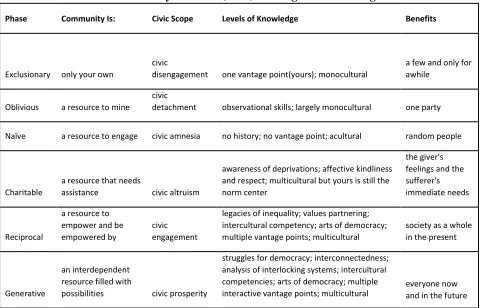
Table 1 Caryn Musil's (2003) Paradigms of Civic Stages ... 17
LIST OF FIGURES
Figure 1 Remixing Çatalhöyük website ... 26
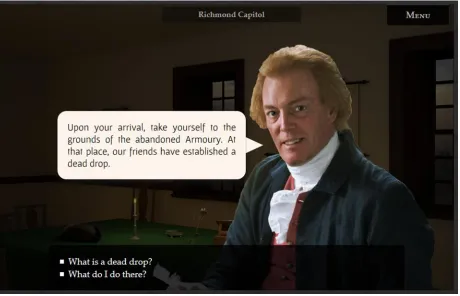
Figure 2 Screen Capture from RevQuest ... 29
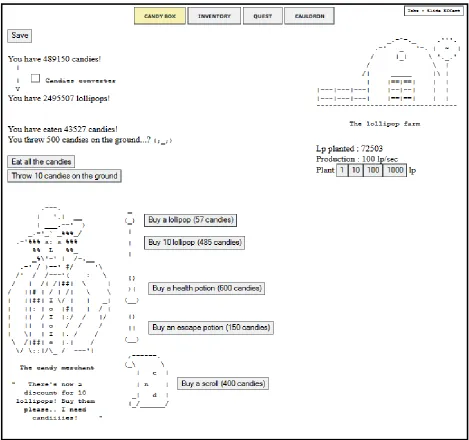
Figure 3 Web-based incremental game: Candy Box http://candies.aniwey.net/ ... 36
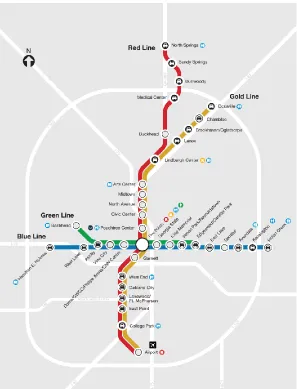
Figure 4 Current MARTA Rail Line Map (http://www.itsmarta.com) ... 50
Figure 5 Proposed MARTA Rail Lines: East & West Shown ... 52
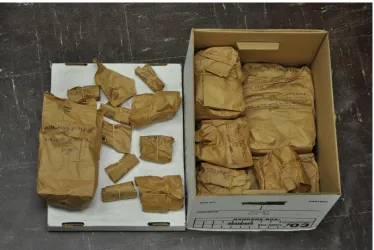
Figure 6 Archival method example at time of GSU's re-acquisition. ... 54
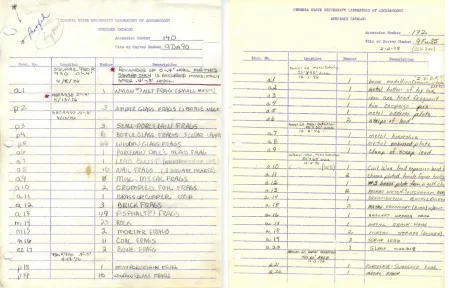
Figure 7 Example of MARTA Collection Analog Specimen Catalog ... 57
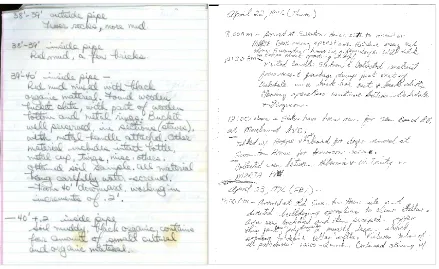
Figure 8 Example of handwritten notes from the MARTA collection. ... 59
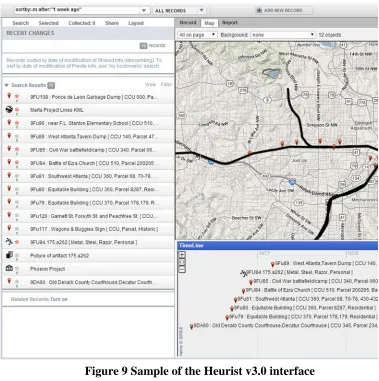
Figure 9 Sample of the Heurist v3.0 interface ... 60
Figure 10 LingsCars.com. Screen capture from http://www.lingscars.com. ... 70
Figure 11 The Phoenix Project Graphical User Interface ... 73
Figure 12 WordPress Static Page Content ... 74
Figure 13 Phoenix Project Browsing Functions ... 76
Figure 14 Example of Facebook's Presentation of Open Graph Protocol ... 78
Figure 15 Example of MicroPasts Leadership Board (MicroPasts 2015) ... 81
1 INTRODUCTION
A professor once asked me in class, “If your research doesn’t help people, then what’s the
point?” A simple, but enlightening message for me. What is the point of any academic research,
if the end goal does not involve furthering the lives of humanity in some measure? Research
questions need to be more than just questions of how something works, why something works,
when something worked, or where something worked—they should ask how figuring out the
answer can positively affect wider agency through all aspects of the research design and more
importantly: do something with that information to affect positive change. This is Praxis. How
can not only the answers, but the process of finding the answers affect positive change?
Suddenly my motivations to digitize a large body of legacy archaeological data took on a new
politically motivated meaning, because what was the point of digitizing data for its own sake? I
wanted to do something more with it—I wanted to strengthen the Atlanta community’s agency
over its own history and narrative and encourage it to engage with that new authority. This
thesis marks the first step toward that ultimate goal.
1.1 Project Statement
The MARTA collection, held by Georgia State University, is a large collection of
archaeological cultural heritage material excavated in the late 1970s that documents Atlanta’s
history. The current Phoenix Project is building on those original efforts of documentation and
represents an ideal opportunity to explore praxis by making the collection both easily accessible
and interactive to the public as the first steps toward civic engagement. Key to this civic
engagement is the digitization of artifacts and associated metadata as well as the use of the
implementing an online website that initially creates a working proof-of-concept that will allow
the second and third phases to employ gamification methodologies that promote civic
engagement with digital material that will benefit both Georgia State University and the
surrounding Atlanta community. I discuss why this is a critical first step to the broader civic
engagement goals of the project, and I outline the next two phases of implementation.
1.2 Summary of Thesis
In order to understand the goals of the Phoenix Project, I explain in Chapter 2 praxis, the
difference between public involvement and civic engagement, and the political archaeological
implications of the project. In Chapter 3, gamification is also thoroughly explained by detailing
the currently circulating marketing definitions and proposing a new simplified definition for the
needs of this project. This simplified definition is discussed through the lens of past and present
applications of gamification and the positive and negative outcomes of those applications in
order to tease out what game design elements are functional, appropriate, and ethically relevant
to this project. In Chapter 4, the relevance of the theoretical frameworks employed is bolstered
by the rich history of the MARTA archaeological collection, the MARTA lines it comprises, the
scope of heritage it represents, and the process of digitization necessary to capture it for the
finished online interface. This explanation stresses how the project’s goals can be effectively
utilized to strengthen the relevant Atlanta communities’ motivations toward civic political action
that benefit the various stakeholders. I then explain, in technical detail, how Heurist is organized
and the programming languages and structures that run it, namely HTML/CSS, PHP, AJAX, and
In Chapter 5, I explain how a simplified WordPress frontend overlays a user interface on
top of Heurist through similar programming languages as well as how WordPress facilitates the
integration of social media accounts. Chapter 6 discusses the results of the first phase
proof-of-concept website. I then discuss the following two stages of software development necessary to
fully implement the civic engagement goals of the project, and how each phase can be enacted.
This thesis ends with a concluding chapter that reiterates how the initial result sets up a critical
cornerstone for future phases of described development to provide a rich resource for future
anthropological and archaeological research on civic engagement, as well as serve as a
foundation for increased civic engagement that promotes political interest and action within the
relevant communities.
1.3 Affected Communities and Stakeholders
A project that directly affects various communities through civic engagement requires an
explanation as to what communities are being potentially affected, how those communities are
being affected, and what ethical concerns are necessary to promote this engagement. The ethical
implications are particularly important when attempting to make a broad database of information
open to public interpretation and use. There are avocational archaeology groups whose goals are
to promote and encourage interest in archaeology, historical groups who focus on Atlanta’s
history, government and private organizations whose policy decisions legally require
investigation and mitigation of heritage materials, neighborhood commissions cut across by
MARTA’s construction, the individuals whose homes have been destroyed to make way for
urban development like MARTA, private corporate interests like Coca-Cola who have a long ties
broad group of interests to take into account, but it is important to discuss those interests and the
ethical concerns when engaging with them, and more importantly to show how civic engagement
can serve to unite these different communities into a common dialogue.
The Society for Georgia Archaeology (SGA) and its individual chapters, like the Greater
Atlanta Archaeological Association (GAAS), are perhaps the easier communities to interact
with. They already have an interest in the materials of the MARTA collection and it has already
served as a platform for engagement by inviting the GAAS members to assist in updating
collection’s curation standards. Members already understand the guidelines of ethics determined
by professional archaeologist and are open to learning and understanding more about responsible
archaeological action. The same applies to local historical societies like the Atlanta History
Center or the Atlanta Studies Network that have a pre-existing interest exploring and preserving
Atlanta’s cultural heritage.
Additionally government organizations like the Atlanta Regional Commission (ARC) and
the Georgia Department of Transportation (GDoT) have vested interests in these materials to aid
future planning policies. Sometimes these policies legally require mitigation efforts performed
by Cultural Resource Management (CRM) firms like Brockington and Associates, or New South,
that have to research and understand particulars of Atlanta’s history in order to properly mitigate
any potential damages to cultural heritage through construction and development. Any further
work done by MARTA on expanding rail lines, or work done in areas adjacent to those lines,
will require further CRM involvement, which will largely be aided by the pre-existing database
of information the MARTA collection contains.
Neighborhood commissions that were split in two and individuals or families who were
the cultural damages that can occur from large-scale urban planning. Similar to how the
Stadiumville project (Stadiumville 2015) showed the damages to the urban landscape through the
construction of the interstate corridors and Turner Field, the MARTA collection can provide a
voice to any heritage lost by the rail lines. MARTA itself can utilize these materials to better
promote its transportation goals for the city and acquire funding through promotional heritage
demonstrations—acting as a vibrant mobile exhibit of Atlanta’s past. Corporations and local
businesses with roots in Atlanta, like the previously mentioned Coca-Cola Company, can be
tapped for funding and promotional interest in the collection that contains many old bottles for
beverages and tinctures from their original drugstore origins (see Cook 2014). We also have to
account for groups whose interest is in private collecting, like pot diggers, who might use the
information contained on the public website to locate historical areas for plundering; this means
looking at ways to responsibly disseminate information to the public when that information is
sensitive.
The material has additionally assisted in interdepartmental research within the Atlanta
academic community, namely through Dr. Robin Wharton’s Exposition: History, Theory,
Practice Class in the GSU English department, where students are learning how to
three-dimensionally scan the collection’s objects using Structure From Motion (SFM), a method of
obtaining three-dimensional models through a series of systematic photographs. They build these
models to understand and interpret the physical and temporal realities of these artifacts in order
to produce reflexive narrative constructions about their experiences in handling them. These are
the sort of collaborations that foster engagement with the materials, made possible through the
actual digitization of the material culture and subsequent re-interpretation of that heritage. These
Fellowship and GSU Library Collaborative University Research and Visualization Environment
(CURVE) to develop 3D interactive environments that showcase the collection’s digital
recordings to the university and interested public. This wide range of interrelated communities,
albeit concerned with different degrees of access to the same information, can all benefit from
the Phoenix Project when seen through the civic engagement lens of “a resource to empower and
be empowered by” (Musli 2003:8) or through praxis (Kozaitis 2000).
1.4 Challenges with Stakeholder Communities in Praxis-informed Civic Engagement
The challenge with such a wide scope of communities is in discerning their motivations
within the frameworks of inequality that exist. Coca Cola may simply be interested in levering
the material for monetary profit through marketing—potentially exacerbating socioeconomic
conditions. Quickly gentrifying neighborhoods might be uncomfortable with the racial
implications of the materials that connect African-American communities to newly renovated
blocks, or simply utilize the collection as a way to increase property value through historic
authenticity. These handful of examples are enough to re-emphasize why implementing civic
engagement and enacting positive changes toward breaking down sociopolitical oppression and
inequality can be incredibly difficult. The question as to how an archaeological project can
combat gentrification seems ridiculously out of scope, but only because a project in some
capacity is first needed in order to explore that route of politically motivated action.
Whereas CRM firms may be interested in highly detailed datasets of archaeological
information to assist their planning and project proposal efforts, local governments, companies,
and universities may only be looking for simplified and marketable packages of information to
groups or archaeological advocacy groups may want something less mechanical than raw data,
but more interactive and open to interpretation than what local governments may want. Even
Pot-diggers and fossickers are communities, solely interested in prospecting for artifacts and
cultural heritage, (legally on private land and illegally on public land), are looking for
assessments of value and hotspots of archaeological heritage. They are still a community that
must be recognized and require our help in sensitively illustrating how their activities are
destructive towards other communities.
All of this engagement should be informed by the Society for American Archaeologists
(SAA) code of ethics. To explore the nuances of that interaction, I briefly introduce the eight
principles of the SAA ethical code:
Stewardship, the acknowledgement that all historical material is irreplaceable and it is
the responsibility of the archaeologist to protect it as well as advocate on its behalf for the benefit
of all;
Accountability, the goal of establishing a mutually beneficial relationship with all parties
involved in professional activity;
Commercialization, the goal of standing against practices that promote commercial
value for archaeological heritage that inevitably leads to destruction of the archaeological record
and the avoidance of any activities that might lead to non-public curation of heritage;
Public Education and Outreach, to make a concerted effort to engage with the public to
foster public support for archaeological stewardship, explain archaeological methods and
interpretations of the past to as many communities as possible;
Intellectual Property, archaeologists do not own the historical record and all materials
Public Reporting and Publication, efforts must be made to report all data in a
responsible manner in a public forum, taking into consideration that reporting locations and
importance of sites may endanger them and reasonable care must be taken in this reporting to
protect them;
Records and Preservation, archaeologists should actively work toward and encourage
the long-term preservation and access to archaeological collections, records, and reports;
Training and Resources, archaeologists must require adequate training, experience, and
other support before any work on the archaeological record can be performed to minimize
damage (SAA Principles of Archaeological Ethics 2015).
Different groups’ ethics of how to manage cultural heritage vary considerably with
regards to these guidelines, but this is not a reason to abandon attempts at civic engagement in
the face of seemingly insurmountable difficulties. It is a reason to implement it. This means
being weary of archaeological hubris—the idea that only archaeologists can be stewards of
cultural heritage, or that our specialized training overrides the concerns or needs of the
communities we may be working with. Archaeologists should be stewards of ensuring cultural
material is actively used and maintained to break down structures of hegemony and not to
reinforce it. The archaeological record may be irreplaceable, but so are human lives. The
communities and heritage that archaeological research affects should always be more important
than the research produced.
Communities may not always demand or want the same scholarly data the researcher
wishes to create. They may solely be interested in seasonal work or feel culturally removed and
disinterested from the cultural resources of interest. Regardless of their lack of interest or
that interest in a culturally appropriate framework that shares the capital gained and seeks to
eliminate inequality (e.g., Glover et al. 2012). Our goal should not be to force-feed complicated
datasets into a diverse set of impacted communities, but to create a foundation of data designed
to scale to the needs of the community(ies) that wishes to use it. Archaeologists must also inform
that community on how that data can be used and why it should be used; a public forum of
interaction and access that creates and sustains interest, and fosters engagement and dialogue
between all involved communities.
The idea of public heritage does not mean we all have equal access to the same physical
materials and data—it means signing a social contract to give authority to those we collectively
deem qualified to handle specific problems, like archaeology and historical resources that are
fragile. The real issue is discerning the balance between access and restriction to the general
public. Restriction is only hegemonic if it is defined through initial inequity. This is why initial
and continual collaboration is so incredibly important. The definitions of what heritage is
restricted or accessible should never be static. Ideally, within a framework of civic engagement,
it is the archaeologist’s job as a steward to find new ways to maximize access and minimize
restriction where possible. The Phoenix Project’s initial attempts at digitalization are one way to
achieve that.
The MARTA collection offers important historical data that challenges archaeologists,
historians, and other disciplines to bring Atlanta’s history to life. Dr. Jeffrey Glover started this
project to accept these challenges and begin the process of making these data accessible to both
researchers and the public (Glover et al. 2014). The artifacts and documentation from the
MARTA excavations are part of significant moments during the Civil War associated with the
become. This represents a unique opportunity for scholarly research as well as public outreach to
participate and engage with this research (Glover et al. 2014). This collection has already
fostered interdisciplinary research and collaborations between student and faculty within Georgia
State University and other institutions (Glover et al. 2015). The future phases of the project rely
on the public being a part of this process through working with the same data, asking questions,
and participating in the research process to offer democratic perspectives on the interpretation of
Atlanta’s rich history. The goal is to create a collection that the public feels it truly owns with
Georgia State University as a facilitator, rather than the university owning the collection and
being the gatekeeper for accessing it. Through this ownership, their sense of communitas can be
strengthened to enact changes that are mutually defined and beneficial.
2 PRAXIS THROUGH CIVIC ENGAGEMENT
Thinking about the purpose behind archaeological research is not only important, it is
absolutely necessary. Although this is seemingly obvious for any current archaeologist—the
subtleties of what this means may be less clear. This goes beyond simply being reflexive,
because the communities we work with need more than our own ideas and self-proclaimed
biases. The communities deserve our action and our collaboration to help navigate our biases
when we enact positive changes. Taking action is inherently political, and the archaeologists
must be aware of this (e.g., Gonzalez et al. 2006; McGuire 2008; Scham 2001; Wilkie et al.
2000). There is no research design that will not be free of political motivation, unconscious or
not, so it is futile to pretend to be apolitical. Randall H. McGuire’s (2008) work, Archaeology as
political, but whether or not our research uses the political motivations that exist to enact
positive, deliberate change.
We are not simply stewards of material culture, idly studying specimens in a laboratory;
we are stewards of bridging the gap between past and present cultural consciousness to try and
enact positive change for the future. I take this into consideration when building the Phoenix
Project’s prototype website and actively attempt to take a political stance. The goals are not to
simply link obvious stakeholders, like archaeology enthusiast groups, to this collection of
heritage, but to inform, engage, and challenge neighborhoods and other civic groups to adapt this
heritage as their own to energize the larger community and help build Atlanta’s historical
consciousness when designing urban planning strategies and civic policy. This can be achieved
through praxis informed civic engagement.
2.1 Praxis: Daring to Act
Praxis is defined well by Kathryn Kozaitis (2000:55) as, “[a] synthesis of intellectualism,
pragmatism, and compassion in organized efforts to understand and serve humanity.” It is a
contemporary approach of utilizing the unique faculties of anthropological theory and method to
solve social ills that exist in the world around us. As Conrad Kottak (1997:254) argues, it is
anthropologists who should make policy affecting people because we are uniquely informed on
human problems and social change through understanding and respecting cultural requirements
and values. It is no longer acceptable to practice anthropology as simply practice or theory and to
define the two as separate of one-another, because that very separation, “[c]ontradicts the
Praxis combines elements of being, knowing, and doing in order to positively negotiate
social change, and more importantly the will to act or dare to realize them. Being is the
respectful acknowledgement of the ties to tradition, no matter how alien, in the communities the
researcher intends to aid. Without being, anthropologists run the risk of harming or disrupting the
people they intend to aid (e.g., McGuire 2008; Trotter and Schensul 1998:692). Anthropologists’
awareness of being in different social contexts is additionally integral to understanding the
implications of their own theoretical frameworks as they are used to inform policies in those
same contexts (Negengast and Velez-Ibanez 2004:15). Knowing, or daring to know, is a
constantly needed self-critique of bias and preconceived notions that are anything but Truth as
Foucault was eager to explain to social theorists (McGee and Warms 2008:490; Trotter and
Schensul 1998). Finally, anthropologists must dare to act – doing – to aid in the struggle against
sociopolitical oppression. If we only discern and describe human suffering and oppression, what
is the point of its acknowledgement if we do nothing about it? Anthropologist are incredibly
well-equipped to accurately describe human rights violations and abuses within a sociopolitical
context, and to act to influence policy to potentially prevent these infringements on humanity in
the future (Nagengast and Velez-Ibanez 2004:1; Trotter and Schensul 1998).
2.2 Praxis as Political Archaeology
An ever-present issue within archaeology is the largely Western dominated dialogue over
the world’s history. Although the discipline is constantly improving through ongoing dialogues,
like the World Archaeological Congress (WAC) (World Archaeological Congress 2015), it is
still behind in some respects in implementing a full integration or co-theorist approach to
research design. Praxis is inherently political in that it aims to do something—to enact change.
politics of academia, the politics of funding, and the politics of the communities tied to the
research (McGuire 2008; Scham 2001). The archaeologist must be, know, and act within this
framework. When an archaeologist acts without being or knowing, as discussed above, positive,
enlightened change cannot occur, or put another way, there can be no doing (McGuire 2008).
An article that reflects this lack of being and knowing is a case for Native American
inclusion into North Americans’ search for the past discussed by Dorothy Lippert (1996). A
Native American bioarchaeologist by profession, she argued that the Western devotion to the
understanding of human history has both historically and contemporarily removed Native
Americans from that dialogue. The result is a Western understanding of human history rather
than a multi-cultural understanding of the past. Lippert mentioned disenfranchisement and lack
of communication as major driving factors behind the passage of the Native American Graves
Protection and Repatriation Act (NAGPRA) in 1990. She states that "[a] key to presenting
archaeology as a profession open to Native American input is communication. This is a very
simple thing to say, but it is more complex in its execution" (Lippert 1996:57).
Lippert answered why communication is important by summarizing the historical context
of North American archaeology, and how it removed Native Americans from the historical
discourse. Early anthropologists, largely in the early 20th century, although initially welcomed by
tribes to study and “preserve” their culture, were not always fair or sympathetic (Lippert
1996:58). Native Americans were portrayed as specimens rather than human beings—subjects to
be watched for their unspoken differences Lippert 1996:58). Their wants and needs were often
ignored when it came time to publish material, and what may have been sacred knowledge to
these tribes would be published in a journal for all to read in the name of science (Lippert
Past archaeologists, following suit, would often portray contemporary Native American
tribes as remnants of a once glorious past; treating their perspectives on their own history as
myth, folklore, and generally irrelevant to Western scientific perspectives. Some argued that the
collection and study of skeletal material was imperative and overrode the Native American
religious wishes, which only furthered the notion of these peoples as sub-human specimens
(Lippert 1996:58). Lippert subtly made the point that NAGPRA was inevitable, because slowly,
overtime, Western science removed the only culture relevant to the studied past of North
America from the discourse (Lippert 1996:58). This does not imply that archaeologists should
end their study of Native American groups. It means we need to have more inclusive dialogues
about that heritage.
Similarly, the Phoenix Project seeks to engage the Atlanta communities with the city’s
archaeological heritage, because their perspective is incredibly relevant. In terms of our changing
urban landscape in the last 50 years, where many buildings have been demolished to make way
for development (Glover et al. 2015) native Atlanta citizens who lived through that era and their
subsequent generations are critical collaborators. They can help provide context for
archaeological data that exists. A degree in archaeology does not provide an archaeologist with a
mandate to view themselves as paternalistic specialists who always know what’s best for
research and data within communities. It gives us the training to understand the importance of
why certain cultural heritage is absolutely irreplaceable and to politically act on that heritage by
reconnecting it with the present.
The Phoenix Project, in this light, acts to reconnect the citizens of the Atlanta community
with the knowledge of past disenfranchisement and hegemony that would otherwise be lost
archaeological and historical sites are not simply specimens for research removed from the
present; they were people’s homes, people’s neighborhoods, people’s communities, and are
important elements in people’s memories and how they self-identify. Action requires a clear plan
to be successful however and this thesis proposes that civic engagement is the framework
necessary to achieve this praxis. Civic engagement provides a valuable blueprint for the Phoenix
Project to not act as just a steward of the material past, but to politically act as steward of
reconnecting present Atlanta’s communities and cultures with their own heritage to combat
sociopolitical oppression (Nagengast and Velez-Ibanez 2004:1).
2.3 Praxis as Civic Engagement
For the Phoenix Project, I define civic engagement as the goal of actively working to
promote the quality of life in all relevant communities through empowering all current and future
communities involved to engage with the cultural heritage contained in the MARTA collection
(Little 2007; McGuire 2008). I believe Barbara Little’s case for civic engagement presents the
most viable approach to tying the entirety of praxis together within an approachable
methodology of community interaction and exchange. She strongly suggests there is a role for
archaeology, as a discipline, to play in civic engagement and renewal—especially because our
projects are increasingly involving the communities and stakeholders who are the subject of
study (Little 2007:1). Little (2007) reiterates Thomas Ehrlich’s definition of civic engagement as,
“[w]orking to make a difference in the civic life of our communities and developing the
combination of knowledge, skills, values and motivation to make that difference. It means
promoting the quality of life in a community, through both political and non-political
processes"(Ehrlich 2000:vi). Incorporating Victor Turner’s ideas on communitas into a broader
challenges archaeologists to think how archaeology can serve the function of promoting
communitas in context with civic engagement (Little 2007:4). She argues that because
archaeology and its research is a ritual itself, more importantly a “little strange” as well, it serves
as a unique mechanism to foster civic engagement and communitas (Little 2007:4). Additionally,
the power of knowing one’s heritage through archaeological research serves as a source for
defining identity, a critical component of communitas.
Unlike public involvement, which Little defines as "[a] legal requirement of the planning
process that is required by environmental law and typically ends when the planning process is
complete,” civic engagement is about a long-term plan of sustainable collaboration with
communities (Little 2007:5). In a best-practice guideline, the National Park Service (NPS)
defines this as “[t]he long-term effort to build and sustain relationships with communities of
stakeholders. It includes interpretive and educational programming as well as the planning
process" (Little 2007:4). This method is drastically different than making a resource available—
it is doing something with that resource.
This thesis follows Little’s lead in adhering to the framework of civic engagement
constructed by Caryn McTighe Musil (2003). It offers a sensible guide towards framing the
Phoenix Project in different phases of action that can be implemented in stages. Musil (2003) is
arguing for academics, or formal educators, to assist their students in thinking more carefully
about the ways they structure their current and future projects. Although directed towards the
education of students as an implementation of democracy—Musil’s framework can be used to
critique and inform archaeological research and projects. The premise is that there are six phases
that lead to ‘civic prosperity’ or true self-sustainable democratic struggle and cultural
empathy, which affects their historical perspectives and cultural vantages. There are stages of
disconnect, six in all, with the end goal being reciprocal in exchange of authority. One achieves
the final stage by taking civic engagement to a mode of self-regulating sustainability. Little
(2007:8) purports that civic engagement is the first real step. Once we get to a point where
cultural difference is balanced, and more importantly ENGAGED with, and the exchange of
knowledge and its interpretation is dynamic and equally accessible, we reach the point of
sustainable cultural practice.
Following Musil’s (2003) rubric through anthropology’s history and past practices, the
first iterations of research fell under civic disengagement. Defining past cultures within the
context of white, European male history as a veritable island of interpretation despite the
[image:29.612.67.556.281.589.2]impossibility of making clean demarcations in culture or history. This singular vantage point of Table 1 Caryn Musil's (2003) Paradigm of Civic Stages
Phase Community Is: Civic Scope Levels of Knowledge Benefits
Exclusionary only your own
civic
disengagement one vantage point(yours); monocultural
a few and only for awhile
Oblivious a resource to mine
civic
detachment observational skills; largely monocultural one party
Naïve a resource to engage civic amnesia no history; no vantage point; acultural random people
Charitable
a resource that needs
assistance civic altruism
awareness of deprivations; affective kindliness and respect; multicultural but yours is still the norm center
the giver's feelings and the sufferer's immediate needs
Reciprocal
a resource to empower and be empowered by
civic engagement
legacies of inequality; values partnering; intercultural competency; arts of democracy; multiple vantage points; multicultural
society as a whole in the present
Generative
an interdependent resource filled with
possibilities civic prosperity
struggles for democracy; interconnectedness; analysis of interlocking systems; intercultural competencies; arts of democracy; multiple interactive vantage points; multicultural
interpretation takes a completely monocultural perspective of history—that of white, European
males for example. The next iterations of anthropological research were oblivious to oppression
in that the researcher was interested in studying the other cultures, but from their own vantage
point, and the research design took on a largely monocultural perspective—like participant
observation studies in early anthropological work where the communities offered no input and
the only interpretation was the exclusionary perspective created by the ethnographer. These
cultures were resources for the researcher to mine for scholarly capital with little or nothing
given back to the community, and did little to affect oppression.
The next stage of civic amnesia, while looking at the communities involved as a resource
to engage with, suffered from a lack of relevant cultural perspective. This is why Musil (2003)
refers to it as a stage of naïvety; the researcher did not take into account historical or cultural
perspective and simply engages with the affected community from an acultural standpoint, or
through an assumed objective lens. This disconnection with cultural and historical contexts can
negatively affect engagement with the community in question. By not listening to and studying
the community, the researchers inevitably made planning errors that affected their projects’
positive impact. An example would be holding a day of archaeological education and site-based
engagement on Sunday afternoon for a community that is largely Christian and church-going that
actively adhere to the Sabbath. With proper cultural context, the archaeologist would hold the
event at a more culturally appropriate time.
A more charitable phase of civic interaction, civic altruism, takes a larger step toward
understanding the deprivations of the communities worked with and attempts to run the project
from a respectful multicultural perspective. Although this phase means to affect positive change,
them through empowerment. The community is seen as a resource that needs assistance rather
than empowerment. An archaeological project that aims to bring economic capital to a
disenfranchised community through seasonal work or building projects would fall under this
category. The aim is to fix symptoms of the community’s disenfranchisement rather than the
core causes. This approach still suffers from treating the researcher’s culture as the normative
center in that the decisions of what to provide the community are determined from the
researcher’s perspective. Many current research projects could be framed as part of this phase,
typically due to global causes of inequity arguably outside the scope of a small research project,
which is why moving out of this phase is such a challenging process.
Civic engagement is when the researcher finally views the community worked with as a
resource to empower and, in turn, be empowered by. This is achieved when the researcher
properly accounts for legacies of inequality, historical narratives of resistance, and the
importance of understanding and integrating multiple vantage points into the research design. It
is an active acknowledgement that the researcher has just as much to gain from an equal
partnership as the community being served, rather than solely looking for scholarly capital
framed from the researcher’s own perspective. This phase also begins looking at research as a
dynamic process rather than one that results in a static output. When a project ends, the
relationship between the community and researcher does not, and research design within the
framework of civic engagement should outline a plan of continual negotiation and
experimentation. This is how it differs from earlier phases, which, at most, will achieve public
involvement, where the community is involved, but once the project ends so does the
Musil takes civic engagement a step further by defining the last phase as civic prosperity.
Although she separates these last phases, which can be helpful, the only difference is that civic
prosperity has a goal of moving beyond equal relations between stakeholders and perpetuating
those feelings of sustainability for all communities. I find the latter two phases’ definitions static
and rather see civic engagement and civic prosperity as a united on-going goal. To assume any
communities interacting with one-another can ever be truly equal is an unrealistic goal, and it is
more practical to view civic engagement itself as the persistent goal of creating civic prosperity
through reflexive accountability and mutual decision-making. Although many projects within
archaeology may still suffer from civic altruism due to global complexity, this is why civic
engagement, seen as a process rather than an end, is so important.
Civic engagement, as described, represents a true paradigm shift in research-design goals.
The role of the anthropologically informed archaeologist as a figure of power in the conversation
of heritage must change into a softer role of reflexive leadership that aims to guide all
communities, including the archaeologist, toward a state of mutual empowerment by defining the
interested resources as more than a database of archaeological heritage for publication. These
resources must be defined as tools to combat sociopolitical oppression.
The point of this discussion is not to criticize current archaeological work that does not
successfully implement de facto civic engagement. It is to emphasize the need to incorporate the
principles of civic engagement as a goal with the understanding that any project will require
continuous re-evaluation and implementation to combat inequality. The Phoenix Project’s first
phase of implementation covered by this thesis, similarly does not achieve de facto civic
engagement. It achieves a form of civic altruism that revolves around public involvement by
step towards the broader goal of achieving civic engagement in the future. It is hardly
conceivable that any project can achieve civic engagement without a continuous dialogue
between stakeholders. It takes time and effort to gain the rapport and valuable insights necessary
to understand the complexities of multi-layered sociopolitical oppression that exists in any
community or subset thereof. It is equally difficult to navigate the legacy of that oppression once
understood, but the MARTA collection’s cultural resources are well equipped to handle the
challenge in future iterations of the Phoenix Project’s online platform.
As Dorothy Lippert (1996) revealed, reaching out to our communities is difficult, but
incredibly necessary. How can the Phoenix Project foster this public access to information and
engagement with the communities to which it belongs? An initial goal should be understanding
the nature of public access to cultural heritage in the context of CRM archaeology. Although it is
easy to espouse recommendations of equal access to information, when related to historical or
cultural preservation this becomes ethically difficult. Laws exist to protect public interest in the
fields of medicine or engineering, (e.g., requiring licenses to perform certain duties to protect the
public interest from complications resulting from untrained practitioners), as they do to protect
our public cultural heritage from the untrained hands that may damage it.
The National Park Service (NPS) is a highly relevant example of this limited access. Its
federal policies dictate who can and cannot review this ‘public’ material connected to federal
parks. Policy 5.1.2 states clearly that “NPS facilities, collections, and assistance will be made
available to qualified scholars conducting NPS-authorized research as long as park operations are
not substantially impeded or park resources are not adversely impacted (NPS Managing Policies
2014). Policy 5.3.5.5.4 further states “Interested persons will be permitted to inspect and study
of collections, and subject to laws and policies regarding the confidentiality of resource data.
At-cost copies of documents may be provided” (NPS Managing Policies 2014). Although these
collections are, in essence, public, they are restricted to “qualified scholars” who are expected to
understand and know “standards for the preservation and use of collections.” This may come
across as limiting or restrictive to the public, but it is precisely the specialized knowledge of
historical specialists that makes the restrictive access ethical. These collections fall under the
SAA ethical guidelines’ first principle of stewardship—that archaeologists must view them as
irreplaceable and make it their responsibility to work towards the long-term conservation and
protection of the archaeological record through their specialized training and knowledge on
behalf of the entire public (SAA Guidelines 2015). This is why digital technologies can be
harnessed to achieve wider public access to these materials without endangering them.
Additionally, creating a digital collection further promotes the long-term conservation of cultural
heritage through engaging with the public who votes on representatives that decide funding and
policy decisions on cultural heritage.
2.3.1 Case Studies of Civic Engagement
I would like to highlight three case studies of civic engagement in an online context and
talk about the successes they achieve and where they fall short. There is not a true ‘failure’ in
any project that attempts civic engagement, as each shows strengths and weaknesses and should
be seen as a process rather than a finished product. This is the very nature of civic engagement; it
is supposed to be an ongoing dialogue where the public and academics or professionals work
with one-another to explore this relatively new effort in archaeology (new when considering the
Although Lippert’s (1996) article is a productive “call-to-arms” for civic engagement
through its collaborative dialogue with various stakeholders, it lacks the technological edge to
address a wider audience. This is due, in part, to being dated to 1996 when the internet was still
infantile as well as the limited access to various digital technologies. The ability to communicate
with stakeholders has exponentially grown with the rise of social media and the ubiquity of the
internet. To not utilize these resources will limit a project’s civic engagement in the
contemporary era, and this is precisely why the Phoenix Project aims to use these online digital
resources, and why I looked into these three online case studies: MicroPasts, Remixing
Çatalhöyük, and the Colonial Williamsburg Digital History Center.
2.3.2 MicroPasts.org
The MicroPasts project is a website that drives an online community to engage with
archaeological materials through crowd-sourcing. Rather than attempt to create a new
community, it engages communities that already exist, like archaeological or historical societies,
and connects them through the online project. Additionally they collect data on their users’
interactions and engagement with the website that is used to create better implementations of the
project. It was launched on April 16th, 2014 after six months of development utilizing a few
different online frameworks like Discourse (a discussion software) and others for the
crowd-sourcing components. MicroPasts allows the community members to participate in three
different activities: 1) co-producing archaeological and historical data, 2) designing new
research agendas, and 3) crowd-funding newly created research agendas on the website
Members are invited to co-produce data through two different applications that focus on
the British Prehistory and British Museum collections that entail Bronze Age artifacts. The first
activity is transcribing 30,000 object cards into a digital database. This involves typing the
information from the card into a simplified form and geo-referencing the objects’ locations
through a small map interface. The project hopes to have one of the largest digital archives on
metal objects in the world to expand existing knowledge of the era. The second activity offered
is photo-masking metal artifact photos (Error! Reference source not found.). Volunteers login
and trace the outline of objects in sets of over 50 photos. This is done to implement
Structure-from-Motion software, or SFM, in order to produce a textured, 3-dimensional model of the
object. SFM works by identifying similar points of structure in different overlapping digital
photographs and calculating physical dimensions. The masking allows the calculations to ignore
background noise and only model the parts of the photo that directly relate to the object
(Bonacchi et al. 2014).
These interactions with the community are also evaluated through web-based analytical
logging tools. MicroPasts uses both non-intrusive online form surveys and background data
logging to better serve the community by evaluating ways in which each of the project’s design
elements are increasing or decreasing engagement. Initial findings show that most of the
volunteer crowd-sourcing work is done by a small sub-set of the membership, while most
members only perform a handful of tasks before retiring. They hope to continue looking at ways
to widen engagement with these statistical data in future studies (Bonacchi et al. 2014).
MicroPasts is an example of civic engagement that seeks to quantify that engagement
through initial stages of member activity tracking. It has 938 members as of April 2014
1000 people engaging in a website is a large number for an initial attempt and will hopefully
provide robust data to evaluate at a later date to discern better ways of engaging the public with
professional and academic research. The importance of this case lies in directly inviting the
public to engage in research rather than involving them after it has been accomplished. It is one
thing to put a collection of data online and make it available to the public, and quite another
thing to allow the public to actively interpret it and participate in the knowledge production
process. Furthermore, the public can actively choose to support mutually defined research
projects through a crowd-funding platform provided.
The project also uses elements of gamification discussed below to help promote
engagement through leaderboards and membership badges. There is little to complain about
when viewing the project, but engagement does seem to be limited to a small subset of the
membership. What motivational affordances are necessary to intrigue and engage more
members? Offering the ability to engage does not seem to be strong enough alone to perpetuate a
sustainable online community. MicroPasts represents a limited, cohesive example of how civic
engagement can operate through an online platform, but may lack sustainable member interest in
the project. It is rarely fun to transcribe catalog cards of information and finding how to make
mundane tasks fun would be incredibly useful.
2.3.3 Remixing Çatalhöyük
Remixing Çatalhöyük, is an experiment in civic engagement that works to achieve open
construction and dissemination of knowledge about the past (Remixing Çatalhöyük 2015). It
focuses on the 9000 year old UNESCO World Heritage site of Çatalhöyük in Turkey, and its
is invited to contribute to the dialogue of Çatalhöyük’s past with the local community and
archaeologists that work there. The project believes this process can foster public engagement
through open access to data interpretation and digital remediation (Remixing Çatalhöyük 2015).
This project offers incredible access to the excavation process through 3d visualizations
of excavations, interactive 2d excavations as well through open interpretation of the project’s
data and artifacts uploaded to their database (Remixing Çatalhöyük 2015). The site is a great
start but suffers from some very problematic issues that inhibit its goals. The biggest hurdle is
the interface. In my opinion the website has confusing, non-intuitive design mechanics (Figure
[image:38.612.73.540.207.550.2]although they claim to be W3C compliant1, (the site should work across all browsers), actual
functionality is limited. It takes a great deal of time to figure out what is going on, what one can
do with the site, and how to even access it. It also uses Shockwave Flash extensively, a
proprietary Adobe web animation language, that tends to break at times, especially the links that
do nothing when clicked, ruining an initial user experience. If a user does manage to get to the
section that allows for data re-interpretation, they are met with further hurdles of downloading
and learning the project’s own database software to view and reinterpret the data before
uploading it back to the website. Their 3d reconstructed environments, while visually appealing,
are in some cases limited to downloading another program, Second Life or its own proprietary
viewers, to interact with them.
The website interface also suffers in that the text and information, implemented through
Shockwave Flash, cannot easily be found and queried by web crawler bots from search engines
which need HTML and its associated metadata in order to work. Any text written through
Shockwave Flash is treated as an image—preventing browser-based accessibility tools from
manipulating it. Adobe, as of 2008, made attempts to solve this problem by offering Google and
Yahoo webcrawlers a server-side framework to crawl Flash data (Siglin 2008), but the process is
not guaranteed according to Google and still suffers from limitations (Google 2015).
Furthermore, the use of Shockwave Flash breaks all browser back and forward button
functionality—a core intuitive feature to web browser users. HTML5, a growing standard, would
be a better sustainable framework to implement their goals. Although a great project in theory, in
my opinion it suffers from its initial user experience through the web interface, the learning
curve associated with uploading re-interpreted data, and its lack of audience awareness by not
1 W3C Compliance: To ensure interoperability a standards-compliant web site does not use proprietary software,
making the data accessible in different ways that are intuitive to contemporary outlets of
interaction and discussion.
2.3.4 Digital History Center for Colonial Williamsburg
The last case study to discuss is the Digital History Center website for Colonial
Williamsburg. It aims to engage the public in an ongoing conversation about the American
Revolution, citizenship, and democracy, alongside the archaeologists and historians who work at
Colonial Williamsburg (Colonial Williamsburg 2015). Although not directly an online repository
of artifacts and raw data, it offers other features that are very appealing for civic engagement and
public education. There are currently six online resources to interact with on the website that are
clearly labeled and link to their respective sites.
The American Revolution Web Project is a rich online museum featuring artifacts,
documents, narratives, and scholarly discussion through media.
Virtual Williamsburg is a true-to-detail 3d rendering of Williamsburg that has been
reduced in 3d complexity to run quickly in the Unity3D integrated browser plugin. It provides
seamless access to a virtual environment with no complicated steps involved.
The Armoury Reconstruction Project followed a multi-year reconstruction of a
blacksmith shop and public armoury that involved the public in both the reconstruction efforts
and through live webcam feeds for the public to watch who could not physically attend the work.
The blog ran parallel to these interactions, allowing discussion by those watching the webcams
The CW Digital Library is closer to an online database of historical documents tied to
Colonial Williamsburg and includes, historical manuscripts, research reports from various
scholars, historical newspapers, and probate inventories.
The eWilliamsburg project is an interactive map that displays geospatial historical data
beyond a simple street map. It allows the user to view history from a bird’s eye view and look at
specific information about different buildings and associated documentation of owners, and
related research.
For me, the most intriguing aspect to the Digital History Center website is RevQuest:
The Old Enemy project (Figure 2). On the surface it is a simple mystery game using HTML5
rather than Shockwave Flash to take the player through an interactive narrative where asking
[image:41.612.77.537.344.640.2]the history, and 2) the player receives an award if the quest is continued at the physical location
of Colonial Williamsburg. Combining the game with real-world consequences offers incentive to
engage with the history directly after learning from a convenient distance.
Overall, the Digital History Center website has a strong web-presence that is organized
and filled with engaging content. The reconstruction blog offered direct interaction and
engagement with the excavations and archaeological reconstructions of various buildings
through live webcam feeds. Web discussion is a very useful endeavor in civic engagement and
further democratizes not only information but the experiences themselves. The negative to the
web site is the lack of direct engagement in the process of interpreting history. There is no option
to engage with the material outside of the interpretation provided for the public. The bulk of the
engagement is tied to the physical site of Colonial Williamsburg and pre-determined narratives.
2.3.5 Achievements and Failures of These Civic Engagement Case Studies
Each project addresses civic engagement in different but productive ways. The common
thread between them is communication with the public. This is seemingly obvious but not
always addressed consistently across many projects. Dorothy Lippert (1996), McGuire (2008),
and Colwell-Chanthaphonh et al. (2010) argue for direct collaboration with the communities
with whom we work and that our research questions should be informed through that
collaboration. Remixing Çatalhöyük addresses the need for this collaboration in the
interpretation process that can be accomplished with Çatalhöyük’s digitized database. Access to
these data is normally limited to scholars and professionals once the artifacts find a home in a
box. The concept of allowing the public to retrospectively offer their own interpretations of the
engagement. The Phoenix Project draws heavily on this influence and attempts to take it a step
further by significantly reducing the learning curve of the interpretation process through a
streamlined user-interface and the ability for the public to share and publish their findings on
sites outside of our own through social media, giving them control over their own decision
making in their interpretations.
The Colonial Williamsburg Digital History Center efforts are important in offering
resources that communicate with the public as research is happening, as seen in the
reconstruction project. The project also uses game-like interaction (gamification) for many of
their applications, which I argue later helps promote engagement. It is also a project much like
MicroPasts that is not a poof-of-concept. It is a working, live example with rich content that has
finished products that seek to engage the public with the physical resources at Colonial
Williamsburg.
MicroPasts also represents a stable platform rather than an idea or concept. I think it
contains many of the characteristics from which the Phoenix Project can draw inspiration. The
site allows multi-vocal interpretations of the past, allows public funding to determine which
projects are important to interested public participants, and directly engages them through
education and stewardship and allows them to assist in the process of recording the
archaeological record, which makes a piece of the past the volunteers’ own in a sense. Through
two simple gamification techniques, MicroPasts also has a good starting attempt at gamifying
this interaction through leaderboards and badge rewards. The Phoenix Project attempts to take
this a step further by breaking down the definitions of gameplay and gamification in order to
form a testable framework for game design elements that encourage rather than discourage
Although there are arguments for stronger communication (e.g., Colwell-Chanthaphonh
et al. 2010; Lippert 1996; McGuire 2008), that engagement is still limited to those who have the
resources to attend those consultations. By making these consultations available online in a
widely accessible format, the public has greater access to ongoing discussions over our shared
histories. This engagement can take place in real time as people access data and interact with
others through the online Heurist website. Furthermore, it could offer short mini games attached
to the database to spark interest and engagement by offering digital rewards, like badges or
leaderboard points. These games could be anything from daily randomly generated competitions
to find objects in the database based on contextual clues and weekly team-based trivia
competitions, to more involved, and less frequent, quests constructed by the database managers.
These examples of websites attempting civic engagement, albeit not perfect, break
tremendous ground in their attempts to offer different perspectives on civic engagement. In the
same vein, the Phoenix Project will also attempt to aid in this effort by pulling all the
perspectives together under one cohesive format that can potentially serve as a new template to
test out hypotheses in civic engagement that other researchers, educators, and the public can
critique, and to further the discipline as a whole. With this framework in mind, a discussion of
gamification, games, and play can illustrate one possible implementation of civic engagement
that dovetails with the rapidly expanding information age.
3 EXPLORING GAMIFICATION
Gamification can potentially provide a very effective method for archaeologists to foster
public interest in heritage and that heritage’s ability to combat sociopolitical oppression. I define