R E S E A R C H
Open Access
Diagnostic accuracy of early urinary index
changes in differentiating transient from
persistent acute kidney injury in critically
ill patients: multicenter cohort study
Bertrand Pons
1,2, Alexandre Lautrette
3,4, Johanna Oziel
5, Jean Dellamonica
6, Régine Vermesch
1, Eric Ezingeard
1,
Christophe Mariat
2,7, Gilles Bernardin
6,8, Fabrice Zeni
1,2, Yves Cohen
5,9, Bernard Tardy
2,10,11, Bertrand Souweine
3,4,
François Vincent
5and Michael Darmon
1,2,10*Abstract
Introduction:Urinary indices have limited effectiveness in separating transient acute kidney injury (AKI) from persistent AKI in ICU patients. Their time-course may vary with the mechanism of AKI. The primary objective of this study was to evaluate the diagnostic value of changes over time of the usual urinary indices in separating transient AKI from persistent AKI.
Methods:An observational prospective multicenter study was performed in six ICUs involving 244 consecutive patients, including 97 without AKI, 54 with transient AKI, and 93 with persistent AKI. Urinary sodium, urea and creatinine were measured at ICU admission (H0) and on 6-hour urine samples during the first 24 ICU hours (H6, H12, H18, and H24). Transient AKI was defined as AKI with a cause for renal hypoperfusion and reversal within 3 days.
Results:Significant increases from H0 to H24 were noted in fractional excretion of urea (median, 31% (22 to 41%) and 39% (29 to 48%) at H24,P< 0.0001), urinary urea/plasma urea ratio (15 (7 to 28) and 20 (9 to 40),P< 0.0001), and urinary creatinine/plasma creatinine ratio (50 (24 to 101) and 57 (29 to 104),P= 0.01). Fractional excretion of sodium did not change significantly during the first 24 hours in the ICU (P= 0.13). Neither urinary index values at ICU admission nor changes in urinary indices between H0 and H24 performed sufficiently well to recommend their use in clinical setting (area under the receiver-operating characteristic curve≤0.65).
Conclusion:Although urinary indices at H24 performed slightly better than those at H0 in differentiating transient AKI from persistent AKI, they remain insufficiently reliable to be clinically relevant.
Introduction
Acute kidney injury (AKI) affects approximately 5 to 30% of critically ill patients and remains associated with high mortality rates [1-3]. AKI not due to urinary tract obstruc-tion is usually described as either transient or persistent. Transient AKI is due to low renal perfusion and is promptly reversible after normalization of the hemody-namic parameters, whereas persistent AKI is believed to be due to renal tubular damage or dysfunction [4-6].
Distinguishing transient AKI from persistent AKI may help to optimize treatment decisions in patients with AKI. Urinary indices such as the fractional excretion of sodium (FeNa) and the fractional excretion of urea (FeUrea) are believed to be reliable for separating transient AKI from persistent AKI [4,5,7-9]. However, these indices may be affected by diuretic agents or sepsis [10]. In addition, little information is available on their performance for separat-ing transient AKI from persistent AKI in critically ill patients [11]. Urine or plasma biomarkers such as neutro-phil gelatinase-associated lipocalin and IL-18 have been evaluated as tools for distinguishing between transient AKI and persistent AKI [12-15] but produced conflicting
* Correspondence: [email protected]
1
Medical ICU, Saint-Etienne University Hospital, Avenue Albert Raymond, Saint-Priest en Jarez 42270, France
Full list of author information is available at the end of the article
results and therefore cannot be recommended for wide-spread use at present [13,16-18].
Hemodynamic and renal perfusion changes have been shown to affect sodium excretion during the first 24 hours of sepsis in a sheep model [19]. Sepsis-associated changes in urinary indices promptly returned to normal after renal function recovery in these animals [19]. The time-course of the urinary indices may thus differ between patients with transient AKI and persistent AKI, and evaluating changes over time may therefore improve the urinary index performance in separating these two mechanisms of AKI.
The primary objective of this study was to evaluate the diagnostic value of changes over time of the usual urin-ary indices in separating transient AKI from persistent AKI. The secondary objectives were to evaluate the diagnostic value of the usual urinary indices at ICU admission and at 24 hours (H24) in separating transient AKI from persistent AKI.
Materials and methods
Patients
The study was approved by the institutional review board of the French Society for Intensive Care Medicine (SRLF-CE-11-326), which waived the need for signed informed consent, given the observational study design. Patients and their next of kin were informed, and none refused to participate in the study.
Six university-hospital ICUs in France participated in the study between June 2011 and April 2012. Consecutive adults admitted to these ICUs were included in the absence of obstructive renal disease, renal replacement therapy (RRT) for chronic renal dysfunction, and preg-nancy. Patients for whom urine could not be collected according to the study protocol were excluded secondarily; as were patients with hospital stays shorter than 72 hours, since they could not be classified as having transient AKI or persistent AKI according to our definitions.
Definitions
AKI was defined according to the Acute Kidney Injury Network classification scheme as a plasma creatinine level increase≥26.4μmol/l, a plasma creatinine increase≥150% from baseline, or urine output < 0.5 ml/kg/hour for≥6 hours [20]. For patients whose baseline plasma creatinine level was unknown, this variable was estimated using either the plasma creatinine nadir during the ICU stay or, in patients who died before AKI resolution, the Modifica-tion of Diet in Renal Disease formula [6,21,22].
Transient AKI was defined as AKI with a cause of renal hypoperfusion according to the attending physician and recovery within 3 days [6,11]. Recovery of AKI was defined as reversal of the oliguria (in the absence of diuretic treat-ment) and/or≥50% decrease in plasma creatinine and/or a
return of plasma creatinine to the baseline value (whether measured or estimated using the Modification of Diet in Renal Disease formula) [11,23]. For patients having both oliguria and plasma creatinine changes defining AKI, both correction of plasma creatinine and oliguria were required to define recovery. Persistent AKI was defined as renal dysfunction without recovery within 3 days. Oliguria was defined as urine output < 0.5 ml/kg/hour for≥6 hours [11,23].
Diuretic use at every time of this study was defined as use of diuretics in the 6 hours preceding urinary indices measurement.
Changes in urinary indices between ICU admission (H0) and H24 are reported as the ratio between urinary indices at H0 by urinary indices at H24
Data collection
Each patient was assessed during the first 6 hours follow-ing ICU admission. Plasma sodium, urea, and creatinine levels were collected at ICU admission and then on days 1, 2, and 3. Urinary sodium, potassium, urea, and creatinine were measured at H0 and then on four consecutive 6-hour urine samples (H6, H12, H18, and H24). Urinary/ plasma (U/P) ratios were used to calculate FeNa and FeUrea as follow:
FeNa(%)=U/P sodium/U/P creatinine×100 FeUrea(%)=U/P urea/U/P creatinine×100
Plasma sodium, creatinine, and urea concentrations used for the calculations were those obtained closest in time to the urine sample.
The Logistic Organ Dysfunction score, the Simplified Acute Physiology Score version II and the Knaus scale score were calculated at ICU admission [24-26]. Sepsis was diagnosed using the criteria developed at the Ameri-can College of Chest Physicians/Society of Critical Care Medicine consensus conference [27]. Individual organ fail-ure was defined as a Logistic Organ Dysfunction score > 1 point for the relevant system, except the kidney [24]. Diuretic use was defined as the use of diuretics at any time during the first 24 hours in the ICU.
Statistical analysis
To assess the performance of urinary indices or their changes over the first 24 hours in distinguishing transient AKI from persistent AKI, we plotted the receiver-operat-ing characteristic curves for the proportion of true posi-tives against the proportion of false posiposi-tives, depending on the prediction rule used to classify patients as having persistent AKI. The same strategy was used to assess the performance of indices and their changes over time in two predefined patient subgroups; namely, patients who did not receive diuretic therapy and patients without sepsis.
All tests were two-sided, andP< 0.05 was considered statistically significant. Statistical tests were carried out using the SPSS 13 software package (IBM, Armonk, NY, USA).
Results
Study population
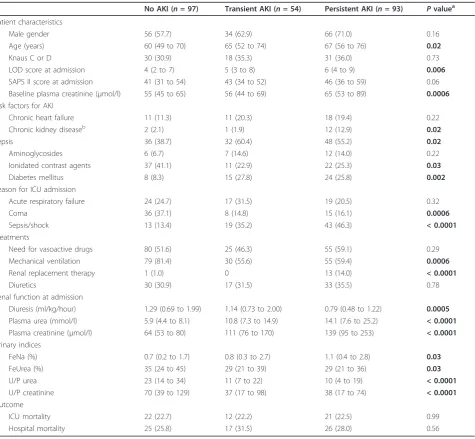
During the study period, 244 patients with a median age of 63 years (52 to 73 years) were included. Their main characteristics are reported in Table 1. According to our definitions, 97 patients had no AKI (39.8%), 54 patients (22.1%) had transient AKI, and 93 patients (38.1%) had persistent AKI.
At ICU admission, the median Simplified Acute Phy-siology Score version II was 44 (33 to 55) and the median LOD score was 5 (4 to 8). Most patients were admitted for medical conditions (n= 224, 91.9%). The main risk factors for AKI were sepsis (49.8%), exposure to contrast agents (31.1%), diabetes mellitus (19.3%), aminoglycoside therapy (10.2%), and chronic kidney disease (6.1%).
No patient was receiving RRT t the time of the study. RRT was required during the ICU stay in 21 patients (8.6%), usually during the first 24 hours in the ICU (n= 14/244, 5.7%).
Urinary indices at ICU admission
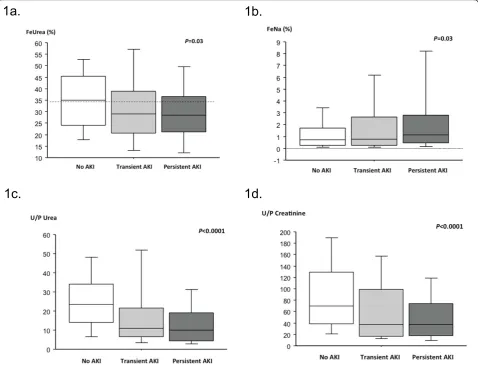
Table 1 and Figure 1 report the main urinary index values at ICU admission. Median FeNa, FeUrea, and U/P ratios of urea and creatinine differed significantly across the groups with no AKI, transient AKI, and persistent AKI.
Changes in urinary indices during the first 24 hours after ICU admission in the overall population
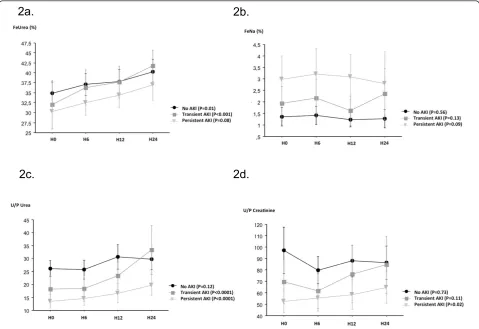
Significant increases were noted between H0 and H24 in FeUrea (from 31% (22 to 41%) to 39% (29 to 48%),P< 0.0001), in U/P urea ratio (from 15 (7 to 28) to 20 (9 to 40),P< 0.0001), and in U/P creatinine ratio (from 50 (24 to 101) to 57 (29 to 104),P= 0.01) (Figure 2; Table S1 in Additional file 1). FeNa did not change significantly (P= 0.13) during the first 24 hours in the ICU.
Changes in urinary indices during the first 24 hours after ICU admission in the groups without AKI, with transient AKI, and with persistent AKI
In the group with transient AKI, FeUrea increased signifi-cantly from H0 to H24 (from 29% (21 to 39%) to 42% (30 to 51%),P < 0.001) (Figure 2; Table S1 in Additional file 1). No significant changes in FeUrea occurred in the group with persistent AKI (P= 0.08). In none of the three groups did FeNa or the U/P creatinine ratio change signifi-cantly. The U/P urea ratio increased significantly in both AKI groups (transient AKI, from 11 (7 to 22) to 29 (10 to 42),P< 0.0001; and persistent AKI, from 10 (4 to 19) to 13 (6 to 27),P< 0.0001).
Changes in urinary indices in patients with and without diuretic therapy are reported in Table S2 and Figures S1 and S2 in Additional file 1.
Performance of urinary indices and their changes in differentiating transient from persistent acute kidney injury
Table 2 reports the performance data for the urinary indices. None of the four urinary indices at ICU admis-sion differentiated transient AKI from persistent AKI in the overall population (area under the receiver-operating characteristic curve 0.50 to 0.59) or in the subgroups without diuretic therapy or without sepsis. Compared with values at ICU admission, values at H24 and changes from H0 to H24 performed slightly better; however, their performance remained too poor to be clinically relevant (area under the receiver-operating characteristic curve
≤0.65 for all values; Table 2). The main factors associated with persistent AKI after adjustment for confounders are reported in Table S3 in Additional file 1.
Discussion
To the best of our knowledge, this is the first study evalu-ating the time-course of standard urinary indices (FeNa, FeUrea, U/P urea, and U/P creatinine) in critically ill patients without AKI, with transient AKI, and with per-sistent AKI. The indices were not effective in differentiat-ing transient AKI from persistent AKI. Most of them changed significantly over the first 24 hours in the ICU, but these changes did not accurately separate transient from persistent AKI.
included patients who did not have critical illnesses [9,31,32]. In our study, we used an objective definition of transient AKI. Most of the study patients had sepsis at ICU admission, a condition associated with alterations in renal handling of sodium and water despite normal renal perfusion or adequate fluid therapy [19]. This point may explain the differences between our results and those of previous studies [9,28,30-32]. Interestingly, FeNa and FeUrea were usually decreased in both transient AKI and persistent AKI [11,19], suggesting partial preservation of tubular function even in patients with persistent AKI [19,23]. In critically ill patients, therefore, urinary indices
may be unable to distinguish transient AKI from persistent AKI.
[image:4.595.63.539.98.537.2]The main objective of this study was to evaluate the diagnostic performance of urinary index changes over the first 24 hours in the ICU for separating transient AKI and persistent AKI. In sheep, FeNa declined within the first few hours after the induction of septic AKI and then returned to normal during renal recovery [19]. Similarly, urinary indices returned to normal within 24 hours in our patients, and the improvement was more rapid in the transient AKI group than in the persistent AKI group. As a result, H24 values performed significantly better than
Table 1 Characteristics of patients without acute kidney injury (AKI), with transient AKI, and with persistent AKI
No AKI (n= 97) Transient AKI (n= 54) Persistent AKI (n= 93) Pvaluea
Patient characteristics
Male gender 56 (57.7) 34 (62.9) 66 (71.0) 0.16
Age (years) 60 (49 to 70) 65 (52 to 74) 67 (56 to 76) 0.02
Knaus C or D 30 (30.9) 18 (35.3) 31 (36.0) 0.73
LOD score at admission 4 (2 to 7) 5 (3 to 8) 6 (4 to 9) 0.006
SAPS II score at admission 41 (31 to 54) 43 (34 to 52) 46 (36 to 59) 0.06 Baseline plasma creatinine (μmol/l) 55 (45 to 65) 56 (44 to 69) 65 (53 to 89) 0.0006 Risk factors for AKI
Chronic heart failure 11 (11.3) 11 (20.3) 18 (19.4) 0.22
Chronic kidney diseaseb 2 (2.1) 1 (1.9) 12 (12.9) 0.02
Sepsis 36 (38.7) 32 (60.4) 48 (55.2) 0.02
Aminoglycosides 6 (6.7) 7 (14.6) 12 (14.0) 0.22
Ionidated contrast agents 37 (41.1) 11 (22.9) 22 (25.3) 0.03
Diabetes mellitus 8 (8.3) 15 (27.8) 24 (25.8) 0.002
Reason for ICU admission
Acute respiratory failure 24 (24.7) 17 (31.5) 19 (20.5) 0.32
Coma 36 (37.1) 8 (14.8) 15 (16.1) 0.0006
Sepsis/shock 13 (13.4) 19 (35.2) 43 (46.3) < 0.0001
Treatments
Need for vasoactive drugs 80 (51.6) 25 (46.3) 55 (59.1) 0.29
Mechanical ventilation 79 (81.4) 30 (55.6) 55 (59.4) 0.0006
Renal replacement therapy 1 (1.0) 0 13 (14.0) < 0.0001
Diuretics 30 (30.9) 17 (31.5) 33 (35.5) 0.78
Renal function at admission
Diuresis (ml/kg/hour) 1.29 (0.69 to 1.99) 1.14 (0.73 to 2.00) 0.79 (0.48 to 1.22) 0.0005 Plasma urea (mmol/l) 5.9 (4.4 to 8.1) 10.8 (7.3 to 14.9) 14.1 (7.6 to 25.2) < 0.0001 Plasma creatinine (μmol/l) 64 (53 to 80) 111 (76 to 170) 139 (95 to 253) < 0.0001 Urinary indices
FeNa (%) 0.7 (0.2 to 1.7) 0.8 (0.3 to 2.7) 1.1 (0.4 to 2.8) 0.03
FeUrea (%) 35 (24 to 45) 29 (21 to 39) 29 (21 to 36) 0.03
U/P urea 23 (14 to 34) 11 (7 to 22) 10 (4 to 19) < 0.0001
U/P creatinine 70 (39 to 129) 37 (17 to 98) 38 (17 to 74) < 0.0001 Outcome
ICU mortality 22 (22.7) 12 (22.2) 21 (22.5) 0.99
Hospital mortality 25 (25.8) 17 (31.5) 26 (28.0) 0.56
Results reported as median (interquartile range) orn(%). FeNa, fractional excretion of sodium ([U/P sodium]/[U/P creatinine])×100; FeUrea, fractional excretion of urea ([U/P urea]/[U/P creatinine])×100; LOD, Logistic Organ Dysfunction score (can range from 0 to 22); SAPS, Simplified Acute Physiology Score; U/P,
urinary/plasma.a
Pvalues are for comparisons across the three patient groups.b
H0 values in differentiating transient AKI from persistent AKI. Nevertheless, performance of the H24 values remained too low to be clinically relevant.
Interestingly, diuretic therapy had no effect on urinary indices or their changes over time in our study. In parti-cular, FeNa changes over the first 24 hours were not significantly different in the groups with and without diuretic therapy. Resistance to diuretics may explain this finding. Heart failure, renal hypoperfusion related to shock or sepsis, and hypoalbuminemia are common in ICU patients and can result in resistance to diuretics [33,34]. In patients given diuretics before ICU admis-sion, rebound sodium retention, a post-diuretic effect, and diuretic braking also contribute to diuretic resis-tance [35,36]. Last, our patients received diuretics as bolus injections. Using continuous infusions [37,38] or higher dosages might have produced different results.
Our study has several limitations. First, our definition of transient AKI was based on renal function recovery. Indeed, a more selective definition of pre-renal AKI would have required the use of highly subjective criteria such as clinical history, physical examination, and physi-cian judgment [9,10]. We elected to use a definition that relied on an objective criterion. In addition, our defini-tion takes into account the continuum that probably exists between renal hypoperfusion and kidney damage [6]. The difference between our definition of transient AKI and that used in earlier studies may contribute to the discrepancies in the results. Moreover, our definition was highly sensitive for detecting patients with transient AKI, since none of these patients required RRT, but also lacked specificity, as less than 20% of patients with per-sistent AKI required RRT. This limitation must be taken into account when interpreting our results. In addition,
1a.
1b.
[image:5.595.59.538.90.455.2]1c.
1d.
2a.
2b.
[image:6.595.58.538.89.418.2]2c.
2d.
Figure 2Changes in urinary indices during the first 24 hours after ICU admission according to renal function. (a)Fractional excretion of urea (FeUrea) according to renal function.(b)Fractional excretion of sodium (FeNa) according to renal function.(c)The urine/plasma (U/P) urea ratio according to renal function.(d)The U/P creatinine ratio according to renal function. AKI, acute kidney injury; H0, ICU admission; H6, H12, H18, and H24, 6-hour urine samples during the first 24 ICU hours. Data presented as mean ± 95% confidence interval.
Table 2 Diagnostic performance of and changes in urinary indices at ICU admission and after 24 hours
Patients with AKI Overall population (n= 147) Patients without diuretics (n= 97) Patients without sepsis(n= 60)
Urinary indices at ICU admission
FeNa 0.59 (0.49 to 0.69) 0.54 (0.41 to 0.66) 0.59 (0.42 to 0.75) FeUrea 0.50 (0.41 to 0.60) 0.53 (0.41 to 0.65) 0.64 (0.49 to 0.79) U/P urea 0.57 (0.48 to 0.67) 0.56 (0.45 to 0.68) 0.59 (0.45 to 0.74) U/P creatinine 0.55 (0.45 to 0.65) 0.53 (0.41 to 0.65) 0.61 (0.46 to 0.77) Urinary indices at H24
FeNa 0.61 (0.51 to 0.71) 0.64 (0,52 to 0,76)* 0,56 (0,40 to 0.72) FeUrea 0.51 (0.40 to 0.62) 0.57 (0.43 to 0.70) 0.56 (0.39 to 0.72) U/P urea 0.65 (0.55 to 0.75)* 0.65 (0.53 to 0.76)* 0.67 (0.51 to 0.83)* U/P creatinine 0.58 (0.48 to 0.69) 0.56 (0.43 to 0.69) 0.58 (0.41 to 0.76) Changes in urinary indices between H0 and H24
FeNa 0.59 (0.49 to 0.70) 0.58 (0.45 to 0.71) 0,59 (0,40 to 0.78) FeUrea 0.57 (0.47 to 0.68)* 0.58 (0.44 to 0.72) 0.61 (0.43 to 0.78) U/P urea 0.61 (0.51 to 0.71)* 0.60 (0.47 to 0.73) 0.65 (0.48 to 0.81) U/P creatinine 0.51 (0.49 to 0.62) 0.52 (0.40 to 0.65) 0.53 (0.33 to 0.70)
[image:6.595.56.539.500.697.2]an imbalance of the case mix across the three groups of patients (no AKI, transient AKI and persistent AKI) was observed. Patients without AKI were thus more fre-quently admitted for neurological dysfunction than patients with AKI usually admitted with severe sepsis or septic shock. This may explain the higher rate of mechanical ventilation in patients without AKI than patients with AKI and the absence of association between mortality and AKI in this study. However, performance of urinary indices in this study is consistent with previous studies performed in different ICUs or in populations with a different case mix [11,15]. Another limit of our study was that neither fluid balance nor fluid therapy was recorded. We may suppose that both these variables could influence the final results.
Although our study suggests that none of the usual urin-ary indices or their changes may reliably help in distin-guishing transient AKI from persistent AKI, further studies are needed to assess influence of fluid challenge and fluid balance on urinary index course or performance. Last, we did not evaluate newly described biomarkers for diagnosing transient AKI. Future studies should compare these biomarkers with the standard urinary indices evalu-ated in our study.
Conclusion
This study confirms the poor performance of standard urinary indices at ICU admission for differentiating transi-ent AKI from persisttransi-ent AKI in unselected critically ill patients. Although changes over the first 24 hours and values at H24 performed slightly better than values at admission, their performance remained too low to be clinically useful. Additional studies are needed to identify means of reliably separating transient and persistent AKI, with the goal of improving early therapeutic interventions.
Key messages
• Standard urinary index values at ICU admission performed poorly for differentiating transient AKI and persistent AKI.
• Although changes over the first 24 hours and values at H24 performed slightly better than values at admission, their performance remained too low to be clinically useful.
• Performance of newest biomarkers in this setting remains to be evaluated.
Additional material
Additional file 1: Table S1 showing changes in urinary indices during the first 24 hours following ICU admission and Table S2 showing the influence of diuretic therapy. Table S3 showing factors independently associated with persistent AKI in a conditional logistic regression model. Figure S1 showing changes in urinary indices in the overall population, in patients receiving diuretic therapy during the first
24 hours following ICU admission and in patients without diuretic therapy. Figure S2 showing change in urinary indices according to renal function and use of diuretics.
Abbreviations
AKI: acute kidney injury; FeNa: fractional excretion of sodium; FeUrea: fractional excretion of urea; RRT: renal replacement therapy; U/P: urinary/ plasma.
Authors’contributions
BP participated in the study concept and design, acquisition of data, analysis and interpretation of data, drafting of the manuscript and critical revision of the manuscript. AL participated in the study design, acquisition of data, analysis and interpretation of data, drafting of the manuscript and critical revision of the manuscript. JO, JD, RV, EE, CM, GB, FZ, YC and BT participated in acquisition of data, interpretation of data, and critical revision of the manuscript. BS and FV participated in the study design, acquisition of data, analysis and interpretation of data, drafting of the manuscript and critical revision of the manuscript. MD conceived the study, participated in study design and coordination, acquisition of data, statistical analysis and interpretation of data, drafting of the manuscript and critical revision of the manuscript. MD had full access to all of the data in the study and takes responsibility for the integrity of the data and the accuracy of the data analysis. All authors read and approved the final manuscript.
Competing interests
The authors declare that they have no competing interests.
Acknowledgements
The authors thank A Wolfe MD for help with this manuscript. This study was supported by a grant from Saint-Etienne University Hospital. This study was carried out in the following six ICUs: Saint-Etienne University Hospital, Saint Etienne, France (three ICUs); Ferrand University Hospital, Clermont-Ferrand, France; Archet University Hospital, Nice, France; and Avicenne University Hospital, Bobigny, France.
Author details
1Medical ICU, Saint-Etienne University Hospital, Avenue Albert Raymond,
Saint-Priest en Jarez 42270, France.2Jacques Lisfranc Medical School,
Saint-Etienne University, 15 Rue Ambroise Paré, Saint-Saint-Etienne 42000, France.
3Medical ICU, Gabriel Montpied University Hospital, 58 Rue Montalembert,
63003 Clermont Ferrand cedex 1, France.4Clermont-Ferrand Medical School, Auvergne University, 28 place Henri-Dunant BP 38, 63001 Clermont-Ferrand cedex 1, France.5Medical-Surgical Intensive Care Unit, Avicenne University Hospital, APHP, 125 rue de Stalingrad, Bobigny 93009, France.6Medical
Intensive Care Unit, Archet University Hospital, 151 Rte Saint Antoine Ginestiere, Nice 06202, France.7Nephrology, Dialysis and Renal
Transplantation, Saint-Etienne University Hospital, Avenue Albert Raymond, Saint-Priest en Jarez 42270, France.8Nice University, UFR de Médecine, 28
Avenue de Valombrose, 06107 NICE cedex 2, France.9Bobigny Medical
School, Paris-13 University, 74 rue Marcel Cachin, 93017 Bobigny cedex, France.10Thrombosis Research Group, EA 3065, Saint-Etienne University
Hospital, Avenue Albert Raymond, Saint-Priest en Jarez 42270, France.
11Department of Emergency Medicine, Saint-Etienne University Hospital,
Avenue Albert Raymond, Saint-Priest en Jarez 42270, France.
Received: 31 December 2012 Revised: 15 February 2013 Accepted: 21 March 2013 Published: 26 March 2013
References
1. Brivet FG, Kleinknecht DJ, Loirat P, Landais PJ:Acute renal failure in intensive care units - causes, outcome, and prognostic factors of hospital mortality; a prospective, multicenter study. French Study Group on Acute Renal Failure.Crit Care Med1996,24:192-198.
2. Metnitz PGH, Krenn CG, Steltzer H, Lang T, Ploder J, Lenz K, Le Gall J-R, Druml W:Effect of acute renal failure requiring renal replacement therapy on outcome in critically ill patients.Crit Care Med2002,
3. Bagshaw SM:Short- and long-term survival after acute kidney injury.
Nephrol Dial Transplant2008,23:2126-2128.
4. Lameire N, Van Biesen W, Vanholder R:Acute kidney injury.Lancet2008,
372:1863-1865.
5. Schrier RW, Wang W, Poole B, Mitra A:Acute renal failure: definitions, diagnosis, pathogenesis, and therapy.J Clin Invest2004,114:5-14. 6. Khwaja A:KDIGO clinical practice guidelines for acute kidney injury.
Nephron Clin Pract2012,120:179-184.
7. Espinel CH:The FENa test. Use in the differential diagnosis of acute renal failure.JAMA1976,236:579-581.
8. Miller TR, Anderson RJ, Linas SL, Henrich WL, Berns AS, Gabow PA, Schrier RW:Urinary diagnostic indices in acute renal failure: a prospective study.Ann Intern Med1978,89:47-50.
9. Carvounis CP, Nisar S, Guro-Razuman S:Significance of the fractional excretion of urea in the differential diagnosis of acute renal failure.
Kidney Int2002,62:2223-2229.
10. Bagshaw SM, Langenberg C, Bellomo R:Urinary biochemistry and microscopy in septic acute renal failure: a systematic review.Am J Kidney Dis2006,48:695-705.
11. Darmon M, Vincent F, Dellamonica J, Schortgen F, Gonzalez F, Das V, Zeni F, Brochard L, Bernardin G, Cohen Y, Schlemmer B:Diagnostic performance of fractional excretion of urea in the evaluation of critically ill patients with acute kidney injury: a multicenter cohort study.Crit Care
2011,15:R178.
12. Bagshaw SM, Bennett M, Haase M, Haase-Fielitz A, Egi M, Morimatsu H, D’amico G, Goldsmith D, Devarajan P, Bellomo R:Plasma and urine neutrophil gelatinase-associated lipocalin in septic versus non-septic acute kidney injury in critical illness.Intensive Care Med2010,36:452-461. 13. Nickolas TL, O’Rourke MJ, Yang J, Sise ME, Canetta PA, Barasch N, Buchen C,
Khan F, Mori K, Giglio J, Devarajan P, Barasch J:Sensitivity and specificity of a single emergency department measurement of urinary neutrophil gelatinase-associated lipocalin for diagnosing acute kidney injury.Ann Intern Med2008,148:810-819.
14. Parikh CR, Mishra J, Thiessen-Philbrook H, Dursun B, Ma Q, Kelly C, Dent C, Devarajan P, Edelstein CL:Urinary IL-18 is an early predictive biomarker of acute kidney injury after cardiac surgery.Kidney Int2006,70:199-203. 15. Bagshaw SM, Bennett M, Devarajan P, Bellomo R:Urine biochemistry in
septic and non-septic acute kidney injury: a prospective observational study.J Crit Care2012.
16. Nejat M, Pickering JW, Devarajan P, Bonventre JV, Edelstein CL, Walker RJ, Endre ZH:Some biomarkers of acute kidney injury are increased in pre-renal acute injury.Kidney Int2012,81:1254-1262.
17. Doi K, Negishi K, Ishizu T, Katagiri D, Fujita T, Matsubara T, Yahagi N, Sugaya T, Noiri E:Evaluation of new acute kidney injury biomarkers in a mixed intensive care unit.Crit Care Med2011,39:2464-2469.
18. Siew ED, Ware LB, Ikizler TA:Biological markers of acute kidney injury.
J Am Soc Nephrol2011,22:810-820.
19. Langenberg C, Wan L, Egi M, May CN, Bellomo R:Renal blood flow and function during recovery from experimental septic acute kidney injury.
Intensive Care Med2007,33:1614-1618.
20. Mehta RL, Kellum JA, Shah SV, Molitoris BA, Ronco C, Warnock DG, Levin A:
Acute Kidney Injury Network: report of an initiative to improve outcomes in acute kidney injury.Crit Care2007,11:R31.
21. Bellomo R, Ronco C, Kellum JA, Mehta RL, Palevsky P:Acute renal failure -definition, outcome measures, animal models, fluid therapy and information technology needs: the Second International Consensus Conference of the Acute Dialysis Quality Initiative (ADQI) Group.Crit Care
2004,8:R204-R212.
22. Závada J, Hoste E, Cartin-Ceba R, Calzavacca P, Gajic O, Clermont G, Bellomo R, Kellum JA:A comparison of three methods to estimate baseline creatinine for RIFLE classification.Nephrol Dial Transplant2010,
25:3911-3918.
23. Darmon M, Schortgen F, Vargas F, Liazydi A, Schlemmer B, Brun-Buisson C, Brochard L:Diagnostic accuracy of Doppler renal resistive index for reversibility of acute kidney injury in critically ill patients.Intensive Care Med2011,37:68-76.
24. Le Gall JR, Klar J, Lemeshow S, Saulnier F, Alberti C, Artigas A, Teres D:The Logistic Organ Dysfunction system. A new way to assess organ dysfunction in the intensive care unit. ICU Scoring Group.JAMA1996,
276:802-810.
25. Le Gall JR, Lemeshow S, Saulnier F:A new Simplified Acute Physiology Score (SAPS II) based on a European/North American multicenter study.
JAMA1993,270:2957-2963.
26. Knaus WA, Draper EA, Wagner DP, Zimmerman JE:APACHE II: a severity of disease classification system.Crit Care Med1985,13:818-829.
27. Levy MM, Fink MP, Marshall JC, Abraham E, Angus D, Cook D, Cohen J, Opal SM, Vincent J-L, Ramsay G:2001 SCCM/ESICM/ACCP/ATS/SIS International Sepsis Definitions Conference.Intensive Care Med2003,
29:530-538.
28. Diamond JR, Yoburn DC:Nonoliguric acute renal failure associated with a low fractional excretion of sodium.Ann Intern Med1982,96:597-600. 29. Hilton PJ, Jones NF, Barraclough MA, Lloyd-Davies RW:Urinary osmolality
in acute renal failure due to glomerulonephritis.Lancet1969,2:655-656. 30. Lam M, Kaufman CE:Fractional excretion of sodium as a guide to volume
depletion during recovery from acute renal failure.Am J Kidney Dis1985,
6:18-21.
31. Tungsanga K, Boonwichit D, Lekhakula A, Sitprija V:Urine uric acid and urine creatine ratio in acute renal failure.Arch Intern Med1984,
144:934-937.
32. Pépin M-N, Bouchard J, Legault L, Ethier J:Diagnostic performance of fractional excretion of urea and fractional excretion of sodium in the evaluations of patients with acute kidney injury with or without diuretic treatment.Am J Kidney Dis2007,50:566-573.
33. Wilcox CS, Mitch WE, Kelly RA, Skorecki K, Meyer TW, Friedman PA, Souney PF:Response of the kidney to furosemide. I. Effects of salt intake and renal compensation.J Lab Clin Med1983,102:450-458.
34. Vasko MR, Cartwright DB, Knochel JP, Nixon JV, Brater DC:Furosemide absorption altered in decompensated congestive heart failure.Ann Intern Med1985,102:314-318.
35. Asare K:Management of loop diuretic resistance in the intensive care unit.Am J Health Syst Pharm2009,66:1635-1640.
36. Brater DC:Diuretic therapy.N Engl J Med1998,339:387-395.
37. Lahav M, Regev A, Ra’anani P, Theodor E:Intermittent administration of furosemide vs continuous infusion preceded by a loading dose for congestive heart failure.Chest1992,102:725-731.
38. Dormans TP, Van Meyel JJ, Gerlag PG, Tan Y, Russel FG, Smits P:Diuretic efficacy of high dose furosemide in severe heart failure: bolus injection versus continuous infusion.J Am Coll Cardiol1996,28:376-382. doi:10.1186/cc12582
Cite this article as:Ponset al.:Diagnostic accuracy of early urinary index changes in differentiating transient from persistent acute kidney injury in critically ill patients: multicenter cohort study.Critical Care2013 17:R56.
Submit your next manuscript to BioMed Central and take full advantage of:
• Convenient online submission
• Thorough peer review
• No space constraints or color figure charges
• Immediate publication on acceptance
• Inclusion in PubMed, CAS, Scopus and Google Scholar
• Research which is freely available for redistribution