Numerical Study on Thermal and Flow
Characteristics of Air in a Square Duct using Delta
Wing Vortex Generators
Syed Sanaullah Quadri¹, Anandkumar S Malipatil²
¹˒²Department of PG Studies, Department of Thermal Power Engineering VTU RO
Abstract— The impact of delta wing vortex generators in a square duct on the thermal and flow characteristics execution has
been numerically explored in this study. The vortex generator allows the air flow to distribute more and occupy larger contact area in the channel. In the present project thermal and fluid flow analysis of air in a rectangular channel with delta wings are carried out. Analysis is carried out by using a commercially available CFD tool and analysis is carried out for the combination of Aspect Ratio of 1.6, 2.4 and 4.8 for varied pitch of 150 mm, 240mm, 180mm and 100mm. Primary objective of the analysis is to analyze the effect of varied aspect ratios of delta wings with varied pitch on the heat transfer rate and to estimate the pressure ratios in the rectangular channel. From the present analysis it is concluded that for model with higher aspect ratio and longer pitch results in lower pressure drop and better heat loss for the given inlet flow conditions. Also it is found that aspect ratio of a delta wings is not making impact on the pressure drops in the channel.
Keywords: Aspect ratio, Delta wing vortex generators, Flow through channel, Pitch, Thermal characteristics.
I. INTRODUCTION
There are numerous applications in engineering industry that require heat expansion or expulsion and a wide assortment of heat exchange devices that are utilized as a part of these applications. Execution change regarding enhancing heat exchange coefficient and diminishing pressure drop gets to be crucial in such applications. In numerous building applications, for example, heat exchangers, high temperature gas turbines and electronic gear, convective heat transfer assumes a vital part. A few strategies are known to improve the convective heat transfer.
Turbulence promoters or delta wing vortex generators are frequently used to control the stream field and they can give a helpful impact on the thermal performance. Subsequently, heat exchange applications considering blended convection and interior stream in non-circular channels and pipes, for example, square, rectangular, trapezoidal, polygonal, and triangular, have been concentrated broadly by numerous analysts. In these channels, the hydrodynamics and the thermal fields are firmly identified with each other. This endeavor presents test results of hydrodynamics inside a square duct. Square cross-sectional diverts are favored with a specific end goal to successfully cool turbine sharp edges and vanes and to accomplish more compactness.
There are large number of techniques for expanding heat transfer coefficients, which might be named active, passive, or compound. Active techniques require outer force, for example, electric or acoustic fields, mechanical gadgets, or surface vibration, though passive(inactive) strategies don't require outside force however make utilization of an extraordinary surface geometry. Upgrades that at the same time make utilization of more than one strategy are alluded to as compound techniques.
Only passive techniques are considered here for discussion. The passive method for heat transfer enhancement relies on upon two essential strategies: aggravating the thermal boundary layer and utilizing mass liquid blending. Annihilation and restarting of the boundary layer in presence of sharp or rough components causes an increase in heat transfer by producing a boundary layer that is more slender by and large than the continuous (uninterrupted) boundary layer. Vorticity in the stream can improve heat exchange through mass liquid blending which decreases temperature inclinations in the center stream moving warm slopes in the close divider locale. Such blending can be affected utilizing vortex generators, delta wings, ribs, dimples, or surface knocks.
II. REVIEW
height to channel water driven diameter ratio (e/Dh) on friction factor in the square direct is clarified in this paper. The finishing up comment is expanding e/Dh friction factor increments up to 30−60% from most reduced e/Dh to most elevated e/Dh it implies the
pressure drop increments in the direct with increment in generator stature to channel water powered diameter ratio (e/Dh).
Biswas et al. (1994) [2] figured laminar stream and heat transfer attributes connected with a punched delta wing or winglet pair in a rectangular channel. Incorporation of the openings underneath in the computational area was found to decrease the normal Nusselt number and the friction coefficient. By perception of a downwash speed field within the sight of gaps, the creators ascribed the decrease in stream misfortune to the winding stream with less vortex quality. Their reproduction additionally demonstrated that the delta wing performed superior to the winglet pair in heat transfer yet was less compelling regarding entropy period in light of an irreversibility examination.
Biswas et al. (1994) [2]performed numerical examinations of flow structure and heat transfer attributes in a channel with an implicit tube and a winglet sort vortex generator.
Wu and Tao (2008) [3] played out a numerical study on heat transfer and stream qualities in a rectangular channel with punched VGs at different geometries. Under an altered VG region, a delta-winglet pair presented higher heat transfer than a rectangular winglet pair and prudently diminishing the aspect ratio of rectangular VGs (characterized as tallness to harmony length) could yield further improvement at an unpretentious pressure drop discipline.
Yang et al. (2001) [4] performed numerical analysis on flow field and heat transfer characteristics in a channel with a pair of vortices for various thermal and flow parameters.
Dietz et al. (2006) [5] utilized the business programming FLUENT to register heat exchange and speed field in a turbulent channel stream for Reynolds numbers between 80,000-600,000. The impacts of number of delta wings, horizontal and longitudinal uprooting were broke down. Expectations on warmth exchange at different wing numbers and removals were additionally contrasted and the estimation utilizing LCT. While the numerical model over anticipated the upgrade proportion by approximately 25%, it caught the pattern in a sensible way. For various two wings, variety in the longitudinal relocation had little impact on the improvement. Expansion of a third wing did not enhance heat exchange obviously.
III. METHODOLOGY
A. CAD Model of Square DUCT with Delta Wings
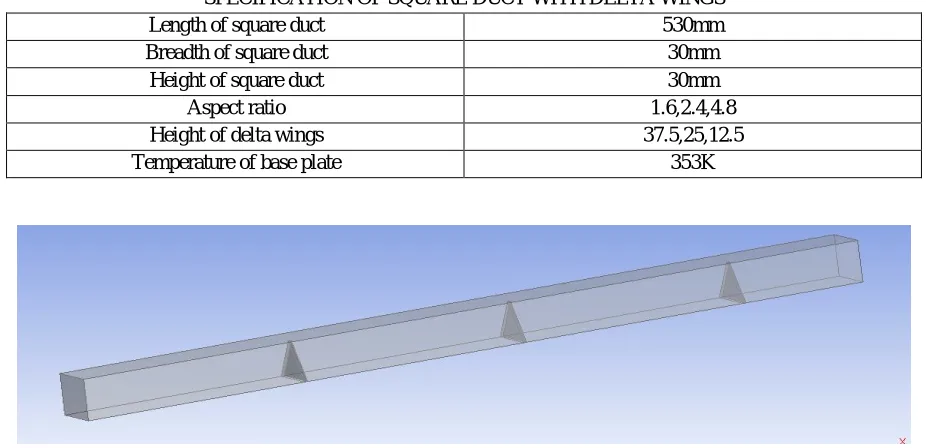
[image:3.612.74.537.485.709.2]The CAD models are designed by using the computer aided drawing software and these models are analyzed by using a commercial CFD tool. These models are prepared and discretized using CFD-Grid generation tool.
TABLE I
SPECIFICATION OF SQUARE DUCT WITH DELTA WINGS
Length of square duct 530mm
Breadth of square duct 30mm
Height of square duct 30mm
Aspect ratio 1.6,2.4,4.8
Height of delta wings 37.5,25,12.5
Temperature of base plate 353K
B. CFD procedure
Computational flow domain: The computational flow domain of square duct with delta wings is designed with the help of geometry factors and the flow takes place inside the square duct as an air domain.
[image:4.612.63.543.159.367.2]C. Mesh Generation
TABLE II
MESH DETAILS Of AR 1.6, PITCH 150mm.
Type Tetra-Hedral mesh
No. of elements 48832
No. of Nodes 10527
Fig 2: MESH MODEL of AR 1.6, Pitch 150mm.
D. Boundary Conditions
Boundary conditions are mentioned on computational domain of square duct with delta wings. It is seen from fig 3 that the pressure gradually decreases from inlet to outlet and base plate temperature is at 353K.
[image:4.612.100.506.432.653.2]Boundary Conditions
Fig 3: Boundary conditions of square duct with delta wings.
TABLE III
BOUNDARY CONDITIONS
Inlet Mass flow inlet at 0.875 kg/s
Upper plate 300K
Outlet Pressure outlet
TABLE IV FLUID PROPERTIES
Working Fluid Air
Density 1.22 kg/m3
Viscosity 1.78e-5 kg/m-s
Thermal Conductivity 0.0242 w/m K
Specific Heat 1006j/kg K
IV. RESULTS AND DISCUSSION
[image:5.612.69.537.284.417.2]A. For AR 1.6 and Pitch 150mm. 1) Streamline
Fig 4: Streamlines coloured by Velocity, AR 1.6, Pitch 150mm
Figure 4 shows the streamlines of air coloured by velocity and it is observed that velocity is minimum at the inlet and gradually increases as it passes through the duct. The maximum velocity is visualised at the upper plate. The velocity ranges between 0 and 212.19m/s.
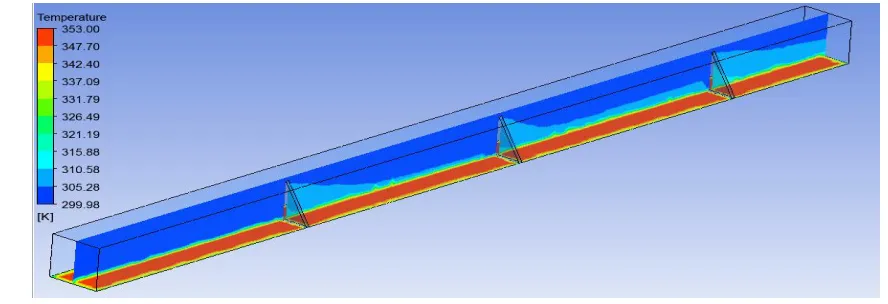
[image:5.612.78.522.508.660.2]2) Temperature
Fig 5: Temperature plots along plane-1, AR 1.6, Pitch 150mm
3) Pressure
Fig 6: Pressure plots along Plane-1, AR 1.6, Pitch 150mm
Figure 6 shows the pressure contours and it is observed that the pressure is maximum at the inlet and minimum at the outlet, this is because of the delta wings in the square duct acting as vortex generators which reduces the pressure gradually from the inlet to the outlet. The pressure ranges between 0.34bar to -0.09bar.
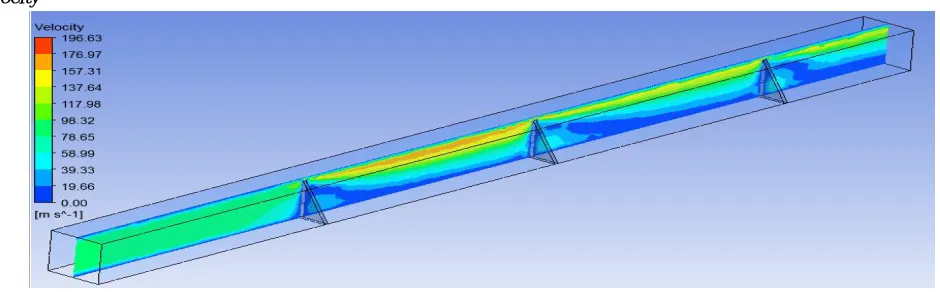
[image:6.612.65.535.322.468.2]4) Velocity
Fig 7: Velocity plots along Plane-1, AR 1.6, Pitch 150mm
Figure 7 shows the velocity plots and it is observed that the velocity of air will be high at the inlet and at the upper plate. As the air passes through the duct against delta wing its velocity goes on decreasing near the base plate and may also diminish at the base plate. The maximum velocity will be seen at the upper plate.
[image:6.612.75.530.552.698.2]5) Heat flux
Figure 8 shows the heat flux contours for aspect ratio 1.6 and pitch 150mm. At the inlet of the duct up-to the first vortex generator, the heat flux is minimum and heat flux can be observed to be maximum at the regions where the vortex generators are placed. Hence better heat transfer can be observed at these locations.
V. CONCLUSIONS
CFD analysis is carried out to understand the flow behaviour and heat transfer rate of a square channel using Delta wings with varied Aspect ratios and pitch of 1.6, 150,240 respectively, 2.4, 180,240 respectively and 4.8,100,150 respectively. All together six analysis is carried with the above varied configurations.
Contours are plotted for Temperature, Pressure and Domain velocity at various planes and following conclusions were drawn.
A. It is observed that velocities are maximum in the domain for the aspect ratio of 1.6 and velocities found to be 197 and 184 m/s for pitch of 150 and 240 respectively. Velocities for aspect ratio 4.8 found to be 127 and 137 m/s for pitch 100 and 150 respectively.
B. From the pressure contours it is found that there is no much pressure drop is observed in all the models since the delta wings do not completely obstructing the flow.
C. Delta wing allows the air flow to distribute more and occupy larger contact area in the channel.
D. From the above observations it could be concluded that higher the Aspect ratio and larger the pitch results in higher rate of heat transfer in the domain.
VI. ACKNOWLEDGEMENT
I wish to express my special gratitude to my guide Prof. Anandkumar.S.Malipatil, Department of Thermal Power Engineering, Dept., of PG Studies, VTU regional office, Kalaburagi for his inspiration constant supervision, direction and discussions in successful completion of this project.
REFERENCES
[1] Katti, Vadiraj V., Malipatil, Anandkumar S., Ingalagi, Mahesh R., 2013. Experimental Investigation of Flow Characteristics in a Square Duct With Delta-Wing Vortex Generators. Paper No.GTINDIA2013-3773., pp. 295—309.
[2] G. Biswas, N.K. Mitra, M. Fiebig, Heat-transfer enhancement in fin-tube heat exchangers by winglet type vortex generators, Int. J. Heat Mass Transfer 37 (1994) 283–291.
[3] Wu, J. M., and Tao, W. Q., 2008, “Numerical Study on Laminar Convection Heat Transfer in a Channel with Longitudinal Vortex Generator. Part B: Parametric Study of Major Influence Factors,” International Journal of Heat and Mass Transfer, Vol. 51, pp. 3683-3692.
[4] Yang, J.S., Seo, J.K. and Lee, K.B., 2001. A Numerical Analysis on Flow Field and Heat Transfer by Interaction between a pair of vortices in a channel flow. Current Applied Physics 1, 393-405.
[5] Dietz, C. F., Henze, M., Neumann, S. O., Wolfersdorf, J. von, and Weigand, B., 2006, “The Effects of Vortex Structures on Heat Transfer and Flow Field Behind Multi element Arrays of Vortex Generators,” Proceedings of the 13th International Heat TransferConference, Paper No. HTE-12.
[6] M. Fiebig, A. Valencia, N.K. Mitra, Local heat transfer and flow losses in fin-and tube heat exchangers with vortex generators: a comparison of round and flat tubes, Exp. Thermal Fluid Sci. 8 (1994) 35–45.
[7] Gentry, M. C., and Jacobi, A. M., 2002, “Heat Transfer Enhancement by Delta-Wing- Generated Tip Vortices in Flat-Plate and Developing Channel Flows,” ASME Journal ofHeat Transfer, Vol. 124, pp. 1158-1168.
[8] F.J. Edwards, C.J.R. Alker, The improvement of forced convection surface heat transfer using surface protrusions in the form of cubes and vortex generators, in: Proceedings of the Fifth International Heat Transfer Conference, Tokyo, vol. 2, 1974, pp. 244–248.