5
VIII
August 2017
ICT Applied Cooperative Learning Environment
T. Saravanan1, Dr. N. Nagadeepa2
1PG & Research Department of Computer Science, Jairams Arts & Science College, Bharathidasn University, Trichirappalli -24, TN, India
2 Research Advisor, PG & Research Department of Computer Science, Jairams Arts & Science College, Bharathidasn University, Trichirappalli -24, TN, India
Abstract: The main objective of this research review paper is to study about the Information and communication technology tools for effective cooperative learning. Application of ICT tools in the cooperative learning environment can create a more flexible, effective and interactive friendly environment for the students. ICT tools offer a cooperative environment that allows transferring information to students via the internet and group discussions in an interactive manner. Particularly, digital tools have made working and learning more effective and interesting for computer science learners. ICT technology plays an important role in project works with the help of specialized software where students do not need to meet each other to discuss. So many ICT tools are available to computer learners. It is the educators’ responsibility to educate the students about the new software tools, its applications, and usage. Because of the current development of new media technologies, the computer educators’ must study the software tools and must use the new tools in their teaching strategy. The educators must have the willingness to break the barriers in the attitude towards the use of technology in software development and application. Computer-based project planning software offers many learning benefits through, interactivity not generally offered by other traditional learning methods. Cooperative learning plays a very important role in project works and reduces the barriers in the communication process. Blending the ICT tool in the cooperative learning environment and traditional teaching process enhances the learning experience.
Keywords: ICT tools, Cooperative Learning, Interactive, Computer studies, Group studies, project works, Barriers, Computer-based software, Traditional learning, etc.
I. INTRODUCTION
Information and Communication Technology tools can be used to enhance the cooperative learning environment. Cooperative learning is the most suitable method not only in school education but also in higher education and research. Particularly, in computer studies, cooperation from the members of the group is the most vital part to complete the project works. Cooperation is working towards the same goal. In other words working together to complete a task. Each member can contribute in a different way. For example, a software developer can work for the development of coding. A software tester can work for the testing the software functionality and usability, etc. In the cooperative learning environment, the educator has the facilitator role than contributor role. New Information and communication technology tools should be used and it should be applied in the teaching and learning process to improve the student’s performance and facilitate the learning experience.
II.REVIEWOFLITERATURE
According to Toby “the educators need to give guidelines and proper instructions regarding the group members’ specific role”. According to him, “group performance depends upon the proper communication and proper contributions of each member in a particular group”. He used the terms such as ‘social cohesion’, ‘interpersonal skills’, ‘motivation’ and ‘interaction’ to attain the goal. According to Giraud (1997), “cooperative learning groups provide a facility for peer learning”. In the cooperative learning environment the learners who lack specific skills, aptitude and knowledge can get the needed skills from another member of the groups having different skills [1]. According to Marcela ‘collaborative learning is a useful strategy in teaching practical project works. Discussion about a lecture by a group of students from the same college or different by using ICT tools is a good example for collaborative learning. In well-constructed cooperative learning strategy, students work together in groups to complete a task. Each member of the groups has equal opportunity and has a well-defined role to work [2].
exists to one year. Stable and permanent members are the base of cooperative base groups. Theses members give support, help, encouragement, and assistance to attain the project objectives and goals [3].
Groups are formed according to the teachers’ selection of the members or according to the student’s willingness. But teachers are able to select the heterogeneous nature of group members. For example, student’s with good academic background, skills, knowledge, sex, ethnicity, etc, can be grouped together to complete a lesson and a task. Sometimes students’ are allowed to form a group according to their willingness. The Same mindset to complete the task can create a cohesiveness in their group. [4]. According to Elmore (1996), “majority of teaching methods relies on teacher control in which student has no power to group together to solve a problem. It is because of the teacher-directed learning environment. Slavin (1995) stated that cooperative learning provides opportunities to explore, examine and creativity which is useful to apply the knowledge, skills to solve the problems by themselves with the help of group members [5]. Joyce (1997) stated that “some students have no practice in group learning due to the lack of teachers’ direction [6]. Machemer and Crawford (2007) favor the concept of cooperative learning than active learning. Doing works with others creates the active learning environment. Student-centered learning can be achieved through active engagement and cooperation among the students [7].
According to Menges (1994), “there are changes need to be implemented in order to improve the teaching and learning process. They are
A. Changes to group teaching
B. Changes to cooperative learning environment C. Changes to teacher centered to learner-centered D. Changes to improve the low-level IQ students
E. Teaching different things to different students F. Changes to more engaged learners [8]
III. STUDENTSATTITUDESTOWARDSCOOPERATIVELEARNING
According to Hillyard et al. (2010), students’ attitudes towards cooperative learning and working in groups were related to their past experience in group works, past peer group interactive experience and their educator’s explanation and clarity in communication in conveying the message of the group works and its importance [9]. Hammond et al. (2010) found that even though learners accepted the importance of working in groups, they were less likely to accept the value of other members’ work in the task. Individual differences play an important role in the cooperative learning environment [10].
IV. IMPORTANCEOFTHISRESEARCH
This review paper critically analyses the importance of cooperative learning to enhance the learning experience of the students. It discusses the importance of information and communication technology tools to facilitate the teaching-learning process. It also discusses the concept of ICT tools’ application to develop the cooperative learning strategy. Even though many higher educational institutions understand the value of ICT tools and its application, very few institutions, implements its applications in their cooperative learning strategy. Lack of awareness about the cooperative learning concept, lack of research works in the application of ICT tools in the cooperative learning environment is the main setback in the implementation process.
V. ICTTOOLSFOREFFECTIVELEARNING
ICT will be a fundamental tool for learning and work in the 21st century. The majority of Asian countries has a separate policy on ICT in education. They also have set of general principles, guidelines, and strategy to implement the ICT in education. Most of the Asian countries have a policy and a plan for ICT in education. They also have a regulatory authority by their government to implement and monitor its applications in educational sectors and also ICT integration in their educational sectors. Children and adults need to develop digital literacy. It will develop their life skills and also supports their education throughout study periods. The integration of ICT tools into teaching and learning process from primary to higher education is vital. According to the data collected by the Korea Education and Research Information Service (KERIS), most countries in Asia uses ICT tools in education weekly 1 to 5 teaching hours.
VI. COOPERATIVE LEARNING
send and receive information at anytime and anywhere. Use of smart phones makes the communication very flexible and friendly than face to face communication. Usage of smartphones during the traveling time, working hours and leisure hours are very common. This mobile using tendency makes the learning process very simple. But there is a digital divide exists between the developed countries, developing countries, and underdeveloped countries. There are many research evidence are available to strengthen the fact. Research works such as ‘TERI” suggests the usage of ICT tools for effective learning among the school students.
According to Branson (1991), “students learn from their peer groups by interacting with other members and not only from the teacher”. By using the ICT technology the learner learns much more than the classroom activities from their peer groups [11].
VII. MULTIMEDIA LEARNING SYSTEM
Donald A. Norman (1986) has used the term "user-centred design" to explain design based on the needs of the user. It involves simplifying the structure of each performing task, visibility, flexibility and designing without mistakes. User-centred design [UCD] is also called pervasive usability. It is design process. It discusses the needs, wants and limitations of end users of software learners. User-centred design gives more attention at each stage of the design process. User-centred design is a multi-stage design problem-solving process. It requires designers to analyse and test the validity of their design objectives with regard to user behaviour in real world tests practicalapplications. Testing is important because it is very difficult for the user interface designers to understand the first-time users and their design experiences. It is also important to consider the user’s learning curve in order to attain the goal of the interface design.
There is a strong need for good design and visual elements for the effective user interface design to put the system highly usable. Also the multimedia learning users need innovative methods incorporated in the learning system, for enhanced learning activity. User interface design is a very important element in multimedia learning system as well as in multimedia software. Apart from application, the software designers need to study about the user interface design aspects [Design principles] as well as satisfaction of the users. The multimedia learning system and UID of the software design demands a deep understanding about learner’s activity and focus on improve user’s requirements based on cognitive approach.
VIII. COMPUTER STUDIES
Computer courses such as JAVA programming, Big data application, software testing, software engineering, and development, etc. needs a cooperative learning environment. Creating a group among the technically diverse group members with various skills such as coding skills, software testing skills, project planning skills, etc. is not a simple task. Getting cooperation among the members is also not a simple and easy task. Group works’ success depends upon the contribution of its each members’ willingness and work. Motivated group members with positive interdependence can do wonderful project works in the cooperative learning environment. The interaction between the group members is simplified due to the use of ICT tools such as Whatsapp, Twitter, Facebook, Google +, Hangouts, LinkedIn, etc. Group members can share their new insights and creative ideas within a fraction of seconds to other members of their groups.
IX. COMPUTER-SUPPORTED COLLABORATIVE LEARNING
CSCL helps to enhance the student’s learning experience and performance through ICT technology. This type of development is called the E-learning 2.0, Traditional teaching method using E-learning tools is called E-learning 1.0. Whereas application of ICT tool in the teaching and learning strategy is called E-learning 2.0. According to Johson- Eilola ”smart board system helps the active collaboration among the learners”. It also motivates the learners to actively participate in the learning process. They can actively work together in the learning process.
Nowadays virtual conferences and synchronous learning can be easily utilized using the latest ICT tools. Students in the synchronous learning environment can share their views, even share their laptop screens for discussions. Virtual memory and space are used to enhance the computing speed among the learners.
X. ICT APPLIED COOPERATIVE LEARNING ENVIRONMENT
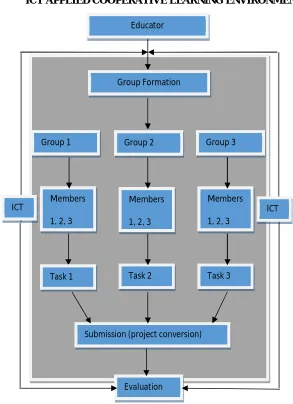
Figure 1 shows the ICT application areas in the software project development
Web learning system changes the teacher-centered learning process into student centered. Project based cooperative learning methodology motivates the learners to communicate themselves to solve the problems through group formation among the learners. Educators can also contact many other professionals related to their profession through group formation. It motivates the educators to study further related to their profession. It reduces the stress in the learning environment. Active participation using latest mobile technology enhances the cooperative culture among the learners and educators. It also develops the self-esteem and self-reliance among the users. Web learning system gives wider opportunity to mix all the print, audio, video, animated media files in the learning environment.
XI. E-RESOURCES
ICT technology has a major impact on educational materials. E-resources include Online-journals, e-books, CD-ROM, DVDs, Online-databases, web libraries, etc.
There are many difficulties in implementation of ICT in the learning environment. Firstly, educational administrators need to allocate the required funds for the purchase of hardware, software, technical training, technical support, installations, etc. Secondly, educational technologists should find the ways to integrate the ICT into the curriculum of the current educational system. They have to ensure the accessibility without any technical barriers to learning and teaching process and the environment [12].
According to Brown (2009), “there are five basic elements to cooperative learning”. They are Educator
Group Formation
Group 1 Group 2 Group 3
Members
1, 2, 3
Members
1, 2, 3
Members
1, 2, 3
Task 1 Task 2 Task 3
Submission (project conversion)
Evaluation
Interdependence – positive Sociability
Group processing Individuality
Individuals' interaction
ICT technology enhances all the above five basic elements in the cooperative learning using the latest tools [13].
A. Case Study1
According to Angela et al., “to implement the cooperative strategy, the educator must understand its importance, methods, forms and its functions”. According to their study, “teachers’ perception about the concept of cooperative learning has significant influence in the implementation process. Their study supports the need for the deep understanding of the concept of cooperative learning among the teachers.
Angela and Rylee have conducted research among the Australian educators. They found the strong relationship between the perception and successful implementation of the cooperative learning environment [14].
B. Case Study 2
Robyn et al. have conducted research among the ten middle school teachers from the two different area. They expressed their positive experience of implementing the CL concept in their teaching strategy. They also expressed their difficulties in the cooperative learning formation and process [15]. They raised the issues such as group formation, task-related problems, sociability skills and assessment related issues of the learning outcome. Their research clearly found the benefits of cooperative learning and the issues in the learning environment.
XII. SUGGESTIONS
Educational administrators, educators, and learners should study and use ICT tools to develop the cooperative learning environment because it is a new upcoming technology area and also every day new tools are introducing by big companies such as Microsoft, IBM, Adobe, Autodesk, etc. Educator’s difficulties in learning and using the latest ICT tools in the educational environment should be addressed first to overcome the difficulty in the implementation process. Class hours and scheduling the working hours according to the need of ICT implementation is very important. Educators and technologists need to identify the specific requirements based on the digital divide between the city-based institutions and rural based institutions. They have to identify the factors that affect the implementation of ICT. The lecturers, teachers should be encouraged and supported by giving incentives, awards to enhance the usage of ICT for educational development. New interdisciplinary and cross-disciplinary research should be encouraged among the research scholars in order to study and to implement ICT for educational and developmental purposes. A proper training to learn the new software and its technical aspects is important. At the same time training to integrate the technology into the curriculum is also important.
XIII. CONCLUSION
Formal group formation, informal group formation, and base group formation are important strategies in computer education in order to facilitate the group attitude among the media learners. Educators must use the ICT tools in their teaching process. Various software tools are available in the IT industry for the educators. The educators must get the proper training from the software providers in order to excel in the area of teaching. Due to the media convergence, the educators should learn new skills in digital literacy. Learning through online courses is one of the best ways to understand the digital media and its usage. Application of ICT tools enhances the flexibility in the cooperative learning environment. Furthermore, it helps the educators to form the groups, to inform the groups and to evaluate the groups at any time. Group members can also communicate easily through the ICT tools in order to work efficiently towards their task. Project planning software helps to plan and evaluate the outcomes in a better way. Educators need to understand the concepts such as cooperative learning, collaborative learning, and ICT4E (Information and Communication Technology for Education). This review paper concludes that the ICT tools are very useful to educate the computer students. ICT tool would help the communication process among the students and the trainers in the cooperative learning environment.
REFERENCES
[2] Marcel, “Effects of Cooperative learning on academic achievement”, Academic publisher, https://openaccess. leidenuniv.nl/handle/1887/19444 2012
[3] Johnson, D. & Johnson, R. “Cooperation and Competition: Theory and research”. Edina, Minnesota: Interaction Book Company, 1989 and cooperative Learning: Increasing College Faculty Instructional Productivity. 1991
[4] Kagan, Spencer, “Cooperative Learning”, Http:// www. kaganonline.com, San Clemente, CA: Kagan Publishing, 1994. 1994.
[5] Elmore, RE & Burney, D “Investing in Teacher Learning: Staff Development and Instructional Improvement in Community School District #2, National Commission on Teaching and America’s Future and the Consortium for Policy Research in Education, New York City 1997.
[6] Joyce, “Common misconception about cooperative learning” Association of supervision and curriculum development”,
http://www.ascd.com/ASCD/pdf/journals/ed_lead/el_199103_joyce.pdf 1991.
[7] Machemer, Patricia L., and Pat Crawford. "Student perceptions of active learning in a large cross-disciplinary classroom." Active learning in higher education 8.1 (2007): 9-30.
[8] Menges, Robert, Maryellen Weimer & Associates. (1996). Teaching on Solid Ground: Using Scholarship to Improve Practice. Jossey-Boss Publishers: San Francisco. ISBN 1787901334
[9] Hillyard C, Gillespie D and Littig P (2010) University students’ attitudes about learning in small groups after frequent participation. Active Learning in Higher Education 11(1): 9–20
[10] Hammond JA, Bithell CP, Jones L, et al. (2010) The first-year experience of student-directed peer-assisted learning. Active Learning in Higher Education 11(3): 201–12
[11] Branson, R. K. (1991). The School Year 2000 Concept. at Northwestern March 7.
[12] Rajalakshmi, E-resources in Education”, Modern Technology in Teacher Educations”, National conerence on MT in TE, 2011.