2018 3rd International Conference on Computational Modeling, Simulation and Applied Mathematics (CMSAM 2018) ISBN: 978-1-60595-035-8
A Novel Coarse-to-fine Registration for 3D Point Cloud
Based on Feature Points
Guan-ying HUO
1,3, Xin JIANG
1,3,*, Dan-lei YE, Cheng SU
1,3, Ze-hong LU
2,
Bo-lun WANG
1,3and Zhi-ming ZHENG
1,31
LMIB and School of Mathematics and Systems Science, Beihang University, Beijing, China 2
School of Mathematical Science, Peking University, Beijing, China 3
Big Data Brain Computing Center, Beihang University, Beijing, China
*Corresponding author
Keywords: Registration, Local feature descriptor, ICP method.
Abstract. This paper proposes a coarse-to-fine registration algorithm for 3D point cloud. A novel feature points extraction method is presented, following an integrated local feature descriptor including Gaussian curvature, average curvature and point density for each point, through which we can achieve the coarse registration. Then, the ICP method is employed to refine the registration results with a good initial guess. Experiments including different simulated data sets demonstrate the applicability of the proposed methods. Meanwhile, the proposed coarse-to-fine registration algorithm is demonstrated to be robust to common nuisances, including noise and varying point cloud resolutions, and can achieve high accuracy and computation efficiency.
Introduction
Registration of point clouds captured by 3D scanner devices is a fundamental problem in 3D computer vision. Numerous application have been developed, including 3D modeling [1,2], object recognition [3,4], pose estimation [5], face recognition [6] and surface alignment [7,8]. The goal of the registration is to find the optimal transformation matrix to align two range images as close as possible. The transformation matrix includes rotation and translation parameters. According to the matching accuracy, registration can be divided into coarse registration and fine registration. In general, the coarse registration is an approximate matching to provide good initial position for fine registration.
In coarse registration, the property of each point is extracted to search the correspondence between two point clouds. To improve the efficiency, generally, only the points which can effectively contribute to finding the good corresponding point pairs are used. In literature, the normal and curvature are the popular information for point description [9,10]. However, they are difficult to describe the distinctive points for the highly symmetric or planar models, and the process might result in selecting many points that essentially contain the same information. Rusu [11] et al. proposed a persistent feature histograms (PFH) to match point clouds from different views, and each point was estimated by a 16D features based on the normal. Guo [4] et al. presented a rotational projection statistics (RoPS) for local feature description of point set. Yang [12] et al. proposed a local feature statistics histogram (LFSH) for registration, and in LFSH the local depth, point density, and normal were encoded to describe the local shape geometries. In fine registration, iterative closest point (ICP) [13] is the best known method. A lot of its variants have also been developed to define better distance between two data sets [14,15,16].
registration, including local depth, normal, curvature and point density. Most existing efforts focus on describing the local shape geometry from a single aspect using 2D or 1D representations, and therefore suffer from limited descriptiveness and/or poor robustness. In this context, we integrate the curvature and point density to describe the point feature. On the other hand, the computation of these local features is time-consuming and can be inaccurate for raw input datasets. To solve this problem, we first extract some feature points from the source point cloud. Finally, a coarse-to-fine registration method is proposed, with high computation efficiency and good robustness. The contributions of this work are as follows:
(1) A novel feature point extraction method is proposed. It is significantly fast for computation and quite distinctive.
(2) The defined feature points are extracted, followed by an integrated local feature descriptor for each point.
(3) A coarse-to-fine registration algorithm for 3D point cloud is proposed. The experiments demonstrate that the algorithm is fast and precise.
The remainder of this paper is organized as follows. Section 2 introduces the details of the coarse-to-fine registration algorithm. In Section 3, experiments to verify the applicability of our method are conducted including different simulated data sets. Conclusion and future work are discussed in Section 4.
Coarse-to-fine Registration Algorithm for 3D Point Cloud
In practice, a state-of-the-art point clouds registration algorithm should be able to automatically and accurately align two point clouds under a variety of nuisances, including small overlaps, noise and varying point cloud resolution [12]. The goal of 3D registration is to find the transformation matrix that can minimize the distance between two point clouds, i.e., the source point cloud Ps and the target
point cloud Pt.
The registration is usually conducted in two steps: coarse registration and fine registration. Coarse registration can be conducted manually or based on geometric characteristics of the surface. In fine registration, the transformation parameters are achieved iteratively to minimize the sum of the squared errors between the localized measurement points and their corresponding (closest) points on the design surface [17]. In this section, we will detail the proposed coarse-to-fine registration process for 3D point cloud.
Feature Points Based Coarse Registration
When the measurement coordinate system is quite different from the design coordinate system, three-dimensional shape searching is required to match the measurement points with the design surface. Three-dimensional shape searching is a key research subject in engineering and computer graphics. In most of the developed shape search techniques, geometry characteristic of the freeform surface are described by simple geometrical evaluation measures. In coarse registration, the intrinsic geometric properties that are independent of coordinate system, such as curvatures, are often used to align the digitized manufactured surface with the design surface.
The geometrical evaluation process is time-consuming and can be inaccurate for raw input datasets. In this subsection, we will first extract some feature points from the source point cloud, and then find out the corresponding points in the target point cloud. At last, the coarse transformation matrix can be achieved through a non-linear optimization problem for the four pairs of points
feature points from the raw data sets, e.g., THRIFT [19] and MeshHOG [20]. In this paper, we propose a new method to select the feature points. From [17], we know that the minimum number of required source measurement points for rough localization is four. Among all the measurement points, selection of the proper locations of these feature points plays an important role on the quality of coarse registration. The feature points can be selected manually. In this paper, a heuristic methods has developed to automatically select the four feature points.
Since the approximated curvature measures at the boundaries of the point cloud can be inaccurate, the feature points should not be selected on the boundaries. Our intuitive idea is to select four feature points which forms a skeleton-like structure for the source point cloud Ps. Assume that there are ns
points {pis},i1, ,ns in Ps. First, the central point pf1s is selected by
1 1
min arg
s
n s i
s i
s s
p
pf p
p P n
(1)
Then, the second feature point pf2s is set to be the point whose distance to pf1s is largest in Ps. We
select the third point pf3s by
3 1 2
max
arg ( )
s s s
s
pf p pf p pf
p P
(2)
Similarly, the fourth point pf4s is selected by
4 1 2 3
max
arg ( )
s s s s
s
pf p pf p pf p pf
p P
(3)
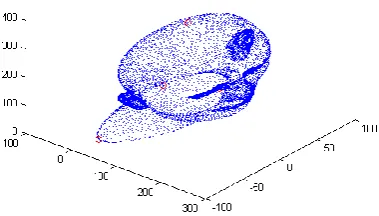
[image:3.595.206.396.528.636.2]The four feature points selected by our method for a point cloud of a mannequin are shown in Figure 1.
Figure 1. The four feature points for a point cloud of a mannequin, which are marked with red circle
Local feature extraction. Local feature-based methods for 3D registration align models by using consistent point-to-point correspondences. They are usually generated via matching feature descriptors. The feature descriptor should be invariant to rigid transformation. In addition, the feature descriptor should be distinctive and robust to various nuisances such as noise and varying point cloud resolution, in order to provide sufficient correct correspondences. It is well known in mathematics that topology structure and differential structure are invariant to rigid transformation, so we will introduce a fast and robust local feature descriptor by computing the statistics of three local invariant features.
differential structure of the surface. The computation of curvature of the selected point p concludes three steps. First, we find out the k nearest points of p in the point cloud. Then, we use a quadric parametric surface S u v( , ) to fit the k+1 points, i.e., the point p and its k nearest points. At last, the curvature of p can be achieved,
2
2
2 2
2( )
L N M Kcurv
E G F
E N G L F M Hcurv
E G F
(4)
Where Kcurv is the Gaussian curvature, and Hcurv is the average curvature. E F G, , and
, ,
L M Nare the coefficients of the first and second fundamental form respectively.
The computing accuracy of the curvature relies heavily on the quality of the data. The point density around the current point is selected as the third local feature, which can be treated as part of the topology structure of the surface. In the process of curvature computing, we have achieved the k
nearest points of the current point p. We define the point density around p as the distance of the
k-th nearest point to p,
p k
density p p (5)
Correspondence generation for the feature points and coarse registration. In the last two subsections, we have achieved the four feature points in Ps and computed the local features of each of the four points which are invariant to rigid transformation. We will try to find out the corresponding four points in Pt in this subsection, and do the coarse registration.
Assume the four feature points in Ps are pfis,i1, , 4, and for each pfis there is a 3-dimensional local feature vector Fi (f1i,f2i,f3i). For all the points in Pt, we compute the same local feature, and achieve ns vectors Fi (f1i,fi2,fi3). For each pfis, find out the corresponding point in Pt by
min arg
t i
p i
t
pf F F
p P
(6)
After the stated process, we have achieved the four feature points pfis,i1, , 4 in Ps, and found
out the corresponding four points pf iit, 1, , 4 in Pt. The coarse registration is to search for an appropriate transformation Tr from Ps to Pt. A non-linear optimization problem is solved to achieve
r
T ,
4
1 min arg
1 1
s t
i i
s t
i i
s t
i i
pf pf
pf pf r
i
pf pf
x x
y y
T T
T z z
(7)The ICP Based Fine Registration
local optimum. Having roughly registered two point clouds, we are left with the task of further minimizing the registration error between them.
In this paper, the ICP algorithm is used, where a non-linear local optimization problem is solved to minimize the residual error. Assume the current point cloud is Pr after the coarse registration, and the
transformation for the fine registration is Tf . The fine registration process is to find the
transformation between Pr and Pt with the help of the ICP method, which is a two-step method.
First, for each point p pri, riPr, we find the corresponding point pcorri in Pt by
min arg 1 1 r i r i r i p p p p corr i f t p p x x y y p T
p P z z
(8)
Then, we do the non-linear optimization problem,
1 min arg 1 1 corr r i i
s corr r
i i corr r i i p p n p p f i p p x x y y T T
T z z
(9)Results and Discussion
In this section, we validate the performance of the proposed method on the simulated data sets. Simulated data sets are employed from surfaces of known parametric expressions but varying complexity, and different distributions of the point cloud data are considered.
We generate the simulated models by sampling randomly on two parametric surfaces. Denote the parametric surface by S u v( , ). Without loss of generality, we assume the parametric domain is
[0,1] [0,1] . The interval [0,1] is divided equally to k parts [0, ],[ , ],1 1 2 ,[k 1,1]
k k k k
both in the u
and v direction. Obtain the 3D point cloud P1by sampling randomly on each of the k k meshes.
Repeat the process, and two different 3D point clouds P P1, 2 both with k k points are achieved. We
can also set two different number k k1, 2 for the two-step sampling. P1 is treated as our target point Pt.
The point cloud P2 is then transformed from their initial position by rotating 0.2, 0.1, and 0.3
about the x, y and z axis, respectively, and translating 20, 50 and 40 along the x, y, and z axis, respectively, and the point cloud P3 is obtained, which will be treated as the source point cloud Ps. The two parametric surfaces are given as following,
Surface 1
( , ) (60 20) cos( )
( , ) (60 20) sin( )
3 2
( , ) 15 15 30 20
x u v u v y u v u v z u v u u u
3 2 3 2 3 2 3 2 3 225 45 0 15
30 45 45 45
( , ) 1
0 0 45 60
5 0 15 10 1
40 60 15 10
45 45 45 30
( , ) 1
15 0 45 45
10 15 30 40 1
20 15 0 5
90 90 0 30
( , ) 1
75 90
v v x u v u u u
v
v v y u v u u u
v
z u v u u u
3 2 0 30
5 15 15 50 1
v v v
Two kinds of experiments are conducted to test our method: (1) The numbers of points of Ps and Pt are both 2500.
(2) The number of points of Ps is 2500, while that of Pt is 400.
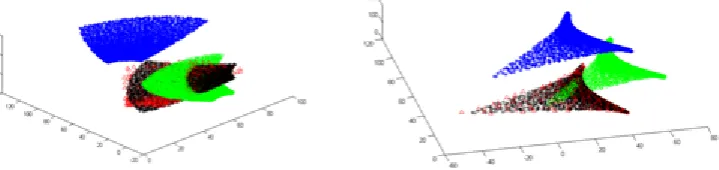
[image:6.595.128.471.328.408.2]Results of the stated two cased for the two surfaces are shown in Figure 2 and Figure 3 respectively.
Figure 1. Registration results for case (1). The red one is the target point cloud, the blue one is the source point cloud, the green one is the point cloud after coarse registration, and the black one is the point cloud after fine registration.
Figure 2. Registration results for case (2). The red one is the target point cloud, the blue one is the source point cloud, the green one is the point cloud after coarse registration, and the black one is the point cloud after fine registration.
As the Figure 2 and Figure 3 show, the red one is the target point cloud, the blue one is the source point cloud, the green one is the point cloud after coarse registration, and the black one is the point cloud after fine registration. We can see that the coarse registration gives an accurate guess for the localization, following the fine registration to complete the final registration results.
Conclusion
[image:6.595.122.482.469.554.2]Acknowledgement
This work is partially supported by Key R & D Programs of the Ministry of Science and Technology (Grant No. 2018YFB1107402) and the National Natural Science Foundation of China (Grant No.11290141, No.11571028).
References
[1] A. Liu, Z. Wang, W. Nie, et al. Graph-based characteristic view set extraction and matching for 3D model retrieval, Information Sciences. 320 (2015) 429-442.
[2] K. Lu, Q. Wang, J. Xue, et al. 3D model retrieval and classification by semi-supervised learning with content-based similarity, Information Sciences. 281 (2014) 703-713.
[3] K. Alhamzi, M. Elmogy, S. Barakat. 3d object recognition based on local and global features using point cloud library, International Journal of Advancements in Computing Technology. 7(3) (2015) 43.
[4] Y. Guo, F. Sohel, M. Bennamoun, et al. Rotational projection statistics for 3D local surface description and object recognition, International Journal of Computer Vision. 105(1) (2013) 63-86.
[5] Y. Guo, M. Bennamoun, Sohel F, et al. An integrated framework for 3-d modeling, object detection, and pose estimation from point-clouds, IEEE Transactions on Instrumentation and Measurement. 64(3) (2015) 683-693.
[6] R. Liang, W. Shen, X. Li, et al. Bayesian multi-distribution-based discriminative feature extraction for 3D face recognition, Information Sciences. 320 (2015) 406-417.
[7] A. Albarelli, E. Rodolà, A. Torsello. Fast and accurate surface alignment through an isometry-enforcing game, Pattern Recognition. 48(7) (2015) 2209-2226.
[8] M. Gong, Y. Wu, Q. Cai, et al. Discrete particle swarm optimization for high-order graph matching, Information Sciences. 328 (2016) 158-171.
[9] P. Bariya, J. Novatnack, G. Schwartz, et al. 3D geometric scale variability in range images: Features and descriptors, International Journal of Computer Vision. 99(2) (2012) 232-255.
[10] B. He, Z. Lin, Y. Li. An automatic registration algorithm for the scattered point clouds based on the curvature feature, Optics & Laser Technology. 46 (2013) 53-60.
[11] R.B. Rusu, N. Blodow, Z.C. Marton, et al. Aligning point cloud views using persistent feature histograms, IEEE/RSJ International Conference on Intelligent Robots and Systems, 2008, 3384-3391.
[12] J. Yang, Z. Cao, Q. Zhang. A fast and robust local descriptor for 3D point cloud registration, Information Sciences. 346–347 (2016) 163-179.
[13] P.J. Besl, N.D. McKay. Method for registration of 3-D shapes, International Society for Optics and Photonics, 1992, 586-606.
[14] A.W. Fitzgibbon. Robust registration of 2D and 3D point sets, Image & Vision Computing. 21(13–14) (2003) 1145-1153.
[15] N.J. Mitra, N. Gelfand, H. Pottmann, et al. Registration of point cloud data from a geometric optimization perspective, ACM, 2004, 22-31.
[16] S. Rusinkiewicz, M. Levoy. Efficient Variants of the ICP Algorithm, International Conference on 3-D Digital Imaging and Modeling, 2002, 145-152.
[18] A.E. Johnson, M. Hebert. Surface matching for object recognition in complex three-dimensional scenes, Image and Vision Computing. 16(9) (1998) 635-651.
[19] A. Flint, A. Dick, A. Van Den Hengel. Thrift: Local 3d structure recognition, 9th Biennial Conference of the Australian Pattern Recognition Society on Digital Image Computing Techniques and Applications, 2007, 182-188.