POSTURAL CONTROL AND FUNCTIONAL PERFORMANCE AFTER
CORE TRAINING IN YOUNG SOCCER PLAYERS
Ahmet Kaan Aslan1, Nurtekin Erkmen1*, Samet Aktaş1, and Faruk Güven2
1Faculty of Sport Sciences, Selçuk University, Konya, Turkey
2Department of Physical Education and Sport, Kilis 7 Aralık University, Kilis, Turkey
*E-mail: [email protected]
(Received 31 January 2018; accepted 30 April 2018; published online 3 July 2018)
To cite this article: Aslan, A. K., Erkmen, N., Aktas, S., & Güven, F. (2018). Postural control and functional performance after core training in young soccer players. Malaysian Journal of
Movement, Health & Exercise, 7(2), 23-38. https://doi.org/10.15282/mohe.v7i2.234
Link to this article: https://doi.org/10.15282/mohe.v7i2.234
Abstract
jump in non-dominant legs of young soccer players. On the other hand, the results indicate that this may not affect long jump, agility and balance performance in dominant leg.
Keywords: Core training, functional performance, postural control, soccer
players
Introduction
In soccer, numerous elements affect athletic performance. One of them is body structure; that is, physical properties. The physical structure of the athlete is only one of the factors influencing the high performance expected from the athlete. It affects the athlete's performance positively by combining with other performance items such as strength, strength, flexibility, speed, strength and quickness (Açıkada and Ergen, 1990). To improve performance of soccer players at every level, numerous studies have been conducted by researchers (Salimi, Heidari, and Salimi, 2016; Mengesh, Rani, and Deyou, 2015; Drozd et al., 2017; Nesser et al., 2008).
Also known as the "core" lumbopelvic-hip complex (Bergmark 1989; McGill, Grenier, and Kavcic, 2003), which is defined as the region that provides the link between the legs and arms (Panjabi, 1992; McGill et al., 2003). Core training is based on training philosophies practiced in ancient civilizations both in the West and the East in order to develop a strong foundation, even though they have different names (Brungardt, Brungardt, and Brungardt, 2006). Core training uses one's own body weight and aims to strengthen the deep muscles and lumbo pelvic muscles, keeping the spine in balance (Atan, 2013).
Core muscles include the muscles of the abdominal lower and back regions and are responsible for the transfer of force between the lower and upper half of the body. Core muscles play a crucial role in stabilizing the spine during weight lifting exercises, as well as daily activities in terms of the health of the lower back (Fig, 2005). Core training can improve body control and balance; reduce the risk of disability by strengthening many large and small muscles; and increase efficiency in interactions between movements or interactions, depending on the increase in balance (Herrington and Davies, 2005).
Core exercises are recommended for healthy individuals as well as for rehabilitation purposes, and to enhance functional capacity and improve sporting abilities of individuals (Willardson, 2008). Core stability allows the simultaneous development of arm and leg strength. It is a dynamic concept that changes constantly to adjust the body's position or lift the load from the outside. In terms of sport performance, the greater the core stability, the greater the power output in the arms and legs. In particular, athletes who perform activities such as throwing may benefit from this. For example, a baseball player with more core stabilization may hit a baseball faster (Willardson, 2007).
training as an important part of soccer training. Despite the widespread use of core training by coaches, the results which contradict each other are noteworthy in research that does not study core training. Sato and Mokha (2009) reported that the performance of distance runners increased due to core training. Franko, Franco, Loper, Lomas-Vega, Contreras, and Amat (2012) suggested that core training improves the balance performance of sprints. Core exercises have been reported to improve strength, balance, and flexibility in sedentary housewives (Sekendiz, Cuğ, and Korkusuz, 2010), while in soldiers it has been reported to decrease in waist pain and increase in fitness levels (Childs et al., 2009). On the other hand, Smart, McCurdy, Miller, and Pankey (2011) reported that core training had no effect on service tennis players. Sharma, Geovinson and Singh Sandhu (2012) emphasized that core training does not affect the balance performance of volleyball players. These contradictory results suggest that research on the effects of core training may be needed to reveal more clearly. A recent study hypothesized that core training might improve the agility, jumping and postural sway performance of soccer players. Therefore, this study was aimed to determine the effects of an 8 week core training program on the balance and functional performance in young soccer players.
Materials and Methods
Subjects
A total of 30 soccer players participated in this study, with a mean age of 16.23 ± 0.69 years, a height of 173.75 ± 5.06 cm and a body weight of 59.14 ± 8.93 kg. Soccer players were randomly divided into 2 equal groups: Training Group and Control Group. At the beginning of the study, each subjects was given detailed information about the risks and possible risks related to the study, and a voluntary consent form was read and signed. The study was conducted in accordance with the Helsinki Declaration.
Measurements
The study used a pre-test/post-test control group design both before and after core training, balance, agility, standing broad jump, and triple-hop test.
Balance Error Scoring System
In the study, the balance performances of the subjects were measured with the Balance Error Scoring System (BESS). For the test, subjects must maintain their test positions for 20 seconds, under 6 different conditions, with their eyes closed and without any support: Firm and foam surface and 3 separate postures (double leg, single leg, and tandem). A gym floor was used for the firm surface. For the foam surface, a medium density pad block of 50x41x6 cm was used (Airex Balance Pad, Alcan Airex AG, CH-5643 Sins / Switzerland).
or the ball from the ground, and 5) staying out of the test position for more than five seconds (Valovich, Perrin and Gansneder, 2003).
During the BESS test, subjects' error scores were calculated separately for each of the above conditions. Three different balance scores were calculated by summing the error scores of the subjects on the firm surface and foam surface and the scores of all 6 conditions: Firm surface, foam surface, and total BESS. The rating and reliability of this test are published by Riemann and Guskiewicz (2000). Before the test, the subjects practiced the test to get used to the different conditions. Both legs were required to stand on. If only one leg is standing, they are asked to stand on their non-dominant legs. Subjects were asked which ball they were using when shooting the ball, and dominant and non-dominant legs were detected. It is desirable to position the non-dominant femur such that the hip joint is approximately 30° and the knee joint is 90° in flexion and approximately 20-30 cm above the floor. It is desirable to maintain the position in tandem in such a way that the non-dominant bend will stand behind the dominant bend, and the non-dominant bend will correspond to the ball of the dominant bend. Subjects were asked not to wear shoes or socks and to participate in the test with bare feet. Under all conditions, subjects were required to remain motionless with their eyes closed and iliac crests. Once the subjects were given enough information about the test, they were given the opportunity to practice twice for each condition. When the test position was disrupted during conducting the test, subjects should return to the right posture as soon as they try (Erkmen, Taşkın, Sanioğlu and Kaplan, 2009).
Agility Test
The agility performance of the subjects was determined using the Pro Agility Shuttle Run test (Harman and Garhammer 2008). This test was performed according to the protocol available in the Fusion Sport brand photocell (Fusion Sport Smart Speed Timing Gates, Brisbane, Australia). Since the test protocol is in the software of the device, a single photocell gate was used. This gate served both as a beginning and a finish. Between the photocells, the athletes waiting in the lightly twisted position were ready to exit with the light on the photocell, ready to test, and started automatically by the photocell during that time. The players ran as fast as the line drawn at the 5-yard distance from the right side and turned after touching the line, and then ran to the line at a 5-yard distance from the left side of the photocell and touched the line and crossed 5 yards distance to the photocell again. The photocell was automatically stopped and the time recorded by the photocell. Subjects practiced the test for two times and best score was recorded. A 3 min rest between repeats was given.
Standing Broad Jump Test
cm. The standing broad jump test was performed on the dominant leg (SBJDL), non-dominant leg (SBJNL) and double leg (SBJ) separately.
Triple-Hop Test
In this test, the starting line was set on a non-slip surface. Subjects stood up on back of the starting line and bounced forward. Then, they jumped two times on the same foot. It has been repaired 2 times in each leg separately. The best scores for dominant and non-dominant legs were recorded in cm (Hamilton, Shultz, Schmitz and Perrin, 2008; Rösch et al., 2000; Bolgla and Keskula, 1997).
Core Training Program
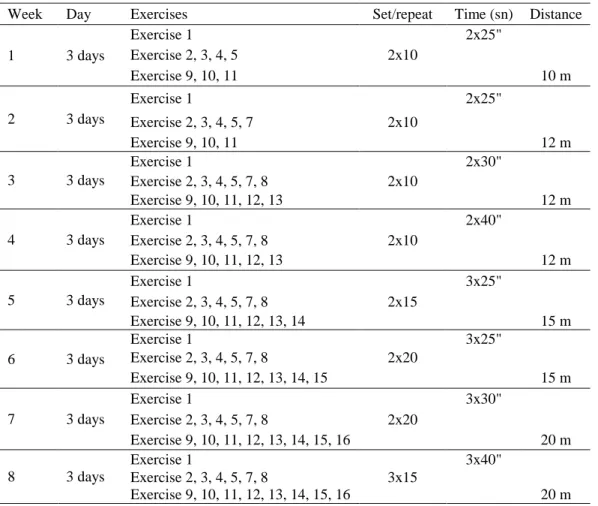
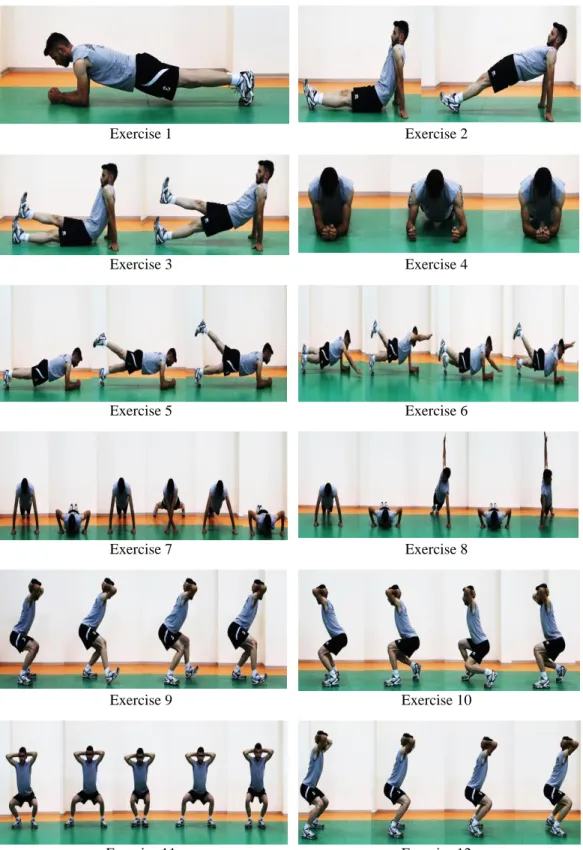
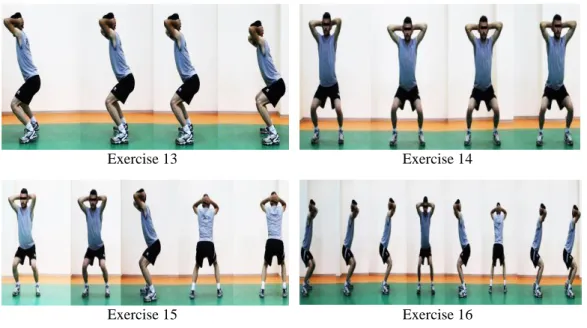
For the study, the core training program was prepared using Sato and Mokha (2009) and Brungardt et al. (2006). The training program was performed 3 days a week during an 8-weeks. The core exercises selected for the training program were arranged according to the weekly schedule from easy to hard. The details of the core training program are presented in Table 1.
Table 1: Core training program
Week Day Exercises Set/repeat Time (sn) Distance
1 3 days
Exercise 1 2x25"
Exercise 2, 3, 4, 5 2x10
Exercise 9, 10, 11 10 m
2 3 days
Exercise 1 2x25"
Exercise 2, 3, 4, 5, 7 2x10
Exercise 9, 10, 11 12 m
3 3 days
Exercise 1 2x30"
Exercise 2, 3, 4, 5, 7, 8 2x10
Exercise 9, 10, 11, 12, 13 12 m
4 3 days
Exercise 1 2x40"
Exercise 2, 3, 4, 5, 7, 8 2x10
Exercise 9, 10, 11, 12, 13 12 m
5 3 days
Exercise 1 3x25"
Exercise 2, 3, 4, 5, 7, 8 2x15
Exercise 9, 10, 11, 12, 13, 14 15 m
6 3 days
Exercise 1 3x25"
Exercise 2, 3, 4, 5, 7, 8 2x20
Exercise 9, 10, 11, 12, 13, 14, 15 15 m
7 3 days
Exercise 1 3x30"
Exercise 2, 3, 4, 5, 7, 8 2x20
Exercise 9, 10, 11, 12, 13, 14, 15, 16 20 m
8 3 days
Exercise 1 3x40"
Exercise 2, 3, 4, 5, 7, 8 3x15
Figure 1: Core Training Exercises
Exercise 1 Exercise 2
Exercise 3 Exercise 4
Exercise 5 Exercise 6
Exercise 7 Exercise 8
Exercise 9 Exercise 10
Exercise 13 Exercise 14
Exercise 15 Exercise 16
Data Analyses
All parameters measured in the study are presented in terms of mean and standard deviation (SD). The distribution of normality was examined with the Shapiro-Wilk test. An independent samples t-test and Mann-Whitney U test were used to compare the training and control groups, while the paired t-test was used to determine the change before and after the training. Statistical analysis was performed with SPSS 22.0 statistical package. The statistical significance level was set as 0.05.
Results
Table 2: Subjects’ demographic data
Groups n Mean SD
Age (Year) Training 15 16.33 0.62
Control 14 16.14 0.77
Height (cm) Training 15 174.13 4.87
Control 14 173.36 5.25
Weight (kg) Training 15 60.20 9.15
Control 14 58.07 8.71
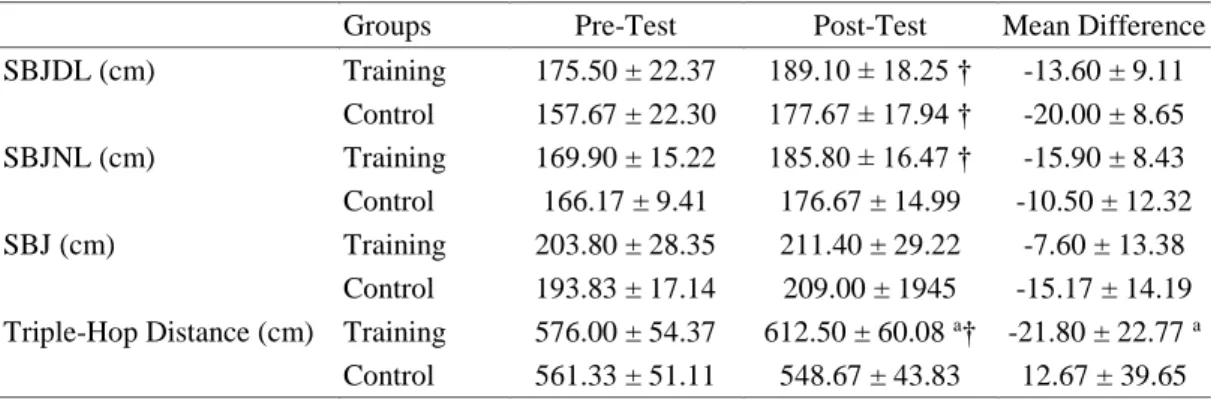
Table 3: Standing broad jumps and triple-hop test results (mean ± SD)
Groups Pre-Test Post-Test Mean Difference
SBJDL (cm) Training 175.50 ± 22.37 189.10 ± 18.25 † -13.60 ± 9.11
Control 157.67 ± 22.30 177.67 ± 17.94 † -20.00 ± 8.65
SBJNL (cm) Training 169.90 ± 15.22 185.80 ± 16.47 † -15.90 ± 8.43
Control 166.17 ± 9.41 176.67 ± 14.99 -10.50 ± 12.32
SBJ (cm) Training 203.80 ± 28.35 211.40 ± 29.22 -7.60 ± 13.38
Control 193.83 ± 17.14 209.00 ± 1945 -15.17 ± 14.19
Triple-Hop Distance (cm) Training 576.00 ± 54.37 612.50 ± 60.08 a† -21.80 ± 22.77 a
Control 561.33 ± 51.11 548.67 ± 43.83 12.67 ± 39.65
a Significantly different than Control Group. † Significantly higher than pre-test. SBJDL: Standing
Broad Jump in Dominant Leg, SBJNL: Standing Broad Jump in Non-dominant Leg, SBJ: Standing Broad Jump.
No significant differences for the pre-test for SBJDL between training and control groups were found (t=1.546; p>0.05). There were no significant differences for SBJDL between training and control groups in post-test (t=1.220; p > 0.05). The mean difference of pre- and post-test for SBJDL was not significant between the groups (t=1.385, p > 0.05). SBJDL distance of the training group (t=-4.726; p < 0.05) and the control group (t=-5.664; p < 0.05) increased after an 8 week period.
SBJNLs were not significantly different between the training group and the control group in pre-test (t=0.538; p > 0.05) and post-test (t=1.108; p > 0.05). There was no significant difference between the groups in the mean differences of pre- and post-test (t=-1.046; p > 0.05). After the core training, the training group significantly developed its SBJNL distance (t=-5.968; p < 0.05) but the control group was not (t=-2.087; p > 0.05).
There were no significant differences in SBJ between the groups before (t=0.774; p > 0.05) and after (t=0.178; p > 0.05) the training period. Also, the mean differences of pre- and post-test did not differ between the training group and the control group, (U = 17.500; p > 0.05). Although the training did not change the SBJ performance of the training group (t=-1.797; p > 0.05), the SBJ in the control group improved after the 8-week period (t=-2.618; p > 0.05).
Table 4: Agility test results (mean ± SD)
Agility Groups Pre-Test Post-Test Mean Difference
First 10 yard Training 2.93 ± 0.33 2.67 ± 0.21 † 0.26 ± 0.36
Control 2.96 ± 0.96 2.75 ± 0.12 † 0.22 ± 0.11
Second 10 yard Training 2.64 ± 0.19 2.47 ± 0.21 † 0.18 ± 0.23
Control 2.75 ± 0.21 2.52 ± 0.19 † 0.24 ± 0.19
Total 20 yard Training 5.58 ± 0.48 5.16 ± 0.34 † 0.43 ± 0.49
Control 5.68 ± 0.21 5.27 ± 0.27 † 0.41 ± 0.15
† Significant difference than pre test (p < 0.05).
The agility performances of the subjects were assessed separately as the first 10 yards, second 10 yards, and a total 20 yards agility score (Table 4). It was determined that both the pretest and posttest agility performances of the subjects did not differ significantly between the training and the control groups (in pre-test: 0.195 for the first 10 yard, t=-1.148 for the second 10 yard, t=-0.466 for the total 20 yard; in the post-test: t=-0.755 for the first 10 yard, t=-0.533 for the second 10 yard, t=-0.719 for the total 20 yard; p> 0.05). Also, the mean differences of the pre- and post-test in first 10 yards, second 10 yards, and total 20 yards were not significantly different between the groups (respectively, t=0.293, t=-0.548, t=0.108; p>0.05). After the 8 week period, agility performances of the subjects increased significantly in the training group (t=2.272 for the first 10 yards, t=2.434 for the second 10 yards, t=2.752 for the total 20 yards; p<0.05). Similar increases were also found in the control group (t=4.802 for the first 10 yards, t=3.114 for the second 10 yards, t=6.687 for the total 20 yards; p<0.05).
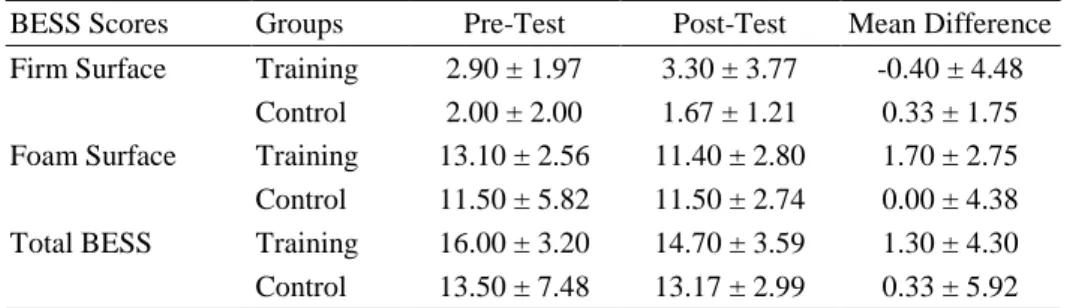
Table 5: BESS scores before and after the training
BESS Scores Groups Pre-Test Post-Test Mean Difference
Firm Surface Training 2.90 ± 1.97 3.30 ± 3.77 -0.40 ± 4.48
Control 2.00 ± 2.00 1.67 ± 1.21 0.33 ± 1.75
Foam Surface Training 13.10 ± 2.56 11.40 ± 2.80 1.70 ± 2.75
Control 11.50 ± 5.82 11.50 ± 2.74 0.00 ± 4.38
Total BESS Training 16.00 ± 3.20 14.70 ± 3.59 1.30 ± 4.30
Control 13.50 ± 7.48 13.17 ± 2.99 0.33 ± 5.92
Discussion
The core muscles include the abdominal muscles, hip and back muscles. These muscles are responsible for supporting posture, performing movement, controlling muscle activities, providing stability, absorbing strength, generating power, and transmitting power throughout the body (Handzel, 2003). This study was aimed to determine the effect of an 8-week core training program on agility, jump and balance performance in young soccer players. A total of 30 soccer players (mean age: 16.24 ± 0.69 years, height: 173.76 ± 4.98 cm, and body weight: 59.17 ± 8.85 kg) were included in the study.
The standing broad jump is a widely used test that requires multiple joint involvements and evaluates the explosive power of the leg muscles (Moresi, Bradshaw, Greene and Naughton, 2011). The triple jump test requires a combination of muscle strength, strength, and balance (Noyes, Barber and Mangine, 1991). This test reflects the soccer player's lower limb muscle strength and power (Hamilton et al., 2008). As a result of the 8-week core training program, the standing broad jump performance with non-dominant leg increased but mean differences of pre - and post-test scores did not differ between the training and the control groups. The core training improved triple-hop performance of soccer players. It might be said that the core training improves repeated jumping like the triple-hop.
According to the results of the study, the agility performance of soccer players increased after the 8-week period in both the training and control groups. This results suggest that the core training might not improve agility in young soccer players.
With core training, the control and balance of the body are improved, the strength of many large and small muscle groups is increased, the risk of injury is reduced, and the efficiency in transitions between movements or movements is increased depending on the increase in balance (Aşçı, 2011). It has been reported that Swiss-ball core strength training applied to sedentary women could increase the strength of lower extremity extensors (Quadriceps) and flexors (Hamstring) (Sekendiz et al., 2010).
Balaji and Murugavel (2013) reported that handball players' speed, agility, leg explosive power and upper body strength increased significantly after 8 weeks of core strength training. However, it is not clear whether the handball players in the experimental and control group continued their normal handball training.
Snyder, Buechter, Schultz and Mansur (2013) conducted a dynamic 5-week core training program to 11 male and 7 female participants aged 19-23 years who were recreationally active. The dynamic core training program was practiced for 2 days and 30 minutes per week. The agility performance of the subjects before and after training was assessed by the Hexagon test and the T test. As a result of the study, it was reported that the dynamic core training on the stabilized surface could improve agility. Snyder et al. (2013) did not include the control group in the study.
the training program to sedentary females. Balaji and Murugavel (2013) and Snyder et al. (2013) did not have a control group to compare the effect of core training. In this study, the core training program was conducted in addition to soccer training group while the control group continued normal soccer training. Therefore, it can be said that the effect of core training may directly observe more clearly.
Similar to the results of this study, Tse et al. (2005) examined the effect of the core endurance exercise program on rowers. It was reported that there was no significant change in long jump and vertical jump performance after the core endurance training program which was applied twice a week for eight weeks.
In a study conducted by Nesser, Huxel, Tincher and Okada (2008), core stability, force and power relationships were examined in the 1st League American football players. In the study, vertical jump, agility test, 10 yard shuttle running test, 1 MT bench press, squat and power clean tests were used to determine strength and power. There were some significant correlations between strength and power parameters and core stability. However, this significant correlation varies between weak and moderate, and correlations are not consistent.
Another study investigated the effect of core training on the service speed of tennis players and emphasized that core training alone could not increase the service speed. The authors reported that core training may have an impact on tennis service speed by increasing upper and lower limb body strength and fitness (Smart et al., 2011).
BESS is a valid and reliable method of measuring postural stability in athletes. During the test, the subjects’ mistakes are counted for each test condition (Riemann, Guskiewicz and Shields, 1999; Riemann and Guskieewicz 2000). The application of BESS at the edge of the competition area is an advantageous measurement tool because it is cheaper than force plates and requires less practice for an effective application (Riemann et al., 1999). In this study, changes in postural control (balance) levels of subjects were examined by BESS test, and firm surface, foam surface, and total BESS scores were evaluated separately. It was observed that the counted 3 BESS scores did not change after 8 week core training program, in other words, core training had no effect on balance performance of soccer players.
After 9 weeks of core training program in volleyball players, the improvement in balance performance was not significant (Sharma et al., 2012). Sato and Mokha (2009) reported that there was no significant change in lower limb stability after 5 weeks of running performance in the core training, which was performed 4 times a week for 6 weeks in recreational active male and female subjects with a mean age of 37.75 years. In a study by Sato and Mokha (2009), the control group does not appear to be regularly trained individuals.
training applied to sedentary females has been reported to improve the dynamic balance (Sekendiz et al., 2010).
Studies about core training and athletic performance suggest that if the core workout is influenced by performance, this is too small. If the goal is to improve performance, force and conditioning specialists may not need to spend much time on core training. Performance improvement can be achieved by using multiple joint exercises such as clean, snatch, jerk, pull, deadlift and squat (Cissik, 2011).
Core training is necessary for optimal sporting performance and cannot be ignored. Determining the role of core strength/stabilization requires additional research, and its effectiveness needs to be determined in the context of sports branches. A single test may determine the core stability/strength of an individual, but in terms of sports performance, a correct understanding of the role of core training in all body movements requires a sport-specific test (Nesser et al., 2008).
As a result, the results of the research indicate that the soccer-specific 8-week core training program can improve the performance of broad jump in non-dominant legs and triple-hop of young soccer players. On the other hand, the results indicate that it may not affect long jump, agility and balance performance in the dominant leg. It can be said that the results related to forward jumping performance, which reflects leg strength and power, are not consistent with each other. It is thought that core training could not be a part of fundamental soccer training but may be considered as a supportive workout. In future studies, the effects of core training on the repeated explosive movements in this age group should be compared.
Acknowledgements
Authors thank soccer players for joining this study as subjects. This study was supported financially by the Coordinator of Scientific Researches Projects (BAP) in Selçuk University (Project Number: 13202036).
References
Açıkada, C., Ergen, E. (1990). Bilim ve spor. Ankara: Büro-Tek Ofset Matbaacılık.
Aşçı, A. (2011). Core training practice in team and individual sport branches. 4th Conference of Training Sciences, Conference Proceeding (28-30 June 2011), Ankara, Turkey (In Turkish).
Balaji, E., Murugavel, K. (20139. Motor fitness parameters response to core strength training on Handbal Players. International Journal for Life Sciences and Educational Research, 1(2), 76-80.
Bergmark, A. (1989). Stability of the lumbar spine: A study in mechanical engineering. Acta Orthop Scand, 230(Suppl.), 1-54.
Bolgla, L.A., Keskula, D.R. (1997). Reliability of lower extremity functional performance tests. J Orthop Sport Phys, 26(3), 138-142.
Brungardt, K., Brungardt, B., Brungardt, M. (2006). The Complete of Book Core Training. Harper Colins Special Markets Department. New York.
Chang, Y. (2000). Grace under pressure. Ten years ago, 5,000 people did the exercise routine called Pilates. The number now is 5 million in America alone. But what is it, exactly? Newsweek, 135(9), 72–73.
Childs, J.D., Teyhen, D.S., Benedict, T.M., Morris, J.B., Fortenberry, A.D., McQueen, R.M., Preston, J.B., Wright, A.C., Dugan, J.L., George, S.Z. (2009). Effects of sit-up training versus core stabilization exercises on sit-up performance. Med Sci Sports Exerc, 41(11), 72-83.
Cissik, J.M. (2011). The Role of core training in athletic performance, injury prevention, and injury treatment. Strength and Conditioning Journal, 33(1), 10-15.
Clark, M.A. (2001). Core stabilization training in rehabilitation. In: Techniques in Musculoskeletal Rehabilitation. Prentice, New York.
Cosio-lima, L.M., Reynolds, K.L., Winter, C., Paolone, V., Jones, M.T. (2003). Effects of physioball and conventional floor exercise on early phase adaptations in back and abdominal core stability and balance in women. J Strength Cond Res, 17, 721–725.
Drozd, M., Krzysztofik, M., Nawrocka, M., Krawczyk, M., Kotuła, K., Langer, A., Maszczyk, A. (2017). Analysis of the 30-m running speed test results in soccer players in third soccer leagues. Turk J Kin, 3(1), 1-5.
Erkmen, N., Taşkın, H., Sanioğlu, A., Kaplan, T. (2009). The effects of fatigue on balance performance in soccer players. E-Journal of New World Sciences Academy: Sports Sciences, 4(4), 289-299.
Fig, G. (2005). Strength training for swimmers: Training the core. Strength and Conditioning Journal, 27(2), 40–42.
Freeman, J.A., Gear, M., Pauli, A., Cowan, P., Finnigan, C., Hunter, H., Mobberley, C., Nock, A., Sims, R., Thain, J. (2010). The effect of core stability training on balance and mobility in ambulant individuals with multiple sclerosis: a multi-centre series of single case studies. Mult Scler, 16(11), 1377-1384.
Hamilton, R.T., Shultz, S.J., Schmitz, R.J., Perrin, D.H. (2008). Triple-hop distance as a valid predictor of lower limb strength and power. J Athl Training, 43(2), 144-151.
Handzel, T.M. (2003). Core training for improved performance. NSCA’s Performance Training Journal, 2(6), 26-30.
Harman, E., Garhammer, J. (2008). Administration, scoring and interpretation of selected tests. In: Baechle TR, Earle RW, eds. Essentials of strength and conditioning. Champaign, IL: Human Kinetics.
Herrington, L., Davies, R. (2005). The influence of Pilates training on the ability to contract the transverses abdominis muscle in asymptomatic individuals. Journal of Bodywork and Movement Therapies, 9(1), 52-57.
Hodges, P., Hodges, P., Kaigle, Holm, A., Holm, S., Ekström, L., Cresswell, A., Hansson, T., Thorstensson, A. (2003). Intervertebral stiffness of the spine is increased by evoked contraction of transversus abdominis and the diaphragm: in vivo porcine studies. Spine, 28(23), 2594-2601.
Jull, G.A., Richardson, C.A. (2000). Motor control problems in patients with spinal pain: a new direction for therapeutic exercise. J Manipulative Physiol Ther, 23(2), 115-117.
Larcom, A. (2013). The effects of balance training on dynamic balance capabilities in the elite australian rules footballer. Victoria University, School of Sport and Exercise Sciences, Master Thesis of Applied Science, Australia.
Lederman, E. (2010). The myth of core stability. Journal of Bodywork & Movement Therapies, 14(1), 84-98.
McGill, S.M. (1998). Low back exercises: Evidence for improving exercise regimens. Clin Phys Ther, 78, 754–765.
McGill, S.M., Grenier, S., Kavcic, N. (2003). Coordination of muscle activity to assure stability of the lumbar spine. Journal of Electromyography and Kinesiology, 13, 353-359.
Misuri, G., Colagrande, S., Gorini, M., Iandelli, I., Mancini, M., Duranti, R., Scano, G. (1997). In vivo ultrasound assessment of respiratory function of abdominal muscles in normal subjects. Eur Respir J, 10(12), 2861-2867.
Moresi, M.P., Bradshaw, E.J., Greene, D., Naughton, G. (2011). The assessment of adolescent female athletes using standing and reactive long jumps. Sports Biomechanics, 10(2), 73-84.
Nesser, T.W., Huxel, K.C., Tincher, J.L., Okada, T. (2008). The relationship between core stability and performance in Division I football players. J Strength Cond Res, 22, 1750– 1754.
Noyes, F.R., Barber, S.D., Mangine, R.E. (1991). Abnormal lower limb symmetry determined by function hop tests after anterior cruciate ligament rupture. Am J Sports Med, 19(5), 513-518.
Panjabi, M.M. (1992). The stabilizing system of the spine. Part I. Function, dysfunction, adaptation, and enhancement. Journal of Spinal Disorders, 5(4), 383-389.
Riemann, B.L., Guskiewicz, K.M. (2000). Effects of mild head injury on postural stability as measured through clinical balance testing. J Athl Train, 35, 19–25.
Riemann, B.L., Guskiewicz, K.M., Shields, E.W. (1999). Relationship between clinical and forceplate measure of postural stability. J Sport Rehabil, 8, 71–82.
Rösch, D., Hodgson, R., Peterson, L., Graf-Baumann, T., Junge, A., Chomiak, J., Dvorak, J. (2000). Assessment and evaluation of football performance. Am J Sport Med, 28(Supl. 5), 29-39.
Salimi, H.R., Heidari, N., Salimi, A. (2016). The relation between somatotype with aerobic capacity and balance in the boys 11 - 13 years. Turk J Kin, 2(2), 23-26.
Sato, K., Mokha, M. (2009). Does core strength training influence running kinetics, lower-extremity stability, and 5000-m performance in runners? J Strength Cond Res, 23(1), 133–140.
Sekendiz, B., Cuğ, M., Korkusuz, F. (2010). Effects of Swiss-ball core strength training on strength, endurance, flexibility, and balance in sedentary women. J Strength Cond Res, 24(11), 3032–3040.
Sharma. A., Geovinson S.G., Singh Sandhu, J. (2012). Effects of a nine-week core strengthening exercise program on vertical jump performances and static balance in volleyball players with trunk instability. J Sports Med Phys Fitness. 52(6), 606-615.
Snyder, A., Buechter, A., Schultz, K.K., Mansur, K. (2013). Effects of Short-term Dynamic Core Training on Agility. Available at http://digital.library.wisc.edu/1793/67461
Tse, M.A., McManus, A.M., Masters, R.S.W. (2005). Development and validation of a core endurance intervention program: Implications for performance in college-age rowers. J Strength Cond Res, 19, 547–552.
Valovich, T.C., Perrin, D.H, Gansneder, B.M. (2003). Repeat administration elicits a practice effect with the Balance Error Scoring System but not with the Standardized Assessment of Concussion in high school athletes. J Athl Train, 38, 51–56.
Willardson, J.M. (2007). Core stability training: Applications to sports conditioning programs. Journal of Strength and Conditioning Research, 21(3), 979-985.