ORIGINAL RESEARCH ARTICLE
Factors Associated with Postpartum Health Problems among
Married Women of Reproductive Age in the Democratic Republic of
the Congo: A Cross-sectional Study in Kenge City
DOI: 10.29063/ajrh2019/v23i3.3
Hocheol Lee
1,2, Ae Young So
3, Paul Mansiangi
4and Eun Woo Nam
1,2*
Department of Health Administration, Graduate School, Yonsei University, Wonju, Korea1; Yonsei Global Health Center, Yonsei University, Wonju, Korea2; Department of Nursing, Gangneung-Wonju National University, Wonju, Korea3; Graduate School of Public Health, Kinshasa University, Kinshasa, Democratic Republic of the Congo4
*For Correspondence: Email: [email protected]; Phone: +82-33-760-2413
Abstract
Maternal mortality is attracting attention worldwide, but maternal health problems after delivery have received less attention. Most studies focus on prenatal maternal health problems. We aimed to identify factors associated with postpartum health problems among married women of reproductive age in Democratic Republic of the Congo. We employed a cross-sectional study design and randomly enrolled 700 married women of reproductive age in Kenge city. Data collection instrument was developed using the UNICEF Multiple Indicator Cluster Survey. T-test, chi-square test, and binary logistic regression analysis were performed using the SPSS version 24.0. Significant risk factors associated with postpartum health problems were initial postnatal care period; within 24 hours (Odds Ratio [OR]=2.197, 95% confidence interval [CI]: [1.156–4.174], p=.016); within 7 days (OR=1.972, 95% CI: [1.102–3.528, p=.022]; within 14 days (OR=2.124, 95% CI: [1.082–4.172], p=.029) among reproductive health and health service utilization characteristics. Health education by RECO (Relais Cmunataure) was associated with postpartum health problems including PCIME (Prise en Charge Integree des Maladies de l'Enfant; OR=1.845, 95% CI: [1.038– 3.282], p=.037); hand washing (OR=1.897, 95% CI: [1.060–3.396], p=.031); malaria (OR=2.003, 95% CI: [1.192–3.366], p=.009) among Maternal and Child Health intervention characteristics. In conclusion, it is necessary to develop and promote health policies and educational programs focusing on PNC service within 24 hours, PNC services within 7 days, PCIME, hand washing, prevention of malaria. (Afr J Reprod Health 2019; 23[3]: 30-41).
Keywords: Postpartum Health Problem; Maternal health; Postnatal care; Democratic Republic of the Congo; Health education
Résumé
La mortalité maternelle attire l'attention dans le monde entier, mais les problèmes de santé maternelle après l'accouchement ont reçu moins d'attention. La plupart des études se concentrent sur les problèmes de santé maternelle prénataux. Nous avons cherché à identifier les facteurs associés aux problèmes de santé du post-partum chez les femmes mariées en âge de procréer en République Démocratique du Congo. Nous avons utilisé un plan d'étude transversal et avons recruté au hasard 700 femmes mariées en âge de procréer dans la ville de Kenge. L'instrument de collecte de données a été mis au point à l'aide de l'enquête par grappes à indicateurs multiples de l'UNICEF. Le test T, le test du Khi-deux et l'analyse de régression logistique binaire ont été réalisés à l'aide de la version 24.0 de SPSS. Les facteurs de risque significatifs associés aux problèmes de santé du post-partum étaient la période initiale de soins postnatals; dans les 24 heures (rapport de cotes [OU] = 2,197, intervalle de confiance à 95% [IC]: [1,156 à 4,174], p = 0,016); dans les 7 jours (OR = 1,972, IC 95%: [1,102–3,528, p = 0,022]; dans les 14 jours (OR = 2,124, IC 95%: [1,082–4,172], p = 0,029) chez les personnes en santé de la reproduction et les caractéristiques de l‘utilisation des services de santé. L‘éducation sanitaire assurée par RECO (Relais Cmunataure) a été associée à des problèmes de santé du post-partum, notamment à la prise en charge des maladies de l‘enfant; OR = 1.845, IC 95%: [1.038–3.282], p =. 037), le lavage des mains (OR = 1,897, IC 95%: [1,060–3,396], p = 0,031); le paludisme (OR = 2,003, IC 95%: [1,192–3,366], p = 0,009) parmi les caractéristiques des interventions de santé maternelle et infantile En conclusion, il est nécessaire d‘élaborer et de promouvoir des politiques de santé et des programmes éducatifs axés sur les services de SPN dans un délai de 24 heures, les services de SPN dans le délais de 7 jours, la PCIME, le lavage des mains et la prévention du paludisme. (Afr J Reprod Health 2019; 23[3]:30-41).
Introduction
Leaders of the 189 United Nations countries adopted the Millennium Development Goals (MDGs) in September 2000 for ending world extreme poverty. The MDGs comprised of eight specific targets, and the slogan ‗To improve maternal health‘ was adopted as the MDG 5. The maternal mortality ratio consistently decreased by 45 % between 1990 and 2013 since the adoption of the MDGs. Despite this worldwide effort, the World Health Organization (WHO) announced that 303,000 pregnant women were dying every year due to infections, disease, injuries and bleeding after delivery1. The UN member countries accepted the Sustainable Development Goals (SDGs) since the end of the MDGs era in 2016. The SDGs aim to reduce the global maternal mortality ratio to less than 70 per 100,000 live births by 2030 (SDG 3.1)2. Despite these efforts, the maternal mortality ratio in the Democratic Republic of the Congo (DRC) is 693 per 100,000, which is about 3 times higher than the world maternal mortality ratio (216 per 100,000) and even higher than the average in sub-Saharan Africa (547 per 100,000)3.
The causes of maternal mortality are complications from bleeding, eclampsia, sepsis and unsafe abortion. Furthermore, indirect causes of maternal mortality are human immunodeficiency virus (HIV) and acquired immunodeficiency syndrome (AIDS) and malaria4. These causes can be prevented by visiting the health facility for health examination by a health professional5,6. Maternal mortality and neonatal mortality are attracting attention worldwide while the issue of maternal health problems after delivery has received less attention5. In addition, data and results of analyses on maternal health problems in developing countries are quite rare. Moreover, the majority of studies have focused on the prenatal maternal health problems7. Postpartum mothers generally perceive their health as good. However, postpartum women experience physical limitations in life due to postpartum suffering8,9. Mothers at 2 months postpartum have a high rate of backaches, sore nipples, breast tenderness, physical exhaustion and pain at the cesarean incision site10. The percentage of mothers at 18 months postpartum, who self-rated their health as ―very good‖ or
―good‖ were lower than the percentage of mothers at 2 months postpartum. Furthermore, the prevalence of health status indicators, such as tiredness, fatigue, backache and lack of sexual desire, increased over time11-13. In addition, the accessibility of information on health care is highly related to the health of postpartum mothers. The limited information available suggests a high prevalence rate of malnutrition (80%) among women and adolescents in rural areas14,15.
The postpartum period is defined as the time after childbirth that is required for complete physical to return to non-pregnant health status, a process that takes approximately 6 weeks16-18. Postpartum mothers responded that they experienced a lot of fatigue during the postpartum period. Postpartum health problems appeared within 1 month and disappeared within 3 months
19-21
. Therefore, it is most effective to receive postnatal care (PNC) to prevent health problems during the postpartum period immediately after childbirth and within 7 days, 14 days and 42 days22. In the case of the DRC, however, the proportion of mothers who received postnatal care (44.6%) is lower than the average for sub-Saharan Africa (67%)23-24.
Furthermore, 34.6% of mothers in the DRC experienced health problems during the postpartum period25. According to Gunlicks and Weissman‘s study, physical health and depression during the postpartum period was associated with improvement in neonatal health25,26. However, mental care of mothers, such as for depression, is not enough to improve the neonatal health26-31. Therefore, physical health together with the mental health of postpartum mothers is very important as this affects the neonatal health. Factors such as unintended pregnancy32, educational level of mothers, occupation, age, monthly household income and postnatal care33, affect maternal health during the postpartum period in developing countries.
reproductive health and health service utilization characteristics, maternal and child health characteristics, and to identify the causes of postpartum health problems.
Methods
Study design and sampling
This study was part of the Korea International Agency‘s (KOICA) MCH project in the DRC by Yonsei Global Health Center in Republic of Korea. The MCH project was undertaken in collaboration with the School of Public Health, Kinshasa University (UNIKIN), DRC. This study was based on a cross-sectional design. The data were collected from November 23, 2016 to December 6, 2016.
The study target area was Kenge zone de Sante (health zone), which is in Kwango district. The target group was 15–49 year–old reproductive women who agreed to participate in the survey. The population of Kenge city is 309,468 and the study sample size was calculated using the Raosoft sample size calculator (http://samplesize.html) (95% confidence level, ±4% error range). The minimum sample size was determined to be 600. Twenty-three health areas, which were supported by the KOICA-MCH project, were surveyed. The sample was selected through probability proportionate to size (PPS) by dividing health areas into strata: those located within 5 km, 5–10 km, and more than 10 km from the health center. We randomly selected one village from each of the above strata. The number of households per village was selected in proportion to the population size of each stratum. The first household was randomly selected in the target area and the survey was completed according to the sample size of each area. In total, data were collected from 700 women. Data of 90 women were excluded due to error response and censoring. Finally, 610 women were selected for analysis in the study. This represents 1 % of the total population of reproductive age women (54,383) in Kenge city.
Study instrument
The questionnaire of the UNICEF Multiple Indicator Cluster Survey 2011(MICS 2011) was
modified to identify the maternal and child health issues. In order to ensure that the questionnaire was valid and reliable, the final version of the questionnaire was decided through three meetings with three experts from the School of Public Health, UNIKIN, DRC. Thereafter, the questionnaire was validated by conducting a pre-survey in 36 women in Maluku city near with Kinshasa, which is similar to Kenge city. The result of the reliability analysis of the five dimensions of the Euro Quality of Life 5 Dimension (EQ-5D) was .063 by Cronbach's α analysis. The EQ-5D consisted of ‗Mobility', 'Self-Care', 'Usual Activities', 'Pain/Discomfort', and 'Anxiety/Depression'.
Dependent variables
The dependent variable was health problems experienced by reproductive women within 42 days after childbirth (postpartum period). Postpartum health problems were evaluated by direct face-to-face interviews. The health problems comprised of malaria, bleeding and high fever, backache, and hypertension due to infection. If respondents experienced any of the postpartum health problems, it was coded as ―1‖, otherwise it was coded as ―0‖. In the case of simple answers such as ―I was sick‖ and ―I felt ill,‖ these were excluded. Only respondents who received a diagnosis at a health facility were categorized as having postpartum problems.
Independent variables
The independent variables in this study consisted of three characteristics: Demographic and socioeconomic characteristics, reproductive health characteristics and health service utilization, and MCH intervention characteristics.
Reproductive health characteristics and health service utilization consisted of number of pregnancies, number of childbirths, stillbirths experienced, abortions experienced, PNC by a health professional, PNC experience, first prenatal period, number of PNC visits, unintended pregnancy, breast feeding immediately after childbirth, delivery by health professional, physical examination immediately after childbirth, PNC within 24 hours, 7 days, 14 days, and 42 days37. The MCH intervention characteristics consisted of awareness of MCH interventions, RECO (Relais comunautaire) activity recognition, RECO activity experience, completed education on RECO which included PCIME (Prise en Charge Integree des Maladies de l'Enfant), SMNE (Projet d'Equipement des Structures Sanitaires), antenatal care (ANC), postnatal care (PNC), nutrition, hand washing, immunization, and malaria.
Data collection and statistical analysis
The data were collected by home visits. Face-to-face interviews were conducted with married women of reproductive age. The data were collected by four survey teams. Each survey team consisted of a team manager, a supervisor to ensure accuracy, and two enumerators. The survey took approximately one hour per respondent. The analysis was done in three phases: first, we calculated the proportion of postpartum health problems among participating women. Second, the t-test and chi-square test were applied to assess the statistical significance of the associations between the dependent variables and independent variables. Third, binary logistic regression analysis was conducted to assess the risk factors of postpartum health problems among married women of reproductive age. All analyses were performed using SPSS version 24.0.
Results
Postpartum health problems
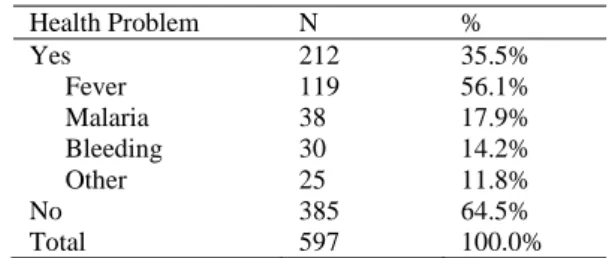
Table 1 shows the frequency of postpartum health problems among participating women. Among 597 women, 385 (64.5%) had experienced health
problems during the postpartum period. More than half (56.1%) of women had fever, followed by
Table 1: Postpartum health problems among married women of reproductive age in Kenge City, DRC
Health Problem N %
Yes 212 35.5%
Fever 119 56.1%
Malaria 38 17.9% Bleeding 30 14.2%
Other 25 11.8%
No 385 64.5%
Total 597 100.0%
malaria (9.9%), bleeding (7.8%) and other health problems (11.8%). Other postpartum health problems were body aches, dizziness, vomiting and lethargy.
Demographic
and
socioeconomic
characteristics
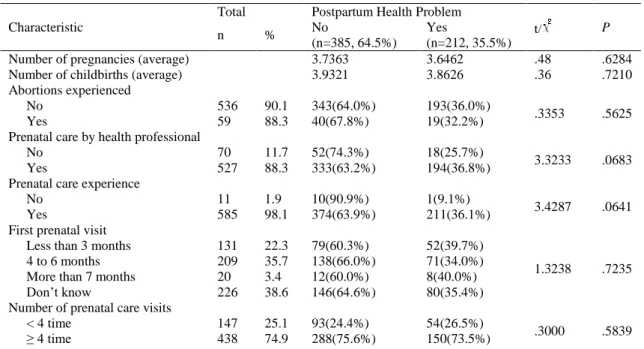
Table 2 shows the result of paired t-test and chi-square test to assess the statistical significance of differences in demographic and socioeconomic characteristics on postpartum health problems. There was a significant difference in postpartum health problems between those with different educational levels ( 2=9.9658, p=.0007). Similarly, there were significant differences in postpartum health problems between those with and without reading skills ( 2=19.2184, p<.0001) and those with and without writing skills ( 2=9.9658,
p<.0001).
Reproductive health and health service
utilization characteristics
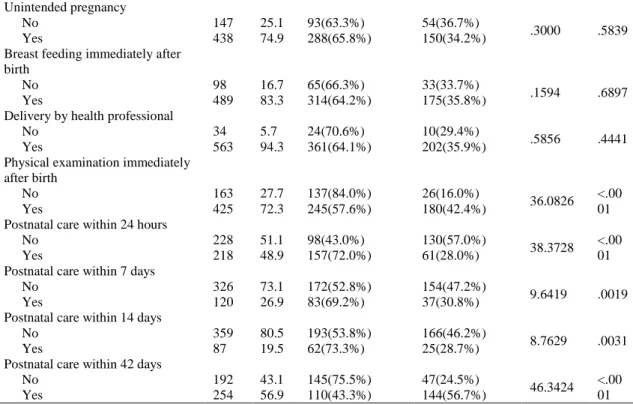
Table 3 shows the results of paired t-test and chi-square test to assess the statistical significance of difference in reproductive health and health service utilization characteristics on postpartum health problems. There was a significant difference in postpartum health problems between those who had a good prenatal care experience in reproductive health and health service utilization characteristics compared to those who did not ( 2=7.0808, p=.0078). There was a significant difference in postpartum health problems between those who had a physical examination immediately after birth compared to those who did not ( 2=36.0826, p<.0001). Furthermore, there were
Table 2: Demographic and Socio-Economic Characteristics among married women of reproductive age in Kenge City, DRC (n=597)
Total Postpartum Health Problem
t/ P
n % No
(n=385, 64.5%) Yes
(n=212, 35.5%)
Age (Average) 29.70 29.53 .27 .7891
Income (Average) 50,033 FC* 54,997 FC* -.51 .6147 Health Expenditure 16,956 FC 15,906 FC .41 .6842 Occupation
Professional 91 17.9 49(53.8%) 42(46.2%)
6.7137 .0816 Clerical 48 9.5 33(68.8%) 15(31.3%)
Sales and Service 51 10.1 27(52.9%) 24(47.1%) Manual and Housework 314 62.5 205(65.3%) 109(57.4%) Educational level
≤Primary 40 12.4 30(75.0%) 10(25.0%)
9.9658 .0007 ≤Secondary 422 72.9 259(61.4%) 163(38.6%)
≤Higher 85 14.7 56(65.9%) 29(34.1%) Life Satisfaction
EQ-5D** .9783 .9745 .86 .3904
Quality of Life*** 58.2 60.0 -1.32 .1862
Reading Skill
No 200 33.4 153(76.5) 47(23.5)
19.2184 <.0001 Yes 393 66.6 299(64.6) 164(35.4)
Writing Skills
No 206 34.4 158(76.7%) 48(23.3%)
20.7696 <.0001 Yes 387 65.6 224(57.9%) 163(42.1%)
Calculation Skills
No 101 20.1 73(72.3%) 28(27.7%)
3.3788 .0660 Yes 490 79.9 307(62.7%) 183(37.3%)
*FC: Democratic Republic of the Congo Monetary Unit
** EQ-5D: Euro Quality of Life Dimension 5; Score range was 0 to 1.
*** Quality of Life was measured using the visual analogue scale (VAS), and the score range was 0 to 100.
Table 3: Reproductive health and health service utilization characteristic among married women of reproductive age in Kenge City, DRC (n=597)
Characteristic
Total Postpartum Health Problem
t/ P
n % No
(n=385, 64.5%) Yes
(n=212, 35.5%)
Number of pregnancies (average) 3.7363 3.6462 .48 .6284 Number of childbirths (average) 3.9321 3.8626 .36 .7210 Abortions experienced
No 536 90.1 343(64.0%) 193(36.0%)
.3353 .5625
Yes 59 88.3 40(67.8%) 19(32.2%)
Prenatal care by health professional
No 70 11.7 52(74.3%) 18(25.7%)
3.3233 .0683 Yes 527 88.3 333(63.2%) 194(36.8%)
Prenatal care experience
No 11 1.9 10(90.9%) 1(9.1%)
3.4287 .0641 Yes 585 98.1 374(63.9%) 211(36.1%)
First prenatal visit
Less than 3 months 131 22.3 79(60.3%) 52(39.7%)
1.3238 .7235 4 to 6 months 209 35.7 138(66.0%) 71(34.0%)
More than 7 months 20 3.4 12(60.0%) 8(40.0%) Don‘t know 226 38.6 146(64.6%) 80(35.4%) Number of prenatal care visits
< 4 time 147 25.1 93(24.4%) 54(26.5%)
Unintended pregnancy
No 147 25.1 93(63.3%) 54(36.7%)
.3000 .5839 Yes 438 74.9 288(65.8%) 150(34.2%)
Breast feeding immediately after birth
No 98 16.7 65(66.3%) 33(33.7%)
.1594 .6897 Yes 489 83.3 314(64.2%) 175(35.8%)
Delivery by health professional
No 34 5.7 24(70.6%) 10(29.4%)
.5856 .4441 Yes 563 94.3 361(64.1%) 202(35.9%)
Physical examination immediately after birth
No 163 27.7 137(84.0%) 26(16.0%)
36.0826 <.00 01 Yes 425 72.3 245(57.6%) 180(42.4%)
Postnatal care within 24 hours
No 228 51.1 98(43.0%) 130(57.0%)
38.3728 <.00 01
Yes 218 48.9 157(72.0%) 61(28.0%)
Postnatal care within 7 days
No 326 73.1 172(52.8%) 154(47.2%)
9.6419 .0019
Yes 120 26.9 83(69.2%) 37(30.8%)
Postnatal care within 14 days
No 359 80.5 193(53.8%) 166(46.2%)
8.7629 .0031
Yes 87 19.5 62(73.3%) 25(28.7%)
Postnatal care within 42 days
No 192 43.1 145(75.5%) 47(24.5%)
46.3424 <.00 01 Yes 254 56.9 110(43.3%) 144(56.7%)
received attention in the postnatal care period compared to those did not: within 24 hours ( 2=38.3728, p<.0001), 7 days ( 2=9.6419,
p=.0019), 14 days ( 2=8.7629, p=.0031), 42 days ( 2=46.3424, p<.0001).
MCH intervention characteristics
Table 4 shows the results of chi-square test to assess the statistical significance of differences in postpartum health problems due to differences in MCH intervention characteristics. There were significant differences in postpartum health problems and differences in PCIME ( 2=24.1676,
p<.0001), prenatal care ( 2=40.6830, p<.0001), hand washing ( 2=36.6368, p<.0001), immunization ( 2=36.0826, p<.0001), and malaria ( 2=21.5148, p<.0001) of completed RECO education.
Risk factors of postpartum health problems
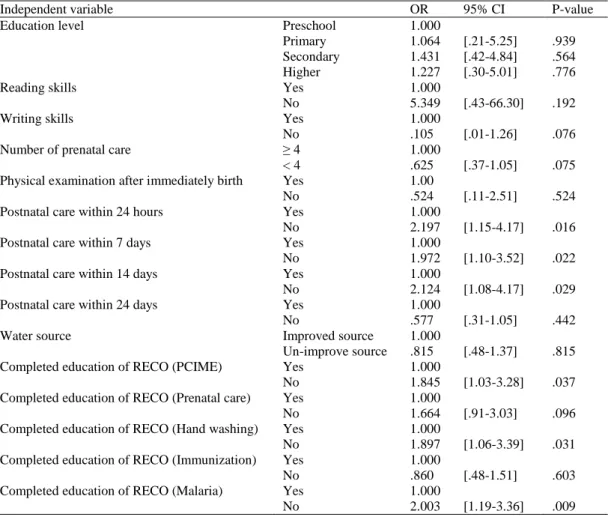
To identify the risk factors of health problems during the postpartum period, this study performed binary logistic regression using variables that were significant in the paired t-test and chi-square test (Table 5). Binary logistic regression was conducted using the input analysis. The result of
Hosmer-Lemeshow goodness of fit test for logistic regression, which was the appropriate fit model, was ( =15.089, df=8, p=.057). Furthermore, the Cox & Senll R2 was .264 and Nagelkerke R2 value was .353. Therefore, the explanatory power of the dependent variable was 26 to 35% in model.
In the result of the logistic model, the significant factors were postnatal care within 24 hours; 7 days; 14 days in the reproductive health and health service utilization characteristics. Women who did not receive the first postnatal care within 24 hours after childbirth were 2.1-fold more likely to experience health problems during the postpartum period (OR=2.197, 95% CI: [1.15– 4.17], p=.016). Moreover, women who did not receive the first postnatal care within 7 days after childbirth were 1.9-fold more likely to experience health problems (OR=1.972, CI: [1.10–3.52], p=.022). Similarly, women who did not receive the first postnatal care within 14 days after childbirth were 2.1-fold more likely to experience health problems (OR=2.124, 95% CI: [1.08–4.17], p=.029) during the postpartum period.
Table 4: Maternal and Child Health intervention characteristics among married women of reproductive age in Kenge City, DRC
Total Postpartum Health Problem
t/ P
n % No
(n=385, 64.5%) Yes
(n=212, 35.5%) Awareness of MCH intervention
No 60 10.1 45(75.0%) 15(25.0%)
3.1994 .0737 Yes 532 89.9 337(63.3%) 195(36.7%)
RECO activity recognition
No 25 4.2 20(80.0%) 5(20.0%)
2.7690 .0961 Yes 565 95.8 360(63.7%) 205(36.3%)
RECO activity experience
No 47 8.3 33(70.2%) 14(29.8%)
.8829 .3474 Yes 521 91.7 330(63.3%) 191(36.7%)
Completed RECO education (PCIME)
No 165 31.3 81(49.1%) 84(50.9%)
24.1676 <.000 1 Yes 362 68.7 252(69.6%) 110(30.4%)
Completed RECO education (SMNE)
No 131 24.9 88(67.2%) 43(32.8%)
4.5338 .1036 Yes 396 75.1 245(61.9%) 151(38.1%)
Completed RECO education (Prenatal care)
No 207 39.4 98(47.3%) 109(52.7%)
40.6830 <.000 1 Yes 319 60.6 235(73.7%) 84(26.3%)
Completed RECO education (Postnatal care)
No 47 8.9 34(72.3%) 13(27.7%)
4.5330 .1037 Yes 479 91.1 299(62.4%) 180(37.6%)
Completed RECO education (Nutrition)
No 109 20.7 71(65.1%) 38(34.9%)
3.5514 .1694 Yes 418 79.3 262(62.7%) 156(37.3%)
Completed RECO education (Hand washing)
No 330 62.7 178(53.9%) 152(46.1%)
36.6368 <.000 1 Yes 196 37.3 155(79.1%) 41(20.9%)
Completed RECO education (Immunization)
No 209 39.8 106(50.7%) 103(49.3%)
26.7437 <.000 1 Yes 316 60.2 226(71.5%) 90(28.5%)
Completed RECO education (Malaria)
No 301 57.2 167(55.5%) 134(44.5%)
21.5148 <.000 1 Yes 225 42.8 166(73.8%) 59(26.2%)
MCH: Maternal and Child Health
RECO: Relais comunautaire; PCIME: Prise en Charge Integree des Maladies de l'Enfant; SMNE: Projet d'Equipement des Structures Sanitaires
[1.03–3.28], p=.037). In addition, women did not complete the hand washing education by RECO were 1.8 more likely to experience health problems (OR=1.897, 95% CI: [1.06–3.39], p=.031). Women who did not complete the malaria education by RECO were 2.0-fold more likely to experience the health problems during postpartum period (OR=2.003, CI: [1.19–3.36], p=.009).
Discussion
This study found that demographic and socioeconomic characteristics, reproductive health
and health service utilization characteristics and MCH intervention characteristics were significant risk factors of health problems during the postpartum period, supporting previous studies on related factors of postpartum health16-32.
Table 5: Factors associated with postpartum health problems among married women of reproductive age in Kenge City, DRC
Independent variable OR 95% CI P-value
Education level Preschool 1.000
Primary 1.064 [.21-5.25] .939 Secondary 1.431 [.42-4.84] .564 Higher 1.227 [.30-5.01] .776
Reading skills Yes 1.000
No 5.349 [.43-66.30] .192
Writing skills Yes 1.000
No .105 [.01-1.26] .076
Number of prenatal care ≥ 4 1.000
< 4 .625 [.37-1.05] .075 Physical examination after immediately birth Yes 1.00
No .524 [.11-2.51] .524 Postnatal care within 24 hours Yes 1.000
No 2.197 [1.15-4.17] .016 Postnatal care within 7 days Yes 1.000
No 1.972 [1.10-3.52] .022 Postnatal care within 14 days Yes 1.000
No 2.124 [1.08-4.17] .029 Postnatal care within 24 days Yes 1.000
No .577 [.31-1.05] .442
Water source Improved source 1.000
Un-improve source .815 [.48-1.37] .815 Completed education of RECO (PCIME) Yes 1.000
No 1.845 [1.03-3.28] .037 Completed education of RECO (Prenatal care) Yes 1.000
No 1.664 [.91-3.03] .096 Completed education of RECO (Hand washing) Yes 1.000
No 1.897 [1.06-3.39] .031 Completed education of RECO (Immunization) Yes 1.000
No .860 [.48-1.51] .603 Completed education of RECO (Malaria) Yes 1.000
No 2.003 [1.19-3.36] .009
RECO: Relais comunautaire; PCIME: Prise en Charge Integree des Maladies de l'Enfant
completed more than higher education under the demographic and socioeconomic characteristics of this study. This result of educational level was in contrast with the result of the Demographic and Health Survey 2013-2014 in the DRC, which indicated that 44% of the 15–49-year-old women completed secondary education and 4% of 15–49 year-old women completed more than a higher education level39. It means that the educational level in Kenge city was higher than the national average in the DRC. The reason for this result is that Kenge city has high accessibility to health information and health knowledge, because it is located close to the capital city compared to other cities40. Therefore, educational level was not a significant variable because the average educational level of reproductive women in Kenge city is generally high. There is a need for future
studies to determine whether the presence of special educational institutions affects the educational levels in different cities in the DRC.
1.972 times (within 7 days), 2.124 times (within 14 days) more likely to experience health problems. This study showed that postnatal care within 14 days after delivery is effective to reduce health problems during the postnatal period. Although it is difficult to determine the complete recovery time of postpartum mothers after delivery, the findings of this study are consistent with that of previous studies that postnatal care as soon as possible is helpful for complete recovery after delivery41. At the community level, the quality of care may also be preventing women from attending postnatal care42. Therefore, it is necessary to develop institutional support such as health education programs in the DRC so that reproductive women will be able to receive postnatal care within 14 days after childbirth.
In a previous study, it was shown that if women had a self-care knowledge of health after delivery then they can easily solve and prevent health problems during the postpartum period43 Moreover, this study found that women who did not complete the health education by RECO were more likely to experience postpartum health problems. The risk factors of postpartum health problems regarding health education by RECO in the MCH intervention were PCIME, prenatal care, hand washing and malaria. The main tasks of RECO in the DRC were to improve accessibility to health facilities through provision of health support such as health education and home visits44. However, there is lack of RECO community health workers because incentives for health program activities in the DRC were too small and too late. Even the number of RECO in DRC is very low. Some RECO staff lack technical competency and do not have a high-level qualification. Therefore, this makes it difficult to achieve health goals40. This lack of number, technical competency, and low motivation of RECO may be the reasons for the low utilization of postnatal care by women and low health self-care knowledge. Therefore, it is necessary to develop a health education program for reproductive women. Furthermore, it is necessary to increase the number of RECO and to improve the RECO incentive system, such as transportation and overtime fees.
In this study, no significant differences were found between prenatal care and postpartum
health problems. However, previous studies have shown that women who did receive prenatal care were 3 times (95% CI: [1.3–8.5]) more likely to receive the postnatal care service within 7 days. Moreover, women who did receive prenatal care were 2.5 times (95% CI: [1.4–4.5]) and 2.4 times (95% CI: [1.5–3.7]) more likely to receive postnatal care service within 28 days and 42 days, respectively25. Therefore, although prenatal care was not associated with postpartum health problems as a direct effect in this study, future research is needed to determine whether prenatal care is associated with the postpartum health problem as an indirect effect or mediating effect.
The Sereen‘s study reported an approach that prioritizes practical, measurable interventions designed to further reduce the maternal mortality, which is due to the ‗3 Delay Model‘1. The ‗3 Delay
Model‘ is comprised of 1) Delay the decision to seek care; 2) Delay arrival at a health facility; and 3) Delay the provision of adequate care45. In this study, ‗Delay 1‘ had effective factors such as postnatal care period and health education related to postpartum health problems. To reduce the postpartum health problems after delivery by reproductive women in the DRC, it is necessary to develop and promote the health policy, health education program and intervention by focusing on ‗Delay the decision to seek care‘ in the 3 Delay Model.
This study conducted the analysis by using the primary data. However, this study has limitation in continuously measuring the exposures and indicators of the effect factors associated with the postpartum health problems because this study used the cross-sectional design. In the future, it is necessary to study the factors associated with postpartum health problems through continuously measuring the exposures such as cohort study design.
the severity of physical symptoms, the number of health facility visits and the dates of illnesses to identify the effect factors of postpartum health problems46,47. However, this study used self-reported data as dependent variables to identify the postpartum health problems. Future studies should aim to analyze the number of health facility visits, the types of illnesses, the number of treatments, etc. to identify factors associated with postpartum health problems.
Conclusion
This study aimed to identify factors associated with health problems during the postpartum period among married women of reproductive age in the DRC. First, the study revealed that late first postnatal care after delivery had the highest probability of health problems during the postpartum period. Thus, it is necessary to develop and implement a health program so that women would be able to receive postnatal care within 14 days after delivery. Second, health education by RECO among MCH interventions has been shown to have an impact on the improvement of postpartum health problems. Therefore, health education programs by RECO will be an effective intervention to reduce postpartum health problems in the DRC.
Third, health problems during the postpartum period were also related to the time of receiving first PNC, participation in health education focusing on PCIME, hand-washing, and malaria. In particular, women who received the PNC services within 24 hours were healthier than women who received the PNC services later.
Ethical Approval
This study was approved by the Yonsei University Wonju Institutional Review Board (no. 1041849-201406-BM-027-03) in Korea and the Kinshasa University Bioethics Review Board (no. ESP/CE/057/2016) in the DRC. Informed consent was obtained from each respondent before information was collected.
Acknowledgements
This work was supported by the Korea International Cooperation Agency (KOICA) under
the title of "The Project for Capacity Building on Maternal Newborn and Child Care in the Kwango Provincial Division of Health in DRC" in 2014– 2017 (No. P2013-00186-4). We also express our special thanks to the study participants, field enumerators and all other partners in the DRC who made this survey possible.
Contribution of Authors
HC Lee and EW Nam designed the study. And HC Lee, AY So, P Mansiangi and EW Nam developed the research tool. P Mansiangi participated in the data collection. HC Lee and EW Nam supervised the data collection. HC Lee analysed data and prepared the manuscripts. HC Lee conducted the primary data analysis and prepared the manuscript. AY So advised on the analysis results and prepared the manuscript. EW Nam advised on all the processes of the article‘s development from design to submission. All of the authors approved the final draft for submission and the revised draft.
References
1. United Nations. The Millennium Development Goals report 2015. 2015.
2. United Nations. Transforming our world: The 2030 Agenda for sustainable development. 2015. 3. USAID. Acting on the call-Ending Preventable child and
maternal: A focus on health systems. 2017. 4. United Nations, The Millennium Development Goals
report 2011. 2011.
5. Anneke LF, Marieke CM, Anke JV and Patriek M. Factors influencing the implementation of clinical guidelines for health care professionals: A systematic meta-review. BMC Med Inform Decis 2008; 8: 38.
6. Lee H, Nam EW and So A. Factors Affecting to Mother‘s Prenatal Care Utilization in Democratic Republic of Congo-Focused on Kenge, Boko Health zone. Journal of the Korean society of maternal and child health. 2016; 20(2): 132-9.
7. Prual A, Bouvier-Colle MH, de Bernis L and Breart G. Severe maternal morbidity from direct obstetric causes in West Africa: incidence and case fatality rates. Bull World Health Organ 2000; 78(5): 593-602.
8. McGovern P, Dowd B, Gjerdingen D, Gross CR, Kenney S and Ukestad L. Postpartum health of employed mothers 5 weeks after childbirth. Ann Fam Med 2006; 4(2): 159-67.
10. Cheng CY and Li Q. Integrative review of research on general health status and prevalence of common physical health conditions of women after childbirth. Women‘s Health Issues 2008; 18: 267-80.
11. Saurel-Cubizolles MJ, Romito P, Lelong N and Ancel PY. Women‘s health after childbirth: A longitudinal study in France and Italy. BJOG 2000; 107: 1202-9. 12. Schytt E, Lindmark G and Waldenstro U. Physical
symptoms after childbirth: Prevalence and associations with self-rated health. BJOG 2005; 112; 210-17.
13. Thompson JF, Roberts CL, Currie M and Ellwood DA. Prevalence and persistence of health problems after childbirth: Associations with parity and method of birth. Birth 2002; 29(2): 83-94.
14. Siddiqui M. Maternal nutritional status of urban slum women. Dhaka, Bangladesh. Urban Volunteer Program. Dhaka. 1990
15. Baqui S, Arifeen SE, Amin S and Black RE. Levels and correlates of maternal nutritional status in urban Bangladesh. E J Clin Nutr 1994; 48: 349-57. 16. McGovern PM, Dowd B, Gjerdingen D, Dagber R,
Ukestad L, McCaffrey D and Lundberg U. Mother‘s Health and Work-Related Factor at 11 Weeks Postpartum. Ann Fam Med 2007; 5(6): 519-27. 17. Gjerdingen DK, Froberg DG, Chaloner KM and
McGovern PM. Changes in women‘s physical health during the first postpartum year. Arch Fam Med 1993; 2(3): 277-83.
18. Cunningham FG, McDonald PC and Gant NF. Williams Obstetrics (24e). 1997; 245-56.
19. Geardner DL. Fatigue in postpartum women. Appl Nurs Res 1991(4): 57-62.
20. Lee KA and Dejoseph JF. Sleep disturbances, vitality, and fatigue among a select group of employed childbearing women. Birth 1992; 19(4): 208-13. 21. Troy NW and Delgas-Pelish P. The natural evolution of
postpartum fatigue among a group of primiparous women, Clin Nurs Res 1997; 2(6): 126-41.
22. WHO. Postnatal Care for Mothers and Newborns: Highlights from the World Health Organization 2013 Guidelines. 2015.
23. UNICEF. Maternal and Newborn Health Disparities in Democratic Republic of the Congo. 2018 24. WHO. Postnatal care of the mother and newborn. 2013 25. Abel N. Francoise M. Michele DW and Philippe D.
Determinants of maternal health services utilization in urban settings of the Democratic republic of Congo – A case study of Lubumbashi city. BMC Pregnancy Childbirth 2012; 12: 66.
26. Gunlicks M and Weissman M. Change in child
psychopathology with improvement in parental depression: a systematic review. J Am Acad Child Adolesc Psychiatry 2008; 47(4): 379-89.
27. Murray L, Cooper PJ, Wilson A and Romaniuk H. Controlled trial of the short- and long-term effect of psychological treatment of postpartum depression. Br J Psychiatry 2003; 182: 420-7.
28. Nelson J. Positive discipline. Ballantine Books of Random House Inc, New York. 2006.
29. Forman D, O'Hara M, Stuart S, Gorman L, Larsen K and Coy K. Effective treatment for postpartum depression is not sufficient to improve the developing mother-child relationship. Dev Psychopathology 2007; 19(2): 585-602.
30. Cicchetti D, Rogosch F and Toth S. The efficacy of toddler-parent psychotherapy for fostering cognitive development in offspring of depressed mothers. J Abnorm Child Psychol 2000; 28(2): 135-48. 31. Poobalan A, Aucott L, Ross L, Smith W, Helms P and
Williams J. Effects of treating postnatal depression on mother-infant interaction and child development. Br J Psychiatry 2007; 191: 378-86.
32. Nicole C, Rodney, Connie J and Mulligan. A Biocultural Study of the Effects of Maternal Stress on Mother and Newborn Health in the Democratic Republic of Congo. Am J Phys Anthropol 2014; 155: 200-9. 33. Prata N, Gessessew A, Abraha AK, Holston M and Potts
M. Prevention of postpartum hemorrhage: Options for home birth in rural Ethiopia. Afr J Reprod Health 2009; 13(2); 87-95.
34. Siegrist J and Junge A. Measuring the social dimension of subjective health in chronic illness. Psychother Psychosom 1996; 54: 90-8.
35. Na-mi H. A Study on the reproductive health
determinants of fertility among married women in Korea. Korea institute for health and social affair. 2007; 27(2): 122-41.
36. Casteel JK. Affects and cognitions of mothers and fathers of preterm infants. Matern Child Nurs J 1990;19: 211-20.
37. Euysoon C and Jeongah O. A study on the factor related to postpartum depression in postpartum women. Korea J Women Health Nurs 2000; 6(3): 358-71. 38. Mikyung P and Kyunghee C. A study of postpartum care
behavior, provided postpartum attendance and health status of primiparous women. The journal of the Research and Information service 2005; 5: 171-83. 39. USAID. Congo Democratic Republic 2013-14 DHS Final
Report. 2014.
40. Arimoto A. Hiroshima: Research institute for higher education. Hiroshima University. 2002; 182. 41. Park M and Lee YS. Effects of a Postpartum care
program on the Knowledge and Behavior of Postpartum Recovery in Primiparous Women. Korean Soc Matern Child Health. 2006; 10(2): 127-36.
42. Vishnu K, Mandira A, Rajendra K and Tania G. Factors associated with the utilization of postnatal care service among the mothers of Nepal: analysis of Nepal Demographic and Health Survey 2011. 2014; 14: 19.
43. Reeder SJ, Martin LL and Koniak-Griffin D. Maternity nursing: Family newborn and women health. 1997. 18th edition. Philadelphia. Lippincott Co. 1997. 44. Joanna R, Partricia A, Amuda B, Sebastian OB,
2015; 13-45.
45. Sereen T and Deborah M. Too far to walk: Maternal Morality in Context. Soc Sci Med 1994; 38(8): 1091-110.
46. Gjerdingen DK, Froberg DG and Kochevar L. Changes in women mental and physical health from pregnancy
through six months postpartum. J Fam Pract 1991; 32: 161-6.