ARTIGO ORIGINAL
ABSTRACT
Introduction: On September 2016, the Board of the College of Endocrinology and Nutrition of the Portuguese Medical Association carried out a national survey, about all Endocrinology, Diabetes and Metabolism Departments of the public hospitals included in the Portuguese National Health Service and a simplified version of this survey was sent to all endocrinologists working in Portugal and registered with the Portuguese Medical Association.
Material and Methods: Data related to organizational and human resources were collected, reporting the situation by the end of year 2015. The census registered 107 individuals and 27 Departments.
Results: The ratio of endocrinologists-population was 1.4, much lower than in the other European countries (varies between 2 to 4), resulting in alarming shortages of services in some areas of Portugal and in worse quality indicators.
Discussion: These data suggest that actions should be taken to increase the number of endocrinologists and departments in the country.
Conclusion: In recent years, the number of residents has significantly increased, which will make it possible to correct this situation. Keywords: Endocrinology; National Health Programs; Portugal
Endocrinology in Portugal - Census 2016. Board of the
Portuguese College of Endocrinology and Nutrition of
the Portuguese Medical Association
A Endocrinologia em Portugal - Censo 2016. Direção do
Colégio de Endocrinologia e Nutrição da Ordem dos
Médicos
1. Serviço de Endocrinologia. Hospital Infante D. Pedro. Centro Hospitalar do Baixo Vouga. Aveiro. Portugal. 2. Serviço de Endocrinologia. Hospital Curry Cabral. Centro Hospitalar Lisboa Central. Lisboa. Portugal.
3. Serviço de Endocrinologia, Diabetes e Metabolismo. Centro Hospitalar S. João. Faculdade de Medicina do Porto. Porto. Portugal. 4. Serviço de Endocrinologia. Unidade Local de Saúde de Matosinhos. Senhora da Hora. Portugal.
5. Serviço de Endocrinologia. Instituto Português de Oncologia. Coimbra. Portugal.
6. Serviço de Endocrinologia. Hospital de Santa Maria. Centro Hospitalar Lisboa Norte. Lisboa. Portugal. 7. Serviço de Endocrinologia. Instituto Português de Oncologia. Lisboa. Portugal.
8. Serviço de Endocrinologia. Centro Hospitalar Universitário de Coimbra. Coimbra. Portugal. 9. Serviço de Endocrinologia. Hospital Egas Moniz. Centro Hospitalar Lisboa Ocidental. Lisboa. Portugal. 10. Serviço de Endocrinologia. Hospital Santo António. Centro Hospitalar do Porto. Porto. Portugal.
Autor correspondente: Joana Guimarães. [email protected]
Recebido: 28 de outubro de 2016 - Aceite: 07 de junho de 2017 | Copyright © Ordem dos Médicos 2017
Joana GUIMARÃES1, António AFONSO2, Davide CARVALHO3, Ana Paula MARQUES4, Teresa MARTINS5, Mário Rui MASCARENHAS6, Conceição PEREIRA7, Dírcea RODRIGUES8, Catarina SARAIVA9, Helena CARDOSO10 Acta Med Port 2017 Sep;30(9):642-651 ▪ https://doi.org/10.20344/amp.8379
RESUMO
Introdução: A Direção do Colégio de Endocrinologia e Nutrição da Ordem dos Médicos realizou um inquérito nacional em setembro de 2016, a todos os serviços de Endocrinologia, Diabetes e Metabolismo dos hospitais do Serviço Nacional de Saúde e uma versão simplificada do mesmo foi enviada a todos os endocrinologistas a trabalhar em Portugal e inscritos no colégio.
Material e Métodos: O censo inclui dados organizacionais e de recursos humanos relativos ao fim do ano de 2015. Registou 107 respostas individuais e 27 serviços.
Resultados: O ratio de endocrinologistas por 100 000 habitantes era de 1,4, muito inferior a outros países europeus (varia de 2 a 4), que resulta numa carência grave de serviços em algumas zonas do País e em piores indicadores de qualidade.
Discussão: Estes dados indicam que devem ser implementadas medidas para aumentar o número de endocrinologistas e serviços em Portugal.
Conclusão: Nos últimos anos, o número de internos tem vindo a aumentar, o que vai permitir melhorar esta situação. Palavras-chave: Endocrinologia; Portugal; Serviço Nacional de Saúde
INTRODUCTION
An endocrinologist specializes in issues relating to the morphofunctional characteristics of the endocrine system, as well as to the hormonal and biochemical regulation of synthesis, release, transport and action mechanisms in tissues and metabolic effects of hormones.
Highly and increasingly prevalent disorders such as type-2 diabetes mellitus, overweight and obesity, thyroid diseases and lipid metabolic diseases are within the scope of endocrinology. Nodular thyroid and adrenal
ARTIGO ORIGINAL In addition, a multidisciplinary approach to more rare
disorders leading to poor outcomes in terms of morbidity and mortality is required, involving a more difficult diagnosis and therapy in which the endocrinologist has a crucial coordinating role.
The number of registered endocrinologists has increased significantly in Portugal over the past few years, allowing for an improved equity regarding the access to specialised care, even though great asymmetries still exist. General Practitioner (GP) referral to endocrinologists has a crucial role due to the increased prevalence of endocrine disorders as well as to the differentiated approach required by rare endocrine disorders in which poor outcomes can be avoided with timely diagnosis and treatment. An easy access to the specialty is recognised as very relevant by patients and GPs who are usually responsible for the identification of these patients, as well as regarding indicators of quality as well as access to healthcare, productivity and efficiency. The disparity in current Portuguese ratio of endocrinologists per 100,000 when compared to the rest of Europe and the regional inequalities regarding the access to the specialty raises the need for an urgent update of training requirements, as well as for the opening of new departments and for an improvement of the existing departments in order to allow for an upgrade to the level of other European countries towards the desired integration into European Reference Networks.
A national survey based on the National Census of Endocrinology and Nutrition (Censo de Endocrinologia e Nutrição) has been carried out by the Board of the Portuguese College of Endocrinology and Nutrition (Colégio de Endocrinologia e Nutrição) aimed at the identification of the number of endocrinologists licensed to practice in Portugal, their form of organization, clinical productivity and current needs of each department.
MATERIAL AND METHODS
This study was based on a survey sent by email to the heads of departments in public hospitals in Mainland Portugal and the Autonomic Regions of Azores and Madeira within the Portuguese National Healthcare Service (Serviço Nacional de Saúde [SNS]) organised following corporate or private management models, including the three regional hospital centres of the Instituto Português de Oncologia and the two military hospitals, involving 27 different departments
of endocrinology.
An abbreviated survey has been sent by email or by post (whenever an email address was unavailable) to each of the 272 physicians registered with the Portuguese College of Endocrinology and Nutrition.
Surveys were sent on September 5, 2016 asking for responses regarding the situation on December 31, 2015 and results were validated on September 30, 2016. A total of 107 completed individual surveys and 27 department surveys were received.
RESULTS
Individual questionnaire
Mean age of 50.6 years was found in registered members with the College of Endocrinology and Nutrition having completed the questionnaire (range 31-78 years), 47% under the age 50 and 66% female. A bimodal distribution (shown in Fig. 1) with ages clustered around 30-35 and 50-60 has been found, explained by an increased training capacity over the past few years and by an increased training period during the eighties. Only up to 20 candidates were allowed entry into the Endocrinology and Nutrition specialty in 2016.
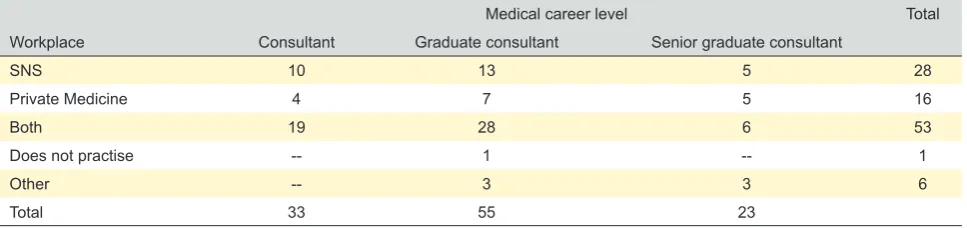
Data on physicians’ medical career level (n = 105) and workplace (n = 104) are shown in Table 1.
Nearly 51% of physicians are licensed to practice in the SNS and to work in the private sector (50.9%) and 25.9% exclusively in the SNS. A percentage of 20% of the endocrinologists work as senior graduate consultants and 49% as graduate consultants, while only 13.5% are working in the SNS as senior graduate consultants, reflecting the absence of calls for tender over the past few years.
Figure 1 – Age of endocrinologists
30 0 4 8 12 16
35 40 45 50 55 60 65 70 75 80
Table 1 – Medical career level and workplace
Medical career level Total
Workplace Consultant Graduate consultant Senior graduate consultant
SNS 10 13 5 28
Private Medicine 4 7 5 16
Both 19 28 6 53
Does not practise -- 1 -- 1
Other -- 3 3 6
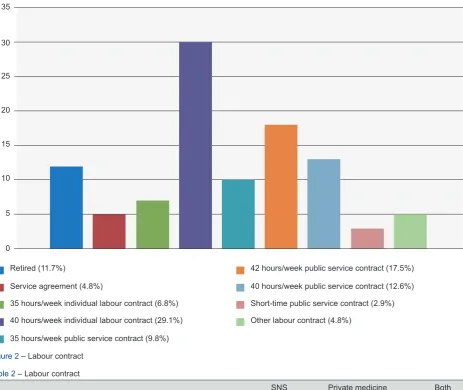
ARTIGO ORIGINAL A 40 hours/week individual labour contract was mostly described by all the physicians in the study (29.1%) as well as by those working both in the SNS and in the private practice (24.2%), while a 42 hours/week exclusivity contract (17.4%) was more frequently described by physicians licensed to practice only in the SNS.
Labour contracts are shown in Fig. 2 and according with the workplace (Table 2).
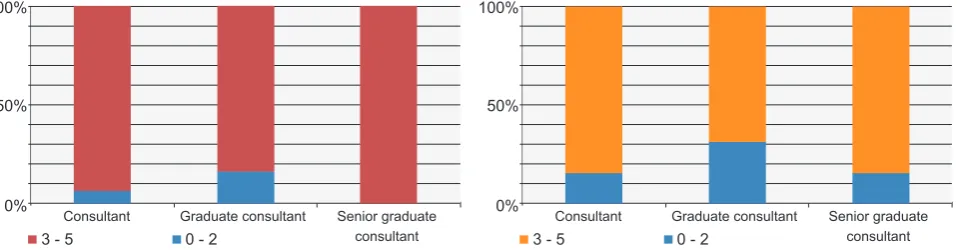
The levels of satisfaction with the current practice as well as the perception of the future of endocrinology were also assessed with the questionnaire. Responses were scored on a scale ranging from zero (dissatisfied or unpromising
future) to five (very satisfied or promising future).
An average score of 3.6 regarding the satisfaction with the practice in the area of endocrinology has been found, i.e. physicians were moderately satisfied and senior graduate consultants were among the most satisfied (Fig. 3). A slightly lower average score (3.1) has been found as regards the future of the specialty (Fig. 4) and graduate consultants were the most disappointed.
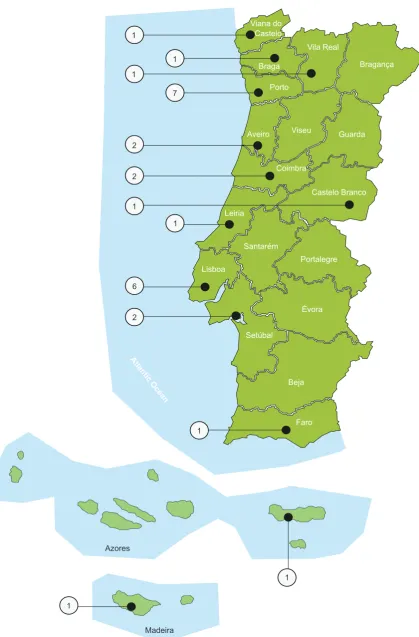
Questionnaire aimed at the heads of department A total of 27 completed questionnaires (25 from SNS hospitals and two from the military hospitals in Porto and in
Figure 2 – Labour contract
Retired (11.7%) 42 hours/week public service contract (17.5%)
Service agreement (4.8%) 40 hours/week public service contract (12.6%) 35 hours/week individual labour contract (6.8%) Short-time public service contract (2.9%) 40 hours/week individual labour contract (29.1%) Other labour contract (4.8%)
35 hours/week public service contract (9.8%) 0
5 10 15 20 25 30 35
Table 2 – Labour contract
SNS Private medicine Both
Retired 0 8 2
Service agreement 0 6 0
35 hours/week individual labour contract 0 3 5
40 hours/week individual labour contract 9 0 23
35 hours/week public service contract 0 0 11
42 hours/week public service contract 16 0 0
40 hours/week public service contract 2 0 12
Short-time public service contract 0 0 4
ARTIGO ORIGINAL
Lisbon) were received and their distribution is shown in Fig. 5. Worrying regional inequalities (north vs. south and coast vs. interior regions) have been found regarding the access to endocrinology specialised care, with a relevant impact on health indicators, as shown by the Annual Report of the National Diabetes Observatory (Observatório Nacional da Diabetes)1 in which significantly higher major and minor lower limb amputation rates were found in the Southern regions, as well as longer mean length of stay in the hospital and higher percentage of hospital admission due to diabetes ketoacidosis. Such a wide variation in patient’s proximity to healthcare facilities is a serious equity failure of the Portuguese National Healthcare Service (Serviço Nacional de Saúde).
The lack of any endocrinology department in the Algarve and in the interior regions where universities including the medicine course exist has also a tremendous impact on training of future doctors in such a relevant specialty such as endocrinology and nutrition.
Healthcare activity
Clinical practice in endocrinology is mostly focused on the outpatient activity, even though an important inpatient clinical practice aimed at diabetes management has been described by most departments, due to the large number of patients admitted with diabetes, as well as an inpatient practice aimed at the diagnosis and treatment of other endocrine pathologies and at the day clinic, allowing for the management of decompensated diabetes without
the need for admission to the hospital, with relevant cost reductions. Day clinics also allow for the development of endocrine dynamic function testing involving drug administration, response monitoring and close monitoring of possible adverse effects, apart from other procedures. Emergency on-duty or on-call medical attendance is also provided by some departments mainly aimed at diabetes-related admissions, due to its prevalence and also at the approach to more rare endocrine emergencies involving a more demanding management.
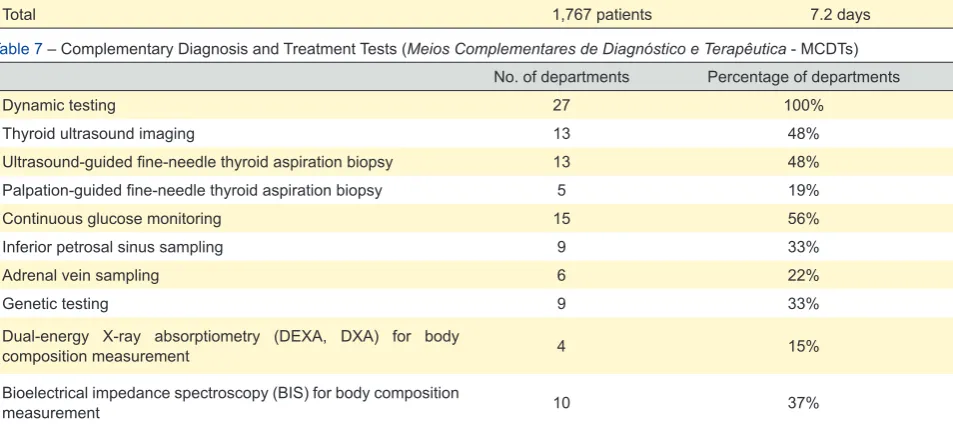
More and more Complementary Diagnosis and Treatment Tests (Meios Complementares de Diagnóstico e Terapêutica – MCDTs) have been used due to the improvements in medicine and particularly in endocrinology: thyroid ultrasound, ultrasound-guided fine-needle thyroid aspiration biopsy, body composition assessment, direct cooperation in the inferior petrosal sinus and adrenal vein sampling, continuous glucose monitoring, continuous subcutaneous insulin infusion systems, among others.
Outpatient clinic
Outpatient clinical practice represents the main activity of the endocrinology departments. Outpatient clinical productivity data are shown in Table 4, according with the information provided by the heads of department. Different accounting criteria regarding multidisciplinary medical activity seem to have been used by the institutions and can explain for some discrepancies. Differentiated outpatient clinics have been developed in some departments, due
Figure 3 – Personal satisfaction with the current practice in
endocrinology and with the medical career level 3 - 5
Consultant Graduate consultant Senior graduate consultant 0 - 2
0% 100%
50%
Figure 4 – Perception of the future of endocrinology
3 - 5
Consultant Graduate consultant Senior graduate consultant 0 - 2
0% 100%
50%
Table 3 – Type of healthcare assistance
Number of departments Percentage
Outpatient clinic 27 100%
Endocrinology ward 8 30%
Other department’s ward 14 52%
Day clinic 20 74%
Inpatient care 25 93%
MCDTs 27 100%
Shift work - Emergency Department 8 30%
Emergency on-call 9 33%
ARTIGO ORIGINAL
Figure 5 – Distribution of the Departments of Endocrinology
Atlantic Ocean
1
Madeira Azores
1
Faro Beja Setúbal Santarém
Évora Lisboa
Leiria
Coimbra Viseu Aveiro
Porto
Vila Real
Braga Viana do Castelo
Portalegre Castelo Branco
Guarda Bragança
1 2
6
1 1
2 2
7 1 1
ARTIGO ORIGINAL
to the high number of patients and / or the need for a differentiated management of certain pathologies (due to its complexity or low prevalence), as shown in Table 5.
Inpatient care units
Diabetes mellitus is the most frequent cause for admission, as primary or secondary diagnosis. Other patients with cancer and rare or complex disorders, in need
for a multidisciplinary approach, are also admitted to the unit.
Hospital discharges and average lengths of stay are shown in Table 6, including a comparison between departments with their own ward or with inpatient care units in other department’s wards.
Lower average length of stay has been found in endocrinology departments when compared to the national
Table 4 – Outpatient productivity
First consultations Total medical consultations
Centro Hospitalar de São João, E.P.E. 4,380 24,441
Centro Hospitalar do Porto, E.P.E. 3,351 25,208
Centro Hospitalar Entre Douro e Vouga, E.P.E. 180 800
Centro Hospitalar Tâmega e Sousa, E.P.E. 1,447 4,256
Centro Hospitalar Trás os Montes e Alto Douro, E.P.E. 3,302 1,013
Centro Hospitalar Vila Nova Gaia – Espinho, E.P.E. 2,720 11,825
Hospital de Braga, P.P.P. 2,400 13,500
IPO do Porto, E.P.E. 1,162 5,950
ULS Matosinhos, E.P.E. 1,215 6,141
ULS do Alto Minho, E.P.E. 2,986 6,914
Hospital Forças Armadas, Porto 112 1,951
Centro Hospitalar de Leiria, E.P.E. 2,237 6,755
Centro Hospitalar do Baixo Vouga, E.P.E. 1,866 8,650
Centro Hospitalar e Universitário de Coimbra, E.P.E. Unavailable data 22,531
IPO de Coimbra, E.P.E. 1,047 7,554
ULS de Castelo Branco, E.P.E. Unavailable data* Unavailable data*
Centro Hospitalar Lisboa Central, E.P.E. 4,207 22,387
Centro Hospitalar de Lisboa Ocidental, E.P.E. (Egas Moniz) 3,015 15,202
Centro Hospitalar de Setúbal, E.P.E. 1,159 7,371
Centro hospitalar Lisboa Norte, E.P.E. 4,538 21,467
Hospital Garcia de Orta, E.P.E. 1,973 10,241
IPO de Lisboa, E.P.E. 1,720 13,458
Hospital Beatriz Ângelo, Loures, P.P.P. 1,765 7,545
Hospital Forças Armadas, Lisboa 941 6,212
Centro Hospitalar do Algarve, E.P.E. 617 1,819
Autonomous Regions
Hospital do Divino Espírito Santo - Açores 2,308 15,606
Hospital Central do Funchal - Madeira 873 5,924
Total 17.7% first consultations49,232
Average: 1,969
277,010
Average: 10,654
* The department opening occurred in 2016 and 2015 data were still unavailable
Table 5 – Differentiated consultations (number of departments and percentage)
Obesity Obesity surgery pathologyThyroid Pituitary gland
pathology Pregnancy Lipids
Type-1
diabetes diabetesType-2
Insulin infusion systems
Eating behaviour
15 (56%) 12 (44%) 19 (70%) 11 (41%) 22 (81%) 2 (7%) 19 (70%) 20 (74%) 12 (44%) 2 (7%)
Paediatric
endocrinology pathologyAdrenal
Calcium and bone
Sexual
medicine Diabetic foot menopauseAndrology/ oncologyThyroid
Neuro-endocrine
tumours
Pituitary gland
ARTIGO ORIGINAL average (10.4 days) (data from the Observatório Nacional da Diabetes)1 corresponding to a relevant cost reduction for the SNS.
Day clinic
Day clinic activity allowed for the management of decompensated diabetes, other endocrine disorders (preventing from the need for hospital admission), onset of intravenous therapy, therapeutic education (crucial in the treatment of patients with diabetes) and diagnostic hormone testing and therapy administration, with the need for medical monitoring.
This activity currently exists in 74% of the departments, with a mean 512 sessions throughout 2015 (range 6 – 2,109 sessions).
On-call duty
An increased number of diabetes-related hospital discharges and admissions have been found over the past few years, showing an 89.3% increase between 2005 and 2014 and reflecting an increased prevalence of the disease. The departments of endocrinology have had a crucial role in the optimization of diabetes metabolic control, in critical situations, in post-surgery and in non-critical inpatient setting, apart from the implementation of regimens for the different clinical situations. In 2015, 93% of the departments have provided specialised inpatient care and a total 26,997 inpatient medical examinations have been performed, with a mean 1,800 medical examinations per year and department. There is however a wide variability and this corresponded to the most frequent activity for some departments (higher than inpatient clinical practice in the endocrinology ward).
Complementary Diagnosis and Treatment Tests (Meios Complementares de Diagnóstico e Terapêutica – MCDTs)
A major development has been found in different departments over the past few years regarding the use of thyroid ultrasound and thyroid aspiration biopsy, due to the relevant role of endocrinologists in the integration of patient’s clinical manifestations with biochemical data and imaging. This is in line with the international progression in the management of thyroid pathology, namely regarding nodular thyroid disease.
The same situation has been found in other areas of medical imaging, including (i) inferior petrosal sinus and adrenal vein sampling for the determination of hormone gradients allowing for a definitive diagnosis in certain pathologies, (ii) dual-energy X-ray absorptiometry (DEXA, DXA) or bioelectrical impedance spectroscopy (BIS) for body composition measurement, with a relevant impact on overweight/obesity management, (iii) implementation of genetic testing for the treatment of certain pathologies and follow-up of the patients and families and finally (iv) continuous glucose monitoring which is crucial in the treatment with continuous subcutaneous insulin infusion systems (Table 7).
Emergency
Emergencies in Endocrinology mostly correspond to diabetes-related episodes, namely diabetes ketoacidosis, hyperosmolar hyperglycaemic state and severe hypoglycaemia.
The presence of external emergency clinical practice has been described by 17 departments (63%), on-duty by
Table 6 – Hospital productivity
Hospital discharges Average length of stay Admission to the department’ s ward (n = 8)
Average no. of beds = 7 (range 3 - 16) Average: 196Total: 1,574 (7.3 - 10.1 days)7.9 days Admission to other department’s ward (n = 14; data regarding 5
departments) Average: 29Total: 146 (5 - 7 days)5.9 days
Total 1,767 patients 7.2 days
Table 7 – Complementary Diagnosis and Treatment Tests (Meios Complementares de Diagnóstico e Terapêutica - MCDTs)
No. of departments Percentage of departments
Dynamic testing 27 100%
Thyroid ultrasound imaging 13 48%
Ultrasound-guided fine-needle thyroid aspiration biopsy 13 48%
Palpation-guided fine-needle thyroid aspiration biopsy 5 19%
Continuous glucose monitoring 15 56%
Inferior petrosal sinus sampling 9 33%
Adrenal vein sampling 6 22%
Genetic testing 9 33%
Dual-energy X-ray absorptiometry (DEXA, DXA) for body
composition measurement 4 15%
Bioelectrical impedance spectroscopy (BIS) for body composition
ARTIGO ORIGINAL eight and on-call by nine, mostly on a 12 hours/week shift
schedule and over 24-hour on-call shift schedule described by three departments.
Endocrinology registrars have a participation in on-duty internal medicine emergency in five hospitals and also with inpatient activity in an internal medicine ward in four, with 12 hours/week shift schedule and related to internal medicine training within the internship program. This may explain for the lack of a specific endocrinology emergency unit in certain regions.
Endocrinology specialty internship
In 2015, 18 departments achieved accreditation for specialty training (67%), 14 of which achieved fully accreditation (52%) and four departments were partially accredited (15%) and a total of 71 registrars (first to fifth-year) attended specialty training programs. Over the initial four years of their training program, registrars must have complied with no more than 12 hours/week shift schedule in the emergency department, according with the training program in endocrinology and nutrition, described by the publication of the Ordinance (Portaria) no. 1/2014, 2 January; fifth-year registrars should attend an emergency training exclusively at the endocrinology department through the final year of their training, according with this internship program.
Registrar’s specific training in endocrinology and nutrition, their workload and supervision by consultants is
shown in Table 8.
The fact that fifth-year registrars are still working in the internal medicine clinic at the emergency department should be mentioned, affecting their specific training in endocrinology and nutrition and in contrast to the specialty training program apart from the fact that only half of these had any supervision by consultants. On-duty inpatient care in the internal medicine clinic, not included in registrar’s internship is still occurring in three departments that have achieved accreditation for specialty training in endocrinology and registrars are rarely supervised by consultants in one department, corresponding to a serious issue already notified to the Portuguese College of Endocrinology and Nutrition and to the Portuguese Medical Association. The situation is cutting across all registrars working within the different internal medicine clinics in the emergency departments, leading to different complaints and public claims and has been considered as a relevant concern by the Portuguese College of Endocrinology and Nutrition.
Medical staff
From the 27 questionnaires received by the Board of the College of Endocrinology and Nutrition, 22 regarded autonomous departments, four regarded units integrated within another department and one regarded an autonomous unit. The different medical career levels of the heads of department or unit are shown in Table 9.
Consultants or graduate consultants worked as head of
Table 8 – Endocrinology and nutrition specialist registrars working in the Emergency Department
First to fourth-year registrars Fifth-year registrars
Inpatient
Number of departments 10 (56% dos serviços com idoneidade) 11 (61% of those having achieved accreditation)
Shift work (Internal Medicine – Emergency Department)
Number of departments 16 ( 89% of those having achieved accreditation) 5 (28% of those having achieved accreditation)
Workload 50% with up to 12 hours/week and 50% with 12 to 24 hours/week shift schedule 100% up to 12 hours/week shift schedule
Supervision by consultant 63% always supervised, 25% most of the time and 12% rarely 60% always with supervision and 40% most of the time
On-call (Internal Medicine)
Number of departments 3 (17% of those having achieved accreditation) 3 (17% of those having achieved accreditation)
Workload 100% with 12 hours/week 100% with 12 hours/week
Supervision by consultant 67% (2) with supervision and 33% (1) rarely supervised 67% (2) with supervision and 33% (1) rarely supervised
Endocrinology emergency
Number of departments 3 (17% of those having achieved accreditation) 5 (28% of those having achieved accreditation)
Workload Up to 12 hours/week (100%) Up to 12 hours/week (100%)
Supervision by consultant 100% always supervised 40% always supervised and 60% only by phone
Endocrinology prevention clinic
Number of departments 2 (11% of those having achieved accreditation) 3 (17% of those having achieved accreditation)
Workload 50% with up to 12 hours/week and 50% with 12 to 24 hours/week shift schedule Up to 12 hours/week (100%)
ARTIGO ORIGINAL
department in fourteen departments/units, corresponding to 52% of all the departments, reflecting the slow career progression and the recent opening of new departments with younger heads of department. The number of consultants in each department is shown in Table 10.
A total of 272 endocrinology consultants have been found with this study and 147 consultants practised in the SNS and the military hospitals in Mainland Portugal and autonomous regions in 2015, regardless of the labour contract. A ratio of 1.4 endocrinologists / 100,000 has been
found, considering a total number of 10,562,178 people (2011 Census) and all the endocrinologists working in the SNS and military hospitals have been included. Ratios ranging from 2/100,000 in the Northern European countries to 3-4/100,000 in Spain, France and in Italy have been found, according with the 2013 EUROSTAT data.2 This shortage situation has a significant impact on important indicators such as diabetes mortality rate per 100,0003: a rate of 42.74/100,000 has been found in Portugal in 2013, significantly higher than the European average of 22.8 and
Table 9 – Medical career level of the heads of department/unit
Consultant Graduate consultant Senior graduate consultant Total
Autonomous department 2 7 13 22
Integrated unit 3 1 --- 4
Autonomous unit 1 --- --- 1
Total 6 8 13 27
Table 10 – Medical staff and medical career levels in 2015
Consultants* consultantsGraduate graduate Senior consultants Total
Centro Hospitalar de São João, E.P.E. 4 7 1 12
Centro Hospitalar do Porto, E.P.E. 2 7 4 13
Centro Hospitalar Entre Douro e Vouga, E.P.E. 2 0 0 2
Centro Hospitalar Tâmega e Sousa, E.P.E. 2 1 0 3
Centro Hospitalar Trás os Montes e Alto Douro, E.P.E. 1 0 0 1
Centro Hospitalar Vila Nova Gaia – Espinho, E.P.E. 2 2 0 4
Hospital de Braga, P.P.P. 4 1 0 5
IPO do Porto, E.P.E. 1 1 1 3
ULS Matosinhos, E.P.E. 2 2 0 4
ULS do Alto Minho, E.P.E. 4 0 0 4
Hospital Forças Armadas, Porto 0 1 0 1
Centro Hospitalar de Leiria, E.P.P. 2 0 0 2
Centro Hospitalar do Baixo Vouga, E.P.E. 3 1 0 4
Centro Hospitalar e Universitário de Coimbra, E.P.E. 5 9 1 15
IPO de Coimbra, E.P.E. 3 1 1 5
ULS de Castelo Branco, E.P.E. 1 0 0 1
Centro Hospitalar Lisboa Central, E.P.E. 2 9 1 12
Centro Hospitalar de Lisboa Ocidental, E.P.E. (Egas Moniz) 4 2 1 7
Centro Hospitalar de Setúbal, E.P.E. 0 1 1 2
Centro Hospitalar Lisboa Norte, E.P.E. 5 10 0 15
Hospital Garcia de Orta, E.P.E. 4 2 1 7
IPO de Lisboa, E.P.E. 2 2 1 5
Hospital Beatriz Ângelo, Loures, E.P.E. 2 2 0 4
Hospital das Forças Armadas, Lisboa 2 2 1 5
Centro Hospitalar do Algarve, E.P.E. 1 0 0 1
Hospital do Divino Espírito Santo - Açores 2 2 1 5
Hospital Central do Funchal - Madeira 2 1 1 4
Total 64 66 17 147
ARTIGO ORIGINAL only overcome by the rate found in Turkey. More favourable
indicators have been found in Spain (20.27/100,000) and in Italy (30.3).
Department shortage
Patients beyond hospital’s direct attendance area attend most departments (20, or 74% of the total) due to the shortage of endocrinology departments and to the high prevalence of endocrine disorders. Staff shortage has been described by 21 departments (78%) and this is also explained by this fact. Shortage of examination rooms, ultrasound equipment, continuous glucose monitoring and continuous subcutaneous insulin infusion systems have been mostly described (by 67% of the departments). Shortage of other healthcare professionals apart from physicians has been also described.
CONCLUSIONS
Endocrinology and nutrition is under an expansion trend regarding healthcare activity as well as regarding the number of consultants and registrars. The effort in specialty training which has been developed over the past few years (67% of the departments achieved full or partial accreditation and 71 registrars currently attend internship programs) and the age of endocrinologists (47% under the age of 50) showed that only part of the Portuguese regional inequalities regarding the access to specialised care can be covered, complying with a basic right of the SNS.
Enhancement of the departments linked to teaching and undergraduate training activity (there is no endocrinology department in support of the medicine course at the Universidade da Beira Interior and there is only one consultant working in the Centro Hospitalar do Algarve) seems crucial, in addition to the enhancement of clinical academic centres and those with a relevant research activity.
Even though healthcare activity is mainly based on outpatient clinical practice, with an average 10,654 medical consultations per department throughout 2015 (17.7% first consultations) and with an active day clinic in
74% of the departments, inpatient medical care (mainly diabetes-related) also represents a relevant activity, with better average waiting time indicators than the national average, as well as taking care of patients admitted to other departments, corresponding to a total of 26,997 medical consultations in 2015 (in 93% of the hospitals), with an average 1,800 medical consultations per department. Ultrasound-guided fine-needle thyroid aspiration biopsy has been increasingly used (in 48% of the departments), as well as dynamic testing and new technologies for diabetes management, such as continuous glucose monitoring (in 56%) and continuous subcutaneous insulin infusion systems.
Unfavourable quality indicators have been found in Portugal, with a low ratio of 1.4 endocrinologists per 100,000, significantly lower than the ratio found in the remaining European countries. This situation is explained by the shortage of endocrinologists in some Portuguese regions (interior and Southern region), with an impact on the existing departments, where patients living beyond their direct attendance area usually attend. Therefore, staff shortage to meet demand has been described by 74% of the departments, often corresponding to overlong waiting times. This will perhaps explain for the discouragement regarding the future of their specialty, particularly described by graduate consultants.
However, there is still enough training capacity to overcome current shortcomings in the short to medium term, with the subsequent positive impact on healthcare as well as the economic indicators and a crucial contribution to the differentiation of existing departments towards the desirable integration into European Reference Networks. The Board of the College firmly believes in a promising future.
ACKNOWLEDGMENT
The Board of the College of Endocrinology and Nutrition wishes to acknowledge all those having given their contribution to the implementation of the census.
REFERENCES
1. Diabetes – Factos e Números; o ano de 2014. Relatório Anual do Observatório Nacional da Diabetes. Sociedade Portuguesa de Diabetologia. [Consultado em 2016 out 02]. Disponível em https:// www.dgs.pt/estatisticas-de-saude/estatisticas-de-saude/publicacoes/ diabetes-factos-e-numeros-7-edicao.aspx.
2. Eurostat Health Data. Physicians by speciality, 2013. [Consultado em
2016 out 02]. Disponível em http://ec.europa.eu/eurostat/web/health/ health-care/data/database.