IN- SILICO ANALYSIS OF DIFFERENT PLANT PROTEIN AND
THEIR ESSENTIAL COMPOUND WITH SULFONYLUREA
BINDING PROTEIN OF
-CELLS OF HOMO SAPIENS FOR
CURING DIABETES MELLITUS TYPE II DISEASE
Rohit Sahu
[a]*and Neerja Shukla
[b]Keywords: diabetes mellitus type II; SUR1 receptor; medicinal plant; essential compound; docking; modeling.
Diabetes (type-2) is a chronic disorder affecting millions people all over the world. The disease is associated with long-term dysfunction, damage, and failure of various organs thus, affects almost every physiological system of the body. The chronic insulin resistance, progressive decline in β-cell function or increased rate of cell death results decreased insulin production and finally leads the disease. The sulfonylurea is known to regulate blood glucose homeostasis but have a characteristic profile of side effects. Some medicinal plant have showed hypoglycemic activities but the exact mechanism of action of these drugs at cellular level is yet not known and thus no better formulation of indigenous medicine could be developed till date for the treatment of type-2 diabetes. Therefore, the present study has been done to investigate the effect of the indigenous drugs, in-silico on the diabetic receptor, with a view to observe their effect on β-cell which could be helpful for the development of better formulation for the treatment of diabetes. Now days most of the drugs used in the treatment of type-2 diabetes either target the sulfonylurea receptor stimulating insulin release. Targeting of sulfonylurea may provide an important help for the development of drugs against type-2 diabetes. However, absence of tertiary structure of sulfonylurea limits the possibilities of structure based drug designing. In the present work we have explore the 3D structure of sulfonylurea receptor using homology approach. Based on the active sites we have screened the essential compound of Indigenous plants as a inhibitor as well as plant protein against modelled protein using iGEMDock 2.1 and Hex6.0 Cuda softwares. The Lead compound of plant as well as plant protein molecule would be scaled out on the basis of binding efficiency, starting from higher to lower and given the preference compare with the other one.
*Corresponding Authors
E-Mail: [email protected]
[a] Center of Bioinformatics, University of Allahabad [b] Nehru Gram Bharti University, Allahabad
Introduction
Diabetes (type-2) is a chronic disorder affecting millions people all over the world and today India leads the world with the largest number of diabetics. The disease is associated with long-term dysfunction, damage, and failure of various organs thus, affects almost every physiological system of the body.
The management of diabetes mellitus (type II) has continued to be challenges all over the world1 including the
India where it is estimated that 19.4 million individuals are affected by the non-insulin dependent diabetes mellitus (NIDDM), which is likely to go up to 57.2 million by the year 2025.2 India leads the world today with the largest
number of diabetics in any given country. In the 1970s, the prevalence of the diabetes among the urban Indians was reported to be 2.1 percent, which has now risen to 12.1 percent. Moreover there is an equally large pool of individuals with impaired glucose tolerance (IGT) and many of them may eventually develop NIDDM in the coming future.3
Diabetes mellitus type 2 represents the final stage of a chronic and progressive syndrome representing a heterogeneous disorder caused by various combinations of
insulin resistance and decreased pancreatic cell function caused by both genetic and acquired abnormalities.1–7
Currently, type 2 diabetes mellitus is diagnosed when the underlying metabolic abnormalities consisting of insulin resistance and decreased cell function cause elevation of plasma glucose above 1260 mg L-1 (7 mmol L-1) in the
fasting state and/or above 2000 mg L-1 (11.1 mmol L-1) 120
min after a 75-g glucose load.8
However, the fact that many newly diagnosed type 2 diabetic subjects already suffer from so called “late complications of diabetes” at the time of diagnosis9 indicates
that the diagnosis may have been delayed and, in addition, that the pre-diabetic condition is harmful to human health and requires increased awareness by physicians and the general public.
β-Cell dysfunction is initially characterized by impairment in the first phase of insulin secretion during glucose stimulation and may antedate the onset of glucose intolerance in type 2 diabetes.10 Initiation of the insulin
response depends upon the trans- membranous transport of glucose and coupling of glucose to the glucose sensor. The glucose/glucose sensor complex then induces an increase in glucokinase by stabilizing the protein and impairing its degradation. The induction of glucokinase serves as the first step in linking intermediary metabolism with the insulin secretory apparatus. Glucose transport in cells of type 2 diabetes patients appears to be greatly reduced, thus shifting the control point for insulin secretion from glucokinase to the glucose transport system.11,12 This defect is improved by
Sulfonylureas are drugs that stimulate secretion of insulin from the pancreatic cells.15,16 and are therefore used
extensively in the treatment of type 2 diabetes. It is well established that sulfonylureas stimulate insulin release by interacting with the high-affinity 140-kDa SUR-1 protein of the ATP-regulated K+ channel at the cytoplasmic leaflet of
the plasma membrane. This interaction closes the channel, causing membrane depolarization, the opening of voltage-gated L-type Ca2+ channels, an increase in cytoplasmic-free
Ca2+ concentration, and the activation of the secretory
machinery.17,18 Sulfonylureas also shows to stimulate insulin
exocytosis by directly interacting with the secretory machinery and not through closure of the plasma membrane ATP-regulated K+ channel.19-21 This effect may constitute
part of the therapeutic benefits of sulfonylureas and contribute to their hypoglycemic action in diabetes.
Nevertheless, some studies have clearly demonstrated that the second-generation sulfonylurea glibenclamide accumulates progressively in the β-cell. Moreover, autoradiography studies have shown that sulfonylureas are internalized by the β -cell and bind to intracellular sites such as secretory granules.19, 20-22
Medicinal plants used in curing diabetes mellitus
Diabetes mellitus is a common disease in the United States. It is estimated that over 16 million Americans are already caught with diabetes, and 5.4 million diabetics are not aware of the existing disease. Diabetes prevalence has increased steadily in the last half of this century and will continue rising among U.S. population. It is believed to be one of the main criterions for deaths in United States, every year. This diabetes information hub projects on the necessary steps and precautions to control and eradicate diabetes, completely.
There is an increasing demand by patients to use natural products with antidiabetic activity, because insulin and oral hypoglycaemic drugs have undesirable side effects.23
Medicinal plants are a good source of natural antioxidants believed to exert their effect by reducing the formation of the final active metabolite of the drug-induced systems or by scavenging the reactive molecular species to prevent their reaching a target site.24-26 It has been documented that
several medicinal plants show their hypoglycaemic effects associated with a significant alteration in the activity of liver hexokinase,27 glucokinase.28 In addition, Bopanna et al.27
and Eskander et al.29 demonstrated that the administration of
several herb extracts could restore the changes in the activities of serum enzymes, like alkaline phosphatase (ALT), acid phosphatase and transaminases, aspartate aminotransferase (AST) and alanine aminotransferase (ALT). Phytochemicals isolated from plant sources have been are used for the prevention and treatment of cancer, heart disease, DM, and high blood pressure.30
On the other hand in Indian medicine mentions various plant formulations helpful in the treatment of diabetes mellitus. These plant medicines are gaining considerable recognition world wide.31 The Gymnema sylvestre, an
indigenous medicine has been studied extensively for its beneficial action in diabetes mellitus. The active ingredients
of Gymnema sylvestre are the gymnemic acid, which
appears to correct the metabolic derangements in diabetic
liver, kidneys and muscles and reverse the hepatic pathological changes during the hyperglycemic phase. Results from the other studies show that its extracts may affect the insulin release by increasing the cellular permeability.32 It was observed that it regulates well the
blood sugar level in alloxan induced diabetic rabbits and increases the uptake and incorporation of glucose into glycogen and proteins.33 It has also been documented that
Gymnema sylvestre not only affects the blood glucose
homeostasis but also increases the activity of glucose by insulin dependent pathways.
Pterocarpus marsupium is epicatechin also shows anti-hyperglycemic activity.33 and exhibits alpha glucosidase
inhibitory activity comparable to metformin.32 It has been
observed that it may renormalize the activities of hexokinase, glucokinase and phosphofructokinase.30 It was also observed
that Pterocarpus marsuspium treatment decreased the blood sugar level by 38–60 percent along with decreased hepatic and renal weight, whereas the renal glycogen content decreased by 75 %.28 It was found that epicatechin increases
the c–AMP content of the islets, which may be associated with the increased insulin release and conversion of proinsulin to insulin.17
Similarly, Eugenia jambolana, a very common indigenous medicine significantly decreases the level of blood glucose blood urea, and cholesterol with increased glucose tolerance and the levels of total protein and liver glycogen.19 It also
decreases the activities of glutamate oxaloacetate transaminase and glutamate pyruvate transaminase.29
Although various works have been conducted in relation to hypoglycemic activities of various indigenous drugs but the exact mechanism of action of these drugs at cellular level remain elusive.
Materials and Methods
All computations and molecular modelling were carried out on the IBM Workstation with Fedora 7 operating system using MODELLER9v8, iGEMDOCK 2.1, HEX6.0 CUDA and GROMACS 4.0.1 package.
Sequence alignment and molecular modeling of SUR-1 receptor
The protein sequence of sulfonylurea receptor (SUR-1) in fasta format was obtained from the NCBI database34
(Accession No. AAB02278). Protein-BLAST algorithm35
against Protein DataBank36 was carried out for the sequence
homology search, in order to identify homologous sequences with known 3-D structure. Blast-p (protein query–protein database) program was run with BLOSUM62 as a scoring matrix,37 word size 3, gap penalty of 11 and gap
extension penalty of 1. High resolution crystal structure of homologous protein as a template was considered for homology modelling. The Blast-p alignments were further refined by using Clustal W 2.0.10 program38 with default
parameters. The sequence and 3D structure of template protein were extracted from the PDB database. Crystal structure of ATP-binding cassette (ABC)-transporter haemolysin (Hly)B (PDB ID: 2FF7.A)39 was obtained as the
score, lowest E-value and highest resolution. The 3D structure of SUR-1 receptor was generated by MODELLER 9v840 and SWISS-MODEL server.41 Homology modelling
of SUR-1 receptor was performed in the following steps: template selection from Protein Data Bank (PDB), sequence-template alignment, model building, model refinement and validation.42
Protein structure validation
MODELLER generated several preliminary models which were ranked based on their DOPE scores. Some models having low DOPE score were selected and stereo-chemical property of each models was assessed by PROCHECK.43
PROCHEK server was used for the validation of modeled SUR-1 receptor structure. PROCHECK analysis of the model was done to check whether the residues are falling in the most favoured region in the Ramachandran’s plot or not. The model with the least number of residues in the disallowed region was selected for the further studies. Quality of models was evaluated with respect to energy and stereochemical geometry. ProSA-Web server44 to evaluate
energy and Verify 3D45 to evaluate the local compatibility of
the model related to good protein structure.
Molecular Docking
The iGEM Dock 2.1 program46 was used for the
molecular docking analysis of SUR-1 receptor with Lead compound of plants. The two dimensional structure of lead compounds were taken from pubchem server48 of NCBI and
converted it into 3D coordinate via CORINA server. The Generic evolutionary method (GA)47 was used in
iGEMDock to perform the automated molecular dockings. Default parameters were used for the docking of lead compound with SUR-1 receptor.
Another docking was also performed with Hex 6.0 Cuda program. Such docking was performed for calculating protein-protein interaction between the plant protein and SUR1 receptor. The Hex 6.0 Cuda is based on FFT algorithm for performing macromolecular docking.
Results and Discussion
Homology modeling of SUR-1
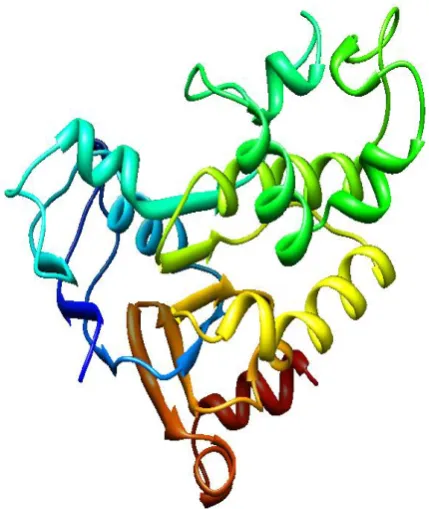
The SUR-1 has (Accession No. AAB02278) is 1581 amino acids long and shows structural similarity with the crystal structure of ATP-binding cassette (ABC)-transporter haemolysin (Hly)B (PDB ID: 2FF7.A). ATP-binding cassette (ABC)-transporter haemolysin (Hly)B was selected as a template on the basis of lowest E-value (0.00E-1) and maximum identity (45.5 %) (Data shown in Table 1). MODELLER 9v8 was used to generate the homology model of SUR-1 according to the crystal structure of 2FF7.A. Total five models were generated and their discrete optimize potential energy (DOPE) was calculated using “model-single.top” script (Table 2). The model no. 3 (PBP.B99990003.pdb) having maximum score was consider as a best model of SUR1 shown in Fig. 1.
Pymol software was used to visualize the model and find out the maximum numbers of helixes, turns and sheets in the protein.
Table 1. Comparative study of DOPE score of five models predicted through MODELLER and overall quality factor determination through ERRAT
Protein structure analysis
The final model was validated using different tools: PROCHECK, Verify3D and ERRAT programs were used for the validation of predicted model. PROCHECK analysis of the modelled protein showed that 94.17 % of the residues were found in allowed regions of Ramachandran plot (Fig. 2). Among the 355 residues 270 residues found in most favoured region, 25 in additional allowed region, 3 in generously allowed region and 1 residue in disallowed region. The statistical score of the Ramachandran plot shows that 90.3 % are in the most favoured region, 8.4 % in additional allowed region, 1.0 % in generously allowed region and 0.3 % in disallowed region. The above results indicate that the protein model is reliable (Table 2). Verify 3D score profile access the quality of the model. Fig. 1 shows the verify 3D profile of the modelled protein, residues have an averaged 3D-1D score greater than zero should be considered reliable. The computability score for all the residues in the modelled protein are above zero.
Figure 1. 3D Structure of SUR1 of Homo sapient
Model predicted through MODELLER
DOPE score kJ mol-1
Overall quality factor ERRAT
Table 2. Ramachandran plot calculation for 3D model of SUR1
% Amino acid in Modelled protein Template
Favored regions 93.1 93.9 Additional allowed regions 14.0 12.0 Generously allowed regions 0.0 2.0 Disallowed regions 1.0 0.0
Homology modelling of Plant Protein
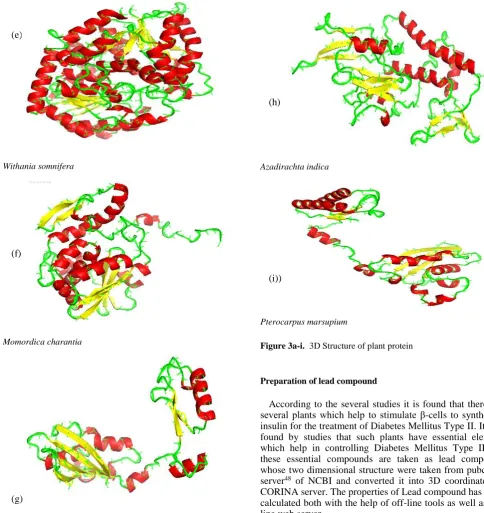
The plant protein have (GI No. 154082720, 270281938, 42491750, 327315251, 66970848, 345288139, 374711794, 68052751, 296012006) are long chain of amino acids and shows structural similarity with the crystal structures (PDB ID. 3kylA, 3h4iA, 1d8vA, 1ej7L, 1gp6A, 1ausN, 4rubA, 2w90B, 2pq6A).Such crystal structure was selected as a template on the basis of lowest e-value and maximum identity (%) (data shown in Table 3). MODELLER 9v8 was used to generate the homology model of plant protein according to the crystal structure of their selected templates. Total five models were generated and their discrete optimize potential energy (DOPE) was calculated using “model-single top” script. The model which having maximum score was consider as a best model of plant protein shown in Fig.3.
Pymol software was used to visualize the model and find out the maximum numbers of helixes, turns and sheets in the protein.
Figure 2. Ramachandran’s map of SUR1 of Homo sapience
Protein structure analysis of Plant Protein Model
The final model was validated using different tools: PROCHECK, Verify3D and ERRAT programs were used for the validation of predicted model. PROCHECK analysis of the modelled protein showed that maximum % i.e. >90 % of the residues were found in allowed regions of Ramachandran plot. Verify 3D score profile access the quality of the model. Fig. 3 shows the verify 3D profile of the modelled protein, residues have an averaged 3D-1D score greater than zero should be considered reliable.
The computability score for all the residues in the modeled protein are above zero.
(a)
Phyllanthus emblica
(b)
Trigonella foenum graecum
(c)
Swertia chirata
Gymnema sylvestre
Table 3. List of medicinal plant and their modelling properties
Plant G.I number Sequence
identity [%]
Based on template
E-value DOPE score kJ mol-1
Azadirachta indica 154082720 10.993 3kylA 3.9E-06 -17560.344
Gymnema sylvestre 270281938 27.67 3h4iA 7.9E-41 -2892.445
Momordica charantia 42491750 100 1d8vA 5.4264E-136 -10898.884
Ocimum sanctum 327315251 98.361 1ej7L 2.16647E-101 -8356.080
Phyllanthus emblica 66970848 32.653 1gp6A 0 -10421.651
Pterocarpus marsupium 345288139 95.946 1ausN 1.86376E-123 -10666.641
Swertia chirata 374711794 96.585 4rubA 3.85617E-113 -8178.599
Trigonella foenum graecum 68052751 49.296 2w90B 0 -6055.666
Withania somnifera 296012006 51.271 2pq6A 0 -2838.410
(e)
Withania somnifera
(f)
Momordica charantia
(g)
Ocimum sanctum
(h)
Azadirachta indica
(i))
Pterocarpus marsupium
Figure 3a-i. 3D Structure of plant protein
Preparation of lead compound
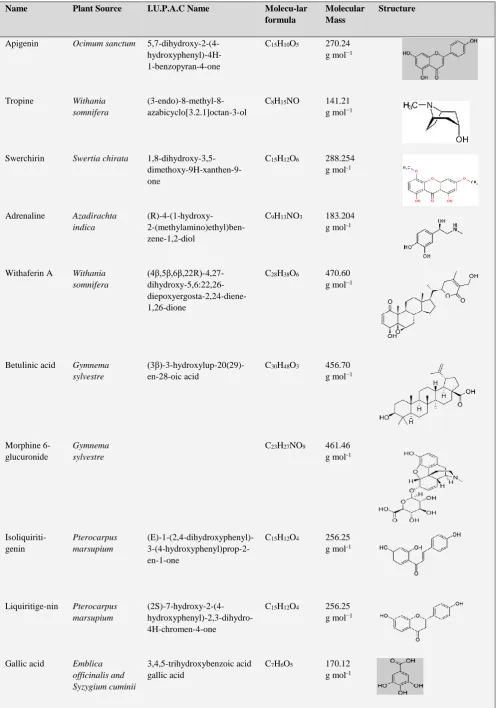
According to the several studies it is found that there are several plants which help to stimulate β-cells to synthesize insulin for the treatment of Diabetes Mellitus Type II. It was found by studies that such plants have essential element which help in controlling Diabetes Mellitus Type II. So these essential compounds are taken as lead compound whose two dimensional structure were taken from pubchem server48 of NCBI and converted it into 3D coordinate via
Table 4. Lead compounds of medicinal plants and their properties
Name Plant Source I.U.P.A.C Name Molecu-lar
formula
Molecular Mass
Structure
Apigenin Ocimum sanctum 5,7-dihydroxy-2-(4-hydroxyphenyl)-4H- 1-benzopyran-4-one
C15H10O5 270.24
g mol−1
Tropine Withania somnifera
(3-endo)-8-methyl-8-azabicyclo[3.2.1]octan-3-ol
C8H15NO 141.21
g mol−1
Swerchirin Swertia chirata 1,8-dihydroxy-3,5- dimethoxy-9H-xanthen-9-one
C15H12O6 288.254
g mol-1
Adrenaline Azadirachta indica
(R)-4-(1-hydroxy- 2-(methylamino)ethyl)ben- zene-1,2-diol
C9H13NO3 183.204
g mol-1
Withaferin A Withania somnifera
(4β,5β,6β,22R)-4,27- dihydroxy-5,6:22,26- diepoxyergosta-2,24-diene-1,26-dione
C28H38O6 470.60
g mol−1
Betulinic acid Gymnema sylvestre
(3β)-3-hydroxylup-20(29)-en-28-oic acid
C30H48O3 456.70
g mol−1
Morphine 6-glucuronide
Gymnema sylvestre
C23H27NO9 461.46
g mol-1
Isoliquiriti-genin
Pterocarpus marsupium
(E)-1-(2,4-dihydroxyphenyl)- 3-(4-hydroxyphenyl)prop-2-en-1-one
C15H12O4 256.25
g mol-1
Liquiritige-nin Pterocarpus marsupium
(2S)-7-hydroxy-2-(4- hydroxyphenyl)-2,3-dihydro-4H-chromen-4-one
C15H12O4 256.25
g mol−1
Gallic acid Emblica officinalis and Syzygium cuminii
3,4,5-trihydroxybenzoic acid gallic acid
C7H6O5
Table 4. contg.
Table 5. Docking result of Plant Protein and SUR1 Receptor
Plant Name Clst Soln Etotal Eshape Bmp RMS
Momordica charantia 1 1 -441.3 -441.3 -1 -1
Azadirachta indica 1 1 -468.5 -468.5 -1 -1
Gymnema sylvestre 1 1 -516.0 -516.0 -1 -1
Ocimum sanctum 1 1 -416.8 -416.8 -1 -1
Phyllanthus emblica 1 1 -434.7 -434.7 -1 -1
Pterocarpus marsupium 1 1 -440.1 -440.1 -1 -1
Swertia chirata 1 1 -467.9 -467.9 -1 -1
Trigonella Foenum Graecum 1 1 -409.6 -409.6 -1 -1
Withania somnifera 1 1 -540.3 -540.3 -1 -1
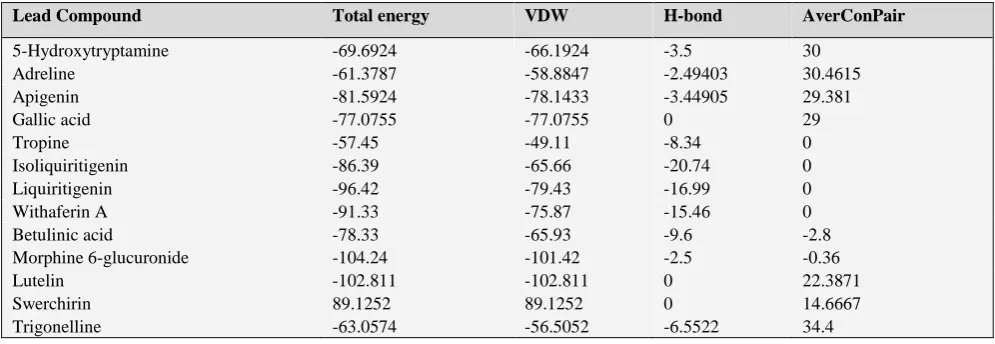
Table6.The interaction energies (kcal mol-1) of SUR-1 receptor and plant ligands obtained from the molecular docking with iGEM Dock
Lead Compound Total energy VDW H-bond AverConPair
5-Hydroxytryptamine -69.6924 -66.1924 -3.5 30
Adreline -61.3787 -58.8847 -2.49403 30.4615
Apigenin -81.5924 -78.1433 -3.44905 29.381
Gallic acid -77.0755 -77.0755 0 29
Tropine -57.45 -49.11 -8.34 0
Isoliquiritigenin -86.39 -65.66 -20.74 0
Liquiritigenin -96.42 -79.43 -16.99 0
Withaferin A -91.33 -75.87 -15.46 0
Betulinic acid -78.33 -65.93 -9.6 -2.8
Morphine 6-glucuronide -104.24 -101.42 -2.5 -0.36
Lutelin -102.811 -102.811 0 22.3871
Swerchirin 89.1252 89.1252 0 14.6667
Trigonelline -63.0574 -56.5052 -6.5522 34.4
Molecular Docking Analysis
Molecular docking was performed on SUR-1receptor with Lead compounds using iGEMDock2.1. The interaction of these Ligands with modelled protein was selected on the basis of binding energy or Total Energy, VDW and Hydrogen bonding interaction. These values along with the hydrogen bond forming residues are presented in Table 5. The Lead compound that was showing smaller dissociation constant and higher binding energy, VDM with SUR-1 receptor, was considered to be a better Lead compound.
Another molecular docking was performed on SUR-1 receptor with Plant protein using Hex6.0Cuda. The interaction of these Proteins with modelled protein was selected on the basis of Etotal, Eshape, Bmp, RMS. These
values are presented in Table 6. The Plant Protein that was showing higher binding energy i.e. Etotal with SUR-1
receptor, was considered to be a better protein.
The morphine 6-glucuronide was bound on the active amino acid of SUR-1 receptor with -104.24 kcal mol-1
binding energy (Fig. 4). While the other have less binding energy as compare with morphine 6-glucuronide. In the another docking process the protein of Withania somnifera
is showing highest binding energy as compare with other plant protein molecules. Morphine 6-glucuronide is found in the Gymnema sylvestre plant which is popularly known as Diabetic plant. Such interaction value proving that it has highest efficiency in binding with SUR1 receptor compare with the other and can be used as the most potent Drug against the SUR-1 receptor amongst the other molecules in this study.
Binding energy calculated for each docked complex are shown in Tables 5 and 6. The values of molecular docking studies are presented in Tables 5 and 6, evidently describes the good correlation between lead compound and molecules to modelled protein of SUR-1 receptor. Our data revealed Serotonin Momordica
charantia
5-hydroxytryptamine C10H12N2O 176.215
g/mol
Trigonelline Trigonella foenum-graecum
1-methylpyridinium- 3-carboxylate
C7H7NO2 137.14
a
Figure 4. Docking Poses of iGEM DOCK2.1. a) Docking pose between lead compound and SUR1; b) Docking pose between lead compound and SUR1 showing binding with different amino acid of the receptor;
Figure 5. Docking Poses of HEX6.0 CUDA. C) Docking pose between protein structure of Withania somnifera and SUR1. The SUR1 is in dotted coloured on the basis atoms present and the protein is the pattern of colour selection with solid structure form.
that the efficacy of the entire compound and the plant protein was scaled out on the basis of their binding energy which help to choose or to develop the combine drug of such plant which would be used as thee best antibiotic against Diabetes Mellitus Type-II.
Discussion
The result of above experiment shows that the Morphine 6-glucuronide has high binding affinity as compared with other like lutelin, swerchirin, trigonelline, 5-hydroxytryptamine, adreline, apigenin, gallic acid, tropine, liquiritigenin and isoliquiritigenin on the basis of binding energy. The morphine 6-glucuronide was bound on the active amino acid of SUR-1 receptor, while the other was bound on the active amino acid of SUR-1 receptor lower less binding energy compare with Morphine 6-glucuronide. Similarly in protein-protein interaction performed by Hex operating software, Withania somnifera is showing highest binding energy as compare with other plant protein
molecules other like Gymnema sylvestre, Momordica
charantia, Azadirachta indica, Ocimum sanctum,
Phyllanthus emblica and Pterocarpus marsupium. So on
that basis the morphine 6-glucuronide and Withania somnifera have higher binding affinity with the receptor than the other. This shows that the Withania somnifera and
Gymnema sylvestre works much better than the other plants
over the SUR1 receptor. Another reason for being better performance shown by the Gymnema sylvestre which could be utilized in place of other or used as essential drug during the preparation of combine drug is that Gymnema sylvestre
also contain Betulinic acid as an essential compound in it. Betulinic acid also has a good binding energy with the SUR1 receptor. So due present morphine 6-glucuronide and betulinic acid as an essential element in Gymnema sylvestre
makes the Gymnema sylvestre potential plant for curing Diabetes mellitus type II. The use of plant as an oral drug is least toxic and having little or no side effect than compare with chemical based drug. So come to the end, on the basis of molecular docking Gymnema sylvestre can be used as a drug as it have all the properties of stimulating the -cells of pancreas for the synthesis of insulin.
Conclusion
In the present study, we build the 3 D structure of SUR-1 using homology modelling. The protein structure was verified to be a good quality and being used for the docking study. The Thirteen essential compound of the indigeneous plant and Nine indigenous plant protein were designed for the studies, and used for binding with SUR-1 receptor. Top ranked docking analysis was revealed that, Morphine 6-glucuronide and Withania somnifera binds at the active sites with higher binding energy. On the basis of binding energy, Morphine 6-glucuronide and other like lutelin, swerchirin, trigonelline, 5-hydroxytryptamine, adreline, apigenin, gallic acid, tropine, liquiritigenin and isoliquiritigenin found to be best and most effective inhibitor against diabetes mellitus Type-II. Similarly the plant protein of Withania somnifera
and other like Gymnema sylvestre, Momordica charantia, Azadirachta indica, Ocimum sanctum, Phyllanthus emblica
and Pterocarpus marsupium on the basis of binding energy
found to be best and most effective inhibitor against diabetes mellitus type-II. This information would be also useful for the in new drug designing against diabetes mellitus type-II
.
References
1Gerich, J. E., Endocr. Rev. 1998, 19, 491 –503. 2DeFronzo, R. A., Diabetologia, 1992, 35, 389–397. 3Yki, J. H., Lancet,1994, 343, 91–95.
4Ferrannini, E., Endocr. Rev.,1998, 19, 477–490. 5Kahn, C. R., Diabetes, 1994, 4, 1066–1084. 6Olefsky, J. M., Med. Biol., 1993, 334, 129–150.
7Haring, H. U., Ex. Clin. Endocrinol. Diabetes, 1999, 107, S17–
S23
8Report of the Expert Committee., Diabetes Care, 1999, 22[Suppl
1], S5–S19.
9Beck, N. H., Groop, L. C., J. Clin. Invest., 1994, 94, 1714–1721. 10Ward, W. K., Beard, J. C., Porte, D., Diabetes Metab., 1986, 2,
297–313.
11Leahy, J. L., Diabetes Care, 1991, 13, 992–1010. 12Porte, D., Diabetes, 1991, 40, 166–180.
13Luz, L., DeFronzo, R. A., Am. J. Physiol., 1989, 257, E241–E246. 14Groop, L. C., Ratheiser, K., Luzi, L., Melander, A., Simonson, D.
C., Petrides, A., Bonadonna, R. C., Widén, E., DeFronzo, R. A., Acta Diabetol, 1991, 28, 162–168.
15Otto, H., Mikosch, M., Otto-Bendfeldt, E., Med. Welt, 1966, 3,
1864 –1966.
16Krall, L. P., Clin. Ther., 1984, 6, 764 –762.
17Ashcroft, F. M., Rorsman, P., Mol. Biol.,1989, 54, 87–143. 18Aguilar-Bryan, L., Nichols, C. G., Wechsler, S. W., Clement, J.
P., Boyd, A. E., Gonzalez, G., Herrera-Sosa, H., Nguy, K., Bryan, J., Nelson, D. A., Science,1995, 268, 423– 426.
19Flatt, P. R., Shibier, O., Szecowka, J., Berggren, P. O., Diabetes
Metab.,1994, 20, 157–162.
20Hellman, B., Sehlin, J., Taljedal, I. B., Acta Endocrinol., 1984,
105, 385–390.
21Carpentier, J. L., Sawano, F., Ravazzola, M., Malaisse, W. J.,
Diabetologia, 1986, 29, 259–261.
22Marynissen, G., Smets, G., Kloppel, L., Gerlache, L., Malaisse,
W. J., Acta Diabetol, 1992, 29, 113–114.
23Bonner-Weir, S., J. Mol. Endocr., 2000, 24, 297-302.
24Butler, A. E., Janson, J., Bonner-Weir, S., Ritzel, R., Rizza, R. A.,
Butter, P. C., Diabetes, 2002, 52, 102-110.
25Maedler, K., Sergeev, P., Ris, F., Oberholzer, J., Joller-Jemelka,
H. I., Spinas, G. A., Kaiser, N., Halban, P. A., Donath, M. Y.,
J. Clin. Invest., 2002, 110, 851-860.
26Maedler, K., Spinas, G. A., Lehmann, R., Sergeev, P., Weber, M.,
Fontana, A., Kaiser, N., Donath, M. Y., Diabetes, 2001, 50,
1683-1690.
27Maedler, K., Spinas, G. A., Dyntar, D., Mortiz, W., Kaiser, N.,
Donath, M. Y., Diabetes, 2001, 50, 69-76.
28Piro, S., Anello, M., Di Pietro, C., Lizzio, M. N., Patanè, G.,
Rabuazzo, A. M., Vigneri, R., Purrello, M., Purrello, F.,
Metabolism, 2002, 51, 1340-1347.
29Lupi, R., Dotta, F., Marselli, L., Del Guerra, S., Masini, M.,
Santangelo, C., Patané, G., Boggi, U., Piro, S., Anello, M., Bergamini, E., Mosca, F., Di Mario, U., Del Prato, S., Marchetti, P., Diabetes, 2002, 51, 1437-1442.
30Mathis, D., Vence, L., Benoist, C., Nature, 2001, 114, 792-798. 31Goldback-Wood, S., Doronzynski, A., Lie, G.L., B. M. J., 1996,
313, 131-133.
32Shrikant., Sharma, S., Ind. J. Clin. Pract., 2002, 12a, 49-56. 33Shanmugasundaram, E. R., Rajeshwari, G., Baskaran, K., Rajesh
Kumar, B. R., Radha Shanmugasundaram, K., Kizar Ahmath, B., J. Ethnopharmacol., 1990, 3, 281-294.
34Gasteiger, E., Gattiker, A., Hoogland, C., Ivanyi, I., Appel, R. D.,
Bairoch, A., Nucl. Acids Res., 2003, 31, 3784 – 378.
35Altschul, S. F., Madden, T. L., Schaffer, A. A., Zhang, J., Zhang,
Z., Miller, W., Lipman, D. J., Nucl. Acids Res., 1997, 25, 3389 – 3402.
36Berman, H. M., Westbrook, J., Feng, Z., Gilliland, G., Bhat, T. N.,
Weissig, H., Shindyalov, I. N., Bourne, P. E., Nucleic Acids Research, 2000, 28, 235-242.
37Henikoff, S., Henikoff, J. G., Proc. Natl. Acad. Sci., 1992, 89,
10915-10919.
38Thompson, J. D., Higgins, D. G., Gibson, T. J., Nucleic Acids
Res., 1994, 22(22), 4673-80.
39Powell, A. J., Tomberg, J., Deacon, A. M., Nicholas, R. A.,
Davies, C., J. Biol. Chem., 2009, 284(2), 1202-12.
40Sali, A., Blundell, T. L., J. Mol. Biol., 1993, 234, 779 – 815. 41Arnold, K., Bordoli, L., Kopp, J., Schwede, T., Bioinformatics,
2006, 22, 195 – 201.
42Martí-Renom, M. A., Stuart, A. C., Fiser, A., Sánchez, R., Melo,
F., Sali, A., Ann. Rev. Biophys. Biomol. Struct., 2000, 29, 291 – 325.
43Laskowski, R. A., MacArthur, M. W., Moss, D. S., Thornton, J.
M., J. Appl. Crystallogr., 1993, 26, 283 – 291.
44Ward, W. K., Beard, J. C., Porte, D., Diabetes Metab. Rev., 1986,
2, 297–313.
45 Leahy, J. L., Diabetes Care, 1991, 13, 992–1010.
46Yang, J. M., Chen, Y. F., Tu, Y. Y., Yen, K. R., Yang, Y. L.,
PLoS ONE, 2007, e428.1-e428.12.
47Hung, H. C., Tseng, C. P., Yang, J. M., Ju, Y. W., Tseng, S. N.,
Chen, Y. F., Chao, Y. S., Hsieh, H. P., Shih, S. R., John, T., Hsu, A., Antiviral Res., 2009, 81, 123-131.
48Wang, Y. L., Xiao, J., Suzek, T. O., Zhang, J., Wang, J., Bryant,
S. H., Nucleic Acids Res, 2009, 37, 623 – 633.