Improving the Delivery of Recommended Pediatric Preventive Health Services
By Hazel Garrish
A Master's Paper submitted to the faculty of the University of North Carolina at Chapel Hill in partial fulfillment of the requirements for the degree of Master of
Public Health in the Public Health Leadership Program.
Chapel Hill
2006
T/\Y/o(o
ABSTRACT:
Background: Pediatric preventive health services, including screening,
counseling, chemoprophylaxis, and immunization, are an essential part of health
care for children; these services prevent disease and injury and promote the health of children. However, despite the widely recognized importance of pediatric preventive health services, the rate of delivery of many of these services remains low.
Objectives: To examine the magnitude and extent of the problem oflow delivery
rates of recommended pediatric preventive health services and to evaluate policy alternatives to address this problem.
Methods: I examined the extent to which all U.S. children 0-5 years old receive preventive health services recommended by the AAP, Bright Futures, AAFP, USPSTF, and CDC. I focused on the following policy alternatives to increase
delivery rates of recommended pediatric preventive health services: increased Medicaid and/or SCHIP coverage of uninsured children, patient reminder and
recall systems, increased provider reimbursement for preventive health services, provider assessment and feedback, and provider reminder systems. I evaluated
each of these policy alternatives using the following criteria: effectiveness, efficiency, equity, timeliness, patient-centeredness, ease of implementation, and political acceptability. I gathered data for the evaluation through a literature
review of the MEDLINE database and the Cochrane Library.
Results: Increased Medicaid and/or SCHIP coverage was highly equitable and moderately politically acceptable but had low effectiveness. Increased provider
efficient but had low political acceptability. Patient reminder and recall systems, provider assessment and feedback, and provider reminder systems were highly effective, efficient, and politically acceptable.
Introduction
Pediatric preventive health services, including screening, counseling, chemoprophylaxis, and immunizations, are an essential part of health care for
children; these services prevent disease and injury and promote the health of children. Preventive health services have played an important role in pediatric health care since their incorporation into pediatric practice in the United States
approximately 80 years ago.1 Today, a substantial portion of pediatric health care
consists of preventive health services delivery. In 2001, over 30% of physician visits made by children less than fifteen years old were for well-child care, which
primarily consists of preventive health care services.1
Pediatric preventive health services are recommended by a variety of groups, including professional organizations, government agencies, and
insurance-related organizations. Among these groups, recommendations from the American Academy of Pediatrics (AAP), Bright Futures, the American Academy
of Family Physicians (AAFP), the United States Preventive Services Task Force (USPSTF), and the Centers for Disease Control and Prevention (CDC) are among
the most highly respected and routinely used by health care providers. Although many of the specific recommendations of these groups vary, they all emphasize the critical role of preventive health services in maintaining the health and
well-being of children. However, despite the widely recognized importance of
that approximately 94% of young children have one or more missed opportunities for preventive health service delivery by pediatric clinicians.3 Among all children and adolescents, substantially less than one-half receive recommended screening
and anticipatory guidance4
In this paper, I will examine the problem of low delivery rates of pediatric preventive health services. I will specifically focus on delivery rates among
children 0-5 years old. Compared to other age groups, infants and young children have one of the highest concentrations of health care visits and recommended preventive health services. As a result, this age group is a primary target for
improved delivery rates of preventive health services. I will focus specifically on preventive health service recommendations held in common by the AAP, Bright
Futures, AAFP, USPSTF, and CDC. This approach has two advantages. First, to
obtain the recommendation of all of these groups, preventive health services must have strong evidence supporting their benefit in the pediatric population. Second, a relatively small number of recommendations are held in common by all of these
groups. As a result, estimates of the problem of low delivery rates of preventive health services will be conservative. If delivery rates of these essential services are low, policymakers can be assured that the problem of low preventive health
service delivery is significant.
In the following sections, I will outline the problem of low delivery rates of pediatric preventive health services. I will consider possible policy changes
Based on this evaluation, I will make recommendations for policy changes,
including policy implementation and evaluation.
Problem Definition
To understand the problem of low delivery rates of pediatric preventive health
services, it is important to define preventive health services. There are four
categories of preventive health services: screening, counseling, chemoprophylaxis,
and immunizations. Screening tests are tests or standardized examination
procedures used to identify patients who need special interventions. 5 Counseling interventions provide patients with information and advice about personal
behaviors that could reduce the risk of injury or illnesss Chemoprophylaxis refers
to the use of drugs (chemically-derived compounds) or biologics (compounds derived from living organisms) to reduce the risk of diseases Immunizations are
vaccinations used by people with no evidence of infectious disease to prevent future infections. 5
The purpose of preventive health services is disease prevention; disease
prevention refers to a reduction of the risk of an adverse health event. Disease prevention has three forms: primary prevention, secondary prevention, and tertiary prevention. Primary prevention refers to interventions that prevent the
onset of a disease. 5 Routine immunization of healthy children to prevent
undetectable.5 An example of secondary prevention is the use of the Papanicolaou smear to detect and treat cervical dysplasia to prevent the development of cervical cancer. 5 Tertiary prevention is the treatment and management of people who have
a disease to prevent further disease progression. An example of tertiary prevention is cholesterol reduction in patients with coronary heart disease to
prevent further disease progression and associated complications.5 In this paper, I will focus specifically on preventive health services used for primary and
secondary prevention.
Pediatric Preventive Health Services Recommendations
In the following section, I will outline the recommendations for pediatric
preventive health services held in common by the AAP, Bright Futures, AAFP, USPSTF, and CDC. When multiple recommendations about a service have been
made by a single group, I will use the most recent recommendation. I will compare the recommended rate of delivery of these services to the actual rate of delivery among children 0-5 years old and explore the possible health
consequences of any differences between recommended and actual rates of
delivery.
Screening
Lead Screening: All groups recommend screening for lead at 12 months of age for infants at high risk of lead exposure. 5"9 High-risk is defined as infants and
children who live in communities with a high prevalence of elevated lead levels, live in or are exposed to a horne built before 1950, live in or are exposed to a horne built before 1978 with recent or ongoing remodeling, or have close contact
with a person with elevated lead levels.9 Variations of this recommendation are
seen among the groups; some groups have a broader definition of high risk, some groups vary in the exact timing of screening and follow-up, and some groups
defer to state and local screening policies for targeted screening of high-risk children, which are typically based on CDC recommendations (Appendix l ).10
However, all groups supported screening for lead among high risk infants. Of note, the USPSTF is currently in the process of developing new guidelines for
pediatric lead screening by primary care physicians; their new lead screening recommendation is scheduled to be announced in late 2006 (R. Harris, USPSTF member, written communication; April2006).
Timely lead screening is important for infants and young children because elevated lead levels are toxic. At low levels of hazardous exposure, the most common result of lead poisoning is central nervous system damage leading to
cognitive and behavioral problerns.10 Effects include inattention, hyperactivity, lack of organization, decreased ability to follow directions, aggression, and
the majority oflead poisoning in the U.S. occurs at low levels of hazardous exposure. 10
Although the prevalence of infants and children with elevated blood lead
levels has been steadily decreasing over the past 30 years, a substantial number of children are still at risk of hazardous lead exposure. National studies of elevated blood lead levels estimate that over 300,000 children l-5 years old remain at risk
of exposure to hazardous lead levels.11 Unfortunately, many of these children are not receiving lead screening to detect and treat these hazardous lead levels. In
1998, a study of childhood lead screening found that only approximately I in 5
high-risk infants and children had received lead screening; as a result, an
estimated 65% of children age l-5 years old with elevated lead levels did not have these hazardous levels detected.12 Lead screening rates were based on data from
the National Health and Nutrition Examination Survey (NHANES), a nationally representative survey of the U.S. population conducted through direct physical examination, including a blood lead test, and interviews. In this study, infants and
children insured by Medicaid were considered high-risk; this definition of high risk is consistent with AAP and CDC definitions of high-risk for lead poisoning
and is supported by the predominance of elevated blood lead levels among
Medicaid-insured children. Children insured by Medicaid are 3 times as likely to
population of high-risk children, they do show that many of the children who would benefit from such screening are not receiving it.
Even when high-risk children are screened and elevated blood lead levels
are detected, few children receive adequate follow-up for these screening results. The CDC recommends a follow-up blood lead screen to confirm all elevated blood lead levels and to monitor blood lead levels among confirmed cases.13
However, a retrospective study of 3,682 Medicaid-enrolled children less than 6
years old with an elevated blood lead level found that only 53.9% (95%
confidence interval52.5%-55.5%) received any follow-up blood lead screeningY Without appropriate follow-up, these children are not receiving the full benefits of lead screening.
Tuberculosis Screening in High-Risk Infants and Children: All groups recommend screening high-risk infants and children for tuberculosis using a
tuberculin skin test. High-risk infants and children include those with HIV infection, those emigrating from countries with high TB prevalence, and those
who are exposed to people with known or suspected TB, people with HIV infection, and people who are immigrants from countries with high TB
prevalence.5•6•8•14'15 Variations of this recommendation are seen among the groups;
some groups have expanded high-risk criteria (Appendix 1 ).
Although the prevalence of tuberculosis infection is currently at a historical low level in the U.S., many infections still occur each year. In 2003,
children <14 years of age.16 Prolonged tuberculosis infection can have serious health consequences, including destruction of the lungs, bones, joints,
pericardium, and lymphatic system, meningitis, and even death.5 However, with timely screening, tuberculosis can be detected and treated.
Data documenting screening rates for tuberculosis among high-risk children 0-5 years old is limited. In general, studies of tuberculosis infection among children have focused on weaknesses in the reporting system for adult cases of tuberculosis; reporting systems often fail to identify all children exposed to an infected adult, preventing timely diagnosis and treatment of these children.16 As a result, although approximately I in 5 child tuberculosis infections are
Vision Screening: All groups recommend vision screening among children less than 5 years old to detect visual impairment6-8•19-22 Variations of this
recommendation are seen among the groups; some groups recommend specific screening tests, some recommend periodic screening at particular ages, and some specify vision screening as having three components: detection of amblyopia, detection of strabismus, and detection of visual acuity defects (Appendix I).
Early screening for visual impairment is essential for young children. Untreated visual impairment can have serious consequences. Amblyopia, a visual condition typically caused by ocular misalignment (strabismus), large differences in the refractive power of the eyes (anisometropia), cataracts, or persistent eyelid drooping (ptosis), can lead to blindness if untreated. 19 Amblyopia is estimated to affect 1-4% of all preschool children.19 In addition to the risk of blindness, poor visual acuity due to amblyopia can have negative consequences. Poor visual acuity interferes with information uptake and processing; among young children, this interference can affect cognitive, neurological, physical, and emotional development?1 Long term consequences include decreased ability to learn, affecting school performance and educational achievement. 19 The negative consequences of poor visual acuity are also seen among children with refractive errors, or nearsightedness and farsightedness; an estimated 5-7% of all preschool children have refractive errors.19
In 2002, only 36% of all children <6 years old had ever had their vision
screened.21 Vision screening rates were based on data from the National Health Interview Survey, a nationally representative survey of the U.S. civilian,
noninsitutionalized population; in this survey, information about children was
collected from a parent or other knowledgeable adult in the family. With such low vision screening rates, many children are suffering from poor visual acuity and increased risk of blindness that could be prevented.
Counseling
Injury Prevention: All groups recommend injury prevention counseling for parents and children >2 years of age to increase the use of the following: child safety seats, seat belts, bicycle helmets, and smoke detectors. 5·6·8.23-26 Variations in
injury prevention counseling recommendations are seen among the groups; some
groups include a much broader list of recommended injury prevention counseling topics and some groups begin injury prevention counseling at a younger age
(Appendix 1 ).
Unintentional injuries, in particular motor vehicle crashes and residential fires, are the leading cause of death for children. 27 However, with proper
preventive measures, the vast majority ofthese injuries can be prevented. For
crashes by 50 percent.29 Use of bicycle helmets decreases the risk of head injury up to 88% and decreases the risk offacial injury by 65% among child cyclists30 Smoke detector installation also decreases the risk of injury due to fires. However, many children are not receiving the benefits of such safety interventions. Only 85% of parents report that their children always use an appropriate restraint when riding in a car?1 Only approximately 30% of parents report their children always wear a bicycle he!met31 Approximately 4% of households do not have smoke detectors. 31
Counseling parents and children about the use of child safety seats, seat belts, bicycle helmets, and smoke detectors can increase use among children and prevent injuries. However, many parents and children are not receiving
appropriate injury prevention counseling. A national survey of more than I ,500 parents found that among children who had seen a health care provider in the preceding 12 months, only 8.8% of children and/or family members received counseling about smoke detector use during any visit, only 18.6% received counseling about bicycle helmet use during any visit, and only 30.7% received counseling about car seat or seat belt use for children <6 years old during any visit. 32 Without such counseling, many children are not receiving the benefits of safety interventions that could significantly decrease their risk of injury or death.
Chemoprophylaxis
Immunizations
All groups recommend following the child immunization schedule reviewed and published each year by the CDC's Advisory Committee on Immunization
Practices (ACIP).6•33 For children 0-5 years old, this vaccination schedule includes
immunizations for hepatitis B, diphtheria, tetanus, and acellular pertussis,
Haemophilus injluenzae type b (Hib ), inactivated poliovirus, measles, mumps,
and rubella, varicella, pneumococcal disease, and influenza. In addition, hepatitis
A vaccination is recommended for certain children.
Appropriately timed immunizations are essential to maintain health in
infants and children. With appropriate use, immunizations are able to
dramatically decrease the risk of several diseases with substantial morbidity and
mortality among children. However, despite the important benefits of
immunizations, many children are not receiving this essential preventive health service. In 2001, only 74% of children 24 months of age had received their basic
childhood immunizations, including 4 doses of diphtheria, tetanus, and acellular pertussis vaccine, 3 doses of inactivated poliovirus vaccine, 1 dose of measles,
mumps, and rubella vaccine, 3 doses of Hib vaccine and 3 doses of hepatitis B, also known as the 4:3:1:3:3 schedule.34 Among certain groups, the immunization
rates are even lower; among black children, poor children, and children living in the inner-city only 60% of 18-35 month olds have completed the 4:3:1:3:3
schedule35 Vaccination levels are based on the results of the National
Immunization Survey, a nationally-representative survey conducted via random
immunization rates, because they only consider immunization rates for the basic
4:3:1:3:3 series; many more children have not received other recommended
immunizations, including immunizations for varicella, pneumococcal disease, influenza, and hepatitis A. As a result of low immunization rates, many children are suffering from preventable diseases with potentially serious health
consequences. In 2004, over 4,000 cases of vaccine-preventable diseases were reported in children less than 5 years of age; with timely immunizations, these
diseases and their associated morbidity and mortality could have been prevented. 36
Magnitude of the Problem: Summary
Rates of pediatric preventive health services delivery are clearly lower than is
desirable, and as a result, many children are not receiving recommended
preventive health services. Without such services, many infants and children are experiencing preventable illness, injury, and death. It is important to realize that the preventive health services delivery rates outlined in the preceding section are a
conservative estimate of the problem. The preventive health services examined above are only those held in common by the AAP, Bright Futures, AAFP,
USPSTF, and CDC. Although these preventive health services recommendations have the strongest evidence supporting them, they do not include all preventive
health services recommended by each group; all groups have several additional
screening for metabolic disorders including phenylketonuria (PKU) and congenital hypothyroidism, counseling about the hazards of passive smoke
exposure, counseling about poison prevention, use of ocular antibiotics as chemoprophylaxis to prevent gonococcal eye infection, and use of oral fluoride
supplements for children who have inadequate fluoride in their water supply are preventive health service recommendations held in common by four of the five
recommending groups. Many other preventive health services are recommended
that do not overlap between the groups. By examining only delivery rates of preventive health services recommended by all groups, the problem oflow
delivery rates is likely underestimated. However, even using the most
conservative estimate of the problem of poor preventive health services delivery,
the problem is still significant.
Policy Environment
Disease prevention programs have a long history of support in the United
States. Starting in the late eighteenth century, state and federal governments created state and national Boards of Health to protect local populations from
infectious disease epidemics. In 1912, the United States Public Health Service
was created, followed by the precursor to the CDC approximately 30 years 1ater37 Over the past century, disease prevention programs and policies have played an
essential role in improving the health of the public. Vaccinations, motor vehicle safety regulations, water and sanitation regulations, food regulation and food
transmission of STDs, water fluoridation, and anti-smoking counseling are a few of the many examples of highly effective disease prevention strategies that have
been implemented throughout tbe nation?8 These disease prevention programs
have had a substantial positive influence on health of Americans, and their success has important implications for future efforts to improve the delivery of recommended preventive health services.
Public Support oflncreased Preventive Health Services Delivery
The public is generally supportive of programs and policies that prevent disease. National surveys find widespread support of disease prevention efforts. In 1996, 72% to 93% of those surveyed indicated that each the following disease
prevention services was "very important:" preventing the spread of infectious
diseases (93% ), vaccinating to prevent diseases (90% ), ensuring people are not exposed to an unsafe water supply, dangerous air pollution, or toxic waste (82%),
conducting medical research on the causes and prevention of disease (82%), and encouraging people to live healthier lifestyles (72%). An additional 7-24% indicated that each of these services was "somewhat important."39 In addition, tbe
majority of the public supports expanding programs that protect health. A national survey conducted in 1999 found that the public believed programs that
protect the public from disease were more deserving of additional funding than
was missile defense, building roads and highways, and cutting taxes.40 The public is generally supportive of disease prevention efforts
can be seen in the numerous laws and regulations that support the delivery of such services. For example, school immunization laws require immunization for entry into school and licensed day care centers; although specific state regulations vary, diphtheria, measles, polio, and rubella immunizations are required by all states41 All fifty states and the District of Columbia have newborn screening mandates for at least one metabolic disorder, with most states requiring screening for multiple
disorders. 42 Eleven states and the District of Columbia have laws intended to provide statewide water fluoridation to prevent cavities, and a total of 26 states
have at least 75% of public water systems receiving fluoridated water.43 These examples are only a few of the many regulations seen throughout the United
States that support the delivery of preventive health services.
Public support of preventive health services delivery is also apparent in
the current demand for preventive health services by patients seeking medical care. Of the approximately 890 million visits made to physicians' offices in 2002, the main reason for the visit was to obtain preventive care for almost one-quarter
of the visits.44 Public education campaigns have led to increased interest in
disease prevention and health promotion strategies, including regular exercise and a healthy diet.45 In addition, increased access to health knowledge through the Internet and other media sources has created a high level of awareness of the
Although the public is generally supportive of disease prevention efforts and preventive health services delivery, it is important to realize that this support is not universal. Many laws and regulations that protect the public's health also
limit individual choice; as a result, some citizens oppose such laws and
regulations. For example, school immunization laws limit parental choice about whether or not to vaccinate their children. Concerns about vaccination safety and
religious opposition to vaccinations have led some parents to oppose
immunization laws. Such opposition has been strong enough to lead 48 states to include religious exemptions and 15 states to include philosophical or personal exemptions for school immunization laws. 4647 Similar opposition has been seen against other disease prevention efforts that limit personal choice in the interest of
protecting the public's health. In general, regulations and laws supporting disease prevention that are perceived as risky, that impose a high financial or
administrative burden, or that limit personal choice without a tangible benefit for the individual will be opposed by the public.
Resources Supporting Delivery of Preventive Health Services
Several resources have been created in the U.S. to support the delivery of preventive health services. On the federal government level, the most important
resources are the U.S. Department of Health and Human Services (U.S. DHHS) and the Centers for Disease Control and Prevention (CDC). The U.S. DHHS
States Preventive Services Task Force. The Office of Disease Prevention and Health Promotion (ODPHP) was created by Congress in 1986 as a part of the U.S. DHHS. The ODPHP plays an important role in developing and implementing national disease prevention and health promotion programs.48 One of the most important programs overseen by the ODPHP is Healthy People, a national disease prevention initiative to improve the health of U.S. citizens49 Each decade starting in 1979, a broad coalition of scientists, government representatives, academics, and experts from the private sector identify preventable health threats and establish national goals to reduce these threats. Healthy People objectives
identify inadequacies in preventive health services delivery and are often the basis for coordinated efforts on a national, state, and local level to improve the delivery rates of these services.
In 1984, the U.S. DHHS also established the U.S. Preventive Services Task Force (USPSTF), an independent panel of experts in preventive health45 The USPSTF was created to systematically review the scientific evidence for clinical preventive services and to use this information to create preventive service reconunendations for health professionals about what services should be routinely provided. 45 As the evidence for preventive services has changed, additional task forces have reviewed the current evidence and updated
reconunendations. USPSTF reconunendations are used by health professionals, federal, state, and local policymakers, health plans, and health care purchasers to determine which preventive health services to provide and which disease
supported by the Agency for Healthcare Research and Quality (AHRQ), an agency in the U.S. DHHS.50 The AHRQ also oversees the Putting Prevention into Practice (PPIP) initiative, which provides tools to health care systems and
clinicians to improve the delivery of preventive health services recommended by the USPSTF.50
The U.S. Centers for Disease Control and Prevention (CDC) also plays an important role in supporting disease prevention programs. In addition to
prevention research and the publication of prevention guidelines and recommendations, the CDC also oversees the Task Force on Community
Preventive Services. 51 The Task Force on Community Preventive Services is
designed to act as the population-based counterpart of the USPSTF; while the USPSTF focuses on preventive health service delivery at an individual level, the
Task Force on Community Preventive Services focuses on preventive health
service delivery at a population level. The Task Force on Community Preventive Services conducts systematic reviews of the evidence supporting
population-based disease prevention services and policies and makes recommendations for which services and policies should be provided. Recommendations are used by
individuals and organizations developing or implementing population-based disease prevention programs, including health departments, health plans, national,
state, and local policymakers, academic centers, and community coalitions. 52
On a state and local government level, state and local health departments support preventive health services delivery. State and local health departments
programs recommended by national organizations and federal, state, and local governments, as well as directly providing preventive health services. On a
nongovernmental level, health advocacy groups such as the March of Dimes and professional organizations such as the American Medical Association, American Public Health Association, AAP, and AAFP support disease prevention programs
and preventive health services delivery.
Funding for federal, state, and local programs that support the delivery of
preventive health services is also an important resource. Historically, federal, state, and local governments have worked together to fund public health programs in the United States, including efforts to deliver preventive health services.
However, funding for public health programs is currently limited. To begin with,
the vast majority of health care spending is devoted to biomedical research and medical care instead of public health programs.53 As a result, biomedical research
often takes priority over prevention research and individual medical care often
takes priority over population health and disease prevention strategies. This funding trend has been reinforced in recent years by high-profile biomedical
research such as the human genome project and a general lack of awareness of the
role of public health programs in disease prevention and health promotion among policymakers and the public. In addition, funding of public health efforts is often
only available during a time of crisis. For example, recent increases in public health funding have occurred in response to the anthrax scare and the threat of
West Nile virus. 53 With such unstable funding, many public health programs
public health efforts, including efforts to increase the delivery of preventive health serv1ces.
Political Support of Preventive Health Services Delivery
Political support of preventive health services delivery has generally been strong. This support can be seen in the numerous federal and state laws passed to increase the delivery of such services, including immunization laws for schools and day care centers, bicycle and motorcycle helmet laws, and seat belt laws, among many others. Political support of preventive health services can also be seen in the numerous state mandates requiring insurance companies to cover certain preventive health services.54 These state mandates are typically aimed at group health plans and HMOs and include a variety of preventive health services. For example, childhood immunizations, breast cancer screening, prenatal care and education, and cervical cancer screening are preventive health services most commonly included in state mandates. 54 Among infants and children specifically,
periodic physical exams, childhood immunizations, vision screening, and newborn hearing screening are preventive health services most commonly included in state mandates. 54
of politicians and lawmakers to implement or continue to support policies that protect the public's health but are unpopular among constituents. Similarly, efforts to improve preventive health services delivery that are unpopular with key political interest groups will typically have limited support from politicians.
Political support of preventive health services delivery typically develops around a particular service or disease, not preventive health services in general. For example, screening mandates for PKU, a metabolic disorder that can lead to mental retardation without appropriate treatment, was the result of political support of this particular screening test. More recently, political support for comprehensive eye exams among preschool children led to a mandate in North Carolina that all children receive a comprehensive eye exam by kindergarten; however, controversy surrounding the effectiveness and unintended consequences of this new law has prevented its full implementation. In general, political
support of these specific services is based on public opinion supporting specific interventions. The historically disease-specific nature of political support for preventive health services may limit broader efforts to increase delivery of all services. Currently, public and political movements to improve delivery of all preventive health services are not prominent on the national policy agenda.
Stakeholders
Health Care Payers
insurance for their employees, taxpayers who fund public health insurance programs, including Medicare, Medicaid, and SCHIP, and individuals who pay for health insurance or preventive health services directly. Health care payers will support policies that increase delivery of preventive health services as long as these policies do not substantially increase health care expenditures, and would be very strong supporters of increased preventive health services delivery if it
decreased health care costs in the near future. Long-term health care savings are less meaningful to many health care payers because clients rarely maintain a long-term relationship with a health insurance company or employer; as a result, health insurance companies and employers are unlikely to directly benefit from long-term health care savings. Health care payers are powerful stakeholders in this policy process and would be valuable allies.
Health Care Providers
Health Professional Groups
Health professional groups involved in pediatric health include the AAP, AAFP, the American Nurses Association (ANA), the American Academy of Nurse Practitioners (AANP), the American Academy of Physician's Assistants (AAPA), and the American Public Health Association. Health professional groups
representing health care providers will support policies that increase delivery of preventive health services as long as these policies are beneficial to patients and favorable to health care providers; as a result, these health professional groups and health care providers will support similar policies to increase delivery of preventive health services. In addition, because the AAP and AAFP have
invested their time and energy to create and support current recommendations for pediatric preventive health services, these health professional groups will likely be more supportive of policies that maintain current recommendations. The American Public Health Association, the organization representing public health professionals, would also support policies that increase delivery of preventive health services. Health professional groups are powerful stakeholders in this policy process and would be valuable allies.
Research Community
community, including the USPSTF and the CDC, will also likely be more
supportive of policies that maintain current preventive health recommendations, as long as these recommendations are supported by high-quality scientific
evidence. The research community is well respected and its support would be beneficial, particularly among policymakers who use research findings to guide policy decisions; however, it is not as powerful as other stakeholders in the policy process.
Child Health Advocates
Child health advocacy groups will support policies that increase delivery of
preventive health services for infants and children. Child health advocates will be more supportive of policies that increase the delivery of these services without
decreasing the delivery of other health and social services for infants and children. Bright Futures, a child advocacy group that makes recommendations for pediatric
preventive health services, will be more supportive of policies that support its current recommendations. Child health advocacy groups with increased financial and political resources are powerful stakeholders in the policy process; those
without such resources are not as powerful as other stakeholders in the policy
process.
Parents
Parents will support policies that increase delivery of pediatric preventive health
burden and that do not limit parental autonomy to make decisions about their children's health. Parents generally lack the resources and political influence to
act as powerful stakeholders in the policy process. However, if parents are able to mobilize public and political support, they could become powerful stakeholders in the policy process and would be a valuable ally.
Infants and Children
Although infants and children are the target and primary beneficiary of policies that increase preventive health services delivery, they are generally too young to
have an opinion about such policies. Policies that maximize the benefits of
preventive health services and minimize the harms will be favored by infants and children. Infants and children are not powerful stakeholders in the policy process
and depend on other groups to act on their behalf.
Public Interest
The public will generally support policies that increase delivery of preventive
health services for infants and children because the delivery of such services is in the best interest of the community as a whole. The public will be less supporting of policies to increase the delivery of preventive health services that limit personal
choice without a tangible benefit and that require a significant increase in the tax
burden. If properly organized and motivated, the public could have a powerful
Government Officials
The U.S. Congress, state legislatures, and local governing bodies who have an interest in the health of the public will likely support policies that increase the delivery of preventive health services for infants and children. Government officials will be more supportive of policies that benefit a large number of constituents and therefore gather the greatest public support, and will be especially supportive of policies that decreased health care costs. Government officials are powerful stakeholders in the policy process and would be valuable allies.
Department of Health and Human Services
The Department of Health and Human Services, which oversees the ODPHP and
Policy Goals and Objectives
The goal of the policy is to ensure that all U.S. children 0-5 years old receive recommended preventive health services, including screening, counseling, prophylaxis, and immunizations. The policy should meet this goal in a manner that is effective, efficient, equitable, timely, patient-centered, easy to implement, and politically acceptable.
Criteria for Assessing Policy Options
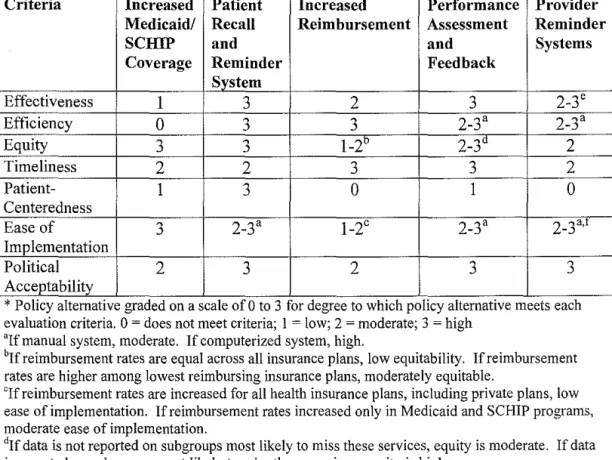
Each policy alternative will be evaluated based on the following evaluation criteria: effectiveness, efficiency, equity, timeliness, patient-centeredness, ease of implementation, and political acceptability. Five of the criteria, effectiveness, efficiency, equity, timeliness, and patient-centeredness are health care goals outlined by the Institute of Medicine (IOM). The IOM is a non-governmental organization created as part of the National Academy of Sciences to provide scientific, evidence-based advice on national health issues to policymakers, health professionals, and the public. 55 The IOM recommends that all health care delivery
attempt to provide preventive health services that are recommended by the AAP, Bright Futures, AAFP, USPSTF, and CDC, and that are therefore unlikely to cause lllJury.
Effectiveness
An effective policy ensures that health care services based on scientific knowledge are provided to all those who could benefit and are not provided to those who are unlikely to benefit. 56 In this analysis, an effective policy will ensure
that all U.S. children 0-5 years old receive recommended preventive health services. The effectiveness of a policy will be based on the proportion of children 0-5 years old who receive recommended preventive health services after policy implementation; ideally, 100% of children 0-5 years old will receive
recommended preventive health services.
Efficiency
Equity
An equitable policy provides health care that does not vary in quality based on personal characteristics including gender, ethnicity, geographic location, or socioeconomic status. 56 In this analysis, an equitable policy will ensure that all
groups of children are equally likely to receive recommended preventive health services; in other words, delivery of such services will not vary based on patient
characteristics including gender, race/ethnicity, geographic location, or
socioeconomic status. The equity of a policy will be based on the variation in delivery rates among subgroups of children after policy implementation. Ideally,
all patient subgroups will be equally likely to receive recommended preventive health services.
Timeliness
A timely policy provides health care in a marmer that reduces waits and harmful delays for those who receive and those who provide health care. 56 In this analysis,
a timely policy will ensure that patients receive preventive health services at the appropriate time for the child, without substantial waiting times for preventive
health care appointments. The timeliness of the policy will be based on the
proportion of children who receive recommended preventive health services later
than the recommended age of delivery and the average waiting time for preventive health care appointments. Ideally, all children 0-5 years old will
Patient-centeredness
A patient-centered policy provides health care that is respectful of and responsive to the needs, preferences, and values of the patient and that ensures that all clinical decisions are guided by patient values. 56 In this analysis, a
patient-centered policy will ensure that parents value and support the delivery of preventive health services for their children; parents are the target of a patient-centered policy because infants and young children are not cognitively able to
make medical decisions about preventive health services for themselves. The patient-centeredness of a policy will be based on the degree to which parents are
involved in the decision-making process about preventive health services delivery and the degree to which the policy elicits parental support of preventive health
services delivery. Ideally, a policy would lead all parents of children 0-5 years old to strongly support the delivery of all recommended preventive health services
for their children.
Ease oflmplementation
A policy with few organizational, administrative, and legal barriers to
implementation will be easier to put into practice. In this analysis, a policy that is
easy to implement will require minimal organizational and administrative changes
and will face minimal legal barriers to implementation. The ease of
implementation of a policy will be based on the extent to which organizational,
Political Acceptability
A policy that is widely accepted and supported by constituents, policy
stakeholders, and politicians has a high level of political acceptability. In this
analysis, a policy that has high political acceptability is one that is strongly supported by constituents, policy stakeholders, and politicians. The political
acceptability of a policy will be based on the expected reaction of constituents, policy stakeholders, and politicians and the relative power of those who oppose
and support the policy.
Policy Alternatives
Public health professionals, health care professionals, researchers, and policymakers have studied several different policy alternatives that could be used
to increase the delivery of preventive health services. 57-59 These policy
alternatives generally fall into two categories: patient-based policy alternatives
and provider-based policy alternatives. Patient-based policy alternatives focus on increasing patient demand for preventive health services; provider-based policy
alternatives focus on increasing the supply of preventive health services by health
care providers. Patient-based policy alternatives include patient reminder and recall systems, patient education, patient incentives and penalties, reduced
out-of-pocket costs, and increased access to health care settings. Provider-based policy
alternatives include provider reminder and recall systems such as flowsheets, chart stickers, or computerized systems, performance assessment and feedback,
increased provider reimbursement for preventive health services, and the use of non-physicians such as nurses or clinic staff to provide services. Finally,
multifaceted approaches using a combination of strategies can be used.
In order to determine which policy alternatives to assess, I searched the MEDLINE database and the Cochrane Library to identify studies relevant to the policy alternatives outlined above. Using this preliminary literature review, I
identified policy alternatives that were most likely to meet the evaluation criteria and the policy goal of ensuring that all U.S. children 0-5 years old receive
recommended preventive health services. Five policy alternatives emerged as the best able to meet the evaluation criteria and policy goal; these included two
patient-based policy alternatives and three provider-based policy alternatives.
Patient-based policy alternatives include reduced out-of-pocket costs for preventive health services through increased Medicaid/State Children's Health
Insurance Program (SCHIP) coverage of uninsured children and increased use of patient reminder and recall systems. Provider-based policy alternatives include
increased reimbursement for preventive health services, use of performance assessment and feedback, and use of reminder systems for health care providers.
Literature Review
Search Strategy
I conducted a literature review to identify articles relevant to the five policy alternatives using the MEDLINE database and the Cochrane Library. I used Medical Subject Headings (MeSH) as search terms for the MEDLINE database
and key words for the Cochrane Library. The electronic search was limited to "human" and "English language" and included sources from January 1, 1990 to
July 1, 2006. I also manually searched the reference lists of pertinent articles. I conducted a series of four searches to identify articles relevant to each
policy alternative. To examine the policy alternative of increased Medicaid and SCHIP coverage, I used combinations of the MeSH terms "Infant," "Child,
Preschool," "Preventive Health Services," "Medically Uninsured," and
"Medicaid." To examine the policy alternative of recall and reminder systems for
patients and reminder systems for physicians, I used combinations of the MeSH terms "Reminder Systems," "Delivery of Health Care/organization and
administration," "Primary Health Care/organization and administration," "Preventive Health Services," "Preventive Health Services/organization and
administration," "Child," "Child, Preschool," "Infant," and "Medical Records." To examine the policy alternative of increased reimbursement for preventive
health services, I used combinations of the MeSH terms "Preventive Health Services," "Reimbursement Incentives," "Insurance, Health, Reimbursement,"
MeSH terms "Preventive Health Services," "Feedback," "Child, Preschool,"
"Infant," "Physician's Practice Patterns," and "Physician Incentive Plans." I also searched the Cochrane Library for relevant articles using the key words
"Preventive Health," "Recall and Reminder," "Provider Incentives," and "Health
Insurance.''
Inclusion Criteria
I included randomized controlled trials, non-randomized controlled trials,
observational studies, meta-analyses, and systematic reviews in the literature
review. To examine the policy alternative of increased Medicaid and SCHIP
coverage, I reviewed studies that examined whether having insurance increased the receipt of preventive health services among children 0-5 years old, compared
to having no insurance. To examine the policy alternative of recall and reminder systems for patients and reminder systems for physicians, I reviewed studies that
examined whether the use of reminder and recall systems increased the receipt of
preventive health services among children 0-5 years old compared to no system. I
also reviewed studies that examined whether the use of physician reminders increased the delivery of preventive health services to children 0-5 years old
among health care providers that care for children, compared to no system. To examine the policy alternative of increased reimbursement for preventive health
services, I reviewed studies that examined whether increased reimbursement for
compared to no increase in reimbursement. To examine the policy alternative of performance assessment and feedback, I reviewed studies that examined whether assessment and feedback of rates of delivery of preventive health services
increased delivery of such services among health care providers that care for children, compared to no assessment and feedback.
Evaluation of Policy Alternatives
Increased Medicaid/SCHIP Coverage for Uninsured Children
Financial barriers to health care due to lack of insurance prevent some infants and young children from receiving recommended preventive health services. Emollment in a health insurance plan could decrease these financial barriers and increase access to comprehensive health care services, including preventive health services for children. Medicaid and/or SCHIP expansion could be used to emoll children who are currently uninsured in affordable health insurance plans.
with insurance, children who are uninsured for part or all of the year are more likely to report delayed care, urunet need for medical care, unfilled prescriptions, lack of a usual place for care, no well-child visits, and no visits to doctors' offices over the past year61·63·65 In addition, studies examining changes in the use of
health care services among children after emollment in health insurance plans have confirmed that emollment increases access to and utilization of health care services66-67 A study comparing access and use of health care services among
more than 1,000 children one year before and one year after emollment in health
insurance plans found a substantial decrease in the number of children reporting an unmet or delayed health care need (56.9% vs. 16.1%, p<0.005) and an increase
in the number of children with a physician visit in the past six months (59.2% vs.
63.9%, p<0.05).67 Use of preventive services specifically also increases after emollment in health insurance. A study comparing more than 1,500 children emolled one year before and one year after emollment in health insurance found a significant increase in the utilization of preventive care, including higher
immunization rates (71% vs. 76%, p<O.OOl), higher lead screening rates (13% vs.
22%, p<O.OOl), and higher vision screening rates (29% vs. 40%, p=0.001)66
The effectiveness of this policy is limited for four reasons. First, eligibility for Medicaid and/or SCHIP does not guarantee emollment in these
insurance programs. Limited outreach and a complex emollment process can decrease emollment in public insurance programs, limiting the effect of program
health care provider shortages, and language barriers are a few of the many possible non-financial barriers to health care services, including preventive health
services, which persist after enrollment in health insurance. Third, preventive health services delivery is not ideal among children with health insurance. For example, although only 10.1% of children under 6 years old report being
uninsured for part or all of the past year, an estimated 80% are not properly screened for lead, 60% are not properly screened for TB, 64% are not properly screened for visual problems, 80-90% are not properly counseled to prevent injury,
and 25% do not have up-to-date imrnunizations.12.18.21·32.35•69 Clearly, lack of
insurance is only one part of the problem of poor preventive health services
delivery among infants and young children. As a result, even if every child 0-5
years old was insured, the rate of delivery of recommended preventive health
services would be unlikely to substantially improve. Finally, only approximately I 0.1% of children less than 6 years old are uninsured. 60 As a result, even if this
policy alternative effectively increases the delivery of preventive health services
among children who are currently uninsured, the majority of children will remain
unaffected. Overall, the effectiveness of Medicaid and/or SCRIP expansion is
low.
Efficiency: Medicaid and/or SCRIP expansion is not an efficient way to increase the delivery of preventive health services for infants and young children. Using
offered by Medicaid and SCHIP programs. Although access to comprehensive health care services may be desirable for an infant or child, this is not the primary purpose of this policy; this policy is focused specifically on the delivery of preventive health services.
Estimated cost per child enrolled in Medicaid and SCHIP offers some insight into the cost per additional child receiving preventive health services using this policy alternative. Annual SCHIP expenditure per child enrolled is estimated at $878 (2000 dollars), and annual Medicaid expenditure per child enrolled is estimated at $1,100 (1996 dollars).70-71 However, the cost per additional child
receiving recommended preventive health services is likely much higher than these estimates. To begin with, only a small fraction of each dollar spent on this policy alternative will actually be spent on the delivery of preventive health services; most of the money will be spent on the provision of other health care services. In addition, not every child enrolled in an insurance plan will receive preventive health services. Although insurance coverage increases the delivery of preventive health services, many insured children remain without such services.
the disparity in receipt of preventive health services among these groups.
Differences in preventive health services delivery among subgroups of children will not be entirely eliminated, given that these groups are also more likely to face non-financial barriers to preventive health care; however, implementation of this policy will minimize variations in delivery among subgroups of children and is therefore an equitable policy65
Timeliness: Increased Medicaid and/or SCHIP coverage of uninsured children will moderately improve the timeliness of health care delivery. This policy
alternative will likely reduce delays in receipt of health care, including preventive
health services, among uninsured children whose families cannot afford health
care services; with health insurance available to pay for health care services, these families will be more likely to obtain health care services for their children.
However, this policy alternative is unlikely to substantially reduce waiting time and delays for care. To begin with, many health care providers are unwilling to
provide health care services to children enrolled in Medicaid or SCHIP due to low
financial reimbursement and the administrative burden of these programs73 As a
result, even after children are enrolled in these programs, they may face delays in
care and long waiting times for appointments. In addition, this policy is unlikely to eliminate non-financial barriers to preventive health services due to lack of
Patient-centeredness: Families value insurance for their children and would generally prefer to have their children emolled in an insurance plan. Surveys of families with uninsured children indicate only 3.1% offamilies choose not to insure their children because they believe they do not need it; the majority of
parents do not insure their children because it is too expensive65 In addition, parents whose children have health insurance are more likely to be satisfied with
the health care their children receive.65 However, the policy does not increase parental involvement in the decision-making process about preventive health
services delivery or specifically elicit parental support of such services through
parental education or other means. Overall, although this policy alternative does
reflect parental values and preferences surrounding health insurance in general, it does not address parental values and preferences about preventive health services
specifically; as a result, its patient-centeredness is low.
Ease oflmplementation: The ease of implementation ofthis policy alternative is high. Medicaid and/or SCHIP programs already exist in every state in the United States; as a result, expansion of these programs will not require the creation of a new organizational or administrative structure. In addition, the formation of the
SCHIP program and a long history of Medicaid expansions have set a precedent
for the organizational, administrative, and legal changes necessary for policy implementation. Although variations in Medicaid and SCHIP programs from
experience with such expansions in the past make the ease of implementation of expansions high.
Political Acceptability: The political acceptability of this policy alternative is moderate. Given the special vulnerability and dependence of children, efforts to provide health care to children are generally supported by constituents and therefore government officials. This support can be seen historically in the
creation of the Medicaid program in 1965 and the SCRIP program in 1997, which both provide health insurance coverage to low-income children. This support can also be seen in current efforts throughout the U.S. to ensure tmiversal coverage of children. For example, in 2005, Illinois passed legislation creating the All Kids Health Insurance Program, a program designed to provide health insurance to all Illinois children <18 years of age who are not covered by their parents' insurance or another state-sponsored program74 In 2005, Washington passed legislation to adopt the goal of insuring all children by 201074 In 2006, West Virginia
expanded SCRIP eligibility to 300% of the FPL; this plan is expected to leave only about 800 children in the state without health insurance coverage74
providing universal coverage for children, current statewide efforts demonstrate that there is political support for programs that expand coverage.
Despite political support for expanded coverage of children in many states, the political acceptability of such programs remains limited by budget concerns. A survey of 50 states and D.C. conducted in 2003-2004 found that budget
concerns led several states to cut spending on Medicaid and SCHIP programs by decreasing enrollment in these programs75 Six states stopped guaranteeing 12
months of continuous coverage, 4 states increased documentation requirements needed to verity family income, 16 states increased or implemented health
insurance premiums, 7 states implemented SCHIP enrollment freezes, 6 states lowered income eligibility levels, 12 states imposed stricter penalties for families
who fail to pay health insurance premiums, and almost all states decreased
outreach efforts. Only 6 states reported expanding eligibility for children.
Increased federal funding of state Medicaid programs over the past 3 years has relieved some budgetary pressure on states; however, many states remain hesitant
to increase health care spending in the current fiscal environment75
Overall, the political acceptability of Medicaid and/ or SCHIP expansion is
moderate in most states. Given the current fiscal environment, health care payers, government officials, and the public are unlikely to support substantial increases
in health care spending; however, there is clearly an interest in maintaining and even expanding insurance coverage for children among these stakeholders. If a
reasonable funding source could be proposed to support this expansion, political
Use of Patient Reminder and Recall Systems
Patient reminder and recall systems are used to increase the rate of preventive health services delivery by reminding patients when these services are needed. Reminder notices are typically sent one week before a preventive health service is needed or an appointment for a preventive health service has been made.
Recall notices are typically sent 1 week, 2 weeks, and one month after a
preventive health service is due or an appointment for a preventive health service
has been missed76 Reminder and recall notices can be via letter, postcard, telephone, a computerized telephone autodial system, or a combination of these
methods.77 Historically, reminder and recall systems have been used specifically
to increase immunization rates. However, in this policy alternative, reminder and
recall systems would be used to increase the delivery of all types of recommended pediatric preventive health services.
Effectiveness: Several high-quality systematic reviews of the evidence have shown that reminder and recall systems effectively increase the proportion of children receiving preventive health services.57.77•78 Among 31 studies examining
the effectiveness of reminder and recall systems, use of reminder and recall
systems was found to increase the percentage of children who received recommended immunizations by 5-30 percentage points57 Three high-quality
systematic reviews that each evaluated 30-40 studies found that compared to children without exposure to reminder and recall systems, children whose
. . . 57 7?-?S 0 . . fth 'd fi d th al h h
nnmumzatwns. · ne systematic rev1ew o e ev1 ence oun at t oug telephone reminder and recall systems were somewhat more effective, all types of
reminder and recall notices effectively increased the receipt of preventive health services. 78 In addition, reminder and recall systems were found to be effective in a variety of health care settings. 78
Although reminder and recall systems have mainly focused in increasing immunization rates, these systems have also been shown to increase the rate of
delivery of other preventive health services. For example, a study of reminder and recall systems among more than 3,000 children 0-12 months old found that
the use of such systems increased the average number of preventive health visits over 18 months (0.44 visit increase per child, p<0.001) and increased the average
number oflead screenings (0.12 screening increase per child, p<0.05).79 These systems have also been shown to increase the rate of cervical cancer screening
among adults. 80
The effectiveness of this policy alternative is slightly limited because it
will only reach children who are associated with a health care provider. However,
in 2004, a nationally-representative survey found that only 2.6% of children under
5 years old have no usual place of health care.81 As a result, the vast majority of children 0-5 years old would benefit from this policy alternative.
Efficiency: Although the specific costs of reminder and recall systems vary depending on the type of notice used, these systems are generally thought to be
than one dollar, particularly for short-term studies using mailed reminders.77 The estimated cost per additional preventive health service provided generally ranges from $3 to $46, with a median cost of nine dollars 57 However, the cost per additional preventive health service provided is likely even lower than these estimates, because these estimates only consider the cost per additional
vaccination. Because reminder and recall systems would also increase the
delivery of other preventive health services, the cost per additional recommended preventive health service delivered would likely be much lower.
Several factors influence the cost of these systems, including the type of notice used, the number of reminders/recalls sent, the degree of personalization of
each reminder/recall, the level of computerization of the health care practice, and
the number of patients requiring the service. However, it is important to realize
that many of the low-cost options are still effective, and that the majority of costs
. 82
are one-time set up costs.
Equity: This policy alternative is highly equitable. Although recall and reminder systems will not affect the delivery of preventive health services to infants and
young children who are not associated with a health care provider, only 2.6% of
children under 5 years old lack a usual source of health care81 As a result, the
majority of children will benefit from this policy alternative. Among infants and
young children who are associated with a health care provider, this policy alternative will decrease variation in delivery rates of preventive health services
who are not up-to-date on recommended preventive health services, the reminder and recall system intensifies the effort to deliver these services to children most likely to miss them; as a result, this system decreases the variation in preventive health services delivery among patients who are associated with a health care
provider but remain at higher risk of not receiving preventive health services. Use of reminder and recall systems has been shown to reduce disparities in
immunization rates between inner-city and suburban children and between white and minority children83 Similar results are likely to be seen when these systems are used for other preventive health services.
Timeliness: This policy will help provide health care in a timely manner. The nature of reminder and recall systems is that they increase the number of children
who receive preventive health services at the appropriate time. In addition, health care providers using these systems will be better able to predict demand for
preventive health services and arrange their clinic schedules accordingly; this may decrease waiting times for appointments. However, this policy alternative will be
unable to eliminate non-financial barriers to preventive health services such as
lack of transportation, language barriers, and a general health care provider
shortage.
Patient-centeredness: This policy provides health care that is patient-centered. Reminder and recall systems provide patients and their families with information
families are then able to decide whether or not to pursue these services. In
addition, reminder and recall systems emphasize the importance of preventive health services for children; as a result, parents may value these services more. Reminder and recall notices based on the "health belief model" are especially likely to increase the value of preventive services for parents. Using this model, reminder and recall notices are designed to show parents that the disease being
prevented by this action is severe, that their children are susceptible to it, and that
the preventive health service being recommended will have benefits that will outweigh any associated costs. 84 By increasing parental involvement in the
decision to pursue preventive health services for their children, and by educating
parents to increase their support of such services, this policy alternative provides health care that is patient -centered. Strong parental support of reminder and recall
systems has been documented. A survey of parents in approximately 200
households involved in a telephone reminder and recall system found that 85.5% of parents reported that they were thankful or pleased to have the telephone call,
and 95.8% thought the message would be helpful as a reminder for other parents
to get their children vaccinated. 82
Ease oflmplementation: Although the ease of implementation of this program varies depending on the type of notice used, reminder and recall systems
generally do not require extensive organizational and administrative changes. Ease of implementation is high for several reasons. To begin with, systems are