The Need for Prenatal Programs in Areas of Low Socioeconomic
Status
By
Carrie Ceresa, Pharm D.
A Master's Paper submitted to the faculty of the University ofNorth Carolina at Chapel Hill
In partial fulfilhnent of the requirements for the degree of Master of Public Health in
the Public Health Leadership Program.
Chapel Hill
Introduction
Adverse birth outcomes are a continual issue throughout the United States despite current
research and major medical advances over the past few decades. One of the target goals set forth
by Healthy People 2010 is for 90% of pregnant women to begin receiving prenatal care in the
first trimester. According to Healthy People 2010, prenatal care includes three major areas
which are: assessment of risk, treatment for current medical condition and education.
Approximately three-quarters of all pregnant women receive some type of prenatal care at some
point during their pregnancy. This number varies greatly over different levels of socioeconomic
status (SES). Research suggests that pregnant women in areas of low SES are more likely to
receive prenatal care late in pregnancy or not at all (Sunil T et al., 2008). Receiving little or no
prenatal care throughout pregnancy can result in poor birth outcomes, pregnancy associated
complications and infant mortality. According to the CDC, it is projected that approximately
one-half of all pregnancy associated dealths could have been prevented with early prenatal care.
These adverse events include birth defects, stillbirths, pre-term birth, neonatal and post-neonatal
deal, SGA (small-gestational age), among many others. Recent studies have shown that the
introduction of a prenatal program can greatly reduce these adverse birth events in areas of low
SES.
The History of Prenatal Care
The implementation of the first prenatal care program can be dated back to the 1800's
when Elizabeth Lowell Putnam initiated one of the first prenatal programs that has been recorded
at the Boston Lying-In Hospital. Pregnant women were encouraged to seek prenatal care as
early as possible in pregnancy. This program consisted of pregnant women being visited by a
Putnam was known as a "pioneer" of prenatal care through her work with the executive
committee of the Massachusetts Milk Consumer's Association, the Department of Public Health,
the Committee on Prenatal and Obstetrical Care of the Women's Municipal League of Boston
and the American Association for the Study and Prevention of Infant Mortality
(www.oasis.lib.harvard.edu/oasis/deliver/-sch00070 accessed February 2009). It is possible that
the infant death of one of her children is what led her on a lifetime crusade to educate the public
on the importance of prenatal and infant health care. Likewise, a Scottish physician by the name
of J. W. Ballantyne, noted in the earlier 1900's that while much care was given to women and
infants during labor little care was given to prevent birth defects or infant mortality prior to
labor. Ballantyne also noted that hazards such as alcohol, nicotine and lead and diseases such as
syphilis and tuberculosis could cause fetal harm (Moos, 2006). Moreover, in New York City in
1907 under the care of a physician by the name of Josephine Baker prenatal care programs were
initiated for pregnant women beginning in their seventh month. By 1920, the Maternity Center
' · 0
• Association (MCA) initiated that prenatal care begin earlier in pregnancy than the seventh
month. At this time nurses began seeing pregnant women in their homes every two weeks until
the seventh month and then weekly until birth. These nursing visits included education and
blood pressure and urine screening. By the end of the 1920's prenatal care had evolved to
include pregnant women being seen by an obstetrician in their office on the following schedule:
"1st obstetric visit by 16 weeks, with subsequent visits at 24 weeks, every 2 weeks starting at 28
weeks and weekly beginning at 36 weeks." (Moos, 2006) This obstetrics schedule is still in use
today at many physicians offices in the United States. One aspect that has changed though is that
·;'i'.
include additional screenings and education that have evolved through research and advanced
technology.
Adverse Birth Outcomes Associated with Lack of Prenatal Care in Areas of Low SES
Lack of prenatal care is more prevalent in areas of low SES and has been associated with
adverse birth events such as neural tube defects, orafacial and heart defects, stillbirths, pre-term
births, neonatal and post neonatal death, SGA (small gestational age), fetal alcohol syndrome and
increased infant mortality and higher incidence of maternal transfer of infectious diseases such as
HIV. Areas of low SES are often characterized by lower levels of maternal and paternal
education, occupation and income. The pregnant women in these areas are more likely to be
single, under the age of 20 and most have not completed high school (Luo, Wilkins & Kramer,
2006).
In a birth cohort-based study using statistics from a Canadian database that record live
births, stillbirths and infant death from 1991 to 2000 maternal education and poor neighborhoods
were associated with adverse birth outcomes. Pre-term birth is associated with an infant being
born before 37 completed weeks of pregnancy. SGA or small for gestational age can be
characterized by weighing in at less than in the lO'h percentile. Stillbirth and neonatal death
occur within the first 27 days after birth and post neonatal death occurs between 28 and 364 days
after birth. The results of this trial demonstrated that women with lower levels of education and
those who lived in poor areas were more likely to have higher rates of stillbirth, pre-term labor,
.•
~
· SGA, neonatal death and post neonatal death than women who lived in richer areas and hadhigher education levels (Lou, Wilkins & Kramer, 2006).
The National Birth Defects Prevention Study (NBDPS) began in 1997 and is a large,
birth defects using a variety of SES factors. Data was collected through various surveillance
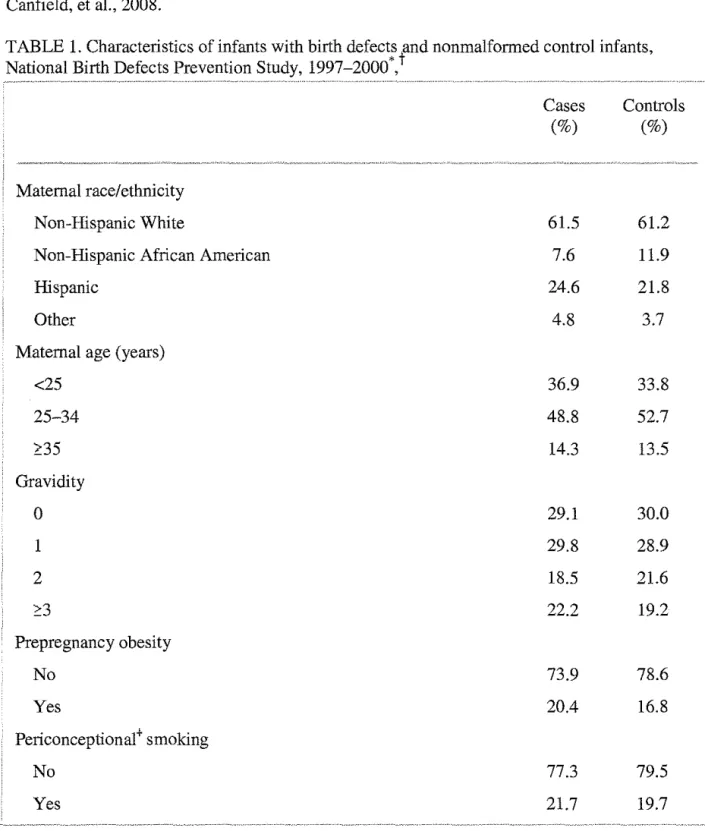
systems put in place in a variety of states across the US. The following table demonstrates
maternal characteristics evaluated in this study and has been adapted from: Yang, Carmichael,
Canfield, et al., 2008.
TABLE 1. Characteristics of infants with birth defects lnd nonmalformed control infants, • ~ National Birth Defects Prevention Study, 1997-2000*,
Maternal race/ethnicity
Non-Hispanic White
Non-Hispanic African American
Hispanic
Other
Maternal age (years)
<25 25-34 !:35 Gravidity 0 1 2 ::::3 Prepregnancy obesity No Yes Periconceptional+ smoking No Yes
Cases Controls
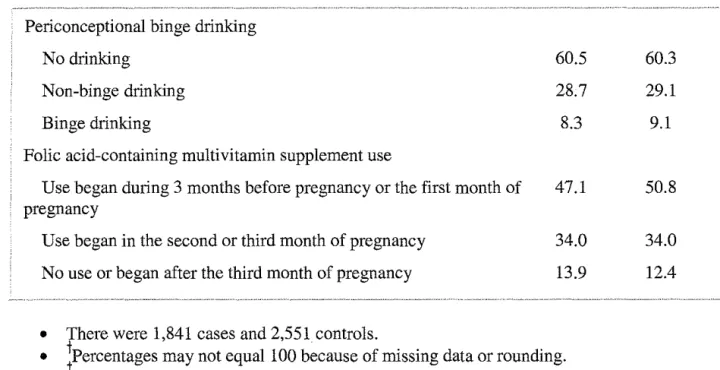
Periconceptional binge drinking
No drinking
Non-binge drinking
Binge drinking
Folic acid-containing multivitamin supplement use
Use began during 3 months before pregnancy or the first month of pregnancy
Use began in the second or third month of pregnancy
No use or began after the third month of pregnancy
• There were 1,841 cases and 2,551 controls.
60.5
28.7
8.3
47.1
34.0
13.9
60.3
29.1
9.1
50.8
34.0
12.4
• !Percentages may not equal 100 because of missing data or rounding.
• -The "periconceptional period" refers to the month before conception and the first 3 months after conception.
Table 1 above demonstrates that the largest differences between mothers of birth defect cases
versus controls shows that case control mothers were between the ages of 25 and 34, were least
likely to be African American, more likely to not be obese and used folic acid supplements
during pregnancy month one and before. Control infants were live born infants randomly
selected by use of hospital birth certificates who did not have major birth defects. An association
was indicated between the father's occupation and spina bifida. Father's who fell under the
operator/laborer category were shown to have an increased risk to have a child with spina bifida.
A higher risk of anencephaly was associated with a lower level of education as opposed to a
higher level of education. Also shown was a decreased risk of anencephaly with a higher
household income. An association was not shown between cleft lip and SES. The greatest
evidence for an association between SES and birth defects was shown with specific neural tube
defects when SES was measured by occupation, education and income but revealed inconsistent
.
\'c<
.
.
\'c•
.
.
:,',-.
.
,-,
In a study conducted across a 28-county region in Central Pennsylvania in 2002
socioeconomic status, health care and health status characteristics were examined in order to
look for a relationship of pre-term birth and low birth weight compared to females living in
urban areas and a range of rural areas (Hillemeier, Weisman & Chase, eta!. 2007). Examining
population data from the 2000 Census, investigators collected birth records for approximately
11,546 singleton first births. According to the U.S. Census Bureau, the poverty range in those
counties evaluated at that time measured between 6.6% to 18.8% with a median household
income from approximately $30,000 to $47,000. According to Hillemeier, Weisman and Chase
eta!., approximately 20% of births in the U.S. occur in a rurally populated area and the outcomes
in these areas are less publicized. In this article it states that women living in more rural areas
tend to have higher rates of poverty, lower education and limited health care access, therefore
expecting an outcome of higher risks of preterm labor and low birth weights than in urban
populated areas. The following characteristics were used during the data analysis of this study:
age group, education, marital status, tobacco use, history of chronic diseases such as
hypertension and diabetes, amount and type of prenatal care, use of prenatal care available, zip
code in order to analyze how rural the population and access to health care, percentage of high
school graduates in zip code, percentage of people below poverty level in different zip codes and
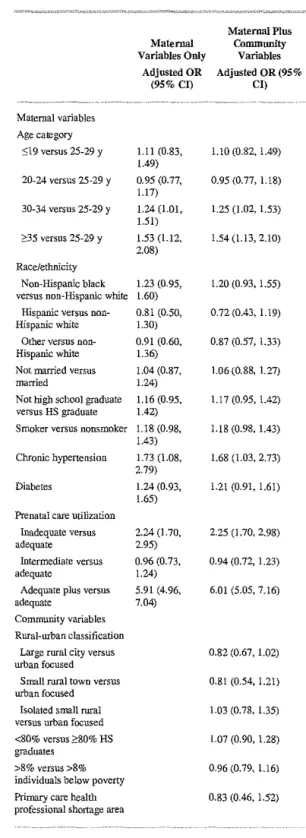
birth outcomes. The following tables 2 and 3 which have been adapted from Hillemeier,
Weisman and Chase et al. 2008, demonstrate the results of this study as broken down by
,
-~~--,i-J% '·<· .. ·
. ~~
'
-'.:~,.;.
·;:···:--~·
Table 2. Multiple Logistic Regression Results Using Generalized Estimating Equations to Model Low Birth weight Risk, Singleton First Births, 20022
, ... "·-~-~-.~ ... , .. ···'"···'"'"""~~"'"~
Maternal Plus
Maternal Community
Variables Only Variables Adjusted OR Adjusted OR (95%
(95% CI) en
Maternal variables Age category
::;19 versus 25-29 y 1.07 (0.82, 1.08 (0.82, 1.41) 1.40)
20-24 versus 25-29 y 0.95 (0.78, 0.95 (0.79, 1.16) 1.15)
30-34 versus 25-29 y 1.25 (1.01, 1.25 (1.00, 1.55) 1.55)
2:35 versus 25-29 y 1.37 (1.01, 1.36 (LOO, 1.85) 1.87)
Race/ethnicity
Non-Hispanic black versus 1.65 (1.26, 1.51 (1.14, 2.02) non-Hispanic white 2.17)
Hispanic versus non- 1.09 (0.80, 1.01 (0.74, 1.37)
Hispanic white 1.48)
Other versus non-Hispanic 1.43 (0.99, 1.35 (0.93, 1.96)
white 2.05)
Not married versus married 1.30 (1.09, 1.30 (1.09, 1.56) 1.55)
Not high school graduate 1.08 (0.87, 1.08 (0.87, 1.34) versus HS graduate 1.33)
Smoker versus nonsmoker 1.84 (1.54, 1.83 (1.53, 2.20) 2.21)
Chronic hypertension 1.76 (1.06, 1.79 (1.07, 3.00)
versus no chronic 2.94)
hypertension
Diabetes versus no diabetes 0.79 (0.54, 0.78 (0.54, 1.15) 1.16)
Prenatal care utilization
Inadequate versus 1.78 (1.37, 1.72 (1.33, 2.24)
adequate 2.30)
Intermediate versus 0.83 (0.62, 0.80 (0.60, 1.07)
adequate 1.11)
Adequate plus versus 3.57 (2.99, 3.62 (3.03, 4.33)
adequate 4.27)
Community variables Rural-urban classification
Large rural city versus 0.73 (0.60, 0.89)
urban focused
Small rural town versus 0.96(0.70, 1.31)
urban focused
Isolated small rural versus 0.75 (0.55, 1.03) urban focused
::;80% versus >80% HS 1.09 (0.94, 1.27)
graduates
>8% versus >8% 0.96 (0.82, 1.13)
individuals below poverty
Primary care health 1.55 (0.92, 2.61)
professional shortage area
*OR, odds ratio; CI, confidence interval; HS, high school
t N"" 11,546 births.
Table 3. Multiple Logistic Regression Results Using Generalized Estimating Equations to Model Preterm Birth Risk, Singleton First Births, 2002.2
Maternal variables Age category
::::19 versus 25-29 y
20-24 versus 25-29 y
30-34 versus 25-29 y
2:35 versus 25-29 y
Race/ethnicity Non-Hispanic black versus non-Hispanic white
Hispanic versus non-Hispanic white
Other versus non-Hispanic white Not manied versus married
Not high school graduate versus HS graduate Smoker versus nonsmoker
Chronic hypertension
Diabetes
Prenatal care utilization Inadequate versus adequate
Intermediate versus adequate
Adequate plus versus adequate
Community variables Rural-urban classification
large rural city versus urban focused
Small rural town versus urban focused
Isolated small rural versus urban focused <80% versus 2:80% HS graduates
>8% versus >8% individuals below poverty Primary care health professional shortage area
Maternal Variables Only
Adjusted OR (95% CI)
1.11 (0.83, 1.49) 0.95 (0.77, 1.17) 1.24 (1.01, 1.51) 1.53 (1.12, 2.08) 1.23 (0.95, 1.60) 0.81 (0.50, 1.30) 0.91 (0.60, 1.36) 1.04 (0.87, 1.24) 1.16 (0.95, 1.42)
1.18 (0.98, 1.43) 1.73 (1.08, 2.79) 1.24 (0.93, 1.65) 2.24 (1.70, 2.95) 0.96 (0.73, 1.24) 5.91 (4.96, 7.04)
Maternal Plus Community
Variables Adjusted OR (95%
Cl)
1.10 (0.82, 1.49)
0.95 (0.77, 1.18)
1.25 (1.02, 1.53)
1.54 (l.l3, 2.10)
l.20 (0.93, 1.55)
0.72 (0.43, 1.19)
0.87 (0.57' 1.33)
1.06 (0.88, 1.27)
1.17 (0.95, 1.42)
Ll8 (0.98, 1.43)
1.68 (1.03, 2.73)
1.21 (0.91, 1.61)
2.25 (1.70, 2.98)
0.94 (0.72, 1.23)
6.01 (5.05, 7.16)
0.82 (0.67, 1.02)
0.81 (0.54, 1.21)
1.03 (0. 78, 1.35)
1.07 (0.90, 1.28)
0.96 (0.79, 1.16)
0.83 (0.46, 1.52)
* OR, odds ratio; Cl, confidence interval; HS, high schooL
As demonstrated in the above tables the results of this study indicate that a rural or urban
location of a birth mother can possibly interpret a low birth weight or pre-term birth
outcome. This study is an important indicator that more attention is needed to add a
prenatal emphasis in rural communities with low socioeconomic status. In addition, as in
all studies there were a few limitations identified. For example, the bulk of the data
collected relied on birth records. Much of this data is actual! y self reported and does not
account for varying degrees of human interpretation. Moreover, tbe rural counties used
for data collection in this study did not include the most densely populated rural counties
in Central Pennsylvania due to the unavailability of data.
In addition to the adverse birth outcomes associated with areas of low
socioeconomic status (SES) research also shows that women with low SES and lack of
prenatal care go hand in hand. Women who fit this population characteristic are more
likely to expose their unborn child to alcohol, cigarettes, elicit drugs and are more likely
to be a victim of domestic violence. For decades smoking during pregnancy has been
documented as a contributor of adverse birth events and it is one of the most preventable
causes of adverse birth events (Brodsky, Viner-Brown, Handler, 2008). Over the past 19
years pre-natal smoking average has fallen from 18.4% to 10.2% in the United States and
approximately one-half of the individuals who smoked before getting pregnant continue
during or after delivery (Adams, Melvin, Raskind-Hood, 2008). Some of the smoking
determinants that have been examined include level of education, private insurance
versus Medicaid and access to prenatal care. The majority of pregnant women in areas of
low SES are either on Medicaid or use free clinics for health access. The type of health
•
•
Medicaid have access to is very different (Adams, Melvin, Raskind-Hood, et al. 2008).
Many women who have no insurance or Medicaid often seek health care from emergency
rooms or free clinics. These types of health care settings do not offer much in terms of
pre-natal care. fu a recent study examining the behaviors and life-styles of smoking
pregnant women one of the conclusions reached was that women who smoked while
pregnant were more likely to engage in hazardous behavior, find themselves in abusive
relationships and more likely to engage in other unhealthy habits other than smoking
(Adams, Melvin, Raskind-Hood, et al. 2008).
Prenatal Programs
The Centering Healthcare fustitute is a non-profit organization that developed a
prenatal program in the early 90s called CenteringPregnancy®. "The mission of the
Centering Healthcare Institute is to change the paradigm of health services to a group
care model in order to improve the overall health outcomes of mothers, babies, new
families and all individuals across the life cycle" (www.centeringpregnancy.com
accessed February 2009). The CenteringPregnancy Program is an alternative approach to
traditional prenatal care. Patients are seen for their initial prenatal visit in their clinician's
office or clinic. The remainder of their prenatal care occurs in a group setting consisting
of approximately 12 other women give or take. The group setting is initiated between the
12'h and 16th week of pregnancy and the groups continue to meet monthly in the
beginning and bi-weekly toward the end of pregnancy. The group activities include chart
recording which encompass checking weight, blood pressure and gestational age. In
addition, the practitioner checks the babies heart beat, uterus size and the group engages
and parenting. Self assessment sheets are then completed by each group member at the
conclusion of every class. All handouts, worksheets and teaching aids are available in
Spanish and English. The education topics touched on throughout the groups include
exercise, nutrition, preparation for childbirth, infant care, breastfeeding, bottle feeding,
postpartum concerns, sexuality, abuse, parenting and many others
(www.centerpregnancy.com accessed February 2009). Recently a study including a
prenatal and postpartum medical chart review was completed of 110 women who were
enrolled in a CenteringPregnancy group in a public health clinic in the Midwest. Each
CenteringPregnancy group ranged from 4 to 10 members and included women who
began prior to their 18th week gestation and who agreed to be followed through the
remainder of their pregnancy. The CenteringPregnancy group in this public health clinic
was evaluated in three ways which included a medical record review, patient survey and
the accessibility of the program. Data collected from the chart review included maternal
age, infant weight at birth, weight gain during pregnancy, number of prenatal visits
during pregnancy, gestational age at birth and breastfeeding after release from the
hospital. The comparison group used in this study included 207 women who delivered at
the same University hospital as the 110 CenteringPregnancy group members. The time
period reviewed for this study was from December 2004 through October 2006. The
study participants were entirely African American and ranged in age from 14 to 38 years.
The average age of the women in the comparison group was significantly higher than the
study group. The women enrolled in the CenteringPregnancy group reported only
positive outcomes to their experiences which included their appreciation for the group
fears about pregnancy and childbirth. Also, women in the CenteringPregnancy group
reported feeling well equipped for pregnancy and childbirth and they were very grateful
of the relationship they built with their provider and the level of comfort established. The
participants also appreciated not having to spend time in a waiting room as they would
for a normal appointment with a practitioner which sometimes could be lengthy. Each
member was pleased that the scheduled group sessions always started and ended on time
unlike scheduled doctor's appointments. Table 4 below adapted from Klima, Norr,
Vonderheid, et al. 2009, displays many of the outcomes found after comparison between
the CenteringPregnancy group and the comparison group.
Table 4. Perinatal Outcomes for CenteringPregnancy and Individual Care Participants
CenteringPregnancy (n Individual Care
=
61) (n=
207)No. of prenatal visits, mean
9.7 (2.7) 8.3 (3.4) (SD)
Weight gain during pregnancy
32.2 (13.6) 28.5 (15.6) <.05 (lbs), mean (SD)
Exclusive breastfeeding at I
discharge"(%) 44.3% 31.2% <.05.
Any breastfeeding at discharge• i
(%) 59.0% i 43.6%
Independent t test for continuous variables, for percentages
Eight premature births were recorded in the CenteringPregnancy group and 23 premature
births were recorded in the comparison group. Also, the CenteringPregnancy group had
babies born at a much later gestational age than the comparison group and were
approximately 200 g heavier. In conclusion, the CenteringPregnancy group showed
CenteringPregnancy group shows great potential especially when implemented in rural
populations and areas of low SES (Klima, Norr, Vonderheid, et a!. 2009).
The Colorado Department of Public Health and Environment has launched a
program called the Healthy Baby Campaign. The goal of this program is to provide
education materials to pregnant women and health care providers regarding prenatal care.
·.:~~~~~-·
-~'. According to research conducted by the Colorado Department of Health and
Environment the state has the highest number of low birth weights on average over any
other US state. In this case low birth weight is defined as less than 5 pounds, 8 ounces or
born before 37 weeks gestation. The various factors weighed in determining low birth
rate were poor maternal weight gain, premature membrane rupture, pre-eclampsia,
smoking during pregnancy, previous pre-term birth and hydramnios/oligohydramnios
(www.cdphe.state.co.us/pp/womens/PWGDocuments.html accessed February 2009).
The educational material available through the Healthy Baby Campaign includes
. ~
nutritional information such as how much weight should be gained based on a patients
current body mass index (BMI), tools for tracking weight gain during pregnancy,
community resources and programs available such as WIC (Women, Infants and Children
Program) which is available in 125 clinics throughout Colorado, a Family Healthline
. ~
which is a statewide phone program that provides referral services to pregnant women
and the 2-1-1 network which provides information about health care access.
Additionally, the Healthy Baby Campaign offers information about smoking during
pregnancy and the risks and adverse birth outcomes associated with smoking and also a
link is provided so that a dietician can be emailed if nutritional advice is needed. Much
• < ~ •
the implementation of the Healthy Baby Campaign (www.healthy-baby.org accessed
February 2009).
The Prenatal Care Assistance Program (PCAP) is a prenatal program available
through the state of New York to women and teens who are state residents that are
pregnant and who meet particular income requirements. Patients who qualify for this
program can still participate even if they already have health insurance coverage. In
addition to the PCAP program the MOMS (Medicaid Obstetrical and Maternal Services)
program is also available in areas of New York state where PCAP health care centers are
not located. The PCAP and the MOMS program offer patients and their babies routine
medical care such as lab work, access to obstetrical specialists, hospital care during
pregnancy and delivery, pregnancy and delivery education, HIV counseling and testing,
information about the WIC program and family planning services. The PCAP and
MOMS programs also offer this health care coverage up to two months post deli very and
offer a 24 hour hotline that can refer patients to a provider in their area
(www .health.state.ny.us/nysdoh/pcap/index.htm accessed February 2009).
The Public Health Agency of Canada began a program in 1994 entitled the
Canada Prenatal Nutrition Program (CPNP) which provides long term funding for
prenatal care programs in various neighborhood organizations for women of low SES and
rural populations. The main goal of the CPNP is to reduce the number of low birth
weight infants, to improve the overall health of mother and child and to promote
breastfeeding among this population. The services provided by the CPNP include
education, food supplements, nutritional advice, support groups and specialist referrals.
access to health care and those Jiving below the poverty line. In 2002, over 44,650
pregnant women and teens participated in the CPNP. At this time 27 million dollars was
allocated directly to the programs and managed through a joint effort through the Federal
government and the Provincial/Tenitorial governments. It was found through a data
search from 1996 to 2002 that breastfeeding was initiated among 79% of the participants
in the CPNP. Throughout the years much of the programs funding has come from
donations and many of the man hours working on the programs were done so voluntarily
(www.phac-aspc.gc.ca/dca-dea/programs-mes/cpnp goals-eng.php accessed February
2009).
The state of Maryland Department of Health and Mental Hygiene has adopted a
new initiative called Babies Born Healthy which looks at all of the characteristics that
lead to adverse birth outcomes and infant mortality and ways to reduce these rates
through their broad public health imitative. The Babies Born Healthy initiative has a
strong focus on prevention and improvement of negative pregnancy outcomes. Since the
year 2000 the number of women receiving care in the first trimester has dropped
significantly. In addition, the number of preterm births has increased by 6% in that same
time frame. The Babies Born Healthy initiative supports the Maternal Child Health-WIC
project which provides family planning programs, distribution of folic acid and other
WIC services. Also, the Babies Born Healthy initiative supports the Maryland Patient
Safety Center Perinatal Collaborative. The goal of this program is to improve and
maintain the health care and safety in Maryland hospitals. Teams from each hospital are
mandated to participate in extra training events including simulated emergencies
The Centers for Diseases Control and Prevention (CDC) has a surveillance
program underway known as PRAMS (the Pregnancy Risk Assessment Monitoring
System) which collects data throughout all states. The data collected analyzes maternal
experiences prior to, throughout and following pregnancy as well as maternal attitudes
and lifestyles regarding their pregnancy. The PRAMS program was originally brought
about in 1987 when the decline of infant rnprtality rates was at a plateau but at the same
time the rates of babies born at low birth weights had not changed in decades. The data
collected by PRAMS is important because it allows communities to assess where
weaknesses lie and to establish programs based on need. State officials and the CDC are
able to monitor trends in maternal and infant health such as prenatal care, smoking during
pregnancy, unintentional pregnancy, breast-feeding rates and overall infant health as well
as adverse birth outcomes. The PRAMS database is an important tool in the field of
infant, child and maternal health. The data collection methods of PRAMS is standardized
across all states which allows for comparison within and among various states. The
PRAMS data collection occurs two ways through a telephone interview and through a
mailed survey. The steps involved in the mailed survey usually occurs 2 to 4 months
after delivery of the infant. Additionally, the surveys are broken down into 2 sections.
The first section is a standardized section that all states receive and the section consists of
state specific questions which are adapted to the needs of that particular state. General
topics addressed in the PRAMS questionnaire include history of obstetric care, use of
drugs or alcohol by the mother, history of physical abuse, contraception, economic status,
infant health status and development, history of prenatal care, mental health, injury
'
standard proposal form which must be sent to the PRAMS coordinator explaining the use
of the data. An example of use of PRAMS data includes PRAMS and breastfeeding.
Data was collected from the year 2000 to 2004 looking at 25 states that had a response
rate of at least 70% for 3 uninterrupted years. Some of the breastfeeding specific
questions asked of the survey takers included the following: Did you ever breastfeed or
give your new born baby breast milk directly after delivery by way of a pump? Are you
currently breastfeeding or giving your child pumped breast milk? How long did you
continue breastfeeding or pumping for? After data collection it was found that there was
an increase in breastfeeding initiation over the time period of data collection. On average
the initiation of breastfeeding was approximately 75.2%, Louisiana having the lowest rate
of 55.5% and Hawaii and Utah having the highest rate of 91.1 %. After 4 weeks the
average number of people. still breastfeeding had dropped to 62.6% with Louisiana falling
to 41.7% and Utah to 81.3%. This PRAMS breastfeeding data was useful to analyze
which states had the lower prevalence of breastfeeding initiation and continuation and to
choose where programs were needed the most to improve overall breastfeeding rates
(www.cdc.gov/prams/ accessed February 2009).
Through a thorough literature search it is evident how important the need for
prenatal programs are in areas of low socioeconomic status in decreasing the rates of
adverse birth events. The PRAMS database set forth by the CDC can be a useful tool in
locating areas of low SES with high adverse birth outcomes that are in need of prenatal
programs in order to reach the Health People 2010 goal of having 90% of pregnant
women receive prenatal care in the first trimester. As research has shown early prenatal
discussed earlier the CenteringPregnancy model for prenatal care has shown remarkable
progress when put in motion in areas of low SES. This group prenatal setting offered
through the CenteringPregnancy model can be useful in areas of low SES due to
convenience of scheduling and the cost effectiveness of group classes as opposed to
individual appointments. The establishment of prenatal care programs in areas of low
SES can great! y reduce the number of adverse birth outcomes which then decreases cost
of hospitalization and other types of medical care that may be needed. Early admission
into a prenatal program in pregnancy and a satisfactory number of prenatal visits has
shown to be connected with positive birth outcomes. Research has also shown that
women with health insurance are more likely to receive prenatal care which indicates a
needed for prenatal programs in areas of low SES where women do not have health
insurance or access to health care. Adverse birth outcomes are a growing issue despite
the knowledge associated with receiving prenatal care and adverse birth events. The
establishment of prenatal programs in areas of low SES are a way to combat these
References
A Healthy Baby is Worth the Weight. Community Resources and Programs. Available at: http:/lwww.healthy-baby.org/. Accessed February 9, 2009.
Adams E, Melvin C, Raskind-Hood C. Sociodemographic, insurance, and risk profiles of maternal smokers post the 1990: How can we reach them? Nicotine & Tobacco
Research. 2008;7:1121-1129.
Brodsky J, Viner-Brown S, Handler A. Changes in Maternal Cigarette Smoking Among WIC Participants in Rhode Island. Matern Child Health 1 [Epub ahead of print]. 2008. Accessed February 2, 2009.
Centering Healthcare Institute (CID). CenteringPregnancy Models for Group Health Care. Available at: www.centeringpregnancy.cornl. Accessed February 18,2009.
Centers for Disease Control and Prevention (CDC). Pregnancy Risk Assessment Monitoring System (PRAMS). Available at: http://www.cdc.gov/prams/. Accessed February 16, 2009.
Cubbin C, Marchi K, Lin M, et al. Is Neighborhood Deprivation Independently Associated with Maternal and Infant Health? Evidence from Florida and Washington. Matern Child Health 1. 2008;12:61-74.
Department of Health New York State. A healthy baby starts with a healthy pregnancy. Available at: http://www.health.state.ny.us/nysdohlpcap/index.htm. Accessed February 9, 2009.
Eades S, Read A, Stanley F, et al. Bibbulung Gnarneep ('solid kid'): Causal pathways to poor birth outcomes in an urban Aboriginal birth cohort. 1 Paediatr Child Health.
2008;44(6):342-6.
Garcia-Algar 0, Kulaga V, Gareri J, et al. Alanning Prevalence of Fetal Alcohol Exposure in a Mediterranean City. The Drug Manit. 2008;30(2):249-54.
Genereux M, Auger N, Goneau M, et al. Neighborhood socioeconomic status, maternal education and adverse birth outcomes among mothers living near highways. 1 Epidemiol Community Health. 2009;62:695-700.
Goy J, Dodds L, Rosenberg M, et al. Health-risk behaviors: examining social disparities in the occurrence of stillbirth. Paediatr Perinat Epidemiol. 2009;22(4):314-320.
Healthy People 2010. Maternal, Infant and Child Health. Available at:
http://www.healthypeople.gov/document/HTMIJVolume2/16MICH.htm. Accessed February 2, 2009.
Hillemeier M, Weisman C, Chase G, eta!. Individual and Community Predictors of Preterm Birth and Low Birthweight Along the Rural-Urban Continuum in Central Pennsylvania. J Rural Health. 2007;23(1):42-48.
Jesse D, Graham M, Swanson M. Psychosocial and Spiritual Factors Associated With Smoking and Substance Use During Pregnancy in African American and White Low-Income Women. J Obstet Gynecol Neonatal Nurs. 2006;35(1):68-77.
Kiely J, Kogan M. Prenatal Care From Data to Action. Available from: CDC'S Public Health Surveillance for Women, Infants and Children. Accessed February 2, 2009.
Klima C, Norr K, Vonderheid S, eta!. Introduction of CenteringPregnancy in a Public Health Clinic. J Midwifery Womens Health. 2009;54(1):27-34.
Luo Z, Wilkins R. Degree of rural isolation and birth outcomes. Paediatr Perinat Epidemiol. 2008;22( 4 ):341-349.
Luo Z, Wilkins R. Effect of neighborhood income and maternal education on birth outcomes: a population-based study. CMAJ. 2006;174(10):1415-1421.
Maryland Department of Health and Mental Hygiene Family Health Administration. Maryland Babies Born Healthy Initiative. Available at:
http://www.fha.state.md.us/mchlbbh.cfm. Accessed February 9, 2009.
Messer L, Vinikoor L, Laraia B, et a!. Socioeconomic domains and associations with preterm birth. Soc Sci Med. 2008;67(8):1247-1257.
Moos M. Prenatal Care: Limitations and Opportunities. JOGNN. 2006:278-285.
Public Health Agency of Canada. Canada Prenatal Nutrition Program (CPNP).
Available at: http://www.phac-aspc.gc.ca/dca-dea!programs-mes/cpnp goals-eng.php. Accessed February 9, 2009.
Putnam, William Lowell, Mrs., 1862-1935. Papers, 1887-1935: A Finding Aid.
Available at: http://oasis.lib.harvard.edu/oasis/deliver/-sch00070. Accessed February 2, 2009.
Sunil T, Spears W, Hook L, eta!. Initiation of and Barriers to Prenatal Care Use Among Low-Income Women in San Antonio, Texas. Matern Child Health J [Epub ahead of print]. 2008. Accessed February 4, 2009.
Findings from the Central Pennsylvania Women's Health Study. Women's Health Issues.
2008;18:217-224.
Walker D, Worell R. Promoting Healthily Pregnancies Through Perinatal Groups: A Comparison of CenteringPregnancy® Group Prenatal Care and Childbirth Education
Classes. J Perinat Educ. 2008;17(1):27-34.
Yang J, Carmichael L, Canfield M, et al. Socioeconomic Status In Relation to Selected
Birth Defects in a Large Multicentered US Case-Control Study. Am J Epidemiol.