Understanding Perinatal Bereavement in the Setting of Unexpected Loss: A Comprehensive Literature Review
Nora Weatherby
University of North Carolina at Chapel Hill Accelerated Bachelor of Science in Nursing
Honors Thesis Spring 2017 Date Completed: April 6th, 2017
Abstract
Perinatal loss can be a life-changing, devastating event for families who experience miscarriage, stillbirth or an unexpected fetal diagnosis leading to death. Grief is an individual process experienced in the setting of loss that has no time frame or measure. For families given an unexpected prenatal diagnosis or experiencing death of an infant, grief can be more
distressing and traumatic than other grief reactions. To look at bereavement issues from the perspective of the patient can give insight into the complexity of grief itself and its clinical presentation to better meet the specific needs of families experiencing perinatal loss. This integrative review of literature aims to investigate the characteristics of bereavement and grief responses in the setting of perinatal loss. There has been little work done on the integration of grief into individuals’ and couples’ lives after a perinatal loss. The goal of learning more about this process is to contribute to a growing body of research that could lead to the development of evidence based interventions to support the well-being of individuals and couples who are grieving after experiencing perinatal loss. How we care for families during times of birth and death speaks to our values and care for all people across the lifespan.
Preface
One Saturday afternoon, in the coastal town of Belfast, I watched sweat pearl at Arielle’s temples as she spoke. Occasionally a rusted pick-up truck drove by, a sailboat in tow from the rocky waters at the bottom of the hill. We could hear the tires on the thick, hot tar. She’d left her husband and two of her children at home to tell a story, she said she hadn’t really shared for a while. She tugged at the cap of the Desert Spring water bottle and fondled the tissues I left on her side of the table along with cough drops and a consent form. It was mid-summer in mid-coast Maine and she had come to record her birth story in my near empty studio at the intersection of Main and High St. in downtown Belfast where frigid water from the Atlantic permeated the bay.
“I made a painting about it. And I’m not an artist, I’m a writer. “Arielle leaned back in the wooden chair, its creaking documented by the audio recorder placed between us. “One of my biggest fears when I was pregnant was stillbirth.” They hadn’t wanted another baby. But he came anyway and they welcomed him. Arielle bought matching pajamas for her two-year-old daughter and the baby they were now excited to be expecting. Knit hats, diapers, slippers for winter. That was the hardest part, packing away the clothes he would never wear. “We named him before he died.” She dragged her hand across her waist line, recounting the moment she realized he’d stopped moving, his untethered hand brushing at her solar plexus. She took a deep breath and told me she woke up one morning and she just knew. She didn’t feel pregnant
anymore, like the baby had evaporated into thin air. They gave birth to him at home, “If I couldn’t have the baby I so wanted, I could at least have the birth I wanted.” They buried him in a small wooden box made by a neighbor. They snowshoed out into the woods, the tiny coffin on a sled behind them. We felt awful leaving him there alone.” Arielle’s voice tugged reluctantly over that last word. Alone.
Introduction
Birth is a normal physiological event that is inherently life giving and life threatening. Birth, like death, like healing, comes with unique considerations and risks depending on
environmental, social and genetic factors. It is a tender time when the veil between life and death is transparent. Perinatal loss can be a life-changing, devastating event for families who
experience miscarriage, stillbirth or an unexpected fetal diagnosis leading to death. Grief is an individual process experienced in the setting of loss that has no time frame or measure but that often, eventually subsides in acute emotional pain and becomes integrated (Moore et al, 2011). For families given an unexpected prenatal diagnosis or experiencing death of an infant, grief can be more distressing and traumatic than other grief reactions. Self- blame and suicidal ideation are symptoms of increased distress related to grief (Zetumer, 2015). For individuals or families who do not experience a grief reaction, interventions may not be necessary (Hutti, 2013). It is
important to consider the nuances of grief and to not generalize the bereavement process. To look at bereavement issues from the perspective of the patient can give insight into the
complexity of grief itself and its clinical presentation to better meet the specific needs of families experiencing perinatal loss.
Background
To draw a more comprehensive picture of perinatal bereavement and its variety of origins, it is important to include an unexpected diagnosis of a fetus. Research supports that an unexpected outcome can prompt a grief response like those expressed after losses by death. (Matthews et. al, 2015).
In this review of the literature, perinatal bereavement is used as an umbrella concept that covers the experiences and expression of loss such as but not limited to grief, mourning and adaption, will be investigated in the loss-settings of miscarriage, stillbirth and unexpected fetal diagnosis. (Peters et al, 2015) Understanding the unique qualities of perinatal bereavement is as important as ever as these losses affect a significant portion of the population. There are
relatively few if any interventions specifically developed for this population and process. Caring for families inappropriately during this time may cause unnecessary harm and prolonged grief (Peters et al, 2015).
Methods
Using the keywords developed by careful investigation of this topic, an initial search was performed in three leading research databases, PubMed, CINAHL and PsycInfo. PubMed
yielded 7,589 articles. The search was refined to include only papers written in the past ten years, published in academic journals subject to peer review and that addressed the key focus areas of this reviews. This refined the results to 162. Of these 162 abstracts, 10 were selected to be read. CINAHL yielded 1,308 related papers. Filters added to look at papers only citing human research and within the past 10 years narrowed the search to 258 papers. After an initial reading of
inclusion. The final 11 papers referenced in this article were included because they examine one or more of the following: loss expression associated with stillbirth, miscarriage or unexpected diagnosis of a fetus, the definition of prenatal loss and bereavement, patient experiences with loss during pregnancy and childbirth, tools for providers caring for the bereaved in perinatal settings.
Search Terms: (Grief or grieving or bereave* or bereft or lose or losing or lost or cope or coping or mourn* or distress* or adaptation) AND (Infan* or newborn or perinatal or prenatal or fetal or fetus or baby or babies or gestation* or postpartum or “post-partum” or prepartum or “pre-partum” or antepartum or “perinatal loss”) AND (“Still birth” or stillbirth or stillborn or “infant mortality” or “infant death” or “unexpected diagnosis” or “unexpected outcome” OR “fetal death” OR “spontaneous abortion” OR miscarr* or abnormalit*[title/abstract] or “birth defect” or “birth defects” or malform*) NOT "fetal growth retardation"[mesh]
Findings: Defining Perinatal Bereavement
subsequent care. “Nurses assist couples in distinguishing between uncomplicated grief, complicated grief, and depression, and make appropriate referrals” (Moore et al., 2011).
A gap in the research is evident regarding the definition of perinatal bereavement. Often it is defined conveniently within the scope of a study or research topic but it is not always comprehensive. Perinatal bereavement is often implicitly defined within the context of an article or study and usually specified as the grief reactions that follow a loss by death. The implied meaning does not include other types of loss, such as giving up an infant for adoption, the birth of a less than normal infant, a less than hoped for birth experience, or infertility (Fenstermacher et al., 2013). Loss that triggers grief can occur without death and instead by unexpected outcome.
Fenstermacher and colleagues (2013) noted the inconsistency in conceptual meaning and perceive it as a threat to the validity of measurement tools for perinatal bereavement. They argue that this inconsistency also contributes to incongruent theoretical definitions. Although defining perinatal bereavement in a globally relevant way may continue to pose a challenge, there are many qualities unique to perinatal losses that we can understand from parents and providers who navigate these cloudy waters. To better understand these qualities, we must dive deeply into the literature, review validated research and read patient and provider narratives.
Grief Theories
One of the most colloquially known models of loss expression is Elizabeth Kubler-Ross’s five stages of grief. The five stages include: denial, anger, bargaining, depression and
are reasonably low results. There is little linking perinatal loss and the Kubler-Ross model of grief. It is not supported by research in this arena and therefore cannot be practiced as an evidence based intervention or therapeutic tool.
Swanson’s Theory of Caring upholds the following tenets: Maintaining Belief, Knowing, Being With, Doing for and Enabling (Kavanaugh, 2015). Swanson collected data from couples experiencing a miscarriage, couples with babies in the NICU and parents who had been given an unexpected fetal diagnosis. The outcome of her work led to the Theory of Caring (Kavanaugh, 2015). This theory has been generalized to broader populations and taught as apart of nursing school curriculum. Reading into the studies that Swanson developed this theory from brings forward insights and observations from patients lived expressions of grief. Their stories provide tangible data for care providers to consider when looking after bereaved families. For example, identifying when and how patients felt cared for in these settings may help in shaping a
foundation for developing tools to support the grief, mourning and healing of individuals and families as they integrate loss into their lives.
Attachment Theory and Continuing Bonds
To understand grief that follows loss, it is important to have a clear picture of attachment theory in the setting of grief specifically. When a fetus or infant dies, the perceived connection by the parent(s) can be a driving force in the bereavement outcomes. An expectation of
connection during pregnancy can be the beginning of attachment. When a fetus dies
memorialize the dead, and thereby make meaning of their dying in the places we lay them to rest, in their former belongings, a hat, a photograph, the matching pajamas. As these objects
eventually fall short and the loss becomes the reality, a sense of despair sets in. In perinatal loss, this type of meaning-making can complicate the grief process as there may not be a physical object to memorialize the lost life or the lost imagination of a life unlived. When families find meaning in their continued connection to their loved one who died, they seem to cope better and to have a more integrated grief experience. (Lichtenthal et al., 2016). Relationships change significantly but are not severed at death.
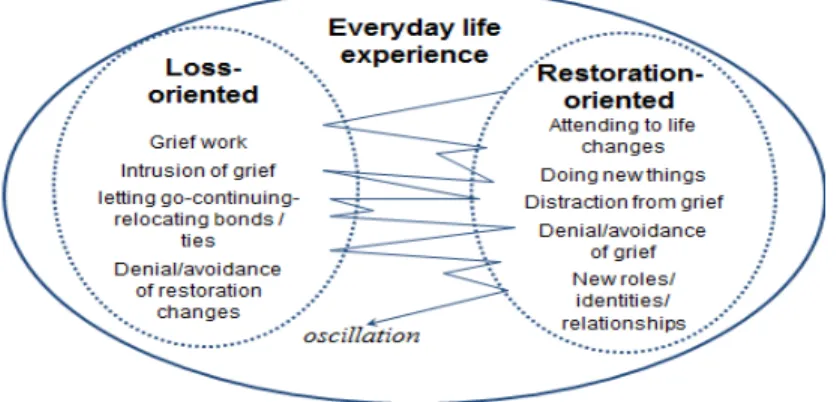
Figure 1. The Dual Process Model, Dynamic Oscillation (Stroebe, Schut, 1999).
An important distinction addressed in the DPM is that the process of dynamic oscillation is perceived as adaptive. (Fasse and Zech, 2016). Grief is not stagnant, nor is it linear, moving progressively from one stage to the next. The Dual Process Model indeed provides a more dynamic, lively, interpretation of adaptation by the bereaved person. It therefore has great
therapeutic potential allowing for the nuances of human experience. Stroebe and Schut’s concern for offering a more relevant model of coping loss proves strong. Their criticism of imprecise definitions remains an issue in the context of perinatal bereavement.
Discussion
few descriptions that adequately address the complexity of the phenomenon of perinatal bereavement.
A principle based concept analysis authored by Albert J. Stunkard, MD, identifies four modes of understanding the concept of perinatal bereavement; epistemological (is it well defined and well differentiated?), pragmatic (is it significant and useful?), linguistic (is there consistency in use and meaning) and logical (how does it uphold boundaries through theoretical integration?) (Stunkard, 2009). The authors present these four modes to help researchers and practitioners work towards a theoretical definition to more appropriately operationalize the concept of bereavement. Grief is often identified as the main attribute of perinatal bereavement, accompanied by complex expressions such as depression all influenced by external circumstances when the loss occurs. (Stunkard, 2009). A significant contribution that this definition of bereavement appears to pull apart is that grief research has not encompassed the anticipation of a loss which may occur for example in the event of an unexpected fetal diagnosis and the choice to terminate. (Stunkard, 2009). That bereavement may begin before a loss has fully taken place broadens the umbrella. The diagnosis of a life threatening or life limiting condition is a loss in its own right. It can be the loss of a life imagined that causes a process of grieving. The insights offered in this publication are corroborated by the narratives and
qualitative analyses of peer researchers.
the health of the baby and the psychological well-being of the parents. Whether parents choose a low intervention birth or a high intervention birth, and this is no different in a time of unexpected outcome, autonomy plays a role in well-being. (Dimiceli-Zsigmond et. al, 2015)
Conclusion
Recommendations for Further Research
References
Fasse, L., & Zech, E. (2016). Dual process model of coping with bereavement in the Test of the Subjective Experiences of Bereaved Spouses: An Interpretative Phenomenological Analysis. Omega: Journal Of Death & Dying, 74(2), 212-238.
doi:10.1177/0030222815598668
Fenstermacher, K., Hupcey, J. Perinatal bereavement: A principle-based concept analysis
Journal of Advanced Nursing, 2013 November ; 69(11): 2389–2400. doi:10.1111/jan.12119.
Hutti, M. H., Armstrong, D. S., & Myers, J. (2013). Evaluation of the Perinatal Grief Intensity Scale in the Subsequent Pregnancy After Perinatal Loss. JOGNN: Journal Of Obstetric, Gynecologic & Neonatal Nursing, 42(6), 697-706. doi:10.1111/1552-6909.12249.
Kavanaugh, K., Roscigno, C. I., Swanson, K. M., Savage, T. A., Kimura, R. E., & Kilpatrick, S.
J. (2015). Perinatal palliative care: Parent perceptions of caring in interactions surrounding
counseling for risk of delivering an extremely premature infant. Palliative & Supportive
Care, 13(2), 145-155. doi:10.1017/S1478951513000874
Mathews, T. J., Macdorman, M. F., & Thoma, M. E. (2015). National vital statistics reports infant mortality statistics from the 2013 period linked birth / infant death data set. National Vital Statistics Reports, 64(9), 2000–2013.
Moore, T., Parrish, H., Black, B. (2010) Interconception care for couples after perinatal loss: A
comprehensive review of the literature. Journal of Perinatal and Neonatal Nursing, 25 (1),
44-51.doi: 10.1097/JPN.0b013e3182071a08
Peters, M. D. J., Lisy, K., Riitano, D., Jordan, Z., & Aromataris, E. (2015). Caring for families experiencing stillbirth: Evidence-based guidance for maternity care providers. Women and Birth, 28(4), 272–278. https://doi.org/10.1016/j.wombi.2015.07.003
Price, S.K. & El-Khoury, D. (2016). Chapter 2: Applying Theoretical Frameworks to Research
in Perinatal Bereavement. In Black, B.P., Wright, P.M., and Limbo, R. (Eds.) Perinatal and Pediatric Bereavement in Nursing and Other Health Professions (p.17-32). New York: Springer.
Stroebe, M.S. & Schut, H.A.W. (1999). The Dual Process Model of Coping with bereavement – Rationale and description. Death Studies, 23 (3), 197-224.
Stunkard, A. J. (2009). NIH Public Access. Psychiatry: Interpersonal and Biological Processes,
Weatherby, N. (Interviewer) Bywater, Arielle G. (Interviewee). (2011). [Interview audio file]. Retrieved from University of Kentucky Louie B. Nunn Oral History Collection, The Birth Narratives Oral History Project Web site:
https://kentuckyoralhistory.org/catalog/xt7ttd9n612w