SCIENCE FOR GALÁPAGOS?: SCIENCE AND ITS PUBLICS IN THE GALÁPAGOS ARCHIPELAGO
Haruna Suzuki
A thesis submitted to the faculty at the University of North Carolina at Chapel Hill in partial fulfillment of the requirements for the degree of Master of Arts in the Department of
Geography.
Chapel Hill 2014
ii
iii
ABSTRACT
Haruna Suzuki: Science for Galápagos?: Science and its Publics in the Galápagos Archipelago
(Under the direction of Scott Kirsch)
iv
ACKNOWLEDGEMENTS
v
TABLE OF CONTENTS
LIST OF FIGURES ... x
LIST OF ABBREVIATIONS ... xi
CHAPTER 1: INTRODUCTION ... 1
1.1 “We have a building—so what?” ... 1
1.2 Science for Galápagos? ... 3
1.3 Theoretical engagement ... 5
1.4 The GSC ... 8
1.5 Methodology ... 10
1.5.1 Research development ... 10
1.5.2 Primary data collection and sampling ... 11
1.5.3 Data analysis ... 14
1.5.4 Secondary data ... 15
1.5.5. Methodological concerns ... 16
vi
1.6.1 The Galápagos archipelago ... 19
1.6.2 San Cristóbal Island ... 21
1.7 Thesis outline ... 22
1.8 Thesis contributions ... 24
CHAPTER 2: SCIENCE AND THE GALÁPAGOS ... 26
2.1 Shifting ideas of place in the Galápagos Archipelago ... 26
2.2 Science in(venting) the Galápagos: the institutionalization of a natural laboratory ... 30
2.3 Science, space and society ... 37
2.4 The Galápagos Science Center: why place matters ... 44
CHAPTER 3: GEOGRAPHY, SCIENCE AND SOCIETY: EXPLORING THE RELEVANT LITERATURE ... 49
3.1 Geographies of science... 49
3.2 Critical Public Understanding of Science (cPUS)... 55
3.3 Massey and Place ... 58
CHAPTER 4: PUBLIC UNDERSTANDING OF SCIENCE ON SAN CRISTÓBAL ISLAND, GALÁPAGOS ... 61
4.1 Defining science ... 62
4.2 Conceptualizing science ... 66
vii
4.2.2 Science as enlightenment, progress, and culture ... 67
4.2.3 Science as abstract and omnipresent. ... 69
4.2.5 Science as critical thinking ... 70
4.3 Importance of science in residents’ lives ... 70
4.3.1 Fundamental knowledge ... 70
4.3.2 Health ... 71
4.3.3 Technology... 72
4.3.4 Not important ... 72
4.3.5 Knowledge for livelihoods ... 72
4.3.6 Conservation for livelihoods ... 73
4.4 Impact of Science Research on San Cristóbal Island ... 73
4.4.1 Positive impact ... 73
4.4.2 Unaware about San Cristóbal research ... 76
4.4.3 No impact ... 77
4.4.4 Mixed impact ... 85
4.5 Science and social responsibility... 85
4.5.1. What kind of research? ... 85
viii
4.5.3 A different kind of research? ... 89
4.5.4 Lack of science research on human issues ... 91
CHAPTER 5: THE GSC AND ITS PUBLICS... 93
5.1 GSC-publics relationship ... 94
5.1.1 Inclusivity and collaboration ... 94
5.1.2 Human well-being... 95
5.1.3 Neutrality ... 98
5.2 Reaching out to science’s publics ... 102
5.3 What publics want ... 113
5.3.1 Access ... 113
5.3.2 Information ... 116
5.3.3 Incorporating students ... 116
5.3.4 Incorporating institutions ... 120
5.4 What publics want to know ... 122
5.5 Why engage the public with science? ... 125
5.5 Imagined publics—scientists’ talk about publics ... 127
5.5.1 Publics as recipients of knowledge. ... 128
ix
5.6 Talk about publics by publics... 133
5.6.1 Publics as partners ... 133
5.6.2 Unsure about collaboration... 136
5.6.3 Publics as scientific audience ... 137
5.7 Publics and scientific research ... 138
5.8 Science for Galápagos? ... 140
CHAPTER 6: CONCLUSION ... 149
6.1 Science, Place and Publics ... 149
6.2 Towards a science for Galápagos 2.0? ... 159
6.3 Science for Galápagos: Lessons learned from the GSC ... 161
6.4 Future plans ... 163
APPENDIX A: INTERVIEW GUIDE QUESTIONS FOR RESIDENTS... 164
APPENDIX B: INTERVIEW GUIDE QUESTIONS FOR GSC REPRESENTATIVES ... 165
APPENDIX C: GENERAL INFORMATION (GSC RESPRESENTATIVES) ... 166
APPENDIX D: GENERAL DEMOGRAPHICS (RESIDENTS) ... 167
x
LIST OF FIGURES
Figure 1. Photo of Galápagos Science Center. ... 8
Figure 2. Photo of GSC laboratory facilities ... 9
Figure 3. Map of Galápagos Islands. ... 19
Figure 4. Map of neighborhoods in Puerto Baquerizo Moreno. ... 22
Figure 5. Photo of El Progreso plantantion. ... 28
Figure 6. Photo of William Beebe……….………. 30
Figure 7. Photo of Irenaus Eibl-Eibesfeldt.. ... 33
Figure 8. Photo of Julian Huxley ... .33
Figure 9. Photo of Robert I. Bowman ... 34
Figure 10. Photo of GSC community classroom ... 103
xi
LIST OF ABBREVIATIONS
CAC Community Advisory Committee
CDF Charles Darwin Foundation
CDRS Charles Darwin Research Station
GMR Galápagos Marine Reserve
GNP Galápagos National Park
GSC Galápagos Science Center
1
CHAPTER 1: INTRODUCTION 1.1 “We have a building—so what?”
On May 16, 2011 UNC Chapel Hill and the Universidad San Francisco de Quito (USFQ)1 in Ecuador inaugurated the Galápagos Science Center (GSC) on San Cristóbal Island, Galápagos. A state-of-the-art research station with four laboratories, office and meeting space for resident and visiting scientists and students, and a classroom for
community programs and events, the GSC signifies a new site for science in the archipelago, where the science-society relationship has been historically complex and at times,
contentious. As is common in many protected areas, tensions initially resulted from
competing visions over ‘proper’ human-environment interactions (Peluso 1993, Agrawal & Ostrom 2001, Robbins 1998, 2004), and by extension over opposing conceptualizations of place. Conflicts became particularly heightened in the 1990s, when fishers protested violently against Park officials and scientists2 over stricter regulation of fisheries in the
1
USFQ, a top-rated private university founded in 1988, was the first liberal arts institution in the Andean region of Ecuador. There are approximately 5,500 students enrolled at USFQ, 4,500 of which are undergraduates. USFQ offers semester and summer programs for Ecuadorian and foreign students. Since 2011, USFQ has been accepting UNC Chapel Hill students into their semester programs in Quito as well as into summer programs with UNC and USFQ faculty at the USFQ Galápagos campus. The UNC-USFQ relationship was established primarily by the GSC’s co-directors; director 2 completed his doctoral degree under the supervision of Co-director 1 at UNC and the two have continued their relationship as research collaborators.
2
Galápagos Marine Reserve (GMR). As noted in Quiroga and Ospina’s (2009) survey of 558 residents3 on San Cristóbal, Santa Cruz, and Isabela islands, individuals 45 years of age and older—the demographic that lived through these socio-environmental disputes—tended to be highly critical of science, often essentializing scientists as an elitist group having little regard for the economic and social welfare of local populations. Survey respondents below the age of 45, conversely, demonstrated greater support for science and scientists. Even so, there is general consensus that Galápagos science, with its historical emphasis on conservation and environmental management, has largely failed to address the additional needs and concerns of a growing human population.
In a September 22, 2011 meeting at the Center for Galápagos Studies at UNC, a GSC co-director (Co- director 1 hereafter) asked a group of UNC-based Galápagos researchers, “We have a building—so what?” The building of that building, a multi-million dollar
research facility, I argue, constitutes a paradoxical moment and process, at once enabling and complicating science. On one hand, it signifies the installation of the GSC as an official scientific and institutional presence at a multitude of scales, allowing for the accumulation and consolidation of advanced human, technical, and technological resources and expertise. As Co-director 1 explained, “We’re already fielding requests from other universities from around the world about getting involved. And they want to get involved in a variety of ways. We’ve also been approached by NGOs so as our name and as our presence in the Galápagos
conservationist and in others a scientist—I’m always both.” (personal communication, July 11, 2011). Some scientists, however, have little or no connection to the conservation agenda. These scientists often refer to their work as basic science. For many Galapagueños, however, scientists have been clumped together as a group tied intimately to management and environmental policymaking.
3
becomes more advertised, more well-known, there will be people that want to do a variety of things.” At the same time, it is precisely this institutional visibility and capacity—combined with historical science-society tensions and the widespread perception of Galápagos science as being detached from community concerns —that generates particular expectations from residents and institutions. As Co-director 1 noted, “We have a structure…we have a location in space… so in that way, we become part of the community infrastructure in a more obvious way, interacting with organizations on different islands as well as the mainland as well as international organizations…”
In the summer of 2011, the Governor of Galápagos Province, Jorge Torres stated, “If it [the GSC] is anything like the Darwin Station4, I want nothing to do with it.” (personal communication, June 30, 2011) Torres expressed discontent with the ways in which local scientific activity has historically worked, in his opinion, to alienate and marginalize island residents. In interviews, GSC representatives expressed their awareness of critiques of this nature and consequently, their desire to develop novel and mutually productive science-society interactions. The opening of the Center, then, in addition to initiating a new phase of leading-edge science research and education in the islands, highlights a kind of crisis of the identity of GSC and Galápagos science, particularly with respect to their relationships with Galapagueñan society.
1.2 Science for Galápagos?
In the second chapter of the 2009 co-authored book, Science for the Sustainability of the Galápagos, Santander et al. offer a critique of Galápagos science and research. The authors point to the disproportionate amount of Galápagos research devoted to the biological
4
4
and biophysical sciences as evidence of an ill-defined and poorly coordinated research agenda that has mostly accommodated the “academic interests of researchers or of funding institutions” (Santander et al. 2009, 105), or what they refer to as a science in the Galápagos. Ultimately, the authors call for a shift from a science in to a science for the Galápagos. A science for the islands, as defined by them, signifies a new model of sustainability science— social and ecological—in which research priorities are established by “competent Ecuadorian authorities” such as the National Park, and according to “objective criteria” and “real
knowledge needs.” (Santander et al. 2009, 105)
5
local government. (105) In this research I explore the question, “What is a science for the Galápagos?” through the case study of the GSC and its emerging relationships with its publics. I contend that in addition to the recent opening of the Center and its efforts to develop a community-friendly reputation, the historical struggles over place between conservation science and certain sectors of civil society as well as the widespread resident perception that Galápagos science continues to prioritize charismatic species over human inhabitants necessitate critical engagement with this question.
1.3 Theoretical engagement
This thesis is a contribution to the wide body of scholarship in two principal areas: Geographies of Science and Critical Public Understanding of Science (cPUS), a subset of Science and Technology Studies (STS).
Broadly speaking, Geographies of Science work considers both how science has its own geographies and how particular geographies (places, contexts, regions, etc) shape scientific knowledge and practice. In this research, I explore the co-constitutive nature of science and place, arguing that while science has been one of the most influential agents in shaping understandings of place—and nature—both within and without the archipelago, place has also come to shape science in important ways. Specifically, the historical science-society context in the Galápagos as well as ongoing resident critiques about the lack of socially relevant science in the archipelago has brought to bear on the availability, modes and terms of outreach initiatives between the recently established GSC and San Cristóbal publics; various geographies of GSC science are currently emerging via Center outreach and
6
To critically assess the potentialities and limitations of these geographies of science, I put my research in conversation with Critical Public Understanding of Science (cPUS). In general, cPUS scholarship seeks to problematize both science and publics in addressing the public understanding of science, engaging with issues around the dichotimization of expert and lay knowledge; power and agency in public engagement with science initiatives; scientists’ conceptualizations of publics; new modes of scientific governance, among other areas. In this research, I draw attention to the ways in which GSC representatives and residents understand Galápagos science and explore their objectives and aspirations for public engagement with science as well as their perspectives on local knowledge needs and capacities (See Appendices A and B for interview guide questions). I turn to these
perspectives as well as on my preliminary assessments of GSC outreach activities and initiatives as a means through which to re-conceptualize a science for the Galápagos.
Doreen Massey’s critical theory of place provides an overarching spatial context for this thesis. According to Massey (1994, 2005) place, rather than a fixed point in time-space, is a process, the consistently changing product of multiple entities and identities. In the subsequent chapter, I give a brief overview of place-identity in the Galápagos, highlighting twentieth century western science’s role in shaping one of the most powerful spatial
7
with San Cristóbal communities is reflective of a global trend in promoting greater communication and interaction between science and society.
In Chapters Four and Five, both of which are empirical in nature, I highlight
interview comments that invoked a Masseyan sense of place (or not) and the implications of these perspectives. For example, various residents acknowledged an appreciation for the heterogeneity of place in expressing that they found no issue with scientists seeing and using the Galápagos strictly as a natural laboratory, even though Galápagos was something distinct for them.
I return to Massey in the conclusion to address the central question of a science for Galápagos. I argue that in order to cultivate a science for the islands that is both flexible and inclusive, we would benefit from incorporating Massey’s ideas of place. Specifically, I contend that an ideal science for the Galápagos would be a place-based science that takes place as process. In other words, it is not a kind of science that is tied to any singular understanding of, or vision for, the Galápagos (which, as will be demonstrated in the subsequent chapter, is neither ideal nor tenable), but rather one that is open to engaging and negotiating with the “throwntogetherness” (Massey 2005, 140) of people, ideas, discourses and experiences in the archipelago. Implementing such a philosophy allows us to avoid imposing rigid boundaries around the production and application of scientific knowledge.
8
1.4 The GSC
The 11,000 square foot GSC (Figure 1), situated in front of San Cristóbal’s most popular recreational beach, Playa Mann, and adjacent to the USFQ Galápagos campus5, houses four laboratories—terrestrial ecology; marine ecology and oceanography; geospatial technologies [remote sensing & geographic information systems]; and microbiology; See Figure 2—each with three offices. In addition, the Center houses a community classroom and terrace for public outreach and engagement activities; two administrative offices, one for directors and one for the outreach coordinator/facilities manager; and six offices for senior visiting researchers from UNC and USFQ.
Figure 1. Galápagos Science Center. The peach building in the foreground is USFQ Galápagos. (Source:GSC)
9
Figure 2. GSC laboratory facilities (source: GSC)
The GSC, jointly funded and managed by UNC and USFQ, has five full-time, on-site staff (one facilities manager and outreach coordinator; one field and lab technician; one IT manager and database coordinator; one maintenance and operations technician; one security manager; one cleaning staff) as well as two directors and two deputy directors who work on site several times a year, but are otherwise based in UNC Chapel Hill and USFQ. In addition there is one administrative assistant based at USFQ; one program manager at UNC and one assistant from the Galápagos National Park (GNP) all of whom, in conjunction with the facilities manager, are responsible for logistical issues; reviewing research, internship, and research assistantship proposals; and the acquisition and submission of research permits to the GNP.
10
anthropology; public health; medicine; biology [marine, terrestrial, conservation, evolutionary]; ecology; and sociology, among others) from UNC and USFQ are GSC fellows. Though the GSC is a new institution, many of the fellows from USFQ have more than ten years of research and teaching experience in the archipelago.6 As such, the GSC cannot be dissociated from the broader science-society debates and conflicts mentioned earlier.
1.5 Methodology
1.5.1 Research development
The idea to develop the present thesis emerged as a result of several years of personal, professional, and academic experience in the Galápagos Islands. I first visited San Cristóbal and Santa Cruz Islands in the summer of 2007 as a study abroad program coordinator for USFQ. Over the course of the two years in this position as well as one year as a research assistant for Galápagos-related projects at USFQ from 2009 to 2010, I not only became well acquainted with the archipelago and its most pressing issues but also with many members of Galapagueñan society, including tour operators; hotel and restaurant owners and employees; business owners; government officials; National Park officials; university students; scientists; NGOs; and USFQ Galápagos staff and faculty. Six years of informal and formal
conversations in the islands have given me a rich understanding of the complexity—social, political, economic, and environmental—of this famous archipelago.
When I discovered that UNC and USFQ were planning to build a science center in the Galápagos, I immediately became interested in learning about the visions and the goals of
11
directors and managers from both institutions. One apsect that had always resonated with me about the archipelago was the complicated relationship between science and society; a whole range of questions came to mind, particularly about the GSC’s thoughts on this social
dynamic and history; residents’ perspectives on—and expectations of—Galápagos science; and the GSC’s stance on working with local communities. I also saw the opening of the Center as a critical opportunity to consider the role that a science center could play in a context where science education—and the education system as a whole—remain largely inadequate and where few Ecuadorians occupy positions as scientists and researchers. Thus, in addition to working through the question of a science for the Galápagos, this case study is intended to stand alone as an initial assessment of the new Center and its outreach and engagement efforts, as well as a means of documenting a particular chapter of the GSC’s development. As such, it is hoped that study findings will be useful for Center directors, staff and scientists.
1.5.2 Primary data collection and sampling
The following thesis is a qualitative, interview-based study. Data for this research was collected on San Cristóbal Island, Galápagos from July 10-31, 2012. A total of 105 individuals were interviewed, including 82 residents from the 15 neighborhoods in Puerto Baquerizo Moreno, the port town comprising the urban core of the island7; nine residents from two towns in the highlands of San Cristóbal Island (El Progreso and Cerro Verde); five GSC staff; and nine GSC scientists/researchers (four of the GSC staff members also
comprise this group; see Appendix C for general information about GSC respondents).
12
I identified the 91 resident participants (50 females and 41 males) via a process of randomly selecting and approaching households in each neighborhood. This process of selection was employed in an effort to gather in-depth, island-wide perspectives and to enable the inclusion of voices that are underrepresented in public spaces (e.g. homemakers, domestic workers). Residents’ ages ranged from 12 to 80 years old (For further information about resident participants, see Appendix D). In most cases, the person who answered the door was the individual that completed the interview.
All interviewees were presented with an IRB consent form in Spanish and explained the details of the present research, including the main conversation topics, the total number of study participants, and the intended use of interview responses. Respondents were also informed that participation in the study was entirely voluntary and that there would be no penalty for refusing interviews; no individuals refused an interview.8
Each conversation was conducted in Spanish; lasted between 25 minutes and 1.5 hours; followed a short, semi-structured interview guide and was audio recorded whenever permission was granted. Many interviews ultimately took on the form of surveys rather than
8Two interviews began with some difficulty; a fisher expressed anger over what he perceived to be researchers’
“obsession with fishers” in the islands. The initial 30 minutes of conversation with him and five other fishers addressed their frustration over regularly having to disclose personal information to researchers about their lives, life histories and livelihoods, only to see little or no change or improvements in their social or economic status in the islands. Various fishers expressed anger over the unethical practices of Galápagos researchers. They explained that researchers have gotten them in trouble in the past by reporting information collected in interviews or surveys to the National Park. They also stated that the majority of them had just been interviewed over the past week or month by another researcher and felt that there was nothing more to add. I retracted my request for an interview but the fishers asked for a description of the present research and agreed to talk upon learning that this study was not centered on fishing practices or fisheries. Permission was then granted to conduct a recorded interview. I ultimately elected not to record the two fishers that were interviewed. General frustrations about Galápagos research and scientists surfaced several more times throughout the conversation. One other interview request—with a construction worker—was initially met with frustration. However, this respondent expressed anger about what he described as widespread corruption in the islands and like the fishers, unchanging conditions for certain island residents. This respondent immediately associated science and
13
interviews due to some respondents’ limited time. In cases where I sought to get a direct quotation from the participant, I asked them to write their response on the interview guide.
Nearly all of the full-time GSC staff members were interviewed, including the two co-directors; the outreach coordinator; the program manager and one member of the
executive board. This member of the board was chosen for his longstanding experience with Galápagos as an educator, educational administrator, and researcher. As interviews were meant to explore the science outreach and education objectives and plans of the Center, maintenance and IT staff were not interviewed.
In addition to GSC staff, nine scientists affiliated with the institution (four of whom are also full-time staff members: two co-directors; program manager; and executive board member), and having more than five years of professional experience in the Galápagos, were interviewed.
Only half of the scientists were interviewed in person, each conversation lasting between one and three hours. The remaining scientists were not in the archipelago at the time of data collection and were thus contacted by email to arrange Skype interviews. Due to scheduling difficulties and limited access to internet in their field sites, the remaining five scientists were sent an interview guide via email. Each scientist provided written responses to the interview guide; any follow-up questions or clarifications were requested and gathered via email.
14
Education Department. I focused on scientists in Santa Cruz, as that is where scientific activity is predominantly based in the archipelago. As for local authorities, I chose to speak with people from San Cristóbal as this island is the seat of the provincial government. While this project is centered on the GSC, I feel that it is critical to include these voices, as they also comprise a principal part of the scientific community in the islands. Several of these scientists have been and/or will be partners on research projects with GSC scientists and it was these scientists’ responses that inspired further development of research questions. What is more, interviews from 2011 revealed that various scientists based in Santa Cruz are also concerned with improving their reputation amongst, and relationships with, local
communities.
1.5.3 Data analysis
15
All interviews were first translated from Spanish to English and then coded by hand.9 To begin, I read through each interview as a narrative multiple times, each time making note of overarching themes that emerged across interviews; these themes became my initial codes. For example, upon reading the resident interviews, it became clear that access to scientific information was a common concern for residents. Whenever possible I consolidated these codes into one larger code such as ‘information,’ in which I categorized the various other ways that people talked about information. For instance, I looked at the specific scientific topics about which residents wanted to learn more. As another example, I explored the particular ways in which residents placed value on scientific information (e.g. as a vehicle for enculturation and enlightenment; as a way to enhance critical thinking, etc.). As mentioned above, I also included themes that were less prevalent in an effort to represent the range of views that arose in interviews. Whenever relevant I also looked for the different
conceptualizations of place that were communicated by interview responses. In addition to reading the interviews as narratives, I went question by question in the interview guides, tallying responses and identifying representative quotations.
1.5.4 Secondary data
To trace the various interpretations of place in the archipelago over the centuries as well as the history of conservation science in the archipelago, I reviewed several key articles (Ospina 2006; Quiroga 2009; Hennessy and McCleary 2011); book chapters (Tapia et al. 2009; Quiroga 2011); books (Weiner 1995; Larson 2004; Grenier 2007;Bassett 2009); and theses/dissertations (Hennessy 2009; Cairns 2011). I also consulted Santander et al. 2007
9
I initially coded resident interviews in the Qualitative software, Atlas Ti.6. However, upon finding no significant results of co-occurrence—where two or more themes emerge together amongst various
16
and Gonzalez et al. 2008 to explore how scientists talked about Galápagos and “science for the Galápagos.” In addition, I referred to Quiroga and Ospina’s (2009) survey of 558 residents on San Cristóbal, Santa Cruz and Isabela Islands to look at existing work about archipelago-wide perceptions of/attitudes toward scientists and scientific work in the Galápagos. Lastly, I reviewed official GSC documents and memos generously provided by Center directors, including a general Outreach document stating their purpose and goals; an application form to use the Center’s facilities, which outlined Center regulations and their mission; a document listing outreach initiatives and their objectives and timelines; and a memo about the formation of a Community Advisory Committee at the Center.
1.5.5. Methodological concerns
While qualitative content analysis is useful in that the analysis remains as close to the data and the informants’ perspectives as possible, it is often important to include a group of researchers in the analytic process. I was the sole researcher on this project, which posed some challenges. To address this issue, I often consulted colleagues and professors about my analyses of interview responses.
In addition, there are many scientists who are not represented in interviews. However, for the purposes of this research, I felt it was important to begin with those scientists that have at least a decade of research and professional experience in the Galápagos; these individuals are not only aware of the various science-society dynamics and conflicts that have taken place in the archipelago over the last several decades, but also have personal experience working with science engagement initiatives of various kinds. In addition,
17
Thirdly, I have known the GSC members represented in this study for several years now and continue to have personal and professional relationships with many of them. I have also been affiliated with the two institutions—UNC and USFQ—that are responsible for founding the GSC. As such, I am at once an outside observer and deeply embedded in this research. When I initially began this project, I was concerned about assessing and/or critiquing the ideas and statements of people I knew so intimately and for which I had great admiration and respect. At the same time, I recognized that it was necessary to set aside these apprehensions if I were to accomplish what I set out to do with this project: advance and encourage constructive and empowering discussions about and between science and society. Ultimately, I feel that throughout this research I have remained committed to presenting analyses that are at once critical and fair.
18
have held with residents throughout the years, when they express their grievances about science, they are often referring to the CDRS and its scientists. In Quiroga and Ospina’s (2009) survey, amongst Santa Cruz, San Cristóbal and Isabela residents, Santa Cruz residents agreed the least with the statement, “If institutions listened to scientists, they would make better decisions.” Santa Cruz is also where the largest percentage of survey respondents stated that scientists do not appreciate popular knowledge. In San Cristóbal and Isabela, science has had less of a visible role—as will be seen in Chapter Four, for example, various San Cristóbaleños were unaware that scientific research was conducted on their island, instead referring to Santa Cruz as “where science is.” At the same time, there are notable similarities in opinion across islands. According to Quiroga and Ospina (2009), the percentages of residents that agreed that the current amount of financial investment in science research is appropriate and that scientists should continue conducting research were comparable. And as mentioned previously, on all three islands, respondents below the age of 45 tended to have a more positive view of science than older generations of residents. It is important to note here that neither Quiroga and Ospina nor I have addressed science-society issues in Floreana in our analyses.
A final challenge regarded the timing of this research. As the GSC is a new initiative, data collection was conducted in real-time. Various outreach plans are still in the planning stages and changes are both frequent and ongoing. Between the time of initial data collection to the time of writing, a new outreach coordinator was hired; new outreach ideas were
19
engagement with science. It will be important to do a follow-up study in several years to enable comprehensive evaluation of the results of GSC outreach.
1.6 Study Site
1.6.1 The Galápagos archipelago
The Galápagos Islands, situated 600 miles (1000km) off the western coast of Ecuador and covering an area of 5,000 square miles, consist of 13 islands—four of which are
populated—and 100 islets ( Figure 3). Located at the confluence of four major warm and cold oceanic currents, the archipelago has a moderate and dry climate in spite of its equatorial latitude as well as highly variable water temperatures from month to month.
20
The Galápagos were first discovered by the Bishop of Panama, Tomas de Berlanga, in 1535 when his ship was blown off course en route to Peru. Over the next several centuries, English and Spanish whalers, buccaneers, pirates and explorers would use the Galápagos as a temporary base of operations, exploiting local fauna for food, oil and fur. In 1832, the newly independent Ecuador annexed the archipelago. Three years later, the islands’ most
celebrated visitor, Charles Darwin, arrived in the islands aboard the HMS Beagle. Darwin’s observations of the local flora and fauna would eventually play an integral role in the development of his theory of evolution by natural selection.
By 1936, under pressure from international scientists and UNESCO, the government established a wildlife sanctuary, banning the hunting of some species (Zapata 2005). In 1959, through a process largely driven by an international group of scientists, UNESCO and a nascent national forestry service, the Galápagos National Park (GNP) was founded,
designating 97% of the terrestrial area of the archipelago as protected area. That same year, the Charles Darwin Foundation was established. In 1998, the Galápagos Marine Reserve (GMR) was established, covering an area of 40 nautical miles from the outermost points of the islands. Spanning approximately 133,000 sq. kms of marine area, the GMR is the largest marine reserve in the Global South and the second largest marine reserve in the world.
21
1.6.2 San Cristóbal Island
Qualitative data for this research was collected from 105 participants on San Cristóbal Island, the easternmost and oldest island in the archipelago. The island’s capital, Puerto Baquerizo Moreno, is home to the seat of the provincial government. The current population of San Cristóbal has more than doubled since 1990, from 3,603 (1595 female; 2008 male) to 7,475 (3,488 female; 2,987 male) at present (Galápagos Census 2010). The majority of residents over the age of 12 self-identify as Mestizo, 9% as Indigenous, 6% of European descent, and 4% as Afro-Ecuadorian (Living Conditions Survey, INEC, 2009). Of the total number of people currently employed in San Cristóbal, 23% work in public administration, 12% in commerce, 11% in transportation services, 9%in hotels and restaurants, and 9% in farming and livestock (Living Conditions Survey, INEC, 2009).
22
Figure 4. Map of neighborhoods in Puerto Baquerizo Moreno. The two highland towns, El Progreso and Cerro Verde, do not appear on this map. These towns lie beyond El Manzanillo and Las Palmeras, approximately 5- 7 miles from Puerto Baquerizo Moreno. (Map: Haruna Suzuki)
1.7 Thesis outline
Chapter Two provides a historical overview of the various ways in which place has been imagined and lived in the Galápagos since its human discovery in the sixteenth century. I highlight the process through which twentieth century science came to shape one of the most powerful spatial imaginaries of the Galápagos—as natural laboratory—simultaneously establishing a particular definition of a science for Galápagos. I then discuss how different ideas about nature, place and science led to conflicts between the science and conservation sectors and different social actors in the 1990s and early 2000s. Next, I turn to how these earlier tensions, as well as ongoing critiques about Galápagos science lacking social
23
interest in, and a commitment to, community relations, ultimately emphasizing the co-constitutive nature of science and place.
In Chapter Three, I provide an overview of the relevant literatures in the Geographies of Science and a Science and Technology Studies (STS): Critical Public Understanding of Science (cPUS). I also explain how my engagement with geographies of science and cPUS is grounded in Massey’s idea of place.
Chapter Four forefronts residents’ perspectives on science and research. I share their definitions and perceptions of science, highlighting the various understandings of science that exist in local communities.
Chapter Five covers the GSC’s emerging relationships with its publics, describing the GSC’s objectives with respect to science outreach and engagement and the spaces and modes of interaction that are being carved out for science-public interactions; resident’s perspectives on the ideal relationship between the GSC and local communities; the kind of information residents wish to access via GSC outreach; the GSC’s perspectives on local knowledge needs and whether or not residents are knowledge producers or consumers, followed by residents’ perspectives on the same subject; scientists’ opinions about involving publics in scientific research; and finally residents’ and scientists’ definitions of a science for the Galápagos.
24
1.8 Thesis contributions
This research is put forth as a contribution to the broad range of scholarship in the interdisciplinary areas of geographies of science and cPUS. First, while geographers’ work in the geographies of science often looks at the situated and embodied nature of scientific rationality and theories, or at the science-public dynamic in the context of policymaking processes, this thesis examines how places and contexts—including social histories—also impact the importance granted to, and the formation of, particular public engagement initiatives and activities. Secondly, this thesis offers an empirical study of a developing country context; geographies of science scholarship predominantly focuses on the United States or Western Europe. Including case studies from developing areas can offer different dimensions to relevant science and technology study debates, as the disparity between the educational and professional opportunities of scientists and publics can be significantly greater in these contexts. In these places, furthermore, failure to meet basic social needs often exists alongside a robust science sector supported by generous internal and external funding. Developing country case studies also provide a meaningful lens through which to consider the different factors at stake in public outreach and engagement activities in diverse areas of the globe, and also shed light on the additional challenges—particularly in the form of language and cultural gaps—facing outreach and engagement in these places. Thirdly, while work about outreach within geographies of science (Shapin 1988; Naylor 2002; Finnegan 2004) has mainly emphasized the influence of particular spaces on the reception of scientific information provided for different publics, or about sites of experimentation that
25
26
CHAPTER 2: SCIENCE AND THE GALÁPAGOS
Throughout its social history, the Galápagos has been interpreted and used in myriad ways. What is taken as self-evident today—the Galápagos as a site of world-class science and international conservation—was not always the case. I begin this chapter by providing a brief history of place-identity in the Galápagos. I then trace the relationship between
twentieth century science and the founding of the National Park, emphasizing this event as a pivotal moment in the trajectory of science and understandings of place in the archipelago. To conclude, I describe the science-society conflicts that arose in the 1990s and 2000s as a response to heightened environmental regulations in the Park and how the legacy of these conflicts as well as ongoing critiques about Galápagos science’s lack of social relevance have come to impact how the GSC views science outreach and community relations. Through this narrative, I seek to highlight: 1.) the co-constitutive nature of science and place in the
Galápagos; and 2.) the different views of science for Galápagos that have existed over the past several decades.
2.1 Shifting ideas of place in the Galápagos Archipelago
The identities of place are always unfixed, contested and multiple. (Massey 1994, p.5)
27
whalers used the Galápagos as a stopover point for collecting tortoises and other animals as food sources.
The earliest known settler in the islands was the Irishman, Patrick Watkins. “Irish Pat” lived on Floreana Island, where he bartered vegetables with whalers. In 1809, Watkins left the islands for the coastal city of Guayaquil. The first to propose colonization in the archipelago was General José María de Villamil Joly. In 1831, Villamil commissioned a survey of the economic possibilities in the islands. The study revealed that the common lichen orchil, or Dyers Moss, which produces a mauve dye, had commercial potential. Villamill thus established the Sociedad Colonizadora del Archipiélago de Galápagos and urged the nascent Ecuadorian government to annex the islands. General Juan José Flores, Ecuador’s first president, supported Villamil’s requests and, on February 12, 1832, Colonel Ignacio Hernandez formally appropriated the Galápagos as a territory of Ecuador. Both prior to and following annexation, the U.S. and the U.K. expressed interest in the islands, either for the extraction of resources (tortoises, whales, sea lions, guano, orchilla, fish) or as a strategic geopolitical base (Quiroga 2012).
28
the governor, Colonel Jose Williams; by 1852, the settlement had collapsed. The most recent penal colony was established on Isabela in 1944; 94 prisoners arrived in 1946. A 1958 rebellion, however, led to the closure of the prison.
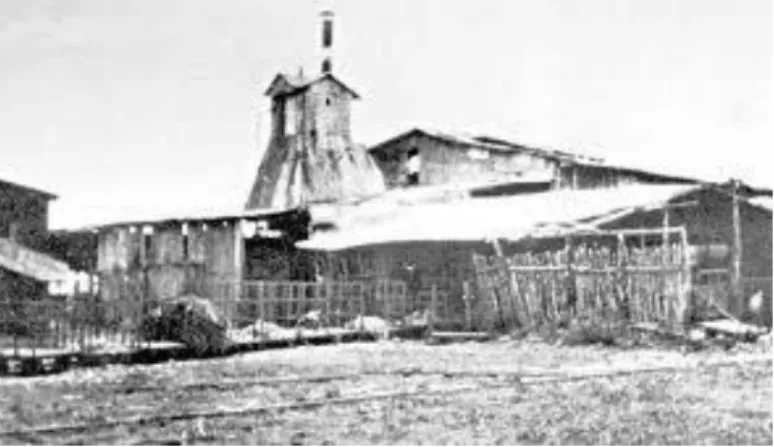
Another major colonization attempt took place in 1858 when Manuel J. Cobos, José Monroy, and José Valdizán formed the Orchillera Company. Though this joint venture failed, in 1860, Valdizán began extracting orchil in Floreana and nine years later, secured a 12-year contract with the government of Ecuador to extract the plant from the island. Meanwhile, Cobos, a wealthy Ecuadorian businessman from Quito founded the El Progreso plantation on San Cristóbal Island for the large-scale production of sugar cane, coffee and tortoise oil. (Figure 5). From 1879 onwards, Cobos brought in prisoners from mainland Ecuador as laborers. Faced with brutal working and living conditions, Cobos’s workers eventually revolted, murdering him in 1904.
Figure 5. El Progreso plantantion. (Source: Watkins and Oxford 2009)
29
harvesting tortoises for meat and oil. Colonists also mined salt from James Bay on Santiago Island in 1886, from 1924 to 1930, and again in the 1960s.
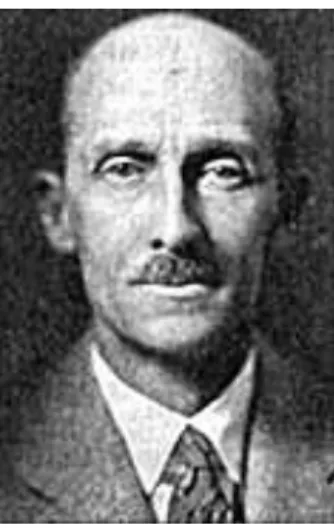
Other early colonization attempts were made by Europeans, mostly from Norway and Germany, who upon the publication of William Beebe’s, Galápagos:World’s End, became increasingly fascinated with the remote islands described so captivatingly by Beebe (Figure 6). In 1925, Norwegians colonized Floreana and San Cristóbal. Those in Floreana initially planned to set up a whaling station, but the venture ultimately failed and they migrated to Santa Cruz Island. Other Norwegians arrived on Santa Cruz and San Cristóbal in 1926. On Santa Cruz they mostly fished and canned turtles, lobster, and grouper, an industry that came to a halt after the cannery boiler exploded in 1927. Norwegians living on San Cristóbal also moved to Santa Cruz in 1928. One year later, German colonists arrived in Floreana, of which the most famous were Dr. Friedrich Ritter and his patient and lover, Dore Strauch, and the Baroness Eloise Wagner de Bosquet. The unusual incidents that involved these
30
Figure 6. William Beebe (source: http://www.pbs.org/wgbh/amex/ice/sfeature/beebe.html)
2.2 Science in(venting) the Galápagos: the institutionalization of a natural laboratory Thus far, I have described the different ways in which place was understood and used in the Galápagos since their discovery in the sixteenth century. Though its discoverer, Bishop Berlanga, saw nothing particularly valuable about the islands, many subsequent attempts were made to extract resources for personal use and economic gain. What we know as the Galápagos today—as the “cradle of evolution” and an internationally renowned symbol of environmental conservation—is a relatively new and meticulously constructed
conceptualization of place.
In this section, I highlight the process through which a group of conservation-minded scientists, with support from the United Nations Education, Scientific and Cultural
Organization (UNESCO) and the International Union for Conservation of Nature (IUCN), succeeded in solidifying the archipelago as a so-called natural laboratory and an
31
establish the Galápagos National Park and its scientific arm, the Charles Darwin Foundation. It is important to note here that until the inception of the protected area, the Galápagos were largely overlooked by the majority of the world.
The idea of the Galápagos as a natural laboratory can be traced back to its most celebrated visitor, Charles Darwin, who upon arriving in the 1830s recognized the scientific significance of the archipelago for the naturalist. After the publication of Darwin’s On the Origin of Species in 1859, scientists from all over the globe increasingly ventured to the archipelago with the explicit aim of gathering evidence that would (ideally) enable them to either confirm or refute Darwin’s theories. A general increased interest in fieldwork as well as the rise of ecology as a discipline at this time also contributed to the framing of the archipelago as a natural laboratory—the islands were seen as an ideal location for studying entire ecosystems and measuring human impact on ecological processes (Larson 2001).
In 1907, a California Academy of Sciences expedition led by Rollo Beck arrived in the islands, collecting 75,000 biological specimens to be brought back to San Francisco and put on display in its natural history museum. (James 2010) According to Quiroga (2013), “These efforts to collect reflect the idea, common at the time, that collecting was the only way of safely preserving and studying the specimens.” (28)
32
In 1936, under pressure from international scientists and UNESCO, the Ecuadorian government established a wildlife sanctuary, banning the hunting of some species (Zapata 2005); however no formal institution existed at the time to enforce these regulations, making them virtually irrelevant.
33
evolutionary humanism. Thus, for Huxley, the preservation of the Galápagos was crucial not only for science and conservation, but for the course of humanity as a whole.
Figure 7. (Left) Irenaus Eibl-Eibesfeldt. (source: http://www.Galápagosorg./about_Galápagos/the-conservationists/).
Figure 8. (Right) Julian Huxley (source: http://www.huxley.net/transhumanism/)
34
tortoises; and 5.) education of the human inhabitants of the islands about the importance of the native species. (Barnett 1958, 76)
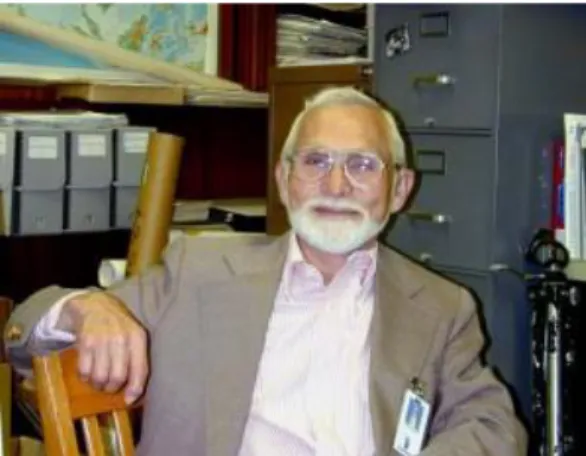
Figure 9. Robert I. Bowman (source: http://www.galapaagos.org/about Galápagos/the-conservationists)
On September 8, 1958, Life magazine ran a cover story about the Galápagos,
35
Various science organizations, including the international congress of zoology, backed the UNESCO and IUCN’s proposals for island preservation and in 1959 on the centennial of the publication of Darwin’s On the Origin of Species, western scientists, the UNESCO, and a nascent Ecuadorian forestry service helped to produce the most influential social technology in the archipelago’s post WWII-history: the Galápagos National Park; the Charles Darwin Foundation was founded the same year.
By the late 1950s, then, conservation science had solidified itself as a necessary and central actor in the Galápagos. As Grenier (2007) importantly argues, the inception of the Park is when the Galápagos became a space imagined exclusively for science. It is also, I contend, when a particular kind of science for Galápagos was born—the islands, as argued by the Park’s founders, needed robust and ongoing scientific research, monitoring and advising for conservation purposes. In 1964, the government of Ecuador officially named the CDF the technical/scientific advisor of the GNP.
36
By 1970, the Ecuadorian government had designated 97% of the Galápagos as protected area. Park rangers now monitored the nearly 5,000 square-mile area of the Park and management remained centralized in Quito, highly influenced by foreign scientists and conservationists (Quiroga 2009). And as Cairns argues, this move, ‘while framed as being of universal value and in the common interest, actually justified a territorial organization that was restrictive and exclusive.” (Cairns 2011, 80) The Ecuadorian government, under pressure from conservationists, began banning activities that had formerly been integral to the daily lives of island residents: logging of some endemic and native trees normally used for construction purposes; the consumption of tortoise meat; the fishing of sharks and marine turtles, and the use of long lines (for fishing) and pesticides (Quiroga 2009). The early colonists, who “did not see animals according to a Darwinian classification of endemic, native or introduced, but rather as useful, useless or pests” (Quiroga 2012, 31), viewed these new regulations as antithetical to their understanding of place and nature.
In 1978, the Galápagos was declared a UNESCO World Heritage Site, garnering greater international attention for these remote islands. The rapid growth of tourism over the next few decades as well as lucrative opportunities in the sea cucumber fishery from 1993-2000, created incentives for Ecuadorians struggling to secure employment on the mainland to migrate to the Galápagos.10 The majority of people who currently reside in the Galápagos arrived in the 1980s and 1990s. According to the Galápagos Conservancy, over these two decades, the population increased at more than 6% per year, compared to about 2% on the
10
The Ecuadorian economy faltered in the early 1980s as the international price of petroleum declined
37
Ecuadorian mainland. (http://www.Galápagos.org/about_Galápagos/people-today/) In 1975, there were approximately 3,500 residents in the islands. By 1990, this number had reached nearly 6,000 and by 2000, there were approximately 10,000 people living in the archipelago. (http://www.Galápagos.org/about_Galápagos/people-today/) Migrants arrived from all over mainland Ecuador, particularly the Andean regions. Interestingly, as Larson notes, well into the twentieth century, many mainland Ecuadorians still saw the archipelago as a forbidding and depraved place—associating the islands with Cobos’s plantation and penal colonies—an image that stood in stark contrast to its burgeoning international reputation as a natural laboratory and exotic, ecotourism destination.
2.3 Science, space and society
Geographer Doreen Massey argues that the ways in which we imagine space and nature have important material effects (Massey 2005). In the Galápagos, managing the islands as a natural laboratory and site of strict environmental protection initially led to policies that limited activities that had formerly been considered part of daily life in the islands. Over the past decade, it has resulted in intense social conflicts, and as I will subsequently explain, a strained relationship between some members of the Galapagueñan society on the one hand and scientists and scientific and conservation institutions on the other.
38
well as of migrants that arrived in the 1980s and 1990s, it became progressively difficult for the GNP and the CDF not only to defend their environmental regulations but their scientific agenda; the concept of a science for the Galápagos was rapidly changing, with many
residents increasingly wanting to see science that considered their needs in addition to those of environmental protection.
Conflicts, at times violent, between the GNP and the CDF on the one hand and fishers on the other, were common in the mid- to late 1990s and early 2000s. As a long-time resident of San Cristóbal recalled, “In 1998, I remember, the GNP was the number one enemy of the town because of restrictions they placed on fishing.” (50M, construction and beach
concession stand) These clashes were not only over defining ‘proper’ uses of space and nature but over what many fishers perceived as an imposition of oversimplified
(environmental) subjectivities—conservationists as nature’s guardians and all others as its destroyers.11 As Quiroga (2012) notes, “as experts and professionals entered the scene, conservation was problematized, and a discourse was produced about the need to protect the Galápagos, in particular from the local population, for the rest of humanity.” ( 37) Thus, for example, many older fishers argue that though they were instrumental in the founding of the Galápagos Marine Reserve (GMR) and the formulation of its regulations, they have never reaped the benefits of their labor and instead have been seen as barriers to the proper management of marine resources. (Quiroga 2009) Historically, many residents have felt alienated from decision making as well as a lack of respect for their own knowledge of the environment. As Quiroga and Ospina (2009) argue, many older residents’ perceptions of science derive from this contentious history; at that time, the CDF and the GNP had a more
11
39
intimate relationship12 and thus for many older residents, science came to be equated
principally with restrictive, top-down environmental policies. The link between science and conservation policy is, of course, not quite so linear—in fact, in my interviews with scientists from Santa Cruz and San Cristóbal Islands in 2011 and 2012, various interviewees expressed their concern for what they saw as a gap in communication and coordination between the information that they collect and the policies that are implemented (or not) on the ground. Furthermore, Galápagos science is a complex and multi-faceted entity that comprises diverse types of research, only some of which are explicitly linked to conservation and
environmental management.
While many residents have felt alienated from decision making in the national park, some—albeit few—attempts have been made to incorporate local perspectives. In the late 1990s, for instance, the CDF began to promote more local participation in the planning and execution of conservation activities. In recent years, the CDF has had some level of success in co-managing fisheries in the marine reserve with local fishers. According to a senior scientist at the CDRS:
“When we started the fisheries monitoring program in 1997, when we went out with fishermen, we would go down to collect in the monitoring sites and everyone came out of the water. They would all sign off on what they actually collected on data sheets themselves, and all of that data would be worked out between the fishermen and scientists and people would make decisions based on information collected…but that didn’t work either…there were accusations about how the numbers were fixed even though they had signed off on this….that’s common in a lot of other areas as well, in the Great Barrier Reef they changed the quotas; there was an outcry from across all of the sectors and a hugely powerful commercial sector working in fisheries in those regions and so here, it was kind of interesting. The fisheries sector lost a lot of momentum after the fisheries crashed…everyone started talking about
12
40
sustainability, and the government was under a lot of pressure to provide for the Ecuadorian community as a whole…there’s an island effect as well, of lots of familial relations and different interests here…So what we did is we started working with the fishermen to develop a fisheries management plan where we set a series of clear guidelines; this is what will happen if the abundance goes below this, etc. We redesigned everything with the fishermen. For the first time in 2009 fishermen recognized that the stocks were below abundance; they accepted the process. They again kind of protested and we recognized that the resource was lower than the limit that they actually should be. Some still said they wanted to open the fishery…for the socioeconomic crunch, some of which was caused by themselves, for lack of strategy and cooperation…” (personal communication, July 11, 2011)
As this scientist explains, the process of implementing sustainable livelihood practices is highly complex, especially—and obviously—during times of economic hardship. Another senior scientist at the CDRS who has worked closely with fishermen explained:
“…the fishermen feel very threatened by every new regulation and new science project…fishermen generally don’t understand sustainability…they’re hunters, they’re thinking from today to tomorrow…there’s no sense of the future…it takes a long time to educate them, to make them understand that it makes sense to
regulate…there are fishermen that go out with us to tag groupers…they’re open-minded…their sons are going to university and so their mindset changes…but the majority does not think like that...the majority think, ‘If I don’t take this fish out today, somebody else is going to take it…only a tiny percentage are on board with the Park’s goals…maybe 5%...the people I’m working with are the people who are more interested in conservation…” (personal communication, July 13, 2011)
As this scientist notes, some older residents are beginning to see conservation science as a tool that will help them gain economic security in the future, signaling not only a shift in their conceptualization of place—Galápagos as simultaneously a site of
exploitation/economic development and conservation—but also of science for Galápagos; whereas before, science for conservation purposes may not have been seen as a science for the Galápagos, an increasing number of residents are making a connection between
41
sustainability over the last 10 to 15 years.
For the majority of those who were born in, or arrived to, the archipelago after conflicts between fishers and the Park and CDF, science and conservation are indisputable goods. But for some, the science-society relationship remains complex and contentious. Jorge Torres, the governor of the Galápagos Province, for example, objected to what he saw as scientists’ framing of local people as “predators of nature” and “in need of education.” (personal communication, June 30, 2011) Another resident stated, “The scientists come here and they think we have nothing in our heads.” (50M, construction and beach concession stand) While this is certainly not true of all scientists—according to interviews from 2012 as well as informal conversations carried throughout the years with Galápagos scientists, many respect local knowledge and see it as a potentially important resource for their work—such discourses have indeed existed and continue to exist in different ways. A prime example is the 2002 Biodiversity Vision. This document, a 142-page report that outlines a vision for “Going back to Eden—one last chance,” is the result of an international workshop of conservation biologists convened in May 1999. The authors note that:
“The Government is also preparing a strategy for the sustainability of human presence in Galápagos, as well as a binding regional plan built on that strategy. It is essential that the strategy and the plan address the threats to biodiversity and guide Galápagos towards a sustainable future, in which a small, well educated, healthy human
population co-exists with nature, uses resources sparingly and works constantly to control alien species. The people would have their own, distinctive way of life, appropriate to oceanic islands that evolved in isolation from man and are
consequently so vulnerable to human presence. They would accept restrictions and responsibilities and enjoy to the full the privilege of living in one of the most special natural environments on Earth.” (CDF and WWF 2002, emphasis my own)
The above message is unmistakable: an ‘original’ Galápagos nature is under threat by
42
discourse reflects a kind of technocratic utopianism reminiscent of Huxley, in which science is what will ultimately guide the Galápagos towards an ideal future. At a two-day
symposium on the Galápagos held in January of 1964 at the University of California, Berkeley13, Huxley stated to an audience of 600 people:
…the overriding aim must be concerned with the general idea of conservation and special conservation areas, to make people understand that the conservation of wild life [sic] and natural beauty is of great value and importance to the human species, and outstandingly so on the Galápagos. In the few thousand years since he has become biologically dominant, man has radically changed the ecology of the world, mostly for the worse. To prevent further deterioration and to plan for possible improvement we need to extend traditional ecology to include human and psycho-social ecology. Conservation is one obvious aspect of this extension… (Huxley 1967, 9)
In 1978, GNP director Miguel Cifuentes declared that “humans can live in the Galápagos, but they must do it in a boldly different way—without pollution, without despoliation, without any kind of the dreadful mistakes of the past.” (Cifuentes in Larson 2001, 233) Thus it is evident that the same message of negative resident impact has been replicated over decades. The opening abstract of the Biodiversity Vision ends with:
“We hope that the scientific analysis and projections presented here will persuade the Government of Ecuador to take well-reasoned, responsible decisions that steer
Galápagos away from irreversible loss of biodiversity and ecological degradation and towards sustainability and restoration.” (CDF and WWF 2002)
These statements demonstrate a desire on the part of the science and conservation sectors to shape place via the homogenization of what is a highly heterogeneous resident population (as mentioned earlier, the majority of current Galápagos residents migrated from diverse regions of mainland Ecuador); the ideal state is for residents to have a unique (and arbitrarily
13
43
defined) island identity and environmental ethic. In a 2008 article in Ecology and Society, Gonzalez et al. outline a sustainable development plan for the Galápagos that involves “adopting a more comprehensive approach to territorial planning, strengthening participative approaches and institutional networks, and promoting transdisciplinary research.” (31) Nonetheless, the article concludes:
However, regardless of the approaches proposed here or the policies and management practices that are actually adopted, we think that it is the idiosyncrasy and way of life selected by the Galápagos residents that will determine the future of the archipelago. The adoption of exogenous mainland-influenced lifestyles will certainly continue to erode the system’s resilience and hinder future sustainability. In contrast, more endogenous development models based on a particular lifestyle that assumes that living in Galápagos is fundamentally different and accepts the limitations associated with the archipelago’s fragile natural system are the best and only way to facilitate the transition toward a more sustainable future. (Gonzalez 2008, 31-32)
Again, ensuring a sustainable future means enlightening the public and more specifically, about thwarting the threat they pose to the ‘real’ Galápagos. The authors make no reference to the infrastructural deficiencies (e.g. lack of adequate waste and waste water treatment facilities, potable water, etc.) that also make life less sustainable in the islands or to the ecological imprint of scientists and conservationists themselves. As one scientist based in Santa Cruz explained, “The Park has separated people from nature, people from
conservation. They’ve always communicated this idea that local people are bad and scientists are good because they conserve. This idea has always existed.” (personal communication, July 18, 2011). In thinking through what a science for Galápagos might look like, then, I maintain that we must move away from narratives that seek to essentialize residents,
scientists, or the place-identity of the Galápagos; decades after the creation of the GNP, it is clear that the Galápagos is not merely a natural laboratory, but also a site of social
44
As I will discuss in more detail in Chapter 4, some of the discourses that frame residents as the principal barrier to effective environmental management have been internalized and/or promoted by the residents themselves, thereby blurring the boundaries between science and society. Furthermore, while Governor Torres’s perspective highlighted earlier demonstrates that some Galapagueños take issue with scientists’ negative portrayal of local people, according to my interviews, criticisms about scientists were more commonly about alienating residents from their activities and conducting research that, in their opinion, lacks social relevance.
2.4 The Galápagos Science Center: why place matters
As a new science institution, the GSC is inheriting some lasting community tensions around science. In some ways, they are also implicated in these dynamics as some Center scientists have been conducting research in the islands for several decades, and to varying degrees, advocate some of the discourses that have generated opposition from residents. Even though the GSC is a science research and education institution as opposed to a conservation and environmental management body, because science symbolizes certain things for certain people, in the end, the nature of the organization becomes less relevant.
GSC managers and staff are acutely aware of the need to create positive relationships with its publics. In interviews, they all emphasized the importance of incorporating
45
not, that’s the impression that I’ve been told.” Later, he explains that: “I think for so long, the community has not had a voice, or at least that’s what they felt, with other NGOs and institutions, and I think they feel upset and we don’t want to repeat these issues. We want to get them involved.” At the same time, he openly acknowledged that “Right now there’s too much top-down because the initiative is new.”
The Program Manager also discussed the specificities of the historical science-society dynamic in the Galápagos that have made—and continue to make—building community ties a complex endeavor:
I think people in the community, they’re living in a place that has been nominally partially managed for quite a while now based upon science with a capital ‘S’ and that’s much more explicit in the Galápagos than it is in many other places, and so, therein lies the tension in ways that, say, rice farmers or cassava famers in northeast Thailand, they don’t see it quite in their face in quite the same way that people in the Galápagos do.
He adds:
“We’ve been both aware of, and you know, concerned about what we early on saw with the Station [CDRS] that people in the towns, the communities in the Galápagos, saw themselves as being pretty much separated entirely from the Station. We’re also aware that even the people in the Park who nominally were partners with the Station didn’t feel that they were very well integrated or necessarily being serviced as well as could be done by the Station…so we from the get-go have tried to be explicit about the fact that, you know, where possible we’re going to try to be integrated with the community in various ways.”
The Program Manager interestingly notes that the National Park has also felt isolated from the CDRS in recent years, a circumstance that most non-scientist, non-manager residents would likely be surprised to learn; according to interviews, residents perceive a strong relationship between the Park and the CDRS, and see a disconnect between themselves and this allegedly sound partnership.