Cloud Computing and
Trusted Storage
What you need to know to create and manage a
powerful and reliable shared storage infrastructure
Executive Summary
Cloud computing has become a reality and all comes into focus when you think about what IT needs: a way to increase capacity or add capabilities on the fly without investing in new infrastructure, training new personnel or licensing new software.
The question sparking so much debate today is whether to use an internal cloud or an external cloud, also known as private and public clouds. Regardless, internal and external clouds provide easy, scalable access to computing resources and IT services. And whether a cloud is public or private, the key to success is creating a trustworthy and appropriate server, network and storage infrastructure in which all resources can be efficiently utilized and shared.
Because all data resides on the storage systems in a shared infrastructure model, data storage becomes even more crucial and there are many requirements to consider before making the transition. Because the applications and services are running in a cloud you need to make sure that data is available to those applications in a timely fashion with the right storage provision. An effective cloud storage strategy needs to be able to:
• Streamline and synchronize the storage environment with the target applications and
services they are running
• Protect the applications, data and information assets within the data center or outside of
the data center
• Improve utilization and virtualize the entire storage asset so it can be offered as a single
resource to the cloud
What is Cloud Computing?
Not long ago, cloud computing was considered just another buzzword and everyone had a different explanation for what it meant. With the maturity of virtualization and the unprecedented economic pressure on IT organizations to do more with less, cloud computing is proving itself to be the next wave of technology infrastructure.
Cloud computing actually represents the convergence of many evolutionary developments and trends in IT and in many ways is a realization of the last 20 years of architecture development. According to Gartner Research, cloud computing emerged as three major trends converged: service orientation, virtualization and standardization of computing through the Internet. 1
It starts to all come into focus only when you think about what IT always needs: a way to increase capacity or add capabilities on the fly without investing in new infrastructure, training new
personnel, or licensing new software. Cloud computing encompasses any subscription-based or pay-per-use service that, in real time over the Internet, extends IT's existing capabilities. Users are faced with choosing between two different flavors of cloud computing: public versus private. The difference is simple. Where is the cloud deployed? A public cloud is one in which a service provider makes resources, such as applications and storage, available to the general public over the Internet. Public cloud services may be free or offered on a pay-per-usage model. Examples of public clouds include Amazon Elastic Compute Cloud (EC2), IBM's Blue Cloud, Sun Cloud, Google AppEngine and Windows Azure Services Platform.
A private cloud is a proprietary network or data center that is built from software running on customer-supplied commodity hardware. Private clouds are typically not shared outside the
1 Darrell C. Plummer, David W. Cearley, David Mitchell Smith, “Cloud Computing Confusion Leads to Opportunity,” Gartner Research, June 2008.
enterprise and full control is retained by the organization it serves. Scaling the cloud is as simple as adding another server to the pool and the self-managing architecture expands the cloud by adding performance and capacity. So how is this model of computing put to use?
Categories Add Flexibility to the Equation
Cloud computing applications can be broadly divided into the following categories: Software as a Service (SaaS), Platform as a Service (PaaS) and Infrastructure as a Service (IaaS).
SaaS is a very broad market. Services can be anything from Web-based email to inventory control and database processing. Because the service provider hosts both the application and the data, the end user is free to use the service from anywhere.
PaaS in the cloud is defined as a set of software and product development tools hosted on the provider's infrastructure.
Developers create applications on the provider's platform over the Internet. PaaS providers may use application program interfaces (APIs), Website portals or gateway software installed on the customer's computer. Force.com, (an outgrowth of Salesforce.com) and GoogleApps are examples of PaaS.
IaaS like Amazon Web Services provides virtual server instances with unique IP addresses and blocks of storage on demand. Customers use the provider's API to start, stop, access and configure their virtual servers and storage. In the enterprise, cloud computing allows a company to pay for only as much capacity as is needed, and brings more online as soon as required. Because this pay-for-what-you-use model resembles the way electricity, fuel and water are consumed; it's sometimes referred to as utility computing. The benefits of cloud computing to customers are very tangible. The increasing adoption of cloud computing is in recognition of its potential to usher in a new era of responsiveness, effectiveness and efficiency in IT service delivery. With cloud computing, IT
professionals can devote more energy to enhancing the value of using IT for their enterprises and less on the day-to-day challenges of IT.
The cloud also enables the dynamic availability of IT applications and infrastructure, regardless of location. More rapid service delivery results from the ability to orchestrate the tasks to create, configure, provision and add computing power in support of IT and
business services much more quickly than would be possible with today’s computing
infrastructure. Enhanced service delivery reinforces efforts for customer retention, faster time to market and horizontal market expansion.
Reducing ballooning IT costs is another significant benefit to deploying cloud technology. Cloud computing supports massive scalability to meet periods of demand while avoiding extended periods of under-utilized IT capacity, ensuring IT resources are configured for maximum cost-benefit. Thanks to virtualization, data centers can rein in the relentless pressure to expand their physical footprint and save on power and cooling costs. And since cloud computing services are paid incrementally, organizations can save money by obtaining rights to use software as needed versus licensing all devices with all applications.
Is It Safe To Move To The Cloud? Before finalizing your selection of a cloud vendor, it is prudent to complete a risk assessment in areas such as data integrity, recovery and privacy. Moving data to the cloud means your information will become dependent on the selected provider. The data is generally located off‐site and is readily accessible to anyone with a broadband connection. Organizations often face concerns whether data can be safe and secure in the cloud, and where and how the data being hosted and accessed. Data security management should be a well‐defined process with disciplined administrators’ access control in accordance with regulatory requirements. It should also be transparent enough to know where data is stored, able to segregate data in a shared storage pool, able to restore data when disaster strikes, capable of looking into abnormal activities for evidence, and flexible to transfer data to a replacement when needed.
Cloud Storage Infrastructure Requirements
When you combine the technology trends such as virtualization with the increased economic pressures, exploding growth of unstructured data and regulatory environments that are requiring enterprises to keep data for longer periods of time, it is easy to see the need for a trustworthy and appropriate storage infrastructure. Whether a cloud is public or private, the key to success is creating a storage infrastructure in which all resources can be efficiently utilized and shared. Because all data resides on the storage systems, data storage becomes even more crucial in a shared infrastructure model. PROMISE asserts that there are ten critical common denominators that must be considered to make cloud storage valuable. These
include:
1) Elasticity - Cloud storage must be elastic to rapidly adjust the underlying infrastructure to changing subscriber demands and comply with Service Level Agreements (SLAs).
2) Automatic – Cloud storage must have the ability to be automated so that policies can be leveraged to make underlying infrastructure changes such as placing user and content management in different storage tiers and geographic locations quickly and without human intervention.
3) Scalability - Cloud storage needs to scale quickly and to tremendous capacities. This translates into scalability across objects, performance, users, clients, and capacity with a single name space across all storage capacity being critical for low Opex reasons.
4) Data Security – For private clouds, security is assumed to be tightly controlled. For public clouds, data should either be stored on a partition of a shared storage system, or cloud storage providers must establish multi-tenancy policies to allow multiple business units or separate companies to securely share the same storage hardware.
5) Performance - A proven storage infrastructure providing fast, robust data recovery is an essential element of a cloud service.
6) Reliability - Enterprise users also want to make sure that their data is reliably backed up for disaster recovery purposes and that it meets pertinent compliance guidelines.
7) Ease of Management - The need for improved manageability in the face of exploring storage capability and costs is a major benefit enterprises are expecting from cloud storage
deployment.
8) Ease of Data Access - Ease of access to data in the cloud is critical in enabling seamless integration of cloud storage into existing enterprise workflows and to minimize the learning curve for cloud storage adoption.
Cloud Guarantees Satisfactory SLAs? Central and Simplified Management Once the applications, platforms, and infrastructure that realize the cloud computing are no longer under your IT service management radar, the management within the open network must be carefully examined. In a traditional datacenter environment, IT personnel have overall control and visibility into homegrown infrastructure because they install and configure every single piece. But in the cloud, there are hundreds of thousands of underlying components such as servers, data storage, and network entities in a remote location, meaning that the management problems will become more serious and more complex. Cloud vendors who want to win the trust of an enterprise must not only offer transparent and consolidated mechanism of data accessibility, but also provide comprehensive monitoring information for IT operational retrieval. This can be accomplished through a tight combination of existing management tools and vendor APIs with a centralized monitoring point for simpler IT operations.
9) Energy Efficiency – IT datacenters are growing bottlenecks and approaching ceilings on available power, cooling and flooring space. Powering a 144TB cabinet of storage with 750 GB SATA drives has been found to produce 5.5x the CO2 output of a Lexus RX333 per
year.2 Green storage technology is the technology that enables energy efficiency and waste reduction in storage solutions leading to an overall lower carbon footprint.
10) Latency – Not all applications are suitable for a Cloud storage model. It is important to measure and test network latency before committing to a migration. Virtual machines can introduce additional latency through the time-sharing nature of the underlying hardware and unanticipated sharing and reallocation of machines can significantly affect run times.
Make the Cloud a Reality with PROMISE
With mandates like these, IT managers have to be smarter about accessing, processing and storing data. PROMISE is addressing the storage challenges of cloud computing with a complete portfolio of flexible, scalable RAID Platforms to meet the needs of every market segment:
Desktop / Workstation / Server: FASTTrak® Software RAID and SuperTRAK EX® Hardware RAID featuring PROMISE GreenRAID technology
HOME / SOHO: SMARTStor® NAS and DAS
SMB: VESS™ single controller RAID and JBOD systems Enterprise: VTrak® dual-controller RAID and JBOD systems With an eye on enterprise features at a price that small to medium businesses can afford, Promise Technology's VTrak E-Class products is a family of intelligent, high availability SAS/SATA based RAID storage systems that fundamentally changes storage
economics from purchase and set up to operation and upgrades. Many enterprise applications require the highest levels of
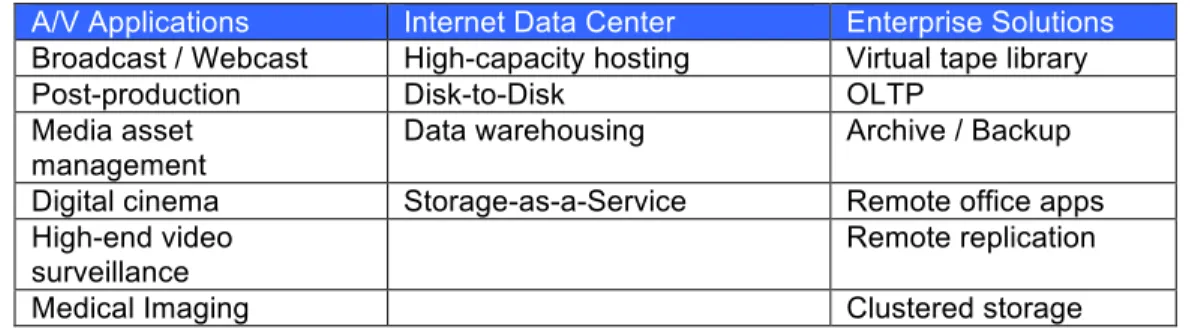
performance and availability for 24/7 business continuity. PROMISE VTrak is fully optimized for use in:
2 Report to Congress on Server and Data Center Energy Efficiency Public Law 109-431, EPA,
http://www.energystar.gov/index.cfm?c=prod_development.server_efficiency_study. Reduced Costs? In today’s economic climate, cost reduction is essential. Major providers often point out that what today businesses’ spend on maintaining existing infrastructure still remains an estimated 70 percent, leaving only 30 percent or less for new technology initiatives and applications. This often results in a situation where businesses are straddled with higher expenditures on sustaining routine work instead of investing in technology innovations. The need to grow data rapidly with diminished resources and obsolete systems has always been challenging for many CIOs. Cloud computing has become a viable option to optimize cost savings, reduce business capital and operational expenses. However, cloud computing does not always save money. It depends on your current investment in IT infrastructure, the types of workloads and applications you want to deploy, and the cost of risk within your business. For example, cloud computing can be expensive if it is used to exercise on‐premise work with an exact duplicate of that work in the cloud. Companies should take all factors into account before deciding whether to commit resources to the cloud.
A/V Applications Internet Data Center Enterprise Solutions
Broadcast / Webcast High-capacity hosting Virtual tape library
Post-production Disk-to-Disk OLTP
Media asset management
Data warehousing Archive / Backup
Digital cinema Storage-as-a-Service Remote office apps
High-end video surveillance
Remote replication
Medical Imaging Clustered storage
The Promise VTrak E-Class and J-Class subsystems offer fully redundant active/active RAID and JBOD solutions with both DAS or SAN connectivity. These products offer incredible drive
flexibility with support for both 6G and 3G SAS and SATA drives to allow the user to choose the disk media that best fits their needs.
PROMISE also offers comprehensive data management and protection, featuring predictive data migration and high availability with no single point of failure. PROMISE’s comprehensive data management solution offers outstanding price performance, flexibility and a cost-effective offering that allows you to stretch your technology investment.
PROMISE technologies that help provide critical storage capabilities and power cloud
infrastructures both now and in the future are included in Table 1 below. This suite of hardware and software capabilities helps increase storage efficiency and is a standard part of many VTrak solutions.
Table 1) PROMISE Efficient Storage Technologies
Technology Benefits
RAID 6 Intelligent RAID 6 with dual independent parity coding schemes for extra data protection if two disks fail at once.
IP-SAN Simplicity Rich iSCSI/IP SAN features give network
administrators the flexibility to solve tough storage problems with minimum disruption to clients. Predictive Data Migration PROMISE’S unique technology that proactively
detects possible drive failures before they can occur and migrates data to a new healthy drive. Predictive Data Migration dramatically reduces the potential for data loss as well as the likelihood of a logical drive (array) going critical.
VMware Ready Certification PROMISE VTrak E-Class Fibre Channel RAID subsystem certified with VMware vSphere™ and listed on the VMware Hardware Compatibility List. PROMISE Array Management Utility application for configuring and monitoring RAID
through a single management console reduces storage management complexity.
VTrak E-Class Secure Network Management
SSL and SSH (128 bit encryption); WebPAM PROe administration tool; performance monitoring; SNMP and email alerts.
Multiple-Path-Failover Multi-path failover and driver supports enterprise-class multipathing and load balancing.
GreenRAID Power-Scheduling
Allows systems (including JBODs) to power-on from standby mode to run user-scheduled tasks such as backups and archives. The system then goes into standby mode until the next scheduled task. Non-stop Firmware Upgrades Promise Technology is committed to providing high
quality service and support to its customers including non-stop firmware upgrades for system software.
Conclusion
Cloud computing is first and foremost a new style of IT delivery – a delivery model which gives a highly scalable, quickly provisionable, pay-as-you-go face to IT services, and does so in a way that allows customers to consume technology in a highly standardized fashion. Whether a cloud is public or private, the key to success is creating an appropriate server, network and storage infrastructure in which all resources can be efficiently utilized and shared.
The PROMISE advantage in Cloud storage is 20 years experience of its own RAID engine. PROMISE has already shipped more than 15 million RAID controllers all over the world, And as compared to other international storage companies, PROMISE is offering more price competitive storage products to cloud service providers. PROMISE also has a global service network. Local support offers zero time difference and local language support, meaning superior customer service.
PROMISE complete portfolio of flexible, scalable RAID platforms and proven technologies help provide critical storage capabilities and power cloud infrastructures. PROMISE is committed to helping organizations turn their IT infrastructure into a more predictable cost structure with pay-as-you-grow efficiency, elastic scaling and data access anytime, anywhere.
Whether you plan to build your own dynamic data center or to outsource some or all of your IT to one of our service provider partners, PROMISE cloud infrastructure solutions can help you improve cost efficiency, accelerate IT services delivery, and enable your business breakthrough ideas.
© 2010 PROMISE Technology, Inc. All Rights Reserved. PROMISE, the PROMISE logo, VTrak, SmartStor, SuperTrak, FastTrak, VessRAID, Vess, PerfectPATH, PerfectRAID, SATA150, ULTRA133 and GreenRAID are registered or pending trademarks of PROMISE Technology, Inc. in the U.S. and other countries. All other trademarks are the property of their respective owners. Information regarding products, services and offerings may be superseded by subsequent documents and are subject to change without notice. For the latest information and specifications regarding PROMISE Technology, Inc. and
any of its offerings or services, please contact your local PROMISE office or the corporate headquarters.
Contact Us
Promise USA Milpitas, CA 1-408-228-1400 [email protected] Promise EMEAEl Son, The Netherlands 31-40-235-2600 [email protected] Promise Germany Dortmund, Germany 49-02-31-56-76-48-0 [email protected] Promise Italy Rome, Italy 0039-06-3671-2626 [email protected] Promise UK Workingham, England 44-0-870-112-59-77 [email protected]) Promise Taiwan Hsin-Chu, Taiwan 886-3-578-2395 [email protected] Promise China Beijing, China 8610-8857-8085 or 8095 [email protected] Promise Japan Tokyo, Japan 81-03-6801-8063 [email protected] Promise ANZ Sydney, Australia 61-2-8065-2055 [email protected]