INTERPERSONAL VIOLENCE AND HIV SEXUAL RISK BEHAVIORS: THE INFLUENCE OF ALCOHOL HARM REDUCTION AND EARLY INITIATION OF SEX WORK AMONG FEMALE SEX WORKERS IN
MOMBASA, KENYA
Angela M. Parcesepe
A dissertation submitted to the faculty of the University of North Carolina at Chapel Hill in partial fulfillment of the requirements for the Degree of Doctor of Philosophy in the Department of Maternal and Child
Health.
Chapel Hill 2015
Approved by: Sandra L. Martin
Sherri Green Kelly L’Engle
Audrey Pettifor Ilene Speizer
ii © 2015
iii ABSTRACT
Angela M. Parcesepe: Interpersonal Violence and HIV Sexual Risk Behaviors Among Female Sex Workers in Mombasa, Kenya: The Influence of Alcohol Harm Reduction and Early Initiation of Sex Work
(Under the direction of Sandra L. Martin)
Female sex workers (FSWs) are at high risk of interpersonal violence and HIV infection. The first paper investigated whether an alcohol harm reduction intervention was associated with reduced
interpersonal violence or HIV sexual risk behaviors among FSWs in Mombasa, Kenya. The sample was comprised of 818 FSWs in Mombasa, Kenya who were 18 years or older, associated with HIV prevention drop-in centers and moderate risk drinkers. General linear mixed models examined associations between intervention assignment (alcohol harm reduction or nutrition intervention) and recent violence from paying and non-paying sex partners and HIV sexual risk behavior (engagement in sex work, total number of sex partners) at 6 and 12 months post-enrollment. The alcohol intervention was associated with statistically significant decreases in engagement in sex work and sexual violence from paying partners at 6 and 12 months post-enrollment and physical violence from paying sex partners at 12 months post-enrollment. Future research should explore mechanisms through which alcohol reduction leads to reduced violence among FSWs (i.e., reduced risk-taking, economic empowerment). More research is needed to understand whether alcohol reduction leads to reduced violence among FSWs who continue to engage in sex work or through discontinuation of sex work.
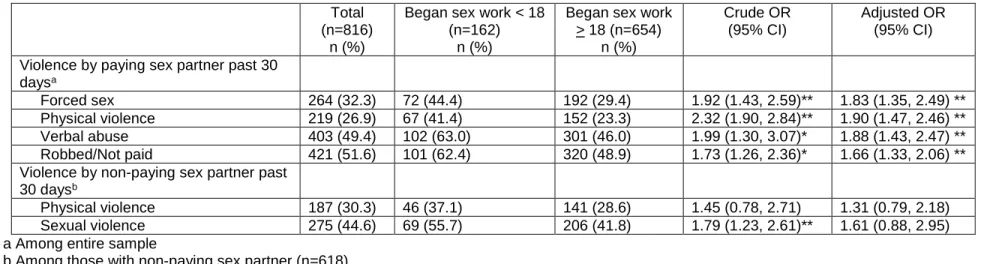
Between 20-40% of FSWs worldwide began sex work before age 18. The second paper investigates whether early initiation of sex work (sex work at 17 or younger) was associated with recent interpersonal violence or HIV sexual risk behaviors. Logistic regression was performed, adjusting for drop-in center, current age, HIV status, and childhood abuse. Twenty percent of the sample reported early initiation of sex work. Early initiators were significantly more likely to experience recent physical and sexual violence from paying partners and less likely to report consistent condom use with paying
iv
v
ACKNOWLEDGEMENTS
I would like to express my sincere gratitude to all those who provided support for this work. Specifically, I would like to thank Sandra L. Martin for her continued support and advice over the years, Kelly L’Engle for her encouragement and insight, and my dissertation committee – Sandra L. Martin, Sherri Green, Kelly L’Engle, Audrey Pettifor, Ilene Speizer, and Chirayath Suchindran – for their feedback
throughout this process. I would also like to thank my parents for their unwavering support of me throughout my life and most especially, Rachel, for taking this journey with me, for believing in the value of this work, and for always reminding me of the importance of work that is rooted in justice and equality.
I would also like to thank FHI 360 for the FHI-UNC Public Health Fellowship and for their
continued generosity and support. Finally I would like to thank the nurse-counselors, drop-in center staff, and especially, the women who participated in this research study for their time and trust.
vi
TABLE OF CONTENTS
LIST OF TABLES ... viii
LIST OF FIGURES ... ix
LIST OF ABBREVIATIONS... x
CHAPTER 1: INTRODUCTION ... 1
1.1 HIV Incidence and Prevalence in Kenya ... 1
1.1.1 HIV Incidence and Prevalence among the General Population in Kenya ... 1
1.1.2 HIV Incidence and Prevalence among Female Sex Workers in Kenya ... 1
1.2 Violence ... 2
1.2.1 Violence Against Female Sex Workers... 2
1.2.2 Violence and Risk of HIV ... 3
1.3 Alcohol Use ... 4
1.3.1 Alcohol Use Among Female Sex Workers ... 4
1.3.2 Alcohol Use and Violence Against Female Sex Workers ... 5
1.3.3 Alcohol Use and HIV Risk among Female Sex Workers ... 6
1.4 Early Initiation of Sex Work ... 6
1.4.1 Early Initiation of Sex Work and Violence ... 7
1.4.2 Early Initiation of Sex Work and HIV Risk ... 7
1.5 HIV Prevention ... 8
1.5.1 Interventions to Prevent HIV Transmission in Generalized Epidemic Settings ... 8
1.5.2 HIV Risk Reduction Strategies ... 8
1.5.3 HIV Risk Reduction Interventions with Female Sex Workers ... 9
1.6 Significance ... 10
1.7 Theoretical Frameworks ... 11
vii
1.7.2 Life Course Theory... 11
CHAPTER 2: DATA ... 13
CHAPTER 3: PAPER 1, THE IMPACT OF AN ALCOHOL HARM REDUCTION INTERVENTION ON INTERPERSONAL VIOLENCE AND HIV SEXUAL RISK BEHAVIOR AMONG FEMALE SEX WORKERS IN MOMBASA, KENYA: RESULTS FROM A RANDOMIZED CONTROLLED TRIAL ... 15
3.1 Background ... 15
3.2 Methods ... 16
3.3 Results ... 20
3.4 Discussion ... 22
CHAPTER 4: PAPER 2, INTERPERSONAL VIOLENCE AND HIV SEXUAL RISK BEHAVIORS AMONG FEMALE SEX WORKERS IN MOMBASA, KENYA: THE INFLUENCE OF EARLY SEX WORK INITIATION ... 31
4.1 Background ... 31
4.2 Methods ... 33
4.3 Results ... 37
4.4 Discussion ... 40
CHAPTER 5: CONCLUSION ... 52
5.1 Key Findings... 52
5.2 Intervention Implications ... 53
5.2.1 Alcohol Harm Reduction ... 53
5.2.2 Early Initiation of Sex Work ... 54
5.3 Future Research ... 54
5.3.1 Alcohol Harm Reduction ... 54
5.3.2 Early Initiation of Sex Work ... 55
viii
LIST OF TABLES
Table 3.1 Characteristics of Sample at Baseline ... 26
Table 3.2 Interpersonal Violence ... 28
Table 3.3 HIV Sexual Risk Behaviors ... 29
Table 3.4 Intervention Effect on Incidence of Interpersonal Violence ... 29
Table 3.5 Intervention Effect on Incidence of HIV Sexual Risk Behaviors ... 30
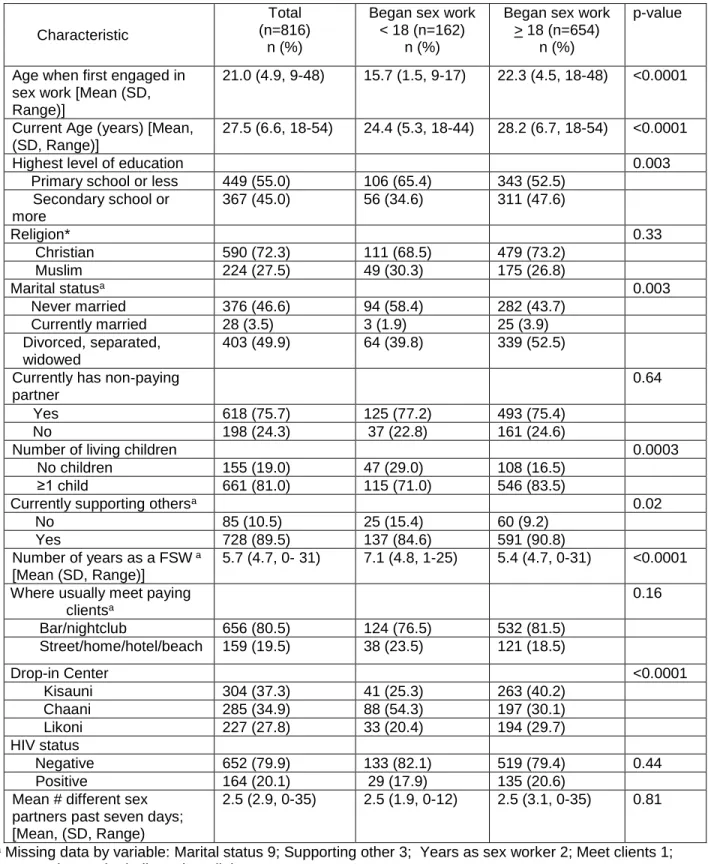
Table 4.1 Sociodemographic Characteristics of Sample by Early Initiation of Sex Work ... 46
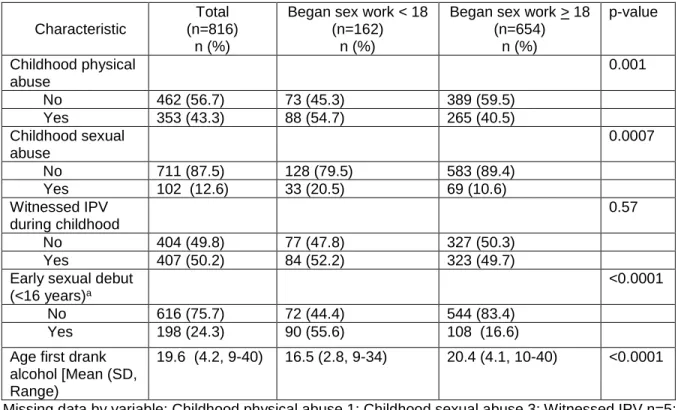
Table 4.2 Early Initiation of Sex Work and Early Risk Experiences... 47
Table 4.3 Prevalence of Recent Interpersonal Violence by Early Initiation of Sex Work ... 48
Table 4.4 Early Initiation of Sex Work and Violence-Related Self-Efficacy and Gender Norms ... 49
Table 4.5 HIV Sexual Risk Behaviors in Past 30 Days by Early Initiation of Sex Work ... 50
ix
LIST OF FIGURES
x
LIST OF ABBREVIATIONS
AIDS Acquired Immunodeficiency Syndrome
APHIA AIDS, Population, Health and Integrated Assistance AUDIT Alcohol Use Disorders Identification Test
BI Brief Intervention CI Confidence Interval CSA Childhood sexual abuse ELISA Enzyme Immunoassay FSW(s) Female sex worker(s)
HIV Human Immunodeficiency Virus IPV Intimate Partner Violence IRB Institutional Review Board MARP Most At-Risk Populations RCT Randomized Controlled Trial
SAPTA Substance Abuse Prevention and Treatment Association SAVA Substance Abuse, Violence and AIDS
STI(s) Sexually Transmitted Infection(s) UN United Nations
1
CHAPTER 1: INTRODUCTION
1.1 HIV Incidence and Prevalence in Kenya
1.1.1 HIV Incidence and Prevalence among the General Population in Kenya
With the highest national HIV prevalence outside of Southern Africa, Kenya is experiencing a severe, generalized HIV epidemic. An HIV epidemic is considered generalized if greater than 1% of the general population is infected (1). According to estimates obtained in 2011, HIV prevalence among adults aged 15-49 in Kenya is 6.2% (2). Approximately 1.6 million people are living with HIV in Kenya, with 91,000 new infections among adults in Kenya each year.
1.1.2 HIV Incidence and Prevalence among Female Sex Workers in Kenya
HIV prevalence among high risk populations far exceeds the national prevalence. While
estimates of the number of sex workers in Kenya vary, according to the 2009 Kenyan Demographic and Health Survey, approximately 6.6% of women living in urban areas in Kenya have exchanged sex for money in the past year (3). This relatively small group of individuals bears a disproportionate burden of HIV infection. Between 20%-45% of female sex workers (FSWs) in Kenya are HIV-positive, with one of every three new HIV infections in Kenya occurring among FSWs (2,4). A meta-analysis estimated that FSWs in Kenya have 9.8 (95% CI 9.4-10.3) times the odds of HIV infection compared with the general population of Kenyan women aged 15-49 (4).
There are many reasons HIV prevention interventions often focus on female sex workers.
Nationally, 14% of HIV incidence in Kenya has been attributed to commercial sex (2). FSWs contribute
disproportionately to the spread of HIV in the general population in two main ways. First, rates of new sexual partner acquisition among sex workers are significantly higher than the general population. By acquiring new sexual partners at a high rate, HIV-positive sex workers disproportionately contribute to the spread and persistence of HIV (5). Among sex workers on the trans-Africa highway from Mombasa, Kenya to Kampala, Uganda, the annual number of sex acts per sex worker was estimated to be 634, with
2
HIV infections occur each year among sex workers and their clients along this highway (6). With high
rates of new partner acquisition, the potential for forward transmission of HIV from an infected sex worker
to other partners has been estimated to be more than 100 times greater than from other people living with
HIV (3). Second, HIV prevalence in a population is influenced by the degree of assortative mixing in a
population, that is, the degree to which high-risk individuals have sex with other high-risk individuals and low-risk individuals have sex with other low-risk individuals. Low assortative mixing (i.e., high-risk
individuals having sex with low-risk individuals) hastens the spread of HIV in the general population (5). In general, sex workers engage in low assortative mixing. Given the transmission dynamics of HIV, FSWs are uniquely positioned to prevent further spread of HIV in the general population. For these reasons, this research focuses on reducing HIV risk behaviors specifically among FSWs as doing so can have a radiating effect of reducing HIV risk and incidence throughout the general Kenyan population.
1.2 Violence
1.2.1 Violence against Female Sex Workers
Research throughout the globe indicates that FSWs are at particularly high risk of violence (7-12). A study of FSWs in Namibia found that 72% reported having experienced violence perpetrated by clients, intimate partners, or the police (13). A study of FSWs in Australia found that 81% reported having ever been raped (14). Over half (57%) of sex workers in South Africa and Thailand reported having been raped while working (15). A study of substance-abusing FSWs in Pretoria, South Africa found that 82% had ever experienced physical violence and 51% had ever experienced sexual violence, with 64% reporting violence from at least one of their last ten clients (16).
Consistent with studies of FSWs in other countries, FSWs in Kenya report high levels of violence.
Among FSWs surveyed in Coast Province, Kenya, 77% reported having ever experienced physical or
sexual violence, with 30% reporting that such violence occurred regularly (17). Similarly, one-third (32%)
of FSWs in Mombasa reported sexual violence from a paying partner in the past year (18) and 29% of FSWs in Meru, Kenya, reported forced sex in the previous six months (19). Among FSWs in urban and
3
1.38, 3.95) times the odds of having experienced forced sex compared to women not engaged in sex work (21). Qualitative research among FSWs in Kenya also indicates that violence against FSWs is common (22).
In addition to experiencing violence in adulthood, childhood sexual abuse (CSA) is common among FSWs across countries, and more common among FSWs compared to women not engaged in sex work (23,24). A study of violence in South Africa, Thailand, Turkey, and Zambia found that 66%, 48%, 34%, and 84% of FSWs, respectively, experienced CSA (25). An analysis of FSWs in Mombasa with a current non-paying sexual partner found that 47% reported having experienced physical or sexual abuse during childhood (26). FSWs are also more likely to experience penetrative CSA and rape in childhood as compared to women not engaged in sex work (23). Similar results have been found among women incarcerated for sex work (24,27).
From studies of women in general populations, evidence indicates that forms of violence tend to co-occur so that women who experience violence often experience multiple forms of violence
concurrently, violence from multiple perpetrators, and violence across multiple life stages (e.g. childhood, adulthood) (28). For example, women who experience CSA are at increased risk of experiencing physical abuse in childhood and sexual violence in adolescence and adulthood (29-31). Similarly, a study of women seeking antenatal care in Kisumu, Kenya found that women who reported witnessing maternal abuse in childhood had 2.3 (95% CI 1.1-4.9) times the odds of having experienced intimate partner violence (IPV) during pregnancy as compared to women who did not witness maternal abuse during childhood (32). Women who experience IPV often report experiencing multiple forms of IPV (e.g., physical, sexual, emotional) concurrently (33,34). Furthermore, prior sexual violence has consistently been associated with repeat sexual victimization (35). While limited, evidence indicates that similar patterns exist among FSWs, such that FSWs who experience violence may experience multiple forms of violence, violence from multiple types of perpetrators and violence across the life course.
1.2.2 Violence and Risk of HIV
4
transactional sex, and sexually transmitted infections (STIs) compared to women who do not report IPV (39-41).
Consistent with findings from women in general populations, among FSWs, violence has also been associated with increased risk of HIV (8,9,42), STI symptoms (43) and infections (11), and
unprotected sex. While little is known about the association between violence and HIV risk among FSWs in Kenya, IPV has been associated with HIV among other high-risk women in Kenya. Among women who attended an STI clinic in Nairobi, those who experienced physical or sexual IPV were 1.8 times as likely to be HIV positive compared to those who did not report IPV (44).
Experiences of violence contribute significantly to increasing women’s risk of HIV infection
through biological, behavioral, and social mechanisms (45-47). Past experiences of violence contribute to sexual risk taking (e.g., unprotected sex, anal sex) and often limit the success of HIV risk reduction strategies (e.g., consistent condom use). Sexual violence has been linked to conflicts over condom negotiation, with women less able to negotiate safer sex in violent situations (48). A meta-analysis of studies of women in general populations found that women who experienced violence had 1.69 (95% 1.27-2.25) times the risk of reporting unprotected sex compared to women who did not report violence (39). Among women in the general population, women who experience IPV have 1.6 times the odds of testing positive for syphilis and 1.8 times the odds of testing positive for chlamydia or gonorrhea compared to women who have not experienced IPV (39). STIs increase the risk of HIV transmission during unprotected sex (49). In addition, recent evidence indicates that, among FSWs, HIV risk may differ
by type of violence. For example, among FSWs in Moscow, violence perpetrated by paying clients, but not pimps, was associated with increased STI prevalence (11).
Similar to violence during adulthood, violence during childhood has been associated with HIV sexual risk behaviors among women in general populations and among FSWs. Childhood abuse has been associated with early sexual debut, multiple sexual partners, unprotected sex, having partners at high risk for HIV infection, and STIs (50-52).
1.3 Alcohol
1.3.1 Alcohol Use among Female Sex Workers
5
A review of studies of alcohol use among FSWs found that 81%-100% of FSWs had ever drunk alcohol, with 12%-78% of FSWs reporting drinking alcohol daily and 24%-92% of FSWs reporting drinking alcohol monthly (53). Similar to findings from other counties, a study of urban FSWs in Nairobi, Kenya found that 77% reported prior alcohol use (55). Binge drinking (generally defined for women as 4 or more drinks on a single occasion) is also prevalent among FSWs (53). A study of FSWs in Russia found that 69% reported binge drinking in the past year (56). A study of FSWs in South Africa found that 26% of FSWs reporting binge drinking weekly while 18% reported binge drinking daily (57). Similar to findings from FSWs in other countries, alcohol use and binge drinking are common among FSWs in Kenya with 45% of FSWs surveyed in Kenya reporting non-binge drinking and 33% reporting binge drinking monthly (18).
Research suggests that alcohol is commonly used by FSWs to facilitate participation in
commercial sex. A study of FSWs in Guyana found that 88% reported regular alcohol use while looking for clients (58). Similarly, a survey of FSWs in China found that 42% of FSWs reported alcohol use during sex work (59). Among street-based FSWs in Armenia, 50% used alcohol prior to sex with clients (60). Similar to findings in other countries, 82% of FSWs surveyed in Kenya who reported binge drinking also reported having had sex with clients while intoxicated (18). In addition, FSWs often report being
encouraged or coerced to drink alcohol by clients and pimps. A study of FSWs in Armenia found that 24% of FSWs reported being forced by clients to drink alcohol before sex (60).Similarly, FSWs in Cambodia have reported being coerced by clients to use alcohol before sex (61).
1.3.2. Alcohol Use and Violence Against Female Sex Workers
Alcohol use has consistently been associated with violence against FSWs (16,53,54,62). However, longitudinal studies of violence and alcohol use among this population are rare making it impossible to determine the timing of violence relative to alcohol use.
Alcohol use is likely to increase one’s vulnerability to violence through impaired judgment and
reasoning skills and increased risk taking (63). A study of FSWs in Papua New Guinea who experienced sexual violence found that 67% were under the influence of alcohol at the time of the assault (64).
6
(56). Similar to findings in other countries, binge drinking has been associated with increased odds of sexual violence among FSWs in Kenya (18).
FSWs may also use alcohol to self-medicate as a result of violence or other previous traumas (66). For example, among former FSWs in Korea, experiencing symptoms of post-traumatic stress disorder was associated with alcohol use (67).
1.3.3. Alcohol Use and HIV Risk among Female Sex Workers
Alcohol use has been consistently associated with HIV risk behaviors among FSWs (3,62). A study of rural FSWs in Malawi found that alcohol use was associated with unprotected sex (68). Similarly, a study of FSWs in Kenya found that binge drinkers were more likely to report unprotected sex and more likely to have an STI compared to non-binge drinkers (18). In addition, HIV prevalence was higher among FSWs who had ever drunk alcohol compared to those who never drank alcohol (18). Daily alcohol use among FSWs in Kenya was associated with having had anal sex, a behavior that increases risk of HIV transmission (69). Qualitative research also supports the association between alcohol and HIV risk behavior. In an ethnographic study of FSWs in India, FSWs reported that drinking alcohol hindered their ability to effectively negotiate condom use (70).Similar relationships between alcohol consumption and condom use have been described in qualitative research with FSWs in Zambia (71).
1.4 Early Initiation of Sex Work
Early initiation of sex work is common among FSWs worldwide. Approximately 20%-40% of FSWs across countries initiated sex work when they were younger than 18 with a mean age of sex work initiation of 16 or younger (72-75). The United Nations (UN) Protocol to Prevent, Suppress and Punish Trafficking in Persons, especially Women and Children categorizes all individuals engaged in sex work
under 18 years of age as trafficked, irrespective of the circumstances surrounding their entry into sex work (74). Across global settings 19%-50% of adult FSWs were coerced or forced into sex work when they were younger than 18 (76,77). FSWs who began sex work as minors are more likely to have been coerced into sex work than FSWs who began sex work as adults (77,78). Economic vulnerability, childhood abuse, family violence, homelessness and limited social support increase young women’s
7 1.4.1 Early Initiation of Sex Work and Violence
Early initiation of sex work has been associated with increased risk of interpersonal violence. Adolescent FSWs are at increased risk of violence compared to adult FSWs. Among FSWs in India, those who were younger than 25 were more likely to report recent physical or sexual violence than FSWs who were 25 or older (80). Early initiation of sex work has also been associated with increased risk of violence into adulthood. Among adult FSWs in Thailand, those who initiated sex work between 14 and 18 years old were more likely to report recent physical or sexual violence than those who initiated sex work at older ages (81). Similarly, among adult FSWs in India, those who reported recent physical or sexual violence were more likely to have initiated sex work at a younger age (i.e., <20 years) than those who did not report recent violence (80). Violence has been consistently associated with increased risk of HIV (6-8), STIs (16), and HIV sexual risk behaviors, including inconsistent condom use among FSWs.
1.4.2 Early Initiation of Sex Work and HIV Risk
Early initiation of sex work is associated with increased HIV prevalence and sexual risk behaviors among FSWs during adolescence and adulthood. Studies of FSWs in India found that FSWs younger than 20 were 2 to 4 times as likely to be HIV positive compared to FSWs 20 years or older (82-84). Increased risk of HIV among young FSWs has been attributed to biological and behavioral pathways. Biologically, younger women have larger areas of cervical ectopy which increases risk of HIV
transmission (82,85). Further, the genital track of adolescent girls is immature and more likely to tear due to violence or other trauma, increasing the risk of HIV transmission (82). Larger age differences between adolescent FSWs and sexual partners likely contribute to decreased relational power and autonomy and reduced self-efficacy in engaging in HIV risk reduction strategies such as consistent condom use (86). In addition, adolescent FSWs have poor access to HIV prevention services, including HIV testing and free condom distribution (79).
As expected, early initiation of sex work is also associated with increased risk of HIV infection into adulthood. Among adult FSWs in Thailand, those who initiated sex work at 14 or younger were
8
with HIV sexual risk behaviors among adult FSWs including recent unprotected transactional sex, recent alcohol use before transactional sex, and servicing clients in public places (78,89,90).
1.5 HIV Prevention
1.5.1. Interventions to Prevent HIV Transmission in Generalized Epidemic Settings FSWs have been identified as a key population for targeted HIV prevention programs in
concentrated and generalized HIV epidemic settings (91-93). Although in generalized epidemics, HIV can be sustained by the general population (beyond the contribution of most-at-risk populations or MARPs), modeling studies have illustrated that, in generalized epidemic settings, the most significant reductions in HIV incidence result from interventions that target MARPs, including FSWs. A systematic review of mathematical models of heterosexual HIV transmission found that prevention strategies aimed at MARPs have the potential to reduce HIV transmission in high-prevalence settings (e.g. settings where HIV prevalence in the general population is >5%) (94). In such settings, interventions that targeted FSWs, were estimated to avert between 7% and 40% of new HIV infections over 20 years (95), reduce HIV prevalence by 13–27% over 10–30 years (95,96), and reduce HIV incidence by 2–14% over 1 year
(94,97). Experts in HIV prevention have renewed calls for interventions to reduce HIV risk among MARPs, including FSWs, in generalized epidemic settings such as in Kenya (91,92).
1.5.2. HIV Sexual Risk Reduction Strategies
Several strategies have been associated with reducing the risk of HIV transmission during heterosexual sex including: consistent condom use, partner reduction, STI treatment, and refraining from alcohol prior to sex.
Consistent condom use: When used correctly, male condoms effectively prevent HIV
transmission during heterosexual sex. A Cochrane review of condom effectiveness in reducing HIV transmission through heterosexual sex found that consistent use of condoms (i.e. condom use during all acts of vaginal intercourse) during heterosexual sex resulted in an 80% reduction in HIV incidence when compared to never using condoms during sex (98).
STI treatment: STIs facilitate the transmission of HIV during unprotected heterosexual sex (49).
9
Partner reduction: The rate of sexual partner change is a fundamental determinant of the spread
of STIs, including HIV (5). Strategies that promote reducing the number of sexual partners, particularly among high-risk groups, such as FSWs, have been associated with decreased HIV risk (99).
Refraining from alcohol before sex: Alcohol use before sex has been associated increased HIV
risk behaviors in part, through impaired decision-making and judgment as well reduced capacity to effectively negotiate condom use (3). Among FSWs, associations have been found between alcohol consumption and unprotected sex, anal sex, and STIs (54). Similarly, a study of FSWs in Kisauni, Kenya, found that FSWs who reported binge drinking were more likely to report inconsistent condom use and to report that a condom had burst, compared to non-binge drinking FSWs (18).
1.5.3. HIV Risk Reduction Interventions with Female Sex Workers
A number of interventions have been advanced to reduce HIV infection and transmission among FSWs. A review assessed the effectiveness of behavioral interventions (i.e., interventions based on social cognitive theory, community empowerment, microenterprise, peer education, manager training, promotion of condom use, STI screening, and voluntary counseling and testing) to reduce HIV transmission among FSWs and their clients in low- and middle-income countries (100). Condom promotion, peer education, STI screening, voluntary counseling and testing, and social cognitive theory-based interventions were associated with reduced incidence or prevalence of STIs among FSWs (100). In addition, community empowerment interventions were associated with an increase in consistent condom use with regular partners (100).
Given the high prevalence of violence and consistent association between violence and HIV risk behaviors among FSWs, addressing interpersonal violence has also been identified as a key strategy to prevent HIV among FSWs (47,101). A recent modelling study estimated that reducing violence among FSWs in Kenya from 32% to 2% between 2011 to 2016 would result in a 27% reduction in HIV incidence among FSWs and a 12% reduction among the adult population, the equivalent of 21,200 infections averted among FSWs and 53,200 among the general population in this time period (102). Reducing violence among FSWs can have a significant impact in reducing HIV incidence among FSWs and throughout Kenya.
10
use and HIV risk behaviors (18,103), HIV risk reduction interventions have begun to focus on alcohol reduction as a mechanism to reduce HIV risk behaviors among FSWs. Evidence suggests that HIV risk reduction interventions that incorporate alcohol reduction messaging are effective at reducing HIV sexual risk. Few studies have examined whether an intervention focused solely on alcohol harm reduction was also associated with reductions in HIV sexual risk behaviors and none have examined whether such an intervention was associated with reductions in interpersonal violence. Given the consistent findings that violence and alcohol use are highly prevalent among FSWs and associated with HIV sexual risk behaviors, greater understanding of the nature of these relationships is needed.
1.6. Significance
Across global settings, FSWs are at increased risk of interpersonal violence and HIV sexual risk behaviors. Despite the high prevalence of violence and HIV sexual risk behaviors among this population, substantial gaps in the literature on this topic remain. Such gaps hinder our ability to develop appropriate and effective interventions to prevent and respond to violence against FSWs and improve the health and safety of FSWs.
Information is needed on two specific research questions. The first of these questions focuses on whether interventions that exclusively target alcohol harm reduction also reduce interpersonal violence and HIV sexual risk behaviors. Alcohol use is highly prevalent among FSWs and associated with
interpersonal violence and HIV sexual risk behaviors. Greater understanding of the relationships between alcohol harm reduction, violence, and HIV sexual risk behaviors can inform the development and
implementation of more effective interventions to reduce violence and HIV risk among FSWs, in turn, reduce HIV risk among FSWs’ sexual partners and the general Kenyan population. The second question
11
the health and safety of adolescent and adult FSWs and avert future HIV infections among FSWs and the general population.
The aims of this dissertation are:
Paper 1/Aim 1: To investigate whether an alcohol harm reduction intervention was associated
with reduced incidence of multiple forms of interpersonal violence and HIV sexual risk behaviors among female sex workers in Mombasa, Kenya.
Paper 2/Aim2: To investigate if early initiation of sex work was associated with multiple forms of
interpersonal violence, HIV sexual risk behaviors, violence- or HIV risk-related self-efficacy, or gender norms among female sex workers in Mombasa, Kenya.
Each dissertation aim described above is addressed in a separate paper, followed by an overall conclusion describing the implications of this research for intervention development as well as directions for future research.
1.7. Theoretical Frameworks 1.7.1 Syndemic Theory
This first paper of this dissertation is informed by syndemic theory. Syndemic theory was developed by Merrill Singer and posits that health and social conditions synergistically interact placing socially devalued groups at increased risk and creating barriers to engagement in health-promoting behaviors (104-106). Specifically, the synergistic interaction of substance use, violence and HIV risk, known as the Substance Use, Violence and AIDS syndemic (SAVA) suggests that substance use,
violence, and HIV risk are interconnected, mutually reinforcing health concerns contributing to poor health among vulnerable groups such as female sex workers (104,105). By examining how an intervention that exclusively targets one component of the SAVA syndemic - alcohol use - influences the other two
components - interpersonal violence and HIV risk – this dissertation can provided needed insight into how
health issues interrelate and can illuminate potential intervention strategies to effectively address alcohol use, violence and HIV risk among female sex workers.
1.7.2 Life Course Theory
12
disease patterns across a person’s lifetime (107). Life course theory asserts that individuals experience a
13
CHAPTER 2: DATA
Data used for this dissertation were collected from March 2011 to October 2012 as part of a randomized controlled alcohol harm reduction intervention study with FSWs in Mombasa, Kenya. The primary objective of the original study was to investigate whether an intervention to change alcohol use among a cohort of FSWs in the Coast Province of Kenya reduced self-reported frequency of alcohol use and binge drinking, lab-confirmed STIs (gonorrhea, chlamydia, and trichomoniasis) or HIV
seroconversion. The study was conducted by FHI360 and the International Center for Reproductive Health, with funding from the United States Agency for International Development (USAID). Dr. Kelly L’Engle served as the Principal Investigator of the study. Study participants were recruited from three
USAID-funded AIDS, Population, Health and Integrated Assistance (APHIA) II drop-in centers in Kisauni, Chaani, and Likoni divisions of the Mombasa district, Kenya. The drop-in centers serve more than 15,000 FSWs in Mombasa through peer-education, condom distribution and access to health services.
The primary study sample was limited to: women who were 18 years of age or older, were registered as part of the APHIA II program, planned to live in Mombasa for at least 12 months following study initiation, reported engagement in transactional sex (i.e., self-report of exchange of any type of sex including oral, anal, or vaginal sex for money or gifts) in the past six months, and were moderate-risk drinkers (i.e., scored between 7 and 19 on the Alcohol Use Disorders Identification Test [AUDIT]). The AUDIT is a World Health Organization (WHO)-validated 10-item, 40-point assessment that was designed for health care workers to identify harmful (AUDIT score 7-15) and hazardous (AUDIT score 16-19) alcohol users, as well as people with possible alcohol dependence (AUDIT score>19).
14
15
CHAPTER 3: THE IMPACT OF AN ALCOHOL HARM REDUCTION INTERVENTION ON INTERPERSONAL VIOLENCE AND HIV SEXUAL RISK BEHAVIORS AMONG FEMALE SEX WORKERS IN MOMBASA, KENYA: RESULTS FROM A RANDOMIZED CONTROLLED TRIAL
3.1. Background
Alcohol use and binge drinking are prevalent among female sex workers (FSWs) worldwide (18,53,54). FSWs drink alcohol for a variety of reasons, including to self-medicate as a result of past trauma and to facilitate participation in commercial sex (66). FSWs often report being encouraged or coerced to drink alcohol by clients and pimps (60,109).
Alcohol use has been consistently associated with HIV risk among FSWs (3,62). Among FSWs in Kenya, binge drinkers were more likely to report unprotected sex and to have a sexually transmitted infection (STI) than non-binge drinkers (18). Daily alcohol use among FSWs in Kenya was associated with anal sex, a behavior that enhances risk of HIV transmission (69).
FSWs are at high risk of violence worldwide (7-12). Among FSWs in Kenya, 77% reported lifetime physical or sexual violence (17). Among FSWs in urban and rural Kenya, 35% reported rape by clients in
the past month (20). Alcohol use has been consistently associated with violence against FSWs (16,53,54,62). Alcohol use may increase vulnerability to violence through impaired judgment and
reasoning and increased risk taking (63). Among FSWs in China, those who experienced sexual coercion were more likely to drink alcohol before sex with clients (65). Binge drinking has also been associated with sexual violence among FSWs in Kenya (18).
16
The primary objective of the current study is to investigate whether an alcohol harm reduction intervention was associated with reduced interpersonal violence or HIV sexual risk behaviors (i.e., engagement in sex work, number of sex partners) among a cohort of FSWs in Mombasa, Kenya. Examining whether an intervention exclusively targeting alcohol use influences violence and HIV risk can illuminate potential pathways and intervention strategies to effectively address alcohol use, violence and HIV risk behaviors among FSWs.
3.2 Methods Sample
Baseline data were collected between March and September 2011 as part of a randomized controlled alcohol harm reduction intervention study with FSWs in Mombasa, Kenya (110). Follow up data were collected between October 2011 and October 2012. The current study took place as part of a parent study that examined the efficacy of an alcohol harm reduction intervention to reduce alcohol use and HIV sexual risk. The primary objective of the original study was to investigate whether the intervention was associated with reduced alcohol use and binge drinking, STIs, or HIV seroconversion among a cohort of FSWs in Mombasa, Kenya. The secondary objectives of the original study were to investigate whether the intervention was associated with condom use or sexual violence. The study was conducted by FHI360 and the International Center for Reproductive Health, with funding from the United States Agency for International Development (USAID). Study participants were recruited from three USAID-funded AIDS, Population, Health and Integrated Assistance (APHIA) II drop-in centers in Mombasa. The drop-in centers serve more than 15,000 FSWs in Mombasa through peer-education, condom distribution and health services.
Women were eligible for study enrollment if they: were 18 years of age or older; were registered as part of the APHIA II program; planned to live in Mombasa for at least 12 months; reported
17 than provided through brief interventions (111).
FSWs provided verbal informed consent for screening prior to AUDIT administration. Eligible FSWs provided written informed consent prior to enrollment. The study protocol for the parent study was approved by ethical research committees at Kenyatta National Hospital and FHI360. The study protocol for the current study was submitted to the University of North Carolina at Chapel Hill’s Institutional Review
Board (IRB) who determined it did not constitute human subjects research.
A total of 818 FSWs were enrolled and followed for 12 months. At enrollment, FSWs were randomly assigned to a six-session intervention (n=410) or six session control arm (n=408). Information about randomization procedures, sample size determination, data confidentiality and linking data over time were previously reported (110). Briefly, participants were individually randomized to the alcohol or nutrition intervention in a 1:1 ratio, separately for each drop-in center. Random assignment was made after volunteers were screened for eligibility, provided consent, and completed baseline data collection.
Intervention
The intervention condition received the World Health Organization’s (WHO) Brief Intervention (BI)
for Hazardous and Harmful Drinking, adapted for the context of alcohol use and sex work by staff from Support for Addictions Prevention and Treatment (SAPTA), a Kenyan substance use prevention and treatment organization (112). The BI was developed for non-treatment seeking, non-dependent
hazardous or harmful drinkers (113). The BI is intended as secondary prevention for alcohol abuse and is informed by Stages of Change theory (110,113). SAPTA staff trained nurse-counselors to implement the intervention and provided clinical supervision. Intervention participants met for six monthly sessions with a trained nurse-counselor. During the first session, nurse-counselors reviewed participants’ AUDIT
screening results and discussed health effects associated with their level of alcohol use. Subsequent sessions included: assessment of motivation and readiness to change, development of goals for low-risk drinking and a habit-breaking plan, implementation of plan to reduce drinking, and discussions of reasons to drink less, management of high-risk situations, coping strategies for boredom and strategies for achieving goals. The equal-attention control condition met for six monthly sessions with a nurse-counselor and received non-alcohol related nutrition information.
18
visit (See Figure 1). Nearly three-quarters of participants (72%) completed five counseling sessions
.
Follow-up and participation rates were comparable between groups.
The alcohol harm reduction intervention demonstrated effectiveness at reducing participants’
drinking frequency and binge drinking at 6 and 12 months post-enrollment (110). The intervention was also associated with significantly reduced incidence of sexual violence among paying sex partners at 6 and 12-months post-enrollment (110). This study examines whether the alcohol harm reduction
intervention was also associated with reductions in multiple forms of interpersonal violence, engagement in sex work and number of sexual partners.
Data collection
Data collection occurred at baseline and 6 and 12 months post-enrollment and included the AUDIT questionnaire, a behavioral interview which included questions on HIV risk behaviors, sex work and violence, and lab-confirmed HIV testing.
Assessment
Alcohol use
Participants were administered the AUDIT questionnaire. The AUDIT is a WHO-validated 10-item, 40-point assessment to identify harmful (AUDIT score 7-15) and hazardous (AUDIT score 16-19) alcohol users, and possible alcohol dependence (AUDIT score>19) (111). Participants were also asked the frequency with which they drank alcohol before sex and the frequency with which they binge drank (defined as 3 or more drinks in one occasion) before sex in the last 30 days. Questions were asked separately for sex with paying and non-paying partners.
Sociodemographics
Sociodemographic variables included age, education, religion, marital status, having a non-paying sex partner, number of living children, number of people supported by respondent, where respondents’ usually meet paying clients, years of sex work, and enrollment site. At study enrollment,
sociodemographic variables were assessed via in-person interview. Interpersonal violence
19
asked separately for violence by paying and non-paying sex partners. Questions about verbal abuse and being robbed were asked only for violence by paying sex partners. Physical violence was defined as having been “beaten or physically abused.” Three types of sexual violence from paying sex partners were
asked about: forced sex, forced to do other sexual things, and forced to have sex without a condom. Verbal abuse was defined as having been “threatened or verbally abused.” Being robbed was defined as having been “robbed or not paid as agreed to by a client.” The survey asked about only one type of
sexual violence from non-paying sex partners: forced sex. Frequency responses to each violence question were dichotomized into having experienced the particular form of violence or not having experienced the particular form of violence in the last 30 days.
Engagement in sex work
Participants were asked how many paying sex partners they had in the last 30 days. Those who reported no paying sex partners in the past 30 days were coded as not having engaged in sex work in the past 30 days. Those who reported at least one paying sex partner in the past 30 days were coded as having engaged in sex work in the past 30 days.
Total number of sex partners
Respondents were asked the total number of different sex partners (paying and non-paying) they had sex with during the last seven days.
HIV testing
At enrollment all participants were tested for HIV. HIV testing followed the Kenya Ministry of Public Health and Sanitation guidelines, beginning with an HIV rapid test and confirmation testing with a different rapid test and/or ELISA or Western Blot assay for HIV positive test result. Participants who tested positive were not retested at subsequent study visits. Participants were provided the results of HIV testing, and those who tested positive were referred to HIV care.
Data Analysis
20
To analyze the relationship between intervention assignment and outcome variables (e.g., interpersonal violence, engagement in sex work, number of sex partners), treatment groups were compared over time using generalized linear mixed models (GLIMMIX) to account for the longitudinal nature of the data and correlations due to sampling via drop-in center. For binary outcome variables, logit link with binomial distribution was used. For total number of sex partners, Poisson distribution with log link was used. All analyses were conducted as intention to treat. Models controlled for sampling due to drop in center and contained a term for main outcome x treatment interaction. Treatment effects were estimated separately at 6 months and 12 months to assess effects immediately post-intervention and 6 months post-intervention. All analyses were conducted using SAS Version 9.3.
3.3 Results Study sample
Descriptive statistics of the sample are provided in Table 3.1. The sample was relatively young with over two-thirds (69.8%) between 18 and 29 years old. More than half (54.9%) reported no formal education. Most (72.4%) were Christian and never married (46.6%) or divorced, separated or widowed (49.9%). The majority (75.8%) had at least one non-paying sex partner. Most were parents (80.9%) and reported supporting others (89.6%). Twenty percent of the sample was HIV positive at enrollment. Approximately two-thirds (64.6%) screened positive for hazardous drinking (i.e., AUDIT scores 7-15) while one-third (35.5%) screened positive for harmful drinking (i.e. AUDIT scores 16-19).
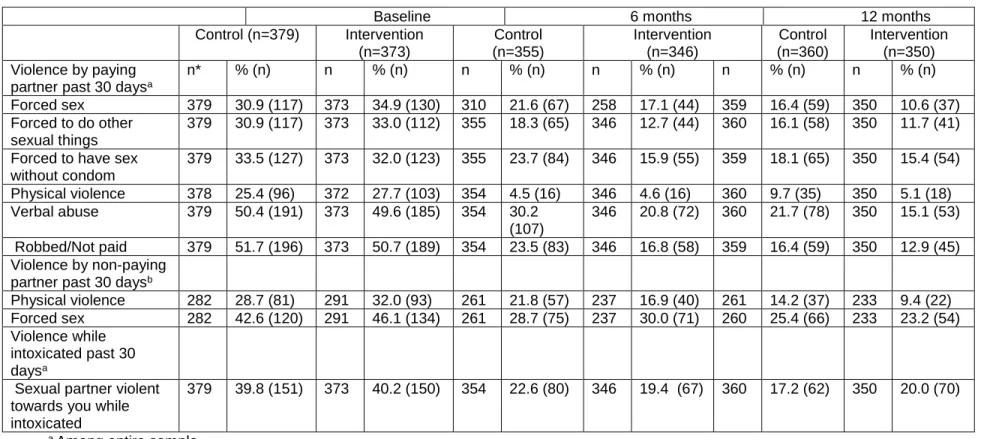
Interpersonal violence
Violence by paying and non-paying sex partners was prevalent at baseline across groups (see Table 3.2). Approximately one-quarter (26.5%) reported recent physical violence, half (50.0%) reported recent verbal abuse, and 32.9% reported recent sexual violence from a paying sex partner. Similarly, 30.4% reported recent physical violence from a non-paying sex partner. No differences were observed in incidence of interpersonal violence in the last 30 days between groups.
Engagement in sex work
21 Number of sex partners
Across groups, participants reported a mean total of 2.54 different sex partners (paying and non-paying) in the past seven days. There was no significant difference between groups in the mean number of sex partners at baseline.
Outcomes of intervention and control groups at follow up
Interpersonal violence
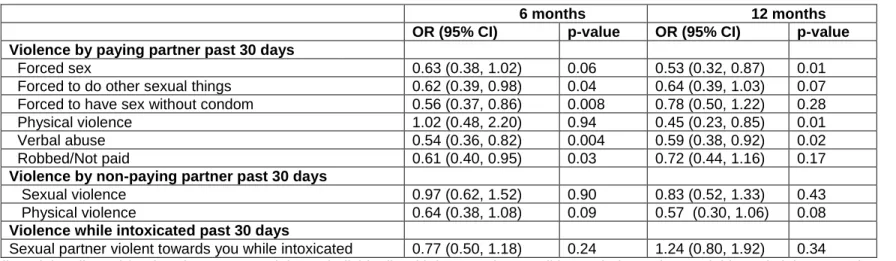
The intervention was associated with reduced sexual violence and verbal abuse by paying sex partners at 6 months post-enrollment (see Table 3.4). Specifically, the intervention was associated with reduced incidence of being forced to do other sexual things and being forced to have sex without a condom by paying sex partners at 6 months post-enrollment. The intervention was also associated with reduced incidence of having been robbed or not paid at 6 months post-enrollment.
Associations between the intervention and reduced incidence of sexual violence and verbal abuse by paying sex partners persisted at 12 months enrollment. Specifically, at 12 months post-enrollment, the intervention was associated with reduced incidence of forced sex by paying partners. At 12 months post-enrollment, the intervention was also associated with reduced incidence of physical violence from paying sex partners. The intervention was not associated with reduced physical or sexual violence from non-paying sex partners at either follow-up point.
Engagement in sex work
The intervention was associated with significantly reduced odds of engaging in sex work at 6 and 12 months post-enrollment (see Table 3.5). Participants who were randomly assigned to the intervention condition had 0.43 (95% CI 0.28, 0.66) times the odds of engaging in sex work at 6 months
enrollment and 0.57 (95% CI 0.38, 0.87) times the odds of engaging in sex work at 12 months post-enrollment.
Number of sex partners
22 3.4 Discussion
This study found that an alcohol harm reduction intervention was associated with decreased violence against FSWs in Mombasa, Kenya. As the intervention focused exclusively on alcohol harm reduction, these findings speak to the interconnectedness of alcohol use and violence among FSWs. The pathways through which the alcohol harm reduction intervention was associated with reduced violence remain unclear. The intervention reduced participants’ alcohol consumption and binge drinking (110). As
alcohol consumption is associated with impaired judgment and increased risk-taking, reduced alcohol consumption may have decreased FSWs’ risk-taking, increased FSWs’ capacity to maintain their
personal safety, and decreased vulnerability to violence. For example, by reducing binge drinking, FSWs’ may have selected ‘less risky’ sex partners (e.g., partners who were not intoxicated) or made decisions
(e.g., where they had sex with paying sex partners) that reduced their risk of violence. Alternately, violence reductions may have resulted from FSWs in the intervention group having fewer sex partners, another indirect effect of the intervention, reducing opportunities for violence. Further, reductions in violence may indirectly result from economic empowerment. It is possible that reduced likelihood of being robbed reduced FSWs’ economic vulnerability, increased economic empowerment, and influenced
selection of sex partners away from violent sex partners and towards non-violent sex partners. Additional research is necessary to understand the mechanism through which alcohol reduction was associated with reduced violence among FSWs –if alcohol reduction led to reduced risk among FSWs who continued sex
work or if alcohol reduction was associated with reduced violence through fewer sex partners or discontinuation of sex work.
23
from non-paying sex partners and risk behavior with paying sex partners warrants further investigation. A history of violence with non-paying sex partners may increase one’s risk behavior with paying sex
partners as well as overall alcohol use and binge drinking. More research is necessary to understand how to most effectively support FSWs and reduce their risk of violence.
The alcohol harm reduction intervention was associated with reduced odds of sex work at 6 and 12 months post-enrollment. The pathway between reduced alcohol consumption and discontinuation of sex work is likely complex. Qualitative data from the parent study indicated that intervention group participants reported increased financial savings from decreased spending on alcohol and increased likelihood of payment by clients (114). Alcohol harm reduction interventions may have significant effects beyond reduced alcohol consumption, including reduced economic vulnerability. Economic vulnerability is a common reason for sex work initiation (61). Among Kenyan FSWs, half reported sex work as their only source of income and 90% had dependent children (20). Reduced alcohol consumption may serve as a first step towards greater economic stability and a catalyst for leaving sex work. However, engagement in sex work is often cyclical and characterized by patterns of exit and re-entry (115). FSWs who left sex work may have subsequently re-entered sex work. More research is needed to understand barriers and facilitators of leaving sex work permanently and the role of alcohol reduction interventions in this process.
In recognition of the link between economic vulnerability and engagement in sex work, economic empowerment programs with FSWs have become more prevalent (116,117). Given the relationship between alcohol use and financial stability, such programs should incorporate alcohol harm reduction into their programming. Jointly addressing economic empowerment and alcohol harm reduction may increase program effectiveness, sustainability of improvements in economic stability, and produce other positive health benefits. Alcohol harm reduction programming should be integrated into HIV prevention
programming with FSWs, regardless of HIV status.
24
reductions in violence and sex work through pathways previously described. Given that FSWs often report low levels of social support, care and attention shown to FSWs by nurse-counselors may have had beneficial health effects on FSWs, regardless of randomization assignment (118,119). Reductions in the control group also may have resulted from the Hawthorne effect. Data collection, in which control participants were asked about alcohol use, sex work and violence may have led to behavior change due to monitoring of these aspects of their lives. Alternately, given that randomization occurred at the individual level (and not the level of drop-in center), contamination across treatment arms may have occurred.
This study has several limitations worth noting. All FSWs were associated with HIV drop-in centers. As such, participants may be more motivated to change their behavior or engage in less risk taking than FSWs not associated with drop-in centers. FSWs were recruited in three sections of Mombasa and may not be representative of FSWs throughout urban Kenya. With the exception of HIV testing, all data were self-reported. Risk factors including alcohol use and engagement in sex work may have been underreported due to social desirability.
26 Table 3.1 Characteristics of Sample at Baseline
Characteristic Total
n (%) n=818 Control n (%) n=408 Intervention n (%) n=410 Age (years)
18-24 316 (38.6) 154 (37.8) 162 (39.5)
25-29 255 (31.2) 131 (32.1) 124 (30.2)
30-34 130 (15.9) 65 (15.9) 65 (15.9)
35-54 117(14.3) 58 (14.2) 59 (14.4)
Highest level of education
Primary school or less 449 (54.9) 225 (55.2) 224 (54.6) Secondary school or more 369 (45.1) 183 (44.9) 186 (45.4) Religion
Christian 592 (72.4) 297 (72.8) 295 (72.0)
Muslim 224 (27.4) 109 (26.7) 115 (28.1)
None 2 (0.2) 2 (0.5) 0
Marital statusa
Never married 377 (46.6) 191 (47.3) 186 (45.9) Currently married 28 (3.5) 14 (3.5) 14 (3.5) Divorced/separated/widowed 404 (49.9) 199 (49.3) 205 (50.6) Currently has non-paying partner
Yes 620 (75.8) 303 (74.3) 317 (77.3)
No 198 (24.2) 105 (25.7) 93 (22.7)
Number of living children
No children 156 (19.1) 78 (19.1) 78 (19.0)
≥1 child 662 (80.9) 330 (80.1) 332 (81.0)
Currently supporting othersa
Yes 730 (89.6) 364 (89.2) 366 (89.9)
No 85 (10.4) 44 (10.8) 41 (10.1)
Number of years as a FSW a
≤ 5 years 500 (61.3) 247 (60.8) 253 (61.9) > 5 years 315 (38.7) 159 (39.2) 156 (38.1) HIV Status
Negative 653 (79.8) 325 (79.7) 328 (80.0)
Positive 165 (20.2) 83 (20.3) 82 (20.0)
Where usually meet paying clientsa
Bar/nightclub 658 (80.5) 325 (79.9) 333 (81.2) Street/home/hotel/beach 159 (19.5) 82 (20.2) 77 (18.8) Drop-in Center
Kisauni 306 (37.4) 152 (37.3) 154 (37.6) Chaani 285 (34.8) 143 (35.0) 142 (34.6) Likoni 227 (27.8) 113 (27.7) 114 (27.8)
27
Mean AUDIT Score (SD, Range) 13.6 (3.6, 7-19) 13.4 (3.6, 7-19) 13.7 (3.6, 7-19) AUDIT Category
Hazardous drinking (AUDIT 7-15) 528 (64.6) 278 (68.1) 250 (61.0) Harmful drinking (AUDIT 16-19) 290 (35.5) 130 (31.9) 160 (39.0) Binge drinking before sex with clienta
Yes 261 (32.2) 143 (35.2) 118 (29.1) No 550 (67.8) 263 (64.8) 287 (70.9) Binge drinking before sex with
non-paying partnera,b
Yes 167 (27.4) 85 (28.4) 82 (26.5) No 442 (72.6) 214 (71.6) 228 (73.6)
a Missing data by variable: Marital status 9; Supporting others 3; Years as a FSW 3; Where usually meet paying clients 1; Binge drinking before sex with client7; Binge drinking before sex with non-paying partner 11;
28
Table 3.2 Interpersonal Violence
Baseline 6 months 12 months
Control (n=379) Intervention (n=373)
Control (n=355)
Intervention (n=346)
Control (n=360)
Intervention (n=350) Violence by paying
partner past 30 daysa
n* % (n) n % (n) n % (n) n % (n) n % (n) n % (n)
Forced sex 379 30.9 (117) 373 34.9 (130) 310 21.6 (67) 258 17.1 (44) 359 16.4 (59) 350 10.6 (37) Forced to do other
sexual things
379 30.9 (117) 373 33.0 (112) 355 18.3 (65) 346 12.7 (44) 360 16.1 (58) 350 11.7 (41) Forced to have sex
without condom
379 33.5 (127) 373 32.0 (123) 355 23.7 (84) 346 15.9 (55) 359 18.1 (65) 350 15.4 (54) Physical violence 378 25.4 (96) 372 27.7 (103) 354 4.5 (16) 346 4.6 (16) 360 9.7 (35) 350 5.1 (18) Verbal abuse 379 50.4 (191) 373 49.6 (185) 354 30.2
(107)
346 20.8 (72) 360 21.7 (78) 350 15.1 (53)
Robbed/Not paid 379 51.7 (196) 373 50.7 (189) 354 23.5 (83) 346 16.8 (58) 359 16.4 (59) 350 12.9 (45) Violence by non-paying
partner past 30 daysb
Physical violence 282 28.7 (81) 291 32.0 (93) 261 21.8 (57) 237 16.9 (40) 261 14.2 (37) 233 9.4 (22) Forced sex 282 42.6 (120) 291 46.1 (134) 261 28.7 (75) 237 30.0 (71) 260 25.4 (66) 233 23.2 (54) Violence while
intoxicated past 30 daysa
Sexual partner violent towards you while intoxicated
379 39.8 (151) 373 40.2 (150) 354 22.6 (80) 346 19.4 (67) 360 17.2 (62) 350 20.0 (70)
a Among entire sample
29
Table 3.3. HIV Sexual Risk Behaviors
Baseline 6 months 12 months
Engagement in sex work past 30 days
Control (n=379) Intervention (n=373) Control (n=355) Intervention (n=346) Control (n=360) Intervention (n=350)
n* %(n) n %(n) n %(n) n %(n) n %(n) n %(n)
No 379 0.5 (2) 373 1.3 (5) 355 13.0 (46) 346 25.4 (88) 360 15.3 (55) 350 23.4 (82) Yes 99.5 (377) 98.7 (368) 87.0 (309) 74.6 (258) 84.7 (305) 76.6 (268)
Mean (Range) Mean (Range) Mean (Range) Mean (Range) Mean (Range) Mean (Range) Mean number sex partners past 7 days
376 2.72 (0-35) 372 2.35 (0-21) 355 2.07 (0-31) 345 1.42 (0-21) 360 1.56 (0-31) 350 1.29 (0-30)
*Number contributing to analysis
Table 3.4 Intervention Effect on Incidence of Interpersonal Violence
6 months 12 months
OR (95% CI) p-value OR (95% CI) p-value
Violence by paying partner past 30 days
Forced sex 0.63 (0.38, 1.02) 0.06 0.53 (0.32, 0.87) 0.01
Forced to do other sexual things 0.62 (0.39, 0.98) 0.04 0.64 (0.39, 1.03) 0.07 Forced to have sex without condom 0.56 (0.37, 0.86) 0.008 0.78 (0.50, 1.22) 0.28
Physical violence 1.02 (0.48, 2.20) 0.94 0.45 (0.23, 0.85) 0.01
Verbal abuse 0.54 (0.36, 0.82) 0.004 0.59 (0.38, 0.92) 0.02
Robbed/Not paid 0.61 (0.40, 0.95) 0.03 0.72 (0.44, 1.16) 0.17
Violence by non-paying partner past 30 days
Sexual violence 0.97 (0.62, 1.52) 0.90 0.83 (0.52, 1.33) 0.43
Physical violence 0.64 (0.38, 1.08) 0.09 0.57 (0.30, 1.06) 0.08
Violence while intoxicated past 30 days
Sexual partner violent towards you while intoxicated 0.77 (0.50, 1.18) 0.24 1.24 (0.80, 1.92) 0.34
30
Table 3.5. Intervention Effect on HIV Sexual Risk Behaviors
6 months 12 months
Risk behavior OR (95% CI) p-value OR (95% CI) p-value
Engagement in sex work (last 30 days) 0.43 (0.28, 0.66) 0.0001 0.57 (0.38, 0.87) 0.009
IRR (95% CI) IRR (95% CI)
Total number of different sex partners (last 7 days) 0.75 (0.65, 0.85) <0.0001 0.91 (0.79, 1.05) 0.18
31
CHAPTER 4: INTERPERSONAL VIOLENCE AND HIV SEXUAL RISK BEHAVIORS AMONG FEMALE SEX WORKERS IN MOMBASA, KENYA: THE INFLUENCE OF EARLY SEX WORK INITIATION
4.1. Background
Early initiation of sex work is common among female sex workers (FSWs) worldwide. Between 20%-40% of FSWs across global settings first engaged in sex work before the age of 18 (72,73). Across studies, the mean age of entry into sex work was 16 years of age or younger (78,120). Globally between 19% and 50% of adult FSWs report being coerced or forced into sex work under the age of 18 (76,77). Among those not forced into sex work, economic vulnerability, gender-based violence, and limited social support increase adolescents’ vulnerability to engage in commercial sex (79,121).
Adolescent FSWs are at increased risk of HIV infection compared to adult FSWs. Studies of FSWs in India have consistently found that FSWs younger than 20 were between two and four times as likely to be HIV positive compared to FSWs 20 years or older (82-84). Increased risk of HIV among younger FSWs is likely due to biological and behavioral mechanisms. Biologically, younger age has been associated with larger areas of cervical ectopy which increases risk of HIV transmission (82,85). In addition, the immature genital track of adolescent girls is more likely to tear as a result of violence or other trauma, increasing the likelihood of HIV transmission (82). Age and power differentials between
adolescent FSWs and sexual partners are likely to be greater than among adult FSWs, decreasing adolescent female sex workers’ autonomy and ability to effectively negotiate safer sex practices such as
32
and service clients on the street or other public places compared to FSWs who began sex work as adults (78,89,90).
Adolescent FSWs are also at increased risk of interpersonal violence when compared to adult FSWs (81). Violence has been consistently associated with increased risk of HIV (6-8), sexually transmitted infections (STIs) (16), and unprotected sex among FSWs. Past experiences of violence contribute to sexual risk taking (e.g., unprotected sex, anal sex) and often limit the success of HIV risk reduction strategies (e.g., consistent condom use) (9).
Similar to HIV sexual risk behaviors, early initiation of sex work has also been associated with increased risk of violence into adulthood. A study of adult FSWs in Thailand found that those who initiated sex work between 14 and 18 years of age were significantly more likely to report physical or sexual violence in the past week compared to those who initiated sex work at older ages (81). Among adult FSWs in India, those who reported physical or sexual violence in the past year were more likely to have started engaging in sex work at a younger age (i.e., <20 years) compared to those who did not report recent violence (80).
Early initiation of sex work may be associated with increased risk of HIV sexual risk behaviors and violence into adulthood as a result of reduced negotiation power and endorsement of less equitable gender norms (122-124). Due to their younger age, limited experience, and age and power differentials with sex partners, adolescent FSWs likely experience reduced relational power and reduced violence- and HIV related self-efficacy compared to adult FSWs (124,125). Among adult FSWs, HIV risk-related self-efficacy has been associated with reduced HIV sexual risk behaviors (126). Similarly,
endorsement of inequitable gender norms and low relational power have been associated with HIV sexual risk behaviors and violence across countries (127,128). Patterns of low self-efficacy established in
adolescence may persist into adulthood.
33
Current evidence on the relationship between early initiation of sex work and HIV sexual risk and violence among adult FSWs remains limited and has been conducted exclusively in North America and Asia. To date, no studies have examined whether early sex work initiation is associated with HIV sexual risk or interpersonal violence among FSWs in sub-Saharan Africa, despite the disproportionate burden of HIV infection in sub-Saharan Africa. In addition, while hypothesized, empirical data to assess the
relationship between early initiation of sex work and self-efficacy and gender norms among adult FSWs are lacking. Similarly, data on the relationship between the early risk environment and early initiation of sex work among adult FSWs are limited.
Additional research is necessary to further understanding of whether early initiation of sex work is associated with HIV sexual risk behaviors or multiple forms of interpersonal violence into adulthood. Greater understanding of the long-term influence of early initiation of sex work can inform the development of more appropriate and effective interventions to improve the health and safety of adolescent and adult FSWs, reduce violence, and avert future HIV infections among FSWs, their sex partners, and the general population. In addition, such information can inform policies and programs to prevent early initiation of sex work. This paper investigates if: early initiation of sex work is associated with HIV sexual risk behaviors, multiple forms of interpersonal violence, violence- and HIV risk-related self-efficacy, or gender norms among adult FSWs in Mombasa, Kenya.
4.2 Methods Sample
Study participants were recruited from three USAID-funded AIDS, Population, Health and Integrated Assistance (APHIA) II drop-in centers in Kisauni, Chaani, and Likoni divisions of the Mombasa district, Kenya. Chaani is located near the port and the international airport and serves as a major transport hub connecting Mombasa with countries throughout eastern and southern Africa. FSWs in Chaani have frequent exposure to travelers. Likoni is located near the Kenyan Navy and has a large military population. Kisauni is located on the north coast of Mombasa which is known for its entertainment industry. FSWs from Kisauni generally operate out of bars and nightclubs.
34
was conducted by FHI360 and the International Center for Reproductive Health, with funding from the United States Agency for International Development (USAID) and was approved by ethics review committees at FHI360 and the Kenyatta National Hospital. The study protocol for the current study was submitted to the University of North Carolina at Chapel Hill’s Institutional Review Board (IRB) who
determined that the current study did not constitute human subjects research because it consisted exclusively of secondary analysis of de-identified data.
Women were eligible for enrollment into the study if they: were 18 years of age or older; were registered as part of the APHIA II program; planned to live in Mombasa for at least 12 months following study enrollment; reported engagement in transactional sex (i.e., self-report of exchange of any type of sex including oral, anal, or vaginal sex for money or gifts) in the past six months; and were moderate-risk drinkers (i.e., scored between 7 and 19 on the Alcohol Use Disorders Identification Test [AUDIT]). Women who scored 20 or higher on the AUDIT were deemed ineligible for participation and were referred to an alcohol treatment program in Mombasa. AUDIT scores > 19 indicate possible alcohol dependence (111). The intervention implemented in the parent study was not designed to treat individuals with alcohol dependence who typically require greater clinical management than provided through brief interventions (111). Women who scored < 7 on the AUDIT were also deemed ineligible for participation. AUDIT scores < 7 indicate low risk drinking. The intervention was designed for moderate rather than low risk drinkers. A total of 818 FSWs were enrolled in the study. The current sample is comprised of baseline data for 816 study participants for whom age of sex work initiation was available.
Data collection
35 Assessment
Early sex work initiation
All participants were asked the age at which they first received money for sex. Those who first received money for sex at age 17 or younger were coded positive for early sex work initiation while those who first received money for sex at age 18 or older were coded negative for early sex work initiation. Age 18 was chosen as Kenya’s Children’s Act defines a child as anyone under the age of 18 (136).
Sociodemographics
Sociodemographic variables included age, education (primary, secondary, post-secondary), religion (Christian, Muslim, Traditionalist, None), marital status (never married, currently married, separated, divorced, widowed), having an intimate partner, number of living children, number of people currently supported by respondent, where respondents’ usually meet paying clients (bar or nightclub,
home, street, hotel or guest house, beach), years as a sex worker, and site of enrollment. These variables were assessed via in-person behavioral interview.
Early risk environment
Study participants were asked how old they were the first time they drank alcohol and the first time they had sexual intercourse. First sexual intercourse at age 15 or younger was coded positive for early sexual debut. First sexual intercourse at age 16 or older was coded negative for early sexual debut. Childhood physical abuse was assessed by asking, “As a child, were you beaten up by your parents or guardians more than other children your age were beaten up by their parents or guardians?” Individuals
that responded yes were coded as positive for childhood physical abuse. Childhood witness to intimate partner violence (IPV) was assessed by asking, “As a child, did you ever see your mother beaten up by your father or another partner?” Childhood sexual abuse was assessed by asking, “As a child, were you ever sexually abused?”
Interpersonal violence