1
Perceptions of Carbon Taxes in North Carolina
By:
Kathia Selena Buenrostro
April 12th 2019
A Master’s Project submitted to the faculty of the University of North Carolina at Chapel Hill in partial fulfillment of the requirements for the degree of Master of City and
Regional Planning in the Department of City and Regional Planning
2
Table of Contents
I. INTRODUCTION 3
Carbon Taxes and Planning 4
II. BACKGROUND 5
Carbon taxes and Climate Change 5
Carbon Tax Alternatives 6
Carbon Taxes in North Carolina 8
III. CARBON TAX DESIGN CONSIDERATIONS 11
Electricity Sector 12
Imported and exported goods 13 Legality of a State-Level Tax 14
IV. METHODS 15
Themes and the Literature 15
Interview Recruitment 18
The Interviews 19
V. FINDINGS 19
Motives for a Carbon Tax 22
Carbon Tax Design 23
Challenges and Barriers 26
Perceived Misconceptions 27
VI. RECOMMENDATIONS 28
VII. CONCLUSION 30
VIII. APPENDIX 32
Appendix A. 32
Appendix B. 35
3
I. INTRODUCTION
Carbon taxes have the potential to advance North Carolina’s clean energy goals and build resilience at the local level. If designed appropriately, major known drawbacks, such as impacts on low-income communities and manufacturing can be avoided.
However, the level of opposition to any tax is significant. This study aims to capture stakeholder perceptions of carbon taxes, more specifically, perceived challenges, opportunities, and the design of such a tax if it were to be implemented in N.C. The significance of this research has both broad and narrow implications. More broadly, research about carbon taxes needs to be expanded beyond studying left leaning governing bodies, like British Columbia and Switzerland. More right and centrally leaning bodies like N.C. need to be addressed as well. More narrowly, analyzing stakeholder perceptions is significant because of the potential that carbon taxes have in advancing standing
environmental policies and goals in N.C.. If we understand the perceived barriers and challenges, we can begin to capitalize the perceived opportunities and make
recommendations for designing a more politically acceptable carbon tax.
Although N.C. has not introduced any carbon pricing bills, it is the only state in the Southeast to have instituted Renewable Energy Portfolio Standards (REPS), ranks second in the nation in solar installations, and recently introduced Executive Order 80. REPS require that state Investor Owned Utilities (IOUs) generate 12.5% of its energy mix from renewable sources by 2021 and Electric Cooperatives achieve 10% by 2018 (DSIRE, 2018). Executive Order 80 (EO 80), issued by Governor Roy Cooper, mandates a number of plans to bolster the state’s clean energy sector and plan for resilience. It also mandates that the state track energy emissions sector by sector in order to identify opportunities for emissions reduction. The N.C. Department of Environmental Quality (DEQ) is charged with many of these reporting requirements, but the N.C. Department of Transportation (DOT), and the N.C. Department of Commerce are also called to
4 In this study, I start by exploring the relationship between carbon taxes and
planning, which is important because of the impacts that a carbon tax can have at the local level in terms of how the tax is designed and in the use of the revenue. Section II analyzes carbon taxes on a global context to gather what has and has not worked for various governing entities. In this section, I also discuss the N.C. political context and current public opinion regarding topics like climate change and carbon pricing. Section III goes on to describe carbon tax design considerations, such as the sources that would ultimately be taxed and a discussion of revenue neutrality as opposed to using the revenue for environmental initiatives. These sections set the stage for the formal
interview and data analysis sections of the study. Section IV goes into the methodology for the literature review and data collection stages of the research. Section V then discusses the findings under the major predetermined and emerging themes. Major findings include reoccurring perceptions among stakeholders, such as the necessity for government to operate a carbon tax in a transparent and communicative manner. Stakeholders also generally agree that there are definite challenges for low income communities cope with a carbon tax, however these can be mitigated through a revenue neutral approach, or one that splits the revenue into tax rebates for those who most need it, and environmental initiatives that would achieve the greatest impacts. I also found that stakeholders perceive that the greatest challenge to implementing a carbon tax is the political opposition it faces, that which many noted could be overcome through reframing and education. Finally, the concluding section summarizes everything and brings forth several recommendations for North Carolina to consider if it ever pursues a carbon tax.
Carbon Taxes and Planning
In the field of planning, stakeholder engagement processes take place prior to approving a major development project, policy, or initiative. Listening to what
5 begun the process of stakeholder engagement, and have not considered the broader
public. Given the potential for carbon tax revenues to support the State’s clean energy and resiliency goals, local community interests need to be considered. Many of the stakeholders interviewed for this study believe the same and highlight the importance of involving coastal communities in particular, since they are at the forefront of sea level rise. I address local level interests through the interviews conducted for this study. These questions address key issues in planning, such as the urban and rural divide, public transportation, and resiliency.
Further, although stakeholders may not have policy-making capabilities, including them in the process can help elected officials understand the complexities behind an issue. Inputs can help identify impacts to then modify the proposed plan or policy, it also helps form recommendations and best practices specific to that community (NRC 2004). I develop a series of recommendations from the stakeholder perceptions that I gathered, but further community involvement is warranted for a broad reaching policy like a carbon tax. Although this study is not set in a specific community, many of the potential impacts of carbon taxes and climate change are found at the local level. The next section explores some of those potential impacts of climate change and background considerations of a carbon tax.
II. BACKGROUND
Carbon taxes and Climate Change
Carbon emissions have been on the rise since the 1970s, largely prompted by rapid industrialization, population growth, and emerging economies (Bonnarens, 2016). As a result, global temperatures have risen. In the northern hemisphere, the period between 1983 and 2012 is likely one of the warmest periods in the last fourteen-hundred years, based on available data (Bonnarens, 2016). An Intergovernmental Panel on
6 would require substantial and sustained reductions in greenhouse gas emissions which together with adaptation, can limit climate change risks.” According to The Guardian, if we continue to use carbon at the current rate, we have eighteen years remaining before reaching the two degree Celsius mark set by the IPCC as the point where irreversible damage from climate change would take place (Bonnarens, 2016).
Carbon taxes can be effective at reducing carbon emissions and have the potential to contribute to adaptation. Carbon taxes internalize the level of environmental damage inflicted by carbon emissions into market pricing; therefore consumers are sent a clear signal when they make a carbon intensive purchase (Bonnarens, 2016). At the town and city level, policies such as a carbon tax can over time mitigate phenomena like the urban heat island effect, in which the urban core is warmer than surrounding rural areas, and improve air quality through reduced ground level smog (Oke et. al. 2017). Cities are also some of the most densely populated areas in the world, which heightens the level of risk and vulnerability of people when exposed to UHI and air pollution. In the period from 2010-2030 the CO2 emissions reductions from a carbon tax would have amounted to 12.2 billion tons, or a 10% reduction (Morris et. al 2005). This is at a price of $33 per ton in 2020 and $66 in 2030. This calculation also only captures CO2 emissions and not other greenhouse gases.
Carbon Tax Alternatives
One alternative to reduce carbon emissions is to mandate greater energy efficiency requirements and renewable energy portfolio standards (REPS) in the U.S. However, REPS would result in an emissions reduction 29% below what a carbon tax implementation would yield, as seen in figure 1. This is because REPS do not incentivize fuel switch to a more efficient source (Morris et. al 2005). Energy efficiency
7 Figure 1. Shows the relative CO2 emission reduction of different policies (Morris, 2015).
A cap and trade system is another alternative to reduce emissions. This is a mechanism in which allowances are awarded to polluters to emit a certain amount of pollution. Emitters are able to trade amongst themselves and in theory those with the greatest cost to reduce emissions would acquire the most permits (Hsu, 2011). However, one of the issues with cap and trade is that it allows for the use of offsets, in which a company does not necessarily reduce the emissions from its operations, but can purchase credits elsewhere that yield negative carbon emissions to reduce its total emissions (Hsu, 2011). These offsets are harder to track to ensure they are reducing emissions.
8 with. Administratively, it is more challenging because policy makers need to determine where to set the price of carbon permits, in order to keep carbon emissions at a level that they also need to determine (Bonnarens, 2016). Additionally, forming an agency is likely necessary to monitor the transaction of permits and ensure compliance, making
administration more burdensome. Most importantly, the consumer is widely left out of this system, which includes only key emitters, and thus the price signal is more diffused, making informed decisions with regard to carbon intensive behavior more difficult to reach.
Another alternative to a carbon tax is command and control regulation in which certain technologies are selected as most efficient or best performing for achieving the desired emissions goal (Hsu, 2011). The regulation would then focus on mandating the use of these technologies. Command and control regulations were particularly popular in the 1960’s and 70’s. An early example of these is the requirement of scrubbers on coal-fired power plants in order to significantly reduce sulfur dioxide emissions, which were causing acid rain and significant damage to lakes, rivers, and whole ecosystems. While this is a classic example of this type of regulation, today, they can take the form of level of performance requirements. These new performance requirements can be met through a variety of pre-approved technologies, not necessarily just one. However, the downsides of command and control legislation are the administrative ambiguities that can lead to litigation and result in a reduced effectiveness of the initial policy (Hsu, 2011). This essentially creates a gray area that could compromise the effectiveness of the regulation and the emissions it is meant to control.
Carbon Taxes in North Carolina
9 wanted to revive the conversation on environmental protection and carbon taxes
(Morgan, 2018). This also prompts states to begin thinking about implementing carbon-pricing policies. In the long run, state implementation could encourage policy diffusion, in which neighbor states begin to incorporate the policy that the originating state
implemented. Policy diffusion occurs because of the interconnected nature of today’s world, which makes policymakers worry about the impacts of policies outside of state lines affecting their state, which could motivate to implement them as well (Shipan and Volden, 2012). As constituents become more aware of climate change and its impacts, states may begin to consider a greater range of policy solutions. If carbon taxes were to begin in North Carolina and diffuse to the rest of the southeast, they would become an example of what a regional carbon tax looks like and other regions may be want to follow.
Prominent environmental regulation in N.C. includes the REPS and most recently, Executive Order 80. N.C. developed the REPS through Senate Bill 3 in 2007. This
established North Carolina as a clean energy leader, particularly in regards to solar energy. Most recently, the state was able to achieve acquiring 10% of its energy from renewable sources (DSIRE, 2018). Governor Roy Cooper passed Executive Order 80 in late 2018, which puts North Carolina at the forefront of clean energy and innovation in the Southeast. Although still very politically divided, the path to clean energy, resilience, and awareness of climate change is becoming more apparent. In a survey conducted by the Yale Program on Climate Change Communication, North Carolinians were asked about their perceptions regarding climate change, risk associated with it, carbon pricing, among other topics. In N.C., 68% of people believe that climate change is happening, which is only 2% below the national average. Of the 100 N.C. counties, 23 are actually above this average. Additionally, 67% believe that fossil fuel companies should be charged a carbon tax in exchange for a reduction of other taxes, such as income taxes (Howe, 2015). Thus, there seems to be substantial constituent support for a carbon pricing mechanism such as a carbon tax.
10 (CPCG) was formed in 1963 as an effort to reduce the size of government. At the time, they focused on opposition to the Civil Rights Act and labor unions. They also had a role to play in utility battles with electric cooperatives for customers and territory, mainly opposing locally owned electric co-ops funded by the Rural Electrification
Administration. Thus, since the mid 1900’s, private utilities have been linked with conservative efforts (Harrison, 2017).
Furthermore, this intertwining of public and private interests has led to immense socio political power by utility companies in North Carolina, what Harrison describes as “Energopower” (2017). This power has allowed Duke Energy to secure large amounts of centralized energy generation investments in the state, leading to a natural opposition to deregulation and decentralization. Deregulation refers to taking away private utilities’ ability to operate as a natural monopoly, which guarantees a return on investment. Many states began to deregulate in the 1990’s. Decentralization refers to the distribution of energy generation sources, such as renewables, rather than the centralization of massive power generation centers such as coal plants. Decentralization is usually paired with deregulation because these sources are better able to compete in a deregulated market (Harrison, 2017). North Carolina retains a regulated energy market, which has over the years made efforts to decentralize energy sources through greater use of renewable energy.
Politically, the state has gone through different phases of democratic and
republican ruling. Beginning in the 1990’s republicans began a revolution of republican takeover in the south. After a decade of democratic rule, North Carolina’s third
11 American Legislative Exchange Council (ALEC), an organization that focuses on
promoting free markets and limited government has close connections with N.C. legislators and continuously lobbies for reduced environmental policy (Barnett, 2011).
The political climate in North Carolina, particularly in the last couple of decades has been of a surge in Republican power and reduced government involvement. Carbon taxes, and taxes in general, are seen as an expansion of the size of government.
Organizations like ALEC are increasingly involved in state politics and would likely have a great influence on whether or not a carbon tax is implemented in N.C.. The General Assembly would first have to be reinstituted as Democrat, which are more likely to consider a policy such as a carbon tax. On the other hand, public opinions and
perceptions of such a tax are already largely in favor of a revenue neutral carbon tax. However, as Black (2003) notes, the Democratic Party nationally and in the state used to be a lot more moderate than it is today, and it will be difficult for them to regain control. Implementing a carbon tax would be a matter of appealing to Republican interests and to ALEC supporters like Exxonmobil.
III. CARBON TAX DESIGN CONSIDERATIONS
A carbon tax can vary in how it is designed. The state needs to determine which sectors it can feasibly tax, at what level the tax will be administered, whether to
12 Electricity Sector
Taxation on the Utility Side
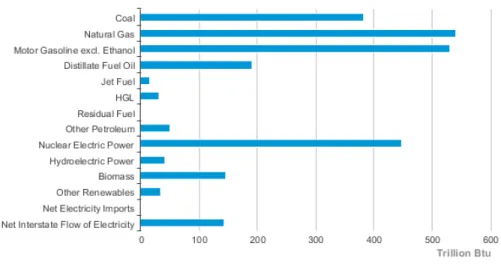
The electricity sector can feasibly be taxed at the state level. Each fuel source of electricity could be taxed differently depending on the level of emissions it generates. Coal being one the highest and natural gas one of the lowest (Arostegui, 2018). The mix of energy consumed in North Carolina is made up primarily of natural gas as seen in figure 2. Because natural gas produces lower carbon emissions, the carbon tax would not impact consumers as much as it would in a state with primarily coal consumption. The tax could appear as a line item in consumers’ energy bills along with the breakdown of cost per energy source. This would require the state to work closely with the utility or electric cooperative to arrange the introduction of the line item in the billing process. Although it is difficult to determine what fuel sources are being used in each household because of the interconnected nature of the grid, the utility can bill based on the mix of energy that they account for more broadly (Bauman et. al. 2016).
13 Taxation at the Source
Alternatively, the state could tax further upstream sources and use the already existing EPA green house gas emissions data on industrial facilities and refineries. States could use this data to tax only those entities within state lines. For petroleum, states could tax the refinery, mines, and related operations as upstream sources, or charge a
downstream tax in which individual drivers would be charged at the pump. However, the midpoint between these may be the best option, this point is found at bulk storage
terminals, which are already a point of taxation for state and federal fuel taxes (Morris et. al. 2016). Taxing petroleum can be problematic depending on whether the refined source, motor fuel, or the crude oil is taxed. Motor fuel taxes are already in place in N.C., but that fund is mainly for highways and street improvements, thus that revenue is bound.
According to the N.C. General Statutes, Article 36C, motor fuel taxes are charged to the supplier or importer because it is easiest to administer as such, but ultimately is paid by the person who consumes the fuel. The revenue collected for this tax funds the
Underground Storage Tank Cleanup Fund, A Water and Air Quality Account, and the Highway Trust Fund. An additional item could be added to address the externalities of carbon, or the Water and Air Quality Account could be expanded to adequately
internalize these. The other option is to tax the crude oil, however, many states do not refine their own crude oil, therefore the state would have to find a way to tax refined oil from elsewhere, which would be harder to do given that the motor fuel tax is already in place.
Imported and exported goods
14 would be an influx of cheap goods into the state because of the lower price to produce them elsewhere (Bonnarens, 2016). BPA prevents companies from benefiting from merely relocating to produce goods because it would allow them to get rebates for the additional cost that the carbon tax renders for exported goods and it would tax carbon intensive imported goods at the border, so that externalities are reflected (Bonnarens, 2016). This would keep instate manufacturing and industry from being negatively
impacted. However, state legislators would have to carefully design the border rebate and taxation system in order to avoid carbon leakage and industry relocation (Bonnarens, 2016).
Legality of a State-Level Tax
Implementation of a state-level carbon tax is legal under the U.S. Constitution. The Dormant Commerce Clause raises potential issues with discrimination of interstate commerce as opposed to intrastate commerce as it states that discrimination between the two is illegal. While discrimination would indeed happen because of the inherent nature of a carbon tax, the statute clarifies that the state can nevertheless act constitutionally if there is no other practical way of serving that state’s legitimate purpose (Bonnarens, 2016). Thus, a state must be pursuing legitimate interests. In United Haulers Ass’n v. Oneida Herkimer Solid Waste Management Authority, the Supreme Court justified an otherwise discriminatory act with three key reasons. The first was that the main
15
IV. METHODS
To study perceptions of carbon taxes in N.C., I conducted semi-structured interviews with stakeholders from different backgrounds. These in depth interviews averaged forty-five minutes in length. I interviewed sixteen stakeholders from four different categories. These included, five from energy and environmental organizations, three from academia, three from the media, and five local and state government entities. This number of interviews is sufficient because of the length of each interview, each one allowed for a rich level of information and was detailed enough to extract significant codes and themes. Additionally, many of the emerging codes eventually began to repeat within the interviews, meaning that some degree of data saturation was starting to occur. This is an indication that the number of interviews was adequate for this study (Malterud, 2016).
Semi structured interviews allowed for a more nuanced understanding of
stakeholder perceptions. An issue as complex and controversial like carbon taxes cannot be discussed in a focus group setting because I would not have been able to reach the level of detail required to understand each unique perspective. Additionally, focus groups could introduce power dynamics into the interview, where some stakeholders could dominate the conversation over others. Details could be lost as a result of this setup. An additional alternative would have been to analyze just case studies from various parts of the world to then make recommendations for N.C., however, this approach would not have been as tailored to the politics and culture of the state. Interviewing stakeholders in the state was meant to capture these unique characteristics, while case studies from around the world merely informed the process and confirmed some of the major challenges and opportunities of implementing a carbon tax.
Themes and the Literature
16 academic articles included, “carbon taxes at the state level,” “carbon taxes in British Columbia/Alberta,” and simply “Carbon tax.” These searches facilitated a broad article yield, which I narrowed down to several articles. I searched the bibliographies of these initial articles to find additional relevant pieces. From these articles I formed an annotated bibliography and then began the process of organizing it thematically. The themes I derived from the literature are, effectiveness of a carbon tax, perceived negative
implications of a carbon tax, the dichotomy between federal and local level pricing, and a desire for transparency in design and execution. I simplified these themes into codes that would allow me to expand on what I found in the literature through the interviews that I planned to conduct with N.C. stakeholders. These codes included, motives (for a carbon tax), challenges, opportunities, perceived misconceptions, and tax design. Table 1 summarizes the salient articles from which the themes were derived.
Certain questions in the interview guide were specifically designed to elicit responses to the predetermined codes. Other codes emerged from the interview data and will be discussed more fully in section V. Table 2. Shows a summary of some of the questions used for each theme, the full interview guide is found in the Appendix. Under motives for a carbon tax, for example, I ask “In your opinion, would a carbon tax sufficiently reduce carbon emissions in the long term?” to understand the perceived attributes of a carbon tax in N.C.. This question ultimately gets to the core of the purpose behind a carbon tax – to reduce carbon emissions. Under the second code, Challenges, it was important for me to address specific challenges that appeared in the literature such as potential impacts to low income communities and perceived negative economic
implications. In Perceived Misconceptions, I was more interested in understanding why carbon taxes, particularly if they are revenue neutral, are so negatively perceived. The Tax Design code developed organically from the literature as places like British
18 Table 2. Codes derived from the literature themes and resulting sample questions.
Interview Recruitment
The recruitment process began with a list of potential interviewees based on the predetermined categories. This list included name, organization, phone and email contact information, and a short description justifying the inclusion of that stakeholder. Initial contact was made via electronic mail. The e-mail stated my role in the study, a brief summary of the research objectives and an invitation to participate in an interview. The stakeholder responded in three different ways, a no response, a request for more
19 Interview candidates who declined to participate did so because they felt as though they did not know enough about the topic of carbon taxes to participate, they were encouraged to participate based on the reasoning written in the primary list, but they occasionally declined regardless.
The Interviews
The interviews were conducted in person or over the phone. Nine interviews were conducted in person and seven over the phone. Most of the interviewees agreed to an audio recording of the interview, with the exception of three, for which copious notes were taken. The semi structured interview guide allowed me to address major topics, such as the structure of the tax – revenue neutrality as a opposed to using the revenue for environmental initiatives, the challenges that come with a carbon tax, and potential opportunities. Although I ensured responses to certain key questions, I also left room to explore the nuances and details of salient issues specific to the stakeholder. A more structured interview guide may have obscured this level of detail. During the interviews, I remained neutral to avoid introducing bias into the interviews.
In the analysis phase of the data, I transcribed key elements of the interviews. This process included creating an official interview document. The format of this document consisted of a summary of the interview, salient quotations that fit under the predetermined codes, and a section for issues that arose during the interview that were widely covered by the interviewee. Upon completion of these, I searched for patterns and overlapping findings. Finally, I organized these findings into cohesive conclusions about each theme.
V. FINDINGS
20 misconceptions, and tax design. The more nuanced codes that emerged were, trust,
resiliency, and adaptation. “Motives for a carbon tax” seeks to uncover the perceived benefits of implementing the tax. Many of these perceived benefits include increased investment in energy efficiency to reduce the impact of the tax and an increased
economic viability of renewable energy project within various organizations. The “Tax design” code addresses the level at which the tax should be set, the use of the revenue generated by the tax, and administration of such a tax. “Perceived Misconceptions” encompasses the misconceptions that stakeholders believe hinder the passage of a carbon tax. For example, the perceived negative impacts of a carbon tax on industry, which could be addressed by implementing BPAs along with the tax. Lastly, the theme of “Challenges” is perhaps one of the most naturally formed themes in regard to carbon taxes, given the political climate of the state and the lack of success of carbon tax legislation in recent years. The findings are structured by code, in order to fully uncover the nuances of each. Table 3. Summarizes the major findings in the data under each code, which also captures the similarities and differences between the four groups of interview subjects. The first part in each section is a summary statement of the code and
22 Motives for a Carbon Tax
Carbon taxes have been shown to reduce greenhouse gas emissions, especially when they are increased over time (Mckibben, 2016). Therefore, as policy solution, it could positively contribute to global efforts to mitigate global climate change. A federal level carbon tax could help deter the consequences of climate change, many of which affect coastal municipalities and the most vulnerable populations within urban cores. However, given numerous failed policy implementation attempts at the federal level, the carbon tax may be more apt for the state and local levels (Monast, 2017). At this level, states could better determine how they want to structure their own carbon tax policy, and tailor the revenue use for what they deem most necessary (Bonnarens, 2016).
“Academics” in N.C. perceive motivations for a carbon tax to be mainly composed of reducing carbon emissions in order to mitigate the effects of climate change. However, they also allude to this more local ability to spend the revenue in a manner that is more adept to the needs of the state, one of these is in the transition away from the fossil fuel economy. This is further portrayed by the “state and local government” group, which repeatedly made evident that “It [a carbon tax] would really factor into evaluations of renewable energy projects; we would be willing to invest in projects that have a positive net present value.” Meaning that in a lot of cases, carbon taxes would make renewable and energy efficiency projects more economically viable, given that the true cost of carbon would be reflected. North Carolina already ranks second in the nation with respect to solar energy, which is in part due to initiatives like the Renewable Energy Portfolio Standards. Local and State government entities also discuss the edge that this ranking gives N.C., “investments in energy efficiency and renewable energy would result in a greater amounts of jobs locally rather than continuing to invest in fossil fuels.”
23 measures in government and municipal buildings, improvements to biking, walking and public transit, and greater attention to public space and green infrastructure. On a greater scale, climate change is contributing to rising sea levels worldwide, and putting a price on carbon could help slow this rise. With the new revenue stream, coastal municipalities could potentially have a greater ability to adapt through resiliency features or relocate through buyout programs.
Carbon Tax Design
One of N.C.’s greatest environmental successes was the implementation of the REPS. Prior to implementation, N.C. conducted a thorough cost benefit analysis, which included where to set the standard, why, and how to mitigate negative effects (DSIRE, 2018). The same could be done for carbon taxes. Once the state has the political support from constituents, it could conduct a cost benefit analysis to decide whether to implement a revenue neutral tax, one that is 80% revenue neutral and 20% for environmental
initiatives, or 100% of the revenue to go environmental initiatives. There is a general dichotomy between the stakeholder groups in regards to the revenue allocation of the tax. Generally, the stakeholder groups would like to see something more done with the revenue, such as:
“I struggle with revenue neutrality; if you’re not charging them, will they really reduce their consumption?”
24 Regardless of how the tax is structured, the various stakeholder groups all see it having negative impacts on residents in low-income communities across N.C., which will need to be mitigated through the revenue stream in one way or another.
From the literature, British Columbia (B.C.) attempts to mitigate these negative implications through precisely a revenue neutral approach. In reality, the tax is not revenue neutral, as more is returned to households and businesses than what is taken in taxes. Additionally, programs like the Low Income Climate Action Tax Credit, addressed concerns with uneven effects on low-income families. However, Beck et. al (2016) find that low income and rural communities are generally opposed to the tax due to social norms, political reasons, and longstanding perceptions of being at a disadvantage in comparison to the south, rather than basing it on real qualities of the tax. The Homeowner Benefit Program provides a higher share of revenue to rural populations than to urban ones, which is more than the tax actually takes away. They were made worse off by the tax by $5-10/year, but compensated $200/year, however still did not support the tax, rather, opposition to the tax increased. The theory of why this is the case is that people may have taken the program as confirmation that the tax was not equitable and therefore opposed it without knowing the degree of inequity or the compensation for it (Beck et. al. 2016). Ultimately, the question of what to do with the minor inequity created by the tax remains; financial compensation in the form of a full revenue neural approach may not be the most productive alternative. In B.C., public perception of the tax generally has
improved with time, with some exceptions. Younger demographics and more affluent groups of people are more likely to show support. Older segments of the population are less likely to favor the tax (Murray and Rivers 2015).
25 also recommended that the tax also be flexible, so that it can be modified if the costs are too high for particular industries.
The San Francisco bay area also has a form of carbon tax, and uses the revenues to fund their Climate Action Program. Some studies show that there is greater
acceptability of the tax if it goes towards other environmental programs and initiatives (Baranzini 2017). These can include ones that improve air quality improvement efforts, addressing health through walkable city spaces, and altering the transportation system to be more inclusive of various users. Stakeholders in the “media” group allude to mass transit as a way to mitigate the impacts felt by rural communities that have no choice but to commute large distances for all activities. Mass transit could take away some of the burden that carbon taxes would impose on them. In a U.S. attempt to implement a carbon tax, in Washington State, one of the main reasons for which carbon tax legislation did not pass in 2016 was because of the debate among environmentalists regarding the use of revenues generated by the tax (Harvey 2016). Among the North Carolina stakeholders, there seems to be a greater level of consensus regarding the use of the revenue, if it were to be used for environmental initiatives. These include initiatives like expanding mass transit, building resilience, and promoting green energy.
Another important question to address is the price per ton of emissions. The research suggests that carbon taxes should be designed to charge $5-20 per ton of CO2 emitted and that this charge should be placed on upstream sources (Andy et. al. 2000). This is also more administratively efficient for administrative bodies, but has less of a direct impact on consumer behavior, as it is more difficult for them to see the tax. California's taxes are low, and designed mainly to cover GHG programs and policy development. However, the longer we wait, the greater the price per ton has to be to have an impact on emissions and finance environmental initiatives. Although most
26 Challenges and Barriers
Carbon tax implementation also depends on the politics of the region in which they are being considered (Sumner 2009). Sumner et. al. argues that policy design should come from an in depth evaluation of the region’s needs and preferences, to better appeal to the political environment. Key N.C. stakeholders are divided over the political viability of the tax, some state that “We’ve had three 500 yr. climate events, in the last three years, and we’ve had no change; we are solidly a purple state, and there are still powerful coastal private development interests that go against all efforts,” others perceive that “It’s probably the best chance for it to take place in N.C. Because the hurricanes have woken some people up.” Stakeholders in the “state and local government” group also convey a mix of both, and state that “In a couple of coastal communities, people are talking about flooding, so yeah it’s causing them to react, but many don’t blame climate change yet. The data and the solutions can be much more clear for flooding than for abstract concepts like climate change” This means that there is a certainly a mix of perceptions regarding how behavior around climate change is changing in the state. This dichotomy may also represent an instance of the political climate changing to view climate solutions more positively in light of recent weather events potentially linked to climate change such as Hurricanes Matthew and Florence that swept through N.C.
27 The stakeholders interviewed clearly perceive the long political history of the state, naming it the primary reason behind the inability of N.C. to implement a carbon tax any time soon:
“The political one is the biggest, administratively it can happen”
“I’m not convinced that enough people in North Carolina, are willing to do something about climate change”
Perceived Misconceptions
In Geneva Switzerland, a survey of 338 people yielded that people are more likely to favor non-market solutions to reducing carbon emissions altogether, such as raising awareness and policies to fund public transportation. However, 35% of these respondents also agree that the Swiss government should increase the current carbon tax, so there is also some level of support. In terms of revenue recycling, 60% of the people sampled preferred that the revenues be spent on other environmental projects (Baranizini 2017). Similar surveys have been conducted in N.C. and reflect similar tendencies. For example, 67% of people living in N.C. believe that fossil fuel companies should have to pay a carbon tax (Howe, 2015). However, North Carolinians differ in how they prefer to use the revenue, which they would rather use to reduce other taxes, such as income taxes. Stakeholders see some of the same tendencies in the groups of people they work with: “Constituents are not against environmental initiatives, but no one wants to run a taxing platform” “I would say it is better to frame it as a way to grow clean energy or pricing the externalities associated with fossil fuels.” This represents the openness that stakeholders have to over policies for reducing carbon emissions, however it also represents the key component of framing. Part of overcoming misconceptions is how the “tax” is ultimately framed as a whole.
28 feel the tangible benefits of the carbon tax itself and the revenue it generates. In the study about Boulder, CO, the researchers suggested conducting a survey in which the public gets to have an input regarding the shape of a carbon tax (Murray, 2018). In order to elicit a more positive public response, the public needs to be better informed about the inner workings of the tax. The various stakeholder groups highlighted the importance of framing and of transparency regarding the use of the revenue:
“Conventional wisdom, is if you call something a tax, its not good, if the debate around climate change were framed around something other than climate change, there could be some potential, such as responding to hurricanes, calling it the hurricane resiliency fund”
“Academia can contribute to framing the value choices, what the value of action and inaction is, and in understanding the science of climate change”
“To the extent that there could be transparency… so that people recognize where the tax is coming from and going towards”
Overcoming perceived misconceptions of a traditional tax can be hard to do, but doing so can bring us closer to achieving tangible action in response to rising carbon emissions, which all of the stakeholders were in favor of. The literature and the interview data came together to elicit recommendations for a more successful approach at
implementing a carbon tax in N.C.
VI. RECOMMENDATIONS
29 some of the revenue to offset costs for low-income households and the rest to fund clean energy and resilience initiatives.
2. Appoint a taskforce to study the appropriate price of carbon and to evaluate the needs of the state with regard to the use of the revenue stream. Many of the stakeholders had suggestions regarding revenue usage, but an extensive study or surveying effort regarding the price point and a precise use of the revenue can more adequately convey what to do. This would also ensure that needs are met at the local level, particularly in coastal communities being affected by sea level rise, or rural communities disproportionately affected by a carbon tax.
3. Develop a system to elicit transparency in the system. Develop an efficient way to convey the results and initiatives of a carbon tax as well as the need for one in the first place. This could potentially come in the form of a report and dashboard combination put together by the state but with municipal input. Additionally, the tax could fund education and outreach efforts led at the local level, so that the community remains involved in shaping initiatives past the initial tax
implementation phase. The media also has a role to play in keeping the public informed at all stages of this greater effort to put a price on carbon.
4. Combine efforts to implement a carbon tax with those set forth in EO 80. For example, the emissions reporting requirements could help adjust the carbon tax in the future to target the highest emitting sources. Additionally, some of the
initiatives set forth in the mandated plans may be financially supported through carbon tax revenues. The initial carbon tax task force would determine which issues align with the state’s goals and values and which do not.
30 but it would also provide a greater network for information sharing and a present a united front to businesses and industry locating in the region.
VII. CONCLUSION
The results are broad reaching, and some of the expressed concerns can be addressed through approaches similar to those taken by British Columbia. Some of the main themes that emerged from the interviews are concern over naming it a tax, the manner in which to spend the revenues, the distributional impacts of the tax, and also the current political infeasibility of a tax.
Concerns over disproportionate impacts of the tax, especially along the urban-rural divide are great, however various stakeholder groups agreed that through careful design, a carbon tax could use a portion of its revenue for initiatives that can provide co-benefits, in which low income and disadvantaged communities are prioritized. These include energy efficiency programs such as weatherization, investment in mass transit, and natural hazards resilience. These programs would have the dual benefit of either helping with climate mitigation or adaptation. This would ensure that carbon taxes are not just a solution to climate change, but rather feed into solving inequities among low-income households as well.
Political discontent is a significant issue to many stakeholders, which state that the political climate is a major barrier to implementation of a carbon tax. However, if properly designed, carbon taxes can be framed in terms of energy security and resiliency. This could help clear some of the disagreement surrounding them and help promote clean energy. Additionally, policy makers could reassure constituents of the stable nature of these taxes as well as the design elements like pricing and revenue usage through transparent practices like designing an online dashboard and producing an annual progress report.
31 within the state and made policy recommendations in response to them. Further studies could provide greater support for those policy recommendations by modeling economic impacts, especially of sectors of concern. Modeling the benefits, especially economic, of environmental initiatives would help support these as well. Although analyzing general perceptions of carbon taxes within the conservative Southeast is helpful, more research is needed to elucidate solutions to the many expressed concerns and improve the prospects of policies, such as the carbon tax. As one of the stakeholders states, “I think we
32
VIII. APPENDIX
Appendix A.
Semi-structured interview instrument
General Questions -
1. What type of work does your organization engage in?
2. Can you describe some of the issues that are central to your organization? 3. What types of energy issues does your organization most work with?
4. Please describe your familiarity with carbon taxes. Have you worked on carbon tax or carbon pricing mechanisms in the past?
5. What do you think about the potential of carbon taxes for future implementation in North Carolina?
6. How willing do you think people in N.C. would be to reduce their use of electricity? Why do you think this is?
If a carbon taxes were implemented:
1. How do you think investments in energy efficiency would change as a result of a carbon tax?
2. Do you think the political climate in NC would favor a revenue neutral approach, or one that would allow for the revenue to be used for other environmental initiatives? Why?
3. What would you say is your organization’s perspective on carbon taxes? How do they perceive them?
4. Would your organization be likely to support a carbon tax policy if it became a viable policy solution in the next few years?
5. What price per ton of carbon would your organization would deem fair or acceptable?
33 7. If your organization has members, constituents, or supporters, how do you think
they would react to the implementation of a carbon tax in North Carolina? 8. In your opinion, would a carbon tax sufficiently reduce carbon emissions in the
long term?
9. In your opinion, what policies may be needed to help families cope with higher energy prices?
10.What environmental initiatives would your organization like to see result from the revenues resulting from carbon taxes?
11.What are, in your opinion, the benefits of a carbon tax for N.C.? (e.g. lower carbon emissions, health, air quality, climate change mitigations)
12.What role do government entities, interest groups, and private organizations have to play in shaping the perceptions around carbon taxes in North Carolina?
Academics
1. How can academics help develop an adequate carbon tax, do you think there is a role for research so that the tax can be sustained over time?
2. How can academics produce research to make better sense of public opinion regarding carbon taxes?
3. Are these important questions to address in research?
Media
1. What role do you think the media plays in helping to portray carbon taxes and their perceived impacts?
NC energy sector
1. What types of incentives do you think that carbon taxes would induce in the energy industry? (e.g. energy efficiency, renewable energy, nuclear)
34 3. Costs of emitting fossil fuels will likely be passed on to ratepayers. How do you
think this will affect investors? For investor owned utilities. How will co-ops be affected?
Local and State Government entities.
1. What are some policies that would complement a carbon tax, or run parallel to them, or replace them?
2. Is there a policy solution that you believe should take the place of carbon taxes to reduce global emissions worldwide?
3. Do you think that climate change provides a policy window of opportunity for implementation of a carbon tax? Do you believe that recent hurricanes in NC and other climate events around the world have any influence on this?
4. There are certain actions that are described by politicians as political suicide. Why or why not could carbon taxes be characterized as such? (How could politicians avoid this characterization?)
5. Implementation of a carbon tax can be hindered by many barriers, to what extent do you think administration is one of them? What about lack of capacity and knowledge?
6. If a state like NC were to adopt a carbon pricing policy like carbon taxes, do you think that other states would follow?
General Closing
1. Implementation of a carbon tax can be hindered by many barriers, to what extent do you think administration is one of them? What about lack of capacity and knowledge?
2. Are there any additional insights you would like to share to help me better understand your organization’s perception of carbon taxes?
35
Appendix B.
Anonymous interviewee listing by stakeholder category.
Energy and Environmental Organizations Non-profit organization Stakeholder
Energy Sector Stakeholder Energy Sector Stakeholder
Non-profit organization Stakeholder State Level Energy Sector Stakeholder
Academia
Institution of Higher Learning Stakeholder Institution of Higher Learning Stakeholder Institution of Higher Learning Stakeholder
The Media
Newspaper Reporter Stakeholder Newspaper Reporter Stakeholder Newspaper Reporter Stakeholder
State and Local Government Organizations N.C. General Assembly Stakeholder
Regional Organization Stakeholder Town Stakeholder
36
IX. REFERENCES
Aldy, Joseph., Hafstead, Marc., Metcalf, Gilbert., Murray, Brian., Pizer, William., Reichert, Christina., Williams, Roberton. 2017. Resolving the Inherent Uncertainty of Carbon Taxes. Harvard Environmental Law Review Forum. Arostegui, Danielle, Rachel Brinks, Ryan Callihan, Leah Louis-Prescott, and Lauren
Mechak. 2018. “Recommendations for Implementing a Carbon Tax in Boulder, Colorado.” Nicholas School of the Environment of Duke University.
Baranzini, Andrea, and Stefano Carattini. 2017. Effectiveness , Earmarking and Labeling : Testing the Acceptability of Carbon Taxes with Survey Data.
doi:10.1007/s10018-016-0144-7.
Barnett, Ned. 2011. “A Primer on ALEC, Its Influence and Its Presence in North Carolina.” North Carolina. Indy Week, Independent Weekly.
http://www.indyweek.com/ indyweek/a-primer-on-alec-its-influence- and-its-presence-in-north-carolina/ Content?oid=2666829.
Bauman, Yoram. Bookbinder, David. Morris, Adele. 2016. “State-Level Carbon Taxes: Options and Opportunities for Policymakers.” Climate and Energy Economics Discussion Paper. The Brookings Institution.
Beck, Marisa, Nicholas Rivers, and Hidemichi Yonezawa. 2016. “A Rural Myth ? Sources and Implications of the Perceived Unfairness of Carbon Taxes in Rural Communities” 124: 124–34.
Black, Earl., Merle, Black. (2003) The Rise of Southern Republicans. “The Republican Surge.” Harvard University Press.
Bonnares, Rebecca. 2016. “Implementing a Carbon Tax With a Border Price Adjustments as the State and Federal Level.” George Washington Journal of Energy and
Environmental Law.
Database of State Incentives for Renewables and Efficiency (DSIRE). 2018. “Renewable Energy and Efficiency Portfolio Standards.” N.C. Clean Energy Technology Center.
Executive Order 80. 2018. North Carolina’s Commitment to Address Climate Change and Transition to a Clean Energy Economy.
37 Flatt, Victor B. n.d. “Adapting Energy And Environmental Policy For Climate Change”
604 (2006): 655–65.
Hahn, Jonathan. 2018. Climate Solutions Caucus Scorns Climate Solution in Carbon Tax Vote. Sierra Club Magazine.
Harrison, Conor M. 2017. “Electric Conservatism: The Rise of North Carolina’s Conservative Power Politics.” Southeastern Geographer 57 (4): 332–50. doi:10.1353/sgo.2017.0031.
Harvey, Chelsea. 2016. The Battle Over Washington State’s Proposed Carbon Tax has Gotten Even Weirder. The Washington Post.
Hsu, Shi-Ling. 2011. The Case for a Carbon Tax. Island Press.
Howe, P., Mildenberger, M., Marlon, J., & Leiserowitz, A. (2015) “Geographic variation in opinions on climate change at state and local scales in the USA,” Nature
Climate Change. DOI: 10.1038/nclimate2583.
Malterud, Kirsti, Volkert Dirk Siersma, and Ann Dorrit Guassora. 2016. “Sample Size in Qualitative Interview Studies: Guided by Information Power.” Qualitative Health Research 26 (13): 1753–60. doi:10.1177/1049732315617444.
Monast, Jonas. From Top-Down to Bottom-Up Climate Policy: New Challenges in Carbon Market Design, 8 SAN DIEGO J. CLIMATE & ENERGY L. 175 (2017). Mckibber, Bill. 2016. Why We Need a Carbon Tax, And Why It Won’t Be Enough. Yale
Environment 360.
Morgan, David. 2018. “Republican Introduces a Bill Calling for Carbon Tax.” Reuters Politics.
Morris, Adele Cecile, Ian W Perry, and Roberton C Williams. Implementing a US Carbon Tax : Challenges and Debates. Abingdon, Oxon ; New York: Routledge, 2015. Print.
Murray, Brian, and Nicholas Rivers. 2015. “British Columbia ’ S Revenue-Neutral Carbon Tax : A Review of the Latest ‘ Grand Experiment ’ in Environmental Policy” 86: 674–83.
38 Planning, Panel on Methods and Techniques of Project Analysis. 2004. Analytical Methods and Approaches for Water Resources Project Planning. National
Academies Press,
Neves, Ana Rita. 2010. “Energy Sustainability Indicators for Local Energy Planning : Review of Current Practices and Derivation of a New Framework” 14: 2723–35. Nuccitelli, Dana. 2018. “Comprehensive study: carbon taxes won't hamper the economy”
The Guardian.
Oke, T., Mills, G., Christen, A., & Voogt, J. 2017. Urban Climates. Cambridge: Cambridge University Press. doi:10.1017/9781139016476
Shipan, R., Charles, Volden, Craige. Policy Diffusion: Seven Lessons for Scholars and Practitioners. Wiley Online University.