BARRIER REEF SYSTEM
Justin H. Baumann
A dissertation submitted to the faculty at the University of North Carolina at Chapel Hill in partial fulfillment of the requirements for the degree of Doctorate of Philosophy in the
Marine Sciences Department in the School of Natural Sciences and Mathematics.
Chapel Hill
2018
Approved by: Karl D. Castillo Justin B. Ries John M. Bane John F. Bruno
iii
LOCAL HUMAN IMPACTS ON REEF-BUILDING CORALS ON THE BELIZE MESOAMERICAN BARRIER REEF SYSTEM
(Under the direction of Karl D. Castillo)
Coral reefs are some of the most diverse and important ecosystems on earth, yet
they are experiencing global scale declines in coral cover, diversity, and ecosystem health
due to the impacts of climate change, ocean acidification, and local human impacts such as
land-use change, overfishing, and pollution. This dissertation explores the impacts of
thermal history on coral community composition (Chp 1), coral-associated Symbiodinium
community structure (Chp 2), coral growth rates (Chp 3), and the acclimatization and/or
local adaptation capacity of Sidereastrea siderea and Pseudodiploria strigosa corals (Chp 4) on the Belize Mesoamerican Barrier Reef System (MBRS). The Belize MBRS can be
subdivided into three distinct thermal regimes following a nearshore-offshore gradient of
warmer and more thermally variable to cooler and less thermally variable seawaters.
Nearshore reefs (warmer and more thermally variable) experienced lower coral cover and
diversity and that weedy and stress-tolerant coral species persisted on these reefs (Chp 1).
Coral-associated Symbiodinium communities varied by thermal regime in one of the three study species, and that thermally tolerant Symbiodinium did not dominate in warmer nearshore reefs (Chp 2). This finding suggested that Symbiodinium likely did not play a large role in providing some corals with the capacity to sustain themselves in the warmest
remained stable (Chp 3) suggesting that historically there has been a growth advantage to
living nearshore. However, recent declines suggest that compounding negative impacts
outweigh this growth advantage, leading to declining growth. In a follow-up reciprocal
transplant experiment, native and transplant S. siderea and P. strigosa corals preferred the nearshore, indicating that nearshore species may not exhibit greater acclimatization ability
when transplanted (Chp 4). Overall, low diversity nearshore reefs appear especially
threatened by continued ocean warming, as corals on these reefs exhibit declining growth
rates and are not better equipped to acclimatize to new conditions than do offshore corals. A
swift and significant reduction in emissions combined with continued local scale mitigation
Colleen Bove, Kathryn Cobleigh, Samir Patel, Lauren Speare, Joyah Watkins, Meg Van
Horn, and Catherine Trusky for their assistance in the lab and the field. Thanks also to my
research partners in Belize: Lisa Carne and Fragments of Hope, Mariko Wallen, Dale
Godfrey, Victor Fox, The Belize Fisheries Department, SEA, and TIDE. Thanks also to my
committee, Dr. Karl Castillo, Dr. John Bruno, Dr. John Bane, Dr. Justin Ries, and Dr.
Christopher Martens for years of guidance and feedback. Lastly, thanks to my mentors
including Dr. Karl Castillo and Dr. Sarah Davies for encouraging me and providing expert
vii
LIST OF TABLES ... xii
LIST OF ABBREVIATIONS ... xiii
CHAPTER 1: INTRODUCTION ... 1
CHAPTER 2: TEMPERATURE REGIMES IMPACT CORAL ASSEMBLAGES ALONG ENVIRONMENTAL GRADIENTS ON LAGOONAL REEFS IN BELIZE ... 4
Introduction ... 4
Materials and Methods ... 8
Site identification ... 8
Benthic surveys ... 10
Coral life history ... 11
Chlorophyll-a ... 11
Statistical analysis ... 12
Ethics statement ... 13
Coral life history ... 15
Chlorophyll-a ... 15
Discussion ... 15
Coral community composition ... 16
Life history strategies ... 18
Influence of primary productivity on coral community composition ... 19
Other potential factors influencing coral community structure across reef types .. 20
Conclusions ... 24
Data Accessibility ... 25
Tables ... 26
Figures ... 27
CHAPTER 3: CORAL SYMBIODINIUM COMMUNITY COMPOSITION ACROSS THE BELIZE MESOAMERICAN BARRIER REEF SYSTEM IS INFLUENCED BY HOST SPECIES AND THERMAL VARIABILITY ... 31
Introduction ... 31
Methods ... 36
viii
Sea Surface Temperature... 37
DNA Extraction ... 38
PCR amplification and metabarcoding ... 38
Bioinformatic Pipeline ... 40
Statistical Analysis ... 40
Results ... 42
Symbiodinium diversity and abundance across the Belize MBRS ... 42
Host species specificity in Symbiodinium community composition ... 43
Discussion... 43
Host-specificity drives Symbiodinium community composition ... 43
Thermal regime affects Symbiodinium community composition in S. siderea, but has no effect on other species ... 45
Role of local impacts on Symbiodinium communities ... 46
Coral host may play a role in thermal tolerance... 46
Conclusion ... 48
Tables ... 49
AS EARLY AS 2110 ... 55
Introduction ... 55
Materials and Methods ... 59
Site Description ... 59
Extraction of coral cores ... 60
Skeletal density, extension, and calcification ... 60
Statistical Analyses ... 61
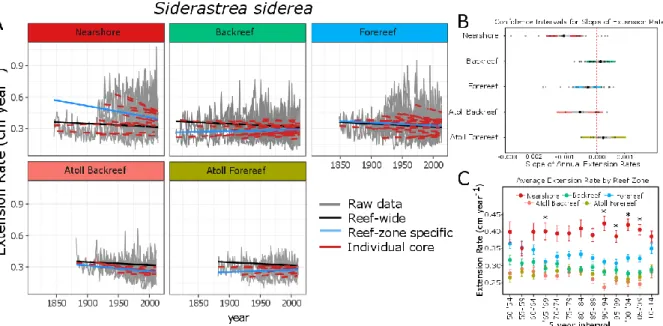
Declining skeletal extension rates for nearshore corals ... 62
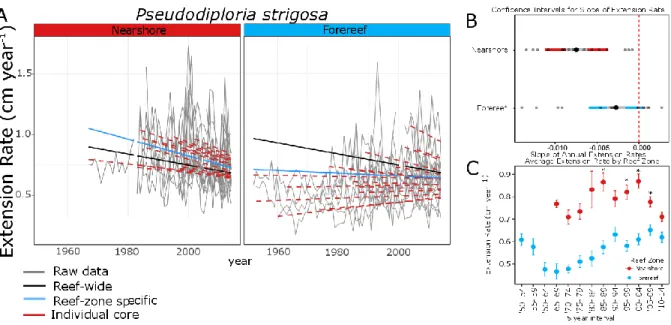
Extension rates of nearshore corals have decreased to the level of offshore conspecifics ... 67
Recent bleaching events differentially impact corals across reef environments ... 69
Results predict that nearshore colonies of P. strigosa will cease growing by year 2110 ... 70
Declining skeletal extension in nearshore corals foretells deterioration of entire MBRS ... 72
Tables ... 74
Figures ... 75
x
Introduction ... 79
Methods ... 84
Study sites description ... 84
Reciprocal transplant experimental design ... 85
Calcification, and Survivorship ... 86
Symbiodinium density and chlorophyll-a ... 86
Protein content ... 87
Statistical analyses ... 88
Results ... 89
Survivorship and Fragment Status ... 89
Calcification ... 90
Symbiodinium density ... 90
Chlorophyll-a... 91
Total soluble protein ... 91
Discussion ... 91
Conclusion ... 97
Tables ... 98
Figures ... 100
CHAPTER 6: CONCLUSIONS ... 104
APPENDIX 1: Supporting information for Chapter 2 ... 108
Additional detail of AGGRA and video survey methods ... 108
Figures ... 111
Tables ... 114
APPENDIX 2: Supporting Information for Chapter 3 ... 118
Tables ... 118
Figures ... 122
APPENDIX 3: Supporting Information for Chapter 4 ... 123
Tables ... 123
Figures ... 138
Coral CT Procedures... 141
Coral core density standardization ... 143
xii
Model Selection ... 144
Sea surface temperature ... 145
Reef-zone averaged extension rates ... 145
Extension anomaly vs. mass-bleaching events ... 145
APPENDIX 4 ... 147
Tables ... 147
Table 2.1: Thermal parameters used for site classification ...……….………25
Table 3.1: Sampling locations and sample size for S. siderea (SSID),
S. radians (SRAD), and P. strigosa (PSTR)………48
Table 3.2: Average number of raw reads, trimmed reads, and mapped reads
including mapping efficiency (% of trimmed reads that mapped) for each species…………48
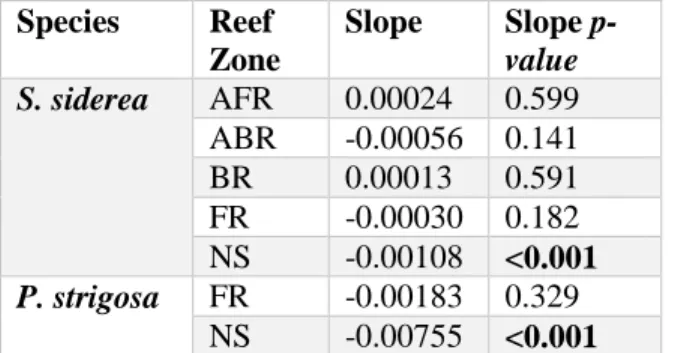
Table 4.1: Slope of extension rate by reef zone from linear mixed effects
models by species and time scale………72
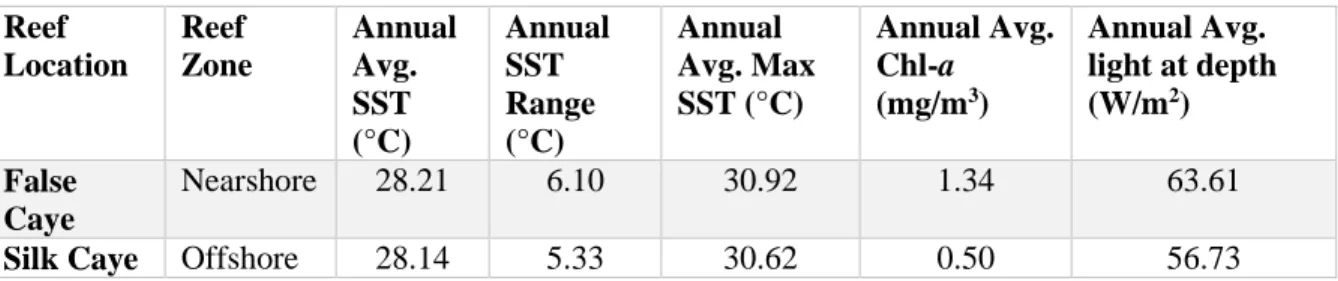
Table 5.1: Annual average SST, SST range, max SST, chl-a, and light availability at depth of the transplant tables at the two transplant sites (2003-2017)………...……..96
Table 5.2: Results of ANOVA and Tukey HSD tests comparing % change in weight between T0 and T1 within and between species and between transplant
treatments……….96
Table A1.1: Site locations………...………..112
Table A1.2: Summary of p-and R2 values for temperature and nutrient
parameters vs. NMDS1 and NMDS 2. Significant p-values are in bold………...……113
Table A1.3:p-values and R2 for Linear Regression of Physical Parameters
vs. NMDS1 by Site Type………...…...114
Table A1.4: Population of major towns in Belize………….………...115
ix
Table A2.3: Average number of raw reads, trimmed reads, and mapped reads including mapping efficiency (% of trimmed reads that mapped) for each lane of
Illumina………117
Table A2.4: Results of PERMANOVA on principal component analysis of Symbiodinium communities between coral species’ and within coral
species by thermal regime, individual site, and latitudinal transect………..118
Table A2.5: Relative abundance of each Symbiodinium lineage within each
species of coral host at each thermal regime……….119
Table A2.6:GenBank accession numbers and associated publications for reference
sequences used in constructing phylogeny………...120
Table A3.1: Results of ANOVA and Tukey HSD tests of binned
five-year averaged extension rates by reef zone (Fig 2C, Fig 3C) for S. siderea…………..121
Table A3.2: Results of ANOVA and Tukey HSD tests of binned
five-year averaged extension rates by reef zone (Fig 2C, Fig 3C) for P. strigosa…………122
Table A3.3: Core ID numbers and GPS locations for all cores
collected in 2009, 2012, and 2015……….123
Table A3.4: Linear mixed effects model testing for extension
of S. siderea (1814-present)………...129
Table A3.5: Results of least squares regression models of extension anomaly………131
Table A3.6: ANOVA results for fraction of corals with low extension by
bleaching vs. non-bleaching year and reef zone………132
Table A3.7: ANOVA results for average core extension rate (cm/yr) in
Table A4.1: Results of ANOVA and Tukey HSD tests comparing symbiont density (cells/ cm2) within and between species, transplant treatments,
and time points………...145
Table A4.2: Results of ANOVA and Tukey HSD tests comparing chla content (µg/cm2) within and between species, transplant treatments,
and time points………...…147
Table A4.3: Results of ANOVA and Tukey HSD tests comparing total soluble protein content (g protein/g coral biomass) within and between
xi
Figure 2.1: Thermal regimes and site locations………..26
Figure 2.2: Differences in coral community structure across site type………..27
Figure 2.3: NMDS of coral community variables by site type………...28
Figure 2.4: Coral life history strategy by site type……….29
Figure 2.5: Average chl-a by site type: Chl-a concentration by site type………...29
Figure 3.1: Thermal regime designations for sampling sites on the Belize MBRS…..……..49
Figure 3.2: Phylogenetic analysis of ITS-2 sequences of representative OTUs from this study in addition to reference sequences for each clade………...………….50
Figure 3.3: Relative abundance (%) of each OTU (lineage)………..51
Figure 3.4: Principal component analysis (PCA) plots of Symbiodinium communities by species (A) and by thermal regime for S. siderea (B)………...52
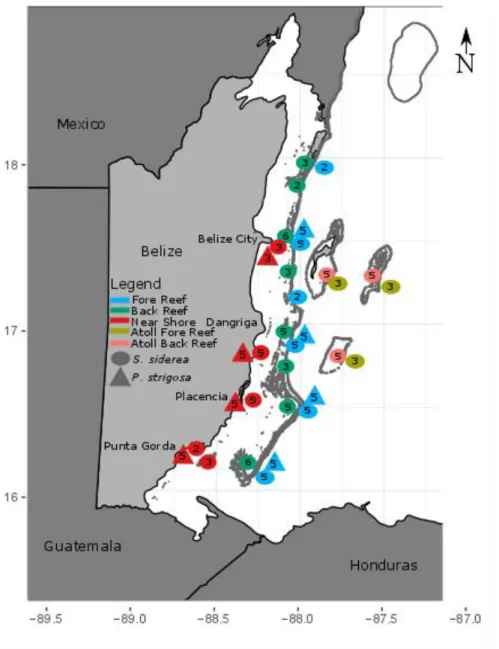
Figure 4.1: Map of coring sites on the Belize Mesoamerican Barrier Reef………..73
Figure 4.2: (A) Results of linear model of extension rate (cm year-1) for S. siderea by reef zone for the 1814-to-present interval………....………...74
Figure 4.3: Results of linear model of extension rate (cm year-1) for P. strigosa by reef zone for the 1950-to-present interval………...75
Figure 5.1: Daily satellite-derived SST (A), oceanic chlorophyll-a (B), and photosynthetically available radiation (PAR) at depth of transplanted corals (C) for nearshore (red) and offshore (blue) site from 2003-2018. Daily satellite-derived SST (D), oceanic chlorophyll-a (E), and PAR (F) for the nearshore (red) and offshore (blue) site from Dec 2017-May 2018
(duration of experiment)………..97
Figure 5.2: Reciprocal Transplant Experiment Schematic………98
Figure 5.3: Fragment status and survivorship………99
Figure 5.4: Percent change in coral buoyant weight between T0 and T1………100
Figure 5.5:Symbiodinium density (A), Symbiodnium chlorophyll-a (B), and total soluble protein (C) by transplant treatment in P. strigosa (red) and S. siderea (blue)………..101
Fig A1.1:In situ temperature versus satellite SST products………..109
Fig A1.2: Temperature parameter and chl-a maps………...………110
Fig A1.3: Linear regression of Physical Parameters vs. NMDS1 and NMDS2 by site type……….111
Fig A2.1: MUR SST values for each sampling site……….120
Fig A3.1: Property-property plots of extension vs calcification………...……136
xiii area). B.) population data for Belize (1980-present).
C.) Agricultural land use by thousand hectares……….137
Fig A3.3: Core averaged extension rate (+/- 1 Standard Error) for all
ABR- Atoll Backreef
AFR- Atoll Forereef
ANOVA- Analysis of variance
BR- Backreef
FR- Forereef
GIS- Geographic Information System
MBRS- Mesoamerican Barrier Reef System
MUR- Multi-scale Ultra-high Resolution
NASA JPL- National Aeronautics and Space Administration Jet Propulsion Laboratory
NS- Nearshore
NMDS- Non-metric multidimensional scaling
NOAA- National Oceanic and Atmospheric Administration
NSF- National Science Foundation
PCA- Principal component analysis
PSTR- Pseudodiploria strigosa
SSID- Sidereastrea siderea
1
Coral reefs are threatened globally due to a combination of direct and indirect
anthropogenic impacts such as increasing greenhouse gas emission, excessive agricultural
runoff, overfishing, and habitat destruction (Hughes et al. 2003; Hoegh-Guldberg et al. 2007;
Veron et al. 2009; Frieler et al. 2013b). Of particular concern are greenhouse gas emissions
which are causing climate change resulting in significant warming of the tropical oceans
(Hoegh-Guldberg 1999; Hughes et al. 2003; Donner et al. 2005a). This ocean warming trend
is especially troubling in the Caribbean, where rates of warming are higher than in many
other tropical basins globally (Chollett et al. 2012b), and where corals have declined up to
80% in recent decades (Gardner et al. 2003). Elevated sea-surface temperature is the primary
cause of mass coral bleaching, a phenomenon during which communities of corals loose a
significant amount of their vital endosymbionts (Symbiodinium) and/or their algal
photosynthetic pigments (Jokiel and Coles 1990; Glynn 1996; Hoegh-Guldberg 1999; D'Croz
et al. 2001a). Bleaching events are predicted to increase in frequency and severity as the
climate continues to warm (Wilkinson 2000; Buddemeier et al. 2004; Donner et al. 2005a;
Wooldridge et al. 2005). Combining global-scale stressors such as rising seawater
temperatures and ocean acidification (Hoegh-Guldberg et al. 2007; Veron et al. 2009) with
local-scale stressors such as increased sedimentation, overfishing, unsustainable tourism
practices, and high ultraviolet radiation exposure (Carilli et al. 2009b) has emplaced corals
Although the future seems rather bleak for corals during this ocean warming interval,
there are indications that some corals may have developed the capacity to survive in this
changing climate. Reef-building corals are able to survive in a variety of habitats and, in some
cases, become resilient to environmental stress due to phenotypic plasticity, morphological
differences, genetic diversity, switching and/or shuffling of endosymbiotic Symbiodinium spp., species specific adaptation, and acclimatization resulting from short- or long-term local environmental conditions (Stone et al. 1999; D'Croz et al. 2001a; Loya et al. 2001; Grottoli
et al. 2006; Jones et al. 2008; Sampayo et al. 2008; Armoza-Zvuloni et al. 2011; Fine et al.
2013).
Here, a holistic approach was used to examine the influence of thermal environment on
coral holobiont (coral host + Symbiodinium + symbiotic bacterial communities) physiology and stress tolerance along the Belize Mesoamerican Barrier Reef System (MBRS). First, the
Belize MBRS was characterized into three thermal regimes based on summer temperatures
and annual temperature variability. 3-5 reefs were surveyed within each thermal regime to
identify how thermal history and reef environment impacted coral species diversity and
community structure. Next, Symbiodinium DNA was extracted from representatives of 3 coral species across the 3 thermal regimes to determine the potential impacts of thermal
history and reef environment on the distribution and diversity of Symbiodinium communities both within and between coral species across thermal regimes and reef environments. Third,
134 coral cores of the species Sidereastrea siderea and Pseudodiploria strigosa were collected from reefs throughout the Belize MBRS, Coral growth rates were compared
between species and reef environments, in order to characterize century-scale growth trends
3
to assess if thermal history or environmental conditions may provide a boost to the
acclimatization and/or local adaptation capacity of a coral. Fragments of S. siderea and P. strigosa were collected from warmer and more thermally variable nearshore reefs and cooler and less thermally variable offshore reefs. Half of these corals were placed back into their
native reef habitat and half were transplanted to a new habitat (either offshore or nearshore).
Measurements of coral calcification, protein content, Symbiodinium density, and
Symbiodinium chlorophyll-a were taken after 3 months to assess the impacts of the transplant treatments on each coral fragment. Overall, this research seeks to investigate the role of
thermal and environmental history on the growth and survival potential of Caribbean corals,
and to the physiological underpinnings of differential thermal tolerance, acclimatization, and
adaptation between coral species during this interval of rapid climate and environmental
change. Such information will aide in the continued management of tropical reef ecosystems
CHAPTER 2: TEMPERATURE REGIMES IMPACT CORAL ASSEMBLAGES ALONG ENVIRONMENTAL GRADIENTS ON LAGOONAL REEFS IN BELIZE1
Introduction
Coral reefs are threatened locally and globally by anthropogenic stressors such as
warming induced by increasing greenhouse gas emissions, excessive nutrients from runoff and
sewage effluent, overfishing, and habitat destruction (Hughes et al. 2003; Hoegh-Guldberg et
al. 2007; Frieler et al. 2013b). Of particular concern are increasing greenhouse gas emissions
that continue to cause warming of the global oceans (Hughes et al. 2003; Donner et al. 2005a).
This warming trend is especially troubling in the Caribbean Sea, where rates of warming are
higher than in many other tropical basins (Chollett et al. 2012b), and where coral cover has
declined by up to 80% in recent decades (Gardner et al. 2003). Elevated sea surface
temperature (SST) is the major cause of the breakdown of the essential coral-algalsymbiosis,
which if widespread results in mass coral bleaching (Jokiel and Coles 1990; D'Croz et al.
2001a). In Belize, the 1998 El Niño bleaching event was the most significant bleaching induced
mass coral mortality event on lagoonal reefs over the last 3000 years (Aronson et al. 2002a).
These large-scale coral bleaching events are projected to increase in frequency and severity as
the climate continues to warm (Donner et al. 2005a; Wooldridge et al. 2005). In fact, if ocean
warming persists, corals in the Caribbean Sea are predicted to bleach biannually within th
1This chapter previously appeared as an article in the journal PLOS ONE. The original citation is as follows:
Baumann JH, Townsend JE, Courtney TA, Aichelman HE, Davies SW, Lima FP, Castillo KD. “Temperature
regimes impact coral assemblages along environmental gradients on lagoonal reefs in Belize.” PLOS ONE,
5
next 20-30 years (Donner et al. 2007b), with annual bleaching events occurring as soon as
2040 (van Hooidonk et al. 2015a). Caribbean-wide and global-scale bleaching events are
predicted to continue unless corals can increase their thermal tolerance at a rate of 0.2-1.0°C
per decade (Donner et al. 2005a). Annual and daily thermal variability have recently been
identified as important factors influencing coral thermal tolerance (Oliver and Palumbi 2011b;
Soto et al. 2011a; Barshis et al. 2013). Indeed, previous exposure to thermally variable
environments increases a coral’s tolerance to future temperature stress (Oliver and Palumbi
2011b; Carilli et al. 2012; Castillo et al. 2012; Pineda et al. 2013b), and research suggests that
Pacific and Red Sea corals living in areas with high summer maximum SST are less susceptible
to bleaching (van Woesik et al. 2012; Fine et al. 2013). Along the Belize Mesoamerican Barrier
Reef System (MBRS) and on Pacific Atolls, corals historically exposed to less thermal
variability exhibited slower growth rates and/or greater susceptibility to bleaching in response
to SST increases (Carilli et al. 2012; Castillo et al. 2012). In the Florida Keys, coral growth
rates and coral cover were higher in nearshore environments exposed to more variable seawater
temperatures than on deeper reefs experiencing more stable temperatures (Lirman and Fong
2007). In contrast, while many studies suggest that high temperature variability leads to higher
coral resilience (Oliver and Palumbi 2011b; Barshis et al. 2013; Pineda et al. 2013b), there is
also evidence that corals experiencing moderate long term temperature variability (either
annual or daily variation) are better able to cope with stress (Soto et al. 2011a). Collectively,
these studies emphasize the importance of thermal variability on the response of corals to
environmental stress, and highlight its capacity to shape coral community composition across
Multi-species coral assemblages have recently been proposed to comprise four major
life history guilds: competitive (large, fast growing, broadcast spawning, e.g., Caribbean
Acropora spp.), weedy (small, opportunistic colonizers of recently disturbed habitat, e.g., Caribbean Porites spp.), stress-tolerant (massive, slow growing, broadcast spawning, e.g.,
Siderastrea siderea), and generalist (share traits characteristic of all three other groups, e.g.,
Orbicella spp.) (Darling et al. 2012). Grouping species by life history strategy allows for prediction of responses to disturbance (e.g., temperature stress) as life history strategies are
trait based (Grime and Pierce 2012). Additionally, each guild is expected to be differentially
impacted by stressors and life histories predict coral community response to multiple stressors
(Darling et al. 2013). Therefore, life history strategies offer a more elegant and predictive
alternative to traditional genus or species level analysis.
Competitive corals are by definition not very stress tolerant (Darling et al. 2012). As
such, region-wide decline of these species would be expected as the impact of anthropogenic
stressors increase (including coral disease). This decline has already occurred in the Caribbean
(Gardner et al. 2003). Generalist corals became dominant on Caribbean reefs in the late 1970s
following mass die off of competitive corals. Generalists are more stress tolerant than
competitive species but bleaching and other stressors have led to high mortality of Orbicella spp. in the Caribbean (Alvarez-Filip et al. 2011) and continued decline is expected as temperature stress increases (Greenstein et al. 1998; Gardner et al. 2003; Buglass et al. 2016),
leading to a decline in reef complexity (Alvarez-Filip et al. 2009)
Weedy and stress tolerant corals have been shown to be more resilient than competitive
and generalist species (Darling et al. 2012; Darling et al. 2013), and are hypothesized to
7
dominance of competitive and generalist species to weedy and stress tolerant species occurred
on Okinawan reefs following the 1998 El Niño bleaching event (Loya et al. 2001; Van Woesik
et al. 2011) and an overall decline in coral cover and abundance currently occurring in the
Caribbean has been coupled with an increase in abundance of weedy species (Green et al. 2008;
Buglass et al. 2016). Interestingly, fossil assemblages from excavated pits on reefs in Panama
reveal that mortality and changes in reef communities caused by anthropogenic impact (such
as land clearing and overfishing) predate mass bleaching events, indicating that other sub-lethal
stressors can impact coral community structure (Cramer 2010; Cramer et al. 2012; Cramer et
al. 2015). Collectively, evidence suggests that differential responses between coral species to
increasing anthropogenic stressors may lead to community scale shifts in reef composition
from dominance of competitive and generalist species to dominance of stress tolerant and
weedy species.
The purpose of the current study was to investigate the impact of thermal regimes on
present day coral community composition (coral abundance, species richness, diversity,
percent cover, density, and life history strategies) of lagoonal reefs (i.e., region extending from
the barrier reef’s crest to the mainland) across the Belize MBRS. A novel GIS-based metric
was developed to characterize lagoonal reefs across this reef system into three thermally
distinct regimes. Within these three regimes, thirteen reef sites were identified and benthic
surveys were conducted to quantify coral community composition. These thermal regimes
exist along a nearshore-offshore productivity gradient, which may also influence coral
community structure. Quantifying coral community differences among these thermally distinct
reefs will help us better predict how coral community structure may be impacted by climate
(and which are least able) may allow for more targeted management strategies, as it is
important to protect both high-risk and low-risk reef sites to improve our chances of
conservation success (Game et al. 2008).
Materials and Methods Site identification
SST estimate assembly
Daily 1-km horizontal resolution SST estimates were acquired from the Jet Propulsion
Laboratory’s Multi-Scale High Resolution SST (JPL MUR SST) records via the Physical
Oceanography Distributed Active Archive Center (PO.DAAC) at the NASA JPL, Pasadena,
CA (http://podaac.jpl.nasa.gov). Conventional 1-km resolution satellite-derived SST
measurements (infrared, IR) are contaminated by clouds, creating data-void areas. Microwave
(MW) data sets can penetrate clouds to gain better temporal coverage, but with a much coarser
spatial resolution (25 km) (Chin et al. 2013). MUR combines these two datasets to present a
more comprehensive and complete SST product. It employs multi-resolution variational
analysis (MRBA) as an interpolation method to combine high resolution datasets with more
conventional datasets, generating a product that contains no cloud contamination (Chin et al.
2013). MUR reports estimates of foundation SST, or SST at the base of the diurnal thermocline
(~5-10m depth). Comparison of in-situ temperature (recorded by HOBO® v2 data loggers),
MUR, and other SST products revealed that MUR outperforms other products in estimating
in-situ temperature, although it also underestimates the temperature corals experience at depth
(Fig S1). However, due to its temporal coverage and temporal resolution, high spatial
9
such as Group for High Resolution SST (GHRSST), MUR was determined to be the ideal SST
product for use in the current study.
Site classification
Multiple thermal parameters were calculated at different temporal resolutions and
examined across thirteen lagoonal reef sites (Table S1). Lagoonal reefs are located between
the barrier reef’s crest and the mainland, and therefore do not include the seaward facing
fore-reef. Instead, lagoonal reefs include nearshore reefs, patch reefs, and the back reef.
Four thermal parameters produced distinct environments for the reef sites across the Belize
MBRS: average annual maximum temperature (S2A Fig), average annual temperature
range (S2B Fig), average annual number of days above the regional bleaching threshold of
29.7°C (Aronson et al. 2002a) (S2C Fig), and average annual consecutive days above the
regional bleaching threshold (i.e., longest potential thermal stress events) (S2D Fig). A
metric that combined all four thermal parameters was generated using ArcGIS© in order to
assess thermal environments across the Belize MBRS. Data from each of the four
parameters in the metric (Table 1) were divided into 8-10 bins (0.5 standard deviations
(SD) of the mean) and overlaid on a map of the Belize MBRS. Reefs were not present in
areas where the value of any single variable was <1 SD below or >2 SD above the mean
(across the entire data set from 2003-2012). For all four parameters, areas that were
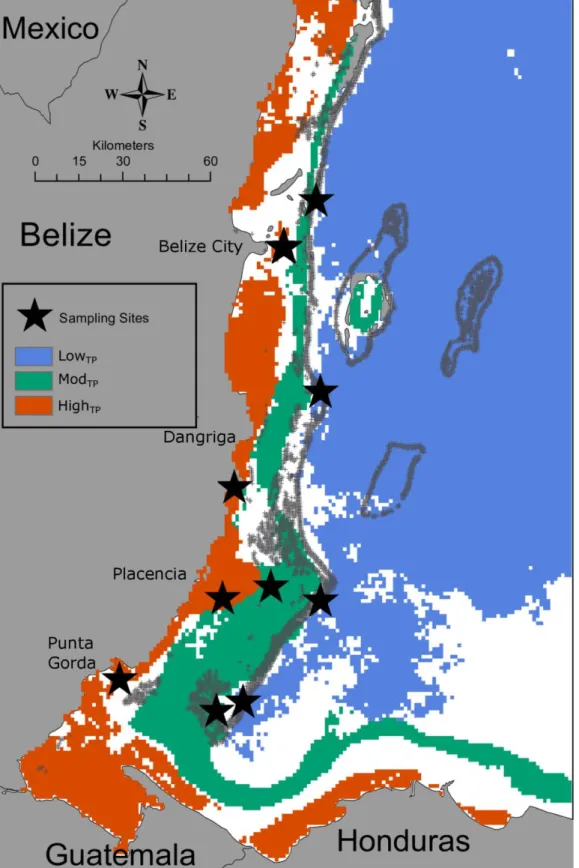
classified in bins ≥1 SD above the mean were designated high temperature parameter (highTP) sites (Fig 1). Moderate temperature parameter (modTP) sites were classified as
areas where all values were 0.5 to 1 SD above the average annual temperature range and the
days and the average annual number of days above the regional bleaching threshold (Fig 1).
Low temperature parameter (lowTP) sites were classified as bins that were 0.5 SD above the
average to 2 SD below the average for annual temperature range and annual maximum
temperature, and below the average for consecutive and annual days above the regional
bleaching threshold (Fig 1). Using the metric presented in Fig 1, fifteen sites were
identified, thirteen of which were visited and surveyed in November 2014 (the two
northernmost highTP sites were not surveyed as corals were not located within the marked
geographic area) (Table 1, Fig 1).
Benthic surveys
In November 2014, benthic surveys were performed at the thirteen reef sites. Depth of each
reef site was standardized to 3-5m. Reef types surveyed included back reefs, patch reefs, and
nearshore reefs. A team of three divers surveyed six belt transects (dimension 6 x 10 m) at each
site following Atlantic and Gulf Rapid Reef Assessment (AGRRA) methodology (Ginsburg
and Lang 2003). Briefly, a diver classified the genus and species of every coral >6cm2 within
1m of the transect line along a 10m transect. The number and size (length, width, and height)
of individual colonies of each coral species were recorded on underwater data sheets. The
collected data were used to calculate coral species diversity, abundance, richness, and coral
life history (following Darling et al. (Darling et al. 2012)) for each site.
Additionally, six video belt transects (1 x 20m) were also performed at each site using
GoPro® cameras attached to PVC stabilizing apparatuses allowing each diver to stabilize the
camera while surveying transects. Video transects were analyzed at the University of North
Carolina at Chapel Hill (UNC-Chapel Hill) in a manner similar to the AGRRA method used
11
calculated. Results of the diver and video transect surveys were not significantly different
(p=0.300). As a result diver and video survey data were pooled at each site when possible. Full details and a comparison of the methods employed are available in S1 Appendix.
Coral life history
Coral species were grouped into four life history strategies as previously described by
Darling et al. 2012 (Darling et al. 2012).In their study, Darling et al. 2012 identified four life history guilds for corals based on multivariate trait analysis: competitive, weedy,
stress-tolerant, and generalist (Darling et al. 2012). The four guilds are primarily separated by colony
morphology, growth rate, and reproductive rate. The classification was based on a thorough
sampling of global Scleractinian coral diversity. Each coral that is included in a guild in Darling
et al. 2012 (Darling et al. 2012) was classified into the appropriate guild for this study and comparisons of life history strategies between sites and site types were made.
Chlorophyll-a
Eight-day composite 4-km horizontal resolution chlorophyll-a (chl-a) estimates over the interval 2003-2015 were obtained from NASA’s Moderate Resolution Imaging
Spectroradiometer (AQUA MODIS) via NOAA’s Environmental Research Division’s Data
Access Program (ERDDAP) (Simons 2011a). Eight-day composite data were selected in order
to minimize gaps in data from cloud cover. Unlike the MUR SST data used for temperature
calculations, there is no integrated, high-resolution product for chl-a. Similar to temperature calculations, monthly and yearly average chl-a values were calculated for each survey site (S2E Fig). Chl-a is a widely used proxy for primary productivity and nutrient delivery in seawater (Bell 1992; Bell et al. 2014), as it is the main photosynthetic pigment present in
It has been shown that remotely sensed data, such as chl-a concentration, yields better metrics for water quality than traditional measures such as distance from shore and distance from the
nearest river (Polónia et al. 2015). Here, chl-a data are used as a proxy for primary production across the Belize MBRS.
Statistical analysis
Standard deviations used for temperature bins and site classification were calculated in
ArcGIS©. All other statistical analysis were carried out in R 3.2.2 (2014). Transect averaged
survey data for species richness, abundance, Shannon diversity, coral cover, coral density, and
log-transformed chl-a data were analyzed using analyses of variance (ANOVA). Three fixed factors were included in the ANOVA (survey method, site, and site type) for species richness,
abundance, and Shannon diversity. Only two fixed factors (site and site type) were included in
the ANOVA for coral cover and coral density, since only data from video surveys were used
to calculate these averages. Two fixed factors (site and site type) were included in the ANOVA
for chl-a concentrations since they were calculated using satellite estimates and survey type was not a factor.
If factors were significant (p<0.050), a post-hoc Tukey’s HSD test was used to evaluate the significance of each pair-wise comparison. Spatial autocorrelation was evaluated using
Moran’s I (Gittleman and Kot 1990). Significant p-values for Moran’s I (p<0.050) indicate an
effect of spatial autocorrelation. Spatial autocorrelation was only a factor for coral cover
13
To visualize coral community differences between site types, non-metric multidimensional
scaling (NMDS) ordination was implemented using Bray-Curtis similarity coefficients in the
vegan package in R (Oksanen et al. 2013). An optimal stress test was performed to determine
the optimal k value (k=20). Resulting NMDS scores were visualized in two-dimensional
ordination space. A PERMANOVA test was performed to analyze the site type differences
using the adonis function in the vegan package in R (Oksanen et al. 2013).
Linear models tested for the influence of temperature parameters and chl-a on the variation observed along NMDS1 and NMDS2 (within and between site type community variations).
Linear models were run using the lm function in R (R Core Team, 2014). R2 and p-values were calculated for each parameter based on each linear model (Table S2). For NMDS1, data were
also divided by site type in order to assess within site type variation (Table S3).
Ethics statement
All research related to this projected was completed under official permit from the
Belize Fisheries Department (#000045-14).
Results
Coral community composition
Combined results of AGRRA diver surveys and GoPro® video surveys for all thirteen sites
followed these same patterns (p≤0.020; Fig 2B-E). NMDS analysis of the ecological
parameters showed that community structure was significantly different (stress=0.018, adonis
test p=0.006) between highTP sites and lowTP/modTP sites along the NMDS2 axis, but was not different between lowTP and modTP sites (p>0.050) (Fig 3). The most dominant taxa at lowTP and modTP sites were Orbicella spp., Porites spp., Undaria spp., S. siderea, and Pseudodiploria
spp, while at highTP sites they were Siderastrea spp., P. astreiodes, and Pseudodiploria spp. Variation along the NMDS1 axis represents within site type differences while variation along
the NMDS2 axis represent between site type differences (Fig 3).
Linear modeling of temperature and productivity parameters against NMDS1 and NMDS2
revealed that average annual maximum temperature, average annual temperature range,
average annual days above the bleaching threshold, and average annual consecutive days above
the bleaching threshold all had significant effects on the NMDS1 variation. All four
temperature parameters, as well as chl-a, also had significant effects on NMDS2 variation (Table S2; Fig S3). Average annual consecutive days above the bleaching threshold explained
the most variation for NMDS1 and NMDS2 (R2=0.1026, 0.604 respectively; p <0.001 for both; Table S2; Fig S3).
Linear regressions of temperature parameters and chl-a within site types along NMDS1 revealed significant effects (p<0.050) of average annual maximum temperature, average annual days above the bleaching threshold, and average annual consecutive days above the
bleaching threshold for all site types, average annual temperature range for modTP and highTP
sites, and chl-a for highTP sites only (Table S3; Fig S3). Average annual days above the bleaching threshold yielded the highest R2 for low
TP and modTP sites, while average annual
15 Coral life history
Site exhibited a significant effect on the number of corals in each of the four coral life
history guilds (Darling et al. 2012) (p<0.001). The distribution of coral life history strategies differed significantly between lowTP and highTP site types (p=0.049; Fig 4), while modTP sites did not differ from lowTP or highTP sites (Fig 4). Overall, there appears to be a pattern of lower
abundances of all life history guilds at highTP sites compared to lowTP sites. Competitive
species were not present and generalist species were only present in very small number at
highTP sites.
Chlorophyll-a
Annual average chl-a concentrations varied over time and differed by site type (p<0.001), but were consistently lowest at lowTP sites and highest at highTP sites regardless of year (Fig 5A). Chl-a concentrations averaged over 2003-2015 were significantly different across all three site types (p<0.001 in all cases). LowTP sites exhibited the lowest average 13-year chl-a concentrations. ModTP sites exhibited average 13-year chl-a concentrations that were significantly higher than lowTP sites, but significantly lower than highTP sites. HighTP sites
Discussion
Coral community composition
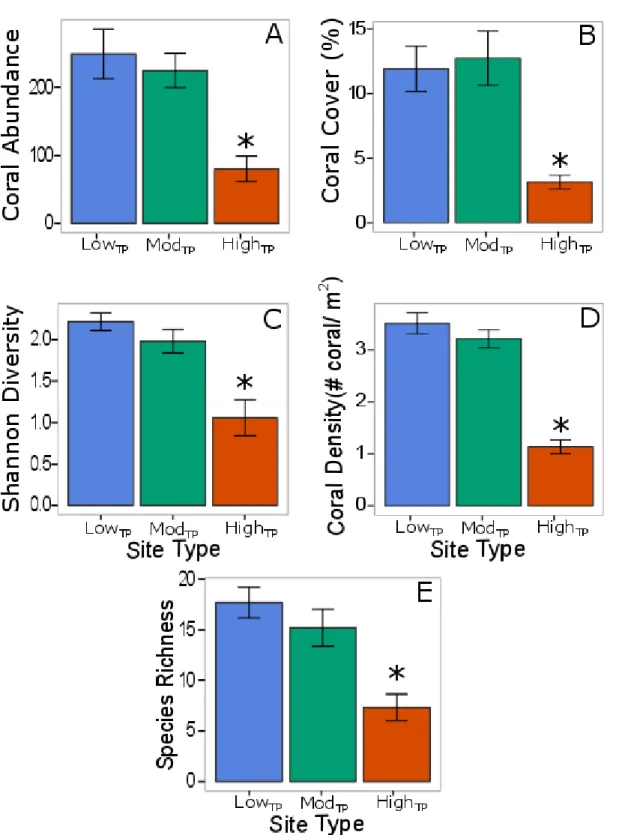
Coral species richness, abundance, diversity, density, and percent cover were all
lower at highTP sites compared to lowTP and modTP sites (Fig 2). Differences in coral
community composition between highTP sites and lowTP/modTP sites are historically
explained by more stressful conditions nearshore and less stressful conditions offshore (Done
1982; Cortés 1990). These nearshore stressors include, but are not limited to temperature,
eutrophication, sedimentation, and wave energy (Done 1982; Cortés 1990). Our findings
suggest that lower coral species richness, diversity, abundance, percent cover, and density at
highTP sites may be driven by high thermal variability, elevated maximum temperatures, and
prolonged duration of exposure to temperatures above the bleaching threshold; three
variables that have been shown to cause coral community decline (Loya et al. 2001;
McClanahan and Maina 2003; McClanahan et al. 2008; Thompson and Van Woesik 2009;
Soto et al. 2011a). These temperature parameters were more strongly correlated with changes
in coral community composition between site types than with chl-a (Fig S3), indicating that they likely play a greater role in determining coral community composition than productivity.
High weekly thermal variability has also been shown to correlate with low coral cover on
nearshore reefs in the Florida Keys (Soto et al. 2011a). Therefore, differences in thermal
variability observed across site types may have influenced coral community composition in
Belize.
Our findings are contrary to the results of Soto et al. (2011) (Soto et al. 2011a), which showed that reef sites with moderate temperature variability (equivalent to modTP sites in the
17
reefs) or high temperature variability. Soto et al. (2011) (Soto et al. 2011a) suggests that corals exposed to moderate weekly thermal variation are able acclimatize to a wide range of
environmental conditions, making them more resilient than corals that experience less
variation. At the same time, corals exposed to extremely high thermal variation generally do
not survive(Soto et al. 2011a). Our results may contrast with that of Soto et al. (2011)
because fore reef locations were not included in the present study (i.e., lowTP sites are located
in the back reef). Our highTP sites follow the same pattern seen in Soto et al. (2011)(Soto et al. 2011a) as they have lower coral cover than modTP sites (Fig 2).
Our results also contrast those of Lirman and Fong (2007) (Lirman and Fong 2007),
which showed that nearshore reefs (equivalent to our highTP sites) exhibited higher coral
cover and growth rates than offshore reefs (equivalent to our lowTP sites) in the Florida Keys.
Interestingly, these nearshore Florida reefs also experienced lower water quality than the
offshore reefs (Lirman and Fong 2007). The authors hypothesized that higher coral cover
and growth rates on nearshore reefs were due to the ability of some corals to switch trophic
mode under adverse conditions (Lirman and Fong 2007), a pattern that has been observed in
previous studies, but was not quantified in the current study (Anthony 1999; Grottoli et al.
2006). Differences in coral community composition between the Florida Reef tract and the
Belize MBRS may explain our contrasting results in coral cover as nearshore patch reefs in
Life history strategies
In the current study, highTP sites contained no competitive species, few generalists, and
were dominated by stress-tolerant and weedy genera, while both lowTP sites and modTP sites
contained all 4 life history types (Fig 4). LowTP sites contained all four life history strategies
in roughly equal proportions. ModTP sites were similar but with fewer competitive species than
lowTP sites, and highTP sites had comparatively fewer of all four life histories, but were
dominated by weedy and stress tolerant genera. Shifts toward weedy and stress tolerant genera
under climate change conditions were predicted by Darling et al. (2012) (Darling et al. 2012), and have been recorded in many areas of the world (Loya et al. 2001; McClanahan et al. 2014),
including the Caribbean (Aronson et al. 2004; Green et al. 2008; Alvarez-Filip et al. 2011).
Even in the face of region-wide decline in coral cover and decrease in abundance of
competitively dominant species (Gardner et al. 2003), some weedy species, such as Porites astreoides, are actually increasing in prevalence within the Caribbean (Green et al. 2008). This weedy coral species is likely able to succeed in high stress environments due to its ability to
brood and mature quickly, which allows it to rapidly colonize a recently disturbed area (Green
et al. 2008; Darling et al. 2012).
In contrast, a stress-tolerant species such as S. siderea is likely able to survive in highTP environments due to its massive size and long life span, which allows it to sustain a population
in the absence of successful recruitment. This can increase the long-term survival potential of
this species in harsh conditions (Hughes and Tanner 2000). These two contrasting strategies
seem most effective in highTP environments (Fig 4), and are likely to be most effective in future
conditions as the oceans continue to warm. This prediction is corroborated by Loya et al.
19
P. astreoides) species survived a mass bleaching event in 1997-1998 better than corals of other morphologies (e.g., branching). Ten years after the bleaching event these same types of coral
continued to dominate. However, some branching species recovered and increased in
abundance (Wild et al. 2011). In the current study, branching species were almost non-existent
in highTP sites, which indicates that these sites have experienced a recent thermal stress event
or are exposed to chronic stress (e.g., temperature, eutrophication) that prevents such species
from succeeding in these environments. It is also possible that highTP sites are more frequently
disturbed than both lowTP and modTP sites. Disturbances such as bleaching events,
eutrophication, sedimentation, and overfishing are known to cause declines in coral cover,
species richness, and diversity (Loya et al. 2001; Van Woesik et al. 2011). These more
disturbed or impacted reefs can then become dominated by stress-tolerant corals and corals
that quickly colonize areas after a perturbation (i.e., weedy corals) (Loya et al. 2001; Soto et
al. 2011a; Van Woesik et al. 2011; Alvarez-Filip et al. 2013), as observed in the current study
(Fig 4). Historical and/or geological investigation of reef assemblages (i.e., through pit
excavating or coring of reef framework (Aronson et al. 2002a; Cramer et al. 2012; Cramer et
al. 2015)) would be a useful next step, as it would allow insight into how reef communities
within the three thermal regimes have changed after disturbances and over long periods of
time.
Influence of primary productivity on coral community composition
Cross-reef chl-a concentrations follow the same patterns as temperature (elevated nearshore and decreasing with increasing distance from the Belize coast) (Fig 1, Fig S2).
a strong negative relationship between chl-a and coral cover, species richness, and abundance at nearshore reefs on the Great Barrier Reef (GBR) (Van Woesik et al. 1999). However, our
results reveal that chl-a concentrations are not strongly correlated (R2=0.040) with changes in coral community structure (e.g., percent cover, abundance, diversity, species richness, and
density) across site types (S5H Fig), suggesting that chl-a concentrations may not best explain differences in community composition between site types in Belize. This may be due
to spatial scale (e.g., we focused on nearshore, patch reef, and back reef sites as opposed to
exclusively nearshore sites) (Van Woesik et al. 1999), or the coarse scale of the chl-a dataset (4 km x 4 km grid; each survey site is <1 km). Focusing on variation within nearshore
(highTP) sites, we do see a correlation between chl-a and changes in coral community structure (S4H Fig), which supports results from previous work (Van Woesik et al. 1999;
West and Van Woesik 2001).
Other potential factors influencing coral community structure across reef types Eutrophication
Eutrophication has led to local degradation of reefs (Marubini and Atkinson 1999;
Fabricius 2005; Wooldridge 2009a). However, larger scale (regional) reef degradation due to
nutrients alone has not been quantitatively shown (Szmant 2002). Wooldridge (2009)
(Wooldridge 2009b) demonstrates that lower water quality (e.g., higher nutrient
concentrations) are linked to lower bleaching thresholds on nearshore reefs in Australia. If
bleaching thresholds are depressed at highTP sites for some species, it may help explain lower
diversity measured at these sites, as they experience warmer temperatures and spend more
time above the regional bleaching threshold than do modTP and lowTP sites (Fig S2). While
21
S3), it should be noted that chl-a is an estimate of nutrient delivery and primary productivity, not a measurement of the concentration of any one nutrient pool. Due to this limitation,
manipulative field experiments such as Vega-Thurber et al. (2014)(Vega Thurber et al. 2014)
and Zaneveld et al. (2016)(Zaneveld et al. 2016) are needed to understand the influence of
nutrients on coral community structure and bleaching thresholds at local scales.
Sedimentation
Coastal (nearshore) reefs throughout Belize are influenced by runoff from smaller
local rivers, and reefs in southern Belize experience additional runoff and river plumes
originating from larger watersheds in Honduras and Guatemala (Paris and Cherubin 2008;
Carilli et al. 2009a). It has been previously shown that Orbicella faveolata corals on reefs with higher sedimentation rates exhibited suppressed skeletal extension rates for a longer
duration than corals on reefs with lower sedimentation rates following the 1998 bleaching
event in Belize (Carilli et al. 2009c). In contrast, increased sedimentation did not affect
skeletal extension of S. siderea or P. astreoides corals in Puerto Rico (Torres and Morelock 2002). The results of these two studies suggest that there may be species-specific responses
to increased sedimentation rates. In Barbados, reefs with high sedimentation rates were
dominated by coral species with high recruitment and high natural mortality (e.g., P. astreoides) and reefs with lower sedimentation rates were dominated by coral species with lower recruitment and low natural mortality (e.g., boulder corals) (Hunte and Wittenberg
1992). As sedimentation rate was not quantified in this study, the impacts of sedimentation
Circulation and wave energy
The Belize MBRS lies west of the Honduras Gyre, a hydraulic feature that
recirculates water inside the Cayman basin (Carrillo et al. 2015). The coastal waters of
northern Belize are influenced by the Cayman and Yucatan currents, which move water
northwest up the coastline toward Mexico (Sheng and Tang 2003,2004; Tang et al. 2006;
Carrillo et al. 2015). In central and southern Belize, current velocities are lower and
dominant circulation patterns are less consistent throughout the year (Tang et al. 2006).
However, currents appear to bring water and potentially pollution, nutrients, or sediment
plumes from coastal Honduras and Guatemala west to southern Belize where they recirculate
before slowly moving northward (Andrefouet et al. 2002; Sheng and Tang 2004; Tang et al.
2006; Paris et al. 2007; Paris and Cherubin 2008; Prouty et al. 2008; Carilli et al. 2009a).
These circulation patterns have the potential to influence the stress tolerance of corals across
sites and latitude in the current study. Our results reveal no spatial autocorrelation between
sites for any of our measured variables with the exception of chl-a suggesting that the influence of these currents may be minimal. Additionally, wave energy may play a role in
shaping coral communities. Wave energy may be elevated at lowTP sites as they are located
near channels in the fore reef and may not be as sheltered by the reef crest as other modTP.
Similarly, wave energy may be elevated at highTP sites due to the large fetch between the reef
23 Light
Irradiance (light intensity) has been shown to decrease along an offshore-nearshore
gradient on the GBR as chl a concentrations increase (Cooper et al. 2007). Chlorophyll-a
concentrations increase with proximity to shore in Belize (Fig 1), so this pattern of
decreasing light intensity towards the nearshore likely holds for Belize as well. However, in
southern Belize offshore reefs (and nearshore reefs) are subject to seasonal sedimentation and
runoff from larger rivers in Honduras and Guatemala (Andrefouet et al. 2002; Prouty et al.
2008). Irradiance is a known stressor, proven to cause coral bleaching alone or in consort
with elevated temperatures (Brown 1997). Although depth was held constant in the present
study, it is possible that differing light levels both between site types and between individual
sites may influence coral community composition across the site types investigated in the
current study.
Proximity to human populations
Declining health of coral reefs worldwide has been linked to land-based stressors
including nutrients and human use and exploitation (e.g., overfishing) (Brown 1997; Jackson
et al. 2001; Fabricius 2005) as well as proximity to sources of these stressors (e.g., major
human population centers) (Burke et al. 2004). However, not all reefs that are near to or
influenced by land-based stressors are unhealthy (Perry and Larcombe 2003; Lirman and
Fong 2007). Some of the study sites were within close proximity to a major human
population center, particularly the highTP sites (populations of major towns and cities in
Belize can be seen in Table S4). Analysis of spatial autocorrelation revealed no significant
suggesting that proximity to human population centers did not have a major impact on coral
community composition.
Conclusions
HighTP reefs exhibit lower coral diversity, abundance, species richness, and cover
than do lowTP and modTP reefs in Belize. These highTP reefs are exposed to higher annual
temperatures, greater temperature variability, more time above the regional bleaching
threshold, elevated chl-a concentrations, and likely increased sedimentation rates and lower flow than lowTP and modTP reefs. Temperature parameters, most notably time spent above the
bleaching threshold, correlate best with differences in coral community structure. In addition,
stress-tolerant and weedy coral life history strategies dominate at highTP reefs. Due to
exposure to generally more stressful environmental conditions, highTP reefs may offer a
snapshot into the projected future of coral reefs as they become increasingly exposed to local
(pollution, runoff, land-use change, and overpopulation) and global (warming and
acidification) stressors. Previously, such reefs have been suggested as possible refugia
against climate change (Woesik et al. 2012). Globally, this would mean a shift towards
dominance of stress-tolerant and weedy corals (McClanahan et al. 2014). Such a shift would
dramatically impact the structure and function of reefs, essentially creating novel ecosystems
(Graham et al. 2014). HighTP reefs should be protected in addition to more pristine reefs in
order to improve conservation success (Game et al. 2008). More pristine reefs should be
protected as they contain more diversity and provide more ecosystem services than do highTP
reefs (Moberg and Folke 1999). However, highTP reefs host coral holobionts that may be best
suited to survive in future ocean conditions. To ensure survival and future success of reefs
25
protected. The results of the current study highlight the need to better protect and understand
impacted nearshore reef systems, including investigations into what conditions allow more
sensitive species (e.g., competitive and generalist) to survive and persist on nearshore reefs.
Data Accessibility
All data are archived on PANGAEA at the following DOI:
Tables
Factor Min Mean Max SD lowTP Sites modTP Sites highTP Sites Mean
Annual Max Temp
30.2°C 30.6°C 31.3°C 0.27°C 30.2-30.8°C
30.8-30.9°C 30.9-31.3°C
Mean Annual
Temp Range
4.4°C 5.2°C 7.1°C 0.69°C 4.4-5.5°C 5.5-5.9°C 5.9-7.1°C
Mean Annual Days Above Bleachi ng Thresh old 20.0 days 40.1 days 78.4 days 14.3 days 20.0-40.1 days 40.1-54.4 days 54.4-78.4 days Mean Consec utive Days Above Bleachi ng Thresh old 3.0 days 4.8 days 7.5 days 0.92 days 3.0-4.8 days 4.8-5.7 days 5.7-7.5 days
27 Figures
Figure 1: Thermal Regimes and Site Locations: The Belize Mesoamerican Barrier Reef System (MBRS)
classified by site type based on four thermal parameters. Blue, green and red regions represent lowTP, modTP,
Figure 2: Differences in coral community structure across site type: Average coral abundance (A), percent coral cover (B), coral species diversity (C), coral density (D), and coral species richness (E) at each site type.
29
Figure 4: Coral life history strategy by site type: Abundance (count) of corals (±1 SE) grouped by life history (from Darling et al. 2012). Letters ‘a’ and ‘b’ show significant differences between site types (p<0.050) acquired from post hoc Tukey tests.
Figure 5: Average chl-a by site type: Chl-a concentration by site type (±SE) Annual average chl-a for lowTP
(blue), modTP (green), highTP (red) site types over the interval 2003-2013 (A). Chl-a concentrations averaged
______________________
2This chapter previously appeared as an article in the journal Microbial Ecology. The original citation is as
follows: Baumann JH, Davies SW, Aichelman HE, Castillo KD. “Coral Symbiodinium community
compositions across the Belize Mesoamerican Barrier Reef System is influenced by host species and thermal
variability.” Microbial Ecology, 2018.
31
CHAPTER 3: CORAL SYMBIODINIUM COMMUNITY COMPOSITION ACROSS THE BELIZE MESOAMERICAN BARRIER REEF SYSTEM IS INFLUENCED BY
HOST SPECIES AND THERMAL VARIABILITY Introduction
Obligate symbioses, relationships in which two or more organisms depend on one
another for nutrition and survival, occur globally. Such symbioses are ubiquitous in plants and
algae, i.e., Mycorrhiza (Meyer 1966), lichens (Honegger 1991), or insects, i.e., ants and
bacteria (Degnan et al. 2004). The effects of climate change are expected to disrupt proper
functioning of many symbioses, including that of reef-building corals (Coles and Brown 2003;
Hoegh-Guldberg et al. 2007; Brosi et al. 2011), who’s success depends on the symbiosis
between the coral host and photosynthetic algae of the genus Symbiodinium (Muscatine 1990; Warner et al. 1996; DeSalvo et al. 2010). Under stressful conditions this coral-Symbiodinium
relationship breaks down, resulting in the loss of endosymbiont cells and/or photosynthetic
pigments from the coral tissue in a process known as ‘coral bleaching’ (Glynn 1993). Coral
bleaching is most commonly associated with thermal stress (Hoegh-Guldberg 1999; Hughes
et al. 2003; Wild et al. 2011; Heron et al. 2016; Hughes et al. 2017a) and is predicted to increase
in frequency and severity as the world’s climate continues to change (Jokiel and Coles 1990;
D'Croz et al. 2001b; Coles and Brown 2003; Donner et al. 2005b; McWilliams et al. 2005;
change combined with other local stressors such as eutrophication, habitat destruction, and
overfishing has created an uncertain future for coral reefs (Hughes et al. 2003;
Hoegh-Guldberg et al. 2007; Frieler et al. 2013a). In the Caribbean Sea, warming rates are higher than
in any other tropical basin (Belkin 2009; Chollett et al. 2012c) and coral cover has declined by
as much as 80% in recent decades (Gardner et al. 2003). It has been predicted that Caribbean
coral reefs may suffer biannual bleaching events within the next 20-30 years (Donner et al.
2007c) and annual bleaching by 2040 (Van Hooidonk et al. 2015b).
In the face of a changing climate and widespread reef declines, corals will need to
rapidly increase their thermal tolerance in order to persist in their current form (Donner et al.
2005b; Barshis 2015). Coral thermal tolerance has been shown to be influenced by a coral’s
thermal history, which among other factors includes average environmental temperature and
extent of thermal variability (Castillo and Helmuth 2005; Middlebrook et al. 2008). On
average, corals previously exposed to warmer temperatures show decreased mortality during
bleaching events (Pineda et al. 2013a) and more stable growth patterns (Castillo et al. 2012)
compared with corals exposed to cooler temperatures, which exhibit greater mortality during
heat stress and declining growth rates with increased temperatures (Castillo et al. 2012; Pineda
et al. 2013a). Exposure to greater daily thermal variation has also been shown to increase coral
thermal tolerance (Oliver and Palumbi 2011a) and has been associated with higher coral cover
and slower mortality rates when compared to reefs exposed to less thermal variation (Soto et
al. 2011b). Coral thermal tolerance is also heritable with larvae from parent colonies on
lower-latitude (warmer) reefs showing a 10-fold increase in survival under heat stress when compared
to larvae from cooler reefs locations (Dixon et al. 2015). A growing body of evidence suggests
33
2013; Kenkel et al. 2013a; Kenkel et al. 2013b), however, plasticity or specificity of
coral-associated Symbiodinium and bacterial communities have also been shown to play a significant role in overall thermal tolerance (Rowan et al. 1997; Baker 2003; LaJeunesse 2010; Silverstein
et al. 2015; Ziegler et al. 2017).
The clades, lineages, or species of Symbiodinium hosted by a coral are critical to its survival and resilience to stress. The genus Symbiodinium is genetically diverse and comprises at least nine divergent clades (clades A-I; Coffroth and Santos 2005). These clades can be
further broken down into lineages, corresponding approximately to species level diversity
(LaJeunesse 2001), with some species conferring variable benefits (Rowan et al. 1997;
LaJeunesse and Trench 2000; Coffroth and Santos 2005). In particular, some Symbiodinium
are more thermally tolerant than others (Warner et al. 1996; Rowan et al. 1997; Silverstein et
al. 2017), specifically Symbiodinium clade D (Baker et al. 2004). In contrast, clade C is more thermally sensitive (Rowan 2004; Tchernov et al. 2004; Berkelmans and Van Oppen 2006),
yet it includes Symbiodinium thermophilum, a thermally tolerant species within clade C endemic to the Red Sea (Hume et al. 2015). This example illustrates that making clade level
generalizations is problematic due to the physiological diversity within a single Symbiodinium
clade (Thornhill et al. 2017). Specific lineages within clades can also confer various
advantages. For example, C1 enhances growth rate (Little et al. 2004), S. thermophilum confers heat tolerance (Hume et al. 2015), and B2 confers cold tolerance (Thornhill et al. 2008).
Additionally, species D1a (Symbiodinium trenchii) has been shown to be both heat tolerant (Jones et al. 2008; LaJeunesse et al. 2009), and cold tolerant (Silverstein et al. 2017). However,
the increased thermal tolerance of a coral which predominantly hosts clade D Symbiodinium
fixation rates compared with corals that host other clades (Cantin et al. 2009; Jones and
Berkelmans 2011; Cunning et al. 2015; Kennedy et al. 2015). Due to the high levels of
variation in coral host-Symbiodinium interactions, it is essential to identify whichlineages are present in order to help predict how a coral may respond to environmental stressors.
The majority of coral species host one dominant Symbiodinium lineage (Baker et al. 1997; Diekmann et al. 2002; Coffroth and Santos 2005) along with several non-dominant
lineages (Silverstein et al. 2012), each proliferating primarily by asexual cloning (Thornhill et
al. 2017). However, other corals can host multiple dominant lineages or clades (Rowan et al.
1997; Thornhill et al. 2017). Recent advances in genetic techniques, especially next-generation
sequencing (NGS), have allowed researchers to identify cryptic and low-abundance symbionts
comprising 0.1% or more of the total Symbiodinium community within a host (Kenkel et al. 2013b; Quigley et al. 2014). It is important to understand these low-abundance Symbiodinium,
as they have the potential to play important roles in coral-algal holobiont physiology under
ambient and stressful conditions (Correa et al. 2009; Jones and Berkelmans 2010; Davy et al.
2012; but see also Lee et al. 2016). Identifying trends in Symbiodinium community variation (including cryptic or low abundance lineages) within and between species across a coral reef
may allow for a better understanding of the role of Symbiodinium communities in modulating coral response to environmental variation.
Symbiodinium communities have been shown to vary regionally (between reef systems; Garren et al. 2006; Kemp et al. 2015; Kennedy et al. 2015), locally (within a reef system;
Garren et al. 2006), temporally (across time on the same reef; Warner et al. 2006), and within
a colony (Kemp et al. 2015). Studies of this variation have revealed geographically endemic