EXAMINATION OF HOW PREPARATION PATHWAY AND INDUCTION PROGRAM COMPREHENSIVENESS ARE ASSOCIATED WITH NOVICE STEM TEACHERS’ PERCEPTIONS OF PREPAREDNESS AND INTENTIONS TO REMAIN IN TEACHING
Lindsay F. Goldberg
A thesis submitted to the faculty of the University of North Carolina at Chapel Hill in partial fulfillment of the requirements for the degree of Master of Arts in the School of Education
(Educational Psychology, Measurement and Evaluation)
Chapel Hill 2012
Abstract
LINDSAY F. GOLDBERG: Examination of How Preparation Pathway and Induction Program Comprehensiveness are Associated with Novice STEM Teachers’ Perceptions of
Preparedness and Intentions to Remain in Teaching (Under the direction of Dr. Jill V. Hamm)
Novice science and mathematics (STEM) educators experience high rates of teacher turnover and a shortage of new teachers entering the profession. Variations in the
Table of Contents
List of Tables ... vi
List of Abbreviations ... vii
Chapter I. Introduction ...1
II. Theoretical Framework ...6
Prior Knowledge and Beliefs Contribute to Novice Teachers’ Perceptions ...6
The Role of Knowledgeable Others in Teacher Development ...11
III. Review of the Literature ...14
Preparation Pathways ...15
Induction Programs ...16
Research on STEM Teachers ...17
Perceptions of Preparedness ...19
Preparation pathway and perceptions of preparedness ...21
Induction programs and perceptions of preparedness ...26
Intentions to Remain in Teaching ...30
Preparation pathway and intentions to remain in teaching ...30
Induction programs and intentions to remain in teaching ...35
Relationship between Preparation Pathway Comprehensiveness and Induction Program Comprehensiveness on Teacher Outcomes ...38
V. Methods...44
Participants ...44
Procedures ...46
Measures ...47
Preparation pathway...48
Induction program ...52
Perceptions of preparedness ...55
Intentions to remain in the teaching profession ...56
Ethical and Security Considerations ...56
Protection of identifiable data ...56
VI. Plan of Analyses ...59
VII. Results ...67
Correlational Analyses ...67
Predicting Novice Teachers' Perceptions of Preparedness ...70
Predicting Novice Teachers' Intentions to Remain in the Teaching Profession ...72
VIII. Discussion ...74
Novice Teachers’ Perceptions of Preparedness ...75
Novice Teachers’ Intentions to Remain in Teaching ...79
Limitations ...82
Conclusions ...88
Appendix A: List of SASS Questionnaires for the 2007-2008 Administration...91
Appendix C: STEM-related Certification Content Area Codes
List of Tables
Table 1: Means, Standard Deviations, and Percentages for Teacher
Control Variables ...45 Table 2: Certification Content Area Codes and Matching Teaching
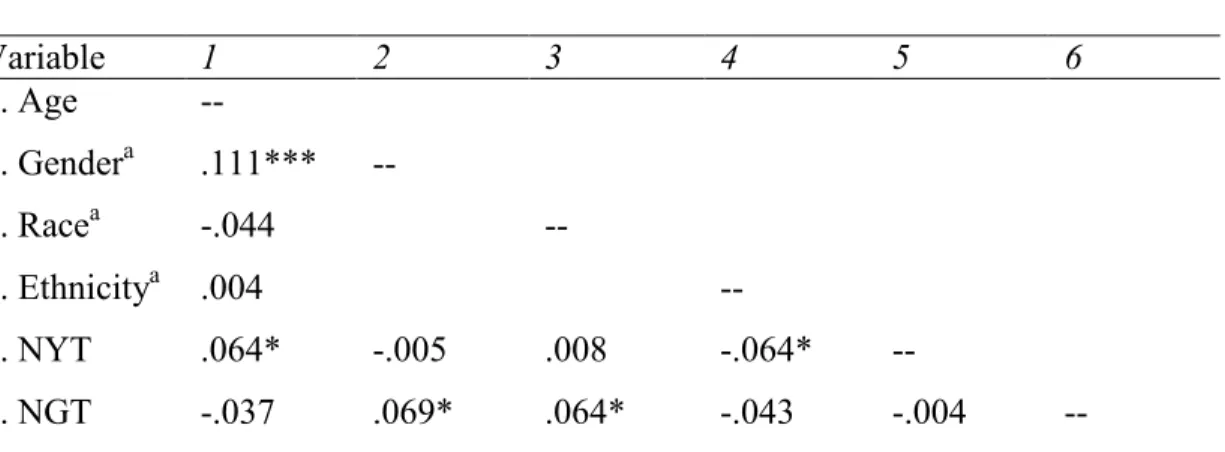
Assignment Field Codes ...54 Table 3: Correlation Matrix for Teacher Control Variables ...68 Table 4: Correlation Matrix for Teacher Control Variables, Predictor,
and Outcome Variables ...69 Table 5: Hierarchical Linear Regression Analysis Evaluating Predictors
of Novice Teacher Perceptions of Preparedness to Teach ...71 Table 6:Binary Logistic Regression Analysis Evaluating Predictors
List of Abbreviations
BTSA Beginning Teacher Support and Assessment program
CFASST California Formative Assessment and Support System for Teachers IES Institute of Education Sciences
NCES National Center for Educational Statistics NCLB No Child Left Behind Act of 2001
OR Odds Ratio
PBis Pearson Point-Biserial
PISA Programme for International Student Assessment SASS Schools and Staffing Survey
STEM Science, Technology, Engineering and Mathematics TEAC Teacher Education Accreditation Council
CHAPTER 1 INTRODUCTION
Many novice teachers, those educators with three or fewer years of full-time
classroom experience, struggle through their first few years of teaching. Vast differences in their preparation pathways, defined as the education and training routes taken by individuals to prepare for the duties of the teaching profession, bring new educators into the occupation with a wide range of experiences. While strong preparation pathways provide opportunities for learning through an inclusive framework of pedagogical instruction, practice teaching opportunities and certification, weak pathways fail to connect these components in a
comprehensive and connected manner (Darling-Hammond, Chung, & Frelow, 2002; Teacher Education Accreditation Council, 2012).
teachers reported leaving the profession within the first five years of teaching (Donaldson & Johnson, 2010). Turnover rates for teachers are higher than for many other professionals including lawyers, engineers, and professors. With high levels of teacher turnover, students are likely to experience a series of novice teachers, whose lack of experience and poor perceptions of preparedness may negatively affect student motivation and achievement (Darling-Hammond, Chung, et al., 2002).
One area in which the effect of high teacher turnover rates is most apparent is in the fields of science, technology, engineering, and mathematics, also known as the STEM fields. The shortage of quality STEM teachers in the profession is currently an issue of grave concern for hiring managers in many schools. Lawrenz and colleagues (2006) found that 95% of urban school districts were in immediate need of science and math teachers at the high school level, while 80% were in need of a middle school STEM teacher. Other research also demonstrates that 56% of students in science classes are being taught by an out-of field teacher, while 27% of students in mathematics face a similar situation (Ingersoll, 1999; Ingersoll, 2002). While these statistics demonstrate the importance of bringing and keeping quality STEM teachers into today’s middle and secondary schools, according to Ingersoll (2011), little research has actually been conducted on the supply and demand of math and science teachers. Even with the issue at the forefront of education reform initiatives, the ability to recruit and retain qualified STEM teachers has made little progress.
& Henken, 2009; National Research Council, 2011). With America’s recent drop in the rankings on tests of international comparisons, such as the Programme for International Student Assessment (PISA) and the Trends in International Mathematics and Science Study (TIMMS) assessments, many education reformers have expanded efforts to increase
students’ access to these topics in schools, particularly at the middle and high school levels, grades six through 12 (President’s Council of Advisors on Science and Technology, 2010). However, without sound research on the unique challenges faced by teachers in the STEM fields, many of these reform efforts may not have long-term effects on student achievement. As the statistics demonstrate, there is an immediate need to examine STEM teachers starting in their preparation programs and progressing through their early years of teaching in order to gain a better understanding of the roadblocks affecting the ability to attract and keep quality STEM teachers in the classroom.
Although research specific to STEM teachers has received little focus, over the past two decades increased attention has been paid to the challenges novice teachers, in general, face when entering the profession and the effects of these struggles on long-term teacher retention (Ingersoll & Strong, 2011; Smith & Ingersoll, 2004). This newfound awareness has led to the establishment of induction programs, which are collective groups of programs aimed to provide support, guidance, and orientation to novice teachers (Smith & Ingersoll, 2004). The goal of such programs is to enhance teacher quality and prevent the
While research on novice teachers’ preparation pathways and induction programs has become prevalent over the past two decades, many gaps in the literature still exist in
understanding the effectiveness and benefits of these programs. In particular, more research is needed to further our understanding of the relationship between preparation pathways and novice teachers’ intentions to remain in the profession, particularly for STEM educators. Intentions to remain in teaching often serve as a proxy for teachers’ commitment to the profession and likelihood of retention when actual measures of retention and attrition are unavailable. Recent research suggests that teachers’ level of commitment to the profession may play a key role in their decision to remain in the field (Corbell, 2008; Corbell, Booth, & Reiman, 2010; Johnson & The Project on Next Generation of Teachers, 2004). Additional research is also needed to understand the extent to which participation in an induction program is associated with novice teachers’ perceptions of preparedness, or their beliefs of how ready they are to perform the duties required of the profession (Darling-Hammond, Eiler, & Marcus, 2002). Furthermore, more research is needed in order to understand if induction programs are helpful for novice teachers regardless of the quality of their preparation pathway or whether these support services provide greater benefits for novice teachers from weak preparation pathways.
(STEM) fields. To assess the relationship among these factors, I utilized the 2007-2008 Schools and Staffing Survey (SASS), conducted by the Department of Education’s National Center for Educational Statistics (NCES) (U.S. Department of Education, 2008). Focusing on middle and secondary novice STEM teachers with three or fewer years of full-time
classroom experience, I address the following research questions:
RQ1: What is the relationship between the comprehensiveness of middle and secondary novice STEM teachers’ preparation pathways and their perceptions of preparedness?
RQ2: What is the relationship between the comprehensiveness of middle and secondary novice STEM teachers’ induction programs and their perceptions of preparedness?
RQ3: Does the comprehensiveness of middle and secondary novice STEM teachers’ induction programs moderate the relationship between preparation pathway
comprehensiveness and perceptions of preparedness?
RQ4: What is the relationship between the comprehensiveness of middle and secondary novice STEM teachers’ preparation pathways and their intentions to remain in the teaching profession?
RQ5:What is the relationship between the comprehensiveness of middle and secondary novice STEM teachers’ induction programs and their intentions to remain in the teaching profession?
RQ6: Does the comprehensiveness of middle and secondary novice STEM teachers’ induction programs moderate the relationship between preparation pathway
CHAPTER 2
THEORETICAL FRAMEWORK
The conceptual framework for this study was derived from two bodies of literature: the contributions of prior knowledge and beliefs to novice teachers’ perceptions, and the contributions of knowledgeable others to teacher development. Research findings of Feiman-Nemser (2001) and Warford (2010) emphasize the importance of sustained learning
experiences for teacher candidates and novice teachers as they progress from preparation through the early years of their careers. The researchers examine the influence of teacher candidates’ own schooling experiences on their teacher preparation and development, and consider how on-the-job connections and learning opportunities may have great implications for novices’ learning. The current study draws upon this research literature to examine the extent to which novice teachers perceive themselves to be prepared for the responsibilities of their job and intend to make teaching a long-term career.
Prior Knowledge and Beliefs Contribute to Novice Teachers’ Perceptions
Instead, teacher candidates may stall their knowledge advancement by referring to outdated beliefs, such as lecturing and direct instruction, that are commonly based upon experiences they were most familiar with from their own education (Warford, 2010). Even as more contemporary approaches to pedagogy have emerged, such as constructivist and discovery-based approaches, the “sink or swim” scenario many novices face during their first years in the profession make it likely that they will fall back upon their previous experiences and beliefs in challenging situations.
Feiman-Nemser (2001) asserted that there is a lack of connectivity between teacher preparation pathways and the realities of the teaching field and school environments. In her discussion of designing a preparation-to-practice continuum for novice teachers, she
acknowledged that disparities between the ideological theories presented in traditional preparation programs and the actuality of instructional practice inhibits individuals from making a smooth transition from learner to teacher. With such a large disconnect, novice teachers enter the workforce unprepared to handle the expectations of contemporary pedagogy. In order to resolve such disparities, Feiman-Nemser (2001) developed a
means to be an effective teacher. As they progress through induction and their early teaching careers, novices develop a professional identity of teaching in relation to their local
knowledge of the school, students, and community. Teachers then use this gained knowledge to strengthen their teaching skills further through post-induction professional development opportunities.
In his recent research on the zone of proximal teacher development, Warford (2010) advances Feiman-Nemser’s powerful curriculum model by applying a Vygotskyan approach to teacher development to argue that a preparation that focuses on connecting theory to practice prepares teacher candidates to handle a range of classroom situations. Warford (2010) uses a three-way model that incorporates teachers’ beliefs about pedagogy from their prior experiences as students into the content and context of their teacher preparation
program and field placement experiences. In doing so, he emphasizes a quality preparation pathway that acknowledges teacher candidates’ prior knowledge and beliefs, reflects upon and critically examines those beliefs, and connects the theoretical ideas of preparation programs to the practical application of teaching experiences.
Accreditation Council (TEAC), a non-profit organization devoted to accrediting teacher education programs, components of a quality teacher education program include evidence of candidate learning, with a particular emphasis on developing the following: (a) subject matter knowledge, (b) pedagogical knowledge, (c) effective teaching skills, and (d) a demonstrated understanding of knowing how to independently learn (Teacher Education Accreditation Council [TEAC], 2012). In order to further understand the association between novice teachers’ preparation pathways and their perceptions of preparedness, it is essential to examine the strength and quality of novice teachers’ education and training programs.
The role of teacher preparation programs is to “…prepare competent, caring, and qualified educators” (TEAC, 2012) and, at their core, teacher preparation programs must produce educators who are knowledgeable of the subject matter they teach. In assessing the strength of a teacher preparation program for teacher candidates, it is important to review candidates’ major field of study, status on national teacher exams of subject matter skills, and teaching certification areas. Understanding how well qualified novice teachers are within their specific subject areas provides valuable information regarding their expected subject matter knowledge, and subsequent perceptions of preparedness, during their first year in the profession (Feiman-Nemser, 2001).
state’s licensing exam (NCLB, 2001). Highly qualified teachers must also demonstrate competency in the subject area or areas taught, as identified by receiving a passing grade on tests of teaching skills and specific-content knowledge, such as the Praxis I Pre-Professional Skills Test and the Praxis II: Subject Assessment (NCLB, 2001). Those teachers who are designated as highly qualified are considered proficient in subject matter competency and are likely to demonstrate perceptions of confidence and preparedness in the instructional areas in which they teach (Tamir, 2010).
Teacher candidates must also have pedagogical knowledge and be able to convert their subject matter knowledge into an instructional form that accommodates a range of student learners (TEAC, 2012). Pedagogical knowledge helps teachers ensure that the contents of their lessons are understandable for students. If students find the content
confusing or difficult, teachers should use their pedagogical knowledge to prepare alternative explanations or models using a variety of curricular materials (Feiman-Nemser, 2001, Luft et al., 2011). By incorporating contemporary approaches to pedagogy into their instructional practices, teacher educators from quality preservice preparation programs ensure that
graduates enter the profession with the pedagogical skills needed to be an effective educator. Using courses in instructional theories and teaching strategies and methods, teacher educators break down candidates’ misconceptions, build up the knowledge teacher candidates bring with them to the program, and educate their students on subject-specific and contemporary teaching methods (Feiman-Nemser, 2001; Sigler & Saam, 2006).
extended field experiences that move from observation and limited participation to full classroom teaching responsibilities slowly provide teacher candidates with the tools needed to become independent learners (Warford, 2010). Effective preparation programs that combine journal writing, cohort seminars, and one-on-one conferences, enable teacher candidates to not only reflect on and analyze their own experiences, but also share in the lessons learned by others (Feiman-Nemser, 2001). These experiences further improve teacher candidates’ skills and help shape teachers’ effectiveness once they enter the field.
Preparation pathways that embody Feiman-Nemser’s (2001) “powerful curriculum” and Warford’s (2010) teacher development model demonstrate the importance of quality education programs in the development and preparation of novice teachers. Experiencing such pathways enables teacher candidates to integrate their prior knowledge and beliefs and astutely assess the accuracy of those beliefs in the context of modern education. Furthermore, quality preparation pathways train individuals for the unforeseen challenges of the profession and provide candidates with the tools needed to become independent learners and educators. The Role of Knowledgeable Others in Teacher Development
further their understanding of what it takes to be a successful educator (Ingersoll & Strong, 2011).
Induction programs are seen as a transition from preparation to practice in which novices go from being a student, examining education as a formal study, to becoming an instructor (Feiman-Nemser, 2001, Luft et al., 2011). This shift in roles, however, also reveals gaps in novice teachers’ knowledge and skills. Teaching, like many other professions, is a complex occupation; no matter how effective a preparation pathway is, certain aspects of expertise can only be obtained through experience (Berliner, 1986; Feiman-Nemser, 2001). In this regard, the role of knowledgeable others becomes crucial in providing novices with the knowledge and skills needed to succeed in the day-to-day challenges associated with the teaching profession.
The role of knowledgeable others in induction programs is commonly provided by more experienced educators, known as mentors, as well as through collaboration with colleagues within a department or subject. Effective induction programs also provide novice teachers with appropriate assignments and assistance, such as reduced teaching schedules and classroom assistance, as they learn the norms, rules, and responsibilities of their work
become (Feiman-Nemser, 2001; Klassen & Chiu, 2011).
Those who mentor novice teachers through induction programs should be aware of the influence of contextual factors on learning and provide scaffolding, or guided and fading support, not just to build up novice teachers’ skills, but to introduce novices to the social, cultural, and collaborative learning environments present in schools (Warford, 2010). As Putnam and Borko (2000) state, “learning is as much a matter of enculturation into a community’s ways of thinking and dispositions as it is a result of explicit instruction in specific concepts, skills, and procedures” (p. 5). Contemporary research on learning
CHAPTER 3
REVIEW OF THE LITERATURE
In the current study, I investigated the association between the comprehensiveness of middle and secondary novice STEM teachers’ preparation pathways and induction programs to outcomes of perceptions of preparedness and intentions to remain in the teaching
profession. Through this examination, I found the nature of these relationships to be variable. For example, research on the relationship between novice teachers’ preparation pathways and their perceptions of preparedness to teach revealed mixed findings. While some researchers (Darling-Hammond & Cobb, 1996; Imbimbo & Silvernail, 1999; Turley & Nakai, 2000) claimed that the type of preparation pathway obtained (e.g., traditional vs. alternative) was a significant factor in determining novice teachers’ perceived preparedness, others (Iyer & Soled, 2007) found no significant difference. On the other hand, some relationships were more clearly defined. Research on the relationship between induction programs and teacher retention demonstrated that participation in an induction program significantly increased teacher retention rates (Smith & Ingersoll, 2004).
The literature review begins with background on the diversity of preparation pathways and induction programs that novice teachers encounter as they prepare for and enter the teaching profession. Next, an introduction to contemporary research on STEM teachers is presented as it relates to the key associations investigated in the current study. Then, the outcome variables (i.e., perceptions of preparedness and intentions to remain in the teaching profession) are discussed along with further elaboration of the available research on the relationships between preparation pathways, induction programs, perceptions of
preparedness, and intentions to remain in teaching. The literature review concludes with an examination of possible interactions between the main predictor variables and their effects on novice teacher perceptions and intentions.
Preparation Pathways
Novice teachers enter the profession from diverse preparation pathways, particularly in terms of the educational and training routes towards certification in the profession
(Darling-Hammond, Chung, et al., 2002; Freedman & Appleman, 2009; Unruh & Holt, 2010). Novice teachers who take a traditional route to certification complete a four-year program that commences with a degree, at the Bachelor’s level or higher, in education or a related field. Traditional pathways commonly involve completion of courses in teaching methods and strategies, which help build teacher candidates’ pedagogical knowledge and self-efficacy for handling an array of classroom situations (Unruh & Holt, 2010; Yost, 2006). These programs commonly incorporate hands-on training experiences as well, such as
student teaching opportunities, which provide opportunities for teacher candidates to reflect upon their teaching abilities and receive feedback from faculty and peers
candidates from a traditional route are commonly prepared for national tests of teaching skills and obtain their licensure and certification through their educational program.
Alternative routes to entry and certification in the teaching profession, such as lateral transition programs or Teach for America, enable individuals to enter the workforce at an accelerated pace, often while simultaneously completing their coursework and certification (Turley & Nakai, 2000; Unruh & Holt, 2010). Many individuals who proceed through an alternative route to teacher entry have passed a required basic skills test, such as the Praxis I Pre-Professional Skills Test, but lack the field experiences that are an essential component of traditional teacher education programs (Unruh & Holt, 2010).
As individuals start their careers as teachers, they are likely to carry facets of these education and training experiences throughout their initial years in the profession.
Differences in the education and certification routes of novice teachers may account for disparities in their perceptions of preparedness and intentions to remain in the profession long-term. With nearly a third of all novice teachers entering the workforce through an alternative certification route, it is imperative to understand more fully the unique needs and perceptions of these groups of individuals (Unruh & Holt, 2010) in addition to the needs and characteristics of traditionally prepared teachers.
Induction Programs
Education, 2008). Similarly, induction programs vary in terms of their length and depth. In certain programs, novice teachers are provided with guidance and support throughout the entire school year, while in other situations induction programs are synonymous with a short-term orientation program at the beginning of the school year (Smith & Ingersoll, 2004). Likewise, some programs involve multiple sessions with mentors, fellow colleagues, and administrators, while others only incorporate a single meeting session (Smith & Ingersoll, 2004). Findings from a number of studies provide insight into which aspects of these programs are associated with teachers’ perceptions of preparedness and plans to remain in the profession.
Research on STEM Teachers
Today, the focus of education is shifting towards college- and career readiness and students’ obtainments of 21st century skills in order to maintain America’s presence as a leader in a globally competitive society (President’s Council of Advisors on Science and Technology, 2010). This shift is increasing requirements in math and science for many middle and secondary students, intensifying the demand for STEM educators (Ingersoll, 2011). Nevertheless, there are fewer STEM teachers entering the field than teachers of other subject areas, such as English, of which there is a surplus of candidates. Additionally, relatively few STEM teachers who do enter the profession come from a traditional teacher preparation program. Instead, nearly 75% of new STEM teachers entering the schools come from non-education backgrounds in science or math (Ingersoll, 2011). While this preparation route may result in STEM educators who have sufficient subject-matter knowledge, their pedagogical skills and teaching experiences are likely to vary considerably.
May, 2010; Ingersoll & Perda, 2010) suggest that, although fewer STEM teachers are entering the profession as a whole, the ability of districts to hire teachers for these subjects has been quite steady. Furthermore, the rate of hiring of STEM teachers seems to keep pace with the rate of teacher retirements in these fields. The researchers concluded that issues related to STEM teacher recruitment is not as much an issue of insufficient production of new STEM teachers as it is the issue of attrition of current STEM teachers leaving the field long before retirement age. When the loss of pre-retirement-aged teachers is taken into account for the STEM field, the data appear to demonstrate a problem of supply-and-demand as opposed to the real issues related to attrition and retention (Ingersoll, 2011).
Similar to teacher turnover rates for novice teachers in other subject areas, the highest rates of STEM teacher turnover appear to occur in disadvantaged public schools. Many STEM teachers cite issues related to job conditions, such as a lack of resources, poor school leadership, high levels of student misbehavior, and little opportunity for professional
development and collaboration among educators as the root cause of their leaving (Ingersoll, 2011). In light of these findings, examining novice STEM teachers’ perceptions of
preparedness to teach and intentions to remain in teaching in relation to the
Perceptions of Preparedness
As novice teachers transition from their preservice training to their full-time career as educators, they are faced with many challenges that they may or may not have been
adequately prepared to handle. While on-the-job support services, in the form of induction programs, are offered to help these new educators adjust to these changes, certain aspects of teaching are likely to reveal a degree of uncertainty among novice teachers. Previous
research on novice teachers entering the profession has focused on how the quality of their teacher training or the availability of support services affects outcomes, such as novice teachers’ impact on student achievement or long-term retention of novice teachers (Boyd, Grossman, Lankford, Loeb, & Wyckoff, 2009; Darling-Hammond, 1999; Ingersoll & Strong, 2011; Rockoff, 2004; Smith & Ingersoll, 2004). Little research has been conducted, however, on novice teachers’ perceptions of preparedness to teach once they enter the profession.
challenges they face upon entering the profession affect their teaching ability, self-efficacy, and long-term commitment to the profession.
Perceptions of preparedness may be considered an important factor that supports the development of strong self-efficacy beliefs in new teachers. According to Bandura’s (1995) social cognitive theory, self-efficacy is described as “the belief in one‘s capabilities to organize and execute the courses of action required to manage prospective situations (p. 2)”. In the context of teaching, self-efficacy can be described more specifically as “a teacher‘s belief in her own ability to plan and implement action that results in the successful delivery of a teaching task in a given context” (Tschannen-Moran, Hoy, & Hoy, 1998). Studies have shown that novice teachers’ self-efficacy beliefs directly impact their perceptions of
preparedness and are usually developed early in their career (Hayes, 2009; Hoy & Spero, 2005; Moore-Hayes, 2008). Therefore, in the context of the present study, understanding novice teachers’ perceptions of preparedness to manage classroom situations, adapt materials to the needs of the students, teach their subject matter, and assess students may serve as an indicator of their self-efficacy as a teacher.
Translated to perceptions of preparedness, these findings indicate that those novice teachers with more favorable perceptions of preparedness to teach may view their commitment to remaining in the profession differently than those educators with less favorable perceptions of preparedness.
Preparation pathway and perceptions of preparedness. Research findings on the relationship between education and training routes and novice teachers’ perceptions of preparedness are mixed. Results of some studies suggest that traditional routes better prepare novice teachers with the pedagogical skills and training experiences needed to be
appropriately prepared for the challenges of the teaching profession (Darling-Hammond & Cobb, 1996; Imbimbo & Silvernail, 1999; Turley & Nakai, 2000), while other findings indicate that teachers from alternative routes are more competent in their subject area and receive the needed guidance and support through their induction program (Iyer & Soled, 2007; Unruh & Holt, 2010). Furthermore, research findings are inconclusive regarding the extent to which novice teachers, regardless of preparation pathway, are prepared for the real-world experiences of teaching as a whole.
Darling-Hammond and Cobb’s (1996) meta-review of the research on traditional and alternative routes to certification revealed that teachers who completed a traditional
1985). The researchers also noted that much of the success of teachers from traditional route programs was linked to their ability to connect theory and practice, through coursework and student teaching experiences (Darling-Hammond & Cobb, 1996).
Turley and Nakai (2000) examined perceptions of traditionally prepared versus emergency permit teachers in the ability of their preparation pathways to prepare them for the complexities of the teaching profession. Emergency permit teachers in this study experienced similar preparation as their traditionally prepared counterparts with the exception of student teaching experience. Previous research by McIntyre, Byrd, and Foxx (1996) had emphasized the importance of this crucial aspect of teacher candidates’ preservice preparation. According to the researchers, student teaching enables teacher candidates to reflect and analyze their strengths and weaknesses as educators and provides the opportunity for teacher candidates to receive feedback from higher education faculty, school faculty, and their peers. (McIntyre, Byrd, & Foxx, 1996). By contrast, traditionally prepared teachers in this study completed their student teaching training through two field placements that altogether spanned 15 weeks (Turley & Nakai, 2000).
Analysis of survey data, collected from four cohorts of students over four consecutive semesters, indicated that both emergency permit teachers and traditional route teachers were satisfied with their preparation pathways. However, many emergency permit teachers reported feeling unprepared for the full responsibilities of classroom teaching, without the support and guidance of a student teaching experience (Turley & Nakai, 2000). Many expressed the concern that they lacked the instructional techniques and classroom
asked to do it again (Turley & Nakai, 2000). In particular, emergency permit teachers noted that the opportunity to learn how to teach through real-life experiences and their
independence as the sole teacher in the classroom were main advantages of taking an
alternative route to teaching. In addition, economical reasons, such as financial rewards, also played a significant role in emergency permit teachers’ willingness to choose the same route, if asked to repeat their teacher preparation. These findings indicate that although the student teaching component may provide teacher candidates with more favorable perceptions of preparedness when entering the field, those who lack this component within their preparation may be able to overcome their lack of training through experience and support from their school community. Furthermore, differing routes of preparation may attract different teacher candidates, depending on economic circumstances and personal confidence levels.
In 1998, through a collaborative effort between the National Commission on
Furthermore, the completion of an education program made a significant difference in terms of overall perceptions of preparedness. Among the certified teachers in the study, state-certified teachers who successfully completed a teacher education program felt significantly greater perceptions of preparedness than did state-certified teachers who did not obtain a degree (Imbimbo & Silvernail, 1999).
Results from this study identify important components of novice teachers’ preparation pathways that are associated with perceptions of preparedness. In particular, state
certification and the completion of a bachelor’s degree in education appear to produce novice teachers with greater perceptions of preparedness than novice teachers who lack those
qualifications. While this study was limited to a sample of novice teachers from a specific geographic region of the country, the findings nevertheless revealed the importance of education and certification in novice teachers’ overall perceptions of preparedness when first entering the field. Additional studies, examined further in this section, reveal more about the specific program components that may be key contributors to perceptions of preparedness.
Results of a recent study that compared three different teacher preparation programs (i.e., traditional undergraduate education program, masters with licensure program, and alternative certification program) found that teacher candidates did not differ in their perceived preparedness based on their educational preparation route (Iyer & Soled, 2007). One possible explanation for these findings was that the alternatively certified participants tended to be older than the traditionally certified teachers; their life experiences and maturity may counteract the missing experiences their traditionally certified teachers were provided and equalize their perceptions of preparedness when entering the field (Iyer & Soled, 2007).
preparedness of teachers entering the field from a variety of backgrounds, it was limited to teacher candidates whose experiences in real-world classroom situations were confined to student teaching and internship opportunities. In the current study, the association between preparation pathway and perceptions of preparedness for novice teachers during their first year of full-time teaching experience is considered. An important distinction should be made
regarding the difference between teacher candidates and novice teachers. Many teacher candidates in the process of student teaching are still receiving consistent feedback from peers and higher education faculty within their preparation program. This feedback, along with other coursework, provides the opportunity for teacher candidates to reflect and analyze upon their student teaching experiences (McIntyre, Byrd, & Foxx, 1996). Novice teachers, on the other hand, are not always provided with feedback and reflection opportunities. While previous research on teacher candidates can provide valuable information about perceptions of preparedness, it is important to realize that findings from this group are limited in the ability to provide informed and accurate information about how novice teachers perceive their preparation to teach, independent of additional support and guidance.
Taken together, the results of these studies do not suggest strong differences in novice teachers’ perceptions of preparedness based on the type of preparation pathway (i.e.,
who completed preparation pathways that included a significant number of these
components, regardless of traditional or alternative routes, will report greater perceptions of preparedness than those novice teachers whose preparation pathways were not as
comprehensive.
Induction programs and perceptions of preparedness. Research suggests that quality induction programs have significant impacts on novice teacher development. Well-designed programs that include collaboration among teachers, support from administrators, and mentoring, as well as opportunities for observation and professional development training, can improve novices’ pedagogical skills, feelings of self-efficacy, and attitudes about teaching (Andrews & Martin, 2003).
Fulton and Britton (2011) examined the relationship between STEM teacher
effectiveness and other outcomes with teachers’ participation in strong professional learning communities in their schools. The researchers noted that teachers who were able to
collaborate with colleagues in a productive and supportive environment were more satisfied with their career and were more likely to remain in teaching long-term. Their research analyzed this trend further by investigating the impact of learning teams on teacher practices among STEM teachers. They found that STEM teachers who participated in learning teams understood their subject matter better and felt more prepared to teach in their subject than those STEM teachers who were not able to participate in such collaboration with colleagues (Fulton & Britton, 2011). This finding provides support for the relationship that is
hypothesized for the present study, that novice STEM teachers who participate in a
teachers who did not participate in a comprehensive induction program. The current study extends and expands upon this knowledge by investigating these relationships within a nationally representative sample of novice STEM teachers in the middle and secondary levels. Moreover, the current study includes an additional outcome component by comparing the comprehensiveness of novice STEM teachers’ induction program to both their
perceptions of preparedness to teach and their intentions to remain in the teaching profession. Flanagan and Fowler (2010) explored the relationship between novice teachers’ induction program participation and their feelings of preparedness, using the 1999-2000 public-use SASS. First-year teachers who participated in an induction program felt more prepared to teach, compared to first-year teachers who had not experienced an induction program. However, the mean difference in feelings of preparedness between the groups (i.e., induction vs. non-induction participants) was minimal, leading the authors to conclude that induction program participation may be associated with higher feelings of preparedness in first year teachers, but other factors may have a strong influence as well, including
individuals’ self-efficacy beliefs.
being highly, moderately, or minimally engaged in their induction program. In the context of this study, engagement referred to the amount of exposure a novice teacher received in the support program (i.e., BTSA, CFASST). After obtaining survey data responses, the
researchers then interviewed and observed a smaller subset of teachers. Nine measures of novice teachers’ pedagogical practices were obtained including: instructional planning, teacher reflection on their practices, feedback practices, and depth of student understanding. The researchers concluded that teachers who were highly engaged in their induction program scored higher on measures of pedagogical practices than did teachers who were minimally engaged, for seven out of nine measures. These findings demonstrate a link between teacher induction program participation and novice teachers’ pedagogical skills and potentially, their perceptions of preparedness. These results reveal that the level of a teacher’s involvement in an induction program may have a significant impact on their development as a teacher.
2005). On the other hand, teachers who scored low on the total support scale reported mentor mismatching and unsupportive school climates as reasons for their minimal perceptions of support.
To further analyze the data, the researchers reviewed the five main areas of support that were addressed through the questionnaires: (a) instruction and curriculum assistance; (b) personal and emotional support; (c) resource assistance; (d) policy and procedure
information; and (e) classroom management help. Novice teachers reported that they received the most support in areas of personal and emotional support as well as policy and procedure information and the least support in the areas of instruction and curriculum and resource assistance. The researchers concluded that more emphasis needed to be placed on mentors assisting new teachers in areas of lesson planning, classroom observations, and constructive feedback (Andrews & Quinn, 2005). Furthermore, they argued that schools need to prioritize time for mentors and mentees to meet and incorporate conferencing into the design of their induction programs.
The current literature revealed that participation in an induction program improved novice teachers’ preparedness to teach their subject matter and enhanced their pedagogical skills (Fulton & Britton, 2010; Thompson, Paek, Goe, & Ponte, 2004). However, extensive research on the direct impact of induction programs on novice teacher perceptions of preparedness to teach is still lacking. Results of the present study aim to increase our knowledge of this lesser researched outcome in order to gain a better understanding of the manner in which novice teachers’ induction programs affect their perceptions of
Intentions to Remain in Teaching
The relationship between novice teachers’ self-reported intentions to remain in
teaching and actual retention or attrition rates is not entirely clear (Ingersoll & Strong, 2011). However, according to Ajzen’s (1991) theory of planned behavior, intentions to perform behaviors are good predictors of actual behavior. Measures using teacher reports of future plans are likely to capture teachers’ job satisfaction and commitment to the profession (Ingersoll & Strong, 2011). As Rosenholtz (1989) states, “commitment is generally viewed as the extent of work investment, performance quality, satisfaction, attention and desire to remain in the profession” (p. 422, italics added for emphasis). Recent research suggests that
teachers’ level of commitment to the profession may play a key role in their decision to remain in the field (Corbell, 2008; Corbell, Booth, & Reiman, 2010; Johnson & The Project on the Next Generation of Teachers, 2004). A longitudinal, qualitative study of fifty novice teachers found that teacher retention was affected by their commitment to the profession (Johnson & The Project on the Next Generation of Teachers, 2004). Those novice teachers who eventually left the profession previously had indicated their plans to remain in the field short-term, while those that stayed reported being happy to teach and foresaw a long future in the profession. Since the data for the present study are cross-sectional, I am prevented from measuring retention and attrition directly. Therefore, for the purpose of the present study, novice teacher’s self-reported intentions to remain in the teaching profession serve as the basis for understanding their commitment to the occupation and are a proxy for novice teachers’ likelihood of retention.
to remain in the profession. Many researchers have suggested that additional studies are needed to examine the relationship between career decisions and preparation pathways (Freedman & Appleman, 2009; Johnson, Berg, & Donaldson, 2005; Rosenberg, Boyer, Sindelar, & Misra, 2007). Much of the current research that has been conducted in this area involves longitudinal case studies of particular teacher education programs. While such studies provide opportunities to track graduates along their career paths and examine how components of specific education programs are related to teacher intentions and retention, the findings are limited to a small group of educators within a specific geographic region
(Johnson et al., 2005), and therefore lack generalizability.
Results of a recent qualitative case-study investigation examined the contribution of a teacher education program to retention rates for teachers in high-poverty, urban school environments (Freedman & Appleman, 2009). Teachers who felt that they had substantive and coordinated preparation in both practice and theory perceived themselves to be better prepared to enter the workforce and were more likely to remain in the profession than their other first-year colleagues. A balance between learning teaching methods and strategies in classroom settings and participating in student teaching enabled teachers to make
connections between how their educational knowledge applied to practice and how important it was to have the theory behind teaching (Freedman & Appleman, 2009). These findings suggest that teachers whose preparation pathway experiences incorporated both courses in teaching methods and strategies and applied training, such as internships, practica, or student teaching, are more likely to anticipate remaining in the profession than those whose
A recent study by Klassen and Chiu (2011) examined the association between preservice (i.e., novice) teachers’ confidence about teaching and their occupational commitment, or level of attachment, to the teaching profession. Results indicated that
preservice teachers’ occupational commitment was related to their self-efficacy for classroom management. Novice teachers were more likely to remain in the teaching profession when they felt confident about their ability to manage student behavior in the classroom (Klassen & Chiu, 2011). Findings from this study suggested that preparation pathways that focus on building teacher candidates’ self-efficacy, particularly in the area of classroom management, may encourage novice teachers to intend on remaining in the profession, further emphasizing the importance of courses in teaching methods and strategies as an important indicator of perceptions of preparedness and intentions to remain in the teaching profession.
LaTurner (2002) researched the relationship between teacher preparation and commitment to teach on a nationally representative sample of middle and secondary math and science teachers. By focusing on variations in teacher certification and subject matter knowledge, LaTurner (2002) developed a better understanding of the qualifications and subsequent career intentions of novice STEM educators entering the field from these varying preparation pathways. In particular, he discovered that teachers with certification and least 18 hours of coursework in their subject area indicated a longer-term commitment to the
(p. 654). For example, while teachers without certification (subject-only teachers) focused on income potential in determining whether or not to remain in the teaching profession, teachers with certification (certification-only teachers) emphasized the intrinsic reward of feeling like they were helping others as their motivation for being committed to the profession.
According to LaTurner (2002), the level of teacher preparation is an indicator of teacher quality and commitment and variations in STEM teacher qualifications may lead to different long-term intentions to remain in the teaching profession.
In a research study of the effects of teacher education and preparation on the retention rates of novice science and math teachers, Ingersoll and colleagues (2011) defined novice teachers who received a comprehensive pedagogy as those individuals who had taken five or more courses in teaching methods or teaching strategies and received the following
Sandoval-Lucero and colleagues (2011) explored the first year experiences of novice teachers from varying preparation pathways to examine relationships between teacher candidates’ preparation and their intentions to remain in the teaching profession. Comparing teachers from a traditional preparation program, a professional development masters’
program, and a teacher-in-residence program, the researchers found that, regardless of the preparation pathway completed, the majority of novice teachers in this study planned to remain in the field long-term (Sandoval-Lucero et al., 2011). However, groups differed in their perceived long-term roles in the teaching profession. Those novice teachers trained in the traditional preparation program and masters’ program were more likely to express an interest in administrative or leadership positions in the future (Sandoval-Lucero et al., 2011). Furthermore, these beginning teachers were likely to expect to attain additional schooling to further their careers. In contrast, individuals from teacher-in-residence program were the least likely to mention future career plans beyond their role as a teacher in the classroom and were the only group to report entering the teaching profession due to dissatisfaction with their previous careers (Sandoval-Lucero et al., 2011). These findings suggest that preparation pathways may contribute to teachers’ long-term career objectives. Additionally, individuals’ prior experiences and personal beliefs may be associated with their future professional plans. However, a small sample size limited the generalizability of the findings from this particular study.
Other research has demonstrated that school environments may play a significant role in teachers’ intentions to remain in the profession (Johnson et al., 2005; Tamir, 2010).
leadership over time (Johnson et al., 2005). Findings from these studies highlight the importance of programs, such as induction, on novice teachers’ perceptions and intentions.
Induction programs and intentions to remain in teaching. One of the main goals of induction programs has been to reduce the rate of teacher turnover that results from a lack of support or guidance that novice teachers receive when entering the profession (Ingersoll & Strong, 2011; Smith & Ingersoll, 2004). In order to improve teacher performance and student achievement, it is imperative to have long-term retention of teachers (Boyd et al., 2009; Darling-Hammond, 1999; Rockoff, 2004). Research has shown that student achievement increases as teachers gain three or more years of experience (Darling-Hammond, 1999; Rockoff, 2004). Teachers who stay in the field help to build positive child-teacher
relationships and support systems for other teachers within the educational system (Darling-Hammond, 1999). When teachers stay in the field, they are also more likely to gain the strategies needed to perform effectively in their particular school environment (Rockoff, 2004). Over the past decade, several research studies have indicated that well-implemented induction programs successfully increase teacher retention (Ingersoll & Strong, 2011; Smith & Ingersoll, 2004).
Using the 1999-2000 Schools and Staffing Survey (SASS) and the 2000-2001
study, Smith and Ingersoll (2004) also examined various aspects of induction programs, and found certain induction activities to be more effective at reducing novice teacher turnover than others. Having ongoing guidance or feedback from a mentor and having common planning time with teachers, especially with those from the same field, were particularly effective. Smith and Ingersoll (2004) also noted that although certain components of induction did not have a significant impact on teacher turnover individually, induction program combinations were significantly associated with lower teacher attrition, collectively. The researchers concluded that teachers who participated in comprehensive induction
programs had the lowest attrition rates among all teachers who participated in such programs (Smith & Ingersoll, 2004). Taken together, the findings from these studies reveal that
mentoring and collaboration appear to be more effective than other induction activities at reducing turnover. Nevertheless, since findings also indicated that other components of induction programs have significant impacts on teacher turnover rates collectively,
combinations of induction program activities may also contribute to greater retention rates. More recently, studies of induction participation and teacher retention have focused on the degree to which novice teachers’ participation in such programs is associated with their commitment to the profession (Ingersoll & Strong, 2011). Since 2004, rates of induction have become much more widespread. With more novice teachers receiving at least some type of guidance or support during their first year on the job, it is becoming more informative to assess the extent to which teachers received various components of induction programs and activities than it is to compare whether or not such services were provided at all (Ingersoll & Strong, 2011). The following literature demonstrates this shift in induction program research.
overall effectiveness and impact of induction and mentoring programs on various teacher outcomes, including teacher retention. Findings from this meta-analysis showed that novice teachers who participated in a comprehensive induction program reported higher job
satisfaction levels, greater commitment to the profession, and higher retention rates than teachers who participated in a weak induction program, or no induction program at all. Similarly, most studies demonstrated that those novice teachers who were highly engaged in their induction program established successful pedagogical skills and performed better on various aspects of teaching, such as classroom management skills and maintenance of a positive classroom environment, than novice teachers who were minimally engaged in their program. Finally, findings from some empirical research also demonstrated that students of novice teachers, who participated in induction programs, received increased scores and achievement gains on academic tests. Ingersoll and Strong (2011) concluded that the empirical research to date provides support that induction and mentoring programs have a positive impact on novice teacher outcomes, including job commitment, pedagogical skills, and increasing student achievement.
Although previous research (Ingersoll & Strong, 2011; Smith & Ingersoll, 2004) has added crucial knowledge to the literature regarding induction programs and teacher retention, among other outcomes, these prior analyses nevertheless also identified significant gaps in the literature extant. Specifically, there remains a lack of understanding regarding the extent to which induction and mentoring programs are helpful for new teachers regardless of the strength or quality of their preparation pathway (Ingersoll & Strong, 2011). In the present study, I attempt to examine these gaps and further add to the research literature by
preparation pathways and induction programs affects their perceptions of preparedness and intentions to remain in teaching.
Relationship between Preparation Pathway Comprehensiveness and Induction Program Comprehensiveness on Teacher Outcomes
Previous research has demonstrated that the type of preparation pathway obtained may not be as important as the quality of the support and guidance systems received through induction (Duke, Karson, & Wheeler, 2006; Unruh & Holt, 2010). This suggests that the comprehensiveness of novice teachers’ induction programs may moderate the relationship between their preparation pathway and perceptions of preparedness as well as intentions to remain in the profession. The following research studies reveal the importance of examining novice teachers’ perceptions and intentions in the context of both their preparation pathway and induction program together.
Unruh and Holt (2010) examined the kinds of support that alternative-entry and traditional-entry teachers found most helpful in their induction programs. Results of data analyses from the Center for the Support of Beginning Teachers’ 2007-2008 Beginning Teacher Survey suggested that alternative-entry teachers had strong subject matter
the researchers did not find the type of preparation pathway to be a significant factor in participants’ sense of self-efficacy. This finding suggests that the type of preparation pathway may not be as important in determining novices’ perceptions of preparedness, but rather, that the components of the induction program may strongly influence the benefits and skills new teachers perceive to acquire through such support and guidance systems.
Using the 1999-2000 Schools and Staffing Survey, Duke and colleagues (2006) examined the extent to which mentoring and induction programs benefit novice teachers with weak preservice education and training preparation. They found that novice teachers who received guidance from a mentor or participated in an induction program during their first year of teaching demonstrated a greater commitment to the profession than novice teachers who did not receive these supports. Furthermore, the positive effect of induction and mentoring was greater for novice teachers without a bachelor’s degree in education,
received a strong preparation (e.g., bachelor’s degree in education) but did not participate in an induction program.
The researchers also examined the extent to which individual components (e.g., common planning time, communication with a principal, etc.) of induction programs resulted in positive effects on novice teachers’ commitment to the teaching profession, revealing mixed findings. While a model that estimated the interaction between collaborative planning time and education degree demonstrated greater positive effects on commitment to teaching for those individuals without an education degree, another model that estimated the
CHAPTER 4 THE PRESENT STUDY
Variations in novice teachers’ preparation pathways and induction program
experiences are likely to be associated with how teachers perceive their level of preparedness when entering the profession and are likely to be related to teachers’ intentions to remain in the profession long-term. However, gaps in the research still exist in understanding the extent to which induction and mentoring programs are helpful for new teachers regardless of the strength or quality of their preparation pathway. Likewise, further attention is needed to understand the relationship between these variables for novice teachers in the critical STEM fields. In the current study, I explore associations among these diverse factors in order to understand how they relate to perceptions of preparedness and retention for middle and secondary novice STEM teachers across the United States, specifically:
HYP1: I hypothesize that, after accounting for the effects of teacher background characteristics (e.g., gender, age, race/ethnicity, teaching experience, number of grades taught), there will be a significant and positive relationship between the
comprehensiveness of middle and secondary novice STEM teachers’ preparation pathways and their perceptions of preparedness. Novice STEM teachers who received a more comprehensive preparation pathway will report more favorable perceptions of preparedness to teach than novice STEM teachers who received a less comprehensive preparation pathway.
characteristics (e.g., gender, age, race/ethnicity, teaching experience, number of grades taught), there will be a significant and positive relationship between the
comprehensiveness of middle and secondary novice STEM teachers’ induction programs and their perceptions of preparedness. Novice STEM teachers who participated in a more comprehensive induction program will report more favorable perceptions of preparedness to teach than novice STEM teachers who participated in a less comprehensive induction program.
HYP3: I hypothesize that, after accounting for the effects of teacher background characteristics (e.g., gender, age, race/ethnicity, teaching experience, number of grades taught), the comprehensiveness of middle and secondary novice STEM teachers’ induction programs will moderate the relationship between preparation pathway
comprehensiveness and perceptions of preparedness. The positive effects of participating in a comprehensive induction program on perceptions of preparedness will be greater for middle and secondary novice STEM teachers who received a less comprehensive
preparation pathway.
HYP4: I hypothesize that, after accounting for the effects of teacher background characteristics (e.g., gender, age, race/ethnicity, teaching experience, number of grades taught), there will be a significant and positive relationship between the
comprehensiveness of middle and secondary novice STEM teachers’ preparation pathways and their intentions to remain in the teaching profession. Novice STEM
HYP5: I hypothesize that, after accounting for the effects of teacher background characteristics (e.g., gender, age, race/ethnicity, teaching experience, number of grades taught), there will be a significant and positive relationship between the
comprehensiveness of middle and secondary novice STEM teachers’ induction programs and their intentions to remain in the teaching profession. Novice STEM teachers who participated in a more comprehensive induction program will be more likely to plan to remain in the teaching profession long-term, compared to novice STEM teachers who participated in a less comprehensive induction program.
CHAPTER 5 METHODS
This study utilized The Schools and Staffing Survey (SASS) conducted by the U.S. Department of Education’s National Center for Education Statistics (NCES). SASS was developed to obtain information on a nationally representative sample of schools, administrators, teachers, and students in both public and private institutions. The SASS teacher questionnaire, in particular, was designed to measure teacher education and training, certification, workload, and perceptions and attitudes about teaching (U.S. Department of Education, 2008). Of particular interest to the current study were data on teachers’
characteristics, including teacher education and training, perceptions about teaching, and attrition and retention intentions.
Participants
led to a sample size of 5,570 participants. Next, I eliminated those educators who did not teach at the secondary level, grades six through 12. This excluded teachers who instructed Pre-Kindergarten through fifth grades, and led to a sample size of 3,600 individuals. Finally, I restricted the sample to only educators who were teaching science, technology, engineering, or mathematics (STEM) courses as their primary assignment. Results of the total filtering process created a study sample of 1,080 individuals, 3% of the original dataset. In order to avoid reporting individually identifiable information about the study sample, all sample sizes and degrees of freedom reported in this study were rounded to the nearest tenth, as per NCES clearance regulations (U.S. Department of Education, 2010).
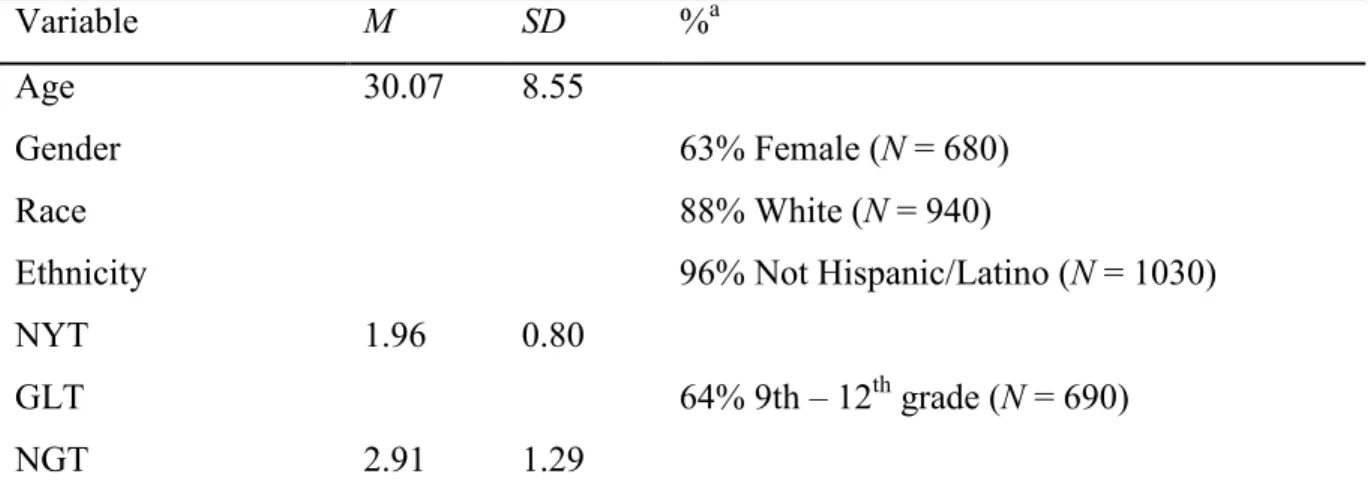
Demographic information was also described for the sample, including: age, gender, race/ethnicity, number of years of teaching experience, and number of grade levels taught. Table 1 demonstrates the means, standard deviations, and majority percentages for the teacher control variables.
Table 1
Means, Standard Deviations, and Percentages for Teacher Control Variables (N = 1080)
Variable M SD %a
Age 30.07 8.55
Gender 63% Female (N = 680)
Race 88% White (N = 940)
Ethnicity 96% Not Hispanic/Latino (N = 1030)
NYT 1.96 0.80
GLT 64% 9th – 12th grade (N = 690)
NGT 2.91 1.29
Note. NYT = number of years of teaching experience; GLT = grade level taught; NGT = number of grades taught.
Review of the teacher control variables revealed abnormalities in the distribution of the data. Eighty-five percent of teachers in the current study ranged in age from 20 – 40 years old. The racial and ethnic composition of the sample was also severely skewed with the largest percentage of participants identifying as white, non-Hispanic or Latino. Additionally, the majority of teachers in the study sample taught more than one grade level as a full-time teacher with 64% of educators teaching three or more grades in a given year. On the other hand, novice teachers’ number of years of teaching experience was more normally
distributed with approximately one-third of participants currently teaching in their first year at the time they took the survey.
Procedures
The U.S. Census Bureau has administered the SASS on six occasions starting from the 1987-1988 school year until the 2007-2008 school year, most recently (U.S. Department of Education, 2008). Of particular interest to the current study was the 2007-2008 SASS, which consisted of 10 different types of questionnaires (see Appendix A for the full list of questionnaires). Of the 10 questionnaires, I used the 2007-2008 SASS Public School Teacher Questionnaire for the present study. The Public School Teacher questionnaire was designed to obtain information about regular full-time and regular part-time teachers as well as itinerant teachers, who were assigned to provide instruction at more than one school, and long-term substitute teachers, who were assigned to fill the role of a regular teacher on a long-term basis (U.S. Department of Education, 2008).
containing all surveys and pertinent explanatory information was sent to each school. Telephone calls, assisted by a computer-based interviewing instrument, were conducted to establish a survey coordinator at each of the sampled schools. Questionnaires were
distributed to teachers through a flow system during the fall of 2007 and spring of 2008. While participation in the survey was voluntary, individuals were encouraged to participate, and telephone and field follow-ups were conducted in order to increase response rates. Throughout the course of the year, the survey coordinator at each school was
contacted, via telephone, to remind teachers to complete and return the survey forms. The Census Bureau also followed up with individual respondents, via telephone, to assist in finishing incomplete surveys. Finally, field follow-ups were conducted for any school or individual who did not return a questionnaire. Overall, the response rate of public school teachers in the survey was 72.4% (U.S. Department of Education, 2008).
Measures
The following section specifies how the study’s predictor and outcome measures were defined and identifies how the criteria for these variables were selected from the 2007-2008 Public School Teacher questionnaire. It is important to note that the question prompts for the predictor variable, induction program comprehensiveness, and the outcome variable, perceptions of preparedness, asked teachers to respond based on their experiences and
variables.
Preparation pathway. Preparation pathway was defined as the education and training route taken to prepare individuals for the responsibilities of the teaching profession. Of particular interest in the current study were individuals’ completion of specific
components within that pathway that, when examined as an amalgam, represented a comprehensive preparation. Based on the literature available (e.g., Darling-Hammond, Chung, et al., 2002; Freedman & Appleman, 2009; Imbimbo & Silvernail, 1999), I characterized the comprehensiveness of participants’ preparation pathways based on completion of: (a) five or more college or graduate level courses on teaching methods or strategies; (b) student or practice teaching experience that lasted twelve weeks or longer; (c) full state certification; and (d) a demonstrated competency in subject area taught, as indicated by a match between the novice teacher’s certification area and subject area taught.
In the present study, preparation pathway comprehensiveness was operationalized as a count of the number of components, characterized above, that novice teachers completed during their education and pre-service training. Successful completion of a greater number of components implied completion of a more comprehensive preparation pathway. Composite scores for this continuous variable ranged from zero to four. A score of four indicated completion of a comprehensive preparation pathway, demonstrating that an individual completed all four preparation pathway components that characterized a comprehensive education and training. A score of zero indicated completion of an incomprehensive preparation pathway, demonstrating that an individual did not complete any of the four